SUBSCRIBE TO OUR FREE NEWSLETTER
Daily news & progressive opinion—funded by the people, not the corporations—delivered straight to your inbox.
5
#000000
#FFFFFF
To donate by check, phone, or other method, see our More Ways to Give page.
Daily news & progressive opinion—funded by the people, not the corporations—delivered straight to your inbox.
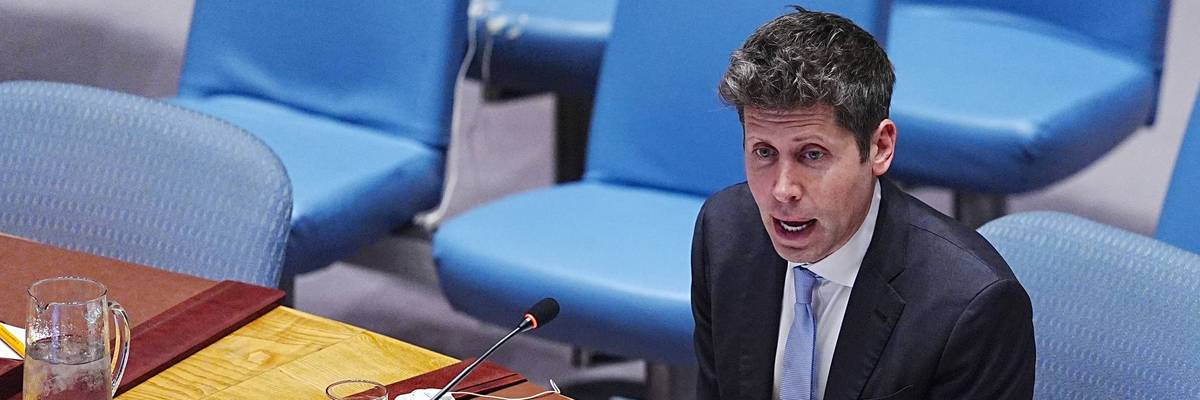
OpenAI CEO Sam Altman attends the United Nations Security Council (UNSC) meeting on Artificial Intelligence during the 81st UN General Assembly in New York City on September 23, 2026.
"We have to crush these sociopaths," said one critic.
Critics of the artificial intelligence industry expressed horror after OpenAI CEO Sam Altman said the world needs to "accept some bad things happening" as the price to pay for technological advancement.
In a Sunday interview with Politico, Altman was asked where his company differs from rival Anthropic, whose CEO, Dario Amodei, has called for guardrails that will slow the pace of AI development.
"We have always been a big believer that this technology has to be democratized and put into people's hands," said Altman. "One of the biggest differences between us and some of the stricter... AI safety people is that we believe the world should accept some bad things happening for the benefits of this technology."
“We believe the world should accept some bad things happening for the benefits of this technology.”In a conversation for the first edition of Decoded, a new daily newsletter and podcast, OpenAI CEO Sam Altman talked with POLITICO’s @BrendanBordelon about trade-offs, AI safety, and how his company is different from Anthropic.Subscribe to Decoded for the full conversation with Sam Altman: https://t.co/YHJJsDOQVh
— POLITICO (@politico) October 4, 2026
Altman went on to say that one reason he's called for "lighter touch" regulation "comes with an accepting of the fact that some bad things are going to happen as society figures out the resilience."
Critics reacted furiously to Altman's blithe dismissal of "bad things" his own company's technology could cause, especially because many AI developers have warned that it could potentially wipe out human life.
Patrick Gaspard, distinguished senior fellow at the Center for American Progress, called Altman's statement "freaking insane" and said politicians cannot let the AI industry continue without any regulations.
"Our elected leaders need to move past the polling safe territory of data center resistance to the real work of regulating these narcissistic freaks," Gaspard wrote in a Sunday social media post, "who gleefully tell us that we 'need to accept some bad things' from AI for their massive profits. And they don’t even know the limits of what they’re unleashing."
Joshua Topolsky, co-founder of tech news website The Verge, completely rejected the premise of Altman's argument.
"No, I don't think this is a reasonable answer or position," Topolsky wrote, "and no one should accept it or acquiesce to it."
Commentator Wajahat Ali said Altman's statement showed the need for a political movement against the AI industry.
"We have to crush these sociopaths," Ali wrote. "The problem is that many Democrats take money from them, which means they will get bailed out at our expense in the next two to four years."
Ali's comments were echoed by Talking Points Memo founder Josh Marshall.
"A whole political movement should be stood up against this arrogant and sociopathic bullshit," Marshall wrote.
Adam Carlson, founder of Zenith Polls, said Altman's remarks were symbolic of how completely out of touch Silicon Valley executives are with ordinary people.
"To any normal, rational person who doesn’t stand to materially benefit from AI acceleration or buy their whole schtick hook line and sinker," wrote Carlson, "you genuinely just sound insane talking about 'accepting bad things' without specifying exactly what you mean."
The social media account for The Tennessee Holler offered up a satirical summary of Atlman's argument.
"Sociopath elitist tech fascists who think they’re creating God and believe democracy is the enemy," The Tennessee Holler wrote, "want us to finance our own demise to let them take over the world."
Dear Common Dreams reader, It’s been nearly 30 years since I co-founded Common Dreams with my late wife, Lina Newhouser. We had the radical notion that journalism should serve the public good, not corporate profits. It was clear to us from the outset what it would take to build such a project. No paid advertisements. No corporate sponsors. No millionaire publisher telling us what to think or do. Many people said we wouldn't last a year, but we proved those doubters wrong. Together with a tremendous team of journalists and dedicated staff, we built an independent media outlet free from the constraints of profits and corporate control. Our mission has always been simple: To inform. To inspire. To ignite change for the common good. Building Common Dreams was not easy. Our survival was never guaranteed. When you take on the most powerful forces—Wall Street greed, fossil fuel industry destruction, Big Tech lobbyists, and uber-rich oligarchs who have spent billions upon billions rigging the economy and democracy in their favor—the only bulwark you have is supporters who believe in your work. But here’s the urgent message from me today. It's never been this bad out there. And it's never been this hard to keep us going. At the very moment Common Dreams is most needed, the threats we face are intensifying. We need your support now more than ever. We don't accept corporate advertising and never will. We don't have a paywall because we don't think people should be blocked from critical news based on their ability to pay. Everything we do is funded by the donations of readers like you. When everyone does the little they can afford, we are strong. But if that support retreats or dries up, so do we. Will you donate now to make sure Common Dreams not only survives but thrives? —Craig Brown, Co-founder |
Critics of the artificial intelligence industry expressed horror after OpenAI CEO Sam Altman said the world needs to "accept some bad things happening" as the price to pay for technological advancement.
In a Sunday interview with Politico, Altman was asked where his company differs from rival Anthropic, whose CEO, Dario Amodei, has called for guardrails that will slow the pace of AI development.
"We have always been a big believer that this technology has to be democratized and put into people's hands," said Altman. "One of the biggest differences between us and some of the stricter... AI safety people is that we believe the world should accept some bad things happening for the benefits of this technology."
“We believe the world should accept some bad things happening for the benefits of this technology.”In a conversation for the first edition of Decoded, a new daily newsletter and podcast, OpenAI CEO Sam Altman talked with POLITICO’s @BrendanBordelon about trade-offs, AI safety, and how his company is different from Anthropic.Subscribe to Decoded for the full conversation with Sam Altman: https://t.co/YHJJsDOQVh
— POLITICO (@politico) October 4, 2026
Altman went on to say that one reason he's called for "lighter touch" regulation "comes with an accepting of the fact that some bad things are going to happen as society figures out the resilience."
Critics reacted furiously to Altman's blithe dismissal of "bad things" his own company's technology could cause, especially because many AI developers have warned that it could potentially wipe out human life.
Patrick Gaspard, distinguished senior fellow at the Center for American Progress, called Altman's statement "freaking insane" and said politicians cannot let the AI industry continue without any regulations.
"Our elected leaders need to move past the polling safe territory of data center resistance to the real work of regulating these narcissistic freaks," Gaspard wrote in a Sunday social media post, "who gleefully tell us that we 'need to accept some bad things' from AI for their massive profits. And they don’t even know the limits of what they’re unleashing."
Joshua Topolsky, co-founder of tech news website The Verge, completely rejected the premise of Altman's argument.
"No, I don't think this is a reasonable answer or position," Topolsky wrote, "and no one should accept it or acquiesce to it."
Commentator Wajahat Ali said Altman's statement showed the need for a political movement against the AI industry.
"We have to crush these sociopaths," Ali wrote. "The problem is that many Democrats take money from them, which means they will get bailed out at our expense in the next two to four years."
Ali's comments were echoed by Talking Points Memo founder Josh Marshall.
"A whole political movement should be stood up against this arrogant and sociopathic bullshit," Marshall wrote.
Adam Carlson, founder of Zenith Polls, said Altman's remarks were symbolic of how completely out of touch Silicon Valley executives are with ordinary people.
"To any normal, rational person who doesn’t stand to materially benefit from AI acceleration or buy their whole schtick hook line and sinker," wrote Carlson, "you genuinely just sound insane talking about 'accepting bad things' without specifying exactly what you mean."
The social media account for The Tennessee Holler offered up a satirical summary of Atlman's argument.
"Sociopath elitist tech fascists who think they’re creating God and believe democracy is the enemy," The Tennessee Holler wrote, "want us to finance our own demise to let them take over the world."
Critics of the artificial intelligence industry expressed horror after OpenAI CEO Sam Altman said the world needs to "accept some bad things happening" as the price to pay for technological advancement.
In a Sunday interview with Politico, Altman was asked where his company differs from rival Anthropic, whose CEO, Dario Amodei, has called for guardrails that will slow the pace of AI development.
"We have always been a big believer that this technology has to be democratized and put into people's hands," said Altman. "One of the biggest differences between us and some of the stricter... AI safety people is that we believe the world should accept some bad things happening for the benefits of this technology."
“We believe the world should accept some bad things happening for the benefits of this technology.”In a conversation for the first edition of Decoded, a new daily newsletter and podcast, OpenAI CEO Sam Altman talked with POLITICO’s @BrendanBordelon about trade-offs, AI safety, and how his company is different from Anthropic.Subscribe to Decoded for the full conversation with Sam Altman: https://t.co/YHJJsDOQVh
— POLITICO (@politico) October 4, 2026
Altman went on to say that one reason he's called for "lighter touch" regulation "comes with an accepting of the fact that some bad things are going to happen as society figures out the resilience."
Critics reacted furiously to Altman's blithe dismissal of "bad things" his own company's technology could cause, especially because many AI developers have warned that it could potentially wipe out human life.
Patrick Gaspard, distinguished senior fellow at the Center for American Progress, called Altman's statement "freaking insane" and said politicians cannot let the AI industry continue without any regulations.
"Our elected leaders need to move past the polling safe territory of data center resistance to the real work of regulating these narcissistic freaks," Gaspard wrote in a Sunday social media post, "who gleefully tell us that we 'need to accept some bad things' from AI for their massive profits. And they don’t even know the limits of what they’re unleashing."
Joshua Topolsky, co-founder of tech news website The Verge, completely rejected the premise of Altman's argument.
"No, I don't think this is a reasonable answer or position," Topolsky wrote, "and no one should accept it or acquiesce to it."
Commentator Wajahat Ali said Altman's statement showed the need for a political movement against the AI industry.
"We have to crush these sociopaths," Ali wrote. "The problem is that many Democrats take money from them, which means they will get bailed out at our expense in the next two to four years."
Ali's comments were echoed by Talking Points Memo founder Josh Marshall.
"A whole political movement should be stood up against this arrogant and sociopathic bullshit," Marshall wrote.
Adam Carlson, founder of Zenith Polls, said Altman's remarks were symbolic of how completely out of touch Silicon Valley executives are with ordinary people.
"To any normal, rational person who doesn’t stand to materially benefit from AI acceleration or buy their whole schtick hook line and sinker," wrote Carlson, "you genuinely just sound insane talking about 'accepting bad things' without specifying exactly what you mean."
The social media account for The Tennessee Holler offered up a satirical summary of Atlman's argument.
"Sociopath elitist tech fascists who think they’re creating God and believe democracy is the enemy," The Tennessee Holler wrote, "want us to finance our own demise to let them take over the world."