

SUBSCRIBE TO OUR FREE NEWSLETTER
Daily news & progressive opinion—funded by the people, not the corporations—delivered straight to your inbox.
5
#000000
#FFFFFF
To donate by check, phone, or other method, see our More Ways to Give page.
Daily news & progressive opinion—funded by the people, not the corporations—delivered straight to your inbox.
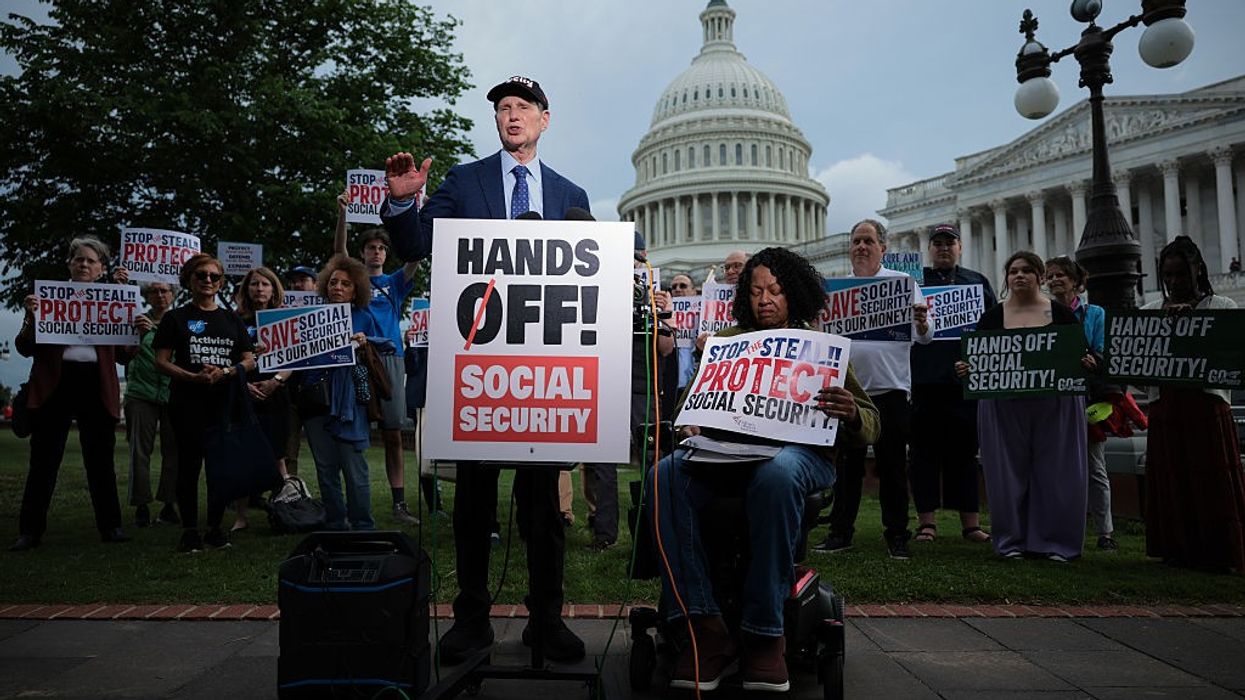
Social Security Administration chief data officer Charles Borges described "fear and anxiety over potential illegal actions resulting in the loss of citizen data" in his resignation letter.
A federal worker who filed a shock whistleblower report alleging that employees of the Department of Government Efficiency had potentially compromised Americans' Social Security data abruptly resigned on Friday.
In a letter obtained by independent journalist Melissa Kabas, Social Security Administration (SSA) chief data officer Charles Borges said that he was "involuntarily" stepping down from his position at the agency due to "serious... mental, physical, and emotional distress" caused in the wake of his whistleblower report.
Borges said that after filing his report with the help of the Government Accountability Project, he was subjected to "exclusion, isolation, internal strife, and a culture of fear" that created a hostile work environment and made "work conditions intolerable."
Borges then recounted that he filed the whistleblower report because he was concerned that Department of Government Efficiency (DOGE) employees had uploaded Americans' Social Security information onto a cloud server that he believed was vulnerable to external hackers.
"As these events unfolded, newly installed leadership in IT and executive offices created a culture of panic and dread, with minimal information sharing, frequent discussions on employee termination, and general organizational dysfunction," Borges claimed. "Executives and employees were afraid to share information or concerns on questionable activities for fear of retribution and termination."
Borges concluded by saying that the total lack of visibility into the actions of DOGE employees who were handling Americans' most sensitive data created a sense of "fear and anxiety over potential illegal actions resulting in the loss of citizen data."
The report, whose existence was made public earlier this week, contends that Borges has evidence of a wide array of wrongdoing by DOGE employees, including "apparent systemic data security violations, uninhibited administrative access to highly sensitive production environments, and potential violations of internal SSA security protocols and federal privacy laws by DOGE personnel."
At the heart of Borges' complaint is an effort by DOGE employees to make "a live copy of the country's Social Security information in a cloud environment" that "apparently lacks any security oversight from SSA or tracking to determine who is accessing or has accessed the copy of this data."
Should hackers gain access to this copy of Social Security data, the report warns, it could result in identity theft on an unprecedented scale and lead to the loss of crucial food and healthcare benefits for millions of Americans. The report states that the government may also have to give every American a new Social Security number "at great cost."
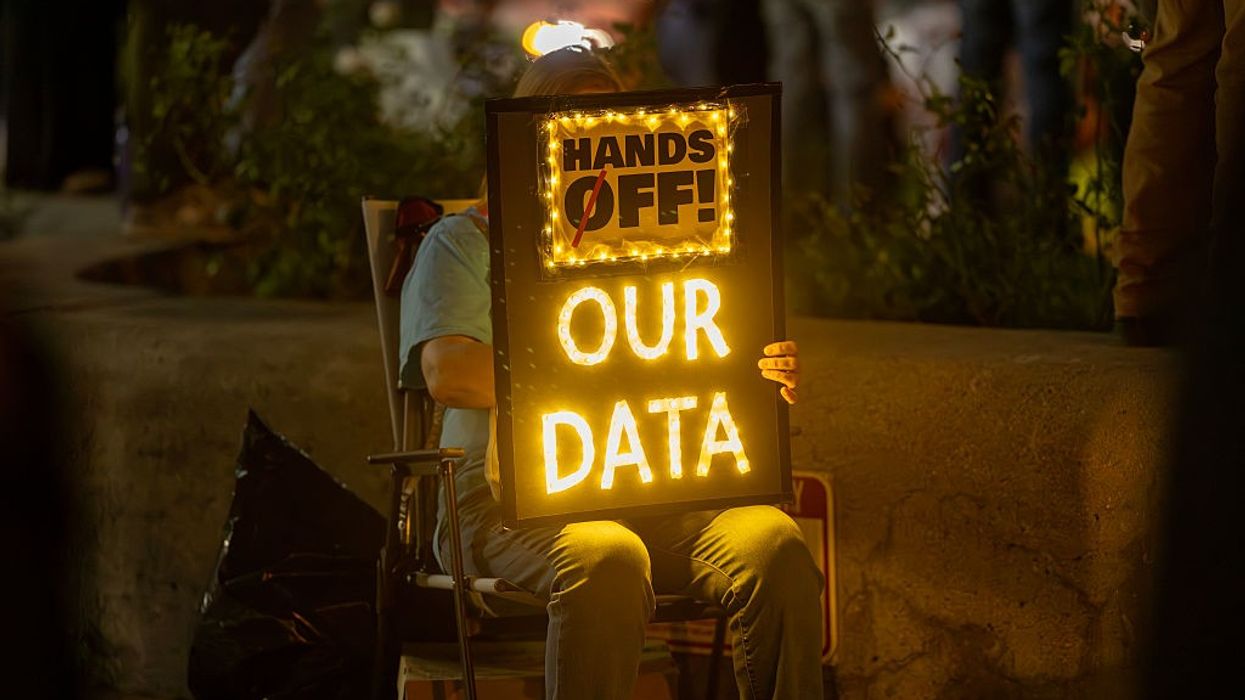
DOGE officials have been responsible for "serious data security lapses" that risk the safety "of over 300 million Americans' Social Security data," the whistleblower complaint said.
A new whistleblower complaint is alleging that employees of the Department of Government Efficiency put Americans' Social Security data at risk by uploading it to a cloud server that was vulnerable to hacking.
The whistleblower complaint, which was filed by the Government Accountability Project on behalf of Social Security Administration (SSA) chief data officer Charles Borges, alleges that Department of Government Efficiency (DOGE) officials have been responsible for "serious data security lapses" that "risk the security of over 300 million Americans' Social Security data."
The report contends that Borges has evidence of a wide array of wrongdoing by DOGE employees, including "apparent systemic data security violations, uninhibited administrative access to highly sensitive production environments, and potential violations of internal SSA security protocols and federal privacy laws by DOGE personnel."
At the heart of Borges's complaint is an effort by DOGE employees to make "a live copy of the country's Social Security information in a cloud environment" that "apparently lacks any security oversight from SSA or tracking to determine who is accessing or has accessed the copy of this data."
Should hackers gain access to this copy of Social Security data, the report warns, it could result in identity theft on an unprecedented scale and lead to the loss of crucial food and healthcare benefits for millions of Americans. The report states that the government may also have to give every American a new Social Security number "at great cost."
As noted by The New York Times, Borges did not document any confirmed breaches of the cloud system set up by the DOGE employees, but he did say that there have been "no verified audit or oversight mechanisms" to monitor DOGE's use of the data.
Andrea Meza, director of campaigns for Government Accountability Project and attorney for Borges, said that her client felt he could not remain silent given the risk to Americans' personal information.
"Mr. Borges raised concerns to his supervisors about his discovery of a disturbing pattern of questionable and risky security access and administrative misconduct that impacts some of the public's most sensitive data," she said. "Out of a sense of urgency and duty to the American public, he is now raising the alarm to Congress and the Office of Special Counsel, urging them to engage in immediate oversight to address these serious concerns."
While DOGE was established with the stated goal of protecting Americans from waste and fraud in the US government—including at the SSA, which President Donald Trump has baselessly claimed wrongly sent benefits to hundreds of thousands of undocumented immigrants—former Labor Secretary Robert Reich said DOGE is "potentially exposing Americans to more" fraud.
Alex Lawson, executive director of the advocacy organization Social Security Works, blasted DOGE and its former leader, Tesla and SpaceX owner Elon Musk, for what he described as blatant theft.
" Elon Musk and his DOGE minions stole the American people's private Social Security data," said Lawson. "This was no accident. They come from Silicon Valley, where tech bros are furiously competing to see whose AI can gobble up the most data. Musk's nearly $300 million in contributions to Trump's campaign, along with buying Twitter and making it a de facto Trump campaign apparatus, were an investment—and now all of us are paying the price."
The official Social Security Works account on X delivered a terse three-word response to the whistleblower report: "This is criminal."
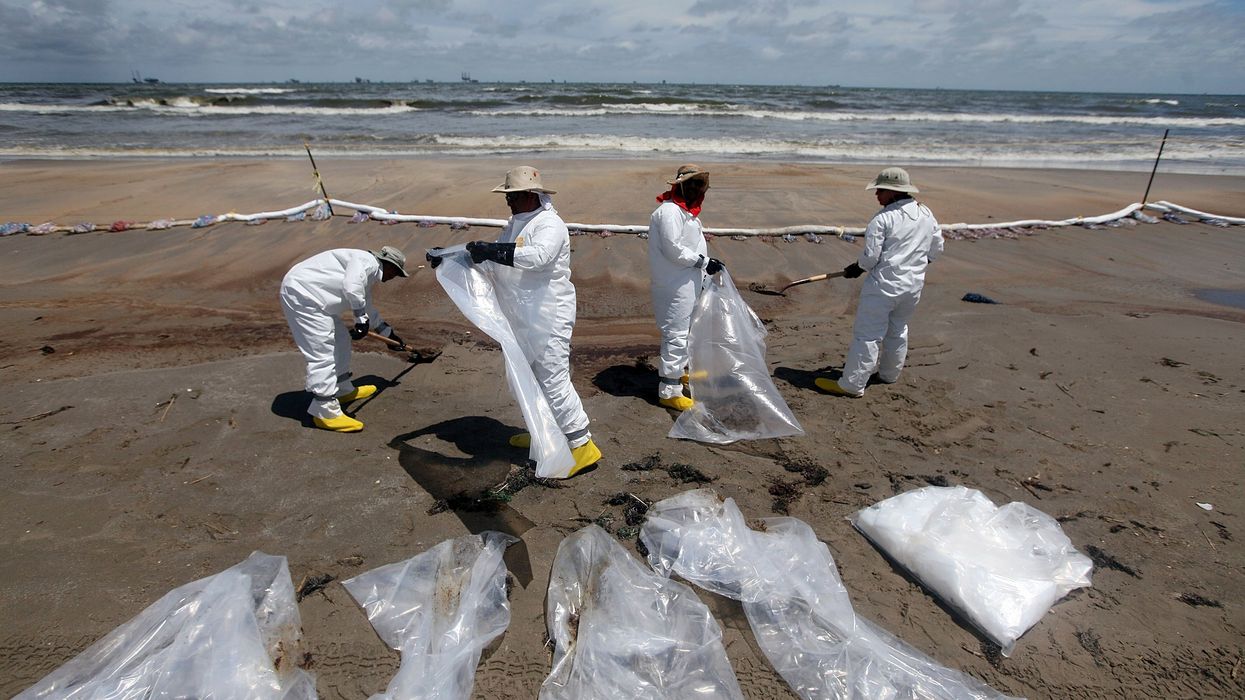
Fifteen years after the oil spill, the legacy of Corexit dispersants continues to manifest in the broken bodies and shattered lives of those who were exposed, including those who spoke out to save future generations.
As the mother of a childhood cancer survivor from a coastal Alabama cluster, I reflect on the 15th anniversary of the Deepwater Horizon disaster with anger and frustration at the countless lives needlessly destroyed by the spill and its “cleanup.” But more than anything, I am afraid… I am afraid because the same chemicals that wrought havoc on Gulf communities aren’t being disposed of—they are being rebranded to be reused.
During my seven years of assisting cleanup workers at a Miami-based law firm and Government Accountability Project, I saw the stuff of medical nightmares manifest in real life as I came face-to-face with an innocuously named monster: Corexit. Corexit is a chemical oil dispersant that was used liberally in the wake of the Deepwater Horizon disaster to break up oil slicks into smaller droplets that can be submerged underwater. While Corexit was once described as being “as safe as dish soap” by a BP executive, the final chapter of its use in the Deepwater Horizon disaster was not to be told via feel-good commercials of freshly cleaned ducklings. It is still being written by outsiders documenting the broken lives of the men and women who can no longer speak for themselves after volunteering to clean the Gulf.
Many of the men and women who volunteered to clean the Gulf, a body of water that bound together their communities, jobs, and very way of life, died in the months and years after exposure to Corexit, often from serious diseases including blood and pancreatic cancers—silencing their voices long before justice could be served. I personally knew dozens who were exposed and subsequently left the Earth far too soon.
The corporate shell game of rebranding these toxic chemicals under new names must not distract us from the fundamental truth that these dispersants should never be used again in our waters.
I still think about Captain Bill, who came to us when Stage 4 colon cancer appeared after running a supply boat to the sinking Deepwater Horizon rig. He did not believe all the hype from environmentalists about the dangers of dispersants until he got crop-dusted with them. He developed softball sized cysts all over his body filled with bacteria and was left with just months to live. He left behind a wife and three children, including a young son with autism.
I remember Sandra, a woman who always exuded joy during the 20 years I’d known her. Her job for BP required her to hop on and off oil-contaminated boats; she tragically developed a rare myeloproliferative disorder that ended her life at age 60. She left behind a husband who missed her so profoundly that he lasted only a few months without her.
Corexit has been proven to have deadly side effects within humans, but that won’t stop corporate greed from slapping a new label on it and sending it to a different country. The U.S. Environmental Protection Agency (EPA) was in the process of finalizing new rules and regulations governing the usage of oil dispersants. Right before the rules were set to be finalized, the manufacturer of Corexit abruptly discontinued its product line which constituted over 45% of globally stockpiled dispersants. This was likely not coincidental; the new EPA rules require manufacturers to truthfully report known or anticipated harm to human health and wildlife from their products. Corexit’s parent company chose to withdraw from the U.S. market while re-registering the same toxic products in the United Kingdom and Brazil in 2024, with France also considering approval.
People and communities were falsely reassured about the safety of the working conditions, as BP told workers personal protective gear was unnecessary when dealing with the chemicals. Now, with the risks and threats of exposure known, the protective gear could have saved hundreds of lives and communities from devastation.
Fifteen years after the Deepwater Horizon oil spill, the legacy of Corexit dispersants continues to manifest in the broken bodies and shattered lives of those who were exposed, including those who spoke out to save future generations. The corporate shell game of rebranding these toxic chemicals under new names must not distract us from the fundamental truth that these dispersants should never be used again in our waters. The time has come to close this dark chapter in our history and commit to solutions that truly protect both our coasts and the people who call them home.

If the Expanding Whistleblower Protections for Contractors Act is passed, more contractors could feel empowered to stand up for what is right with crucial information.
With the recent presidential election, violence in the Middle East, and intense natural disasters prominent in the current news cycle, it’s understandable that major legislation is getting overlooked. However, there is one bill in particular that the public should keep its eyes on due to its potential impact on all aspects of our politics, like government accountability, immigration, and even public health: S. 1524, the Expanding Whistleblower Protections for Contractors Act.
Although there is existing legislation aimed at protecting government contractors, it is lackluster at best. Contractors can still face roadblocks on the way to truth-telling, such as limited jury trials, blacklisting, retaliation, and even a dearth of protections for refusing to violate the law. However, the Expanding Whistleblower Protections for Contractors Act increases protections for jobs funded by taxpayer dollars and closes these loopholes for federal contractors to build greater transparency in our government.
To find a case study on the importance of this legislation, one needs to look no further than the February 3, 2023 Norfolk Southern train derailment in East Palestine, Ohio, which sent forever chemicals and combustible materials, such as vinyl chloride (a toxic flammable gas), across the community and temporarily displaced 1,500 to 2,000 people. Three days later, authorities burned 116,000 gallons of vinyl chloride and other highly toxic chemicals from five tankers, sending a dense black toxic cloud over the entire region that could be seen from space. It was recently determined that the toxic fallout of materials from the derailment and burn have been detected in 16 states.
Less than a day after the derailment, the Environmental Protection Agency (EPA) failed to follow procedures to fly its Airborne Spectral Photometric Environmental Collection Technology (ASPECT) plane for data collection of chemical levels in the area. Had it done so, the agency could have determined that the chemicals in the unexploded tanks were cooling and no longer posed a threat of explosion, making the so-called “control burn” unnecessary and its fallout avoidable. In fact, the ASPECT plane remained grounded for five days until the toxic cloud had dissipated. In the aftermath of the derailment, Dr. Robert Kroutil, an EPA contractor with Kalman & Company and a key developer in the ASPECT program, was concerned about the inordinate and unnecessary delays.
With improved and stronger whistleblower protections, Dr. Kroutil would most likely not have been forced into retirement because of the threats. He could have stood his ground while still on the job.
When he finally received data to analyze, he was shocked that the plane only collected data for seven minutes when more typical flights would collect hundreds of minutes of data. He also learned that the sensors were turned off when the plane flew over creeks, waterways, and the crash site itself. He and his fellow scientists reported that the presence of contamination was inconclusive. A few weeks later, the EPA used this report to conclude that the data collection was a success, and it was safe for residents to return to their homes when in fact the reason the results were inconclusive was because the EPA failed to collect the necessary data. Dr. Kroutil was so upset about what was happening, he filed a Freedom of Information request for documents such as back-dated flight plans. When he was threatened with termination unless he withdrew his requests, he decided to retire and go public with his revelations. He had no faith in the current, inadequate legal protections. The EPA retaliated by calling his claims “false” within minutes of hearing about them. The Office of Inspector General has determined, however, that a full investigation of his concerns is warranted, supported by many other whistleblowers.
With improved and stronger whistleblower protections, Dr. Kroutil would most likely not have been forced into retirement because of the threats. He could have stood his ground while still on the job. Unfortunately, similar events have already occurred surrounding the failure to deploy the ASPECT aircraft.
Since his disclosure of EPA’s mismanagement, two train derailments in Illinois and North Dakota have resulted in the spill of hazardous chemicals and mirror problems with the response to the derailment in East Palestine. In both incidents, the EPA failed to deploy its ASPECT chemical sensing aircraft to collect data. Instead, ASPECT at the time of the derailments was performing a nonemergency assessment near Buffalo, New York, collecting data on a legacy contamination issue from World War II.
With thousands of government contractors working tough jobs for our protection—from ensuring our food is safe to eat and defending us from foreign attacks to mitigating the impact of disasters like the derailment in East Palestine—it’s time we start protecting them too. The laws aimed at allowing contractors to speak truth to power must be modernized and repaired to make whistleblowers less vulnerable to retaliation. That is why we should pay attention to the Expanding Whistleblower Protections for Contractors Act of 2023, first introduced by Sens. Gary Peters (D-Mich) and Michael Braun (R-Ind.) and passed out of committee on a bipartisan basis, which would address the shortcomings in the current law.
Government contractors like these have a long history of saving thousands of taxpayer dollars, exposing our government’s wrongdoing, and, as in this case, saving countless lives; to be effective, laws that protect whistleblowers must encourage employees of conscience to speak up and deter employers from retaliating against them for doing so. If the Expanding Whistleblower Protections for Contractors Act is passed, more contractors could feel empowered to stand up for what is right with crucial information. Government Accountability Project is committed to continuing advocacy for greater whistleblower protections for government contractors and a more fair and transparent government.

Unaccompanied children held at an immigration detention camp in the Texas desert suffered substandard living conditions and mistreatment by contracted staff including employees of an emergency cleanup company, as well as neglect and indifference from Biden administration officials, according to a whistleblower complaint first reported Wednesday by NBC News' Julia Ainsley.
"The contractor providing direct supervision of the children in the dormitory tents--Servpro--is a fire and water damage repair company."
--Whistleblowers' complaint
The complaint (pdf) to Congress, filed by the Government Accountability Project on behalf of career civil servants Laurie Elkin and Justin Mulaire, alleges "gross mismanagement and specific endangerment to public health and safety at the Fort Bliss Emergency Intake Site (EIS) for unaccompanied children operated by the U.S. Department of Health and Human Services (HHS)."
Elkin and Mulaire--who are both attorneys currently employed in the Chicago district office of the U.S. Equal Employment Opportunity Commission (EEOC)-- were on temporary volunteer assignment with HHS from May 12 to June 2, 2021 caring for unaccompanied migrant children in federal custody at Ft. Bliss, a large military base located in the desert outside El Paso, Texas.
The complaint notes that at the base, "thousands of children are housed for prolonged periods in enormous, undivided tents--perhaps the size of a football field."
Elkin and Mulaire, who were tasked with supervising children held in the tents--which each housed between 1,000 to 1,500 minors--believed conditions at the detention camp "were placing children at risk," and according to the complaint, both attorneys "witnessed numerous instances of gross mismanagement, causing harm to children's health and well-being."
The complaint states that "perhaps the single greatest problem observed by Ms. Elkin and Mr. Mulaire was the use of wholly unsuitable contract staff."
The pair "learned that the contractor providing direct supervision of the children in the dormitory tents--Servpro--is a fire and water damage repair company," it says. "Many of the Servpro staff's t-shirts bore the Servpro corporate logo found on the internet, with some including the corporate logo: 'As if it never happened.'"
According to its website, "The Servpro Industries, LLC, franchise system is a national leader of fire, water, mold, and other specialty cleanup and restoration services."
"Youth care is not in its portfolio," the complaint states, adding that contracted staff at the detention facility told the whistleblowers that "they had received no training prior to beginning work and had little guidance about what their role was."
"Many contract workers seemed to view their job more as crowd control than youth care," the document alleges. "While some individuals plainly meant well, other contract workers exhibited impatience with children and were plainly unsure of how to supervise them."
The complaint further alleges:
According to the complaint, in one instance Elkin "discovered a girl in a bottom bunk who looked ghostly pale. The girl told Ms. Elkin that she had not had her period for months but was now bleeding profusely and did not feel well. Clearly, the girl needed medical attention."
"Elkin approached a contractor to request that the girl be taken to the medical tent," the document states. "The contractor responded by saying she was not allowed to take girls to the doctor. Ms. Elkin then brought the case to contractor's supervisor who questioned why and if the girl needed to see a doctor. Ultimately, but only because of Ms. Elkin's intervention, the girl received medical treatment."
Furthermore, the complaint alleges widespread case management failures, including numerous children who "seemed to have fallen through the cracks," resulting in serious processing delays and "unnecessary emotional distress."
Miscommunication and lack of coordination were allegedly rife at the facility:
Early one morning a girl in Ms. Elkin's tent was woken up and told that she was going home that morning. The girl, who had then been in the tent for 38 days, wept with joy and relief. She quickly changed into street clothes to look good and said her tearful goodbyes. She was then taken to the case management tent to wait for the bus with other children that were going home that day.
Ms. Elkin went to the case management tent to see the girl off. On the verge of leaving after more than seven weeks at the facility, the girl was suddenly pulled out of the bus line. She was told a "mistake" had been made and that she was not going home. The girl collapsed in uncontrollable tears.
This wasn't an isolated incident; according to the complaint, "47 additional children that very morning had also been told they were going home only to be pulled out of the bus line and sent back to their tents."
"Each day seemed to bring new examples of deficiencies in the care of the children and resulting risks to their health. Instances of gross mismanagement of the site were pervasive."
--David Seide and Dana Gold, whistleblowers' attorneys
Elkin says one Office of Refugee Resettlement (ORR) official at the base told her: "We are traumatizing these kids. This is terrible. This is horrible. People in Washington know. But this is an emergency situation and mistakes are going to happen."
The whistleblowers say they were told during orientation "that the primary means of providing 'feedback' about any problems they noticed was to send emails to a 'suggestion box' at an HHS.gov address," and that "they were also told not to provide such feedback during their first 10 days on the job."
"Such gag orders are illegal," the filing notes. "The 'anti-gag' provision of the Whistleblower Protection Enhancement Act... specifically states that gag orders cannot be imposed on federal employees unless they are explicitly told that such orders do not apply when employees exercise their whistleblower rights."
The whistleblowers made at least four complaints to HHS management regarding the aforementioned and other incidents. They say they were ignored, told to use the suggestion box, or that reporting multiple problems would likely be "perceived as a crying wolf situation."
"In sum, the time our clients spent at Fort Bliss was alarming," David Seide and Dana Gold, the attorneys representing Elkin and Mulaire, said in the complaint. "Each day seemed to bring new examples of deficiencies in the care of the children and resulting risks to their health. Instances of gross mismanagement of the site were pervasive."
Seide and Gold continued:
Having witnessed these things, as well as the despair of children who felt (often accurately) that they were being ignored or forgotten, our clients felt the need to speak out, yet were met with non-responsiveness at best and unlawful deterrence at worst. They volunteered for this detail as dedicated civil servants to further the mission of HHS and ORR to protect the well-being of the children at the Emergency Influx Sites. They are escalating these concerns now in service of that same mission.
While they are encouraged by reports that some conditions may have improved recently, including the numbers of children currently housed at Fort Bliss, many of the problems they witnessed will continue to harm the hundreds of children at the site if they are not addressed. Whatever one might think about immigration policy, the reality is that these children are here now and are in HHS's custody. HHS has a responsibility to make sure they are safe and treated humanely.
As Common Dreams reported earlier this year, the Biden administration's decision to detain migrant children at Ft. Bliss was condemned by immigrant and environmental justice advocates both for humanitarian reasons and due to the presence of toxic hazards from past military operations.
Advocates have also decried the administration's skyrocketing detention and expulsion of migrants, refugees, and asylum-seekers--among them many children--including what Amnesty International last month called the "dangerous and unconscionable" forced removal of thousands of unaccompanied minors without properly ensuring their safety.

The advocacy groups representing the Immigration and Customs Enforcement whistleblower who earlier this year revealed horrific abuse of imprisoned migrant women--including forced surgical sterilizations--on Friday condemned ICE's deportation of victims of the coerced procedures in retaliation for speaking out.
Earlier this week, the Associated Press reported ICE has already deported six women who came forward to report that Dr. Mahendra Amin performed medically unnecessary operations including forced hysterectomies on them, destroying or jeopardizing their ability to have children. At least seven other women who have accused the doctor are also facing deportation, according to their attorneys.
"By deporting these women, the government is risking--indeed facilitating--the loss of critical witnesses if law enforcement is unable to reach them in a different country."
--Dana Gold, Government Accountability Project
In September, Dawn Wooten, a longtime licensed nurse at the Irwin County Detention Center in southern Georgia, filed a whistleblower complaint alleging unsanitary conditions and practices that threatened to accelerate the spread of Covid-19, as well as an alarming number of non-consensual hysterectomies performed by Amin, who she called "the uterus collector." Wooten's disclosure shocked the nation and the world and prompted 173 congressional lawmakers to call for an investigation.
Azadeh Shahshahani, legal and advocacy director for Project South and a lawyer for Wooten, responded to the actual and pending whistleblower deportations by issuing a statement calling ICE's actions "shameful" and accusing the agency of "actively [trying] to erase the evidence of human rights violations and get rid of the survivors and witnesses, instead of aiding in the investigation."
"Congress must investigate and immediately put an end to this injustice," Shahshahani stressed.
Dana Gold, senior counsel at the whistleblower advocacy organization Government Accountability Project, also represents Wooten.
"By deporting these women, the government is risking--indeed facilitating--the loss of critical witnesses if law enforcement is unable to reach them in a different country," Gold said in a statement. "Like Ms. Wooten, they are now suffering retaliation for speaking up about unconscionable abuses suffered by immigrants in ICE detention in a seeming effort to both punish and hide evidence of medical misconduct."
"We condemn these actions and demand that DHS stop all further deportations of those impacted by this investigation," added Gold, referring to the Department of Homeland Security, which includes ICE.
The forced sterilzation of migrant women is, along with the seizure of thousands of migrant children from their parents--with some 666 children still separated from their families--arguably the most egregious domestic human rights violation to occur during the presidency of Donald Trump, who launched his successful 2016 White House bid by calling immigrants "rapists" and "criminals."
Trump's tenure has been characterized by enmity and bigotry toward immigrants--especially people from Muslim countries and refugees fleeing deadly perils largely resulting from decades of U.S. policies and actions in Latin America and beyond.

For the Pentagon, happy days are here again (if they ever left). With a budget totaling more than $1.4 trillion for the next two years, the department is riding high, even as it attempts to set the stage for yet more spending increases in the years to come.
With such enormous sums now locked in, Secretary of Defense (and former Raytheon lobbyist) Mark Esper is already going through a ritual that couldn't be more familiar to Pentagon watchers. He's pledged to "reform" the bureaucracy and the spending priorities of the Department of Defense to better address the latest proposed threats du jour, Russia and China. His main focus: paring back the Pentagon's "Fourth Estate"--an alphabet soup of bureaucracies not under the control of any of the military services that sucks up about 20% of the $700 billion-plus annual budget.
Esper's promises to streamline the spending machine should be taken with more than the usual grain of salt. Virtually every secretary of defense in living memory has made similar commitments, with little or nothing to show for them in terms of documented savings. Far from eliminating wasteful programs, efforts pursued by those past secretaries and by Congress under similar banners have been effective in only one obvious way: further reducing oversight and civilian control of the Pentagon rather than waste and inefficiency in it.
Examples of gutting oversight under the guise of reform abound, including attempting to eliminate offices focused on closing excess military bases and sidelining officials responsible for testing the safety and effectiveness of weapon systems before their deployment. During the administration of President Bill Clinton, for instance, the slogan of the day--"reinventing government"--ended up, in Pentagon terms, meaning the gutting of contract oversight. In fact, just to repair the damage from that so-called reform and rebuild that workforce took another $3.5 billion. Gordon Adams, former associate director for national security and international affairs at the White House Office of Management and Budget, noted accurately that such efforts often prove little more than a "phony management savings waltz."
Secretary of Defense Esper has also pledged to eliminate older weapons programs to make way for systems more suited to great power conflict. Past efforts along these lines have meant attempts to retire proven, less expensive systems like the A-10 "Warthog"--the close-air-support aircraft that protects troops in combat--to make way for the over-priced, underperforming F-35 jet fighter and similar projects.
Never mind that a war with either Russia or China--both nuclear-armed states--would be catastrophic. Never mind that more effort should be spent figuring out how to avoid conflict with both of them, rather than spinning out scenarios for fighting them more effectively (or at least more expensively). Prioritizing unlikely scenarios makes for a great payday for contractors, but often sacrifices the ability of the military to actually address current challenges. It takes the focus away from effectively fighting the real asymmetric wars the U.S. has been fighting since World War II. It leaves taxpayers with massive bills for systems that almost invariably turn out to be over cost and behind schedule. Just as an infamous (and nonexistent) "bomber gap" with the Soviet Union was used by the Pentagon and its boosters to increase military spending in the 1950s, the current hype around ultra-high-speed, hypersonic weapons will only lead to sky's-the-limit expenditures and a new global arms race.
Esper's efforts may end up failing even on their own narrow terms. Reforming the Pentagon is hard work, not only because it's one of the world's largest bureaucracies, but because there are far too many parochial interests that profit from the status quo. Under the circumstances, it matters little if current spending patterns aren't aligned with any rational notion of what it would take to defend the United States and its allies.
A Revolving-Door World
The Department of Defense regularly claims that it has implemented "efficiencies" to ensure that every penny of your tax dollars is being wisely spent. Such efforts, however, are little more than marketing ploys designed to fend off future calls for cuts in the Pentagon's still-ballooning budget. Here are just two recent examples of this sadly familiar story.
In September 2018, the Government Accountability Office (GAO) released a report stating that the Department of Defense had provided insufficient evidence that $154 billion in alleged "efficiency savings" from fiscal years 2012 to 2016 had been realized; the department claimed credit for them anyway.
Just this month, the GAO came to a similar conclusion regarding a proposed Pentagon reform plan that was to save $18.4 billion between fiscal years 2017 and 2020. Its report stated that the Pentagon had "provided limited documentation of... progress," which meant the GAO "could not independently assess and verify" it. Consider that a charitable way of suggesting that the Department of Defense was once again projecting a false image of fiscal discipline, even as it was drowning in hundreds of billions of your tax dollars. The GAO, however, failed to mention one crucial thing: even if those alleged savings had been realized, they would simply have been plowed into other Pentagon programs, not used to reduce the department's bloated budget.
Esper and his colleagues have argued that it will be different this time. In an August 2nd memo, his principal deputy, David Norquist, stated that "we will begin immediately and move forward aggressively... The review will consider all ideas--no reform is too small, too bold, or too controversial to be considered."
Even if Esper and Norquist were, however, to propose real changes, they would undoubtedly run into serious interference within the Pentagon, not to mention from their commander-in-chief, President Donald Trump, a man determined to plough ever more taxpayer dollars into the military, and from members of Congress in states counting on jobs generated by the military-industrial complex. Inside the Pentagon, on the other hand, resistance to change will be spearheaded by officials who previously held jobs in the defense industry or hope to do so in the future. We're talking, of course, about those who have made use of, or will make use of, the infamous "revolving door" between weapons companies and the government. Consider that the essence of the military-industrial complex in action.
Such ties start at the top. During the Trump administration, the post of secretary of defense has been passed from one former defense industry figure to another, as if it were literally reserved only for key officials from major weapons makers. Trump's first secretary of defense, retired General James ("Mad Dog") Mattis, came to the Pentagon straight from the board of General Dynamics, a position he returned to shortly after leaving the department. Interim Secretary Patrick Shanahan, who followed him, had been an executive at Boeing, while current Secretary Esper was Raytheon's former chief in-house lobbyist. The Pentagon's number three official, John Rood, similarly comes courtesy of Lockheed Martin. And the list only goes on from there.
This has been a systemic problem in Democratic and Republican administrations, but there has been a marked increase in such appointments under Donald Trump. A Bloomberg Government analysis found that roughly half of the Obama administration's top Pentagon officials had defense contractor experience. In the Trump administration, that number has reached a startling 80%-plus.
That revolving door, of course, swings both ways. Defense executives come into government, where they make decisions that benefit their former colleagues and companies. Then, as retiring government officials, they go to work for defense firms where they can use their carefully developed government contacts to benefit their new (or old) employers. This practice is endemic. A study by the Project On Government Oversight found 645 cases in which the top 20 defense contractors hired former senior government officials, military officers, members of Congress, or senior legislative staff as lobbyists, board members, or senior executives in 2018 alone.
There is, of course, nothing new about any of this. The late Senator William Proxmire (D-WI) pinpointed the problem with the revolving door back in 1969:
"The easy movement of high-ranking military officers into jobs with major defense contractors and the reverse movement of top executives in major defense contractors into high Pentagon jobs is solid evidence of the military-industrial complex in operation. It is a real threat to the public interest because it increases the chances of abuse... How hard a bargain will officers involved in procurement planning or specifications drive when they are one or two years from retirement and have the example to look at over 2,000 fellow officers doing well on the outside after retirement?"
Such revolving-door hires and former defense executives in government remain a powerful force for the status quo in Pentagon spending. They exert influence as needed to keep big-ticket weapons programs like the F-35 combat aircraft up and running, whether they are needed or not, whether they work as promised or not.
For his part, President Trump has repeatedly bragged about his role in promoting defense-related employment in key states, both from Pentagon budget increases and the sale of arms to repressive regimes like Saudi Arabia. In March, he held a one-hour campaign-style rally for workers at a tank plant in Lima, Ohio, at which he typically suggested that his budget increases had saved their jobs.
As for Congress, when the Army, in a rare move, actually sought to save a modest amount of money by canceling an upgrade of its CH-47 transport helicopter, the Senate struck back, calling for funding that the Pentagon hadn't even requested in order to proceed with the program. The reason? Protecting jobs at Boeing's Philadelphia-area factory that was scheduled to carry out the upgrades. Unsurprisingly, Trump seems fine with this congressional initiative (affecting the key battleground state of Pennsylvania), which still needs to survive a House-Senate conference on the defense bill.
The bottom line: Donald Trump is likely to oppose any changes that might have even the smallest impact on employment in states where he needs support in election campaign 2020. Defense industry consultant Loren Thompson summed up the case as follows: "We're too close to the presidential election and nobody [at the White House] wants to lose votes by killing a program." And keep in mind that this president is far from alone in taking such a stance. Similar reelection pressures led former President Jimmy Carter to increase Pentagon spending at the end of his term andcaused the George H. W. Bush administration to reverse a decision to cancel the troubled V-22 Osprey, a novel part-helicopter, part-airplane that would later be implicated in crashes killing dozens of Marines.
"We Won't Get Fooled Again"
What would a genuine Pentagon reform plan look like? There are areas that could easily yield major savings with sufficient political will and persistence. The most obvious of these might be the Pentagon's employment of more than 600,000 private contractors, many of whom do jobs that could be done by government civilians for less. Cutting that work force to "only" about half a million, for example, could save more than a quarter of a trillion dollars over the next decade, as noted in a recent report by the Center for International Policy's Sustainable Defense Task Force (of which both authors of this article were members).
Billions more could be saved by eliminating unnecessary military bases. Even the Pentagon claims that it has 20% more facilities than it needs. A more reasonable, restrained defense strategy, including ending America's twenty-first-century forever wars, would make far more bases redundant, both at home and among the 800 or so now scattered around the planet in an historically unprecedented fashion. Similarly, the president's obsession with creating an expensive Space Force should be blocked, given that it's likely only to increase bureaucracy and duplication, while ensuring an arms race above the planet as well as on it.
Real reform would also mean changing how the Pentagon does business (not to speak of the way it makes war). Such savings would naturally start by simply curbing the corruption that comes from personnel in high positions who are guaranteed to put the interests of defense contractors ahead of those of taxpayers and the real needs of American security. (There are also few restrictions on formerofficials working for foreign governments and almost no public disclosure on the subject.) The Project On Government Oversight found hundreds of Pentagon officials leaving for defense industry jobs, raising obvious questions about whether decisions they made were in the public interest or meant to advance their own future paydays.
Real reform would close the many loopholes in current ethics laws, extend cooling-off periods between when an official leaves government and when he or she can work for an arms contractor, and make far more prominent information about when retired national security officials switch teams from government to industry (or vice versa). Unfortunately, since Esper himself has refused to pledge not to return to the world of the corporate weapons makers after his stint as secretary of defense, this sort of reform will undoubtedly never be part of his "reform" agenda.
One outcome of his initiative, however, will definitely not be money-saving in any way. It will be to boost spending on high-tech systems like missile defense and artificial intelligence on the almost laughable grounds (given the past history of weapons development) that they can provide more military capability for less money. Whether you look at the Navy's Ford aircraft carriers--the first two costing $13.1 billion and $11.3 billion--or the Air Force's aerial refueling tanker (which has taken nearly two decades to procure), it's not hard to see how often vaunted technological revolutions prove staggeringly costly--far, far beyond initial estimates--yet result in smaller, less effective forces. As longtime Pentagon reformer Tom Christie has pointed out, to really change the acquisition system would require building in significantly more discipline. That would mean demonstrating the effective and reliable use of new technology through rigorous field-testing before advancing fragile weapons systems to the production stage, ensuring future maintenance and other headaches for troops in combat.
There is, in addition, a larger issue underlying all this talk of spending reform at the Pentagon. After all, Esper's "reforms" are visibly designed to align Pentagon spending with the department's new priority: combatting the security challenges posed by Russia and China. Start with one crucial thing: these challenges have been greatly exaggerated, both in the Trump administration's national defense strategy and in the report of the industry-led National Defense Strategy Commission. That document, when you analyze its future math, even had the nerve to claim that the Pentagon budget would need to be boosted to nearly $1 trillion annually within the next five years, reports Taxpayers for Common Sense.
Russia has much to answer for--from its assistance to the Syrian army's ongoing slaughter of civilians to its military meddling in the affairs of Ukraine--but the response to such challenges should not be to spend more on ships, planes, and advanced nuclear weapons, as current Pentagon plans would do. In reality, the economy and military of Russia, a shaky petro-state only passing for a great power, are already overshadowed by those of the U.S. and its NATO allies. Throwing more money at the Pentagon will do nothing to change Russian behavior in a positive fashion. Taking measures that are in the interests of both countries like renewing the New START nuclear reduction treaty and beginning new talks on curbing their massive nuclear arsenals would be extremely valuable in their own right and might also open the door to negotiations on other issues of mutual concern.
China's challenge to the U.S is significantly more economic than military and, if those two nations wanted to make the planet a safer place, they would cooperate in addressing the threat of climate change, not launch a new arms race. Genuine reform of the Pentagon's massive budget is urgently needed, but rest assured that Secretary of Defense Esper's claims about implementing real changes to save taxpayer dollars while making the U.S. military more effective are the equivalent of bestseller-list Pentagon fiction. The motto of Congress, not to speak of the White House and the public, with respect to the Pentagon's latest claims of fiscal probity should be "we won't get fooled again."

In a trio of letters sent Tuesday to executives at Amazon, Google, and Microsoft, a coalition of 90 civil and human rights groups called on the companies to refuse to sell facial recognition technology to governments across the globe, cautioning that such systems can endanger people and undermine public trust.
"The choices made by these companies now will determine whether the next generation will have to fear being tracked by the government for attending a protest, going to their place of worship, or simply living their lives."
--Nicole Ozer, ACLU
"We are at a crossroads with face surveillance, and the choices made by these companies now will determine whether the next generation will have to fear being tracked by the government for attending a protest, going to their place of worship, or simply living their lives," warned Nicole Ozer, the technology and civil liberties director for the ACLU of California.
"History has clearly taught us," Ozer noted, "that the government will exploit technologies like face surveillance to target communities of color, religious minorities, and immigrants."
The letters come in response to recent public statements by the tech giants' leaders regarding concerns about government misuse of such products, and reporting that the FBI is piloting Amazon's Rekognition technology--which the company has also pitched to U.S. Immigration and Customs Enforcement (ICE), one of the agencies charged with implementing the Trump administration's cruel immigration policies.
Despite CEO Jeff Bezos' admission that Amazon's technology could be misused, the company has appeared more willing to profit from the U.S. government's effort to achieve Big Brother status while Google and Microsoft have been more cautious.
Last month, Google indicated that it will continue to develop artificial intelligence (AI) programs but will not sell facial recognition technology to governments--at least, until the potential dangers are mitigated to a degree that satisfies the company's decision-makers.
Microsoft President Brad Smith, meanwhile, wrote a blog post in December charging that facial recognition technology "brings important and even exciting societal benefits but also the potential for abuse." Smith called for "governments in 2019 to start adopting laws to regulate this technology" but also pledged to be proactive in creating safeguards to address concerns about abuse.
"By continuing to sell your face surveillance product to government entities, Amazon is gravely threatening the safety of community members, ignoring the protests of its own workers, and undermining public trust in its business."
--letter to Amazon
The coalition welcomed the recent moves by Google and Microsoft while also highlighting their inadequacy, and urged both to "fully commit to not releasing a facial recognition product that could be used by governments."
The letter to Amazon was harsher, declaring that "by continuing to sell your face surveillance product to government entities, Amazon is gravely threatening the safety of community members, ignoring the protests of its own workers, and undermining public trust in its business."
This is not the first time critics of facial recognition technology have pressured these companies to address the serious threats posed by their AI products.
As Shankar Narayan of the ACLU of Washington pointed out in a statement, "In 2018, groups representing Muslims, African-Americans, immigrants, incarcerated Japanese-Americans, and more met with Amazon and Microsoft to share firsthand stories of the impacts of targeted surveillance on these communities."
"The groups urged Microsoft and Amazon to not sell face surveillance technology to government entities, because doing so will supercharge a long history of impacts on those communities," Narayan said. "All of these companies should heed that clear message--they owe it to society, their customers, their shareholders, and the diverse communities represented by this coalition."
In addition to the ACLU's national group and a few state chapters, the coalition includes CREDO Action, Demand Progress, the Electronic Frontier Foundation (EFF), Free Press, the Government Accountability Project, Human Rights Watch, Mijente, the National Immigration Law Center, and the Project on Government Oversight (POGO), among others.
North Carolina's controversial ag-gag law is facing a court challenge by a coalition of watchdog groups who charge that it violates a citizen's First Amendment rights and places the safety of animals, families, and food supply at great risk.
Anna Myers, executive director and CEO of whistleblower protection and advocacy organization Government Accountability Project (GAP), who announced the legal action on Wednesday, said the law "is one of the most appalling overt attempts to silence whistleblowers" in the organization's 38-year history.
The law, which took effect on January 1, "aim[s] to criminalize food industry whistleblowing" by "punish[ing] those who conduct undercover investigations of any private entity in North Carolina," Myers continued.
Among other things, the law prohibits the recording of video at industrial agriculture facilities without written consent of the owner. However, as Myers points out, the law "is written so broadly that it could target truth-tellers across all corporate sectors," such as those who wish to expose improper activity at nursing homes or daycare centers.
In addition to GAP, the plaintiffs in the suit include People for the Ethical Treatment of Animals (PETA), the Center for Food Safety, Animal Legal Defense Fund, Farm Sanctuary, and Food & Water Watch.
Their joint statement reads: "This law blatantly violates citizens' rights to free speech, a free press, and to petition their government, and violates the Equal Protection Clause. It places the safety of our families, our food supply, and animals at risk, and it attempts to bully and threaten those working for transparency, free speech and the public good. Our lawsuit is being brought for the sake of the health and safety of all citizens of North Carolina. We are confident the law will be found unconstitutional and that a victory in North Carolina will deter other state legislatures from repeating North Carolina's mistake."
Similar bills have already been introduced in more than half of all state legislatures and have become law in numerous states, including Idaho, Iowa, Kansas, Missouri, Montana, North Dakota, Utah, Wyoming--and now North Carolina.
Animal rights groups attribute the success of these measures to an aggressive factory farm lobby.
Last week, a North Carolina Perdue employee was found guilty of criminal animal cruelty after an undercover expose by animals rights group Mercy for Animals revealed him kicking, stomping, and throwing chickens.
As Charlotte Observer columnist Eric Frazier recently pointed out, had the abuse occurred after the new law took effect, the employee may have gotten away with it.
The law, Frazier wrote last week, "would have allowed the supplier to quietly dismiss [the employee] without criminal prosecution, then go to civil court to sue the undercover animal activist who videotaped the crimes. Net effect: no animal rights expose, no messy public relations problem for the poultry industry."
"According to those running our General Assembly, this is progress," Frazier continued. "Whistle blowers can now be sued for secretly taking pictures in the workplace or exposing trade secrets. Be they fed-up longtime employees or social activists who hire on temporarily to sniff out abuses, all are now legally at risk if they try to get wrongdoing on tape."
This post may be updated...
The light sentence a federal court gave Gen. David Petraeus on Thursday is indicative of the hypocrisy in the two-tiered justice system that aims to aggressively punish whistleblowers, rights groups have charged.
The former CIA head pleaded guilty at a federal court in Charlotte, North Carolina for leaking highly classified information, including identities of covert officers, war strategy, intelligence capabilities and mechanisms, via "black books" with his biographer and mistress, Paula Broadwell.
For the leak, a misdemeanor charge for violating the Espionage Act, U.S. Magistrate Judge David Keesler's sentenced Petraeus to two years' probation and a $100,000 fine. The retired four-star general leader had reached a plea deal (pdf) with the Justice Department in March which also included two years' probation but a $40,000 fine. He was not sentenced to any time in prison.
Investigative journalist Marcy Wheeler writes that the higher fine, "issued to send a message," is equal to "about 75% of one speaker's fee for Petraeus."
Whistleblowers and their advocates have pointed out the discrepancy between the aggressive sentences the administration has pursued for high level officials and those who've blown the lid on government wrongdoing.
John Kiriakou, a former CIA counter-terrorism officer and the only government official to be punished in connection with the Bush-era torture program, said ahead of the sentencing that charging Petraeus under the Espionage Act was wrong, as it was in his own case.
"Both Petraeus and I disclosed undercover identities (or confirmed one in my case) that were never published. I spent two years in prison; he gets two years probation," Kiriakou stated.
Jesselyn Radack, head of National Security and Human Rights at the whistleblower advocacy organization Government Accountability Project (GAP), stated: "Petreaus' light sentence makes clear that the consequences for whistleblowing are far more severe than the negligible consequences for Petreaus' leaks."
"GAP's whistleblower clients lost their careers and spent millions on legal fees while Petraeus was able to retain his security clearance, advise the White House, make lucrative speeches across the globe, and pull in a massive salary as a partner in one of the world's biggest private-equity firms.
"The fact that Petraeus is the recipient of a such a comparatively light sentence is of particular significance considering that three most recent directors of the CIA--Leon E. Panetta, Petraeus and John O. Brennan--have all leaked classified information casually, regularly and with impunity.
"The leak prosecution double standard makes clear that the Obama administration's record breaking number of Espionage Act prosecutions has nothing to do with protecting classified information and everything to do with punishing and silencing whistleblowers. If leaks were the real concern, Petraeus would receive punishment as harsh as the government demanded for other accused leakers," Radack stated.
Pentagon Papers whistleblower Daniel Ellsberg previously noted that NSA whistleblower Edward Snowden's charges "are not more serious, as violations of the classification regulations and non-disclosure agreements, than those Petraeus has admitted to," and that CIA whistleblower Jeffrey Sterling's "violations of security regulations were in no way more serious than what Petraeus has now admitted to."