

SUBSCRIBE TO OUR FREE NEWSLETTER
Daily news & progressive opinion—funded by the people, not the corporations—delivered straight to your inbox.
5
#000000
#FFFFFF
To donate by check, phone, or other method, see our More Ways to Give page.
Daily news & progressive opinion—funded by the people, not the corporations—delivered straight to your inbox.
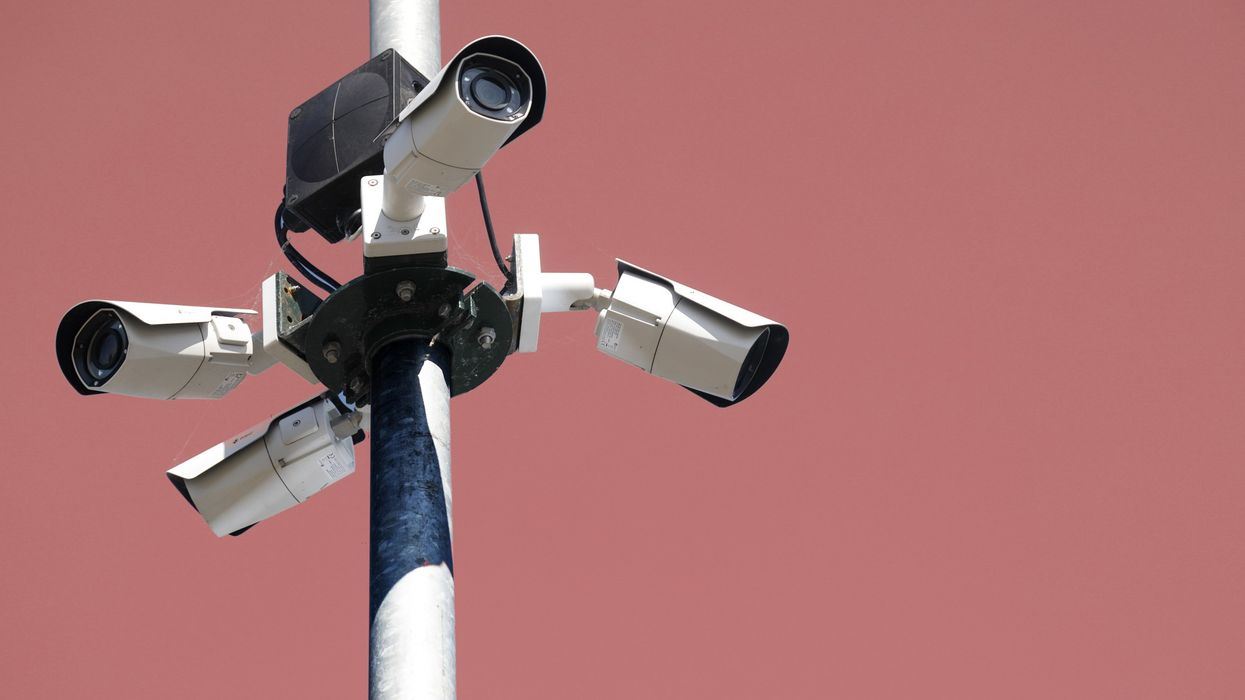
A bill in Congress would ensure that federal agencies cannot use this invasive technology to track, identify, and misidentify millions of people.
Cities and counties across the country have banned government use of face surveillance technology, and many more are weighing proposals to do so. From Boston to San Francisco, Jackson, Mississippi to Minneapolis, elected officials and activists know that face surveillance gives police the power to track us wherever we go. It also disproportionately impacts people of color, turns us all into perpetual suspects, increases the likelihood of being falsely arrested, and chills people’s willingness to participate in first amendment protected activities. Even Amazon, known for operating one of the largest video surveillance networks in the history of the world, extended its moratorium on selling face recognition to police.
Now, Congress must do its part. We’ve created a campaign that will easily allow you to contact your elected federal officials and tell them to support the Facial Recognition and Biometric Technology Moratorium Act.
Face surveillance disproportionately hurts vulnerable communities. The New York Times published a long piece on the case of Robert Julian-Borchak Williams, who was arrested by Detroit police after face recognition technology erroneously identified him as a suspect in a theft case. The ACLU filed a lawsuit on his behalf against the Detroit police.
The problem isn’t just that studies have found face recognition disparately inaccurate when it comes to matching the faces of people of color. The larger concern is that law enforcement will use this invasive and dangerous technology, as it unfortunately uses all such tools, to disparately surveil people of color.
Williams and multiple other Black men (Michael Oliver, Nijeer Parks, Randal Reid, and Alanzo Sawyer) have garnered the attention of national media after face recognition technology led to them being falsely arrested by police. How many more have already endured the same injustices without the media’s spotlight? These incidents show another reason why police cannot be trusted with this technology: a piece of software intended only to identify investigative leads is often used in the field to determine who should be arrested without independent officer vetting.
This federal ban on face surveillance would apply to increasingly powerful agencies like Immigration and Customs Enforcement, the Drug Enforcement Administration, the Federal Bureau of Investigation, and Customs and Border Patrol. The bill would ensure that these and other federal agencies cannot use this invasive technology to track, identify, and misidentify millions of people.
Tell your Senators and Representatives they must co-sponsor and pass the Facial Recognition and Biometric Technology Moratorium Act. It was recently introduced by Senators Edward J. Markey (D-Mass.), Jeff Merkley (D-Ore.), Bernie Sanders (I-Vt.), Elizabeth Warren (D-Mass.), and Ron Wyden (D-Ore.) and Representatives Pramila Jayapal (WA-07), Ayanna Pressley (MA-07), Rashida Tlaib (MI-12), Earl Blumenauer (OR-03), Cori Bush (MO-01), Greg Casar (TX-35), Adriano Espaillat (NY-13), Barbara Lee (CA-12), Eleanor Holmes Norton (DC), Jamaal Bowman (NY-16), and Jan Schakowsky (IL-09).
This important bill would be a critical step to ensuring that mass surveillance systems don’t use your face to track, identify, or harm you. The bill would ban the use of face surveillance by the federal government, as well as withhold certain federal funds from local and state governments that use the technology. That’s why we’re asking you to insist your elected officials co-sponsor the Facial Recognition and Biometric Technology Moratorium Act, S.681 in the Senate and HR.1404 in the House.

Digital rights advocates on Tuesday called for a ban on private use of biometric surveillance technology after a mom taking her daughter to see a Christmas show in New York City was kicked out of the theater after its facial recognition system identified her as an employee of a law firm involved in legal proceedings against the venue's operator.
"There are just so many ways that biometric surveillance technology can be abused to discriminate and put people in danger."
Kelly Conlon was accompanying her daughter and her New Jersey Girl Scout troop on a post-Thanksgiving outing to Midtown Manhattan to see the "Christmas Spectacular" at Radio City Music Hall starring the iconic Rockettes. However, as soon Conlon entered the venue's lobby, security informed her that she'd been flagged by facial recognition and that she would have to leave.
That's because she's an attorney for a law firm currently embroiled in litigation with Madison Square Garden (MSG) Entertainment, which operates Radio City--even though Conlon has nothing to do with the case.
"They knew my name before I told them. They knew the firm I was associated with before I told them. And they told me I was not allowed to be there," Conlon told WNBC.
"I was just a mom taking my daughter to see a Christmas show," she added. "I did wait outside... It was embarrassing. It was mortifying."
MSG Entertainment defended its actions, explaining that is has "instituted a straightforward policy that precludes attorneys pursuing active litigation against the company from attending events at our venues until that litigation has been resolved."
"While we understand this policy is disappointing to some, we cannot ignore the fact that litigation creates an inherently adverse environment," the company added.
Evan Greer, director of the digital rights group Fight for the Future, said in a statement that "this is exactly why we need an outright ban on all use of facial recognition surveillance in places of public accommodation like bars, restaurants, retail stores, and music and sports venues."
"There are just so many ways that biometric surveillance technology can be abused to discriminate and put people in danger," she added. "Madison Square Garden should immediately stop using this invasive, harmful technology, and lawmakers should act to ban this practice for good."
While campaigners have successfully fought for limits and bans on government use of facial recognition at the local level, only three states--Illinois, Texas, and Washington--have enacted comprehensive biometric privacy legislation, with Illinois offering the strongest protections of the three. There are no federal restrictions on the technology.
Greer tweeted that Conlon's case shows that "this is exactly why it is not enough to just ban government and law enforcement use of facial recognition and biometric surveillance."
"There are so many ways private corporations and even individuals can abuse this tech," she added. "It should be banned for all commercial use and public use."
Common Dreams reported last year that a coalition of more than 20 human rights groups called for a total ban on corporate use of facial recognition technology, arguing that "letting this tool of authoritarian control spread throughout the private sector has serious implications for worker organizing rights and heightens the risk of catastrophic biometric data breaches."
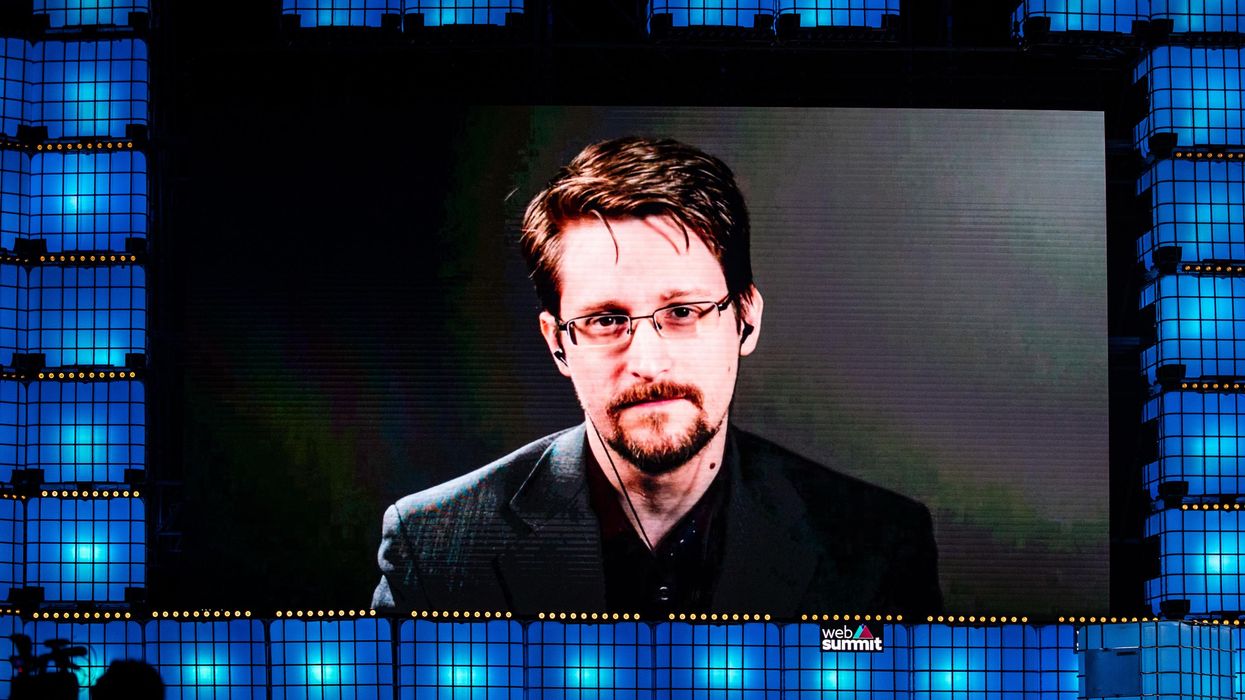
NSA whistleblower Edward Snowden said Wednesday that the U.S. Department of Homeland Security should be shut down after reporting shined light on the agency's sweeping campaign to police what it deems disinformation online, an effort that raised alarm among civil liberties groups.
"It's time to talk about shutting down the Department of Homeland Security," Snowden, a former NSA contractor who exposed the agency's illegal mass spying program in 2013, wrote on Twitter.
"The First Amendment bars the government from deciding for us what is true or false, online or anywhere."
DHS, formed in 2002 in the wake of the September 11 attacks, "was always a mistake, a costly artifact of the hysteric post-9/11 authoritarianism that left us no more safe, but much less free," Snowden continued. "Its plan to become the Speech Police is the final straw."
Snowden was responding to an in-depth story by The Intercept on Monday detailing secretive DHS attempts to "curb speech it considers dangerous" by trying to pressure and "influence tech platforms" such as Twitter and Facebook. The department's "stepped up counter-disinformation effort" began under former President Donald Trump and has continued under President Joe Biden, the outlet noted.
"According to a draft copy of DHS' Quadrennial Homeland Security Review, DHS' capstone report outlining the department's strategy and priorities in the coming years, the department plans to target 'inaccurate information' on a wide range of topics, including 'the origins of the Covid-19 pandemic and the efficacy of Covid-19 vaccines, racial justice, U.S. withdrawal from Afghanistan, and the nature of U.S. support to Ukraine," The Intercept's Ken Klippenstein and Lee Fang reported.
"How disinformation is defined by the government has not been clearly articulated, and the inherently subjective nature of what constitutes disinformation provides a broad opening for DHS officials to make politically motivated determinations about what constitutes dangerous speech," Klippenstein and Fang stressed.
"DHS justifies these goals--which have expanded far beyond its original purview on foreign threats to encompass disinformation originating domestically--by claiming that terrorist threats can be 'exacerbated by misinformation and disinformation spread online," they added. "But the laudable goal of protecting Americans from danger has often been used to conceal political maneuvering."
The ACLU, which has previously called for the dismantling of DHS over its myriad abuses, expressed concerns in response to the The Intercept's story, which noted that the agency's efforts to police disinformation online have only expanded in the wake of the agency's decision to scrap its widely derided Disinformation Governance Board earlier this year.
"The First Amendment bars the government from deciding for us what is true or false, online or anywhere," the ACLU tweeted earlier this week. "Our government can't use private pressure to get around our constitutional rights."
Adam Goldstein, the vice president of research at FIRE--a free speech organization that is fighting right-wing censorship campaigns across the U.S.--told The Intercept that "no matter your political allegiances, all of us have good reason to be concerned about government efforts to pressure private social media platforms into reaching the government's preferred decisions about what content we can see online."
"Any governmental requests to social media platforms to review or remove certain content should be made with extreme transparency," Goldstein added.

More than 100,000 people as of Friday have signed an Amnesty International letter calling upon United Nations member states to "urgently address" government abuse of spyware by enacting a moratorium on its sale, transfer, and use.
"We are witnessing a global spyware crisis in which activists, journalists, and lawyers are targeted with invasive surveillance as a means to silence and intimidate them," Amnesty International secretary general Agnes Callamard said in a statement. "There is an urgent need for stronger human rights protections on the export of surveillance technology."
According to the letter:
Where surveillance is operated without adequate oversight, safeguards, and transparency, the harms of unlawful surveillance impact far beyond those who may have actually been targeted. In the face of opacity and inadequate safeguards, and especially in situations where surveillance is known or suspected to be carried out in unlawful ways, human rights defenders and civil society are forced to self-censor out of fear of being criminalized for their work, even where such surveillance may in fact not be taking place.
Numerous research reports by Amnesty International reveal how this chilling effect can have a serious and detrimental effect on global civil society, affecting not only the right to privacy but also those to free expression and association. Across the globe, human rights defenders have had to live in a constant state of fear, perpetually looking over their shoulders and feeling a sense of impending danger wherever they go as surveillance is often the prelude to other online and offline violence.
"Until a robust human rights regulatory framework is in place, a global moratorium on the sale, transfer, and use of targeted surveillance technology is necessary," Amnesty argues. "The unregulated and un-transparent sale and use of these products means that we may never know the full extent of similar abuses involving other actors. The world can no longer turn a blind eye to this enormous global threat to our rights."
Amnesty's letter comes amid ongoing revelations of individuals targeted with NSO's Pegasus spyware, as well as consumer-grade spyware scandals like TruthSpy, so-called stalkerware that has been planted in the electronic devices of hundreds of thousands of unwitting people.
Amnesty says:
Companies continue to profit from the sale of spyware used for unlawful surveillance. Every month, new cases are confirmed of people being unlawfully targeted with spyware. The past year has seen cases in El Salvador, Greece, Spain, Egypt, Israel/Occupied Palestinian Territories, Morocco-Western Sahara, Poland, and Thailand. The unregulated and opaque nature of the spyware industry means that we may never know the full extent of similar abuses involving other actors.
"U.N. member states must stop using, and stop tolerating, spyware as a tool of repression," Callamard argued. "And until this happens, states must step up and support a global moratorium on the export of spyware."

Privacy rights advocates on Friday expressed disappointment with U.S. President Joe Biden's new executive order intended to advance a surveillance and data transfer agreement with the European Union.
"This is a partial fix to a substantial problem."
"This executive order is a positive yet insufficient step to ensure that any future E.U.-U.S. data transfer deal effectively protects people's rights, and doesn't end up invalidated by the E.U.'s highest court," said Estelle Masse, global data protection lead at Access Now.
"Access Now appreciates the work done to bring more clarity on U.S. safeguards," she added, "but the measures signed today are not sufficient to guarantee an effective right to remedy and to put limitations to the far-reaching scope of U.S. surveillance."
Ashley Gorski, senior staff attorney with the ACLU National Security Project, was similarly critical.
"President Biden's executive order does not go far enough. It fails to adequately protect the privacy of Americans and Europeans, and it fails to ensure that people whose privacy is violated will have their claims resolved by a wholly independent decision-maker," she said. "Although the executive order is a step in the right direction, it does not meet basic legal requirements in the E.U., leaving E.U.-U.S. data transfers in jeopardy going forward."
Biden's order follows the Court of Justice of the European Union (CJEU) striking down the "Privacy Shield" data sharing agreement in 2020 after invalidating the "Safe Harbor" deal five years earlier, in the wake of whistleblower Edward Snowden exposing U.S. mass surveillance.
The order--which all relevant agencies must update their policies to comply with--says in part that "the United States shall conduct signals intelligence collection activities only following a determination that a specific signals intelligence collection activity, based on a reasonable assessment of all relevant factors, is necessary to advance a validated intelligence priority."
A White House fact sheet claims the order "bolsters an already rigorous array of privacy and civil liberties safeguards for U.S. signals intelligence activities," highlighting that it "creates an independent and binding mechanism enabling individuals in qualifying states and regional economic integration organizations... to seek redress if they believe their personal data was collected" in a manner that violates U.S. law.
The civil liberties protection officer in the Office of the Director of National Intelligence "will conduct an initial investigation of qualifying complaints," the fact sheet explains. Biden's order also directs the U.S. attorney general to establish a Data Protection Review Court "to provide independent and binding review" of the first-round decisions.
U.S. Secretary of Commerce Gina Raimondo told reporters at a Thursday briefing that the administration's commitments "fully address" the CJEU's previous concerns "and will cover personal data transfers to the United States under E.U. law," according to Politico.
As the news outlet reported:
The executive order is the next step in the creation of a new trans-Atlantic data sharing agreement that is needed for thousands of companies--from Google to General Electric--to move data between two of the world's most important economies. The decree will now be sent to Brussels where the European Commission--alongside input from the bloc's privacy agencies and politicians, as well as E.U. countries--will transpose the text into its own rules.
That process is expected to take around six months, and will lead to a final pact being published in roughly March, 2023.
Senior Biden administration officials, who spoke on the condition of anonymity because they were not authorized to speak publicly, said they were confident the White House executive order and the Department of Justice's new regulations would satisfy the commission's concerns. More importantly, the officials said they felt the new framework would also withstand any legal challenges that would force the U.S. government to have to go back to the drawing board.
Meanwhile, disappointed privacy rights supporters--who were skeptical that the E.O. will meet the E.U.'s standards--argued that Biden's inadequate action is proof that Congress must step in.
"The United States must urgently act to reform surveillance, provide privacy and data protection rights in its statutes at the federal level, and give non-U.S. persons a comprehensive right to remedy," said Willmary Escoto, U.S. data protection lead at Access Now.
"The lack of political willingness in the U.S. to protect privacy, in statutes and in practice, is putting people at risk in the U.S. and outside," Escoto warned. "This is a partial fix to a substantial problem, and while negotiators have made progress, this order may not satisfy all the requirements set by the E.U. court."
"Congress must enact meaningful surveillance reform."
Demand Progress senior policy counsel Sean Vitka declared that the order "fails to put in place the meaningful reforms necessary to protect privacy on both sides of the Atlantic and should be rejected as insufficient."
"The E.O. expressly provides for bulk surveillance, guaranteeing entirely innocent people will be harmed. It does not provide meaningful redress for people who have been wrongfully spied upon, including by failing to require government notice to them. And the E.O. can be changed by the administration at will," he continued. "The White House has failed to grapple meaningfully with the privacy questions at the heart of this issue. Congress must act where the administration has not."
Gorski at the ACLU agreed, stressing that "the problems with the U.S. surveillance regime cannot be cured by an executive order alone."
"To protect our privacy and to put trans-Atlantic data transfers on a sound legal footing, Congress must enact meaningful surveillance reform," she said. "Until that happens, U.S. businesses and individuals will continue to pay the price."

American whistleblower Edward Snowden was among 72 foreign-born individuals granted Russian citizenship on Monday in a decree signed by President Vladimir Putin, just over seven months into Russia's war on Ukraine.
"After two years of waiting and nearly 10 years of exile, a little stability will make a difference for my family."
Snowden--who exposed the mass surveillance practices of the U.S. National Security Agency (NSA)--has lived in Russia since the summer of 2013, when the United States revoked his passport while he was attempting to travel from Hong Kong to Ecuador.
Shortly after Russia granted him permanent residency rights, Snowden announced in November 2020 that he and his wife, Lindsay Mills--who gave birth to their first son that year, and a second son earlier this year--were seeking dual citizenship.
"After years of separation from our parents, my wife and I have no desire to be separated from our son," Snowden explained. "That's why, in this era of pandemics and closed borders, we're applying for dual U.S.-Russian citizenship."
"Lindsay and I will remain Americans, raising our son with all the values of the America we love--including the freedom to speak his mind. And I look forward to the day I can return to the states, so the whole family can be reunited," he added. "Our greatest wish is that, wherever our son lives, he feels at home."
In a tweet noting that statement and sharing a family photo, the 39-year-old said Monday that "after years of separation from our parents, my wife and I have no desire to be separated from our SONS. After two years of waiting and nearly 10 years of exile, a little stability will make a difference for my family. I pray for privacy for them--and for us all."
Snowden attorney Anatoly Kucherena told Russian state-owned RIA Novosti on Monday that Mills is seeking citizenship. The lawyer also said that Snowden will not be forced to participate in the recently announced "partial mobilization" to send troops to Ukraine, as he has not served in Russia's army.
Not long before Russia invaded Ukraine in late February, Snowden accused the global news media of "pushing for war." Since the invasion, he has faced some criticism for his lack of comment on the conflict.
Just after the war began, he said that "I'm not suspended from the ceiling above a barrel of acid by a rope that burns a little faster every time I tweet, you concern-trolling ghouls. I've just lost any confidence I had that sharing my thinking on this particular topic continues to be useful, because I called it wrong."
In response to the citizenship news on Monday, Evan Greer, director of the U.S.-based digital rights group Fight for the Future, tweeted that "if the Biden administration dropped the charges against Snowden, Putin wouldn't be able to use him for a PR stunt, just sayin'."
Shadowproof managing editor Kevin Gosztola said: "Let's be clear. Snowden sought citizenship in Russia because his government will not let him return to his home country without putting him on trial exposing mass surveillance that systematically violated the privacy rights of millions and even spurred modest reform."
Snowden--who potentially faces decades in U.S. prison for theft and Espionage Act charges--has previously said that he would return to the United States if he believed he would receive a fair trial.
A federal appeals court ruled two years ago that the NSA's warrantless surveillance of U.S. phone records--which Snowden exposed--was illegal. Snowden has continued to criticize years of impunity for the agency's violation of Americans' civil liberties.
"Our position has not changed. Mr. Snowden should return to the United States where he should face justice as any other American citizen would," Ned Price, a spokesperson for the U.S. State Department, said Monday, also suggesting that the exile may be required to fight in Russia's war against Ukraine, despite his attorney's comments on the matter.
The Washington Post reported that White House Press Secretary Karine Jean-Pierre declined to comment, only saying that "since I believe there have been criminal charges brought against him, we would point you to the Department of Justice for any specifics on this."
Meanwhile, in Russia, when asked if Putin will meet with Snowden, presidential spokesperson Dmitry Peskov reportedly said that "there are no such plans."

For generations, workers have been punished by corporate bosses for watching the clock. But now, the corporate clock is watching workers! They count this as progress.
Called "digital productivity monitoring," it's an integrated computer system including a real-time clock, camera, keyboard tracker and algorithms to provide a second-by-second record of what each employee is doing. Jeff Bezos, boss of Amazon, pioneered use of this ticking electronic eye in his monstrous warehouses, forcing hapless, low-paid "pickers" to sprint down cavernous stacks of consumer stuff to fill online orders, pronto -- beat the clock, or be fired.
"Terrific policy!" exclaimed taskmasters at hospital chains, banks, tech giants, newspapers, colleges and other outfits employing millions of midlevel professionals. So, they've been installing these unblinking digital snoops to watch their employees, even timing bathroom breaks and constantly eyeing each worker's job performance. New software with such Orwellian names as WorkSmart and Time Doctor has been plugged in to count worker's keystrokes and -- every 10 minutes -- to snap pictures of workers' faces and screens, recording all on individual scoreboards. You are paid only for the minutes the computers "see" you in action. Bosses hail the electronic minders as "Fitbits" of productivity, spurring workers to keep noses to the grindstone, and instilling workplace honesty.
Only... the whole scheme is dishonest. No employee's worthiness can be measured in keystrokes and 10-minute snapshots! What about thinking, conferring with colleagues, listening to customers, etc.? Nope -- zero "productivity points" are awarded for that work. For example, The New York Times reports that the multibillion-dollar United Health Group marks its drug-addiction therapists "idle" if they are conversing offline with patients, leaving their keyboards inactive.
Employees mostly call this digital management "demoralizing," "toxic" and "just wrong." But corporate investors are pouring billions into it. Which group do you trust to shape America's workplace?
What makes a newspaper great? Many say it's having fearless, street-savvy reporters. Some say it's having owners and top editors with the integrity to shine the light of investigative journalism on the power structure's avarice and abuses.
But, no, says Fred Ryan, top executive of The Washington Post. The secret to greatness, he barks to the Post's journalists, is attendance. A right-wing political functionary, Ryan was handpicked to be CEO of the legendary paper by Jeff Bezos in 2014, when the Amazon billionaire bought the Post. But under Ryan's stewardship, readership is in decline, which the former staff director for Ronald Reagan blames on sluggards who don't spend enough time in the newsroom. So, he's become the hall monitor, keeping tabs each morning on which reporters come to the office, measuring their productivity by attendance.
Having only been a corporate bean counter, never a journalist, Fred seems unaware that a good reporter's real work is out on the beat, not sitting in front of a computer. No doubt he would've fired Bob Woodward and Carl Bernstein for being out of the office so often to meet with Deep Throat to uncover Nixon's Watergate scandal. In fairness, though, he apparently has a two-part plan to boost team spirit: (1) Eliminate 100 reporters, and (2) judge the output of the remaining staff by counting the number of video conferences they attend each week.
But that's hardly the totality of Ryan's journalistic innovations. The big news is that, to boost readership, he's hired not one, but two high-dollar public relations firms to create a cutting-edge "branding strategy" and advertising campaign for the Post. Already they've come up with a spiffy new corporate slogan: "We don't just break news. We break ground." Wow -- how great is that? (Never mind that some wags have changed the second line to, "We break wind").
When overpaid corporate boneheads like Ryan substitute slogans and computer metrics for real solutions, they're admitting that they are the problem; they simply don't know how to motivate and manage a creative workforce. They should resign in shame.
Romeo Langhorne is the latest victim of an FBI phony terror entrapment scheme. On July 7, 2022 he was sentenced to 20 years in prison for uploading a bomb-making video. Langhorne didn't make a bomb. He uploaded a video while under the direction of an FBI informant. The video had in fact been produced by the government.
More than 20 years after September 11, 2001 Americans are still being told that they are at risk of terrorist attacks. The color-coded risk assessments, NSA surveillance of all electronic and internet activity continues. The threat of terror attacks is the justification for encroaching on civil liberties and phony terror schemes concocted by informants still get headlines and give legitimacy to the continued violations of our rights.
Langhorne is a 32-year-old Black man who was diagnosed with schizophrenia. He fits the description of nearly every person whom the FBI has speciously claimed to be a terrorist in the past 20 years. They are Black Americans, Muslims from this country or immigrants who are often vulnerable economically or emotionally. The list of people who were said to have planned acts of terror are victims of intimidation and entrapment from informers who are the ones who lead them to commit the act for which they are convicted.
In this case, Langhorne pleaded guilty to "probably at some point" pledging allegiance to ISIS. The plea is meaningless when no one is ever acquitted. Pleading guilty in this case gets a 20-year sentence, taking the chance of pleading innocent when the prosecutorial deck is stacked against the defendant means risking many more years in prison when the inevitable guilty verdict is reached.
John Leombruno, Langhorne's attorney described the scenario which occurs in most terrorism prosecutions, "Acting in an undercover capacity, they initiated conversations with Mr. Langhorne and incited the production of a video that would inform individuals on how to make an explosive...To make certain that a prosecution of the defendant would occur, the government produced the actual video in question (and), circled back to Mr. Langhorne when the interactions and conversations between them grew cold."
Langhorne shares the same fate with music Tarik Shah, the Liberty City Seven, and the Newburgh Four. All were targeted by FBI informants. In the case of the Liberty City Seven no crime was committed and the Newburgh Four supposed bombing plot was led by the informant, who created the crime himself.
Little has changed since this Black Agenda Report commentary in 2010, which stated that the true purpose of these entrapments is, "... to terrify the American public, so that they will surrender their civil liberties - possibly the greatest extortion scheme in U.S. history." Of course, Black targets are the most useful, as they always "fit the profile" when some wrongdoing is being concocted.
In the wake of the September 11 attacks, congress passed the Patriot Act, far-reaching legislation that has impacted civil liberties ever since. At the time it was said to be temporary, yet it has been renewed like clockwork, without opposition or even minimal questioning from members of Congress or the corporate media.
Langhorne was under surveillance from 2014 until his arrest in 2019. We see the usual hyperbolic claims of terroristic intent along with vague assertions of pledges to ISIS or another organization. In all these years there have been no Jihadist terror events in the U.S. Plots are produced by paid snitches and the wheels of injustice grind on and on.
Giving "material support" is a catch-all phrase that can mean anything that prosecutors want. Any statement can be called a pledge of support to ISIS. The end result is that of the 979 terror charges filed since September 11 only 7 individuals have not gone to jail. A guilty plea in cases such as these proves absolutely nothing.
So 32-year-old Romeo Langhorne gets 20 years in federal prison followed by 15 years of supervision. He will be a senior citizen by the time he is truly free from law enforcement. No one had anything to fear from him or the hundreds of others who have been prosecuted. Apparently, there aren't any real terrorists working in the U.S. If they do exist the feds can't find them. They can only find hapless dupes to persecute and prosecute so that the people don't question what their government does in their names.

Proceeds from an auction of an unusual edition of Margaret Atwood's classic dystopian novel The Handmaid's Tale will go to the free expression advocacy group PEN America, as the group stands up to right-wing attempts to ban books in the United States.
The single copy of the novel is made entirely of flame-resistant material, as evidenced in a video released Monday in which Atwood herself attempts to light the book on fire.
Atwood and the publishing company Penguin Random House announced Monday that the book will be auctioned off at Sotheby's New York, both to help PEN America fight censorship and as a challenge to enacted and attempted book bans.
"To see her classic novel about the dangers of oppression reborn in this innovative, unburnable edition is a timely reminder of what's at stake in the battle against censorship," Markus Dohle, CEO of Penguin Random House, told the Associated Press Tuesday.
The publisher worked with Atwood, PEN America, the Toronto-based creative agency Rethink, and a bookbinding studio called the Gas Company to create the book.
The flame-proof copy is made of thin sheets of Cinefoil, an aluminum product, and was sewn together using nickel copper wire.
The creation of the book comes as attempts to ban books by lawmakers and school districts have surged to their highest level since the American Library Association began recording such censorship two decades ago.
The group reported 729 challenges to materials in schools and libraries. Last week, more than 1,000 children's book authors and artists signed a letter condemning "the efforts by organized groups to purge books from our nation's schools."
The Handmaid's Tale was banned in schools in Texas and Kansas last year.
According to PEN America, as Republicans center their 2022 electoral campaigns largely on protesting the teaching of the United States' long history of racial injustice and discussions of gender identity in public schools, GOP lawmakers in 42 states have proposed nearly 200 pieces of legislation seeking to limit school discussions of such topics.
The unburnable copy of The Handmaid's Tale is "an unforgettable visual metaphor" for the current political climate in the U.S., Atwood told the AP.

U.S. Immigration and Customs Enforcement is operating a digital surveillance dragnet through which the agency is able to access information about nearly every person in the United States, a two-year investigation by researchers from the Center on Privacy & Technology at Georgetown Law revealed Tuesday.
"ICE has created a surveillance infrastructure that enables it to pull detailed dossiers on nearly anyone, seemingly at any time."
The study--entitled American Dragnet: Data-Driven Deportation in the 21st Century--found that Immigration and Customs Enforcement (ICE) "has built its dragnet surveillance system by crossing legal and ethical lines, leveraging the trust that people place in state agencies and essential service providers, and exploiting the vulnerability of people who volunteer their information to reunite with their families."
Nina Wang, a policy associate at the Center on Privacy & Technology and a report author, told The Guardian that even the study's researchers were shocked by the scale of the surveillance.
"I was alarmed to discover just how easily federal immigration agents can pull detailed records from the most intimate corners of all our lives," she said. "These tactics open massive side doors around existing privacy protections, and many lawmakers still have no idea."
The study's researchers wrote that "since its founding in 2003, ICE has not only been building its own capacity to use surveillance to carry out deportations but has also played a key role in the federal government's larger push to amass as much information as possible about all of our lives."
"By reaching into the digital records of state and local governments and buying databases with billions of data points from private companies," they added, "ICE has created a surveillance infrastructure that enables it to pull detailed dossiers on nearly anyone, seemingly at any time."
According to the study:
In its efforts to arrest and deport, ICE has--without any judicial, legislative, or public oversight--reached into datasets containing personal information about the vast majority of people living in the U.S., whose records can end up in the hands of immigration enforcement simply because they apply for driver's licenses; drive on the roads; or sign up with their local utilities to get access to heat, water, and electricity.
Despite the incredible scope and evident civil rights implications of ICE's surveillance practices, the agency has managed to shroud those practices in near-total secrecy, evading enforcement of even the handful of laws and policies that could be invoked to impose limitations.
The study found that ICE has used facial recognition technology to search the driver's license photos of around one in three of all adults in the United States. The agency also has the ability to access department of motor vehicle (DMV) data of 70% of adults and tracks vehicle movement in cities where 70% of the adult population lives.
When three in four adults in the U.S. "connected the gas, electricity, phone, or internet in a new home, ICE was able to automatically learn their new address," the authors wrote. "Almost all of that has been done warrantlessly and in secret... Federal and state lawmakers, for the most part, have yet to confront this reality."
A review of ICE expenditures from 2008 through 2021 found that the agency's spending on surveillance soared nearly 500% from $71 million to $388 million. The agency spent more than $1.3 billion on geolocation technology, $96 million on biometrics, $97 million on private data brokers, and $569 million on data analysis during that same period.
ICE also paid the CIA-funded software firm Palantir Technologies $189 million for customized programs allowing agents to link public and private databases so that they could "visualize an interconnected web of data pulled from nearly every part of an individual's life."
The report urges ICE to "end all dragnet surveillance programs, including the use of face recognition on DMV data for immigration enforcement" and to "stop using water, heat, light, phone, and internet records to carry out deportations."
It further recommends that Congress reform immigration laws to "radically reduce" deportations, stop ICE from using DMV data as a "deportation goldmine," and "conduct aggressive oversight" of ICE surveillance.
The authors also call on federal, state, and local authorities to protect people who entrust them with personal information, noting that of the 17 jurisdictions that allow undocumented residents to apply for driver's licenses, only seven have passed laws seeking to safeguard against warrantless ICE searches and facial scans of drivers' data and photos.
Furthermore, the researchers implore states to prohibit the use of phone and utility records for purposes of immigration enforcement and to audit ICE's access to databases.