
SUBSCRIBE TO OUR FREE NEWSLETTER
Daily news & progressive opinion—funded by the people, not the corporations—delivered straight to your inbox.
5
#000000
#FFFFFF
To donate by check, phone, or other method, see our More Ways to Give page.


Daily news & progressive opinion—funded by the people, not the corporations—delivered straight to your inbox.
I may have been imprisoned, but there I was in Italy trumpeting the call for awareness and reformation of the Espionage Act.
I had a palpable sense of nerves approaching the day I was to travel to Perugia for the International Journalism Festival. I was invited by Kathleen McClellan and Jesselyn Radack of WHISPeR who were invited to present on the impact of leak prosecutions on the free press. I was certainly honored to be asked, but those emotions of gratitude were quickly becoming overcome by not very slight feelings of dread.
This was to be my first trip abroad in a very long time, certainly the first time since being released from prison. Since January 2018, I had taken several trips domestically, but traveling abroad was a whole different animal for me. No one is ever told they are on a “no fly” list; you find out when it’s too late to do anything about it. Funny how the government is insistent on keeping those whose rights are being taken away ignorant of the fact that their rights have been taken away. Not having tested my viability to leave the country, I had to wonder if my right to travel had been restored like my right to vote. Of course, I had already had such an experience.
After being released in 2018, I immediately started taking whatever steps I could to regain at least some of what I had lost after being convicted of violating the Espionage Act and spending time in prison. One thought I had was that having a passport would give a sense of freedom I hadn’t had throughout the long, exhaustive legal ordeal. At least knowing I had the ability to travel like I used to was worth whatever difficulties I had to go through to get to that point. Always skeptical, I did exhaustive “research” (ala Google) and I confirmed with my probation officer about my ability to apply for a passport. I was told that there were no “holds” on my ability to get a passport. Someone forgot to tell the passport office at the Department of State.
I wasn’t on that stage just to scare the audience about how horrible it will be to be charged under the Espionage Act, I was there to tell them that if I could stand up against it, so can the rest of the world.
Having not received my passport after the stated waiting period (and actually giving it an additional week), I reached out to the passport office to inquire about the status of my passport. I was told that there was a “hold.” The subsequent unsigned letter from the State Department was even less helpful. It made an outdated reference to an ancient court order (going at least back to 2011 when I was arrested) requiring me to gain permission to travel. Obviously the State Department opted to remain ignorant of my status and denied my application. But, they did graciously inform me of an appeals process and the fact that the application fee I paid was nonrefundable.
I guess I could have left it alone and resolved myself to not having a passport, not having even a scintilla of the freedom I once had, but I’ve never been one to settle. I once again reached out to my probation officer and let her know that someone somewhere still considered me a threat to national security. It took months of back and forths with various probation officers, a motion filed with the court to release my old passport from its vault and a blessing that I could get a new one, another application (and fee), unknown State Department officials, and inestimable patience, but I finally received my passport in the mail in mid-2019. It took another struggle, but I prevailed.
Back to the present, even with a passport, I never thought I’d be able to take a trip like this ever again; an exhaustive legal ordeal and prison can drain possibility out of your spirit. But, life is funny. Just when I was thinking nothing that I had would be possible again, doors from unexpected directions open. I was going to Italy!
I was absolutely nervous about making the trip to Italy, I didn’t even try to convince myself otherwise. I couldn’t help wondering, despite being able to get a passport, if I was on some sort of “no fly” list or if there remained some sort of “hold” on me that would prevent me from leaving the U.S. The time was fast approaching to see what my status was.
St. Louis Lambert International Airport (STL) is rarely busy, and I was thankful to have that convenience instead of a long wait before getting bad news. The first time I had to present my passport was when checking my bag. I nervously handed it over trying to gird myself for a quizzical look from her if something were to pop up on her screen. She looked at my document and handed it quickly back to me. “Oh no, here it comes” pounded through my mind, but it was quickly tempered when she noted that I hadn’t signed my passport. What an idiot! I went through so much to get the damned passport, I forgot to sign it!
That self-imposed fiasco was brief, and I felt could be a possible prelude of what was to come because I still had security to go through. Despite my apprehensions, there were no issues with security in STL nor boarding the international flight in Chicago. I never felt so grateful being able to settle my 6’4” frame into a cramped coach seat on a fully packed flight in my life.
The amount of relief I felt when actually sitting on the plane awaiting departure was tremendous. But, just when you feel relief at passing one obstacle, you can’t help but anticipate the next one. The imagination can be a killer. Shortly into the eight-plus hour flight, I was racked with whether I would be allowed into Italy. In addition, even if I was allowed into the country, I was reminded of what happened to fellow Espionage Act brother in arms, Thomas Drake. In 2021 he was slated to speak at a security conference in Australia only to be “disinvited” at the last minute. Whomever made the decision, and for whatever reason, his voice was effectively silenced, at least at that conference. I just had to continually tell myself that nothing like that had occurred at any of my other speaking engagements and it wasn’t going to happen on this trip.
It wasn’t until I checked into my hotel room that I let out one of the biggest exhales of my life. Passport control at Fiumicino airport in Rome was a non-issue, I was herded through just like everyone else and no blaring alarms went off. For the first time in a very long time, I felt not so trapped in a country that didn’t want me to serve. Being outside of the U.S., I felt like I was once again able to experience and be a part of the bigger world out there. With the time I had, I was eager to be in full tourist mode; I wanted to see everything. Perugia is a beautiful city full of stunning architecture and a vibrant culture that was a wonderful experience for me. With every step I took, I had to remind myself that I had spent two and a half years in prison, but that I certainly wasn’t there anymore.
Finally, down to business. I was in Italy to speak at the International Journalism Festival about the impact of leak prosecutions; mainly I would tell the corps of journalists from all over the world about what it means to be targeted and tried under the Espionage Act.
It was clear that the festival, which was in its 24th running, was going through a bit of Assange-fatigue, as not many sessions even touched on that pressing subject. I was told that there had been a focus on Julian Assange in a previous running of the festival and they wanted subsequent runs to center on other areas. Even though the main theme of the festival was artificial intelligence and its implications for freedom of the press, I could sense a pallor of apprehension and uncertainty looming over just about every journalist I interacted with. Speaking with the journalists there, I was reminded of my recent uncertainty about traveling outside the U.S. Though they were hopeful for a non-issue when ultimately confronted with the prospect of being targeted or stopped by the Espionage Act ala Assange, they couldn’t help but fear the worst. Much like if I had been stopped from either leaving the U.S. or entering Italy, once the worst happens, there may not be much that can be done about it. If Assange is ultimately extradited to the U.S. to face the Espionage Act, that will most definitely be the worst thing to happen to not only the journalists at the festival, but journalists and press freedom anywhere in the world. Those journalists at the festival were standing in the security line just like me, wondering if their rights were going to be taken away and not allowed to pass.
Surprisingly, I felt a hint of the same false sense of security that has permeated U.S. mainstream media in regards to Assange. They don’t see Assange as a journalist. They engage in a self-deception that they have nothing to fear from the Espionage Act. Endemic with Espionage Act and whistleblower prosecutions is character assassination that puts the focus squarely on the revealer and away from the government wrongdoings and illegalities revealed.
Prior to the festival, I would have found it hard to believe that the press out in the world wouldn’t see through that smokescreen. What I learned is that it wasn’t so much that the festival attendees in Italy didn’t see Assange as a journalist, they didn’t want to see him as just a journalist. He’s something in a potentially related, but an altogether different category. One of the best ways to deal with a potentially dangerous situation is to imagine that it can’t or won’t happen to you. I of course didn’t want to view myself as one of those who get put on no-fly lists, but the reality was that it didn’t matter how I viewed myself. Persecution is the sole province of the persecutor. The overall determining factor for me was and has been how my government saw me. It viewed me as a threat to national security in bringing an employment discrimination suit against the CIA and portrayed me the same way by falsely accusing me of espionage. Whether the U.S. government considers Assange a journalist or not is not the point. He will be potentially extradited and tried under the Espionage Act because they view him as a threat because of what he exposed. And that was a point I imagined trumpeting at the festival, imploring the festival attendees to “wake up!”
But, that was not my only purpose at the festival. Part of what I wanted to convey is that despite the terrible ordeal I went through and what Assange is currently going through at the hands of a vengeful U.S. government wielding the Espionage Act to quash dissent and silence whistleblowers, there is still hope that something can be done. I wasn’t on that stage just to scare the audience about how horrible it will be to be charged under the Espionage Act, I was there to tell them that if I could stand up against it, so can the rest of the world. I may have been imprisoned, but there I was in Italy trumpeting the call for awareness and reformation of the Espionage Act. No aggressor and no government, regardless of the power wielded, is beyond reproach. With Assange, the U.S. is threatening to assume a global reach in its ability to silence dissent. But, the more all of us, and especially journalists who can provide avenues of awareness and accountability for brave whistleblowers, stand up against unjust laws like the Espionage Act, not only will change be possible, it will be inevitable.
I don’t know if my message had any impact; the shock value alone of my ordeal can, unfortunately, be the real attention-getter. Regardless, my experience was further affirmation that, even though I went through hell, I would not be defeated. At the least, I wanted to be an image of perseverance and resilience that maybe could be a force, however slight, for awareness and change.
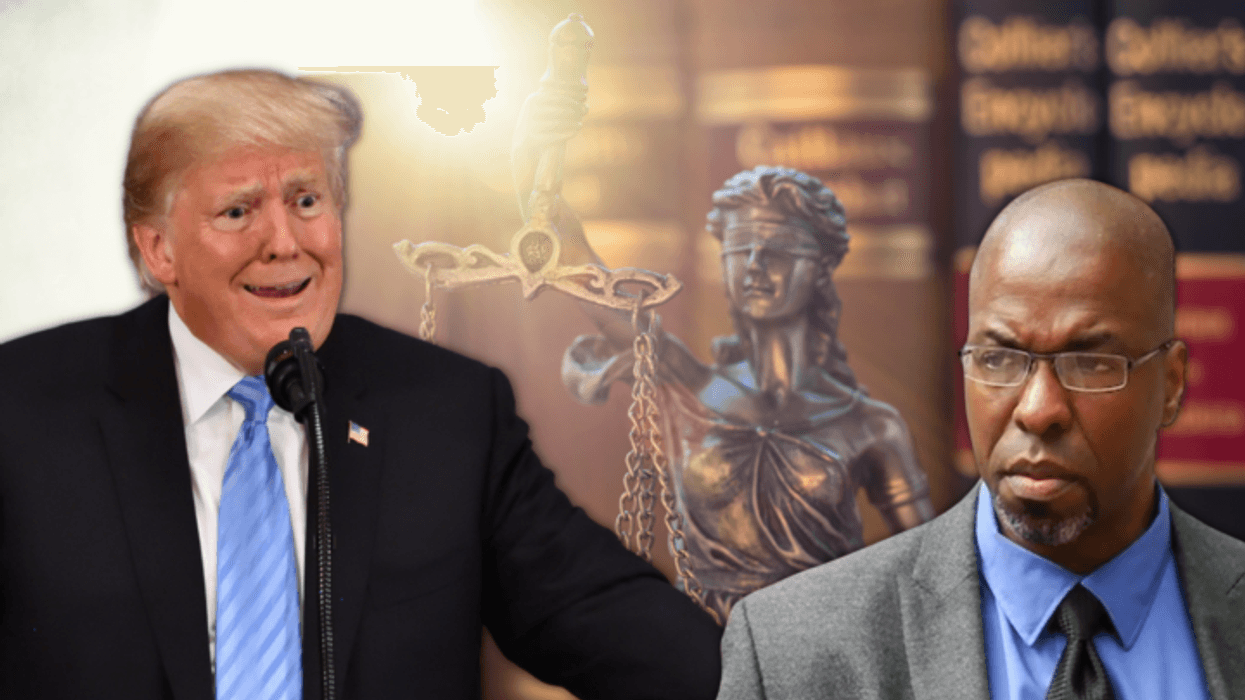
Our tribulations are so unique that Donald and I could legitimately form a support group of two to lament, share, and grow from our experiences being indicted under the Espionage Act.
It doesn’t take much to shock me, but that former President Donald Trump has been charged with violating the Espionage Act has me unequivocally astonished. I can’t say that I have many, if any commonalities with current or former presidents, and I certainly take no pride in the shared tribulation I have with Donald. It’s not so much the fact of someone being charged with violating the Espionage Act (a sad reality that is only increasing), it is that a former president has been so charged.
This development has me thinking of the profound shock expressed as, “Et tu, Brute?” by Shakespeare’s Julius Caesar as he was being assassinated by the Roman Senate conspirators. Whereas Caesar’s shock was founded upon being betrayed by one he trusted, mine is founded upon the seeming, at least initial, equal application of the Espionage Act rather than any associative sense of brotherhood. That Donald was charged with the same crime I was alleged has me pondering, “Et tu, Donald?”
But, just because there can be the perceived equal application of the Espionage Act with Trump’s indictment, it doesn’t mean the law and its application are legitimate. First and foremost, the Espionage Act is an unjust law that should be abolished. Its use to target and persecute whistleblowers like Daniel Ellsberg, Reality Winner, and John Kiriakou among others, essentially as spies, is overbroad and clearly beyond its original intent. I have to agree with Trump’s attorney who said that the Espionage Act charge is “ludicrous.” The Act’s non-specific language creates an overly broad net that the government and the Department of Justice casts, unfettered in any direction it so chooses. How the Espionage Act is being used is ludicrous, but considering the DOJ’s track record in implementing the outdated law, it would have had a hard time NOT indicting Trump under it.
Given how Donald has been treated, the similarities between he and I after being indicted under the Espionage Act are really quite minimal; his criminal justice system is actually respectful to him as a human being.
The similarities I and Donald share do not end with being indicted under the Espionage Act. Both his 38-count and my 10-count indictments concern elements of our alleged unauthorized conveyance of national defense information related to Iran. Iran has been an issue of national defense, actual or otherwise, since at least 1979, and U.S. government hypersensitivity regarding that nation is as constant as the Northern Star. For me, I was accused of leaking information related to Operation Merlin, a flawed CIA operation designed to thwart Iran’s nuclear weapons ambitions. For Donald, part of his indictment details his discussing a “highly classified” U.S. plan of attack against Iran.
For comparison’s sake, the allegations against Trump are absolutely and significantly worse than anything I was alleged to have done. As president, Trump held the highest office of the land with essential authority over all classified information in the government. I think it can be safely assumed that the documents he mishandled either are or can be labeled as being related to national defense, which is usually at the heart of Espionage Act charges. His criminal mishandling of classified information can and should be considered a threat to national security given his former position and continued influence. Regardless, our tribulations are so unique that Donald and I could legitimately form a support group of two to lament, share, and grow from our experiences with national defense as it relates to Iran and being indicted under the Espionage Act.
Though there are definite similarities, I have to admit to no illusion that what Donald is experiencing bears any real-world resemblance to mine. Though having federal agents descend upon and search anyone’s home is an abrasive affair, and that was certainly my experience, it wasn’t so for Donald. In what was comparatively a congenial affair, the FBI convened at Donald’s resort club, Mar-a-Lago, and seized 11 sets of documents, some marked as classified, TS, or SCI, which are obvious indicators for top secret or sensitive compartmented information. No such documents were retrieved from my home.
Our arrests were also completely different. Donald was allowed to surrender himself to law enforcement and was placed under arrest. My experience was not as congenial. I was lured to my place of employment and ambushed by the FBI. I still feel the sting of that first instance of being shackled with handcuffs. Donald was spared that treatment. He was also spared having to spend any time behind bars, separately from his family and loved ones.
Donald is now, or should be, under the supervision of the federal probation office. I don’t know the terms of his supervision, but I do know there is at least one term that I’m quite certain he is fulfilling. Once I was released from confinement, the probation office levied numerous requirements on me for the privilege of not having to stay in jail pending trial. One of those requirements was that I had to look for work. I had, of course been fired by my then employer, but a condition levied by the honorable judge Leonie Brinkema of the Eastern District of Virginia in the 4th Judicial Circuit was that I could not return home, I had to stay in Virginia, a state I hadn’t lived in for more than a decade. I certainly tried, but of course I couldn’t find a job in a state where I didn’t live and had no permanent residence. As a result, I endured much grief and the threat of being returned to the Alexandria jail. Unlike me, I do believe Donald has been able to fulfill this requirement, if it has been levied upon him. Donald is running for president. I can’t see much argument being put up that he’s not actively seeking employment. If I had only known, it would have saved me the constant chastising from the probation office and prosecutors about finding a job.
Oh, and I certainly have to wonder if Donald is being drug tested. The honorable Brinkema in my case stated that she always requires drug testing, despite the fact that there were no indications of drug use in my past. The judge in Donald’s case should make the same requirement to match the other indignities I and anyone else who has been charged with violating the Espionage Act has had to endure.
This is all to say that I don’t really recognize the criminal justice system that Donald is currently dealing with. We were both indicted under the same law, but that is where the similarities end. I have not been able to say “You too, Donald?” with regard to his actual treatment after being indicted under the Espionage Act.
Given how Donald has been treated, the similarities between he and I after being indicted under the Espionage Act are really quite minimal; his criminal justice system is actually respectful to him as a human being. However, there is one aspect of the criminal justice system I faced that Donald should, if not must, face, and that is prison. My experience and that of many others is that you cannot and in fact are not allowed to defend yourself against the Espionage Act. Donald should also face the same impossible task.
From its inception, the Espionage Act has become, through years of judicial deference and political indifference, a strict liability law. Black’s Law Dictionary defines a strict liability law as:
…a legal concept that holds a defendant responsible for their actions regardless of their intent at the time of the action. Strict liability is based on a duty to compensate for harms caused by an activity or behavior, rather than proof of negligence or intent to do harm.
The Espionage Act is a law that assumes guilt without proof. No whistleblower who has been charged under the Espionage Act has been able to defend their action with disclosures about why they disclosed alleged classified information. There is no such affirmative defense available to the accused. In addition, and even more effective against whistleblowers, the government is not required to prove the defendant acted with any intent to harm the U.S. national security or aid a foreign power. Whistleblower or not, the Espionage Act is a law that no one can defend against.
There have been few instances of an actual trial when the Espionage Act has been charged. For example, the Rosenbergs in 1950 were convicted, Ellsberg’s case was dismissed due to government misconduct, and Thomas Drake was allowed to plead to lesser charges after similar misconduct. Indeed, most, if not all others result in a guilty plea and that in itself should be a testament to the unfettered power the government has when charging anyone with violating the Espionage Act. This is most likely the reason why the typical result in Espionage Act indictments is a plea and prison. Most individuals charged with violating the Espionage Act have been whistleblowers trying to serve the country by revealing government illegalities (i.e. John Kiriakou and the torture program); Trump cannot claim any such motivation, not that it would matter. His mishandling of classified documents was completely self-serving and with a very real potential for those documents to wind up in the hands of purported enemies of the state. The overriding question has to be how Donald will defend himself against the Espionage Act when clearly it is not possible.
True, my experience is and has been an exception to the unfortunate rules of pleas or government misconduct, but exercising my right to a trial to defend myself against wrongful charges was no match against the Espionage Act. I faced a vengeful government with a free hand to try me without having to prove anything other than the fact that I was charged. Evidence, a fair process, a fair and unbiased investigation and prosecution, and most importantly truth were of no concern, I was found guilty and sentenced to prison. Even a public trial, which is supposed to be the forum of innocence until proven guilty and where guilt is supposed to be proven beyond a reasonable doubt, is but a mere inconsequential nuisance to the Espionage Act.
If my “Et tu, Donald?” shock is to be validated, that is also the only real question left when it comes to Donald and his indictment. There really is no reason for the government to seek anything other than prison time for Donald. If Donald is going to face the same criminal justice system under the Espionage Act is yet to be seen, despite the indications that his status does not place him above the law.
If Donald is to face the same legal system as I was persecuted under, the only remaining “Et tu, Donald?” for me will be when he is sentenced to prison. He has been charged with violating the Espionage Act. The end result must be a prison sentence for him as it was for me and the others who have been similarly charged. The government could have taken the easy way out and not charged him with violating the Espionage Act as it did with General David Petraeus (among other honorable men) who also should have been a shining example of an equal application of the law, but at this point, it cannot. The dogs of war have been unleashed and all that is left is for Donald to be carved like a dish fit for the gods, much as Caesar was.
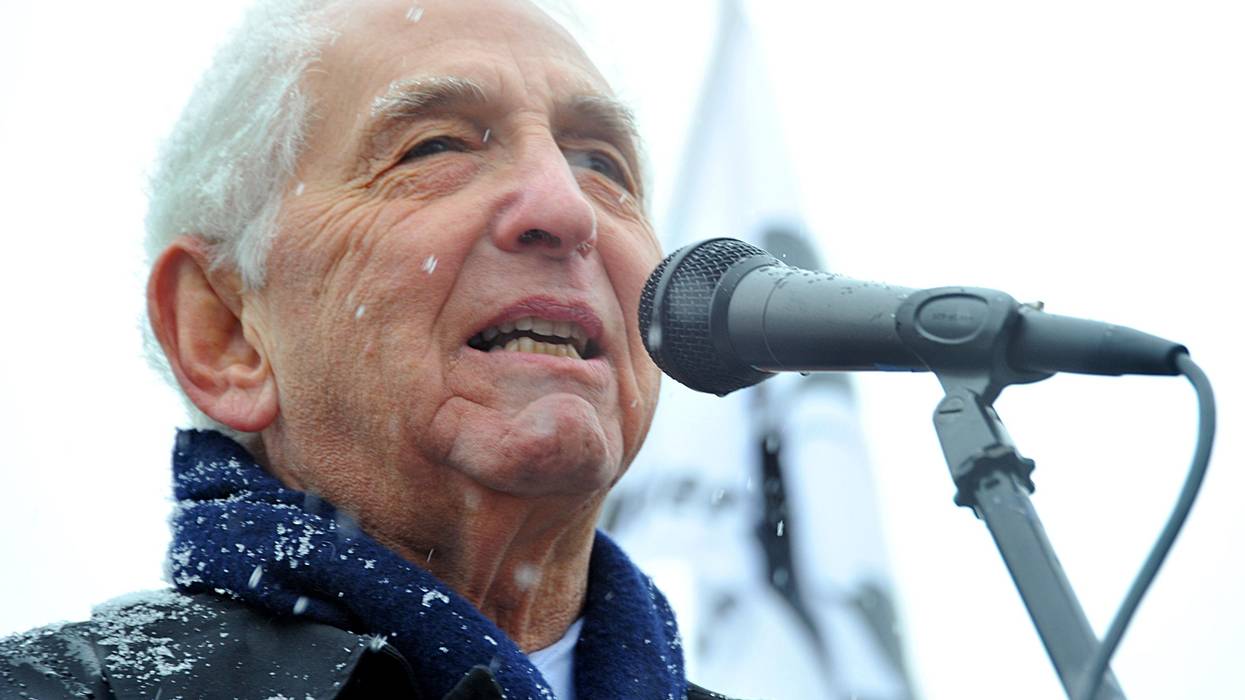
His life and legacy are reminders that individual acts of moral courage depend on examples set by others, and they have the potential to spark more, far into the future.
In 1971, when Daniel Ellsberg arrived at a federal court in Boston, a journalist asked if he was concerned about the prospect of going to prison for leaking a 7,000-page top-secret history of the Vietnam War. Ellsberg responded with a question of his own: “Wouldn’t you go to prison to help end this war?”
The classified documents Ellsberg released to The New York Times and 18 other newspapers were quickly dubbed the Pentagon Papers. They exposed more than two decades of government deceit about U.S. involvement in Vietnam, from 1945 to 1968.
Ellsberg died June 16, 2023, three months after announcing that he had been diagnosed with terminal cancer. To millions of Americans who opposed the war, his whistleblowing was an act of patriotism – but millions of others regarded it as treason. In Ellsberg’s own papers at UMass Amherst, where I teach history and direct the Ellsberg Initiative for Peace and Democracy, you can read hundreds of letters to him from ordinary citizens expressing both extremes: the highest possible praise, and vitriolic, often antisemitic, hostility.
How a young war planner became a peace activist is one of the most striking conversion stories in American history. But Ellsberg’s political and moral transformation did not happen in a vacuum.
How a young war planner became a peace activist is one of the most striking conversion stories in American history. But Ellsberg’s political and moral transformation did not happen in a vacuum. It reflected a titanic shift in public attitudes about the Vietnam War. The massive anti-war movement inspired and reinforced Ellsberg’s dissent – and, in turn, his example has emboldened activists and whistleblowers in the decades since.
Once a fervent Cold Warrior, Ellsberg joined the Marine Corps in the mid-1950s, earned his doctorate in economics from Harvard and in 1959 became a nuclear war analyst for the Rand Corp., a think tank that, at the time, was funded mostly by the Air Force. In 1964, he was one of the brainy young analysts, dubbed “whiz kids” by the media, that Defense Secretary Robert McNamara recruited to the Pentagon.
Throughout his 20s and early 30s, Ellsberg believed that serving the president was a “knightly calling,” even if it required lying to the public. So how did he come to believe that loyalty to truth-telling superseded loyalty to the chief of state?
From 1965 to 1967, Ellsberg went to Vietnam for the State Department, believing the war was a challenging but necessary part of a global struggle to contain communism. Yet he became deeply disillusioned, convinced that the war could not be won. He was particularly disturbed by indiscriminate U.S. bombing and shelling, most of it on South Vietnam, the land the U.S. claimed to be protecting. About 20,000 American lives had already been lost, and roughly a million Vietnamese people had been killed, about half of them civilians. By the war’s end eight years later, 58,000 Americans and 3 million Vietnamese had died.
By 1968, Ellsberg was trying to persuade U.S. leaders to seek a negotiated end to the war. On his own time, meanwhile, he was beginning to meet anti-war activists who advocated a bottom-up effort to demand immediate U.S. withdrawal.
One of them, a Gandhian pacifist named Janaki Natarajan, convinced Ellsberg that he should study leading advocates of nonviolent resistance, such as Martin Luther King Jr., Henry David Thoreau and Barbara Deming. To this day, one of Ellsberg’s favorite quotations comes from Thoreau’s “Civil Disobedience”: “Cast your whole vote, not a strip of paper merely, but your whole influence.”
But most galvanizing for Ellsberg were the Pentagon Papers, which he helped compile for McNamara. Full of technocratic euphemisms for lethal policies, the documents convinced him that the entire history of U.S. involvement in Vietnam was marked by deception: that it was an aggressive counterrevolution that denied the Vietnamese people the right of self-determination, disguised as a battle for democracy.
Ellsberg had first viewed the Vietnam War as a just cause to be won, then as an unwinnable stalemate to be gradually abandoned. By late 1969, however, he saw it as an immoral war to be ended unilaterally and immediately.
Millions of Americans had already come to that conclusion. Back in 1965, in fact, Ellsberg’s future wife, Patricia Marx, agreed to a first date only if it included an anti-war demonstration in Washington.
Just as he finished reading the Pentagon Papers, Ellsberg attended a War Resisters League conference that proved pivotal to his decision to leak the documents. There he met a few of the 3,250 young Americans who were sentenced to up to three years in prison for resisting the draft. Deeply moved by their courage, Ellsberg asked himself what he could do if he were willing to risk prison and his career.
A month later, with help from his friend and Rand colleague Anthony Russo, Ellsberg began photocopying the Pentagon Papers.
For the next year and a half, Ellsberg tried to get anti-war members of Congress to put the documents into the congressional record and hold hearings. None was willing, so he eventually offered them to war correspondent Neil Sheehan at The New York Times – the first newspaper to report on the papers’ revelations.
Public interest was scant, however, until President Richard Nixon began attacking the press and Ellsberg. Although the Pentagon Papers did not include Nixon’s time in office, the White House feared that Ellsberg might leak more documents – especially about Nixon’s 1968 effort to sabotage the Vietnam peace talks to improve his odds of winning the presidential election.
The government indicted Ellsberg on a dozen felony counts with a possible 115-year prison sentence. He was the first American ever criminally charged under the Espionage Act of 1917 for disclosing classified documents to the press and public rather than to a foreign agent or nation.
Ellsberg was spared prison. Late in his 1973 trial, Watergate prosecutors discovered that the White House had authorized crimes against him, including a break-in at his psychiatrist’s office, in a failed search for incriminating information. The judge had little choice but to declare a mistrial.
Ellsberg was a free man, but the personal cost of his dissent was severe. He lost many friends and had to forge a new career as a writer and lecturer. For more than five decades he has been an activist and has been arrested for nonviolent civil disobedience some 80 times on behalf of peace, nuclear disarmament, government accountability, and First Amendment rights.
In early March 2023, Ellsberg made public a letter to friends and supporters announcing that he had only months to live. He closed by thanking fellow activists whose “dedication, courage, and determination to act have inspired and sustained my own efforts.”
Ellsberg’s life and legacy are reminders that individual acts of moral courage depend on examples set by others, and they have the potential to spark more, far into the future. As Ellsberg often said, “civil courage is contagious.”
Press freedom, peace, and human rights advocates are rallying behind Daniel Hale, the former intelligence analyst who blew the whistle on the U.S. government's drone assassination program, and who pleaded guilty Wednesday in federal court to violating the Espionage Act.
"The U.S. government's policy of punishing people who provide journalists with information in the public interest is a profound threat to free speech, free press, and a healthy democracy."
--Jesselyn Radack,
Hale's attorney
The Washington Post reports Hale, who was set to go on trial next week, pleaded guilty to a single count of violating the 1917 law that has been used to target whistleblowers including Julian Assange, John Kiriakou, Chelsea Manning, Edward Snowden, Jeffrey Sterling, Reality Winner, and others.
Hale was charged in 2019 during the Trump administration after he leaked classified information on the U.S. government's targeted assassination program to a reporter, who according to court documents, matches the description of The Intercept founding editor Jeremy Scahill. He is the first person to face sentencing for an Espionage Act offense during the administration of President Joe Biden.
As vice president under President Barack Obama, Biden contributed to the creation of whistleblower protections in the Dodd-Frank Wall Street Reform and Consumer Protection Act, while simultaneously serving in an administration that, while promising "a new era of open government," relentlessly targeted individuals who revealed U.S. war crimes and other classified information.
Kiriakou--a former CIA agent who under Obama was sentenced to 30 months' imprisonment for exposing U.S. torture--told Kevin Gosztola that he is "dissapointed that Daniel Hale's case was continued in the Biden Justice Department."
"I had hopes that Biden's Justice Department appointee would recognize the public service that Daniel Hale provided when he revealed illegality and abuse in the drone program," said Kiriakou.
Hale, who was an intelligence analyst for the U.S. Air Force before moving on to the National Security Agency and then the National Geospatial-Intelligence Agency, "knowingly took highly classified documents and disclosed them without authorization, thereby violating his solemn obligations to our country," according to a statement from Raj Parekh, the acting U.S. attorney for the Eastern District of Virginia.
According to Gosztola, Hale's whistleblowing led to the revelation by The Intercept that "nearly half of the people on the U.S. government's widely shared database of terrorist suspects are not connected to any known terrorist group," details on how the Obama administration approved targeted assassinations, and information about Bilal el-Berjawi, a Briton "who was stripped of his citizenship before being killed in a U.S. drone strike in 2012."
The Post reports that Hale admitted in court to writing an anonymous chapter in Scahill's 2016 book, The Assassination Complex: Inside the Government's Secret Drone Warfare Program, which divulged information taken from top-secret documents about drone strike protocols, civilian casualties, and Pentagon officials' debate about the accuracy of intelligence.
"These documents detailed a secret, unaccountable process for targeting and killing people around the world, including U.S. citizens, through drone strikes," Betsy Reed, editor-in-chief of The Intercept, said after Hale's indictment. "They are of vital public importance, and activity related to their disclosure is protected by the First Amendment."
Hale had initially centered his defense on First Amendment grounds, and his numerous defenders condemned his prosecution as a violation of press freedom and freedom of speech. His lawyer, Jesselyn Radack, issued a statement saying "the U.S. government's policy of punishing people who provide journalists with information in the public interest is a profound threat to free speech, free press, and a healthy democracy."
"Classified information is published in the press every day; in fact, the biggest leaker of classified information is the U.S. government," wrote Radack. "However, the Espionage Act is used uniquely to punish those sources who give journalists information that embarrasses the government or exposes its lies."
"Every whistleblower jailed under the Espionage Act is a threat to the work of national security journalists and the sources they rely upon to hold the government accountable," she added.
Medea Benjamin, co-founder of the women-led peace group CodePink, tweeted that it's "outrageous that drone whistleblower Daniel Hale will be going to prison for exposing the drone murders by the U.S. military. Why don't the murderers go to jail? Or the ones who ok the murders? Or the ones who make the killer drones and profit from murder?"
Hale's sentencing is scheduled for July 13. He faces up to 10 years behind bars. Kiriakou told Gosztola that he hopes the judge "recognizes the good in what Daniel Hale has done and gives him the lightest possible sentence."
All of a sudden, MoveOn wants to help "national security" whistleblowers.
Well, some of them, anyway.
After many years of carefully refusing to launch a single campaign in support of brave whistleblowers who faced vicious prosecution during the Obama administration--including Army whistleblower Chelsea Manning, NSA whistleblowers Thomas Drake and Edward Snowden, and CIA whistleblowers John Kiriakou and Jeffrey Sterling--MoveOn.org has just cherrypicked a whistleblowing hero it can support.
"What about Manning, Drake, Snowden, Kiriakou, and Sterling, who also took great personal risks on behalf of democracy? With its digital finger to the wind, MoveOn refused to engage in a campaign to help any of them."
"The stakes could not be higher for the whistleblower, who took a great personal risk to defend our democracy," MoveOn declared in a mass email Sunday afternoon, referring to the intelligence official who went through channels to blow the whistle on Donald Trump's phone call with Ukraine's president. "We need to have the whistleblower's back."
I agree wholeheartedly.
But what about Manning, Drake, Snowden, Kiriakou, and Sterling, who also took great personal risks on behalf of democracy? With its digital finger to the wind, MoveOn refused to engage in a campaign to help any of them. Manning, Kiriakou, and Sterling were railroaded into prison and remained there for years; Snowden has been forced to stay in exile; and Drake endured years of persecution under threat of decades behind bars.
I experienced MoveOn's refusal firsthand when, in December 2015, I wrote to the group's campaign director with a request. After a sham trial, Sterling had gone to prison six months earlier for allegedly providing information to New York Times reporter James Risen that he included in a book. "Is there a way that MoveOn could use a bit of its list to promote this petition in support of Jeffrey Sterling?" I asked.
The answer that I received was disappointing--merely a suggestion that the petition be put on MoveOn's do-it-yourself platform, where it would not be supported with distribution to any of MoveOn's email list. After pressing further, I got an explanation from MoveOn that had a marketing sound: "It looks like we have definitely done a lot of testing on Snowden and Manning in the past, but unfortunately nothing quite reached the level of member support where we were able to send it out."
That approach has endured. In the last decade, MoveOn--which says it has an email list of 8 million "members"--has refused to do any campaigns to help Manning, Drake, Snowden, Kiriakou, or Sterling.
(Full disclosure: The organization where I'm national coordinator, RootsAction.org, has campaigned in support of all five of the above-named whistleblowers, with petitions, news conferences,protests, and fundraising.)
Now, the whistleblower initiative that MoveOn has started might seem like a welcome change of direction. But it's actually worse than problematic.
The organization that MoveOn just teamed up with--Whistleblower Aid--explicitly does not support people like Snowden, Drake, Kiriakou, Sterling, and Manning, or the more recent whistleblower Reality Winner. The founding legal partner at Whistleblower Aid, Mark Zaid, has maintained a vehement position against unauthorized release of classified information for many years.
"As a matter of law, no one who leaks classified information to the media (instead of to an appropriate governmental authority) is a whistleblower entitled to legal protection," Zaid wrote in a Washington Post op-ed piece in 2017. "That applies to Winner, Snowden, and Chelsea Manning, no matter what one thinks of their actions. The law appropriately protects only those who follow it. Anyone who acts contrary does so at their own peril."
According to Zaid and his organization--which MoveOn is now avidly promoting and helping to subsidize--if the White House whistleblower's memo had been bottled up via official channels and then had been leaked to a news organization, the whistleblower leaking the memo would not be, and should not be, "entitled to legal protection."
But, as Snowden has often emphasized, the official scenario of going through channels is a dangerous myth for "national security" whistleblowers. The reason Snowden didn't go through channels is that he saw what happened to whistleblowers who did--like Drake, who was targeted, harassed, and then prosecuted on numerous felony counts. Snowden clearly understood that going through channels would achieve nothing except punishment, which is why he wisely decided to go directly to journalists.
MoveOn has not only refused to support courageous whistleblowers like Snowden, Drake, Manning, Kiriakou, and Sterling--who've informed the world about systematic war crimes, wholesale shredding of the Fourth Amendment with mass surveillance, officially sanctioned torture, and dangerously flawed intelligence operations.
Now, MoveOn is partnering with a legal outfit that actually contends such brave souls don't deserve any protections as whistleblowers. Despite its assertion that "protecting whistleblowers is critical for a healthy democracy," MoveOn is now splitting donations with an organization that supports the absence of legal protections for many of them.
Two years of imprisonment have given me ample time to reflect on the circumstances in which I find myself today. I often retrace my steps, carefully recalling each conversation I had and action I took that landed me in this prison. However, in the two years that I have served, my position has never wavered. I know who I am, and I know what my values are. My name is Jeffrey Alexander Sterling, and I am an innocent man who has been wrongfully convicted of espionage after dedicating my life to serving the U.S. government.
I have always been a fighter. I fought to graduate college, and was the first in my family to do so. I fought to obtain my advanced law degree from Washington University School of Law. And when I joined the Central Intelligence Agency (CIA) in 1993, I fought for racial equality when I was discriminated against based on the color of my skin. After living my entire life leading by example, the U.S. government decided to make an example of me.
Two years ago this June, I was convicted of espionage against the U.S. government for being in communication with a reporter. The CIA accused me of offering New York Times journalist James Risen classified national defense information regarding Operation Merlin, a top-secret operation that targeted Iran's nuclear program, which Risen later described in his book "State of War."
Though I have persistently maintained that I never disclosed any classified information to Risen and was only in touch with him regarding my discrimination case against the CIA, I was nonetheless convicted of espionage based solely on metadata from phone calls and emails we had exchanged. Despite the lack of any direct evidence proving I was the source for Risen's book, I am now serving the second year of my three-and-a-half-year prison sentence.
During my time working for the CIA, I felt compelled to report my concerns about Operation Merlin to the Senate Select Committee on Intelligence, as I believed the operation would compromise the safety of the American people and our troops who were being sent to war in Iraq. By approaching this committee, I followed legal protocol. For this I was labeled a whistleblower.
My successful prosecution was a manifestation of President George W. Bush's desire to control information and limit transparency. President Barack Obama eventually continued this legacy through his prosecution of more whistleblowers than every previous administration combined. My case serves as a warning that basic communication between journalists and government employees, no matter the subject, could be treated as espionage.
President Donald Trump has made clear in the first few months of his presidency that he believes whistleblowers and journalists should be prosecuted for leaking or publishing classified information, continuing what his predecessors started. Based on his anti-leak and anti-press rhetoric, I am deeply concerned for what could come next. If I was dealt this harsh punishment based solely on circumstantial evidence, what will be the fate of whistleblowers who feel it is their duty to bring attention to unjust governmental practices?
My imprisonment was an injustice to me and my wife, Holly. I would not wish this on anyone who has found the courage to do what is right. A safe and protected channel must be created for whistleblowers to bring attention to malpractice within their organizations. Until that time comes, it will be difficult to have a fully transparent government that is accountable to its citizens.
Press freedom organization Reporters Without Borders (RSF) on Monday expressed alarm over the Trump administration's lies to and attacks on the media within its first days of existence.
To wit:
"It is clear that Trump views the media as his number one enemy and is taking every single opportunity to try to weaken their credibility," said Margaux Ewen, advocacy and communications director for RSF North America, in a press statement. She added: "RSF reminds Trump's administration that the press does not provide public relations for the President, but reports the truth in order to hold government officials accountable, despite statements to the contrary from White House Press Secretary Sean Spicer."
"The simultaneous attacks on the press for so called 'inaccurate' reporting and the use of what the administration calls 'alternative facts' to counter this reporting are reminiscent of an authoritarian government's tactics," added Delphine Halgand, director of RSF North America.
What's more, the new administration's approach could catalyze other regimes to follow suit, RSF warned.
"The press freedom predators of the world are watching Trump and taking notes," Halgand continued. "It's terrifying to think how much more brazen they will be in their attacks on journalists around the world now that the leader of the United States of America is setting a terrible example."
Already faced with evidence of Trump's disdain for the fourth estate before he took office, an open letter published last week at the Columbia Journalism Review warned the administration of what it should expect from the press corps.
Penned by CJR editor-in-chief and publisher Kyle Pope, it states:
We're going to work together. You have tried to divide us and use reporters' deep competitive streaks to cause family fights. Those days are ending. We now recognize that the challenge of covering you requires that we cooperate and help one another whenever possible. So, when you shout down or ignore a reporter at a press conference who has said something you don't like, you're going to face a unified front. We'll work together on stories when it makes sense, and make sure the world hears when our colleagues write stories of importance. We will, of course, still have disagreements, and even important debates, about ethics or taste or fair comment. But those debates will be ours to begin and end.
In its 2016 World Press Freedom Index, RSF ranked the U.S. 41 out of 180 countries, citing as a main concern the Obama administration's war on whistleblowers such as Jeffery Sterling, whom the organization had urged President Obama to pardon before leaving office.
Shadowproof Editor's Note: Concerned with the Federal Bureau of Prisons' failure to provide medical treatment and their indifference toward CIA whistleblower Jeffrey Sterling's heart problems, Shadowproof exchanged letters with Sterling to bring more attention to his mistreatment. The federal government's position is that Sterling is fabricating medical information and lying about his health.
Below are copies of the letters exchanged, my letter to Sterling and his response. And here is a full report on Sterling's treatment in prison.
The only thing that has helped Sterling obtain any sort of medical attention is outside pressure, according to Sterling. If you are concerned about the BOP's treatment and abuse of Sterling after reading his letter, please call the BOP's North Central Regional Office at 913-621-3939 or FCI Englewood, where Sterling is imprisoned, at 303-763-4300.
Dear Jeffrey,
I have followed your case closely, and I have also read recent updates from John Kiriakou, whose case I also covered extensively. I published his prison letters from FCI Loretto. Thank you for taking the time to answer some questions I have about your current struggle to obtain proper medical treatment for your heart condition.
As of September 26, what is your current condition? What symptoms do you continue to endure? How critical do you believe it is that FCI Englewood take your symptoms seriously and grant you access to proper medical treatment? In other words, what do you need FCI Englewood to do for you now?
How has your condition changed over the past months, and how responsive are officers within FCI Loretto to your insistence or requests for medical treatment? When you complain about pain, how long does it take until you finally see a doctor or medical professional?
I understand you are expected to exhaust the administrative process before going outside this system to force the prison to give you proper medical treatment. What do you think of this process?
I also recognize you, and your wife, Holly, have attempted other actions to convince the prison to take care of your urgent medical needs. What have you tried and what effect do you believe these actions have had?
John Kiriakou reported on August 28 that Warden Deborah Denham had reversed her decision and would put a request into the "Bureau of Prisons Regional Office in Denver" that you "be taken to an outside cardiologist for testing." Did you get to see a cardiologist? Is that how you found out you had high levels of Troponin?
The system appears to be setup in such a way that the prison reviews the budget to see if it can afford potentially life-saving medical care before approving treatment. It seems like it is extraordinarily difficult for anyone in prison to get preventive health care.
Kiriakou shared the following assessment of the medical unit at FCI Loretto as he completed his sentence:
"People under the care of the medical unit at Loretto die with terrifying frequency. I intend to report on and to write about the unit's malfeasance soon. You already know about my own experience with Glyburide. Since passing out last August, I have never been called down to see a medical professional. My friend Frank complained for three months about chest pains and shortness of breath. He was told to wait: Medical would ask permission from the BOP's regional office for him to see a cardiologist.
Frank heard nothing for those three months and then one day, while waiting for an insulin shot, he had a massive heart attack. Paramedics rushed him to a local hospital, where had had successful surgery. He was in the hospital for two weeks, barely having lived through the experience. Two weeks ago, I happened to be in the medical unit when I saw a prisoner wheel in another prisoner who was clutching his chest and crying. The 70-year-old told the technician on duty that he was having a heart attack. Her response? 'Well, you're just going to have to wait because nobody else has gotten to work yet.' There are some very bad animals here, but none have been sentenced to death."
From what you have experienced, how does Kiriakou's firsthand account compare? Would you call it standard operating procedure to let a person suffer heart attacks and delay treatment until the prison is ready to admit such person is near death?
Finally, what retaliation (if any) has occurred in response to the collective effort by you, your wife, and supporters to obtain proper medical treatment for you? Or do you think the prison has held off on retaliation for the time being?
Best,
Kevin Gosztola
Mr. Gosztola, Thank you for your note and interest. I will try to answer your questions as best I can.
As of September 26, 2016, I am a few days into taking the beta blocker (metoprolol) that was prescribed. The symptoms I have complained of since June 21, 2016 continue though not as frequent and not as intense. It is so difficult describing the feeling I have during the times my heart does flutter/palpitate, but imagine feeling a sudden very hard heartbeat with a sort of pause that emulates your entire body, breathing, moving, etc. being suddenly halted. There is also an at times sharp pain within my chest at the heart. Add in lightheadedness and shortness of breath in with those events and that's what it feels like. Some days, the events are continual and it feels like at any moment my heart is just going to stop. In addition, I'm not sure whether it is from the medication or to do with my overall health (not to mention the stress of attempting to obtain help from FCI Englewood), but my energy level is quite low.
Of course, I certainly believe that FCI Englewood should take this situation seriously, this is a very scary situation for me. As I have stated time and again to the medical staff here, the episode of atrial fibrillation I experienced some years ago was serious enough for me to be hospitalized for 4 days and what I felt then is what I'm feeling now. Unfortunately, FCI Englewood has done everything but take what I have presented to them with regard to my health seriously. Certainly indicative of their dismissiveness has been the reaction at each and every instance I have gone to them for help. I cannot imagine any other setting where an individual presents medical professionals with heart related symptoms on repeated occasions and is continually dismissed.
There has been more effort to refute me than there has been to actually provide any care. For example, there's the assertions about what took place on June 21, 2016. In no uncertain terms, medical at FCI Englewood responded to Holly's concerns by stating in an email that I was being untruthful when I was told that day by the nurse who administered the EKG that there was a "blockage". Instead of addressing my health concerns, FCI Englewood medical chose to tell my wife that I was making up the episode and what I was told. Over and over, medical here has claimed that there is no information in my records of a history of atrial fibrillation and that I at no time was scheduled for an EKG shortly after my arrival here. These claims are false.
What has been really troublesome is what happened on September 17, 2016. That day, I was experiencing chest pains and went to medical. I was in such distress, I was in tears waiting for the corrections officer to call up to medical to see if it was okay for me to be seen. Even then, I had to wait until I could be seen, because the medical staffer on duty was with someone else. The response to my complaining of chest pains was another EKG, a cursory exam and a review of my medical records. I was summarily dismissed to return to my housing unit after a mere discussion of my medical situation. It was at this encounter that I first heard of the elevated Troponin level. The blood for the test was drawn on July 27, 2016 (only after I had inquired about whether they said blood test were going to be performed on June 21, 2016). Prior to September 17, 2016, no one had said anything to me about an elevated Troponin level. And then, I learn from Holly, from a conversation she had with someone from the BOP Regional Office that not only was there no information about the Troponin level in the records, but also that there was no record of the September 17, 2016, visit to medical. It is as if the September 17, 2016, visit did not happen and that no one told me anything about an elevated Troponin level. Seems anything that has indicated a health problem that needed addressing has not been included in my records. The position of FCI Englewood with regard to medical situations clearly is, if it isn't written down, it didn't happen.
I was finally seen by a specialist on September 19, 2016. For the consult, I was handcuffed, with a waist chain and my ankles were shackled together. I was so restrained during the entire visit with the doctor. Salient or no, it was quite humiliating being paraded on the streets and through the medical facility. Not to mention the fact that even though I was completely restrained, I had to sign a statement promising not to go shopping while away from the prison. Be that as it may, if that is what I have to endure to receive help, then so be it. But, whether I have actually received help is debatable.
The September 19, 2016 doctor visit also calls into question the veracity of FCI Englewood's concern for my health. The conversation Holly had with the BOP official was on September 21, 2016, so it is apparent that the medical records, if any provided to the doctor by FCI Englewood, were incomplete. Also, even though the doctor prescribed the beta blocker on September 19, 2016, I did not receive the medication until September 21, 2016. As I also understand from the conversation, the BOP is taking the position that I am fabricating everything, which is in line with the stance FCI Englewood has expressed to my wife Holly and via their non-action.
I think there has also been a bit of administrative positioning happening as well. At no point since the issues with my heart started have I actually seen the doctor at FCI Englewood; I have only been seen by PAs and maybe a nurse. And, not until September 20, 2016, was there any information, in the internal system inmates use for medical notices, that there was any notice from the doctor that he approved me to see an outside specialist. I had already visited the doctor on September 19, 2016.
You ask about the internal administrative procedures; there may be utility for such a process, but the delay and self-protective nature inherent in such a process is counter-intuitive and potentially deadly when it comes to issues of health. I have filed three complaints and the responses have been either denial or nonexistent. It has not been because of the administrative process that I have received any help from FCI Englewood. Only because of the efforts of my wonderful wife Holly and our supporters has anything happened in response to my repeated pleas for help. If anything, the administrative process has been used as a tool by FCI Englewood to do nothing.
The account by John Kiriakou is the norm. I have heard such stories while here at FCI Englewood as well. For instance, there was the word going around about an inmate who died in late August 2016. The prison rumor mill (or "inmate dot com" as it is referred) had it that the individual, "William", succumbed to a heart attack. It was also posited that he had requested help during the attack, but was told he needed to wait until sick call, which was hours later, to be seen by anyone. He returned to his bunk an died. That someone indeed died was evident from the memorial service which was held in early September 2016. Naturally, I was somewhat skeptical about the death until I had a conversation with an inmate who was friends with William. William had been complaining to medical for weeks about chest discomfiture, but medical ignored his condition and told him to drink water. That struck me because that statement is exactly what medical has told me during my encounters with them. As such, it is difficult for me to dismiss the story of his death as mere rumor.
Truly, to FCI Englewood and the BOP, the life of an inmate is a cheap commodity. I am experiencing that attitude firsthand. All I can do is seek help from those who, if anything, have a responsibility and obligation to provide help. I have repeatedly sought out, if not begged for help. I have been left in the position of hoping that something more serious does not happen to me or that I have not developed any lasting damage.
I am in a federal prison in Colorado. While here, I have read Ta-Nahesi Coates' award-winning book Between the World and Me. Though my background is different from Coates' (I did not grow up in the mean streets of a large city), I enjoyed reading Between the World and Me because I identify with so much of it. It is also those commonalities which make it rather difficult for me to read. Between the World and Me serves as a reminder and a warning. But most importantly Coates' book forces us to think about the American Dream, and what hope we have in it. Coates' book struck a chord with me particularly with his emphasis on the black body. "In America," he tells his son, "It is traditional to destroy the black body -- it is heritage."
I have long known that physical violence to the black body is an ever present specter. My indoctrination came over 35 years ago, when one of my brothers was in a drug-induced stupor in the street in front of my childhood home in small-town Missouri. The police had been called and they showed up in force. My mother was in a fretful state, pleading for my brother to return to safety inside the house. Someone attempted to calm her down by saying that everything was going to be all right, that the police would help. Her answer was so emphatic. "No! They'll kill him!" My brother was not hurt, but I cried that night. I don't know if the tears were from the emotions of the night or from the lesson I learned that my body and my brother's body, our bodies, were subject to "official" physical violence.
I would soon learn that official violence against black bodies comes in many guises. Even if not overtly physical, it is without question destructive. In my case, discrimination, arrest and imprisonment has robbed my black body of a sense and identity by disparate treatment, silencing, erasure, and exclusion from the American Dream.

For years, I served my country as a case officer in the Central Intelligence Agency. I was living my American Dream, until I was told that I was too big and too black to do the job. I was passed over for assignments, not provided the tools necessary to do my job, and excluded merely because of the color of my skin. My discrimination suit was dismissed as being a danger to national security and never saw the light of day. After my discrimination suit was eliminated, the very same dangers to the country were used to investigate, prosecute and convict me for allegedly leaking classified information, a crime I did not commit. The result is that I am now in prison, and like so many other black bodies, I have been systematically removed from the American collective. As I have learned, there can be no greater acquiescence to continue destructive practices or attitudes than when they are justified by the law and courts. As Coates points out, it becomes tradition.
The American Dream has always been something real, honorable and obtainable to me. I didn't expect it to be handed to me. I expected to be accepted into the American Dream based on my hard work, integrity, belief in and drive for the ideals of equality and inclusion promised to me. I fully bought into and believed in the American Dream. But too often, it is used to support political and nationalistic rhetoric that is necessarily exclusionary. Those not representative of the ideal become expendable. Such an American Dream has no place for the black body, which is treated as mere fodder to feed the anxieties and fears that keep the American Dream strong. Again and again, I have been made to feel not acceptable to the American Dream and expendable.
I believe in and grew up striving for a different, more substantial American Dream than this. Despite all of the destruction I have witnessed and endured, I still believe in America.
The belief in my country and the promise of equality was all the impetus I needed to say "No!" to official aggression in the form of discrimination and my government's false accusations against me. Is not standing up for one's rights guaranteed by law a most precious feature of American democracy?
Coates understands the failures of the Dream that too many are peddling. As he puts it,
There is burden of living among Dreamers, and there is the extra burden of your country telling you the dream is just, noble and real, and you are crazy for seeing the corruption, and smelling the sulfur.
But, I still have hope. Yes, the wrong dream for America perpetuates the tradition that destroys the black body. However, I can emphatically state that the sense of self and identity of me and my black body have not been destroyed. I may not be right for the traditional American Dream, but I dream still. The other dreamers who are right for America like the members of the Black Lives Matter movement and others who want to see America as more than a destroyer are saying 'NO' to this tradition. They are fighting to make America what it was always supposed to be. The impact of Between the World and Me and the promise it seeks to impart has been spoken of before. Langston Hughes wrote in his poem, "Let America Be America Again":
...O, Yes
I say it plain
America was never America to me,
And yet I swear this oath --
America will be!
Yesterday, June 16th, marked one year since Jeffrey Sterling began his 3.5-year prison sentence for divulging classified information to a New York Times journalist, a crime he did not commit. One year, he was deprived of the freedom that so many of us take for granted every day; one year separated from his loving wife, his friends, and his family, and one year of wasted talent as a licensed attorney, a former CIA case officer fluent in Farsi, and a successful investigator who uncovered over 32 million dollars in healthcare fraud.
Today, we want to remind the American people that Jeffrey's conviction and sentence were unjust and renew our appeal to President Barack Obama to pardon him.
Why has he had to suffer such an injustice? Because the United States government wanted to punish Jeffrey for blowing the whistle and for fighting for his civil rights against the CIA?
Jeffrey is a beloved husband, a brother, a friend, and an honorable man who has consistently worked to keep our country safe. He was one of the few African Americans to work as a CIA case officer, and he was incredibly proud of this accomplishment. But he soon became disillusioned by a work environment characterized by racial disparity and was dismayed to learn that the government he worked for was shrouded in mistruths and secrecy.
The CIA planned to use a former Russian nuclear engineer to pass flawed designs to Iranian scientists, a program that was revealed in New York Times Journalist James Risen's book "State of War." Jeffrey had grave concerns about the mismanagement of this program and the potential harm to the citizens of our country, and so he used proper legal channels to inform the Senate Select Committee on Intelligence.
During Jeffrey's trial, the Department of Justice was unable to present any direct evidence proving that he divulged classified information to James Risen. To convict him, the DOJ relied solely on circumstantial evidence -- emails and telephone conversations -- to try to prove that Jeffrey was Risen's source. In the end, Jeffrey was severely punished for merely communicating with a journalist, which caused a public outcry from press freedom organizations like Reporters Without Borders.
How did the government justify that Jeffrey was their only suspect when over 90 additional individuals had access to the same classified information and could have easily leaked it to James Risen?
As Jeffrey repeatedly made clear throughout his trial, his relationship with Risen was related to his interest in Jeffrey's discrimination lawsuit against the CIA.
When Jeffrey was preparing for his first overseas post for the agency in Germany, his supervisor told him "we are concerned you would stick out as a big black guy speaking Farsi" and informed him that another person would be taking the assignment. When he filed an Equal Opportunity Employment complaint, the CIA fired him. Shortly afterward, he became the first African American to file a racial discrimination lawsuit against the CIA. Still, his suit was never allowed to go forward because the government claimed it would reveal "state secrets."
According to the United States government, Jeffrey then "retaliated" against the CIA by leaking classified information to James Risen. The moment that the administration felt there was an opportunity to incriminate him for fighting for his civil rights, every finger pointed to Jeffrey, and no amount of evidence or lack thereof could defy the verdict that followed.
Jeffrey's case drastically differs from that of former CIA Director General David Petraeus, who pleaded guilty to divulging huge amounts of classified information to his biographer and lying to an FBI agent, far more egregious acts than Jeffrey was accused of. Yet Petraeus was able to walk away with two years probation and a fine. Suppose one strips away the race, financial status, and political clout of each of these men and solely compares their alleged crimes. In that case, it is glaringly obvious that this was selective prosecution and sentencing.
Petraeus' treatment solidified the belief in this country that the white man is presumed to be innocent and can do no wrong, and at worst, receives a slap on the wrist, while the black man is guilty until proven innocent and belongs behind bars. Never in the history of this nation has there been a black person who had the courage to fight racial discrimination in the CIA, and a black man in the White House that would allow him to go to jail unjustly.
Justice must be served for this mockery of the truth. Jeffrey is innocent and always has been. Our appeal to the President to pardon Jeffrey is a request for the acknowledgment of this undeniable injustice done to Jeffrey and amends to the wrongful conviction that changed our lives forever. Please don't forget him; he serves time for a crime he didn't commit.
To learn more about Jeffrey's case, click here. To sign the petition asking President Obama to pardon him, click here.