SUBSCRIBE TO OUR FREE NEWSLETTER
Daily news & progressive opinion—funded by the people, not the corporations—delivered straight to your inbox.
5
#000000
#FFFFFF
To donate by check, phone, or other method, see our More Ways to Give page.
Daily news & progressive opinion—funded by the people, not the corporations—delivered straight to your inbox.
Donte Donald
404-791-1253
Today, Color Of Change PAC released the following statement from Arisha Hatch, executive director of Color Of Change PAC, celebrating the victories of Rev. Raphael Warnock and Jon Ossoff:
"The wins of Rev. Raphael Warnock and likely win of Jon Ossoff unlock the full possibility of the restorative and transformational agenda that Black voters and organizers worked for in November. By handing control of the Senate to the Democratic Party, these improbable and hard-won victories will allow President-elect Biden to pursue the agenda he laid forth in his victory speech, one that centers the needs of Black communities. Just like Biden-Harris' win in November, today's wins are a direct result of deep, relentless organizing by the Black community. Our community will hold the senators-elect, Congress, and the Biden administration accountable for delivering on their promises.
Electing leaders with real connections to our communities -- leaders who not only listen to our concerns and demands but act accordingly -- is key to creating meaningful solutions, improving our livelihoods and establishing strong foundations for future generations. We congratulate Color Of Change PAC-endorsed candidates Rev. Raphael Warnock and Jon Ossoff on their wins and look forward to working alongside them as they make the needs of their Black constituents and racial equity a priority once they take office."
Background on Color Of Change PAC's work in 2020:
Color Of Change PAC has been working to mobilize Black voters to ensure a historic turnout for this Senate runoff election. The organization launched a massive voter mobilization effort in the state to reach Black voters and encourage participation, including remote Black Joy voter contact events, as well as an in-person series consisting of "Black Joy Motercades", the "Black Joy Drive-In Series", and Black Joy PPE distribution events.
Over the past year, Color Of Change PAC explored ways to ensure that events were safe and followed social distancing requirements while remaining engaging, with food, music, and celebrity guests. Color Of Change PAC also hosted a number of text-a-thons and phone banking parties that allowed people to participate in the democratic process in new and exciting ways. Finally, the PAC invested significantly in digital ads, mailers, email and SMS communication, and peer-to-peer messaging and calls.
Here are a few of the key statistics about Color Of Change PAC's contributions to this election:
This election Color Of Change PAC, the political arm of one of the nation's largest Black-led racial justice organizations, set out to shift how the public views prosecutors and how prosecutors do their jobs is more salient today than ever before. The PAC led an educational campaign to inform voters about the link between criminal justice and voting reform and supported our endorsed candidates by building enthusiasm and mobilizing voters who are often left out. The PAC also congratulates our invaluable partners Working Families Party, New Georgia Project, Black Voters Matter Fund, America Votes - Georgia, and Sheriffs for Trusting Communities.
"He's a white supremacist," said one critic. "He doesn't hide it."
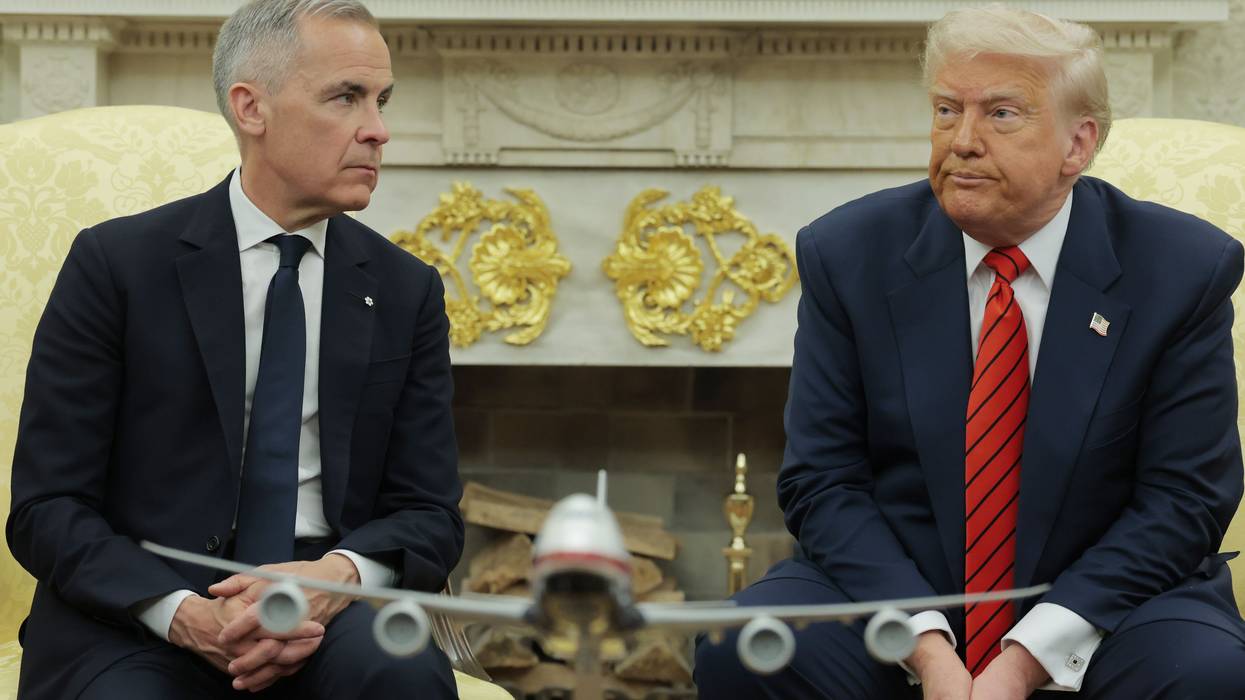
US President Donald Trump was accused Friday of espousing white supremacist ideology after he blamed the "genetics" of Muslim immigrants who commit crimes like Thursday's assault on a Michigan synagogue, while calling for their exclusion from the United States.
"Well, it's been going on for a long time. It's a disgrace. They're sick, they're really demented people," Trump said during a call-in interview with Fox News Radio host Brian Kilmeade. "They come into the country, they sneak in."
Trump was responding to a question about recent attacks by people who happen to be Muslims, including Mohamed Bailor Jalloh, who was stabbed to death by a cadet at Old Dominion University in Norfolk, Virginia after fatally shooting instructor Lt. Col. Brandon Shah, and Ayman Mohamad Ghazali, who was shot dead by security guards at the Temple Israel synagogue in West Bloomfield Township, Michigan after crashing his vehicle into the building.
Neither Jalloh nor Ghazali "snuck" into the country. Both were naturalized US citizens. Jalloh, originally from Sierra Leone, was a former National Guardsman. Ghazali had recently lost two of his brothers and other relatives to an Israeli airstrike in his native Lebanon.
"They’re sick people, and a lot of them were let in here. They shouldn’t have been let in," Trump told Kilmeade. "Others are just bad. They go bad. Something wrong—there’s something wrong there. The genetics are not exactly, they’re not exactly your genetics."
Trump has made many racist statements and has occasionally invoked what critics say is the language of eugenics, a debunked pseudoscience embraced by many white supremacists. He has also boasted about his own "much better blood."
While running for reelection, Trump echoed Nazi dictator Adolf Hitler's screed against "poisoning" by an "influx of foreign blood," declaring during a December 2023 campaign rally in New Hampshire that undocumented immigrants are "poisoning the blood" of the country.
"Trump is an old-school eugenicist nativist. He actually is fine with immigrants as long as they have the right 'genes,'" said David J. Bier, director of immigration studies at the libertarian Cato Institute, in response to Friday's interview. "This argument was the basis of the creation of the restrictive US immigration system 100 years ago."
Trump has previously said that he wants more immigrants from countries like Norway and not from what he called "shithole" nations in the Global South. His second administration has effectively ended refugee admissions—with the notable exception of white South Africans, the only people in the world allowed into the United States as refugees since last October, according to US Department of State data.
Progressive journalist Alex Cole said on X: "Imagine being the grandson of immigrants—who dyes his hair, paints his face orange, and wears lifts—lecturing the country about 'genetics.' The irony writes itself."
Trump's political rise began with his promotion of the racist "birther" conspiracy theory falsely positing that then-President Barack Obama was not born in the United States. He launched his 2016 presidential campaign by calling Mexican immigrants "rapists."
Once in office, Trump enacted a series of restrictions and outright bans on immigration from nations with Muslim majorities.
"He's a white supremacist," journalist Mehdi Hasan wrote Friday on X. "He doesn't hide it."
One journalist said that "the massacres are multiplying" as IDF bombing kills hundreds of Lebanese and Palestinian civilians, and US-Israeli strikes kill and wound thousands of Iranians.
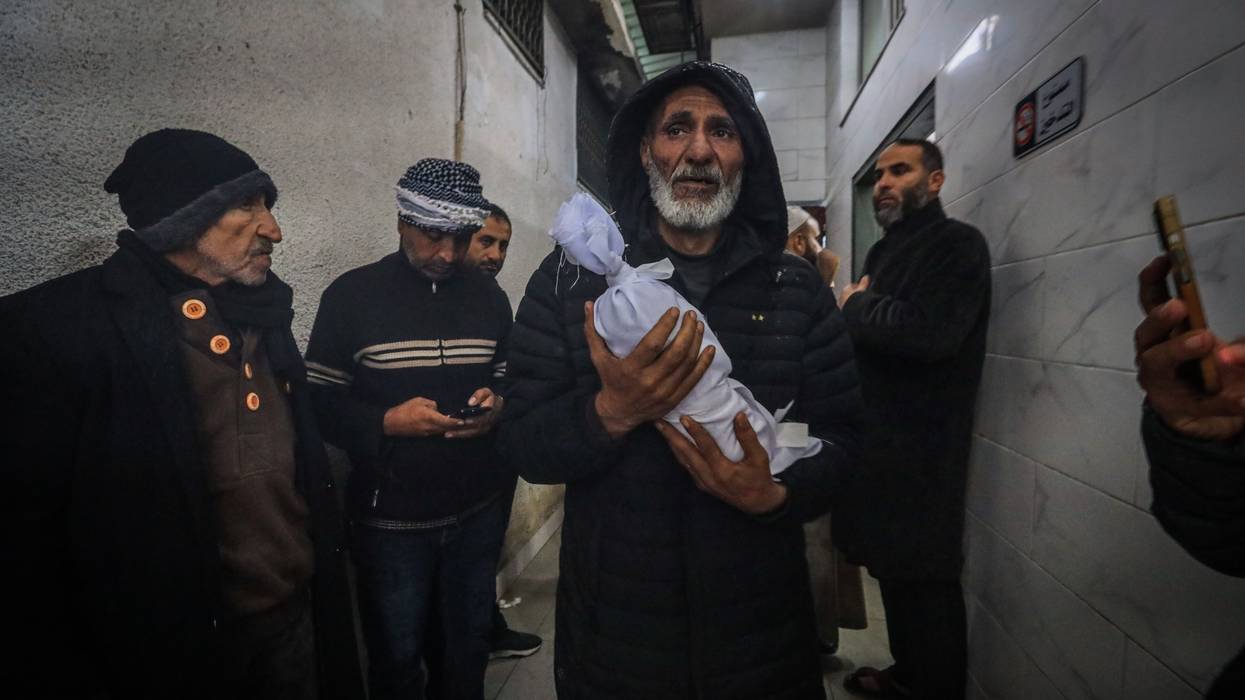
A grieving Lebanese father said he buried his parents, four young daughters, and other relatives on Friday after they were killed by an Israeli airstrike—one of many that have wiped out families in Gaza, Lebanon, and Iran.
"I lost four of my children, four daughters, they were all I had," the unidentified man—whose face and head were visibly injured from what he said was the same Israeli strike—told Al Jadeed TV, an independent Lebanese outlet. "Four daughters: Zainab, Zahraa, Maleeka, and Yasmine."
"And my mother and father," he added. "Praise be to God. God's greatness is abundant."
According to Al Jazeera, the man's brother-in-law and nephew were also killed in the strike.
"The Israeli enemy says every day that it is targeting infrastructure," he told the Qatar-based news network. "Is this the infrastructure?"
It was a devastating scene repeated in other parts of Lebanon, including the south, were a distraught mother on Friday reportedly buried five sons killed by Israeli bombing, and in the Ghobeiry neighborhood of central Beirut earlier this week, when an Israeli airstrike destroyed the home of the Hamdan family, reportedly killing father Ahmad Hamdan, his three daughters, and two grandchildren. As of Tuesday, Hamdan's wife was missing beneath the rubble of their bombed-out home.
As in Gaza—where officials say that more than 2,700 families have been erased from the civil registry during Israel's ongoing genocide and around 6,000 other families have only a single surviving member—entire Lebanese families have been wiped out by Israeli strikes since October 2023.
In one such strike on the Maronite Christian village of Aitou in October 2024, members of four generations of one family were killed, with 22 victims ranging in age from a 4-month-old infant to a 95-year-old great-grandmother.
More than 800,000 Lebanese have also been forcibly displaced by Israel's assault and attendant evacuation orders. On Friday, Médecins Sans Frontières (MSF), or Doctors Without Borders in English, issued a statement highlighting the war's impact on families.
“We are seeing a similarity to what we saw in the past two and a half years in Gaza: broad evacuation orders, constant displacement of thousands of families, and systematic bombing on densely populated areas,” said MSF Lebanon coordinator Lou Cormack. “After 15 months of a fragile ceasefire that failed to stop the violence in Lebanon, families are once again trapped between fleeing or facing bombs.”
Israel says it is attacking Lebanon to stop Hezbollah rocket and other attacks, which have killed dozens of Israeli civilians and wounded even more.
Journalist Lylla Younes told Democracy Now! on Friday that "the massacres are multiplying" in Lebanon, pointing to an Israeli airstrike on a Sidon home that reportedly killed at least 8 people and wounded at least 9 others.
"We saw Syrian refugees, displaced, already killed; 7 killed in a massacre in Tamnin in the Beqaa Valley; a massive massacre in Nabi Chit, also in the Beqaa Valley, when the Israelis tried to do a nighttime incursion by helicopter," Younes said.
Lebanon's Health Ministry said Friday that an Israeli strike on a health center in Bourj Qalawayh, southern Lebanon killed 12 medics.
Lebanese officials said Friday that 773 people—including 103 children—have been killed by Israeli forces since March 2. This, in addition to Israel’s 2023-25 attacks on Lebanon that killed more than 4,000 people, including nearly 800 women and over 300 children.
In Iran, authorities said more than 1,300 civilians have been killed and over 10,000 others injured by US and Israeli bombing since February 28. More than 200 women and over 200 children have reportedly been killed.
Most of the 175 or more Iranians killed in a February 28 cruise missile strike on a girls' school in Minab—an attack that was almost certainly carried out by the United States—were children, according to Iranian government and medical officials and international investigations.
Israeli attacks on Iran during last year’s 12-Day War also killed more than 1,000 Iranians, including 436 civilians, while Iranian counterstrikes killed 28 people in Israel.
In Gaza, 28 months of Israel's assault—for which the country is facing a genocide case at the International Court of Justice and its prime minister is wanted by the International Criminal Court for alleged crimes against humanity—have left more than 250,000 Palestinians dead, maimed, or missing and around 2 million others forcibly displaced, starved, or sickened.
US-led wars in the Middle East, South Asia, and Africa have resulted in the deaths of more than 900,000 people—including over 400,000 civilians—since 2001, according to the Costs of War Project at Brown University's Watson Institute for International and Public Affairs.
Stories from families devastated by Israel's war on Lebanon are as common as they are heartbreaking.
"I was sleeping when the Israeli jet bombed the area," one Lebanese teenager told the independent outlet [comra]. "My father, my mother, my sister-in-law, and her children were killed."
"I saw my father torn to pieces," he added. "I wish I had died instead of seeing my father like that."
According to more recent Pentagon figures, it's actually even worse.
Sen. Elizabeth Warren took President Donald Trump to task on Friday for making life "more expensive" with his war in Iran.
"It's costing American taxpayers $1 billion a day to fund this war," the Massachusetts Democrat said in a video posted to her social media accounts. "That is $11,500 every single second."
This is, of course, not an exact amount. The figure is based on a preliminary estimate provided by Pentagon officials to Congress last week, estimating that the war would cost about $1 billion per day.
And so far, the war has actually been even more expensive than Warren initially claimed.
On Tuesday, according to the New York Times, the Pentagon gave a more comprehensive briefing, telling Congress that just the first six days of the war had exceeded $11.3 billion in cost, which puts the price tag at about $1.88 billion per day. That's nearly $21,800 per second.
The Times noted that this was a low-end estimate and that the pricetag did not include many other costs, including those associated with the buildup of military hardware in the region before the war.
Using just these conservative estimates, a live ticker shows that as of Friday afternoon, the estimated cost of the war that began on February 28 is already fast approaching $19 billion, less than two weeks later.
"If we took the money that Donald Trump is demanding to fund the war with Iran and used that money here at home, instead, we could help cover healthcare costs for millions more Americans all across this country," Warren said.
Indeed, an analysis published last week by the Institute for Policy Studies' National Priorities Project (NPP), based on the $1 billion-per-day figure, found that on an annual basis, the cost of the war is “higher than the appropriated budget of any federal agency except the Pentagon itself."
If all that money were spent domestically, it found, it would be enough to cover the daily costs of federal nutrition assistance for more than 40 million Americans, as well as daily Medicaid costs for the roughly 16 million people expected to lose health coverage due to the Republican budget package that Trump signed into law last year.
As Warren pointed out, calculations of military spending do not even take into account the sharp hikes in gas prices Americans are facing as a result of the war, which has led Iran to retaliate by closing one of the world's largest oil shipment routes, the Strait of Hormuz.
According to the American Automobile Association's (AAA) gas price tracker, US gas prices have leaped to $3.63 per gallon on average as of Friday, up from $2.94 a month ago.
"We haven't seen gas prices jump this much since Russia invaded Ukraine," Warren said. "Some cities in Indiana and Ohio have already seen a jump of over 50 cents a gallon. In Texas and Virginia, prices are up by more than 65 cents."
Citing an image of a Chevron station in Los Angeles posted by a user on TikTok, Warren said: "California is seeing gas prices above $8." According to AAA, the average cost of gas in the state is $5.42.
Despite rising anger from voters—more than 7 in 10 of whom said in a recent Quinnipiac poll that they fear higher oil and gas costs as a result of the war—Trump has said carrying out his objectives in Iran "is far more important than having gasoline prices go up a little bit."
In a post to Truth Social on Thursday, the president framed higher prices as a positive: "The United States is the largest Oil Producer in the World, by far, so when oil prices go up, we make a lot of money," he wrote.
While this may be true for Americans who own oil and gas companies, most do not. For the average American, higher gas prices can raise the cost of transportation sometimes by thousands of dollars per year, cutting into spending on food, rent, medicine, and other essentials.
"For someone who campaigned on lowering costs on day one, Donald Trump is constantly raising the bar for how expensive he can make it to live in this country," Warren said.
Referencing Republican opposition to extending Affordable Care Act subsidies that lowered healthcare premiums for more than 20 million Americans, Warren implored viewers to "never forget that Donald Trump said we just can't afford to lower health care costs this year."
"These are about choices," she said, "and Donald Trump is making the wrong ones."