

SUBSCRIBE TO OUR FREE NEWSLETTER
Daily news & progressive opinion—funded by the people, not the corporations—delivered straight to your inbox.
5
#000000
#FFFFFF
To donate by check, phone, or other method, see our More Ways to Give page.
Daily news & progressive opinion—funded by the people, not the corporations—delivered straight to your inbox.
"It is no coincidence that this is taking place at exactly the same time that Donald Trump's poll numbers are sagging."
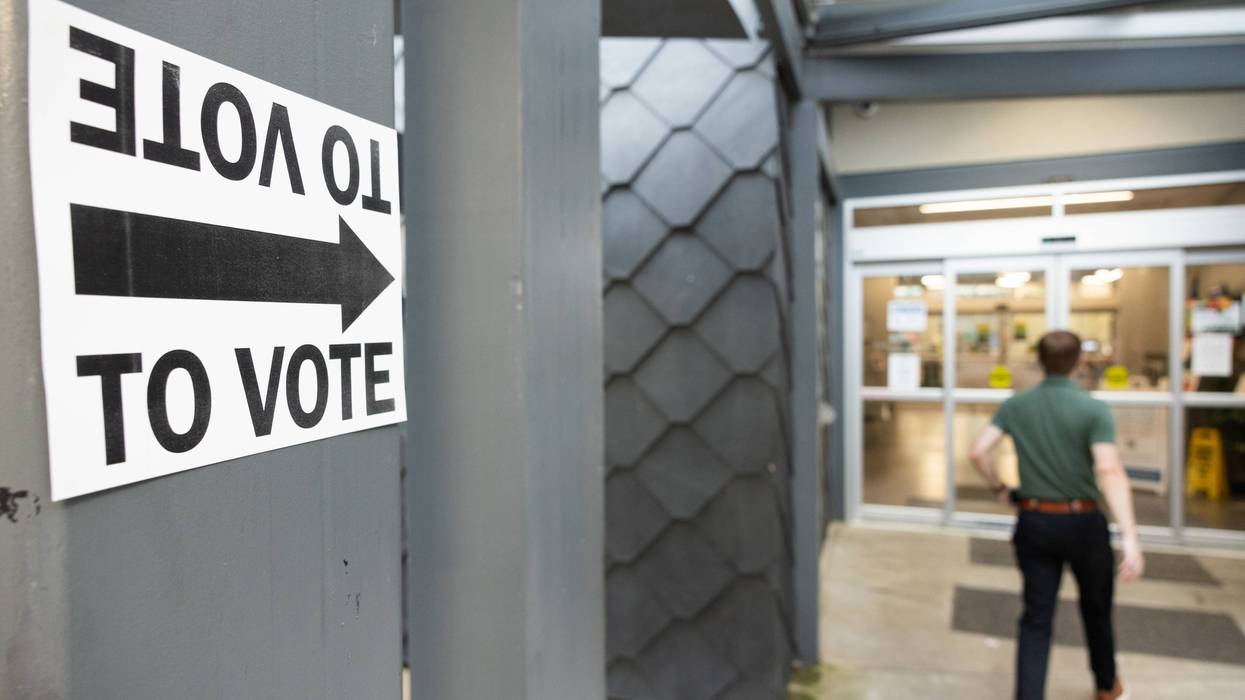
Experts are raising alarms after Georgia's Republican-led State Election Board requested that President Donald Trump's Department of Justice launch an investigation into state voting machines just over a month before the 2026 midterm elections.
As reported by the Atlanta Journal-Constitution on Thursday, James Mills, executive director of the State Election Board, sent a letter to US Attorney General Todd Blanche asking the DOJ "to put additional security measures in place before the midterm election and give the state a six-month deadline to eliminate the use of QR codes on ballots to tally votes."
The AJC noted that Georgia would need to "revamp its in-person voting process" to comply with this demand since it currently "relies on scanners reading QR codes on ballots to count votes."
In a Thursday analysis of Mills' letter, Democracy Docket reporter Jacob Knutson described it as "an extraordinary assault on Georgia’s voting system by unelected officials appointed to make and enforce the state’s election rules."
Knutson also questioned whether the Trump administration could even legally carry out Mills' request.
"The DOJ lacks the legal authority to declare voting machines unlawful or unilaterally seize voting equipment," Knutson wrote, "as the US Constitution gives state and local officials the power to administer elections."
In a video published Friday, election attorney and Democracy Docket founder Marc Elias said that Mills' request for DOJ interference in his own state's election process boils down to Republicans fearing that they're about to be swept out of power in the coming elections.
"It is no coincidence that this is taking place at exactly the same time that Donald Trump's poll numbers are sagging," Elias said, "at exactly the same time that it appears that his efforts in court are failing, and exactly the same time that [Democratic US Sen.] Jon Ossoff looks clear to win that Senate race in a walk."
Later in the video, Elias explained that Trump and his allies have been telegraphing for months that they will take extraordinary measures to maintain their full grip on all three branches of the federal government.
"This is all happening when you have a White House that is looking for excuses to take over voting," he said. "They are looking for excuses to seize ballots. They are looking for excuses, as Donald Trump said, to take control of the tabulation of votes."
Kristin Nabers, Georgia state director for voter rights advocacy group All Voting is Local, accused the State Election Board of "trying to sow chaos into the midterms before voting takes place."
"Certain members of this board continue to show that they do not serve Georgia voters, they serve the interests of the Trump administration," Nabers said. "The board has already advocated for the administration’s interference in elections many times in Trump’s second term, including when multiple board members served as witnesses in the FBI’s bogus investigation into Fulton County."
After losing the 2020 presidential election, Trump infamously waged an unsuccessful campaign to strong-arm Georgia Secretary of State Brad Raffensperger to "find" the votes necessary to overtake former President Joe Biden's lead in the Peach State.

The winners are "rewriting the rules that autocrats, patriarchs, and Silicon Valley’s most powerful men assumed were theirs to write alone.”
The winners of the annual Right Livelihood Award, announced on Wednesday, are two women and two women-led groups who "refused to wait for permission," said the executive director of the award committee.
“A system built to serve the few was never going to hold," said Ole von Uexkull, who added that the winners of the 2026 award are "rewriting the rules that autocrats, patriarchs, and Silicon Valley’s most powerful men assumed were theirs to write alone.”
The honorees include Jalila Haider, a Pakistani human rights lawyer who was the first female attorney from her Hazara community; Timnit Gebru, an American artificial intelligence researcher who has challenged the consolidation of power in Big Tech and exposed the potential harms of AI; the Rural Women's Assembly in South Africa, a movement of 78,000 small-scale farmers "united to defend land, seed, and bodily autonomy against corporate agribusiness and patriarchal dispossession"; and the Georgian Young Lawyers' Association (GYLA), the country's first human rights organization in Georgia, which has played a crucial role in its democratization.
The winners of the award, said Right Livelihood in a video about the 2026 laureates, "are making justice the center of the narrative."
Haider has combined legal work with on-the-ground activism, leading a seven-day hunger strike in 2018 against the targeted killing of Hazaras, a Shia Muslim minority, by the Pakistani army. The strike forced the army chief to negotiate directly with Hazara women, "resulting in a sustained decrease in attacks against the community."
Her law firm has also helped more than 600 political activists regain their freedom.
"Despite detention, cyberharassment, and death threats, she continues working toward a world where, in her words, 'no human being is illegal,'" said Right Livelihood.
Gebru was fired from Google after authoring an academic paper that warned of the risks posed by large language models; she had been co-leading the company's Ethics AI team. Now the founder and executive director of the Distributed Artificial Intelligence Research Institute (DAIR), the organization's distributed model "brings together researchers and collaborators across countries and continents, defying the centralized and corporate-driven concepts that mainstream AI entails."
"What keeps me going is belief in human agency," said Gebru in Right Livelihood's video.
The Rural Women's Assembly has "built one of the region’s largest autonomous platforms for rural women" with a volunteer structure, establishing 24 seed multiplication sites and "defending traditional seed systems from commercialization.
Its seed sovereignty efforts have challenged corporate control over South Africa's food systems and strengthened "communities’ resilience to climate shocks," according to Right Livelihood.
"We have the power, and we have the imagination that it will take to construct this new world, because another world is needed, and it's urgent," said the group's regional coordinator, Mercia Andrews.
GYLA is the first Right Livelihood winner from Georgia since the award was established in 1980. The group provides grassroots legal aid and has secured landmark legal victories, including ones that have protected rights for people with disabilities and guaranteed free education for every child in Georgia.
The group has opted to remain in the country with a scaled-down team, despite Georgia's repressive "foreign agents" law.
"With courage and determination, the organization presses on for a better future for all Georgians," said Right Livelihood.
The awards, which include support for the winners' work, are set to be presented on December 1 in Stockholm.
"If the president declares Georgia's elections illegitimate, or if the president declares Georgia's sitting United States senators illegitimate, he is declaring Georgia voters illegitimate."
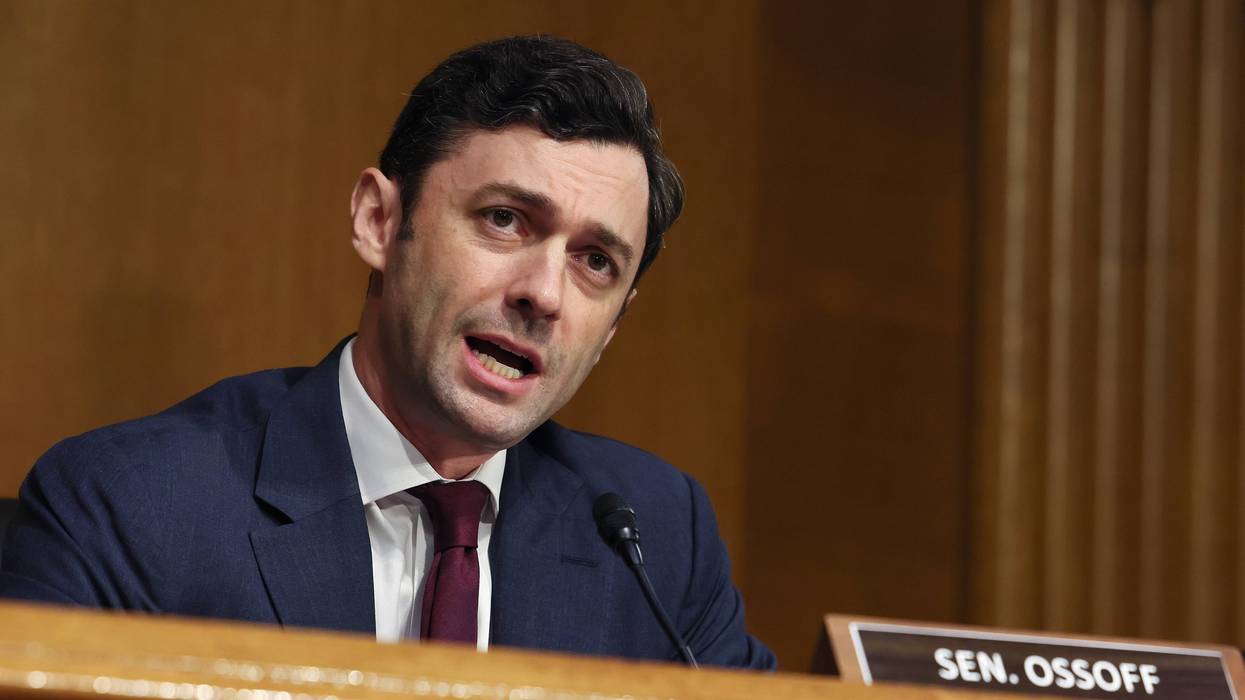
Sen. Jon Ossoff on Thursday delivered a preemptive rebuttal to President Donald Trump's planned Thursday night speech on election security in the United States.
While speaking with reporters, Ossoff (D-Ga.) predicted that Trump would use the speech to once again peddle lies about the 2020 presidential election, which he lost to former President Joe Biden.
"Here's what's going to happen tonight," Ossoff began. "The world's most famous sore loser will deliver a primetime presidential sour-grapes address to pursue his six-year-old grievances about the 2020 election, while his war in the Middle East spirals out of control, the cost of living continues to rise for Americans across the country."
Ossoff: "Here's what's going to happen tonight: the world's most famous sore loser will deliver a prime-time presidential sour grapes address to pursue his 6-year-old grievances about the 2020 election, while his war in the Middle East spirals out of control and the cost of… pic.twitter.com/isF9qqrLz0
— Aaron Rupar (@atrupar) July 16, 2026
The Georgia Democrat said he expected Trump to "reheat debunked conspiracy theories" about the 2020 election, while all but daring the president to declare the results in his home state illegitimate.
"Let me be very clear about this," said Ossoff, who was elected in 2020 and is up for reelection this year. "If the president declares Georgia's elections illegitimate, or if the president declares Georgia's sitting United States senators illegitimate, he is declaring Georgia voters illegitimate."
Ossoff then reminded reporters that it was Trump who attempted to steal the 2020 election when he called Republican Georgia Secretary of State Brad Raffensperger and asked him to "find" the votes necessary to overturn Biden's victory in the state.
"It's Donald Trump who tried to defraud Georgia voters in that election," the senator said, "Donald Trump who tried to commit election fraud."
Ossoff's broadside against Trump's 2020 election lies came one day after he cornered Jay Clayton, Trump's nominee to be the next director of national intelligence, during a Senate confirmation hearing over his refusal to say who won the 2020 election.
"Isn’t it humiliating to be unable to answer this question?" Ossoff asked Clayton at one point. "To have to indulge the president’s delusions?"
"Today, thanks to the people showing up and showing out, we won. Racist, rigged maps are dead for now."
Democrats in Georgia are celebrating as Republicans in the state abandoned efforts to redraw congressional maps that would have taken effect in 2028.
Eight Georgia Republicans, including Speaker of the House Jon Burns, sent a letter to Gov. Brian Kemp on Wednesday informing him that they would not be going through with his request to enact redistricting ahead of the 2028 election cycle.
"Changes to Georgia's maps should take place only when members of the General Assembly and citizens have been given ample opportunity to gather the facts, provide input, and engage in meaningful discussion," the letter states. "For this reason, we will not be taking up congressional or legislative redistricting for the 2028 election cycle during this special session."
However, there is still a chance that Georgia Republicans could ram through new maps later this year. According to Democracy Docket, Kemp "could still call another special session later this year—and if Republicans lose the midterms, they could try to lock in a 2028 advantage by passing new maps before Kemp leaves office next year."
Democrats in the state nonetheless celebrated Republicans' decision to shelve Kemp's redistricting plan.
In a joint statement, Georgia Senate Minority Leader Harold Jones II and House Minority Leader Carolyn Hugley called on supporters to celebrate "a monumental civil rights victory."
"Republicans thought they could get away with drawing racist, rigged maps without a fight," they said. "Today, thanks to the people showing up and showing out, we won. Racist, rigged maps are dead for now."
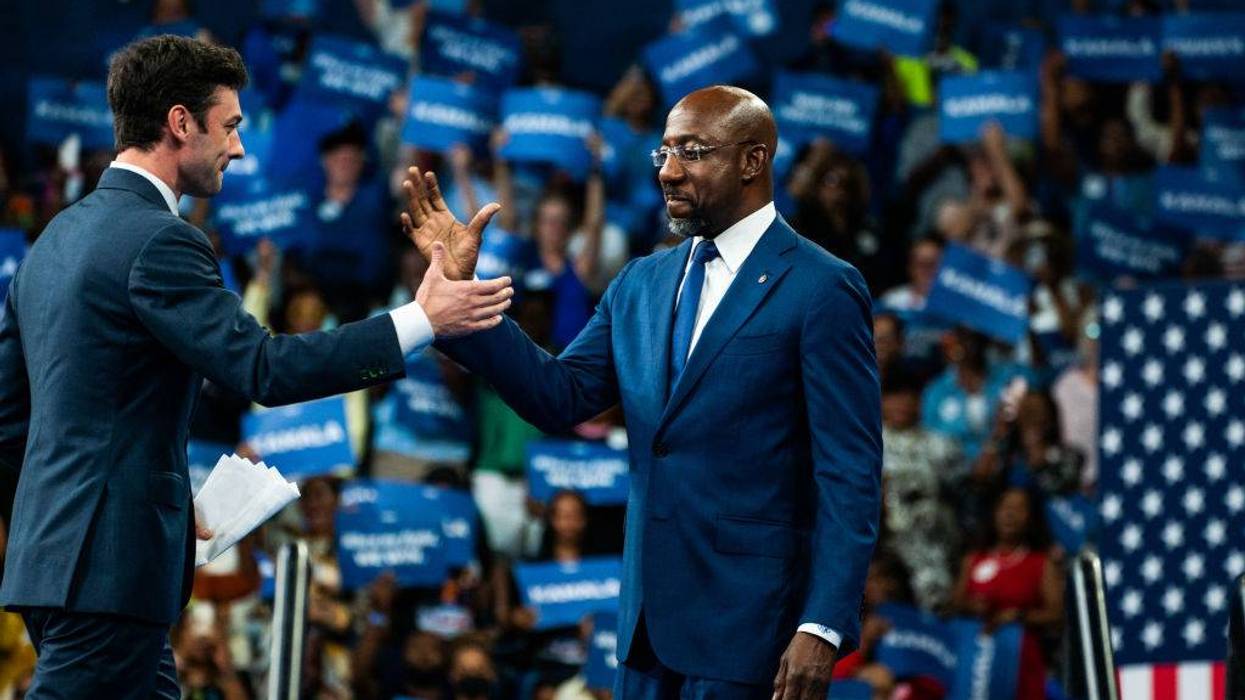
Sen. Raphael Warnock (D-Ga.) praised the work of activists who protested against the redistricting plan earlier in the day, putting pressure on Republicans to drop it.
"Hours after I visited the State Capitol with thousands of Georgians, Georgia House Republicans announced they are backing down from gerrymandering our maps, potentially giving them two extra seats," wrote Warnock.
“John Lewis never backed down from getting into good trouble and I won’t either," he added, referring to the late civil rights icon and Democratic member of Congress.
Trump last year sparked an unprecedented mid-decade redistricting battle when he pushed Texas to redraw its congressional map to gain extra Republican seats, and GOP-led states including North Carolina, Missouri, and Florida have since followed suit.
"We will not sit back and watch while Gov. Kemp takes orders from a felon-in-chief to turn Dr. King's dream into a nightmare," said the head of Common Cause Georgia.
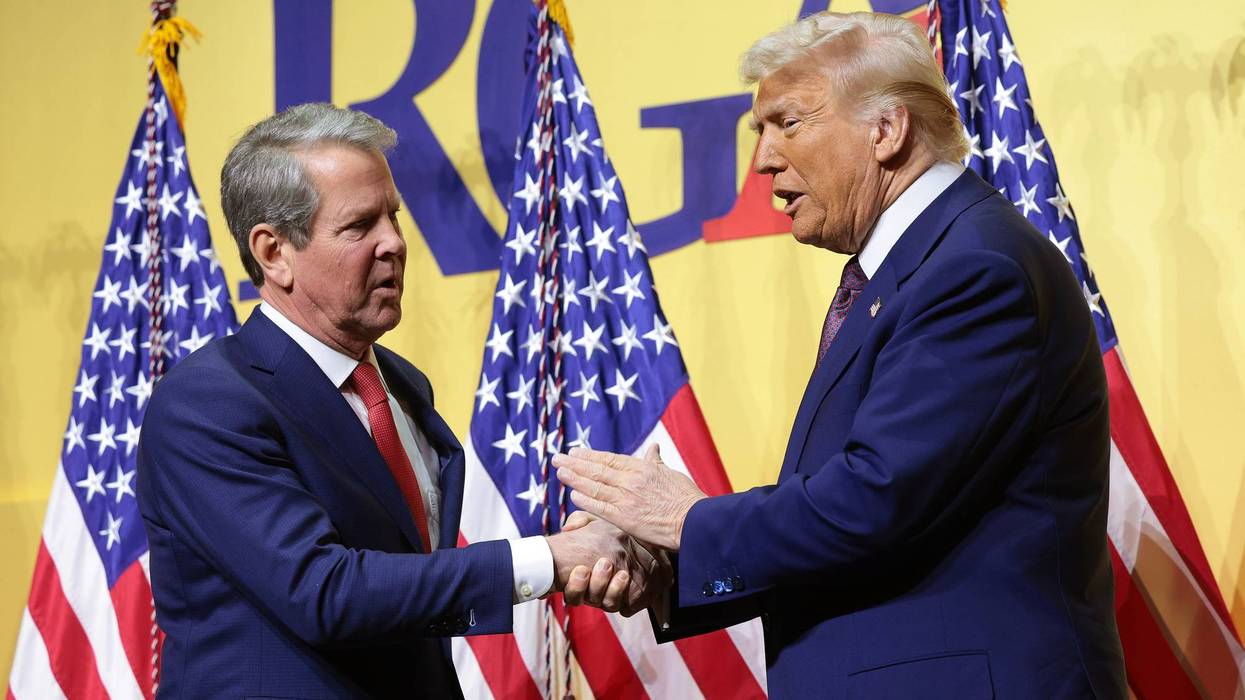
Republican state leaders are forging ahead with President Donald Trump's campaign to rig congressional districts for the GOP, with Georgia Gov. Brian Kemp on Wednesday signing a proclamation for a special legislative session and South Carolina Gov. Henry McMaster expected to make a similar announcement soon.
While GOP policymakers facing pressure from Trump have pursued mid-decade redistricting in several states ahead of the November midterm elections—in which Democrats aim to reclaim majorities in both chambers of Congress—Kemp's proclamation explicitly states that any changes in Georgia would be for 2028, which is the next presidential cycle.
Kemp's proclamation cites the US Supreme Court's decision last month that a Louisiana map predating Trump's redistricting push was "an unconstitutional racial gerrymander," which gutted the remnants of Section 2 of the Voting Rights Act (VRA) of 1965.
In a statement condemning the proclamation, Common Cause Georgia director Rosario Palacios pointed to the late Rev. Martin Luther King Jr., a key figure in the movement that led to the VRA as well as the Civil Rights Act the previous year.
"We will not sit back and watch while Gov. Kemp takes orders from a felon-in-chief to turn Dr. King's dream into a nightmare. Too many civil rights leaders have done work in our state for us [to] take this sitting down," Palacios declared. "Common Cause is mobilizing thousands of people to stop state lawmakers from passing any new maps before 2030 that destroy Black voters' power for political gain. Voters should not have to rely on lawsuits to protect their right to fair representation. Congress must end this abuse once and for all so every voter can cast a ballot in free and fair elections, no matter their political party."
US Sen. Raphael Warnock (D-Ga.), who is up for reelection in 2028, similarly ripped the Georgia redistricting effort on social media Wednesday: "There is an extreme movement in this country that will stop at nothing to hold on to power, even if it means stripping representation away from millions. I will fight this with everything I have."
Republicans in various states have moved to "shamelessly capitalize" on the April ruling from the high court's right-wing supermajority. On Monday, as the Supreme Court cleared the way for the Alabama GOP to rescind the creation of its second Black-majority district, Memphis voters sued over a new map targeting Tennessee's only majority-Black congressional district.
On Tuesday, as the Missouri Supreme Court declined to strike down a new congressional map that state voters are working to challenge with a referendum, five Republican South Carolina senators joined Democrats in blocking a GOP effort to advance Trump's gerrymandering campaign in their state.
However, The Post and Courier's Nick Reynolds reported Wednesday that South Carolina Senate Majority Leader Shane Massey (R-25) believes the governor "will call legislators back into a special session amid the redistricting fight."
Also reporting on the anticipated move Wednesday, Politico's Andrew Howard and Alec Hernandez noted that "McMaster's plan—confirmed by four people familiar with the decision, who were granted anonymity to share private details—is a reversal of his position earlier this month and follows pressure" from the president and his allies.
A redistricting push in South Carolina is expected to target the seat held by Democratic Congressman Jim Clyburn—who last month warned that the Supreme Court ruling on Louisiana's map and the VRA "threatens to send our country deeper into the thicket of never-ending redistricting fights, with repeated aggressive map redraws, protracted legal battles, and relentless partisan tugs-of-war, all of which are destined to result in more regressive court decisions."
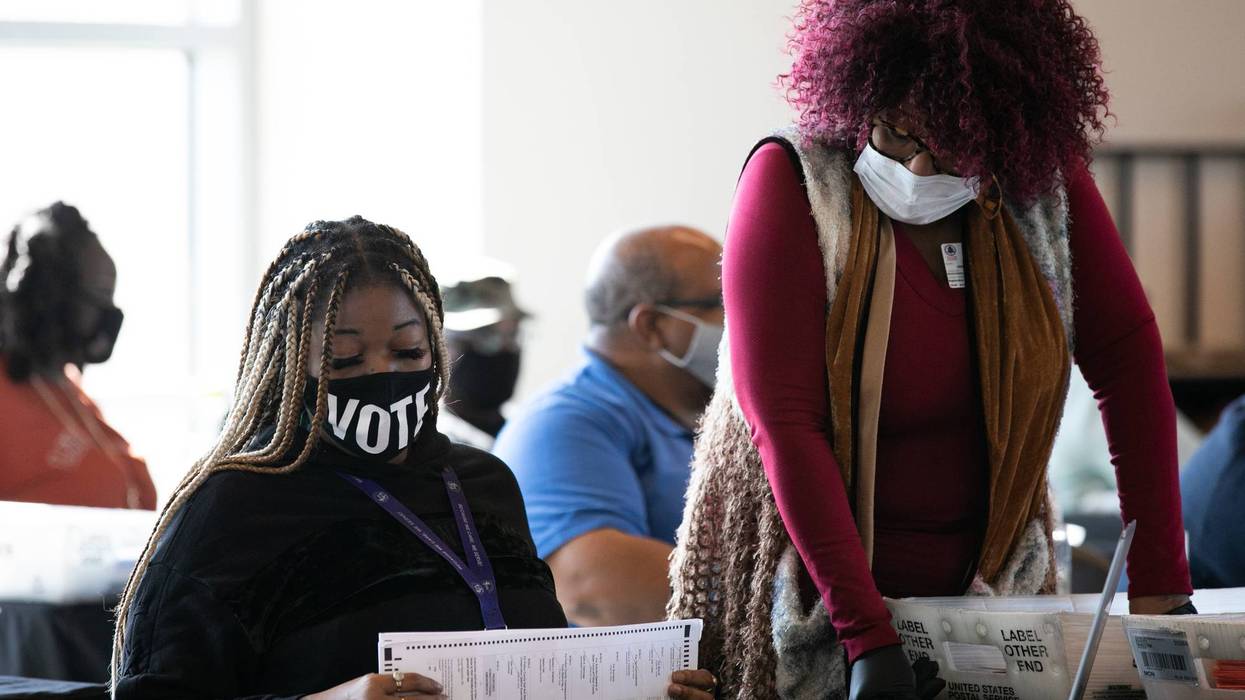
"This is a clear attempt to seize and hold power over our elections by sending a message that any county or state that doesn't vote in favor of the president or his preferred candidates may be subjected to a harassment campaign."
Democracy defenders sounded the alarm just over three months ago, when the Federal Bureau of Investigation executed a search warrant at a Georgia election hub. They expressed concerns again after a court filing revealed late Monday that President Donald Trump's Department of Justice is demanding the names of Fulton County's 2020 election workers.
For years, the Republican president has "obsessively propagated the debunked conspiracy theory that Fulton County 'stole' the 2020 election from him. And he has made it clear that he seeks retribution against those who refuse to indulge his baseless claims," notes the county's Monday filing aimed at blocking the April 20 grand jury subpoena for election workers' personal data.
The largely Democratic county—which includes most of Atlanta—argued that it should not have to turn over workers' names, home addresses, emails, and telephone numbers due to federal overreach and First Amendment concerns, according to CBS News. It also suggested the subpoena is politically motivated and highlighted the statute of limitations for 2020 election crimes.
"After illegally seizing our election records in January, the federal government once again is attempting to misuse criminal process," Fulton County Commission Chairman Robb Pitts said in a statement announcing the motion.
"This is yet another act of outrageous federal overreach designed to intimidate and to chill participation in elections. This harassment should not be allowed, so we have asked the court to act," he continued. "I will always stand up for our elections workers and for the truth. Let me be crystal clear. Fulton County will not be intimidated."
Voting rights advocates echoed the concerns noted by the filing and Pitts. Lauren Groh-Wargo, who leads Fair Fight Action, told The New York Times that election workers across the United States now face heightened threats and harassment.
"Roughly a third of election officials are threatened on the job, and more than half worry it's making it harder to hire and keep election workers," Groh-Wargo said. "They're trying to break our democracy by attacking the infrastructure, but we are fighting back hard."
Trump's DOJ is losing in Fulton County – so they've resorted to harassing election workers. In 2020, workers saw death threats due to false claims.This case was initially rejected by ATL's FBI Chief. It's built on false claims that were investigated and rejected, including by Republican officials.
[image or embed]
— Max Flugrath🗳️ (@maxflugrath.bsky.social) May 5, 2026 at 8:31 AM
All Voting Is Local Georgia state director Kristin Nabers stressed in a statement that "the conspiracy theories and lies that dictate White House policy have real-world consequences beyond appeasing the president's fragile ego—they are being weaponized to target the people from our communities who run our elections and ensure our votes are counted."
"This is a clear attempt to seize and hold power over our elections by sending a message that any county or state that doesn't vote in favor of the president or his preferred candidates may be subjected to a harassment campaign like that of Fulton County," she continued. "This intimidation tactic is a slap in the face to the millions of county election workers and volunteers around the country who work tirelessly to make sure our elections run smoothly."
Nabers added that "the all-out assault on Fulton County and its poll workers creates a blueprint for the administration to see what it can get away with during the midterm elections when results in key counties and states don't go its way. Election workers in Fulton County and beyond will not be intimidated by this desperate bullying."
The fight in Fulton County—where Trump and others initially faced criminal charges for their effort to overturn his 2020 loss—comes as some primary elections are underway across the country, and amid mounting concerns about what the president may try in November, particularly if the GOP-controlled Congress passes the attack on voting rights that the White House is pushing.
Michael McNulty, policy director of the group Issue One, said Tuesday that "Americans should be furious" about Trump's demands in Georgia, which "are based solely on debunked conspiracy theories from 2020 that courts and post-election audits have repeatedly rejected."
"Targeting these heroic election workers does nothing to strengthen our democracy—it puts ordinary public servants at risk in an attempt to erode trust in elections," he warned. “The Trump administration's goal is to make Americans feel distrust and cynicism about the election process. While the administration is framing its actions using the 2020 elections, it is proceeding with this year's midterms in mind."
As McNulty detailed, Trump's "election takeover playbook" includes:
"If this playbook is left unchecked, the Trump administration will continue to abuse its power and attempt to meddle in elections like authoritarian leaders in other countries," he said. "Congress must stop this."
"It should use oversight and funding authority to halt the executive branch from weaponizing federal power against the heroes who run our elections," McNulty argued. "Members of Congress swore an oath to the Constitution when they agreed to serve, and now is a test of whether they are willing to live up to that oath and protect the American people."
Some members of Congress joined voting rights advocates in speaking out against the subpoena this week. Sharing the Times report on social media Tuesday, Sen. Mark Warner (D-Va.) declared that "Trump's attacks on our free and fair elections won't stop."

States that have criminalized abortion are "getting much more explicit" in pushing to prosecute women for obtaining abortion care, said one rights advocate.
A state judge in Georgia on Monday set a bail payment at just $1 for a woman who was charged with murder earlier this month after she took abortion pills to end a pregnancy—a charge about which Judge Steven G. Blackerby of State Superior Court expressed extreme skepticism.
“I think that charge is extremely problematic,” Blackerby said during a hearing that the woman, Alexia Moore, attended virtually. “That is going to be a hard charge to convict upon.”
District Attorney Keith Higgins, who is overseeing the case against Moore, also did not appear convinced that the 31-year-old should be imprisoned for the medication abortion she had last December. He told the judge that "whatever bond the defendant can make that will allow her to get out of jail is appropriate," and noted that police in Kingsland, Georgia had brought charges against Moore without his office's support.
Higgins said he was not ready to drop the murder charge altogether, but said he was also not prepared to present the case to a grand jury.
Moore had been in jail for about two weeks when the hearing took place. Investigators in Kingsland accused her of “unlawfully and with malice aforethought [causing] the death of Baby Girl Moore.” In addition to malice murder they charged her with possession of a controlled substance and a dangerous drug.
She was rushed to Southeast Georgia Health Center on December 30 after experiencing severe abdominal pain. Court records showed Moore told the medical staff she had taken about eight pills of misoprostol, a pill that can be used for medication abortion, and oxycodone for pain. She went into labor at the hospital and delivered a baby who was determined to be in the second trimester of development. The baby was declared dead about an hour after birth.
She said she had bought the medication online and believed herself to be less than 14 weeks pregnant.
The Kingsland Police Department did not specifically cite Georgia's six-week abortion ban—which the state Supreme Court has allowed to remain in effect despite a Superior Court ruling that permanently enjoined the ban and found it unconstitutional—but The New York Times reported that documents supporting the department's arrest warrant "echoed aspects of the ban, including saying that 'the baby was well beyond six weeks of conception.'"
The police said Moore was charged with murder because “the victim became a person at the moment of live birth.”
Higgins acknowledged in court that the malice murder charge may not meet "factual and merit" standards, and both Blackerby and Kelly Turner, Moore's defense attorney, noted that Georgia law prohibits the criminalization of someone who has induced an abortion on themself.
The Current, a Georgia-based outlet, also reported that "privacy issues" are likely to be scrutinized in court if the district attorney continues to pursue the case.
"A security guard at Southeast Georgia Health Center in St. Marys called police after medical staff said that Moore had ingested abortion medication and the infant was older than six weeks, according to police records, which also cited Moore’s previous abortion history," reported The Current.
Turner argued in court that Moore legally procured the misoprostol and noted that her blood tests and hospital records did not show Oxycodone in her system.
"Today’s decision is a reminder that justice is not served by accusation alone," said Don Plummer, press officer for the Georgia Public Defender Council, which is representing Moore.
Author and advocate Jessica Valenti of Abortion, Every Day emphasized after Moore's arrest that the murder charge shows how states that have criminalized abortion care are "getting much more explicit" about the anti-choice movement's desire to punish women for obtaining abortions—even though in the past, laws have typically avoided prosecuting them.
A 31-year-old in Georgia has been arrested and charged with murder for allegedly ending her pregnancy with abortion medication.
Here’s what we know: pic.twitter.com/EXAcMqEdak
— Jessica Valenti (@JessicaValenti) March 16, 2026
The district attorneys of Georgia's four largest counties pledged in 2019, after the passage of the Living Infants Fairness and Equality Act, that they would not prosecute people who obtain abortions.
Since Roe v. Wade was overturned in 2022, women in states including Kentucky, Ohio, and South Carolina have faced charges for obtaining abortion care and for suffering pregnancy loss. An Ohio woman sued medical providers last year for conspiring with police to fabricate a criminal case against her; she had been charged with felony abuse of a corpse after having a miscarriage, but a grand jury declined to indict her.
"I really hope that people are paying attention to this," said Valenti of the attempt to bring charges against Moore. "They really are counting on us being too overwhelmed to act, so it's incredibly, incredibly important that we let them know we're paying attention."
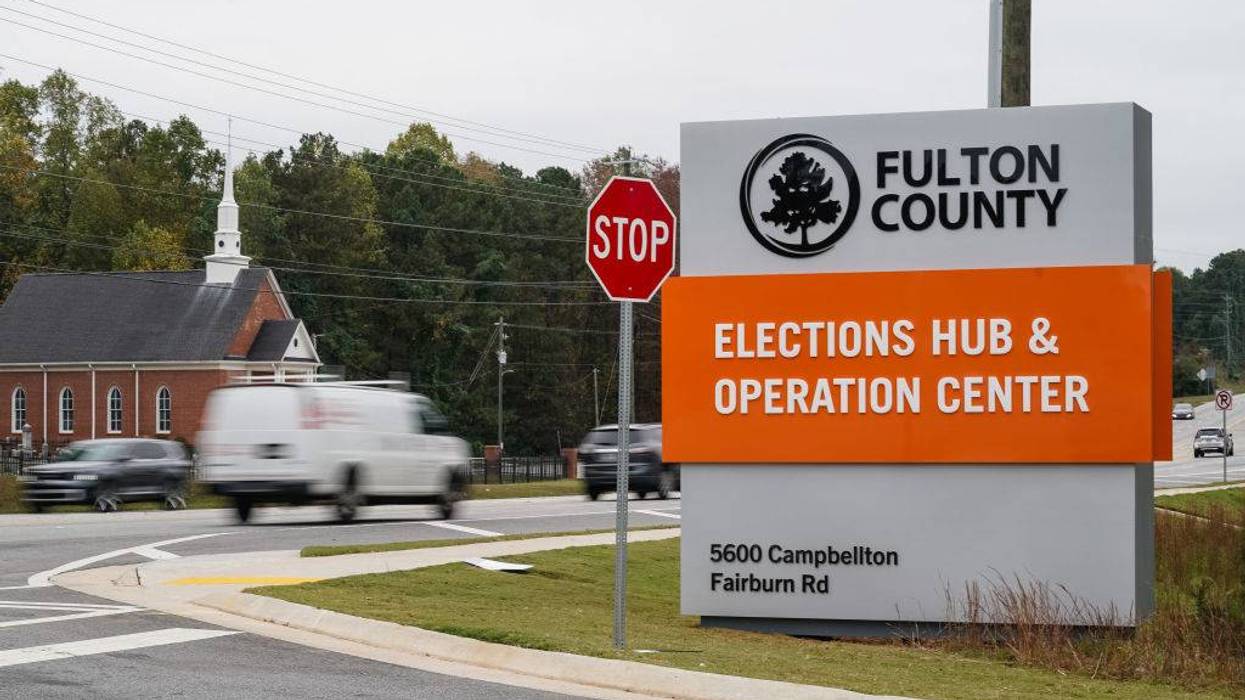
“We have very serious concerns about what the Trump administration could do with the voting records of thousands of people from Fulton County."
Civil rights organizations are demanding that a federal court place restrictions on the Trump administration's use of materials seizedduring its unprecedented raid on an elections center in Fulton County, Georgia in January.
Five groups—the Lawyers' Committee for Civil Rights Under Law, the NAACP, the Georgia State Conference of the NAACP, the Atlanta branch of the NAACP, and the Georgia Coalition for the People’s Agenda—on Monday asked the Atlanta Division of the US District Court for the Northern District of Georgia to bar the administration from using any materials seized from the Fulton County Election Hub and Operations center for anything other than the criminal investigation outlined in the search warrant used to justify the raid.
Among other things, this would bar the administration from using materials taken from the center for voter roll maintenance, election administration, or the enforcement of federal immigration laws.
The groups argued the constraints are necessary to enforce "statutory protections for the right to vote, voter privacy, and ballot secrecy, which are fundamentally critical given the unprecedented assaults on the administration of elections."
Additionally, the groups asked the court to force the administration to create and publicly disclose a full inventory of materials seized from the voting center, as well as a catalog of all people who have accessed the materials during the investigation.
Damon Hewitt, president and executive director of the Lawyers’ Committee for Civil Rights Under Law, claimed that the seizure of materials related to the 2020 presidential election was a continuation of Trump's years-long quest to overturn his loss to former President Joe Biden.
Hewitt also warned the raid on the Fulton County elections center should be seen as part of an assault on voter rights throughout the US.
"These actions are part of a larger pattern," he explained. "We are witnessing a broad-scale assault on fair elections on many fronts, from going after voting records and squeezing out Black voters through redistricting, to improperly purging voters from the rolls and making it harder for everyone to vote. Some have called what we are witnessing a ‘soft coup’. Whatever we call it, we must all understand that our democracy is at risk."
Robert Weiner, director of the voting rights project at the Lawyers’ Committee for Civil Rights Under Law, said the seizure of materials raised major privacy issues for Fulton County voters.
"We have very serious concerns about what the Trump administration could do with the voting records of thousands of people from Fulton County," said Weiner. "We are talking about sensitive private information. After the DOGE disaster, voters need to be confident their private information is in safe and trustworthy hands."
The FBI last month executed a search warrant at the Fulton County election center that allowed federal agents to seize 2020 election ballots, tabulator tapes, digital data, and voter rolls.
Shortly after the raid, Fulton County Commissioner Mo Ivory predicted that this kind of operation would likely be spreading to other counties and states.
“Fulton County is right now the target," Ivory said. "But it is coming to a place near you. This is the beginning of the chaos of 2026 that is about to ensue."
One expert expressed fear that "something truly spectacular is going to happen in which our 2026 midterm elections are not administered like past elections have been."
A pair of experts warned this week that President Donald Trump is clearly telegraphing his intention to meddle in the 2026 midterm elections.
Stephen Richer, former recorder of Maricopa County, Arizona, said during an interview with The Atlantic published Wednesday that he's grown worried that "something truly spectacular is going to happen in which our 2026 midterm elections are not administered like past elections have been."
When asked to flesh out how Trump could potentially rig the upcoming elections, Richer said it was unlikely that he would deploy US Immigration and Customs Enforcement (ICE) agents to polling places across the country, if for no other reason than he lacks the manpower to accomplish such an operation.
However, Richer did express concern about the president's ability to muddy waters in tight races and put pressure on his Republican allies to refuse to seat Democratic winners when he is claiming there are disputes about the results.
"Where I think President Trump is most potent is still in the post-election procedures," he explained, "still in sowing doubt in the minds of enough Americans that they don’t think the elections are legitimate and, therefore... the Congress doesn’t have to seat its new members. That’s certainly a popular theory that’s floating about: that Speaker Mike Johnson (R-La.), the outgoing speaker, will choose not to seat the new members, because they’re in allegedly disputed elections."
Richer argued that California could be particularly vulnerable to this, since the state infamously takes so long to finish tallying its votes.
In a New York Times editorial published Thursday, Sean Morales-Doyle, director of the Brennan Center for Justice's voting rights and elections program, argued that Trump's "campaign to rig our elections is well underway," and he pointed to the president's mass pardon last year of rioters who violently stormed the US Capitol on January 6, 2021 as the beginning of his election subversion campaign.
"We have every reason to expect more actions like these in the coming months," wrote Morales-Doyle. "A few weeks ago, Mr. Trump reiterated his threats to prosecute election officials who ran the 2020 election. Just days later, FBI agents seized ballots and election records from 2020 in Fulton County, Georgia."
However, Morales-Doyle also said there was reason to believe that the American system can withstand the president's assault on its election integrity, and he gave a nod toward several efforts across the country to fight back, including states resisting Trump's demands to hand over their voter rolls and Democrats refusing to let new voter suppression legislation pass through Congress.
"We are already seeing how effective people can be in pushing back," he concluded, "whether on the streets of Minneapolis or at town halls hosted by their representatives in Congress. It will be incumbent on all of us—election officials, advocates, state law enforcement, and voters—to see the administration’s efforts for what they are and to fight back."
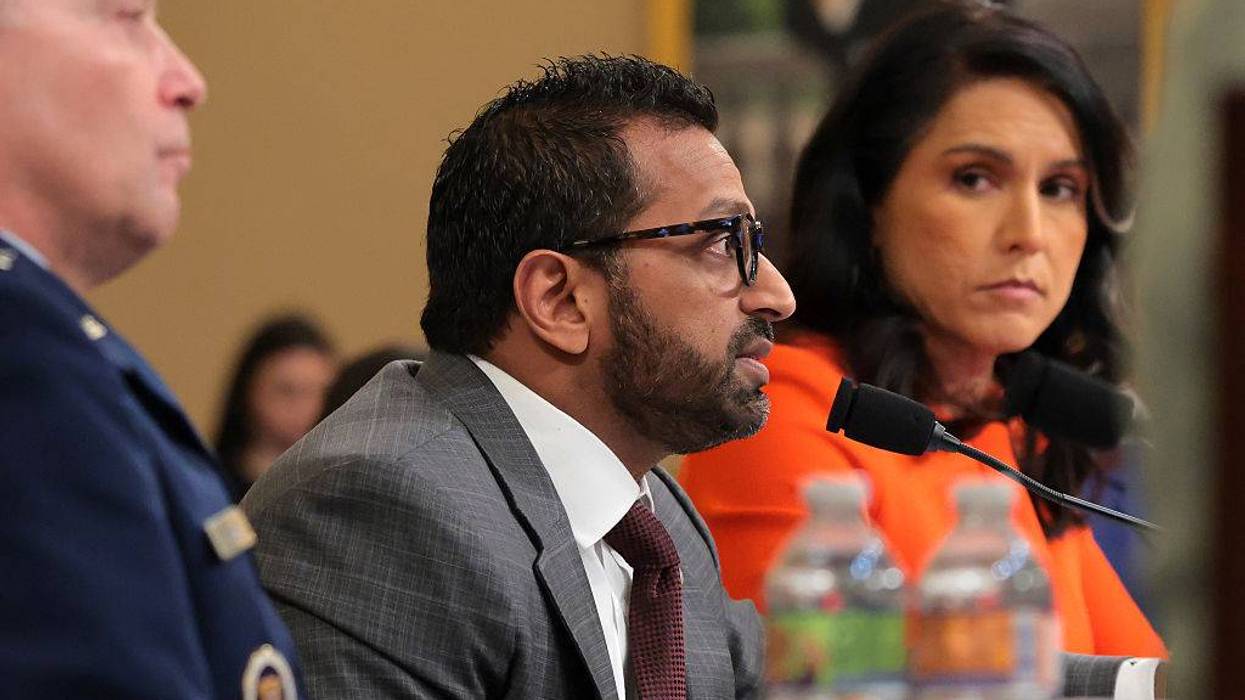
"This should have people across the country absolutely shook," said Sen. Jon Ossoff.
The FBI's Wednesday raid on an elections center in Fulton County, Georgia is raising alarms about President Donald Trump's plans to disrupt the 2026 midterm elections.
Shortly after FBI agents executed a search warrant at the Fulton County Election Hub and Operations center to search for materials related to the 2020 presidential election, Fulton County Commissioner Mo Ivory warned that this kind of operation would likely be spreading to other counties and states.
"Fulton County is right now the target, the only county right now fighting over an election that already happened," she said, referring to Trump's election loss that he has refused to concede more than five years after it happened. "But it is coming to a place near you. This is the beginning of the chaos of 2026 that is about to ensue."
Commissioner Mo Ivory: Fulton County is right now the target, the only county right now fighting over an election that already happened. But it is coming to a place near you. This is the beginning of the chaos of 2026 that is about to ensue. pic.twitter.com/0HvPMMoQO8
— Blue Georgia (@BlueATLGeorgia) January 28, 2026
In a Wednesday interview on MSNOW, Sen. Jon Ossoff (D-Ga.) described the raid on the elections center as a "seismic event" that should be a flashing red light for US voters.
"This should have people across the country absolutely shook," Ossoff said. "This is a huge deal. This is an FBI raid on the Fulton County Elections office. [Trump's] conspiracy theories about the 2020 election have been based in Georgia from the very start... this is a shot across the bow at the midterm elections. He tried to steal power when he lost it in 2020. We have to be prepared for all kinds of schemes and shenanigans."
Ossoff: "This is a seismic event. This should have people across the country absolutely shook. This is a huge deal. This is an FBI raid on the Fulton County Elections office ... This is a shot across the bow at the midterm elections. He tried to steal power when he lost it in… pic.twitter.com/vb8YwcP3Pa
— Aaron Rupar (@atrupar) January 29, 2026
Sen. Mark Warner (D-Va.) noted that US Director of National Intelligence Tulsi Gabbard was spotted at the elections center during the FBI raid, which he said was wholly unprecedented given that her job is supposed to be focused on foreign national security threats.
Warner then posited two explanations for her presence on the ground in Fulton County.
"Director Gabbard believes there was a legitimate foreign intelligence nexus," Warner wrote in a social media post, "in which case she is in clear violation of her obligation under the law to keep the intelligence committees 'fully and currently informed' of relevant national security concerns."
The other option, said Warner, is that Gabbard "is once again demonstrating her utter lack of fitness for the office that she holds by injecting the nonpartisan intelligence community she is supposed to be leading into a domestic political stunt designed to legitimize conspiracy theories that undermine our democracy."
ProPublica published a report on Thursday that dove into the specifics of the search warrant executed at the Fulton County election center that allowed federal agents to seize 2020 election ballots, tabulator tapes, digital data, and voter rolls.
Rick Hasen, a law professor at the University of California, Los Angeles, told ProPublica that he has never seen a search warrant of this nature.
"The idea that federal officials would seize ballots in an attempt to prove fraud is especially dangerous in this context," said Hasen, "when we know there is no fraud because the Georgia 2020 election has been extensively counted, recounted, and investigated."
Derek Clinger, a senior counsel at the State Democracy Research Initiative, an institute at the University of Wisconsin Law School, told ProPublica that the sweeping search warrant marked "a dramatic escalation in the Trump administration’s efforts to expand federal control over our country’s historically state-run election infrastructure."