

SUBSCRIBE TO OUR FREE NEWSLETTER
Daily news & progressive opinion—funded by the people, not the corporations—delivered straight to your inbox.
5
#000000
#FFFFFF
To donate by check, phone, or other method, see our More Ways to Give page.
Daily news & progressive opinion—funded by the people, not the corporations—delivered straight to your inbox.
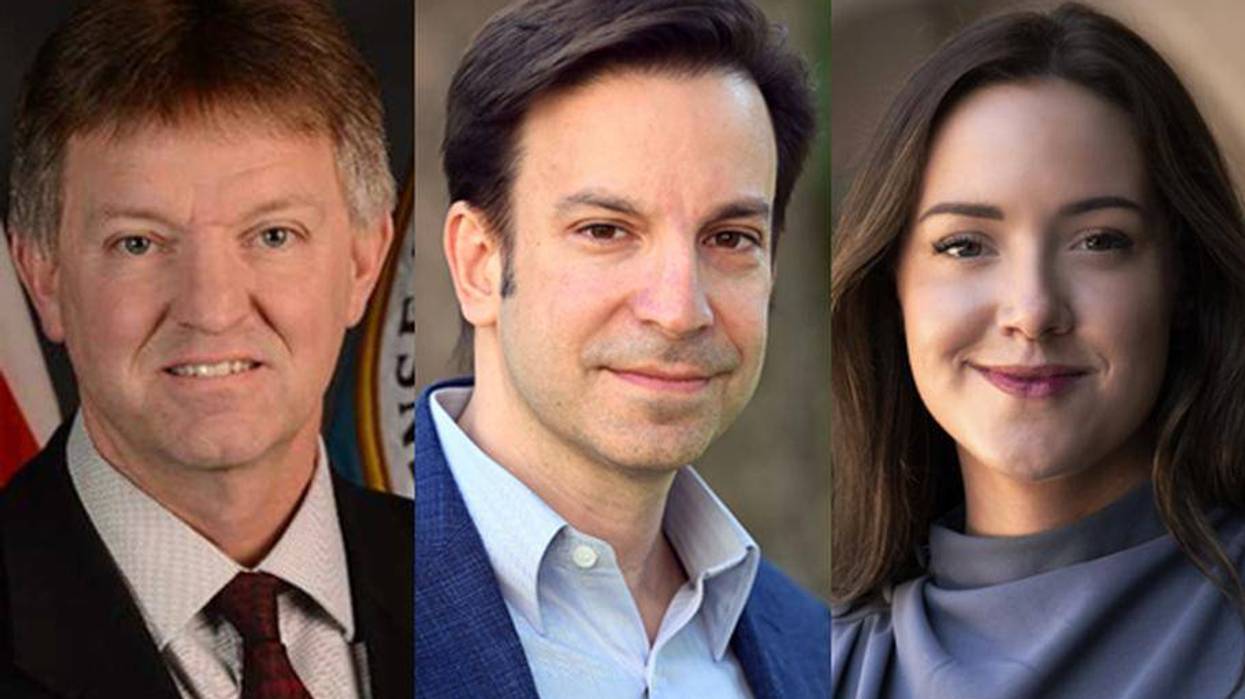
"It’s a shame for the institution and service members, who swore to defend the Constitution and deserve the right to a free and independent press," said ouster journalist Lara Korte.
Correspondent Lara Korte, editor-in-chief Erik Slavin, and publisher Max Lederer were fired from their posts at Stars and Stripes on Friday, in the latest attack on press freedom by President Donald Trump and members of his administration—this time targeting the paper that provides daily news to U.S. service members worldwide.
"I consider it a great privilege to live alongside members of the military and share their stories," said Korte in a social media post following her ouster. "It’s a shame for the institution and service members, who swore to defend the Constitution and deserve the right to a free and independent press."
Korte said she was "informed that the Department of Defense is firing me for insubordination after I told a CBS reporter that I work for Stars and Stripes—not the Pentagon, not any administration, and not any policymaker."
Slavin explained that he and Korte were fired specifically over an interview they gave earlier this year with CBS News, in which they said they were independent of the Pentagon and the White House and that they would resist any effort to censor the news military members receive. Even though the military publication operates within the US Department of Defense, it has always enjoyed editorial independence.
Editor in Chief of Stars and Stripes Erik Slavin speaks out after he was fired by the Pentagon today: "They said that I was insubordinate for responding to a hypothetical about censorship and saying it was a red line... I reaffirmed what the law says, what the DOD regs say, which… pic.twitter.com/KrBwY4gTug
— Erin Burnett OutFront (@OutFrontCNN) August 22, 2026
“I stand by the principle that Stars and Stripes must remain editorially independent, as required by law and by the department’s own policies,” he said in a statement Friday.
Press freedom advocates slammed the move by the DoD.
"Today's firings are an ugly, un-American attack on our free press," said the free speech group Fire in a statement. "America's brave service members swore an oath to defend the Constitution. They deserve the free and independent press our Founders fought for 250 years ago, not Pravda-style propaganda. The United States is uniquely committed to freedom of the press, and has been since our founding. Accepting censorship means losing our national identity."
Speaking with the Associated Press, Slavin said his firing for insubordination was for saying in the CBS interview "that hypothetical censorship of news for service members would constitute a red line” for him.
“We need to be able to provide independent news to service members,” he had told CBS in July. “If we can’t do that, if we were turned into something other than that, if we were public relations? Yeah, that’s the foxhole.”
- YouTube
According to reporting by Stars and Stripes, Lederer was also fired Friday, though he had announced his retirement earlier this week, on Tuesday.
In a letter to the outlet's staff, later posted online, Lederer explained, “It has become clear that my philosophy of leadership, and my understanding of value and mission of the Stars & Stripes, differ in fundamental ways from the direction of the leadership of the Department of Defense."
Replacing Lederer as the new publisher of Stars and Stripes is Capt. William Urban, a longtime public relations officer and communications specialist inside the US military with no professional experience in the field of journalism.
Urban previously served, as he explained in a memo to newspaper staff on Friday, as a "spokesman for some of the hardest Public Affairs assignments in the Navy and Department of War for more than 20 years."
"Does repeatedly being at the center of a media firestorm qualify me to help lead Stars and Stripes?" Urban asked in his letter. "No, but it is not a bad place to start."
Apparently, a public relations expert is exactly what The Pentagon, under the leadership of Secretary of State Pete Hegseth and President Trump, has been looking for.
Earlier this week, Sens. Richard Blumenthal (D-Conn.) and Elizabeth Warren (D-Mass.) wrote to Secretary Hegseth about their concerns over the "shakeup" at Stars and Stripes, represented by Lederer's retirement announcement and the news that Urban would replace him.
“The placement of an active-duty Public Affairs officer in the senior leadership of an organization whose credibility depends on its independence from the military chain of command raises serious questions,” the Senators wrote in a letter.
“For generations, American servicemembers, particularly those stationed overseas and in combat zones, have relied on Stars and Stripes for credible and independent news," the Senators added. "That trust depends on preserving a clear separation between independent journalism and the Department’s public affairs apparatus. At this critical moment of leadership transition, that independence must not be compromised.”
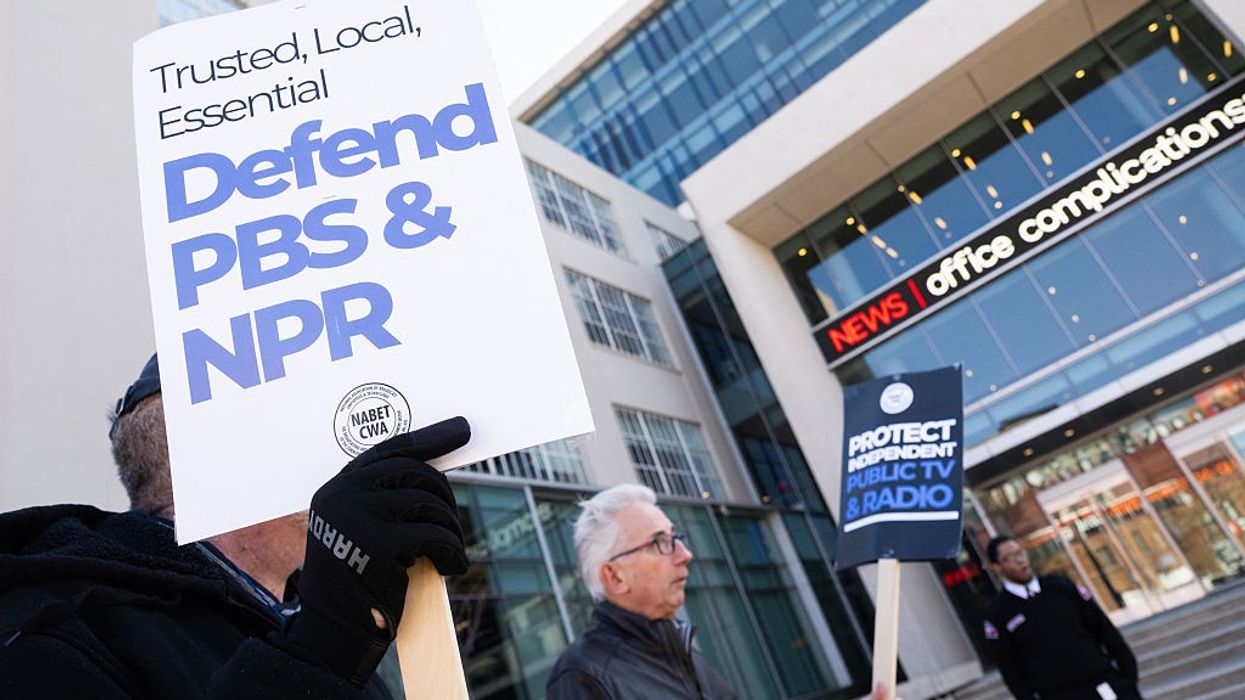
The president's ongoing attacks on a free press are part of the administration’s concerted efforts to shut down journalism that displeases him.
Late Thursday night, President Donald Trump issued an executive order aiming to eliminate federal funding for NPR and PBS. As a rationale for the move, the White House also released a so-called “fact sheet” detailing what it claims is evidence of “left-wing propaganda.”
Even if that were true—and it’s not—any government attempt to silence the press based on viewpoint is plainly unconstitutional. Expect this latest Trump order to face a comprehensive legal challenge, similar to other successful efforts in the courts to block illegal actions from the administration.
Trump’s ongoing attacks on public media are part of the administration’s concerted efforts to shut down journalism that displeases the president. Too often commercial outlets, including those controlled by conglomerates like Disney (ABC) and Paramount (CBS), are caving to official pressure, putting their profits before their democratic principles. This is why an independent, publicly funded noncommercial media system—one that holds power accountable—is essential to healthy democracies around the world.
If we care about democracy, we should spend more—not less—on public media.
Here are five ways this latest Trump order is an assault on democracy in the United States.
The White House made it clear that it’s taking this action based on Trump’s unfounded claims about coverage from NPR and PBS. This most thin-skinned of presidents has made it his job—and that of his lapdog censor at the Federal Communications Commission, Chairman Brendan Carr—to threaten and intimidate any news outlet that challenges, or even questions, his 100-day power grab. With this latest move, he’s taking it one step further, pushing to defund and destroy any public media outlet that doesn’t service his authoritarian agenda. Yet the First Amendment very clearly and succinctly prohibits the government from making any laws (and by extension, any executive orders) “abridging the freedom of speech, or of the press.”
In poll after poll, people of all political stripes say that federal support for NPR and PBS is taxpayer money “well spent.” In other polling, Americans find PBS to be the most-trusted U.S. institution, with 63 percent of respondents expressing “a great deal of trust” or “some trust” in the network. The same survey found PBS is the “most-trusted news network” in the country. To eliminate funding for these media institutions clearly goes against the will of the majority of Americans—and that's not the way a democracy is supposed to function.
“Despite being the wealthiest nation on the planet, the United States impoverishes its public media infrastructures,” writes professor Victor Pickard, co-director of the University of Pennsylvania’s Media, Inequality, and Change Center (and Free Press' board chair). Pickard should know. In 2021, he co-authored a global survey with Professor Timothy Neff, which found that more robust funding for public media strengthens a given country’s democracy—with deeper public knowledge about civic affairs, more diverse media coverage and lower levels of extremist views. If we care about democracy, we should spend more—not less—on public media.
As local newsrooms downsize or outright shut down, public-media stations fill a void. Penny Abernathy, at University of North Carolina's Center for Media Law and Policy, has extensively documented the spread of news deserts across the country. Local newspapers are closing at an exponential rate, and many local radio stations have hollowed out their newsrooms and replaced programming with nationally syndicated talk formats, often hosted by far-right figures. The expansion of news deserts across the country is a democratic issue with profound implications for our communities. Local NPR and PBS stations often provide the only local news in countless communities—and provide lifesaving information during emergencies.
The expansion of news deserts across the country is a democratic issue with profound implications for our communities.
Congress—not the president—has the power to craft our federal budget. While the president makes spending proposals, Congress ultimately considers, amends and approves them. The nation’s founders created the system in this way to specifically put federal spending outside of this sort of control. With this executive order, Trump is attempting to short-circuit this long-established check against runaway executive power.
With the right-leaning composition of Congress, few expect GOP lawmakers to speak out against Trump's move. But past Republican-led efforts to zero out funding for public broadcasting have met fierce opposition from people across the country who are ready to pick up their phones, call their representatives and senators, and tell them to save public media.
“All of us who care about an independent press, an informed populace, a responsive government and a thriving democracy have a stake in the outcome of this fight,” says my colleague Craig Aaron, the co-CEO of Free Press. “If we unite to defend public media—and I believe we can and will prevail—then we might just save our democracy, too.”
He's exactly right.
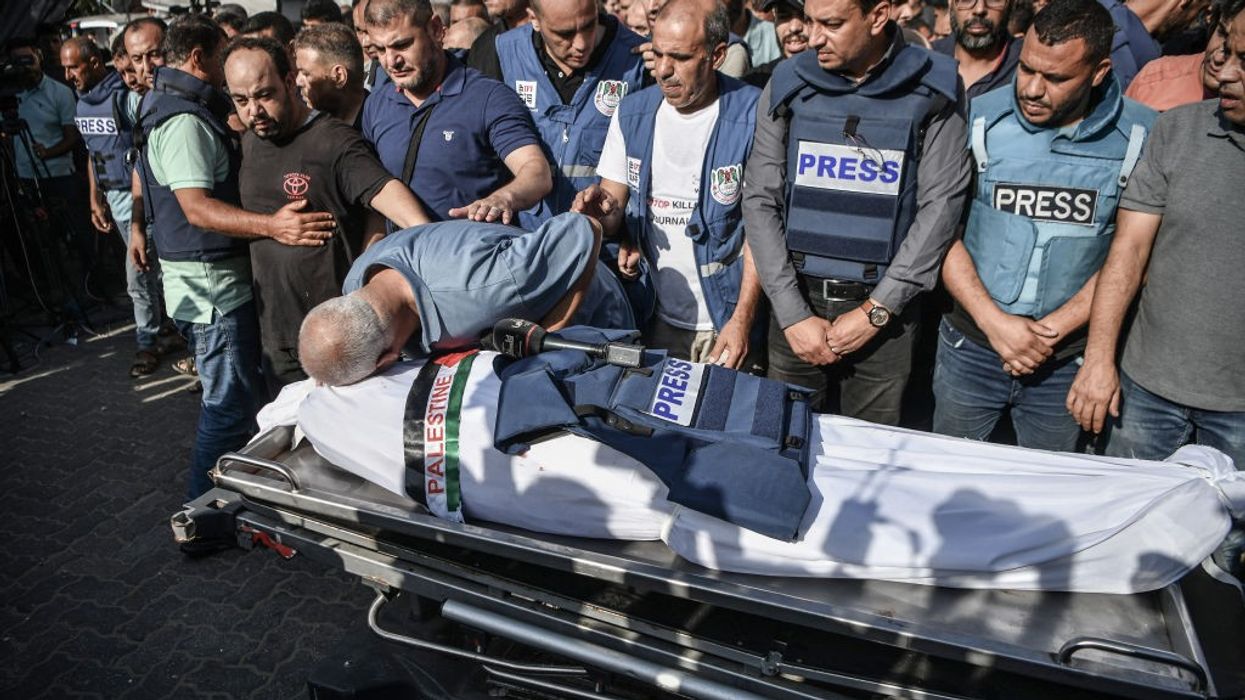
If the Israeli government was really the victim of widespread lying, it wouldn’t be killing and arresting the brave journalists who are there to reveal the truth.
Journalists are the world’s witnesses. The only people who kill witnesses are criminals.
Somebody should tell AIPAC. At its recent conference, the pro-Israel lobbying group gave 1,600 lobbyists their marching orders. Those lobbyists descended on Capitol Hill the following week, making sure that the beneficiaries of the group’s lavish campaign spending understood what was expected of them. To make sure politicians got the point, the group pointed out that, “dollar for dollar,” it was “the largest contributor to candidates in the 2022 midterm elections.”
A lot of them got the point. Elected officials from both parties paid obeisance to the group at its conference, including the Democratic and Republican leadership of both houses of Congress and politicians like Sen. John Fetterman (D-PA).
Luke Goldstein of the American Prospect obtained a copy of the talking points AIPAC gave its lobbyists. The message? Israel is an innocent and well-meaning country that’s been slandered in the court of public opinion. AIPAC and Israel insist that the world has been told one lie after another. According to them, this is the real story:
“Israel does not target civilians.”
“Hamas weaponizes civilians as human shields.”
“Israel is not blocking the delivery of aid to Gaza.”
“... reports that people are starving in Gaza are false.”
If these statements were true, Israel would be the victim of global mendacity on a scale rarely seen in world history. And what’s the best way to fight lying? By welcoming and protecting the people who can tell the truth in words and images.
But Israel isn’t welcoming or protecting journalists. It’s killing them.
The Committee to Protect Journalists (CPJ) keeps a running tally of journalists killed by Israeli forces. As of March 28, 95 journalists and media workers were confirmed dead, 16 journalists were injured, 4 were reported missing, and 25 journalists had been arrested. As the CPJ also notes, journalists have also faced multiple assaults, threats, cyberattacks, censorship, and killings of family members.
Israel clearly doesn’t want witnesses. Why else would reporters be rounded up as they covered Israel’s March 18 assault on the Al-Shifa hospital complex? As CPJ observes, one of them
“recounted how he and several other journalists were assaulted by IDF soldiers, whom he said destroyed the journalists’ tent and damaged their equipment and press vehicles ... the journalists were ordered to strip off their clothes in the cold weather, and were kept blindfolded and handcuffed in a room at Al-Shifa hospital.”
Even before October 7th, 20 journalists had been killed by the Israeli military, including an American citizen killed by an American bullet in what appeared to be a targeted attack.
Now, journalists are being targeted in their homes, often alongside their families. Others have been killed in bombing attacks on refugee camps. Still others have had their cars destroyed by missile strikes, despite being clearly identifiable as press. (See above picture.) Some have been shot by snipers despite wearing the distinctive blue vests of the media.
The death toll from six and a half months of war in Gaza far exceeds the average number of journalist deaths in a typical year. I created the attached chart from CPJ’s data:
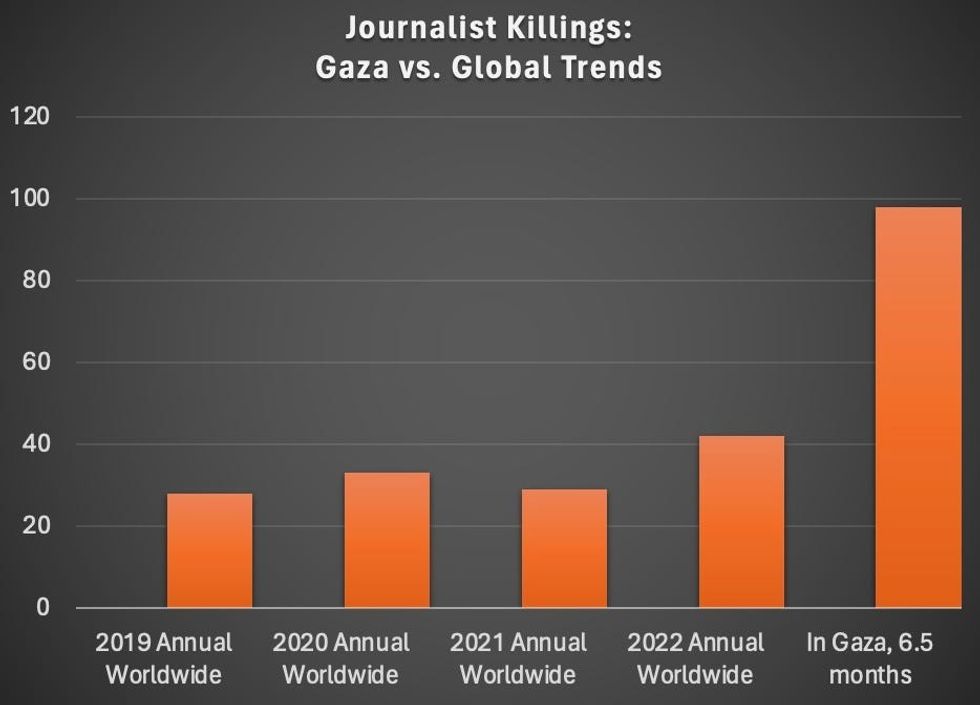
Journalists are being singled out for being journalists. This is a longstanding Israeli practice. It is also a war crime. The Rome State of the International Criminal Court states that “journalists engaged in dangerous professional missions in areas of armed conflict shall be considered as civilians” and given protected status. Instead, the IDF is systematically killing reporters, the world’s professional witnesses.
Innocent people don’t kill witnesses. Who does? Gangsters. Consider the sordid history of gang violence against witnesses in the US alone, as told in a few selected headlines and clips:
Israel isn’t the only government to engage in the gangster-like assassination of journalists, of course. Many authoritarian governments do – including the United States.* Maybe that’s why the United States government doesn’t seem very outraged by these killings.
Israel has barred foreign journalists from entering Gaza. That has left Palestinians to shoulder the responsibility, and the risk, alone. It also means that Israel has something like a free hand to kill them, since the deaths of Palestinians don’t seem to attract as much world sympathy.
Here’s a sampling from the list of victims:
There are many more, but you get the idea. If the Israeli government was really the victim of widespread lying, it wouldn’t be killing and arresting the brave journalists who are there to reveal the truth.
I’m not comparing the IDF to M-13 or the Gangster Disciples, of course. That would be unfair — to MS-13 and the Gangster Disciples. Those gangs haven’t accomplished anything like the killing wave now underway in Gaza, especially of children.
But then, they’ve never had the weaponry and patronage of the United States of America.
*Under the leadership of George W. Bush, US forces killed thirteen journalists in Iraq in the years 2003-2005. They include two journalists who died when a US tank shelled the hotel where most foreign journalists were staying, a staffer who died when an American missile struck Al Jazeera’s Baghdad bureau, and a cameraman who was killed without warning by machine gun as he filmed a US tank.
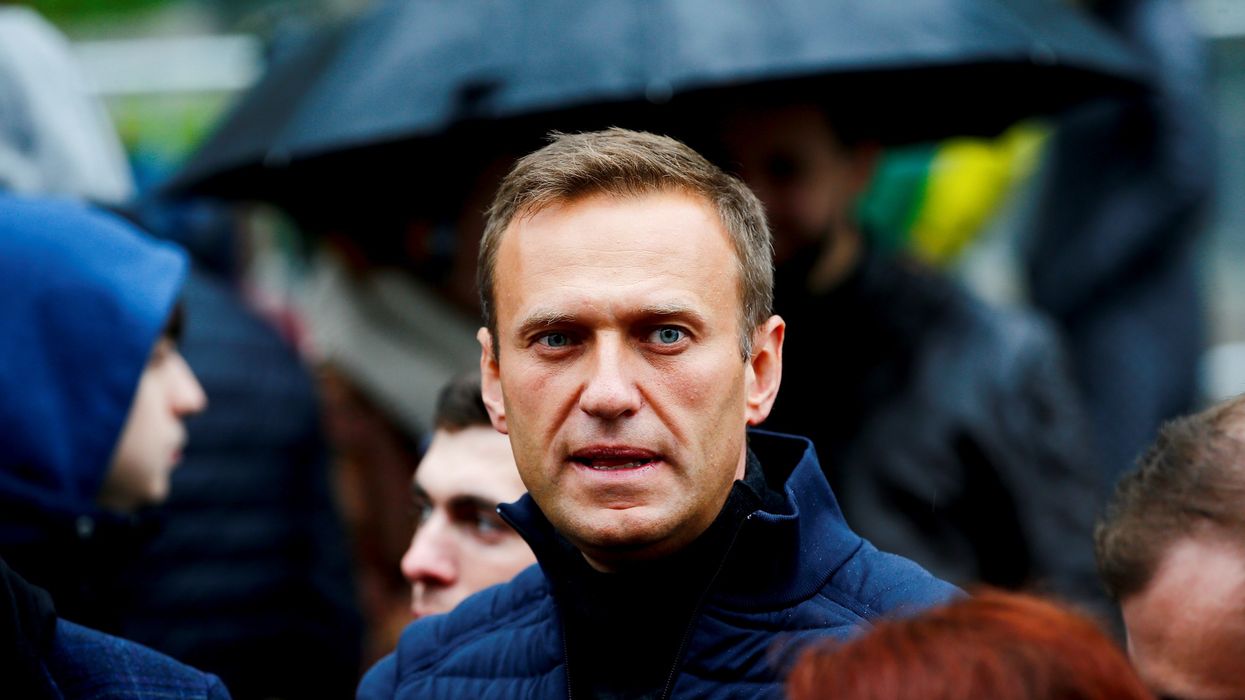
It is not surprising that politicians in power do not want to encourage whistleblowers and autonomous journalists. Those who rule the world prefer to indulge in their power games in secrecy.
In the late evening of February 16, I was standing on the other side of the iron fence that surrounds the imposing white building of the Russian embassy in The Hague. Abundantly illuminated by the spotlights, the house resembles an expensive film set that has been abandoned for the night.
But the last people who arrived with flowers that night did not look like fans waiting for movie stars. They were silent mourners paying their respects to a person they held in high esteem. The flowers were for Alexei Navalny, the Russian dissident who died that morning thousands of kilometers away, in the Arctic Circle.
In the Hague, the spotlights shone brightly on the golden double-headed eagle on the Russian embassy’s facade. Since the Bronze Age, the double-headed eagle has symbolized power. Used by the mighty Byzantine dynasty, the eagle is the oldest royal emblem representing both physical and spiritual power. The eagle has survived up to our times, even in countries without royal families. Russia abandoned its royal eagle following the 1917 revolution but resurrected its glory in 1993. The double-headed eagle on the Russian flag sports a red shield depicting a horseman slaying a black dragon.
Alexei Navalny challenged the Russian political system and lost his life. Julian Assange believed that the public has every right to know what their democratically elected representatives and their armies are doing. For now, he has lost his freedom and health.
On the western shores of Europe lies Belmarsh prison, which is known as Britain’s Guantanamo because of its torturous conditions as well as its population of mostly alleged murderers and terrorists. Near it and in front of the High Court in London, another group of people gathered four days after Navalny’s death, in the hopes that they could stop an extradition and stand up for press freedom. Too unwell to appear in court, Julian Assange was waiting for the decision in his cell. As expected, the judges decided to announce their verdict at some later date. It remains to be seen if Assange will be put on a plane to America, where he could face up to 175 years in prison.
On the American emblem, the eagle has a single head, like any normal bird of prey. Its only shield is a flag, not a mighty horseman with a sword. It carries 13 arrows in its left talon and an olive branch in its right talon, which denote the power of peace and war. The one-headed eagle eagerly awaits Assange. At most of the demonstrations against his extradition around the world, protesters have held up a photograph of his face with the lower part covered by the American flag, similar to the one on the breast of the emblematic eagle.
People formulate laws and can change them. The Russian administration is demonstrating great flexibility in introducing new laws that further limit freedom of expression and all other actions that the state doesn’t approve of. Those who would like to democratize the system do not stand a chance. On the other hand, Western countries are unreasonably slow in widening the scope of freedom by changing laws that are too rigid, overly general, or simply unjust. If the rule of law cannot be improved, then what is the sense of law in the ever-changing world?
Alexei Navalny challenged the Russian political system and lost his life. Julian Assange believed that the public has every right to know what their democratically elected representatives and their armies are doing. For now, he has lost his freedom and health. The authenticity of the thousands of confidential documents revealed through WikiLeaks has never been questioned. By revealing them, Assange allegedly broke the law, the Espionage Act of 1917. Since 1919, beginning with Schenck v. United States, the constitutionality of that law and its relationship to free speech have been contested in the courts multiple times. As Karen Sharpe writes in Counterpunch:
The Espionage Act, under which a journalist or publisher has heretofore never been prosecuted, was designed, as its name suggests, to prosecute those Americans working to undermine the U.S. war efforts by delivering national defense information to the enemy. Not only is Julian not an American citizen, and he was in Europe when he was publishing WikiLeaks, but the “enemy” to whom he was meant to have supplied classified information—information in the public interest—must ipso facto be any member of the general public anywhere in the world!
The same law can be used to hide atrocities and war crimes behind a wall of secrecy that protects guilty. None of those linked to the atrocities identified in the Wikileaks documents have been prosecuted. Only Assange is behind bars. In the United States, he is charged with 17 counts under the Espionage Act and one count under the Computer Fraud and Abuse Act. As Christophe Deloire and Rebecca Vincent of Reporters Without Borders put it:
Of course, Assange should not be in prison anywhere – not in the UK, nor the US, nor Australia… No one, anywhere, should be targeted for publishing information in the public interest. Assange should be immediately released – perhaps through a political solution if not the courts, given the political nature of the case against him.
In some cases, secrets must be respected and confidentiality is in order. But when crimes are committed, they must be revealed and not hidden, which is the purpose of any legal system. The only reasonable question is: are the laws that protect crimes acceptable or not in a democratic society? If they’re not acceptable, then Assange is a victim and not a culprit. As one of the posters held by a protester in London stressed: “Justice is locking up war criminals, not shooting the messenger!”
The two brave men are the martyrs of very different political realities and imperfect legal systems. Navalny fought for the freedom of his country, Assange for the transparency, freedom of information and press. One way or another, Navalny received the death penalty, delivered by the horseman shielded by two-headed eagle. Assange must wait in Belmarsh prison for the decision on his fate.
There is a clear and striking difference in the response of world leaders concerning these two men. In the case of Navalny, besides his supporters in Russia and around the world, politicians of the West are unanimously voicing their consternation. With indignation, trembling voices, and outrage, Joe Biden, Kamala Harris, Emmanuel Macron, Olaf Scholz, Jens Stoltenberg, Ursula von der Leyen, and Mark Rutte, as well as Rishi Sunak, David Cameron, and many others are condemning the autocratic and murderous Russian regime and Vladimir Putin’s brutality. They are eager to demonize their proven enemy one more time.
In the case of Assange, the most vocal dissenters are Reporters Without Borders, the International Federation of Journalists, DiEM25, Amnesty International, Human Rights Watch, and recently the Australian government. In the United Kingdom, where the proceedings are taking place, there was no major political pressure to block the extradition. Only a handful of British parliamentarians signed a petition calling for Assange’s release.
As for world leaders, they are mostly staying silent. Some, however, are not. Those calling on the UK government to block extradition include Brazilian President Luiz Inácio Lula da Silva, former president of Argentina Alberto Fernández, former Labor leader Jeremy Corbyn, former Spanish prime minister José Luis Zapatero, and some former heads of state from Ecuador, Bolivia, Colombia, the Dominican Republic, Panama, Paraguay, Uruguay, and Venezuela.
It is not surprising that politicians in power do not want to encourage whistleblowers and autonomous journalists. A free press can be a serious inconvenience. Those who rule the world prefer to indulge in their power games in secrecy. The will to power prevents Western democracies from improving their laws and strengthening the pursuit of democracy and freedom. It would be surprising and welcome if some of them manage to radically change their attitudes and behaviors.
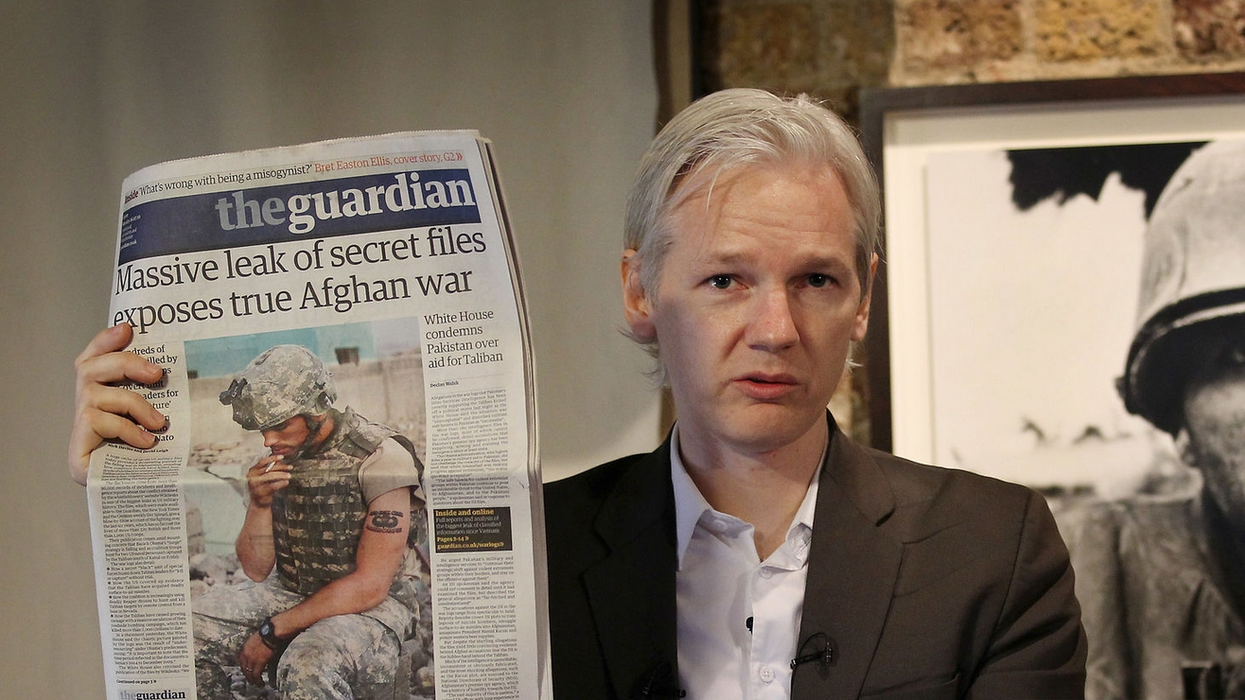
Prosecuting the Wikileaks founder gives a green light to countries around the world that it is possible to protect their government secrets by charging international reporters or editors with crimes.
WikiLeaks founder Julian Assange is perilously close to extradition to the United States from Belmarsh Prison in London. He has one final opportunity on February 20 to persuade the British High Court of Justice that his rights would be violated if the appeals court allows the U.S. government to put him on trial.
The case has been widely condemned by civil liberties, human rights, and press freedom organizations because the allegations against Assange criminalize him for engaging in standard news gathering activities. Yet the U.S. Justice Department (DOJ) under President Joe Biden has refused to heed calls, including from members of Congress, to drop the charges.
In 2010, Assange received hundreds of thousands of classified U.S. documents from U.S. Army whistleblower Chelsea Manning. They were published on WikiLeaks, exposing torture, war crimes, and unreported civilian deaths. Leaked State Department cables revealed the stark gap between what U.S. ambassadors say in public and do in private.
Manning was charged with Espionage Act-related offenses and prosecuted in a military court-martial. She received a thirty-five-year sentence that President Barack Obama later commuted. But Assange was not indicted for publishing documents. As The Washington Post reported in 2013, the DOJ determined there was no way to prosecute Assange without having to also prosecute The New York Times.
Such First Amendment concerns were not a problem for the DOJ once President Donald Trump was elected. Following WikiLeaks’ publication of materials on the CIA’s hacking capabilities, CIA Director Mike Pompeo sought revenge. Attorney General Jeff Sessions made arresting Assange a priority.
Assange was charged with seventeen counts of violating the Espionage Act of 1917 and one count of “conspiracy to commit computer intrusion.” Prosecutors accused Assange of soliciting information that he was not authorized to receive because he did not possess a U.S. security clearance. They maintained that Assange should have destroyed the documents he obtained from Manning and others or “returned” them to the U.S. government.
Prosecuting Assange gives a green light to countries around the world that it is possible to protect their government secrets by charging international reporters or editors with crimes.
Journalists and media organizations throughout the world routinely ask potential sources to leak information that is in the public interest. At least seventy-five news gathering organizations operate a submission system called SecureDrop developed by the Freedom of the Press Foundation that is similar to the submission system which WikiLeaks initially pioneered.
Imagine the uproar if any U.S. prosecutor ever asked The Washington Post, ProPublica, or NBC News to destroy documents, or their staff would face criminal charges.
Assange is an Australian citizen. The Espionage Act has never been extraterritorially applied against anyone outside the United States before. By prosecuting Assange with the Espionage Act, the U.S. government has mounted an unprecedented attack on global press freedom that puts investigative journalism at risk.
Prosecuting Assange gives a green light to countries around the world that it is possible to protect their government secrets by charging international reporters or editors with crimes.
Russian President Vladimir Putin recently justified the detention of Evan Gershkovich, an American reporter for The Wall Street Journal, telling Tucker Carlson: “If a person gets secret information and does that in a conspiratorial manner, then this is qualified as espionage.”
Although what Putin said is authoritarian, this is not far off from the logic that underpins the U.S. case against Assange. Putin believes that Gershkovich was collecting secrets and should be jailed. The U.S. government believes that Assange was collecting secrets and should be jailed. Both are wrong. Both are fueling a race to the bottom that endangers journalism.
There is no U.S. law against publishing classified information, and the First Amendment of the U.S. Constitution is supposed to protect a person’s right to publish information, even if the material was hacked or stolen.
There is no U.S. law against publishing classified information, and the First Amendment of the U.S. Constitution is supposed to protect a person’s right to publish information, even if the material was hacked or stolen.
The British legal system is unlikely to spare Assange. If the High Court rules against Assange, he could petition the European Court of Human Rights to hear an appeal. Or he could be extradited within days. If extradited, his wife Stella Assange says the WikiLeaks founder will die due to his poor mental and physical health.
Only a political solution can end this case and prevent the U.S. government from doing further damage to the freedom of the press. Australian Prime Minister Anthony Albanese and the Australian Parliament have passed a motion demanding the United States and United Kingdom free Assange and allow him to return home to Australia.
A similar resolution was introduced in the U.S. House of Representatives. It states that “regular journalistic activities are protected under the First Amendment,” and that the United States ought to drop all charges and abandon all efforts to extradite Assange.
Groups around the world are calling on the United States government to immediately drop its charges against Assange and cease all efforts to extradite him from Britain. More information can be found at the website freedom.press/assange/.
"Anyone who cares about the free press should be concerned by the FTC's demand that Twitter identify journalists who have received information that might embarrass the administration," said one critic.
Press freedom defenders on Wednesday expressed outrage after it was revealed that the Federal Trade Commission, as part of its investigation into Twitter's data privacy practices, demanded that the social media giant "identify all journalists" given access to company records, including in relation to owner Elon Musk's dissemination of the so-called "Twitter Files" purporting to expose censorship on the platform.
"Anyone who cares about the free press should be concerned by the FTC's demand that Twitter identify journalists who have received information that might embarrass the [Biden] administration, regardless of what they think of Elon Musk or Twitter," Freedom of the Press Foundation (FPF) advocacy director Seth Stern said in a statement.
According to FPF: "Government-compelled identification of journalists is dangerous on its own and enables further surveillance of those identified. Administrations from both political parties have overreached to spy on journalists—especially journalists investigating those in power."
"The Department of Justice has adopted policies against surveilling journalists," the advocacy group noted, "but other agencies like the FTC have not."
The Wall Street Journal reported Tuesday that in addition to the names of journalists granted access to Twitter records, the FTC also sought internal communications related to Musk as well as information regarding layoffs, which the agency said could undermine the corporation's capacity to protect users, and the launch of the Twitter Blue subscription service.
FTC spokesperson Douglas Farrar told the newspaper that the agency is "conducting a rigorous investigation into Twitter's compliance with a consent order that came into effect long before Mr. Musk purchased the company."
Farrar explained Wednesday on social media that Twitter in 2011 "agreed to a 20-year consent order over its data security practices and how it uses your private information."
"In 2022, the FTC charged Twitter with violating the 2011 order for misusing personal information. The company then paid a $150 million penalty and entered a new consent order," he continued. "Besides the penalty, the FTC added further provisions to protect consumers' sensitive data. This order was issued in May of 2022," several months before Musk's acquisition of the company was finalized.
"The FTC should not have to violate the privacy of journalists to protect the privacy of Twitter users."
Farrar added that the 12 demand letters the FTC has sent to Twitter since Musk took over in late October "are nonpublic, but cherry-picked portions of some have recently been made public."
This happened after the Republican-led House Judiciary Committee's Select Subcommittee on the Weaponization of the Federal Government published excerpts of the letters in an interim staff report about the FTC's Twitter probe.
As part of its investigation, the FTC on December 13 "asked about Twitter's decision to give journalists access to internal company communications, a project Mr. Musk has dubbed the 'Twitter Files' and that he says sheds light on controversial decisions by previous management," the Journal reported.
According to the newspaper: "The agency asked Twitter to describe the 'nature of access granted each person' and how allowing that access 'is consistent with your privacy and information security obligations under the order.' It asked if Twitter conducted background checks on the journalists, and whether the journalists could access Twitter users' personal messages."
Journalist Matt Taibbi—whose December 2 thread on Twitter's 2020 decision to suppress the Hunter Biden laptop story and subsequent reporting have put him at the center of the "Twitter Files" saga—tweeted Tuesday: "Which journalists a company or its executives talks to is not remotely the government's business. This is an insane overreach."
In response, Matt Stoller of the American Economic Liberties Project, an anti-monopoly think tank, wrote that "the FTC is seeing whether Twitter is violating its consent decree on privacy."
Farrar doubled down on that claim Wednesday, writing: "FTC investigations are straightforward and nonpolitical. They are to ensure that companies are following the law, including protecting people's privacy. The consent order the FTC has with Twitter isn't about Musk's acquisition of the company or their content moderation policies. This isn't about free speech, it's about the FTC doing its job to protect Americans' privacy."
Stern, for his part, was unconvinced by Farrar and Stoller's attempts to justify the FTC's actions as an exercise in protecting consumers' data.
"The FTC," said Stern, "should not have to violate the privacy of journalists to protect the privacy of Twitter users."
"It's especially disturbing," he continued, "that the demand could enable future efforts to obtain the journalists' newsgathering materials."
The FTC's actions underscore why Americans of all political persuasions "should support passing the PRESS Act," Stern added. "It's the only way to ensure that all administrations, and all government agencies, are prohibited from surveilling or retaliating against journalists."
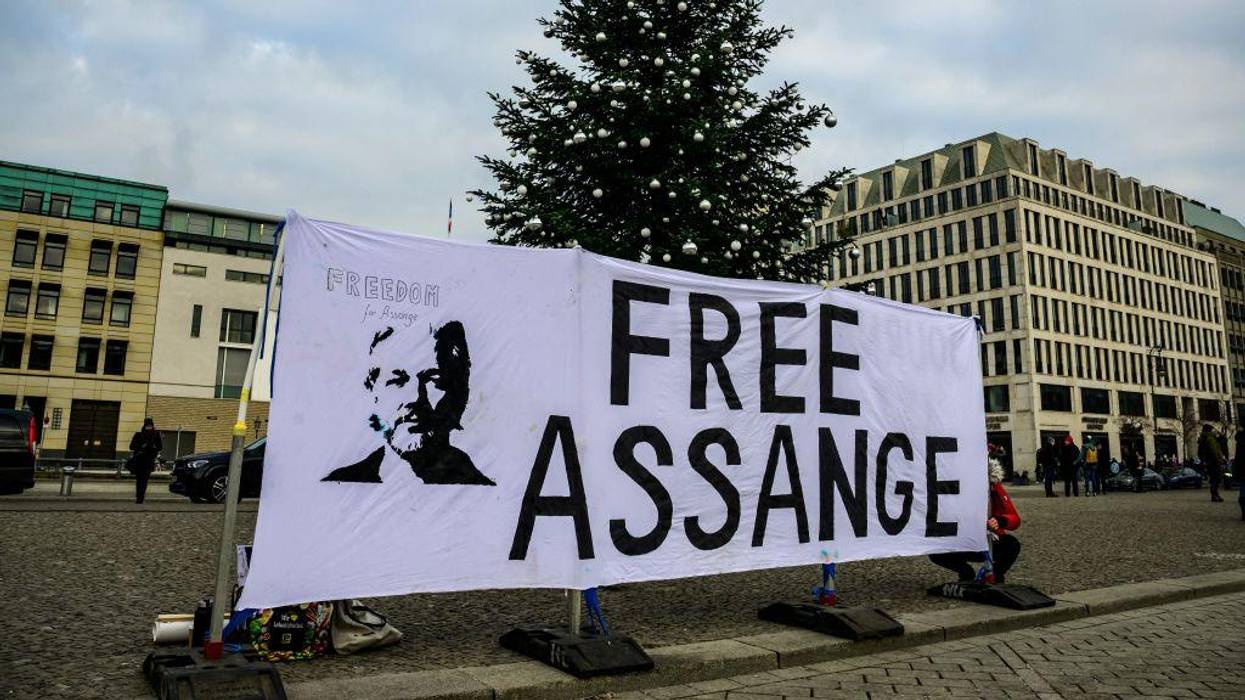
The Assange prosecution poses a fundamental threat to the freedom of speech and a free press.
“The first casualty when war comes is truth,” U.S. Senator Hiram W. Johnson of California said in 1929, debating ratification of the Kellogg-Briand Pact, a noble but ultimately failed attempt to ban war. Reflecting on World War I, which ended a decade earlier, he continued, “it begins what we were so familiar with only a brief period ago, this mode of propaganda whereby…people become war hungry in their patriotism and are lied into a desire to fight. We have seen it in the past; it will happen again in the future.”
Time and again, Hiram Johnson has been proven right. Our government’s impulse to control information and manipulate public opinion to support war is deeply ingrained. The past twenty years, dominated by the so-called War on Terror, are no exception. Sophisticated PR campaigns, a compliant mass media and the Pentagon’s pervasive propaganda machine all work together, as public intellectual Noam Chomsky and the late Prof. Ed Herman defined it in the title of their groundbreaking book, “Manufacturing Consent,” borrowing a phrase from Walter Lippman, considered the father of public relations.
One publisher consistently challenging the pro-war narrative pushed by the U.S. government, under both Republican and Democratic presidents, has been the whistleblower website Wikileaks. Wikileaks gained international attention in 2010 after publishing a trove of classified documents leaked from the U.S. military. Included were numerous accounts of war crimes in Iraq and Afghanistan, the killing of civilians, and shocking footage of a helicopter gunship in Baghdad slaughtering a dozen civilians, including a Reuters journalist and his driver, on the ground below. Wikileaks titled that video, “Collateral Murder.”
The New York Times and other newspapers partnered with Wikileaks to publish stories based on the leaks. This brought increased attention to the founder and editor-in-chief of Wikileaks, Julian Assange. In December, 2010, two months after release of the Collateral Murder video, then-Vice President Joe Biden, appearing on NBC, said Assange was “closer to being a hi-tech terrorist than the Pentagon papers.” Biden was referring to the 1971 classified document release by Daniel Ellsberg, which revealed years of Pentagon lies about U.S. involvement in the war in Vietnam.
With a secret grand jury empanelled in Virginia, Assange, then in London, feared being arrested and extradited to the United States. Ecuador granted Assange political asylum. Unable to make it to Latin America, he sought refuge in the Ecuadorian embassy in London. He lived inside the small, apartment-sized embassy for almost seven years. In April 2019, after a new Ecuadorian president revoked Assange’s asylum, British authorities arrested him and locked him up in London’s notorious Belmarsh Prison, often called “Britain’s Guantánamo.” He has been held there, in harsh conditions and in failing health, for almost four years, as the U.S. government seeks his extradition to face espionage and other charges. If extradited and convicted in the U.S., Assange faces 175 years in a maximum-security prison.
While the Conservative-led UK government seems poised to extradite Assange, a global movement has grown demanding his release. The Progressive International, a global pro-democracy umbrella group, has convened four assemblies since 2020 called The Belmarsh Tribunals. Named after the 1966 Russell-Sartre Tribunal on the Vietnam War, convened by philosophers Bertrand Russell and Jean-Paul Sarte, The Belmarsh Tribunal has assembled some of the world’s most prominent, progressive activists, artists, politicians, dissidents, human rights attorneys and whistleblowers, all speaking in defense of Julian Assange and Wikileaks.
“We are bearing witness to a travesty of justice,” Jeremy Corbyn, a British Member of Parliament and a former leader of the Labour Party, said at the tribunal. “To an abuse of human rights, to a denial of freedom of somebody who bravely put himself on the line that we all might know that the innocent died in Abu Ghraib, the innocent died in Afghanistan, the innocent are dying in the Mediterranean, and innocents die all over the world, where unwatched, unaccountable powers decide it’s expedient and convenient to kill people who get in the way of whatever grand scheme they’ve got. We say no. That’s why we are demanding justice for Julian Assange.”
Corbyn is joined in his call by The New York Times, the Guardian, Le Monde, El Pais and Der Spiegel–major newspapers that published articles based on the leaked documents. “Publishing is not a crime,” the newspapers declared.
Never before has a publisher been charged under the U.S. Espionage Act. The Assange prosecution poses a fundamental threat to the freedom of speech and a free press. President Biden, currently embroiled in his own classified document scandal, knows this, and should immediately drop the charges against Julian Assange.
This week's charges against Washington Post and Huffington Post journalists arrested last year while covering protests in Ferguson are the latest sign that even high-profile reporters are not immune from the ongoing police crackdown on press freedoms and civil rights in this St. Louis suburb.
Ryan J. Reilly of the Huffington Post and Wesley Lowery of the Washington Post were arrested in August 2014 in McDonald's while covering the mass protests, just days after white police officer Darren Wilson killed unarmed black teenager Michael Brown.
At the time, Lowery reported being "assaulted and arrested" because "officers decided we weren't leaving McDonald's quickly enough, shouldn't have been taping them." Reilly said police shoved his head into the glass during the detention, after which both journalists were arrested and promptly released without charges.
Lowery and Reilly were just two of many journalists subjected to arbitrary arrests, physical force, gassing, rubber bullet fire, and intimidation by police for doing their jobs during last summer's military-style curfew and police repression of protests and media coverage. The Ferguson police department has been broadly criticized for violating protesters' rights to assemble with brutal intimidation tactics, including aiming military assault rifles at peaceful demonstrators and deploying armored vehicles into crowds.
Despite the pattern of repression, protesters in Ferguson and across the United States have continued sustained resistance against institutional racism and anti-black police killings, organizing another wave of mobilizations under the banner of the Black Lives Matter movement to mark Sunday's first anniversary of Michael Brown's killing. In Ferguson, they are being met with severe police crackdown and a "state of emergency."
It was in this context that Lowery, who is currently in Ferguson covering the protests, received his summons--dated August 6, 2015--which states that he is being charged with trespassing on private property and interfering with a police officer because he did not comply with "commands" to exit. If he fails to show up for the summons, Lowery could be arrested. The Huffington Post reports that Reilly "has not yet received notification, but a spokesman for the St. Louis County executive confirmed he will face the same charges."
The charges come just days after Trey Yingst, a journalist with the site News2Share, settled with the city after filing a civil rights lawsuit for his arrest in November.
Lowery expressed outrage to Washington Post reporter Mark Berman: "I maintained from the first day that our detention was illegal and unnecessary. So I was surprised that a year later, officials in St. Louis County decided this was worth revisiting."
Both publications immediately condemned the charges.
Martin Baron, executive editor for the Washington Post, declared: "Charging a reporter with trespassing and interfering with a police officer when he was just doing his job is outrageous. You'd have thought law enforcement authorities would have come to their senses about this incident. Wes Lowery should never have been arrested in the first place. That was an abuse of police authority."
"The Huffington Post condemns the charges filed by St Louis County against our Justice Reporter, Ryan Reilly, while covering the protests in Ferguson last year," Washington bureau chief Ryan Grim declared. "A crime was committed at the McDonald's, not by journalists, but by local police who assaulted both Ryan and Wes Lowery of The Washington Post during violent arrests. At least we know Ferguson knows how to file charges."
Grim added: "If Wes Lowery and Ryan Reilly can be charged like this with the whole country watching, just imagine what happens when nobody is."