

SUBSCRIBE TO OUR FREE NEWSLETTER
Daily news & progressive opinion—funded by the people, not the corporations—delivered straight to your inbox.
5
#000000
#FFFFFF
To donate by check, phone, or other method, see our More Ways to Give page.
Daily news & progressive opinion—funded by the people, not the corporations—delivered straight to your inbox.
"It was illegal when Trump did it, and it is no less illegal now."
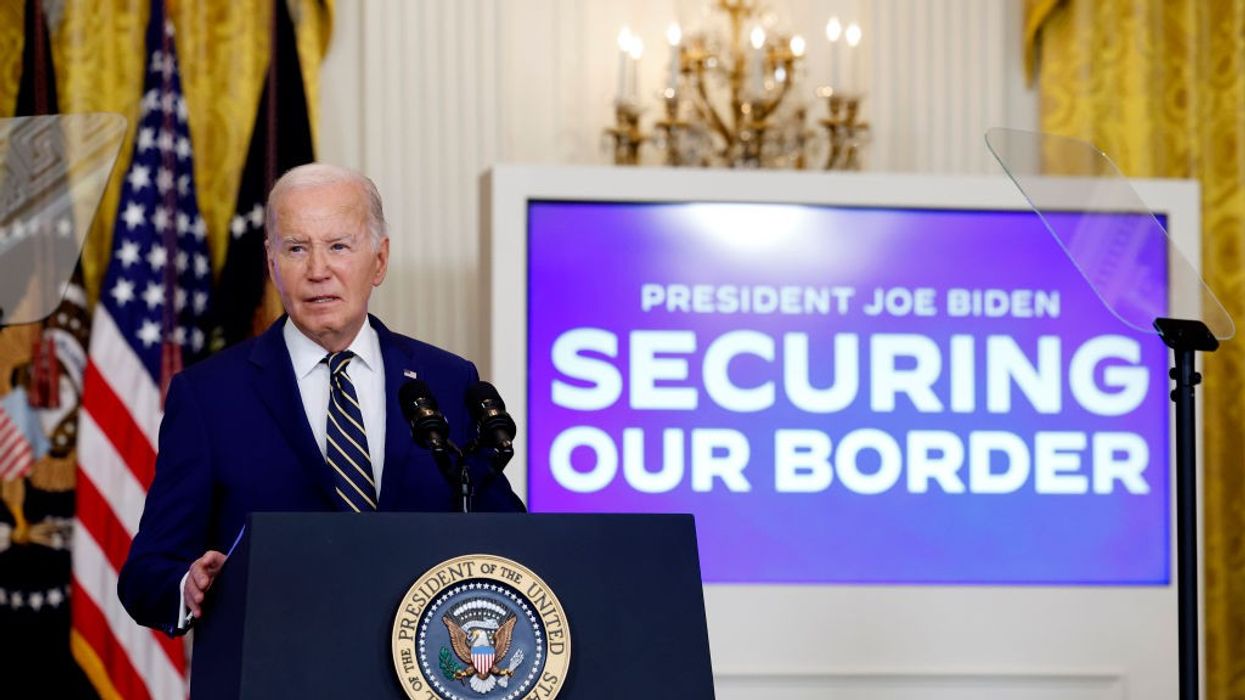
The ACLU on Tuesday vowed to launch a legal challenge to U.S. President Joe Biden's executive order barring migrants who cross the southern border without authorization from receiving asylum.
Biden's executive action invokes Section 212(f) of the Immigration and Nationality Act—previously used by the administration of former Republican President Donald Trump to deny migrants asylum—"when the southern border is overwhelmed."
Under the policy, asylum requests will be shut down when the average number of daily migrant encounters between ports of entry hits 2,500. Border entry points would reopen to asylum-seekers when that number dips below 1,500.
The president said he was acting, in part, because "Republicans in Congress chose to put partisan politics ahead of our national security, twice voting against the toughest and fairest set of reforms in decades."
On Tuesday, the ACLU said Biden's policy will "rush vulnerable people through already fast-tracked deportation proceedings, sending people in need of protection to their deaths."
"We intend to challenge this order in court," Lee Gelernt, deputy director of the ACLU Immigrants' Rights Project, said in a statement. "It was illegal when Trump did it, and it is no less illegal now."
In July 2020 a federal judge in Washington, D.C. struck down the Trump administration's ban on most Central Americans and migrants from other countries.
ACLU chief political and advocacy officer Deirdre Schifeling said that "we need solutions to address the challenges at the border, but the administration's planned executive actions will put thousands of lives at risk."
"They will not meet the needs at the border, nor will they fix our broken immigration system," Schifeling added. "We urge the administration to uphold its campaign promise to restore asylum and mobilize the necessary resources to address the challenges at the border. It's not just the morally sound thing to do—it's good politics."
The ACLU pointed to polling showing that "voters nationwide and in battleground states largely reject enforcement-only policies that put vulnerable people in danger."
The group is advocating "balanced and humane solutions" including "improving processing at ports of entry and addressing the immigration case backlog by investing in immigration court judges and legal representation."
This isn't the first time that Biden's immigration policies have been likened to those of Trump, who is the presumptive 2024 Republican nominee despite having recently been convicted on 34 felony counts and facing 54 other federal and state charges across three cases.
One year ago, critics accused Biden of "finishing Trump's job" by implementing a crackdown on asylum-seekers upon the expiration of Title 42—a provision first invoked during the previous administration at the onset of the Covid-19 pandemic and continued by Biden to expel more than 1 million migrants under the pretext of public health.
The international medical charity Doctors Without Borders—which has deployed aid teams along migration routes—warned Tuesday that Biden's new order will put vulnerable people who endure treacherous, sometimes deadly, risks trying to reach the United States "at even greater risk."
"In signing this executive order, President Biden has betrayed his promise to build a fair, safe, and humane immigration system," Doctors Without Borders USA CEO Avril Benoît said in a statement. "This order is not only counter to U.S. law and international law, it puts people's lives and health at risk."
"Today's decision will trap vulnerable people, including young families, in insecure cities in Mexico and put them in grave danger," Benoît added. "The Biden administration continues to prioritize optics and political expediency at the expense of thousands of people who are attempting to exercise their legal right to seek asylum."
Kica Matos, president of the National Immigration Law Center and the NILC Immigrant Justice Fund, said Tuesday that "President Biden's craven embrace of failed Republican policies is a mistake that will only lead to more harm and dysfunction at the U.S.-Mexico border."
"There is a better way," she stressed. "Rather than playing politics with people's lives, the president should pursue practical solutions that increase our capacity to welcome immigrants humanely. These solutions include timely and fair processing of asylum applications, expanding legal pathways, and supporting cities that are welcoming our new neighbors."
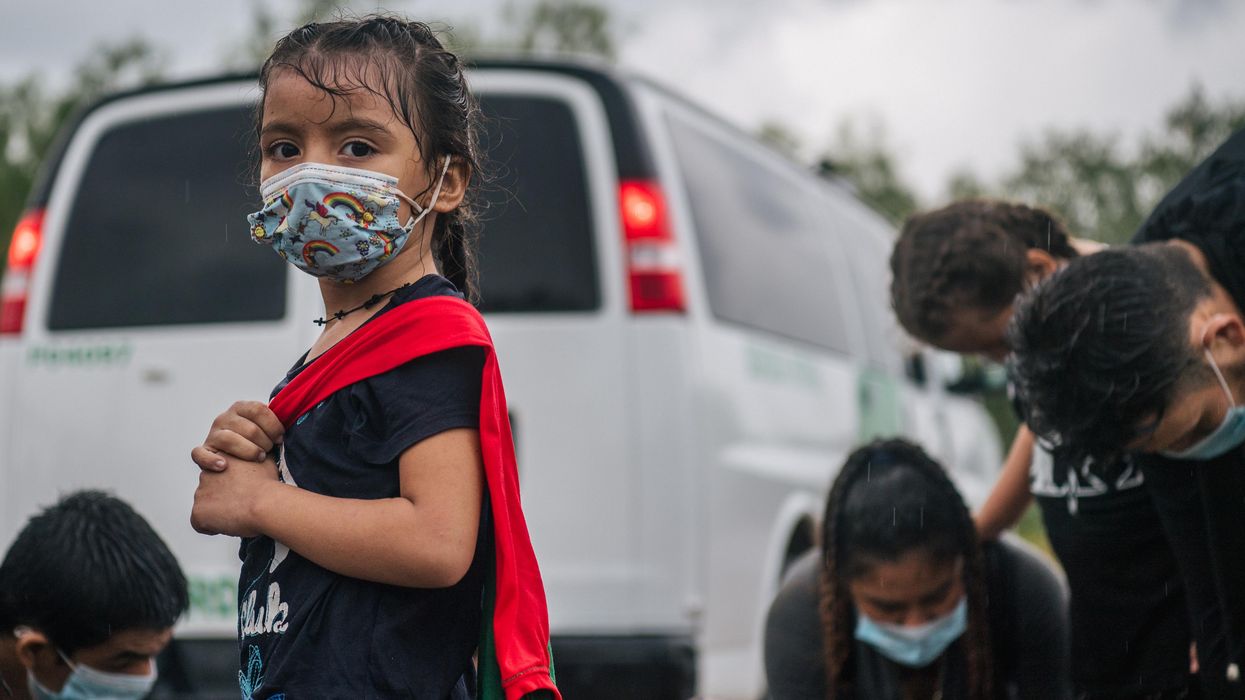
Biden once seemed to understand that punitive measures were not going to make either immigrants or U.S. citizens safer, or make our immigration system more orderly. He must rediscover those commitments and stop playing politics with people's lives.
When President Biden was campaigning in 2020, he pledged to strengthen our country by supporting and welcoming immigrants. Early in his presidency, he began taking steps in that direction.
On his first day in office, Biden proclaimed an end to his predecessor’s “Muslim ban,” which summarily banned migration from several Muslim-majority countries. And In February 2021, Biden introduced an executive order aimed at reversing some of the Trump administration’s damage to our immigration system, from family separations to backlogs in our asylum system.
“Securing our borders does not require us to ignore the humanity of those who seek to cross them,” Biden said at the time. “Nor is the United States safer when resources that should be invested in policies targeting actual threats, such as drug cartels and human traffickers, are squandered on efforts to stymie legitimate asylum seekers.”
Biden seemed to understand that being “tough” does not mean you have to support cruel and ineffective policies. Unfortunately, as immigration has become a more polarizing topic, the administration has backed away from this more humane approach.
Instead, in many ways Biden has actually continued down Trump’s path on immigration.
For example, the Trump administration enforced a rule called Title 42 during the height of the COVID pandemic, which severely limited entry into the United States—supposedly to protect public health. Biden continued to implement that policy for years, even without the flimsy public health justification.
The bipartisan Senate border bill Biden recently endorsed includes funding for a border wall he once promised not to fund — along with new restrictions on asylum and a measure that would authorize the president to shut the border down completely. Biden is also considering using the same authority the Trump administration invoked in its Muslim ban to restrict asylum access.
A few weeks ago, Biden and Trump separately visited the U.S.-Mexico border. Instead of proposing actual solutions to support our immigration system, Biden uplifted the failed Senate bill—and even went so far as to invite Trump to “join him” in working to it.
During his State of the Union address in March, Biden had the opportunity to distinguish himself from Trump. Instead, his speech demonstrated a strong disconnect between his rhetoric and actions.
Biden said he would not demonize immigrants, but in the same speech used the offensive term “illegal immigrant.” No human being is “illegal.” Continuing to echo that language is dehumanizing and puts immigrant communities at risk of violence. (Biden later said he regretted using the term, but did not apologize for using it.)
Biden said he would not separate families, but his current and proposed immigration policies have separated and continue to separate families. He said he would not ban people from the country because of their faith, but his proposed action would make asylum harder for nearly everyone regardless of their faith.
Invoking his Irish heritage, Biden has alluded to the Great Famine in Ireland to sympathize with immigrants looking for a better life in the United States. But families seeking shelter today from similar hardship would have extreme difficulty getting into the country under the policies he wants to implement.
Biden once understood that punitive measures were not going to make either immigrants or U.S. citizens safer, or make our immigration system more orderly. He understood that we’d need to create pathways to legislation and citizenship, honor our responsibility to offer refuge to asylum seekers, and live up to our American values.
If Biden’s sincere about finding real solutions, he needs to remember those commitments. It’s time to stop playing politics with immigrants’ lives.
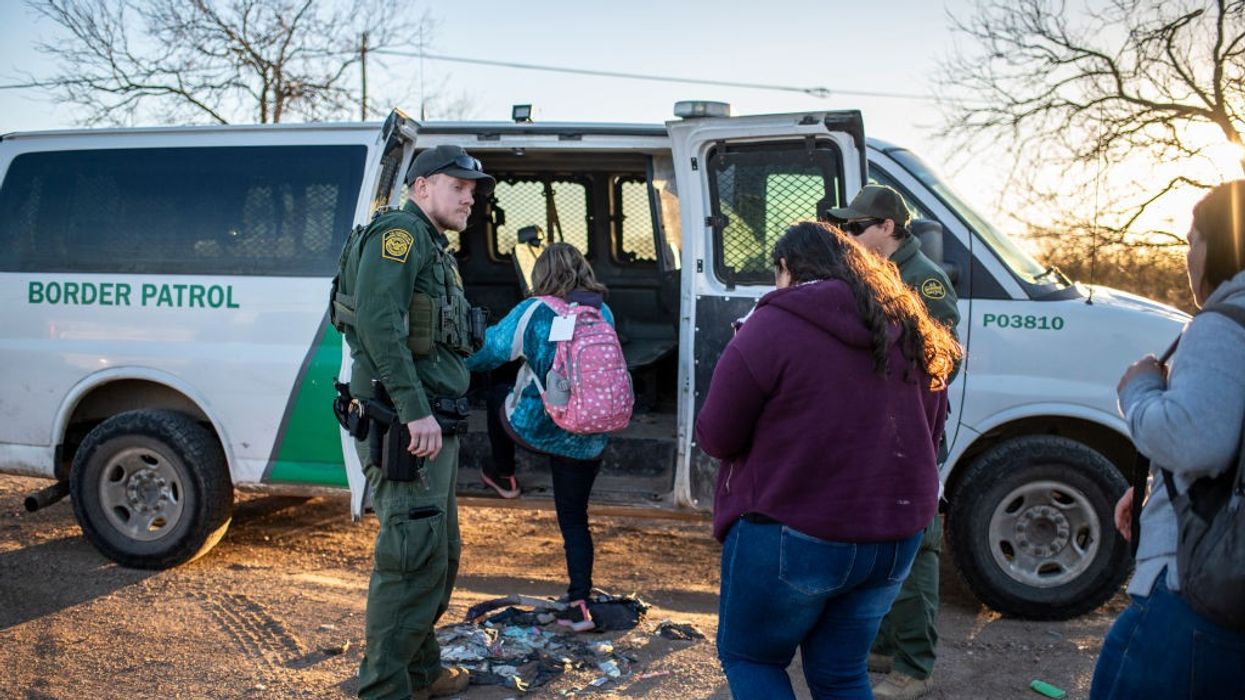
"People seek asylum because they fear for their lives. President Biden would be making a grave mistake if he moves forward with this policy," said Rep. Chuy García.
Immigration rights advocates on Wednesday condemned President Joe Biden's reported consideration of a series of anti-migrant actions, including invoking an executive authority used by the Trump administration to make it more difficult for people to seek asylum in the United States.
According to reports, Biden is considering acting without Congress in an election year bid to stem the flow of undocumented migrants at the southern U.S. border.
"This would be an extremely disappointing mistake. Cruel enforcement-only policies have been tried for 30 years and simply do not work," Congressional Progressive Caucus Chair Pramila Jayapal (D-Wash.) said in response to the reporting.
"Democrats cannot continue to take pages out of Donald Trump and Stephen Miller's playbook—we need to lead with dignity and humanity," she added, referring to the former U.S. president and 2024 GOP front-runner and his xenophobic senior immigration adviser.
As Politico reported:
Among the ideas under discussion include using a section of the Immigration and Nationality Act to bar migrants from seeking asylum in between U.S. ports of entry. The administration is also discussing tying that directive to a trigger—meaning that it would only come into effect after a certain number of illegal crossings took place, said the three people, who were granted anonymity to discuss private deliberations.
A trigger mechanism was part of a bipartisan Senate border deal that never reached the floor earlier this month. During the deal's construction... Biden repeatedly said it would have given him the authority to "shut down" the border.
The White House is also reportedly considering invoking Section 212(f) of the Immigration and Nationality Act, which empowers the president to ban entry to noncitizens who are deemed "detrimental to the interests of the United States." Trump repeatedly tried to use Section 212(f) as his administration pursued draconian anti-migrant measures. However, three levels of the federal judiciary, including the U.S. Supreme Court, blocked him from doing so.
The White House would not comment on the reports, but spokesperson Angelo Fernández Hernández said that the Biden administration "spent months negotiating in good faith to deliver the toughest and fairest bipartisan border security bill in decades because we need Congress to make significant policy reforms and to provide additional funding to secure our border and fix our broken immigration system."
"No executive action, no matter how aggressive, can deliver the significant policy reforms and additional resources Congress can provide and that Republicans rejected," he added, calling on House Speaker Mike Johnson and House Republicans to "pass the bipartisan deal to secure the border."
In addition to expanding Title 42—a provision first invoked by the Trump administration at the onset of the Covid-19 pandemic—to expel more than 1 million migrants under the guise of public safety, Biden also forced migrants to prove that they previously sought asylum in a third country before applying for U.S. protection.
"The cruel measures being proposed collectively create a government-mandated asylum ban."
The Biden administration also required asylum-seekers to schedule an appointment using an app that connects them to Customs and Border Protection instead of attempting to cross the border. Asylum-seekers often did not have internet access, and the app was riddled with glitches.
Title 42 ended last May, and a federal judge blocked some of Biden's other anti-migrant policies in July.
"What is needed now more than ever from the Biden administration is to ensure that any border security executive actions protect due process for asylum-seekers and provide resources for a fair, efficient, and humane asylum system," Murad Awawdeh, executive director of the New York Immigration Coalition, said in a statement on Wednesday.
"The cruel measures being proposed collectively create a government-mandated asylum ban, which even border officials contend will only create more chaos at the southern border, while failing to address the real issue at hand," he added. "We call on the Biden administration to abandon this cruel proposed plan and immediately invest in strategic, humane actions that will help secure our border and provide fair treatment for asylum-seekers."
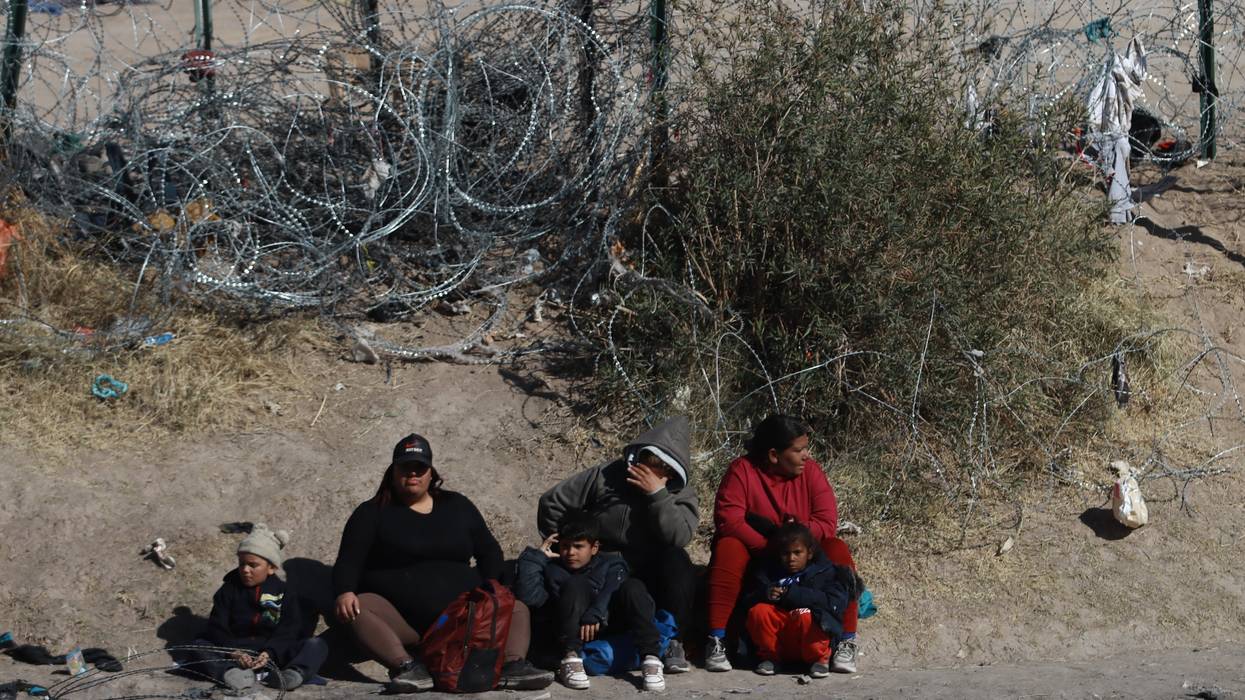
"The idea that 5,000 or even 10,000 people might overwhelm us trivializes both what our government is capable of and our nation's capacity to welcome. Those of us living at the border know this," said one El Paso-based advocate.
Progressives on Saturday urged U.S. President Joe Biden to halt his immigration-related appeals to "a voter who doesn't exist" as he promised voters at a campaign event in South Carolina that he would immediately "shut down the border" between the U.S. and Mexico if Congress passes a bipartisan immigration bill.
Senators are expected to release the legislative text of the bill this week, but Capitol Hill sources have said the bipartisan deal—negotiated chiefly by Sens. Chris Murphy (D-Conn.), Kyrsten Sinema (I-Ariz.), and James Lankford (R-Okla.)—would include a new executive authority to halt asylum screenings on days when border crossings by undocumented immigrants reaches 5,000 over the five-day average.
Under the provision, migrants would be expelled indefinitely until crossings decreased to 3,750 per day. A set amount of asylum claims would be granted at official ports of entry, but the standard for migrants making an asylum claim would be raised, making it harder for people—many of whom have been arriving at the border after fleeing violence and poverty—to get approval to stay in the United States.
"A bipartisan bill would be good for America and help fix our broken immigration system and allow speedy access for those who deserve to be here, and Congress needs to get it done," Biden said in South Carolina, a day after the White House released a written statement on the legislation. "It'll also give me as president the emergency authority to shut down the border until it could get back under control. If that bill were the law today, I'd shut down the border right now and fix it quickly."
Immigrant rights advocates were quick to denounce Biden's promise to eliminate asylum protections for thousands of people, while U.S. House Speaker Mike Johnson (R-La.) said the bill would be "dead on arrival" if it arrives on the House floor and demanded that Biden close the border immediately with his executive authority—something Biden cannot do under federal and international law, said American Immigration Council (AIC) policy director Aaron Reichlin-Melnick.
Although Republicans have insisted on border restrictions in exchange for more military aid for Ukraine and Israel, Oklahoma Republicans passed a resolution condemning Lankford for working with Democrats on the deal.
Johnson complained that the deal would allow "as many as 150,000 illegal crossings each month (1.8 million per year) before any new 'shutdown' authority could be used. At that point, America will have already been surrendered."
"How weak do you have to think the USA is if you're claiming that adding 1.8 million undocumented immigrants a year would "surrender" the nation?" asked Reichlin-Melnick.
Meanwhile, Eleanor Acer, refugee protection director for Human Rights First, warned that former Republican President Donald Trump's anti-migration Title 42 policy already proved to "be a human rights and migration management fiasco."
The U.S. turned away migrants under Title 42 more than 2.8 million times between March 2020—when it was imposed as the coronavirus pandemic began, ostensibly to protect public health—and May 2023. Human Rights First tracked more than 10,000 cases of migrants being kidnapped or physically or sexually assaulted after being expelled under Biden's continuation of Title 42 after he took office. The Kaiser Family Foundation also reported that the policy contributed to the separation of families.
"There are real challenges at the border, and now is the moment that we need our leaders to move forward effective policy solutions that will improve port processing, support communities receiving migrants, and create lawful pathways to citizenship for Dreamers and others," said Deirdre Schifeling, chief political and advocacy officer at the ACLU, on Saturday. "But let's be clear: Cruelty is not a policy solution—and barring people from seeking protection is both callous and unworkable."
"We've already had an expulsion authority before—Title 42—and we know that it did not stop people from coming to the U.S.," added Schifeling. "Instead, we saw record numbers of families and individuals arriving at our border seeking protection, and Title 42 caused tremendous harm to people fleeing danger."
Marisa Limón Garza, executive director of Las Americas Immigrant Advocacy Center in El Paso, Texas, accused Biden of playing "political games" and demanded that he keep his campaign promises to "restore a humane and orderly asylum and immigration system."
"The idea that 5,000 or even 10,000 people might overwhelm us trivializes both what our government is capable of and our nation's capacity to welcome. Those of us living at the border know this," said Limón Garza. "One's commitment to their children is a powerful force that drives parents and children to seek a better life in the U.S... Here in the Borderland we believe in supporting families and keeping them together, not turning our backs on them or tearing them apart.
“We call on Congress and the Biden administration to reverse course and turn away from the political games that drive us toward these reckless immigration proposals," she added.
Author and historian Dan Berger compared Biden's push for new anti-immigration authority to his enthusiasm for a "tough on crime" approach by the Democratic Party three decades ago.
Biden has "won no one over" with his statements on immigration since Friday, said author and podcaster Kate Willett. "It's cruelty for recreation."
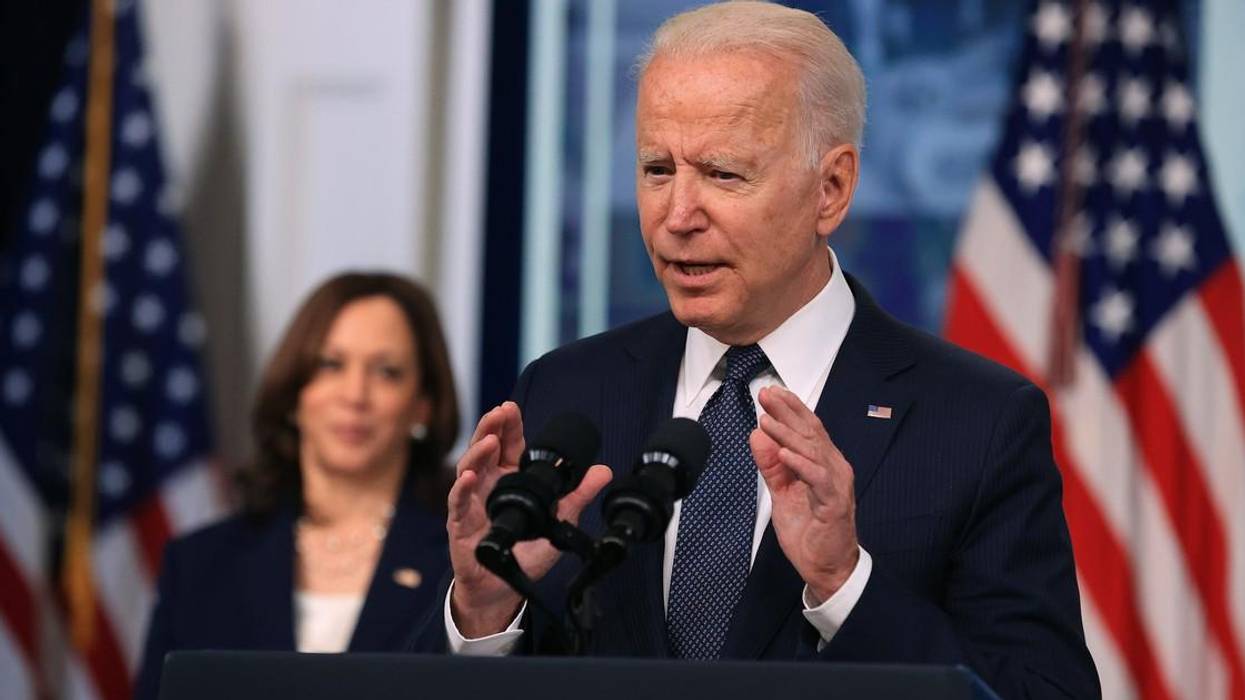
The Biden administration is "just openly willing to bring back Title 42 in order to get money for their well-funded genocide happening in Gaza?" asked one immigration rights advocate.
Faith-based and civil society groups on Tuesday condemned reports that the Biden administration, in ongoing negotiations with Republicans over a military aid package, has signaled a willingness to expand attacks on immigrant rights in exchange for the funding.
As CBS News reported, talks between the administration and Republican negotiators including Sen. James Lankford (R-Okla.) are ramping up regarding a $100 billion funding package President Joe Biden has requested from Congress, which would include military aid for Israel, Ukraine, and Taiwan.
U.S. Homeland Security Secretary Alejandro Mayorkas has been on Capitol Hill this week, "engaging with negotiators in the Senate," according to CBS, and the White House has reportedly offered a number of concessions on U.S.-Mexico border policy to secure the funding, including support for:
The White House's reported openness to the policies comes days after the Congressional Progressive Caucus said it would not support a deal that trades military aid for a Republican-backed anti-immigrant package.
Anthony D. Romero, executive director of the ACLU, said the White House is reportedly considering support for policies which would have "outraged" Democrats if they'd been proposed by former Republican President Donald Trump.
"Expedited removal basically means fake due process for immigrants," said Romero. "Expanding the detention system and fast-tracking deportations contradicts President Biden's campaign pledges. These proposals will not offer a real fix to our immigration system."
The administration, he added, appears to be searching for "a quick fix at the border," where migrant crossings have surged in recent months.
"Even if these policies are enacted, we will see surges at the border with increased human suffering—as we haven't addressed the root causes or systemic failures of our immigration system," said Romero. "We urge Congress and the White House to abandon these proposals and do the hard work to advance sensible, humane, and effective solutions to border management. But if the president's advisers are looking for ways to suppress turnout and enthusiasm among young progressives and immigrant voters, then this will do the trick."
Jeremy Konyndyk, president of Refugees International, agreed that increasing deportations and detentions would "make the border more disordered, not less," with migrants who have endured long and grueling journeys to the U.S. turned away.
Aaron Reichlin-Melnick, policy director for the American Immigration Council, was among the critics who pointed out that the U.S. cannot "just shut the border" without the cooperation of Mexico.
Former Housing and Urban Development Secretary Julián Castro and Rep. Jesús "Chuy" García (D-Ill.) were among those who noted that accepting the GOP's demands for anti-immigration policies would represent "a total abandonment" of Biden's campaign promises.
The request for more military aid comes as the Biden administration is increasingly isolated on the world stage in its support for Israel's war in Gaza, in which more than 18,600 Palestinians have now been killed and where witnesses on Wednesday reported that the Israel Defense Forces executed displaced women and children, and babies. The U.S. was joined by just nine other countries Tuesday in rejecting a call for an immediate humanitarian cease-fire at the U.N. General Assembly; 153 countries supported the cease-fire.
"President Biden campaigned on reversing all [these] BS policies from the Trump administration," said Erika Andiola, communications director for the Young Center. "Now they are just openly willing to bring back Title 42 in order to get money for their well-funded genocide happening in Gaza?"
On Tuesday, more than 375 religious leaders and faith-based organizations wrote to the White House, urging the president to reject Republicans' anti-immigrant proposals as part of the supplemental aid package, noting that families with children make up "an increasing proportion" of asylum seekers arriving at the border in recent months.
"We face real challenges at the border that demand a coordinated and well-resourced response," wrote the groups, including the American Friends Service Committee, Jewish Activists for Immigration Justice, and Unitarian Universalists for Social Justice. "The asylum restrictions under consideration would do nothing to support that needed effort. Deterrence-based policies at the border have repeatedly proven ineffective."
"Certainly, they do not prevent those fleeing danger from seeking life-saving protection at the border, and they fail to make the asylum process more efficient, orderly, or humane," the letter reads. "Attempting to leverage the safety, freedom, and wellbeing of some of the world's most vulnerable people for unrelated foreign policy objectives is a violation of our call to honor and uphold the inherent worth and dignity of every individual, no matter their country of origin or the circumstances they face."
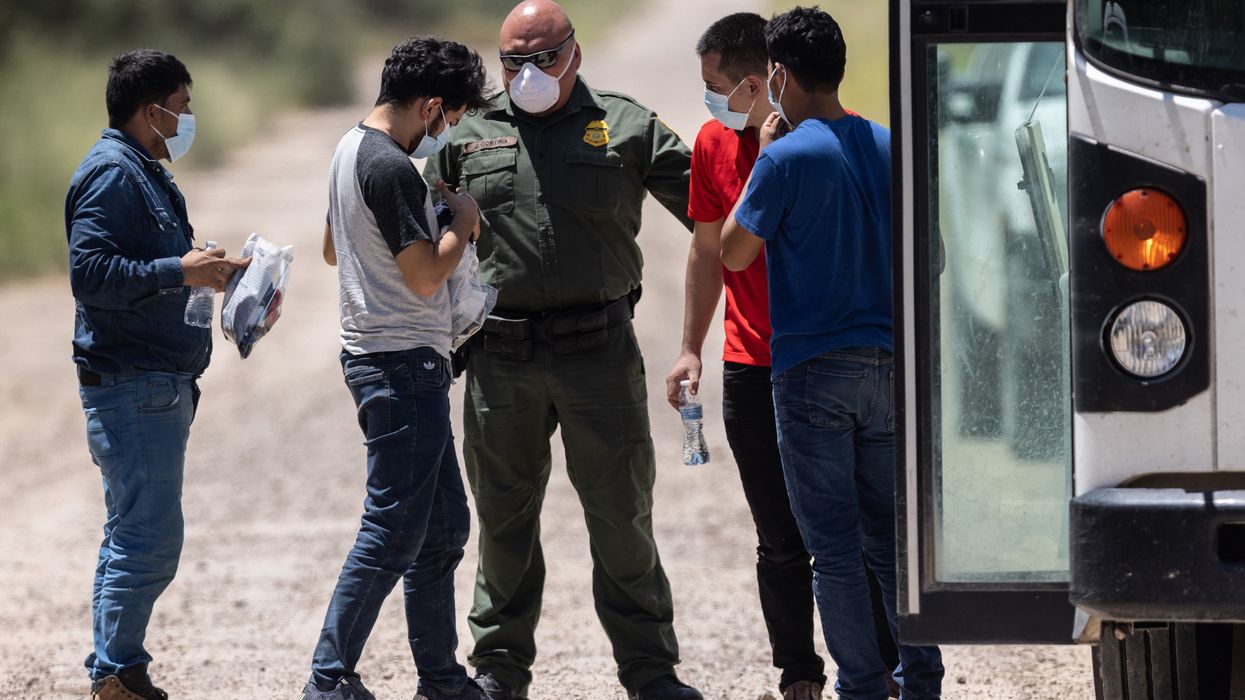
In the wake of Donald Trump, everything on the border has officially changed, yet nothing has really changed. Nothing of note is happening, even as everything happens.
On May 11th, I was with a group of people at the bottom of the Paso del Norte bridge in Ciudad Juárez, Mexico. Suddenly, I realized that I didn’t have the small change needed to cross the bridge and return to El Paso, Texas, where I was attending the 16th annual Border Security Expo. Worse yet, this was just three hours before Title 42, the pandemic-era rapid-expulsion border policy instituted by the Trump administration, was set to expire. The media was already in overdrive on the subject, producing apocalyptic scenarios like one in the New York Post reporting that “hordes” of “illegals” were on their way toward the border.
While I searched for those coins, a woman approached me, dug 35 cents out of a small purse — precisely what it cost! — and handed the change to me. She then did so for the others in our group. When I pulled a 20-peso bill from my wallet to repay her, she kept her fist clenched and wouldn’t accept the money.
Having lived, reported, and traveled in Latin America for more than two decades, such generosity didn’t entirely surprise me, though it did contradict so much of the media-generated hype about what was going on at this historic border moment. Since Joe Biden took office in 2021, the pressure on his administration to rescind Trump’s Title 42 had only grown. Now, it was finally going to happen — and hell was on the horizon.
But at that expo in El Paso that brought together top brass from the Department of Homeland Security (DHS), its border and immigration enforcement agencies, and private industry, I was learning that preparations for such a shift had been underway for years and — don’t be shocked! — the corporations attending planned to profit from it in a big-time fashion.
Seeing the phase-out of Title 42 through the lens of a growing border-industrial complex proved grimly illuminating. Border officials and industry representatives continued to insist that just on the other side of the border was a world of “cartels,” “adversaries,” and “criminals,” including, undoubtedly, this woman forcing change on me. By then, I had heard all too many warnings that, were the United States to let its guard down, however briefly, there would be an infernal “border surge.”
As I later stood in the halls of that expo, however, I became aware of another type of surge not being discussed either there or in the media. And I’m not just thinking about the extra members of the National Guard and other forces the Biden administration and Texas Governor Greg Abbott only recently sent to that very border. What I have in mind is the surge of ever higher budgets and record numbers of Customs and Border Protection (CBP) and U.S. Immigration and Customs Enforcement (ICE) contracts guaranteed to ensure that those borderlands will remain one of the most militarized and surveilled places on planet Earth.
Robo-Dogs at the Expo
Earlier that day, I found myself standing in front of the Ghost Robotics booth. There sat a vendor and, in front of him, a chrome-colored robotic dog on a puke-green carpet. Behind him, a large sign said: “Robots that Feel the World.” He was explaining to prospective customers that the robo-dog could run at a pace of up to nine miles an hour. A vendor in the adjacent booth, Persistent Systems, that claimed to connect “soldiers, sensors, unmanned systems, and cameras in a dynamic network,” was not impressed. (Those, by the way, were but two of nearly 200 companies in that large exhibition hall.). He said, “I’ll take my dog any day,” meaning his living and breathing dog.
The Ghost Robotics vendor responded earnestly, “We are not going to replace dogs!”
All around us, well-dressed corporate types, uniformed Border Patrol agents, and other police officials wandered the aisles, looking at retractable tower masts, taser demonstrations, Glock guns, and facial recognition and iris scanners, part of a border industry that’s been in a state of constant growth for two decades.
Honestly, walking through that exhibition hall was like being in a science-fiction novel that had come to life or perhaps a crystal ball for our border future. The Israel Aerospace Industries banner hovered on the rafters praising a company “Where Courage Meets Technology.” On the ground, the company highlighted its MegaPop high-powered surveillance camera.
The slogan of Tower Solutions, which sells body armor, was more typically down to earth (or do I mean sky-high?): “Speed, Strength, Stability, Elevated.” Armored Republic, which also sells body armor, offered religious fervor in a banner that said: “In a Republic There’s No King but Christ.” But Anduril, the new border darling — 11 contracts with CBP since 2018 — may have caught the enforcement future most perfectly with its “Autonomy for Border Security” banner. Autonomous sentry towers, autonomous drones, and autonomous robotic dogs were to be the true post-Title 42 future, and the exhibition hall was a crystal ball for such a time to come.
Contemplating the Ghost Robotic guy’s response, the Persistent Systems vendor then pointed at the robo-dog and said, “You can weaponize those things and they can go into barracks and blow a motherfucker’s face off.”
The Ghost Robotics vendor responded, “We’re already doing that.” Did he mean weaponizing robo-dogs or blowing a person’s face off? I had no idea.
The Budget Surge
A few hours earlier, DHS Chief Information Officer Eric Hysen assured industry officials that his agency had the “largest budget ever enacted” in its 20-year history. Formerly a Silicon Valley software engineer and program organizer for Google, he had arrived in Washington in 2014 to work in the Obama White House. The next year, he created a Digital Services Team at DHS and “never looked back.” His technocratic language had no Trumpian bluster or hyperbole. It was grounded in numbers and budgets with a bit of social justice spun in (including a mention of a program to hire more women and assurances that, no matter the invasive surveillance technology DHS was developing, privacy issues were taken quite seriously by the department).
At $29.8 billion, the CBP/ICE portion of the DHS budget he praised was not just the highest ever but a $3 billion jump above 2022, including $2.7 billion for “new acquirements in our southwestern border.” In other words, the coming surge at the border was distinctly budgetary.
For context, when Donald Trump took office in 2017 his CBP/ICE budget was $21.2 billion. By 2020, it had gone up to $25.4 billion. In other words, it took him four years to do what the Biden administration essentially did in one. The last time there had been such a jump was from $9.4 billion in 2005 to $12.4 billion in 2007, including funding for huge projects like the Secure Fence Act that built nearly 650 miles of walls and barriers, SBInet which aimed to build a virtual wall at the border (with special thanks to the Boeing Corporation), and the largest hiring surge ever undertaken by the Border Patrol — 8,000 agents in three years.
But if that’s what $3 billion meant in 2005-2007, what does it mean in 2023 and beyond? Gone was the Trump-era bravado about that “big, beautiful wall.” Hysen’s focus was on the Department of Homeland Security’s launching of an Artificial Intelligence Taskforce. A technocrat, Hysen spoke of harnessing “the power of AI to transform the department’s mission,” assuring the industry audience that “I follow technology very closely and I am more excited by the developments of AI this year than I have been about any technology since the first smartphones.”
That robo-dog in front of me caught the state of the border in 2023 and the trends that went with it perfectly. It could, after all, be controlled by an agent up to 33 miles away, according to the vendor, and apparently could even — thank you, AI — make decisions on its own.
The vendor showed me a video of just how such a dog would work if it were armed. It would use AI technology to find human forms. A red box would form around any human it detects on a tablet screen held by an agent. In other words, I asked, can the dog think?
I had in mind the way Bing’s Chatbox, the AI-powered search engine from Microsoft, had so infamously professed its love for New York Times reporter Kevin Roose. A human, using an Xbox-like controller, the vendor told me, will be able to target a specific person among those the dog detects. “But,” he reassured me, “it’s a human who ultimately pulls the trigger.”
The Title 42 Surge
In Mexico, when I walked to a spot where the Rio Grande flowed between the two countries, I ran into a small group of migrants camped out at the side of the road. Near them was a fire filled with charred wood over which a pot was cooking. A pregnant Colombian woman told me they were providing food to other migrants passing by. “Oh,” I asked, “so you sell food?” No, she responded, they gave it away for free. Before they had been camped out for months near the immigration detention center in Ciudad Juárez where a devastating fire in March killed 40 people. Now, they had moved closer to the border. And they were still waiting, still hoping to file applications for asylum themselves.
Behind where they sat, I could see the 20-foot border wall with coiling razor wire on top. There was nothing new about a hyper-militarized border here. After all, the El Paso build-up had begun 30 years ago with Operation Hold the Line in 1993. A desert camo Humvee sat below the wall on the U.S. side and a couple of figures (Border Patrol? National Guard?) stood at the edge of the Rio Grande shouting to a Mexican federal police agent on the other side.
The clock for the supposed Title 42 Armageddon was ticking down as I then crossed the bridge back to El Paso, where more barriers of razor wire had only recently been emplaced. There was also a slew of blue-uniformed CBP agents and several jeeps carrying camouflaged members of border units. Everyone was heavily armed as if about to go into battle.
At the Border Security Expo, Hysen pointed out that fear of a Title 42 surge had resulted in an even more fortified border, hard as that might be to imagine. Fifteen hundred National Guard troops had been added to the 2,500 already there, along with 2,000 extra private security personnel, and more than 1,000 volunteers from other agencies. Basically, he insisted, they had everything more than under control, whatever the media was saying.
At another panel entitled “State of the Border,” Border Patrol Chief Raul Ortiz joked that he would prefer discussing his golf game, only reinforcing that by adding, “As all of America and the political pundits and the reporters run around and say when we lose Title 42 the sky is going to fall, it ain’t gonna fall. We will process people as we normally have during my 32-year career.”
As Department of Homeland Security Secretary Alejandro Mayorkas similarly pointed out, Title 8 authority, the pre-Title 42 enforcement program to which DHS will now return, “carries stiff consequences for irregular migration, including at least a five-year ban on reentry and potential criminal prosecution for repeated attempts to cross unlawfully.” In addition, the Biden administration expects to aggressively expand the process, including implementing a plan to ramp up enforcement far south of the border in the Darién Gap between Colombia and Panama. It’s even possible that U.S. troops will be deployed there for the job. And in a repetitive note at that expo, American officials indicated in a variety of ways that help would, above all, be needed from the corporate world.
Biden Is Already Out-Trumping Trump at the Border
Since the Department of Homeland Security was established 20 years ago, Customs and Border Protection and Immigration and Customs Enforcement have given private companies 113,276 contracts (yes, you read that right!), or on average 5,664 contracts annually, 16 per day. In the 15 years since 2008, the money spent on such contracts has amounted to $72.6 billion dollars and such figures have only been on the rise since Joe Biden entered the White House.
The 4,465 contracts CBP and ICE have agreed to so far this year (at a price of $4.1 billion) put them on pace to surpass 2022’s record-setting $7.5 billion. In 2022, CBP and ICE offered 9,909 contracts, an average of 27 per day, all of which means the Biden administration is likely to be the largest border-enforcement contractor ever.
Only recently, New York Times columnist Thomas Friedman suggested that President Biden should “out-Trump Trump” and “do everything possible to secure the border like never before — more walls, more fences, more barriers, more troops, the 82nd Airborne — whatever it takes. Make Democrats own border security.” What Friedman apparently didn’t realize was that Biden had already taken just that border path.
From his first days in office, the president had stressed technology over wall-building and (not surprisingly) received three times more campaign contributions from top companies in the border industry than Trump did in 2020. And unlike the former president’s Title 42, this policy of contracts, campaign contributions, and lobbying that will push for endlessly higher border budgets is not set to expire. Ever.
At the Edge of Everything — and Nothing At All
On the morning of May 12th, I was with border scholar Gabriella Sanchez at the very spot where the borders of Texas, New Mexico, and Chihuahua meet near El Paso. Title 42 had expired the night before and I asked her what she thought. She responded that she considered this the border norm: we’re regularly told something momentous and possibly terrible is going to happen and then nothing much happens at all.
And she was right, the predicted “surge” of migrants crossing the border actually decreased — and yet, in some sense, everything keeps happening in ways that only seem grimmer. Perhaps 100 yards from where we were standing, in fact, we soon noticed a lone man cross the international boundary and walk into the United States as if he were taking a morning stroll. Thirty seconds later, a truck sped past us kicking up gravel. For a moment, I thought it was just a coincidence, since it wasn’t an official Border Patrol vehicle.
Then, I noted an insignia on its side that included the U.S. and Mexican flags. The truck came to a skidding stop by the man. A rotund figure in a gray uniform jumped out and ran toward him while he raised his hands. Just then, a green-striped Border Patrol van also pulled up. I was surprised — though after that Border Security Expo I shouldn’t have been — when I realized that the initial arrest was being made by someone seemingly from a private security firm. (Remember, Hysen said that an extra 2,000 private security agents had been hired for the “surge.”)
In truth, that scene couldn’t have been more banal. You might have seen it on any May 12th in these years. That banality, by the way, included a sustained violence that’s intrinsically part of the modern border system, as geographer Reece Jones argues in his book Violent Borders: Refugees and the Right to Move. In the days following Title 42’s demise, an eight-year-old Honduran girl died in Border Patrol custody and a Tohono O’odham man was shot and killed by the Border Patrol. In April, 11 remains of dead border crossers were also recovered in Arizona’s Pima County desert alone (where it’s impossible to carry enough water for such a long trek).
In the wake of Donald Trump, everything on the border has officially changed, yet nothing has really changed. Nothing of note is happening, even as everything happens. And as Hysen said at that border expo meeting, big as the record 2023 border budget may be, in 2024 it’s likely to go “even further” into the stratosphere.
Put another way, at the border, we are eternally at the edge of everything — and nothing at all.

Everyone, including Congress, knew that Title 42 was going to end for more than a year and increase barriers for those seeking asylum, yet they did nothing knowing that the lives of desperate people would be severely impacted.
In August of 2022, Simar and her husband left Venezuela, traveling 2,000 miles from home and joining the over 7 million Venezuelan refugees who’ve fled violence, civil unrest, persecution, and ongoing humanitarian crises. They are now two of the more than 70,000 asylum-seekers who have arrived in New York City in the last year and organizations like mine, Hispanic Federation, have been helping resettle in the city.
Simar and her husband would have wanted nothing more than to stay in Venezuela, but the situation became so dire that leaving was the only option they had. In leaving Venezuela, Simar made the most difficult decision a parent can make—to leave her children behind. Knowing the journey could put the lives of her children at risk, Simar left her three children with her mother when she began her trek to the U.S.
To make their way to refuge, Simar and her husband had to traverse across Colombia and then through the dangerous Darien Gap in Panama before beginning the long, brutal journey through the Central American isthmus and Mexico to the U.S. border. After stops in Tennessee and Chicago, a month ago the couple arrived in New York City. Their temporary home is a shelter in Manhattan alongside other immigrants from throughout the Americas.
Though the recent end of Title 42 means that people like Simar and her husband can once again apply for asylum, qualifying is difficult with refugees vying for 1000 appointments a day through a cell phone app that does not work. As asylum seekers must request asylum outside the U.S., they’re also met with over-capacity shelters—if they’re lucky enough not to be turned away due to capacity—as they wait in limbo in Mexico.
Everyone, including Congress, knew that Title 42 was going to end for more than a year and increase barriers for those seeking asylum, yet they did nothing knowing that the lives of desperate people like Simar hung in the balance.
Instead, their inaction has led to the poor conditions and complicated regulations migrants are now facing as they attempt to overcome the challenges brought on by the end of Title 42. What’s more, for those who do manage to arrive, U.S. cities are woefully under-resourced to help migrants, leaving people without shelter and no means to provide for themselves as work authorizations take at least 180 days.
Immigrants add trillions of dollars to our economy, and expediting work authorization for asylum seekers can help rectify our labor shortage in the U.S.
The timing had me thinking a great deal about Simar and her sacrifice. She showed remarkable bravery and selflessness as a mother by risking her own life to make better lives for her children. She’s one of countless mothers navigating the impossible: how to provide for her family while seeking asylum.
Simar and her husband made this journey because the United States would offer them the chance to work hard and earn money that would make life better for her children in Venezuela. Or at least that’s what she thought.
Despite hoping to get to work right away, Simar, her husband, and so many other asylum seekers don’t have authorization to legally work in the United States, even as their cases go through a bureaucratic immigration system that can last several months. As they wait in limbo, Simar and her husband increasingly rely on the city’s shelter system and organizations like Hispanic Federation for food, healthcare resources, and other everyday goods we take for granted.
Congress can change this by expediting work authorization for asylum-seeking families immediately, helping them leave the shelter system, become self-reliant, free up city and state resources, all while fueling our economy. In fact, immigrants add trillions of dollars to our economy, and expediting work authorization for asylum seekers can help rectify our labor shortage in the U.S.
All of this can be done without overhauling immigration policy that’s become a third-rail in our politics.
My hope is that Simar’s children in Venezuela will come to understand the brave mother that she is. I also hope that her journey isn’t for naught
We acknowledge that the influx of asylum seekers presents a number of challenges, but communication and accountability among federal, state, and local governments can substantially mitigate these challenges. Above all, we desperately need Washington to step up now. Approving expedited work authorization is a common sense policy that would allow asylum seekers to provide for their families without forcing local governments to scramble to provide shelter and other resources.
Simar’s story reflects the experiences of many seeking asylum in the U.S. amidst an uncertain political environment, and I wonder how their children are processing and coping with this difficult situation. My hope is that Simar’s children in Venezuela will come to understand the brave mother that she is. I also hope that her journey isn’t for naught, and that she and her husband are able to do in the U.S. what they risked their lives for—create a better life for their family. Asked if she would have left Venezuela knowing what she knows now, she said “I’d do it again. I’m fighting for my kids.”

As of Thursday, the Biden administration will implement an Asylum Ban that breaks national and international law by limiting who can seek asylum.
Title 42 ends Thursday, but the U.S.-led war on refugees will continue, as the policies that are replacing Title 42 are in many ways, much worse.
For the past three years, the U.S. has used the pandemic as a pretext to implement Title 42 and violate basic human rights. Under the measure, it has deported or detained 6.9 million mostly Latin American and Caribbean migrants at its southern border and denied refugees their right to claim asylum. Now, Title 8 will apply, and the U.S. government will maintain its harmful relationship with Latin America, while also violating various federal and international laws.
As of Thursday, the U.S. will implement an Asylum Ban that breaks the law by limiting who can seek asylum. There will be fast screening of migrants, and those who have passed through another country without first seeking protection there (inevitable for all land migrants except Mexicans) will not be eligible for asylum, even if the countries they pass through are not safe for them. All ineligible people will be deported.
The Asylum Ban operates under a guilty unless proven innocent logic—applicants are assumed to be ineligible if they have traveled through other countries and if they didn’t apply through the CBP One app.
Unlike Title 42, now people who try to enter the U.S. irregularly will be punished with a five-year prohibition from the U.S. Irregularity includes anyone who doesn’t go to the border at the time of their appointment, assigned to them by a bug-ridden CBP One app.
There are also plans to open processing centers, initially in Guatemala and Colombia, and to be run by the International Organization for Migration and United Nations High Commissioner for Refugee. The centers should help people apply for visas, but they must then fly to the U.S.—something most refugees and poor people can not do.
The U.S. government has said it will double the number of refugees from Latin America that it accepts, but it was already admitting a very low number (a maximum of 15,000 a month), and it will only accept people who apply through the app, processing centers, or embassies, who have eligible sponsors in the U.S., and arrive by plane. Mexico, meanwhile, has to accept deportees.
Ultimately, the changes mean that the mass deportations will continue. The screening interviews, instead of facilitating due process, involve interviewing exhausted people, many of whom have faced torture or kidnappings, over the phone while they are detained. They don’t typically know their legal rights and, if they fail to demonstrate that they fear persecution during these screenings, will be deported.
The Asylum Ban operates under a guilty unless proven innocent logic—applicants are assumed to be ineligible if they have traveled through other countries and if they didn’t apply through the CBP One app. But people without smartphones, those who can’t read, those with a visual disability, and those who speak other languages such as Indigenous languages aren’t able to use the app. The app is also very buggy, and error messages are in English. And while the U.S. is planning to expand the times when people can use the app to make appointments, migrants often spend weeks trying to get an appointment and fail due to technical errors and the very limited slots available.
Mexicans then spend weeks or months waiting in the dangerous country they are fleeing for an appointment, and most migrants of all origins are waiting while homeless in northern border cities, unable to work, and facing the dangers of kidnapping, rape, extortion, or worse from organized criminals.
For example, Human Rights Watch narrates one story of a family that couldn’t get an appointment with the app near where they were, and had to travel 1,200 miles to their assigned port of entry. On the way they were kidnapped, tortured, and extorted by a gang. Their abductors blindfolded them after 20 days and took them to the border, threatening to kill them if they didn’t cross. Border Patrol captured the family and told them they had crossed illegally, as they didn’t cross at the time and place of their app appointment, then expelled them back to the dangers of Mexico.
“Let me be clear, our border is not open and will not be open after May 11,” said Homeland Security Secretary Alejandro Mayorkas. His declaration and the Asylum Ban violate various U.S. and international laws that stipulate that any person should be able to request asylum, no matter their identity, country of origin, or method for entering the country.
Specifically, prohibiting people from seeking asylum based on their access to the limited app appointments or the countries they have traveled through violates Section 208 of the Immigration and Nationality Act, the Geneva Convention, and the 1951 Refugee Convention. The convention also prohibits penalties against people seeking refugee protection based on their manner of entering a country (i.e. the five-year ban the U.S. will now enforce), and Section 1158 of Title 8 of the United States Code stipulates that people can apply for asylum, no matter how they enter the U.S. Finally, the 1967 Protocol, which broadens the 1951 Convention, also prohibits placing conditions on access to asylum procedures.
Trump tried to implement similar asylum bans, and they were repeatedly struck down by U.S. federal courts as unlawful.
Trump tried to implement similar asylum bans, and they were repeatedly struck down by U.S. federal courts as unlawful. Further, effectively blocking most asylum requests to people migrating by land is race- and class-based discrimination which particularly harms Latin Americans, people from the Caribbean, Indigenous people, and people of African descent.
The application app in of itself is illegal, because it functions as a type of metering. By having limited appointment slots, migrants, including Mexicans, are denied due process rights, and a U.S. federal judge ruled such metering as illegal. International standards for protecting asylum seekers are also being violated, as Mexican refugees have to stay in the country they are fleeing while they wait.
Finally, the U.S. government is also increasing the likelihood of refoulement (returning someone to likely danger), which is a serious human rights violation.
Though unstated, the Biden administration, and those before it, have clear reasons for such policies. They send soldiers to the border and criminalize and deport migrants because a closed border serves to enforce inequality and poverty. It keeps Latin American wages down, maintains a supply of informal, undocumented, low-paid workers in the U.S., while also ensuring U.S. companies have access to cheap labor they can use on the other side of the border.
From car manufacturers to clothing and parts manufacturers, there are thousands of U.S. companies in Mexico and Central America taking advantage of cheaper rent, water, electricity, and labor, then sending the goods and profits to the U.S.
A closed border is a policy of regional segregation and economic imperialism.
A closed border is a policy of regional segregation and economic imperialism. Globally, the U.S. claims hero status, while in reality it is cowardly rebuffing its humane responsibility to help those in need, who are fleeing violence, climate disaster, and extreme poverty that was in a large part caused by U.S. interventionism, militarization (under the guise of the “War on Drugs”), exploitation, and unfair trade agreements.
The U.S. imposes a nonreciprocal and toxic relationship with its neighbors, where its citizens can come here to Mexico and Latin America freely, but not vice versa. Instead, we should demand and build a society with genuine freedom of movement and no discrimination, and that systemises care as a way of operating, rather than these delusional forts of fear.

"We will sue as we did under Trump," said an ACLU attorney. "The core illegality is the same."
U.S. President Joe Biden's newly unveiled plan to crack down on asylum-seekers, which his administration is expected to implement following the scheduled expiration of the pandemic-era Title 42 policy on Thursday, is being denounced for entrenching a bipartisan abandonment of international human rights law.
"This asylum 'plan' from the Biden administration is a disaster," Sawyer Hackett, an adviser to Rep. Julian Castro (D-Texas), wrote Wednesday on social media. "It slams the door on our commitment to asylum as an internationally recognized principle. In many ways, it's worse than Title 42 and anything Trump proposed around asylum."
Title 42 was enacted by former President Donald Trump early in the Covid-19 pandemic at the behest of his notorious white nationalist adviser, Stephen Miller. Despite widespread condemnation from human rights experts, who accused Biden of following Trump in weaponizing the rarely used public health statute to swiftly deport immigrants, the current president has failed to fundamentally break from his predecessor's policy of fast-tracking the expulsion of asylum-seekers.
"Forcing persecuted people to first seek protection in countries with no functioning asylum systems is as ludicrous as it is life-threatening. This ban is Title 42 in sheep's clothing, and it will have a devastating impact."
The Biden administration initially defended Title 42 and continued to expand the policy after its attempts to end it were thwarted by Trump-appointed judges. With Title 42 scheduled to expire alongside the Covid-19 public health emergency on May 11, the White House in February proposed a set of anti-asylum measures consistent with those it inherited.
CBS News on Tuesday obtained internal documents showing that the new restrictions had been finalized and hundreds of U.S. asylum officers trained on how to enforce them. The policy was formally published on Wednesday.
"The long-awaited end of Title 42 should be a cause for celebration and relief; and we welcome the end of a policy that was based in cruelty and persecution," Danilo Zak, associate director of policy and advocacy at Church World Service, said in a statement. "However, the immediate implementation of an asylum ban on the same day it is set to end represents an unwillingness to move away from punitive, fear-based border policy and towards humane solutions that would effectively and compassionately manage the border."
"This ban and other proposed border policy changes will place further restrictions on asylum, while increasing detention, deportation, and militarization at the border," said Zak. "It will embrace disorder, returning at-risk migrants to danger, and do nothing to address the challenges we face. With every step forward, the Biden administration is choosing to immediately take two steps back; the legacy being created is one of negligence and harm. One that directly undermines the values of so many Americans."
As CBS News reported:
Under the rule, migrants who cross the southern border without authorization will be presumed to be ineligible for asylum if they can't prove they previously requested protection in a third country. In practice, it will disqualify most non-Mexican migrants who enter the U.S. between ports of entry from asylum.
Migrants who secure an appointment to enter the U.S. under a mobile app-powered system will not be barred from asylum under the policy. The rule will also not apply to unaccompanied children.
According to internal training documents, only migrants with "exceptionally compelling circumstances" will be able to overcome the rule's asylum bar. Those include migrants with an "acute medical emergency," those who face an "imminent and extreme threat" in Mexico, and victims of "a severe form of human trafficking."
In order to avoid being deported and banished from the U.S. for five years, those who don't qualify for any exemption will need to pass interviews with heightened standards designed to lead to more rejections than traditional "credible fear" interviews, according to the training materials.
The White House's plan to ramp up the expedited removal of migrants who cross the U.S.-Mexico border marks "a dramatic shift in asylum policy," the outlet noted. It "also represents a major pivot by President Biden, a Democrat who campaigned on restoring access to the U.S. asylum system after numerous Trump administration rules made it more difficult for migrants to secure refuge on American soil. In fact, the regulation published Wednesday resembles a Trump-era policy struck down in federal court that Mr. Biden decried in 2020."
Biden's new policy is expected to be challenged in federal court. "We will sue as we did under Trump," Lee Gelernt, the ACLU's top immigration lawyer, told CBS News on Tuesday. "The core illegality is the same."
But the outlet noted that "if upheld, the Biden administration's rule will cement a growing bipartisan rejection of the asylum laws that Congress enacted in 1980 to conform with international treaties designed to prevent nations from turning away refugees to places where they could be persecuted, as the U.S. did to some Jews fleeing Nazi Germany."
In a statement, Jonathan Blazer, ACLU's director of border strategies, accused Biden of ushering in "a new period of immense suffering for people already enduring violence and persecution."
Biden "has closed off the possibility of asylum in the United States to the majority of people seeking safety—in contradiction with our nation’s laws and values," said Blazer. "In doing so, he is finishing Trump's job rather than fulfilling his own campaign promises. This is a somber day for our country and for refugees in desperate search of safety, but the fight is far from over."
"We urge the Biden administration to reverse course before this misguided rule betrays core American values and denies protection to those most in need of it."
Aaron Reichlin-Melnick, policy director at the American Immigration Council, lamented that "the Biden administration's pivot back to the Trumpian policies is complete."
"These new asylum restrictions mirror in large part one of the Trump administration's harshest anti-asylum policies, the 2019 asylum transit ban—which two separate federal courts struck down as unlawful," Reichlin-Melnick wrote on social media. "That's not to say that there's no difference between the Biden and Trump administrations. Under Trump, the transit ban applied to everyone. Under Biden, migrants who win an appointment lottery through [the] CBP One app lottery will be exempt from the new 'rebuttable presumption.'"
However, a policy briefing released this week by Amnesty International warns that the mandatory use of U.S. Customs and Border Protection's (CBP) mobile app as the sole means for people to enter the U.S. to seek asylum is an explicit violation of international human rights law.
"The mandatory use of CBP One conditions entry and access to asylum on appearing at a port of entry with a prior appointment, which is only feasible for some people," Erika Guevara-Rosas, Americas director at Amnesty International, said in a statement. "While technological innovations could potentially provide for safe transit and more orderly border processes, programs like CBP One cannot be used as the exclusive manner of entry into the United States to seek international protection."
“The way in which the CBP One application works is deeply problematic," Guevara-Rosas continued. "Asylum-seekers are forced to install the application on their mobile devices, which enables U.S. Customs and Border Protection to collect data about their location by 'pinging' their phones. The U.S. must ensure that asylum seekers have due process rights regarding refugee status determination procedures and that they are not returned to places where they may be at risk of harm."
Reichlin-Melnick acknowledged that "as the Biden administration adopts new versions of the harsh policies of its predecessor, it has kept 'alternate pathways' available, including expanding the capacity of the ports of entry and creating significant new parole programs." Nevertheless, he added, "those paths aren't available to many migrants."
Lee Williams, chief programs officer at Lutheran Immigration and Refugee Service, sharply rebuked Biden in a statement.
"At a time of unprecedented global displacement, the Biden administration has elected to defy decades of humanitarian protections enshrined in U.S. law and international agreements," said Williams. "Forcing persecuted people to first seek protection in countries with no functioning asylum systems is as ludicrous as it is life-threatening. This ban is Title 42 in sheep's clothing, and it will have a devastating impact on children and families already uprooted by unimaginable violence, persecution, poverty, and climate disaster."
"We welcome steps taken to expand pathways to protection from home countries, such as humanitarian parole programs, family reunification processes, and increased refugee admissions, but under no circumstances should they replace asylum as the last best hope for families in desperate need of safety," Williams continued. "Though the administration's stick is an immediate ban, its carrot requires time to set up processing facilities in Latin America and vet applicants—time that many asylum-seeking families in imminent danger simply do not have."
"We urge the Biden administration to reverse course before this misguided rule betrays core American values and denies protection to those most in need of it," Williams added. "There will be challenges along the way, but the U.S. has the resources and compassion to welcome people with dignity. Generations of Americans have opened their doors and their hearts to these newcomers, and their presence will continue to make our country, our economy, and our communities stronger."

"If this were Trump, we would all be losing our shit but since it is a Democrat, it's just a meh," said one critic.
Human rights defenders on Tuesday condemned the Defense Department's plan to deploy 1,500 active duty soldiers to the southern border for "non-law enforcement duties," with numerous activists urging the Biden administration to instead address the root causes of migration and improve the process for people seeking asylum in the United States.
Pentagon Press Secretary Brig. Gen. Pat Ryder said Tuesday that U.S. Defense Secretary Lloyd Austin III approved a Department of Homeland Security (DHS) request for an additional 1,500 troops to bolster Customs and Border Protection (CBP) efforts along the southwestern border with Mexico for 90 days. There are already 2,500 troops deployed on the border.
According to a DHS statement, the 1,500 soldiers "will be performing non-law enforcement duties such as ground-based detection and monitoring, data entry, and warehouse support."
U.S. troops "have never, and will not, perform law enforcement activities or interact with migrants or other individuals in DHS custody," the agency added. "This support will free up DHS law enforcement personnel to perform their critical law enforcement missions."
The deployment comes ahead of the planned May 11 termination of Title 42, a public health order invoked by the Trump and Biden administrations to deport more than 2.7 million asylum-seekers under pretext of the Covid-19 pandemic.
"The administration has had months to prepare for a return to normal asylum processing when TItle 42 ends," Bilal Askaryar, interim manager of the #WelcomeWithDignity campaign for migrant rights, said in a statement.
"Instead of sending U.S. troops to intimidate people seeking safety and attempt to satisfy his critics, President [Joe] Biden should send funding to local communities eager to welcome their new neighbors," Askaryar argued.
Laurie Ball Cooper, U.S. legal director at the International Refugee Assistance Project (IRAP), said that "sending troops to the border sends the wrong message."
"The Biden administration is playing into the hands of anti-immigrant zealots who are attempting to politicize and demonize the processing of asylum-seekers at the border," she added.
Tuesday's announcement comes just days after the Biden administration released a plan to expand refugee resettlement and family reunification parole in the Americas, with migrant rights activists welcoming some aspects of the policy while warning that provisions restricting the rights of asylum-seekers undermined the effort.
The U.S. will open immigration processing centers throughout Latin America, while expanding access to CBP One, a mobile app through which asylum-seekers can theoretically schedule an appointment to present themselves at a port of entry.
However, the app has been plagued by glitches—including difficulty recognizing the faces of would-be applicants with darker skin—that have rendered it inaccessible to many asylum-seekers. On Sunday, John Oliver, host of HBO's "Last Week Tonight," denigrated the app as "asylum Ticketmaster."
Furthermore, the Biden administration has proposed a rule that would require migrants to seek asylum in the first country they enter after leaving their homeland and criminalize those who fail to do so before presenting themselves at a U.S. port of entry—a clear violation of international law similar to the openly xenophobic policies of former President Donald Trump.
In response to Tuesday's announcement, Julio Ricardo Varela, president of the Pulitzer Prize-winning Futuro Media Group, tweeted, "If this were Trump, we would all be losing our shit but since it is a Democrat, it's just a meh."
Other migrant advocates connected the dots between decades of destabilizing U.S. policy and action in Latin America—including supporting a genocidal regime in Guatemala and right-wing dictatorship during El Salvador's civil war—with mass migration.
Instead of deploying troops, the Biden administration "must restore the right to asylum and prioritize addressing the factors causing people to flee to the U.S., such as the growing authoritarian governments in Central America, endemic corruption, an exclusive economic model, and poverty," said Vicki Gass, executive director of the Latin America Working Group.
"Until these are addressed, people will continue to look for a better way of life," Gass added. "A military solution is not the answer."