

SUBSCRIBE TO OUR FREE NEWSLETTER
Daily news & progressive opinion—funded by the people, not the corporations—delivered straight to your inbox.
5
#000000
#FFFFFF
To donate by check, phone, or other method, see our More Ways to Give page.
Daily news & progressive opinion—funded by the people, not the corporations—delivered straight to your inbox.
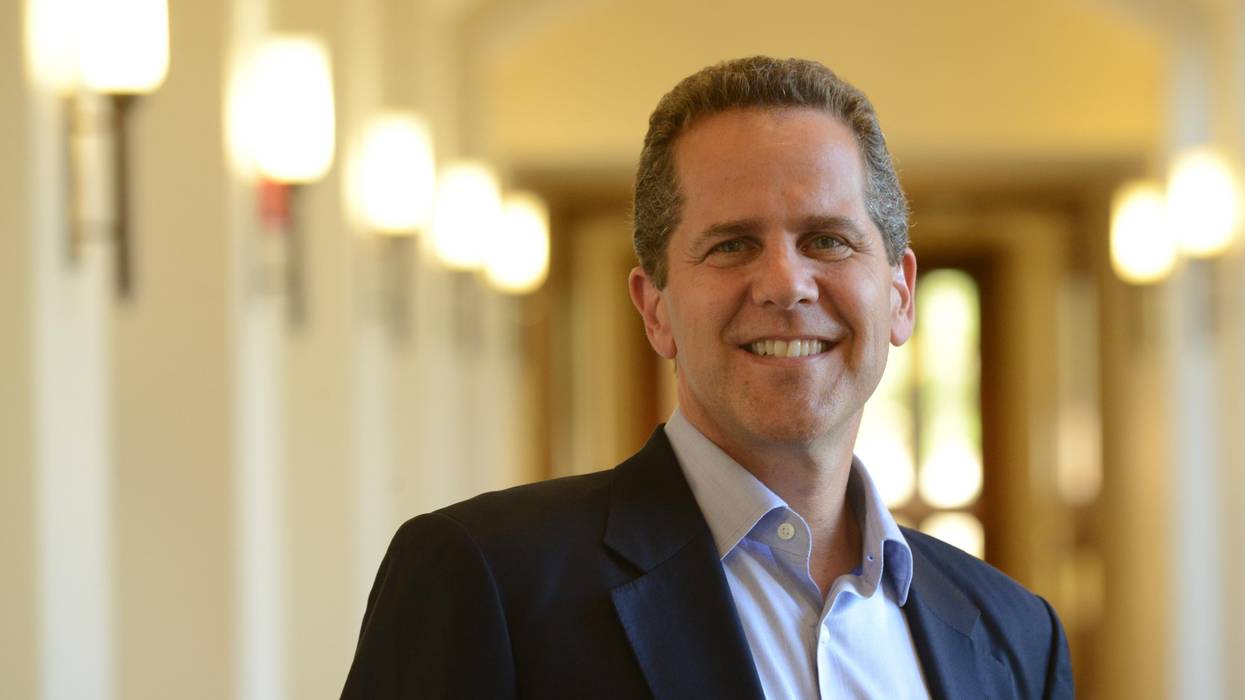
A month after climate campaigners condemned Sen. Joe Manchin for refusing to support the nomination of Sarah Bloom Raskin to a top Federal Reserve post, government watchdogs are warning that the president's choice of a replacement nominee, Michael Barr, has close ties to industries that could be responsible for "the next financial crisis."
"When it comes to the cryptocurrency and fintech industries, which some believe could be responsible for the next crash, concerns about the revolving door have too often been waved away."
President Joe Biden on Friday announced he would nominate Barr to serve as the vice chair of supervision on the Federal Reserve Board of Governors, a position in which he would regulate big banks as well as other financial innovations.
Barr is currently a law professor at the University of Michigan and previously worked in the Treasury Department, where he helped to pass the Dodd-Frank Wall Street Reform and Consumer Protection Act in 2010.
While Barr was instrumental in creating the Consumer Financial Protection Bureau (CFPB), appeared in February with progressive Sen. Elizabeth Warren (D-Mass.) for a discussion about economic inequality, and has secured the support of Senate Banking Committee chairman Sen. Sherrod Brown (D-Ohio), the Revolving Door Project warned that much of Barr's past and current work has not prepared him to protect the American public from reckless activities of financial firms.
Writing for the organization on Thursday, Eleanor Eagan and Timi Iwayemi noted that Barr is currently an advisor at NYCA Partners, which invests in "fintech"--mobile applications and other technologies that automate financial transactions--and a member of the advisory council for the Alliance for Innovative Regulation, a think tank which has received funding from fintech and cryptocurrency firms "and has advocated extreme regulatory reform measures."
In the years preceding the 2008 financial meltdown, wrote Eagan and Iwayemi, "regulators who came from the country's largest banks and planned to promptly return to them removed regulatory restraints and turned a blind eye to the predictably dangerous effects (see, e.g. Robert Rubin and Alan Greenspan)."
"And yet, as familiar as that story has become, many appear not to have learned its lessons," they added. "When it comes to the cryptocurrency and fintech industries, which some believe could be responsible for the next crash, concerns about the revolving door have too often been waved away."
Last year, Jon Cunliffe, the Bank of England's deputy governor for financial stability, warned that digital assets "have no intrinsic value and are vulnerable to major price corrections," and pose a concern to financial stability.
The rate of growth in the cryptoasset market, Cunliffe said, is comparable to the $1.2 trillion subprime mortgage market in 2008.
"When something in the financial system is growing very fast, and growing in largely unregulated space, financial stability authorities have to sit up and take notice," he said.
As David Dayen wrote at The American Prospect Thursday, in addition to his ties to cryptocurrency, Barr served as an advisor for peer-to-peer lending firm the Lending Club, which was called "predatory" by the Cleveland Fed in 2017, and was a key architect of the Home Affordable Modification Program (HAMP), "the failed foreclosure mitigation program that allowed banks to trap borrowers in predatory schemes."
Dayen also noted that former FDIC Chair Sheila Bair wrote in her memoir about Barr's push to eliminate strong regulations for derivatives and weaken the Volcker Rule, which attempted to stop banks from using customers' money to engage in risky trading.
"While Barr was a true ally in the fight for creating the Consumer Financial Protection Bureau," said Jeff Hauser, executive director of the Revolving Door Project, "when it came to shifting the economic structure of Wall Street itself, he was a proud supporter of the 'Too Big to Fail' bailout-heavy status quo. Putting Barr in charge of regulation at the Fed, the institution which bails out banks in the first place, would torpedo any notion that Democrats have learned from that error in judgment."
Barr's nomination contrasts with that of Raskin earlier this year. Raskin, who withdrew her nomination after it became clear Manchin (D-W.Va.) would join Republicans in opposing her, drew right-wing ire for her call for regulators to hold banks accountable for their contributions to the climate crisis.
Last year, the Revolving Door Project had urged Biden to nominate Raskin to the vice chair of supervision role to "minimize [former President Donald] Trump's deregulatory Federal Reserve legacy."
By contrast, "Barr can't be trusted to make enemies of the old banks or the new fintechs when necessary for the safety and soundness of the financial system," Hauser said this week. "We need a VC-S who looks out for the people and the economy, not for his own career."
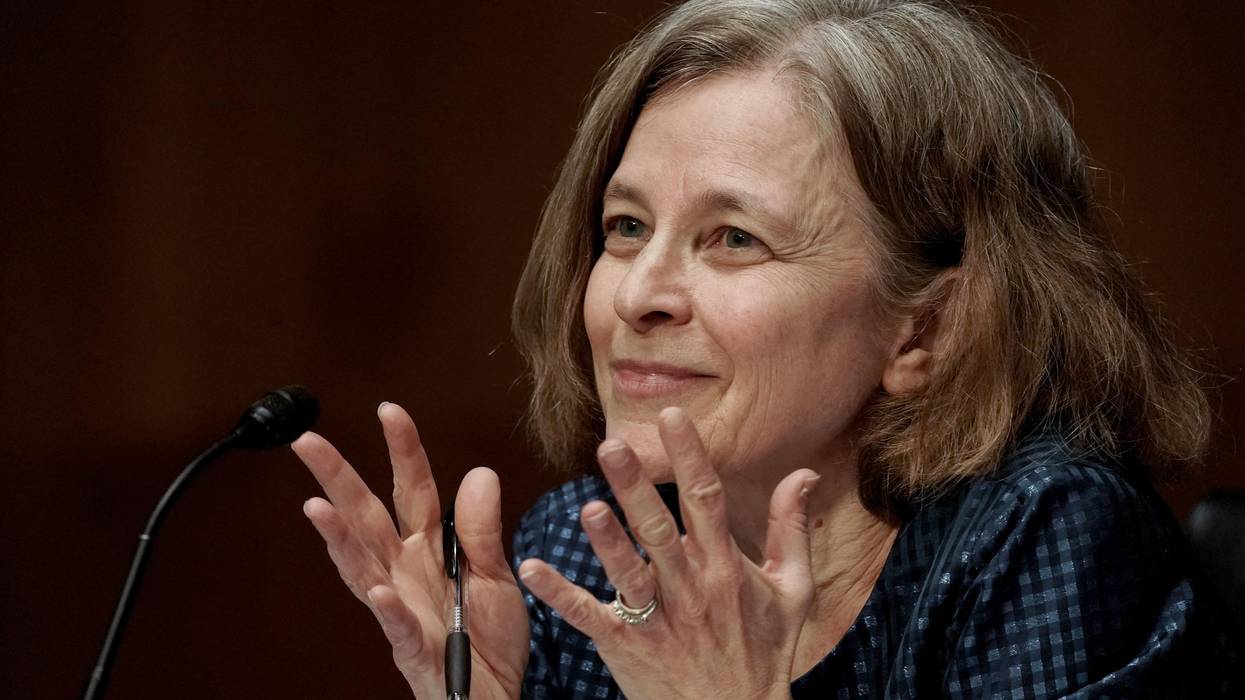
Sarah Bloom Raskin withdrew her nomination as Federal Reserve vice chair for supervision on Tuesday, prompting progressive condemnation of the fossil fuel-funded U.S. senators--especially right-wing West Virginia Democrat Joe Manchin--who fiercely opposed her prospective appointment.
"Days before helping Republicans sink Sarah Bloom Raskin's Fed nomination, Joe Manchin told fossil fuel executives that they should seek a 'return on investment' from the politicians they fund."
The Washington Post reports that the White House confirmed Bloom Raskin--a former deputy secretary at the U.S. Treasury Department and member of the Federal Reserve's governing board during the Obama administration--would decline her nomination amid what she has described as "relentless attacks by special interests" spooked by her candid admissions that the climate emergency threatens economic stability.
"It was--and is--my considered view that the perils of climate change must be added to the list of serious risks that the Federal Reserve considers as it works to ensure the stability and resiliency of our economy and financial system," Bloom Raskin wrote in a letter to U.S. President Joe Biden explaining her decision.
"This is not a novel or radical position," she continued. "Any vice chair for supervision who ignored these realities--which are manifesting every day across this country--would be guilty of gross dereliction of duty."
Bloom Raskin's stance is in line with official policy statements from various U.S. government agencies including the Department of Defense, as well as central banks around the world and a growing number of corporations.
In a statement addressing accusations that Bloom Raskin is too "radical" for the job, Biden said that "unfortunately, Senate Republicans are more focused on amplifying these false claims and protecting special interests than taking important steps toward addressing inflation and lowering costs for the American people."
However, it was opposition from Manchin--who has taken hundreds of thousands of dollars in fossil fuel industry campaign contributions and made at least hundreds of thousands more from his family's coal business--in an evenly divided Senate that proved fatal to Bloom Raskin's confirmation prospects.
"Days before helping Republicans sink Sarah Bloom Raskin's Fed nomination, Joe Manchin told fossil fuel executives that they should seek a 'return on investment' from the politicians they fund," The New Republic's Kate Aronoff tweeted. "Guess they listened!"
The progressive group Indivisible lamented, "It's absurd that a qualified nominee who had been unanimously confirmed by the Senate to a similar role can't get confirmed now simply for acknowledging climate change."
David Arkush, climate program managing director at the consumer advocacy group Public Citizen, said in a statement that "as climate harms push into an ever-larger proportion of our social and economic lives, so too does climate denial."
"At the behest of the oil and gas industry, Senate Republicans and Sen. Manchin smeared and killed the nomination of the most qualified person in the country to lead the U.S. through our present economic and financial stability challenges as vice chair for supervision because she had the temerity to voice aloud simple realities around climate change that most regulators agree with," he asserted. "Their behavior is disgraceful."
Arkush continued:
A mainstream nominee if there ever was one, Bloom Raskin has the support of consumers, civil rights groups, unions, businesses, and banks. She was confirmed twice by the Senate unanimously and has widespread, bipartisan support in the real world. But not in today's U.S. Senate, where the fossil fuel industry gives new meaning to the phrase scorched earth.
"It is no surprise that people who are destroying humanity's livable habitat are also willing to imperil financial stability and the broader economy by depriving the country of outstanding leadership in a time of multiple overlapping crises just to make a point," Arkush added. "But it is a new low."
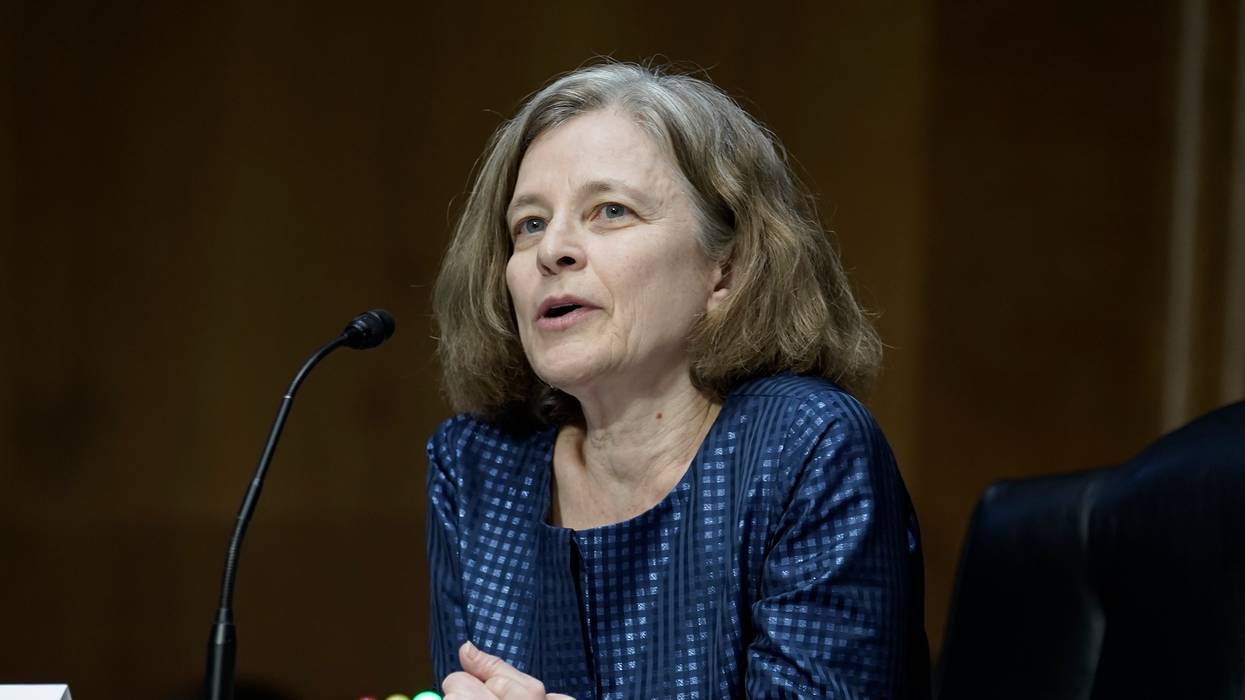
Sen. Joe Manchin infuriated progressives on Monday as he announced his refusal to support President Joe Biden's nomination of Sarah Bloom Raskin to a key position at the Federal Reserve--only the latest of the West Virginia senator's obstructions of his own party's climate action agenda.
No Republicans have indicated that they might support Raskin's nomination to serve as vice chair of supervision at the Fed, a role in which she would be the agency's top banking regulator. Without Manchin's support in the evenly-split U.S. Senate, Raskin's nomination is likely doomed.
"The fossil fuel industry gave more money to Manchin than anyone else in D.C. The return on that modest investment has been staggering."
Manchin suggested that the former Obama administration official's call for action regarding banks' climate risks as they pour trillions of dollars into fossil fuel projects.
"Her previous public statements have failed to satisfactorily address my concerns about the critical importance of financing an all-of-the-above energy policy to meet our nation's critical energy needs," Manchin said of Raskin Monday. "I have come to the conclusion that I am unable to support her nomination to serve as a member of the Federal Reserve Board."
Raskin wrote in a column last year that U.S. bank regulators must "leave their comfort zone" and begin regulating how financial institutions are contributing to the planetary emergency by funding fossil fuel emissions.
"They need to ask themselves how their existing instruments can be used to incentivize a rapid, orderly, and just transition away from high-emission and biodiversity-destroying investments," Raskin wrote.
Republicans on the Senate Banking Committee have boycotted a hearing to advance several nominations for Federal Reserve positions, saying they object to Biden's selection of Raskin due to her comments about the climate and accusing her of impropriety when she served on the board of a payments firm.
On Monday, the White House said it would continue to seek Raskin's confirmation, adding that she has been targeted by an "unprecedented, baseless campaign led by oil and gas companies that sought to tarnish her distinguished career."
As Jane Mayer wrote in The New Yorker earlier this month, fossil fuel companies, fearing that at the Fed Raskin could identify the climate crisis as a long-term systemic risk to the economy and regulate accordingly, have led right-wing senators in their campaign to stop Raskin's confirmation:
The industry's fears were made clear at the end of January, when a coalition of forty-one energy-business trade associations that opposed Bloom Raskin's nomination wrote a letter to the committee in which they called Bloom Raskin "a strong advocate for debanking" fossil-fuel companies... In their letter, the associations called Bloom Raskin an environmental "alarmist" with "a crisis mentality" because she has stated that climate change could result in "an unlivably hot planet."
The U.S. Chamber of Commerce--which counts among its board members executives from natural gas company ConocoPhillips, a top contributor to Manchin this year, and other fossil fuel firms--also wrote to the committee warning senators to reject Raskin.
Climate advocates including Bill McKibben linked Manchin's ties to the fossil fuel industry with his decision to block Raskin's confirmation.
Raskin is "super qualified, would be good at the job, but Manchin's corporate donors don't love her," said Faiz Shakir, founder of pro-worker media outlet More Perfect Union. "That's what's really going on."
Last year, Manchin forced Democrats to eliminate key climate provisions including a methane fee and the Clean Electricity Performance Program from the Build Back Better Act, before announcing he would not support the drastically cut package.
Kate Aronoff, climate reporter for The New Republic, noted that Manchin attended CERAWeek, an annual meeting of fossil fuel executives and politicians, last week. As Russia's military assault on Ukraine continues, a key message pushed by attendees was the need to develop "energy independence" in the U.S.--while continuing the dominance of the oil and gas industry as other wealthy countries shift toward renewable sources.
As Aronoff reported last week, Manchin urged the executives assembled at the conference to seek a "return on investment" when they talk to politicians about policy.
"Demand more," he said. "If you do that you all can turn this around."
"I'm sure these things are unrelated!" Aronoff said of Manchin's CERAWeek appearance and his objection to Raskin.
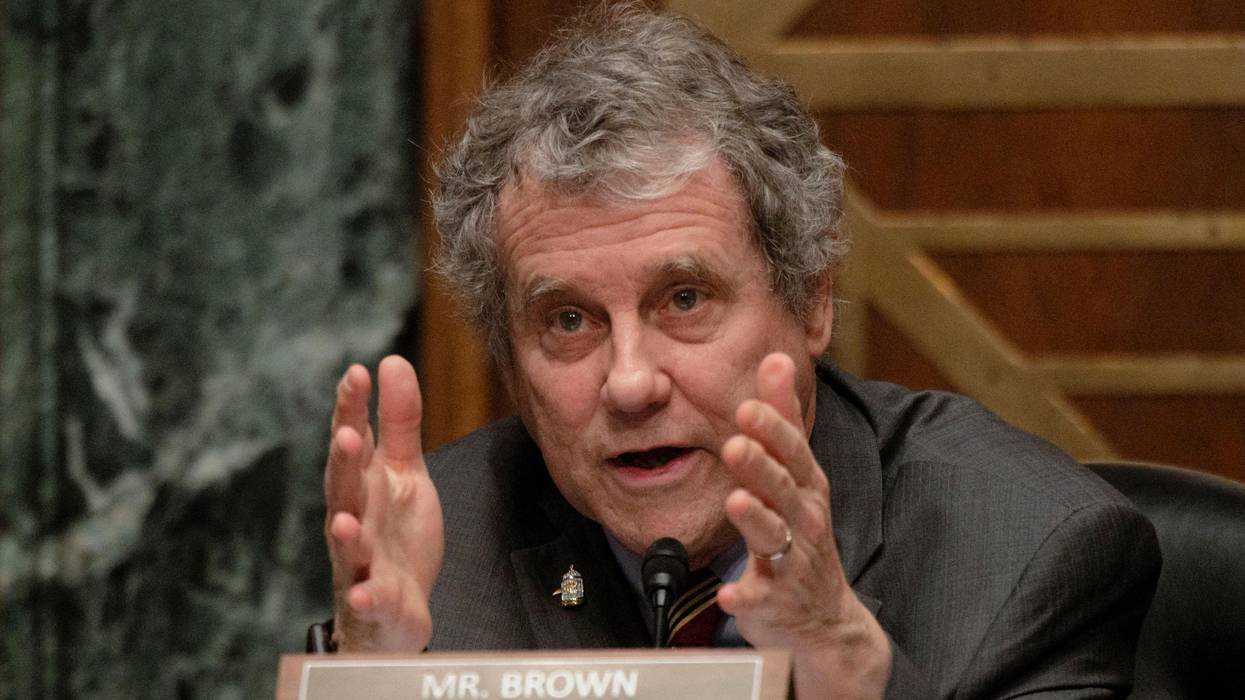
Activists and Democratic senators were outraged Tuesday after some Senate Republicans skipped a key committee vote, delaying the confirmation of President Joe Biden's five Federal Reserve nominees to protest his pick for the top banking regulator.
"The Federal Reserve is at a critical juncture where it must have the expertise to tackle the compound crisis of Covid, inflation, and unemployment, and the realities of the climate crisis in our communities."
The boycott was led by Sen. Pat Toomey (R-Pa.), ranking member of U.S. Senate Committee on Banking, Housing, and Urban Affairs, which was was set to vote on all five nominations. The panel's rules require that a majority of members are present for such actions, which can advance nominees to the full chamber for final confirmation vote.
"Shame on Sen. Toomey and Republicans of the Senate Banking Committee for boycotting today's vote and delaying the confirmation of this highly qualified slate of Federal Reserve board nominees," declared 350 U.S. campaign manager Brooke Harper.
"This boycott is pure politics, and a rejection of the serious skill, competence, and experience this slate would bring to the Federal Reserve," said Harper, whose group criticized Biden's renomination of Fed Chair Jerome Powell but welcomed the others.
"Combined, we believe that Lael Brainard as Federal Reserve vice-chair, along with Sarah Bloom Raskin, Lisa Cook, and Phillip Jefferson are a strong ensemble that can reinforce the critical independence of the Federal Reserve, while at the same time bringing long-overdue diversity of thought, experience, and perspective to the Board of Governors," the campaigner added.
GOP members of the panel opposed voting on Bloom Raskin--a former Fed board member and the wife of Rep. Jamie Raskin (D-Md.)--as vice chair for bank supervision.
Sen. Sherrod Brown (D-Ohio), who chairs the committee, said in a statement that "Ranking Member Toomey chose to abdicate his duty to the American people and put our economic recovery at risk, instead of doing his job and showing up to vote on Ms. Bloom Raskin, Dr. Cook, Dr. Jefferson, Gov. Brainard, and Chair Powell's nominations."
"Americans depend on us to get these nominees on the job as soon as possible. If my colleagues are as concerned about inflation as they claim to be, they will end the theatrics," Brown said. "Any actions to delay this vote will hurt workers, their families, and our recovery."
Speaking to panel members Tuesday, the chair also defended Bloom Raskin:
Let me be clear: Ms. Bloom Raskin has been the subject of an unrelenting smear campaign and fear mongering by the ranking member and Republicans--something that's become all too common.
They've distorted her words and painted her as some sort of radical. As we heard during her nomination hearing, in her own words, Ms. Bloom Raskin is a mainstream economic thinker. She is not in the business of telling banks whom to lend to. Her views on climate are not extreme. They are about accounting for risks that that threaten our financial system, wherever we find them. As she has said over and over again, this is about economic and financial system resilience.
But the attacks on Ms. Bloom Raskin haven't stopped there. They've become more personal. They can't attack her on substance, so they've engaged in malicious character assassination--in innuendo--without offering a shred of evidence.
"Now Republicans have fled the room--hiding rather than vote on a fair and experienced nominee," Brown added. "I urge my Republican colleagues to return to the table, to vote their conscience, and let the Senate fulfill its solemn duties."
Sen. Elizabeth Warren (D-Mass.), a committee member, delivered a fiery speech about the boycott on the Senate floor Tuesday, denouncing the GOP for what she called "particularly desperate attacks" and "bad faith attempts to take down a highly qualified candidate who is committed to actually doing the job of regulating the biggest financial institutions."
"Raskin has unparalleled expertise in both the monetary policy and financial regulatory components of the job," Warren said. "Few people in the entire nation are as qualified for this role as she is."
The White House also slammed the walkout. Echoing Brown, Press Secretary Jen Psaki said that "some Senate Republicans are playing politics with the American economy by blocking a vote on the chairman of the Federal Reserve and an entire slate of well-qualified nominees."
"Such an extreme step would be totally irresponsible at a time when it's never been more important to have confirmed leadership at the Fed to help continue our recovery and maintain price stability," Psaki added.
The press secretary also stood up for the embattled nominee, calling Bloom Raskin "one of the most qualified individuals to ever be nominated to the Federal Reserve" and noting that she "has made the strongest ethics commitments in the history of the Fed."
As The New York Times reported Tuesday:
Sarah Binder, a professor of political science at George Washington University who co-wrote a book on the politics of the Fed, said Democrats would need to come up with a strategy for overcoming the Republicans' block or the nominees could get stuck in limbo.
"It is really a delay--it might yet scupper Raskin," she said, noting that Democrats could break the nominations up or could try to garner enough support among the full Senate to override committee rules, though that might be a challenge. "It's pretty unchartered, and they're going to have to find a way."
Last year, 350 launched a campaign calling on the Fed to end bank fossil fuel financing, align its own spending and asset purchases with the Paris agreement's 1.5degC goal, and encourage investment to limit global temperature rise, with a focus on low-income regions and communities of color.
Harper emphasized Tuesday that "the Federal Reserve is at a critical juncture where it must have the expertise to tackle the compound crisis of Covid, inflation, and unemployment, and the realities of the climate crisis in our communities."
"These nominees can get the Federal Reserve back to work and address these serious crises through smart regulation," she said, urging Senate Majority Leader Chuck Schumer (D-N.Y.) to move forward with a floor vote to "confirm these highly qualified economic champions now."

Progressive groups are urging the U.S. Senate to confirm three of President Joe Biden's nominees for the Federal Reserve Board, arguing that the highly qualified candidates are needed to help address the needs of workers and the climate emergency.
"This slate of nominees can get the Federal Reserve back to work and address these serious crises through smart regulation."
The three nominees are Lisa Cook and Philip Jefferson for the remaining seats on the Fed's seven-member governing board and Sarah Bloom Raskin to be the board's vice chair for financial supervision, a key regulatory role. The trio appeared together Thursday before the Senate Banking Committee for a confirmation hearing.
Raskin is a former Fed board member and deputy Treasury Secretary. She's also the wife of Democratic Rep. Jamie Raskin of Maryland. Cook and Jefferson are both economists. If confirmed, Cook, who served on former President Barack Obama's Council of Economic Advisers, would be the first Black woman on the governing board, while Jefferson, who was previously an economist for the board of governors, would be the fourth Black man to serve on the board.
Brooke Harper, 350 U.S. campaign manager, said the nominees would "bring serious skill, competence, and experience to the Federal Reserve" and called the slate of nominees "critical to the success of the Federal Reserve and the role it plays to protect peoples' interests."
The Fed, Harper added, "is at a critical juncture where it must have the expertise to tackle the compound crisis of Covid, inflation, and unemployment, and the realities of the climate crisis in our communities. This slate of nominees can get the Federal Reserve back to work and address these serious crises through smart regulation."
The three nominees "having better qualifications than dozens of past nominees and eventual board governors," the Economic Policy Institute's Josh Bivens wrote last week, proved no buffer to resistance from the fossil fuel sector and Republicans. He said that "organized opposition... mostly settled into a focus on Cook and Raskin."
As Bivens wrote:
The opposition to Raskin concentrates on her policy record of regulating the powerful financial sector and seeking to make the Fed center climate change concerns in its policymaking. However, these aren't weaknesses or flaws in her candidacy, they are strengths. The opposition to Cook is even uglier, deriding her qualifications for the nomination using barely disguised racial code words. The wellspring of much of this opposition also included attacks aimed at Jefferson, but this gross campaign against the Biden slate has clearly decided it's more strategic to direct attacks about "qualifications" on Cook.
The attacks on Cook's qualifications also represent a profound bias in how Federal Reserve policymaking has been captured by the financial sector for too long. The narrow criticisms being leveled against Cook center on her not having published articles in academic journals about monetary macroeconomics. But, the vast majority of Federal Reserve policymakers have not published heavily in academic journals about these topics. Historically, the easiest pass given to governors who do not have an academic publishing record in monetary macroeconomics is the claim that they "understand financial markets," which usually means they worked for a financial institution.
Among those pushing back against Cook's and Raskin's nominations is the Senate Banking Committee's top Republican--Sen. Pat Toomey of Pennsylvania. During Thursday's hearing, Toomey attacked Raskin's previous comments on the Fed addressing climate risks.
"She's repeatedly, publicly, and forcefully advocated for using financial regulation--including the Fed--to allocate capital and de-bank energy companies," he said.
That line of attack from Toomey and other GOP lawmakers who've recieved significant campaign cash from the fossil fuel industry, accoording to Accountable.US, is simply a "parroting" of oil industry concerns that must be rejected by senators as they weigh the nominations.
"These attacks from Big Oil and their allies on Capitol Hill against Sarah Bloom Raskin are nothing more than industry's latest attempt to pretend climate change won't impact their business," said Jordan Schreiber, a spokesperson for the advocacy group.
"It's no coincidence," said Schreiber, "that nearly every Republican member of the Senate Banking Committee has taken over six figures in oil industry campaign cash. Bloom Raskin is an experienced regulator with mainstream views on climate and the future of the fossil fuel industry and she should be confirmed."
A day before the hearing, nearly 100 progressive groups including Public Citizen and the Open Markets Institute urged senators to confirm Raskin, Cook, and Jefferson.
In a Wednesday letter addressed to Senate Banking Committee Chairman Sen. Sherrod Brown (D-Ohio), the groups wrote that Biden's "nominees are committed to maintaining stability in our economy in the midst of the pandemic, encouraging economic growth that benefits all working people, and fighting the impacts of inflation, all while preserving the independence of the Fed."
The groups pointed to "Cook's extensive knowledge of the nuances of Black employment [that] will provide much-needed input at the Fed in its efforts to achieve Chair [Jerome] Powell's priority of broad maximum employment"; Jefferson's research "on the effects of macroeconomic and monetary policy on employment, economic growth, poverty rates, and household finances--issues at the center of the Fed's mandate"; and called Raskin "well-suited to look out for emerging risks to financial stability and determine how to respond to them, in addition to being versed in new potential threats such as climate change and cybersecurity."
"We believe that these nominees' depth of scholarship combined with bipartisan experience and diverse coalition of supporters indicate that they would be powerful additions to the Federal Reserve Board of Governors," they said.
If Cook, Jefferson, and Raskin are approved by the banking panel, they will face confirmation by the full Senate.

U.S. climate campaigners and other critics of Jerome Powell's record as Federal Reserve chair responded with frustration Monday to President Joe Biden's renomination of him to the post despite opposition from progressive activists, economists, and lawmakers.
"Powell as chair of the Federal Reserve will make it more difficult for Biden to ultimately be a successful president."
In a statement announcing the move--as well as the president picking Lael Brainard as vice chair of the Federal Reserve's board of governors--the White House praised Powell's "steady leadership" during the coronavirus pandemic and said that both nominees "share the administration's focus on ensuring that economic growth broadly benefits all workers."
By contrast, the Revolving Door Project at the Center for Economic and Policy Research said in a statement that it was "extremely disappointed" by the renomination.
"Biden has an ambitious and urgent agenda on climate, financial stability, and addressing racial and economic inequality," the project said. "Powell as chair of the Federal Reserve will make it more difficult for Biden to ultimately be a successful president."
The project added that "this choice means the president now owns what is--and what will be--known about Powell's own trading scandal and his tightlipped, insufficient response to the whole slate of Federal Reserve scandals."
David Arkush, managing director of Public Citizen's Climate Program, declared that the decision "doubles down on reckless Wall Street deregulation and dangerous dawdling on climate-related threats to the financial system, flouting Biden's own whole-of-government approach to stemming climate threats."
"As the 2008 financial crisis showed, fecklessness by financial regulators doesn't appear terribly dangerous until catastrophe suddenly materializes," he said. "That is the path Powell has put us on."
Other critics echoed climate-related concerns. Akiksha Chatterji, a digital campaigner at Positive Money U.S., said that "by renominating Powell, who has repeatedly minimized central banks' role in addressing the climate crisis, Biden has missed a rare opportunity to appoint diverse and transformational leaders to the Fed."
The advocacy group 350.org in July launched the "Fossil Free Federal Reserve" campaign; its demands included Biden appointing a chair who is a "climate champion." Brooke Harper, a campaigner with the organization, said in an email Monday that Powell's renomination "confirms what I feared the most. Biden is NOT the climate president he claims to be."
"While we're disappointed in Powell's incrementalism on climate, we're making our demands heard: the Federal Reserve must steer the economy away from high-risk fossil fuel investments, incorporate a climate stress test across policies and lending, and prioritize racial justice, including through full employment," she added in a statement. "Powell's mandate to protect our economy includes protecting our communities from climate catastrophe."
Powell was initially nominated to the Fed board in 2012 by then-President Barack Obama, under whom Biden served as vice president. He was confirmed as chair by the Senate with an 84-13 bipartisan vote in January 2018, after being chosen by Biden's predecessor, former President Donald Trump.
Biden faced pressure from progressives in both chambers of Congress to pick someone else once Powell's term expired--including from Sen. Jeff Merkley (D-Ore.), who along with Sen. Ed Markey (D-Mass.) is sponsoring legislation that would make the Fed impose new restrictions on financial institutions to cut off funding for fossil fuel projects.
"We need a focus on climate action in all facets of the federal government, including the Federal Reserve," Merkley tweeted Monday. "Jerome Powell has already proven... he won't answer calls for climate action. I will vote no."
Sen. Elizabeth Warren (D-Mass.) warned in September that renominating Powell would mean "gambling that for the next five years, a Republican majority at the Federal Reserve with a Republican chair who has regularly voted to deregulate Wall Street won't drive this economy over a financial cliff again."
"It's no secret I oppose Chair Jerome Powell's renomination, and I will vote against him," Warren said Monday. "I will support the president's nomination of Lael Brainard as vice chair."
Activists also welcomed Biden's selection of Brainard, who has served on the U.S. central bank's board since 2014. Arkush called it "the silver lining," adding that she "has shown significantly more leadership across the Fed's missions and has influenced Powell for the better."
The Revolving Door Project agreed that "it is somewhat encouraging" Biden chose Brainard as vice chair while reiterating that the role "is little more than a ceremonial title if the chair disagrees with her preferences on monetary or regulatory policy."
Noting that Biden has more Fed positions to fill, Arkush argued that "he should quickly nominate individuals like" Michigan State University economist Lisa Cook and Sarah Bloom Raskin--a former deputy treasury secretary and Fed governor as well as the wife of Rep. Jamie Raskin (D-Md.)--"who will improve the board's diversity and work to fulfill its full mission."
"Powell should defer to the leadership of Brainard and others on financial regulation and climate," Arkush added. "If he refuses, they should use their majority votes to steer the Fed toward responsible action."
Sierra Club Fossil-Free Finance campaign manager Ben Cushing--who also welcomed Brainard's elevation to the role of vice chair--concurred that "it is essential that President Biden nominate additional board members, including the vice chair of supervision, that will act to address climate-related threats to our economy."
"To ensure a fair recovery going forward, it's extremely important to bring in strong champions of financial regulatory protections and economic equality to the remaining open seats."
Alexis Goldstein, director of financial policy at Open Markets Institute, similarly emphasized the importance of Biden picking candidates "with the ability to tackle the critical issues of our time: corporate concentration that harms working people, independent businesses, innovation, and growth, and that increases climate risk; racial economic inequality, unemployment, climate change, wasteful and dangerous speculation, and predatory lending."
"To ensure a fair recovery going forward, it's extremely important to bring in strong champions of financial regulatory protections and economic equality to the remaining open seats," Goldstein said, advocating for Cook and Bloom Raskin as "the kind of leaders the Federal Reserve needs to guarantee that the economic recovery works for all people."
Warren also acknowledged one of the open seats, saying that "Powell's failures on regulation, climate, and ethics make the still-vacant position of vice chair of supervision critically important."
"This position must be filled by a strong regulator with a proven track record of tough and effective enforcement," the senator said, "and it needs to be done quickly."

If U.S. President Joe Biden wants to fulfill his "Build Back Better" agenda, he should not appoint Federal Reserve Chair Jerome Powell to another four-year term, Nobel Prize-winning economist Joseph Stiglitz said in an interview released Wednesday, joining a group of progressive lawmakers in advocating for fresh leadership at the nation's central bank.
"People have given Powell a lot of kudos because he has supported the economy through the pandemic... On one hand I agree with that," Stiglitz, a professor at Columbia University with previous roles as the chief economist of the World Bank and chair of the Council of Economic Advisers during the Clinton administration, told Reuters.
"On the other hand that is a bare minimum for qualification. Almost anybody reasonable would have done something similar," said Stiglitz, referring to Powell's implementation of near-zero interest rates and the Fed's monthly purchases of billions of dollars in government-backed bonds since March 2020.
"Is the Biden administration going to fulfill what is at the heart of its agenda?" asked Stigltiz. If so, he added, "it should not be Powell."
Stiglitz rebuked Powell for his weak approach to financial regulation and unwillingness to reduce climate risk. And, although Powell has received praise from some progressive economists for embracing monetary policies that aim to keep unemployment low instead of only focusing on price stability, Stiglitz questioned whether the current Fed chair is truly committed to prioritizing full employment regardless of fears about inflation.
Powell's four-year term as Fed chair is set to expire in February 2022. With potentially as many as four seats on the Fed's seven-member governing board expected to be open, many progressive advocates have made the case that it would be a major mistake for Biden to prolong the tenure of Powell--a Republican appointee of former President Donald Trump with connections to the private equity industry--when he has an opportunity to remake U.S. central banking.
Stiglitz, who has "not yet spoken about his views to members of the administration but 'probably will engage' as debate over the Fed appointments continues," identified current Fed Governor Lael Brainard as "the 'one obvious candidate out there,' who would take a stronger regulatory stance, push the Fed to account more fully for climate risks, and arguably tolerate more risk of inflation to generate higher employment," Reuters reported Wednesday.
While acknowledging that Brainard would be an improvement over Powell, the Revolving Door Project's Max Moran in July provided a shortlist of potential progressive Fed nominees that includes Michigan State University professor Lisa Cook, AFL-CIO economist William Spriggs, and attorney Sarah Bloom Raskin, who previously served on the Fed's Board of Governors.
According to a report released last month by Oil Change International, the Fed under Powell has "worked to maintain and increase fossil fuel finance from the United States." The Fed's financing of coal, oil, and gas extraction persists despite recent reports from the International Energy Agency and the United Nation's Intergovernmental Panel on Climate Change, both of which warned that preventing catastrophic levels of global warming requires rapidly moving away from fossil fuels.
After Powell delivered a closely watched address last month in which the climate crisis went unmentioned, Public Citizen's Yevgeny Shrago warned that the Fed is "sleepwalking through climate chaos" and refusing to use its authority to mitigate risk.
In his conversation with Reuters, Stiglitz was adamant that "financial stability requires dealing with the mispricing of assets" projected to be devalued by extreme weather disasters or "stranded" as a result of the clean energy transition. "If there is a risk of mispricing you have to include it" in the regulatory frameworks guiding investment decisions, he said.
Alluding to his mid-1990s stint in the White House, Stiglitz criticized former President Bill Clinton's decision to reappoint Republican Alan Greenspan as Fed chair--a move that "promot[ed] stability and bipartisanship," the news outlet noted, "but allow[ed] Greenspan's faith in markets and more hands-off approach to regulation to set the stage for the internet stock bubble and the later and more serious housing market crash."
"Nobody wants to disturb the financial markets... There is a political attractiveness to not rocking the boat," said Stiglitz. "But in my view we made a big mistake reappointing Greenspan... I hope Biden does not make the same."
As The American Prospect's David Dayen argued late last month, the stakes surrounding the next Fed chair appointment could not be higher.
"Whoever the selection," he wrote, "they must recognize how intertwined their role is with the future of the planet."
A group of progressive lawmakers led by Reps. Alexandria Ocasio-Cortez and Rashida Tlaib urged President Joe Biden on Tuesday to replace Federal Reserve Chair Jerome Powell--a Trump appointee--with a leader committed to tackling systemic climate risk and strictly regulating Wall Street banks.
"Under his leadership the Federal Reserve has taken very little action to mitigate the risk climate change poses to our financial system."
--Letter
In a joint statement, five progressive lawmakers argued that Biden should not take the advice of commentators and lawmakers urging him to reappoint Powell, a Republican who has won praise from some progressive economists for keeping interest rates low in the pursuit of full employment.
Reps. Ayanna Pressley (D-Mass.), Mondaire Jones (D-N.Y.), Jesus "Chuy" Garcia (D-Ill.), Ocasio-Cortez (D-N.Y.), and Tlaib (D-Mich.) acknowledge that with Powell at the helm, the Fed "has made positive changes to its approach to full employment reflected in the new monetary policy framework."
But they contend that Powell's track record on climate and financial regulation should disqualify him from staying on as Fed chair past February 2022, when his term is set to expire.
"Under his leadership the Federal Reserve has taken very little action to mitigate the risk climate change poses to our financial system," the lawmakers said. "At a time when the Intergovernmental Panel on Climate Change is warning of the potential catastrophic and irreversible damage inflicted by a changing climate, we need a leader at the helm that will take bold and decisive action to eliminate climate risk."
According to a report released last week by Oil Change International, the Fed under Powell has "worked to maintain and increase fossil fuel finance from the United States" even as the central bank's leaders have made gestures toward the importance of reducing climate risk in recent speeches.
With Powell in charge, the Democratic lawmakers continued, the Fed "has substantially weakened many of the reforms enacted in the wake of the Great Recession regulating the largest banks, including capital and liquidity requirements, stress tests, the Volcker Rule, and living will requirements."
"Weakening financial regulations that were specifically created to prevent such a disaster from happening again risks the livelihoods of Americans across the country," they added.
The progressive lawmakers' statement echoes concerns that watchdog organizations and climate advocates have raised in recent months as Biden is poised to decide whether Powell will remain in his post for another term.
Last week, after Powell delivered a closely watched address in which he did not once mention the climate crisis, Public Citizen's Yevgeny Shrago warned that the Fed is "sleepwalking through climate chaos" and refusing to use the myriad tools at its disposal to mitigate risk.
"The European Central Bank (ECB) released a report that highlights both the immediacy and magnitude of the climate threat to the financial system and how far behind the Fed under Powell is in addressing it," Shrago wrote. "The Fed's lack of action in response to these threats should eliminate any question about whether Powell will take the climate crisis seriously. Biden must choose a new Fed chair who will."
While the progressive lawmakers did not mention any preferred candidates to replace Powell, the Revolving Door Project's Max Moran offered several suggestions in a blog post last month, including Michigan State University professor Lisa Cook and attorney Sarah Bloom Raskin, who previously served on the Fed's Board of Governors.
"Cook, who has been endorsed by Senator Sherrod Brown, is a strong supporter of full employment policies, and has testified against deregulatory proposals," Moran noted. "It's also wild that almost seven months into the new administration, Sarah Bloom Raskin still lacks a job. There might be no one better suited to lead the Fed's too-long-delayed work to purge the financial system of systemic risks caused by climate change."
"It's important for Biden to not settle for Powell merely because he's been strong on monetary policy in the last few years," Moran argued. "Biden can choose someone more deeply devoted to full employment, and who doesn't push him into a false choice between being strong on monetary policy and strong on regulatory policy. The president can have his cake and eat it too here, so he should. Because if he doesn't, it's average people who will suffer the most."
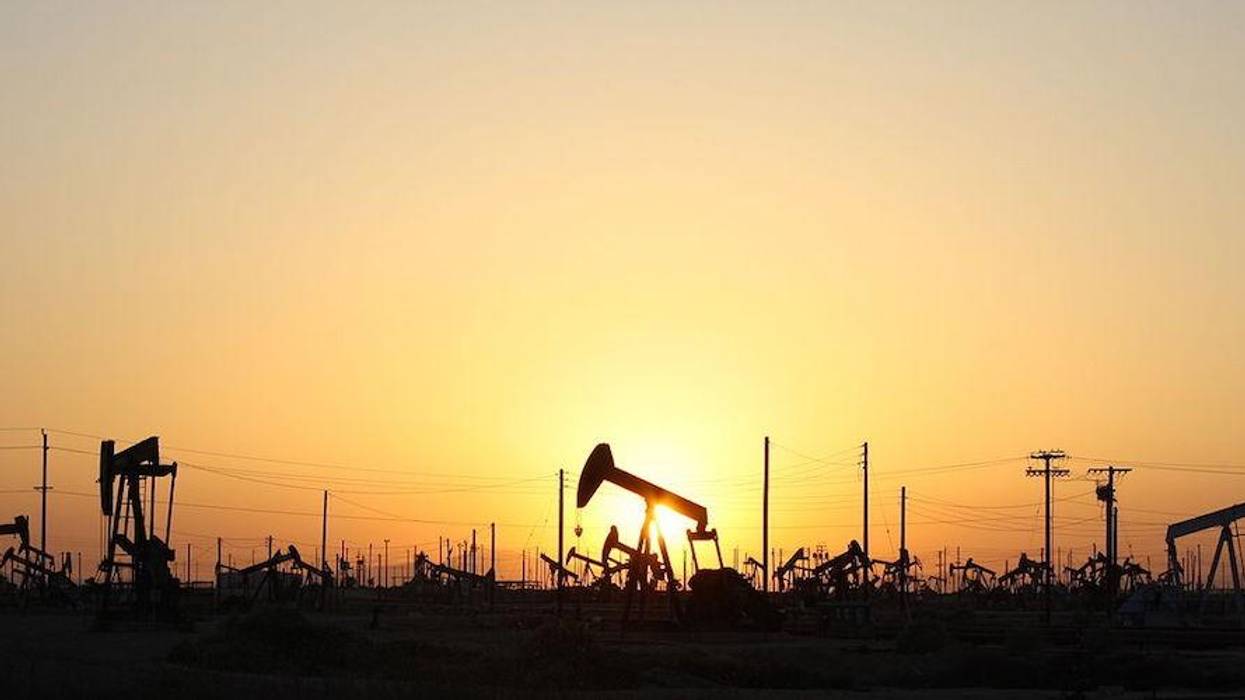
A former Federal Reserve board of governors member on Thursday called on her former colleagues to stop using Covid-19 relief funds to bail out the "dying" fossil fuel industry, calling the decision a threat to the planet's climate and a misguided use of taxpayer money.
"These concessions to the fossil fuel industry are a risky investment in the past," Sarah Bloom Raskin wrote in a New York Times op-ed. "The Fed is ignoring clear warning signs about the economic repercussions of the impending climate crisis by taking action that will lead to increases in greenhouse gas emissions at a time when even in the short term, fossil fuels are a terrible investment."
Raskin's opinion piece sparked praise from climate campaigners like 350.org co-founder Jamie Henn.
"This should cause some waves," Henn tweeted.
Henn on Thursday penned an opinion piece for Common Dreams arguing that Mike Sommers, CEO of the American Petroleum Institute (API), is spewing lies to the public when he claims the industry doesn't want--and hasn't actively pushed for--a bailout from the Fed.
As Henn wrote:
The truth is that despite Sommer's best efforts to spin a fairytale about oil companies tightening their belts and lifting themselves up by their bootstraps, corporate socialism is exactly what API wants. In fact, the fossil fuel industry, and the American Petroleum Institute in particular, have been at the forefront of corporate efforts to profit off the coronavirus pandemic and government relief efforts.
Climate advocacy group Friends of the Earth program manager Lukas Ross, in a statement Wednesday, also rejected Sommers' protestations.
"Oil lobbyists are spewing blatant lies, and we have the receipts," said Ross. "Big Oil has already nabbed $1.9 billion in giveaways thanks to corporate tax cuts from the last stimulus."
"If polluters want to deny the existence of the ongoing bailout," Ross added, "Congress should swiftly repeal these blatant corporate tax giveaways and make fossil fuels ineligible for stimulus lending programs."
The bailout is presenting taxpayers with a burden, Raskin wrote, citing the industry's debt and unsustainable business model.
"For taxpayers, shouldering these liabilities is a bad deal," wrote Raskin. "Buying this bad debt is not likely to support the creation of jobs or even ensure that existing jobs survive."
Friends of the Earth agreed.
"Trump's administration has been exploiting this pandemic to bailout Big Oil companies that have been struggling long before coronavirus," the group tweeted.
The pandemic, wrote Raskin, "provides an unexpected opportunity to build an economy that is stronger in the long term."
"The decisions that the Fed makes today will go a long way to determining whether tomorrow's economy is one that remains susceptible to more chaos and vulnerability or builds economic security and resilience," she wrote.

The Federal Reserve (the Fed)--the United States' version of a Central Bank--is a strange duck. It is the U.S. government's most powerful regulatory agency. It, after all, regulates money and interest rates. Yet, its budget comes entirely from the banking industry and relationships with the financial industry. So Congress, which appropriates money for all other federal agencies, has little leverage over the Fed's operations.
This independence--except from the big banks--is by design, when the Fed was devised by President Woodrow Wilson over one hundred years ago. The Fed, a secretive, private government inside a public government presents problems for a democratic society. The alternative was deemed worse by its boosters, allowing "politics" to determine the Fed's Board of Governors decisions.
It is as if the Federal Reserve/banking complex does not deal with political power by its own definition. The Fed entrenches the power of the banks without accountability inside Washington. Ask Republicans in Congress whether they generally oppose government regulation of a business and most will say "yes." Ask whether they want to deregulate the Federal Reserve and they will say "Of course not." Somebody has to assure monetary stability.
But the Fed's announced quarter of a percent cut in interest rates, which were already low by historical standards at 2.25 to 2.50 levels, will affect people, beyond abstract monetary theories. Tens of millions of Americans who rely on income from their savings accounts and money market accounts will receive less money. Some will jump into the high flying stock market, presumably to get more income and introduce real risk to their principal.
The $2.9 trillion Social Security trust fund will receive less income from lower yielding Treasury Bonds. That's not good for seniors. It is also really bad for pension funds, not to mention the returns on certain life insurance policies.
The Fed mumbled something about the trade war and a recent small decline in manufacturing indices as reasons to head off trouble.
But companies are piling up idle capital without knowing what to do with it other than to spend trillions of dollars on unproductive stock buybacks. There is no shortage of capital. Lowering the interest rate will just encourage more unnecessary corporate debt, with its deductible interest payments, instead of corporations using their available equity.
Venerable business columnist Allan Sloan does not think that a quarter-point cut by the Fed "will generate job-creating investments in the United States by companies that are uncertain about the future because of trade wars, threatened trade wars, interrupted supply chains and other actual and potential instabilities"(See Allan Sloan's article here).
Sloan gave other cogent reasons against a Fed interest rate cut, while conceding that it might help borrowers. That assumes gouging lenders (pay day loans, auto loans, credit card charges) pass the savings along.
Conventional critics of the Fed's cut this week point to already low interest rates and what they call a hefty economy, modest inflation, and a low unemployment rate.
Some former Fed governors called out the Fed for not clearly and specifically explaining its decision to cut rates. As former Fed Governor and Deputy Secretary of the Treasury, Sarah Bloom Raskin, said: "The Fed has really had a bit of a communications blunder... If Americans don't understand exactly what is happening and why, they may think that Chairman Jerome Powell is caving into presidential bullying."
No kidding. Trump has been pounding the Fed and threatening to take away Chairman Powell's Chair for months. He is demanding sharp reductions in interest rates. He renewed his denunciation after the Fed's quarter of a percent cut this week, tweeting that it was nowhere near enough!
Presidents almost never do this publicly to the Fed. But Trump, the failed gambling czar knows better. Intimidation through the mass media again and again works for Trump.
Although the Fed wanted to resist his pressure, hey, why take greater chances with crazy Donald? Instead, they threw him a bone.