

SUBSCRIBE TO OUR FREE NEWSLETTER
Daily news & progressive opinion—funded by the people, not the corporations—delivered straight to your inbox.
5
#000000
#FFFFFF
To donate by check, phone, or other method, see our More Ways to Give page.
Daily news & progressive opinion—funded by the people, not the corporations—delivered straight to your inbox.

"Clear and proven steps can be taken to reduce it and build more equal societies and economies," wrote economists and other experts, "which are the fundamental foundation stone of a successful future for us all."
Emphasizing that economic inequality is "a policy choice," more than 500 economists and other experts on the global wealth gap are endorsing a call made earlier this month in the first-ever G20 report on inequality: The "inequality emergency" must be confronted by new international body inspired by the United Nations' panel on climate change.
The creation of an International Panel on Inequality (IPI) was a central recommendation of the landmark report set to be presented next week at the G20 Leaders Summit in Johannesburg, and renowned economists including 2024 Nobel economics laureate Daron Acemoglum, Thomas Piketty, Isabella Weber, Ha-Joon Chang, and Jason Hickel were among those who signed a letter Thursday urging the creation of the committee.
The inclusion of economists, climate scientists, epidemiologists, historians, and experts from a range of other disciplines "reflects a key fact," said the signatories. "High levels of economic inequality have a negative impact on every aspect of human life and progress, including our economies, our democracies, and the very survival of the planet."
"Just as the Intergovernmental Panel on Climate Change (IPCC) has played a vital role in providing neutral, science-based, and objective assessments of climate change, a new International Panel on Inequality would do the same for the inequality emergency," reads the letter, which was also signed by global economic leaders including former US Treasury Secretary and Federal Reserve Chair Janet Yellen and former World Bank top economists and leaders.
Since its inception nearly four decades ago, the IPCC has provided governments with the most up-to-date scientific information about planetary heating and its impacts. Its assessments have informed the creation of the United Nations Framework Convention on Climate Change; the 1997 Kyoto Protocol, which subjected wealthy countries to emissions targets for the first time; and the 2015 Paris Agreement, which has required countries to develop and implement plans to draw down planet-heating emissions.
An IPI, said the experts on Thursday, "would provide policymakers the best, most objective assessments on the scale of inequality, its causes and consequences, and consider potential solutions."
"We believe this is in the interests of policymakers from across the political spectrum, who see the importance of this issue and the need to base responses to it on data and evidence and sound analysis," reads the letter. "We know that scholars and experts across the world would readily contribute their time voluntarily—as thousands do for the IPCC—in support of such a necessary and vital international initiative. We are ready to assist in this process."
The letter followed the release of the G20 Extraordinary Committee of Independent Experts on Inequality's landmark report, which was presented to South African President Cyril Ramaphosa earlier this month ahead of the G20 Leaders Summit.
The Extraordinary Committee, which is led by Nobel Prize-winning economist Joseph Stiglitz and also includes inequality experts such as Winnie Byanyima of Uganda and Jayati Ghosh of India, warned that in the last quarter-century, the wealthiest 1% of people around the globe have captured more than 40% of all new wealth—$1.3 million on average—while the bottom 50% has seen its wealth grow by just 1%, or about $585, in constant US dollars.
One in four people around the globe—roughly 2.3 billion people—face moderate or severe food insecurity, meaning they regularly skip meals. The report found that the problem is getting significantly worse, with the number of food-insecure people rising by 335 million since 2019.
The report found that 80% of all countries—accounting for roughly 90% of the global population—have high levels of income inequality, making them seven times more likely than more equal countries to experience democratic decline.
“We are at a dangerous moment in human history," said Piketty, co-director of the World Inequality Lab and World Inequality Database. "Rampant inequality is dividing nations and communities, threatening our social fabric, human rights, and the very essence of democracy. A global effort to tackle inequality is needed—and rigorous analysis of its causes, drivers, and solutions is the first step."
"Governments need to live up to the G20 Summit’s promise of ‘solidarity, equality, sustainability’ and urgently establish an International Panel on Inequality," he added.
Countries with low levels of inequality included Norway, Sweden, Denmark, and Finland—places that also consistently rank high on global reports on happiness and that were found to have low levels of "health, social, and environmental problems," according to the report.
The countries with low levels of inequality have "generous universal transfers and social insurance, supplemented by targeted assistance," the report says.
“High inequality is the result of decades of a failed economics that has primarily benefited the richest in our societies," said Chang, research professor at the School of Oriental and African Studies at University of London. "Not only is there a lot of evidence showing that higher inequality produces more negative economic and social outcomes, there are quite a few examples of more egalitarian societies growing much faster than comparable but more unequal societies.”
The signatories of the letter emphasized that inequality "is not inevitable."
"Clear and proven steps can be taken to reduce it and build more equal societies and economies," they wrote, "which are the fundamental foundation stone of a successful future for us all."

"Inequality is a crisis in need of concerted action," said Nobel Prize-winning economist Joseph Stiglitz.
A panel of experts convened by South Africa's president warned Tuesday that the world is facing an "inequality emergency" as the richest people on the planet capture a disproportionate share of new wealth and prepare to pass it down to their heirs—perpetuating the chasm between economic elites and everyone else.
The panel, led by Nobel Prize-winning economist Joseph Stiglitz, notes in a new report that over $70 trillion in wealth will be passed down to heirs over the next decade. In the next 30 years, the panel estimates, 1,000 billionaires will transfer more than $5.2 trillion to their heirs mostly untaxed.
"Inequality is one of the most urgent concerns in the world today, generating many other problems in economies, societies, polities and the environment," states the report, published ahead of the G20 meetings in Johannesburg at the end of the month.
Joining Stiglitz on the panel, formally called the Extraordinary Committee of Independent Experts on Global Inequality, were Adriana Abdenur of Brazil, Winnie Byanyima of Uganda, Jayati Ghosh of India, and Imraan Valodia and Wanga Zembe-Mkabile of South Africa.
"Inequality is not a given; combating it is necessary and possible," the experts wrote. "Inequality results from policy choices that reflect ethical attitudes and morals, as well as economic trade-offs. It is not just a matter of concern for individual countries, but a global concern that should be on the international agenda—and therefore the G20's."
Since 2000, the global 1% has captured more than 40% of all new wealth while the bottom half of humanity saw its wealth grow by just 1%, according to the new report. More than 80% of countries—accounting for roughly 90% of the global population—have high levels of income inequality, which undermines social cohesion, economic functioning, and democratic institutions nationally and worldwide.
The panel recommends a broad scope of policy changes to tackle runaway income and wealth inequality, from ensuring the fair taxation of multinational corporations and ultra-rich individuals, to antitrust policies that reduce corporate concentration, to major investments in public services.
The experts also called for the creation of an International Panel on Inequality—inspired by the Intergovernmental Panel on Climate Change (IPCC)—"to support governments and multilateral agencies with authoritative assessments and analyses of inequality" that would "empower policymaking."
"The committee's work showed us that inequality is a crisis in need of concerted action," Stiglitz said Tuesday. "The necessary step to taking this action is for policymakers, political leaders, the private sector, journalists and academia to have accurate and timely information and analysis of the inequality crisis. This is why our recommendation above all is for a new International Panel on Inequality."
"It would learn from the remarkable job the IPCC has done for climate change, bringing together technical expertise worldwide to track inequality and assess what is driving it," he added.
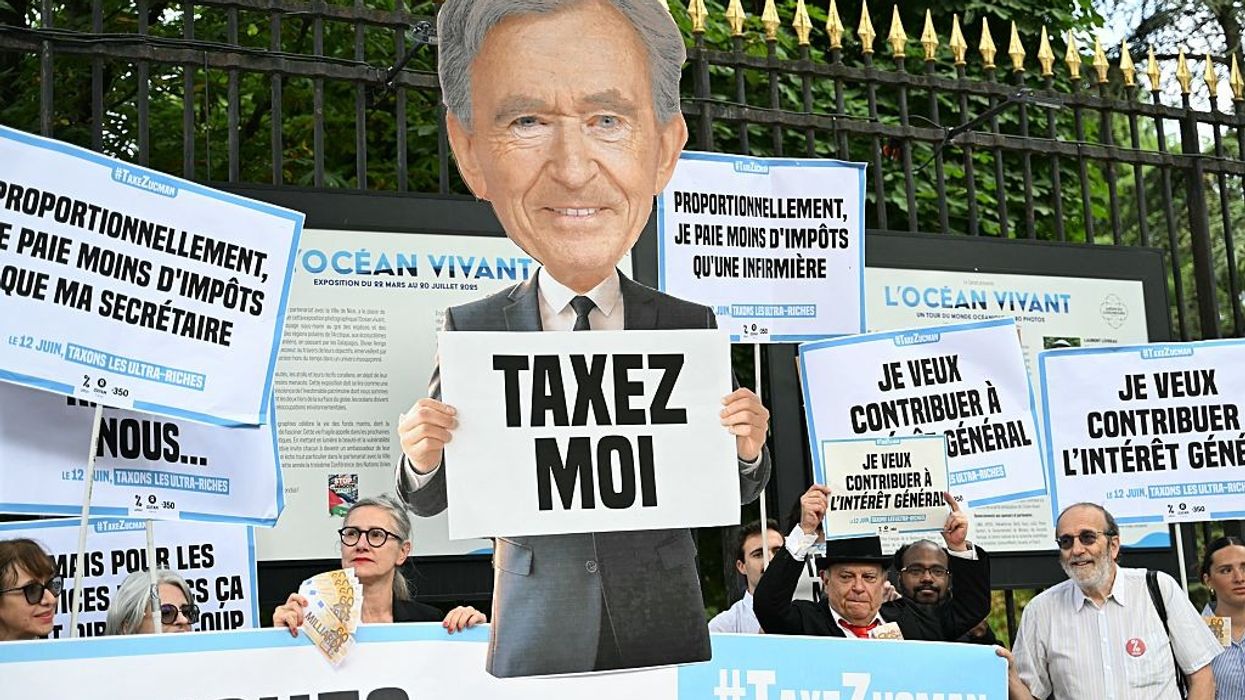
"Not only is it necessary to impose a stronger burden of justice on billionaires, but more importantly, it is possible."
Seven Nobel laureates on Monday published an op-ed advocating for "a minimum tax for the ultrarich, expressed as a percentage of their wealth," in the French newspaper Le Monde.
"They have never been so wealthy and yet contribute very little to the public coffers: From Bernard Arnault to Elon Musk, billionaires have significantly lower tax rates than the average taxpayer," wrote Daron Acemoglu, George Akerlof, Abhijit Banerjee, Esther Duflo, Simon Johnson, Paul Krugman, and Joseph Stiglitz.
Citing pioneering research from the E.U. Tax Observatory, the renowned economists noted that "ultrawealthy individuals pay around 0% to 0.6% of their wealth in income tax. In a country like the United States, their effective tax rate is around 0.6%, while in a country like France, it is closer to 0.1%."
Although the "ultrawealthy can easily structure their wealth to avoid income tax, which is supposed to be the cornerstone of tax justice," the strategies for doing so differ by region, the experts detailed. Europeans often use family holding companies that are banned in the United States, "which explains why the wealthy are more heavily taxed there than in Europe—though some have still managed to find workarounds."
The good news is that "there is no inevitability here. Not only is it necessary to impose a stronger burden of justice on billionaires, but more importantly, it is possible," argued the economists, who say that taxing the overall wealth of the ultrarich, not just income, is the key.
The wealth tax approach, they wrote, "is effective because it targets all forms of tax optimization, whatever their nature. It is targeted, as it applies only to the wealthiest taxpayers, and only to those among them who engage in tax avoidance."
💡 "One of the most promising avenues is to introduce a minimum tax for the ultra-rich, expressed as a percentage of their wealth."Seven Nobel laureates in economics advocate for the Zucman tax in their latest op-ed.Read the full @lemonde.fr article 👇www.lemonde.fr/idees/articl...
[image or embed]
— EU Tax Observatory (@taxobservatory.bsky.social) July 7, 2025 at 8:05 AM
The anticipated impact would be significant. As the op-ed highlights: "Globally, a 2% minimum tax on billionaire wealth would generate about $250 billion in tax revenue—from just 3,000 individuals. In Europe, around $50 billion could be raised. And by extending this minimum rate to individuals with wealth over $100 million, these sums would increase significantly."
That's according to a June 2024 report that French economist and E.U. Tax Observatory director Gabriel Zucman prepared for the Group of 20's Brazilian presidency—which was followed by G20 leaders' November commitment to taxing the rich and last month's related proposal from the governments of Brazil, South Africa, and Spain.
"The international movement is underway," the economists declared Monday, also pointing to recent developments on the "Zucman tax" in France. The French National Assembly voted in favor of a 2% minimum tax on wealth exceeding €100 million, or $117 million, in February—but the Senate rejected the measure last month.
The economists urged the European country to keep working at it, writing that "at a time of ballooning public deficits and exploding extreme wealth, the French government must seize the initiative approved by the National Assembly. There is no reason to wait for an international agreement to be finalized—on the contrary, France should lead by example, as it has done in the past," when it was the first country to introduce a value-added tax (VAT).
"As for the risk of tax exile, the bill passed by the National Assembly provides that taxpayers would remain subject to the minimum tax for five years after leaving the country," they wrote. "The government could go further and propose extending this period to 10 years, which would likely reduce the risk of expatriation even more."
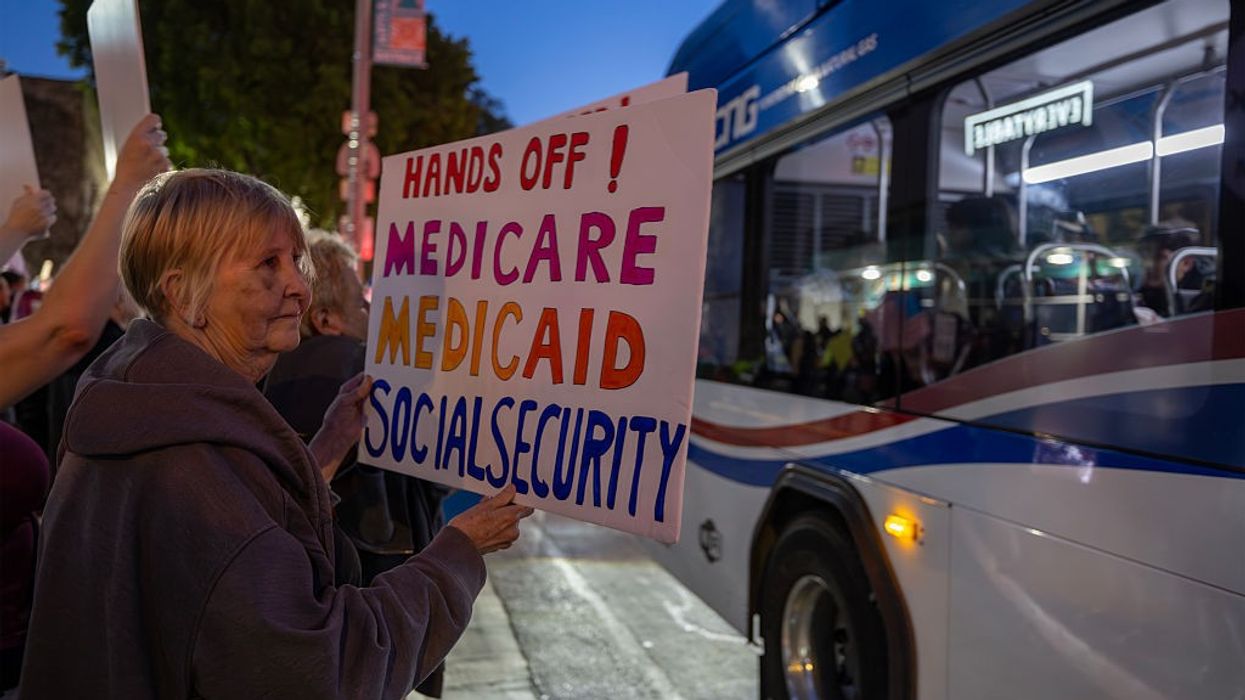
"The House bill addresses none of the nation's key economic challenges usefully and exacerbates many of them."
Half a dozen Nobel Prize-winning economists on Monday expressed their "grave concerns" about the sprawling budget reconciliation package passed last month by the Republican-controlled U.S. House of Representatives, warning that slashing an already frayed social safety net and exploding the record deficit in service of massive tax cuts for the wealthiest households will worsen the nation's economic woes.
"The most acute and immediate damage stemming from this bill would be felt by the millions of American families losing key safety net protections like Medicaid and Supplemental Nutrition Assistance Program (SNAP) benefits," Daron Acemoglu, Peter Diamond, Oliver Hart, Simon Johnson, Paul Krugman, and Joseph Stiglitz wrote in an open letter published by the Economic Policy Institute (EPI), a progressive think tank in Washington, D.C.
"The Medicaid cuts constitute a sad step backward in the nation's commitment to providing access to healthcare for all," the economists continued. "Proponents of the House bill often claim that these Medicaid cuts can be achieved simply by imposing work reporting requirements on healthy, working-age adults. But healthy, working-age adults are by definition not heavy consumers of health spending, so achieving the budgeted Medicaid cuts will obviously harm others as well."
🚨NEW: 6 Nobel laureate economists signed an open letter opposing the House budget bill 🚨 The bill adds significantly to the national debt while reducing incomes for the bottom 40%, they say. The most acute & immediate damage? Millions losing Medicaid & SNAP benefits: www.epi.org/publication/...
[image or embed]
— Economic Policy Institute (@epi.org) June 2, 2025 at 10:16 AM
Addressing the bill's staggering impact on public debt, the letter asserts that "U.S. structural deficits are already too high, with real debt service payments approaching their historic highs in the past year."
"The House bill layers $3.8 trillion in additional tax cuts ($5.3 trillion if all provisions are made permanent) on top of these existing fiscal gaps—and these tax cuts are overwhelmingly tilted toward the highest-income households," the Nobel laureates noted. "Even with the safety net cuts, the House bill leads to public debt rising by over $3 trillion in coming years (and over $5 trillion over the next decade if provisions are made permanent rather than phasing out). The higher debt and deficits will put noticeable upward pressure on both inflation and interest rates in coming years."
"The combination of cuts to key safety net programs like Medicaid and SNAP and tax cuts disproportionately benefiting higher-income households means that the House budget constitutes an extremely large upward redistribution of income," the economists warned. "Given how much this bill adds to the U.S. debt, it is shocking that it still imposes absolute losses on the bottom 40% of U.S households."
"The United States has a number of pressing economic challenges to address, many of which require a greater level of state capacity to navigate—capacity that will be eroded by large tax cuts," the letter concludes. "The House bill addresses none of the nation's key economic challenges usefully and exacerbates many of them. The Senate should refuse to pass this bill and start over from scratch on the budget."
The so-called Big Beautiful Bill is now in the Senate, where Minority Leader Chuck Schumer (D-N.Y.) has vowed on behalf of Democrats to "fight it with everything we've got."
"The Republican plan is simple: Sell out working and middle-class families to pay off the rich and well-connected," Schumer said in a "dear colleague" letter on Sunday. "The bill would raise costs and taxes by an average of more than $800 for 40% of American families. Twenty million Americans would see their healthcare costs skyrocket, while almost 14 million would lose their health insurance all together, including millions of children and seniors."
Furthermore, Schumer noted that "11 million people, including 4 million children, could lose access to safe and affordable food, while every one of the 40 million Americans receiving federal food assistance would get less support every month. All the while, their radical plan would see double-digit energy cost increases for American households and businesses, and threaten close to 800,000 good-paying jobs in the clean-energy economy."
"Their entire agenda," Schumer said of Republicans, "can be boiled down to this: Billionaires win and families lose."
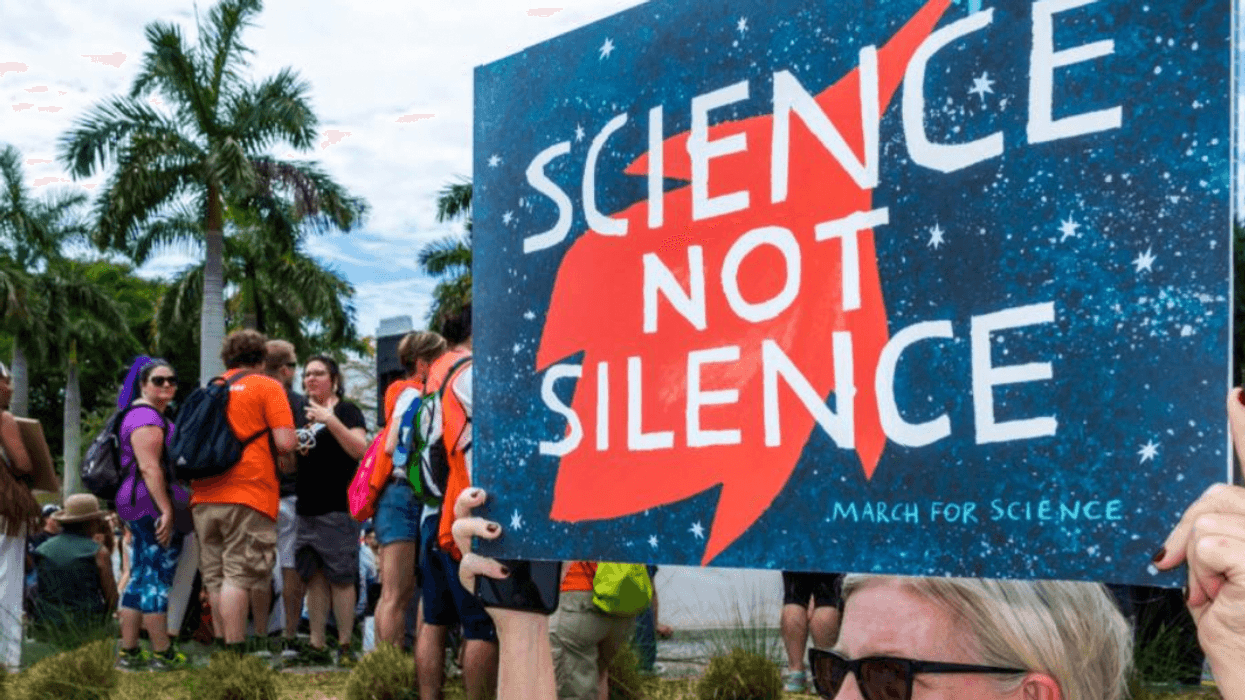
A Trump victory, the Nobel winners said, would "jeopardize any advancements in our standards of living, slow the progress of science and technology, and impede our responses to climate change."
Saying that the upcoming U.S. presidential election could be the most important ever for the future of science, a group of 82 Nobel Prize winners in medicine, physics, chemistry, and economics signed an open letter endorsing Vice President Kamala Harris and warning against allowing former President Donald Trump to return to the Oval Office.
The letter, obtained by The New York Times on Thursday, credits advances in science and technology with "enormous increases in living standards and life expectancies over the past two centuries" and expresses concern that Trump could threaten that progress.
"This is the most consequential presidential election in a long time, perhaps ever, for the future of science and the United States," the group of U.S. laureates wrote. "We, the undersigned, strongly support Harris."
The signatories, who include four who won the prize this month, first praise Harris for understanding both the importance of science and technology and that "maintaining America's leadership in these fields requires budgetary support from the federal government, independent universities, and international collaboration."
They also contrasted the two candidates' approach to immigration.
"Harris also recognizes the key role that immigrants have always played in the advancement of science," they wrote.
They then warned of what a second Trump presidency might entail.
"Should Donald Trump win the presidential election, he would undermine future U.S. leadership on these and other fronts, as well as jeopardize any advancements in our standards of living, slow the progress of science and technology, and impede our responses to climate change," they wrote.
"I hope it's a wake-up call for people."
Project 2025, the road map for a second Trump term, contains several anti-science agenda items such as plans get rid of the National Oceanic and Atmospheric Administration.
Trump also displayed great hostility to science during his first term. He withdrew the U.S. from the Paris climate agreement and rolled back 125 climate and environmental regulations. During the Covid-19 pandemic, he floated false cures such as exposure to ultraviolet light and injecting disinfectants. And he proposed a budget that would have dramatically slashed funding for health and science agencies such as the Centers for Disease Control and Prevention, the Environmental Protection Agency, and the National Science Foundation.
It was partly these budget cuts, as well Trump's "anti-science" and "anti-university" view, that motivated Joseph Stiglitz, who won the Nobel Memorial Prize in Economic Sciences in 2001, to draft Thursday's letter, he told the Times.
While Stiglitz said scientists usually "like to stick to their knitting," in this case "they've recognized this is a moment where you can't be silent."
"I hope it's a wake-up call for people," Stiglitz told the Times. "A consequence of this election is the really profound impact that his agenda has on science and technology."
Stiglitz also drafted another letter, signed by 23 U.S. Nobel Prize winners in economics, endorsing Harris' economic vision over Trump's.
"While each of us has different views on the particulars of various economic policies, we believe that, overall, Harris' economic agenda will improve our nation's health, investment, sustainability, resilience, employment opportunities, and fairness and be vastly superior to the counterproductive economic agenda of Donald Trump," the Nobel economists wrote.
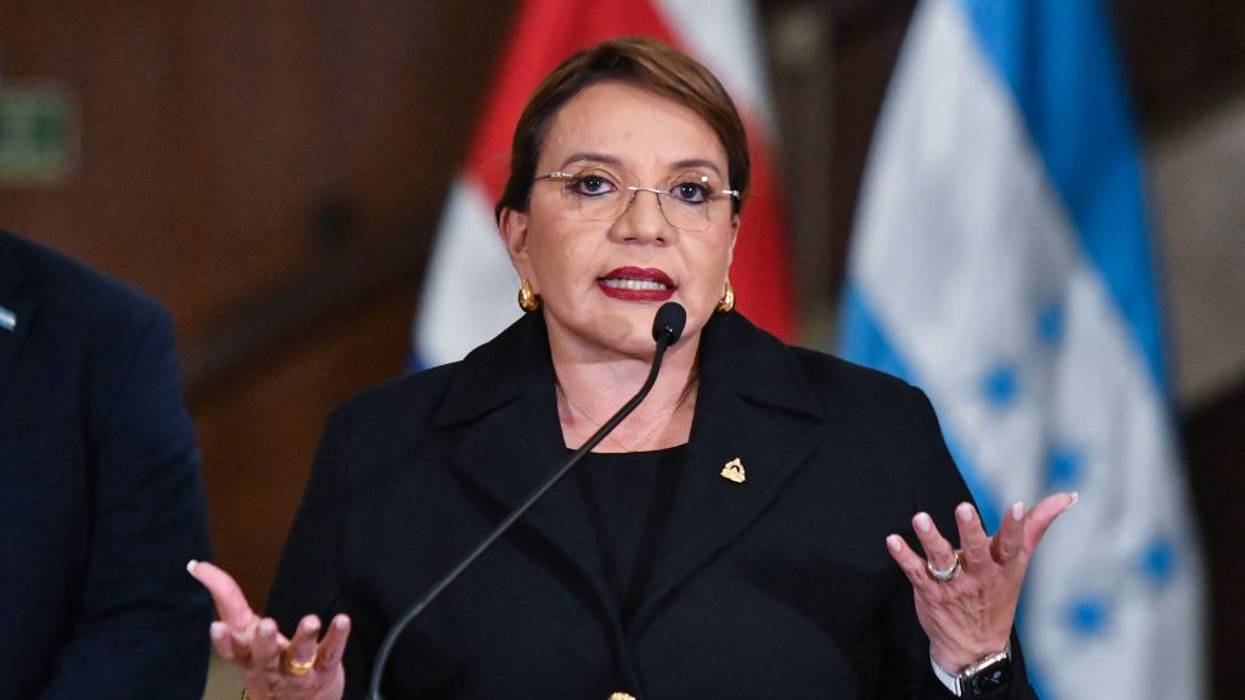
"Such a law has implications far beyond Honduras' borders, setting an example of how states can assert sovereignty through taking action against tax injustice individually and collectively," 85 leading economists wrote.
Eighty five progressive economists from around the world on Wednesday issued a statement in support of a tax reform being considered in Honduras, arguing that it could be a model for other Global South countries, as it would tighten tax law for rich people and corporations while preventing the country from becoming a tax haven.
The Tax Justice Law, first proposed by the administration of leftist President Xiomara Castro in March 2023, has remained stuck in parliament due to opposition from conservative, pro-business forces in Honduras, one of the poorest and most unequal countries in the Western Hemisphere.
The proposed reforms include closing corporate tax loopholes; taxing companies' global profits, not just national profits; ending bank secrecy; and holding beneficial owners liable for their taxes. The law wouldn't create new taxes or raise current rates.
The 85 economists, including Joseph Stiglitz, Gabriel Zucman, Jeffrey Sachs, Ann Pettifor, and Yanis Varoufakis, published the statement in Progressive International, a left-wing network establish in 2020. They cited estimates that the country had lost about $20 billion in tax revenues between 2010 and 2023 due to tax loopholes—more than the entire $16.6 billion debt that the country faces, at crippling interest rates.
TEGUCIGALPA, Honduras 🇭🇳 — 85 of the world's leading economists, incl. @JosephEStiglitz, @Jayati1609, @JoseA_Ocampo, @AnnPettifor, @gabriel_zucman and @yanisvaroufakis, endorse the @PartidoLibre Tax Justice Law, "setting an example" for tax policy worldwide. Read the letter ⬇️ pic.twitter.com/9ogi9SlWtf
— Progressive International (@ProgIntl) July 31, 2024
Castro was elected in late 2021 and took office in January 2022 with an "inspiring agenda," but has faced opposition from conservative forces and the United States, according to Karen Spring, coordinator of the Honduras Solidarity Network.
Castro's husband Manuel Zelaya, also a leftist, led the country from 2006 until 2009 but was ousted in a coup, and the country descended into chaos in the 2010s, with drug gangs dominant and the government mired in corruption. The Intercept has reported that the U.S. may have encouraged the 2009 coup.
In 2022, Castro and the National Congress of Honduras reversed a conservative initiative to establish special economic zones, most notably one on the island of Roatán. However, Honduras Próspera, a U.S. company backed by billionaire libertarian Peter Thiel and others, has sued the government for $11 billion over the reversal, using the investor-state dispute settlement (ISDS) system that allows multinationals to sue nations that institute new laws that affect their profits and have the cases heard by private tribunals.
U.S. Sen. Elizabeth Warren (D-Mass.) and other progressive lawmakers cited the Honduras Próspera case when pushing to abolish the ISDS system last year.
As with Castro's efforts on special economic zones, her tax reforms face hurdles.
"Big capital and the media ecosystem close to it have launched a smear campaign against the Tax Justice Law," Ojalá, a digital nonprofit magazine based in Mexico, reported last year.
Every major union organization in Honduras supports the proposed law, a union leader told Ojalá. And the proposal has now gained international attention. Last week, the South Centre, a research institute based in Geneva, issued a report in favor of the law, calling it "timely and welcome," and arguing that it's in keeping with the global minimum tax agreement made by 137 countries in 2021, whose implementation is ongoing.
Similarly, the group of economists on Wednesday wrote that Honduras was "on the path to being labeled a tax haven" but could "turn the page" with the passage of the Tax Justice Law, which would "establish a fairer and more robust system of taxation and incentives that will provide a sounder footing for Honduran development."
The economists concluded that "such a law has implications far beyond Honduras' borders, setting an example of how states can assert sovereignty through taking action against tax injustice individually and collectively."

"These youth have been politically targeted and persecuted, for over eight years, as the enormous power and machine of the Department of Justice singles them out among tens of thousands of other plaintiffs."
As the Biden administration seeks to derail a historic youth-led climate lawsuit against the U.S. government, plaintiffs in the suit—some of them now in their mid-to-late 20s—on Thursday moved to block the Department of Justice from further delaying the case.
Plaintiffs in Juliana v. United States filed a challenge to the Biden administration's bid for a stay in the case, calling the Justice Department's latest petition for a writ of mandamus "nothing short of shocking."
The DOJ's Justice Manual "provides that a writ of mandamus is an 'extraordinary remedy, which should only be used in exceptional circumstances of peculiar emergency or public importance,' the plaintiffs' filing notes. "The only emergency in this case is the climate emergency that defendants created and the Department of Justice prolongs with further delays."
"The true irreparable harm is the approximate cost of climate disasters or other climate economic harm since this case began and even since the first trial in this case was stopped in October 2018."
Nobel Prize-winning economist Joseph Stiglitz—a longtime backer of the plaintiffs—filed a declaration supporting their motion. Lambasting the DOJ's claim that the agency is "irreparably harmed" by having to dedicate human and financial resources to the trial, Stiglitz wrote that "to suggest the harm to children's health and homes and constitutional rights is worth less than the money the government has to spend to litigate a case is to suggest every case could be stayed only because it cost taxpayer dollars to litigate."
"The true irreparable harm is the approximate cost of climate disasters or other climate economic harm since this case began and even since the first trial in this case was stopped in October 2018 and through the end of 2023, along with any projections of the range of harm going forward," Stiglitz added, "as well as the amount the U.S. has spent (and continues to spend) subsidizing the fossil fuel industry."
Originally filed in 2015 when the plaintiffs were between 8 and 19 years old, Juliana v. United States accuses the federal government of violating young people's constitutional rights to life, liberty, and property, and argues that its actions contributing to the planetary emergency constitute a failure to protect essential public trust resources.
The Obama, Trump, and Biden administrations have all worked to kill the case, delaying trial by years. In 2018, the U.S. Supreme Court stopped the case from going to trial days before it was set to begin. On December 29, U.S. District Court Judge Ann Aiken ruled that the plaintiffs could proceed to trial, which was set to begin January 19. However, on January 18 the DOJ said it would file for a writ of mandamus.
The incessant delays have been accompanied by what the plaintiffs describe as "the most aggressive and discriminatory legal tactics" used against them by the government.
As the plaintiffs' latest filing explains:
These youth have been politically targeted and persecuted, for over eight years, as the enormous power and machine of the Department of Justice singles them out among tens of thousands of other plaintiffs, in an effort to stop our nation's youth from taking the witness stand, when every court to review the Juliana plaintiffs' claims has said that there is life and death at stake, the survival of the nation is at stake, and there is merit to their constitutional claims. All they seek after trial is a declaratory judgment of their rights and the government's wrongs, just as the students in Brown v. Board of Education did 70 years ago.
As Stiglitz concluded in his motion, "The federal government has expended taxpayer money taking the case up on appeal, rather
than allowing it to go to trial."
"The amount of time and money spent over the past six years seeking early appeals and mandamus has been large," he added. "We have already laid out the magnitude of the damages to the youth plaintiffs, their generation, and the public. In economic terms, and for the health of the nation, the balancing of potential harms is clear: This case should finally be decided at trial without further delay."

"The ISDS regime is undemocratic: It was created for and by powerful, well-organized corporations, and has served their interests almost exclusively," said one critic.
More than 200 civil society groups on Thursday called on the Biden administration to protect climate, health, and other public interest policies across the Americas by dismantling a trade regime that the United States spearheaded nearly three decades ago—giving corporations broad authority to sue governments if they claim their profit margins are harmed by public programs.
Public Citizen, Sierra Club, and the AFL-CIO led hundreds of organizations in sending the letter to President Joe Biden, urging him to take legal action to terminate the Investor-State Dispute Settlement (ISDS) system within the Americas Partnership for Economic Prosperity (APEP), a trade framework between the U.S. and 11 countries in Central and South America and the Caribbean.
As Lori Wallach and Daniel Rangel, the director and research director of ReThink Trade, explained in a column in July, "ISDS elevates multinational corporations and foreign investors to equal status with national governments."
Under 43 ISDS-enforced agreements among the 12 APEP countries, corporations have launched more than 230 legal attacks, including a demand for $15 billion from the U.S. government—funded by taxpayers—by the Canadian firm that proposed the Keystone XL pipeline.
"The ISDS regime is undemocratic: It was created for and by powerful, well-organized corporations, and has served their interests almost exclusively," said Mario Osorio, senior fellow at the Center on Inclusive Trade and Development at Georgetown University Law Center. "It also poses a real threat to the world's climate action efforts, having already been used against them."
There are currently 73 pending ISDS cases totaling $47 billion in corporate claims, the civil society groups noted on Thursday.
"ISDS claims are often in the millions or billions of dollars," the groups wrote in the letter. "An unaccountable three-person tribunal decides the fate of each case. The tribunal can even decide a company should be paid for the 'expected future profits' it may have earned in the absence of the government policy in question. The ISDS regime has been especially detrimental to public health, climate and environmental protections, Indigenous land rights, financial regulations, and democratic sovereignty."
The system, said Cathy Feingold, international director at the AFL-CIO, "creates an unfair playing field that prioritizes the needs of corporations over those of workers, their families, and the environment."
"ISDS should be removed from our trade framework and replaced with policies that promote good jobs, strong communities, and a sustainable environment," Feingold added.
The organizations acknowledged that Biden has thus far followed through on a campaign promise to not pursue new trade and investment agreements with ISDS, but as Sen. Elizabeth Warren (D-Mass.) said in a statement supporting a report on the system released last week by ReThink Trade, "future agreements are only part of the battle."
"The United States is still locked into many preexisting agreements that allow corporations to weaponize ISDS when we do something that they don't like. I'm going to keep on fighting until every last one of our trade agreements is ISDS-free," said Warren, who has previously criticized the scheme.
The senator also sent a letter to Biden this week, along with more than 40 colleagues, calling on him to remove ISDS from existing APEP agreements.
Thursday's letter came a day before Biden was scheduled to host the heads of state of Latin American countries for an APEP meeting.
The report by ReThink Trade detailed legal mechanisms that the U.S. and its APEP partners can use to terminate ISDS liability, including:
Joseph Stiglitz, economics professor at Columbia University, noted that the call to exit ISDS is "especially relevant" because Biden launched APEP partially with the aim of "fighting climate disaster and economic inequality, improving public health, [and] strengthening democracy."
"To achieve any of these goals, ISDS has to go. It is a direct hindrance," said Stiglitz. "Launching this as a group exit would be very helpful in protecting our neighbors from one of the factors that leads some countries not to exit. That is the fear, not grounded actually with much evidence but still it's a fear, that investors will see an individual country leaving the system as a signal of some sort that they're not committed to good investment. When a bloc of countries exit together, there's safety in numbers."
The civil society groups noted that "the tide is turning" against ISDS in other countries, with 10 European countries abandoning the Energy Charter Treaty due to its ISDS rights for fossil fuel companies, and countries such as South Africa, Indonesia, and India working to exit similar agreements.
"Continued movement away from ISDS by the United States," said the groups, "would be a powerful signal to other governments considering taking similar action."

If the world doesn’t continue moving boldly forward on confronting corporate and billionaire tax evasion, it would mean more than inadequate revenue for confronting global inequalities, pandemics, and climate change.
How can we comprehend—truly comprehend—how concentrated the wealth of our world has become? We have some choices.
We can choose to see the world of concentrated wealth through the eyes of those who directly serve the richest among us, people like the veteran Australian sea captain Brendan O’Shannassy, the author of Superyacht Captain: Life and Leadership in the World’s Most Incredible Industry.
Floating palaces like the $500-million superyacht of mega-billionaire Jeff Bezos can routinely run their deep-pocketed owners over $130,000—per day—for basic upkeep. But these same superyachts, O’Shannassy believes, still constitute the finest investment individuals of immense wealth can make. They offer their deep-pocketed owners both security and relaxation, with no whiff of paparazzi.
Our world’s richest now enjoy “effective tax rates” that annually cost them no more than a mere 0.5% of their personal wealth.
Or we could choose to go in a starkly different direction to better comprehend the wealth of our wealthiest. We could look at these wealthy through the eyes of those who measure just how concentrated our world’s wealth has become. Two just-released reports help us do exactly that.
The first comes from researchers at the Federal Reserve. Every three years, these analysts release a deep dive into the distribution of America’s income and wealth, a copiously detailed snapshot of American household “balance sheets, pensions, income, and demographic characteristics.”
The latest Fed Survey of Consumer Finances—released last week—covers the changes in American family finances between 2019 and 2022.
Over this three-year span, after taking inflation into account, typical American family incomes inched up what the Fed describes as “a relatively modest 3%.” But the incomes of high-income households, the Fed points out, rose at a much more rapid rate, registering “one of the largest three-year changes” that Fed researchers have ever encountered.
On the net-worth front, ordinary households taken as a whole did register gains, the Fed notes, that “far outpaced inflation” between 2019 and 2022, gains that mostly reflect sizeable jumps in the value of owner-occupied houses. But these same sizeable jumps also put home ownership increasingly out of the reach of families seeking to become—for the first time—homeowners.
By 2022, the value of America’s most typical homes was running 4.6 times our nation’s most typical family incomes, an all-time record gap. Financial advisors usually recommend that families should spend no more than three times their annual income for a home of their own.
Other analysts outside the Fed orbit have crunched the new Survey of Consumer Finances raw data to paint a plainer picture of how much wider the wealth gap in the United States has grown since the Federal Reserve began publishing Survey of Consumer Finance reports over three decades ago.
Over those decades, a DQYDJ analysis points out, the inflation-adjusted net worth of the typical American household has gone from $108,501 in 1989 to $192,084 in 2022.
The net worth of the nation’s richest 1% over that same span? That wealth has gone, again after adjusting for inflation, from $5,351,332 in 1989 to $13,666,778 some 33 years later.
Another analysis, from Matt Bruenig at the People’s Policy Project, has used the new Fed data to calculate the share of America’s wealth held by each decile—each 10%—of the nation’s households.
“Overall,” Bruenig concludes, America’s “wealth inequality remains quite high,” with the top 10% of households owning a whopping 73% of the nation’s wealth and the bottom half of U.S. households holding “just 2% of the nation’s wealth.”
The Fed data, analyses like Bruenig’s show, can help us gain a much-needed sense of just how unequal the United States has become. But the Fed’s Survey of Consumer Finances can only take us so far. The Survey’s data shine no spotlight on the richest of our rich and cover only pre-tax income.
For how the super rich make out after taxes, we have to look elsewhere—and we now have an exceedingly revealing place to look. The E.U. Tax Observatory, a research effort begun in 2021 with backing from the European Union and a variety of academic institutions, has just released a blockbuster new study entitled Global Tax Evasion Report 2024, “an unprecedented international research collaboration building on the work of more than 100 researchers globally.”
Our world’s richest, this new study details, now enjoy “effective tax rates” that annually cost them no more than a mere 0.5% of their personal wealth.
Over the last decade, the E.U. Tax Observatory study notes, a number of individual governments have agreed on major initiatives to counter international tax evasion. Since 2017, for instance, banks have been “automatically” exchanging information helpful in identifying tax evaders. And over 140 nations agreed in 2021 to set an annual 15% “global minimum tax” on multinational corporations.
But assorted loopholes and “carve-outs” have undermined these two reforms. Multinationals last year shifted some $1 trillion of their treasure into tax havens, the equivalent of more than a third of the profits multinationals booked in 2022 outside their headquarters country. And many offshore financial institutions, the new E.U. Tax Observatory report adds, are dragging their feet on deposit disclosure.
Even so, new exchanges of banking data have offshore tax evasion down by a factor of three, and only 25% of financial wealth held “offshore” is currently evading taxes. And the fledgling corporate minimum tax put in place two years ago has generated considerable useful data of its own.
The boldest proposal of all: a call for a new “global minimum tax” on the world’s billionaires equal to 2% of their net worth.
How can the nations of the world go beyond these two initial reform efforts? The Global Tax Evasion Report 2024 identifies a half-dozen specific steps the global community can take “to reconcile globalization with tax justice.”
Three of these recommendations highlight common-sense proposals that ought to be able to gain broad international support. One recommendation, for instance, calls for “the creation of a Global Asset Registry to better fight tax evasion.”
The other three recommendations on the E.U. Tax Observatory’s reform agenda seem certain to face some serious political pushback—from the fans of grand fortune.
One of these three bold proposals calls for new mechanisms that would enable the taxing of wealthy people “who have been long-term residents in a country and choose to move to a low-tax country.” Another would “reform the international agreement on minimum corporate taxation to implement a rate of 25% and remove the loopholes in it.”
The boldest proposal of all: a call for a new “global minimum tax” on the world’s billionaires equal to 2% of their net worth.
Moving forward on proposals like these, the E.U. Tax Observatory report stresses, wouldn’t immediately require thumbs-up from large numbers of nations. Unilateral action by small groups of nations “can pave the way” eventually for more “nearly global agreements.”
The reforms the E.U. Tax Observatory is advancing, the Nobel Prize-winning economist Joseph Stiglitz adds in his introduction to the Global Tax Evasion Report 2024, “may seem impossible to attain, but so was undermining bank secrecy and introducing a minimum tax on corporations just a few years ago.”
And if the world doesn’t continue moving boldly forward on confronting corporate and billionaire tax evasion, what then? Failure on that front, Stiglitz argues, would mean more than inadequate revenue for confronting global inequalities, pandemics, and climate change.
“If citizens don’t believe that everyone is paying their fair share of taxes—and especially if they see the rich and rich corporations not paying their fair share—then they will begin to reject taxation,” Stiglitz projects. “Why should they hand over their hard-earned money when the wealthy don’t?”
In effect, Stiglitz concludes, the “glaring tax disparity” that our richest now enjoy “undermines the proper functioning of our democracy.”
We either fix that disparity or suffer the catastrophic consequences.
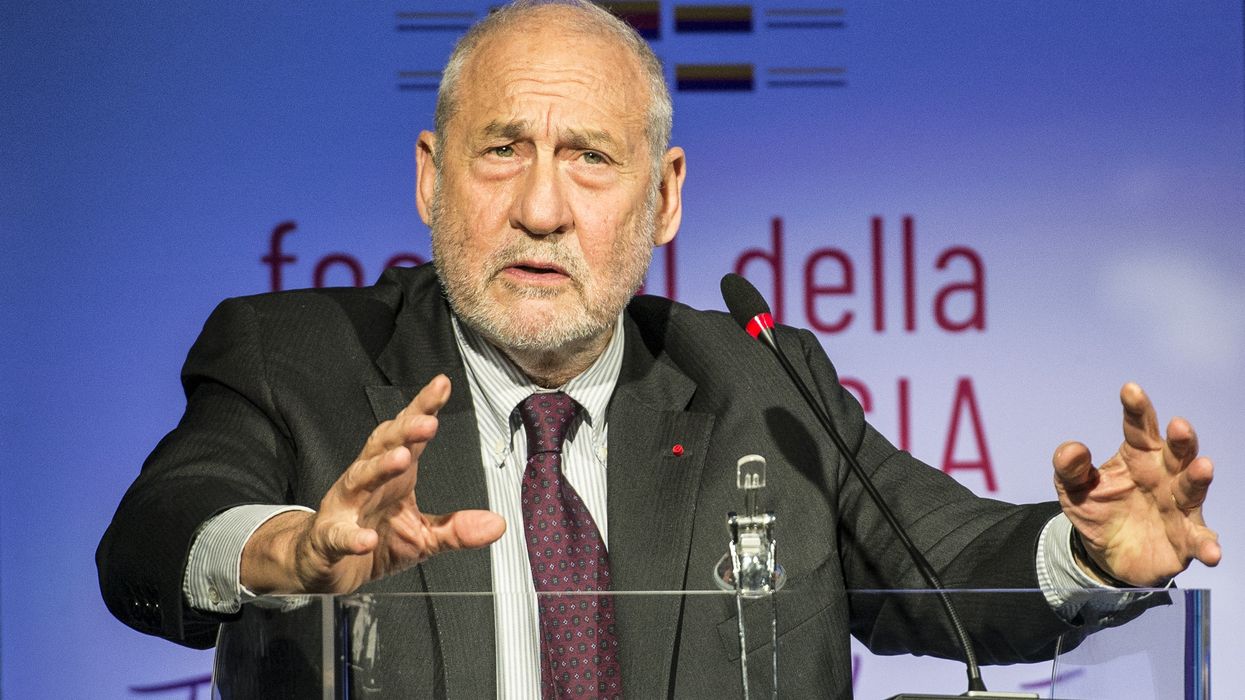
"As the scale of climate change impresses itself more and more on us, we are going to need bolder things," Stiglitz said at the IMF and World Bank's annual meeting in Morocco.
The International Monetary Fund, or IMF, should give poorer nations $300 billion a year to respond to the climate emergency, Nobel Prize-winning economist Joseph Stiglitz said.
Stiglitz outlined his recommendation in an interview with The Guardian as he attended the fund's annual meeting with the World Bank in Marrakesh, Morocco, which runs from Monday, October 9 to Sunday, October 15.
"As the scale of climate change impresses itself more and more on us, we are going to need bolder things," Stiglitz said.
"When the time comes and we are frying and somebody says: 'How do we get out of the frying pan?,' this [annual SDR allocations] is one way of doing so."
In his call, Stiglitz joined the push for the IMF to release more Special Drawing Rights (SDRs), a reserve asset that can be exchanged for cash. Wealthy nations also have the option of placing their SDRs in a fund for poorer countries.
"Basically, it is printing money," Stiglitz said. "It wouldn't be inflationary but it would be transformative."
Stiglitz' remarks came about a week after nearly 60 U.S. Democratic lawmakers sent a letter to President Joe Biden and Treasury Secretary Janet Yellen asking them to support a new allocation of SDRs. The IMF issued $650 billion in SDRs in 2021 to help with the recovery from the Covid-19 pandemic, and the legislators wanted it to issue the same amount to help nations address the climate crisis, war, and future pandemics.
Stiglitz's call is even bolder at $300 billion a year, because the lawmakers limited themselves to an amount that the IMF could approve without a vote from Congress. While Stiglitz acknowledged his plan was ambitious and unlikely to pass through the current U.S. Congress, it was worth pushing for given the urgency of the moment.
"When the time comes and we are frying and somebody says: 'How do we get out of the frying pan?,' this [annual SDR allocations] is one way of doing so," he told The Guardian.
Stiglitz said the money should be used to help poorer nations fund their equivalent to the U.S. Inflation Reduction Act—which invested $370 billion in renewable energy. But it's impossible for less wealthy countries to make that kind of investment on their own, Stiglitz said.
"Developing countries can't do it on any scale," he told The Guardian. "Unless developing countries and emerging markets reduce their emissions, no matter what pieties we do in the U.S. and Europe, we will get global warming. The rhetoric is about doing something about climate change and then rather than getting onboard [the people] you most need to get onboard, you alienate them."
In a report published Thursday, the Center for Economic and Policy Research (CEPR) agreed that many poorer nations are not in the financial position to take ambitious climate action, and proposed more SDRs as one potential remedy. What's holding them back, CEPR said, was a large debt burden: Almost 80 low-to-middle-income countries face debt distress, and three-fourths of these are especially vulnerable to climate impacts. This creates a "vicious cycle" in which countries struggle to both service debt and respond to extreme weather events, leaving them unable to either get out of debt or recover from disasters and invest in the future.
"Most of the world is going through what many have termed a 'polycrisis,' facing down high levels of external debt, combined with interlocking crises of food insecurity, fluctuating energy prices, impacts of war, and of course, the climate crisis," report coauthor Ivana Vasic Lalovic said in a statement. "Countries are limited in what they can do to respond to the climate crisis, though, when they are forced to divert so much of their resources toward servicing their debts."
The report, titled The Growing Debt Burdens of Global South Countries: Standing in the Way of Climate and Development Goals, called on major financial institutions to address the situation by updating debt resolution frameworks, providing debt relief, financing through grants instead of loans, and allocating more SDRs.
"The international finance community needs to accept that the current dynamic, which prioritizes debt service–no matter how burdensome–over human needs and the urgency of climate crisis preparedness and response is unsustainable," coauthor Lara Merling said in a statement. "They need to step forward with solutions. Millions of lives may depend on it."