SUBSCRIBE TO OUR FREE NEWSLETTER
Daily news & progressive opinion—funded by the people, not the corporations—delivered straight to your inbox.
5
#000000
#FFFFFF
To donate by check, phone, or other method, see our More Ways to Give page.
Daily news & progressive opinion—funded by the people, not the corporations—delivered straight to your inbox.
"I’m running again because St. Louis deserves leadership that doesn’t wait for permission, doesn’t answer to wealthy donors, and doesn’t hide when things get tough."
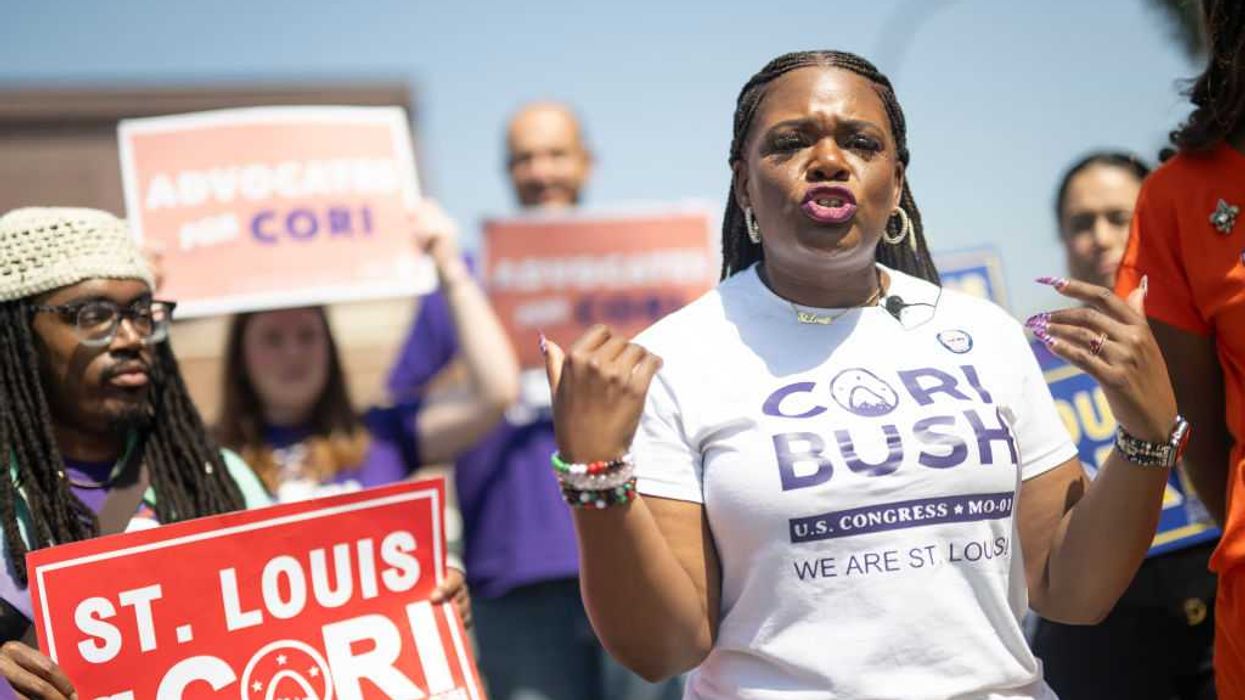
Former Democratic Congresswoman Cori Bush is running again in Missouri to reclaim the US House seat from which she was ousted last year amid a tsunami of campaign spending against her and other progressives by the Israel lobby.
"St. Louis deserves a leader who is built different. That’s why I’m running to represent Missouri’s 1st District in Congress," Bush announced Friday on social media. "We need a fighter who will lower costs, protect our communities, and make life fairer. I’ll be that fighter."
“I ran for Congress to change things for regular people,” Bush says in her first 2026 campaign ad. “I’m running again because St. Louis deserves leadership that doesn’t wait for permission, doesn’t answer to wealthy donors, and doesn’t hide when things get tough.”
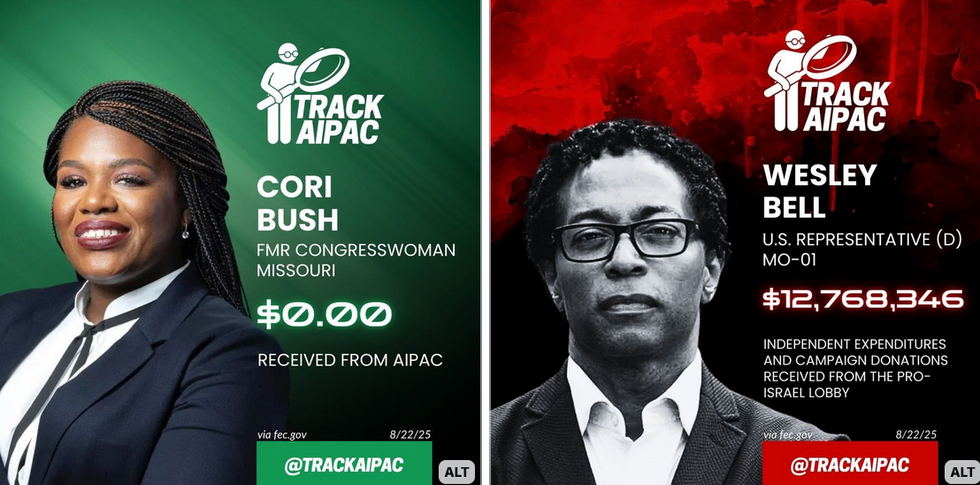
Bush—a two-term member of the so-called "Squad" of progressive House lawmakers—was defeated in her district's August 2024 Democratic primary by current Rep. Wesley Bell (D-Mo.), a former county prosecutor.
Nearly two-thirds of Bell's campaign funding came from one source: The American Israel Public Affairs Committee's independent expenditures arm and conduit for dark money, the United Democracy Project, which allocated more than $100 million toward defeating candidates AIPAC deemed insufficiently supportive of Israel.
UDP also spent heavily last year to defeat then-Congressman Jamaal Bowman (D-NY) and to help thwart the Democratic congressional candidacy of Susheela Jayapal in Oregon and former Republican Congressman John Hostettler's comeback bid in Indiana.
AIPAC's largesse was stoked by Bush's steadfast advocacy for Palestine and staunch opposition to Israel's genocidal war on Gaza. It was Bush who, just over a week into Israel's genocidal retaliation for the Hamas-led October 7 attack, introduced the first House ceasefire resolution.
Bush was also one of the first lawmakers to call Israel's annihilation and starvation of Gaza a genocide—as countless observers have since done, including numerous members of Congress, national governments and leaders, jurists, Holocaust scholars, and United Nations experts.
However, it was championing the needs and values of her overwhelmingly working-class community that propelled Bush—who rose to prominence during the Ferguson, Missouri protests against the police killing of unarmed Black man Michael Brown—to her 2020 Democratic primary victory over an opponent whose family had held the 1st Congressional District seat for half a century.
For example, during the Covid-19 pandemic, Bush led a five-day sit-in outside Congress, where she slept rough with other Squad members and persuaded the Biden administration to extend a temporary eviction moratorium. She also secured hundreds of millions of dollars in economic recovery funds via the American Rescue Plan signed by former President Joe Biden in 2021.
While Bell dismissed Bush's comeback bid by contending that "the headlines and controversies of the past aren’t what we need," progressives cheered her reentry into the political arena.
The political action group Our Revolution quickly endorsed Bush, as it had previously done.
BIG NEWS: Cori Bush could officially announced her run for Congress 👀🔥The nurse. The activist. The Congresswoman who camped on the Capitol steps to stop evictions. The one who never backed down. 👇 🧵
[image or embed]
— Our Revolution (@our-revolution.bsky.social) October 3, 2025 at 7:51 AM
"Cori Bush embodies the values of our movement—she is a nurse, a pastor, and an activist who rose up from Ferguson to fight for working families in Congress,” Our Revolution executive director Joseph Geevarghese said in a statement. “She has been a fearless advocate for Medicare for All, student debt cancellation, housing rights, climate justice, and an end to US military support of Israel."
"That’s why oligarchs and dark money super PACs spent millions to buy this seat and silence her voice," he added. "But they cannot silence the people she represents, and Our Revolution is proud to stand with her as she takes back the people’s seat in Missouri’s 1st.”
"They are leveraging this platform to share untruths about vaccines to scare people," said one doctor Kennedy fired from the panel.
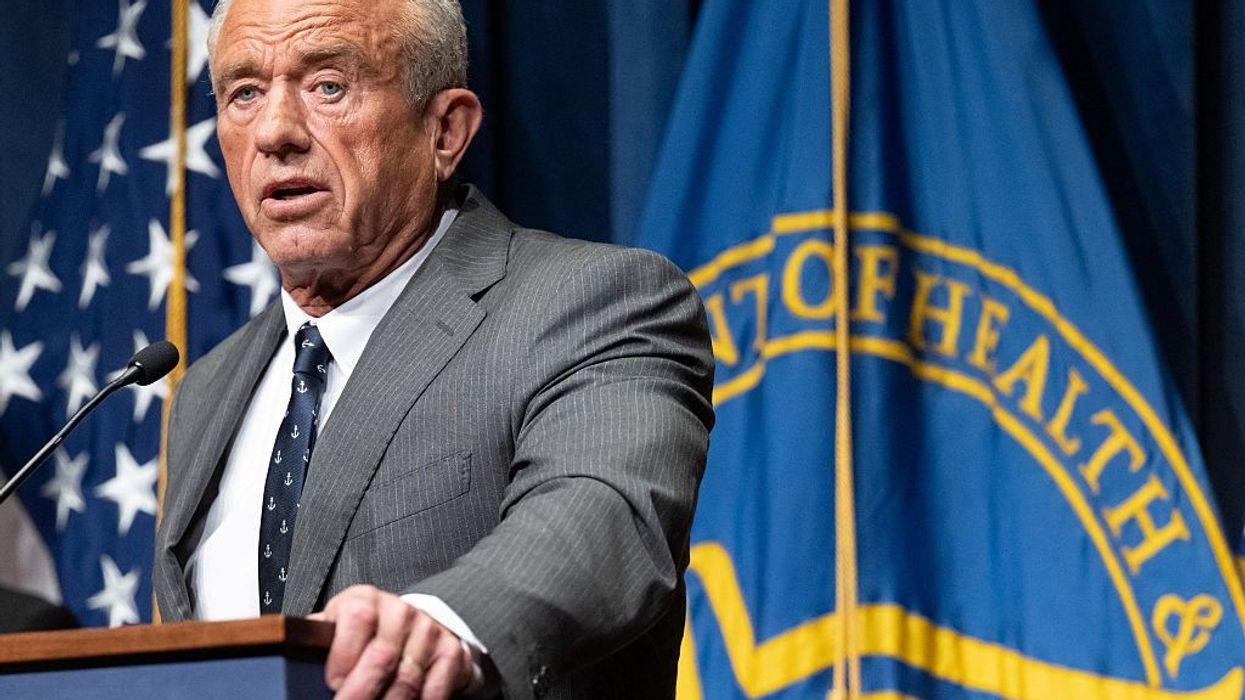
Health officials working under Secretary of Health and Human Services Robert F. Kennedy Jr. may seek to restrict access to the Covid-19 vaccine for people under 75 years old.
The Washington Post reported Friday that the officials plan to justify the move by citing reports from an unverified database to make the claim that the shots caused the deaths of 25 children.
The reports come from the Vaccine Adverse Event Reporting System (VAERS), a federal database that allows the public to submit reports of negative reactions to vaccines. As the Post explains, VAERS "contains unverified reports of side effects or bad experiences with vaccines submitted by anyone, including patients, doctors, pharmacists, or even someone who sees a report on social media."
As one publicly maintained database of "Batshit Crazy VAERS Adverse Events" found, users have reported deaths and injuries resulting from gunshot wounds, malaria, drug overdoses, and countless other unrelated causes as possible cases of vaccine injury.
As Beth Mole wrote for ARS Technica, "The reports are completely unverified upon submission, and the Centers for Disease Control and Prevention staff follow up on serious reports to try to substantiate claims and assess if they were actually caused by a vaccine. They rarely are."
Nevertheless, HHS officials plan to use these VAERS reports on pediatric deaths in a presentation to the CDC's Advisory Committee on Immunization Practices (ACIP) next week as the panel considers revising federal vaccine guidelines.
One person familiar with the matter told the Post that HHS officials attempted to interview some of the families who claimed their child died from the vaccine, but it is unclear how many were consulted and what other information was used to verify their claims.
In June, Kennedy purged that panel of many top vaccine experts, replacing them with prominent anti-vaccine activists, after previously promising during his confirmation hearing to keep the panel intact.
The Food and Drug Administration under Kennedy has already limited access to the Covid-19 vaccine. Last month, it authorized the vaccines only for those 65 and over who are known to be at risk of serious illness from Covid-19 infections.
While the vaccine is technically available to others, the updated guidance has created significant barriers, such as the potential requirement of a doctor's prescription and out-of-pocket payment, making it much harder for many to receive the shot.
The Post reports that ACIP is considering restricting access to the vaccination further, by recommending it only for those older than 75. It is weighing multiple options for those 74 and younger—potentially requiring them to consult with their doctor first, or not recommending it at all unless they have a preexisting condition.
Prior to the wide availability of Covid-19 vaccinations beginning in 2021, the illness killed over 350,000 people in the US. And while the danger of death from Covid-19 does increase with age, CDC data shows that from 2020 to 2023, nearly 47% of the over 1.1 million deaths from the illness occurred in people under 75.
According to the World Health Organization, the US reported 822 deaths from Covid over a 28-day period in July and August this year, vastly more deaths than anywhere else in the world. CDC data reported to ACIP in June shows that Covid deaths were lower among all age groups—including children—who received the mRNA vaccine.
Nicole Brewer, one of the vaccine advisers eliminated by Kennedy, lamented that Kennedy and his new appointees are ignoring the dangers of Covid-19 while amplifying the comparatively much lower risk posed by vaccines.
"They are leveraging this platform to share untruths about vaccines to scare people," she told the Post. “The U.S. government is now in the business of vaccine misinformation.”
ACIP is also reportedly mulling the rollback of guidelines for other childhood vaccines for deadly diseases like measles, Hepatitis B, and Respiratory Syncytial Virus (RSV).
While ACIP's guidelines are not legally binding, the Post writes that its meeting next week "is critical because the recommendations determine whether insurers must pay for the immunizations, pharmacies can administer them, and doctors are willing to offer them."
"If you haven't gotten your updated Covid vaccine by now, book an appointment fast before next week's ACIP meeting," warned Dr. David Gorski, the editor of the blog Science-Based Medicine. "After that, you might not be able to get one."
Government needs to deliver for everyone, not just the wealthy. Local government can lead the way.
We all want to live in healthy, safe, and thriving communities. We expect our tax dollars to serve the common good, and we want to trust that government represents our interests. But today, the federal government falls far short of this goal; only 22% of Americans trust it.
Local governments, in many places but not all, continue to deliver for their residents. They are leading the fight against climate change without federal support. They took charge in their immediate and ongoing responses to Covid-19. And they continue to resist, creating sanctuary cities to protect immigrant communities threatened during the first Trump administration. Today, local governments prepare for a difficult future shaped by the policies of the current Trump administration, including the unnecessary deployment of federal troops to Los Angeles and Washington, DC.
Yet the work of local governments has never been more difficult. Americans continue to lose trust in government, and as conditions worsen, faith in government erodes further. This decline is not accidental—it stems from decades of funding cuts, deregulation, misinformation, voter suppression, and government missteps. It feels like the biggest beneficiaries of government today are the wealthy and large corporations, which continue to make record profits despite recessions, pandemics, and climate change.
The lack of trust in government and the concentration of wealth and power in a small elite are connected. A deliberate effort to undermine the government’s ability to deliver for all feeds a downward spiral of distrust. Consider how US President Donald Trump empowered Elon Musk to lead mass layoffs and weaken or shut down critical agencies, undermining services people depend on. This move fuels privatization, deregulation, wealth concentration, and further distrust in government.
So, where do we go from here? For government to ensure shared prosperity, we must first rebuild trust. That requires government to deliver for everyone, not just the wealthy.
The long road to rebuilding trust must start with rejecting the fearmongering and scarcity mentality that has left us isolated and unhappy. We must demand better results from both government and our economic system. We need a system rooted in mutual care and shared prosperity.
This transformation begins from the ground up; it depends on each of us cultivating a culture of belonging and connection in our daily lives. I see this willingness in the empathy and care people show for neighbors, the environment, and future generations. Government can correct course only if we engage with it and demand more—because we are committed to doing better ourselves. Over time, civic participation can rebuild trust in government—though not as it is, but as a transformed institution committed to nurturing relationships.
Local governments can create opportunities for residents to relate to each other better and forge stronger relationships. Because local government is closer to its constituents than state or federal agencies, it can offer more immediate opportunities for civic engagement and connection. I believe assigning local government the role of cultivating a sense of belonging is key to achieving shared economic prosperity and to overcoming the polarization that currently grips our communities.
Local governments can evolve by partnering with local leaders and civil society groups that—in many communities—are fulfilling key roles once held by local governments. By building true, trusting collaborations, governments can expand their capacity and impact, reshape how communities relate to public institutions, and restore trust and faith in their work.
When we share responsibility for our communities—when neighbors connect, participate, and help shape our governance—we push government to serve all of us better.
To be clear, local governments cannot create a culture of belonging alone. Many governments need to commit to a sustained process of reconciliation, especially with communities of color, to overcome their checkered past. As I write this essay, immigrant communities in Los Angeles and throughout the country are being terrorized by federal law enforcement agencies, often with the support of local law enforcement, separating families, traumatizing neighbors and neighborhoods, and severely eroding trust between the government and communities. There is no way around the fact that governments at each scale have inflicted harm on communities. Nor can we ignore the fact that government is how we organize how we live. What government looks like, and how it interacts with us, remains our choice—that is the essence of democracy.
Some might view the suggestion that governments should cultivate residents’ sense of connection and belonging as an example of “mandate creep.” But if not local government, then who is responsible for nurturing connections between neighbors and fostering the culture of our communities?
Consider the processes involved in governance—updating general plans, budgeting, making and implementing new laws. These processes have a tremendous impact on our lives, yet few people participate. What difference would it make if more people were involved? If local governments had more resources and expertise to increase participation, could we achieve better governance? If local governments prioritized participation and equipped public servants to engage more residents directly, perhaps we would feel more satisfied—or at least better understand the decisions shaping our lives.
Local governments can also foster a culture of belonging by creating and maintaining spaces for people to meet and build community. Sidewalks, streets, parks, libraries, transit, community centers, and gardens—spaces that local governments oversee—constitute the public realm. While we often view these places as hard infrastructure, their potential to foster “soft infrastructure” such as civic relationships and human capital remains underdeveloped. What if governments designed public spaces to maximize connection? During the pandemic, they temporarily used infrastructure this way—through slow streets, free transit, health services in community centers, and redesigned parks. If it worked then, why not all the time?
Local governments can further strengthen communities through local culture and civic pride. Where we come from shapes our sense of belonging. Even in a transient, digital world, most people spend much of their lives in one place. Local culture—its history, art, celebrations, customs, and people—plays a big role in how we feel about our communities and can bind us together. I saw this in Berlin during the 48 Stunden Neukölln festival, where streets, shops, and homes displayed art for the public, turning the entire neighborhood into a vibrant gallery. People mingled, explored, and took pride in their community. We can use cultural programming to deepen civic pride and participation, tying culture more closely to governance.
Ultimately, rebuilding faith in government begins with rebuilding faith in each other. When we share responsibility for our communities—when neighbors connect, participate, and help shape our governance—we push government to serve all of us better. The journey to restore faith in government and the process of restoring our social bonds are inseparable. Only by working together can we create the thriving, healthy communities we all desire.
A health researcher for Public Citizen said Trump's interim CDC director has "no medical or public health background and extremist libertarian views."
After pushing out his own handpicked Centers for Disease Control and Prevention (CDC) director, infectious disease expert Susan Monarez, fueling a wave of outraged resignations this week, US President Donald Trump has appointed a loyal acolyte to replace her at Health and Human Services Secretary Robert F. Kennedy Jr.'s side.
On Thursday, the president tapped one of RFK's top aides as interim CDC director: biotech investor Jim O'Neill, a man with no medical experience but extensive experience profiting from healthcare while working at billionaire GOP megadonor Peter Thiel's venture capital firm, Mithril Capital.
Unlike his predecessor, whose ouster came as she tried to push back against RFK's anti-vaccine agenda, O'Neill fits snugly into the secretary's efforts to restrict access to the Covid-19 vaccine, and potentially ban it outright, as the Daily Beast reported earlier this week.
"A tech investor with no medical or public health background and extremist libertarian views, Jim O'Neill was unfit for the number two position at HHS and manifestly unqualified to lead the CDC," said Dr. Robert Steinbrook, director of Public Citizen's health research group, on Friday.
Just as Kennedy did during his confirmation hearings, O'Neill insisted he was "pro-vaccine," noting that he was "an adviser to a vaccine company." However, this is belied by his record on the subject.
He has championed unproven cures like ivermectin, hydroxychloroquine, and vitamin D supplements to protect against Covid-19, and has accused the CDC under the administration of former President Joe Biden of downplaying the vaccine's dangers while railing against mandates.
O'Neill has also praised Kennedy's response to the measles outbreak that swept across the US earlier this year, during which the secretary downplayed the severity and cast unfounded doubt on the effectiveness and safety of the measles vaccine that had virtually eradicated the disease before vaccination rates began to decline.
"Unlike Susan Monarez," Steinbrook said, "O'Neill is likely to rubber-stamp dangerous vaccine recommendations from HHS Secretary Kennedy's handpicked appointees to the Advisory Committee on Immunization Practices and obey orders to fire CDC public health experts with scientific integrity."
O'Neill melds medical crankery with a Thielite strain of anarcho-libertarianism. He has served on the board of the Seasteading Institute, an organization founded by Patri Friedman, the grandson of the right-wing economist Milton Friedman, who advocates for corporations like Apple and Google to form their own floating cities at sea, which would be governed as corporate "dictatorships" free from the constraints of democratic governance.
That anti-government ethos extends to his views on the healthcare system, which O'Neill says is flawed not because of the rampant profiteering of the private companies that run it, but because it is supposedly not "free market" enough.
In 2014, he advocated for the Food and Drug Administration (FDA) to begin approving drugs for the market without conducting clinical trials to determine their effectiveness. "Let people start using them, at their own risk," he argued, "Let's prove efficacy after they've been legalized."
He has also argued for the government to allow people to sell their own internal organs. This process often results in deteriorating health for the disproportionately poor people who partake.
While working at HHS under the administration of former President George W. Bush, O'Neill also opposed the FDA regulation of companies that use algorithms to perform laboratory tests.
At the time, he was focused on DNA testing products like 23andMe, but a report from the consumer watchdog group Public Citizen says that "a decade after he made this remark, it's clear how dangerous such a concept is," noting that "with the development and proliferation of artificial intelligence, algorithms are omnipresent in the practice of medicine, including in diagnostic tools, medical devices, AI assistants to doctors, and personalized medicine."
In addition to Thiel's ideology, he reportedly brings several conflicts of interest to the CDC director job from his time working at Thiel's venture capital firm.
Accountable.US reported Friday that O'Neill "took money from, helped incubate, or was otherwise linked to at least eight medical industry startups with direct business before the department he could help run."
These include firms he advised, like the pharmaceutical company ADvantage Therapeutics or the National Institutes of Health grantee Rational Vaccines, which manufactures herpes drugs.
It also includes four companies seeded by his Thiel-affiliated venture capital firm Breakout Labs, some of which have received government funding or have products awaiting FDA approval.
Though O'Neill agreed to divest from some of these companies and abstain from involvement in decision-making with them as part of his ethics agreement, the report notes that "he did not promise to abstain from decisions involving these companies for the duration of his term, or to abstain from doing business with them after departing HHS."
"O'Neill would be in a prime position to ensure favorable outcomes for several medical industry startups he's been financially linked to that have direct business before HHS and the CDC," said Accountable.US executive director Tony Carrk. "How can American patients be sure that proper vetting of these companies would take place on O'Neill's watch and that public health will be a higher priority over the profits of his former clients?"
Though Steinbrook describes O'Neill as "manifestly unqualified" for the position, he said, "No credible public health authority is likely to work for Kennedy, who is dictating the agency's decisions based on whim, not science."
"The only path forward," Steinbrook said, "is for Kennedy to go, which Congress, professional organizations, medical journals, and the public should demand."
"I am unable to serve in an environment that treats CDC as a tool to generate policies and materials that do not reflect scientific reality and are designed to hurt rather than to improve the public's health," said top CDC official who resigned in protest.
It's being called the Wednesday Night Massacre.
Total "chaos" erupted at the Centers for Disease Control on Wednesday after the forced removal of CDC Director Susan Monarez, handpicked by President Donald Trump just months ago, was followed by the disgruntled resignations of other top officials at the agency who openly warned that health secretary Robert F. Kennedy Jr. is running the place into the ground while putting the nation's public health system at risk of collapse and threaten millions of lives.
That Monarez was no longer the director was announced by the Department of Health and Human Services, led by RFK Jr., via social media on Wednesday afternoon. Hours later, lawyers for Monarez said her removal was a firing, not a resignation, and they accused the director of "weaponizing public health for political gain" after she clashed with Kennedy over new immunization guidelines related to the Covid-19 vaccine.
A letter from Monarez's lawyer said she was targeted because she challenged the new policy that would put "millions of American lives at risk" and represents deeper concerns about the agency's agenda under Kennedy's leadership.
Her ouster, her legal team said, "is about the systematic dismantling of public health institutions, the silencing of experts, and the dangerous politicization of science. The attack on Dr. Monarez is a warning to every American: Our evidence-based systems are being undermined from within."
"The CDC is being decapitated. This is an absolute disaster for public health." —Dr. Robert Steinbrook, Public Citizen
In an announcement earlier Wednesday, the Food and Drug Administration (FDA) narrowed the kinds of conditions people need to have in order to receive approval for available Covid-19 vaccines.
As the Washington Post reports, the new FDA guidance sparked concern among public health experts who say the policy shift "injects uncertainty for Americans not considered high-risk who want to get another coronavirus vaccine. They said it's not clear who will ultimately be able to get the shot, whether insurance will cover it and whether they can get vaccinated at their local pharmacy."
In response to Monarez's firing—and other underlying issues at the agency under RFK Jr.'s leadership, at least four other top CDC officials resigned in protest Wednesday night.
Demetre C. Daskalakis, director of the National Center for Immunization and Respiratory Diseases; Daniel Jernigan, director of the National Center for Emerging and Zoonotic Infectious Diseases; Dr. Jennifer Layden, who led the office of public health data; and CDC Chief Medical Officer Debra Houry all submitted their resignations.
Dr. Richard Pan, a pediatrician and a former Democratic state senator in California, was among those who declared the events should be seen as the "Wednesday Night Massacre at the CDC"—a reference to the infamous Saturday Night Massacre during the Watergate scandal under President Richard Nixon in 1973.
In his explosive resignation letter made public, Dr. Daskalakis said he did not make the decision lightly.
"However," he stated, "after much contemplation and reflection on recent developments and perspectives brought to light by Secretary Robert F. Kennedy Jr., I find that the views he and his staff have shared challenge my ability to continue in my current role at the agency and in the service of the health of the American people. Enough is enough."
The letter continues:
I am unable to serve in an environment that treats CDC as a tool to generate policies and materials that do not reflect scientific reality and are designed to hurt rather than to improve the public’s health. The recent change in the adult and children’s immunization schedule threaten the lives of the youngest Americans and pregnant people. The data analyses that supported this decision have never been shared with CDC despite my respectful requests to HHS and other leadership. This lack of meaningful engagement was further compounded by a “frequently asked questions” document written to support the Secretary’s directive that was circulated by HHS without input from CDC subject matter experts and that cited studies that did not support the conclusions that were attributed to these authors. Having worked in local and national public health for years, I have never experienced such radical non-transparency, nor have I seen such unskilled manipulation of data to achieve a political end rather than the good of the American people.
It is untenable to serve in an organization that is not afforded the opportunity to discuss decisions of scientific and public health importance released under the moniker of CDC. The lack of communication by HHS and other CDC political leadership that culminates in social media posts announcing major policy changes without prior notice demonstrate a disregard of normal communication channels and common sense. Having to retrofit analyses and policy actions to match inadequately thought-out announcements in poorly scripted videos or page long X posts should not be how organizations responsible for the health of people should function.
Critics of RFK Jr. and Trump, including public health advocates and Democratic lawmakers charged with oversight, slammed the chaos and the deeper threat to the American people that the administration's misguided attacks on the CDC have triggered.
"President Trump and Sec. Kennedy are trying to purge anyone who stands up against their anti-science agenda at the CDC," said Sen. Rafael Warnock (D-Ga.). "They're risking disease outbreak and another pandemic just to advance their own extremist goals."
Sen. Bernie Sanders (I-Vt.) called for an immediate hearing before the Committee on Health, Education, Labor, and Pensions (HELP), of which he is the ranking member. "It's outrageous that Sec. Kennedy is trying to fire the CDC Director—after only a few weeks on the job—for her commitment to public health and vaccines," said Sanders. "Vaccines save lives. Period."
One former CDC staffer, who went unnamed, told Rolling Stone that what's happening now at the agency is "the work of a death cult."
According to Dr. Georges C. Benjamin, MD, executive director of the American Public Health Association, the ouster of Monarez, just weeks after her confirmation in the US Senate, "is yet another glaring sign of Secretary Kennedy’s failed leadership and reckless mismanagement. His tenure has been marked by chaos, disorganization, and a blatant disregard for science and evidence-based public health."
The episode, Benjamin continued, "underscores his administrative incompetence and his disdain for the expertise that the public and our public health agencies rely on. RFK Jr. must be removed from his position."
He wasn't the only one calling for Kennedy's immediate removal. "Fire him," declared Sen. Patty Murray (D-Wash.) in a social media post.
"We cannot let RFK Jr. burn what's left of the CDC and our other critical health agencies to the ground—he must be fired," Murray said in a separate statement. "I hope my Republican colleagues who have come to regret their vote to confirm RFK Jr. will join me in calling for his immediate termination from office."
Dr. Robert Steinbrook, the health research director for Public Citizen, said, "Ousting the first Senate-confirmed CDC director weeks into the start of her tenure makes absolutely no sense and underscores the destructive chaos at RFK Jr.'s Department of Health and Human Services."
"The CDC is being decapitated," warned Steinbrook. "This is an absolute disaster for public health."
We do not need more evidence to prove that the system is broken. What we need is the courage to reimagine it, and the will to build a broad coalition of citizens capable of pressuring government to act.
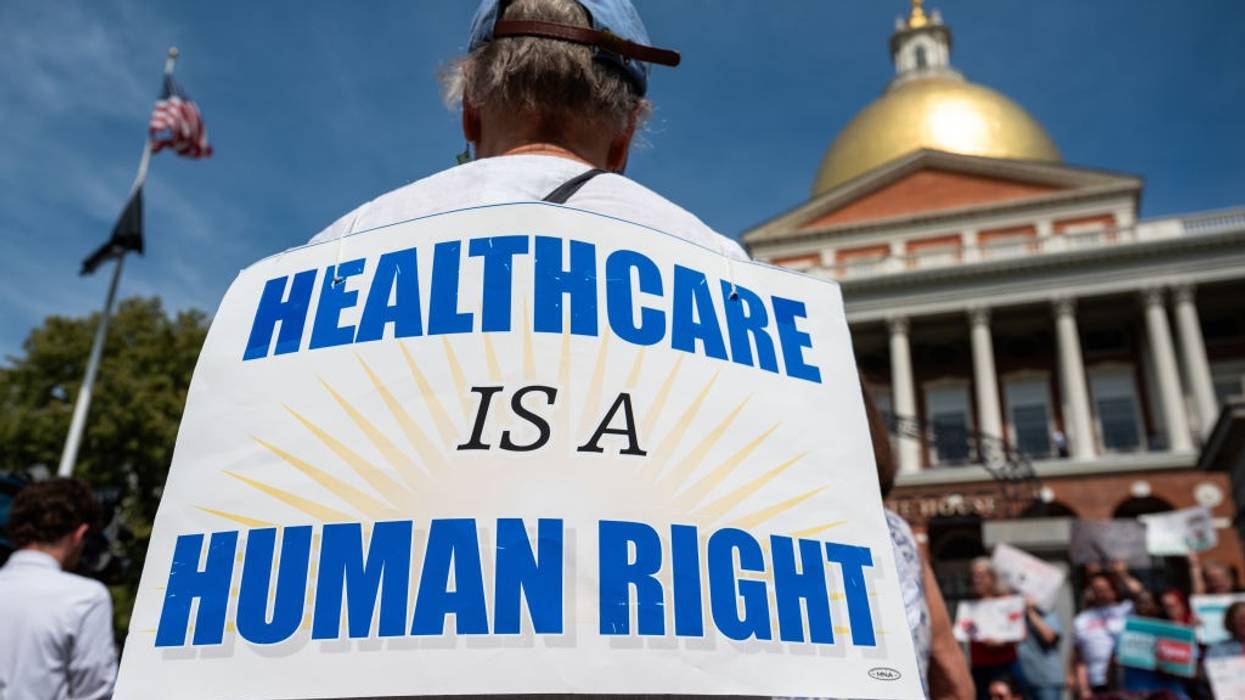
US President Donald Trump’s “One Big Beautiful Bill Act” will cut funding for healthcare by more than $1 trillion over the next decade. The fallout is expected to be grim, with over 17 million people projected to lose health coverage, hospital closures, and around 5 million denied Medicaid because of new work requirements. These drastic cuts were made with relative ease because the US—unlike other industrialized countries—does not recognize healthcare as a human right. It is time to change that.
Health is not a commodity to be bought, traded, or reserved for the privileged. It is a fundamental human right. That idea is not radical. It is affirmed in the Universal Declaration of Human Rights, adopted by the United Nations in 1948, which states that “everyone has the right to a standard of living adequate for the health and well-being of himself and of his family, including food, clothing, housing and medical care.” Yet here we are in 2025, still debating whether people deserve access to basic care.
The consequences of ignoring this right are all around us. Life expectancy in the US has declined, not because we lack the technology or knowledge to save lives, but because we have failed to build systems rooted in equity. We spend more per capita on healthcare than any other nation, yet preventable deaths continue to rise. These are not policy failures—they are moral ones.
In 2024, over 38 million Americans—including children and the elderly—were uninsured. That number is rising as Medicaid coverage shrinks and costs climb. Meanwhile, more than 1 in 4 Americans skipped or delayed medical care last year due to cost. That only stands to get worse. According to the Center for American Progress, the “One Big Beautiful Bill Act” will result in at least 10.5 million people being tossed from Medicaid and the Children’s Health Insurance Program (CHIP).
We can keep patching up the wounded—or we can finally build a society where fewer people get hurt in the first place.
Maternal mortality has soared in recent years, with African-American women dying at nearly three times the rate of white women. Rural hospitals are closing. Mental health needs are surging. The opioid crisis—now driven by fentanyl—continues to devastate communities, with over 82,000 overdose deaths reported in 2024 alone. These are not just data points—they are lives cut short, families shattered, communities weakened.
We do not need more evidence to prove that the system is broken. What we need is the courage to reimagine it, and the will to build a broad coalition of citizens capable of pressuring government to act.
Health as a basic human right means more than emergency care or sporadic access to clinics. It means universal access to preventive care, affordable medications, mental health services, clean air and water, safe housing, and nutritious food. It means recognizing that health does not start in the doctor’s office—it begins in our homes, schools, workplaces, and streets.
It also means rejecting the false choice between individual responsibility and collective investment. We are all responsible for our health… but that responsibility must be matched with support. You can’t choose to eat healthy if your neighborhood doesn’t have a grocery store. You can’t manage diabetes if insulin is unaffordable. You can’t get therapy if mental health services are unavailable or stigmatized. Personal responsibility without social infrastructure is just another form of blame.
The pandemic revealed the high cost of failing to treat health as a public good. Communities of color bore the brunt of Covid-19 deaths. Essential workers were praised but not protected. Hospitals were overrun while billion-dollar companies profited. And still, the lesson seems unlearned. We return to business as usual at our peril.
Establishing healthcare as a human right will not be an easy fight, but we have the beginnings already. The Declaration of Independence guarantees Americans an unalienable right to life. This can and has been construed as including the right to healthcare. As of December 2024, “62% of US adults, the highest percentage in more than a decade, say it is the federal government’s responsibility to ensure all Americans have healthcare coverage,” according to Gallup’s annual Health and Healthcare survey. Even among Republicans, who have historically opposed government-sponsored healthcare, the tide is changing. The same survey noted that “32% of Republicans favor government-supported healthcare. This is up from 22% in 2020.” For Democrats that number is at an historic high, with a 90% support rate—"the highest Gallup has measured for the group to date.”
The choice before us is clear. We can continue to ration care by wealth, geography, and race—or we can build a system grounded in fairness, prevention, and possibility. We can keep patching up the wounded—or we can finally build a society where fewer people get hurt in the first place.
Health is a basic human right. Until we treat it as such, we will fall short of our values—and our potential as a nation.
Now is the time to make that right real for everyone.
An alarming approach is emerging on job creation, economic growth, and tax collections: If reality doesn’t conform to the narrative, destroy the evidence.
Last week, U.S. President Donald Trump fired the commissioner of the Bureau of Labor Statistics, or BLS, in retaliation for publishing weak jobs numbers in the bureau’s monthly employment report. The Trump administration rightly received criticism for spooking investors and undermining the creditability of government data for this reckless move. But this is just the latest act in a broader erosion of the federal data infrastructure.
President Trump provided zero evidence to support his claim of a “rigged” report created to make him look bad. Janet Yellen, the former Treasury secretary and chair of the Federal Reserve, described the firing as “the kind of thing you would only expect to see in a banana republic.”
It’s crucial to understand the BLS is an independent, non-partisan, and highly respected agency tasked with producing data on jobs, wages, and prices. This data serves as the backbone for a broad swath of public and private decision-making. Researchers depend on these data to study the impacts of government decision-making on the economy, budgets, and people’s lives.
Trump’s latest attack on the BLS contributes to an alarming trend. For years, federal statistical agencies have been chronically underfunded. Under the Trump administration, additional budget cuts, federal hiring freezes, and mass layoffs are further straining agencies.
Distrust in data will harm every American, leaving businesses less able to prepare for a recession, labor unions less equipped for potential layoffs, families less able to predict how far their paycheck will go.
The collection of quality data is often labor-intensive, sometimes requiring massive field operations. When agency funding and staff levels cannot support the full collection effort, we risk losing the kind of data that is the hardest, and most essential, to collect: data in rural areas, smaller geographies, and often historically undercounted populations. This kind of slow data erasure poses serious challenges for tax policy research and modeling.
For example, the Census Bureau employs thousands of field representatives to interview households and businesses for a range of surveys. But since January, 1,300 Census Bureau employees have reportedly left, further hamstringing data collection in an already understaffed agency. Previously, when the agency faced funding shortfalls in 2016, it cancelled its field testing aimed at improving counts in Spanish-speaking areas and on Indigenous reservations for the 2020 Census. These hard-to-count communities are often central to our analyses of tax equity.
BLS faces similar challenges. Inflation data relies on data collectors to record price data from thousands of retailers across the country. These operations are being forced to scale back due to shrinking resources and in some cases have stopped altogether. Despite this, Trump’s 2026 budget proposal reduces the BLS budget by $56 million and proposes a major restructuring of the agency. This data is foundational to many aspects of modeling; it allows us to compare the impact of policy over time in “real” terms and project policy impacts out into the future.
At the Internal Revenue Service (IRS), staffing levels in the Research, Applied Analytics, and Statistics office have decreased by 29% since January. As a result, the IRS has indefinitely postponed its Joint Statistical Research Program, which produced original research and novel data sets that the Institution on Taxation and Economic Policy frequently relies on to inform our own modeling of tax policy and taxpayer behavior.
Distrust in data will harm every American, leaving businesses less able to prepare for a recession, labor unions less equipped for potential layoffs, families less able to predict how far their paycheck will go. At the height of Covid-19 deaths in June 2020, Trump famously said, “if we stop testing right now, we’d have very few cases if any.” A similar approach is emerging on job creation, economic growth, and tax collections: If reality doesn’t conform to the narrative, destroy the evidence.
The federal government’s statistical agencies are full of nonpartisan career economists and statisticians who work hard to be responsible stewards of our nation’s data. And they continue to do so even under tight resource constraints and amid a fiercely partisan political environment. But last week’s attacks on BLS fuel growing fears among researchers and policy analysts that the data we rely on to understand policy may one day be compromised, suppressed, or deleted altogether.
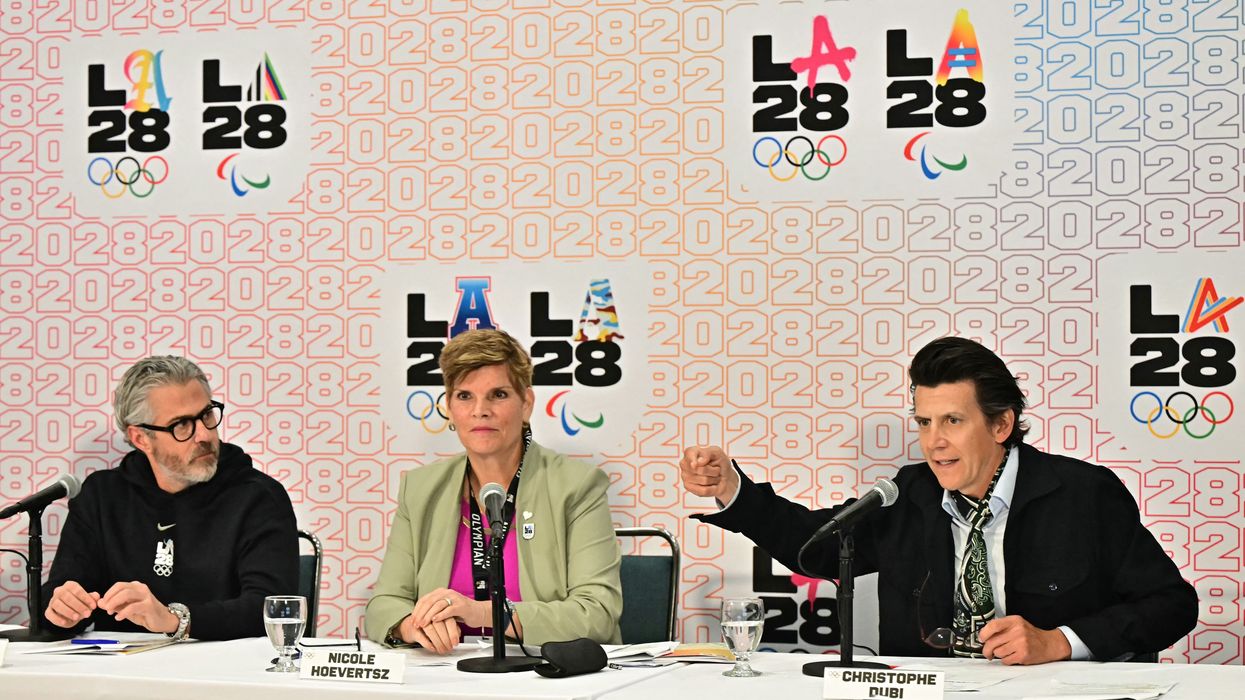
A new poll from the anti-Olympics coalition NOlympicsLA finds that public support for the Los Angeles 2028 Olympics has soured significantly over time.
When the International Olympic Committee announced in September 2017 that Los Angeles would host the 2028 Summer Olympics, then-Mayor Eric Garcetti predicted, “The Olympics will spur a bold vision for our city.” Eight years later, enthusiasm in the City of Angels has dwindled considerably.
Current Mayor Karen Bass is under increasing pressure from locals who are concerned that LA, which is already experiencing a budget crisis, will be stiffed with a hefty Olympic bill. Under U.S. President Donald Trump, Immigration and Customs Enforcement, or ICE, is wreaking havoc on the city’s immigrant population, with masked agents in military-style garb snatching Angelenos off the streets—often violently—and cramming them into vans and ultimately into detention facilities with inhumane conditions.
Amid the mayhem, a new poll from the anti-Olympics coalition NOlympicsLA finds that public support for the Los Angeles 2028 Olympics has soured significantly over time. A firm majority of respondents—some 54%—asserted a preference for spending public resources on wildfire recovery rather than the Olympics. Less than a quarter of respondents (24%) supported funding the Olympics over those still reeling from the wildfires that swept through LA in January 2025, ravaging places like the historically Black foothill community of Altadena.
The poll also found a notable age gap, with millennials and Gen Z overwhelmingly spurning the LA28 Games. A mere 22% of those polled between the ages of 18 and 29 were supportive of LA28 whereas in the 45-to-60 age bracket 53% supported the Games. The NOlympics LA survey also uncovered a gender gap: Women were more likely than men to oppose or be neutral toward hosting the LA 2028 Games (40% to 23% of men) and keener to prioritize wildfire recovery over Olympic preparations (61% to 49% for men).
The Olympics have a long and ignominious tradition of short-circuiting democracy, but it’s not too late for Los Angeles to make amends.
The Olympics tend to be popular in the abstract, but as the reality of hosting the Olympics draws closer—with overspending, gentrification, displacement, police intensification, greenwashing, and corruption coming into sharper focus—public support tends to shrink.
For instance, a few months ahead of the Paris 2024 summer Olympics, a poll found that 44% of Parisians thought the 2024 Olympics were a “bad idea.” Then, a couple weeks before the Paris 2024 Olympics kicked off, another poll discovered that the French were less than thrilled at the prospect. More than 65% of the population was either indifferent (36%), concerned (24%), or angry (5%) about hosting the Olympics.
At the Tokyo 2020 Summer Games, staged a year later in 2021 amid the coronavirus pandemic, a whopping 83% stated that the games should be either postponed again or scrapped altogether. When the public ramped up pressure on Japan’s Prime Minister Yoshihide Suga to take action, he was forced to admit that the host-city contract handed the power to cancel or postpone solely to the International Olympic Committee. The IOC ignored public opinion and rammed ahead, resulting in a dramatic uptick of Covid-19 rates in Tokyo during and after the games, while more than 800 people tested positive for Covid-19 inside the so-called “Olympic bubble.”
To say the Olympics has a democracy problem is to make an understatement. Where democratic practice flourishes, the Olympics tend to struggle to gain popular traction. Between 2013 and 2018 alone, more than a dozen cities rejected their Olympic bids, after either losing a public referendum, facing the mere prospect of a public vote, or succumbing to political pressure against the games.
This is precisely why the International Olympic Committee opted in September 2017 for the hail-Mary move of announcing two host cities at once, selecting Paris to stage the 2024 Summer Games and Los Angeles to host in 2028. The two cities were originally bidding for the 2024 Olympics, but after conspicupus bid withdrawals from Boston, Budapest, Hamburg, and Rome, the IOC made the unusual dual declaration. Neither Paris nor Los Angeles carried out a public referendum where voters could weigh in on whether or not to host the complicated and expensive sports mega-event.
The NOlympicsLA poll asked Angelenos their thoughts on the possibility of a democratic referendum on the games. Their results were bracing. They found that “only 54% would vote to support LA28 if there were a referendum tomorrow.”
Turns out, a referendum might be on the horizon. In Los Angeles, Unite Here Local 11, the union that represents hotel and restaurant workers, has filed paperwork to create a ballot measure that would provide LA voters a chance to weigh in on whether to develop or expand “event centers” like sports venues, convention facilities, or hotels. The union not only zeroed in on permanent facilities, but also temporary structures like ones being proposed for the 2028 Olympics. As the Los Angeles Times reported, this “could force at least five Olympic venues to go before voters for approval,” including the LA Convention Center, the John C. Argue Swim Stadium, and the Sepulveda Basin Recreation Area, which is slated to host Olympic events like 3-on-3 basketball and skateboarding in the San Fernando Valley.
Jonny Coleman, an organizer with NOlympicsLA, pointed out to Common Dreams that “this polling took place before the budget crisis and before the ICE incursion.” He added, “We believe our message has reached many more Angelenos since this poll was conducted, and we are confident more and more Angelenos will reject LA28 and the World Cup on the basis of the ICE collaboration alone.” He also noted that organizers with LA28 have “not made a single public comment since June 6 about the violence taking place against working class Angelenos and how that will continue to be weaponized.”
The Olympics have a long and ignominious tradition of short-circuiting democracy, but it’s not too late for Los Angeles to make amends. While it’s true that neither the word “democracy” nor “democratic” appear in the host-city contract between the IOC and LA, Angelenos could force a democratic vote on key issues. NOlympicsLA’s new poll shows that there is a fresh interest in asking big questions about the 2028 LA Games.
Comedian John Mulaney recently joked that “making LA host the Olympics… would be like if you had a friend, and she was having a nervous breakdown, and she had no money, and part of her house was on fire. And to cheer her up, you made her host the Olympics.”
Well, the joke may end up being on LA28 Olympic organizers who thought they could press ahead with status-quo thinking in a whipsaw world. A public referendum on the LA Olympics, set against the backdrop of an increasingly authoritarian country, might be just what the democracy doctor ordered.
What drives the preference of landlords to call themselves “housing providers” is a desire to euphemize the landlord-tenant relationship and to obscure some of its basic and most important features.
Landlords want to be called “housing providers.” Industry organizations in California, Washington, Rhode Island, and elsewhere are proudly claiming the label. Equal to this craving to be called “housing providers,” it seems, is the wish among landlords to no longer be called landlords. The term is antiquated, they say, and has a negative stigma that doesn’t reflect reality. The industry is not particularly secretive about these desires or the reasons behind them, which have to do with image and narrative.
The dictionary definition of landlord is precise enough, however, and, in fact, couldn’t be plainer: “The owner of property (such as land, houses, or apartments) that is leased or rented to another,” according to Merriam-Webster.com. The definition identifies the essential feature of any residential landlord—that they engage in a financial transaction to lease living space. This seems straightforward enough and noncontroversial. The motivation of the industry is thus not related to any mismatch between our common understanding of the word and its most essential attribute.
Instead, what drives the preference of landlords to call themselves “housing providers” is a type of Orwellian doublespeak intended to euphemize the landlord-tenant relationship and to obscure some of its basic and most important features. What does the phrase obscure? For one, it elides the basic extractive nature of landlording, the fact that landlords expect, in fact, rely upon the relationship to be monetarily profitable to them. This is the critical fact of landlording, that it is done in the main to make a profit.
Granted there are some instances of landlords renting to family members or others without expectations of profit, but these exceptions are merely that—exceptions. The English language routinely makes distinctions between services rendered for a fee and those provided on other bases. The difference between “housing provider” and landlord is the difference between a date and a paid escort or sex worker, it is the difference between the volunteer and the mercenary, between a financial gift and an interest-bearing loan. The English language is not unique in containing words that make clear the monetary exchange and profit that define some relationships. We use these words because the information they contain is consequential.
If the landlord industry truly wants to do something to burnish its public image, it might consider publicly rejecting or sanctioning members of its community who hiked rents in Los Angeles County by 20% in the aftermath of the fires of January 2025.
This attempt to obscure the profit motive in landlording is all the more problematic because those who would call themselves “housing providers” in one breath, will, in the next, argue against rent stabilization, tenant protections, and other regulations on the basis that these policies make their business unprofitable, or less profitable than they would prefer. This is wanting it both ways—attempting to hide the profit motive while simultaneously insisting on it.
“Housing provider” is also meant to conceal the power dynamics of the landlord-tenant relationship, one in which landlords hold the privileges associated with property ownership, the ability to define the terms of acceptable behavior and limits of property use available to tenants, and the ultimate power of eviction. Moreover, at a time when corporate landlords are extending their reach into the market, and we see the spread of price-fixing algorithms to maximize rents and profit, AI-driven tenant screening algorithms to perform background checks, and greater concentration and market power at the industry scale, the insistence on the phrase “housing provider” is an obvious attempt at happy-faced distraction.
Just as important as the attempt to disguise profit motive and landlord power is the effort to dodge whatever negative connotations attach to the term landlord. “Housing provider” is meant to avoid images of rapaciousness and greed, or to conjure images of benevolence and even charity, or to do both. The use of the phrase is, in other words, an attempt, acknowledged by the industry, to control a narrative. As such it is a political act, an effort to persuade and to establish a particular understanding of who landlords are and what they do, all in the service of influencing public debate and public policy. This is not to argue that tenants don’t also try to influence the public narrative; of course they do. It is merely to note that this phrase, “housing provider,” is a calculated bid to construct meaning in a highly contested policy area and it needs to be recognized as such. Those who choose to adopt the phrase choose to adopt the narrative.
If the landlord industry truly wants to do something to burnish its public image, it might consider publicly rejecting or sanctioning members of its community who hiked rents in Los Angeles County by 20% in the aftermath of the fires of January 2025. It might help to police property owners who evicted tenants during the pandemic in violation of federal and local laws. It might take action to address sexual harassment of low-income women by landlords, or address any of a number of discriminatory or exploitative practices that haunt the industry. Those wishing to hide behind the “housing provider” label will argue that not all landlords are bad, which is of course true. They will say only a portion of landlords engage in the practices that give landlord its stigma. But, if the only response by the industry is to stop using the word landlord, it betrays a self-serving concern that does little to improve negative public perceptions and, in fact, largely confirms them.
We don’t call Exxon an “oil provider,” nor do we call GM an “automobile provider.” We don’t even call the corner mom-and-pop store a “grocery provider.” There is no reason to accept the kind of politically motivated doublespeak behind the rise of “housing provider.”
"These individuals have already taken steps to upend decades of scientific research and vaccine policy, threatening the health and safety of all Americans," said a letter signed by Sanders and seven other Democratic senators.
Sen. Bernie Sanders on Tuesday launched an investigation into U.S. Secretary of Health and Human Services Robert F. Kennedy Jr.'s purge of independent experts from a panel on vaccine recommendations.
Last month, Kennedy announced that he was "retiring" all 17 members of the Advisory Committee on Immunization Practices, commonly known as ACIP, despite promising during his Senate confirmation hearing to keep the committee intact.
At the time, Sanders (I-Vt.)—chair of the Senate Committee on Health, Education, Labor, and Pensions—warned that "firing independent vaccine experts is a dangerous, unprecedented move that will make it harder for the American people to access vaccines that are safe, effective, and essential to saving lives."
After the firings, Kennedy said, "We're going to bring great people onto the ACIP panel—not anti-vaxxers—bringing people on who are credentialed scientists."
In a letter sent to Kennedy Tuesday, Sanders and seven other Democratic senators said those fears have come to pass. Kennedy, they said, has replaced the panel of experts with "prominent vaccine deniers."
The most prominent of these figures is Dr. Robert Malone, who has described it as "high praise" to be dubbed an "anti-vaxxer."
Malone gained prominence during the Covid-19 pandemic by casting doubt on the illness's severity and baselessly suggesting that the mRNA vaccines used to treat the disease were "causing a form of AIDS."
Earlier this year, Malone also attempted to foment doubt that children had died due to the unprecedented measles outbreak in Texas.
Kennedy also appointed the former leader of his anti-vaccine organization, the Children's Health Defense, Lyn Redwood, a longtime proponent of the false belief that the vaccination for measles, mumps, and rubella (MMR) causes autism.
Also on the committee is Vicky Pebsworth Debold, founder of the National Vaccine Information Center—one of the longest-running anti-vaccine organizations in America—who has argued that a vaccination caused her child's autism.
ACIP is in charge of examining scientific findings to make recommendations to the public about which vaccines to get and when.
"These individuals," the senators said, "have already taken steps to upend decades of scientific research and vaccine policy, threatening the health and safety of all Americans."
When Kennedy's new handpicked committee met for the first time in late June, the members made substantial changes to vaccine policy and hinted at others coming in the future.
The most significant change they made was the recommendation that Americans receive flu vaccinations free of the preservative thimerosal—which is partially made of mercury and prevents germs and fungi from contaminating batches of vaccines.
Thimerosal, which is a component of many multidose vaccines, has never been found harmful by any scientific study. The Centers for Disease Control and Prevention (CDC) provided a document to the committee that included 25 years of studies indicating thimerosal's safety. But that document was removed from the meeting without explanation.
When they questioned ACIP about its removal, the senators say Malone replied that it was "not authorized by the office of the secretary," which the senators concluded meant that Kennedy or one of his staff "had the document taken off CDC’s website."
Instead of credible science, Redwood presented a report likely generated by artificial intelligence, which included many debunked claims about the dangers of thimerosal, and even made reference to a CDC study on the dangers of the preservative that did not exist.
Kennedy's ACIP also determined that it would revise the childhood vaccine schedule that has been in place for decades. That schedule includes vaccines for polio, chickenpox, diphtheria, and tetanus—illnesses that once routinely killed children but have been virtually eradicated by mass immunization.
The recommended vaccine schedule, the senators noted, determines what immunizations are required to be covered by health insurance companies and government programs like Medicaid and Medicare.
"If insurance companies, Medicare, Medicaid and other government programs stop covering vaccines, Americans will be forced to pay out of pocket," the senators said. "The only people who will be able to afford vaccines will be the wealthy."
The senators warned that this, along with Kennedy and his appointees' undermining of vaccine science, would result in "a resurgence of vaccine-preventable diseases."
Under Kennedy, the U.S. has already experienced its largest measles outbreak in 33 years, which has resulted in the first deaths from the disease in over a decade, following a downswing in measles vaccination.
Despite this, Kennedy has continued to downplay the disease's severity and the vaccine's well-documented effectiveness, even claiming that it causes "deaths every year."
The senators demanded that Kennedy provide information about why each of the nonpartisan members of ACIP were fired, and what criteria and vetting process was used to pick the anti-vaccine figures who replaced them.
"The harm your actions will cause is significant," the senators told Kennedy. "As your new ACIP makes recommendations based on pseudoscience, fewer and fewer Americans will have access to fewer and fewer vaccines. And as you give a platform to conspiracy theorists, and even promote their theories yourself, Americans will continue to lose confidence in whatever vaccines are still available."