'Pathetic Excuse for a Man': Ramaswamy Slammed Over Ad Featuring Acton’s Estranged Mother in Ohio
Acton's brother said the ad was a "despicable low," noting that their mother stood by their stepfather after he was charged with raping Acton at the age of 12.
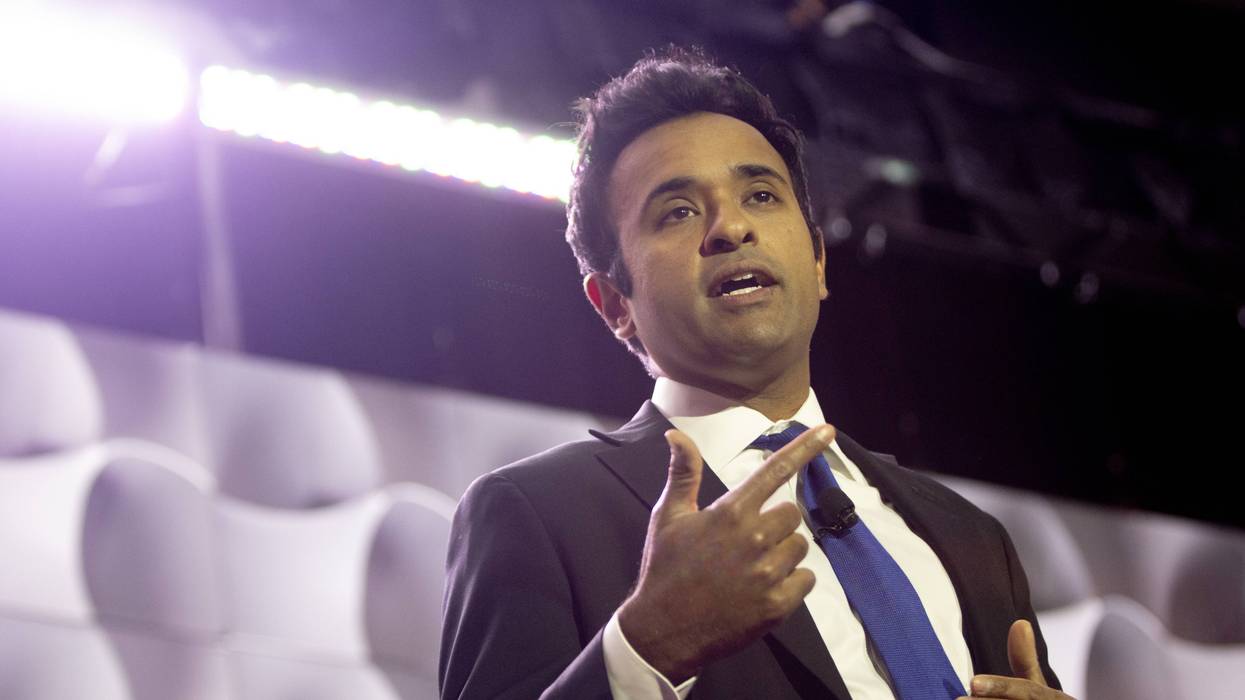
With just two weeks left until Election Day, Republican Ohio gubernatorial candidate Vivek Ramaswamy is drawing criticism from across the political spectrum over a vicious attack video featuring his Democratic opponent Amy Acton's estranged mother, whom she has accused of abandoning her after she was sexually abused as a child.
The 60-second video, which surfaced on social media Monday and was amplified by conservative accounts, features Donna Arthur, Acton’s biological mother, urging Ohioans to vote against Acton and accusing her of lying about experiencing homelessness and living in a tent during her childhood.
"I love my daughter, but when I saw her lying about her opponent, it's not easy for a mother to say this, but Amy has a serious problem. She is a liar," Arthur said. "She says she grew up living in a tent. None of that is true. She's lied her entire life."
After the ad went viral on social media, Acton's brother, Philip Stearns, accused Ramaswamy of sinking to "a despicable low." In a statement Tuesday, he noted that "after he was arrested and Amy and I were removed from their custody, our birth mother stayed married to Amy's rapist until he died."
Stearns called the ad an "attempt to turn the sexual abuse Amy endured at 12 years old from our birth mother’s husband into a political talking point."
It remains unclear who produced the ad, which contains no sponsorship disclosure indicating whether Ramaswamy's campaign or a supporting political action committee was behind it. Acton's campaign, however, has blamed her opponent.
Ramaswamy's political allies have previously attacked Acton over therapy she received following the abuse. Ramaswamy himself drew criticism in April after claiming that his opponent had no vision for Ohio "other than to complain about what someone else did to her."
“This desperate, disgusting attack reveals exactly who Vivek Ramaswamy is at his core,” Stearns said, describing him as “a pathetic excuse for a man who is willing to hurt anyone as long as it gets him what he wants.”
Though President Donald Trump won Ohio by double digits in 2024, several recent polls show Acton with a substantial lead over Ramaswamy, a staunch ally of the president.
In a statement to HuffPost, the Ramaswamy campaign did not take credit for the ad, but defended its substance.
"We don't know what happened between Amy and her mother, who first spoke out about Amy in 2020, but we know that Amy Acton is a serial fabulist who has some serious problems with the truth that the public needs to be aware of before deciding who to entrust as governor," said Connie Luck, a spokesperson for the Ramaswamy campaign.
She added: “Everyone who knows [Acton] best—her former boss, her former state colleagues, her fellow physicians, and now her own mother—are clearly warning Ohioans not to vote for her. Ohioans deserve to know that.”
Acton has spoken on the campaign trail about the hardships she experienced as a child and has made them central to her pledge to make life more affordable for struggling Ohio families.
"I know what it feels like to go hungry, to not have enough," Acton said during an interview in August. "My brother and I actually were in a tent in the middle of winter growing up, so these problems are real to me."
She spoke about these experiences long before she ran for governor. In a 2019 profile by The Youngstown Vindicator, Acton—then serving as the director of Ohio's health department under Republican Gov. Mike DeWine—recounted a childhood marked by poverty, neglect, and abuse.
By age 12, she said, she and her brother, Stearns, had lived in roughly 18 different homes. She said her stepfather had already faced molestation allegations when her mother married him—a claim confirmed by newspaper reports and court records from the time. She said her family was living in a tent at a campground outside Youngstown in the winter when her stepfather raped her.
After charges were filed, Acton and her brother went to live with their biological father and his relatives, who had been granted custody. She recalled trying to kiss her mother goodbye at the courthouse, only for her mother to turn her cheek away.
"That was the last time I ever saw her," Acton said. According to the profile, her mother and stepfather subsequently fled town while he was out of jail on bond.
The attack on Acton has drawn bipartisan outrage.
Ohio state Rep. Allison Russo (D-7), who is running for secretary of state, described the ad as "among the most vile political attacks I’ve ever seen."
"Millions of adults from all walks of life are estranged from a parent, often because of childhood abuse and trauma that are far too common in our society," she said. "Exploiting that deeply personal pain for political gain is cruel, shameful, and deserving of unequivocal condemnation."
US Rep. Greg Landsman (D-Ohio) agreed that it was “one of the most despicable things I’ve ever seen in politics.”
"He’s arguably the most unlikable person in the history of people… because of stuff like this," he said of Ramaswamy. "By the end of the day, Ohioans will learn what happened to Amy as a 12-year-old girl, how her mother lost custody of Amy as a result, and what a disgrace Vivek is for pulling this."
Rep. Sam Liccardo (D-Calif.), who previously prosecuted child sexual assault cases, said that Arthur’s defense of her late husband despite her daughter’s assault allegation is something he has witnessed “too frequently.”
"A child victim discloses the abuse by a stepdad or mom’s boyfriend, and mom takes the abuser’s side because she can’t bear to think that she had exposed her own child to a monster," he said. "Mom is protecting mom—not the child."
He added that "Ramaswamy has embraced the Trumpian role of taking the side of the predator."
While right-wing influencers, including Donald Trump Jr., amplified the ad and treated it as a “bombshell” October surprise that could upend Acton’s campaign, some conservatives also expressed dismay.
GOP strategist Liz Mair called the ad "terrible" and said it is "going to remind people of that one family member who hates them for no rational reason at all and make them feel sympathetic towards Acton."
“In brief, it pushed me towards Acton, not away from her,” Mair continued. “And this is genuinely the only thing I’ve seen or read about Acton to make me think anything positive of her."
"It seems crazy to me [that] one would assume this would work and not backfire," said conservative commentator Mary Katharine Ham. "An estranged mom from a rough childhood going straight to camera to trash her daughter as a trustworthy messenger?"
Washington Examiner columnist Tim Carney predicted bluntly that "This ad could sink Vivek."
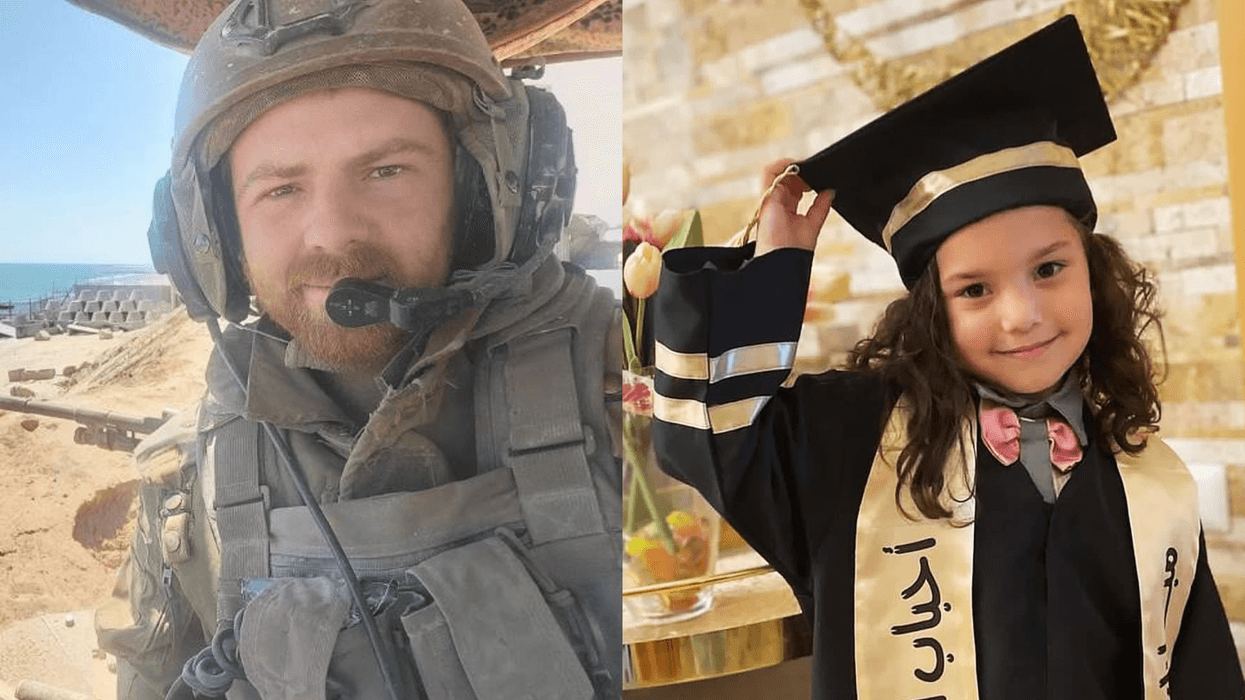
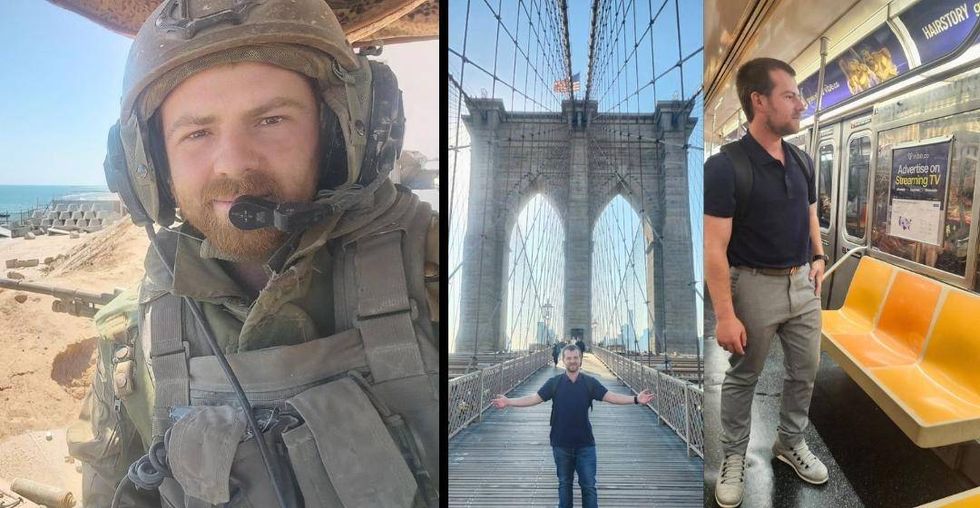 Photos posted on October 19, 2026, show Israeli Maj. Sean Glass standing on the Brooklyn Bridge and riding the New York City subway. (Photos from the Hind Rajab Foundation)