Bombshell Book Alleges Jared Kushner's Access to Secret—And Possibly Illegal—Foreign Bank Accounts
An upcoming cook by journalist Matthew Cole claims the Trump son-in-law had access to foreign bank accounts with combined deposits of roughly $2 billion.
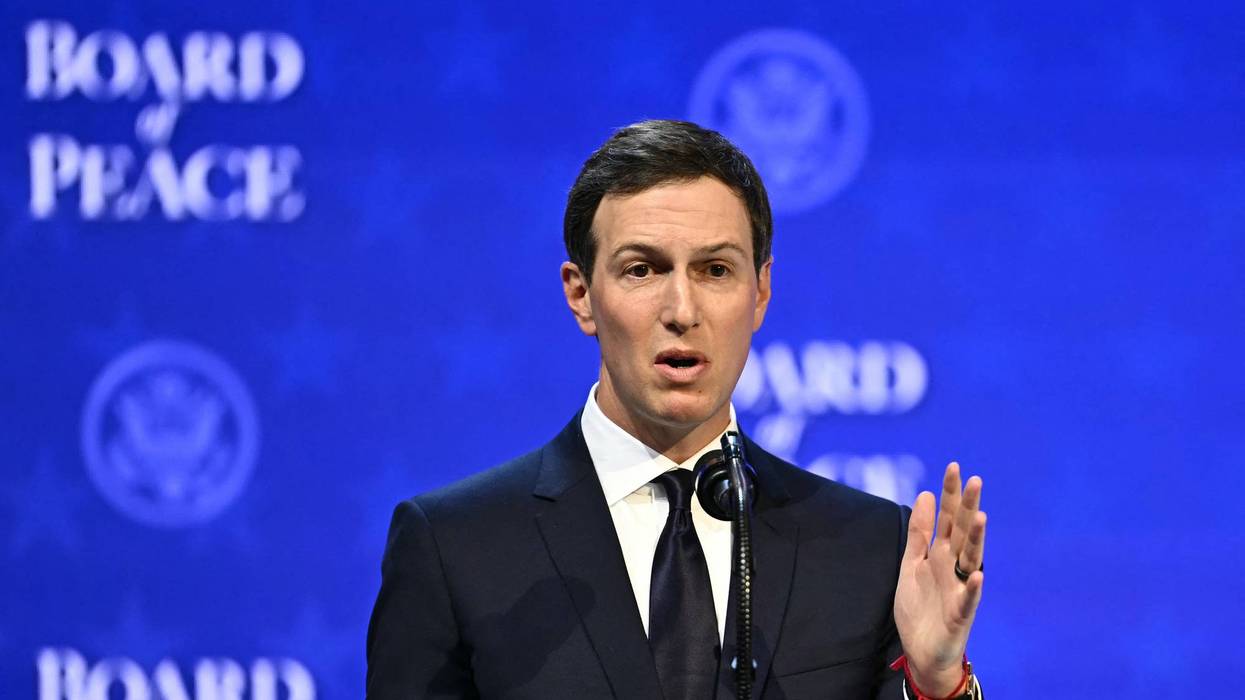
Jared Kushner, son-in-law of US President Donald Trump, for years allegedly had access to at least two secret foreign bank accounts in Israel and the United Arab Emirates whose deposits totaled roughly $2 billion, according to an excerpt of an explosive upcoming book published on Thursday by Vanity Fair.
The excerpt of the book—titled Princes and Thieves: Jared Kushner and Mohamed bin Zayed’s Secret Plot to Remake the Middle East by journalist Matthew Cole—reveals that UAE leader Mohamed bin Zayed and future Saudi Crown Prince Mohammed bin Salman "put at least $2 billion into at least two bank accounts for Kushner" at the start of Trump's first term.
The first account, which Cole described as the "Alpha" account, was opened in First Abu Dhabi Bank and served as a "foreign policy fund" partially managed by Kushner and bin Zayed.
The "Beta" account, meanwhile, moved money from a bank account in Azerbaijan to what appeared to be a government bank account in the Israeli Central Bank.
Unlike the Alpha account, which was used to further specific foreign policy goals, the Beta account was set up "for Kushner’s personal benefit," one source told Cole.
Neither of these bank accounts was ever disclosed, Cole wrote.
"Although Kushner’s position as senior adviser to the president was unpaid, he was an official government employee," the journalist explained. "Not only did his position require financial disclosures for ethics regulations, but each year he worked in the White House, he had to file both a public and confidential financial form known as the Executive Branch Personnel Public Financial Disclosure Report."
"Because he had access to classified government secrets," Cole added, "Kushner was required to disclose any bank account to which he had signatory—or beneficiary—access."
And even if Kushner had properly disclosed the accounts, Cole continued, he would still have likely had to register as an agent of a foreign government given that UAE and the Saudis were "paying for his influence within the US government."
A prosecutor who worked on former special counsel Robert Mueller's investigation of Russian interference in the 2016 presidential election told Cole that Kushner "may have violated federal bribery laws" if he told Saudi or UAE officials that he'd do any favors for them after setting up the accounts, even if it was "just speaking to his father-in-law."
The Trump son-in-law lashed out at Cole in a social media post shortly after the book excerpt was published.
"The allegations made by this author are completely insane, categorically false, and never happened," Kushner wrote. "We denied every one of these claims on the record, yet the author failed to provide a single shred of evidence to substantiate any of them. No bank statements, wire transfer records, account numbers, transaction dates, or other verifiable details were provided to support these extraordinary accusations."
"These are outrageous fabrications being presented as investigative journalism," Kushner continued. "This is not journalism. It is a mixture of fantasy, fiction, and advocacy, written by someone who is either deeply disturbed or acting with sinister intent."
Kushner today serves as a "special envoy for peace" under the second Trump administration, where he has been tasked with several vital foreign policy initiatives, including negotiating an end to the war between Russian and Ukraine, as well as an end to the illegal war with Iran started by his father-in-law in February.
The government watchdog Citizens for Responsibility and Ethics in Washington last week filed a lawsuit in the US District Court for the District of Columbia intended to block Kushner from serving as a foreign policy official without Senate confirmation.
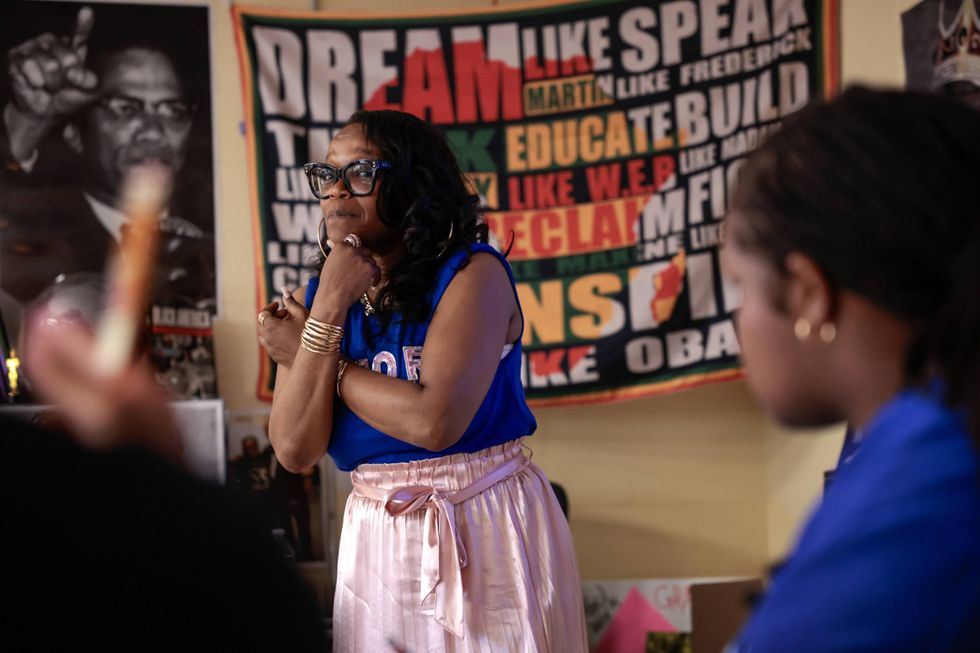 Tanisha Milton teaches a lesson on busing and the desegregation of Boston, Massachusetts public schools during an 8th grade civics class at TechBoston Academy on May 22, 2024. (Photo by Craig F. Walker/The Boston Globe via Getty Images)
 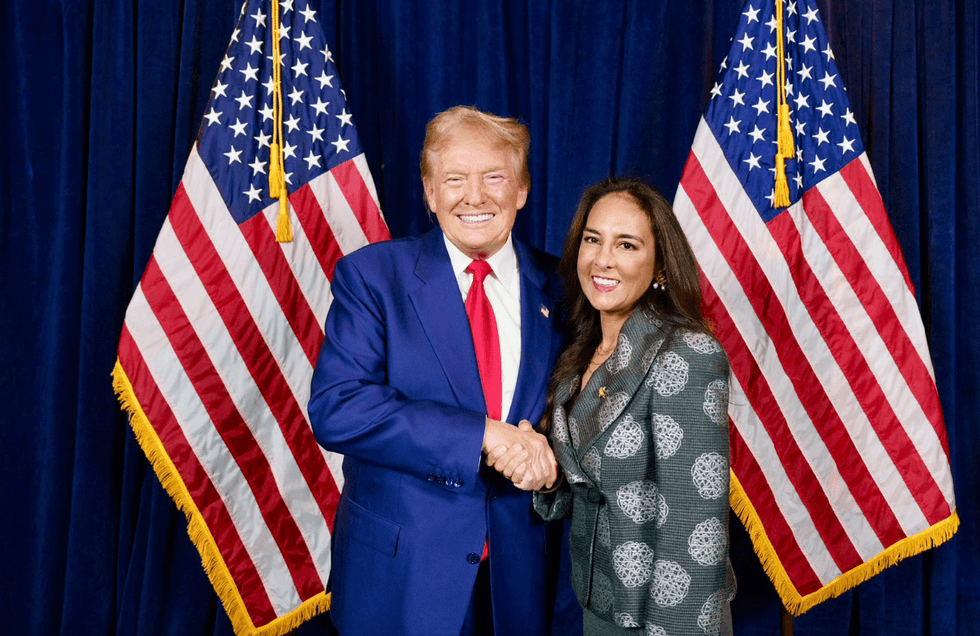 Harmeet Dhillon shakes hands with Republican US President-elect Donald Trump in a photo she posted on social media on October 31, 2024. (Photo: Harmeet Dhillon/X)