

SUBSCRIBE TO OUR FREE NEWSLETTER
Daily news & progressive opinion—funded by the people, not the corporations—delivered straight to your inbox.
5
#000000
#FFFFFF
To donate by check, phone, or other method, see our More Ways to Give page.
Daily news & progressive opinion—funded by the people, not the corporations—delivered straight to your inbox.

"This chaotic administration is obviously desperate to smash through every environmental guardrail that protects people or preserves wildlife, but steps like this will be laughed out of court," said one advocate.
Numerous environmental protection groups were preparing to file lawsuits Friday after President Donald Trump directed federal agencies to repeal what he called "unlawful regulations" aimed at protecting the public from pollution, oil spills, and other harms—sharply curtailing the process through which rules are changed as he ordered agencies to "sunset" major regulations.
The order was issued a week-and-a-half before the deadline set by another presidential action in February, when Trump required agencies to identify "unconstitutional" and "unlawful" regulations for elimination or modification within 60 days.
Those restrictions, under Wednesday evening's order, can be repealed without being subject to a typical notice-and-comment period.
Trump named the Environmental Protection Agency, the Department of Energy, the Nuclear Regulatory Commission, and the Bureau of Safety and Environmental Enforcement among several agencies affected by the order, and listed more than two dozen laws containing regulations that must incorporate a sunset provision for no later than September 30, 2025.
The laws include the Atomic Energy Act of 1954, the National Appliance Energy Conservation Act of 1987, and the Nuclear Waste Policy Act of 1982.
Hans Kristensen, director of the Nuclear Information Project at the Federation of American Scientists, suggested the order was Trump's latest push to benefit corporate polluters.
The Trump corporate regime orders agencies to ‘sunset’ environmental protections, as part of an effort to make it easier for industry to pollute. thehill.com/policy/energ...
[image or embed]
— Hans Kristensen (@nukestrat.bsky.social) April 11, 2025 at 7:14 AM
Brett Hartl, government affairs director for the Center for Biological Diversity, said it was "beyond delusional" for Trump to attempt to repeal "every environmental safeguard enacted over the past 50 years with an executive order."
"Trump's farcical directive aims to kill measures that protect endangered whales, prevent oil spills, and reduce the risk of a nuclear accident," said Hartl. "This chaotic administration is obviously desperate to smash through every environmental guardrail that protects people or preserves wildlife, but steps like this will be laughed out of court."
In a memo, the White House wrote that "in effectuating repeals of facially unlawful regulations, agency heads shall finalize rules without notice and comment, where doing so is consistent with the 'good cause' exception in the Administrative Procedure Act."
"That exception allows agencies to dispense with notice-and-comment rulemaking when that process would be 'impracticable, unnecessary, or contrary to the public interest,'" said the White House.
As climate advocates scoffed at the suggestion that regulating nuclear power and pollution-causing energy infrastructure is "contrary to the public interest," legal experts questioned the legality of Trump's order.
"If this action were upheld, it would be a significant change to the way regulation is typically done, which is through notice and comment," Roger Nober, director of George Washington University's Regulatory Studies Center, told Government Executive. "If the agencies determine that a rule is contrary to the Supreme Court's current jurisprudence, then [this order says they] have good cause to remove it and [they] can get around notice and comment. That's certainly an untested and untried way of implementing the Administrative Procedure Act."
Georgetown University law professor William Buzbee told The Hill that the Supreme Court "has repeatedly reaffirmed that agencies seeking to change a policy set forth in a regulation have to go through a new notice-and-comment proceeding for each regulation, offer 'good reasons' for the change, and address changing facts and reliance interests developed in light of the earlier regulation."
"Adding a sunset provision without going through a full notice-and-comment proceedings for each regulation to be newly subject to a sunset provision seems intended to skirt the vetting and public accountability required by consistency doctrine," he said. "Like many other attempted regulatory shortcuts of the first and second Trump administration, this [executive order] seems likely to prompt legally vulnerable agency actions."
Public Citizen co-president Lisa Gilbert suggested that the executive order is the latest example of Trump's push to govern the U.S. as "a king."
"He cannot simply roll back regulations that protect the public without going through the legally required process," Gilbert told Government Executive. "We will challenge this blatantly unlawful deregulatory effort at every step to ensure it doesn't hurt workers, consumers, and families."
Michael Wall, chief litigation officer at the Natural Resources Defense Council, called the order "a blatant attempt to blow away hundreds of protections for the public and nature, giving polluters permission to ignore whatever is coming out of their smokestacks while developers disregard endangered species protections and Big Oil no longer heeds the reforms put in place after the Deepwater Horizon disaster."
"This executive order is illegal," he said. "Congress passed these laws, and the president's constitutional duty is to carry out those statutes; he has zero power to rewrite them."
"There's no magic wand the administration might wave to sweep away multiple rules on a White House whim," Wall added. "Any changes to the rules the president wants rescinded would have to be justified, rule by rule, with facts, evidence, and analysis specific to that rule. He cannot do this by fiat."

"Freezing these EV charging funds is yet another one of the Trump administration's unsound and illegal moves," said one climate advocate.
Climate campaigners are blasting the Trump administration's move to halt a $5 billion initiative to build electric vehicle chargers along highways across the United States and calling on Congress to fight back against the attack on the grant program from the 2021 bipartisan infrastructure law.
The National Electric Vehicle Infrastructure (NEVI) Formula Program was established by the Infrastructure Investment and Jobs Act. Natural Resources Defense Council's Beth Hammon said in a Friday statement that "on a bipartisan basis, Congress funded this program to build a new vehicle charging network nationwide. The Trump administration does not have the authority to halt it capriciously."
Hammon, a senior vehicle charging advocate at the group, warned that "stopping funding midstream will result in chaos and delays in states across the nation. It will throw state efforts into turmoil, wreak havoc with the companies that install the chargers, and risk the jobs of their workers. The only winner from this chaos is the oil industry."
"This should not stand. Courts have already blocked the Trump administration's other illegal attempts to halt legally mandated funding," she added. "Congress needs to stand up for itself: This move and many others from the Trump administration steals away its constitutionally established spending authority."
Katherine García, director of the Sierra Club's Clean Transportation for All campaign, similarly declared Friday that "freezing these EV charging funds is yet another one of the Trump administration's unsound and illegal moves. This is an attack on bipartisan funding that Congress approved years ago and is driving investment and innovation in every state, with Texas as the largest beneficiary."
"Throwing out states' plans, which were carefully built together with business, utilities, and communities, only hurts America's growing clean energy economy," she stressed. "The NEVI program has helped the U.S. build out the infrastructure needed to support our nation's necessary transition to pollution-free vehicles. More electric vehicle charging means better public health, reduced climate emissions, good-paying green jobs, and healthier communities."
President Donald Trump has taken various anti-climate actions since Inauguration Day—declaring a "national energy emergency," ditching the Paris agreement again, and enabling new liquefied natural gas exports. One executive order calls for "terminating the Green New Deal," and directs agencies to pause disbursement of funds appropriated through the Inflation Reduction Act and the 2021 law, specifically mentioning the NEVI program.
Trump targeted the initiative despite his ties to Tesla CEO Elon Musk, head of the president's destructive Department of Government Efficiency. Wired reported that the billionaire's "electric automobile company has been a recipient of $31 million in awards from the NEVI program, according to a database maintained by transportation officials, accounting for 6% of the money awarded so far."
The Federal Highway Administration on Thursday sent a letter—first reported by InsideEVs—informing state transportation departments that "the new leadership of the Department of Transportation (U.S. DOT) has decided to review the policies underlying the implementation of the NEVI Formula Program," and, as a result, "is also immediately suspending the approval of all" state deployment plans previously greenlit by the Biden administration.
As Heatmap detailed:
According to Paren, an EV charging data analytics firm that has been closely following the rollout of the NEVI program, states are legally entitled to spend roughly $3.27 billion on NEVI. That accounts for plans approved for fiscal years 2022 through 2025. To date, states have awarded about $615 million of the funds to just under 1,000 projects—with 10% of those projects being led by Tesla.
The letter says states will still be able to get reimbursed for expenses related to previously awarded projects, "in order to not disrupt current financial commitments." But the more than $2.6 billion that has not been awarded will be frozen.
The outlet noted that advocates expected Trump's attacks on the program won't survive legal challenges.
"This should be carefully scrutinized by states and the legal community," said Justin Balik, the senior state program director for Evergreen Action, "as it looks like an attempt to sabotage the program based on ideology that's dressed up in bureaucratic language about plan and guidance revisions."
Andrew Rogers, a former deputy administrator and chief counsel of the Federal Highway Administration, told Wired that "there is no legal basis for funds that have been apportioned to states to build projects being 'decertified' based on policy."
Paren chief analyst Loren McDonald also doesn't think that the Trump administration can legally suspend the program.
"I'm assuming the lawsuits from states will start soon, and this will go to court and Congress," McDonald told Politico. "But the Trump [administration] will succeed in just causing havoc and slowing things down for a while."
Already, Alabama, Oklahoma, Missouri, Rhode Island, Ohio, and Nebraska have put their NEVI programs on hold.
Whether Congress—particuarly Democrats, who are the minority party in both chambers—will fight back is unclear. Hill Heat's Brad Johnson pointed out on the social media platform Bluesky that two dozen members of the Senate Democratic Caucus voted with Republicans to confirm Trump's DOT chief, Sean Duffy.
After 24 Senate Democrats joined all GOP to confirm climate denier Sean Duffy as Transportation Secretary, he illegally called for the shut down of the National Electric Vehicle Charging Program, established by the Bipartisan Infrastructure Law.
[image or embed]
— Brad Johnson ( @climatebrad.hillheat.com) February 6, 2025 at 11:36 PM
As Common Dreams reported last month, right after Duffy was confirmed, the secretary directed DOT staff to immediately begin the process of rescinding or replacing former President Joe Biden's clean car pollution standards.
"These commonsense, popular fuel economy standards save drivers money at the pump and reduce dangerous pollution from vehicles," Sierra Club's García said at the time. "Sean Duffy is selling American families out to Big Oil, burdening us with higher fuel prices and more polluting gas-guzzlers that harm our health."

"Harris grasps the urgency and scale of the challenge," an expert said. "She'll advance the climate progress we've made at home and internationally."
Four environmental groups on Monday evening endorsed the presidential run of U.S. vice president and presumptive Democratic nominee Kamala Harris, whom many campaigners view as slightly stronger on climate issues than President Joe Biden.
The League of Conservation Voters Action Fund, the Natural Resources Defense Council (NRDC) Action Fund, the Sierra Club, and Clean Energy for America Action issued a statement of support for Harris and pledged to mobilize millions of their supporters behind her.
“Kamala Harris is a courageous advocate for the people and the planet," said Ben Jealous, Sierra Club's executive director.
"She has worked for decades to combat the climate crisis and protect our health and future," he added.
Manish Bapna, president of NRDC Action Fund, agreed that the vice president was well-equipped to step into the top role and deal with the climate crisis.
"Harris grasps the urgency and scale of the challenge," Bapna said. "She'll advance the climate progress we've made at home and internationally. She'll raise climate ambition to make sure we confront the climate crisis in a way that makes the country more inclusive, more economically competitive, and more energy secure."
The Sierra Club is proud to endorse @KamalaHarris for President. The Biden-Harris administration has made historic strides in environmental and climate action. We must continue this progress with Harris at the helm. Our future depends on it!https://t.co/DDCiUBcK2F pic.twitter.com/Hdkl5mQ1U5
— Sierra Club (@SierraClub) July 22, 2024
The joint statement followed a wave of endorsements from leading Democrats in the day and a half after Biden dropped out of the race and backed Harris. Evergreen Action, a climate advocacy group, also endorsed Harris.
The Sunrise Movement thanked Biden for stepping aside, after pushing him to do so. The group hasn't endorsed Harris but has, on social media, touted Harris' earlier climate proposals and initiatives, encouraging her to be as bold as she was on the issue in 2019 while running for president. That year, as a senator from California, she co-sponsored a Green New Deal bill pushed by Sen. Ed Markey (D-Mass.) and Rep. Alexandria Ocasio-Cortez (D-N.Y.), saying that climate change posed an "existential threat to our nation."
As a presidential candidate, Harris ran to the left of Biden on climate issues, calling for $10 trillion in climate investment, a carbon tax, and a ban on fracking and on new oil leases on federal lands. She even said that she would support eliminating the Senate filibuster rule in order to pass a Green New Deal.
And during a 2019 town hall on climate, Harris identified an underlying climate problem more squarely than many corporate Democrats are willing to do.
"On this issue, guys, as far as I'm concerned, it's not a question of debating the science," Harris said at the time. "It's a question of taking on powerful interests, taking on the polluters, understanding that they have a profit motive to pollute."
Yet that Harris candidacy, wedged awkwardly between corporate Democrats such as Biden and progressives such as Sen. Bernie Sanders (I-Vt.), flopped and she dropped out of the race in December 2019.
As vice president, Harris cast the tie-breaking vote for the Inflation Reduction Act, which Biden, in his momentous letter on Sunday, called "the most significant climate legislation in the history of the world." She also represented the U.S. at the COP28 climate change summit in Dubai last year, speaking in strong terms about the need for action.
"The urgency of this moment is clear," she said in Dubai. "The clock is no longer just ticking, it is banging. And we must make up for lost time."
"Around the world, there are those who seek to slow or stop our progress, leaders who deny climate science, delay climate action, and spread misinformation," she added. "In the face of their resistance and in the context of this moment, we must do more."
Longtime Harris observers in California commend her environmental record there. As district attorney of San Francisco, she established one of the nation's first environmental justice departments. She later pushed environmental measures as state attorney general and U.S. senator representing California: electrifying school buses, replacing lead water pipes, and strengthening vehicle emissions standards, for example.
As attorney general, she sued oil companies including Chevron, BP, and ConocoPhillips over pollution issues and took legal action against the Obama administration over fracking. Later, in the town hall event, she she said was proud to be a "fighter" who "took on the Big Oil companies—great, powerful interests."
Bloomberg reported Sunday that Harris is "seen as [a] tougher oil industry opponent than Biden."
Though Harris no longer calls for a Green New Deal and has moderated her rhetoric as part of the Biden administration, she still offers a stark contrast to Republican nominee Donald Trump, whose administration rolled back over 100 climate policies from 2017 to 2021. The new Republican platform doesn't mention climate change and vows to "drill, baby, drill"—in all caps.
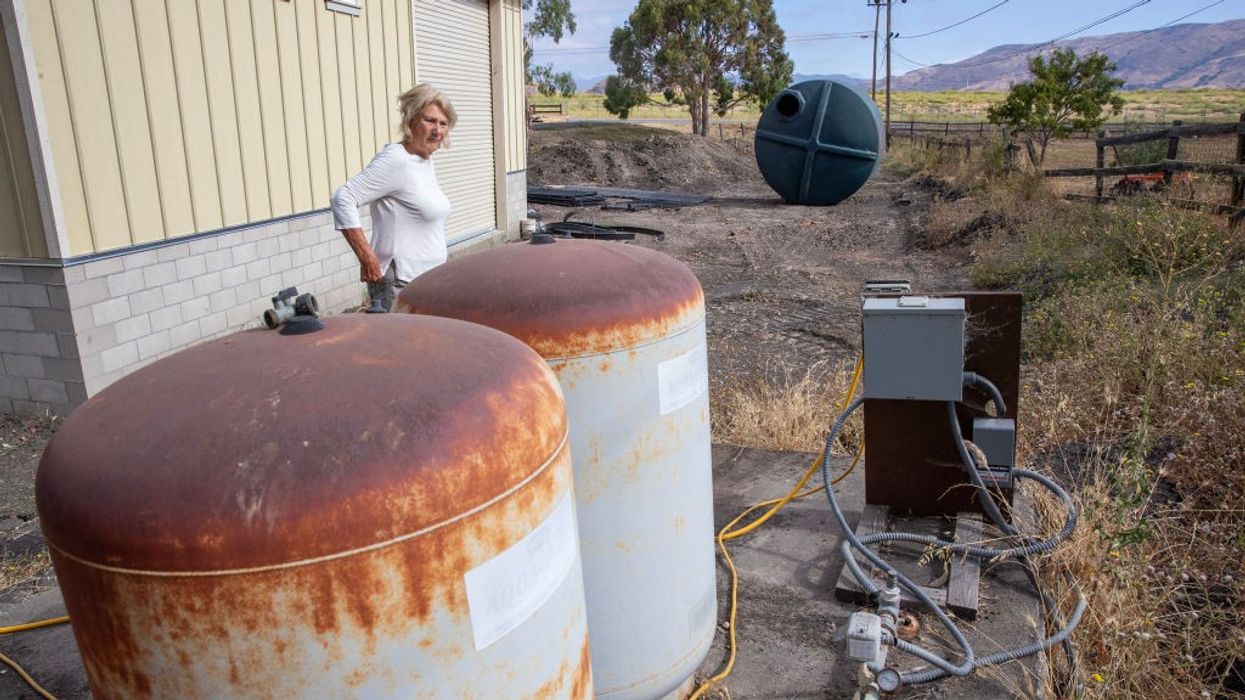
While praising the move, campaigners also said that the agency "must require polluters to pay to clean up the entire class of thousands of toxic PFAS chemicals, and it must ban nonessential uses."
Environmental and public health advocates on Friday welcomed the Biden administration's latest step to tackle "forever chemicals," a new Superfund rule that "will help ensure that polluters pay to clean up their contamination" across the country.
"It is time for polluters to pay to clean up the toxic soup they've dumped into the environment," declared Erik D. Olson, senior strategic director for health at the Natural Resources Defense Council. "We all learned in kindergarten that if we make a mess, we should clean it up. The Biden administration's Superfund rule is a big step in the right direction for holding polluters accountable for cleaning up decades of contamination."
Per- and polyfluoroalkyl substances (PFAS)—called forever chemicals because they remain in the human body and environment for long periods—have been used in products including firefighting foam, food packaging, and furniture, and tied to various health issues such as cancers, developmental and immune damage, and heart and liver problems.
"This action, coupled with EPA's recent announcement of limits on PFAS in drinking water, are critical steps in protecting the public."
As part of the Biden administration's "PFAS Strategic Roadmap," the U.S. Environmental Protection Agency (EPA) rule designates perfluorooctanoic acid (PFOA) and perfluorooctanesulfonic acid (PFOS) as hazardous substances under the Superfund law—the Comprehensive Environmental Response, Compensation, and Liability Act.
"President Joe Biden pledged to make PFAS a priority in 2020 as part of the Biden-Harris plan to secure environmental justice. Today the Biden EPA fulfilled this important promise," said Melanie Benesh, vice president for government affairs at the Environmental Working Group (EWG).
David Andrews, EWG's deputy director of investigations and a senior scientist, has led studies that have found that PFAS are potentially harming over 330 species and more than 200 million Americans could have PFOA and PFOS in their tap water.
"For far too long, the unchecked use and disposal of toxic PFAS have wreaked havoc on our planet, contaminating everything from our drinking water to our food supply," he noted. "Urgent action is needed to clean up contaminated sites, eliminate future release of these pollutants, and shield people from additional exposure."
Walter Mugdan, a volunteer with the Environmental Protection Network and the former Superfund director for EPA Region 2, explained that the "landmark action will allow the agency to more strongly address PFAS contamination and expedite cleanups of these toxic forever chemicals while also ensuring that cleanup costs fall on those most responsible—the industrial polluters who continue to manufacture and use them."
"This action, coupled with EPA's recent announcement of limits on PFAS in drinking water, are critical steps in protecting the public from these harmful compounds," added the former official, referencing the first-ever national limits on forever chemicals in drinking water that the agency finalized earlier this month.
As an EWG blog post detailed in anticipation of the new rule earlier this week:
A hazardous substance designation allows the EPA to use money from its Superfund—the EPA's account for addressing this kind of contamination—to quickly jump-start cleanup at a PFOA- or PFOS-polluted site and to recover the costs from the polluters. If a company that contributed to the PFAS contamination problem refuses to cooperate, the EPA can order a cleanup anyway and fine the company if they fail to take action.
[...]
When a chemical is added to the list of hazardous substances, the EPA sets a reportable quantity. Any time a substance is released above that quantity it must be reported. By imposing reportable quantities, the EPA will get immediate information about new PFAS releases and the chance to investigate immediately and, if necessary, take actions to reduce additional exposures. This information is also shared with state or tribal and local emergency authorities, so it can reach communities more quickly.
"For years, communities that have been exposed to these chemicals have been demanding that polluters be held accountable for the harm they have created and to pay for cleanup," Safer States national director Sarah Doll highlighted. "We applaud EPA for taking this step and encourage them to take the next step and list all PFAS under the Superfund law."
Liz Hitchcock, director of Safer Chemicals Healthy Families, the federal policy program of Toxic-Free Future, similarly celebrated the EPA rule, calling it "an important step forward that will go a long way toward holding PFAS polluters accountable and beginning to clean up contaminated sites across the country."
Like Doll, she also stressed that "until we declare the full class of PFAS hazardous and prevent further pollution by ending the use of all PFAS chemicals in common products like food packaging and firefighting gear, communities will continue to pay the price with our health and tax dollars."
Mary Grant, the Public Water for All campaign director at Food & Water Watch, agreed that further action is necessary.
"Chemical companies have attempted to hide what they have long known about the dangers of PFAS, creating a widespread public health crisis in the process," Grant emphasized. "These polluters must absolutely be held accountable to pay to clean up their toxic mess."
"Today's new rules are a necessary and important step to jump start the cleanup process for two types of PFAS," she said. "While we thank the EPA for finalizing these rules, much more is necessary: The EPA must require polluters to pay to clean up the entire class of thousands of toxic PFAS chemicals, and it must ban nonessential uses of PFAS to stop the pollution in the first place."
Noting that it's not just the EPA considering forever chemicals policies, Grant called on Congress to "reject various legislative proposals to exempt for-profit companies, including the water and sewer privatization industry, from being held accountable to pay to clean up PFAS."
"It is an outrageous hypocrisy that large for-profit water corporations seek to privatize municipal water and sewer systems by touting themselves as a solution to PFAS contamination, and yet they want to carve themselves out of accountability for cleanup costs," she argued. "No corporation should have free rein to pollute."

While welcoming the "long-overdue meaningful action" on drinking water safety, one campaigner argued that "much more must be done—much faster—at no cost to impacted households."
The Biden administration's proposal to better protect drinking water nationwide was met with sweeping applause on Thursday, but at least one consumer advocacy group stressed that the U.S. Environmental Protection Agency policy is "still not enough."
With its proposed changes to the Lead and Copper Rule, the administration aims to replace all lead water service lines in the United States within a decade, according to the EPA. There are also provisions intended to locate legacy lead pipes, improve tap sampling, lower the lead action level, and strengthen protections to reduce exposure.
Food & Water Watch Public Water for All director Mary Grant said that "the federal government has already waited far too long to require the elimination of these toxic lead water pipes, which poisoned the water in communities across the country," from Flint, Michigan and Jackson, Mississippi to Newark, New Jersey and Washington, D.C.
"The Biden administration has proposed long-overdue meaningful action toward the goal of eliminating lead from drinking water, but to ensure that every community has safe, lead-free water, much more must be done—much faster—at no cost to impacted households," she asserted.
Grant praised "agitators who emerged from... water contamination fights" and called on Congress to "step up to provide funding to replace the entire service line at no cost to impacted households, prioritizing low-income and environmental justice communities."
The Infrastructure Investment and Jobs Act, signed by President Joe Biden two years ago, "provided a $15 billion downpayment on this overhaul, but the total cost could exceed $60 billion," she pointed out, urging Congress to pass the Water Affordability, Transparency, Equity, and Reliability (WATER) Act.
"In a moment when many of us feel overwhelmed by bad news, the EPA's lead rule provides a ray of hope."
While additional steps are clearly needed, impacted communities and other campaigners still welcomed the progress on Thursday.
"Communities like ours... have grappled with the repercussions of lead contamination for too long," said Deborah Brown, a steering committee member of Newburgh Clean Water Project in New York. "The proposed improvements, especially the replacement of all lead service lines, signify a significant stride to safe and clean drinking water for our families and future generations. It's a step in the right direction."
Earthjustice attorney Suzanne Novak—whose legal group has represented the Newburgh Clean Water Project—said that "the EPA's proposed improvements to the Lead and Copper Rule are a much-needed response to a dire public health crisis that's been ongoing for more than a century."
"The administration's proposal takes important steps towards fulfilling the Safe Drinking Water Act's purpose of protecting human health to the extent feasible," Novak continued. "EPA has recognized that quick removal of all lead service lines is imperative, and that swift action is needed when a community has persistent high levels of lead in its water."
"Because the public health burden of lead exposure falls disproportionately on environmental justice communities," she emphasized, "we need to make sure that the final rule is equitable in how it achieves reduction of lead in drinking water across the country."
The Natural Resources Defense Council (NRDC) noted "apparent weaknesses" of the proposal, including that "water systems are not required to pay for the lead service line replacement," utilities could get extensions beyond the 10-year deadline, and the action level reduction from 15 parts per billion to 10 ppb "is less strict than the 5 ppb standards recommended by health experts and the governments in Canada and Europe."
Still, Erik Olson, senior strategic director for health at NRDC, said that "in a moment when many of us feel overwhelmed by bad news, the EPA's lead rule provides a ray of hope that we are approaching the day when every family can trust that the water from their kitchen tap is safe, regardless of how much money they have or their ZIP code."
Environmental Working Group senior vice president for government affairs Scott Faber also praised the progress, saying that "once again, President Biden's EPA is putting our families first and honoring his commitments to the American people."
The campaigner also highlighted the need to better protect communities whose drinking water is contaminated with per- and polyfluoroalkyl substances (PFAS), chemicals used in various products that persist in the environment and human body and are connected to health problems including cancers.
Biden's EPA proposed the first-ever national drinking water standard for PFAS in March. Faber said Thursday that "we're confident he will also make good on his commitment to finalize a drinking water standard for the toxic 'forever chemicals.'"
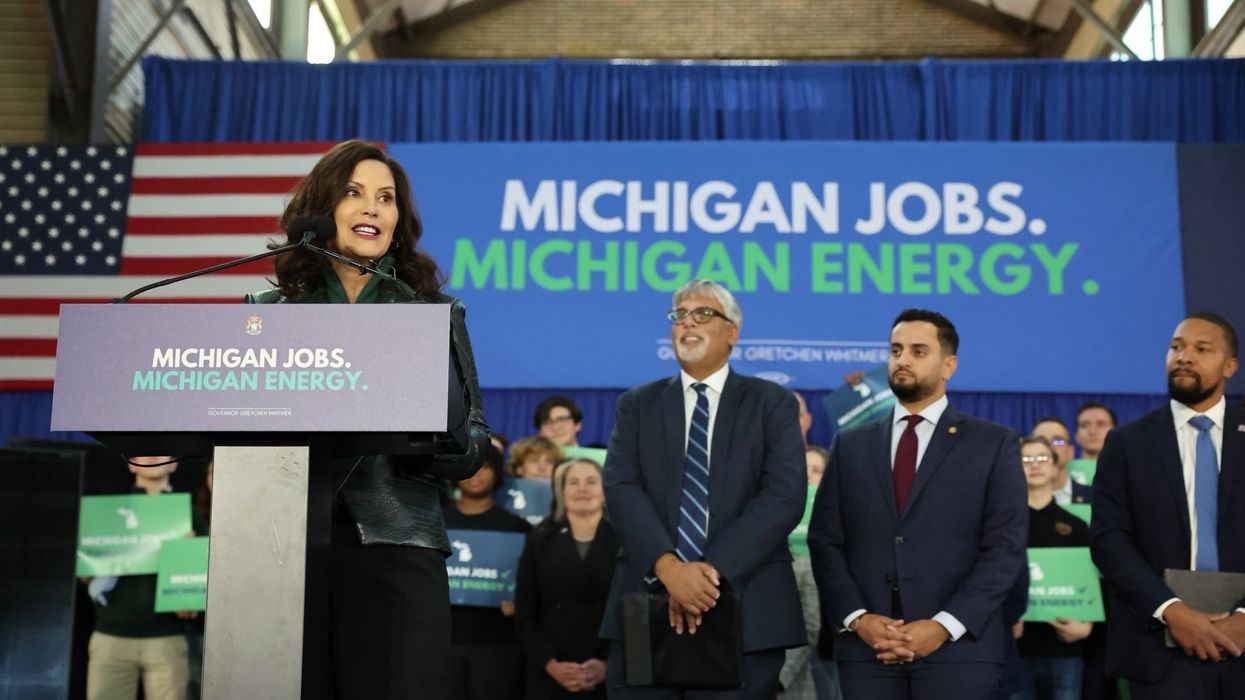
"This is a HUGE climate win that will create a safer, sustainable future AND good-paying, clean energy jobs!"
As scientists worldwide continue to sound the alarm about the need to swiftly ditch planet-heating fossil fuels, Democratic Michigan Gov. Gretchen Whitmer won praise from green groups on Tuesday for signing what she called "game-changing" legislation that "will help us become a national leader in clean energy."
"These bills translate into better air, water, and health for everyone," said Derrell Slaughter, Michigan clean energy advocate at the Natural Resources Defense Council. "The pathbreaking standards for the Midwest industrial heartland will see the state move to 100% clean energy by 2040 and put more resources toward energy efficiency."
"Michigan has seized the opportunity to demonstrate our commitment to combating climate change and ensure a sustainable, just, and prosperous future for our state," he added.
Senate Bill 271 is the part of the "Clean Energy Future" package that features the 100% clean energy standard. S.B. 273 increases Michigan's energy waste reduction standards, and S.B. 277 lets farmers rent out their land for solar power generation.
Additionally, S.B. Bill 502 directs the Michigan Public Service Commission to consider affordability, equity, environmental justice, and public health in reviews of power company plans; S.B. 519 establishes a Community and Worker Economic Transition Office at the the state Department of Labor and Economic Opportunity; and House Bill 5120 empowers the MPSC to greenlight large renewable energy projects.
Johanna Neumann, senior director of Environment America's Campaign for 100% Renewable Energy, said Tuesday that "since the 1800s, Michigan has been at the forefront of leveraging new technologies to improve American lives. By committing to a future powered entirely by clean, renewable energy, Michigan is building on its legacy of innovation."
"Gov. Whitmer and the state Legislature are creating a situation ripe for Michigan to realize its vast renewable energy potential," she continued. "The state has enough wind resources to power the state 3.5 times over and enough sunshine to meet 55 times the state's 2020 electricity demand."
Neumann noted that Michigan joins other states also "leading the way" with clean or renewable energy mandates for the coming decades: California, Connecticut, Hawaii, Illinois, Maine, Minnesota, Nevada, New Mexico, New York, Oregon, Rhode Island, Virginia, and Washington.
"In 2018, when Environment America launched its 100% Renewable Campaign, only Hawaii had any statewide 100% clean or renewable energy goal," she said. "It's great to see more states ensure that powering our lives with clean and renewable energy will lead to a healthier and safer future. We'll keep driving more states to get on the 'road to 100%'"
While climate campaigners welcomed the package, there are some notable critiques. As Michigan Advance explained:
The Michigan Environmental Justice Coalition has expressed opposition to a key part of the package, S.B. 271, which requires energy companies to generate 60% of their energy from renewable sources by 2035 including biomass, landfill gas made from solid waste, gas from methane digesters using municipal sewage waste, food waste and animal manure, and energy-generating incinerators in operation before January 1.
The group says that the carveout for landfill gas, biomass, gas from a methane digester, and its inclusion of incinerators and natural gas using carbon capture technology will disproportionately impact lower-income communities.
"Gov. Whitmer and her allies will try to spin the passage of S.B. 271 as a victory for climate and environmental justice," said Juan Jhong-Chung, Michigan Environmental Justice Coalition co-executive director. "In reality, it is a disaster for everyone but DTE and Consumers Energy. There can be no climate win without environmental justice, and environmental justice communities who will bear the brunt of this dirty law were systematically excluded, dismissed, and ignored during its drafting."
The Detroit News reported Tuesday that "DTE Energy, one of Michigan's two dominant electric utilities, gets about 15% of its electricity generation from renewable sources, according to its website. And Consumers Energy, the other dominant electric utility, already plans to get 40% of its energy from renewable sources by 2040."
Whitmer, who celebrated signing the bills with an event at Detroit's Eastern Market, declared on social media that "today is a huge win for Michigan. We'll protect our air, water, and land while facing climate change head-on and lowering costs."
As The Detroit News detailed: "Whitmer said the measures will lower household energy costs by an average of $145 a year, but Republicans have argued rates will increase as utilities pass the costs of renewable projects along to customers. The study the governor appeared to get the $145 projection from examined additional changes on top of the new laws' move to clean energy."
Whitmer also declared that the legislation will bring nearly $8 billion in federal funding to the state for clean energy projects and create 160,000 "good-paying" jobs, according to Michigan Advance.
"With today's bills, we define the future," Whitmer said. "As Michiganders, we know we have a responsibility to face climate change head-on, not only to make lives better today, but to make sure life goes on centuries from now. Let's keep fighting for future generations."
The governor is widely seen as a rising star in the Democratic Party and is expected to potentially seek national office someday. For 2024, Whitmer has made clear that she supports President Joe Biden, who is seeking reelection.
Biden—who ran on ambitious climate pledges in 2020 but has let campaigners down with decisions on the Mountain Valley Pipeline, Willow oil project, and leases for extracting fossil fuels from public lands and waters—plans to skip the United Arab Emirates-hosted U.N. climate summit, COP28, set to begin Thursday in Dubai.

"This vast lease sale—for millions of acres—poses threats to Gulf communities and endangered species while contributing to the climate crisis this region knows far too well," said one advocate.
Calling the Biden administration's plan to go ahead with an offshore drilling lease sale "mind-boggling" as the United States faces escalating climate harms including "record heat, fires, and flooding," several advocacy groups filed a federal lawsuit Friday challenging the U.S. Interior Department's impending sale of 67 million acres in the Gulf of Mexico to the fossil fuel industry.
Groups including the Center for Biological Diversity (CBD), Earthjustice, and Friends of the Earth (FOE) filed the lawsuit saying that in moving forward with Lease Sale 261—the last of three offshore lease sales mandated by the Inflation Reduction Act—the Interior Department did not sufficiently consider the environmental impacts on people and wildlife across Gulf communities.
"As steward of the country's public lands and waters, Interior has a duty to fully consider the harms offshore leasing can cause, from air pollution to oil spills, and beyond," said Julia Forgie, attorney for the Natural Resources Defense Council, one of the plaintiffs. "This vast lease sale—for millions of acres—poses threats to Gulf communities and endangered species while contributing to the climate crisis this region knows far too well. We are holding the agency to its obligation to carefully assess these risks and the climate fallout of this giveaway to Big Oil."
"If we are going to make a dent in the climate crisis, business as usual must stop."
A study published in May in Environmental Research showed that people living near offshore drilling rigs are at heightened risk for respiratory and cardiovascular issues as well as other serious illnesses, along with facing the rising threat of extreme weather due to fossil fuel emissions from such projects.
Lease Sale 261 could result in the production of more than 1 billion barrels of oil and 4 trillion cubic feet of fossil gas over the next 50 years, noted the groups, leading to more than 370 tons of greenhouse gases at a time when scientists and energy experts are warning that continued fossil fuel extraction is threatening the planet.
The sale is scheduled to be held on September 27, around the same time that the Interior Department is expected to release its proposal for a five-year offshore oil and gas leasing program.
That proposal could include as many as 11 new offshore lease sales "with the potential to emit up to 3.5 billion tons of carbon pollution," said the groups.
The lawsuit filed on Friday accused the Bureau of Ocean Energy Management (BOEM) of presenting "an incomplete and misleading picture of oil spill impacts and risks based on flawed modeling that failed to properly consider reasonably foreseeable accidents" in its analysis of environmental impacts that could be caused by Lease Sale 261.
"The final SEIS [supplemental environmental impact statement] failed to take the required 'hard look' at the significant impacts of this action," reads the lawsuit. "For example, the bureau did not rationally evaluate the impacts of greenhouse gas (GHG) emissions, relying instead on problematic modeling and assumptions to conclude that these massive lease sales will result in only slightly higher emissions than not leasing at all, and further failed to consider the impacts of such fossil fuel development on climate goals and commitments. With regard to environmental justice, the final SEIS arbitrarily dismissed the impacts of onshore oil and gas infrastructure—refineries, petrochemical plants, and other industrial sources that process fossil fuels and related products from these lease sales—on Gulf communities."
The lawsuit was filed as thousands of people in Louisiana's so-called "Cancer Alley" were ordered to evacuate due to a chemical leak and fire at a petroleum refinery.
Hallie Templeton, legal director for Friends of the Earth, said the group will "keep fighting until the Gulf of Mexico is off the table for good."
"Unfortunately, given BOEM's history of sacrificing the Gulf of Mexico to Big Oil, this lease sale decision comes as no surprise," said Templeton. "Our lawsuit should also come as no surprise, since BOEM continues to rely on the same outdated, broken environmental analysis. If we are going to make a dent in the climate crisis, business as usual must stop."