

SUBSCRIBE TO OUR FREE NEWSLETTER
Daily news & progressive opinion—funded by the people, not the corporations—delivered straight to your inbox.
5
#000000
#FFFFFF
To donate by check, phone, or other method, see our More Ways to Give page.
Daily news & progressive opinion—funded by the people, not the corporations—delivered straight to your inbox.
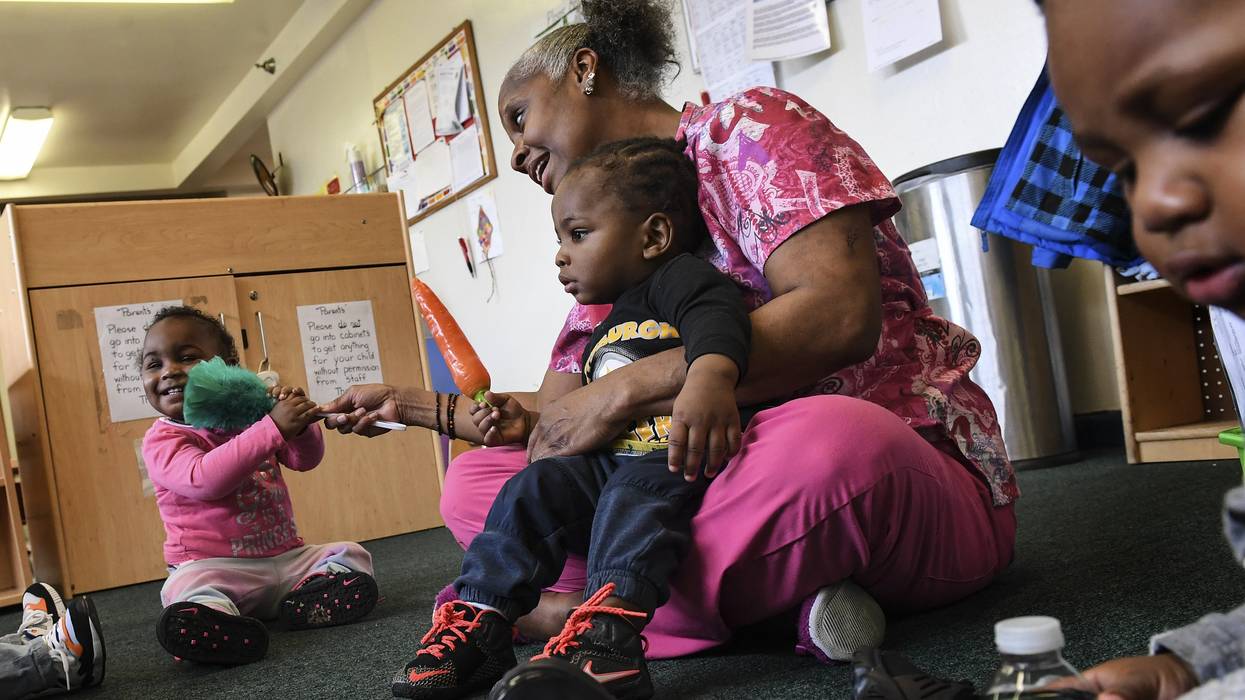
The work that our families run on often happens where no one can see it. This Labor Day, as midterms near, I'm thinking about what it will take for the people who do that work—and the people who depend on it—to finally be counted.
What does it say about this country when you can work for more than 40 years and still can’t afford to stop?
I am 66 years old and have spent over 30 years caring for children across the South. When 2024 drew to a close, I tried to retire. I thought I had put in enough time to set myself free from the labor of surviving this economy.
But, as I worried, I couldn't afford it. The price of everything was increasing, including bread, and I realized I had no choice but to return to work within six months of my retirement.
You can tell workers like me that we should have saved more, planned better, chosen a better path toward our retirement. But here’s the problem many domestic and care workers encounter: You cannot save money you never had. When wages barely cover housing, groceries, medicine, and everything else life throws at you, retirement is less like a plan and more like a luxury. In 2025 (the year I was supposed to be retired), early educators had a median wage of $34,980. Other domestic workers, like house cleaners make an estimated median wage of $34,650, and home care workers in 2025 had a median annual income of $22,429. These wages reflect the reality that domestic workers overall are three times as likely to live in poverty as other workers.
With seven children and 18 grandchildren, I do not want another generation of women in my family to inherit a country’s economy where caring for others means giving up their own security.
I come from a legacy of domestic workers. My grandmother, Big Momma, was a Certified Nursing Assistant. My mother was a housekeeper. I became a childcare worker. Three generations of Black women in my family have cared for other people.
We are part of a much longer history, and that is why this work has never paid what it should.
In 1881, 20 Black laundresses organized a movement that grew to nearly 3,000 members and won better wages after striking. Nearly a century later, Dorothy Bolden organized domestic workers across this same city and founded the National Domestic Workers Union of America. Bolden understood that better working conditions and civic power went hand in hand and even made voter registration part of the strategy to organize domestic workers.
When this country finally wrote basic protections into law, such as the right to organize, a minimum wage, and a path to retirement, domestic workers and farmworkers were left out of these protections. That was intentional. Much of that work was done by Black women in the South; leaving it unprotected was no accident. A multigenerational legacy later, we are still living with the consequences these gaps created.
It’s why a person can care for children for over 32 years and still not be able to afford to retire. We didn’t fail to plan; our work was just kept out of sight and out of the protections other workers won.
For most of my career as a childcare worker, children knew me as Miss Cathy. If one of them came to me crying because they were being bullied or something was wrong, I would tell them, "Miss Cathy is going to get to the bottom of it." And trust that Miss Cathy always did.
I adore my work and the children I care for. But loving your work should not require sacrificing your own security.
Or your health.
I have Graves’ disease—a disease that is twice as likely to impact Black women—and often, we face delayed diagnoses and advanced symptoms because of healthcare disparities. For years, I managed it by going to quick clinics when I could afford them and, most of the time, went without care when I couldn't. It was ironic: I was spending my days making sure other people's children were cared for while struggling to afford consistent care for myself. It was not until I turned 65 and qualified for Medicare that I finally had access to health coverage. And even that coverage is at risk.
But this essay is not meant to share all of the challenges I face in care work. No, I am writing this to emphasize that I am no longer the exception. We, as working-class people, have become the rule.
Across the United States, retirement is slipping out of reach for working people of every kind. Wages have not kept up with the cost of the roof over our heads, a simple doctor's visit, a full grocery cart, or care of any kind. More and more people are working into their late 60s, 70s, even 80s, not because they want to, but because stopping simply is not an option. For me, I work until God tells me to stop. The insecurity I’ve referenced has always shadowed domestic workers, and now it’s reaching the rest of the working class. My story reflects the lives of so many working people.
But domestic workers are building a constituency around care: domestic workers, family caregivers, parents, and everyone who understands that care is not some niche issue. It is part of whether a family can afford to live and whether the people who provide that care can afford to grow old, in my case, preferably with a crisp beverage on a beautiful beach.
The economy and affordability are on people's minds. It’s the only thing that’s on my mind. My bank account tells me that things are expensive.
For Black women like me, the right to be heard was never simple. Our grandmothers cleaned other people's homes and were told their voice did not matter in their own country. My father, who raised my siblings and me in 1960s Memphis, taught us that sitting out of the civic process was not optional; he refused to be invisible, and engaging with elected officials was a way to ensure that.
And it is not only domestic workers who have a stake in this. Every family with childcare needs, every person with an aging parent or disabled loved one at home, all of us who will need care someday—we all deeply depend on this work. When we make that care visible, when we insist that it be counted and prioritized, we are looking out for one another.
I want the people in elected office to hear that childcare lets parents go to work, that home care lets people live with dignity, and that we, the people who do that work, should be able to retire from it one day.
Domestic workers are more than our labor. We are neighbors, parents, and grandparents.
With seven children and 18 grandchildren, I do not want another generation of women in my family to inherit a country’s economy where caring for others means giving up their own security.
My grandmother cared for people. My mother cared for people. I spent 32 years caring for children. We have done our part.
This Labor Day, I want the people who represent us—and the country we have spent our lives caring for—to show us they will do theirs.
And if they don't, Miss Cathy is going to get to the bottom of it.

Employers added 261,000 jobs in October on a seasonally adjusted basis, the Labor Department said Friday. That was down from 315,000 in September. The unemployment rate rose to 3.7 percent.
As American corporations report their highest profit margins the United States has seen in over seventy years, executives of leading companies are admitting on earnings calls that they're taking advantage of inflation.
Average hourly earnings climbed by 4.7 percent in the year through October. Consumer prices grew 8.2 percent through September.
Bottom line: Workers are losing purchasing power more rapidly now than they have at any point over the last year.
This may explain why the share of Americans between the prime working ages of 25 and 54 who are working or looking for work fell to 82.5 percent in October--down from 82.7 percent in the previous month. At the beginning of 2020, the number stood at 83.1 percent.
Why aren't more people working? Because pay is lousy.
So why does Jerome H. Powell, the Fed chair, insist, as he did at a news conference this week, that "the broader picture is of an overheated labor market where demand substantially exceeds supply"?
Overheated?
No, Mr. Chairman. The broader picture is of slowing job and wage growth--even though prices continue to rise and the Fed continues to raise interest rates.
Powell and the Fed lifted interest rates by three-quarters of a point this week, and signaled more increases to come. Presumably, they'll continue to raise rates until they push the economy into recession, thereby pushing most working people into ever-greater peril.
This borders on insanity.
The broader picture is of big corporations continuing to raise their prices above their rising costs (including their labor costs). Why? Because they can. They have enough market power to get away with this--using inflation as a cover.
As American corporations report their highest profit margins the United States has seen in over seventy years, executives of leading companies are admitting on earnings calls that they're taking advantage of inflation.
One executive argued that "a little bit of inflation is always good in our business" while another admitted that his company's prices wouldn't fall with decreasing costs, stating "we don't reduce prices on the back end of these increases."
Last weekend, ExxonMobil posted the highest quarterly profit in its 152-year history, and Chevron the second-highest quarterly profit since its own founding. Oil company profits have been soaring for the past year, prompting many other nations (including the U.K., governed by those crazy left-wing Tories) to adopt windfall profits taxes of their own.
Finally, last Monday, President Biden called for a windfall profits tax on oil companies if their prices didn't drop or didn't offer rebates to consumers.
A bit late, perhaps?
We're just three days before one of the most consequential elections in history. Democrats should be--and should have been--raising the alarm about corporate power.
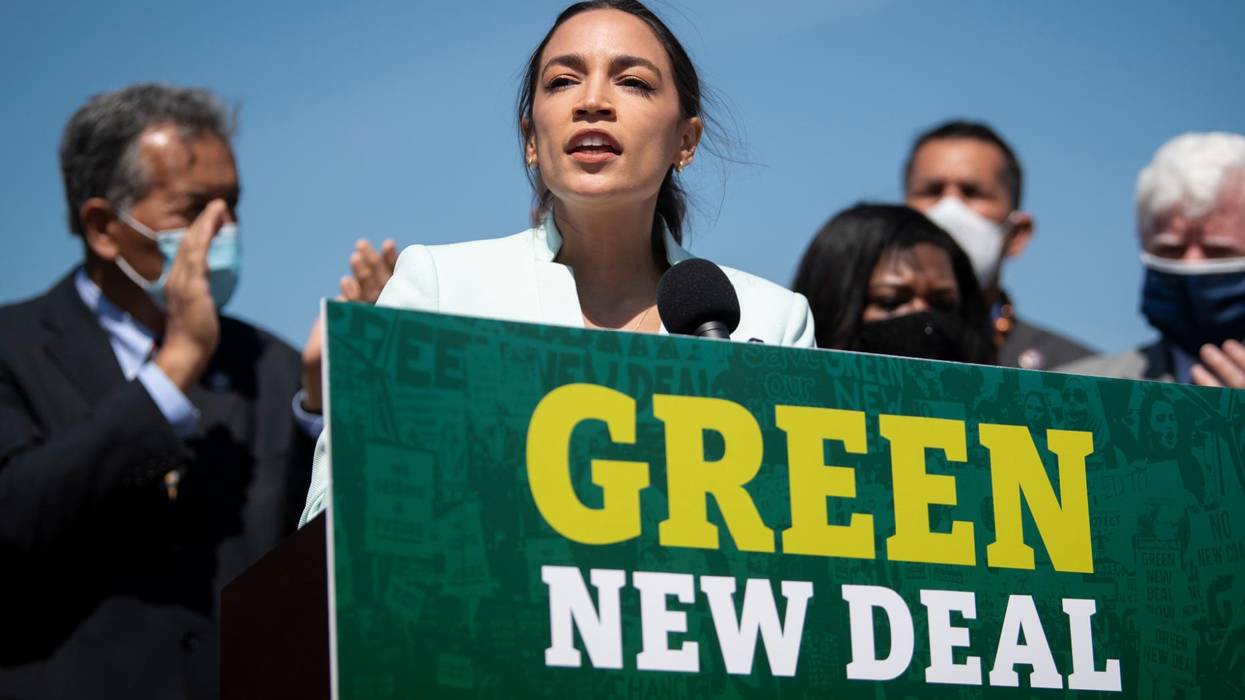
As part of what they are calling "Green New Deal Week," Rep. Alexandria Ocasio-Cortez and Sen. Ed Markey on Tuesday led the reintroduction of their landmark resolution envisioning a 10-year mobilization that would employ millions of people with well-paying, union jobs repairing U.S. infrastructure, while reducing pollution and tackling the country's intersecting climate, economic, health, and racial justice crises.
"On the eve of Biden's climate summit, this is the bold, transformative climate action we need."
--Natalie Mebane, 350.org
"The Green New Deal isn't just a resolution, it is a revolution," said Markey (D-Mass.), who first unveiled the measure with Ocasio-Cortez (D-N.Y.) in February 2019. "In the past two years, the Green New Deal has become the DNA of climate action, and the principles of jobs, justice, and climate action are now widely represented in legislation and state and local actions across the country."
"We can transform our economy and our democracy for all Americans by addressing the generational challenge of climate change," Markey said. "We have the technology to do it. We have the economic imperative. We have the moral obligation. We just need the political will."
The Green New Deal Resolution of 2021 (pdf), partly inspired by Franklin D. Roosevelt's 20th century New Deal programs, declares that "it is the duty of the federal government... to achieve the greenhouse gas and toxic emissions reductions needed to stay under 1.5 degrees Celsius of warming, through a fair and just transition for all communities and workers," referencing the more ambitious target of the 2015 Paris climate agreement.
The resolution calls for building resiliency against climate-related disasters; repairing and upgrading U.S. infrastructure; shifting to 100% renewable energy; prioritizing energy efficiency for new and existing buildings; spurring growth in clean manufacturing; promoting sustainable agriculture practices; and overhauling the country's transportation systems.
It also emphasizes the necessity of mitigating and managing the long-term adverse health, economic, and other effects of pollution and the climate emergency; restoring natural ecosystems; cleaning up hazardous waste sites; and "promoting the international exchange of technology, expertise, products, funding, and services, with the aim of making the United States the international leader on climate action."
The lead sponsors held an event on Capitol Hill to unveil the resolution, which has gained over a dozen new co-sponsors and is endorsed by over two dozen advocacy groups, including 350.org, Climate Justice Alliance, Future Coalition, Green New Deal Network, Greenpeace USA, Indivisible, Justice Democrats, National Domestic Workers Alliance, NDN Collective, Sierra Club, Sunrise Movement, United We Dream, and Working Families Party.
Two years after the first resolution, "we are still facing the ticking time bomb of the climate crisis, but now alongside the highest levels of joblessness since the Great Depression," noted Sunrise Movement executive director Varshini Prakash. "We are in a civilization-altering moment in our history and it's time for America's political leaders to muster the courage and moral clarity to pass the Green New Deal, launching America's biggest job creation program in a century while combating climate change."
"At a crucial moment like this," she added, "politicians have a choice to make: they can heed the call demanded by science and justice to build back better through a Green New Deal, or they can cower to the fossil fuel industry and force us down a path of destruction, towards the fires that burned our homes to rubble and the floods that took our family and friends with them."
350.org policy director Natalie Mebane pointed out the reintroduction comes just before President Joe Biden's Leaders Summit on Climate, which kicks off Thursday.
"Today, our movement presented a vision for our future: one that staves off the worst of the climate crisis and centers communities in a just transition to a regenerative, people-centered economy," Mebane said. "On the eve of Biden's climate summit, this is the bold, transformative climate action we need. We are calling on Congress and the Biden administration to implement the Green New Deal, ensure a just recovery from the racial, health, climate, and economic crises, and #BuildBackFossilFree."
Applauding the resolution "for its vision, intention, and scope," the Indigenous Environmental Network (IEN) said in a statement that "as Indigenous peoples and tribal nations living on the frontline of climate chaos, our communities already experience the direct impacts of climate change--and the various policies that legislate our sovereignty, our lands, and our bodies."
"We know we need bold solutions that meet the scale of our intersecting problems," IEN said. "While it is true their resolution helps shift the national conversation around addressing the climate crisis, they are also helping to shift the national conversation away from the notion that consultation equals consent and toward the codified practice of free, prior, and informed consent with tribal nations and communities. We are encouraged to see congressional leaders take charge to help Indigenous communities and tribal nations protect their homelands, rights, sacred sites, waters, air, and bodies from further destruction."
As Ocasio-Cortez detailed in a statement, "The Green New Deal has three core components: jobs, justice, and climate." She continued:
The dozens of bills that have sprung from this resolution since we introduced it two years ago all contain: 1) a commitment to creating good-paying union jobs; 2) prioritizing frontline and vulnerable communities disproportionately affected by climate change--including communities of color, Indigenous land, deindustrialized communities, and fossil fuel hubs; and 3) reducing greenhouse gas emissions from human sources by 40 to 60% within 10 years and net-zero global emissions by 2050, in line with the Intergovernmental Panel on Climate Change's finding that global temperatures must not increase more than 1.5 degrees Celsius above pre-industrialized levels in order to avoid the most severe impacts of climate change.
In a tweet, the congresswoman highlighted the other measures that have been or will be put forth this week--including the Green New Deal for Cities Act of 2021, which she introduced with Rep. Cori Bush (D-Mo.) on Monday. As Common Dreams reported, that bill is a $1 trillion plan to "tackle the environmental injustices that are making us and our children sick, costing us our homes, and destroying our planet."
Along with reintroducing the original resolution on Tuesday, Ocasio-Cortez and Markey joined with Sen. Bernie Sanders (I-Vt.) and others to introduce the Civilian Climate Corps for Jobs and Justice Act.
The bill would establish a Civilian Climate Corps (CCC) administered by the Corporation for National and Community Service within AmeriCorps. Markey's office framed the proposal as a modern version of a New Deal-era program also known as CCC. The updates include "ensuring that all Americans who want to participate may do so, regardless of race, age, or gender; broadening the range of eligible projects; providing 21st century health and education benefits; deepening partnerships with unions; and preserving tribal sovereignty."
Sanders, who's also a co-sponsor of the initial resolution and the Green New Deal for Public Housing, said in a statement that "the existential threat of climate change is our greatest challenge, but also our greatest opportunity to protect our natural heritage and build a just future for the generations to come."
"In the tradition of FDR's New Deal Civilian Conservation Corps--one of the most successful programs of the era that ensured jobs for millions of working people in maintaining our precious interior and conserving our wilderness--the Civilian Climate Corps for Jobs and Justice Act will create more than a million good-paying jobs, help us protect our natural resources, and move us forward in the fight against climate change," he added. "I am proud to work with my colleagues to see the CCC of our time renewed for the challenges ahead."

Several influential progressive women on Monday launched a new grassroots movement aimed at building on the energy and political power of American women, who make up the majority of the U.S. population, voters, and grassroots donors--forming what the group calls a "Supermajority."
Created by former Planned Parenthood president Cecile Richards, Black Lives Matter co-founder Alicia Garza, and National Domestic Workers Alliance director Ai-jen Poo, the Supermajority is aimed at building on the political power women have demonstrated since President Donald Trump was elected in 2016.
"In many ways, women have been doing all this work--whether it's running their PTA, or organizing around reproductive healthcare--but we haven't been doing it together." --Cecile Richards, Supermajority co-founder"In the past two years, we've seen what happens when women mobilize," reads a statement on the group's website. "Women donated $100 million more to campaigns and causes in 2018 than they did in 2016. We've been the majority of voters in every national election since 1964. In 2018, women helped elect a Congress with a record-breaking 127 women members."
"Women are on the cusp of becoming the most powerful force in America," the statement adds. "But to fundamentally transform this country, we need to work together."
The group launched with a video featuring its slogan, taken from Richards' speech at the Women's March in 2017: "One of us can be dismissed. Two can be dismissed. But together, we aren't just the majority, we are a Supermajority--and we are unstoppable."
The Supermajority plans to gather the input of millions of women across the country in order to "create a women's agenda that puts our issues first--from economic equity and opportunity to dignity and safety on the job to keeping families and communities safe."
Headed by women who have dedicated their careers to organizing around causes affecting marginalized communities, the group also plans to provide on-the-ground training to women who are new to activism and include a "Supermajority Education Fund" which will research and educate women about civic participation, visibility, and political power.
"We've spent the last year going around the country to all kinds of communities--urban, suburban, rural--and talking to women, listening to their stories," Poo told CNN's "New Day" on Monday morning. "And it's been so inspiring. They're already much more engaged in unprecedented ways...and they want to do more. They don't want to stop here, they want to do more and they want to be connected."
The group argues that while women have become more politically engaged in recent years, there hasn't yet been a platform where they can join together to build on and learn from one another's efforts and activism.
"In many ways, women have been doing all this work--whether it's running their PTA, or organizing around reproductive healthcare--but we haven't been doing it together," Richards told the Washington Post. "What are we going to do to make this moment not something that is just a fleeting flash point of activism, but actually creating a permanent organizing ability for women?"
On social media, one supporter of the new movement likened its agenda to a "Women's New Deal," aimed at pushing for affordable childcare, universal healthcare, pay equity, and other reforms that would help American women--and the rest of the country.
"There's a majority of Americans who want to see better, affordable healthcare, there's a majority of Americans that are impacted by childcare issues and elder care issues," Garza told CNN. "These are issues that are often sidelined as women's issues or special interests but what the Supermajority is saying is actually these are issues that are impacting all Americans and they should be addressed as the national issues and the national emergencies that they are."
In its statement of values, the Supermajority writes that women's equity is essential to "fighting for the basic human needs of all people, including universal healthcare, public education, a living wage, a clean environment, and affordable housing."
On Twitter, other influential women applauded the group for creating a new space in the political landscape in which women can work together to fight for economic, political, and social justice.
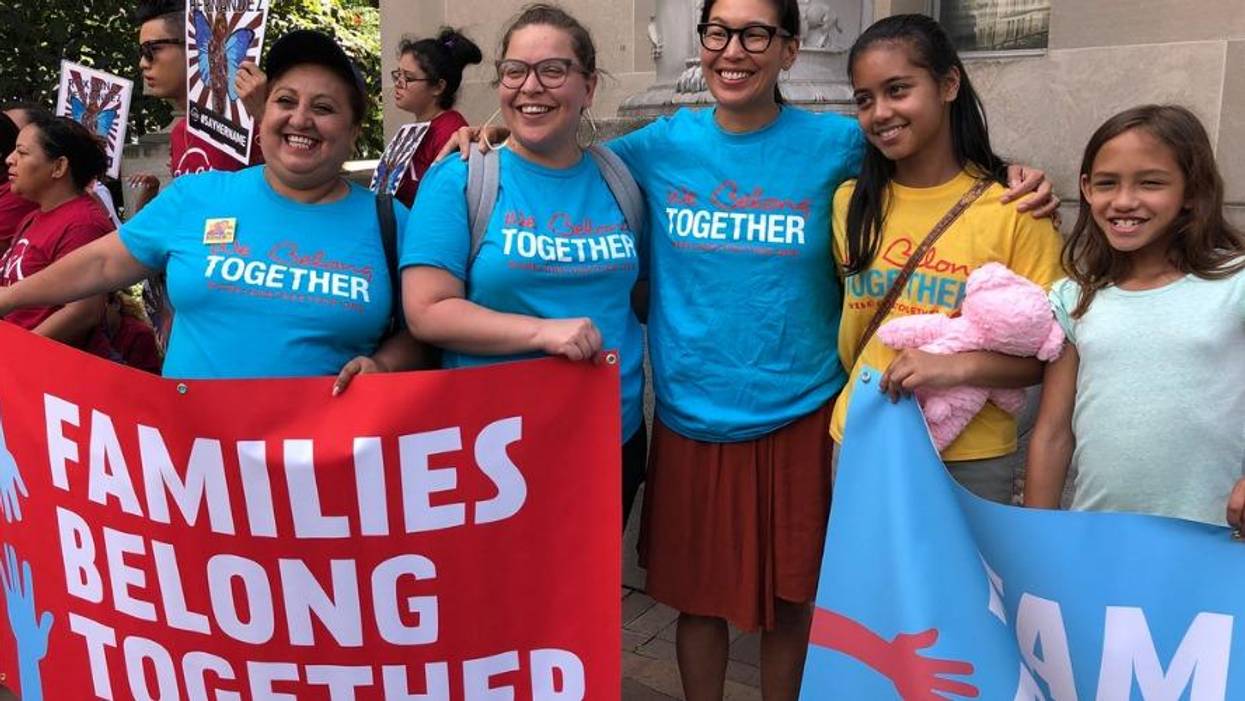
It's not right. Infants are being taken from their mothers. Families are being separated, and parents charged as criminals for sheltering children from violence.
These courageous parents are doing the right thing. They're protecting their children the only way they can: by taking them out of harm's way, and seeking refuge - they hope - from the persecutions they face in Mexico and Central America.
And they're following the law: when they reach the border, they're voluntarily asking agents to consider their requests for asylum. The U.S., like every civilized nation, is required to do this by international law.
But since Attorney General Jeff Sessions announced his "zero tolerance" policy against immigrants, hundreds of children - some only months old - are being snatched up. The unluckiest - like Patricia Gomez Gonzalez, a twenty-year-old from Guatemala - are shot dead by border patrol.
Parents are given no explanation or guarantee they'll ever see their children again.
And parents have good reason to fear that they won't - federal agents have already lost track of 1,500 children they've taken into custody.
Too bad, says Sessions - he's just following the letter of the law. But he's lying. There's no law that says families should be separated at the border, or anywhere else. This is part of a campaign to intimidate, threaten and turn away immigrants from our borders.
It strikes at the heart of who we say we are as a nation - is the United States, as many of us are taught, a nation of refuge, the land of the free and the home of the brave? Or are we a nation of fear?
As a mom, and the daughter of immigrants, I know in my bones this is not right.
That's why I'm standing up with Wisconsin Citizen Action, the National Domestic Workers Alliance, the ACLU, MomsRising and many others today to demand an end to this cruel and inhumane treatment. Join us on the steps of the USCIS office in Milwaukee at noon, or at one of the hundreds of other locations across the country where we will gather in protest.
I live far from the southern border, in Milwaukee, Wisconsin - but the chilling effect of Sessions and Trump's racist war on immigrants has reached us here.
Wisconsin is America's Dairyland: we provide nutritious, affordable milk to children from coast to coast.
Milking cows is backbreaking, dawn-to-dusk work - and many of dairy farms' hardest workers are undocumented. Some call them "migrants," but many of these workers put down roots and stay at the same farms year after year, revitalizing our rural communities.
Now ICE is raiding these farms, and arresting workers. And in places like Waukesha County, where they can't get local police to cooperate, they deputize sheriffs to do their dirty work.
And Wisconsin farmers are getting upset - because they, and the whole nation, rely on these honest, hardworking migrants to milk their cows. They can't find American citizens to do these jobs. And the "lucky" ones who aren't arrested? They're now working ten to fifteen hours a day. Farms are closing, and the price of milk is rising.
I myself am the daughter of immigrants. We came to Wisconsin from my native Paraguay when I was sixteen, to seek a better life. I went to college, then graduate school at Marquette, Milwaukee's Jesuit University, and I now teach economics at the college level. I also help organize the growing Latinx community across our state for Citizen Action of Wisconsin.
I know from experience that Wisconsin, and the United States, have a better heart than its current leaders. Don't let them win. In our hearts, we all know this cruel treatment of children and families is wrong. After all, so many of us - even Donald Trump and Jeff Sessions - come from families that were immigrants once, too.
So join us today -- June 1st -- to put an end to this inhumanity, now. Because we all deserve better.
Some couples, in the days leading up to their wedding, are caught up in final preparations: a last-minute dance class, attending to a late RSVP, or doing some work on your vows. There are lots of details, but what matters most is the love you share.
We're getting married on November 18, and there's been plenty of attention to the details of the event. But 2016 is not an ordinary year. In many ways, our future hangs in the balance. So, as we finalize the arrangements, we are also hitting the road this morning to help with get out the vote and shine a light on the silver linings in this election.
We both lead social justice organizations. Ai-jen works to bring dignity and respect to domestic workers - the nannies, housekeepers and caregivers who care for the most precious elements of our lives so that we can work. George organizes working families around the country, from rural Iowa to El Barrio in New York City, for racial, economic and environmental justice and to find a voice and power in one another. We both spend a lot of time on the road, but in the final days of this election cycle we're taking it to the extreme, visiting five states in five days.
We're making the trip - a pre-wedding honeymoon, if you will - because in an election season dominated by hate and division it feels like we could all use a bit of hope and a lot of love. The people we work with every day have too much on the line. And the work they're doing to make this democracy work and build a more loving country, especially in these final days before a historic election, is too important to go unseen.
In the next few days, we'll hear a lot from the pundits about the polls and numbers, about swing states and safe states, about different demographic categories and who can tip the scales. What inevitably gets lost in the horserace is the story about the real people, especially people at the bottom of our economy and living on the margins, and the issues they care about. That's why we'll be talking with immigrants in Aurora, Colorado, students and Native Americans in Washoe County, Nevada, domestic workers in Dade County, Florida, formerly incarcerated people in Arizona, and working-class white people in New Hampshire.
Our country was founded on the promise of liberty and justice for ALL, but from the beginning we've fallen painfully short. At the same time, what has made this democracy great have been the social movements of everyday people - from the Freedom Riders to the Flint sit-down strikers -- that have reshaped and redefined what it means to be American in profound ways, and from a place of love.
In this contentious and fraught election cycle, we have found ourselves in a new defining moment. With unprecedented levels of inequality and major demographic shifts as our backdrop, we are asking ourselves those fundamental questions once again: Who belongs? What is the dignity we each deserve? How do we take care of our families and each other?
In the next six days, we're going to do our best to tell the story of this election from the standpoint of the people you may never see on TV, but who are poised, in the best of American social movement traditions, to help us answer these questions, and bring us closer to our founding promise. Martin Luther King Jr. said we can be extremists for hate or extremists for love. Lately, the former have gotten far too much airtime. That's why we're going to uncover the love story that we believe is the future of American democracy. Then we're going to get hitched.
Follow our journey here on OurFuture.org, and on social media using the hashtag #BestofUS2016.
As a mother of two little girls, aged 4 and 6, the photograph of 3-year-old Alan Kurdi, the waves lapping the face of his lifeless body, shook me.
But the tears came much later -- not as I saw more and more images of migrant and refugee suffering in the news, but when I saw families in Europe with signs welcoming refugees, standing by the roadside with food and water. What's moved me most are the images and stories of everyday people not waiting for government policy, but choosing love and taking action.
It's not just a challenge for Europe, of course. As a human rights activist working with migrant communities in the United States, I bear witness to human suffering everyday.
I hear too many stories of immigrant women who labor as domestic workers, being underpaid, or not paid at all. I sit with undocumented women who are wracked with grief because they're unable to be with their parents on their deathbeds, locked out by borders they can't cross. I look in the eyes of women who leave their children in their countries of origin to put food in their mouths and send them to school, but struggle with the guilt and sadness of not being there to hold them when they cry.
How many beautiful children like Alan Kurdi have to die crossing our border, fear their parents being deported, or long for their parents' embrace? How many before our compassion is triggered and transformed into action?
It's a pressing human rights crisis. Yet in the United States, hateful anti-immigrant ideologues are pushing our public discourse about immigrants to new lows. With Donald Trump running for president and freely making dehumanizing remarks about the immigrant men, women, and children who call this country home, racism and xenophobia are getting passed off as political debate, rather than being challenged as hateful and harmful.
Of course, Europe has its own anti-immigrant extremists. Many right-wing politicians, such as Hungarian president Viktor Orban, have made anti-immigrant policies cornerstones of their platforms. And yet, in the face of widespread suffering, acts of compassion and kindness are inspiring another kind of politics.
As ordinary people act from a place of love and kindness, they're calling on their elected leaders to do the same. Governments from Germany and Austria to Iceland and the United Kingdom have agreed to consider accepting more refugees amid an outpouring of popular support. Even in Hungary, which had closed its trains and bus stations to prevent migrants from making their way to more prosperous and welcoming European countries, the government consented to pick up walking migrants in buses and transport them to Austria. And Pope Francis, a global moral voice, has called on European parishes and monasteries to take in refugees, leading by example.
There's no reason we can't replicate that success in the United States -- particularly on the eve of a visit from Pope Francis, who's expected to advocate for immigrant rights. After all, the hardline rhetoric of xenophobic politicians isn't actually representative of the prevailing American sentiment toward immigrants. Recent polling shows the vast majority of Americans -- nearly three-quarters, in fact -- support immigration reform with some form of legal status for undocumented immigrants in this country.
The refugee crisis we're witnessing in Europe makes the need to open our hearts as bare and as urgent as it ever could be. It pushes us to reflect on our own immigration policy to make sure it's one of compassion and not cruelty. Taking a cue from the ordinary Europeans who've opened their arms to refugees, how can we -- as everyday people -- set an example for our government, which has been unable or unwilling to enact humane policies?
Here's one idea.
From September 15-23, I'll be 1 of 100 women setting out to walk 100 miles from an immigration detention center in York, Pennsylvania, to Washington, DC in the days preceding Pope Francis' arrival in the United States. We'll be U.S. and foreign-born women, mothers, grandmothers, and women of faith, walking together with the intention of inspiring the American people and our politicians to recognize the human dignity of migrants and refugees.
Our hope is that the pope's visit will help rekindle a politics of compassion in our nation. But it will require us, as everyday people, to take the first step.
The following is an excerpt from Ai-jen Poo's new book, The Age of Dignity: Preparing for the Elder Boom in a Changing America
The following is an excerpt from Ai-jen Poo's new book, The Age of Dignity: Preparing for the Elder Boom in a Changing America
My father's father, Liang Shao Pu, lived to the age of 93. A lifelong student and then teacher of tai chi and a die-hard Wheel of Fortune fan, he had a slow, deep-throated laugh that never failed to infect my sister and me, sending us into spasms of giggles. After moving from Taiwan to the United States to be close to his children and grandchildren, my grandfather often picked us up from school, the silhouette of his baseball cap visible from down the block. He was never late.
My grandfather quietly sustained the heartbreaks of my parents' divorce, the passing of most of his friends and then the loss of his wife of more than 40 years. After my grandmother's stroke, she could no longer care for herself. With tremendous courage and love, for years he cooked every meal, talked to her and kept her comfortable until the end. One of my greatest regrets in life is that we did not provide him with the same comfort and care in the final moments of his life.
After repeated strokes, my grandfather's condition had deteriorated to the point that my dad no longer felt capable of providing the support he needed to stay at home and could not find appropriate home care support, so my grandfather was placed in a nursing home, against his wishes. I visited my grandfather there before he passed away.
My grandfather's bed was along a wall in a large, dark room with six other people, half of whom were completely silent, while the other half expressed their misery in loud, painful cries. The room lights were kept off, while a sickly fluorescent light in the hallway flickered. The place smelled like mold and death. It was my heart-wrenching introduction to dehumanizing institutional care.
When I arrived at his bedside, my grandfather was distressed. He believed the nursing home staff was trying to poison him. He had not slept or eaten for some time. He was frightened and in pain. He was a shadow of the person I knew growing up. I was furious and devastated.
After three months, he passed away in that facility. I almost feel as though he died the moment he arrived there; his dignity was stripped away upon entry. My father, my sister and I will always regret that my grandfather's final hours and ultimately his death were so lacking in comfort and beauty. He meant so much to us. I so wish we had been able to keep him at home.
I'm far from alone in my aversion to nursing homes. Nearly 90 percent of Americans feel institutions are not the appropriate place for elders to spend their final moments, months or years. The great majority of us want to live and age at home. The question is how, exactly, we can manage that.
America is about to experience an "elder boom," a direct result of the baby boom of 1946 to 1964. We have more senior citizens in America today than we've had at any time in our history. Every eight seconds an American turns 65; that's more than 10 thousand people per day, almost four million per year. A century ago, just about 3 percent of the population was 65 or older. Today more than 13 percent of Americans are over 65, and by 2030, the number will be 20 percent. The five million Americans older than 85, our country's fastest-growing demographic, will number 11.5 million by 2035. Because of advances in health care and technology, people are living longer than ever, often into their 90s or breaking 100.
Let's remember: people getting older is not a crisis; it's a blessing. We're living longer; the question is how we should live. As a country, we have to figure out how to embrace this demographic shift with grace. Just as the baby boom brought with it incredible power and opportunity, so does the coming elder boom.
One thing we know is that the longer people live, the more likely they are to need assistance. Seventy percent of people aged 65 or older need some form of support. By 2050, the total number of individuals needing long-term care and personal as- sistance is projected to grow from 12 million to 27 million. It is often assumed that women will absorb these tasks, as they have for much of our country's history, but that is not going to happen in 21st-century America. Most households today are dual income, which means there is no one at home full-time; at the same time, more and more American households have both children and aging parents who need support and care every day. The need for professional caregivers is skyrocketing.
Aging at home necessitates home care workers. Yet the three million people currently in the home care workforce cannot meet even the current need, let alone the demand for care that will accompany the elder boom. We will need at least 1.8 million additional home care workers in the next decade. As a result, caregiving, specifically home care, is the fastest growing of all occupations in the nation. By 2018, demand for home care workers will increase by more than 90 percent. Many of the existing eldercare workers are low-income African-American and immigrant women who are faced with innumerable challenges, among them low wages, long hours and inadequate training. Of the one-quarter of today's home care workers who were born outside the United States, about half are undocumented, which means that fear of deportation puts these workers under further stress. These conditions have led to high turnover in the industry, which hurts everyone: elders, their families and the workers themselves.
Many of these issues also have profound implications for people of all ages with disabilities. With the birth of the disability rights movement in the 1960s and 1970s, independent living replaced institutionalization as the clear preference of people with disabilities. Alongside assistive technologies, it is home care workers, predominantly known in the community of people with disabilities as "personal attendants," who enable many people with disabilities to manage their personal care, maintain a home, have a job, go to school and participate in other aspects of independent living. According to the U.S. Census, in 2000, an estimated 13 million Americans with disabilities were living independently in their communities. The concerns and stories of people with disabilities are and should be the subject of many books, and while these topics are deeply connected, this book's focus is the aging of America -- the challenge and opportunity of this demographic moment.
Many Americans currently struggle to afford the care they need. On average, a home health aide hired through an agency costs approximately $21-per-hour, the cost of an assisted living facility averages $3,300 per month and a semiprivate room in a nursing home costs $6,200 per month. Yet the average Social Security check amounts to just $1,230 per month, and Medicare provides little if any support for home-based care. How can elders or people with disabilities remain at home and live independently without sufficient support or funding? Our country has not adequately accounted for the caregiving we need. Yet home care is the future.
By 2010, we at the National Domestic Workers Alliance, an organization I helped found in 2007 to support the nearly invisible workforce employed inside homes across America, began hearing more and more workers asking for training in eldercare. Although these workers had been hired as nannies and housekeepers, they were now being called upon to provide home care for their employers' aging parents, too.
In response, in 2011, together with our sister organization Jobs with Justice, we launched Caring Across Generations, an initiative that addresses two of the major social issues of our time: widespread unemployment and the coming need for care for the nation's expanding aging population. At the same time that millions of people in the United States are struggling to survive long-term unemployment, there are far too few workers who are positioned and prepared to provide care for the growing number of elders and people with disabilities. The demographic shift creates a moment when we can set in place a system to affirm the dignity of people at every stage of life and in every walk of life, and create millions of good jobs in the process.
Caring Across Generations, led jointly by 20 organizations representing caregivers, care consumers and their families, is a national movement to embrace our changing demographics, particularly the aging of America, and an opportunity to strengthen our intergenerational and caregiving relationships. We're calling for an innovative approach to care, rooted in our homes and communities, that brings us all together and offers support to everyone involved.
As for Me
People always ask how I arrived at the work I do with domestic workers. When they do, I immediately think of my mom. While she was not a domestic worker, I can't conjure a single image of my mother resting during my whole childhood. She learned English, she worked and went to school and she was the only one in her class at medical school with two children. I can remember her dropping me off at day care, picking me up, making dinner, cleaning the house, ironing clothes. But I can't remember her ever relaxing. I don't think she saw that as an option. It was assumed that even though she had a PhD in chemistry as well as an MD, and went on to become an oncologist at two of the top cancer centers in the nation, she would still be primarily responsible for feeding, clothing and getting me and my sister to day care and school. Even today, at the age of 64, perhaps out of habit, she doesn't stop. She is always up the earliest, and while she goes to bed earlier these days, for the entire day she is going, going, going.
As a young person, I saw women as key to everything working well, yet our systems were not working for women. So I joined my first women's organization in high school and have not looked back since. No question: my dedication to women was inspired by my mother and my mother's mother -- the brilliant, strong, beautiful women who cared for me. They were innovators and trailblazers, yet so much of their work seemed to go unnoticed and unappreciated. They sacrificed so much, even their own health at times, to work and to care for us, the way so many women and family caregivers do. Today I witness the domestic workers in my organization caring for the families they work for and, after a long day, returning home to care for their own families, surviving with less support and fewer resources than my mother had. Working women of all walks of life face impossible choices. I hear and collect their stories everywhere I go; you will find many in the pages of this book. They help expand my sense of what 's possible, and they have helped me through my own difficult choices.
"Well, you should have stopped traveling." That's the first thing a friend of mine said to me after my miscarriage. Like millions of other women in America and around the world, I've been through the quiet, enigmatic labyrinth of fertility treatments and all the heartache associated with the process. I know the impossible choices women face while decidin which work trips to cancel in preparation for fertility treatments, the desperate searches for medical laboratories while traveling, the sleepless nights filled with guilt, self-doubt and shame that come along with making a choice -- whatever it is.
And I know what it means to need to focus on one area of care and not have a whole lot left for anything or anyone else. At every stage of my struggle with fertility, my mom always told me, "We'll be okay." What if she wasn't okay? What if she needed me? What if I had to travel for her? I never stop feeling the need to prepare for that moment and what it would mean for my ability to care across generations, in both directions.
Almost all our major laws and systems for care are based on standards and demographics from another era. However, today, from what I see all over the country and in many places across the globe, we 're finally moving from impossible, false choices to real choices. People are already adapting. In their experiences and stories, many of which I've tried to include in this book, we can see the future we need to create. We can see the way we need to adapt the system.
With some course corrections in our culture and in our institutions, we can have the care infrastructure that will enable us to live our full potential. We 've adapted many systems before, changing our country for the next era, and while it's never going to be easy to be the mom, partner, or daughter that you want to be, at least the very material and practical elements of that complexity can be relieved by a solid, reliable care infrastructure.
This is a book of problems finding solutions. When they do, it will give us all real choices--no matter who we are or what role we play at any given time -- choices that enable us to be free, to love, to have peace of mind. The moral of this story is that a caring America is entirely within reach.
Care is something we do; it's something we want; it's something we can improve. But more than anything, it's the solution to the personal and economic challenges we face in this country. It doesn't just heal or comfort people individually; it really is going to save us all.
I started organizing domestic workers 16 years ago. I signed up nannies, housekeepers and home health aides at parks and train stations as they quietly took care of our children, our households and our elders. Many of them had no clue about labor laws or their rights as workers - they struggled to make ends meet with extremely low pay and no benefits - but they performed their jobs with dedication and took care of our loved ones with pride, dignity and grace.
I found all those years ago that building a bright future for these workers depended on how America valued the care they provided us. In my work, care has emerged as the connective tissue to encompass all identities and enable us to transcend to the level of values and ethics. We must become a nation that values care, a caring America. Because each one of us is connected to care. Because we still largely ignore the needs of those nannies, housekeepers and aides who care for us.
There are at least 3m care workers across the United States. They help our loved ones eat and bathe while providing emotional support and human connection. These workers also take care of us - making it possible to go to work every day knowing our loved ones are in capable hands. They substantially cut healthcare costs by keeping people in their homes and communities and out of expensive institutions. If domestic workers were to strike, it would affect almost every sector in our economy - from doctors and lawyers, bankers and professors, to small business owners and media executives.
Yet in return for the life-sustaining supports that care workers provide, we have failed to care for them.
Read the full article at the Guardian