
SUBSCRIBE TO OUR FREE NEWSLETTER
Daily news & progressive opinion—funded by the people, not the corporations—delivered straight to your inbox.
5
#000000
#FFFFFF
To donate by check, phone, or other method, see our More Ways to Give page.


Daily news & progressive opinion—funded by the people, not the corporations—delivered straight to your inbox.
The Memorandum of Understanding is a reasonable framework for ending the current conflict and taking steps toward peace with Iran; Massachusetts lawmakers should support it.
The Memorandum of Understanding signed on June 17 by President Donald Trump and Iranian President Masoud Pezeshkian provides a road map toward peace between the two countries. Peace advocates should support it. The journey to this point has been tortuous, the interim agreement contains numerous ambiguities, and the Trump administration as the agent of change from the US side is so deeply compromised that implementation of the steps will be extremely difficult. Nevertheless, the MOU deserves our support.
Unfortunately, Massachusetts Democratic members of Congress have not welcomed the MOU. They rightly point out that Trump started the war, that it was foolish, it was illegal, unconstitutional, it was costly, it damaged the world economy, and it accomplished nothing. That is all true—but they generally have not spoken to its substance unless to criticize it.
If starting the war was wrong, ending it is right. The MOU is a reasonable framework for ending the current conflict and taking steps toward peace with Iran. It calls for opening the Hormuz strait; winding down US sanctions (and the US has already suspended sanctions on Iranian oil sales); reduction of the US military footprint in Iran’s neighborhood; curbs on Iran’s nuclear program with details to be negotiated; Israeli withdrawal from Lebanon; and a reconstruction investment fund for Iran, which would not involve any US funds.
US policy towards Iran has been predicated on hostility to the Islamic Republic since 1979. The US political elite and media have long based their policy on the thesis that Iran is a threat to the region and the United States. US leaders claim that Iran’s nuclear program may lead to its arming itself with nuclear weapons; that Iran’s ballistic missile program threatens its neighbors, especially Israel; that it funds terrorist proxies, naming Hezbollah, Hamas, and Ansar Allah (Houthis) as dangerous sources of instability; that it seeks to destroy Israel and attack the United States; that its repressive internal regime is of a piece with its regional troublemaking.
We can in no way count on Trump and Vice President JD Vance to get this negotiation over the finish line—but we can and should push them to do so.
These premises are profoundly flawed. Iran’s supreme leader has rightly ruled that nuclear weapons violate religious morality, much as Popes Francis and Leo have done. After 47 years it should be clear that Iran has never really sought to build a nuclear weapon, as it surely would have done so by now had that been its intention. Rather, its nuclear program is evidently designed to force the US to the table and get it to end US sanctions and negotiate with Iran on a respectful basis. It is the US and Israel, not Iran, that are armed with nuclear weapons—and Trump who explicitly threatened to use them on Iran. Does Iran arm terrorists? Maybe sometimes, but it is Israel, armed by the US, that has laid waste to the Middle East, attacking Palestine, Lebanon, Iraq, Syria, Iran, and Yemen, killing tens or hundreds of thousands, over just the past three years—although Iran has certainly done what it could to hit back in response to those constant provocations.
Within the anti-Iran consensus among US elites, one wing calls for diplomacy to obtain concessions from Iran, and for economic sanctions to force Iran to follow US wishes. President Barack Obama’s 2015 Joint Comprehensive Plan of Action (JCPOA) was based on this strategy. Obama first imposed sanctions, then promised sanctions relief in exchange for strict limits on Iran’s nuclear enrichment program—although little sanctions relief was actually delivered by the US before President Trump ended the JCPOA in 2018.
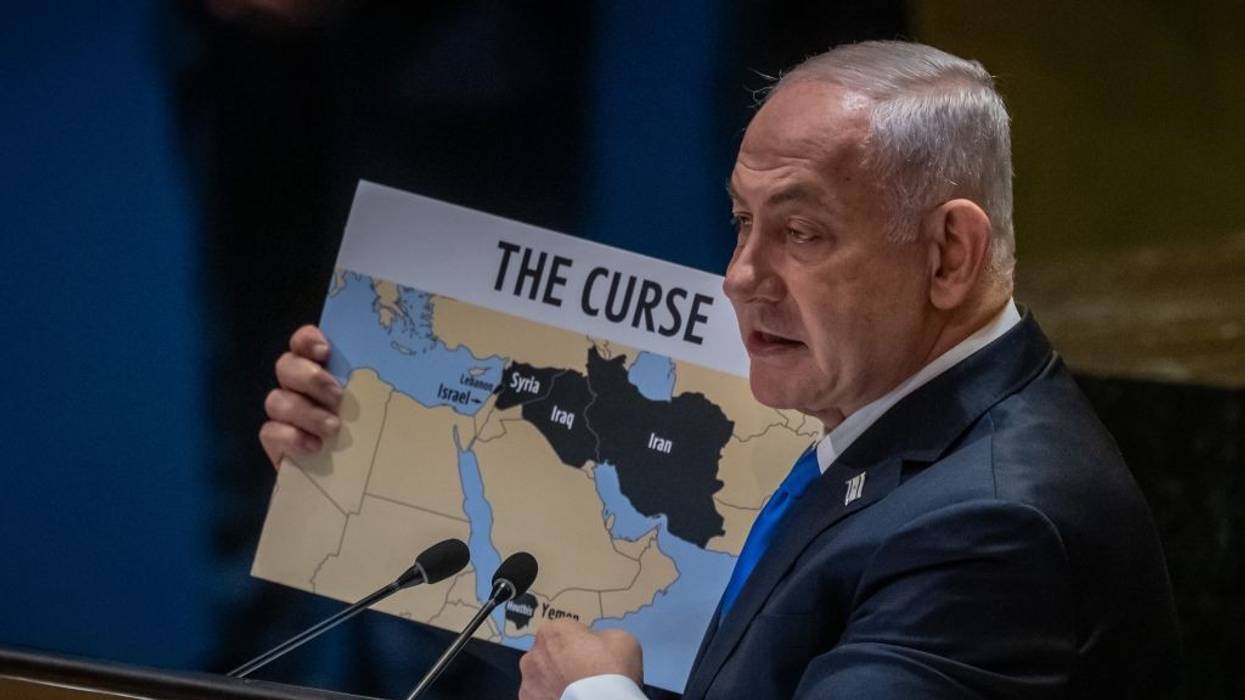
The other wing of the US elite, joined by Israeli Prime Minister Benyamin Netanyahu, calls for war to destroy Iran’s military capacity, its nuclear program, cripple its economy, ensure it could not threaten its neighbors or Israel, and if possible, overthrow its government. President Trump took up this approach when he joined Israel in bombing Iran’s nuclear facilities in June last year and then resumed full-scale war with Iran on February 28.
But after Iran struck back at Israel and at US bases and economic infrastructure in the Gulf states, and closed the Strait of Hormuz, everyone understood that the US military campaign to subdue Iran had failed. The MOU that Trump and Iran’s president Pezeshkian signed on June 17 reflects this reality and sets forward a direction that, if implemented, would not only end the US-Iran war, but would begin to reverse the long anti-Iran campaign waged by the US It could be a historic step toward reconciliation between the US and Iran.
It is ironic that the reactionary, racist, ultra-imperialist administration of Donald Trump could be the one to reverse decades of bipartisan US hostile policy. But just as President Richard Nixon went to China, such shifts can happen, and can be led from the right side of US politics. Another example is Trump’s two-year rapprochement with North Korea’s Kim Jong Un in his first term, in which he met Kim three times and signed peace framework agreements—though he ultimately dropped the project and reverted to a posture of hostility. Because Trump has no firm ideology, he sometimes can read the situation more clearly than politicians whose policies are anchored in an ossified world view. We can in no way count on Trump and Vice President JD Vance to get this negotiation over the finish line—but we can and should push them to do so.
Indeed, the situation today calls for peace with Iran and a completely new Middle East policy. Israel has become a liability for the United States more clearly than ever before, and US support for Israel’s constant wars on its neighbors and genocide directed at its occupied Palestinian population, its invasion of Lebanon, and its attack on Iran, are now very unpopular in the US. Iran has successfully asserted its ability to defend itself. And as Trump said on June 18, the world economy is teetering as it runs short of oil.
Vice President Vance held out the possibility that Iran can receive a $300 billion reconstruction fund based on the Gulf states, provided a final agreement is reached. In Switzerland on June 21, he asked: “How much more can we accomplish together? Can we turn over a new leaf? Can we change relations in the Middle East permanently, or do we go back to doing things the old way?”
The point, though, is that the wealthy elite of the Gulf are evidently ready to invest in Iran’s reconstruction from the destruction the US has caused. Why? To make money on the investments, to get their foot in the door for future business deals in the potentially lucrative Iranian market, and in the hope that economic ties will reduce the likelihood of a future war.
A diplomatic resolution of the US-Iran hostility would be positive for the US, Iran, and the region. Massachusetts’ Democratic members of Congress should speak in favor of diplomacy and seek to implement them.
"The real legal and moral question is why civilian infrastructure is being targeted at all," said one expert.
After US President Donald Trump made his genocidal declaration on Tuesday that the "whole civilization" of Iran "will die tonight," reports began to roll in of people across the country standing outside the power plants, bridges, and other civilian infrastructure the president promised to bomb.
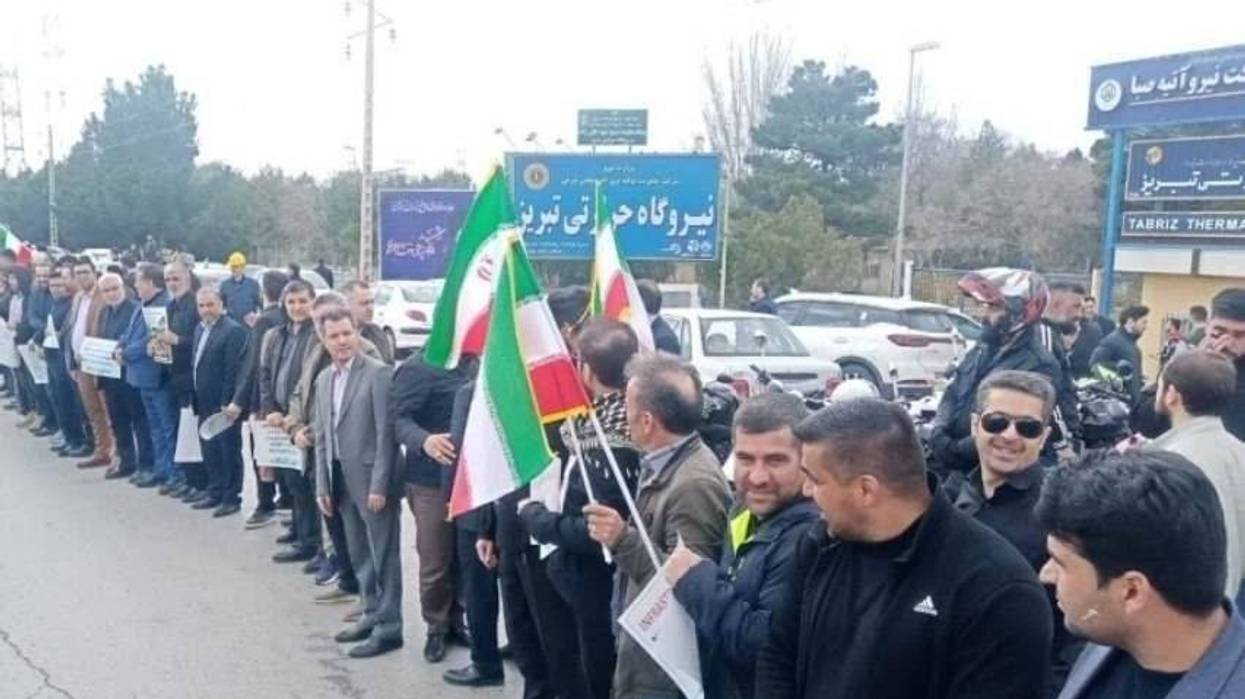
Photos shared to social media by the government-affiliated Mehr news agency showed scene after scene of Iranians forming human chains outside power plants in Tabriz and Kermanshah.
A video showed dozens of students assembled on the Dezful bridge in southwestern Iran, which is more than 1,700 years old and is believed to be one of the oldest functioning bridges in the world.
Over the weekend, Trump said that unless Iran opened the Strait of Hormuz, a critical shipping lane that it has used as a chokepoint against the Western economy, by Tuesday, he would bomb infrastructure relied upon by tens of millions of Iranians, which Amnesty International said could amount to a "war crime."
"We’re giving them till tomorrow, eight o’clock eastern time, and after that, they’re going to have no bridges. They’re going to have no power plants," Trump said on Monday, reiterating his plans to bomb Iran "back to the Stone Ages."
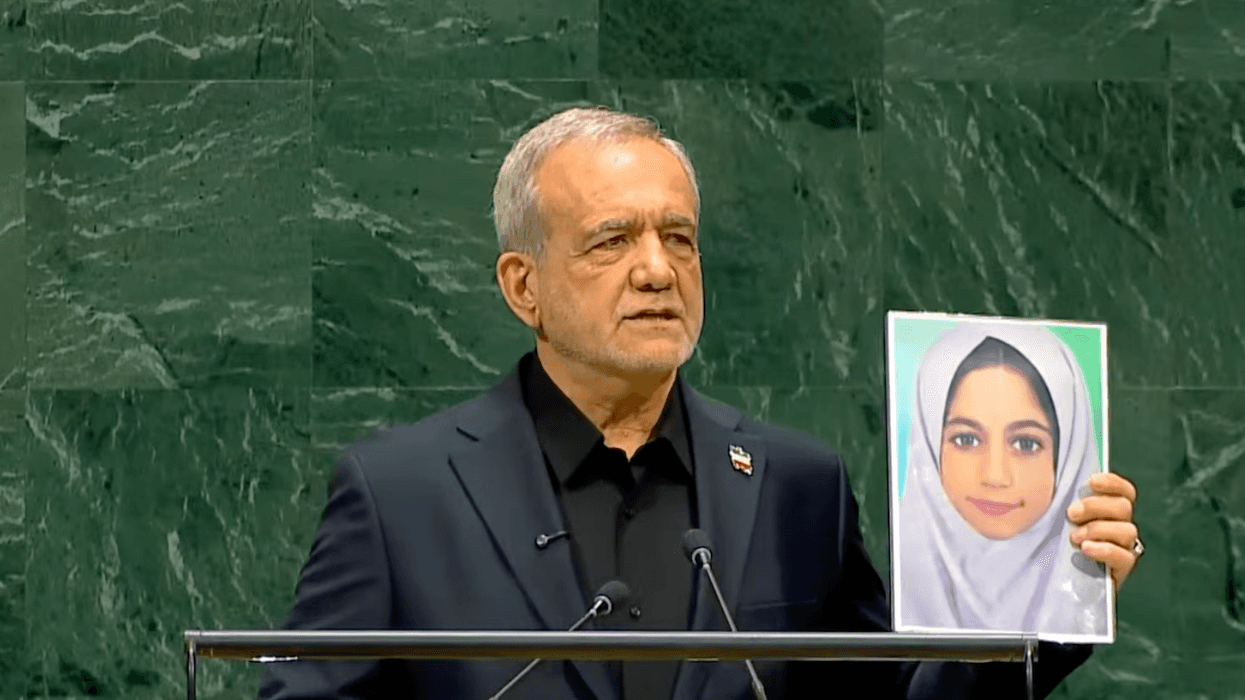
According to Iranian President Masoud Pezeshkian, more than 14 million people in the country responded to the threat by volunteering to put their bodies on the line and defend the infrastructure at risk. He said they'd "declared their readiness to sacrifice their lives in defense of Iran.”
The government has encouraged Iranians, including children and young students, to take to the streets to form human chains around infrastructure that may come under threat, leading some Western media outlets to raise the fear that people were being used as "human shields."
Sina Toossi, a fellow at the Center for International Policy, however, said this "is a deeply misleading framing."
"Iranians are not being placed in front of targets," he said, referencing several videos of the demonstrations. "Many are voluntarily showing up to defend the infrastructure that keeps their society alive."
He noted the participation of Iranian celebrities in the human chains, including the composer and Tar player Ali Ghamsari, who stationed himself outside a power plant, and the pop singer Benyamin Bahadori, who filmed a video of himself walking along a bridge that had come under threat.
"This is about people trying to safeguard electricity, water, and basic civilization under open threat," Toossi said. "The real legal and moral question is why civilian infrastructure is being targeted at all."
Agnès Callamard, secretary general of Amnesty International, said on Tuesday that Trump's threats could prove "apocalyptic" to millions of Iranians, plunging the "entire country into darkness and depriv[ing] millions of their fundamental human rights to life, water, food, healthcare, and an adequate standard of living."
"Power plants, water systems, and energy infrastructure are indispensable to civilian life, underpinning access to clean water, medical care, hospital electricity, food supply chains, and basic livelihoods," she added. "Attacking them would be disproportionate and thus unlawful under international humanitarian law and could amount to a war crime.”
Despite U.S. intelligence once again finding Iran is not currently developing nukes, the president is trying to force Tehran into a nuclear deal after unilaterally abrogating an existing one in 2018.
Iran's military has reportedly readied ballistic missiles for possible launch against U.S. bases in the Middle East after President Donald Trump renewed his threat to wage war on the country if it does not reach an agreement with his administration regarding nuclear weapons—which American intelligence agencies have repeatedly found Tehran is not building.
Trump discussed Iran during a Sunday phone call with NBC News' Kristen Welker, telling her that "if they don't make a deal, there will be bombing, and it will be bombing the likes of which they have never seen before," adding that there is also "a chance that if they don't make a deal, that I will do secondary tariffs on them like I did four years ago."
Ayatollah Seyyed Ali Khamenei, the supreme leader of Iran's theocratic government, warned Monday that "if any hostile act is committed from outside, though the likelihood is not high, it will undoubtedly be met with a strong counterstrike."
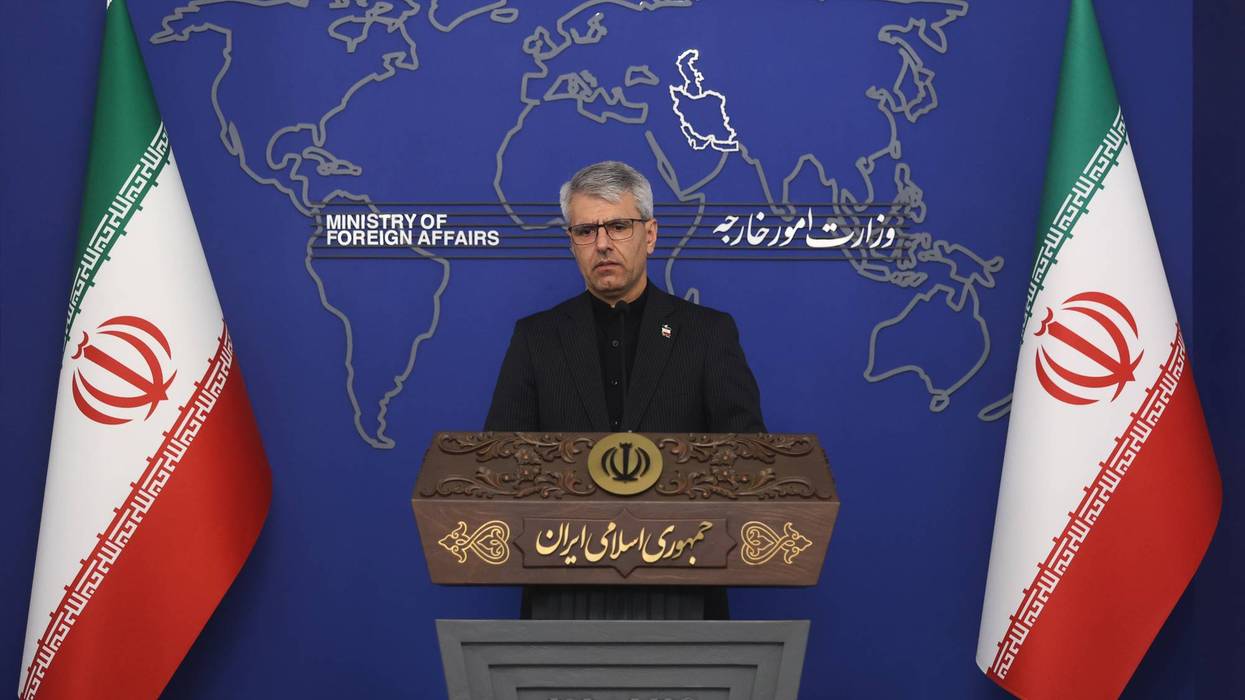
Esmaeil Baghaei, a spokesperson for Iran's Foreign Ministry, said on social media Monday that "an open threat of bombing by a head of state against Iran is a shocking affront to the very essence of international peace and security."
"It violates the United Nations Charter and betrays the safeguards under the [International Atomic Energy Agency]," Baghaei added. "Violence breeds violence, peace begets peace. The U.S. can choose the course."
Iranian Gen. Amir Ali Hajizadeh, commander of the Islamic Revolutionary Guard Corps' (IRGC) Aerospace Division, noted Monday that "the Americans have 10 bases in the region, particularly around Iran, and 50,000 troops based in there."
"This means they are sitting in a glass house; and when one sits in a glass house, one does not throw stones at others," he added.
The Tehran Times reported Monday that Iran's military has "readied missiles with the capability to strike U.S.-related positions" and that "a significant number of these launch-ready missiles are located in underground facilities scattered across the country, designed to withstand airstrikes."
The U.S., meanwhile, is amassing firepower including B-2 Stealth Bombers at its base on the forcibly depopulated island of Diego Garcia in the Indian Ocean for possible use in strikes against Iran.
Trump today: If Iran does not agree to a deal “There will be bombing and it will be bombing the likes of which they have never seen before” Can he go 1 day without threatening a new war? How many would he like? - Greenland - Panama - Gaza - Mexico - Yemen - Somalia - Gaza - Venezuela Is 8 enough?
— Secular Talk (@kylekulinskishow.bsky.social) March 30, 2025 at 8:36 PM
Trump's threat to attack Iran—which hasn't started a war since the mid-19th century—comes despite U.S. Director of National Intelligence Tulsi Gabbardtestifying before the Senate Select Committee on Intelligence last week that "Iran is not building a nuclear weapon and Supreme Leader Khamanei has not authorized the nuclear weapons program he suspended in 2003."
U.S. intelligence agencies have repeatedly come to the same conclusion since the George W. Bush administration.
However, Gabbard added that "Iran's enriched uranium stockpile is at its highest levels and is unprecedented for a state without nuclear weapons."
That's at least partly due to the unilateral U.S. withdrawal from the landmark Joint Comprehensive Plan of Action (JCPOA)—also known as the Iran nuclear deal—in 2018 during Trump's first administration.
Since Trump abandoned the JCPOA—which was signed in 2015 during the Obama administration by China, France, Germany, Iran, Russia, the United Kingdom, and the United States—Tehran has been operating advanced centrifuges and rapidly stockpiling enriched uranium.
While there were hopes of a renewed deal during the tenure of former U.S. President Joe Biden, no agreement was reached, and Iranians continue to suffer under economic sanctions that critics have said are killing people and crippling the country's economy.
Earlier this month, Trump sent a letter to Khamenei in which he claims to have said, "I hope you're going to negotiate because if we have to go in militarily, it's going to be a terrible thing."
On Sunday, Iranian President Masoud Pezeshkian left open the possibility of indirect talks but said that the U.S. could not be trusted to keep its word.
"We don't avoid talks; it's the breach of promises that has caused issues for us so far," Pezeshkian said during a televised Cabinet meeting. "They must prove that they can build trust."
This isn't the first time that Trump has threatened Iran. In 2020, during his first term, the president vowed to strike 52 sites across Iran "very fast and very hard" if it retaliated for the U.S. assassination of IRGC commander Gen. Qasem Soleimani in Iraq. Later that year, Trump had another message for Iran: "If you fuck around with us, if you do something bad to us, we are going to do things to you that have never been done before."
On the campaign trail last September, Trump told Iranians he would "blow your largest cities and the country itself to smithereens" if he was reelected and Iran didn't cease what he perceives as threats against the United States.
While the U.S. has never directly attacked Iran, it did help overthrow the country's reformist government in 1953 and supported a repressive monarchy for decades leading up to the Islamic Revolution of 1979. The U.S. backed Iraq during that country's eight-year war against Iran, during which then-Iraqi President Saddam Hussein's forces used chemical weapons against Iranian troops and his own restive Kurdish population. In 1988, a U.S. warship in Iranian waters accidentally shot down Iran Air Flight 655, killing all 290 passengers and crew aboard. Then-President Ronald Reagan blamed the incident on the "barbaric Iranians."
The U.S. has also
supported the People's Mujahedin of Iran (MEK), a State Department-designated terrorist group that had previously assassinated six American officials, and successive U.S. administrations have used international financial institutions to punish Iran, like in 2007 when Bush pressured the World Bank into suspending emergency relief aid after the 2003 Bam earthquake, which killed more than 26,000 Iranians.