

SUBSCRIBE TO OUR FREE NEWSLETTER
Daily news & progressive opinion—funded by the people, not the corporations—delivered straight to your inbox.
5
#000000
#FFFFFF
To donate by check, phone, or other method, see our More Ways to Give page.
Daily news & progressive opinion—funded by the people, not the corporations—delivered straight to your inbox.
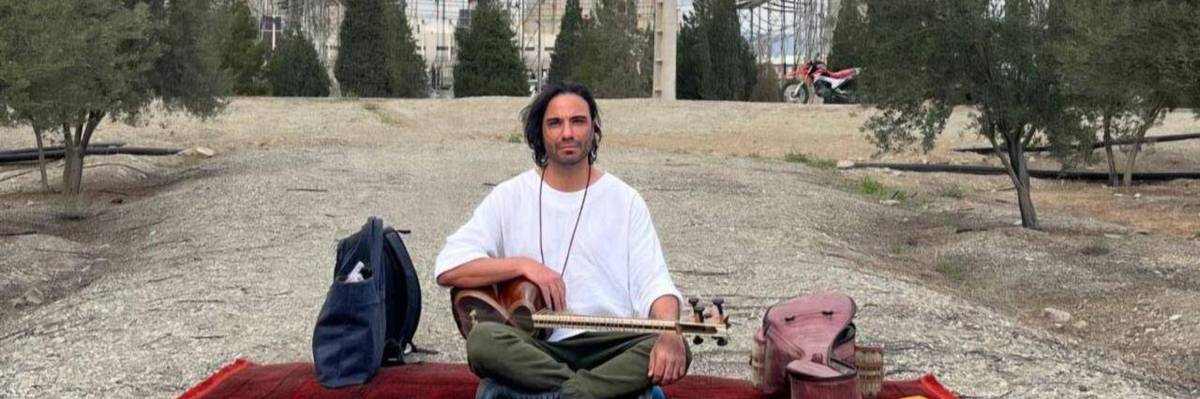
Iranian musician Ali Ghamsari sits in front of the Damavand power plant near Tehran, holding his instrument, in Iran on April 6, 2026.
"I wish for the light of my own life to be extinguished before a more serious stage of infrastructural war turns off the lights of my country’s homes.”
Iranian composer and tar virtuoso Ali Ghamsari has stationed himself outside of the Damavand power plant in Tehran in defiance of US President Donald Trump's threats to commit war crimes by destroying Iran's entire energy infrastructure.
As Tehran Times reported on Tuesday, Ghamsari said in a message posted to social media that he wanted to sit at the plant and make music to "become a shield for the electricity of 40% of Tehran."
The musician referenced Trump's threats to bomb Iran "back to the Stone Age[s]," and said that his playing outside the plant was an act of symbolic resistance.
"In these days, we are facing irreparable attacks on our country's vital infrastructure, such as bridges and industrial factories," Ghamsari said. "An event that targets Iran and its people to push them back toward the Stone Age... I wish for the light of my own life to be extinguished before a more serious stage of infrastructural war turns off the lights of my country’s homes. I hope my eyes never see even an inch of our soil being separated."
Renowned Iranian composer, Ali Ghamsari and tar virtuoso, announced he will stay at the Damavand Combined Cycle Power Plant.
His plan: Create music there as a symbolic effort to shield Iran's infrastructure from attack. pic.twitter.com/rSHRK6Us4Y
— Iran Screenshot (@iranscreenshot) April 6, 2026
Trump on Tuesday morning issued his most bloodthirsty and genocidal threat to Iran yet, warning that "a whole civilization will die tonight, never to be brought back again,” unless Iran met his demands to reopen the Strait of Hormuz, which has been closed for the last several weeks after Trump and Israel launched an unprovoked war.
Dylan Williams, vice president for government affairs at the US-based Center for International Policy, argued that the president's threat "meets the threshold for intent to destroy, in whole or in part, a national group as set forth in 18 US Code § 1091 prohibiting the crime of genocide," and said Trump could be prosecuted for war crimes should he follow through.
This country and this world are at a monumental crossroads. US voters have an opportunity to beat back the forces of fascism and confront the billionaires who are rigging the economy, our media system, and our democracy, making it increasingly impossible for ordinary people to get by. We’re not just talking about the election. We’re talking about what must be done once these fascist elements are vanquished from power. We need a bolder set of solutions than what either major party has so far been willing to offer and a working-class movement ready to fight like hell for it. Trump didn't emerge from nowhere. The conditions that fueled MAGA authoritarianism were created by decades of radical neoliberal economic policies and a corrupt political system dominated by corporate interests. They slashed taxes on the super-rich, promising that the benefits would trickle down. They said giveaways to the corporate titans would make life more affordable for the rest of us. It was all bullshit. And when a bitter, betrayed populace searches for someone to blame, right-wing demagogues have little trouble finding scapegoats. People know when they're being lied to, but you won't hear any of this from the corporate media. Only independent journalism—powered and funded by people who believe in building a better world—can deliver truly trustworthy daily news. If you share our vision, please contribute whatever you can to sustain our work. |
Iranian composer and tar virtuoso Ali Ghamsari has stationed himself outside of the Damavand power plant in Tehran in defiance of US President Donald Trump's threats to commit war crimes by destroying Iran's entire energy infrastructure.
As Tehran Times reported on Tuesday, Ghamsari said in a message posted to social media that he wanted to sit at the plant and make music to "become a shield for the electricity of 40% of Tehran."
The musician referenced Trump's threats to bomb Iran "back to the Stone Age[s]," and said that his playing outside the plant was an act of symbolic resistance.
"In these days, we are facing irreparable attacks on our country's vital infrastructure, such as bridges and industrial factories," Ghamsari said. "An event that targets Iran and its people to push them back toward the Stone Age... I wish for the light of my own life to be extinguished before a more serious stage of infrastructural war turns off the lights of my country’s homes. I hope my eyes never see even an inch of our soil being separated."
Renowned Iranian composer, Ali Ghamsari and tar virtuoso, announced he will stay at the Damavand Combined Cycle Power Plant.
His plan: Create music there as a symbolic effort to shield Iran's infrastructure from attack. pic.twitter.com/rSHRK6Us4Y
— Iran Screenshot (@iranscreenshot) April 6, 2026
Trump on Tuesday morning issued his most bloodthirsty and genocidal threat to Iran yet, warning that "a whole civilization will die tonight, never to be brought back again,” unless Iran met his demands to reopen the Strait of Hormuz, which has been closed for the last several weeks after Trump and Israel launched an unprovoked war.
Dylan Williams, vice president for government affairs at the US-based Center for International Policy, argued that the president's threat "meets the threshold for intent to destroy, in whole or in part, a national group as set forth in 18 US Code § 1091 prohibiting the crime of genocide," and said Trump could be prosecuted for war crimes should he follow through.

