

SUBSCRIBE TO OUR FREE NEWSLETTER
Daily news & progressive opinion—funded by the people, not the corporations—delivered straight to your inbox.
5
#000000
#FFFFFF
To donate by check, phone, or other method, see our More Ways to Give page.
Daily news & progressive opinion—funded by the people, not the corporations—delivered straight to your inbox.
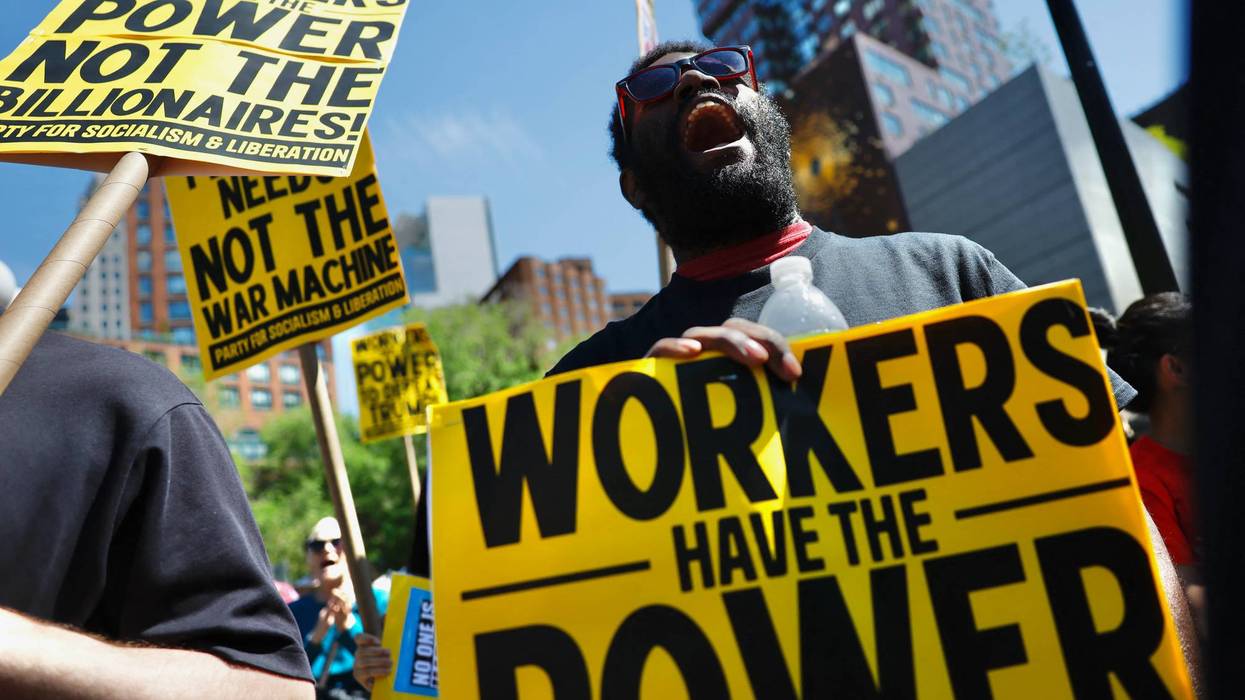
The inclusion of the United States on the International Trade Union Confederation's Watchlist serves as a troubling indicator of the country’s current state of affairs.
For generations, the United States has been a global advocate for freedom, democracy, and the rule of law. Today, however, the world is calling on the United States to uphold those same principles at home.
Last month, the International Trade Union Confederation (ITUC), representing over 200 million workers through 340 national affiliates in 169 countries, ranked the United States among countries with “systemic violations of worker rights.” The ITUC’s Global Rights Index assesses over 150 countries based on 97 indicators drawn from international standards and jurisprudence.
Given the measurable increase in violations since last year, the United States was also placed on the report’s “Watchlist,” alongside Guinea-Bissau, Israel, Liberia, Moldova, the Philippines, and Zimbabwe.
The inclusion of the United States on the ITUC’s Watchlist is based on the pattern of backsliding of fundamental rights over the past year and serves as a troubling indicator of the country’s current state of affairs. The report notes that, in the United States:
These actions by the Trump administration are intended to undermine workers’ rights to join a union, bargain collectively, and speak freely, but their impacts extend far beyond the workplace.
When workers exercise their rights at work, they are not only better equipped to advocate for better working conditions, they are also better able to engage democratically in their communities. It is often through a union at work that people first vote and run in elections. Currently, there are 564 union and household members who are endorsed to run for office in the midterm elections in the United States, a number that is expected to rise as the elections draw close later this year.
The actions taken by the Trump administration therefore not only threaten working conditions across the country but also debilitate people’s ability to civically engage. As a result, communities will be less prepared to resist other issues they face like corruption, abusive use of technology, and corporate greed.
The weakening of rights in the United States set a dangerous precedent for the world. Governments, employers, and investors across the world are observing and some will feel encouraged to follow.
The good news is that this story is not over.
Across the United States, workers continue to organize. They continue to win union recognition, negotiate better conditions, and build power across industries and communities. Their determination reminds the world that democracy is not sustained by institutions alone, it depends on people who are prepared to defend it every day.
When American workers fight back for their rights, they strengthen democracy not only at home, but around the world.
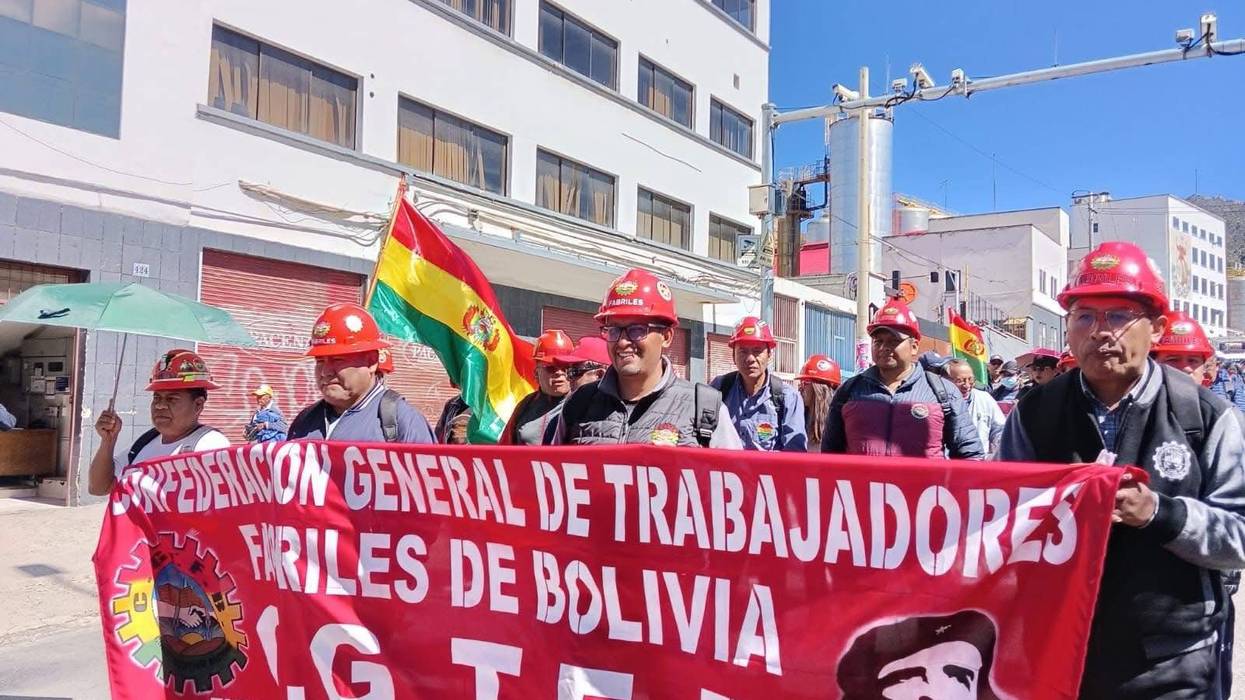
One Somali labor federation said the ruling "represents a major victory for workers, trade unions, and social justice across the world."
Labor leaders around the world cheered Thursday's landmark World Court ruling affirming that the right to strike is protected under international law.
The International Court of Justice (ICJ) in The Hague ruled 10-4 in an advisory opinion—meaning it's not legally binding—that “the right to strike of workers and their organizations is protected” under the Freedom of Association and Protection of the Right to Organize Convention of 1948, also known as International Labor Organization (ILO) Convention 87.
However, the tribunal also declared that its finding "does not entail any determination on the precise content, scope, or conditions for the exercise of that right."
The case originated with a 2023 request by the ILO Governing Body amid disagreement among the agency's three constituencies—governments, workers, and employers—over the right to strike.
"For decades, this issue has generated one of the deepest disputes within the ILO's tripartite structure... creating a deadlock over the interpretation of international labor standards," explained Kenyan labor law expert Ayaga Max Liambilah.
"Workers and trade unions argued that the right to organize becomes ineffective without the ability to strike, viewing strikes as essential tools for collective bargaining and protection of workers' interests," he said. "Employers' organizations, particularly the International Organization of Employers (IOE), maintained that Convention 87 does not expressly include a right to strike and that reading it into the convention creates obligations never explicitly negotiated by states."
International Trade Union Confederation (ITUC) representative Paapa Danquah told the court during proceedings that “strike action has been our vital tool... to improve labor conditions and to defend our human dignities."
IOE secretary general Roberto Suárez Santos countered that Convention 87 does not explicitly address the right to strike. After the court's decision, he underscored that the tribunal did not rule on the "precise content, scope, or conditions for the exercise of that right.”
Unions and workers around the world welcomed the ICJ decision.
“We thank the World Court for this advisory opinion," said ITUC secretary general Luc Triangle, whose organization represents more than 200 million workers in over 160 countries. "The court has confirmed that international law supports the long-standing understanding shared not only by unions, but across large parts of the ILO system for decades."
“This is an important moment for legal certainty, for social justice, and for the credibility of the international labor standards system," he added.
Sonny Matula, president of Federation of Free Workers—a Filipino labor organization—"joyfully and warmly" welcomed the ruling.
"In the Philippines, this is not a foreign concept," he said. "Article XIII, Section 3 of the Constitution expressly recognizes the rights of workers to self-organization, collective bargaining, and peaceful concerted activities, including the right to strike in accordance with law."
"The strike is labor's last voice when dialogue has failed," Matula added. "Without the right to strike, we can say that freedom of association is like a silent campaign, unheard."
Christy Hoffman, general secretary of the Union Network International (UNI) Global Union, said in a statement that “as any trade unionist will tell you, there is no right to organize without the right to strike!"
"The two are inseparable foundations of any functional and fair industrial relations system," Hoffman asserted. "Congratulations to the many advocates who argued the point so brilliantly before the ICJ, and to the ITUC for its steadfast commitment to this case."
The Federation of Somali Trade Unions (FESTU) issued a statement applauding the ICJ ruling, which it said "represents a major victory for workers, trade unions, and social justice across the world."
"It reaffirms with legal certainty that the right to strike is inseparable from freedom of association and constitutes a fundamental pillar of democratic labor relations, collective bargaining, and the protection of workers’ dignity, rights, and interests," FESTU continued.
"The court’s opinion has reinforced the legitimacy of the ILO supervisory mechanisms and restored clarity on a matter that for years had been the subject of intense international debate and institutional disagreement," the federation added. "This is a defining moment in the history of the global trade union movement and a major achievement for multilateralism, social justice, and international law."
Liz Shuler, president of the AFL-CIO—the largest US labor federation—said that "this decision affirms decades of judicial precedent and what workers around the world know: There is no right to organize and bargain collectively without the right to strike."
"When workers are barred from taking collective action on the job, they cannot defend their rights and demand the workplace conditions and contracts they are owed," she continued. "The freedom to join a union becomes an empty formality."
"At a moment when workers’ organizations face sustained attacks around the world, this opinion reaffirms that the freedom to withhold one's labor is not a privilege granted by the powerful, but a fundamental human right grounded in international law," Shuler added. "The AFL-CIO commends the International Trade Union Confederation and its legal team for their efforts in this result."

"Whether it's Donald Trump and Elon Musk in the U.S. or Javier Milei and Eduardo Eurnekian in Argentina, we see the same playbook," the report states.
A report released Monday by the International Trade Union Confederation, a global network of unions, states that workers' rights around the world are in "free fall"—including in the United States, where U.S. President Donald Trump has taken "a wrecking ball to the collective labour rights of workers."
The report, titled The 2025 ITUC Global Rights Index, details "a stark and worsening global crisis for workers and unions."
The index, which first began in 2014, is a review of workers' rights in law and in practice. It ranks countries along a criteria of nearly 100 indicators, such as whether there is a "general prohibition of the right to collective bargaining" or whether "killing or enforced disappearance of trade unionists" take place.
Depending on how many indicators they rack up, countries are ranked from 1-5+, based on their degree of respect for workers' rights. 5+ is the worst ranking a country can get. Each year, violations are recorded from April until March.
According to the index, in 2025, average country ratings deteriorated in three out of five global regions, with Europe and the Americas recording their worst scores since 2014.
The Americas earned a score of 3.68 and Europe notched 2.78, which is worse than the 1.84 score the continent received in 2014. That latter score constitutes the largest drop in any region of the world in the last decade, per the report.
"Governments have collaborated in decades of deregulation, neoliberalism, and neglect, leading to the collapse of workers' rights. This has disenfranchised millions and paved the way for extremism, authoritarianism, and the billionaire coup against democracy that now threatens democracy itself," said ITUC general secretary Luc Triangle in a statement published Monday.
"If this pace of decline continues, in ten years there will be no country left in the world with the highest rating for its respect for workers' rights," he continued. "This is a global scandal, but it is not unavoidable; it is a deliberate decision that can be reversed."
The report also states that 87% of countries violated the right to strike, 80% of countries violated the right to collective bargaining, and in 72% of countries, workers had zero or reduced access to justice, an increase from 65% the year prior.
"In the United States, the Donald Trump administration has taken a wrecking ball to the collective labor rights of workers and brought anti-union billionaires into the heart of policymaking," according to the report.
Triangle told The Guardian that the report covers the time period up to March 2025. The report references various attacks by the Trump administration on workers, such as efforts to drastically reduce personnel at the U.S. Department of Education and the firing of a member of the National Labor Relations Board, denying the agency a quorum.
Since then, the Trump administration has also cut staff at the Federal Mediation and Conciliation Service and sought to strip the collective bargaining rights from hundreds of thousands of government employees via executive order.
"Whether it's Donald Trump and Elon Musk in the U.S. or Javier Milei and Eduardo Eurnekian in Argentina, we see the same playbook of unfairness and authoritarianism in action around the world," the report states.
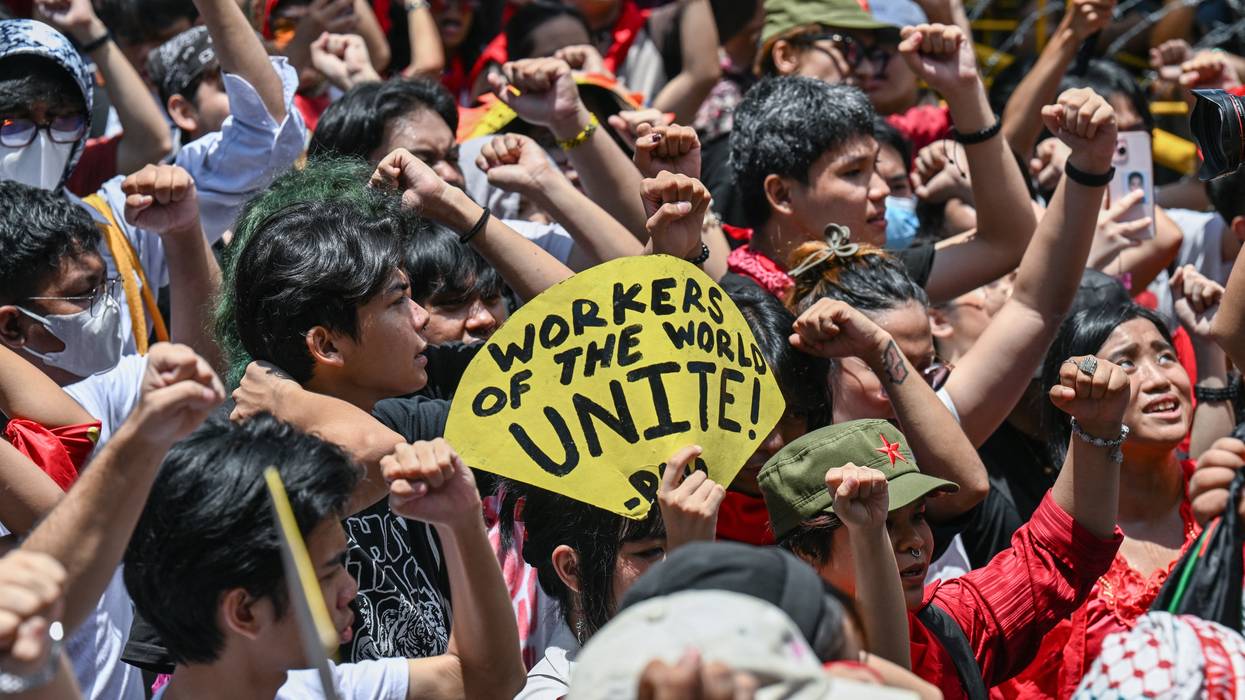
"This is a war on working people—and we will not stand down."
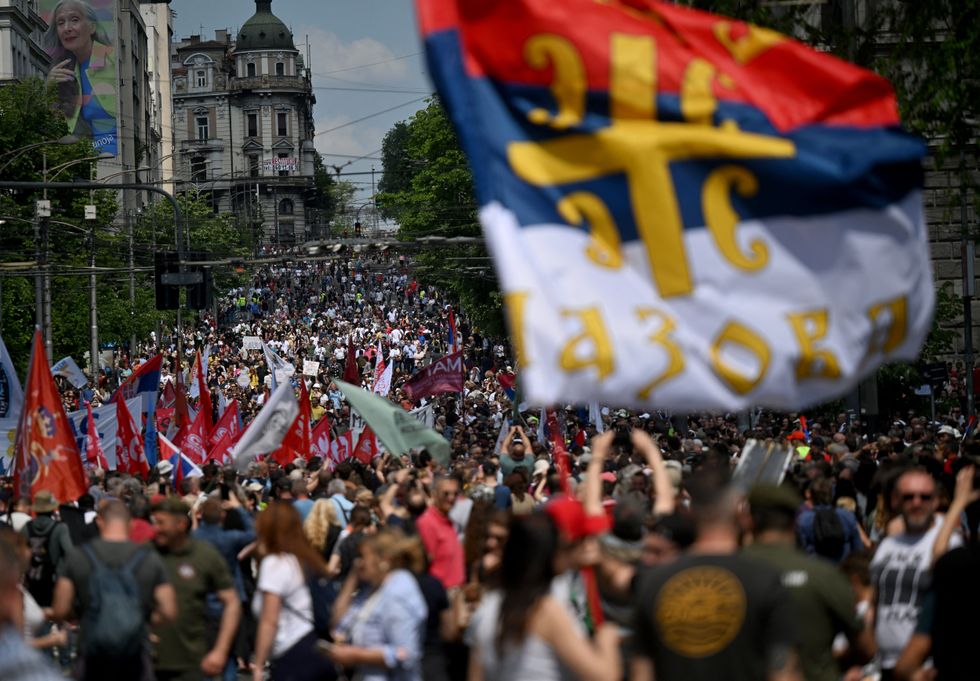
With right-wing, pro-corporate political parties across the world aggressively pushing anti-immigration policies and sentiment as they worsen inequality and attack crucial services, working people across the world gathered on Thursday to mark May Day—the holiday memorializing the struggles and victories of the global labor movement—and to let those in power know they aren't fooled by xenophobic scapegoating.
"They tell people that migrants are to blame for failing hospitals, job insecurity, and rising rents," said Esther Lynch, general secretary of the European Trade Union Conference in Paris. "This is a lie—a dangerous lie. The true cause is austerity, it is underfunding, privatization, and a refusal to invest in people. It's price gauging, it's union busting, it's pay injustice."
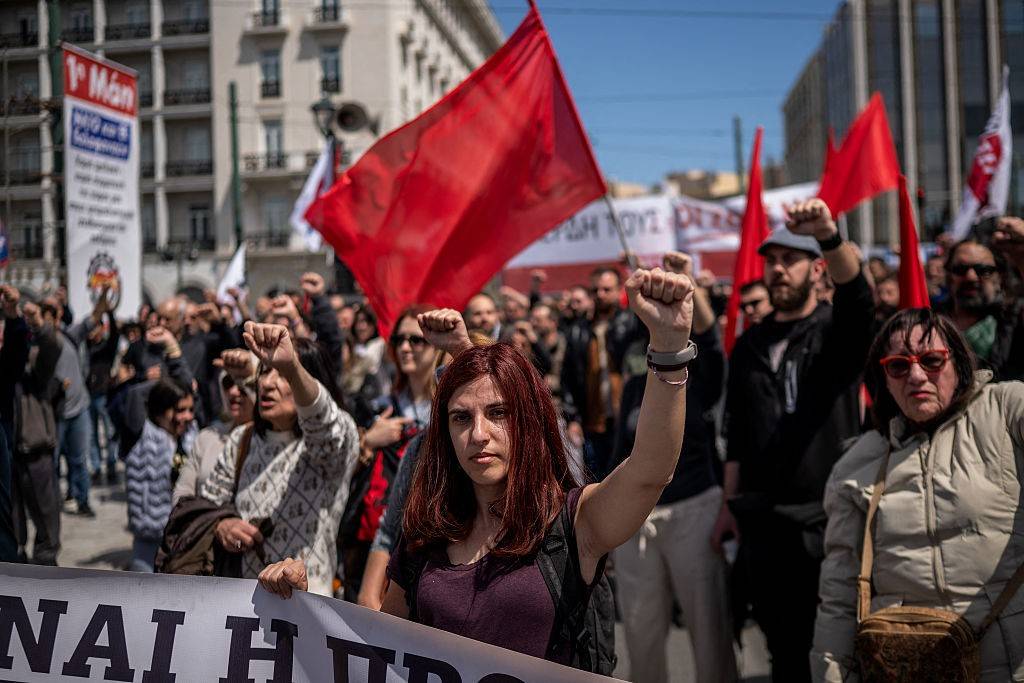
Here are photos from demonstrations and marches worldwide:
Protesters with red flags raise their fists as they march during a May Day (Labour Day) rally, marking International Workers' Day, outside the Greek Parliament in Athens, on May 1, 2025. (Photo: Angelos Tzortzinis/AFP via Getty Images)
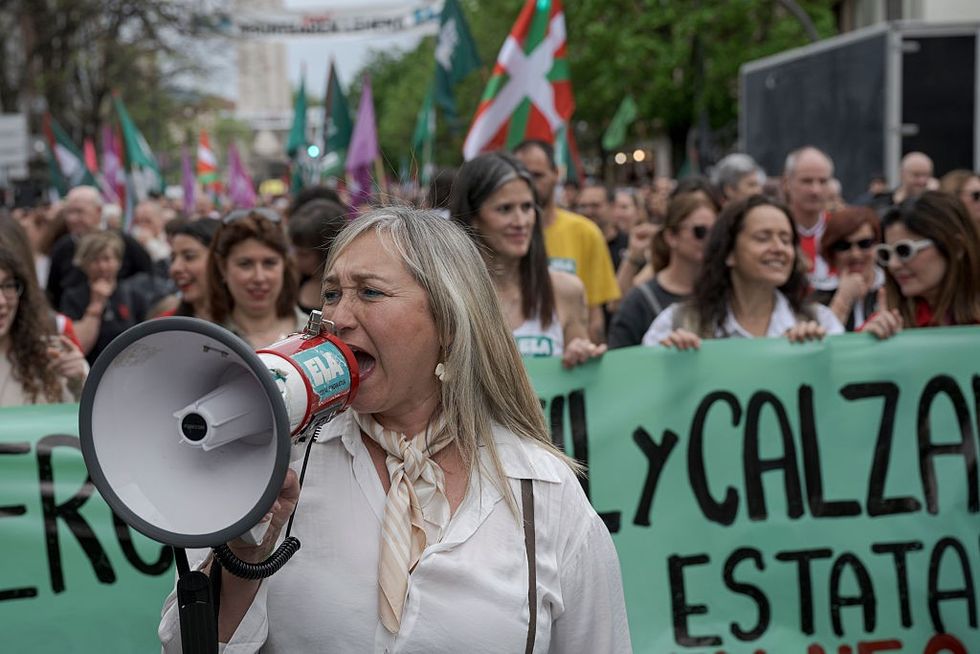
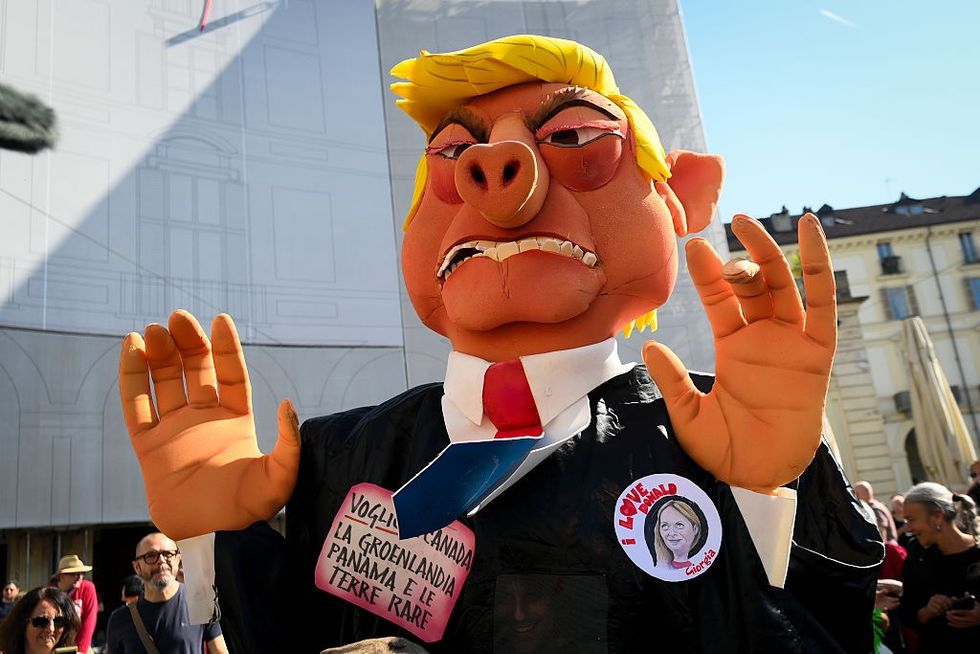
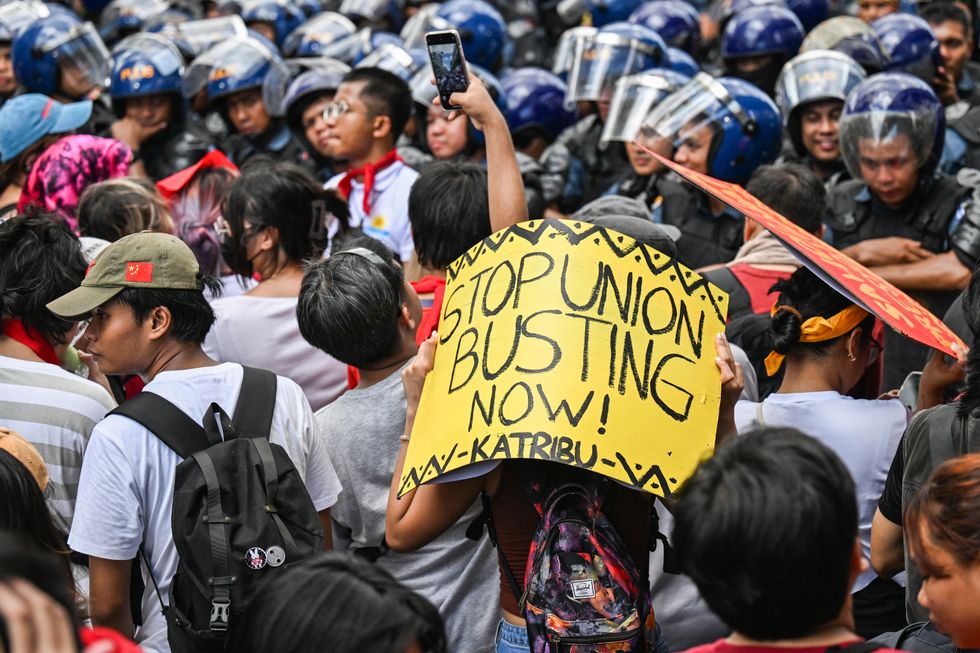
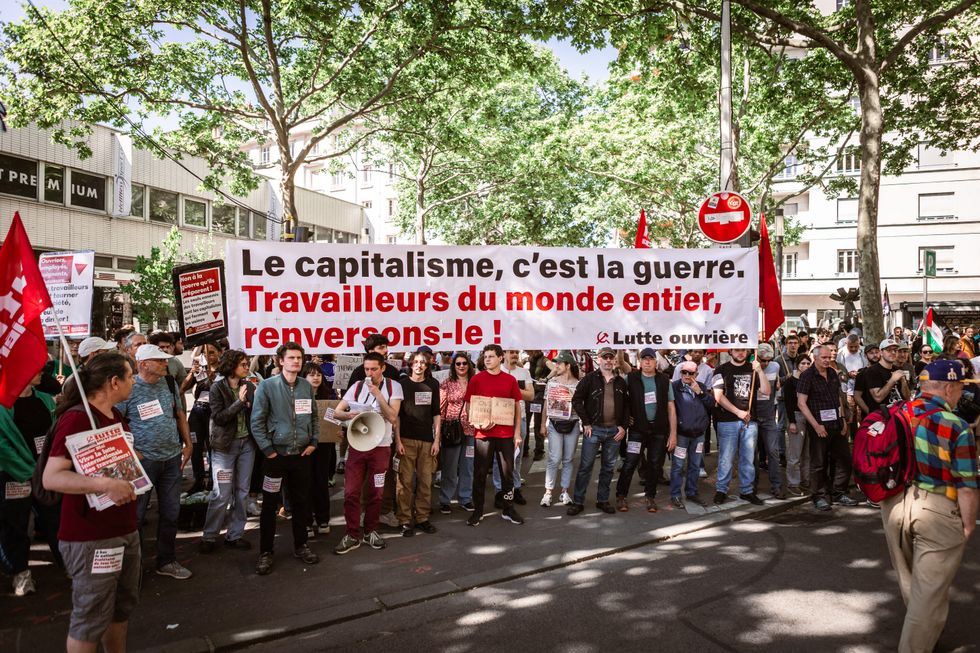
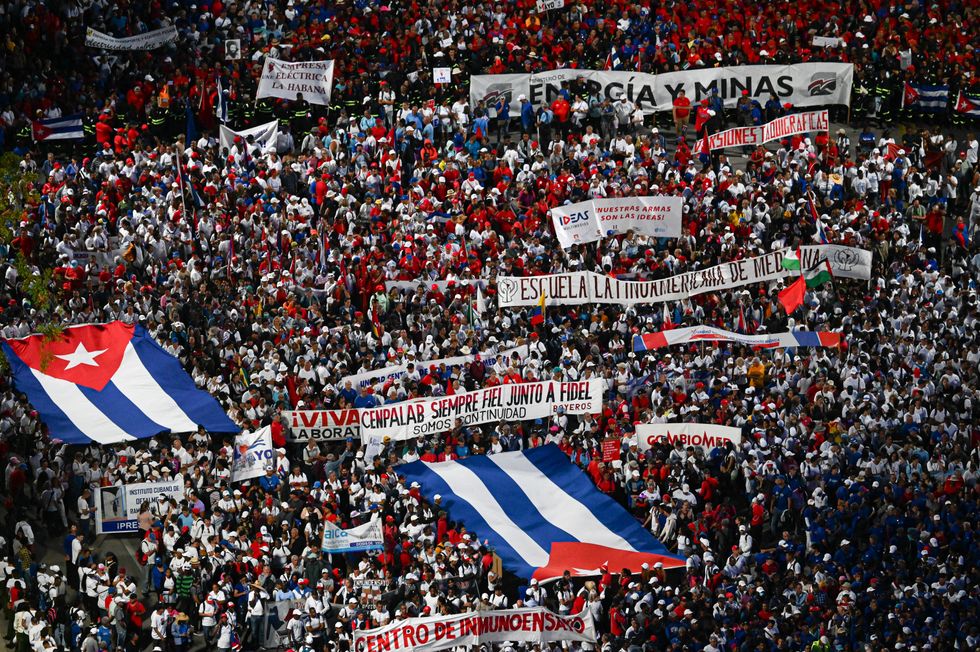
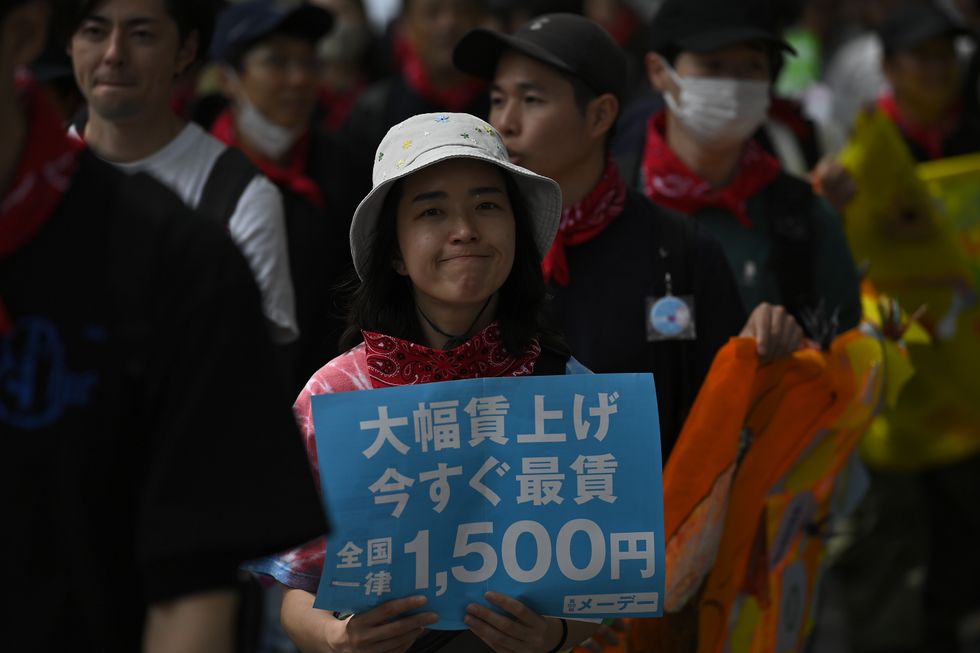
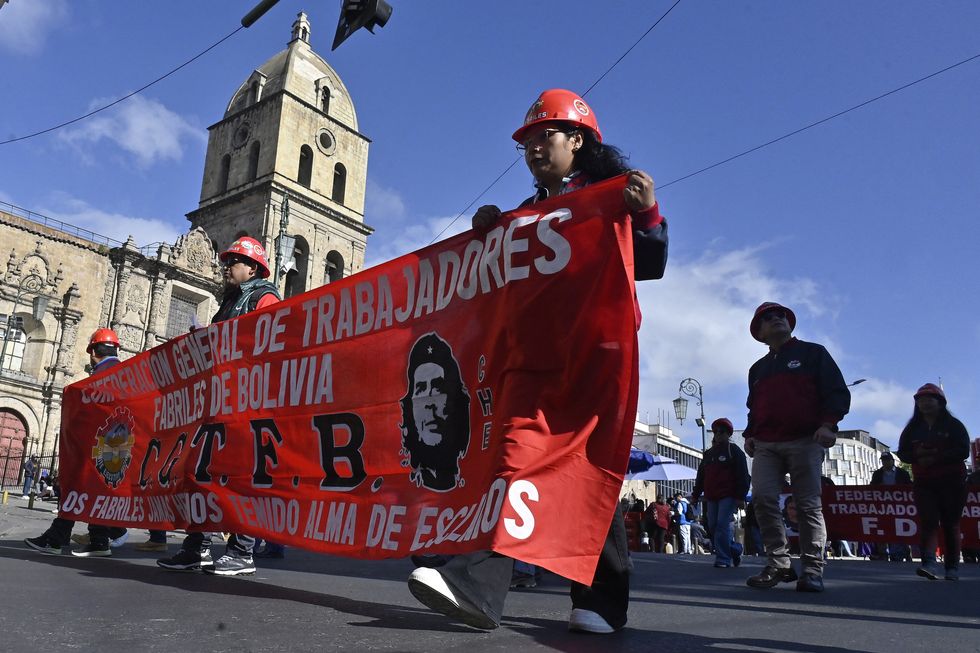
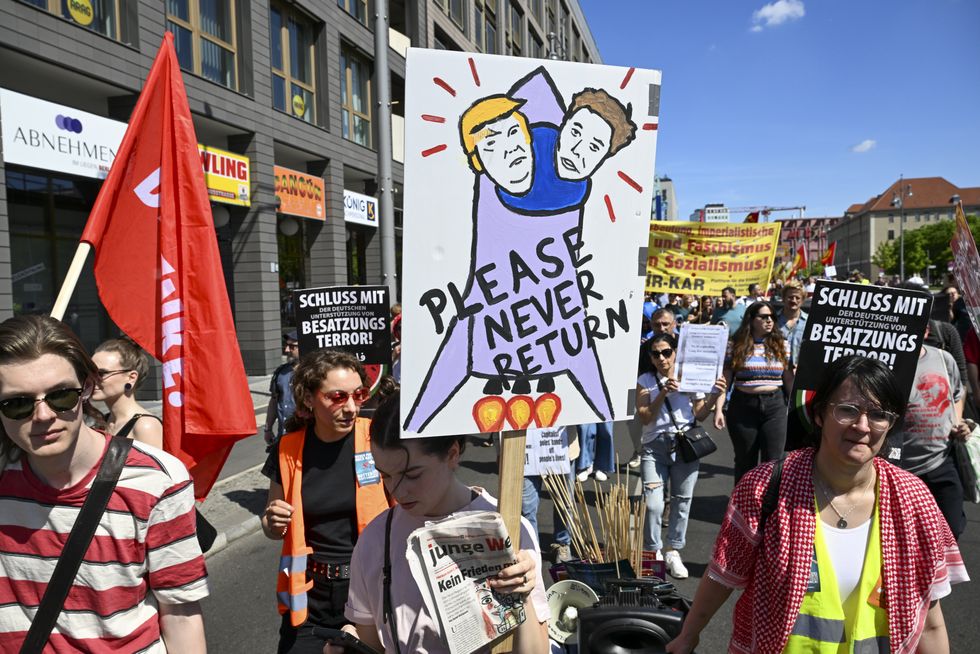
Paris was the site of France's main May Day rally, but an estimated 260 protests kicked off throughout the country, hosted by the General Confederation of France (CGT).
In the United States, protests were expected in nearly 1,000 cities, with many participants tying the fight against union-busting, the high cost of living, privatization, and corporate greed to President Donald Trump's administration—which has spent the past three months working to secure $4.5 trillion in tax cuts for the wealthy while pushing a mass deportation campaign and blaming working families' struggles on a so-called "invasion" by immigrants.
"This is a war on working people—and we will not stand down," a website for the U.S. May Day protests reads. "They're defunding our schools, privatizing public services, attacking unions, and targeting immigrant families with fear and violence. Working people built this nation and we know how to take care of each other. We won't back down—we will never stop fighting for our families and the rights and freedoms that propel opportunity and a better life for all Americans. Their time is up."
French union leaders also used the occasion to decry the "Trumpization" of global politics, and Italian protesters in Turin paraded a puppet of the U.S. president.
The global movement sent the message that "there is an alternative to the billionaire vision of the world," said the International Trade Union Confederation (ITUC).
Other May Day marches and rallies were held in countries including Germany, the United Kingdom, Spain, Greece, the Philippines, Turkey, and Japan.
"Around the world, workers are being denied the basics of life like well-funded hospitals and schools, living wages, and freedom to move, while billionaires pocket record profits and unimaginable power," said Luc Triangle, general secretary of the ITUC. "A system built for the 0.0001% is rigged against the rest of us—but workers around the world are standing up and organizing to take back democracy."
"Workers are demanding a New Social Contract that works for them—not the billionaires undermining democracy," said Triangle. "Fair taxation, strong public services, living wages, and a just transition are not radical demands—they are the foundation of a just society."
On May 8, the ITUC plans to issue an open letter to heads of state and global institutions demanding a new social contract, including collective bargaining rights for all workers; minimum living wages; and governments that ensure universal healthcare, education, and other public services.
"Let us be clear: austerity is a political choice, not an economic necessity. And it is a choice that has caused and is causing enormous damage," said Lynch. "When governments slash spending under the guise of fiscal responsibility, the real result is increased hardship, unemployment, and insecurity—especially for working people."
"Jobs in the public and private sector are being lost across the E.U. due to austerity policies," she added. "Vital public services are being slashed, wages are being frozen, pensions cut and entire communities are being abandoned. In this vacuum, the far right grows stronger—not by offering solutions, but by spreading fear."
"Unless we're organized and demanding responsive governments that actually meet the needs of people, it's corporate power that's going to set the agenda," one organizer said.
Big Tech, Big Oil, and private equity firms are among the leading companies that profit from controlling media and technology, accelerating the climate crisis, privatizing public goods and services, and violating human and workers' rights, the International Trade Union Confederation revealed on Monday.
The ITUC has labeled seven major companies as "corporate underminers of democracy" that lobby against government attempts to hold them accountable and are headed by super-rich individuals who fund right-wing political movements and leaders.
"This is about power, who has it, and who sets the agenda," Todd Brogan, director of campaigns and organizing at the ITUC, told The Guardian. "We know as trade unionists that unless we're organized, the boss sets the agenda in the workplace, and we know as citizens in our countries that unless we're organized and demanding responsive governments that actually meet the needs of people, it's corporate power that's going to set the agenda."
The "corporate underminers of democracy" are:
ITUC chose the seven companies based on preexisting reporting and research, as well as talks with allied groups like the Council of Global Unions and the Reactionary International Research Consortium. The seven companies were "emblematic" of a broader trend, and the confederation said it would continue to add "market-leading" companies to the list.
"While these seven corporations are among the most egregious underminers of democracy, they are hardly alone," ITUC said. "Whether state-owned enterprises in China, Russia, and Saudi Arabia; private sector military contractors; or regulation-busting tech startups, the ITUC and its partners will continue to identify and track corporate underminers of democracy and their links to the far-right."
Amazon topped the list due to its "union busting and low wages on multiple continents, monopoly in e-commerce, egregious carbon emissions through its AWS data centers, corporate tax evasion, and lobbying at national and international level," ITUC wrote.
In the U.S., for example, Amazon has responded to attempts to hold it accountable for labor violations by challenging the constitutionality of the National Labor Relations Board. While its founder Jeff Bezos voices liberal opinions, Amazon's political donations have advanced the right by challenging women's rights and antitrust efforts.
"There is another force, one that is unelected and seeks to dominate global affairs."
Blackstone is the world's largest private equity firm and private real-estate owner whose CEO, Stephen Schwarzman, has given to right-wing politicians including former U.S. President Donald Trump's 2024 reelection campaign. It funds fossil fuel projects and the destruction of the Amazon and profited from speculating on the housing market after the 2008 financial crash.
The United Nations special papporteur on housing said the company used "its significant resources and political leverage to undermine domestic laws and policies that would in fact improve access to adequate housing."
ExxonMobil made the list largely for its history of funding climate denial and its ongoing lobbying against needed environmental regulations.
"Perhaps the greatest example of Exxon's disinterest in democratic deliberation was its corporate commitment of nearly four decades to conceal from the public its own internal evidence that climate change was real, accelerating, and driven by fossil fuel use while simultaneously financing far-right think tanks in the U.S. and Europe to inject climate scepticism and denialism into the public discourse," ITUC wrote.
Glencore is the world's largest commodities trader and the largest mining company when judged by revenue. Several civil society and Indigenous rights groups have launched campaigns against it over its anti-democratic policies. It has allegedly funded right-wing paramilitaries in Colombia and anti-protest vigilantes in Peru.
"The company's undermining of democracy is not in dispute, as it has in recent years pled guilty to committing bribery, corruption, and market manipulation in countries as varied as Venezuela, the Democratic Republic of the Congo, Cameroon, Equatorial Guinea, Cote d'Ivoire, Nigeria, and South Sudan," ITUC said.
As the world's largest social media company, Meta's platforms such as Facebook, WhatsApp, and Instagram have roughly as many users as everyone expected to vote in 2024 worldwide—almost 4 billion. Yet there are concerns about what its impact on those elections will be, as right-wing groups from the U.S. to Germany to India have used Facebook to recruit new members and target marginalized groups.
"Meta continues to aid right-wing political interests in weaponizing its algorithms to spread hate-filled propaganda around the world," ITUC wrote. "Increasingly, it has been engaged in dodging national regulation through the deployment of targeted lobbying campaigns."
Tesla made the list for its "belligerent" anti-union stance, as well as the vocal anti-worker and right-wing politics of its CEO, Elon Musk. Of Musk, ITUC observed:
As owner of the social networking platform X (formerly Twitter), he responded to one user's allegations about a coup in Bolivia–a country with lithium reserves considered highly valuable for electric vehicle manufacturers like Tesla–by saying, "We will coup whoever we want. Deal with it!" He has committed to donating $45 million per month to a political action committee to support the reelection campaign of Donald Trump, and sought to build close relationships with other far-right leaders, including Argentina's Javier Milei and India's Narendra Modi. Musk has also re-platformed and clearly expressed his support of white nationalist, antisemitic, and anti-LGBTQ+ accounts since taking ownership of X.
No. 7 on the list is The Vanguard Group, an institutional investor that funds many of the other companies on the list, including with billions in the stock held by workers' retirement plans.
"Effectively, Vanguard uses the deferred wages of workers to lend capital to the self-same companies complicit in undermining democracy at work and in societies globally," ITUC wrote.
ITUC is exposing these companies in part to advance its agenda for a "New Social Contract" that would ensure "a world where the economy serves humanity, rights are protected, and the planet is preserved for future generations."
It and other workers' organizations plan to push this agenda at international gatherings like the U.N. General Assembly and Summit of the Future in New York this week as well as the COP29 climate conference in Azerbaijan in November. Yet part of advancing this agenda means raising awareness about the opposition.
"There is another force, one that is unelected and seeks to dominate global affairs. It pushes a competing vision for the world that maintains inequalities and impunity for bad-faith actors, finances far-right political operatives, and values private profit over public and planetary good," ITUC wrote. "That force is corporate power."
However, Brogan told The Guardian that labor groups, when organized across borders, could fight back.
"Now is the time for international and multi-sectoral strategies, because these are, in many cases, multinational corporations that are more powerful than states, and they have no democratic accountability whatsoever, except for workers organized," Brogan said.
To that end, ITUC is gathering signatures for a petition for a global treaty holding corporate power in check.
"For international institutions like the United Nations to reflect the democratic will of workers, they must be willing to hold these corporate underminers of democracy accountable," the petition reads. "That is why we are calling on you to support a robust binding international treaty on business and human rights, one that addresses the impact of transnational corporations on the human rights of millions of working people."

Across the world, in both high- and low-income countries, the 2023 Global Rights Index finds that governments have cracked down on the right to negotiate wage rises collectively and take strike action.
Before you can set out the solution to a problem, you need to know its scale. When it comes to attacks on workers’ rights, the 10th edition of the Global Rights Index published by the International Trade Union Confederation (ITUC) shows clearly that the problem is big—and getting bigger. But the solution is also clear, embodied in a new social contract which can build a better world for working people.
The 2023 index provides shocking evidence that the foundations of democracy are under attack, with a clear link between the vindication of workers’ rights and the strength of any democracy. The erosion of one, conversely, amounts to degradation of the other.
Europe has long considered itself a bastion of democracy and workers’ rights. Its overall rating since the first index has however crumbled, from 1.84 in 2014 to 2.56 in 2023. (One is the best rating, five-plus the worst.) In the criteria of the index, this amounts to somewhere between repeated and regular violations of rights.
Workers in Belarus, Kazakhstan, and Turkey face surveillance, imprisonment, and brutality from regimes that share autocratic traits. Working people even in the Netherlands and Belgium have seen a tightening of restrictions and refusal by governments and employers to negotiate with trade-union representatives.
In France, lawful protests demanding dialogue with trade unions on an alternative to the pensions reform pushed by the president, Emmanuel Macron, have met vicious police beatings, indiscriminate arrests, and tear gas. In the United Kingdom, union-busting, attempts to introduce legislation curtailing the right to strike and protest, and violations of collective-bargaining agreements have become endemic and led to the country’s rating dropping to four—systematic violations of rights.
Across the world, in both high- and low-income countries, even though working people have faced a historic cost-of-living crisis and spiralling inflation driven by corporate greed, governments have cracked down on the right to negotiate wage rises collectively and take strike action.
According to the 2023 index, nine out of 10 countries violate the right to strike, with working people in Canada, Togo, Iran, Cambodia, and Spain facing criminal prosecution or dismissal. Eight out of 10 violate the right to collective bargaining.
A full 77% of countries exclude working people from the right to establish or join a trade union, with migrant, domestic, and temporary workers, those in the informal economy, platform workers, and workers in special economic zones denied the right to freedom of association. Burundi, Haiti, India, Turkey, and the United Arab Emirates are among the countries excluding working people from union representation.
We see the line between autocracies and democracies blurring.
The right to free speech and assembly is restricted in 42% of countries, often resulting in protesting workers facing police brutality. In Iran, teachers have been arrested and beaten by the police for taking part in May Day demonstrations.
A total of 73% of countries impede the registration of unions or ban them, including Belarus, Myanmar, Hong Kong, the Central African Republic, and Guatemala. Workers have been arrested and detained in 69 countries and in 65% working people have no or restricted access to justice.
Workers have experienced violence in 44 countries. In the Asia-Pacific region, the incidence of violence against working people has risen from 43% of countries in 2022 to 48% in 2023 and from 42 to 53% in the Middle East and North Africa. Trade unionists have been killed in eight countries.
The 2023 index indicates that the 10 worst countries for working people are: Bangladesh, Belarus, Ecuador, Egypt, Eswatini, Guatemala, Myanmar, Tunisia, the Philippines, and Turkey. In Ecuador, mass protests calling for democracy and collective rights, organised by indigenous peoples’ organisations and trade unions, have been brutally repressed. In Tunisia, the president, Kais Saied, has undermined workers’ civil liberties and democratic institutions.
We see the line between autocracies and democracies blurring. When dialogue between states and citizens breaks down, when nations flirt with autocracy to pass unpopular laws, when parliaments are pushed aside and when governments deploy state forces to quell lawful resistance, then democracy is on the line and working people suffer the consequences.
To repair the fabric of our societies, to renew and establish democracy and to support working people we need a new social contract based on decent jobs, just wages, social protection, fundamental rights—including safe and secure work—and the assurance of equality and inclusion. That was the unanimous call of the ITUC’s Melbourne congress last November, and it is more crucial than ever to restore democracy, equality, and decency, and to give workers their fair share of economic growth.
In many countries we see that trust in government is broken and the far right is stepping into the breach, to sow division and further threaten fundamental liberties. It is thus essential to rebuild trust and ensure our democracies are fit for purpose to meet the needs of working people and the demands of an uncertain future—a future where the climate crisis, technological change, challenges to public health, and geopolitical instability will continue to generate shocks.
Working people must be listened to and they must be at the center of government decisions. To articulate and advance this, workers’ unions in turn have never been more essential. The global trade union movement, led by the ITUC, will act in solidarity—an attack on one of us is an attack on all—and raise its voice loud and clear against any violations of workers’ rights.