SUBSCRIBE TO OUR FREE NEWSLETTER
Daily news & progressive opinion—funded by the people, not the corporations—delivered straight to your inbox.
5
#000000
#FFFFFF
To donate by check, phone, or other method, see our More Ways to Give page.
Daily news & progressive opinion—funded by the people, not the corporations—delivered straight to your inbox.
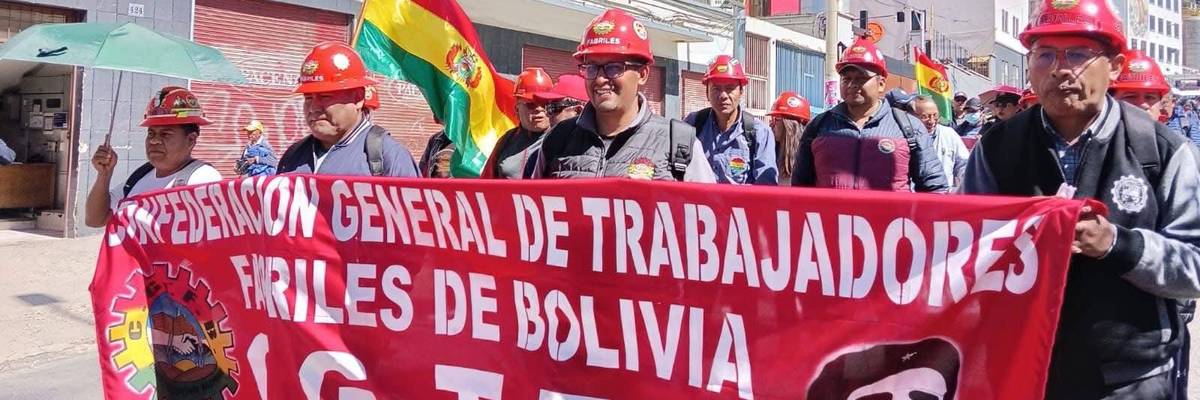
Bolivian miners march through La Paz on May 20, 2026 in opposition to the austerity policies of President Rodrigo Paz.
One Somali labor federation said the ruling "represents a major victory for workers, trade unions, and social justice across the world."
Labor leaders around the world cheered Thursday's landmark World Court ruling affirming that the right to strike is protected under international law.
The International Court of Justice (ICJ) in The Hague ruled 10-4 in an advisory opinion—meaning it's not legally binding—that “the right to strike of workers and their organizations is protected” under the Freedom of Association and Protection of the Right to Organize Convention of 1948, also known as International Labor Organization (ILO) Convention 87.
However, the tribunal also declared that its finding "does not entail any determination on the precise content, scope, or conditions for the exercise of that right."
The case originated with a 2023 request by the ILO Governing Body amid disagreement among the agency's three constituencies—governments, workers, and employers—over the right to strike.
"For decades, this issue has generated one of the deepest disputes within the ILO's tripartite structure... creating a deadlock over the interpretation of international labor standards," explained Kenyan labor law expert Ayaga Max Liambilah.
"Workers and trade unions argued that the right to organize becomes ineffective without the ability to strike, viewing strikes as essential tools for collective bargaining and protection of workers' interests," he said. "Employers' organizations, particularly the International Organization of Employers (IOE), maintained that Convention 87 does not expressly include a right to strike and that reading it into the convention creates obligations never explicitly negotiated by states."
International Trade Union Confederation (ITUC) representative Paapa Danquah told the court during proceedings that “strike action has been our vital tool... to improve labor conditions and to defend our human dignities."
IOE secretary general Roberto Suárez Santos countered that Convention 87 does not explicitly address the right to strike. After the court's decision, he underscored that the tribunal did not rule on the "precise content, scope, or conditions for the exercise of that right.”
Unions and workers around the world welcomed the ICJ decision.
“We thank the World Court for this advisory opinion," said ITUC secretary general Luc Triangle, whose organization represents more than 200 million workers in over 160 countries. "The court has confirmed that international law supports the long-standing understanding shared not only by unions, but across large parts of the ILO system for decades."
“This is an important moment for legal certainty, for social justice, and for the credibility of the international labor standards system," he added.
Sonny Matula, president of Federation of Free Workers—a Filipino labor organization—"joyfully and warmly" welcomed the ruling.
"In the Philippines, this is not a foreign concept," he said. "Article XIII, Section 3 of the Constitution expressly recognizes the rights of workers to self-organization, collective bargaining, and peaceful concerted activities, including the right to strike in accordance with law."
"The strike is labor's last voice when dialogue has failed," Matula added. "Without the right to strike, we can say that freedom of association is like a silent campaign, unheard."
Christy Hoffman, general secretary of the Union Network International (UNI) Global Union, said in a statement that “as any trade unionist will tell you, there is no right to organize without the right to strike!"
"The two are inseparable foundations of any functional and fair industrial relations system," Hoffman asserted. "Congratulations to the many advocates who argued the point so brilliantly before the ICJ, and to the ITUC for its steadfast commitment to this case."
The Federation of Somali Trade Unions (FESTU) issued a statement applauding the ICJ ruling, which it said "represents a major victory for workers, trade unions, and social justice across the world."
"It reaffirms with legal certainty that the right to strike is inseparable from freedom of association and constitutes a fundamental pillar of democratic labor relations, collective bargaining, and the protection of workers’ dignity, rights, and interests," FESTU continued.
"The court’s opinion has reinforced the legitimacy of the ILO supervisory mechanisms and restored clarity on a matter that for years had been the subject of intense international debate and institutional disagreement," the federation added. "This is a defining moment in the history of the global trade union movement and a major achievement for multilateralism, social justice, and international law."
Liz Shuler, president of the AFL-CIO—the largest US labor federation—said that "this decision affirms decades of judicial precedent and what workers around the world know: There is no right to organize and bargain collectively without the right to strike."
"When workers are barred from taking collective action on the job, they cannot defend their rights and demand the workplace conditions and contracts they are owed," she continued. "The freedom to join a union becomes an empty formality."
"At a moment when workers’ organizations face sustained attacks around the world, this opinion reaffirms that the freedom to withhold one's labor is not a privilege granted by the powerful, but a fundamental human right grounded in international law," Shuler added. "The AFL-CIO commends the International Trade Union Confederation and its legal team for their efforts in this result."
Dear Common Dreams reader, It’s been nearly 30 years since I co-founded Common Dreams with my late wife, Lina Newhouser. We had the radical notion that journalism should serve the public good, not corporate profits. It was clear to us from the outset what it would take to build such a project. No paid advertisements. No corporate sponsors. No millionaire publisher telling us what to think or do. Many people said we wouldn't last a year, but we proved those doubters wrong. Together with a tremendous team of journalists and dedicated staff, we built an independent media outlet free from the constraints of profits and corporate control. Our mission has always been simple: To inform. To inspire. To ignite change for the common good. Building Common Dreams was not easy. Our survival was never guaranteed. When you take on the most powerful forces—Wall Street greed, fossil fuel industry destruction, Big Tech lobbyists, and uber-rich oligarchs who have spent billions upon billions rigging the economy and democracy in their favor—the only bulwark you have is supporters who believe in your work. But here’s the urgent message from me today. It's never been this bad out there. And it's never been this hard to keep us going. At the very moment Common Dreams is most needed, the threats we face are intensifying. We need your support now more than ever. We don't accept corporate advertising and never will. We don't have a paywall because we don't think people should be blocked from critical news based on their ability to pay. Everything we do is funded by the donations of readers like you. When everyone does the little they can afford, we are strong. But if that support retreats or dries up, so do we. Will you donate now to make sure Common Dreams not only survives but thrives? —Craig Brown, Co-founder |
Labor leaders around the world cheered Thursday's landmark World Court ruling affirming that the right to strike is protected under international law.
The International Court of Justice (ICJ) in The Hague ruled 10-4 in an advisory opinion—meaning it's not legally binding—that “the right to strike of workers and their organizations is protected” under the Freedom of Association and Protection of the Right to Organize Convention of 1948, also known as International Labor Organization (ILO) Convention 87.
However, the tribunal also declared that its finding "does not entail any determination on the precise content, scope, or conditions for the exercise of that right."
The case originated with a 2023 request by the ILO Governing Body amid disagreement among the agency's three constituencies—governments, workers, and employers—over the right to strike.
"For decades, this issue has generated one of the deepest disputes within the ILO's tripartite structure... creating a deadlock over the interpretation of international labor standards," explained Kenyan labor law expert Ayaga Max Liambilah.
"Workers and trade unions argued that the right to organize becomes ineffective without the ability to strike, viewing strikes as essential tools for collective bargaining and protection of workers' interests," he said. "Employers' organizations, particularly the International Organization of Employers (IOE), maintained that Convention 87 does not expressly include a right to strike and that reading it into the convention creates obligations never explicitly negotiated by states."
International Trade Union Confederation (ITUC) representative Paapa Danquah told the court during proceedings that “strike action has been our vital tool... to improve labor conditions and to defend our human dignities."
IOE secretary general Roberto Suárez Santos countered that Convention 87 does not explicitly address the right to strike. After the court's decision, he underscored that the tribunal did not rule on the "precise content, scope, or conditions for the exercise of that right.”
Unions and workers around the world welcomed the ICJ decision.
“We thank the World Court for this advisory opinion," said ITUC secretary general Luc Triangle, whose organization represents more than 200 million workers in over 160 countries. "The court has confirmed that international law supports the long-standing understanding shared not only by unions, but across large parts of the ILO system for decades."
“This is an important moment for legal certainty, for social justice, and for the credibility of the international labor standards system," he added.
Sonny Matula, president of Federation of Free Workers—a Filipino labor organization—"joyfully and warmly" welcomed the ruling.
"In the Philippines, this is not a foreign concept," he said. "Article XIII, Section 3 of the Constitution expressly recognizes the rights of workers to self-organization, collective bargaining, and peaceful concerted activities, including the right to strike in accordance with law."
"The strike is labor's last voice when dialogue has failed," Matula added. "Without the right to strike, we can say that freedom of association is like a silent campaign, unheard."
Christy Hoffman, general secretary of the Union Network International (UNI) Global Union, said in a statement that “as any trade unionist will tell you, there is no right to organize without the right to strike!"
"The two are inseparable foundations of any functional and fair industrial relations system," Hoffman asserted. "Congratulations to the many advocates who argued the point so brilliantly before the ICJ, and to the ITUC for its steadfast commitment to this case."
The Federation of Somali Trade Unions (FESTU) issued a statement applauding the ICJ ruling, which it said "represents a major victory for workers, trade unions, and social justice across the world."
"It reaffirms with legal certainty that the right to strike is inseparable from freedom of association and constitutes a fundamental pillar of democratic labor relations, collective bargaining, and the protection of workers’ dignity, rights, and interests," FESTU continued.
"The court’s opinion has reinforced the legitimacy of the ILO supervisory mechanisms and restored clarity on a matter that for years had been the subject of intense international debate and institutional disagreement," the federation added. "This is a defining moment in the history of the global trade union movement and a major achievement for multilateralism, social justice, and international law."
Liz Shuler, president of the AFL-CIO—the largest US labor federation—said that "this decision affirms decades of judicial precedent and what workers around the world know: There is no right to organize and bargain collectively without the right to strike."
"When workers are barred from taking collective action on the job, they cannot defend their rights and demand the workplace conditions and contracts they are owed," she continued. "The freedom to join a union becomes an empty formality."
"At a moment when workers’ organizations face sustained attacks around the world, this opinion reaffirms that the freedom to withhold one's labor is not a privilege granted by the powerful, but a fundamental human right grounded in international law," Shuler added. "The AFL-CIO commends the International Trade Union Confederation and its legal team for their efforts in this result."
Labor leaders around the world cheered Thursday's landmark World Court ruling affirming that the right to strike is protected under international law.
The International Court of Justice (ICJ) in The Hague ruled 10-4 in an advisory opinion—meaning it's not legally binding—that “the right to strike of workers and their organizations is protected” under the Freedom of Association and Protection of the Right to Organize Convention of 1948, also known as International Labor Organization (ILO) Convention 87.
However, the tribunal also declared that its finding "does not entail any determination on the precise content, scope, or conditions for the exercise of that right."
The case originated with a 2023 request by the ILO Governing Body amid disagreement among the agency's three constituencies—governments, workers, and employers—over the right to strike.
"For decades, this issue has generated one of the deepest disputes within the ILO's tripartite structure... creating a deadlock over the interpretation of international labor standards," explained Kenyan labor law expert Ayaga Max Liambilah.
"Workers and trade unions argued that the right to organize becomes ineffective without the ability to strike, viewing strikes as essential tools for collective bargaining and protection of workers' interests," he said. "Employers' organizations, particularly the International Organization of Employers (IOE), maintained that Convention 87 does not expressly include a right to strike and that reading it into the convention creates obligations never explicitly negotiated by states."
International Trade Union Confederation (ITUC) representative Paapa Danquah told the court during proceedings that “strike action has been our vital tool... to improve labor conditions and to defend our human dignities."
IOE secretary general Roberto Suárez Santos countered that Convention 87 does not explicitly address the right to strike. After the court's decision, he underscored that the tribunal did not rule on the "precise content, scope, or conditions for the exercise of that right.”
Unions and workers around the world welcomed the ICJ decision.
“We thank the World Court for this advisory opinion," said ITUC secretary general Luc Triangle, whose organization represents more than 200 million workers in over 160 countries. "The court has confirmed that international law supports the long-standing understanding shared not only by unions, but across large parts of the ILO system for decades."
“This is an important moment for legal certainty, for social justice, and for the credibility of the international labor standards system," he added.
Sonny Matula, president of Federation of Free Workers—a Filipino labor organization—"joyfully and warmly" welcomed the ruling.
"In the Philippines, this is not a foreign concept," he said. "Article XIII, Section 3 of the Constitution expressly recognizes the rights of workers to self-organization, collective bargaining, and peaceful concerted activities, including the right to strike in accordance with law."
"The strike is labor's last voice when dialogue has failed," Matula added. "Without the right to strike, we can say that freedom of association is like a silent campaign, unheard."
Christy Hoffman, general secretary of the Union Network International (UNI) Global Union, said in a statement that “as any trade unionist will tell you, there is no right to organize without the right to strike!"
"The two are inseparable foundations of any functional and fair industrial relations system," Hoffman asserted. "Congratulations to the many advocates who argued the point so brilliantly before the ICJ, and to the ITUC for its steadfast commitment to this case."
The Federation of Somali Trade Unions (FESTU) issued a statement applauding the ICJ ruling, which it said "represents a major victory for workers, trade unions, and social justice across the world."
"It reaffirms with legal certainty that the right to strike is inseparable from freedom of association and constitutes a fundamental pillar of democratic labor relations, collective bargaining, and the protection of workers’ dignity, rights, and interests," FESTU continued.
"The court’s opinion has reinforced the legitimacy of the ILO supervisory mechanisms and restored clarity on a matter that for years had been the subject of intense international debate and institutional disagreement," the federation added. "This is a defining moment in the history of the global trade union movement and a major achievement for multilateralism, social justice, and international law."
Liz Shuler, president of the AFL-CIO—the largest US labor federation—said that "this decision affirms decades of judicial precedent and what workers around the world know: There is no right to organize and bargain collectively without the right to strike."
"When workers are barred from taking collective action on the job, they cannot defend their rights and demand the workplace conditions and contracts they are owed," she continued. "The freedom to join a union becomes an empty formality."
"At a moment when workers’ organizations face sustained attacks around the world, this opinion reaffirms that the freedom to withhold one's labor is not a privilege granted by the powerful, but a fundamental human right grounded in international law," Shuler added. "The AFL-CIO commends the International Trade Union Confederation and its legal team for their efforts in this result."