Trump Is Rolling Back So Many Workers' Rights, He's Placed the US on a Watchlist
The inclusion of the United States on the International Trade Union Confederation's Watchlist serves as a troubling indicator of the country’s current state of affairs.
For generations, the United States has been a global advocate for freedom, democracy, and the rule of law. Today, however, the world is calling on the United States to uphold those same principles at home.
Last month, the International Trade Union Confederation (ITUC), representing over 200 million workers through 340 national affiliates in 169 countries, ranked the United States among countries with “systemic violations of worker rights.” The ITUC’s Global Rights Index assesses over 150 countries based on 97 indicators drawn from international standards and jurisprudence.
Given the measurable increase in violations since last year, the United States was also placed on the report’s “Watchlist,” alongside Guinea-Bissau, Israel, Liberia, Moldova, the Philippines, and Zimbabwe.
The inclusion of the United States on the ITUC’s Watchlist is based on the pattern of backsliding of fundamental rights over the past year and serves as a troubling indicator of the country’s current state of affairs. The report notes that, in the United States:
- More than 1 million federal workers have lost their right to collective bargaining.
- The National Labor Relations Board has been left unable to fulfill its essential role of protecting workers’ rights.
- Tens of thousands of immigrant union members have been stripped of their status and rights through the unlawful termination of various forms of rights-based protections and programs.
- Immigration enforcement is being used as a tool to suppress the exercise of freedom of expression, assembly, and association by detaining or revoking the visas of workers who take action or express views contrary to that of the government.
These actions by the Trump administration are intended to undermine workers’ rights to join a union, bargain collectively, and speak freely, but their impacts extend far beyond the workplace.
When workers exercise their rights at work, they are not only better equipped to advocate for better working conditions, they are also better able to engage democratically in their communities. It is often through a union at work that people first vote and run in elections. Currently, there are 564 union and household members who are endorsed to run for office in the midterm elections in the United States, a number that is expected to rise as the elections draw close later this year.
The actions taken by the Trump administration therefore not only threaten working conditions across the country but also debilitate people’s ability to civically engage. As a result, communities will be less prepared to resist other issues they face like corruption, abusive use of technology, and corporate greed.
The weakening of rights in the United States set a dangerous precedent for the world. Governments, employers, and investors across the world are observing and some will feel encouraged to follow.
The good news is that this story is not over.
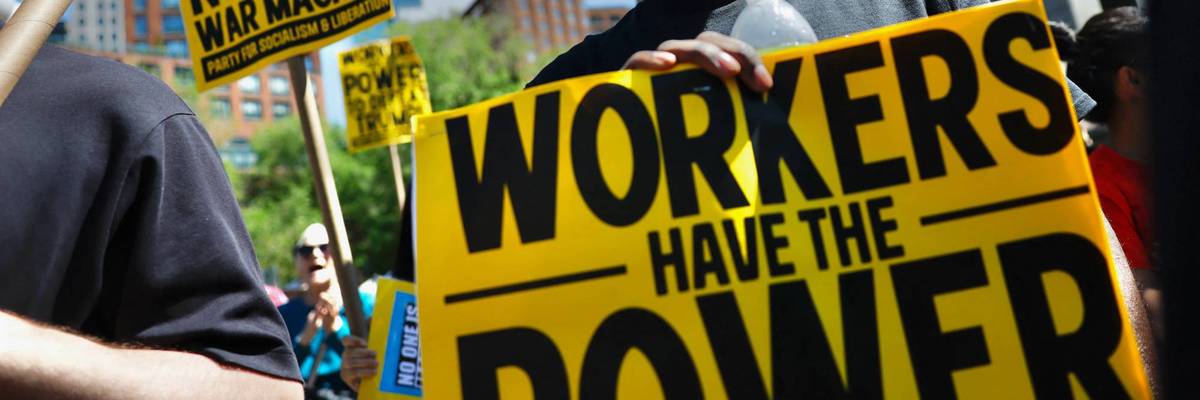
Across the United States, workers continue to organize. They continue to win union recognition, negotiate better conditions, and build power across industries and communities. Their determination reminds the world that democracy is not sustained by institutions alone, it depends on people who are prepared to defend it every day.
When American workers fight back for their rights, they strengthen democracy not only at home, but around the world.
We are at a crossroads
This country and this world are at a monumental crossroads. In a few short weeks, US voters will have an opportunity to beat back the forces of fascism and confront the billionaires who are rigging the economy, our media system, and our democracy, making it increasingly impossible for ordinary people to get by. We’re not just talking about the election. We’re talking about what must be done once these fascist elements are vanquished from power. We need a bolder set of solutions than what either major party has so far been willing to offer and a working-class movement ready to fight like hell for it. Trump didn't emerge from nowhere. The conditions that fueled MAGA authoritarianism were created by decades of radical neoliberal economic policies and a corrupt political system dominated by corporate interests. They slashed taxes on the super-rich, promising that the benefits would trickle down. They said giveaways to the corporate titans would make life more affordable for the rest of us. It was all bullshit. And when a bitter, betrayed populace searches for someone to blame, right-wing demagogues have little trouble finding scapegoats. People know when they're being lied to, but you won't hear any of this from the corporate media. Only independent journalism—powered and funded by people who believe in building a better world—can deliver truly trustworthy daily news. Our Fall Campaign is underway, and we need your help. To power our newsroom through the rest of the year, we need to raise $125,000 by midnight on October 31. So if you share our vision, please contribute whatever you can to sustain our work. |
For generations, the United States has been a global advocate for freedom, democracy, and the rule of law. Today, however, the world is calling on the United States to uphold those same principles at home.
Last month, the International Trade Union Confederation (ITUC), representing over 200 million workers through 340 national affiliates in 169 countries, ranked the United States among countries with “systemic violations of worker rights.” The ITUC’s Global Rights Index assesses over 150 countries based on 97 indicators drawn from international standards and jurisprudence.
Given the measurable increase in violations since last year, the United States was also placed on the report’s “Watchlist,” alongside Guinea-Bissau, Israel, Liberia, Moldova, the Philippines, and Zimbabwe.
The inclusion of the United States on the ITUC’s Watchlist is based on the pattern of backsliding of fundamental rights over the past year and serves as a troubling indicator of the country’s current state of affairs. The report notes that, in the United States:
- More than 1 million federal workers have lost their right to collective bargaining.
- The National Labor Relations Board has been left unable to fulfill its essential role of protecting workers’ rights.
- Tens of thousands of immigrant union members have been stripped of their status and rights through the unlawful termination of various forms of rights-based protections and programs.
- Immigration enforcement is being used as a tool to suppress the exercise of freedom of expression, assembly, and association by detaining or revoking the visas of workers who take action or express views contrary to that of the government.
These actions by the Trump administration are intended to undermine workers’ rights to join a union, bargain collectively, and speak freely, but their impacts extend far beyond the workplace.
When workers exercise their rights at work, they are not only better equipped to advocate for better working conditions, they are also better able to engage democratically in their communities. It is often through a union at work that people first vote and run in elections. Currently, there are 564 union and household members who are endorsed to run for office in the midterm elections in the United States, a number that is expected to rise as the elections draw close later this year.
The actions taken by the Trump administration therefore not only threaten working conditions across the country but also debilitate people’s ability to civically engage. As a result, communities will be less prepared to resist other issues they face like corruption, abusive use of technology, and corporate greed.
The weakening of rights in the United States set a dangerous precedent for the world. Governments, employers, and investors across the world are observing and some will feel encouraged to follow.
The good news is that this story is not over.
Across the United States, workers continue to organize. They continue to win union recognition, negotiate better conditions, and build power across industries and communities. Their determination reminds the world that democracy is not sustained by institutions alone, it depends on people who are prepared to defend it every day.
When American workers fight back for their rights, they strengthen democracy not only at home, but around the world.
- Help Protect Federal Workers From Trump's Union-Busting Attacks ›
- Trump’s Labor Department Tries to Redefine Workers Out of Their Rights ›
- Trump Set to Install Anti-Union Attack Dog as Director of Key Labor Office ›
- Whatever Happened to Trump’s 'Golden Age' for American Workers? ›
- 50 Ways the Trump Administration Has Eroded Workers' Rights While Bolstering Corporate Power ›
- Unions Condemn Executive Order Allowing Trump to Replace Federal Workers With 'Political Loyalists' ›
For generations, the United States has been a global advocate for freedom, democracy, and the rule of law. Today, however, the world is calling on the United States to uphold those same principles at home.
Last month, the International Trade Union Confederation (ITUC), representing over 200 million workers through 340 national affiliates in 169 countries, ranked the United States among countries with “systemic violations of worker rights.” The ITUC’s Global Rights Index assesses over 150 countries based on 97 indicators drawn from international standards and jurisprudence.
Given the measurable increase in violations since last year, the United States was also placed on the report’s “Watchlist,” alongside Guinea-Bissau, Israel, Liberia, Moldova, the Philippines, and Zimbabwe.
The inclusion of the United States on the ITUC’s Watchlist is based on the pattern of backsliding of fundamental rights over the past year and serves as a troubling indicator of the country’s current state of affairs. The report notes that, in the United States:
- More than 1 million federal workers have lost their right to collective bargaining.
- The National Labor Relations Board has been left unable to fulfill its essential role of protecting workers’ rights.
- Tens of thousands of immigrant union members have been stripped of their status and rights through the unlawful termination of various forms of rights-based protections and programs.
- Immigration enforcement is being used as a tool to suppress the exercise of freedom of expression, assembly, and association by detaining or revoking the visas of workers who take action or express views contrary to that of the government.
These actions by the Trump administration are intended to undermine workers’ rights to join a union, bargain collectively, and speak freely, but their impacts extend far beyond the workplace.
When workers exercise their rights at work, they are not only better equipped to advocate for better working conditions, they are also better able to engage democratically in their communities. It is often through a union at work that people first vote and run in elections. Currently, there are 564 union and household members who are endorsed to run for office in the midterm elections in the United States, a number that is expected to rise as the elections draw close later this year.
The actions taken by the Trump administration therefore not only threaten working conditions across the country but also debilitate people’s ability to civically engage. As a result, communities will be less prepared to resist other issues they face like corruption, abusive use of technology, and corporate greed.
The weakening of rights in the United States set a dangerous precedent for the world. Governments, employers, and investors across the world are observing and some will feel encouraged to follow.
The good news is that this story is not over.
Across the United States, workers continue to organize. They continue to win union recognition, negotiate better conditions, and build power across industries and communities. Their determination reminds the world that democracy is not sustained by institutions alone, it depends on people who are prepared to defend it every day.
When American workers fight back for their rights, they strengthen democracy not only at home, but around the world.
- Help Protect Federal Workers From Trump's Union-Busting Attacks ›
- Trump’s Labor Department Tries to Redefine Workers Out of Their Rights ›
- Trump Set to Install Anti-Union Attack Dog as Director of Key Labor Office ›
- Whatever Happened to Trump’s 'Golden Age' for American Workers? ›
- 50 Ways the Trump Administration Has Eroded Workers' Rights While Bolstering Corporate Power ›
- Unions Condemn Executive Order Allowing Trump to Replace Federal Workers With 'Political Loyalists' ›