

SUBSCRIBE TO OUR FREE NEWSLETTER
Daily news & progressive opinion—funded by the people, not the corporations—delivered straight to your inbox.
5
#000000
#FFFFFF
To donate by check, phone, or other method, see our More Ways to Give page.
Daily news & progressive opinion—funded by the people, not the corporations—delivered straight to your inbox.
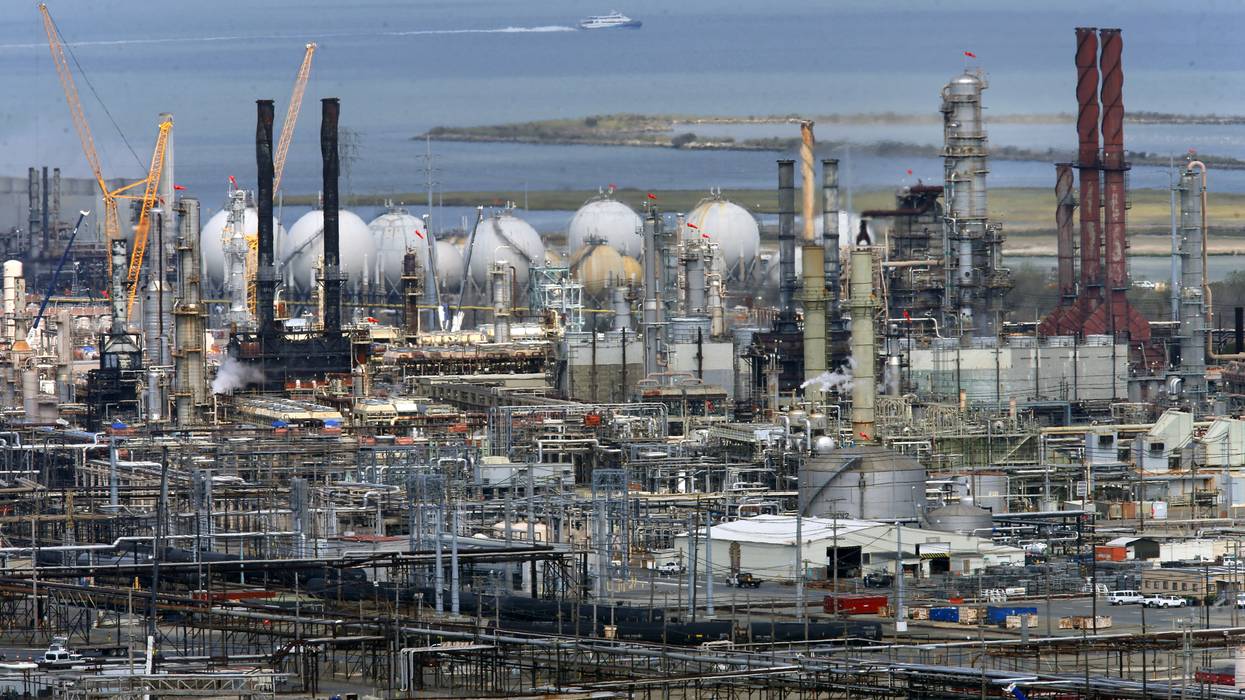
"Chevron's 'net zero' rhetoric looks to be little more than a PR ploy to prevent strong climate action while the corporation rakes in record profits and plans for further production or expansion in at least 20 countries."
Research published Wednesday reveals that nearly all of the carbon offsets Chevron relies on to "cancel out" its planet-heating emissions are likely "worthless," rendering the oil giant's so-called "net zero aspiration" a masterclass in greenwashing that threatens to exacerbate the fossil fuel-driven climate crisis.
According to a new report from Corporate Accountability, at least 93% of the voluntary carbon market offsets Chevron purchased and counted toward its climate targets between 2020 and 2022 are "of low environmental integrity and therefore appear to be junk, until or unless proven otherwise." To make matters worse, at least 42% of the purportedly green initiatives the company invested in and gave itself credit for over the past three years are linked to claims of ecological and social harm, particularly in the Global South.
"This is how we lose a planet: through corporate dishonesty and obstruction."
Over half of Chevron's offset credits from 2020-2022 (including over 97% in 2022) were based on large hydroelectric projects, but these are "meaningless" from a carbon accounting standpoint because they don't deliver additional reductions in greenhouse gas (GHG) pollution, the report notes.
The authors cite a preexisting explanation from the GHG Management Institute and Stockholm Environmental Institute: "GHG emissions reductions are additional if they would not have occurred in the absence of a market for offset credits. If the reductions would have happened anyway—i.e., without any prospect for project owners to sell carbon offset credits—then they are not additional… if their associated GHG reductions are not additional, then purchasing offset credits in lieu of reducing your own emissions will make climate change worse."
Mega-dams also tend to be associated with myriad downsides, including widespread displacement and violent repression. Two projects in Colombia that account for a combined 37% of Chevron's recent offsets—Proyecto Hidroeléctrico El Quimbo and the Sogamoso Hydropower Project—have been accused of inflicting substantial damage on local ecosystems and communities, with the latter under fire for allegedly threatening, disappearing, and even killing opponents.
One-third of Chevron's offset credits over the past three years came from Reducing Emissions From Deforestation and Forest Degradation in Developing Countries, or REDD+, projects. The vast majority were purchased through Verra, the world's largest carbon credit certifier; a recent analysis found that 94% of the rainforest offsets sold by Verra have no discernible climate benefits, contributing to its CEO's Tuesday decision to resign. In addition to largely failing to reduce deforestation—resulting in dubious emissions reduction effects—REDD+ projects "are also notorious for their negative impacts on Indigenous peoples and local communities worldwide due to risks of land grabbing and loss of land tenure rights," the new investigation points out.
Chevron's recent offsets also include several ostensible reforestation projects, but according to the report, two of them are large rubber plantation monocultures for latex extraction and another is based on pine and eucalyptus plantations destined to be harvested before 2040.
"Large plantations such as these, unlike natural or even secondary forests (e.g., those that are replanted and left to grow naturally), require sterile habitats, frequent harvesting, and sometimes clearing, which releases stored carbon back into the atmosphere," the report notes. "These plantations can actually create cumulatively worsening conditions for local ecosystems and biodiversity and are not effective carbon-offsetting strategies."
"In addition to junk offsets, Chevron also promotes its investment in CCUS [Carbon Capture Utilization and Storage] as central to achieving its 'net zero' target," the report observes. "By its own admission, Chevron's CCUS projects are failing to achieve even close to the amount of emissions removals promised, in some cases even failing to meet the targets by 50%."
Notably, even if Chevron were to hit its current climate targets, it would still ignore 90% of its overall emissions. That's because the oil giant's goal of achieving "net zero" GHG pollution by 2050 only applies to upstream ("scope 1" and "scope 2") emissions—the 10% that correspond with production and the operation of company-owned property. The vast majority of Chevron's emissions are downstream ("scope 3"), or those that stem from the end use of its petroleum products.
Rachel Rose Jackson, director of climate research and policy at Corporate Accountability, said in a statement that "Chevron's 'net zero' rhetoric looks to be little more than a PR ploy to prevent strong climate action while the corporation rakes in record profits and plans for further production or expansion in at least 20 countries."
Chevron, the second-biggest U.S. oil major behind ExxonMobil, raked in a record $35.5 billion in profit in 2022 and announced a $75 billion stock buyback plan for this year. In addition, the company—responsible for generating more than 43 billion tons of GHG pollution since 1965, second only to Saudi Aramco among corporations worldwide—is planning to dump $57.4 billion into ramping up fossil fuel production this decade, the report laments.
Chevron's investment plans, second only to Exxon's, are at odds with climate scientists' repeated warnings that fossil fuel expansion is incompatible with preserving a habitable planet.
"This deeply documented history of greenwashing and malfeasance should make every human on Earth who isn't paid by the fossil fuel industry furious."
Corporate Accountability's new exposé "supports what we have long suspected to be true beneath its 'green image,'" said Jackson. "Chevron is deploying junk offsets that are presumed worthless, and many of which are likely to be spurring harm on frontline communities. In addition, its vast lobbying is a hindrance to the strong climate action we urgently need."
According to Corporate Accountability: "Last year, Chevron lobbied on more than 150 federal bills or issues in the U.S.—targeting policies that sought to lower emissions while pushing others that would further legitimize risky and unproven schemes like CCUS. In 2020-2022, Chevron directly spent $20.8 million lobbying in the U.S. alone. This does not even take into account the more than $310.5 million its partner trade groups spent in the same time period."
In response to the report, climate scientist Peter Kalmus told The Guardian that "this is how we lose a planet: through corporate dishonesty and obstruction."
"This deeply documented history of greenwashing and malfeasance should make every human on Earth who isn't paid by the fossil fuel industry furious," Kalmus added.
The report comes just days after communities harmed by Chevron's operations held the 10th annual #AntiChevronDay of action on Sunday. Demonstrations took place in 10 countries, including a protest outside a massive oil refinery in Richmond, California, where the company is headquartered. It also comes one week before the company's annual shareholder meeting on May 31.
"It's imperative that shareholders, policymakers, and the public see Chevron's green claims for what they are—greenwashed destruction," says Corporate Accountability. "As this exposé illustrates, Chevron appears to be continuing its legacy of preventing, not promoting, the legally binding regulations, the rapid deployment of real solutions, and the fast track to real zero emissions that needs to happen to avert climate catastrophe."
In a statement, Chevron spokesperson Bill Turenne said that "Chevron supports offsets" as part of its effort "to advance a lower carbon future." He added that "the majority of the offsets referred to in the report are compliance-grade offsets accepted by governments in the regions where we operate."
Note: This piece has been updated with comment from Chevron.
A new report published Wednesday by a trio of progressive advocacy groups lifts the veil on so-called "net zero" climate pledges, which are often touted by corporations and governments as solutions to the climate emergency, but which the paper's authors argue are merely a dangerous form of greenwashing that should be eschewed in favor of Real Zero policies based on meaningful, near-term commitments to reducing global greenhouse gas emissions.
"Increasingly, the concept of 'net zero' is being misconstrued in political spaces as well as by individual actors to evade action and avoid responsibility." --Report
The report--titled "The Big Con: How Big Polluters Are Advancing a "Net Zero" Climate Agenda to Delay, Deceive, and Deny" (pdf)--was published by Corporate Accountability, the Global Forest Coalition, and Friends of the Earth International, and is endorsed by over 60 environmental organizations. The paper comes ahead of this November's United Nations Climate Change Conference in Glasgow, Scotland and amid proliferating pledges from polluting corporations and governments to achieve what they claim is carbon neutrality--increasingly via dubious offsets--by some distant date, often the year 2050.
However, the report asserts that "instead of offering meaningful real solutions to justly address the crisis they knowingly created and owning up to their responsibility to act beginning with drastically reducing emissions at source, polluting corporations and governments are advancing 'net zero' plans that require little or nothing in the way of real solutions or real effective emissions cuts."
"Furthermore... they see the potential for a 'net zero' global pathway to provide new business opportunities for them, rather than curtailing production and consumption of their polluting products," it says.
According to the report:
After decades of inaction, corporations are suddenly racing to pledge to achieve "net zero" emissions. These include fossil fuel giants like BP, Shell, and Total; tech giants like Microsoft and Apple; retailers like Amazon and Walmart; financers like HSBC, Bank of America, and BlackRock; airlines like United and Delta; and food, livestock, and meat-producing and agriculture corporations like JBS, Nestle, and Cargill. Polluting corporations are in a race to be the loudest and proudest to pledge "net zero" emissions by 2050 or some other date in the distant future. Over recent years, more than 1,500 corporations have made "net zero" commitments, an accomplishment applauded by the United Nations Framework Convention on Climate Change and the U.N. Secretary-General.
"Increasingly, the concept of 'net zero' is being misconstrued in political spaces as well as by individual actors to evade action and avoid responsibility," the report states. "The idea behind big polluters' use of 'net zero' is that an entity can continue to pollute as usual--or even increase its emissions--and seek to compensate for those emissions in a number of ways. Emissions are nothing more than a math equation in these plans; they can be added one place and subtracted from another place."
"This equation is simple in theory but deeply flawed in reality," the paper asserts. "These schemes are being used to mask inaction, foist the burden of emissions cuts and pollution avoidance on historically exploited communities, and bet our collective future through ensuring long-term, destructive impact on land and forests, oceans, and through advancing geoengineering technologies. These technologies are hugely risky, do not exist at the scale supposedly needed, and are likely to cause enormous, and likely irreversible, damage."
Among the key findings of the report:
"The best, most proven approach to justly addressing the climate crisis is to significantly reduce emissions now in an equitable manner, bringing them close to Real Zero by 2030 at the latest," the report states, referring to a situation in which no carbon emissions are produced by a good or service without the use of offsets. "The cross-sectoral solutions we need already exist, are proven, and are scalable now... All that is missing is the political will to advance them, in spite of industry obstruction and deflection."
"To avoid social and planetary collapse, [leaders] must heed the calls of millions of people around the globe and pursue policies that justly, equitably transition our economies off of fossil fuels, and advance real solutions that prioritize life--now." --Report
"People around the globe have already made their demands clear," the report says. "Meaningful solutions that can be implemented now are already detailed in platforms like the People's Demands for Climate Justice, the Liability Roadmap, the Energy Manifesto, and many other resources that encompass the wisdom of those on the frontlines of the climate crisis."
Sara Shaw, climate justice and energy program co-coordinator at Friends of the Earth International and one of the paper's authors, said "this report shows that 'net zero' plans from big polluters are nothing more than a big con. The reality is that corporations like Shell have no interest in genuinely acting to solve the climate crisis by reducing their emissions from fossil fuels. They instead plan to continue business as usual while greenwashing their image with tree planting and offsetting schemes that can never ever make up for digging up and burning fossil fuels."
"We must wake up fast to the fact that we are falling for a trick," Shaw added. "'Net zero' risks obscuring a lack of action until it is too late."
Lidy Nacpil, coordinator of the Asian Peoples Movement on Debt and Development--which endorsed the report--warned that "proclamations of 'net zero' targets are dangerous deceptions. 'Net zero' sounds ambitious and visionary but it actually allows big polluters and rich governments to continue emitting [greenhouse gases] which they claim will be erased through unproven and dangerous technologies, carbon trading, and offsets that shift the burden of climate action to the Global South."
"Big polluters and rich governments should not only reduce emissions to Real Zero, they must pay reparations for the huge climate debt owed to the Global South," added Nacpil.
In conclusion, the reports says world leaders must "listen to the people and once and for all prioritize people's lives and the planet over engines of profit and destruction."
"To avoid social and planetary collapse," it states, "they must heed the calls of millions of people around the globe and pursue policies that justly, equitably transition our economies off of fossil fuels, and advance real solutions that prioritize life--now."
Ahead of a virtual weekend summit to mark the fifth anniversary of the Paris agreement, over 100 groups on Thursday urged President-elect Joe Biden to commit the United States to its "fair share" of emissions cuts and climate finance, noting the nation's disproportionate contributions to the global crisis.
"The people who voted for a better future are now ready to demand it from your administration," says the joint letter (pdf) to Biden, sent on behalf of millions of people. It follows the release last week of a U.S. Climate Action Network (USCAN) analysis of fair share country contributions with a focus on the United States.
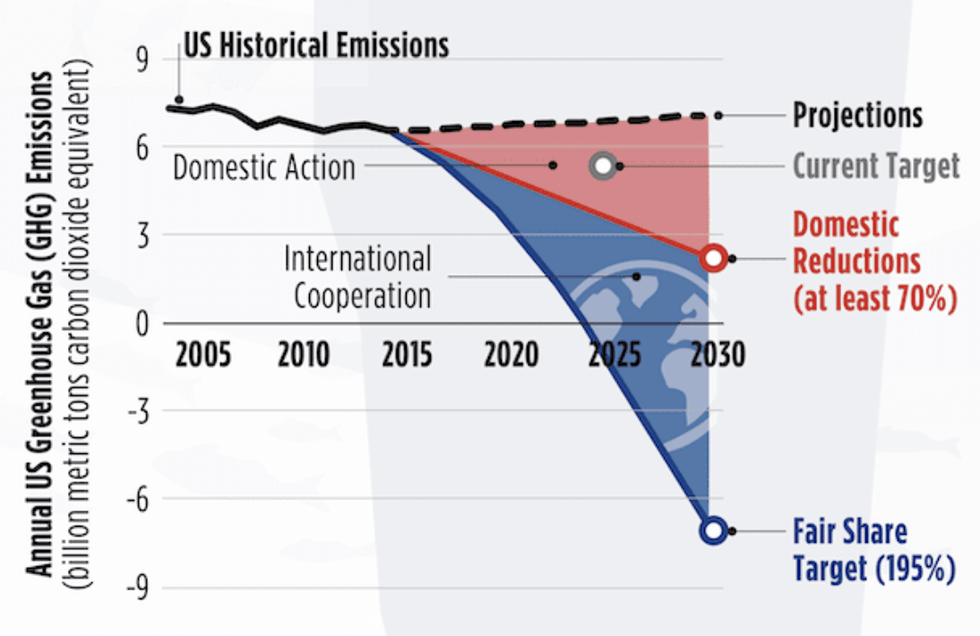
The analysis found the U.S. fair share of global action necessary to limit temperature rise this century to 1.5degC--the more ambitious Paris target--is the equivalent of reducing U.S. emissions 195% by 2030, based on 2005 levels. In other words, slashing domestic greenhouse gas emissions isn't enough--the United States must also help other countries. USCAN calls for domestic reductions of 70% by 2030 along with U.S. financial and technological support to enable even greater cuts in developing nations.
"The climate crisis may be the most unfair thing that ever happened on this Earth: the less you did to cause it, the harder you get hammered," said author and activist Bill McKibben, who co-founded the group 350.org. "These numbers give us a strong sense of what a just and honorable response might look like."
Noting that the United States, "for all our terrible inequality, is an extremely wealthy country," USCAN executive director Keya Chatterjee said in a statement that "we can hardly expect other countries, particularly developing countries straining to lift their people out of poverty, to prioritize emissions reductions, if we haven't already done so. The new administration very much wants to make the U.S. into a climate leader. Climate leaders do their fair shares."
Given President Donald Trump's recent withdrawal from the global climate accord, the groups' letter tells Biden that "we applaud your stated intent for the United States to rejoin the Paris agreement at the earliest possible moment," while also encouraging the next president to go further and fully embrace the fair share demand.
"This commitment to fair shares is already included in the Democratic Party's Platform," the letter notes. "To follow through, this will require bold, equitable, and ambitious emissions reductions and a commitment to support less wealthy countries to do the same, including providing a significant amount of climate finance, far more than we committed to under the Obama administration."
According to Friends of the Earth U.S. president Erich Pica, "For far too long, the United States approach to addressing climate change in both the domestic and international context has ignored or denied our historic contributions to the climate emergency and our greater responsibility to act."
As the letter details:
To date, the United States has contributed more to climate change than any other country in the world. It is also the world's wealthiest country, with much of this wealth being accumulated through activities that have directly or indirectly fueled climate change. Even within the U.S., we see all too well how the devastating impacts of extractive and polluting activities are concentrated in low-income, Black, Latinx, and Indigenous communities, while the wealth accumulated through these practices is concentrated in the hands of just a few. These are truths that cannot be ignored.
It is past time for the U.S. to finally act the way a climate leader must --both within its borders and internationally. The United States' capacity to act on the climate crisis and its historical contribution to creating it are so large that even cutting to zero emissions tomorrow would not be action enough. And so now the U.S., beginning with your administration, must do its fair share in addressing this crisis. It is long overdue. It is what's right. And if people from Louisiana to California and from the Philippines to Nigeria are going to have a chance at surviving the existential crisis unfolding before our eyes, it is paramount.
Taking aim at past Republican and Democratic administrations, Corporate Accountability U.S. climate campaign director Sriram Madhusoodanan said that "the U.S. has consistently been a bad faith actor backing Big Polluters instead of people at the U.N. climate talks. It is not enough for the U.S. to simply rejoin the Paris agreement."
"The Biden administration has touted climate action, and it is time for them to walk the walk," Madhusoodanan added. "With its reentry to the Paris agreement, the U.S. must commit to pay what it owes to Global South countries, eliminate emissions, and stop undermining people-first solutions."
Holding Biden to account, the letter points outs that "you yourself acknowledged the people's mandate for urgent action on climate change in your victory speech, and we are here to tell you that transforming how the U.S. shows up and fulfills its obligations to address the climate crisis on the global stage is an essential ingredient in demonstrating climate leadership."
Biden recently appointed John Kerry, the former secretary of state who helped craft the Paris agreement, as his climate envoy. In an interview with NPR earlier this week, Kerry said that in terms of taking action domestically to become a global climate leader, "We will have to do our fair share."
"Yes, it's simple for the United States to rejoin, but it's not so simple for the United States to regain its credibility," Kerry added of the Paris agreement. And I think we have to approach this challenge with some humility and with a very significant effort by the United States to show that we are serious."
Earlier this week, as a new United Nations report warned that despite a brief coronavirus pandemic-related drop in emissions, the Paris goals are still out of reach based on countries' current climate pledges, U.N. Secretary-General Antonio Guterres called Biden's decision to bring Kerry into his evolving administration "a demonstration that there will be a very strong commitment of the U.S. in relation to climate action next year."
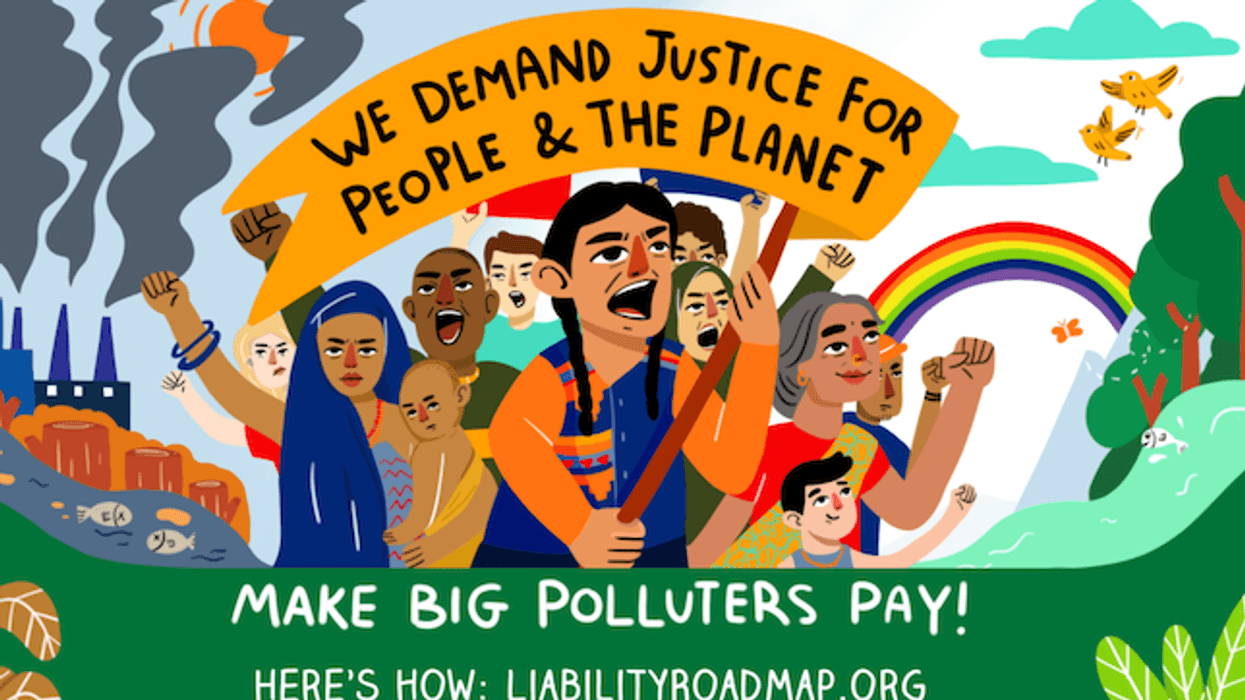
As fossil fuel giants face a growing wave of climate lawsuits, a global coalition on Tuesday released a new tool to help guide decision-makers in holding big polluters liable for "fueling the climate crisis while raking in vast profits."
The "Liability Roadmap"--an effort from groups including Corporate Accountability, Indigenous Environmental Network, and War on Want--lays out a range of approaches, such as establishing community-based climate damage funds, ending government subsides for polluting industries, and setting up an international fossil fuel non-proliferation mechanism.
According to the groups, "Now is the time to hold polluting industries liable," as we "are breaching environmental tipping point after environmental tipping point," and the "climate inaction civil society has warned of is now an increasing certainty."
Yet despite the climate crisis--and global coronavirus pandemic--polluting industries have dug in on their destruction operations. According to the groups:
While communities around the world are fighting for their lives, polluting, destructive industries like the fossil fuel industry and agribusiness are preparing to ramp up expansion for their own greed. For example, the recent Production Gap Report indicates that there are currently plans to produce more than twice as much fossil fuel by 2030 than is consistent with the commitment made in the Paris Agreement to keep global temperature rise to as close to 1.5 degrees Celsius as possible. The trading and selling of just four products--industrially produced beef, soy, wood, and palm oil--is the main driver of deforestation in the world.[9] The Intergovernmental Panel on Climate Change attributes 23% of global greenhouse gas emissions to agriculture and land use. When adding other elements of the globalized food system, studies suggest this figure is as high as 40%.
At the same time, these polluting corporations depend on a system built on corporate fascism and the exploitation of people, racism, and the oppression of women. And they manipulate this system to their benefit, treating human lives--especially the lives of people of color, women, and frontline communities such as Indigenous peoples, peasants, fisherfolks, pastoralists, nomadic and rural peoples--and the natural world as expendable. They are attempting to profit from the Covid-19 pandemic and they are demanding government bailouts. Along with pushing for more draconian laws, they are also rolling out PR schemes that paint themselves as saviors in a crisis they were central to orchestrating.[18][19][20] They regularly use international trade and investment agreements to bypass justice in courts, intimidate governments seeking to hold them accountable, and access public money through arbitration claims. They are attempting to push forward unreliable and risky climate techno-fixes such as carbon markets and geo-engineering that won't work and that will exacerbate existing inequities and human rights violations. And whether agribusiness or fossil fuels or forestry sector, they are the biggest barriers to systems change, causing delays that make climate change even worse.
[...]
Moreover, these very industries are in large part responsible for the multi-faceted crises we're facing. They knew for decades their activities were fueling climate change, but they funded denial and junk science to delay action. They've simultaneously driven the deforestation, extinction, and biodiversity loss crises that drive animals out of their habitat and enable pathogens to spread around the world. They have extracted wealth from and perpetrated environmental racism in communities of color and Indigenous communities around the world. They have eroded the power of governments to effectively address global disasters like the climate crisis and Covid-19--disasters that are increasingly devastating and expensive. As a result, we are now likely to breach 1.5 degrees Celsius of warming by as early as 2030. These polluters are the ones who should be paying, not being bailed out.
Achieving far-reaching accountability, as the roadmap outlines, will be the result of a variety tools including legal challenges. But "the liability roadmap is about more than lawsuits and courtrooms," Sriram Madhusoodanan, U.S. climate campaign director with Corporate Accountability, explained in a statement Tuesday.
"This is about making Big Polluters pay for the havoc they've wreaked by fueling the climate crisis and about forcing them to end their abuses," said Madhusoodanan. "This is about making Big Polluters pay for causing decades of suffering and destruction in communities on the global frontlines of the climate crisis, with no end in sight. The roadmap will carry us further down the road where Big Polluters are forced to put people's well-being and the well-being of the Earth and its ecosystems above expansion, extraction, and profit making."
Regardless of the avenue decision-makers pursue to make big polluters pay, the effort must be grounded in principles including:
"By holding polluting industries liable, we can end their abuses, unlock the finance needed to advance real solutions, and justly address the climate crisis," the roadmap states.
"Big Polluters have wrecked our climate, ecosystems, lives, and livelihoods, for too long," the document adds, accusing the industries of managing to "abdicate any responsibility, and only benefit from the damage they cause, which falls disproportionately on Global South communities, Indigenous Peoples, people of color, women, workers, farmers, peasants, and low-income communities."
As Sara Shaw, Climate Justice and Energy Program coordinator at Friends of the Earth International, sees it, the new effort can also help the goal of building back better post-pandemic.
"The Liability Roadmap is a tool we can use to call to account those who have knowingly caused the climate crisis, and make them pay. Not only that, it lays the foundations for systemic change--reducing corporate power and ensuring resources for the much-needed just transformation," said Shaw.

In a move widely welcomed by climate campaigners and other critics of the fossil fuel industry, Connecticut Attorney General William Tong on Monday launched a state lawsuit against ExxonMobil for "an ongoing, systematic campaign of lies and deception" regarding the oil and gas giant's products and the climate crisis.
" ExxonMobil sold oil and gas, but it also sold lies about climate science."
--Connecticut Attorney General William Tong
"ExxonMobil sold oil and gas, but it also sold lies about climate science," Tong said in a statement, referencing the company's decades of concealing internal science. "ExxonMobil knew that continuing to burn fossil fuels would have a significant impact on the environment, public health, and our economy. Yet it chose to deceive the public."
"ExxonMobil made billions of dollars during its decades-long campaign of deception that continues today," he added. "Connecticut's citizens should not have to bear the expense of fortifying our infrastructure to adapt to the very real consequences of climate change. Our case is simple and strong, and we will hold ExxonMobil accountable."
With Tong's filing (pdf), his state joined what the Center for Climate Integrity (CCI) called a "fast-growing wave of climate lawsuits" targeting fossil fuel companies. According to the center, 22 other communities--including four other states--have filed similar suits since 2017.
Connecticut's suit is the fourth filed so far this month--following the state of Delaware and the cities of Charleston, South Carolina and Hoboken, New Jersey--and comes as climate change-fueled wildfires engulf the western United States and Gulf Coast residents prepare for a hurricane in the midst of the ongoing coronavirus pandemic.
As communities across the country have endured devastating extreme weather in recent years that scientists warn will worsen as human activity continues to drive up global temperatures, fossil fuel companies have faced increased scrutiny for not only their contributions to the planetary crisis but also their concealment of research and campaigns to sow doubt about climate science--particularly in the wake of damning 2015 reports about ExxonMobil by InsideClimate News and The Los Angeles Times.
"This avalanche of climate litigation is Exxon's worst nightmare," CCI executive director Richard Wiles said in a statement Monday. "The public increasingly understands Big Oil's role in causing and lying about the climate crisis, and states and localities are stepping up like never before to demand justice and hold the fossil fuel industry accountable for their lies and deception."
ExxonMobil will defend itself in the case and continue investing in efforts to reduce greenhouse gas emissions, company spokesperson Casey Norton told Reuters, while claiming that "legal proceedings like this waste millions of dollars of taxpayer money and do nothing to advance meaningful actions that reduce the risks of climate change."
However, as Wiles explained, "North, South, East, and West, communities across the country are struggling to protect themselves in the face of the climate crisis. These lawsuits are about surviving climate change, not solving it."
"They are an essential step toward holding polluters accountable for decades of propaganda and disinformation that stalled climate action and caused untold destruction," Wiles added. "Now the only question is, who will sue Big Oil next?"
CCI also pointed out that Democratic presidential nominee Joe Biden has previously expressed support for climate litigation against polluters. As President Donald Trump headed to fire-ravaged California on Monday, Biden was in Delaware, which he represented in the U.S. Senate for decades.
After blasting Trump's denial of science over the weekend and warning that "we absolutely must act now to avoid a future defined by an unending barrage of tragedies like the one American families are enduring across the West today," Biden on Monday acknowledged his state's new suit:
Responding in a statement, 350 Action campaign manager Jenny Marienau Zimmer declared that "this is an important example of the Biden campaign recognizing the need to hold fossil fuel companies accountable for knowingly bringing fires, smog, and disaster to our doorstep."
"Biden is clearly listening to the demands of frontline communities and our movement," Marienau Zimmer said. "In jarring contrast, as California faces a climate emergency, Trump is brazenly denying the crisis."

Internal emails reported on Tuesday by The Guardian and MLive reveal that executives at a water company contracted to assess the water system in Flint, Michigan privately expressed concerns that residents "might be at risk of being poisoned by lead in their tap water months before the city publicly admitted the problem in 2015."
"The documents show a Veolia executive, a month before the corporation told the city its water was safe, saying that 'lead seems to be a problem.'"
--Alissa Weinman, Corporate Accountability
The emails, obtained by the watchdog group Corporate Accountability, came to light through a lawsuit filed in the Genesee County Circuit Court by the Michigan Attorney General Dana Nessel, a Democrat who took office in January. The state's suit accused the company, Veolia, of "professional negligence, negligence, public nuisance, unjust enrichment, and fraud." Last month a state judge threw out all but the unjust enrichment claim.
Corporate Accountability spokesperson Alissa Weinman told the newspapers that Veolia's actions related to Flint were "despicable."
"The documents show a Veolia executive, a month before the corporation told the city its water was safe, saying that 'lead seems to be a problem,'" Weinman said. "I think anyone has to ask themselves how the story in Flint would be different five years later now if Veolia had made those private concerns public."
In April 2014, an emergency manager appointed by Michigan's then-governor, Republican Rick Snyder, switched Flint's water supply from Detroit's system to the Flint River in a bid to save money. By August, city officials had issued boil-water alerts because of coliform bacteria. In February 2015, high levels of lead were found in the drinking water at the home of Lee Anne Walters, who notified the U.S. Environmental Protection Agency.
However, it wasn't until September that public health experts began publicly raising alarm about Flint's corrosive water causing lead to leach from the city's aging pipes, and it wasn't until October that officials told residents to not drink the water, distributed filters, and expanded testing. Although Flint reconnected to Detroit's water system in October, Flint's residents still live with the consequences of the water crisis.
In February 2015, Veolia signed a $40,000 contract with Flint. According to the company, the assessment was only focused on bacteria and chlorine compounds called trihalomethanes. The reporting Tuesday raises questions about what that timeline might have looked like had Veolia, one of the largest utility companies in the world, publicly raised concerns about lead earlier. It also points out that while senior employees were privately raising such concerns, "Veolia was exploring other lucrative contracts with the city."
Veolia sent a 20-page response to the newspapers, accusing city and state officials of "trying to create a corporate villain where one does not exist." The company added that "we now know in 2019 the myriad of ways that the government officials behaved badly, but as the Flint water crisis unfolded many of those facts were unknown, concealed, and covered up by the government perpetrators."
The Guardian and MLive detail some of the emails sent internally by Veolia's senior staff about lead concerns dating back to February 2015:
"Do not pass this on," wrote Rob Nicholas, then the vice president of development, in an email to Veolia executives. "The City however needs to be aware of this problem with lead and operate the system to minimize this as much as possible and consider the impact in future plans. We had already identified that as something to be reviewed."
Nicholas forwarded the information to Veolia engineer Marvin Gnagy, adding: "Yep. Lead seems to be a problem."
Days later, Veolia technology vice president Bill Fahey emailed senior executives calling for the company to advise Flint to change its water supply, adding that "the politics of this should not get in the way of making the best recommendation." Reiterating the call in another email, he added: "PLEASE... this will come back and bite us."
Nayyirah Shariff, who directs the local group Flint Rising, told the papers she feels Veolia downplayed concerns publicly. From February to March 2015, the company held a news conference and public meetings, plus put out an interim water quality report. As Shariff put it, "They were like, 'everything is fine.'"
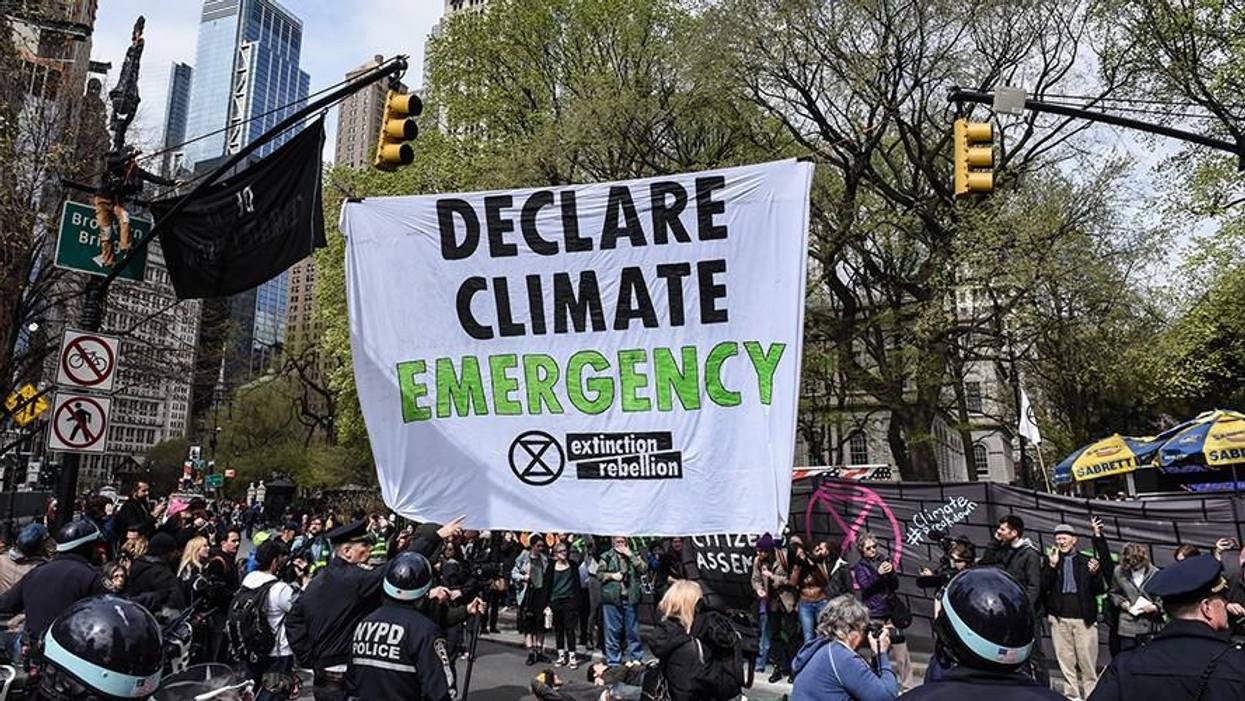
Over 500 groups on Monday rolled out an an action plan for the next president's first days of office to address the climate emergency and set the nation on a transformative path towards zero emissions and a just transition in their first days in office.
"Swift action to confront the climate emergency has to start the moment the next president enters the Oval Office," said attorney Kassie Siegel, director of the Center for Biological Diversity's Climate Law Institute.
The set of 10 actions, which together "form the necessary foundation for the country's true transformation to a safer, healthier, and more equitable world for everyone," are featured on the new Climate President website. The actions--which "touch the lives of every person living in America and those beyond who are harmed by the climate crisis"--can all be taken by the president without Congressional, thus can, and should, happen immediately, the document argues.
The new effort is convened by advocacy groups representing a range of issues, including the Center for Biological Diversity, Climate Justice Alliance, Democracy Collaborative, and Labor Network for Sustainability. Other backers include Physicians for Social Responsibility, the Institute for Agriculture and Trade Policy, and Demos.
The groups' roadmap kicks off with a demand for the next president to declare a national climate emergency under the National Emergencies Act. It includes a demand to direct "relevant federal agencies to reverse all Trump administration executive climate rollbacks and replace with sufficiently strong action."
Asserting authority the National Emergencies Act, Siegel and Center for Biological Diversity energy director Jean Su wrote in a legal analysis supporting the action plan, is necessary in order for the next president to reinstate the crude oil export ban and redirect "military spending towards the construction of clean renewable energy projects and infrastructure."
Declaring a climate emergency, the analysis adds, would also "set the appropriate tone of urgency for climate action."
The other nine steps for the nation's next leader to take within their first 10 days of office are, as noted in the document:
As part of this overall undertaking, groups say,
the next president must prioritize support for communities that historically have been harmed first and most by the extractive economy, including communities of color, Indigenous communities, and low-wealth communities. The next President must also take special care to ensure that the rights of Indigenous Peoples are upheld, which includes following the Indigenous Principles of Just Transition.
Moreover, climate policies must drive job growth and spur a new green economy that is designed and built by communities and workers and that provides union jobs with family-sustaining wages. These policies must ensure that workers in the energy sector and related industries, whose jobs will be fundamentally transformed, are not abandoned.
"We're also putting the next Congress on notice to get serious about dismantling this crisis, or the people will circumvent you with all available means."
--Anthony Rogers-Wright, Climate Justice Alliance
According to Anthony Rogers-Wright, policy coordinator for Climate Justice Alliance, "This set of executive actions puts the fossil fuel, and other iniquitous industries that treat our communities like sacrifice zones, on notice, while offering a suite of actions the next president can promulgate on day one to address systemic and institutionalized injustices. At the same time, we're also putting the next Congress on notice to get serious about dismantling this crisis, or the people will circumvent you with all available means."
In addition to executing the 10 steps, the Climate President action plan urges the next president to further tackle the crisis by working with Congress as well as state and local governments on appropriate plans. Those efforts must include working to pass the Green New Deal.
While the Trump administration has taken a sledgehammer to environmental protections, previous administrations also hold blame for failing to sufficiently act on the climate, said Sriram Madhusoodanan, climate campaign director of Corporate Accountability.
"The United States government has long acted to advance the interests of corporations over people, and under Trump the government has lowered the bar even further," he said. "The U.S. continues to act at the behest of big polluters like the fossil fuel industry by ignoring science, blocking climate policy, and putting big polluter profit over the needs and demands of people."
"The next administration," added Madhusoodanan, "must start a new chapter in U.S. history, kick polluters out of climate policy-making, make them pay for the damage they've knowingly caused, and take every action possible to advance urgently needed, internationally just climate action."
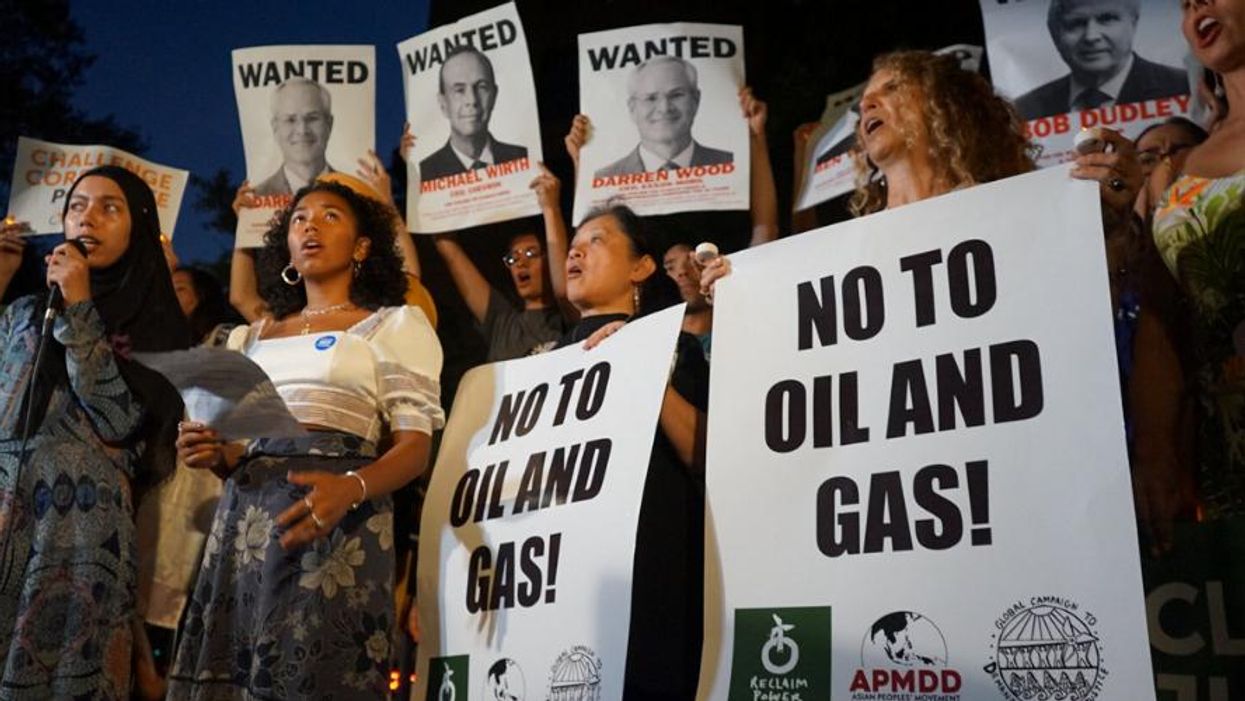
U.N. Secretary-General Antonio Guterres has convened a climate summit this week, which he hopes will spur ambitious action by countries around the world. While the summit has laudably galvanized people, organizations, and governments globally to gather in New York City, unfortunately, Secretary-General Guterres and many others demanding urgent action are missing critical pieces of the puzzle. No truly ambitious solutions or actions can come to fruition when fossil fuel, agri-business, and other polluting industries are at the table. The industries that have fueled this crisis should have no part in dictating the solutions--rather, they should be made to pay to address the massive damages they have caused and to finance real solutions to the crisis.
Without these pieces of the puzzle in place, we know what we will get at this summit: proposals that will set us firmly down the path of increased global warming. For example, carbon markets and offsets are sure to play a big role. These are false solutions that enable Big Polluters to continue burning fossil fuels and devastating the earth under the guise of climate action. This is particularly galling as the Amazon burns and people in the Bahamas recover from the death and destruction left by Hurricane Dorian.
"Holding these industries liable can unlock hundreds of billions of dollars to help finance the most ambitious, most equitable, and most just solutions we have."
It is also galling because truly ambitious solutions are out there. Communities from the frontlines of climate change--those who have done the least to cause the crisis--have long proposed and advanced ambitious and equitable ways to address this crisis. For example: keeping fossil fuels in the ground, stopping deforestation, and implementing an equitable transition to 100 percent renewable energy.
What countries need to be doing is bringing such people-driven solutions to the climate summit. Just imagine what could happen if all of the power and resources gathered in New York this week were focused on the quickest and most equitable way to end fossil fuel extraction and transition completely to renewable energy. That would be true ambition.
This kind of ambition is exactly what people are demanding--and it will only be possible when polluting industries are not obstructing the process. For example, the International Emissions Trading Association (IETA)--one of Big Polluters' most prominent trade groups founded by BP and includes Shell and Chevron among its members--is concurrently hosting a two-day "carbon forum" promoting "business-driven climate solutions." If government leaders and civil society groups were truly serious about ambition, they would refuse to attend, knowing that such a forum is designed to advance false solutions leading us to a world where warming far exceeds safe limits.
In reality, these polluting industries, their front groups, and governments representing their interests (like the U.S.) have spent more than 20 years in the U.N. climate treaty process delaying, watering down, and blocking solutions to effectively and equitably address climate change. So it's no surprise that they are doing the same this week.
And that's why it's vital that the movement to implement a conflicts-of-interest policy in the U.N. climate treaty succeeds. But removing the obstruction of Big Polluters and trade associations like IETA from policymaking is just the first step toward ensuring true climate solutions. Holding polluting industries liable for the damage they have caused is just as vital.
Take the fossil fuel industry: Over the past few years, media exposes have revealed that corporations like Exxon knew for decades that burning fossil fuels would lead to climate change. The fossil fuel industry then spent decades and hundreds of billions of dollars manufacturing doubt about the causes of climate change, discrediting science, and buying political influence. It ensured decades of increased emissions accompanied by stagnated climate policy.
There is a groundswell of support in the U.S. and beyond to make the fossil fuel and other polluting industries pay for the damages they have caused. Holding these industries liable can unlock hundreds of billions of dollars to help finance the most ambitious, most equitable, and most just solutions we have.
Communities on the front lines of climate change did not cause the crisis, but they are paying the highest price. They need and are owed funding to implement real solutions that will actually turn the tide toward a just response to this global crisis. The U.N. Secretary-General and policymakers alike must wake up to the fact that polluting industries and their backers should no longer be allowed to obstruct climate justice. Rather, we must make them pay--and ensure those funds are used to respond to damage already done and implement the solutions we need to forge our way to a just, livable future for all.

"It's time Rex Tillerson step down or be removed," said Gigi Kellett of Corporate Accountability International, following an announcement on Thursday that ExxonMobil will pay $2 million for violating U.S. sanctions against Russian officials while the now-secretary of state was the company's CEO.
"This is nothing more than a parking ticket."
--Gigi Kellett, Corporate Accountability International
" ExxonMobil demonstrated reckless disregard for U.S. sanction requirements," according to enforcement filing released by the Treasury Department's Office of Foreign Assets Control (OFAC), which issued the penalty. Though the fine is reportedly the maximum penalty allowed, it's pittance to one of the world's most profitable and powerful corporations, which last year reported a profit of $7.8 billion.
"This is nothing more than a parking ticket," Kellett said.
OFAC says ExxonMobil violated sanctions against Russian officials in May 2014, by "signing eight legal documents related to oil and gas projects in Russia with Igor Sechin, the President of Rosneft," Russia's state-owned oil company. The sanctions were established two months earlier by then-President Barack Obama, in response to the Russian government's actions in Ukraine.
In a statement Thursday, ExxonMobil claimed it "followed the clear guidance from the White House and Treasury Department when its representatives signed the documents," and that "OFAC is trying to retroactively enforce a new interpretation" of the sanctions, adding, "OFAC's action is fundamentally unfair."
The OFAC filing, however, says the company's "senior-most executives knew" the sanctions barred them from signing deals with Sechin, calling ExxonMobil "a sophisticated and experienced oil and gas company" that routinely navigates U.S. sanctions and export rules. Tillerson stepped down as CEO of ExxonMobil in December 2016 to lead the Trump Administration's State Department. After the department refused reporters' requests for comment on Thursday, Foreign Policy's Robbie Gramer took to Twitter:
In addition to calling for Tillerson's resignation, Kellett said: "At every level, ExxonMobil and the rest of the fossil fuel industry must be held accountable for their abuses. That may start with this $2 million fine, but it will end when all Big Polluters are held liable for their abuses and cast out of policymaking for good."
Celebrating Thursday's small victory against the world's largest oil company, Greenpeace USA climate director Kelly Mitchell said, "Even with Rex Tillerson leading the State Department, people in this country can hold powerful corporations accountable and must continue to do so."
"This move should embolden United States attorneys general in their investigations into what ExxonMobil and Rex Tillerson knew about the risks of climate change and the company's potential withholding of that information from the public and shareholders," Mitchell added.
The attorneys general of New York and Massachusetts have launched probes to investigate reports that the company, for decades, misled its investors and the public about the dangers of climate change. The allegations have also lead to calls for Tillerson to resign from his position as head of the U.S. State Department.