5
#000000
#FFFFFF
To donate by check, phone, or other method, see our More Ways to Give page.
Daily news & progressive opinion—funded by the people, not the corporations—delivered straight to your inbox.


Bad Men Behaving Badly Chap. 746: 'Cause it's not awful enough we have to endure the racist crap spewing from our home-grown jackasses, the rest of the world just bore grim witness to it as dunk-tank Christofascist Pete Hegseth chose a D-Day remembrance to flip the script on World War 2, trash European allies for not being fascist enough, and liken (good-guy) Allies landing at Normandy to an "invasion" of brown people "with "dangerous ideologies." Fact: "This is repulsive and confused, unless you're a Nazi."
Speaking of: Last week, under cover of darkness, "shameful" Senate Republicans pushed through a "Secure America Act" (sic) gifting yet more billions to keep out more of the swarthy hordes Pete's so scared of. Without making any of the reforms Dems had demanded, they added to last year's obscene $191 billion gift to DHS another $75 billion for ICE and $65 billion for CBP, 4 to 7 times their previous budgets, with most allocated to expand detentions, deportations, facilities, goons - not, as it could, to fund free childcare for over a million kids, groceries for over 10 million households, a year of SNAP benefits to 31 million people, health care tax credits for a year etc etc ad nauseum. Their wise leader, meanwhile, was throwing tantrums on TV - "Dude is losing his shit" - because a reporter dared ask for evidence of his flood of unhinged claims.
And greasy "Secretary of War (Crimes)" Pete lurches along on his quest to turn America into a white nationalist theocracy. A buffoon of a warmonger though (because?) he never saw combat, he posts klutzy videos of himself working out; in one, he prances in a “This Is War” t-shirt. (No, this is reality TV). Sporting Crusader tattoos - Deus Vult, but whose God? - he stripped 180 unholy faiths from those the military recognizes despite a First Amendment ensuring "the free exercise of religion for everybody" - a religious purge dressed up as paperwork (telling) thousands of service members their beliefs don’t matter to the government they’re risking their lives to protect.” (After outrage, he restored the Mormons.) He cut dozens of female and Black Navy officers from leadership-approved promotions, dissing “historic so-called firsts” that make the military “less lethal.”
And to mark this weekend's 82nd anniversary of the June 6, 1944 D-Day landing of Allied forces on the beaches of Normandy - perhaps the most pivotal moment in a long bloody fight to defend democracy against fascism - he gave a pro-fascism speech, embracing a Great Replacement theory that calls for a return to the racial ideology on which fascism is based. Speaking at the American Cemetery in north-west France where about 9,400 are buried, he'd barely recalled the courage of Allied Forces from multiple countries wading ashore in history's largest amphibious operation to liberate Europe before pivoting to warn "their legacy requires our active vigilance." European leaders may have grown too "comfortable," he said with the chutzpah of the deeply ignorant, and they may have somehow "forgotten that freedom is not free."
"Sadly, today, different European beaches are stormed by different, dangerous ideologies," he intoned. "On beaches in Spain, Italy, Greece and Bulgaria, boats and men arrive....When will European capitals do something about that invasion? Is it too late? I pray not, and I believe not." What a pompous asshole. So: On D-Day, Ugly Americans hawking xenophobia. Equating brown-skinned migrants who want to feed and keep safe their families with "dangerous ideologies." Also: Equating anti-fascism with "dangerous ideologies"? Wait, weren't the Allies the good guys? And wait, so the Nazis were...? Americans were horrified by so much repulsive and confused: "Sewage," "straight-up white nationalism," "a cheap suit full of hate and racism - what an evil shit," "Crystal Meth Rumsfeld strikes again," "We get it, dude. Just come out and say you hate black and brown people."
Especially in Europe, critics did not hold back, and we are here for it. English historian Simon Schama decried Hegseth's "special kind of loathsomeness, a blend of historical deafness, grotesque stupidity and comically ludicrous self-importance...As if the little people’s rage against immigration somehow is superior to the war against the 3rd Reich, and entitles this comic-book nobody to lecture the actual heroes." Others blasted "something profoundly ugly happening" in our right wing..."and on D-Day, D-Day!" and "an obscene desecration" of the memories of those who fell. Like many, French P.M. Sébastien Lecornu rightly paid tribute instead to the "3,000 men, barely 20 years old," who died, offering "the breath of their youth and the sacrifice of their lives."
Europeans also called bullshit on the faux drama and utter hypocrisy of Hegseth's angry claim that, after a united D-Day era when "each nation bled," Europe is not "standing with" a U.S. now run by a lying, racist, narcissistic, war-mongering toddler who does nothing but abuse them. "America will lead and we must, but capable allies must be Right. There. With Us...In the Breach. When It Matters," he bloviated. "The men who fought and died here restored freedom to Europe,. Now freedom must be maintained by this generation of leaders and war-fighters...We stand by our allies, and we expect our allies to stand beside us." "So much nonsense," retorted Swedish economist Anders Åslund. "'We stand by our allies!’ No you don’t. You just attacked them. Immigration policies are internal matters... Doesn’t Hegseth know the most unreliable ‘ally’ by far is the US?”
And now, in the name of their mythical, bigoted, white, male, Christian Republic, the US - Hegseth, Trump, Vance et al - have the audacity to be hectoring their European “allies” to “up their white supremacy game” to stop an “invasion” of what Trump has called the brown and black “vermin” who once flocked to our “shining city on a hill,” now a beacon of hate. Hamlet's ghost: “O, what a falling-off was there.” Last weekend, in France, Hegseth didn’t even stay for the international ceremony at the cemetery where so many are buried - per Trump, all those suckers and losers. Pete likely didn’t know the denizens of a nearby village had weeks earlier asked that his visit be cancelled. "It seems to us," they said in their request, "that this man does not share our democratic values." We feel your pain.
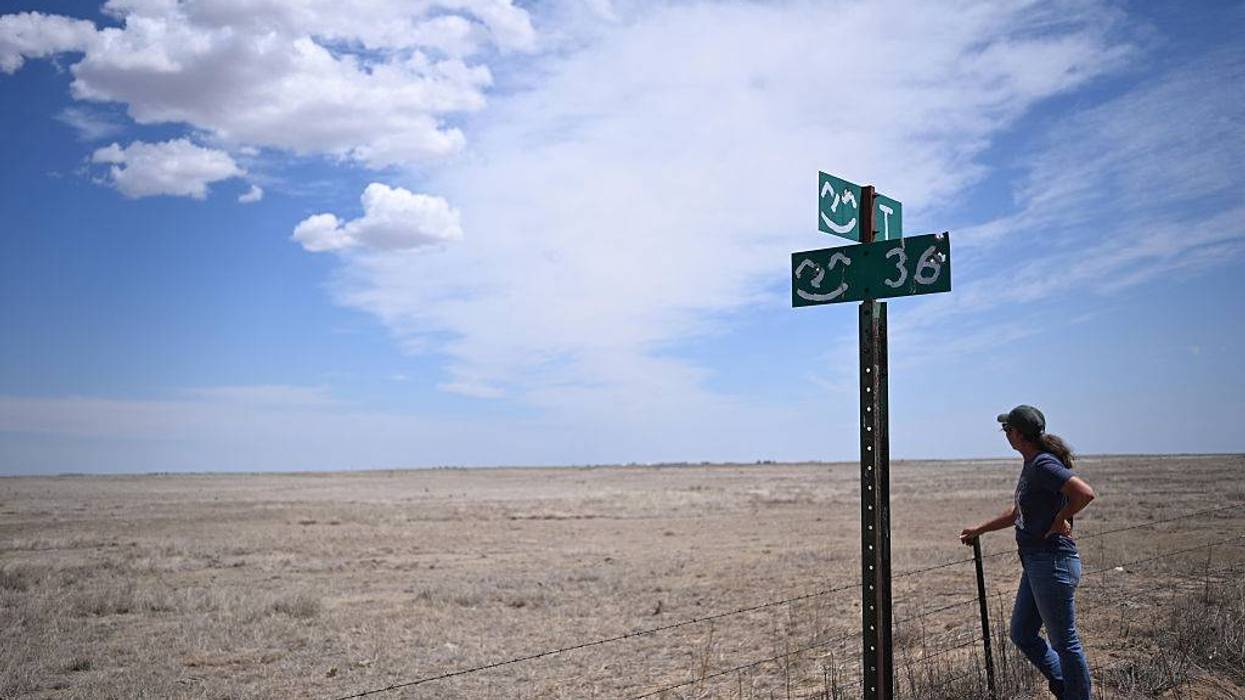
The World Meteorological Organization on Tuesday issued a warning about an El Niño event forming that is expected to "increase the risk of extreme weather over the coming months."
El Niño refers to a climate pattern that features warmer than average temperatures in the Pacific Ocean. WMO said its latest forecast estimates an 80% likelihood of an event occurring this summer, with most of its models suggesting “it will be at least moderate—and possibly strong.”
WMO Secretary-General Celeste Saulo warned that a strong El Niño this summer "will exacerbate drought and heavy rainfall and increase the risk of heatwaves both on land and in the ocean," and said WMO scientists will be "carefully monitoring conditions in the coming months to inform decision-making by governments, humanitarian agencies, and climate-sensitive sectors."
United Nations Secretary-General António Guterres said the latest WMO projections must spur global action to address the climate crisis.
"The world must treat it as the urgent climate warning it is," Guterres said. "El Niño conditions will pour fuel on the fire of a warming world. Impacts will hit even harder, travel even farther, and cross borders with devastating speed. The only effective response is climate action equal to the crisis—ending the addiction to fossil fuels, accelerating the shift to renewables, protecting the most vulnerable, and delivering early warning systems for all."
An El Niño event could pose particular problems in the United States, as critics are warning that President Donald Trump's attacks on climate research and federal disaster preparedness are leaving Americans particularly vulnerable to extreme weather.
Revolving Door Project senior researcher Kenny Stancil on Tuesday published an analysis breaking down the ways the Trump administration "has relentlessly undermined disaster readiness and response capacity" by taking a hatchet to key institutions such as the Federal Emergency Management Agency (FEMA), the National Oceanic and Atmospheric Administration (NOAA), and the National Weather Service (NWS).
Among other things, Stancil documented how the Trump administration has ousted "thousands of NOAA workers, including hundreds of NWS employees"; gutted FEMA's staff by "pushing out thousands of rank-and-file workers and dozens of veteran leaders"; and is "thwarting investments in disaster risk reduction, from slashing emissions to pursuing just and sustainable urban development."
Stancil added that while Homeland Security Secretary Markwayne Mullin has reversed some of the cuts made by former DHS chief Kristi Noem, these "last-minute reversals can't undo" the "severe damage" caused by the initial actions.
"If and when a hurricane unleashes widespread death and destruction (if not in 2026, it could be in 2027 or 2028)," Stancil wrote, "Democrats should make Trump and his Republican accomplices pay a steep political price for deliberately putting people in harm's way."
Stancil's concerns about US preparedness for extreme weather events were echoed by Shana Udvardy, senior climate resilience policy analyst at the Union of Concerned Scientists, who on Monday published an analysis outlining the current state of FEMA ahead of hurricane season.
Although Udvardy offered some qualified praise for Mullin for undoing some of Noem's worst policy decisions, she said FEMA still faces potentially catastrophic vacancies at key positions.
"Roughly half of FEMA’s leadership, 18 out of 38 of top-level positions, have yet to be filled as of today, at the start of the Atlantic hurricane season," she explained, adding that "it can take six months to a year to recruit and onboard a senior executive and a year to hire full-time staff."
The administration this week also announced plans to dismantle the Ocean Observatories Initiative, a deep-sea monitoring system that can provide crucial storm forecasting data while also tracking the health of coastal habitats.
Chris Robbins, associate director of scientific initiatives at Ocean Conservatory, said on Tuesday that the administration's effort to dismantle the system heading into a projected El Niño event "doesn't make any sense."
"Walking away from a $368 million investment in a state-of-the-art system, a feat of engineering already paid for by the American people, is absolutely myopic," Robbins said. "This system is a vital scientific asset that quietly protects American lives, communities, and the economy through unfettered access to world-class scientific data. Its loss would create an irreparable blind spot for our country in predicting earthquakes, fishery health, storm forecasting, coastal flooding, and more."
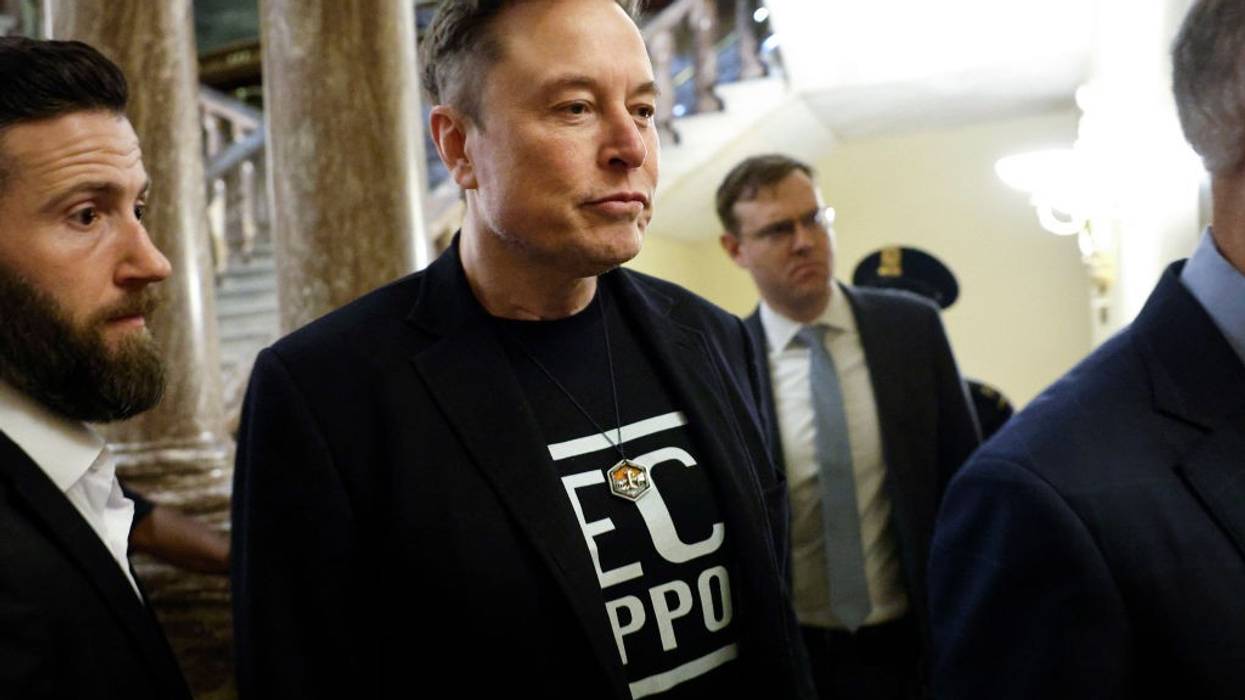
Billionaire Elon Musk has ambitions to become the world's first trillionaire when his company SpaceX makes what is expected to be the biggest initial public offering in history—and money unwittingly invested by ordinary Americans may help him get there.
Progressive media outlet More Perfect Union on Wednesday published a video detailing how the Nasdaq stock market exchange changed its own rules so that SpaceX can be immediately included in index funds without having to wait through the one-year "seasoning" period that used to be required for newly public companies.
The reason companies in the past had to wait a year to be included in index funds is that such funds contain a large chunk of Americans' retirement savings, and are thus supposed to be more averse to risk.
Watch the 12-minute video:
NEW: Elon Musk wants a SpaceX IPO valuing the company at upwards of $1.75 trillion.
To get there he got the rules changed so that index funds, with millions of Americans' retirement savings, are forced to buy in.
Retirees could take huge losses, while insiders cash out. pic.twitter.com/DviJEt0XAu
— More Perfect Union (@MorePerfectUS) May 27, 2026
This means that ordinary investors could see their money plunged into an unproven company while investors who have bankrolled Musk's previous ventures now rolled into SpaceX could cash out at inflated prices.
"Every piece of evidence we have is that the IPO is being engineered to rise very rapidly after it prices, and then fall very dramatically after that," George Pearkes, global macro strategist for Bespoke Investment Group, told More Perfect Union. "That is a recipe for retail investors, especially, to take large losses."
SpaceX is a particularly risky bet, Preakes added, given that it is seeking a $1.75 trillion valuation with its IPO. For a company that made only $19 billion in profits last fiscal year, critics say a valuation 54 times larger than its projected revenue multiple, a measure of its value based on expected future earnings, is a huge red flag.
"This combination of extreme size and this extreme multiple," Peakes said, "is completely unprecedented."
Pearkes isn't in the only expert concerned about the structure of the SpaceX IPO.
Writing at Seeking Alpha, independent equity researcher Julia Ostian similarly argued that the SpaceX IPO is structured using a "calculated mechanism that will feed the artificial demand generated by the forced index fund buyers," and thus at least initially send share values soaring beyond what the company's fundamentals would suggest, and giving insiders an opportunity to quickly cash out.
Ostian added that "it is clear who is the beneficiary here and who pays the price for this engineered system," and said that "the rich are getting richer openly, without hiding it or even without trying to pretend it’s something else."
As More Perfect Union emphasized, the entire IPO was orchestrated by Musk for maximum advantage to himself and his closest allies, but he needed regular Americans to put up the money for the scheme to work.
"He got the rules changed so that index funds, with millions of Americans' retirement savings, are forced to buy in," the outlet noted. "Retirees could take huge losses, while insiders cash out."
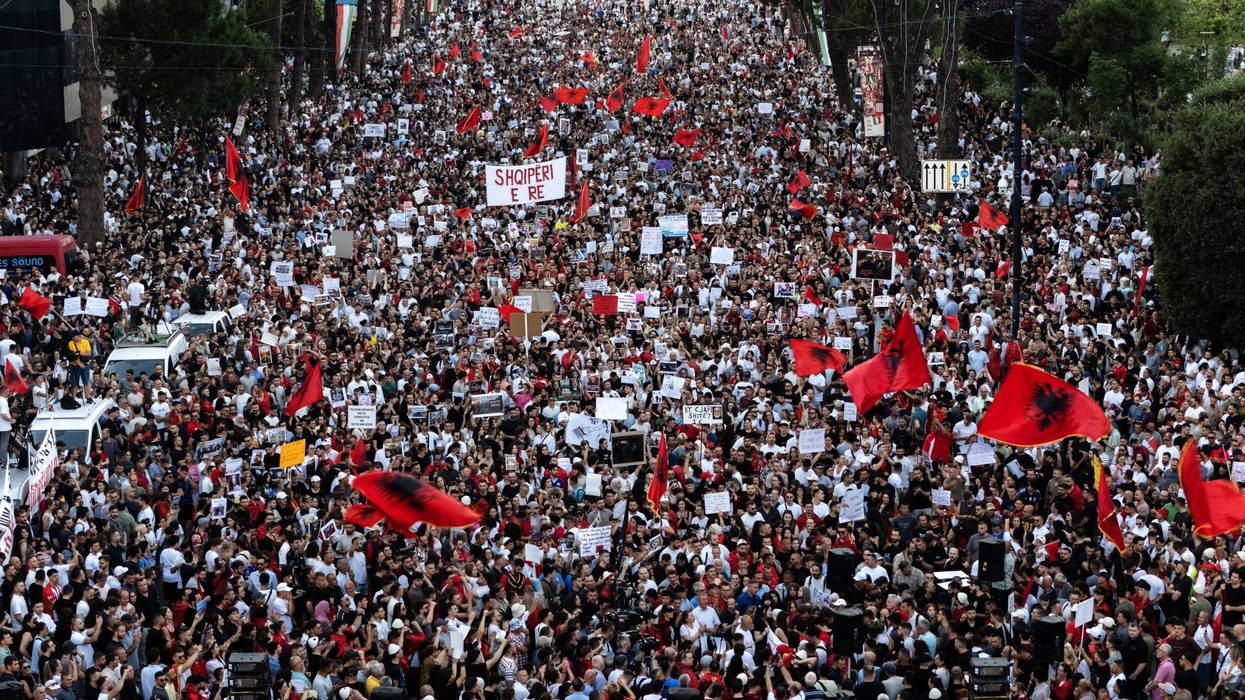
Albanians took to the streets in droves for the eighth consecutive day on Sunday to protest a proposed $1.6 billion luxury resort complex backed by US President Donald Trump's son-in-law, Jared Kushner, one of several investors in the project, which opponents say is both corrupt and disastrous for wetlands and wildlife.
"One week later, we are still here, stronger than yesterday," said the Albanian Ornithological Society, a leading critic of the proposed development. "Millions around the world are united in one voice for nature, for justice, and for the protection of what belongs to everyone, standing for every protected area in Albania."
Albanian Prime Minister Edi Rama has vocally defended the project amid mounting public backlash, saying in a recent interview that the land marked for development "belongs to the investors," not the Albanian people.
Rama also criticized the thousands of people who have turned out to protest the luxury hotel project as well as international media coverage of the demonstrations, saying that "there is no chance" that "the projects in Albania will be defined by street protests."
Albanian Prime Minister Edi Rama admits Jared Kushner’s new private island will be exclusively for the elite.
He says the land no longer belongs to the Albanian people and is now under the control of Jared Kushner and his investors.
"The aim is to build the most exclusive."… pic.twitter.com/95IM0YX6xI
— Shadow of Ezra (@ShadowofEzra) June 7, 2026
Demonstrators, many raising pink flamingo cutouts to decry the project's expected impacts on the vulnerable bird and other wildlife, have demanded cancellation of the resort project and Rama's resignation, accusing him of steamrolling environmental concerns to bolster the country's tourism industry and curry favor with the Trump administration. Kushner currently works for the administration as a "special peace envoy."
"We are stronger than your bulldozers," chanted demonstrators over the weekend.
Thousands of Albanians took to the streets of Tirana in the largest protest this week against a plan by a company linked to Trump's son-in-law to build a luxury resort in an environmentally sensitive area pic.twitter.com/aJaKz3ju0A
— Reuters (@Reuters) June 7, 2026
As The New York Times reported last year, Rama heads the government committee that gave "Kushner and his business partners the right to move ahead with accelerated negotiations to build the luxury resort on a 111-acre section of the 2.2-square-mile island of Sazan that will be connected by ferry to the mainland."
"Mr. Kushner’s Affinity Partners, a private equity company backed with about $4.6 billion in money mostly from Saudi Arabia and other Middle East sovereign wealth funds, is pursuing the Albania project along with Asher Abehsera, a real estate executive that Mr. Kushner has previously teamed up with to build projects in Brooklyn, New York," the Times added.
Lea Ypi, an Albanian academic, wrote in an op-ed for The Guardian on Monday that "Albanians know that real-estate speculation without state support means ordinary citizens will struggle to buy a flat or pay the rent."
"They know that luxury tourism means holidays in your own country become a privilege for the few," Ypi added. "With no unions to speak of and a labor movement that only appears in communist-era footage of May Day parades, work conditions are so exploitative that only those from countries even more desperate are willing to take the jobs that arise."
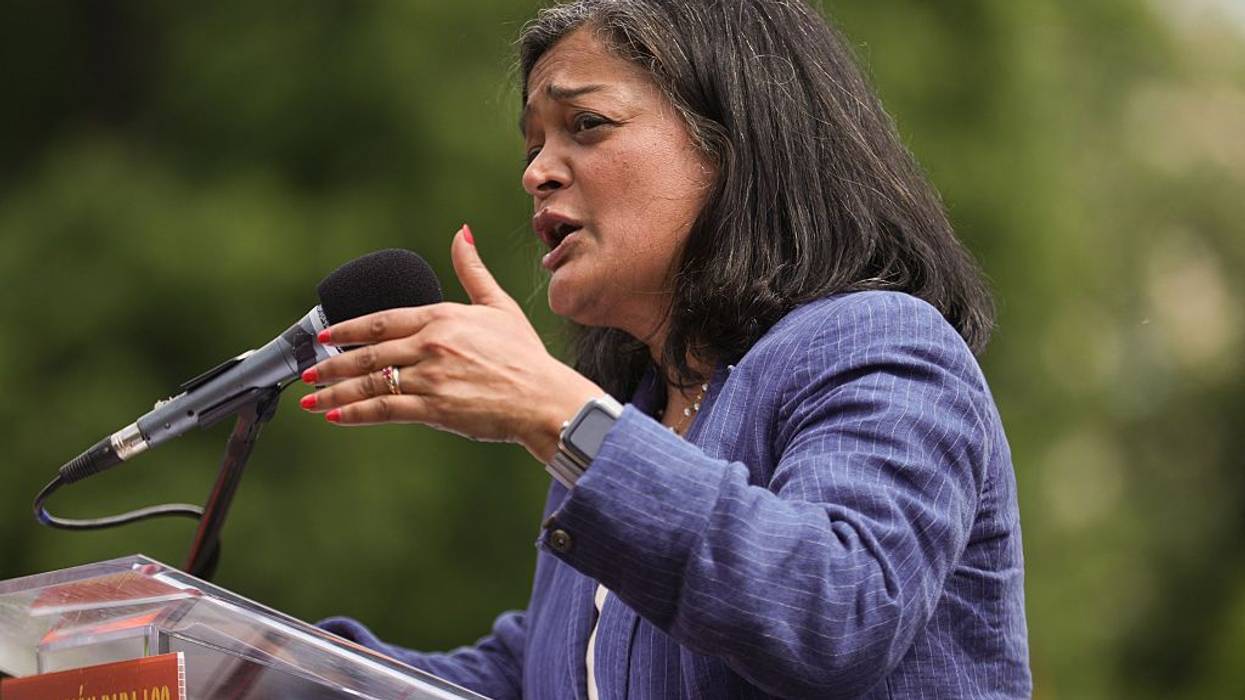
Congresswoman Pramila Jayapal on Monday demanded accountability for the Trump administration officials responsible for the "unprecedented" number of people who have died while detained by US Immigration and Customs Enforcement during President Donald Trump's second term.
"Yesterday, I was notified of the 50th death in ICE custody since Trump returned to office," Jayapal (D-Wash.)—the ranking member of the House Subcommittee on Immigration Integrity, Security, and Enforcement—said on social media. "This is unprecedented and further proof that ICE and their private, for-profit prison contractors should not be sent another cent of taxpayer dollars. There must be accountability."
According to ICE's public database, 51 people have died while detained by the Department of Homeland Security (DHS) agency during Trump's second term, including two people who were killed in a sniper attack on an ICE administrative and processing center in Dallas. At least 10 of the deaths were men who killed themselves, according to an Associated Press investigation published late last month.
ICE recently announced it would stop reporting the deaths of people recently released from ICE detention. The reporting policy, enacted in 2021, was meant to assure accountability and prevent the agency from offloading severely ill detainees.
Many of the deaths were preventable, say experts who point to systemic understaffing and DHS policy choices that weaken detainee care and employee oversight.
Jayapal's call comes as ICE detainees across the nation are resisting abuse in concentration centers across the nation, through hunger strikes and other civil disobedience, as well as via lawsuits.
Hundreds of detainees at Delaney Hall in Newark, New Jersey—which is operated by prison profiteer GEO Group—are participating in a hunger and labor strike over unsanitary conditions, inedible food, poor medical care, and prolonged detention, while federal agents have attacked people outside the facility including protesters and a sitting US senator.
Similar strikes and other acts of resistance are either ongoing or recently occurred at Adelanto Processing Center and its Desert View Annex in California, North Lake Processing Center in Michigan, Moshannon Valley Processing Center in Pennsylvania—all run by GEO Group—and other lockups. Detainees who participate in hunger strikes or speak to reporters say they have been placed in solitary confinement and subjected to other retaliation.
Despite—some critics say because of—reports of widespread abuses, DHS recently shut down its Office of the Immigration Detention Ombudsman (OIDO), which was created by an act of Congress signed into law during Trump's first term amid rampant systemic abuse of migrants including detainee deaths, family separation, and severe overcrowding. OIDO had the power to receive detainee complaints, investigate alleged abuse or misconduct, inspect detention facilities, and report systemic problems to DHS leaders and Congress.
Jayapal, who is an immigrant, has been one of Congress' most vocal critics of Trump's xenophobic immigration crackdown. She was a leading voice for the replacement of former DHS Secretary Kristi Noem and has visited several ICE detention centers—and been blocked from conducting official oversight duties at one of them.
She also introduced the Dignity for Detained Immigrants Act, a proposal "to end the use of private, for-profit detention centers, end the use of mandatory detention, update and implement robust minimum requirements for care, and conduct urgent oversight at other facilities across the country.”
Last week, Jayapal highlighted a report published by the office of DHS Inspector General Joseph Cuffari that detailed violations of food safety and medical care standards, excessive use of force, and other improprieties at the Winn Correctional Center in Louisiana, which is run by prison profiteer LaSalle Corrections.
“This DHS OIG report details what we have heard from detained immigrants across the country—that these detention centers have violated numerous required standards and are putting people’s health and safety at serious risk," Jayapal said in a statement. "And this report verifies what many immigrants have stated is happening at these private, for-profit detention centers across the country."
"DHS must immediately withdraw funding from the numerous detention centers that consistently do not meet the minimum required standards for housing immigrant detainees," the congresswoman added. "For those that remain, DHS must require facilities to take immediate corrective action and engage in serious oversight of these for-profit prison operators who are prioritizing their cash coffers over meeting basic health and safety standards."
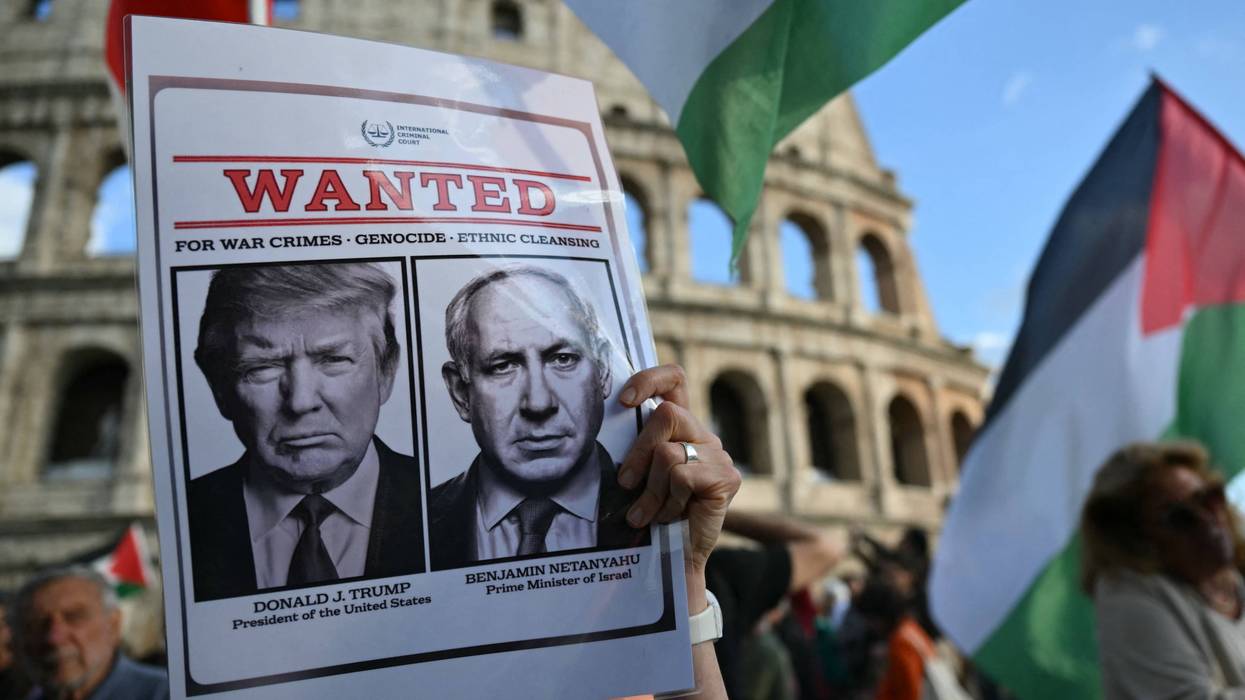
The Israeli military bombed Iran on Monday shortly after US President Donald Trump urged Israeli Prime Minister Benjamin Netanyahu not to respond to an Iranian missile barrage, which came in retaliation for Israel's earlier bombing of Beirut.
"I am going to call Bibi right now and tell him not to retaliate," Trump told Axios on Sunday, noting that the Iranian strikes did not appear to cause any injuries. "Each of them had their fun. Israel had its strike, and Iran had its strike. We don't need another one."
Iran's missile attack on Israel was the first since a tenuous ceasefire agreement took effect in early April, and the exchange intensified concerns of a return to full-blown regional war. Iran's Foreign Ministry said the Sunday strikes were a defensive response to the Israeli military's bombing of southern Beirut as well as "Israel’s persistent breaches of the April ceasefire, including its collaboration with the US military in attacks on Iranian ships and targets in southern Iran over the past two weeks."
The Israel Defense Forces vowed to "continue to operate all across Lebanon" and said it would not "allow fire toward Israel."
Esmail Baghaei, a spokesperson for Iran's Foreign Ministry, said during a press conference on Monday that despite Trump's public comments, "no one in the region believes" that Israel attacked Lebanon or Iran "without prior coordination and cooperation with the United States."
"The United States bears responsibility as a party to the April 8 ceasefire understanding," said Baghaei. "Whatever happens in the region, whether the US itself violates the ceasefire by attacking Iranian commercial ships or targeting southern parts of the country, or whether violations are carried out through the Zionist regime in Lebanon with US complicity, the direct responsibility of the United States is clear, and the consequences of any escalation will also fall on Washington.”
Trump told the Financial Times following Iran's missile attack on Israel that he did not believe it would undercut the prospects of a diplomatic agreement. The US president also said Netanyahu would have no choice but to accept any agreement the Trump administration reaches with Iran, declaring: "I call the shots. I call all the shots. [Netanyahu] doesn't call the shots."
But critics of Trump's illegal and costly war of choice in Iran, which he launched in coordination with Israel in late February, said Netanyahu's swift defiance of the president's call for restraint underscored how disastrous the conflict has been for the US.
"This war has been humiliating for Trump and American power generally," US Sen. Chris Murphy (D-Conn.) wrote on social media. "And when Trump announces he is going to call Netanyahu and tell him not to retaliate, and within hours Netanyahu retaliates, the humiliation just compounds."
Trita Parsi, executive vice president of the Quincy Institute for Responsible Statecraft, wrote in a blog post following the Israeli attack on Iran that Trump "appears unwilling to spend the political capital necessary to rein in Netanyahu—beyond angry phone calls and tough public statements—unless he knows that he has a deal with Iran."
"From Trump’s perspective, it is only worth doing if an agreement with Iran is already secured. In short, Trump is willing to restrain Israel to preserve a deal, but not to obtain one. Iran, however, wants evidence that Trump can restrain Israel before agreeing to a deal," Parsi wrote. "As a result, the most likely scenario is another round of Iranian and Israeli strikes, with Trump declining to meaningfully constrain Israel."
The National Iranian American Council noted that Iran's leadership "has already threatened a broader and more destructive campaign" in response to Israel's strikes.
"The coming 24 to 72 hours will likely determine whether this becomes a contained crisis or the beginning of a new phase in the regional conflict," the group added.
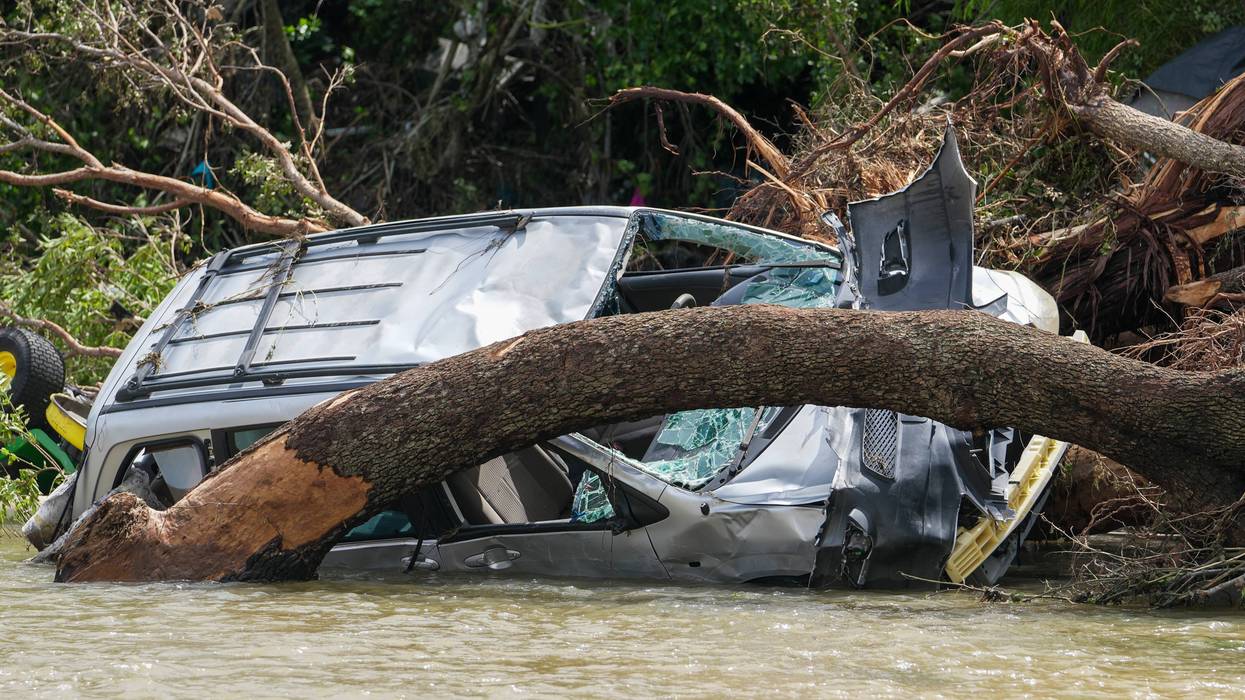
"Banks keep telling us they’re committed to climate. Then they abandon their own policies the moment political pressure mounts. Voluntary pledges have had their chance. We need binding rules—not promises.”
Calls for an end to oil, gas, and coal extraction grew louder in 2025 as the impact of fossil-fueled planetary heating was starkly illustrated by devastating wildfires across the Los Angeles area, deadly flash floods in Texas, a European heatwave that was blamed for the deaths of more than 24,000 people, and cyclones and floods that killed thousands.
But as climate action groups demanded that governments and financial institutions end support for fossil fuel projects and companies last year, according to a report released Monday by several organizations, the world's largest banks only committed more financing to projects like the Mountain Valley Pipeline, a planned liquefied natural gas (LNG) "boom" in the Philippines, and fracking in the Permian Basin.
Last year, according to Banking on Climate Chaos—released by groups including the Rainforest Action Network, Sierra Club, and Oil Change International—the world's largest financial institutions committed $906 billion in financing to fossil fuel companies, representing an 8% increase over funding the previous year.
The groups emphasized that the banks financed pollution-causing oil, gas, and coal projects even as they made "voluntary commitments" to “aligning their lending, investment, and capital markets activities with net-zero greenhouse gas emissions by 2050," as a now-defunct United Nations-backed scheme called the Net-Zero Banking Alliance (NZBA) pledged.
More than a decade after countries agreed to the Paris climate accord and pledged to take action in a push to avert planetary heating over 1.5°C above pre-industrial temperatures, the report notes, "banks maintain and are expected to uphold climate policies independent of the NZBA."
However, it continues, "the collapse of the NZBA—culminating in its cessation of operations in October 2025—freed banks to further unwind from climate targets and other elements of their climate strategies."
"Notably, throughout 2025 and the first half of 2026, banks have further weakened their commitments to uphold 1.5˚C temperature rise limits, widened loopholes, and undercut sector policies for coal, oil, and gas energy or power supply primarily by removing or diluting exclusion criteria and commitments. Most policy changes in the past year were downgrades of existing policies rather than improvements," reads the report.
"Voluntary commitments aren’t working. No major oil and gas company is doing anything even close to what is needed to hold global heating to 1.5°C, and voluntary banking sector pledges like the Net Zero Banking Alliance aren’t cutting their pipeline of cash."
Diogo Silva, campaign lead for BankTrack and a co-author of the report, said: "Banks keep telling us they’re committed to climate. Then they abandon their own policies the moment political pressure mounts. Voluntary pledges have had their chance. We need binding rules—not promises.”
Banking on Climate Chaos highlights the banks that spent the most money investing in fossil fuel projects, with JPMorgan Chase named the leading financier of oil, coal, and gas. The Wall Street firm spent $58 billion in 2025, the same year it also "weakened" its own climate policy.
"Of the 15 North American banks in scope, 12 now have no meaningful fossil fuel commitments," said Rainforest Action network. "JPMorgan Chase and Goldman Sachs abandoned their coal and Arctic exclusions entirely, converting them into case-by-case due diligence standards."
JPMorgan Chase is one of three US banks listed in the top five fossil fuel backers; Bank of America financed the second-largest amount of pollution-causing projects at $47 billion, while Citigroup poured more than $45 billion into fossil fuels. Two Japanese institutions, Mitsubishi UFJ Financial Group and Mizuho Financial, were also in the top five.
With President Donald Trump taking executive action last year aimed at pressuring companies to back fossil fuel interests and "disregard social or environmental considerations," the report notes, US banks' share of all global fossil fuel financing increased to 32%, representing "the single largest source of fossil capital in the world." In 2021, US banks provided 28% of fossil fuel investment.
Trump has also aggressively pushed for more coal production since taking office for his second term in January 2025, and financing for coal mining expansion surged 77% in 2025, to $84 billion. Funding for coal power also grew by 40%, with companies pouring $81 billion into coal-fired plants.
Even when asked about the report's findings, top banks pointed to their own voluntary commitments to finance renewable energy projects and "achieve net zero financed emissions by 2050," as a spokesperson for Citigroup said to The Guardian.
The spokesperson said the bank "supports clients in the low‑carbon transition while recognizing the real need for secure, affordable and reliable energy today. We are committed to... advancing our $1 trillion sustainable finance goal, with a focus on balancing the transition with global energy resilience”.
David Tong, global industry campaign manager for Oil Change International and a co-author of the report, warned that "every dollar of finance for oil and gas helps an industry of war profiteers squeeze out short-term profits, further trapping communities into paying higher fossil fuel energy bills, fueling war and conflict, and burning all our futures."
"Voluntary commitments aren’t working. No major oil and gas company is doing anything even close to what is needed to hold global heating to 1.5°C, and voluntary banking sector pledges like the Net Zero Banking Alliance aren’t cutting their pipeline of cash," he said. "Instead, banks have injected over staggering $900 billion into fossil fuel financing in 2025 alone. Governments must step in and take urgent action to hold financial institutions and fossil fuel companies accountable for their role in the climate crisis.”
Since the Paris climate agreement, the report says, banks have poured a staggering $8.7 trillion into the fossil fuel industry, with the "Dirty Dozen," as the authors call the 12 largest fossil fuel financial backers, providing nearly 40% of all investment for coal, oil, and gas extraction.
The report makes demands of banks, calling on them to "exclude all finance for fossil fuel expansion immediately" and "require robust, 1.5°C-aligned transition plans from all existing fossil fuel clients"—but emphasizes that governments must compel financial institutions to end financing for oil, gas, and coal.
"After two consecutive years of fossil fuel finance increases by global banks—especially the increase in fossil fuel expansion finance and the continued backtracking from banks on their climate pledges—it is clear that the banking sector will not voluntarily take the necessary steps to transition out of fossil fuel finance at the pace and scale needed for the world to deliver on the Paris Agreement goals," reads the report.
Instead, it says, governments must mandate transition planning by banks, private equity holders, insurers, and other companies; make polluters pay for climate damages; ensure public finance institutions are subject to transparent reporting and legal accountability to international standards, and rapidly wind down supply-side fossil fuel subsidies, tax exemptions, subsidies, guarantees or other public assistance for new oil, gas, and coal projects.
"A decade after Paris, just twelve banks now drive more than a third of the world’s fossil fuel financing—proof that this is no longer a problem of markets, but of a small set of decision-makers making active choices," said Niko Lusiani, research director for Rainforest Action Network. "They are choosing to lock in an energy system that hands record profits to a few fossil firms while passing the costs onto the three of every four people on Earth who depend on imported fuel."
"The good news is that what a handful of banks built," said Lusiani, "governments and people worldwide have the power to change.”
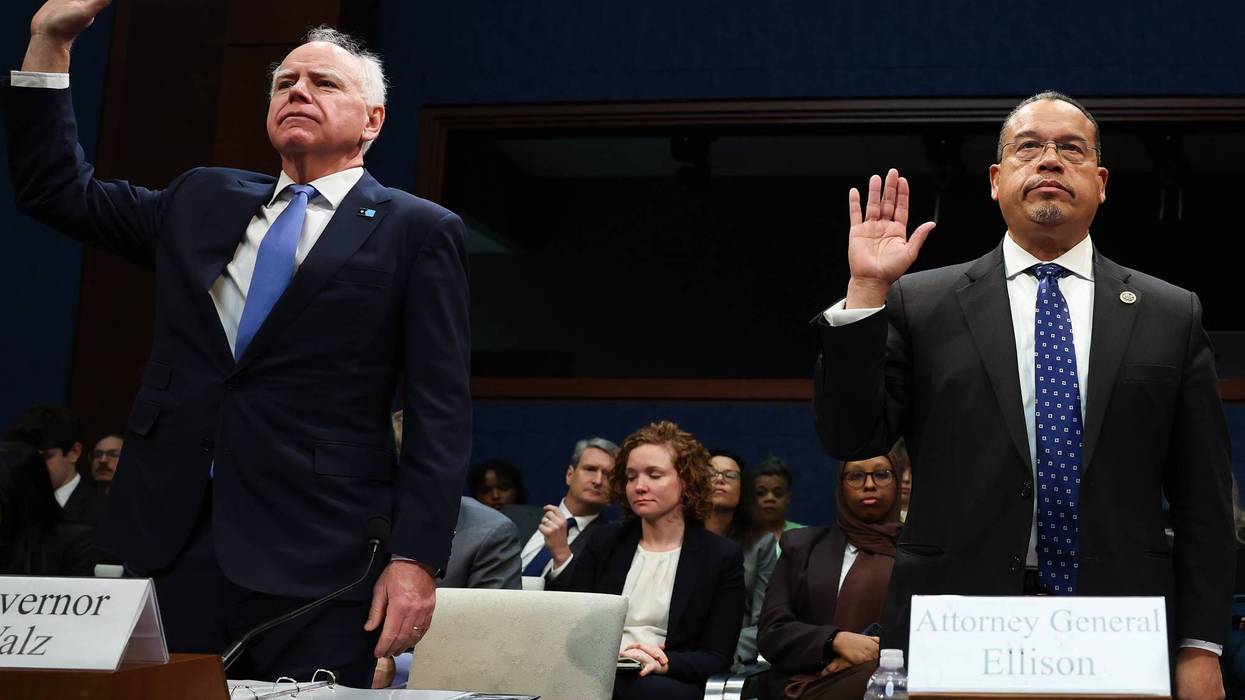
"It is deeply troubling to see official powers and public resources diverted away from serving the people and instead aimed at pursuing political adversaries," said Keith Ellison.
Minnesota Attorney General Keith Ellison forcefully pushed back against Vice President JD Vance's Monday night announcement on Fox News and social media that he had referred the state AG and Democratic Gov. Tim Walz to the US Department of Justice following allegations in a GOP congressional report that the pair was aware of fraud involving federal funds and failed to stop it.
"The allegations in the House Republican report are unfounded, and Vice President Vance's referral is a political stunt from an administration that uses the machinery of government to target its perceived opponents while extending leniency to those aligned with its interests," Ellison told CNN, highlighting how his office has investigated and prosecuted allegations of fraud involving public programs.
"It is deeply troubling to see official powers and public resources diverted away from serving the people and instead aimed at pursuing political adversaries," added Ellison, who is seeking another term in November. "That is not what government is for, and it diminishes public trust in our institutions."
Dozens of people were charged in Minnesota as a result of a federal probe into abuse of taxpayer funds during the Covid-19 pandemic that began under former President Joe Biden and related investigations that have continued since President Donald Trump returned to office last year. Trump has repeatedly used the cases to attack Somali Americans with racist rants, as well as to target Democratic politicians.
The new referral is not the first time the Trump administration has targeted Ellison and Walz, the 2024 Democratic vice presidential candidate who dropped his bid for another term as governor early this year. The DOJ subpoenaed the pair and other top Minnesota officials in January as part of its investigation into an alleged conspiracy to impede Immigration and Customs Enforcement (ICE) officers sent to the Twin Cities by the president—a probe the governor denounced as part of a broader trend of the administration "weaponizing the justice system."
As the White House faced intense national backlash for the deadly operation in Minnesota, Trump appointed Vance as "fraud czar" in February, and the vice president swiftly announced that the administration would pause some Medicaid funding for the state over fraud concerns. Walz said at the time that "this has nothing to do with fraud" and "is a campaign of retribution. Trump is weaponizing the entirety of the federal government to punish blue states like Minnesota."
In March, Walz and Ellison testified before the Republican-led House Committee on Oversight and Government Reform about the fraud cases, clashing with GOP lawmakers. At the time, the panel released an interim version of the report that was published on Monday. The Minnesota Star Tribune noted that the March edition "prompted House Democrats on the Oversight Committee to publish a competing report accusing Republicans of singling out Minnesota for political purposes."
Even before Vance's referral, spokespeople for Walz and Ellison were deeply critical of the final report, which claims that they "were aware of widespread fraud in federally funded social services programs for years, possessed the legal and procedural authority to stop payments and ban fraudulent providers from participating in these programs, but repeatedly failed to act."
As MPR News reported:
"This committee has proven time and time again to be nothing more than a joke. They continue to rehash Covid-era fraud to distract from endless wars, gas prices, ICE, and the president’s insider trading," [said] Teddy Tschann, a spokesperson for Walz. "Gov. Walz is glad to see fraudsters are going to prison. If the committee is concerned about corruption, they should investigate why President Trump continues to let fraudsters out of prison."
Walz’s office noted that several changes have been made over the last few years to address fraud, including new legislation creating an Office of the Inspector General, which will have independent power to investigate fraud.
Brian Evans, a spokesperson for Attorney General Keith Ellison, said, "Republicans in Congress issued a report riddled with inaccuracies and misrepresentations in an effort to politicize the issue of fraud, instead of actually helping Minnesota protect tax dollars and go after fraudsters."
In addition to releasing the updated report, the Oversight Committee's chair, Rep. James Comer (R-Ky.) sent a letter to Vance about it. The vice president then announced his referral on Jesse Watters' show, and posted his letter to the DOJ on social media.
While Oversight Committee Republicans celebrated Vance's post on social media, journalist Marcy Wheeler responded, "This fraud effort has ALWAYS been an attempt to distract from far bigger right-wing crimes, especially by Trump."

Bovino’s plan to purge the country of one-third of its population has been described as an “ethnic cleansing" proposal. He recently discussed it at a conference with European neo-Nazis.
Fresh off his appearance at a fascist conference in Portugal focused on "remigration," President Donald Trump's ex-Border Patrol Commander Gregory Bovino has teased a run for US president in 2028 centered around his fantasy of deporting 100 million people from the United States.
Amid public backlash following the killing of two US citizens by his federal agents in Minneapolis, Bovino was kicked from the helm of Trump’s mass deportation crusade in January and sent into early retirement.
But as he later discussed with The New York Times, he departed with a sense of unfinished business, unfulfilled that he could not exact what was described as a “master plan” to purge a third of the country.
As News Nation reported on Monday, Bovino is not one to give up on dreams easily. The 30-year Border Patrol veteran told the network that he was launching an exploratory committee for a White House run in 2028 and planned to move ahead with a formal campaign "if it all comes together."
The website for his committee, Bovino2028.com, which features an image of Bovino in his signature SS-style trenchcoat flanked by the phrase "House Bovino. Men Fight Back," gives a sense of the campaign he seeks to run.
The website describes a future President Bovino leading the US with a “warrior mindset," “quelling the foreign hordes that have subsumed our nation’s cities," and creating a “department of youth masculinity” to turn young men into “warriors for freedom,” and calls for the reestablishment of Elon Musk’s failed Department of Government Efficiency (DOGE).
His website also does not shy away from acknowledging his role in a conference in late May were he appeared alongside representatives of the global far-right. As Charles R. Davis described late last month for The Redoubt:
The "Remigration Summit 2026," so called, was held May 30 at the Salmanha Residence hotel just south of Porto, Portugal, and its organizers were not subtle.
"Weimar conditions require Weimar solutions," argues Afonso Gonçalves, chief organizer of the event. He's the founder of the far-right group Reconquista, so named for the mass expulsion of Muslims from the Iberian Peninsula. That's who Bovino was photographed standing next to after he landed in Europe.
Martin Sellner, an extremist from Austria, is best known for pushing the "great replacement" conspiracy theory— that Jewish elites are seeking to exterminate the white race via mass migration—that has motivated mass shooters from Pennsylvania to New Zealand.
He was the other man standing next to Bovino.
Other speakers included a Belgian fascist convicted of Holocaust denial and the founder of a Swiss neo-Nazi group called "Junge Tat" who is quite open about his fondness for "National Socialism."
Bovino is not looking to hide his affiliations with prominent neo-Nazis. The site prominently features a photo of himself with Sellner, who at a previous summit outlined a plan for the forced expulsion of "non-assimilated" citizens of immigrant backgrounds from Germany.
The ex-Border Patrol commander said during the conference that his and Sellner's ideas "mirror each other."
 Gregory Bovino poses with Martin Sellner in an image posted to his 2028 website.(Photo from Bovino2028.com)
Confirming that he was considering a presidential run on Monday, Bovino wrote on social media: "My one and only priority is deporting the 106 million illegals who are here. That’s it."
According to May data from the Center for Migration Studies, the number of undocumented immigrants actually in the United States was only about 14.6 million as of 2024, meaning that what Bovino is actually proposing is the mass expulsion of tens of millions of legal immigrants, as well as naturalized and US-born citizens.
David J. Bier, an immigration expert at the libertarian Cato Institute, testified about this plot by Bovino in front of the Senate Budget Committee in March, describing it as a plan for “ethnic cleansing"—and pushing back when one Republican senator dismissed the claim as "hyperbole."
Polls indicate Americans have overwhelmingly turned against Trump's crusade to round up millions of immigrants, with strong majorities having negative views of his tactics and of Immigration and Customs Enforcement (ICE). In early March, just over a month after Bovino's tenure ended, a record 50% of Americans said in a YouGov poll that they would support abolishing ICE.
But Bovino said the "grassroots support" he's seeing indicates that "the polls are completely wrong."
He said: "If I’m getting this much energy, it’s probably because 90% of the country wants mass deportations, and the media just isn’t asking the right questions."
While it is difficult to see Bovino achieving mass appeal on the back of an immigration crusade even more extreme than Trump's, Oliver Willis, a writer for the Daily Kos said it was a sign of where the base of the GOP could be heading.
"The Republican Party has increasingly tied itself to the white supremacist movement through continued support of Trump and the rising influence of figures like conservative podcaster and neo-Nazi Nick Fuentes," he wrote. "Bovino considering a 2028 presidential bid shows that the party—and the wider conservative movement—isn’t moderating at all."