SUBSCRIBE TO OUR FREE NEWSLETTER
Daily news & progressive opinion—funded by the people, not the corporations—delivered straight to your inbox.
5
#000000
#FFFFFF
To donate by check, phone, or other method, see our More Ways to Give page.
Daily news & progressive opinion—funded by the people, not the corporations—delivered straight to your inbox.
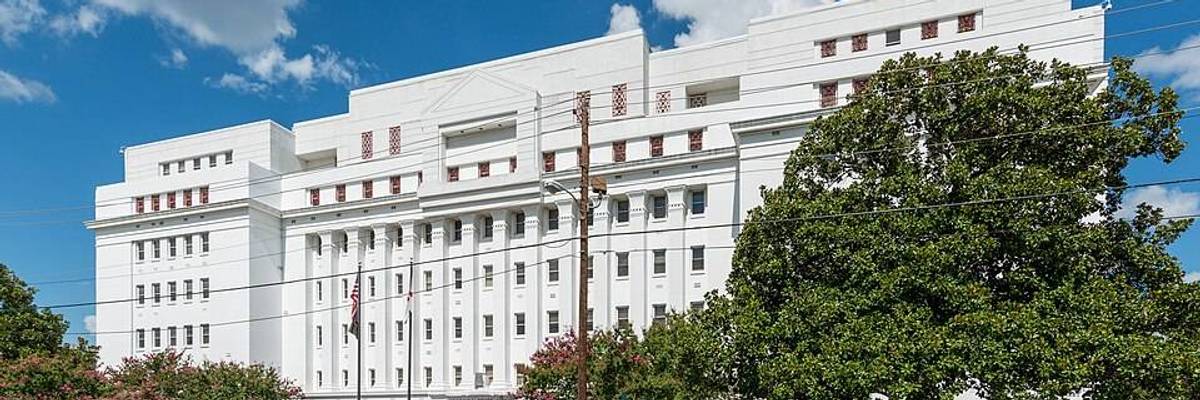
The Alabama Statehouse is pictured.
"Across the South, states are rushing to suppress Black voting power now that they mistakenly believe they can get away with it," one advocate said.
In the latest fallout from the Supreme Court's further weakening of the Voting Rights Act in Louisiana v. Callais on April 29, Alabama and South Carolina on Friday both took steps to further gerrymandering plans that would reduce representation for Black and Democratic voters in their states.
Alabama Gov. Kay Ivey signed legislation on Friday that would ignore the results of May 19 primaries and hold a new election if federal courts agree to rescind the creation of a second near-Black majority congressional district in the state.
At the same time, the South Carolina legislature held a meeting to consider creating new maps that could grant the Republican Party the chance to win all of the state's seven seats in the US House of Representatives by redrawing the state's only majority-Black district.
“I was out there in 1965 marching for the right to vote, and now we are back here in 2026 doing the same thing,” Betty White Boynton, who joined a protest outside the Alabama Statehouse on Friday, told The Associated Press.
“What happened here today is that we were set back as a people to the days of Reconstruction.”
The moves, with risk eroding the gains of the civil rights movement, also come in the midst of a redistricting battle set off when President Donald Trump called on GOP-led states to redraw their maps to help his party retain control of the House in the 2026 midterm elections
In Alabama, the Supreme Court case Allen v. Milligan led to the creation of a second district with close to a Black majority and the election of Democratic Rep. Shomari Figures. The new map would leave Black voters with a chance to elect a representative in just 1 of the state's 7 districts, despite the fact that they make up 30% of the population.
“Despite remaining under a court order that bars Alabama from redrawing its congressional map and that voters have already cast ballots in the state’s congressional primary elections, Alabama Republicans are desperately and shamelessly moving to pave the way for reversion to a map that robs Black voters of equal access to representation in the US House," John Bisognano, president of the National Democratic Redistricting Committee, said in a statement.
Bisognano continued: "What is happening in Alabama is not happening in a vacuum. Across the South, states are rushing to suppress Black voting power now that they mistakenly believe they can get away with it. The Alabama legislature’s fevered rush to diminish Black voting power in their state is clear proof that protections once afforded under Section 2 of the Voting Rights Act remain vital still today. Alabamians across the state are rising up in protest to this immoral power grab—their voices must not be silenced.”
After the Republican-majority Alabama legislature passed the bill on Friday, state Sen. Rodger Smitherman (D-18) said, “What happened here today is that we were set back as a people to the days of Reconstruction,” according to AP.
However, it is unclear how successful the Republican effort will be in Alabama, given that the Supreme Court explicitly said in Louisiana v. Callais that its decision did not apply to Alabama, as Figures pointed out at a town hall Friday evening. Also on Friday, a three-judge panel refused to lift an injunction on changing the state's maps, meaning the decision will rest with the Supreme Court on Monday, May 11.
"I feel pretty confident that the lines will stay the same in the immediate future, but it has not changed the efforts of Republicans here in the state of Alabama and across the country," Figures said, as Alabama Reflector reported.
In South Carolina on Friday, legislators held a meeting that would be the first step toward redrawing their districts to eliminate the one currently represented by Democratic Congressman Jim Clyburn. While lawmakers agreed that the Supreme Court's ruling in Louisiana v. Callais would allow for the redistricting, some questioned the wisdom and morality of the act.
“I agree if the law allows us to do it, then we can do It,” state Rep. Justin Bamberg (D-90) said. “But I can slap somebody’s mama and it’s not the right thing to do.”
Bisognano also linked the South Carolina plan to Louisiana v. Callais:
Following the Supreme Court’s shameful decision to gut the Voting Rights Act, South Carolina Republicans are now racing to be second to push through an immoral gerrymander that would demolish the lone congressional district that gives South Carolina’s Black voters a meaningful opportunity for representation in the US House.
This gerrymander is a deliberate attempt by South Carolina Republicans to tear apart a long-standing Black-opportunity district and diminish their vote by spreading Black voters into six districts that stretch over a hundred miles in every direction. On this gerrymander, all South Carolinians would lose. South Carolinians deserve maps that respect communities of interest and protect the fundamental right to vote.
Rep. Clyburn, meanwhile, stood up for his district and criticized state Republicans for prioritizing loyalty to Trump over loyalty to voters.
"Republicans are trying to break apart South Carolina’s 6th District. Not because voters demanded it, but because Donald Trump requested it," Clyburn wrote on social media Thursday.
He continued: "This fight is bigger than one district. It’s about whether our democracy belongs to the people, or to politicians who change the rules when they don’t like the results. We cannot let them succeed."
The Alabama and South Carolina developments capped a dramatic week for national redistricting battles. On Thursday, the Tennessee House voted to break up the state's only Black congressional district. The Senate followed suit, and Gov. Bill Lee promptly signed the new map into law.
On Friday, the Virginia state Supreme Court dealt a blow to Democratic efforts to counteract the new Republican maps, striking down a voter-approved redistricting in Virginia that would favor Democrats.
Dear Common Dreams reader, It’s been nearly 30 years since I co-founded Common Dreams with my late wife, Lina Newhouser. We had the radical notion that journalism should serve the public good, not corporate profits. It was clear to us from the outset what it would take to build such a project. No paid advertisements. No corporate sponsors. No millionaire publisher telling us what to think or do. Many people said we wouldn't last a year, but we proved those doubters wrong. Together with a tremendous team of journalists and dedicated staff, we built an independent media outlet free from the constraints of profits and corporate control. Our mission has always been simple: To inform. To inspire. To ignite change for the common good. Building Common Dreams was not easy. Our survival was never guaranteed. When you take on the most powerful forces—Wall Street greed, fossil fuel industry destruction, Big Tech lobbyists, and uber-rich oligarchs who have spent billions upon billions rigging the economy and democracy in their favor—the only bulwark you have is supporters who believe in your work. But here’s the urgent message from me today. It's never been this bad out there. And it's never been this hard to keep us going. At the very moment Common Dreams is most needed, the threats we face are intensifying. We need your support now more than ever. We don't accept corporate advertising and never will. We don't have a paywall because we don't think people should be blocked from critical news based on their ability to pay. Everything we do is funded by the donations of readers like you. When everyone does the little they can afford, we are strong. But if that support retreats or dries up, so do we. Will you donate now to make sure Common Dreams not only survives but thrives? —Craig Brown, Co-founder |
In the latest fallout from the Supreme Court's further weakening of the Voting Rights Act in Louisiana v. Callais on April 29, Alabama and South Carolina on Friday both took steps to further gerrymandering plans that would reduce representation for Black and Democratic voters in their states.
Alabama Gov. Kay Ivey signed legislation on Friday that would ignore the results of May 19 primaries and hold a new election if federal courts agree to rescind the creation of a second near-Black majority congressional district in the state.
At the same time, the South Carolina legislature held a meeting to consider creating new maps that could grant the Republican Party the chance to win all of the state's seven seats in the US House of Representatives by redrawing the state's only majority-Black district.
“I was out there in 1965 marching for the right to vote, and now we are back here in 2026 doing the same thing,” Betty White Boynton, who joined a protest outside the Alabama Statehouse on Friday, told The Associated Press.
“What happened here today is that we were set back as a people to the days of Reconstruction.”
The moves, with risk eroding the gains of the civil rights movement, also come in the midst of a redistricting battle set off when President Donald Trump called on GOP-led states to redraw their maps to help his party retain control of the House in the 2026 midterm elections
In Alabama, the Supreme Court case Allen v. Milligan led to the creation of a second district with close to a Black majority and the election of Democratic Rep. Shomari Figures. The new map would leave Black voters with a chance to elect a representative in just 1 of the state's 7 districts, despite the fact that they make up 30% of the population.
“Despite remaining under a court order that bars Alabama from redrawing its congressional map and that voters have already cast ballots in the state’s congressional primary elections, Alabama Republicans are desperately and shamelessly moving to pave the way for reversion to a map that robs Black voters of equal access to representation in the US House," John Bisognano, president of the National Democratic Redistricting Committee, said in a statement.
Bisognano continued: "What is happening in Alabama is not happening in a vacuum. Across the South, states are rushing to suppress Black voting power now that they mistakenly believe they can get away with it. The Alabama legislature’s fevered rush to diminish Black voting power in their state is clear proof that protections once afforded under Section 2 of the Voting Rights Act remain vital still today. Alabamians across the state are rising up in protest to this immoral power grab—their voices must not be silenced.”
After the Republican-majority Alabama legislature passed the bill on Friday, state Sen. Rodger Smitherman (D-18) said, “What happened here today is that we were set back as a people to the days of Reconstruction,” according to AP.
However, it is unclear how successful the Republican effort will be in Alabama, given that the Supreme Court explicitly said in Louisiana v. Callais that its decision did not apply to Alabama, as Figures pointed out at a town hall Friday evening. Also on Friday, a three-judge panel refused to lift an injunction on changing the state's maps, meaning the decision will rest with the Supreme Court on Monday, May 11.
"I feel pretty confident that the lines will stay the same in the immediate future, but it has not changed the efforts of Republicans here in the state of Alabama and across the country," Figures said, as Alabama Reflector reported.
In South Carolina on Friday, legislators held a meeting that would be the first step toward redrawing their districts to eliminate the one currently represented by Democratic Congressman Jim Clyburn. While lawmakers agreed that the Supreme Court's ruling in Louisiana v. Callais would allow for the redistricting, some questioned the wisdom and morality of the act.
“I agree if the law allows us to do it, then we can do It,” state Rep. Justin Bamberg (D-90) said. “But I can slap somebody’s mama and it’s not the right thing to do.”
Bisognano also linked the South Carolina plan to Louisiana v. Callais:
Following the Supreme Court’s shameful decision to gut the Voting Rights Act, South Carolina Republicans are now racing to be second to push through an immoral gerrymander that would demolish the lone congressional district that gives South Carolina’s Black voters a meaningful opportunity for representation in the US House.
This gerrymander is a deliberate attempt by South Carolina Republicans to tear apart a long-standing Black-opportunity district and diminish their vote by spreading Black voters into six districts that stretch over a hundred miles in every direction. On this gerrymander, all South Carolinians would lose. South Carolinians deserve maps that respect communities of interest and protect the fundamental right to vote.
Rep. Clyburn, meanwhile, stood up for his district and criticized state Republicans for prioritizing loyalty to Trump over loyalty to voters.
"Republicans are trying to break apart South Carolina’s 6th District. Not because voters demanded it, but because Donald Trump requested it," Clyburn wrote on social media Thursday.
He continued: "This fight is bigger than one district. It’s about whether our democracy belongs to the people, or to politicians who change the rules when they don’t like the results. We cannot let them succeed."
The Alabama and South Carolina developments capped a dramatic week for national redistricting battles. On Thursday, the Tennessee House voted to break up the state's only Black congressional district. The Senate followed suit, and Gov. Bill Lee promptly signed the new map into law.
On Friday, the Virginia state Supreme Court dealt a blow to Democratic efforts to counteract the new Republican maps, striking down a voter-approved redistricting in Virginia that would favor Democrats.
In the latest fallout from the Supreme Court's further weakening of the Voting Rights Act in Louisiana v. Callais on April 29, Alabama and South Carolina on Friday both took steps to further gerrymandering plans that would reduce representation for Black and Democratic voters in their states.
Alabama Gov. Kay Ivey signed legislation on Friday that would ignore the results of May 19 primaries and hold a new election if federal courts agree to rescind the creation of a second near-Black majority congressional district in the state.
At the same time, the South Carolina legislature held a meeting to consider creating new maps that could grant the Republican Party the chance to win all of the state's seven seats in the US House of Representatives by redrawing the state's only majority-Black district.
“I was out there in 1965 marching for the right to vote, and now we are back here in 2026 doing the same thing,” Betty White Boynton, who joined a protest outside the Alabama Statehouse on Friday, told The Associated Press.
“What happened here today is that we were set back as a people to the days of Reconstruction.”
The moves, with risk eroding the gains of the civil rights movement, also come in the midst of a redistricting battle set off when President Donald Trump called on GOP-led states to redraw their maps to help his party retain control of the House in the 2026 midterm elections
In Alabama, the Supreme Court case Allen v. Milligan led to the creation of a second district with close to a Black majority and the election of Democratic Rep. Shomari Figures. The new map would leave Black voters with a chance to elect a representative in just 1 of the state's 7 districts, despite the fact that they make up 30% of the population.
“Despite remaining under a court order that bars Alabama from redrawing its congressional map and that voters have already cast ballots in the state’s congressional primary elections, Alabama Republicans are desperately and shamelessly moving to pave the way for reversion to a map that robs Black voters of equal access to representation in the US House," John Bisognano, president of the National Democratic Redistricting Committee, said in a statement.
Bisognano continued: "What is happening in Alabama is not happening in a vacuum. Across the South, states are rushing to suppress Black voting power now that they mistakenly believe they can get away with it. The Alabama legislature’s fevered rush to diminish Black voting power in their state is clear proof that protections once afforded under Section 2 of the Voting Rights Act remain vital still today. Alabamians across the state are rising up in protest to this immoral power grab—their voices must not be silenced.”
After the Republican-majority Alabama legislature passed the bill on Friday, state Sen. Rodger Smitherman (D-18) said, “What happened here today is that we were set back as a people to the days of Reconstruction,” according to AP.
However, it is unclear how successful the Republican effort will be in Alabama, given that the Supreme Court explicitly said in Louisiana v. Callais that its decision did not apply to Alabama, as Figures pointed out at a town hall Friday evening. Also on Friday, a three-judge panel refused to lift an injunction on changing the state's maps, meaning the decision will rest with the Supreme Court on Monday, May 11.
"I feel pretty confident that the lines will stay the same in the immediate future, but it has not changed the efforts of Republicans here in the state of Alabama and across the country," Figures said, as Alabama Reflector reported.
In South Carolina on Friday, legislators held a meeting that would be the first step toward redrawing their districts to eliminate the one currently represented by Democratic Congressman Jim Clyburn. While lawmakers agreed that the Supreme Court's ruling in Louisiana v. Callais would allow for the redistricting, some questioned the wisdom and morality of the act.
“I agree if the law allows us to do it, then we can do It,” state Rep. Justin Bamberg (D-90) said. “But I can slap somebody’s mama and it’s not the right thing to do.”
Bisognano also linked the South Carolina plan to Louisiana v. Callais:
Following the Supreme Court’s shameful decision to gut the Voting Rights Act, South Carolina Republicans are now racing to be second to push through an immoral gerrymander that would demolish the lone congressional district that gives South Carolina’s Black voters a meaningful opportunity for representation in the US House.
This gerrymander is a deliberate attempt by South Carolina Republicans to tear apart a long-standing Black-opportunity district and diminish their vote by spreading Black voters into six districts that stretch over a hundred miles in every direction. On this gerrymander, all South Carolinians would lose. South Carolinians deserve maps that respect communities of interest and protect the fundamental right to vote.
Rep. Clyburn, meanwhile, stood up for his district and criticized state Republicans for prioritizing loyalty to Trump over loyalty to voters.
"Republicans are trying to break apart South Carolina’s 6th District. Not because voters demanded it, but because Donald Trump requested it," Clyburn wrote on social media Thursday.
He continued: "This fight is bigger than one district. It’s about whether our democracy belongs to the people, or to politicians who change the rules when they don’t like the results. We cannot let them succeed."
The Alabama and South Carolina developments capped a dramatic week for national redistricting battles. On Thursday, the Tennessee House voted to break up the state's only Black congressional district. The Senate followed suit, and Gov. Bill Lee promptly signed the new map into law.
On Friday, the Virginia state Supreme Court dealt a blow to Democratic efforts to counteract the new Republican maps, striking down a voter-approved redistricting in Virginia that would favor Democrats.