SUBSCRIBE TO OUR FREE NEWSLETTER
Daily news & progressive opinion—funded by the people, not the corporations—delivered straight to your inbox.
5
#000000
#FFFFFF
To donate by check, phone, or other method, see our More Ways to Give page.
Daily news & progressive opinion—funded by the people, not the corporations—delivered straight to your inbox.
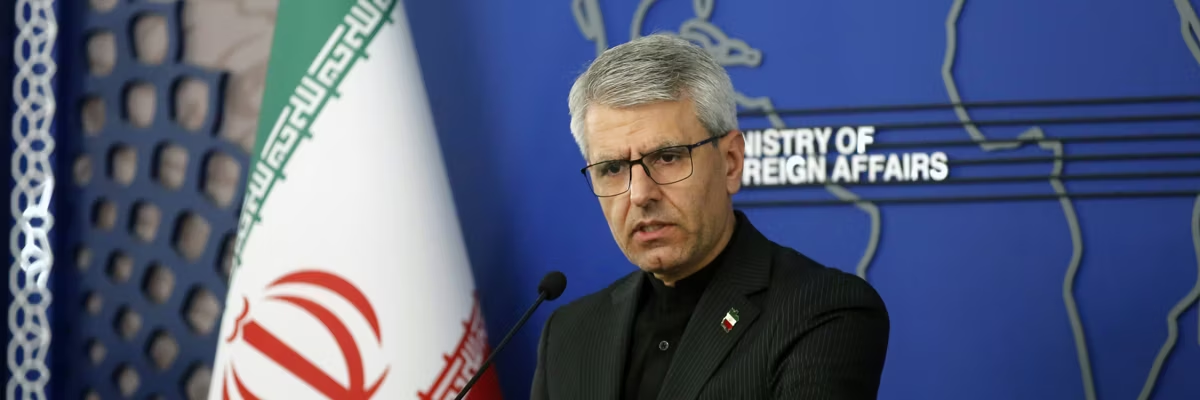
Esmail Baghaei, the spokesperson for Iran's Foreign Affairs Ministry, attends a press conference in Tehran on May 4, 2026.
"The only thing we have demanded is Iran's legitimate rights," said Esmail Baghaei, the spokesperson for Iran's Foreign Ministry.
A top Iranian official on Monday said the peace proposal rejected by President Donald Trump was a "reasonable and generous" path toward ending the war that the US and Israel launched in late February, plunging the Middle East and global energy markets into chaos.
Esmail Baghaei, the spokesperson for Iran's Foreign Ministry, said during a press conference that "the only thing we have demanded is Iran's legitimate rights," accusing the US side of insisting on "unreasonable demands."
Baghaei's remarks came after Trump dismissed the Iranian proposal—a counter to the latest US offer—as "totally unacceptable" in a social media post.
"I don't like it," Trump wrote, without specifying what he found objectionable. The president's reply sent oil prices surging.
"Is our proposal for safe passage through the Strait of Hormuz unreasonable?" Baghaei asked in response to the US president. "Is establishing peace and security across the entire region irresponsible?"
The details of the US offer and Iran's counter have not been fully made public, though some of both sides' demands have been divulged in media reports and vaguely outlined by government officials. Trump, who has repeatedly issued genocidal threats against Iran and called the country's leaders "lunatics," told Axios that he spoke with Israeli Prime Minister Benjamin Netanyahu about Iran's response.
"It was a very nice call," said Trump. "We have a good relationship."
Baghaei, for his part, rejected the notion that Iran is the party behaving irrationally. "It is enough to look at Iran's record," he said. "Were we the ones who deployed troops? Are we the ones bullying countries in the Western Hemisphere? Were we the ones who committed assassinations twice during negotiations?"
Citing an "informed source," Iran's semi-official Tasnim News Agency reported Monday that "Iran's text emphasizes the necessity of an immediate end to the war and guarantees against renewed aggression toward Iran, along with several other issues within the framework of a political understanding."
"Iran’s text also stresses the necessity of lifting US sanctions and ending the war on all fronts, as well as Iranian management of the Strait of Hormuz should certain commitments be fulfilled by the United States," Tasnim added. "The necessity of ending the naval blockade against Iran immediately after the signing of the initial understanding is also among Iran’s emphasized demands, the source said."
Trita Parsi, executive vice president of the Quincy Institute for Responsible Statecraft, wrote late Sunday that it appears Iran is offering to compromise significantly on its uranium stockpile and future enrichment.
"The US demands that the entire Iranian stockpile be shipped out of the country. In the past, Tehran rejected shipping any of it out; it only agreed to downblending it. In its latest proposal, however, it offers to have some of it diluted and the rest shipped to a third country," Parsi wrote. "As I understand it... Iran is also offering to accept an arrangement in which it will not need to enrich uranium at all for 12 years. This is not the 15-20 years Trump originally wanted, but longer than the 3-5 years Terhan originally offered."
"That Iran is willing to pause enrichment at all is a significant concession that I am not sure is fully appreciated by the American side," he continued. "It remains unclear to me why this and the stockpile have become so central in Trump’s perspective. His earlier red line was simply no nuclear weapons... The insistence on shipping the entire stockpile out appears to be another example of Trump allowing America’s red lines to be replaced by Israel’s. It would be a shame if the entire negotiation collapses over this issue."
This country and this world are at a monumental crossroads. US voters have an opportunity to beat back the forces of fascism and confront the billionaires who are rigging the economy, our media system, and our democracy, making it increasingly impossible for ordinary people to get by. We’re not just talking about the election. We’re talking about what must be done once these fascist elements are vanquished from power. We need a bolder set of solutions than what either major party has so far been willing to offer and a working-class movement ready to fight like hell for it. Trump didn't emerge from nowhere. The conditions that fueled MAGA authoritarianism were created by decades of radical neoliberal economic policies and a corrupt political system dominated by corporate interests. They slashed taxes on the super-rich, promising that the benefits would trickle down. They said giveaways to the corporate titans would make life more affordable for the rest of us. It was all bullshit. And when a bitter, betrayed populace searches for someone to blame, right-wing demagogues have little trouble finding scapegoats. People know when they're being lied to, but you won't hear any of this from the corporate media. Only independent journalism—powered and funded by people who believe in building a better world—can deliver truly trustworthy daily news. If you share our vision, please contribute whatever you can to sustain our work. |
A top Iranian official on Monday said the peace proposal rejected by President Donald Trump was a "reasonable and generous" path toward ending the war that the US and Israel launched in late February, plunging the Middle East and global energy markets into chaos.
Esmail Baghaei, the spokesperson for Iran's Foreign Ministry, said during a press conference that "the only thing we have demanded is Iran's legitimate rights," accusing the US side of insisting on "unreasonable demands."
Baghaei's remarks came after Trump dismissed the Iranian proposal—a counter to the latest US offer—as "totally unacceptable" in a social media post.
"I don't like it," Trump wrote, without specifying what he found objectionable. The president's reply sent oil prices surging.
"Is our proposal for safe passage through the Strait of Hormuz unreasonable?" Baghaei asked in response to the US president. "Is establishing peace and security across the entire region irresponsible?"
The details of the US offer and Iran's counter have not been fully made public, though some of both sides' demands have been divulged in media reports and vaguely outlined by government officials. Trump, who has repeatedly issued genocidal threats against Iran and called the country's leaders "lunatics," told Axios that he spoke with Israeli Prime Minister Benjamin Netanyahu about Iran's response.
"It was a very nice call," said Trump. "We have a good relationship."
Baghaei, for his part, rejected the notion that Iran is the party behaving irrationally. "It is enough to look at Iran's record," he said. "Were we the ones who deployed troops? Are we the ones bullying countries in the Western Hemisphere? Were we the ones who committed assassinations twice during negotiations?"
Citing an "informed source," Iran's semi-official Tasnim News Agency reported Monday that "Iran's text emphasizes the necessity of an immediate end to the war and guarantees against renewed aggression toward Iran, along with several other issues within the framework of a political understanding."
"Iran’s text also stresses the necessity of lifting US sanctions and ending the war on all fronts, as well as Iranian management of the Strait of Hormuz should certain commitments be fulfilled by the United States," Tasnim added. "The necessity of ending the naval blockade against Iran immediately after the signing of the initial understanding is also among Iran’s emphasized demands, the source said."
Trita Parsi, executive vice president of the Quincy Institute for Responsible Statecraft, wrote late Sunday that it appears Iran is offering to compromise significantly on its uranium stockpile and future enrichment.
"The US demands that the entire Iranian stockpile be shipped out of the country. In the past, Tehran rejected shipping any of it out; it only agreed to downblending it. In its latest proposal, however, it offers to have some of it diluted and the rest shipped to a third country," Parsi wrote. "As I understand it... Iran is also offering to accept an arrangement in which it will not need to enrich uranium at all for 12 years. This is not the 15-20 years Trump originally wanted, but longer than the 3-5 years Terhan originally offered."
"That Iran is willing to pause enrichment at all is a significant concession that I am not sure is fully appreciated by the American side," he continued. "It remains unclear to me why this and the stockpile have become so central in Trump’s perspective. His earlier red line was simply no nuclear weapons... The insistence on shipping the entire stockpile out appears to be another example of Trump allowing America’s red lines to be replaced by Israel’s. It would be a shame if the entire negotiation collapses over this issue."