SUBSCRIBE TO OUR FREE NEWSLETTER
Daily news & progressive opinion—funded by the people, not the corporations—delivered straight to your inbox.
5
#000000
#FFFFFF
To donate by check, phone, or other method, see our More Ways to Give page.
Daily news & progressive opinion—funded by the people, not the corporations—delivered straight to your inbox.
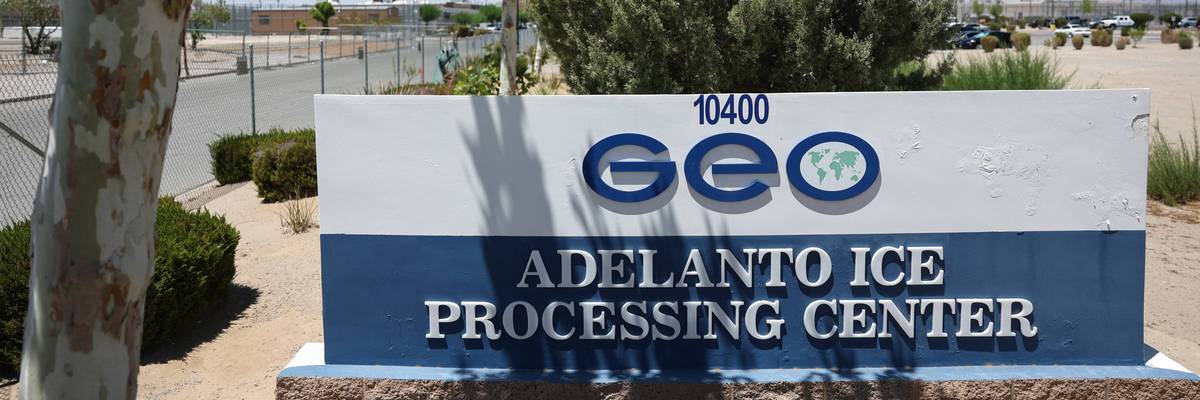
The GEO Group logo is displayed outside of the Adelanto ICE Processing Center detention facility in Adelanto, California on July 10, 2025.
“The dichotomy between the contractors’ profits and the detainees’ pay is outrageous."
As President Donald Trump continues his mass detention and deportation agenda and expands the use of privately owned immigrant prisons, with more than 60,000 people detained across the country, the profits of private contractors like the GEO Group and CoreCivic are skyrocketing—and a new report by a government watchdog reveals one method the multibillion-dollar firms have of extracting profits from detainees.
Public Citizen researcher Douglas Pasternak wrote in a report released Wednesday that approximately 50% of immigrants who are detained for more than a few days end up in the government's so-called Voluntary Work Program (VWP), earning just $1 per day—12.5 cents per hour—while they keep the detention centers running.
At facilities like Adelanto Detention Center in Adelanto, California, run by the GEO Group, and CoreCivic's Stewart Detention Center in Lumpkin, Georgia, detainees work as many as 14 hours in a day for just $1—cooking, cleaning, performing maintenance work, and completing other labor essential to the facilities' operations—and in many cases are forced to use their meager wages only at commissaries also run by the corporations.
"This entire $1-a-day pay scheme is economically unjustifiable, fundamentally unfair, and morally reprehensible," said Pasternak in a statement.
The companies are notorious for price gouging, forcing the so-called "voluntary worker" to work full-time for 11 days to afford a tube of Sensodyne toothpaste—priced at $11.02 at Stewart Detention Center, compared to just $5.20 on Amazon.
"At these rates, it may take a detainee more than three days of work to purchase a can of tuna fish or more than two days of work to purchase a bar of soap," said Public Citizen.
The business model has saved the contractors millions of dollars and allowed them to reap massive profits.
Former CoreCivic CEO Damon Hininger made $7.2 million in compensation last year before retiring, and the company's profits grew from $68.9 million in 2024 to $116.5 million last year. Both CoreCivic and the GEO Group reported well over $2 billion in revenue in 2025.
“The private contractors running immigrant detention centers are pocketing millions of dollars in profits as tens of thousands of detainees struggle to afford to purchase a bar of soap or a tube of toothpaste."
When it was sued over its use of the VWP in Washington State, the GEO Group testified that it would have had to pay 85 full-time employees at the state's minimum wage—$17.13 per hour—if it hadn't used the labor of detainees. Hiring workers would have cost the company over $3 million per year, but instead the GEO Group spent just over $22,000 paying imprisoned immigrants $1 per hour.
“The private contractors running immigrant detention centers are pocketing millions of dollars in profits as tens of thousands of detainees struggle to afford to purchase a bar of soap or a tube of toothpaste,” said Pasternak. “The dichotomy between the contractors’ profits and the detainees’ pay is outrageous."
In the case in Washington state, a court found that the GEO Group owed $17 million in back pay to thousands of detainees and owed nearly $6 million to the state for "unjust enrichment." The company has appealed to the Supreme Court. There are at least six other federal court cases challenging private companies for paying immigrant detainees $1 per day.
The report also describes a nine-bedroom, 11-bathroom, 18,523-square-foot home owned by GEO Group co-founder George Zoley in Boca Raton, Florida—estimated to be worth more than $22.5 million.
"The disparity between Zoley’s wealth and the $1 per day pay to detained immigrants is striking," reads the report. "The tens of thousands of immigrants detained by the US government deserve better than being paid $1 per day, and the federal contractors building an extensive network of detention camps across the country should not be making excessive profits at their expense."
Dear Common Dreams reader, It’s been nearly 30 years since I co-founded Common Dreams with my late wife, Lina Newhouser. We had the radical notion that journalism should serve the public good, not corporate profits. It was clear to us from the outset what it would take to build such a project. No paid advertisements. No corporate sponsors. No millionaire publisher telling us what to think or do. Many people said we wouldn't last a year, but we proved those doubters wrong. Together with a tremendous team of journalists and dedicated staff, we built an independent media outlet free from the constraints of profits and corporate control. Our mission has always been simple: To inform. To inspire. To ignite change for the common good. Building Common Dreams was not easy. Our survival was never guaranteed. When you take on the most powerful forces—Wall Street greed, fossil fuel industry destruction, Big Tech lobbyists, and uber-rich oligarchs who have spent billions upon billions rigging the economy and democracy in their favor—the only bulwark you have is supporters who believe in your work. But here’s the urgent message from me today. It's never been this bad out there. And it's never been this hard to keep us going. At the very moment Common Dreams is most needed, the threats we face are intensifying. We need your support now more than ever. We don't accept corporate advertising and never will. We don't have a paywall because we don't think people should be blocked from critical news based on their ability to pay. Everything we do is funded by the donations of readers like you. When everyone does the little they can afford, we are strong. But if that support retreats or dries up, so do we. Will you donate now to make sure Common Dreams not only survives but thrives? —Craig Brown, Co-founder |
As President Donald Trump continues his mass detention and deportation agenda and expands the use of privately owned immigrant prisons, with more than 60,000 people detained across the country, the profits of private contractors like the GEO Group and CoreCivic are skyrocketing—and a new report by a government watchdog reveals one method the multibillion-dollar firms have of extracting profits from detainees.
Public Citizen researcher Douglas Pasternak wrote in a report released Wednesday that approximately 50% of immigrants who are detained for more than a few days end up in the government's so-called Voluntary Work Program (VWP), earning just $1 per day—12.5 cents per hour—while they keep the detention centers running.
At facilities like Adelanto Detention Center in Adelanto, California, run by the GEO Group, and CoreCivic's Stewart Detention Center in Lumpkin, Georgia, detainees work as many as 14 hours in a day for just $1—cooking, cleaning, performing maintenance work, and completing other labor essential to the facilities' operations—and in many cases are forced to use their meager wages only at commissaries also run by the corporations.
"This entire $1-a-day pay scheme is economically unjustifiable, fundamentally unfair, and morally reprehensible," said Pasternak in a statement.
The companies are notorious for price gouging, forcing the so-called "voluntary worker" to work full-time for 11 days to afford a tube of Sensodyne toothpaste—priced at $11.02 at Stewart Detention Center, compared to just $5.20 on Amazon.
"At these rates, it may take a detainee more than three days of work to purchase a can of tuna fish or more than two days of work to purchase a bar of soap," said Public Citizen.
The business model has saved the contractors millions of dollars and allowed them to reap massive profits.
Former CoreCivic CEO Damon Hininger made $7.2 million in compensation last year before retiring, and the company's profits grew from $68.9 million in 2024 to $116.5 million last year. Both CoreCivic and the GEO Group reported well over $2 billion in revenue in 2025.
“The private contractors running immigrant detention centers are pocketing millions of dollars in profits as tens of thousands of detainees struggle to afford to purchase a bar of soap or a tube of toothpaste."
When it was sued over its use of the VWP in Washington State, the GEO Group testified that it would have had to pay 85 full-time employees at the state's minimum wage—$17.13 per hour—if it hadn't used the labor of detainees. Hiring workers would have cost the company over $3 million per year, but instead the GEO Group spent just over $22,000 paying imprisoned immigrants $1 per hour.
“The private contractors running immigrant detention centers are pocketing millions of dollars in profits as tens of thousands of detainees struggle to afford to purchase a bar of soap or a tube of toothpaste,” said Pasternak. “The dichotomy between the contractors’ profits and the detainees’ pay is outrageous."
In the case in Washington state, a court found that the GEO Group owed $17 million in back pay to thousands of detainees and owed nearly $6 million to the state for "unjust enrichment." The company has appealed to the Supreme Court. There are at least six other federal court cases challenging private companies for paying immigrant detainees $1 per day.
The report also describes a nine-bedroom, 11-bathroom, 18,523-square-foot home owned by GEO Group co-founder George Zoley in Boca Raton, Florida—estimated to be worth more than $22.5 million.
"The disparity between Zoley’s wealth and the $1 per day pay to detained immigrants is striking," reads the report. "The tens of thousands of immigrants detained by the US government deserve better than being paid $1 per day, and the federal contractors building an extensive network of detention camps across the country should not be making excessive profits at their expense."
As President Donald Trump continues his mass detention and deportation agenda and expands the use of privately owned immigrant prisons, with more than 60,000 people detained across the country, the profits of private contractors like the GEO Group and CoreCivic are skyrocketing—and a new report by a government watchdog reveals one method the multibillion-dollar firms have of extracting profits from detainees.
Public Citizen researcher Douglas Pasternak wrote in a report released Wednesday that approximately 50% of immigrants who are detained for more than a few days end up in the government's so-called Voluntary Work Program (VWP), earning just $1 per day—12.5 cents per hour—while they keep the detention centers running.
At facilities like Adelanto Detention Center in Adelanto, California, run by the GEO Group, and CoreCivic's Stewart Detention Center in Lumpkin, Georgia, detainees work as many as 14 hours in a day for just $1—cooking, cleaning, performing maintenance work, and completing other labor essential to the facilities' operations—and in many cases are forced to use their meager wages only at commissaries also run by the corporations.
"This entire $1-a-day pay scheme is economically unjustifiable, fundamentally unfair, and morally reprehensible," said Pasternak in a statement.
The companies are notorious for price gouging, forcing the so-called "voluntary worker" to work full-time for 11 days to afford a tube of Sensodyne toothpaste—priced at $11.02 at Stewart Detention Center, compared to just $5.20 on Amazon.
"At these rates, it may take a detainee more than three days of work to purchase a can of tuna fish or more than two days of work to purchase a bar of soap," said Public Citizen.
The business model has saved the contractors millions of dollars and allowed them to reap massive profits.
Former CoreCivic CEO Damon Hininger made $7.2 million in compensation last year before retiring, and the company's profits grew from $68.9 million in 2024 to $116.5 million last year. Both CoreCivic and the GEO Group reported well over $2 billion in revenue in 2025.
“The private contractors running immigrant detention centers are pocketing millions of dollars in profits as tens of thousands of detainees struggle to afford to purchase a bar of soap or a tube of toothpaste."
When it was sued over its use of the VWP in Washington State, the GEO Group testified that it would have had to pay 85 full-time employees at the state's minimum wage—$17.13 per hour—if it hadn't used the labor of detainees. Hiring workers would have cost the company over $3 million per year, but instead the GEO Group spent just over $22,000 paying imprisoned immigrants $1 per hour.
“The private contractors running immigrant detention centers are pocketing millions of dollars in profits as tens of thousands of detainees struggle to afford to purchase a bar of soap or a tube of toothpaste,” said Pasternak. “The dichotomy between the contractors’ profits and the detainees’ pay is outrageous."
In the case in Washington state, a court found that the GEO Group owed $17 million in back pay to thousands of detainees and owed nearly $6 million to the state for "unjust enrichment." The company has appealed to the Supreme Court. There are at least six other federal court cases challenging private companies for paying immigrant detainees $1 per day.
The report also describes a nine-bedroom, 11-bathroom, 18,523-square-foot home owned by GEO Group co-founder George Zoley in Boca Raton, Florida—estimated to be worth more than $22.5 million.
"The disparity between Zoley’s wealth and the $1 per day pay to detained immigrants is striking," reads the report. "The tens of thousands of immigrants detained by the US government deserve better than being paid $1 per day, and the federal contractors building an extensive network of detention camps across the country should not be making excessive profits at their expense."