SUBSCRIBE TO OUR FREE NEWSLETTER
Daily news & progressive opinion—funded by the people, not the corporations—delivered straight to your inbox.
5
#000000
#FFFFFF
To donate by check, phone, or other method, see our More Ways to Give page.
Daily news & progressive opinion—funded by the people, not the corporations—delivered straight to your inbox.
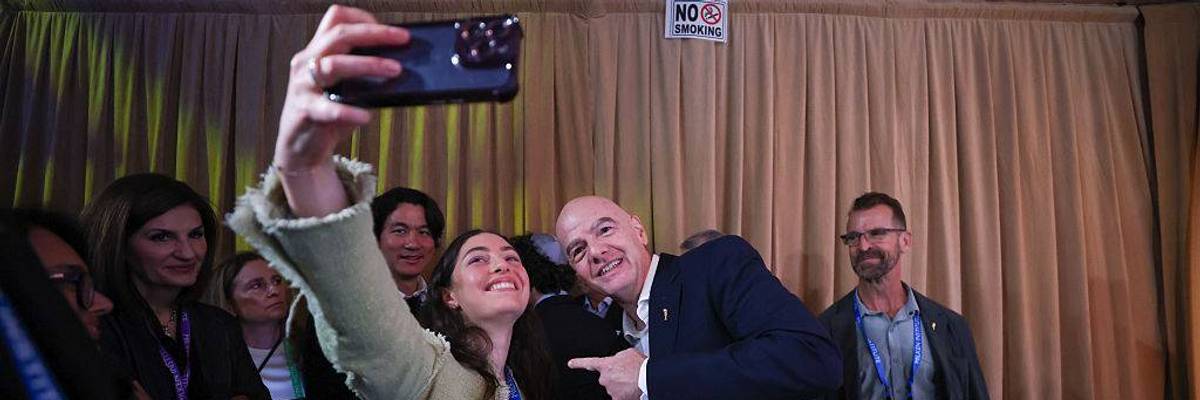
FIFA President Gianni Infantino during Milken Institute Global Conference: A conversation with FIFA President Gianni Infantino on May 5, 2026 in Los Angeles, California.
"Does anyone really care if the Strait of Hormuz is open?" asked one banking executive.
Even as President Donald Trump's illegal war with Iran and tariffs on foreign goods are hammering working-class Americans, a new report shows that members of the US elite have never had it better.
As The Financial Times reported on Thursday, attendees at the annual Milken Institute conference in Beverly Hills this week were living in "blissful ignorance" of the economic pain hitting workers in the US and around the world.
“People are glossing over the war with Iran,” an anonymous private credit firm executive told The Financial Times. “They've become desensitized to it. For some reason, people are saying, ‘Yeah, so what?'"
The Financial Times also quoted one person described as a "high-powered banker" who asked, "Does anyone really care if the Strait of Hormuz is open?"
Ted Koenig, chief executive of Monroe Capital, told The Financial Times that, while people at the conference were vaguely aware of the suffering of middle-class and working-class Americans, "at the end of the day, everyone’s focused on their own investment portfolios, especially here."
While the mood at the Milken conference may have been buoyant thanks to the record-setting stock market, fresh data released Friday showed Main Street America is feeling the exact opposite.
The University of Michigan's latest Surveys of Consumers found that consumer sentiment has hit another all-time low, driven in large part by anxiety over price increases caused by the Iran war.
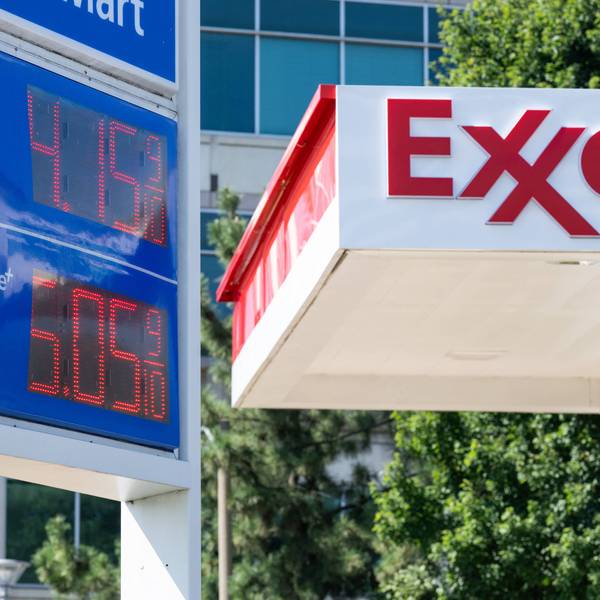
"Taken together, consumers continue to feel buffeted by cost pressures, led by soaring prices at the pump," explained Joanne Hsu, director of the Surveys of Consumers. "Middle East developments are unlikely to meaningfully boost sentiment until supply disruptions have been fully resolved and energy prices fall."
Tahra Hoops, director of economic analysis at Chamber of Progress, noted 30% of respondents in the latest Surveys of Consumers said that Trump's tariffs were driving up their expenses.
"It would do well for Dems to continue to shout that gas prices are high and tariffs are raising your costs!" Hoops wrote.
While consumer spending has for months held up in the wake of low confidence, McDonald's CEO Chris Kempczinski said this week that signs of real strain are starting to appear.
As CNBC reported Thursday, Kempczinski described the current economic environment as "challenging," and warned that "it’s certainly not improving, and it may be getting a little bit worse."
The fast food CEO pointed to high gas prices as a particular strain on working-class consumers, who are the most regular customers at McDonald's.
“Clearly, when you have elevated gas prices, which is the core issue that I think we’re all seeing about in the press right now, gas prices, inflation on that, that is going to disproportionately impact low-income consumers,” Kempczinski said. “And so we expect the pressures there are going to continue.”
Kempczinski wasn't the only CEO to sound alarms about US consumer spending this week.
According to a Thursday report from Market Watch, Whirlpool CEO Marc Bitzer said during a quarterly earnings call that the appliance industry had seen a 7.4% drop in demand in the first quarter of 2026.
"This level of industry decline is similar to what we have observed during the global financial crisis," said Bitzer, "and even higher than during other recessionary periods."
Dear Common Dreams reader, It’s been nearly 30 years since I co-founded Common Dreams with my late wife, Lina Newhouser. We had the radical notion that journalism should serve the public good, not corporate profits. It was clear to us from the outset what it would take to build such a project. No paid advertisements. No corporate sponsors. No millionaire publisher telling us what to think or do. Many people said we wouldn't last a year, but we proved those doubters wrong. Together with a tremendous team of journalists and dedicated staff, we built an independent media outlet free from the constraints of profits and corporate control. Our mission has always been simple: To inform. To inspire. To ignite change for the common good. Building Common Dreams was not easy. Our survival was never guaranteed. When you take on the most powerful forces—Wall Street greed, fossil fuel industry destruction, Big Tech lobbyists, and uber-rich oligarchs who have spent billions upon billions rigging the economy and democracy in their favor—the only bulwark you have is supporters who believe in your work. But here’s the urgent message from me today. It's never been this bad out there. And it's never been this hard to keep us going. At the very moment Common Dreams is most needed, the threats we face are intensifying. We need your support now more than ever. We don't accept corporate advertising and never will. We don't have a paywall because we don't think people should be blocked from critical news based on their ability to pay. Everything we do is funded by the donations of readers like you. When everyone does the little they can afford, we are strong. But if that support retreats or dries up, so do we. Will you donate now to make sure Common Dreams not only survives but thrives? —Craig Brown, Co-founder |
Even as President Donald Trump's illegal war with Iran and tariffs on foreign goods are hammering working-class Americans, a new report shows that members of the US elite have never had it better.
As The Financial Times reported on Thursday, attendees at the annual Milken Institute conference in Beverly Hills this week were living in "blissful ignorance" of the economic pain hitting workers in the US and around the world.
“People are glossing over the war with Iran,” an anonymous private credit firm executive told The Financial Times. “They've become desensitized to it. For some reason, people are saying, ‘Yeah, so what?'"
The Financial Times also quoted one person described as a "high-powered banker" who asked, "Does anyone really care if the Strait of Hormuz is open?"
Ted Koenig, chief executive of Monroe Capital, told The Financial Times that, while people at the conference were vaguely aware of the suffering of middle-class and working-class Americans, "at the end of the day, everyone’s focused on their own investment portfolios, especially here."
While the mood at the Milken conference may have been buoyant thanks to the record-setting stock market, fresh data released Friday showed Main Street America is feeling the exact opposite.
The University of Michigan's latest Surveys of Consumers found that consumer sentiment has hit another all-time low, driven in large part by anxiety over price increases caused by the Iran war.
"Taken together, consumers continue to feel buffeted by cost pressures, led by soaring prices at the pump," explained Joanne Hsu, director of the Surveys of Consumers. "Middle East developments are unlikely to meaningfully boost sentiment until supply disruptions have been fully resolved and energy prices fall."
Tahra Hoops, director of economic analysis at Chamber of Progress, noted 30% of respondents in the latest Surveys of Consumers said that Trump's tariffs were driving up their expenses.
"It would do well for Dems to continue to shout that gas prices are high and tariffs are raising your costs!" Hoops wrote.
While consumer spending has for months held up in the wake of low confidence, McDonald's CEO Chris Kempczinski said this week that signs of real strain are starting to appear.
As CNBC reported Thursday, Kempczinski described the current economic environment as "challenging," and warned that "it’s certainly not improving, and it may be getting a little bit worse."
The fast food CEO pointed to high gas prices as a particular strain on working-class consumers, who are the most regular customers at McDonald's.
“Clearly, when you have elevated gas prices, which is the core issue that I think we’re all seeing about in the press right now, gas prices, inflation on that, that is going to disproportionately impact low-income consumers,” Kempczinski said. “And so we expect the pressures there are going to continue.”
Kempczinski wasn't the only CEO to sound alarms about US consumer spending this week.
According to a Thursday report from Market Watch, Whirlpool CEO Marc Bitzer said during a quarterly earnings call that the appliance industry had seen a 7.4% drop in demand in the first quarter of 2026.
"This level of industry decline is similar to what we have observed during the global financial crisis," said Bitzer, "and even higher than during other recessionary periods."
Even as President Donald Trump's illegal war with Iran and tariffs on foreign goods are hammering working-class Americans, a new report shows that members of the US elite have never had it better.
As The Financial Times reported on Thursday, attendees at the annual Milken Institute conference in Beverly Hills this week were living in "blissful ignorance" of the economic pain hitting workers in the US and around the world.
“People are glossing over the war with Iran,” an anonymous private credit firm executive told The Financial Times. “They've become desensitized to it. For some reason, people are saying, ‘Yeah, so what?'"
The Financial Times also quoted one person described as a "high-powered banker" who asked, "Does anyone really care if the Strait of Hormuz is open?"
Ted Koenig, chief executive of Monroe Capital, told The Financial Times that, while people at the conference were vaguely aware of the suffering of middle-class and working-class Americans, "at the end of the day, everyone’s focused on their own investment portfolios, especially here."
While the mood at the Milken conference may have been buoyant thanks to the record-setting stock market, fresh data released Friday showed Main Street America is feeling the exact opposite.
The University of Michigan's latest Surveys of Consumers found that consumer sentiment has hit another all-time low, driven in large part by anxiety over price increases caused by the Iran war.
"Taken together, consumers continue to feel buffeted by cost pressures, led by soaring prices at the pump," explained Joanne Hsu, director of the Surveys of Consumers. "Middle East developments are unlikely to meaningfully boost sentiment until supply disruptions have been fully resolved and energy prices fall."
Tahra Hoops, director of economic analysis at Chamber of Progress, noted 30% of respondents in the latest Surveys of Consumers said that Trump's tariffs were driving up their expenses.
"It would do well for Dems to continue to shout that gas prices are high and tariffs are raising your costs!" Hoops wrote.
While consumer spending has for months held up in the wake of low confidence, McDonald's CEO Chris Kempczinski said this week that signs of real strain are starting to appear.
As CNBC reported Thursday, Kempczinski described the current economic environment as "challenging," and warned that "it’s certainly not improving, and it may be getting a little bit worse."
The fast food CEO pointed to high gas prices as a particular strain on working-class consumers, who are the most regular customers at McDonald's.
“Clearly, when you have elevated gas prices, which is the core issue that I think we’re all seeing about in the press right now, gas prices, inflation on that, that is going to disproportionately impact low-income consumers,” Kempczinski said. “And so we expect the pressures there are going to continue.”
Kempczinski wasn't the only CEO to sound alarms about US consumer spending this week.
According to a Thursday report from Market Watch, Whirlpool CEO Marc Bitzer said during a quarterly earnings call that the appliance industry had seen a 7.4% drop in demand in the first quarter of 2026.
"This level of industry decline is similar to what we have observed during the global financial crisis," said Bitzer, "and even higher than during other recessionary periods."