SUBSCRIBE TO OUR FREE NEWSLETTER
Daily news & progressive opinion—funded by the people, not the corporations—delivered straight to your inbox.
5
#000000
#FFFFFF
To donate by check, phone, or other method, see our More Ways to Give page.
Daily news & progressive opinion—funded by the people, not the corporations—delivered straight to your inbox.
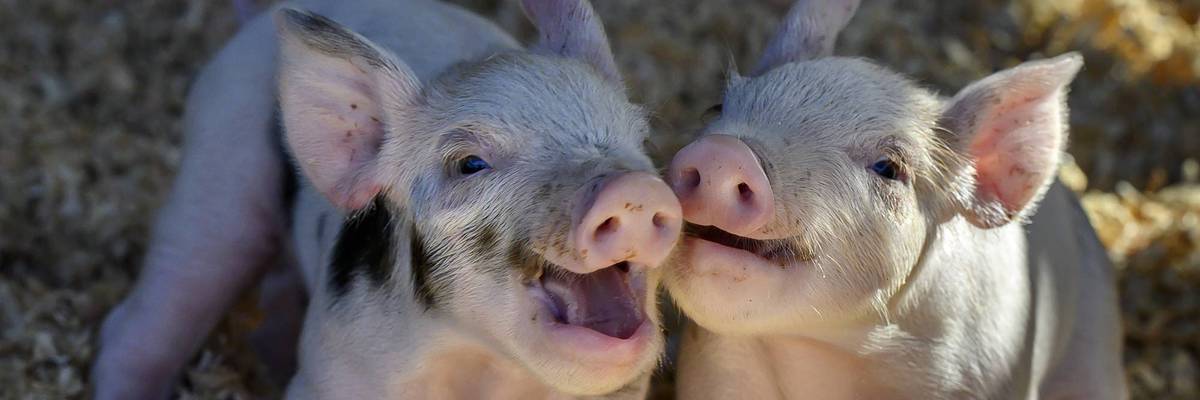
Playful piglets romp around their pen at OC Fair and Event Center Centennial Farm on Saturday, January 8, 2022 in Costa Mesa, California.
Democrats and Republicans who claim to respect states’ rights should reject this federal power grab and defend the voters, farmers, and small businesses who have already moved forward.
Congress has a choice to make: Protect democracy and states’ rights, or hand a blank check to Big Pork lobbyists who refuse to accept that voters, family farmers, and the marketplace have already moved on.
Buried in the House-passed Farm, Food, and National Security Act of 2026 (Farm Bill) is a provision known as the “Save Our Bacon Act,” a slickly named attempt to wipe out state farm animal welfare laws like California’s Proposition 12. The House passed the farm bill on April 30 by a vote of 224-200, after the Rules Committee blocked a bipartisan amendment that had the votes to pass on the floor that would have stripped the Save Our Bacon language from the bill.
Now the fight moves to the Senate. And every Democrat and Republican who claims to respect states’ rights should be on notice: This provision is not about saving bacon. It is about overriding voters, punishing family farmers who adapted, and using federal power to erase state laws that powerful corporate interests dislike.
Proposition 12 was passed by nearly 63% of California voters in 2018. At its core, the law set a basic standard for certain animal products sold in California, including pork: A mother pig should have enough space to stand up, turn around, and extend her limbs. That is not radical. It is the bare minimum.
The message should be simple: Respect the voters, respect the farmers, respect the courts, and keep this attack on states’ rights out of the Farm Bill.
The pork lobby sued anyway, arguing that California had no right to decide what products could be sold within its own borders. They took that argument all the way to the US Supreme Court—and lost, even before a conservative court. In 2023, the court upheld Prop 12.
That should have been the end of it.
Instead, the National Pork Producers Council (NPPC) and its allies went to Congress and asked lawmakers to do what the courts would not: nullify the will of voters through federal legislation. The Farm Bill is their latest vehicle to pass the Save Our Bacon Act.
Supporters dress this up as a defense of interstate commerce. But let’s be honest about what it really is: a federal override of state decision-making.
That should alarm conservatives who believe Washington should not dictate every policy choice from the top down. It should alarm progressives who believe voters have the right to pass laws protecting animals, consumers, workers, and communities. And it should alarm anyone who thinks Congress should be solving actual problems in the farm bill—not sneaking in special favors for a trade group that lost in court, lost at the ballot box, and is now trying to win through backroom legislative maneuvering.
The irony is that Prop 12 has not caused the collapse its opponents predicted. Pork has remained on California shelves. Major producers have adapted. Nearly all major food companies now offer Prop 12-compliant pork. Many farmers invested in compliant systems and rely on the market that Prop 12 created.
In fact, some of the loudest claims against Prop 12 have aged terribly. The NPPC’s own vice president testified before Congress while describing himself as a fourth-generation hog farmer who produces Prop 12-compliant pork—then argued against the very law he already follows. That contradiction says everything. Compliance is possible. The industry knows it. The marketplace has shown it.
The people who stand to lose from the Save Our Bacon Act are not the multinational corporations that have already adjusted. They are the family farmers who spent money to meet higher standards, the small and mid-sized producers who gained access to premium markets, and the voters whose laws would be wiped away because a lobby did not like the outcome.
This is why opposition to the provision has not fallen neatly along party lines. A bipartisan group led by Rep. Anna Paulina Luna, a Florida Republican, sought to remove the language from the Farm Bill, joined by Republicans and Democrats including Reps. Andrew Garbarino (R-NY), Brian Fitzpatrick (R-Pa.), David Valadao (R-Calif.), Nancy Mace (R-SC), Mike Lawler, (R-NY), and Jeff Van Drew (R-NJ), according to industry reporting.
That bipartisan resistance matters. It shows this is not a left-versus-right issue. It is a question of whether Congress will respect state authority or gut it when a powerful industry lobby complains loudly enough.
For Democrats, the choice should be easy. Prop 12 reflects humane treatment, consumer transparency, and democratic accountability. It was passed by voters and upheld by the courts. A farm bill should not become a vehicle for rolling back animal welfare progress and silencing state-level reform.
For Republicans, the choice should be just as easy—at least for those who mean what they say about states’ rights. If California voters cannot decide that pork sold in California must meet basic animal welfare and food safety standards, then what exactly does “states’ rights” mean? Does it only apply when a state passes laws that corporate lobbyists like?
The Save Our Bacon Act is also a warning shot far beyond animal welfare. If Congress can erase state laws protecting farm animals because they affect interstate commerce, what stops future Congresses from targeting state laws on food safety, environmental protection, public health, labeling, or consumer standards? Opponents have warned that this kind of language could threaten hundreds of state agricultural laws and undermine state and local authority well beyond Prop 12.
That is why lawmakers should strip this language from any final farm bill.
The farm bill should support farmers, strengthen food systems, expand nutrition access, invest in conservation, and build resilience. It should not be hijacked by a narrow industry faction trying to relitigate a Supreme Court loss. And it certainly should not punish the farmers and companies that did the right thing by adapting to higher standards.
Animal welfare progress is real. Across the food system, companies, producers, and consumers are moving toward more humane practices. Cage-free eggs now make up a major and growing share of the market. In pork production, many supply chains have reduced or eliminated gestation stalls. The trend is clear: Extreme confinement is becoming harder to defend and easier to replace.
The progress did not happen by accident. It happened because voters demanded it, farmers built it, companies responded to it, and advocates kept pushing. The Save Our Bacon Act would turn back the clock—not because the system failed, but because it succeeded.
Congress should not reward obstruction. It should not let Big Pork use the farm bill to override voters. And it should not allow a fake “states’ rights” argument to become a federal power grab against the states that actually exercised their rights.
Democrats and Republicans who genuinely believe in democracy, federalism, and fair markets should stand together and reject the Farm Bill if it includes the Save Our Bacon Act language.
The message should be simple: Respect the voters, respect the farmers, respect the courts, and keep this attack on states’ rights out of the Farm Bill. Call your US senators today and tell them to oppose Big Pork’s attack on democracy and oppose any Farm Bill version with the "Save Our Bacon" language included.
Dear Common Dreams reader, It’s been nearly 30 years since I co-founded Common Dreams with my late wife, Lina Newhouser. We had the radical notion that journalism should serve the public good, not corporate profits. It was clear to us from the outset what it would take to build such a project. No paid advertisements. No corporate sponsors. No millionaire publisher telling us what to think or do. Many people said we wouldn't last a year, but we proved those doubters wrong. Together with a tremendous team of journalists and dedicated staff, we built an independent media outlet free from the constraints of profits and corporate control. Our mission has always been simple: To inform. To inspire. To ignite change for the common good. Building Common Dreams was not easy. Our survival was never guaranteed. When you take on the most powerful forces—Wall Street greed, fossil fuel industry destruction, Big Tech lobbyists, and uber-rich oligarchs who have spent billions upon billions rigging the economy and democracy in their favor—the only bulwark you have is supporters who believe in your work. But here’s the urgent message from me today. It's never been this bad out there. And it's never been this hard to keep us going. At the very moment Common Dreams is most needed, the threats we face are intensifying. We need your support now more than ever. We don't accept corporate advertising and never will. We don't have a paywall because we don't think people should be blocked from critical news based on their ability to pay. Everything we do is funded by the donations of readers like you. When everyone does the little they can afford, we are strong. But if that support retreats or dries up, so do we. Will you donate now to make sure Common Dreams not only survives but thrives? —Craig Brown, Co-founder |
Congress has a choice to make: Protect democracy and states’ rights, or hand a blank check to Big Pork lobbyists who refuse to accept that voters, family farmers, and the marketplace have already moved on.
Buried in the House-passed Farm, Food, and National Security Act of 2026 (Farm Bill) is a provision known as the “Save Our Bacon Act,” a slickly named attempt to wipe out state farm animal welfare laws like California’s Proposition 12. The House passed the farm bill on April 30 by a vote of 224-200, after the Rules Committee blocked a bipartisan amendment that had the votes to pass on the floor that would have stripped the Save Our Bacon language from the bill.
Now the fight moves to the Senate. And every Democrat and Republican who claims to respect states’ rights should be on notice: This provision is not about saving bacon. It is about overriding voters, punishing family farmers who adapted, and using federal power to erase state laws that powerful corporate interests dislike.
Proposition 12 was passed by nearly 63% of California voters in 2018. At its core, the law set a basic standard for certain animal products sold in California, including pork: A mother pig should have enough space to stand up, turn around, and extend her limbs. That is not radical. It is the bare minimum.
The message should be simple: Respect the voters, respect the farmers, respect the courts, and keep this attack on states’ rights out of the Farm Bill.
The pork lobby sued anyway, arguing that California had no right to decide what products could be sold within its own borders. They took that argument all the way to the US Supreme Court—and lost, even before a conservative court. In 2023, the court upheld Prop 12.
That should have been the end of it.
Instead, the National Pork Producers Council (NPPC) and its allies went to Congress and asked lawmakers to do what the courts would not: nullify the will of voters through federal legislation. The Farm Bill is their latest vehicle to pass the Save Our Bacon Act.
Supporters dress this up as a defense of interstate commerce. But let’s be honest about what it really is: a federal override of state decision-making.
That should alarm conservatives who believe Washington should not dictate every policy choice from the top down. It should alarm progressives who believe voters have the right to pass laws protecting animals, consumers, workers, and communities. And it should alarm anyone who thinks Congress should be solving actual problems in the farm bill—not sneaking in special favors for a trade group that lost in court, lost at the ballot box, and is now trying to win through backroom legislative maneuvering.
The irony is that Prop 12 has not caused the collapse its opponents predicted. Pork has remained on California shelves. Major producers have adapted. Nearly all major food companies now offer Prop 12-compliant pork. Many farmers invested in compliant systems and rely on the market that Prop 12 created.
In fact, some of the loudest claims against Prop 12 have aged terribly. The NPPC’s own vice president testified before Congress while describing himself as a fourth-generation hog farmer who produces Prop 12-compliant pork—then argued against the very law he already follows. That contradiction says everything. Compliance is possible. The industry knows it. The marketplace has shown it.
The people who stand to lose from the Save Our Bacon Act are not the multinational corporations that have already adjusted. They are the family farmers who spent money to meet higher standards, the small and mid-sized producers who gained access to premium markets, and the voters whose laws would be wiped away because a lobby did not like the outcome.
This is why opposition to the provision has not fallen neatly along party lines. A bipartisan group led by Rep. Anna Paulina Luna, a Florida Republican, sought to remove the language from the Farm Bill, joined by Republicans and Democrats including Reps. Andrew Garbarino (R-NY), Brian Fitzpatrick (R-Pa.), David Valadao (R-Calif.), Nancy Mace (R-SC), Mike Lawler, (R-NY), and Jeff Van Drew (R-NJ), according to industry reporting.
That bipartisan resistance matters. It shows this is not a left-versus-right issue. It is a question of whether Congress will respect state authority or gut it when a powerful industry lobby complains loudly enough.
For Democrats, the choice should be easy. Prop 12 reflects humane treatment, consumer transparency, and democratic accountability. It was passed by voters and upheld by the courts. A farm bill should not become a vehicle for rolling back animal welfare progress and silencing state-level reform.
For Republicans, the choice should be just as easy—at least for those who mean what they say about states’ rights. If California voters cannot decide that pork sold in California must meet basic animal welfare and food safety standards, then what exactly does “states’ rights” mean? Does it only apply when a state passes laws that corporate lobbyists like?
The Save Our Bacon Act is also a warning shot far beyond animal welfare. If Congress can erase state laws protecting farm animals because they affect interstate commerce, what stops future Congresses from targeting state laws on food safety, environmental protection, public health, labeling, or consumer standards? Opponents have warned that this kind of language could threaten hundreds of state agricultural laws and undermine state and local authority well beyond Prop 12.
That is why lawmakers should strip this language from any final farm bill.
The farm bill should support farmers, strengthen food systems, expand nutrition access, invest in conservation, and build resilience. It should not be hijacked by a narrow industry faction trying to relitigate a Supreme Court loss. And it certainly should not punish the farmers and companies that did the right thing by adapting to higher standards.
Animal welfare progress is real. Across the food system, companies, producers, and consumers are moving toward more humane practices. Cage-free eggs now make up a major and growing share of the market. In pork production, many supply chains have reduced or eliminated gestation stalls. The trend is clear: Extreme confinement is becoming harder to defend and easier to replace.
The progress did not happen by accident. It happened because voters demanded it, farmers built it, companies responded to it, and advocates kept pushing. The Save Our Bacon Act would turn back the clock—not because the system failed, but because it succeeded.
Congress should not reward obstruction. It should not let Big Pork use the farm bill to override voters. And it should not allow a fake “states’ rights” argument to become a federal power grab against the states that actually exercised their rights.
Democrats and Republicans who genuinely believe in democracy, federalism, and fair markets should stand together and reject the Farm Bill if it includes the Save Our Bacon Act language.
The message should be simple: Respect the voters, respect the farmers, respect the courts, and keep this attack on states’ rights out of the Farm Bill. Call your US senators today and tell them to oppose Big Pork’s attack on democracy and oppose any Farm Bill version with the "Save Our Bacon" language included.
Congress has a choice to make: Protect democracy and states’ rights, or hand a blank check to Big Pork lobbyists who refuse to accept that voters, family farmers, and the marketplace have already moved on.
Buried in the House-passed Farm, Food, and National Security Act of 2026 (Farm Bill) is a provision known as the “Save Our Bacon Act,” a slickly named attempt to wipe out state farm animal welfare laws like California’s Proposition 12. The House passed the farm bill on April 30 by a vote of 224-200, after the Rules Committee blocked a bipartisan amendment that had the votes to pass on the floor that would have stripped the Save Our Bacon language from the bill.
Now the fight moves to the Senate. And every Democrat and Republican who claims to respect states’ rights should be on notice: This provision is not about saving bacon. It is about overriding voters, punishing family farmers who adapted, and using federal power to erase state laws that powerful corporate interests dislike.
Proposition 12 was passed by nearly 63% of California voters in 2018. At its core, the law set a basic standard for certain animal products sold in California, including pork: A mother pig should have enough space to stand up, turn around, and extend her limbs. That is not radical. It is the bare minimum.
The message should be simple: Respect the voters, respect the farmers, respect the courts, and keep this attack on states’ rights out of the Farm Bill.
The pork lobby sued anyway, arguing that California had no right to decide what products could be sold within its own borders. They took that argument all the way to the US Supreme Court—and lost, even before a conservative court. In 2023, the court upheld Prop 12.
That should have been the end of it.
Instead, the National Pork Producers Council (NPPC) and its allies went to Congress and asked lawmakers to do what the courts would not: nullify the will of voters through federal legislation. The Farm Bill is their latest vehicle to pass the Save Our Bacon Act.
Supporters dress this up as a defense of interstate commerce. But let’s be honest about what it really is: a federal override of state decision-making.
That should alarm conservatives who believe Washington should not dictate every policy choice from the top down. It should alarm progressives who believe voters have the right to pass laws protecting animals, consumers, workers, and communities. And it should alarm anyone who thinks Congress should be solving actual problems in the farm bill—not sneaking in special favors for a trade group that lost in court, lost at the ballot box, and is now trying to win through backroom legislative maneuvering.
The irony is that Prop 12 has not caused the collapse its opponents predicted. Pork has remained on California shelves. Major producers have adapted. Nearly all major food companies now offer Prop 12-compliant pork. Many farmers invested in compliant systems and rely on the market that Prop 12 created.
In fact, some of the loudest claims against Prop 12 have aged terribly. The NPPC’s own vice president testified before Congress while describing himself as a fourth-generation hog farmer who produces Prop 12-compliant pork—then argued against the very law he already follows. That contradiction says everything. Compliance is possible. The industry knows it. The marketplace has shown it.
The people who stand to lose from the Save Our Bacon Act are not the multinational corporations that have already adjusted. They are the family farmers who spent money to meet higher standards, the small and mid-sized producers who gained access to premium markets, and the voters whose laws would be wiped away because a lobby did not like the outcome.
This is why opposition to the provision has not fallen neatly along party lines. A bipartisan group led by Rep. Anna Paulina Luna, a Florida Republican, sought to remove the language from the Farm Bill, joined by Republicans and Democrats including Reps. Andrew Garbarino (R-NY), Brian Fitzpatrick (R-Pa.), David Valadao (R-Calif.), Nancy Mace (R-SC), Mike Lawler, (R-NY), and Jeff Van Drew (R-NJ), according to industry reporting.
That bipartisan resistance matters. It shows this is not a left-versus-right issue. It is a question of whether Congress will respect state authority or gut it when a powerful industry lobby complains loudly enough.
For Democrats, the choice should be easy. Prop 12 reflects humane treatment, consumer transparency, and democratic accountability. It was passed by voters and upheld by the courts. A farm bill should not become a vehicle for rolling back animal welfare progress and silencing state-level reform.
For Republicans, the choice should be just as easy—at least for those who mean what they say about states’ rights. If California voters cannot decide that pork sold in California must meet basic animal welfare and food safety standards, then what exactly does “states’ rights” mean? Does it only apply when a state passes laws that corporate lobbyists like?
The Save Our Bacon Act is also a warning shot far beyond animal welfare. If Congress can erase state laws protecting farm animals because they affect interstate commerce, what stops future Congresses from targeting state laws on food safety, environmental protection, public health, labeling, or consumer standards? Opponents have warned that this kind of language could threaten hundreds of state agricultural laws and undermine state and local authority well beyond Prop 12.
That is why lawmakers should strip this language from any final farm bill.
The farm bill should support farmers, strengthen food systems, expand nutrition access, invest in conservation, and build resilience. It should not be hijacked by a narrow industry faction trying to relitigate a Supreme Court loss. And it certainly should not punish the farmers and companies that did the right thing by adapting to higher standards.
Animal welfare progress is real. Across the food system, companies, producers, and consumers are moving toward more humane practices. Cage-free eggs now make up a major and growing share of the market. In pork production, many supply chains have reduced or eliminated gestation stalls. The trend is clear: Extreme confinement is becoming harder to defend and easier to replace.
The progress did not happen by accident. It happened because voters demanded it, farmers built it, companies responded to it, and advocates kept pushing. The Save Our Bacon Act would turn back the clock—not because the system failed, but because it succeeded.
Congress should not reward obstruction. It should not let Big Pork use the farm bill to override voters. And it should not allow a fake “states’ rights” argument to become a federal power grab against the states that actually exercised their rights.
Democrats and Republicans who genuinely believe in democracy, federalism, and fair markets should stand together and reject the Farm Bill if it includes the Save Our Bacon Act language.
The message should be simple: Respect the voters, respect the farmers, respect the courts, and keep this attack on states’ rights out of the Farm Bill. Call your US senators today and tell them to oppose Big Pork’s attack on democracy and oppose any Farm Bill version with the "Save Our Bacon" language included.