SUBSCRIBE TO OUR FREE NEWSLETTER
Daily news & progressive opinion—funded by the people, not the corporations—delivered straight to your inbox.
5
#000000
#FFFFFF
To donate by check, phone, or other method, see our More Ways to Give page.
Daily news & progressive opinion—funded by the people, not the corporations—delivered straight to your inbox.
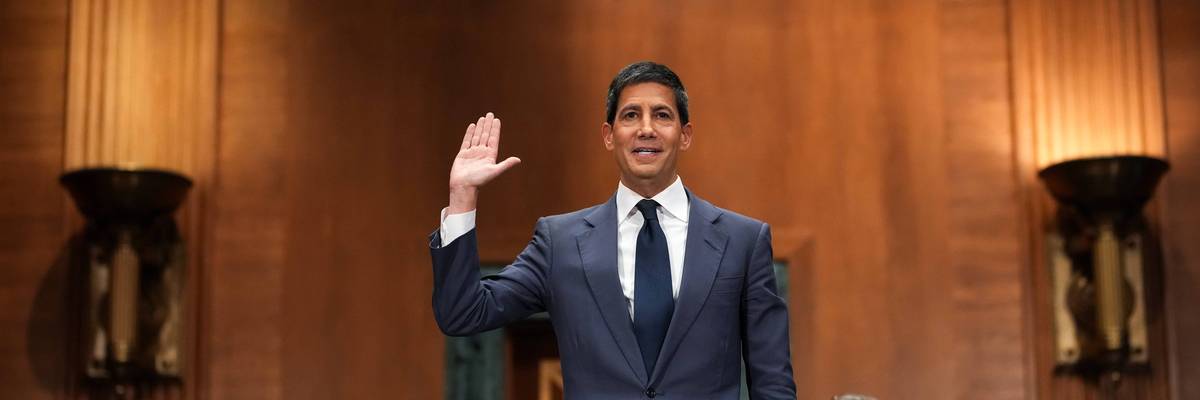
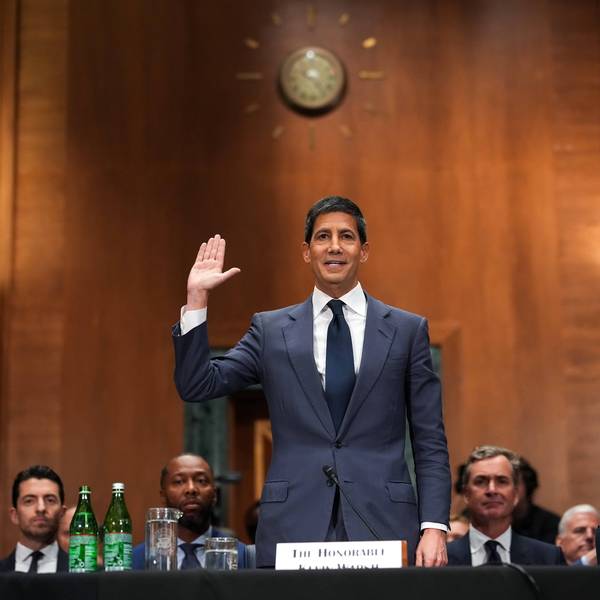
Kevin Warsh, US President Donald Trump's nominee for chair of the Federal Reserve, is sworn in to testify in the Dirksen Senate Office Building on April 21, 2026 in Washington, DC.
"Warsh's confirmation is another step in Trump's attempt to take over the Fed. That's not good for working families—it's good for Wall Street," said Sen. Elizabeth Warren.
The US Senate on Wednesday voted to confirm Kevin Warsh, the financier picked by President Donald Trump to be the next chair of the Federal Reserve.
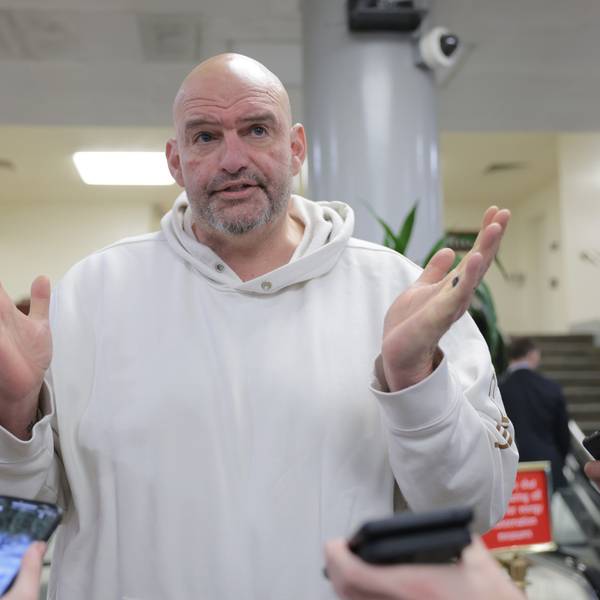
Sen. John Fetterman (D-Pa.) joined with all Senate Republicans in voting to confirm Warsh, whose nomination was opposed by all other Senate Democrats except for Sen. Kirsten Gillibrand (D-NY), who did not vote.
US Treasury Secretary Scott Bessent thanked Republican senators and Fetterman for backing Warsh's confirmation, which he predicted would "usher in a new day at an institution that is in need of accountability, sound policy guidance, and the renewed sense of purpose to help guide our economy."
Warsh's nomination has been controversial from the start given that Trump has repeatedly undermined the US central bank's independence by browbeating outgoing Federal Reserve Chairman Jerome Powell to lower interest rates.
After the confirmation vote, Sen. Elizabeth Warren (D-Mass.) warned that Warsh would try to carry out Trump's demands to lower rates, even as key metrics show that inflation has accelerated in recent months thanks to the president's illegal war with Iran.
"Trump wants to control interest rates, and he nominated Kevin Warsh to be his sock puppet," wrote Warren in a social media post. "Warsh's confirmation is another step in Trump's attempt to take over the Fed. That's not good for working families—it's good for Wall Street."
Sen. Dick Durbin (D-Ill.) said he voted against Warsh's nomination because "working families are struggling more than ever to afford basic goods," and "they need a central bank that will fight for them, not the president and billionaires."
"I am not convinced that Warsh has the willingness to do what is best for the American people," Durbin added. "For that reason, I voted no on his nomination."
While Trump may want Warsh to start slashing interest rates to boost the economy, he likely faces an uphill climb in convincing other Fed board members.
Data released by the US Bureau of Labor Statistics this week showed the consumer price index posted a year-over-year increase of 3.8%, the highest rate of inflation since May 2023, driven by energy prices that surged nearly 18% from the year before.
Additionally, the latest producer price index, which measures wholesale prices paid by businesses and is considered a strong predictor of future inflation, posted a year-over-year increase of 6% in April, indicating inflation will likely accelerate in the coming months.
During Powell's final meeting as Fed chair last month, the board voted to hold interest rates steady, with several board members indicating opposition to projecting future rate cuts in the near term given signals of rising inflation.
Dear Common Dreams reader, It’s been nearly 30 years since I co-founded Common Dreams with my late wife, Lina Newhouser. We had the radical notion that journalism should serve the public good, not corporate profits. It was clear to us from the outset what it would take to build such a project. No paid advertisements. No corporate sponsors. No millionaire publisher telling us what to think or do. Many people said we wouldn't last a year, but we proved those doubters wrong. Together with a tremendous team of journalists and dedicated staff, we built an independent media outlet free from the constraints of profits and corporate control. Our mission has always been simple: To inform. To inspire. To ignite change for the common good. Building Common Dreams was not easy. Our survival was never guaranteed. When you take on the most powerful forces—Wall Street greed, fossil fuel industry destruction, Big Tech lobbyists, and uber-rich oligarchs who have spent billions upon billions rigging the economy and democracy in their favor—the only bulwark you have is supporters who believe in your work. But here’s the urgent message from me today. It's never been this bad out there. And it's never been this hard to keep us going. At the very moment Common Dreams is most needed, the threats we face are intensifying. We need your support now more than ever. We don't accept corporate advertising and never will. We don't have a paywall because we don't think people should be blocked from critical news based on their ability to pay. Everything we do is funded by the donations of readers like you. When everyone does the little they can afford, we are strong. But if that support retreats or dries up, so do we. Will you donate now to make sure Common Dreams not only survives but thrives? —Craig Brown, Co-founder |
The US Senate on Wednesday voted to confirm Kevin Warsh, the financier picked by President Donald Trump to be the next chair of the Federal Reserve.
Sen. John Fetterman (D-Pa.) joined with all Senate Republicans in voting to confirm Warsh, whose nomination was opposed by all other Senate Democrats except for Sen. Kirsten Gillibrand (D-NY), who did not vote.
US Treasury Secretary Scott Bessent thanked Republican senators and Fetterman for backing Warsh's confirmation, which he predicted would "usher in a new day at an institution that is in need of accountability, sound policy guidance, and the renewed sense of purpose to help guide our economy."
Warsh's nomination has been controversial from the start given that Trump has repeatedly undermined the US central bank's independence by browbeating outgoing Federal Reserve Chairman Jerome Powell to lower interest rates.
After the confirmation vote, Sen. Elizabeth Warren (D-Mass.) warned that Warsh would try to carry out Trump's demands to lower rates, even as key metrics show that inflation has accelerated in recent months thanks to the president's illegal war with Iran.
"Trump wants to control interest rates, and he nominated Kevin Warsh to be his sock puppet," wrote Warren in a social media post. "Warsh's confirmation is another step in Trump's attempt to take over the Fed. That's not good for working families—it's good for Wall Street."
Sen. Dick Durbin (D-Ill.) said he voted against Warsh's nomination because "working families are struggling more than ever to afford basic goods," and "they need a central bank that will fight for them, not the president and billionaires."
"I am not convinced that Warsh has the willingness to do what is best for the American people," Durbin added. "For that reason, I voted no on his nomination."
While Trump may want Warsh to start slashing interest rates to boost the economy, he likely faces an uphill climb in convincing other Fed board members.
Data released by the US Bureau of Labor Statistics this week showed the consumer price index posted a year-over-year increase of 3.8%, the highest rate of inflation since May 2023, driven by energy prices that surged nearly 18% from the year before.
Additionally, the latest producer price index, which measures wholesale prices paid by businesses and is considered a strong predictor of future inflation, posted a year-over-year increase of 6% in April, indicating inflation will likely accelerate in the coming months.
During Powell's final meeting as Fed chair last month, the board voted to hold interest rates steady, with several board members indicating opposition to projecting future rate cuts in the near term given signals of rising inflation.
The US Senate on Wednesday voted to confirm Kevin Warsh, the financier picked by President Donald Trump to be the next chair of the Federal Reserve.
Sen. John Fetterman (D-Pa.) joined with all Senate Republicans in voting to confirm Warsh, whose nomination was opposed by all other Senate Democrats except for Sen. Kirsten Gillibrand (D-NY), who did not vote.
US Treasury Secretary Scott Bessent thanked Republican senators and Fetterman for backing Warsh's confirmation, which he predicted would "usher in a new day at an institution that is in need of accountability, sound policy guidance, and the renewed sense of purpose to help guide our economy."
Warsh's nomination has been controversial from the start given that Trump has repeatedly undermined the US central bank's independence by browbeating outgoing Federal Reserve Chairman Jerome Powell to lower interest rates.
After the confirmation vote, Sen. Elizabeth Warren (D-Mass.) warned that Warsh would try to carry out Trump's demands to lower rates, even as key metrics show that inflation has accelerated in recent months thanks to the president's illegal war with Iran.
"Trump wants to control interest rates, and he nominated Kevin Warsh to be his sock puppet," wrote Warren in a social media post. "Warsh's confirmation is another step in Trump's attempt to take over the Fed. That's not good for working families—it's good for Wall Street."
Sen. Dick Durbin (D-Ill.) said he voted against Warsh's nomination because "working families are struggling more than ever to afford basic goods," and "they need a central bank that will fight for them, not the president and billionaires."
"I am not convinced that Warsh has the willingness to do what is best for the American people," Durbin added. "For that reason, I voted no on his nomination."
While Trump may want Warsh to start slashing interest rates to boost the economy, he likely faces an uphill climb in convincing other Fed board members.
Data released by the US Bureau of Labor Statistics this week showed the consumer price index posted a year-over-year increase of 3.8%, the highest rate of inflation since May 2023, driven by energy prices that surged nearly 18% from the year before.
Additionally, the latest producer price index, which measures wholesale prices paid by businesses and is considered a strong predictor of future inflation, posted a year-over-year increase of 6% in April, indicating inflation will likely accelerate in the coming months.
During Powell's final meeting as Fed chair last month, the board voted to hold interest rates steady, with several board members indicating opposition to projecting future rate cuts in the near term given signals of rising inflation.