

SUBSCRIBE TO OUR FREE NEWSLETTER
Daily news & progressive opinion—funded by the people, not the corporations—delivered straight to your inbox.
5
#000000
#FFFFFF
To donate by check, phone, or other method, see our More Ways to Give page.
Daily news & progressive opinion—funded by the people, not the corporations—delivered straight to your inbox.

The administration’s radical reinterpretation of what it means to "take" an endangered species, gutting much of the framework that made the Endangered Species Act so successful.
One of the Endangered Species Act’s most fundamental protections for imperiled species is prohibiting unauthorized “take,” a term Congress defined broadly to include killing, harassing, wounding, harming, and more. But in July of this year, the Trump administration eliminated the longstanding regulatory definitions of “harm,” removing the take prohibition for wildlife killed or injured by significant habitat destruction. Exactly two months later, the administration doubled down. In identical memos dated September 14, the US Fish and Wildlife Service and National Oceanic and Atmospheric Administration Fisheries declared that take applies only to affirmative acts intentionally directed at particular animals. This radical reinterpretation substantially narrows what it means to take protected species, and therefore drastically limits how the ESA can protect them.
To understand why this matters, consider how Congress designed the ESA over 50 years ago: not only to prevent extinction, but also to ensure recovery of listed species. A key component of that design is the statute’s expansive definition of take. The Supreme Court later confirmed that take encompasses the whole spectrum of human activities that affect animals—directly and indirectly, intentionally and incidentally—from shooting or trapping them to destroying the places they live, forage, and reproduce. This does not mean that the ESA categorically prohibits development, logging, resource extraction, or other activities. In fact, its incidental take provisions have long provided a way for otherwise lawful activities to proceed, but in a way that reduces impacts on protected species.
The ESA is credited with preventing the extinction of 99% of species placed under its protection. It has conserved habitat for countless species: securing wildlife corridors and crossings for Florida panthers; protecting the mature forests red-cockaded woodpeckers need to survive; and reducing the impacts of development and off-road vehicles on desert tortoises. For more than 50 years, the law has provided a practical framework for protecting species while allowing responsible development to move forward.
We cannot protect wildlife by pretending foreseeable but unintentional take doesn't count.
The administration’s radical reinterpretation of take guts much of that framework.
Under this reinterpretation, take applies only to conduct intentionally directed at a particular animal. So if a bulldozer clearing land for a highway crushes and kills an owl in the process, that's no longer take—because no one meant to kill that owl. And if owls die because the land that was cleared included the old growth trees they need for shelter, that’s no longer take either—because again, no one meant to kill those owls. If an ATV crushes shorebird nests on a beach or a car hits a Florida panther or a boat strikes a right whale, the wildlife agencies say those deaths no longer constitute take under the ESA unless the rider, driver, or boater was aiming their vehicle at an animal, purposefully trying to hurt it.
This reinterpretation isn't a mere technicality. If an action isn’t take, key ESA provisions designed to prevent or minimize the impacts of the action on listed species won’t apply. For example, the reinterpretation threatens to make incidental take permits and incidental take statements unnecessary in many circumstances where they have historically been required—the very mechanisms that have required developers, timber companies, and infrastructure projects to reduce impacts on species while their projects move forward. Without those requirements, important safeguards that have historically minimized and mitigated foreseeable injury and death could disappear.
For example, if a harbor has become obstructed with built-up sediment that makes it difficult for ships to maneuver, the sediment is often removed with a hopper dredge that essentially vacuums the seabed. Unfortunately, if an endangered or threatened sea turtle is resting on the seabed, it can be trapped, crushed, dragged, or drowned by the hopper. The ESA doesn’t prevent the use of hopper dredges, but its incidental take provisions have helped to ensure that if hopper dredging occurs in sea turtle habitat, actions are taken to prevent or minimize the impact, like requiring the use of screens or other technology to protect turtles, or prohibiting hopper dredging during certain seasons. But under this reinterpretation, since killing or wounding sea turtles isn’t the purpose of operating a hopper dredge—clearing out sediment is—killing or wounding sea turtles with a hopper dredge isn’t take. So, the ESA’s take provisions will no longer be used to prevent or limit those injuries and deaths.
The administration’s extreme reinterpretation is a revival of an argument the Supreme Court decisively rejected more than 30 years ago. In a 1995 decision called Babbitt v. Sweet Home, by a six to three vote, the court upheld the regulatory definition of harm that the administration has now abandoned, reasoning in part that Congress' 1982 amendments—that created the incidental take permitting system—only make sense if take already covered indirect, non-purposeful harm like habitat modification. Justice Antonin Scalia dissented, arguing for the narrower reading the administration has now embraced.
The ESA’s success depends in significant part on its ability to address habitat loss and the foreseeable injury or death caused by otherwise lawful activity. The Trump administration has adopted an extremely narrow reinterpretation of take that eviscerates this longstanding framework, putting not just individual species at risk, but also the web of biodiversity and ecological systems all of us depend on. Estimates put the annual value of ecosystem services—clean water, crop pollination, pest control, flood mitigation, and more—at roughly $5 trillion. The loss of wildlife isn't an isolated event; it's the unraveling of interconnected systems that provide these benefits, often invisibly, until they're gone.
We cannot protect wildlife by pretending foreseeable but unintentional take doesn't count. The law has never required us to choose between conservation and progress. It requires us to confront the consequences of our actions before they become irreversible. Congress enacted the Endangered Species Act to prevent all extinction, not merely intentional extinction. After 50 years of progress, we should not pretend there is a meaningful difference.
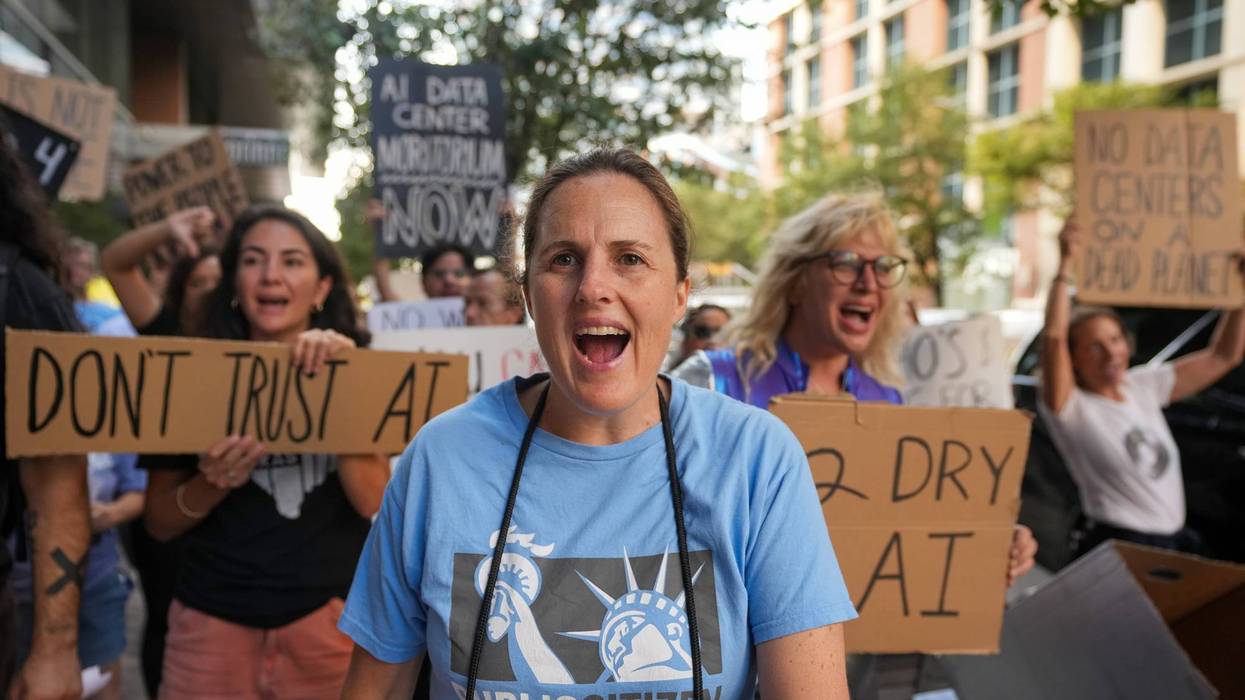
AI data centers are suddenly intruding into thousands of communities across America, sucking up people’s land, water, electricity, and democratic control. And the president is on the data centers' side.
To cope with the imminent danger posed by today’s arrogant, profiteering AI billionaires, President Donald Trump says the only thing America needs is a “STRONG AND SMART (High IQ!) PRESIDENT!”
Well, yes—let’s try to find one of those!
The president we have now is quite the opposite. Take the politically explosive issue of massive AI data centers suddenly intruding into thousands of communities across America, sucking up people’s land, water, electricity, and democratic control. Even red state MAGA conservatives are in furious rebellion against what amounts to a corporate sneak attack on millions of us.
Zeldin has also unilaterally reframed the purpose of the EPA. He’s declared making the United States “the artificial intelligence capital of the world” one of the EPA’s five central priorities. That’s not the priority of any regular person I know.
Where’s the president when we really need him? He’s plotting with the tech invaders to publicly trash those who are rebelling against the tech giants, and deploying autocrats to rig the rules to silence us opponents.
For example, Trump’s Environmental Protection Agency (EPA) Administrator Lee Zeldin is now decreeing there’s no need for local communities to be notified that a data center is moving in on them—nor should there be a public comment period on air pollution issues.
This means that residents’ first notice that a sprawling data center will be built next door will be the roar of bulldozers. Worse, Commissar Zeldin wants to let data center billionaires start building their acres of polluting facilities before permits are approved.
Also, this MAGA bureaucrat insists that such massive facilities be reclassified as “minor” air polluters, like a car repair shop or local laundromat.
Zeldin has also unilaterally reframed the purpose of the EPA. He’s declared making the United States “the artificial intelligence capital of the world” one of the EPA’s five central priorities.
That’s not the priority of any regular person I know. While real people are fighting data centers, this government is fighting the people.
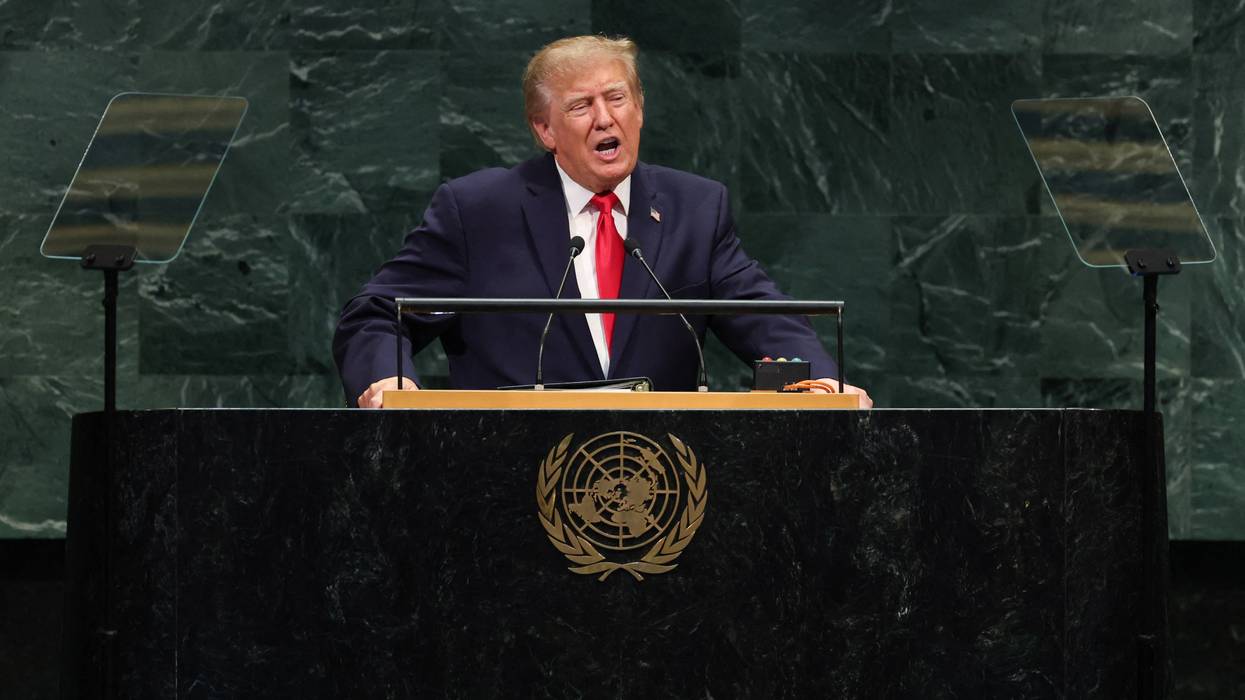
It is not possible to excuse, justify, or condone this kind of rhetoric. The only question is what to do about it.
Of all of the things that President Donald Trump has said publicly since returning to the White House, his threats to annihilate Iran are arguably the worst. This is not only because the repeated statements are deeply immoral and illegal—deliberate killing of civilians is a war crime—but because they represent the kind of irresponsible rhetoric that will lead us into a global apocalypse and collapse of not just the Persian nation but human civilization as a whole. It is not possible to excuse, justify, or condone this kind of rhetoric. The only question is what to do about it.
As much as some well-meaning people might want to see nuclear weapons as instruments that ended World War II and have kept the peace ever since, the exact opposite has actually been true. Nuclear weapons brutally murdered a couple of hundred thousand civilians in Hiroshima and Nagasaki and injured and sentenced to years and decades of illness and suffering many hundreds of thousands more. As we have written before, multiple alternatives existed to end the war in 1945. In many ways, the false narrative of the atomic bombings averting an invasion and saving lives has enabled the perpetuation of nuclear weapons, bringing the risks to humanity’s survival to levels previously unimaginable. Turning a brutally violent beginning of the nuclear age into something positive has managed to complicate and obfuscate an issue that should never have been complicated. Nuclear weapons are and have always been immoral. Their possession should be illegal.
Although the end of World War II coincided with the advent of nuclear weapons, and we have technically not fought another world war since, this is merely a correlation. Other significant changes in our world, including the founding of the United Nations, technological and scientific progress, and globalized trade, took place over that same time period. In addition, one has to wonder, whose peace we are talking about. Since 1945, over 20 million people have died in armed conflicts around the world, with up to 50 million more indirect deaths stemming from those conflicts. Today, there are nearly 100 armed conflicts across the planet according to the Geneva Academy, and 25 international armed conflicts involving more than one nation state.
It is not reassuring to have the US president talking about nuclear bombs exploding over American cities.
All along, in addition to the deaths and suffering in war zones across the planet and the horrific toll exacted by poverty and inequality, humanity has been waiting almost helplessly for another nuclear weapon to explode by accident, miscalculation, or intention, likely triggering a full-blown nuclear war in which tens or even thousands of nuclear weapons are used. The past eight decades have witnessed numerous incidents in which human wisdom and decency or just plain luck interrupted a course of events that seemed inexorably leading to nuclear war. Nuclear weapons have not brought the peace. Quite the opposite—they threaten what little of it we have each and every day.
And yet, for all of his threats on Truth Social and most recently in the halls of the United Nations, Trump has also stated that nuclear weapons “could destroy the world 50 times over, 100 times over,” calling for “denuclearization.” In fact, two days after his unacceptable statement to “drive [Iran] into hell with no chance of survival and no hope of future greatness” at the UN General Assembly in September, Trump suggested to President Xi Jinping in DC that there be a nuclear summit between China, Russia, and the United States.
Trump did so knowing full well that Xi’s government’s participation in arms control negotiations is contingent upon China achieving rough parity with the nuclear arsenals of the United States and Russia. This should be pursued not by China continuing to expand its arsenal to the gargantuan size of the US and Russian arsenals, but by the US and Russia reducing theirs to the size of China’s, and adopting China’s demand for an across-the-board no-first-use policy.
Since his latest threat, delivered in the world’s premier diplomatic space unlike his earlier Truth Social rants, including the one on April 7 that “a whole civilization will die tonight, never to be brought back again,” Trump actually seemed to welcome Iranian destruction of Los Angeles and San Diego at an election rally. Even if he now unconvincingly claims that the original clips, which suggested that such destruction was a small price to pay, were taken out of context and the small price to pay was about the price of gas, it is not reassuring to have the US president talking about nuclear bombs exploding over American cities. Never mind that Iran neither has the nuclear weapons nor the ability to send missiles toward US soil. Nuclear Armageddon seems to be on Trump’s mind.
Is the real estate developer who seemed to understand that a lot of effort, capital, and human ingenuity, not to mention time, go into building modern cities gone? What happened to the businessman who in 1986 “summoned Dr. Bernard Lown of the International Physicians for Prevention of Nuclear War (IPPNW) to the Trump Tower for a meeting?” Trump sought advice from Dr. Lown on negotiating nuclear arms agreements with Mikhail Gorbachev just after IPPNW had won the Nobel Peace Prize a year earlier. Is that person no longer here or do his “denuclearization” comments offer some hope?
Among those refusing to be passive in all of this is Pope Leo XIV who has not only deplored war and called for nuclear disarmament but who recently decried leaders, presumably including Trump, who are “beginning to speak about nuclear weapons and wars that are becoming ever more destructive,” and urged leaders to “come together, sit down, engage in dialogue.” The Holy See was one of the original parties to the Treaty on the Prohibition of Nuclear Weapons and remains a strong supporter of nuclear abolition. It is time for Pope Leo XIV, speaking for the planet, to use his unique moral authority to demand an emergency summit of, at a minimum, Trump, Xi, and Vladimir Putin to get us off this path of war and potential nuclear annihilation.
In addition to insisting on such actions from others, each of us needs to think long and hard about what we can do to address the insanity of Trump’s threats and the insanity of nuclear weapons.

Michigan voters can stop utilities from funding the politicians who set their rates. The rest of the country should pay attention.
Utility companies aren't just charging you for power. They're spending to elect the people who decide what they can charge.
Michigan's residential electricity rate hit 22.99 cents per kilowatt-hour in June, the highest in the Midwest and about 25% above the national average. Protecting that rate cost something too. Utilities gave Michigan lawmakers $421,100 in 2025 alone, and $1.6 million to state candidates during the 2022 election cycle.
More than 150 elected officials and candidates, from both parties, have now pledged to stop taking that money. This November, a ballot initiative, Michiganders for Money Out of Politics (MMOP), asks Michigan voters to bar utilities from making campaign contributions to the candidates and committees that decide their rates.
Utilities won't stop treating elections as a business expense until voters make them.
This isn't just a Michigan problem. Utility companies across the country pour millions into the elections that decide who appoints or elects the commissioners meant to police them, while electric prices climbed more than double the pace of inflation last year.
Those commissioners are often beholden to the industry they're supposed to police. A study of commissioners serving between 2000 and 2021 found that fossil fuel and utility veterans fill a quarter of state commissioner seats, and roughly half of those return to the industry once their public service ends.
We don't assume Exxon or Boeing is a neutral actor when it spends millions to influence the officials who regulate it. Utility companies shouldn’t be understood any differently. They are regulated monopolies, but they are also corporations with a financial interest in the rates, investments, and rules that regulators approve. Why should any company whose profits depend on a government decision get a say in who makes it?
Florida already saw what a bribed election looks like.
In 2020, a “ghost” candidate sharing an incumbent Democrat’s last name pulled over 6,000 votes in a state Senate race decided by 32 votes. It was part of a scheme Florida Power & Light (FPL), a NextEra Energy subsidiary, was accused of orchestrating to defeat a lawmaker it wanted gone. A former state senator was convicted for bribing the “ghost” candidate to run. FPL’s then-CEO wrote that he wanted to make life “a living hell" for the incumbent.
DeSantis-appointed regulators later approved FPL's $7 billion rate hike, the largest in US history. NextEra proposed a $150 million settlement over the scandal in June 2026, one of the largest securities fraud settlements in decades, but a federal judge rejected it in August, saying the companies hadn't provided enough information to justify it.
Now NextEra is trying to acquire Dominion Energy in a $67 billion deal. If it succeeds, the combined company would become the largest regulated utility in the world, covering about 10 million customers across Florida, Virginia, North Carolina, and South Carolina.
The company accused of funding a scheme to fix one state Senate race is about to have the resources to influence elections in three more states.
It’s not just rates that utility companies are influencing. In 2018, lobbying rewrote how Michigan credits homeowners for rooftop solar, stripping transmission costs from the formula. The payback period for a typical residential system stretched from about nine years to 13, four more years of paying full price for someone who already tried to do the right thing.
Community solar, which would let renters and low-income households buy into local solar projects without installing their own panels, still has no statewide framework in Michigan, despite repeated bipartisan attempts to pass one. DTE and Consumers Energy are unequivocal in their opposition, and PACs tied to both utilities gave nearly $500,000 to the governor, legislators, and party funds in 2023, the same year a major clean energy package moved through Lansing without a community solar provision. Eighty percent of the legislature took the money.
MMOP’s ballot petition won't guarantee that bill passes differently next time, but it would take away utilities' ability to pay for the outcome.
Utilities won't stop treating elections as a business expense until voters make them.
Grantee partners including Michigan Peoples Campaign, We the People Action Fund, and Detroit Action have spent months organizing behind MMOP, the kind of work that flipped one utility board in Arizona.
Two years ago, we made a $20,000 bet: that elections for Salt River Project’s board, Arizona's largest utility, then low-turnout, could become a source of power for the families paying its bills. Grantee partner Poder Latinx knocked on 70,000 doors. This April, more than 35,000 people voted, four times the usual turnout, and a clean energy majority won control of the board for the first time.
Utilities count on nobody paying attention. This November, Michigan voters can prove them wrong.

Recent reports that a young woman working in a Russian biolab became ill and died echo Annie Jacobsen’s new book, Biological War: A Scenario. How concerned should we be?
A few months ago, I ordered a pre-publication copy of Annie Jacobsen’s new non-fiction book, Biological War: A Scenario, which followed on from her excellent book, Nuclear War: A Scenario—not because I enjoy reading about existential risks, but because I’m an information seeker and feel that it’s important to stay informed. But when it arrived a few weeks later, in spite of having written an opinion piece about her nuclear book, entitled, “Why We Avoid Thinking About Nuclear War—and Why We Shouldn’t,” after seeing the frightening cover illustration of men in hazmat suits, I stashed it on the bookshelf of my study rather than reading it—for the same reasons I discussed in my earlier piece: I didn’t want to know!
But after the recent reports of a biolab accident in Russia, I retrieved it from the bookshelf and read it in two days.
The “scenario” in the book is that of a “biological weapons lab accident,” where a scientist working to modify pneumonic plague into a deadly biological weapon experiences remorse and tries to destroy it. But the small fire he lights causes an explosion that propels the Yersinia pestis bacteria (which causes the plague) into the atmosphere. In the process, he becomes infected with his weaponized pneumonic plague, although he doesn’t yet know it.
Although most of us cannot directly influence negotiations about strengthening the BWC, there are things that we can do to support such efforts and to lessen the increasingly grave dangers that confront us.
The next morning, he goes to an Orthodox church to confess where, by coughing in the midst of confession, he infects the priest, as well as the next person in line—a pre-med foreign exchange student, who is back in this small Russian town visiting family—before returning to the US shortly thereafter, where he is studying and doing volunteer work with homeless people. The student subsequently infects scores on Skid Row, who, in turn, infect the first responders who come to help them and, ultimately, the whole city of Los Angeles.
Following his confession, the scientist goes into the woods to shoot himself but collapses from the symptoms of plague. He is found by men on an international hunting trip, who administer mouth-to-mouth resuscitation and carry him back to their hunting lodge, where he is collected by officials. After dining together, using the same sauna and steam bath, and driving to the airport in the same van, seven of the hunters board flights to six of the world’s seven continents, while another goes off on a sea cruise—spreading pneumonic plague on their flights and sea voyage—and ultimately around the world.
In the real-world scenario, reported on October 2, Darya Shipilova, a 28-year old laboratory technician working in an “Anti-Plague Institute” in Irkutsk, Siberia died, according to Russian officials, of “a pneumonia of unknown etiology.” A Russian news agency reported that she had broken a test tube containing live bacteria of the pneumonic plague pathogen, leading to widespread speculation that she had, indeed, died of pneumonic plague.
These concerns were reinforced by reports that Russian health authorities imposed sweeping quarantine restrictions on the lab where she worked, the hospital where she died, and other nearby hospitals. Neighbors also reported that workers in protective suits and gas masks repeatedly disinfected the building where she lived, telling residents that it was “for cockroaches,” although the building has no cockroaches. More recently, Russia’s health agency asserted that the plague was not detected in follow-up tests of “thousands of people in the region.”
The overall opacity (a familiar playbook for crises in Russia) of Russian public health officials in responding to urgent requests for more information from the World Health Organization, the US, and other governments led to considerable disquiet around the world.
When asked if her death was related to a bioweapon, President Donald Trump responded, not very reassuringly, “We don’t think so.” He also acknowledged the similarities in how Chinese officials handled Covid-19 before it became a global pandemic: “China didn’t say much, and Russia is not saying much either.”
The 1925 Geneva Protocol banned the use of biological weapons, but not their development or possession. Although ratified by a number of countries in the 1920s and 30s, it wasn’t ratified by the US until 1975.
After 27 years of a US biological weapons program, President Richard Nixon unexpectedly announced on November 25, 1969 that the US would unilaterally end its offensive biological weapons program, stating, “The United States shall renounce the use of lethal biological agents and weapons, and all other methods of biological warfare… [and] confine its biological research to defensive measures such as immunization and safety measures.” Over the next years, US biological weapons stocks were destroyed with the process completed in May 1972.
Subsequently, the United Nations Conference on Disarmament negotiated “The Biological Weapons Convention” (BWC), the first multilateral treaty to ban an entire class of weapons of mass destruction. It was opened for signature on April 10, 1972 and signed by the US, Great Britain, and the Soviet Union the same day. It entered into force on March 26, 1975. Currently, it has 189 State Parties and four Signatory States, with only four States outside the Convention.
Because it was the first of its kind, however, the BWC lacked the important monitoring and verification procedures that were later included in the Chemical Weapons Convention. There are no mandatory verified declarations of biological facilities or activities; no inspections or site visits to verify compliance; no international organization to oversee implementation; and no penalties for non-compliance, although complaints can be made to the UN Security Council (which are subject to veto by any of the five Permanent Members). Only four staff are involved in its tiny Implementation Support Unit, compared with over 500 for the Chemical Weapons Convention.
In spite of the Soviet Union becoming a signatory to the BWC in 1972, the USSR continued to covertly develop and produce offensive biological weapons in what became the world’s largest and most sophisticated biological weapons program, with 40-50 biological research facilities scattered around the country, employing 65,000 people. The aim was to create “exotic biological weapons using techniques made possible by recombinant DNA.” Recombinant DNA, also called genetic engineering, involves joining the DNA from two entirely different species to make new pathogens.
Not detecting this vast biological weapons program was one of the biggest intelligence failures of the Cold War as it was totally unknown in the West until 1989, when a Soviet scientist, Vladimir Pasechnik, defected, shocking the British Intelligence Services and the CIA with details of the massive program and its deadly stockpiles. They learned that the Soviets had “genetically engineered a strain of Yersinia pestis to resist antibiotics” and had also stockpiled vast volumes of other deadly pathogens in the labs’ freezers, such as smallpox, anthrax, ebola, Marburg virus disease, and many others—all weaponized to kill populations in the most diabolical manner.
The terrifying extent of this biowarfare program was later confirmed by other defecting Soviet scientists, especially after the collapse of the Soviet Union in 1991. In January 1992, Boris Yeltsin admitted that he knew about the program and pledged to close down the institutes, retire their directors, and ask for international inspections. But the two generals he appointed to carry out this mission resisted his orders. In 1992, a Trilateral Agreement was signed by Russia with the United States and the United Kingdom “promising to end biological weapons programs and convert facilities to benevolent purposes, but compliance with the agreement—and the fate of the former Soviet bio-agents and facilities—is still mostly undocumented.”
The State Department’s 2025 compliance report states: “The United States assesses that Russia maintains an offensive biological warfare program and is in violation of its obligations under Article I and II of the BWC… Key military biological facilities associated with the Soviet offensive program remain, inaccessible and not transparent, nearly 30 years after Yeltsin’s decree.”
The latter part of Jacobsen’s book deals with the breakdown of law and order, as mass death and panic take hold and cause chaos. Ultimately, the president deploys the Insurrection Act, whereby military forces attempt to establish martial law for the first time in American history. Just as they are about to release the strategic national stockpiles of medicine, scientists at the US Army Medical Research Institute of Infectious Disease receive their first bacterial specimens (from the infected hunter who landed in Dallas and died in a local hospital). Microbiologists in biocontainment suits examine the specimens, and plague cultures are grown and used to test for antibiotic resistance in small animals. Simultaneously, microbiologists extract DNA from the specimen and feed it into a high-speed sequencing machine to get a genetic fingerprint of the pathogen.
What they discover is appalling—the organism has been bioengineered and “looks alarmingly like a 21st century version of something Russian scientists worked on during the Soviet-era secret biological weapons programs.” It is a combination of two pathogens, one concealed within another, referred to as a “bobby-trap bio-weapon,” whereby, after a person becomes infected with pneumonic plague and takes antibiotics as soon as possible under the assumption they will be cured, the antibiotics trigger the chimera weapon’s bobby-trap mechanism—in this fictional case, the Venezuelan equine encephalitis gene which has been covertly spliced into the Yersinia pestis genome to cause acute neurological symptoms and death. As a result, there is no cure.
The book is not meant to create unnecessary fear. It is meant to make clear what is now possible, and what is at stake. The tools to engineer life are advancing faster than the rules that govern them. This gap is where existential danger lives. The point is not panic; the point is pressure. To demand guardrails, oversight, and accountability before the science outruns our ability to control it. Before we set something irreversible in motion.
Although the real-life situation in Siberia will hopefully not turn out to be the same as in Annie Jacobsen’s book, it should cause us to take notice.
Serious attempts have been made in the past to strengthen the BWC but without success. An Ad Hoc Group labored from 1995 to 2001 to create a protocol where states would submit declarations of treaty-relevant facilities and activities to an international body that would conduct routine on-site visits, as well as challenge inspections of suspect facilities and activities. But the draft was rejected by the US under President George W. Bush, who argued that it could harm US national security. Nothing more happened for many years.
Another attempt is currently underway, although progress is slow. A Biological and Toxin Weapons Convention Working Group was established at the 2022 BWC Review Conference and has been working steadily over the last four years to come up with the text of draft recommendations before the 2027 BWC Review Conference. At their August meeting this year, 90.6% of the text had been agreed, although fundamental disagreements over verification frameworks, transfer controls, and funding remain—and tensions are high.
The chair of the Working Group has highlighted the urgency, arguing that the sudden convergence of artificial intelligence and biology is “creating new security challenges,” warning that a gap “may emerge between these rapidly advancing capabilities and our collective ability to understand their governance and prevent their misuse.”
Although most of us cannot directly influence negotiations about strengthening the BWC, there are things that we can do to support such efforts and to lessen the increasingly grave dangers that confront us.
We can be sure to vote in the upcoming midterms for Democratic candidates, who have been more likely to support regulatory controls in Congress, as well as multilaterally. We can support these candidates with financial contributions and by working on their campaigns to ensure that they get elected, since time is short. Once elected, we can strive to persuade them to urgently implement appropriate policies.
After all, who wants human extinction? Presumably, none of us—no matter how jaded we may have become.
We can educate ourselves about the threats by reading widely, including Jacobsen’s excellent books, as well as opinion pieces on the subject, such as ones I’ve written on AI and nuclear weapons. We can do online research to identify, join, financially support, and work with others in public advocacy organizations against threats that are of particular concern to us. We can attend protest rallies and discuss our concerns with friends, encouraging them to also become active, so that we can develop a large public constituency to combat these extreme dangers.
Just a couple of days ago, on October 11, The Lancet Commission on 21st Century Global Threats to Health highlighted 17 major threats to human health over the next 75 years, asserting that, “Malicious use of AI, including bioweapons, and nuclear conflict with nuclear famine [caused by nuclear winter] carry risks of extinction in the next 75 years.” There are so many existential dangers to confront that it can sometimes feel overwhelming and lead us to a state of helplessness when what we need, instead, is a pro-active approach that will foster resourcefulness.
By facing up to our natural tendency to avoid frightening information and by confronting our fears head-on, we can gain a true sense of self-efficacy and social responsibility. In this way, we can save those we love; ensure that future generations thrive; preserve the rich cultural heritage we have created; protect the magnificent array of other species on Earth; and safeguard our beautiful, one-of-a-kind planet—from all of these truly insane and, frankly, evil machinations—often designed by normal people, who have been seduced by competitive processes; rationales that “everyone is doing it”; lucrative remuneration; lapse of conscience; and bad ideas into creating conditions for the most dystopian futures imaginable.
As Gareth Evans, former Australian foreign minister, former president and CEO of the International Crisis Group, and co-chair of the Commission on Nuclear Proliferation and Disarmament has recently commented with regard to the nuclear threat, “It is up to those of us who passionately believe in both the possibility and necessity of a nuclear weapon free world, however disappointed and frustrated we may be right now, to get out there and continue to campaign our hearts out for it.” I suggest that we extend his call to action to all the existential threats we face. After all, who wants human extinction? Presumably, none of us—no matter how jaded we may have become. We must assume responsibility for the continuation of our kind and choose human survival.
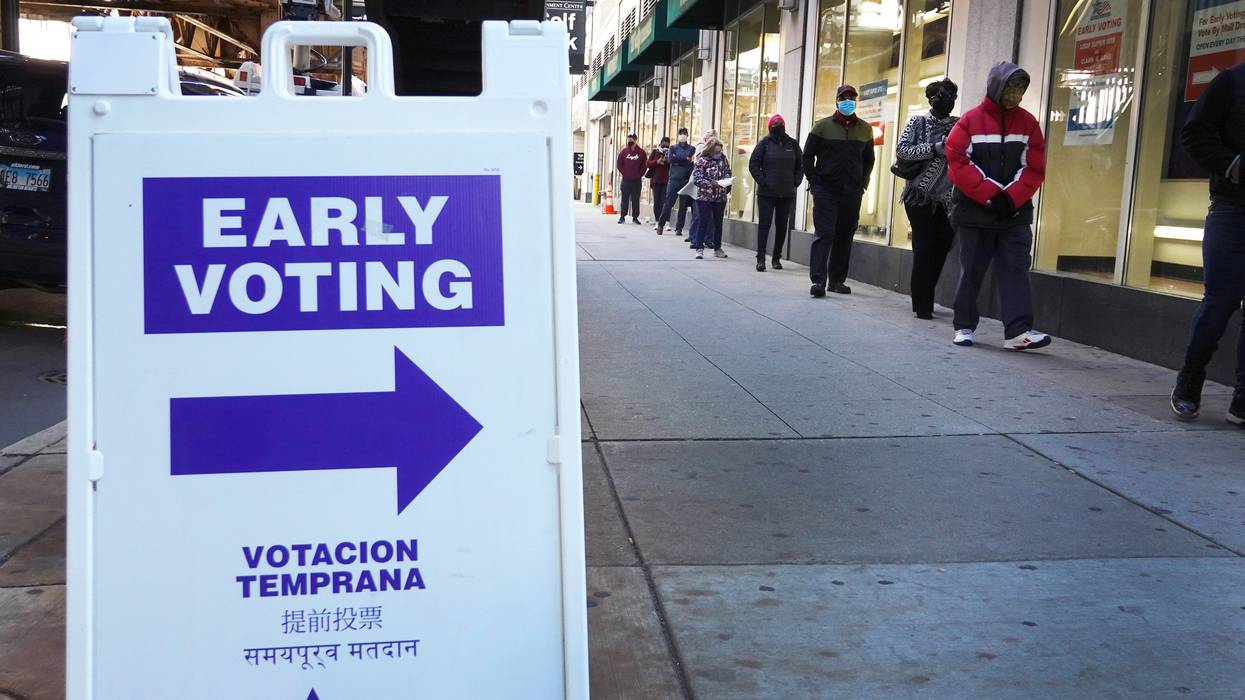
Use this form letter to make sure that the people you vote for have spoken out against the current administration’s rampant corruption and indecency by taking a strong public stand when it counts.
I happen to live in a state where MAGA enthusiasms are relatively subdued, and where Republicans skew toward old-school conservatism rather than Q-Anon crazy. The old Prescott Bush world of Connecticut. The state’s senators and the representative of my congressional district do an “admirable enough” job representing my interests and advocating for good causes, giving me just enough to complain about, but not too much. Given the times we live in, and with the midterms looming large, I rather wish I could cast a ballot in a state that where my vote might make a bigger difference; a state where senators and congressional representatives have gotten away with far too much, often for far too long. Mind you, I don’t want to live in such a place, I just want to vote there.
It is with all this in mind that I have written a letter, a request for information by a concerned and proactive citizen, that might prove useful and revealing to those who live in deeply red or contested states. It seeks information from those currently in office in those states, but it might just as easily be tailored to those seeking office as well. Anyone who chooses to use the letter can adapt it as they please. It’s all about accountability and protecting our rights as citizens. As follows:
Dear Senator X or Congressional Representative Y,
As a citizen of your state or district, I am determined to make sure that the votes I cast next month go to the most qualified and talented candidates on the ballot. For me, getting things right means, above all, making sure that the persons I vote for are committed to protecting the US Constitution and upholding the basic principles of American democracy—as all senators and congressional representatives are sworn to do. I also want to make sure that the persons I vote for have spoken out against the current administration’s rampant corruption and indecency by taking a strong public stand when it counts.
With that in mind, I would love to have you, or a member of your staff, bring me up to speed on your track record of protecting my rights as a citizen and of supporting the cause of restoring decency by answering the following questions, all very straightforward, and not at all time-consuming—and to keep things simple I have narrowed my questions down to just seven items from the last year or so.
That’s it. I have so many additional questions I would like to ask you—regarding how you have responded to the president’s attempt to overthrow the 2020 election, to his leveling of the East Wing of the White House, his embrace of Putin, his threats to Greenland, his self-enrichment in office, his dismissal of the Epstein scandal as a “democrat hoax,” his disgraceful posts, the Immigration and Customs Enforcement killings, the reflecting pool, the budget deficit, his support of genocide in Gaza, and so on, and on, and on… But I will accept your answers to the seven questions posed above as sufficient for the purpose of your earning or failing to earn my vote.
Please understand that a track record of silence or inaction on any one of these items, let alone on several or all, will tell me all that I need to know. Weak objections, objections devoid of action, and objections made for show won’t cut it for me either. To earn my vote, you will need to provide evidence that you opposed these dangerous and demeaning abuses and illegalities aggressively, right when they took place, not just for show, and especially not just now, when elections loom and public support for the president’s agenda is crumbling.
I thank you in advance for your attention to this matter.
Sincerely,
Concerned Citizen [Name]

Many US media outlets think the fight is over in Brazil, but it is far from over here; Lula is nearly tied in the polls and has a lot ahead of him.
Greetings from Rio de Janeiro, where President Luiz Inácio Lula da Silva is mounting a hell of a comeback after achieving the Workers' Party's 40-year goal of shortening the Brazilian workweek from six to five days.
Now, polling shows Lula is back in the fight, even as US media ignores it.
Following the first round of the election, where Lula trailed Flávio Bolsonaro by 1.8%, many wrote off Lula’s campaign. However, in the past week Lula has pulled off an impressive series of street mobilizations that have rocked the Brazilian presidential race, with over 1 million marching on Copacabana Beach on a Monday afternoon when Lula wasn’t even there.
With more than 38 million Brazilians not voting in the first round of the presidential election and Bolsonaro only leading by 2 million votes in the first round, many Bolsonaro allies worry that the scale and magnitude of Lula’s rallies could inspire massive Get Out the Vote efforts throughout the country.
The mobilizations helped create the energy that led the Brazilian Congress to pass a measure shortening the Brazilian workweek from six days to five Wednesday. This may now create enough energy to help Lula win the presidency.
Various polls this week have shown the race nearly tied.
A new PoderData poll shows Lula and Bolsonaro tied, with a little over a week until election day. Yet another poll released by Real Big Time Data shows that Bolsonaro is only leading by 1%. A third poll by CNT and MDA shows Bolsonaro at 50.5% while Lula has 49.5%
With more than 38 million Brazilians not voting in the first round of the presidential election and Bolsonaro only leading by 2 million votes in the first round, many Bolsonaro allies worry that the scale and magnitude of Lula’s rallies could inspire massive Get Out the Vote efforts throughout the country.
In an audio message sent to party insiders, top Bolsonaro ally Congressman Gustavo Geyer said that he was worried about the potential of the street protests to mobilize the vote for Lula.
In the audio message, Geyer complained at length about the 4 million-strong WhatsApp group “Lula’s Army.” Previously, a Bolsonaro-appointed Supreme Court Justice, Kassio Nunes Marques, blocked the WhatsApp group for several hours before being overruled by other members of the Brazilian Supreme Court.
"The campaign of electoral terrorism that Lula and the PT [Workers’ Party] are conducting in a criminal manner—that 'Lula’s Army' channel, created by that 'Rachadones' character—is truly managing to mobilize the left in a way we have never seen before,” said Guyer. “The demons of Workers’ Party have crawled out of the catacombs of hell and are genuinely making an impact on the tracking polls.”
For nearly 40 years, the Workers’ Party has tried and failed to shorten the Brazilian workweek from six days to five. But this week, Lula pulled off a stunning victory when the Brazilian Senate voted to shorten the Brazilian workweek while not decreasing the pay of workers.
Only one senator voted against the measure, and Senator Flavio Bolsonaro skipped the vote rather than vote against it.
Brazilian labor leaders say that the success of the vote proves the momentum their campaign is having in the streets.
“The Bolsonaro family lost,” said Miguel Torres, the president of the Força Sindical labor federation. “It's a victory for workers.”
Fearing attacks from unions, Flavio Bolsonaro went to the Brazilian Supreme Electoral Tribunal, part of the Brazilian Supreme Court, this week to ask it to silence union attacks against him on social media.
Bolsonaro's lawsuit names 56 people, mainly union leaders and student leaders. Flavio wants the court to block these individuals from using their institutional channels to promote Lula.
"This offensive doesn't just target Lula's campaign. It's directed against public participation, against the right of citizens to organize, express support, and criticize a candidacy," said André Matheus, a specialist in freedom of expression and vice-president of the Lawfare Commission of the Institute of Brazilian Lawyers (IAB).
For more, check out ICL Noticias.
Many US media outlets think the fight is over in Brazil, but it is far from over here. Lula is nearly tied in the polls and has a lot ahead of him. We've got nine days left, and Payday intends to cover the tough fight ahead.
We need your help to cover this story that no one else is covering: Donate today.
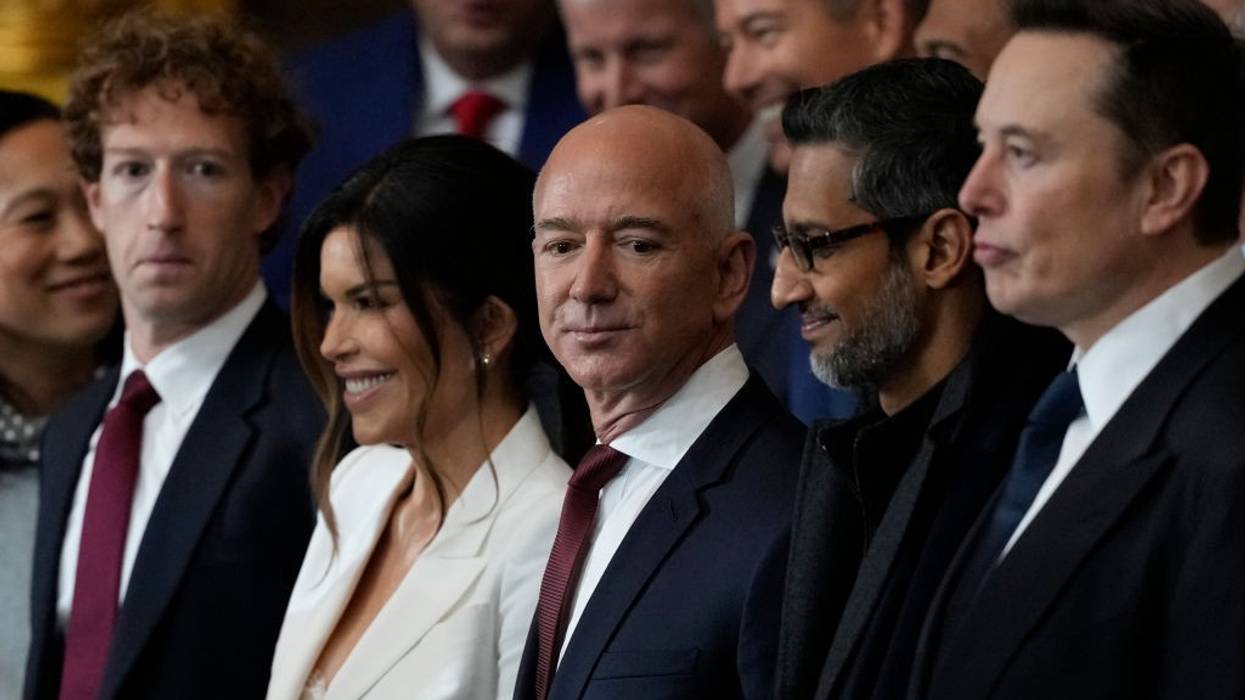
Even if the Democrats secure a victory in the midterm elections, would-be king Donald’s ultra-rich supporters will continue to find ways to protect their privileged status in society.
Two opposing views from America’s Founding Fathers are particularly relevant to the upcoming No Kings rallies:
I once played the historic figure of Gouverneur Morris in Paul Foster’s stage play, Tom Paine, about the life of Thomas Paine who, in 1776, wrote a pamphlet called “Common Sense,” which guided and gave form to the American Revolution. Much has been written about how that work has direct relevance to today’s No Kings rallies, making a compelling case for the preservation of a republic and representative democracy over authoritarianism. However, thinking back to Foster’s play, I’m reminded that it’s important to also remember Morris because, as a bitter critic of Paine, he represents a viewpoint diametrically opposed to Paine’s egalitarianism, as represented in the role of oligarchs in society, or the “gentry,” as he called them. Their loyalty and support underpins the power of a king. And 250 years later, this is just as true for today’s oligarchs and their would-be king, Donald J. Trump.
Simply have a look at any image of the 2025 presidential inauguration. The platform behind Trump is crowded with the richest people in the country, among them, Elon Musk, Mark Zuckerberg, Jeff Bezos, Tim Cook, Sam Altman, Sundar Pichai, and Rupert Murdoch.
Attending the No Kings rallies to express loudly and clearly the views of the 99% is a step in the right direction.
These people are enablers of Donald Trump, but at the same time, as Paine points out, the relationship between oligarchs and an authoritarian ruler is an uneasy one: “The rich are in general slaves to fear, and submit to courtly power with the trembling duplicity of a spaniel.” How else to describe the obsequious fawning over Donald Trump by those same people on the platform?
A wealthy landholder and capitalist, Gouverneur Morris was a member the “1%” of his day. And when resentment against King George III was brewing in the colonies in the 1770s, he and his fellow landowners worried that any change to the status quo could threaten their power and privilege. Suppressing discontent, however, he realized, would not be easy. Referring to popular leaders in the colonies, in a 1774 letter to John Penn, Morris wrote: “These sheep, simple as they are, cannot be gulled as heretofore. In short, there is no ruling them; and now, to leave the metaphor, the heads of the mobility [mob] grow dangerous to the gentry, and how to keep them down is the question.”
Today’s oligarchs have a simple answer: Spend a billion dollars to elect right-wing candidates in this year’s midterm elections. The degree to which that will work any better than Morris’ efforts in the 1770s remains to be seen.
After armed conflict broke out between colonists and British troops in Lexington and Concord in April 1775, most wealthy landholders did not openly side with the king. However, many argued for negotiations to end the hostilities and reconciliation with the Crown. Thomas Paine thought this was madness. Once blood has been shed, he said, reconciliation was impossible: “As well can the lover forgive the ravisher of his mistress, as the continent forgive the murders of Britain." Indeed, in the end, a peaceful settlement between king and colonists was not to be.
Today, with two years of increasing violence, both rhetorical and physical, on the part of the second Trump administration, that same line has undeniably been crossed.
If in the elections on November 3, Democrats win control of Congress, there will no doubt be calls for toning down the rhetoric, more cooperation across the aisle, and a working relationship between Trump and a Democratic Congress. But, as with Paine’s argument, that may very well not be possible.
At the end of the War of Independence, when the new country’s constitution was being considered, America’s wealthy managed to guarantee their continued privileged position in society. Paine had argued: “The true and only true basis of representative government is equality of rights. Every man has a right to one vote… The rich have no more right to exclude the poor from the right of voting, or of electing and being elected, than the poor have to exclude the rich.” However, at the Constitutional Convention of 1787, Morris made the case that only those who owned property should have the right to vote. “Children do not vote,” he said, “Why? Because they want prudence; because they have no will of their own. The ignorant and the dependent can be as little trusted with the public interest.” James Madison, Alexander Hamilton, and John Adams agreed, and although the Constitution left the right to vote in the hands of the individual states, in most cases that meant that only white male voters with property could vote.
Although they will still seek to benefit from their proximity to power in the wake of a Democratic victory in the midterms, like Morris and his fellow gentry, Trump’s ultra-rich supporters will continue to find ways to protect their privileged status in society. With virtually unlimited resources, both financial and technical (including advanced AI models), along with increasing control of the media, the oligarchs will do their best to influence policy, legislation, regulation, and public opinion. This will make them difficult to keep in check. But attending the No Kings rallies to express loudly and clearly the views of the 99% is a step in the right direction.
Before the war, judges in the colonies were appointed and paid by the Crown. This made them natural allies of the king and the wealthy in society. Morris believed that “the principle purpose of the state was protecting private property” and a strong executive and the courts were the instruments to ensure that. In today’s America, this alliance is again in force on the Supreme Court. Trump has nominated 3 of its 9 judges, and 3 others were nominated by Republican presidents, giving the conservatives a supermajority. For this reason, the court has ruled in Trump’s favor in many cases, notably rolling back voting rights and loosening campaign financing laws, both of which entrench the power of the wealthy over the poor. But the court has also afforded Trump king-like immunity from prosecution for all “official acts.”
Thomas Paine had a response to that: “When it is laid down as a maxim, that a King can do no wrong, it places him in a state of similar security with that of idiots and persons insane, and responsibility is out of the question with respect to himself.” I leave it to you to decide if that description applies to our would-be king.
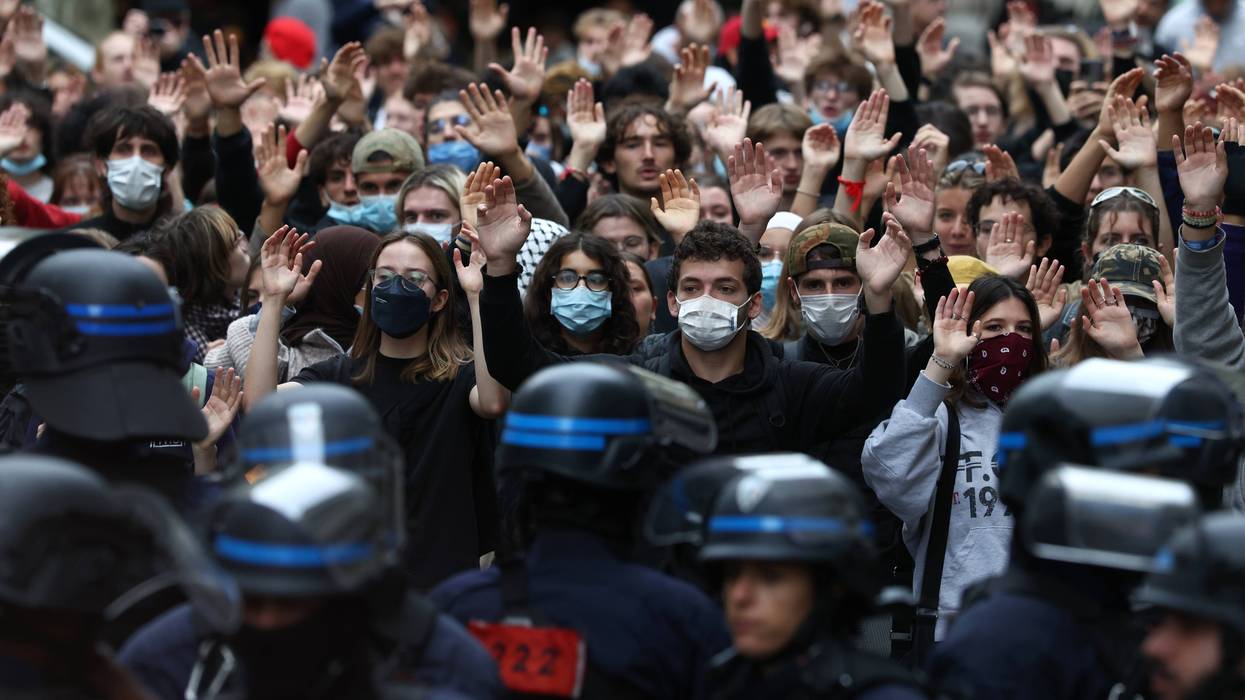
When high schoolers in the US protest, they demonstrate our historic connection to the recent uprising in France.
High school students in France have captured international attention by protesting essential conditions of schooling—too few teachers, too many funding cuts, and a crumbling infrastructure. After nearly 7,000 arrests—more than 85% of whom were under 18—French education minister Edouard Geffray conceded to some of their demands and offered to hire 3,000 more teachers.
The role of high school students is clearly impactful, but we need not look to France to understand the power of student-led activism. The United States, in fact, is rich with examples.
Protestors have made reference to May 1968 protests in France, when 10 million workers, about two-thirds of the workforce, went on the largest general strike in French history. Students in France inspired a transnational movement that galvanized millions around decolonization, national liberation movements, and the rights of students in a new social order.
Those 1968 uprisings were also informed, most likely, by high school student activism in the United States.
As I explore in my book in 2022, “A New Kind of Youth,” high school students were agents of social change in the U.S. for more than 100 years. The NAACP, the oldest longstanding civil rights organization, began mobilizing high school students in 1921, where they challenged many of the same schooling conditions that French high schoolers protest today. More than a century earlier, the first NAACP youth chapters rejected textbooks with racist histories and demanded more equitable investments in segregated Black schools, for instance.
The NAACP was not the only organization to see the potential of youth activism. Radical organizers Esther Cooper Jackson, James E. Jackson, Edward Strong and others who worked in solidarity with interracial and international working-class coalitions formed the Southern Negro Youth Congress in 1937 in order to mobilize youth to actualize full citizenship rights for all, including equitably funded education.
By the Second World War, thousands of high school youth formed local organizations and joined national and international conferences in calling on state and federal agencies to alleviate discriminatory schooling conditions, end police brutality, build international solidarity, and promote pacifism in the face of wars for empires, all the while illuminating the links between racism and capitalism.
In 1946, activist scholar W.E.B. DuBois spoke to hundreds of young people assembled in South Carolina, and delivered a stirring speech he titled “Behold the Land.” As an elder in the Black freedom struggle, Du Bois charged the youth movement he saw unfolding before him. He observed that young people, many of whom were in high school, were “embarked upon a great and holy crusade, the emancipation of mankind, the upbuilding of democracy, the breaking down…of forces of evil.”
Du Bois’s words, not surprisingly, were prophetic.
High school students emerged as overlooked progenitors of key Civil Rights Movement victories. Robert Russo Moton High School student Barbara Johns orchestrated a student walkout in 1951 in Farmville, Virginia. She led her classmates in a schoolwide walkout and marched downtown. Facing expulsion, she reached out to Oliver Hill, a Virginia-based attorney with the NAACP.
The NAACP responded to Johns’ call and organized the small but committed Black community in the heart of Virgina to file a suit that demanded desegregation. The court case became Davis v. Prince Edward County, Virginia (1951)—one of the five court cases behind the Brown v. Board of Education (1954).
Students turned out in larger numbers and provided needed momentum in other parts of the Civil Rights Movement. When Dr. Martin Luther King, Jr. tackled segregation in Birmingham, Alabama, in 1963, he called for massive nonviolent protests. It was youth from elementary to high school, not local adults, who responded to the call.
An estimated 4,000 students participated in the Birmingham Children’s Crusade. They prompted the iconic photographs of the notoriously racist police commissioner Bull Connor who turned police dogs and fire houses on children. When the dust settled, more than 2,000 students were arrested and expelled from school.
Moderate segregationists listened in the wake of the offensive. State and federal governments conceded basic points and desegregated public spaces in Birmingham. During the “Freedom Summer” of 1964, President Lyndon B. Johnson signed the Civil Rights Act into law, promising anti-discriminatory protections for all.
Historic student activism led to historic liberal milestones that protected basic civil rights and made the United States more inclusive.
To be sure, such concessions fell short in enacting a genuine collective and participatory democracy. But youth activists were quick to respond to its shortcomings, making demands for today’s most salient issues. High schoolers went on strike to support common sense gun reform legislation during the March for Our Lives protests in 2018. Youth not yet in college participated in the Fridays for Future climate justice protests and joined Black Lives Matter protests in 2020.
When high schoolers protest, they demonstrate our historic connection to the recent uprising in France. The connection proffers inspiring indications that massive youth organization will lead to structural change. And the material demands made in France—for better schooling conditions and equitable investment in education in the race of austerity cuts—resonate across the United States and other struggling democracies.
It’s time that we listen, again, to what high schoolers have to say.
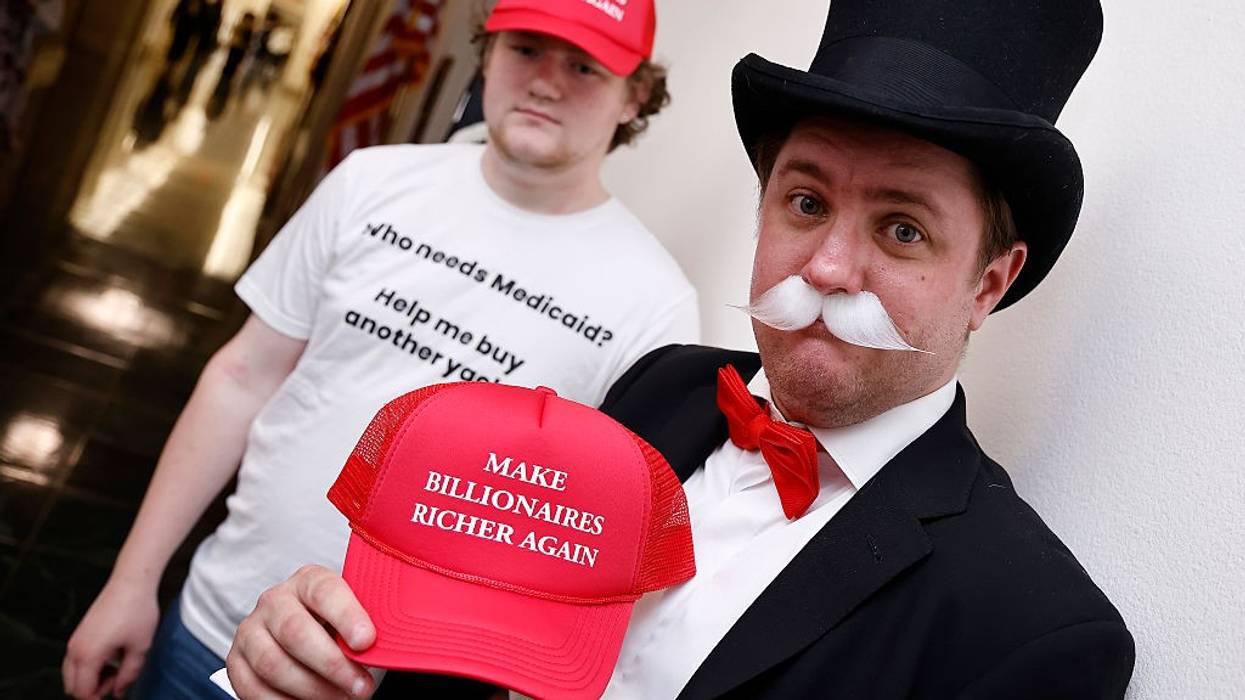
Wealth creates political power; political power produces tax and economic policies favorable to wealth; those policies concentrate still more wealth; and some of that wealth is reinvested in politics to keep the cycle going.
In 1971, corporate lawyer Lewis Powell wrote a confidential memo to the US Chamber of Commerce warning that American business was under attack. Among his complaints were politicians and activists who portrayed tax breaks as benefiting “only the rich” and who dared to set the “rich” against the “poor,” and “business against the people.”
Powell’s solution was not subtle. Corporate America needed political power, and that power “must be assiduously cultivated” and, when necessary, “used aggressively and with determination.” Business should organize, influence the media and universities, build political power, and exploit what Powell called the “vast opportunity” presented by the courts.
Heist: Who Stole the American Dream? traces much of what happened next. Powell joined the Supreme Court and later wrote the majority opinion in First National Bank of Boston v. Bellotti, expanding constitutional protection for corporate spending on ballot measures. Decades later, Citizens United would further expand corporate political spending rights. Meanwhile, Ronald Reagan ushered in enormous tax cuts, deregulation, attacks on organized labor, and an economic philosophy that promised prosperity would trickle down (it never did!).
That brings us to a question I think every politician promising a better future should have to answer: Tell me what you want to do—and tell me who you're willing to tax to pay for it.
More than half a century after the Powell Memo, we’ve got the receipts.
According to a new Americans for Tax Fairness analysis, America’s 977 billionaires now control a record $9.24 trillion. In just one year, their wealth increased by $2.2 trillion, or 32%, while the overall economy grew by about 6%. The richest 16 Americans alone possess nearly $4 trillion, more wealth than all US billionaires combined had less than six years ago.
But those gains look even more extraordinary when we look at what is happening to everyone else. The bottom half of American households collectively owns just over 2% of the nation’s wealth. Nearly 48 million Americans live in households struggling with food insecurity. And the divide between workers and those at the top of corporate America has exploded: CEOs at the country’s 350 largest firms made 325 times as much as the typical worker in 2025, up from 21 times as much in 1965. Since 1978, CEO compensation has risen 1,316%, while typical worker compensation increased just 28%.
Yet as wealth becomes increasingly concentrated at the top, Washington is moving in precisely the opposite direction for millions of working families: massive tax cuts disproportionately benefiting the wealthy alongside deep cuts to Medicaid, food assistance, and other programs people depend on.
That brings us to a question I think every politician promising a better future should have to answer: Tell me what you want to do—and tell me who you're willing to tax to pay for it. Want universal healthcare? Affordable housing? Better schools? Modern infrastructure? A serious response to climate change? A stronger safety net? Great. How are you going to pay for it?
After decades in which an extraordinary share of America's wealth has accumulated at the very top, pretending we can adequately fund those priorities without asking substantially more from those who have accumulated that wealth is not a serious answer.
California's Proposition 40 puts that question directly before voters.
The measure would impose a one-time 5% tax on billionaire wealth, primarily to help protect healthcare from massive federal cuts. In a letter endorsing the measure, six Nobel Prize-winning economists note that California's roughly 250 billionaires now possess $2.3 trillion, up from about $700 billion a decade ago. From 2019 through 2025 alone, those billionaires gained $1.4 trillion in wealth, while the state income taxes they paid during that period amounted to just 1.6% of those gains.
The good news is that none of this is inevitable. These rules were created through political choices, and they can be changed through political choices and organized action.
How have some of California's wealthiest people responded to being asked for a small portion of those enormous gains? By spending an extraordinary amount of money to stop it.
As of October 10, billionaire-backed opposition efforts have reportedly raised approximately $300 million to fight Prop 40, vastly outspending its supporters. The opposition includes Building a Better California, which is also backing Props 41 and 42, competing measures that could potentially block the billionaire tax even if voters approve it.
Think about that for a moment. A small number of extraordinarily wealthy people can spend a quarter-billion dollars influencing an election over whether extraordinarily wealthy people should pay more in taxes.
And California is only one battlefield. American billionaires had already contributed more than $433 million to the 2026 midterms by early this year. Nearly 80% went to Republican candidates and conservative organizations.
This is the feedback loop Powell envisioned, taken to an extreme he might not have imagined: Wealth creates political power; political power produces tax and economic policies favorable to wealth; those policies concentrate still more wealth; and some of that wealth is reinvested in politics to keep the cycle going.
That is why this debate is about more than tax rates. It is about democracy.
It is also why Prop 40 matters beyond California. As the six Nobel economists wrote, passage could help “kickstart a movement” to tax extreme wealth elsewhere. They concluded that this vote could ultimately be remembered as a turning point in the struggle between democracy and oligarchy.
The good news is that none of this is inevitable. These rules were created through political choices, and they can be changed through political choices and organized action.
Vote. Demand that candidates tell us not only what they want to accomplish, but who they are willing to tax to pay for it. Join the No Kings mobilization on October 17. And watch and share Heist: Who Stole the American Dream? to understand how we got here.
Then let's stop the heist.
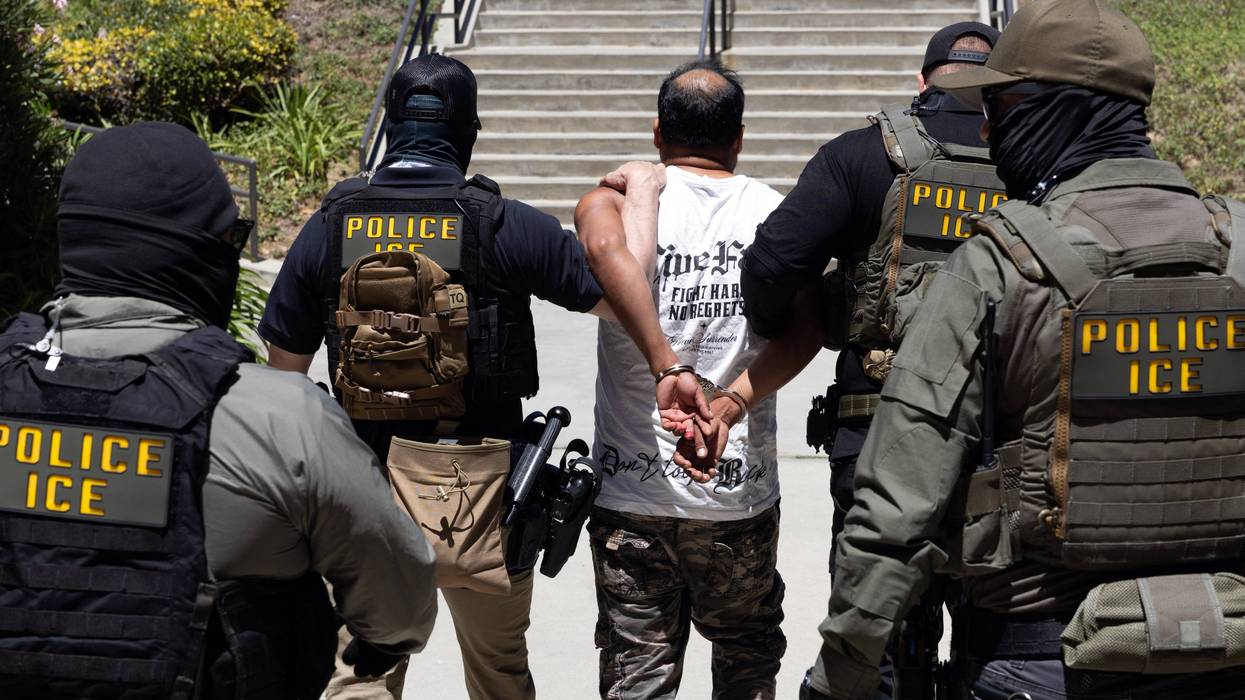
ICE rejected the recommendation to implement automated activation technology for use, making claims that are baseless and somewhat puzzling, especially since some federal law enforcement officers already use automated activation.
The Government Accountability Office, an independent non-partisan watchdog agency, released a report this month finding that the US Customs and Border Protection and US Immigration and Customs Enforcement have unsuccessfully implemented their body camera programs, with ICE failing to meet its own policy initiative of “accurately documenting events” to promote transparency and enhance public trust.
The GAO report noted, “ICE lacks a reasonable assurance of compliance with activation requirements in policy” and for this reason recommended that automated camera activation be used to ensure that body cameras are activated in accordance with its policy. ICE policy stipulates that agents activate their body cameras “as soon as practical at the beginning of an Enforcement Activity and deactivation when the activity is concluded.”
Automated activation technology guarantees that a body camera is automatically switched on the moment an officer draws their firearm or conducted energy device (commonly TASER) to capture as much as an enforcement activity (from start to finish) as possible.
Automated activation for body cameras is already used by federal law enforcement officers, so why not for ICE?
ICE however rejected the recommendation to implement automated activation technology for use with its body cameras citing “significant operational risks, including inadvertent or false activations during routine movement,” while suggesting that accidental activations of its body cameras could record sensitive information, violate privacy, and even contravene the First Amendment.
These claims are baseless and somewhat puzzling especially since some federal law enforcement officers already use automated activation, as do other police agencies across the country.
Consider the VA Police who are federal law enforcement officers of the US Department of Veterans Affairs. According to their policy, body cameras are automatically activated when an officer draws their firearm.
In the case of an accidental activation, VA Police policy classifies such footage under the category of “false activation” and when designated as such, denotes that the accidental footage can be stored for 30 days before deletion whereas the retention of footage categorized as “investigation” may be retained for as long as 25 years.
The VA Police use Axon body cameras, the same devices used by ICE and by many police departments in the US.
Axon body cameras have a “false activation cancellation” option as an additional feature of their body-cameras products, providing law enforcement officers with the ability to “stop accidental or undesired recordings” should they occur. The option is initiated with the simple press of a “cancel button” on the screen of the body camera.
There are obvious worries of the unauthorized deletion of recordings, but such concerns can be addressed with good policy. Consider Section 11 “Accidental Recordings” of the body camera policy of the San Jose Police Department (SJPD) as an example.
Section 11 outlines the process for the handling of body camera recordings that have no evidentiary or investigative value. In such circumstances, the “officer will submit a request for deletion via email” to their direct supervisor. The policy specifies that the request email is to be forwarded through the chain of command. The receiving commanding officer is then responsible for reviewing the accidental footage prior to approving (or denying) the request for deletion. The email chain provides a shared written record to deter any malfeasance and to ensure accountability.
As if all of this wasn’t enough to warrant automated body camera activation for use with its body cameras, ICE has maintained that it will only release footage that “is in the best interests of the agency.” Presumably then any “false activations” of ICE body cameras that capture sensitive information or violate privacy would not be released anyway.
Automated activation for body cameras is already used by federal law enforcement officers, so why not for ICE?
The logical conclusion is that ICE’s failure to adopt automated camera activation into its body camera program is merely a blatant attempt to evade any semblance of transparency and accountability.