SUBSCRIBE TO OUR FREE NEWSLETTER
Daily news & progressive opinion—funded by the people, not the corporations—delivered straight to your inbox.
5
#000000
#FFFFFF
To donate by check, phone, or other method, see our More Ways to Give page.
Daily news & progressive opinion—funded by the people, not the corporations—delivered straight to your inbox.
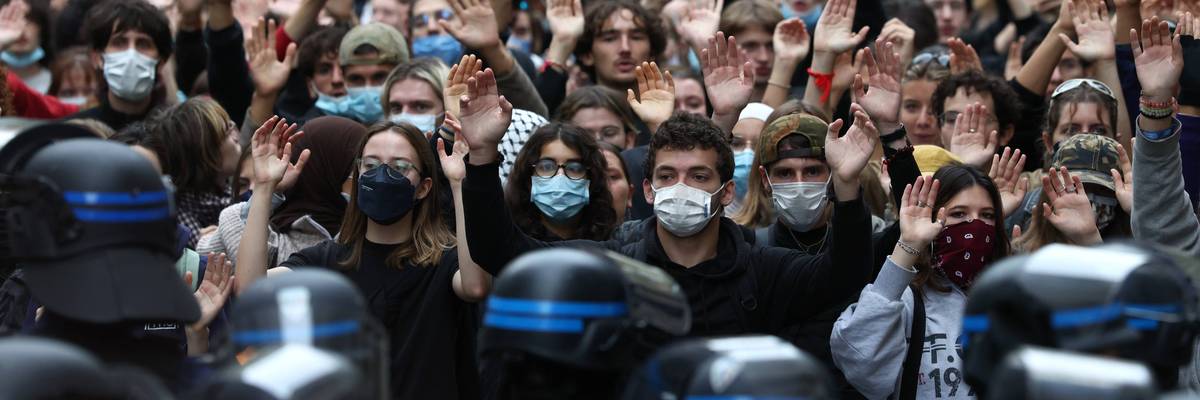
Students raise their hands in front of Police officers as they demonstrate outside Sciences Po during a protest over school overcrowding and decay on October 7, 2026 in Paris, France.
When high schoolers in the US protest, they demonstrate our historic connection to the recent uprising in France.
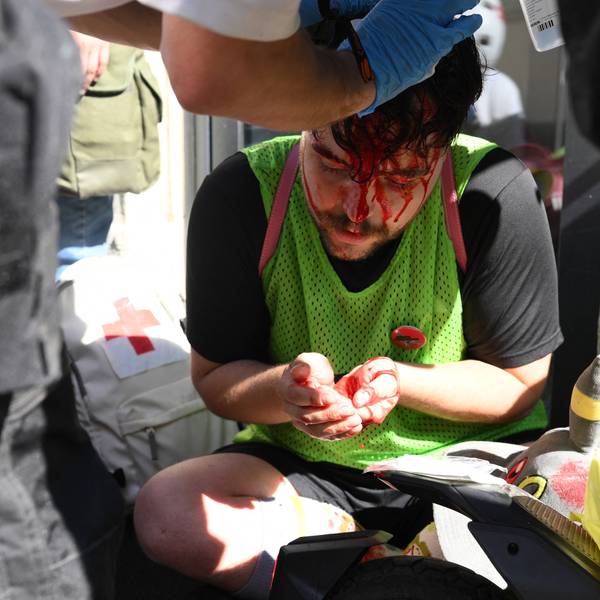
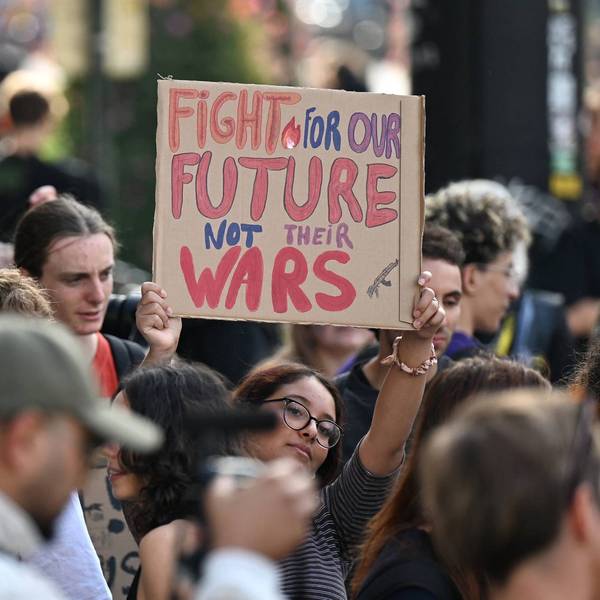
High school students in France have captured international attention by protesting essential conditions of schooling—too few teachers, too many funding cuts, and a crumbling infrastructure. After nearly 7,000 arrests—more than 85% of whom were under 18—French education minister Edouard Geffray conceded to some of their demands and offered to hire 3,000 more teachers.
The role of high school students is clearly impactful, but we need not look to France to understand the power of student-led activism. The United States, in fact, is rich with examples.
Protestors have made reference to May 1968 protests in France, when 10 million workers, about two-thirds of the workforce, went on the largest general strike in French history. Students in France inspired a transnational movement that galvanized millions around decolonization, national liberation movements, and the rights of students in a new social order.
Those 1968 uprisings were also informed, most likely, by high school student activism in the United States.
As I explore in my book in 2022, “A New Kind of Youth,” high school students were agents of social change in the U.S. for more than 100 years. The NAACP, the oldest longstanding civil rights organization, began mobilizing high school students in 1921, where they challenged many of the same schooling conditions that French high schoolers protest today. More than a century earlier, the first NAACP youth chapters rejected textbooks with racist histories and demanded more equitable investments in segregated Black schools, for instance.
The NAACP was not the only organization to see the potential of youth activism. Radical organizers Esther Cooper Jackson, James E. Jackson, Edward Strong and others who worked in solidarity with interracial and international working-class coalitions formed the Southern Negro Youth Congress in 1937 in order to mobilize youth to actualize full citizenship rights for all, including equitably funded education.
By the Second World War, thousands of high school youth formed local organizations and joined national and international conferences in calling on state and federal agencies to alleviate discriminatory schooling conditions, end police brutality, build international solidarity, and promote pacifism in the face of wars for empires, all the while illuminating the links between racism and capitalism.
In 1946, activist scholar W.E.B. DuBois spoke to hundreds of young people assembled in South Carolina, and delivered a stirring speech he titled “Behold the Land.” As an elder in the Black freedom struggle, Du Bois charged the youth movement he saw unfolding before him. He observed that young people, many of whom were in high school, were “embarked upon a great and holy crusade, the emancipation of mankind, the upbuilding of democracy, the breaking down…of forces of evil.”
Du Bois’s words, not surprisingly, were prophetic.
High school students emerged as overlooked progenitors of key Civil Rights Movement victories. Robert Russo Moton High School student Barbara Johns orchestrated a student walkout in 1951 in Farmville, Virginia. She led her classmates in a schoolwide walkout and marched downtown. Facing expulsion, she reached out to Oliver Hill, a Virginia-based attorney with the NAACP.
The NAACP responded to Johns’ call and organized the small but committed Black community in the heart of Virgina to file a suit that demanded desegregation. The court case became Davis v. Prince Edward County, Virginia (1951)—one of the five court cases behind the Brown v. Board of Education (1954).
Students turned out in larger numbers and provided needed momentum in other parts of the Civil Rights Movement. When Dr. Martin Luther King, Jr. tackled segregation in Birmingham, Alabama, in 1963, he called for massive nonviolent protests. It was youth from elementary to high school, not local adults, who responded to the call.
An estimated 4,000 students participated in the Birmingham Children’s Crusade. They prompted the iconic photographs of the notoriously racist police commissioner Bull Connor who turned police dogs and fire houses on children. When the dust settled, more than 2,000 students were arrested and expelled from school.
Moderate segregationists listened in the wake of the offensive. State and federal governments conceded basic points and desegregated public spaces in Birmingham. During the “Freedom Summer” of 1964, President Lyndon B. Johnson signed the Civil Rights Act into law, promising anti-discriminatory protections for all.
Historic student activism led to historic liberal milestones that protected basic civil rights and made the United States more inclusive.
To be sure, such concessions fell short in enacting a genuine collective and participatory democracy. But youth activists were quick to respond to its shortcomings, making demands for today’s most salient issues. High schoolers went on strike to support common sense gun reform legislation during the March for Our Lives protests in 2018. Youth not yet in college participated in the Fridays for Future climate justice protests and joined Black Lives Matter protests in 2020.
When high schoolers protest, they demonstrate our historic connection to the recent uprising in France. The connection proffers inspiring indications that massive youth organization will lead to structural change. And the material demands made in France—for better schooling conditions and equitable investment in education in the race of austerity cuts—resonate across the United States and other struggling democracies.
It’s time that we listen, again, to what high schoolers have to say.
Dear Common Dreams reader, It’s been nearly 30 years since I co-founded Common Dreams with my late wife, Lina Newhouser. We had the radical notion that journalism should serve the public good, not corporate profits. It was clear to us from the outset what it would take to build such a project. No paid advertisements. No corporate sponsors. No millionaire publisher telling us what to think or do. Many people said we wouldn't last a year, but we proved those doubters wrong. Together with a tremendous team of journalists and dedicated staff, we built an independent media outlet free from the constraints of profits and corporate control. Our mission has always been simple: To inform. To inspire. To ignite change for the common good. Building Common Dreams was not easy. Our survival was never guaranteed. When you take on the most powerful forces—Wall Street greed, fossil fuel industry destruction, Big Tech lobbyists, and uber-rich oligarchs who have spent billions upon billions rigging the economy and democracy in their favor—the only bulwark you have is supporters who believe in your work. But here’s the urgent message from me today. It's never been this bad out there. And it's never been this hard to keep us going. At the very moment Common Dreams is most needed, the threats we face are intensifying. We need your support now more than ever. We don't accept corporate advertising and never will. We don't have a paywall because we don't think people should be blocked from critical news based on their ability to pay. Everything we do is funded by the donations of readers like you. When everyone does the little they can afford, we are strong. But if that support retreats or dries up, so do we. Will you donate now to make sure Common Dreams not only survives but thrives? —Craig Brown, Co-founder |
High school students in France have captured international attention by protesting essential conditions of schooling—too few teachers, too many funding cuts, and a crumbling infrastructure. After nearly 7,000 arrests—more than 85% of whom were under 18—French education minister Edouard Geffray conceded to some of their demands and offered to hire 3,000 more teachers.
The role of high school students is clearly impactful, but we need not look to France to understand the power of student-led activism. The United States, in fact, is rich with examples.
Protestors have made reference to May 1968 protests in France, when 10 million workers, about two-thirds of the workforce, went on the largest general strike in French history. Students in France inspired a transnational movement that galvanized millions around decolonization, national liberation movements, and the rights of students in a new social order.
Those 1968 uprisings were also informed, most likely, by high school student activism in the United States.
As I explore in my book in 2022, “A New Kind of Youth,” high school students were agents of social change in the U.S. for more than 100 years. The NAACP, the oldest longstanding civil rights organization, began mobilizing high school students in 1921, where they challenged many of the same schooling conditions that French high schoolers protest today. More than a century earlier, the first NAACP youth chapters rejected textbooks with racist histories and demanded more equitable investments in segregated Black schools, for instance.
The NAACP was not the only organization to see the potential of youth activism. Radical organizers Esther Cooper Jackson, James E. Jackson, Edward Strong and others who worked in solidarity with interracial and international working-class coalitions formed the Southern Negro Youth Congress in 1937 in order to mobilize youth to actualize full citizenship rights for all, including equitably funded education.
By the Second World War, thousands of high school youth formed local organizations and joined national and international conferences in calling on state and federal agencies to alleviate discriminatory schooling conditions, end police brutality, build international solidarity, and promote pacifism in the face of wars for empires, all the while illuminating the links between racism and capitalism.
In 1946, activist scholar W.E.B. DuBois spoke to hundreds of young people assembled in South Carolina, and delivered a stirring speech he titled “Behold the Land.” As an elder in the Black freedom struggle, Du Bois charged the youth movement he saw unfolding before him. He observed that young people, many of whom were in high school, were “embarked upon a great and holy crusade, the emancipation of mankind, the upbuilding of democracy, the breaking down…of forces of evil.”
Du Bois’s words, not surprisingly, were prophetic.
High school students emerged as overlooked progenitors of key Civil Rights Movement victories. Robert Russo Moton High School student Barbara Johns orchestrated a student walkout in 1951 in Farmville, Virginia. She led her classmates in a schoolwide walkout and marched downtown. Facing expulsion, she reached out to Oliver Hill, a Virginia-based attorney with the NAACP.
The NAACP responded to Johns’ call and organized the small but committed Black community in the heart of Virgina to file a suit that demanded desegregation. The court case became Davis v. Prince Edward County, Virginia (1951)—one of the five court cases behind the Brown v. Board of Education (1954).
Students turned out in larger numbers and provided needed momentum in other parts of the Civil Rights Movement. When Dr. Martin Luther King, Jr. tackled segregation in Birmingham, Alabama, in 1963, he called for massive nonviolent protests. It was youth from elementary to high school, not local adults, who responded to the call.
An estimated 4,000 students participated in the Birmingham Children’s Crusade. They prompted the iconic photographs of the notoriously racist police commissioner Bull Connor who turned police dogs and fire houses on children. When the dust settled, more than 2,000 students were arrested and expelled from school.
Moderate segregationists listened in the wake of the offensive. State and federal governments conceded basic points and desegregated public spaces in Birmingham. During the “Freedom Summer” of 1964, President Lyndon B. Johnson signed the Civil Rights Act into law, promising anti-discriminatory protections for all.
Historic student activism led to historic liberal milestones that protected basic civil rights and made the United States more inclusive.
To be sure, such concessions fell short in enacting a genuine collective and participatory democracy. But youth activists were quick to respond to its shortcomings, making demands for today’s most salient issues. High schoolers went on strike to support common sense gun reform legislation during the March for Our Lives protests in 2018. Youth not yet in college participated in the Fridays for Future climate justice protests and joined Black Lives Matter protests in 2020.
When high schoolers protest, they demonstrate our historic connection to the recent uprising in France. The connection proffers inspiring indications that massive youth organization will lead to structural change. And the material demands made in France—for better schooling conditions and equitable investment in education in the race of austerity cuts—resonate across the United States and other struggling democracies.
It’s time that we listen, again, to what high schoolers have to say.
High school students in France have captured international attention by protesting essential conditions of schooling—too few teachers, too many funding cuts, and a crumbling infrastructure. After nearly 7,000 arrests—more than 85% of whom were under 18—French education minister Edouard Geffray conceded to some of their demands and offered to hire 3,000 more teachers.
The role of high school students is clearly impactful, but we need not look to France to understand the power of student-led activism. The United States, in fact, is rich with examples.
Protestors have made reference to May 1968 protests in France, when 10 million workers, about two-thirds of the workforce, went on the largest general strike in French history. Students in France inspired a transnational movement that galvanized millions around decolonization, national liberation movements, and the rights of students in a new social order.
Those 1968 uprisings were also informed, most likely, by high school student activism in the United States.
As I explore in my book in 2022, “A New Kind of Youth,” high school students were agents of social change in the U.S. for more than 100 years. The NAACP, the oldest longstanding civil rights organization, began mobilizing high school students in 1921, where they challenged many of the same schooling conditions that French high schoolers protest today. More than a century earlier, the first NAACP youth chapters rejected textbooks with racist histories and demanded more equitable investments in segregated Black schools, for instance.
The NAACP was not the only organization to see the potential of youth activism. Radical organizers Esther Cooper Jackson, James E. Jackson, Edward Strong and others who worked in solidarity with interracial and international working-class coalitions formed the Southern Negro Youth Congress in 1937 in order to mobilize youth to actualize full citizenship rights for all, including equitably funded education.
By the Second World War, thousands of high school youth formed local organizations and joined national and international conferences in calling on state and federal agencies to alleviate discriminatory schooling conditions, end police brutality, build international solidarity, and promote pacifism in the face of wars for empires, all the while illuminating the links between racism and capitalism.
In 1946, activist scholar W.E.B. DuBois spoke to hundreds of young people assembled in South Carolina, and delivered a stirring speech he titled “Behold the Land.” As an elder in the Black freedom struggle, Du Bois charged the youth movement he saw unfolding before him. He observed that young people, many of whom were in high school, were “embarked upon a great and holy crusade, the emancipation of mankind, the upbuilding of democracy, the breaking down…of forces of evil.”
Du Bois’s words, not surprisingly, were prophetic.
High school students emerged as overlooked progenitors of key Civil Rights Movement victories. Robert Russo Moton High School student Barbara Johns orchestrated a student walkout in 1951 in Farmville, Virginia. She led her classmates in a schoolwide walkout and marched downtown. Facing expulsion, she reached out to Oliver Hill, a Virginia-based attorney with the NAACP.
The NAACP responded to Johns’ call and organized the small but committed Black community in the heart of Virgina to file a suit that demanded desegregation. The court case became Davis v. Prince Edward County, Virginia (1951)—one of the five court cases behind the Brown v. Board of Education (1954).
Students turned out in larger numbers and provided needed momentum in other parts of the Civil Rights Movement. When Dr. Martin Luther King, Jr. tackled segregation in Birmingham, Alabama, in 1963, he called for massive nonviolent protests. It was youth from elementary to high school, not local adults, who responded to the call.
An estimated 4,000 students participated in the Birmingham Children’s Crusade. They prompted the iconic photographs of the notoriously racist police commissioner Bull Connor who turned police dogs and fire houses on children. When the dust settled, more than 2,000 students were arrested and expelled from school.
Moderate segregationists listened in the wake of the offensive. State and federal governments conceded basic points and desegregated public spaces in Birmingham. During the “Freedom Summer” of 1964, President Lyndon B. Johnson signed the Civil Rights Act into law, promising anti-discriminatory protections for all.
Historic student activism led to historic liberal milestones that protected basic civil rights and made the United States more inclusive.
To be sure, such concessions fell short in enacting a genuine collective and participatory democracy. But youth activists were quick to respond to its shortcomings, making demands for today’s most salient issues. High schoolers went on strike to support common sense gun reform legislation during the March for Our Lives protests in 2018. Youth not yet in college participated in the Fridays for Future climate justice protests and joined Black Lives Matter protests in 2020.
When high schoolers protest, they demonstrate our historic connection to the recent uprising in France. The connection proffers inspiring indications that massive youth organization will lead to structural change. And the material demands made in France—for better schooling conditions and equitable investment in education in the race of austerity cuts—resonate across the United States and other struggling democracies.
It’s time that we listen, again, to what high schoolers have to say.