

SUBSCRIBE TO OUR FREE NEWSLETTER
Daily news & progressive opinion—funded by the people, not the corporations—delivered straight to your inbox.
5
#000000
#FFFFFF
To donate by check, phone, or other method, see our More Ways to Give page.
Daily news & progressive opinion—funded by the people, not the corporations—delivered straight to your inbox.

"The buffers that have historically protected water security—snow, ice, groundwater—are eroding in many regions on a timescale of years, not overnight," the agency leader said, stressing "a sense of urgency, not panic."
The world's water cycle "has become more erratic and unpredictable," and recent trends have "serious implications for people and economies in the future," the United Nations' weather agency said Thursday, announcing the release of its annual report on one of the planet's most important natural resources.
Speaking at the launch of the "State of Global Water Resources 2025," World Meteorological Organization (WMO) Secretary-General Celeste Saulo explained that "some parts of this cycle—such as precipitation, river flow, soil moisture—are fast. They respond to weather within hours, days, weeks. Others, like groundwater and glaciers, are slow. They accumulate or decline over seasons to decades or longer."
"Traditionally, these slow reserves have acted as the planet's savings account: a buffer that absorbs bad years so that a single drought or a single dry season does not translate directly into a water crisis," she continued. "One of the central stories of the 2025 report is what is happening to that savings account. And the simple answer is that we are depleting it. We are spending our reserves."
According to the WMO's new report, terrestrial water storage—or the total stored in groundwater, lakes, rivers, soil moisture, vegetation, ice, and snow—has been falling since the mid-2010s. Saulo stressed that "this is not a single bad year, but it is a persistent, decadelong signal."
The agency also found that 2025 was among the driest years for river discharge worldwide in more than three decades, with below-normal flows over a third of the global basin area—and for the seventh straight year in a row, the number of river basins with "normal" conditions was in the minority.
Last year was also the fourth straight to feature widespread glacier loss across all regions. The WMO noted that the losses from 2023-25 could fill about 560 million Olympic-sized swimming pools—or about a third of annual freshwater withdrawals.
The report also "shows that water-related extreme events continue to devastate communities and economies," Saulo noted, highlighting the Early Warnings for All Initiative. "Over the past five years, Asia and Africa have accounted for at least half of all reported hydrological extreme events and more than 80% of associated deaths. And precisely these regions often lack the observations necessary for forecasts and early warnings."
Her comments came a day after the death toll from the flooding disaster in Tibet and Nepal topped 1,400. Experts have emphasized that tragedy's connection to the fossil fuel-driven climate crisis, with University of Pennsylvania professor Michael Mann writing that the "glacial collapse and deluge... was not a freak weather event; it was the structural failure of a mountain itself, nature's latest commentary on the deadly consequences of human-caused planetary warming."
That warming has also intensified the naturally occurring warm phase of a key pattern in the Pacific Ocean called El Niño, according to a study published last month. The WMO chief warned in her Wednesday remarks that "the strengthening El Niño will increase the extremes—drought in some countries and floods in others."
The agency's latest forecast, also released Wednesday, anticipates an "exceptionally high likelihood of nearly 100%" that the warm phase will persist through to February 2027. UN Secretary-General António Guterres said that "El Niño is being supersized before our eyes. The science leaves no room for doubt: The planet is in uncharted waters, and those waters are heating up."
Only when the last glacier has melted and the last reservoir has dried up will you realize that you can't drink gasoline…#climatecrisis#climatecollapse
[image or embed]
— Jürgen Döschner (@jdoeschner.bsky.social) September 17, 2026 at 4:01 PM
While the related releases generated calls for action, Saulo said that "it is not all bad news. Some regions showed improvement in 2025," pointing out that "parts of South America saw a partial recovery in water storage during 2025 after a severe multiyear deficit," while "Central and Southern Africa maintained much-above-normal water levels across several major lakes."
Still, action is needed. As Saulo put it: "The State of Global Water Resources report calls for a sense of urgency, not panic. The buffers that have historically protected water security—snow, ice, groundwater—are eroding in many regions on a timescale of years, not overnight. We have a genuine window for action: expanding early warning coverage; investing in the hydrological monitoring infrastructure; and opting for water management policies to address both water supply and use/overuse."
"My concluding message is that this report exists because members share their data and their science," she said. "This level of understanding—global, standardized, comparable year to year—did not exist a decade ago. It is the product of sustained international cooperation under WMO's mandate. And my last call is for all of you to continue to invest in it."

"The science leaves no room for doubt: the planet is in uncharted waters, and those waters are heating up."
Officials at the United Nations are warning that governments around the world must urgently prepare for the impacts of an El Niño climate pattern that is being "supersized before our eyes."
The UN's World Meteorological Organization (WMO) on Thursday provided an update on El Niño, projecting with near certainty that it would persist at least through Februrary 2027.
El Niño is a phenomenon that produces above-average temperatures in the Pacific Ocean, which then disrupt weather patterns elsewhere in the world. In its update, WMO said that this year's El Niño projects to be historically intense.
"Forecasts indicate further strengthening of El Niño in the coming months, with the event forecast to reach very strong intensity before peaking towards the end of the year," WMO said. "A very strong El Niño increases the likelihood of significant shifts in temperature and rainfall patterns in many parts of the world."
The organization emphasized, however, that El Niño's impacts are not predictable and vary widely by region.
WMO Secretary-General Celeste Saulo said the latest projections show that El Niño "has the potential to deliver a massive blow to communities and economies across the world" in the form of droughts, floods, and other climate-related disasters made more intense by the continued extraction and burning of fossil fuels.
"This exceptional El Niño demands exceptional preparation and response," Saulo said. "Never before in the 50-year history of the World Meteorological Organization have we launched such a major mobilization with National Meteorological and Hydrological Services who are on the frontline of delivering the forecasts and services to save lives and livelihoods."
While speaking with reporters in Geneva, Switzerland on Thursday, Saulo noted that the current El Niño "may be stronger than anything since our monitoring began," making it "literally off the charts we have used for the past four decades."
UN Secretary-General António Guterres warned that "El Niño is being supersized before our eyes," and said the ramifications could be severe.
"The science leaves no room for doubt: the planet is in uncharted waters, and those waters are heating up," said Guterres. "Sea surface temperatures are rising, temperatures keep climbing, and the world is in the danger zone of extreme weather."
Daniel Swain, climate scientist at the University of California Agriculture and Natural Resources, echoed UN officials' warning about El Niño in an interview with Wired published Thursday.
“This is probably one of the larger, if not the largest, climate events... that anybody alive is potentially ever experiencing,” said Swain. "That's a very big deal. And I think there’s certainly going to be dramatic outcomes from this.”
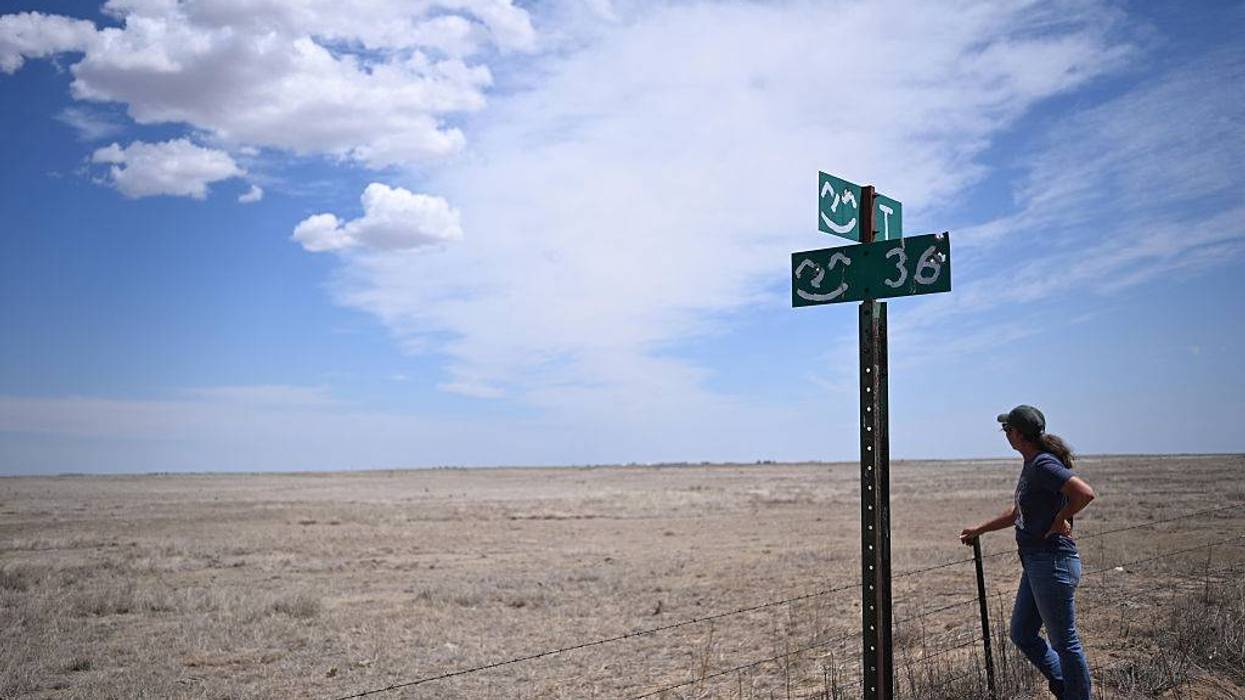
"If and when a hurricane unleashes widespread death and destruction... Democrats should make Trump and his Republican accomplices pay a steep political price for deliberately putting people in harm's way."
The World Meteorological Organization on Tuesday issued a warning about an El Niño event forming that is expected to "increase the risk of extreme weather over the coming months."
El Niño refers to a climate pattern that features warmer than average temperatures in the Pacific Ocean. WMO said its latest forecast estimates an 80% likelihood of an event occurring this summer, with most of its models suggesting “it will be at least moderate—and possibly strong.”
WMO Secretary-General Celeste Saulo warned that a strong El Niño this summer "will exacerbate drought and heavy rainfall and increase the risk of heatwaves both on land and in the ocean," and said WMO scientists will be "carefully monitoring conditions in the coming months to inform decision-making by governments, humanitarian agencies, and climate-sensitive sectors."
United Nations Secretary-General António Guterres said the latest WMO projections must spur global action to address the climate crisis.
"The world must treat it as the urgent climate warning it is," Guterres said. "El Niño conditions will pour fuel on the fire of a warming world. Impacts will hit even harder, travel even farther, and cross borders with devastating speed. The only effective response is climate action equal to the crisis—ending the addiction to fossil fuels, accelerating the shift to renewables, protecting the most vulnerable, and delivering early warning systems for all."
An El Niño event could pose particular problems in the United States, as critics are warning that President Donald Trump's attacks on climate research and federal disaster preparedness are leaving Americans particularly vulnerable to extreme weather.
Revolving Door Project senior researcher Kenny Stancil on Tuesday published an analysis breaking down the ways the Trump administration "has relentlessly undermined disaster readiness and response capacity" by taking a hatchet to key institutions such as the Federal Emergency Management Agency (FEMA), the National Oceanic and Atmospheric Administration (NOAA), and the National Weather Service (NWS).
Among other things, Stancil documented how the Trump administration has ousted "thousands of NOAA workers, including hundreds of NWS employees"; gutted FEMA's staff by "pushing out thousands of rank-and-file workers and dozens of veteran leaders"; and is "thwarting investments in disaster risk reduction, from slashing emissions to pursuing just and sustainable urban development."
Stancil added that while Homeland Security Secretary Markwayne Mullin has reversed some of the cuts made by former DHS chief Kristi Noem, these "last-minute reversals can't undo" the "severe damage" caused by the initial actions.
"If and when a hurricane unleashes widespread death and destruction (if not in 2026, it could be in 2027 or 2028)," Stancil wrote, "Democrats should make Trump and his Republican accomplices pay a steep political price for deliberately putting people in harm's way."
Stancil's concerns about US preparedness for extreme weather events were echoed by Shana Udvardy, senior climate resilience policy analyst at the Union of Concerned Scientists, who on Monday published an analysis outlining the current state of FEMA ahead of hurricane season.
Although Udvardy offered some qualified praise for Mullin for undoing some of Noem's worst policy decisions, she said FEMA still faces potentially catastrophic vacancies at key positions.
"Roughly half of FEMA’s leadership, 18 out of 38 of top-level positions, have yet to be filled as of today, at the start of the Atlantic hurricane season," she explained, adding that "it can take six months to a year to recruit and onboard a senior executive and a year to hire full-time staff."
The administration this week also announced plans to dismantle the Ocean Observatories Initiative, a deep-sea monitoring system that can provide crucial storm forecasting data while also tracking the health of coastal habitats.
Chris Robbins, associate director of scientific initiatives at Ocean Conservatory, said on Tuesday that the administration's effort to dismantle the system heading into a projected El Niño event "doesn't make any sense."
"Walking away from a $368 million investment in a state-of-the-art system, a feat of engineering already paid for by the American people, is absolutely myopic," Robbins said. "This system is a vital scientific asset that quietly protects American lives, communities, and the economy through unfettered access to world-class scientific data. Its loss would create an irreparable blind spot for our country in predicting earthquakes, fishery health, storm forecasting, coastal flooding, and more."

The lead author of the new report noted that predicted weather patterns could mean the record is shattered as soon as next year.
Global temperatures are likely to hit their highest average level ever within the next four years, according to a report published Thursday by the United Nations' World Meteorological Organization.
Overall, WMO's report projects an 86% chance that the world will experience its warmest year ever between 2026 and 2030, with a 91% chance that "the global mean near-surface temperature will temporarily exceed 1.5°C above the 1850-1900 average levels for at least one year between 2026 and 2030."
Exceeding temperatures from the pre-industrial average by 1.5°C "risks unleashing ever more severe climate change impacts and extreme weather, and decreases adaptation option," the report notes.
Leon Hermanson, lead author of the report, said there's a good chance that 2027 will break all-time temperature records set in 2024 given that meteorologists are predicting an El Niño weather pattern to develop this summer and continue through the end of this year.
One particularly troubling finding in the report is that "Arctic temperatures over the next five extended northern hemisphere winters (November-March) are predicted to be 2.8°C above average temperatures for 1991-2020, an anomaly more than three and half times that of global mean temperature anomaly over the same period."
These higher Arctic temperatures mean likely further reductions in ice in the Barents Sea, Bering Sea, and Sea of Okhotsk, the report warns.
Simon Stiell, executive secretary of the United Nations Framework Convention on Climate Change, said in a Thursday interview with The Guardian that Europe's current heatwave is a preview of what's to come the longer the global climate crisis goes unaddressed.
"Protecting human lives, businesses and economies from extreme heat and the many other soaring costs of climate change is core business for every nation," said Stiell, "and it starts with kicking the fossil fuel addiction much faster."

“Humanity has just endured the 11 hottest years on record," said the secretary-general of the United Nations. "When history repeats itself 11 times, it is no longer a coincidence. It is a call to act."
The annual State of the Global Climate report by the United Nations' top meteorological agency was released Monday, marking the first time the authors of the report have included the Earth's energy imbalance as a key indicator of the climate emergency.
The World Meteorological Organization's (WMO) inclusion of the imbalance only provides more evidence of what scientists have been warning for decades: The continued extraction of fossil fuels is causing heat-trapping gases like carbon dioxide and methane to build up in the atmosphere and is causing planetary heating, which is leading to extreme weather including wildfires, drought, and severe hurricanes and cyclones.
The State of the Global Climate report explains that in a stable climate, incoming solar energy is roughly equal to the amount of energy leaving the Earth.
But with greenhouse gases at their highest level in the atmosphere in at least 800,000 years, that equilibrium has been thrown off, and the energy imbalance—which has increased steadily over the past two decades—is at its highest since the observational record began in 1960.
Instead of leaving the Earth system, energy is increasingly staying in the planet's surface and deep within the oceans.
Ashkay Deoras, a research scientist at the National Center for Atmospheric Science at the University of Reading in the UK, who was not associated with the report, compared the trapped energy to a hot room.
“If you open the window, naturally, you will allow the hot air to escape,” Deoras told The New York Times. “But now what is happening is that, because of all these greenhouse gases, they are just trapping more and more heat. The planet is just not getting a chance to cool down.”
The report emphasized that the higher temperatures humans feel at the Earth's surface—which have been the hottest in history over the past 11 years—represent just 1% of the excess energy that isn't leaving the planet system.
Five percent of the excess heat is stored in continental land masses, while more than 91% is stored in the ocean.
As fossil fuel emissions have increased and built up, the ocean has been absorbing about 18 times the energy used by humans each year for the past two decades, according to the report.
“Scientific advances have improved our understanding of the Earth’s energy imbalance and of the reality facing our planet and our climate right now,” said WMO Secretary-General Celeste Saulo. “Human activities are increasingly disrupting the natural equilibrium and we will live with these consequences for hundreds and thousands of years.”
UN Secretary-General António Guterres emphasized that in addition to the energy imbalance, "every key climate indicator is flashing red" in the new report.
Last year was the second- or third-hottest year on record, depending on the data set, owing to La Niña conditions that temporarily cooled the planet. Earth was about 1.43°C warmer than the pre-industrial average, and 2024—when hotter El Niño conditions were in effect—remains the hottest year with global temperatures averaging 1.55°C above pre-industrial levels.
About 3% of excess energy warms and melts ice, and ice sheets on Antarctica and Greenland lost significant mass in 2025, while the average Arctic sea-ice extent last year was the lowest or second-lowest on record.
The loss of Arctic and Antarctic ice is driving the long-term rise in the global mean sea level, with was around 11 centimeters higher at the end of 2025 than it was in January 1993, when satellite records began.
“The State of the Global Climate is in a state of emergency. Planet Earth is being pushed beyond its limits," said Guterres. “Humanity has just endured the 11 hottest years on record. When history repeats itself 11 times, it is no longer a coincidence. It is a call to act."
The secretary-general added in a video posted on social media that the world must "accelerate a just transition" to renewable energy to protect "climate security, energy security, and national security."
In this age of war our addiction to fossil fuels is destabilizing the climate, global economy & global security.
Now more than ever, we must accelerate a just transition to renewable energy.
Renewables deliver climate security, energy security & national security. pic.twitter.com/TrphJ2Zwa2
— António Guterres (@antonioguterres) March 23, 2026
Saulo noted that the impact of catastrophic planetary heating grew increasingly evident in 2025, with "heatwaves, wildfires, drought, tropical cyclones, storms, and flooding" causing thousands of deaths and billions of dollars in economic losses.
The World Weather Attribution found that a heatwave across the western US last week would have been "virtually impossible" without the climate emergency. Climate researchers also concluded last summer that devastating floods in central Texas were caused by "very exceptional meteorological conditions," and the climate crisis "supercharged" the conditions that led to the extreme rainfall and flooding that killed 1,750 people in South Asia late last year.
Meanwhile, US President Donald Trump—whose country is the largest historical emitter of greenhouse gases—has taken steps to weaken the world's ability to respond to the climate emergency, withdrawing from dozens of climate- and energy-related international treaties and slashing climate research and emergency response spending.
Trump has also pushed for more fossil fuel emissions—investing in the expensive, pollution-causing coal industry; demanding that the Pentagon obtain energy from coal plants; and mandating oil and gas lease sales.
"The way ahead," said Guterrres, "must be grounded in science, common sense, and the courage to take urgent climate action."
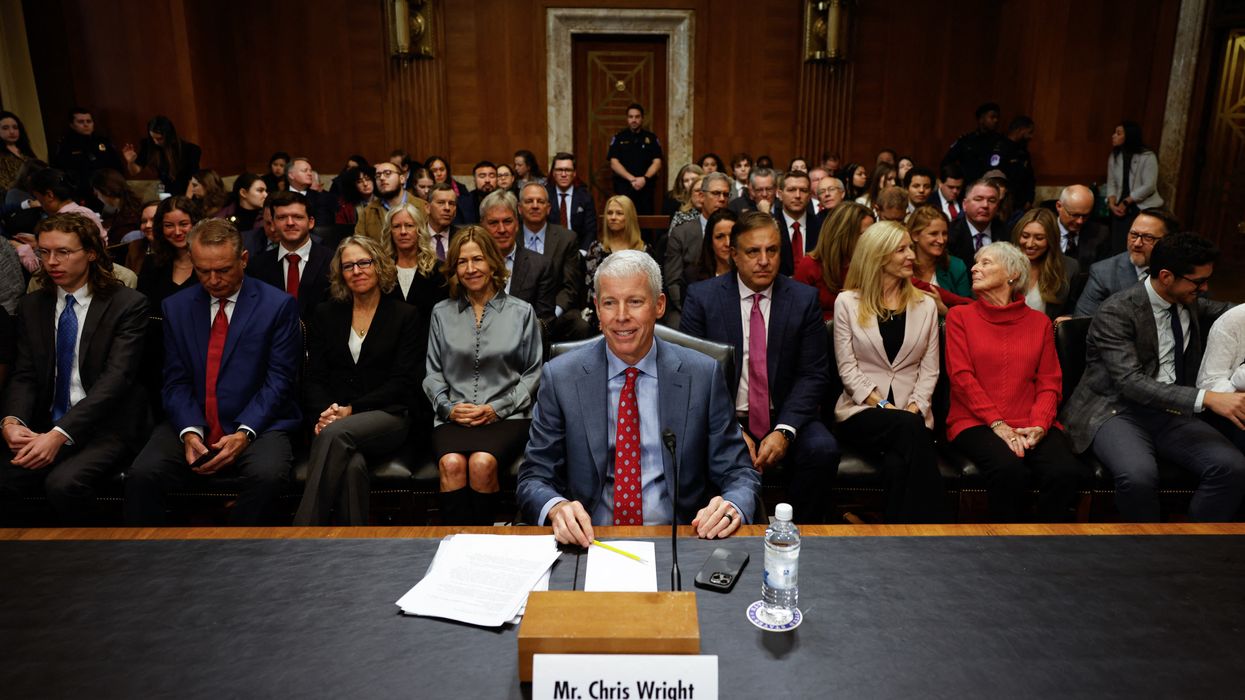
This is not simply a policy mistake. It’s a calculated abdication of leadership for a fleeting political win.
On Friday, the U.S. Department of Energy announced the cancellation of 24 clean energy and industrial decarbonization projects. The agency claimed this move would save taxpayers $3.6 billion. But the real cost—economic, environmental, and geopolitical—will be far greater.
The decision came just days after the World Meteorological Organization warned that the planet has a chance of breaching 2°C of warming within five years. Around the same time, Norway’s $1.8 trillion sovereign wealth fund—the largest in the world—projected that climate risk could erase 20% of its U.S. equity holdings. While other nations mobilize to confront escalating threats, the United States—the largest economy on Earth—is retreating. This is not simply a policy mistake. It’s a calculated abdication of leadership for a fleeting political win.
We’ve seen this pattern before. From “beautiful, clean coal” to climate denial in congressional hearings to billions in fossil fuel donations, the Republican Party has long treated climate action as a culture war wedge. Clean energy is no longer debated on the merits—it’s dismissed as “woke,” undermined not out of ideological consistency, but political convenience. Market-based climate solutions could align with core conservative values: competition, energy independence, national security. Instead, Congress continues to treat policy as performance—enabling headlines over outcomes, symbolism over strategy.
The consequences are immediate, and they are devastating.
We didn’t just cancel 24 projects. We canceled momentum. We canceled trust. We canceled a framework that had finally begun to reconnect federal capacity with local ambition.
Tens of thousands of potential jobs vanished overnight. The canceled projects spanned over a dozen states—from Alabama and Texas to California and Massachusetts. Cities like Birmingham, Baytown, Toledo, Zanesville, Modesto, and Holyoke had been preparing for long-overdue industrial upgrades: electrified glass furnaces, carbon-captured cement kilns, regional hydrogen hubs. These weren’t theoretical moonshots. They were shovel-ready projects with partners in place. Economic development agencies were mobilized. Union halls were staffing up. Community colleges had launched clean workforce programs. Then came the call: It’s over.
DOE’s rationale? These projects didn’t offer sufficient return on investment. But no cost-benefit analysis has been released. What we do know: The canceled projects would have reduced over 9 million metric tons of carbon dioxide annually—the equivalent of taking 2 million cars off the road. These weren’t speculative technologies. They targeted sectors like steel, cement, chemicals, and paper—industries where emissions can be reduced, but not without public investment.
This wasn’t just climate policy. These were air quality improvements in neighborhoods with decades of industrial pollution. These were middle-class jobs, modernized infrastructure, and new revenue streams for local governments. They signaled that decarbonization could drive renewal—not austerity. That message mattered, especially in regions where federal support has long felt abstract or nonexistent.
So why cancel them?
Because it made for good optics. Many of the projects were located in red or swing districts. Cutting them allowed Republicans to posture against “wasteful” spending and energize their base. It transformed serious infrastructure investments into political theater. And Congress went along—not out of principle, but out of paralysis.
DOE now says it will redirect resources to long-horizon technologies: fusion, quantum computing, and artificial intelligence. These are important pursuits. But they won’t cut emissions at a cement plant in 2028. They won’t lower energy costs at a food processing facility next year. And they won’t create jobs in Modesto or Toledo.
There’s nothing wrong with moonshots—unless they come at the expense of shovel-ready progress.
Because these projects weren’t paper proposals. Local governments had hired staff. Contractors were preparing bids. Manufacturers were retooling supply chains. Students had enrolled in new clean industry training programs. With no warning, that entire ecosystem has been upended.
That decision undermines more than climate credibility. It erodes trust in governance itself. How can communities build long-term economic development strategies if federal support can be revoked without explanation? Why would private investors stay at the table when the public sector walks away midstream?
Meanwhile, other nations are surging forward. The European Union is investing in clean steel and cement. Canada is building out low-carbon supply chains. Norway is doubling down on green industry. And China is scaling solar, electric vehicles, and hydrogen at unprecedented speed—cementing not only energy dominance but geopolitical power.
For an administration that brands itself “America First,” this is anything but. It is a strategic withdrawal—from economic competitiveness, global leadership, and the industrial future itself. We are ceding the next era of manufacturing—not just to allies, but to adversaries.
And none of this should be surprising. The Trump administration has been explicit about its intent: Strip climate out of agency missions, dismantle regulatory capacity, and discredit climate science. But the deeper failure lies in what Congress has allowed. The legislative branch is no longer functioning as a check on executive excess. It has become a bystander to the dismantling of public purpose.
We didn’t just cancel 24 projects. We canceled momentum. We canceled trust. We canceled a framework that had finally begun to reconnect federal capacity with local ambition. We walked away from thousands of jobs, millions of tons in emissions cuts, billions in co-investment—and a fragile sense of possibility.
And we did it for a press cycle. To placate donors. Fully aware of the consequences.
The cost won’t just be measured in carbon. It will be measured in time lost, in broken partnerships, in shuttered training programs and shelved contracts. And in the widening distance between the future we could build—and the one we keep choosing instead.
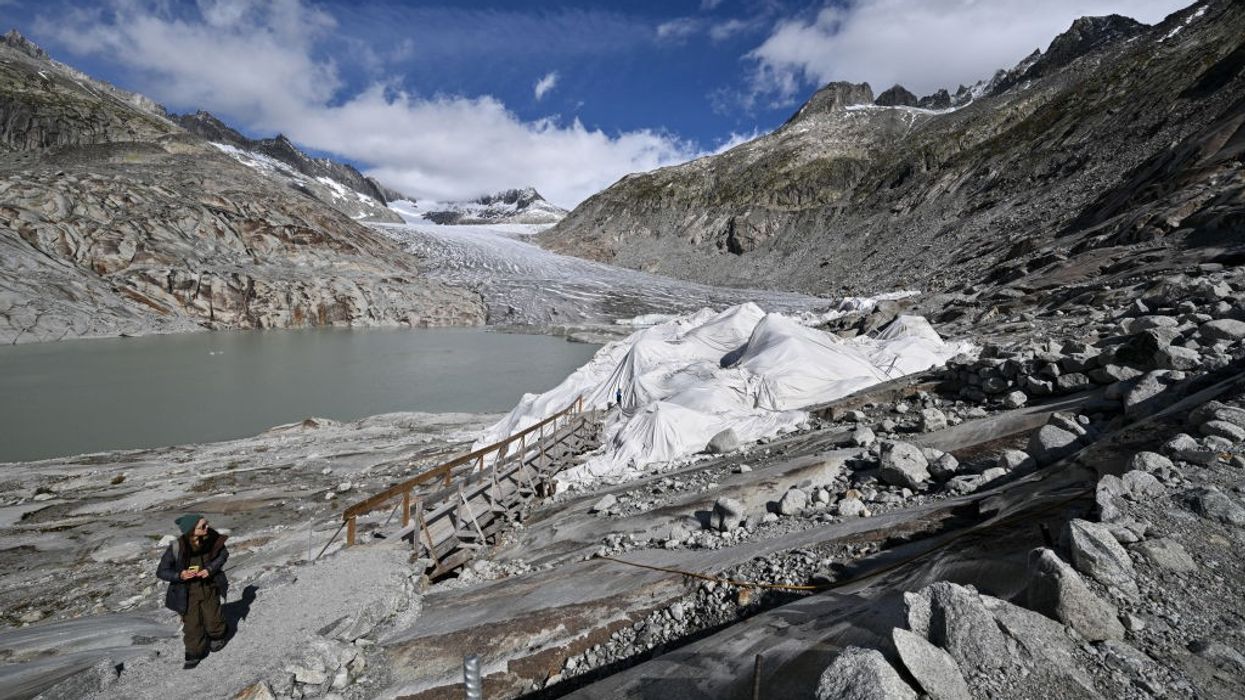
"Preservation of glaciers is not just an environmental, economic, and societal necessity," said one expert. "It's a matter of survival."
Scientists on Friday spent the United Nations' World Water Day and first-ever World Day for Glaciers warning about how fossil fuel-driven global warming melts ice across the planet, endangering freshwater resources and causing seas to rise, with implications for ecosystems, economies, and billions of people.
In a Friday statement, World Meteorological Organization Secretary-General Celeste Saulo pointed to a publication that the U.N. agency released earlier this week: "WMO's State of the Global Climate 2024 report confirmed that from 2022-24, we saw the largest three-year loss of glaciers on record."
"Seven of the 10 most negative mass balance years have occurred since 2016," Saulo continued. "Preservation of glaciers is not just an environmental, economic, and societal necessity. It's a matter of survival."
The WMO report was followed by the Friday launch of a 174-page document from the United Nations Educational, Scientific, and Cultural Organization (UNESCO) that stresses how "billions of people depend on the fresh water that flows from increasingly fragile mountain environments."
"As the water towers of the world, mountains are an essential source of fresh water for (irrigated) agriculture, power generation, industry, and large and growing populations—in the mountains and also downstream," the report details. "Generally, due to higher precipitation and lower evaporation, mountains supply more surface runoff per unit area than lowlands, providing 55-60% of global annual freshwater flows."
The document, The United Nations World Water Development Report 2025—Mountains and glaciers: Water towers, notes that "major cities that have been critically dependent on mountain waters include Addis Ababa, Barcelona, Bogotá, Jakarta, Kathmandu, La Paz, Lima, Los Angeles, Melbourne, Mexico City, New Delhi, New York, Quito, Rio de Janeiro, and Tokyo."
"Globally, up to two-thirds of irrigated agriculture may depend on mountain waters," the report states, "while the number of people in lowlands that strongly depend on water from mountains increased worldwide from around 0.6 billion in the 1960s to some 1.8 billion in the 2000s. An additional 1 billion people in the lowlands benefit from supportive mountain runoff contributions."
"Most of the world's glaciers, including those in mountains, are melting at an accelerated rate worldwide," the publication adds. "Combined with accelerating permafrost thaw, declining snow cover, and more erratic snowfall patterns... this will have significant and irreversible impacts on local, regional, and global hydrology, including water availability."
“The 21st of March 2025 is being celebrated as the first-ever World Day for Glaciers. ‘Celebrate’? Yes, we should celebrate glaciers and their crucial role in sustaining life on Earth for future generations,” says @iceblogger.bsky.social. Great stats here on the importance of glaciers 🧊
[image or embed]
— Covering Climate Now (@coveringclimatenow.org) March 21, 2025 at 8:31 AM
The UNESCO publication follows the international Glacier Mass Balance Intercomparison Exercise (GlaMBIE) team's study, published in the journal Nature last month, showing that glaciers have lost an average of 273 billion metric tons of ice annually since 2000.
That figure "amounts to what the entire global population consumes in 30 years, assuming three liters per person and day," Michael Zemp, a professor at Switzerland's University of Zurich and director of the World Glacier Monitoring Service who co-led the GlaMBIE study, explained at the time.
Zemp pointed to that finding and others on Friday, noting that from 2000-23, glacier melt caused global seas to rise 18 mm or about 0.7 inches. He said, "This might not sound much, but it has a big impact: Every millimeter [of] sea-level rise exposes an additional 200,000 to 300,000 people to annual flooding."
In a U.N. video, experts also highlighted parts of the globe that are particularly impacted by melting glaciers. Zemp explained that in "the European Alps, we are one of the regions that is most affected by climate change. Warming is about double the global average, and indeed, glaciers in the Alps are one of the most suffering around the world."
"We have lost, since 2000, almost 40% of the remaining ice. And that means under current melt rates, glaciers will not survive this century in the Alps," he warned.
Today is the first-ever #WorldGlaciersDay!Glaciers provide water for millions of people, regulate sea levels, and support biodiversity.Yet glaciers are disappearing at an alarming rate.#ClimateAction is key to protecting them & supporting those who rely on glaciers.www.un.org/en/observanc...
[image or embed]
— IngerAndersen.bsky.social (@ingerandersen.bsky.social) March 21, 2025 at 9:57 AM
Scientists are also concerned about the Hindu Kush in the Himalayas, which are often called the "third pole because they hold a lot of water resources," WMO's Sulagna Mishra said in the video. "Here, more than 120 million farmers in the downstream areas are impacted directly because of the melting of the glaciers."
"So, when there are a lot of floods, for example, happening because of melting of glaciers, the livelihoods are changed, people tend to migrate from one place to another," she continued. "So when you ask me how many people are actually impacted, it's really everyone."
As Carbon Brief reported Friday:
Dr. Aditi Mukherji—the director of the climate change, adaptation, and mitigation impact action platform of the CGIAR—tells Carbon Brief that the report is an important call for more "adaptation efforts and funding."
She says that mountain-dwelling communities are "already quite vulnerable due to their remote location and other developmental deficits" and are "increasingly losing their way of life due to no fault of theirs."
However, in some parts of the world, especially the United States, such calls face the pro-fossil fuel agenda of polluting companies and right-wing policymakers that are working to quash the movement for a just transition to clean energy by any means necessary.
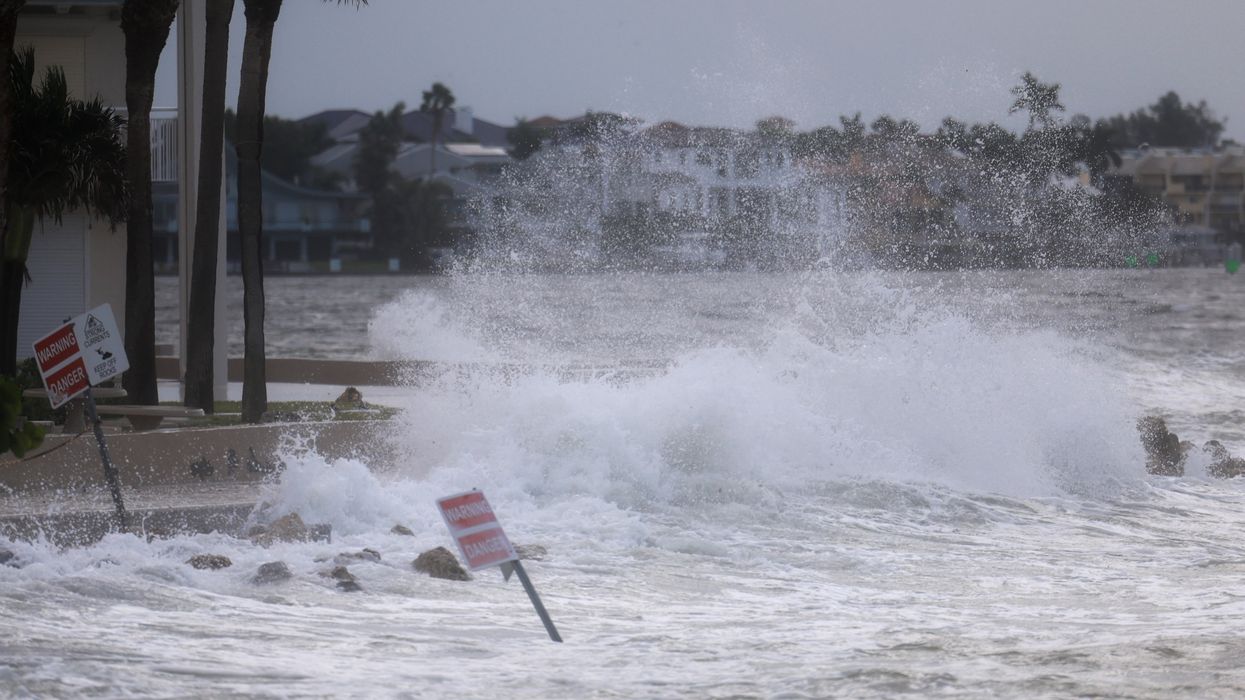
"While a single year above 1.5°C of warming does not indicate that the long-term temperature goals of the Paris agreement are out of reach, it is a wake-up call," wrote the secretary-general of the World Meteorological Organization.
A report released by the World Meteorological Organization on Tuesday found that not only was 2024 the warmest year in a 175-year observational period, reaching a global surface temperature of roughly 1.55°C above the preindustrial average for the first time, but each of the past 10 years was also individually the 10 warmest on record.
"That's never happened before," Chris Hewitt, the director of the WMO's climate services division, of the clustering of the 10 warmest years all in the most recent decade, told The New York Times.
All told, the agency's State of the Global Climate 2024 adds new details to the public's understanding of a planet that is getting steadily warmer thanks to human-caused greenhouse gas emissions.
2024 clearly surpassed 2023 in terms of global surface temperature. 2023 recorded a temperature of 1.45°C above the average for the years 1850-1900, which is used to represent preindustrial conditions, according to the report.
The report from the WMO, a United Nations agency, includes "the latest science-based update" on key climate indicators, such as atmospheric carbon dioxide, ocean heat content, and glacier mass balance. Many of these sections report grim milestones.
In 2023, the atmospheric concentration of carbon dioxide reached the highest levels in the last 800,000 years, for example, and in 2024, ocean heat content reached the highest level recorded in the over half-century observational period, topping the previous heat record that was set in 2023.
As of 2023, two other greenhouse gases, methane and nitrous oxide, also reached levels unseen in the last 800,000 years.
"Over the course of 2024, our oceans continued to warm, sea levels continued to rise, and acidification increased. The frozen parts of Earth's surface, known as the cryosphere, are melting at an alarming rate: glaciers continue to retreat, and Antarctic sea ice reached the second-lowest extent ever recorded. Meanwhile, extreme weather continues to have devastating consequences around the world," wrote WMO Secretary-General Celeste Saulo in the introduction to the report, which drew its findings from data drawn from dozens of institutions around the world.
"While a single year above 1.5°C of warming does not indicate that the long-term temperature goals of the Paris agreement are out of reach, it is a wake-up call that we are increasing the risks to our lives, economies and the planet," wrote Saulo.
In 2015, 196 party countries signed on to the agreement to pursue efforts "to limit the temperature increase to 1.5°C above preindustrial levels." According to the United Nations, going above 1.5ºC on an annual or monthly basis doesn't constitute failure to reach the agreement's goal, which refers to temperature rise over decades.
There are multiple methods that aim to measure potential breaches of 1.5°C over the long term, according to the report. The "best estimates" of current global warming based on three different approaches put global temperatures somewhere between 1.34°C and 1.41°C compared to the pre-industrial period.
The report also details the damage brought on by a number of extreme weather events last year, including Hurricanes Helene and Milton in the United States, and Cyclone Chido, which impacted the French territory of Mayotte.

"As the world edges closer to these dangerous climate thresholds, the need for immediate, stronger action to reverse this trend becomes ever more urgent," one report author said.
Existing policies and actions taken by world governments put the world on track for a median estimate of 2.7°C of warming by the end of the century, Climate Action Tracker revealed on Thursday at the United Nations Climate Change Conference in Baku, Azerbaijan.
If global leaders make no further effort to reduce emissions, temperatures have a 33% chance of spiking past 3°C of warming by 2100 and a 10% chance of overtaking 3.6°C, which report lead author Sofia Gonzales-Zuniga called "an absolutely catastrophic level of warming."
"The combined global effect of government action on climate change has flatlined over the last three years, underscoring a critical disconnect between the reality of climate change and the lack of urgency on policies to cut emissions," Climate Action Tracker (CAT) announced during its annual update at COP29.
The report attributes the lack of progress to the fact that few governments announced new climate targets in 2024 while they continued to facilitate the increased burning of fossil fuels, despite the pledge made at last year's COP28 to transition away from oil, gas, and coal.
It comes on the heels of a series of reports released ahead of or during COP29 that paint a consistent picture of escalating greenhouse gas emissions and climate extremes paired with government inaction. The U.N. Emissions Gap Report, published in late October, projected that the world was on track for 3.1°C of warming based on current policies. The World Meteorological Organization's (WMO) Greenhouse Gas Bulletin, also published last month, found that all three main greenhouse gases reached record atmospheric levels in 2023.
"The impacts of climate change are becoming increasingly dramatic, yet we still see no sign that burning of fossil fuels has peaked."
2023 was also the hottest year on record, but the WMO's State of the Climate 2024 update for COP29 warned that 2024 was likely to surpass it. Further, global temperatures from January to September averaged 1.54°C above preindustrial levels, temporarily surpassing the 1.5°C warming limit enshrined in the Paris agreement.
"The record-breaking rainfall and flooding, rapidly intensifying tropical cyclones, deadly heat, relentless drought, and raging wildfires that we have seen in different parts of the world this year are unfortunately our new reality and a foretaste of our future," WMO Secretary-General Celeste Saulo said in a statement. "We urgently need to reduce greenhouse gas emissions and strengthen our monitoring and understanding of our changing climate."
Yet this is precisely what is not happening: Another study from the Global Carbon Budget released on Wednesday projected that carbon dioxide emissions from the burning of fossil fuels would increase by 0.8% from 2023 to reach 37.4 billion metric tons of CO2 equivalent, a record high.
"The impacts of climate change are becoming increasingly dramatic, yet we still see no sign that burning of fossil fuels has peaked," study leader Pierre Friedlingstein, a professor at Exeter's Global Systems Institute, said in a statement. "Time is running out to meet the Paris agreement goals—and world leaders meeting at COP29 must bring about rapid and deep cuts to fossil fuel emissions to give us a chance of staying well below 2°C warming above preindustrial levels."
The Climate Action Tracker report adds to these findings, concluding that while renewables have surged in recent years, continued reliance on fossil fuels have undermined that progress. While clean energy like wind and solar and clean transit like electric vehicles now receive double the investments of oil, gas, and coal, funding for the latter still ballooned by a factor of four between 2021 and 2022 while fossil fuel subsidies are at a record high.
"We are clearly failing to bend the curve," Gonzales-Zuniga said. "As the world edges closer to these dangerous climate thresholds, the need for immediate, stronger action to reverse this trend becomes ever more urgent."
CAT called on the world's largest emitters to lead the way. It recommended 1.5°C-aligned 2035 targets for the world's seven biggest climate polluters—China, the U.S., India, the E.U., Indonesia, Japan, and Australia—as well as the "troika" countries of Brazil, UAE, and Azerbaijan. To bring its policies in line with the 1.5°C goal, the U.S. would have to cut its total emissions (including from land-use and forests) by 65% of 2005 levels by 2030 and 80% by 2035.
This is unlikely to happen under the administration of President-elect Donald Trump, who has promised to "drill, baby, drill" as soon as he retakes the White House in January. CAT concluded that Trump's promised energy policies would raise its projection for 2100 temperatures based on current actions by 0.04°C. However, if the U.S. permanently axes its net-zero goals, and if other countries decide to follow Trump's lead, that temperature increase could be higher.
"Clearly, we won't know the full impact of the U.S. elections until President-elect Trump takes office, but there is a clean energy momentum in the U.S. now that will be difficult to stop," Bill Hare, the CEO of Climate Analytics, said in a statement. "While the Trump administration will undoubtedly do its best to throw a wrecking ball into climate action, the clean energy momentum created by President [Joe] Biden, being actioned across the country, is likely to continue at significant scale."
"The key issue is whether countries stick together and continue to move forward with action," Hare concluded. "A Trump rollback of U.S. policies, as damaging as it is, can be overcome."
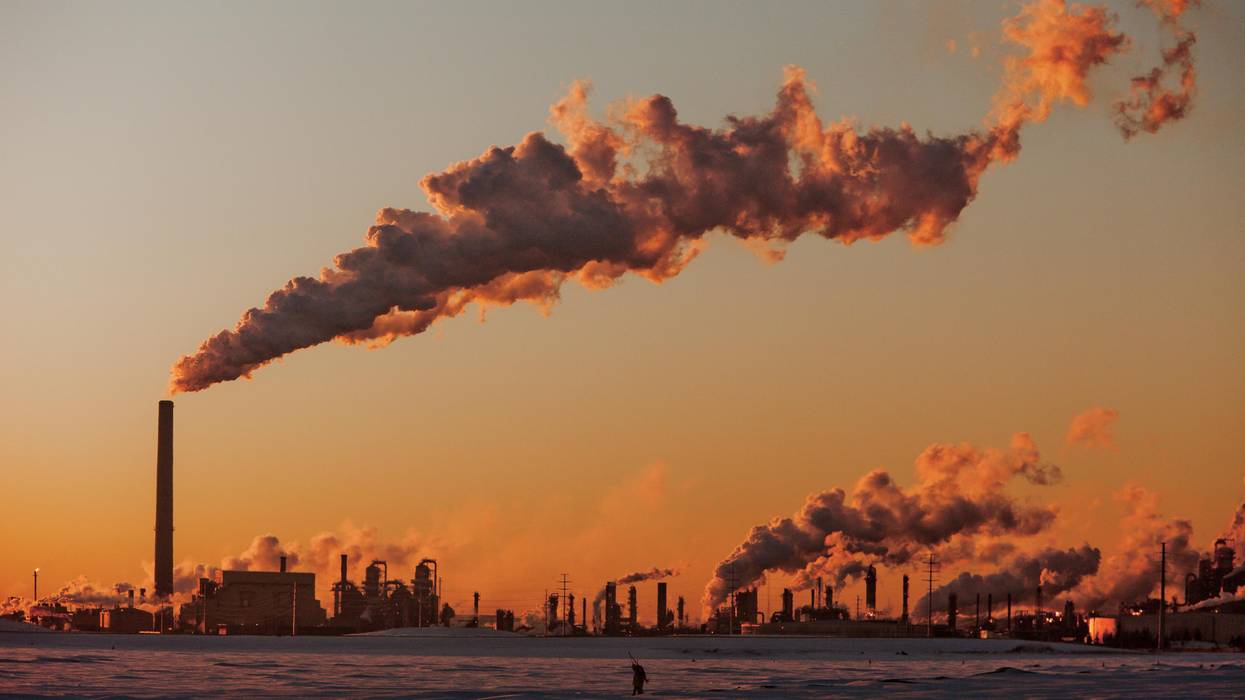
"The report is very clear: This crisis is driven by the profit-driven production of coal, oil, and gas," one climate advocacy group said.
Climate-heating carbon dioxide is accumulating in the atmosphere more rapidly than at any time since humans evolved.
That's just one of the alarming findings from the World Meteorological Organization's (WMO) Greenhouse Gas Bulletin, released Monday, which found that all three main greenhouse gases reached record atmospheric levels in 2023.
"Words fail," the group Climate Defiance wrote on social media in response to the news.
"Greenhouse gas pollution at these levels will guarantee a human and economic trainwreck for every country, without exception."
Atmospheric concentrations of CO2 hit 420.0 parts per million (ppm) in 2023, an increase of 151% since the Industrial Revolution and a level not seen since 3 to 5 million years ago, when global temperatures was 2-3°C hotter than today and sea levels were 10-20 meters higher. Methane hit 1,934 parts per billion (ppb)—or 265% higher than preindustrial levels—and nitrous oxide rose to 336.9 ppb, 125% of pre-1750 levels.
"Another year. Another record," WMO Secretary-General Celeste Saulo said in a statement. "This should set alarm bells ringing among decision-makers. We are clearly off track to meet the Paris agreement goal of limiting global warming to well below 2°C and aiming for 1.5°C above preindustrial levels. These are more than just statistics. Every part per million and every fraction of a degree temperature increase has a real impact on our lives and our planet."
Carbon dioxide rose by 2.3 ppm in 2023. While that was higher than the 2022 increase, it was lower than in 2019-2021. However, on a longer-term scale, atmospheric CO2 rose by 11.4% in the past 10 years, a record increase during human existence. The burning of fossil fuels is the primary cause of this increase.
"The report is very clear: This crisis is driven by the profit-driven production of coal, oil, and gas," Climate Defiance wrote. "Because of these fuels, planet-heating pollution levels have gone up by 51.5%—since 1990 alone."
However, 2023's CO2 increases were also caused by forest fires—including a record-breaking fire season in Canada—as well as a possible reduction in the ability of Earth's natural carbon sinks to absorb the greenhouse gas. While vegetation-related CO2 emissions are partially influenced by natural cycles—El Niño years like 2023 are drier and tend to see more fires—they could also be a sign of dangerous feedback loops.
"The Bulletin warns that we face a potential vicious cycle," said WMO Deputy Secretary-General Ko Barrett. "Natural climate variability plays a big role in carbon cycle. But in the near future, climate change itself could cause ecosystems to become larger sources of greenhouse gases."
"Wildfires could release more carbon emissions into the atmosphere, whilst the warmer ocean might absorb less CO2. Consequently, more CO2 could stay in the atmosphere to accelerate global warming," Barrett explained. "These climate feedbacks are critical concerns to human society."
The report also said that even if emissions were to cease rapidly, the amount of carbon dioxide in the atmosphere means that the current rise in temperatures would linger for decades.
The rise in methane is also a concern. While it increased less in 2023 than in 2022, it hit a record-high increase over the last five years, and some of this could be due to climate feedback loops such as the melting of the Arctic permafrost or greater emissions from wetlands and other natural ecosystems as temperatures rise.
As Climate Defiance noted, WMO's graph showing the rise of methane appears to move from a linear to an exponential progression as it approaches 2023.
"It could literally be the graph that defines human history," Climate Defiance wrote.
"The most infuriating part is it didn't have to be this way," the group continued. "Had we started taking action in the 1970s—when the threat became clear—we could have easily stopped the crisis by now. Instead we gorged ourselves on SUVs and McMansions as politicians dithered and delayed."
The Greenhouse Gas Bulletin is one of several annual reports released ahead of United Nations climate conferences; this year, world leaders are scheduled to gather in Baku, Azerbaijan starting on November 11 for COP29. The Bulletin comes alongside other reports finding that national policies are not on track to reduce emissions in line with the Paris agreement temperature goals.
Last week, the U.N. Emissions Gap Report concluded that current policies put the world on course for as much as 3.1°C of warming. Also on Monday, the U.N. Framework Convention on Climate Change (UNFCCC) released its 2024 Nationally Determined Contributions (NDC) Synthesis Report, in which it assesses the commitments that different nations have made to reduce emissions under the Paris agreement.
It found that current NDCs would cut greenhouse gas emissions by 2.6% of 2019 levels by 2030, a far cry from the 43% needed to have a chance at limiting global heating to 1.5°C by 2100 and preventing ever-worsening climate impacts.
"Greenhouse gas pollution at these levels will guarantee a human and economic trainwreck for every country, without exception," U.N. Climate Change Executive Secretary Simon Stiell said in a statement of the current 2030 trajectory.
"Today's NDC Synthesis Report must be a turning point, ending the era of inadequacy and sparking a new age of acceleration, with much bolder new national climate plans from every country due next year," Stiell said. "The report's findings are stark but not surprising—current national climate plans fall miles short of what's needed to stop global heating from crippling every economy, and wrecking billions of lives and livelihoods across every country."
"By contrast," Stiell continued, "much bolder new national climate plans can not only avert climate chaos—done well, they can be transformational for people and prosperity in every nation."
Climate Defiance also called for renewed ambition.
"It is not too late," the group said. "There is still a small window of opportunity. Together, we will unite to stop our own demise. We will rise. We will defy all odds. There is no alternative."