

SUBSCRIBE TO OUR FREE NEWSLETTER
Daily news & progressive opinion—funded by the people, not the corporations—delivered straight to your inbox.
5
#000000
#FFFFFF
To donate by check, phone, or other method, see our More Ways to Give page.
Daily news & progressive opinion—funded by the people, not the corporations—delivered straight to your inbox.
The fossil fuel industry is committing an ongoing crime against the planet; this is an effort to paint over the lens of the security camera that’s been recording its trespasses.
The news came late Thursday afternoon that the Musk tornado had reached NOAA, the government agency responsible for, among many other things, warning us about actual tornadoes. Ten percent of the staff was instantly given pink slips, and an hour to leave; with thousands more firings expected imminently. The wording on the termination letters seems to have been uniform; the work these people were doing was not considered “in the public interest.”
I want to bear a little witness to the people fired from NOAA and so many other places—and even more to the long and careful tradition of which they were a part. For the moment I don’t know what we can do to protect those people or that tradition—there will be court battles, and we should support them; general defense against President Donald Trump’s absurd and illegal destruction is ongoing at places like Third Act and Indivisible and you should join in. But for now, I simply want to explain what’s being destroyed.
The National Oceanic and Atmospheric Administration was founded in 1970, but its roots go back to 1807, when Thomas Jefferson formed the “Survey of the Coast,” noting the importance of “waterborne commerce” to the new nation. Over the following decades it produced the first nautical maps, and then early tide tables, and then began to figure out how to locate and map underwater obstructions. Though I now live in landlocked Vermont, I was a Sea Scout when I was a boy and I remember navigating with those blue and tan charts, walking the parallel rules across the chart, always with an eye to the compass rose at the bottom, all painstakingly marked with hazards and aids to navigation.
Musk is an impulsive child who has been handed an intricate toy, and whose only impulse is to break it, for the pure satisfaction of the crash.
It became the Coast and Geodetic Survey later in the 19th century—geodesy was the “science of accurately measuring and understanding the Earth's geometric shape, orientation in space, and gravity field,” and if like me you are a hiker you have doubtless encountered their brass markers on the summits of mountains. Other agencies—the Weather Bureau chief among them—grew up over the first two centuries of the republic to track the hazards of the continent. By 1970, in the wake of the first Earth Day, then-Republican President Richard Nixon combined all of them in this new National Oceanic and Atmospheric Agency.
Nixon was not an honest or good man, but he was an intelligent one, in an intelligent era. Here’s how he described the rationale for this new agency:
The oceans and atmosphere are interacting parts of the total environmental system upon which we depend, not only for the quality of our lives, but for life itself. We face immediate and compelling needs for better protection of life and property from natural hazards, and for a better understanding of the total environment—an understanding which will enable us more effectively to monitor and predict its actions, and ultimately, perhaps to exercise some degree of control over them.
If that was true then, then it’s triply true now. It’s NOAA that keeps track of the rapid heating of our planet, with all its attendant dangers. And now it will be reduced to a shadow of itself, just as Project 2025 promised. Why would any rational person do this? Over two centuries it worked to understand the world around us, and that understanding was, among other things, key to our prosperity.
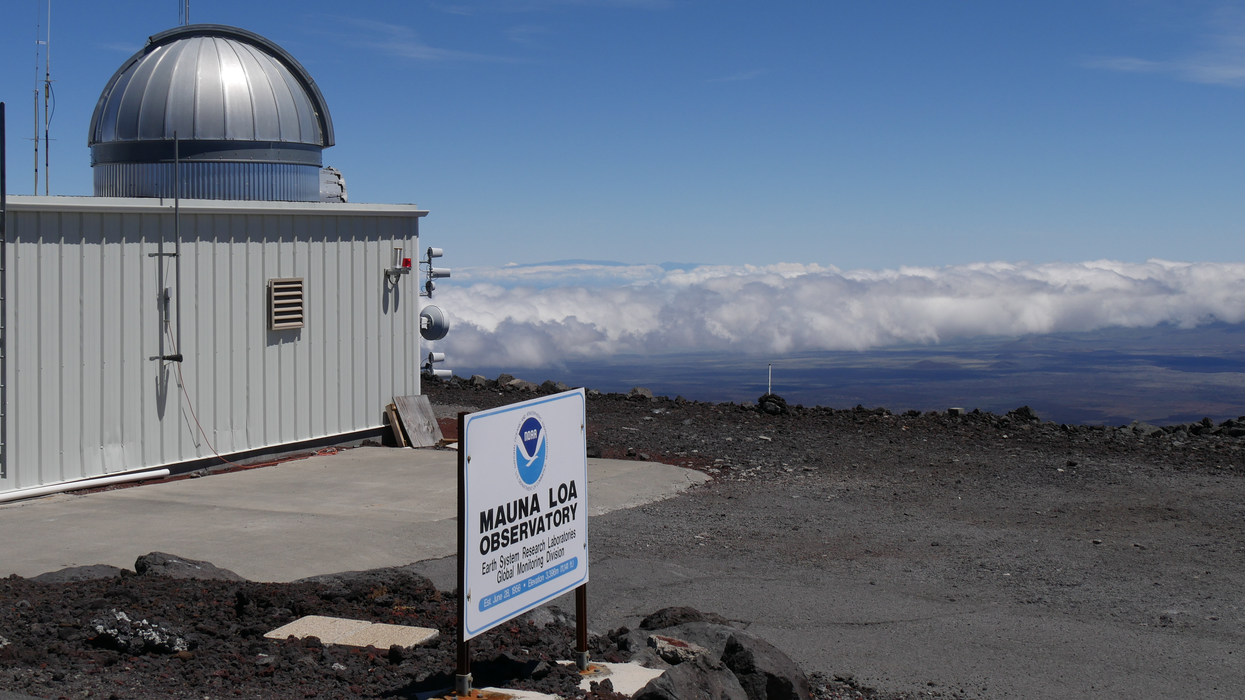
Because it committed the sin of helping to figure out the greatest danger to that prosperity: It was NOAA, after all, that maintained the world’s most important scientific instrument, the carbon dioxide monitor on the flank of Mauna Loa that first disclosed that carbon dioxide was accumulating in the atmosphere as we combusted coal and gas and oil. And it’s maintained the network of weather stations, satellites, and marine buoys that have shown that that carbon is driving a pervasive shift in our climate, one that is melting the poles. This is the very definition of “the public interest,” but it cuts against the private interest of the fossil fuel industry, and so it must be neutered. Elon Musk can insist all he wants that he’s doing it to save the taxpayers money, but the agency in total costs barely $6 billion a year—or one-sixth the cost of the federal government’s contracts with Musk’s agencies, which The Washington Post detailed in an important investigation Wednesday.
Once this agency is broken, it won’t be rebuilt. Its centuries of institutional memory will be slowly forgotten. (There are good histories of NOAA on its website, here and here; if they’re of interest, download them right now). Musk is an impulsive child who has been handed an intricate toy, and whose only impulse is to break it, for the pure satisfaction of the crash. And so he can get a tax cut, and yet more money, whatever that even means to someone approaching the half-trillion dollar mark.
If you want just one tiny example of what he is destroying, look through the Bluesky feed of Zack Labe, a young climate scientist laid off Thursday afternoon. He was not just good at his job, he was good at explaining it: Day after day he would lay out the latest news from the cryosphere, explaining in careful detail what was happening on the frozen portions of this Earth. On Wednesday, for interest, he’d explained that Arctic sea ice was setting new lows for this date; on Monday he’d produced a graphic showing the steady loss of ice in glaciers around the world. He is our chronicler of thaw, of melt—and what could be more important, since that thaw and melt raises sea levels, disrupts the jet stream and the Gulf stream. He wasn’t an activist or an advocate, unless you count charting, say, the increased methane in the atmosphere as activism. Clearly the oil industry does; Project 2025 had promised to gut NOAA precisely because, as it put it in a moment of complete candor, those measurements are “one of the main drivers of the climate change alarm industry.”
In other words, Big Oil is trying to wrap a blindfold around the eyes of the nation, so it won’t see what’s happening. I confess to feeling a quiet rage at this vandalism (some of which is almost literal—the administration is disconnecting EV chargers, already bought and paid for, from federal parking lots). It won’t work, not in the long run—people will notice when their neighborhoods burn and flood. But it will make it harder to understand what’s going on, and to pin the blame where it belongs. The fossil fuel industry is committing an ongoing crime against the planet; this is an effort to paint over the lens of the security camera that’s been recording its trespasses.
At least as of this morning the vandals at DOGE hadn’t managed to sack the NOAA website. It was still reporting on the hottest January in history, and offering guides to “building climate resilience in your community.” As they had for 218 years the people in this enterprise were serving their fellow citizens with the information they needed to survive and to thrive. Take a look at it if it’s still there, just to remind yourself what good things humans are capable of. It will inspire you to fight harder against the bad things humans—in this case Musk and Trump—are capable of.

"This study mirrors the Biden administration's entire four-year approach to advancing a clean energy future: weak and half-hearted," one advocate said.
Approving more liquefied natural gas exports would raise domestic energy prices, increase the pollution burden placed on local communities, and exacerbate the climate crisis, the Biden administration concluded in a long-awaited report released Tuesday.
However, the Department of Energy (DOE) stopped short of denying any pending or future approvals, passing the buck to the administration of President-elect Donald Trump, who has vocally supported the LNG boom.
"This study mirrors the Biden administration's entire four-year approach to advancing a clean energy future: weak and half-hearted," Food & Water Watch policy director Jim Walsh said in a statement. "Liquid natural gas exports systematically poison the most vulnerable frontline communities, pollute our air and water, and drive up domestic energy prices. We cannot continue to be victimized by the profit-driven agenda of fossil fuel corporations. President Biden must listen to the warnings of his own government by banning further LNG exports and rejecting pending LNG permits before he leaves office."
"DOE's long-awaited environmental and economic analyses demonstrate what environmental justice and frontline communities have been saying for years—liquefied natural gas export facilities are not in the public interest."
U.S. LNG exports have tripled in the last five years, making the country the leading gas exporter in the world. At the same time, the latest climate research has shown that—due to methane leaks across the LNG life cycle—the so-called "bridge fuel" is in fact worse for the climate than coal.
Following pressure from climate and environmental justice advocates, the Biden administration in January announced a pause on approving LNG exports to non-Free Trade Agreement countries while the DOE updated the studies it uses to determine whether or not gas exports are in the public interest, as Congress has authorized it to do under the Natural Gas Act.
Those updated studies were released Tuesday, along with a statement from Energy Secretary Jennifer Granholm. Climate, consumer, and frontline advocates welcomed the findings themselves, which they said were largely consistent with their warnings and experience.
"DOE's long-awaited environmental and economic analyses demonstrate what environmental justice and frontline communities have been saying for years—liquefied natural gas export facilities are not in the public interest," Leslie Fields, the chief federal officer at WE ACT for Environmental Justice, said in a statement. "Not only do these projects compound public health and safety harms to communities, especially in the Gulf and for communities of color, but they also exacerbate the climate crisis and raise energy prices here at home."
Jamie Henn, the director of Fossil Free Media, said on social media that Granholm's statement was "even stronger than I expected."
In it, Granholm emphasized five key findings from the updated studies:
"Today's study makes clear that all pending export applications must be denied as being inconsistent with the public interest, and should result in a reassessment of existing exports to determine compatibility with the public interest," Tyson Slocum, director of Public Citizen's Energy Program, said in a statement. "Using LNG exports to provide energy abundance for China at the expense of higher utility bills for working Americans is not in the public interest."
Granholm stated clearly that "the effect of increased energy prices for domestic consumers combined with the negative impacts to local communities and the climate will continue to grow as exports increase."
Yet she also said the Biden administration would not act on the findings of the updated studies due to the timing of their release: The report's publication now triggers a 60-day comment period, and the inauguration is only a little more than a month away.
"Given that the comment period for the study will continue into the next administration—and that there are a limited number of applications that are concurrently ready for the DOE 'public interest' review—decisions about the future of LNG export levels will necessarily be made by future administrations," she said. "Our hope is that we can now assess the future of natural gas exports based on the facts and ensure authorizations are reviewed in a manner that truly advances the public interest of all the American people."
While the purpose of the DOE's updated studies had never been to deny or approve exports—rather to inform those decisions—advocates have been pushing the Biden administration to act on its findings. In particular, frontline Gulf groups are concerned about Calcasieu Pass 2 and Commonwealth LNG, two pending export facilities that are currently subject to supplemental environmental impact statements by the Federal Energy Regulatory Commission due to concerns about their local impacts.
"We were hoping that this study would be released and with this study would come the denial of permits for these projects," frontline leader Roishetta Ozane of the Vessel Project of Louisiana said in a press briefing.
"It'll be hard for the Trump administration to completely ignore the finding that exports drive up costs for consumers. That's political dynamite."
Several groups responded to the study with renewed calls for permit denials.
"This study confirms that Donald Trump's plans to supercharge LNG exports will come at the expense of consumers and the climate," said Friends of the Earth senior energy campaigner Raena Garcia. "We cannot afford to prop up an industry that continues to threaten our people and the planet for profit. Over the next few weeks, it is not too late for the Biden administration to curb the deadly LNG export boom."
Walsh of Food & Water Watch said: "Secretary Granholm's admission that continuing LNG exports will drive up costs and harm vulnerable communities is a sad reflection on what we have been saying for the last decade. It is time for this administration to start matching its rhetoric with action, and reject new LNG exports while it still can."
But Henn told Common Dreams that this might be a losing battle.
"The administration has indicated it wants to follow the regular process and not jump ahead and deny permits before they leave office, only to have Trump reapprove them," Henn said. "We disagree and think denials would send a strong political signal and potentially strengthen legal challenges. It's unlikely we'll sway them with so little time left, but we're going to try."
Still, campaigners emphasized that the DOE's findings will strengthen the case of any community or group opposing LNG exports going forward.
"This report will serve as a tool for us in fighting against these projects," Ozane said.
This remains the case despite the Trump administration's pro-fossil fuel stance and history of running roughshod over rules and regulations.
"Trump will of course try and ignore the study, but it gives us new political, legal, and diplomatic arguments," Henn told Common Dreams. "Politically, it'll be hard for the Trump administration to completely ignore the finding that exports drive up costs for consumers. That's political dynamite. Legally, if Trump just ignores the findings of this report and rushes approval, that opens the door for challenges."
Natural Resources Defense Council senior attorney Gillian Giannetti pointed out in a press briefing that "because these studies are in the public record, the failure to properly consider them and their relevance would be unlawful under the Administrative Procedure Act."
Slocum of Public Citizen said that groups like his have legal intervention status and can ask a court to review any Trump decision.
"Any court is going to want to know—what does the administrative record say?" he noted. "And this report greatly strengthens the case that requested LNG exports are not consistent with the public interest. So a court can toss out a Trump admin approval."
"These studies show clearly that LNG exports are in gas executives' best interest and nobody else's."
Henn added that the findings could slow the LNG buildout both diplomatically and economically.
"Diplomatically, the climate data in this report makes it less likely that our allies, all of whom have signed the Paris agreement, will be as interested in importing dirty U.S. gas," he told Common Dreams.
"Finally," he concluded, "this report will cause tremors on Wall Street. This report and Secretary Granholm's strongly worded letter indicate that future Democratic administrations won't likely support new export facilities. Since these are long-term investment decisions, that uncertainty will slow down financing for new projects."
The report also undermines Trump's economic argument that more fossil fuel production is better for everyone, revealing it instead for another giveaway to the wealthy.
"Despite claims from the incoming Trump administration that it wants to lower prices, the truth is they are putting billionaire fossil fuel donors ahead of everyday Americans," Greenpeace USA deputy climate program director John Noël said in a statement. "The record is crystal clear: Increasing LNG exports will drive up costs for domestic businesses and consumers. Full stop. Any further investment in LNG will only exacerbate the cost-of-living crisis, while enriching gas industry CEOs who don't have to experience the fallout of living near an export terminal."
Lauren Parker, an attorney at the Center for Biological Diversity's Climate Law Institute, agreed, saying, "These studies show clearly that LNG exports are in gas executives' best interest and nobody else's."
Parker concluded, "If Trump wants to drive up dangerous gas exports, he's going to have to answer for causing more deadly storms, condemning the Rice's whale to extinction, and socking consumers with higher costs."
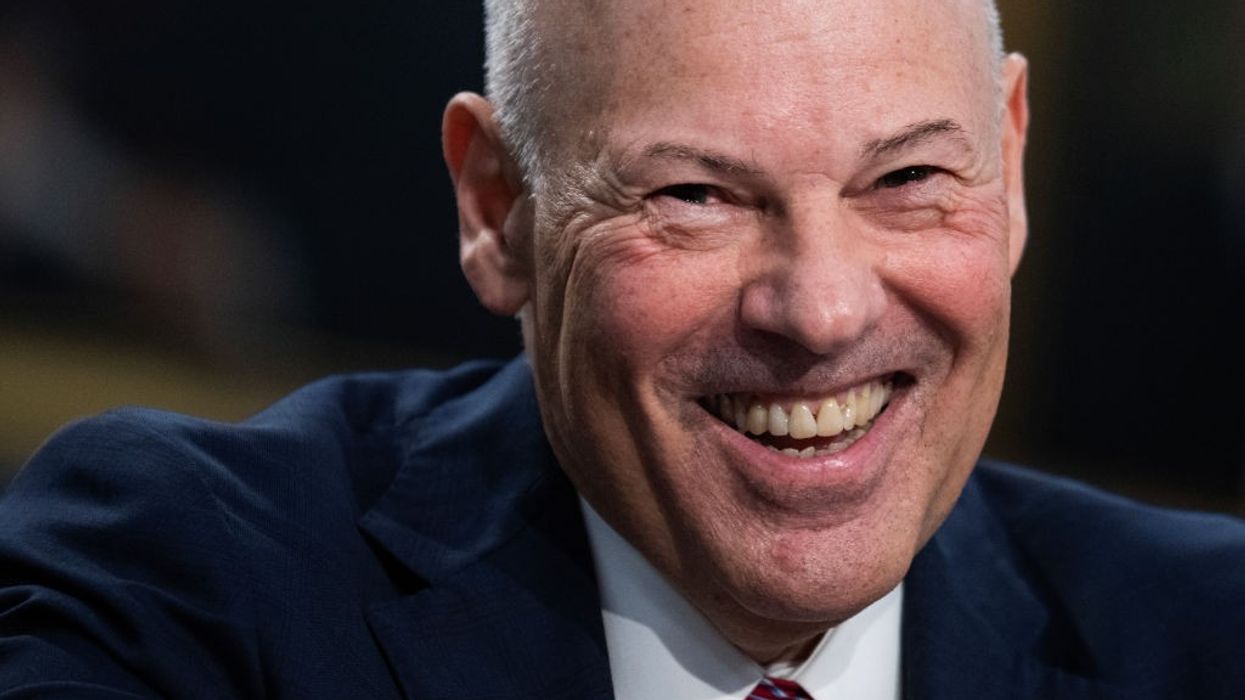
Instead of privatization, said one Democratic lawmaker, "Fire his former pick for postmaster, DeJoy, and let a real professional run it like it should be run. The first priority is delivering mail. Cut the Pentagon's bloat if you want to save money."
After weekend reporting indicated President-elect Donald Trump is actively thinking about avenues to privatize the U.S. Postal Service, progressives decried any such efforts and once again directed their ire on the much-reviled Postmaster General, appointed to run the USPS during Trump's first term.
The Washington Post reported Saturday, citing people familiar with recent talks within the incoming team's camp, that Trump is "keen" on a privatization scheme that would give the USPS to for-profit, private interests.
According to the Post:
Trump has discussed his desire to overhaul the Postal Service at his Mar-a-Lago estate with Howard Lutnick, his pick for commerce secretary and the co-chair of his presidential transition, the people said. Earlier this month, Trump also convened a group of transition officials to ask for their views on privatizing the agency, one of the people said.
Told of the mail agency's annual financial losses, Trump said the government should not subsidize the organization, the people said. The people spoke on the condition of anonymity to reflect private conversations.
Trump's hostility to government programs that serve the public interest—including Medicare, Social Security, public education, and consumer protection agencies—is well-documented.
"The United States Postal Service is a crucial asset that was built and is owned by all of us, and there is zero mandate from the public to turn it over to an oligarch."
Trump's attacks on the Postal Service, including his blessing of the 2020 appointment of Postmaster General Louis DeJoy, a former logistics industry executive, sparked alarm about Republican desires to gut the agency from the inside out.
While calls to fire DeJoy from the USPS top leadership post persisted during the last year of Trump's first term and remained constant during Biden's time in office, he remains Postmaster General despite repeated accusations that his ultimate aim is to diminish the agency to such an extend that it will be more possible to justify its dismantling.
While the Post's reporting on Saturday stated that Trump's "specific plans for overhauling the Postal Service" in his upcoming term "were not immediately clear," it did quote Casey Mulligan, who served as a top economic advisor during the last administration, who touted the performance of the private sector compared to a Postal Service he claimed was too slow and costly.
"We didn't finish the job in the first term, but we should finish it now," said Mulligan.
Progressive defenders of the Postal Service responded by denouncing any future effort to privatize the agency, which is one of the most popular among the U.S. public.
"The Post Office is in our constitution," said Rep. Mark Pocan (D-Wis.) on Saturday. "There is no way we let Donald Trump privatize it. Fire his former pick for postmaster, DeJoy, and let a real professional run it like it should be run. The first priority is delivering mail. Cut the Pentagon's bloat if you want to save money."
Former Ohio state senator Nina Turner also defended the USPS, saying that "72% of Americans approve of the U.S. Postal Service; it's how many seniors receive medication, especially in rural areas."
Progressive critics of right-wing attacks on the Postal Service have noted for years that the "financial performance" issues directly result from the "burdensome and unnecessary" pre-funding of liabilities mandated by the 2006 Postal Accountability and Enhancement Act. This act forces the USPS to pay billions yearly toward future postal worker retirement benefits.
"No matter what your partisan stripe," said Micah Rasmussen, director of the Rebovich Institute for New Jersey Politics at Rider University, "we should be able to agree the United States Postal Service is a crucial asset that was built and is owned by all of us, and there is zero mandate from the public to turn it over to an oligarch."
Undermining a publicly funded media system makes perfect sense if clearing a path for graft, corruption, and a lack of accountability is the goal.
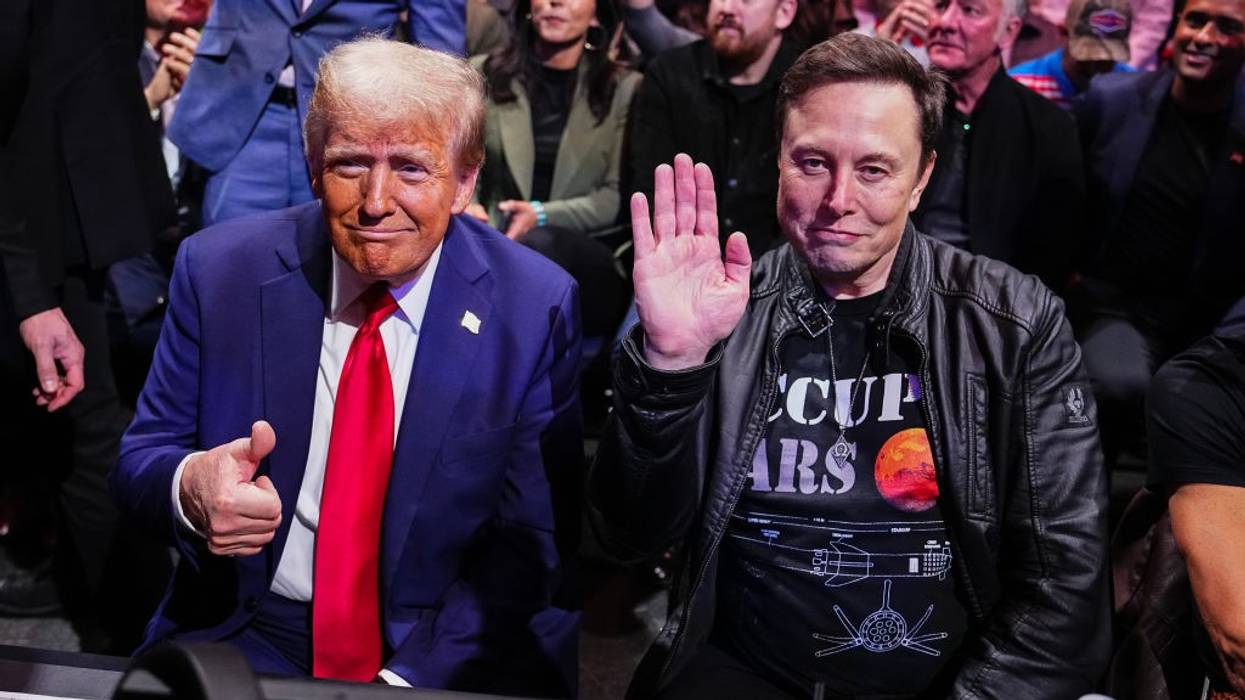
Buried deep in the 10th paragraph of Elon Musk and Vivek Ramaswamy's Wall Street Journal screed on their new Department of Government Efficiency is a line that should worry anyone who cares about the accountability role media must play to sustain the health of any democracy
“DOGE will help end federal overspending by taking aim at the $500 billion plus in annual federal expenditures that are unauthorized by Congress or being used in ways that Congress never intended," they write. One of the items in topping their list of targets is the $535-million annual congressional allocation to the Corporation for Public Broadcasting, the entity that allocates federal funds to public-media outlets across the country
Zeroing out federal funding for public media has long been a dream of Republicans. But it’s one that’s never come true. Past efforts have run up against a noisy public, including people of every political persuasion, that believes federal funding for public media is taxpayer money well spent.
If anything has a popular mandate, it’s the use of federal funds to support public media.
In 2005, I stood in front of the Capitol Building alongside Clifford the Big Red Dog and then-Sen. Hillary Clinton to protest a George W. Bush-era push to strip public broadcasting of nearly half its funding. “What parents and kids get from public TV is an incredible bargain,” then-Rep. Ed Markey (D-Mass.) said at the event. “The question is not, ‘Can we afford it?; but rather, ‘Can we afford to lose it?’”
Millions of people wrote and called their members of Congress to defend institutions like NPR and PBS, a mass mobilization that succeeded in saving public broadcasting from the ax.
Twenty years later, we face similar headwinds. In 2025, Republicans will control the White House, Senate, and House of Representatives. They will be acting on the false belief that the November election delivered them a mandate to disassemble the federal government and remake it in Donald Trump’s authoritarian image.
But the actual numbers tell a different story. Trump won by a razor-thin margin, securing less than half of the popular vote (a mandate denying 49.9 percent to Kamala Harris’ 48.3 percent). And the Republican majority on the Hill isn’t large enough to dictate such drastic cuts to federal spending; only a fraction of their members would need to defect for Musk and Ramaswamy’s extreme cost-cutting proposals to fail. Having Rep. Marjorie Taylor Greene lead the effort in the House is a move that could easily backfire as well.
Undermining a publicly funded media system makes perfect sense if clearing a path for graft, corruption, and a lack of accountability is the goal.
If anything has a popular mandate, it’s the use of federal funds to support public media. According to several polls, Americans routinely rank PBS among the most trusted institutions in the country, and a “most valuable” service taxpayers receive for their money, outranked only by national defense. Moreover, large majorities of the public believe the amount of federal funding that public broadcasting receives is just right, or even too little.
Comparatively, this is true. The United States already has one of the lowest levels of federal funding of public media in the developed world—at approximately $1.50 per capita. That’s nothing next to the United Kingdom, which spends more than $81 per person, or France, which spends more than $75. Head further north and the numbers head north as well: Denmark's per-person spending is more than $93, Finland’s more than $100, and Norway’s more than $110. And it isn’t just a European trend: Japan (+$53/capita) and South Korea (+$14) show their appreciation for publicly funded media at levels that put the U.S. outlay to shame.
Trump, Musk, Ramaswamy, and their ilk don’t just want to freeze out Frontline and foreclose on Sesame Street, but to pull the plug on every network, station and program that gets public support—from Gulf States Newsroom to the Mountain West News Bureau, from Pacifica Radio to New Jersey Spotlight News.
And that’s the point. The Trump purge of federal spending is not just about downsizing the government so billionaires like Musk will have no obligation to pay their fair share in taxes. It’s about stripping our democratic system of all accountability mechanisms, including the sorts of journalism that hold our country’s rich and powerful responsible for their misdeeds. (Republicans are also pushing legislation that would empower President Trump’s Treasury Department to falsely label any nonprofit news outlet as a “terrorist supporting organization” and strip it of the tax-exempt status it needs to survive.)
Undermining a publicly funded media system makes perfect sense if clearing a path for graft, corruption, and a lack of accountability is the goal.
The Trump purge of federal spending is not just about downsizing the government so billionaires like Musk will have no obligation to pay their fair share in taxes. It’s about stripping our democratic system of all accountability mechanisms...
A 2021 study co-authored by University of Pennsylvania professor (and Free Press board chair) Victor Pickard finds that more robust funding for public media strengthens a given country’s democracy—with increased public knowledge about civic affairs, more diverse media coverage and lower levels of extremist views.
Moreover, the loss of the quality local journalism and investigative reporting that nonprofit outlets provide has far-reaching societal harms. The Democracy Fund’s Josh Stearns, who’s also a former Free Press staff member, has cataloged the growing body of evidence showing that declines in local news and information lead to drops in civic engagement. “The faltering of newspapers, the consolidation of TV and radio, and the rising power of social media platforms are not just commercial issues driven by the market,” Stearns writes. “They are democratic issues with profound implications for our communities.”
For now, Trump, Musk, and Ramaswamy are leveraging a lie about a popular mandate to redefine the “public interest” as anything that Trump wants. Trump’s totalitarian dream will not be possible with a thriving, publicly funded and independent media sector. To save this kind of accountability journalism we need people to make as much noise today as they have in the past, and deliver our own mandate for a public-media system that stands against Trump’s brand of authoritarianism.
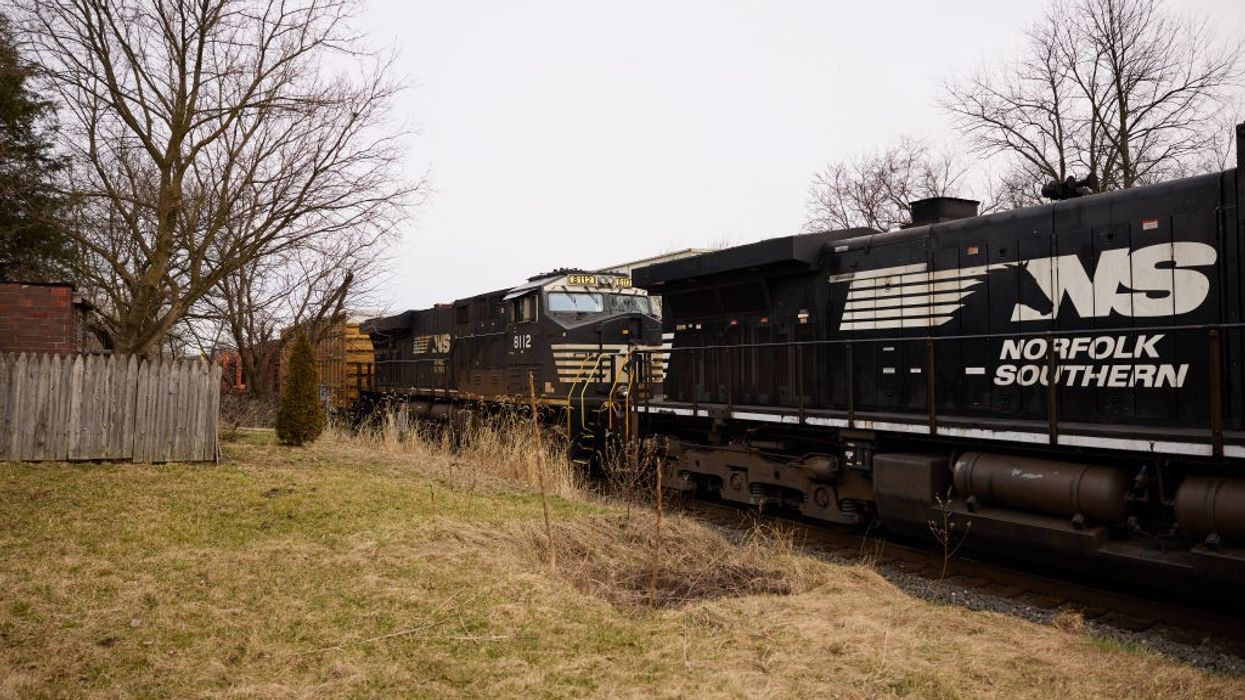
The toxic rail derailment in East Palestine, Ohio, was a symptom of a privatized rail system that prioritizes profit over public safety.
The National Transportation Safety Board announced in June that the infamous East Palestine, Ohio, freight train derailment was caused by a defective wheel bearing.
But that technical issue does not tell the whole story.
Federal investigators found that the railway company Norfolk Southern failed to communicate information to emergency responders in a timely manner, which contributed to the exposure of responders and the public to post-derailment hazards.
According to the June 2024 NTSB report abstract on the derailment and hazardous materials release, Norfolk Southern’s delayed transmission of consist information “also delayed the Ohio State Patrol’s recommendation to the incident commander that the shelter-in-place order be replaced by an evacuation.”
Norfolk Southern officials and contractors also provided misleading and incomplete information while advocating for an unnecessary vent and burn of tank cars carrying vinyl chloride. A vent-and-burn action is, according to the Federal Railroad Administration (FRA), a response of last resort.
A public rail system would directly benefit workers, trackside communities, small shippers, farmers, passengers, and the environment.
Norfolk Southern began planning the vent and burn shortly after the derailment, rejecting three other removal methods that could have been far less dangerous to responders and the people of East Palestine.
While there may be some temptation to view the catastrophic derailment in East Palestine as an unfortunate fluke, the truth is that disastrous events are predictable features of the American rail system.
Under the private ownership of the Class I railroads, we have seen time and again the callous prioritization of profit over people. For the sake of short-term profit, inspections are cut short, tracks and equipment are not maintained, and the rail workforce is gutted — features of an industrial system that calculates derailments as part of the cost of doing business.
The Class I railroads’ — the largest domestic rail carriers — pursuit of short-term profit has led to critical understaffing, longer trains, diminished maintenance of tracks and equipment, inadequate inspections, and other underinvestments that leave rail workers and trackside communities vulnerable to derailments and disasters.
The Class I railroad robber barons are perfectly willing to risk the lives of workers and people living in trackside communities so long as it means more money for them and their shareholders. This is not hyperbole.
Between 2013 and 2022, the rate of rail accidents rose 28 percent as a result of the implementation of Precision Scheduled Railroading (PSR). In short, the philosophy of PSR can be summed up as “speed over safety.” Since 2015, over 50,000 railroad workers — nearly 30 percent of the rail workforce — have been laid off. The workers who remain on the railroads experience chronic fatigue as a result of unpredictable schedules and critical understaffing.
Last spring, it was reported that Union Pacific, one of the six Class I rail carriers, undermined government safety assessments and retaliated against workers who reported rail car flaws. In 2023, the FRA found that 73% of Union Pacific locomotives have federal defects.
According to the NTSB, Norfolk Southern interfered with the East Palestine investigation and abused its status as a party to the probe. NTSB Chair Jennifer Homendy revealed that she was threatened by Norfolk Southern during a private exchange with a senior company executive two weeks prior to the NTSB East Palestine board meeting.
These are but a few examples of the criminality and nefariousness that characterize the privately owned rail system. What’s more, even if one puts aside moral questions regarding the behavior of the Class I railroads, one finds an industry being strangled to death by a get-rich-quick scheme that victimizes workers and trackside communities, cheats small shippers, and — because the rail robber barons are completely allergic to capital expenditure —dooms the US rail system to degradation and ossification.
Another concern is how the American rail system is regulated. While the FRA is ostensibly tasked with overseeing and regulating US railroads, this arrangement becomes murky when one considers the significant degree of industry influence.
The Association of American Railroads (AAR), the industry group representing the interests of North America’s major rail corporations, sets its own safety standards and works closely with the FRA, effectively as an independent regulatory body. AAR even manages the FRA’s Transportation Technology Center through its wholly-owned subsidiary, Transportation Technology Center, Inc.
In the NTSB investigation of the East Palestine derailment, AAR’s standards for hot bearing alerts and alarms came under scrutiny, as they served as the guide for Norfolk Southern’s own criteria that contributed to the disaster. It is worth noting that under the Trump presidency, railroad industry executive Ronald Batory was made FRA administrator, further blurring the line between government regulator and regulated industry.
With the foxes running the henhouse, simple demands for more and better regulation of the railroad industry are inadequate. The real solution, advocated by Railroad Workers United (RWU) and allied organizations across the country, is public ownership of the railroads.
Last spring, RWU launched the Public Rail Ownership (PRO) campaign, building a diverse coalition including rank-and-file unionists, environmentalists, progressives, community activists, and others calling for a rail system that operates in the public interest.
The campaign has hosted webinars, published scholarly works such as Maddock Thomas’s “Putting America Back on Track: The Case for a 21st Century Public Rail System,” and attended union conferences to make its case.
What a publicly owned and operated rail system in the United States will look like has yet to be determined, but there are models that can serve as guides.
The task at hand is massive, and the road ahead is fraught with challenges. However, there is little hope for any improvement of the US rail system so long as it remains in the hands of the irresponsible and unaccountable Class I robber barons.
The rail system in the US is, compared to other countries, an anomaly in that it is predominantly owned by private companies. This was not always the case, and there’s inspiration to be found in US history for the development of a 21st century public rail system.
During World War I, the US rail system was nationalized amid a consensus that the private rail system was unable to serve the needs of the country during wartime. Under the control of the US Railroad Administration (USRA), the railroads operated far more efficiently and effectively than they had under private ownership.
Working conditions and service improved drastically, winning the support of workers, shippers, and much of the public. The nationalized rail system was so popular among rail workers that in a 1918 American Federation of Labor-sponsored referendum, the vote to keep the nation’s railroads in public hands was overwhelmingly in favor: 306,720 to 1,466.
A public rail system would directly benefit workers, trackside communities, small shippers, farmers, passengers, and the environment. The Class I carriers have made it clear that they have no intent to expand rail, or take the crucial step towards full catenary electrification.
Under public ownership, the fetters of the short-term profit motive would be cast off the rail system, opening the door to large-scale infrastructure modernization and expansion projects, creating jobs in construction and spurring economic development in neglected areas of the country. A publicly owned and operated rail system would also create thousands of railroad jobs, as the stripped-to-the-bone PSR model advocated by the Class I carriers would be destined for the dustbin.
The task at hand is massive, and the road ahead is fraught with challenges. However, there is little hope for any improvement of the US rail system so long as it remains in the hands of the irresponsible and unaccountable Class I robber barons. RWU and its allies invite all organizations and individuals to get involved in the Public Rail Ownership campaign, and help make public rail a reality. For more information, please visit publicrailnow.org.
No government-sponsored institution should be encouraged to continue causing severe harm. Obligations to the public interest which were removed long ago can be reinstated.
“We learned last week that certain fossil fuel producers were fully aware in the 1970s that their core product was baking our planet. And just like the tobacco industry, they rode rough-shod over their own science.
Some in Big Oil peddled the big lie. And like the tobacco industry, those responsible must be held to account.” UN Secretary-General António Guterres, Davos, January 18, 2023
Liberal democracy is now close to failing. One reason for this is that it has proved incapable of protecting the public interest from severe damage caused by big corporations. The next few years will tell whether it withers and dies or rights itself and survives.
Democracy is based on the consent of the governed. Sometimes this can mean serving the wants and desires of the majority, but to survive long-term, democracy must work for everyone. It can’t leave a large minority behind. Nor, may it allow the public interest to be severely harmed.
To ensure neither will occur, there must be a shared commitment among the governed to not cause great harm to each other. At least to this extent, citizens must commit to the obligations of citizenship as well as take advantage of its rights.
The bad news is that corporations, the world’s most powerful citizens, are unburdened by any obligations of citizenship. Such obligations were eliminated in the late 1800s when legislatures mistakenly decided they were unnecessary. In fairness, this was decades before big companies developed the technology and size capable of causing the severe harm we are experiencing today.
Democracy recognizes that some citizens will take advantage of the absence of law to pursue their own interests in ways that harm others. It assumes that before too much damage can occur, the elected representatives of the people will enact a new law which prevents such behaviour from continuing. Such laws contain the damage. In this way, democratic government fulfills its purpose to protect the public interest.
However, this assumption is no longer valid. Through lobbying and financing the campaigns of politicians, big corporations (and their trade associations) have become proficient at delaying and frustrating the passage of new laws which would prevent them from continuing to destroy.
Corporations weren’t present when the American founding fathers drafted the U.S. Constitution. The word “corporation” doesn’t appear anywhere in the document. The concept of the modern corporation didn’t arrive on the scene until nearly 100 years later when its obligations to the public interest were eliminated.
Try to imagine the drafting of the Constitution in 1787 if modern corporations were present. Had the founding fathers been able to foresee the developments in technology and the changes in corporations which would occur over the next 250 years, would they have originated the same form of government which now so inadequately protects the interests of individual Americans? It seems unlikely.
That raises the question, what needs to change: democracy or the corporation? Changing democracy means changing the Constitution. That’s not easy and deciding how to change it is not obvious.
The good news is that changing the corporation is much less difficult and the necessary change is readily apparent.
We can no longer assume corporate behaviour which severely harms the public interest can be brought under control by new laws passed by local, state, or national governments. Unlike the founding fathers, we now know better.
Corporations are all formed under laws which can be amended relatively easily. No government-sponsored institution should be encouraged to continue causing severe harm. Obligations to the public interest which were removed long ago can be reinstated.
The key to restoring the assumption upon which democracy is based is to impose on corporate directors a legal obligation to not severely harm the public interest. When a company discovers that it is causing severe harm by significantly contributing to the warming of the planet, killing millions of people each year or otherwise, its directors must have a legal duty to make it stop.
The duty of directors in existing law to “act in the best interests of the company,” must be amended to clarify that this obligation does not extend to circumstances where it will result in severe harm to the environment, human rights, the public health and safety, the dignity of employees or the wellbeing of the communities in which the company operates.
Nineteenth century legislatures passed laws which to this day encourage corporate directors to continue with their intentional destruction of the public interest. The way to correct this mistake is to balance the rights of corporations once again with at least the bare minimum obligations of citizenship, obligations upon which democracy depends.As Charter Communications, the fourth largest cable company in the U.S. continues to pursue its $80 billion takeover of fellow cable giants Time Warner Cable and Bright House, on Thursday, a coalition of media justice, Internet rights, and public interest groups delivered to the FCC over 300,000 comments in opposition to the merger.
If the merger succeeds, the new entity would be second in size only to Comcast and, together with Comcast, would control nearly two-thirds of the nation's highspeed internet subscriptions. Critics of such a scenario argue that this would give the media behemoths too much power in the already relatively noncompetitive broadband and cable markets and would disproportionately hurt poor communities and people of color.
"This merger should be rejected -- we need more options for affordable and open access to communications, not fewer." -- Michael Scurato, National Hispanic Media Coalition
Charter Communications is "already swimming in debt," writes Dana Floberg of Free Press in an op-ed at The Hill. If the merger goes through, it will take on $27 billion in new debt, saddling the new company "with a whopping $66 billion in debt," Floberg adds. Critics contend that this massive debt would be shouldered not by investors or the executives behind the merger but by individual cable customers. The debt will add up to about $1,142 per customer, says Michael Copps, a former commissioner and acting chairman of the FCC who now serves as an advisor to Free Press.
"Charter has told investors it would exercise its expanded market power to pay off massive merger-related debt, which means substantial price increases are likely," Free Press argues in its petition for the FCC to reject the merger. While costs are likely to increase to cover that debt, critics say that with such a large share of the market -- in many places, the new company would be the only option for broadband service -- the company would have little incentive to provide good, fast and efficient service to customers.
"The proposed Charter-Time Warner Cable merger represents the kind of noxious corporate takeover Demand Progress members and the public have continually spoken out against. It's a deal between powerful, entrenched interests that would lead to bigger profits for 'New Charter' and higher prices for customers while diminishing competition and consumer choice," says David Segal, executive director of Demand Progress.
Free Press also argues that the merger would exacerbate the digital divide -- further limiting internet access in impoverished communities.
"A merger between Charter Communications and Time Warner Cable is a bad deal for diverse communities in America," says Michael Scurato, vice president of policy at the National Hispanic Media Coalition. "Charter has not demonstrated that it is committed to hiring a workforce that reflects the communities they seek to serve, carrying culturally relevant programming for their diverse audience or fully participating in existing programs, like Lifeline, that could soon help bring communities of color online. This merger should be rejected -- we need more options for affordable and open access to communications, not fewer."
"Allowing a corporation like Charter to become one of the few gatekeepers to the Internet will undoubtedly harm how those voices are heard, if they're heard at all." -- Steven Renderos, Center for Media Justice
Critics also argue that one company holding such an enormous market share would inevitably stifle innovations in cable programming and streaming services. The New York Times writes that U.S. antitrust officials have been analyzing "whether bigger cable firms -- with strong bargaining power with programmers and fast-growing broadband Internet businesses -- could harm their newest threat: streaming video providers like Netflix and Hulu."
As Floberg explains, "With monopoly-style market power, it could raise prices on captive customers and protect its existing cable-TV model by thwarting competition from online video services. There's hardly any competition in the broadband market as it is. Many customers won't have the option to take their business elsewhere should Charter start hiking rates and abusing its gatekeeper power."
Another coalition of media and telecommunications businesses and labor and public interest groups, including Dish Network, Fairpoint Communications, and the Rural Broadband Association, among others, have formed to oppose the merger, and central to their opposition is the potential for the merger to threaten independent programming. The Stop Mega Cable coalition warns of the new company's power to "[f]orce independent and diverse voices to accept below-market terms, thus jeopardizing their viability."
Copps has noted that it is already difficult for independent programs and new, diverse voices to gain a foothold in a market controlled by only a handful of large cable companies. If only two corporations were to dominate two-thirds of the nation's access to cable TV, it would be that much more difficult for those voices to make their way to the national stage.
Such a merger also has the potential to inhibit the size and presence of independent voices online, notes Center for Media Justice senior campaign manager Steven Renderos. "The Internet has been a space for unique and diverse voices to be heard," argues Renderos. "Allowing a corporation like Charter to become one of the few gatekeepers to the Internet will undoubtedly harm how those voices are heard if they're heard at all."
As new controversial metadata laws took effect in Australia on Tuesday, whistleblower Edward Snowden took to Twitter to warn the country's residents about the privacy violations accompanying the legislation.
The new laws require Australian telecommunications companies and internet service providers (ISPs) to store user metadata--like phone records and IP addresses--for two years. During this time, it may be accessed by law enforcement without a warrant. Civil liberties and internet freedom groups have criticized the laws as invasive and unconstitutional.
"Beginning today, if you are Australian, everything you do online has been tracked, stored, and retained for 2 years," Snowden wrote, linking to a campaign by the advocacy group GetUp! that gave instructions on how to circumvent the data retention scheme.
The laws are "costly, ineffective, and against the public interest," GetUp! wrote in its campaign.
According to (pdf) the Australian Privacy Foundation, an internet advocacy group and a subsidiary of Privacy International, the laws require telecoms to maintain, at a minimum:
After a similar metadata dragnet was attempted in Germany, it was deemed unconstitutional in 2010. Further, the German Parliament's Working Group on Data Retention published a study in 2011 that concluded that Germany's similar metadata dragnet, which had been found unconstitutional in 2010, had resulted in a .006 percent increase in crime clearance rates--a "marginal" boost that showed "the relationship between ends and means is disproportionate."
And yet, the Australian government, led by newly installed Prime Minister Malcolm Turnbull, "says it has taken into account suggestions made by courts overseas that have overturned the legislation," writes Sydney Morning Herald technology editor Ben Grubb.
To counter the invasive new laws, GetUp! and other civil liberties groups recommend that users install privacy software on their phones and computers, such as encrypted messaging apps, secure browsers like Tor, or a virtual private network (VPN).
"Go dark against data retention," the group states. "Absurdly, the flawed legislation leaves open numerous loopholes, which can be used to evade the data retention. This means the data retention dragnet will capture the data of innocent Australians and cost millions of dollars while allowing those who don't want to be caught to remain hidden."