SUBSCRIBE TO OUR FREE NEWSLETTER
Daily news & progressive opinion—funded by the people, not the corporations—delivered straight to your inbox.
5
#000000
#FFFFFF
To donate by check, phone, or other method, see our More Ways to Give page.
Daily news & progressive opinion—funded by the people, not the corporations—delivered straight to your inbox.
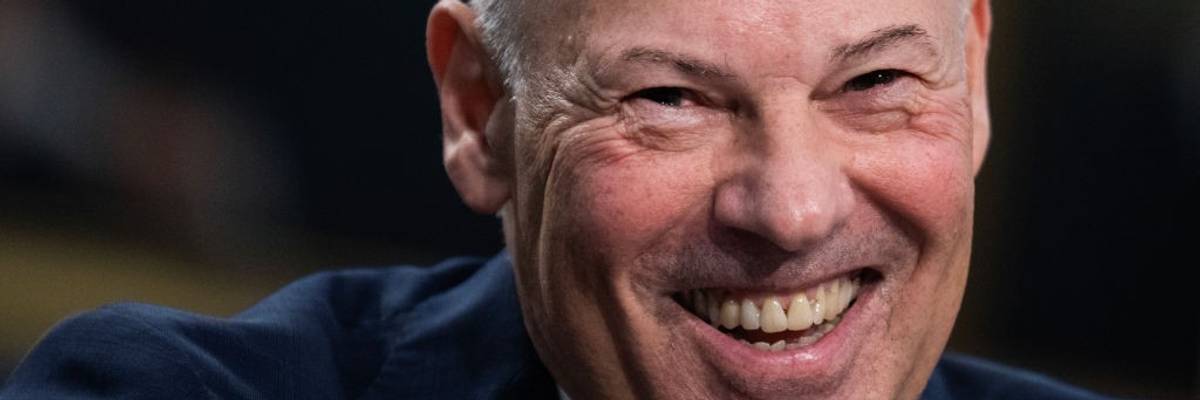
Postmaster General Louis DeJoy testifies during the House Appropriations Committee hearing titled "United States Postal Service's Role in 2024 Election Mail Readiness," in Rayburn building on Thursday, September 26, 2024.
Instead of privatization, said one Democratic lawmaker, "Fire his former pick for postmaster, DeJoy, and let a real professional run it like it should be run. The first priority is delivering mail. Cut the Pentagon's bloat if you want to save money."
After weekend reporting indicated President-elect Donald Trump is actively thinking about avenues to privatize the U.S. Postal Service, progressives decried any such efforts and once again directed their ire on the much-reviled Postmaster General, appointed to run the USPS during Trump's first term.
The Washington Post reported Saturday, citing people familiar with recent talks within the incoming team's camp, that Trump is "keen" on a privatization scheme that would give the USPS to for-profit, private interests.
According to the Post:
Trump has discussed his desire to overhaul the Postal Service at his Mar-a-Lago estate with Howard Lutnick, his pick for commerce secretary and the co-chair of his presidential transition, the people said. Earlier this month, Trump also convened a group of transition officials to ask for their views on privatizing the agency, one of the people said.
Told of the mail agency's annual financial losses, Trump said the government should not subsidize the organization, the people said. The people spoke on the condition of anonymity to reflect private conversations.
Trump's hostility to government programs that serve the public interest—including Medicare, Social Security, public education, and consumer protection agencies—is well-documented.
"The United States Postal Service is a crucial asset that was built and is owned by all of us, and there is zero mandate from the public to turn it over to an oligarch."
Trump's attacks on the Postal Service, including his blessing of the 2020 appointment of Postmaster General Louis DeJoy, a former logistics industry executive, sparked alarm about Republican desires to gut the agency from the inside out.
While calls to fire DeJoy from the USPS top leadership post persisted during the last year of Trump's first term and remained constant during Biden's time in office, he remains Postmaster General despite repeated accusations that his ultimate aim is to diminish the agency to such an extend that it will be more possible to justify its dismantling.
While the Post's reporting on Saturday stated that Trump's "specific plans for overhauling the Postal Service" in his upcoming term "were not immediately clear," it did quote Casey Mulligan, who served as a top economic advisor during the last administration, who touted the performance of the private sector compared to a Postal Service he claimed was too slow and costly.
"We didn't finish the job in the first term, but we should finish it now," said Mulligan.
Progressive defenders of the Postal Service responded by denouncing any future effort to privatize the agency, which is one of the most popular among the U.S. public.
"The Post Office is in our constitution," said Rep. Mark Pocan (D-Wis.) on Saturday. "There is no way we let Donald Trump privatize it. Fire his former pick for postmaster, DeJoy, and let a real professional run it like it should be run. The first priority is delivering mail. Cut the Pentagon's bloat if you want to save money."
Former Ohio state senator Nina Turner also defended the USPS, saying that "72% of Americans approve of the U.S. Postal Service; it's how many seniors receive medication, especially in rural areas."
Progressive critics of right-wing attacks on the Postal Service have noted for years that the "financial performance" issues directly result from the "burdensome and unnecessary" pre-funding of liabilities mandated by the 2006 Postal Accountability and Enhancement Act. This act forces the USPS to pay billions yearly toward future postal worker retirement benefits.
"No matter what your partisan stripe," said Micah Rasmussen, director of the Rebovich Institute for New Jersey Politics at Rider University, "we should be able to agree the United States Postal Service is a crucial asset that was built and is owned by all of us, and there is zero mandate from the public to turn it over to an oligarch."
Dear Common Dreams reader, It’s been nearly 30 years since I co-founded Common Dreams with my late wife, Lina Newhouser. We had the radical notion that journalism should serve the public good, not corporate profits. It was clear to us from the outset what it would take to build such a project. No paid advertisements. No corporate sponsors. No millionaire publisher telling us what to think or do. Many people said we wouldn't last a year, but we proved those doubters wrong. Together with a tremendous team of journalists and dedicated staff, we built an independent media outlet free from the constraints of profits and corporate control. Our mission has always been simple: To inform. To inspire. To ignite change for the common good. Building Common Dreams was not easy. Our survival was never guaranteed. When you take on the most powerful forces—Wall Street greed, fossil fuel industry destruction, Big Tech lobbyists, and uber-rich oligarchs who have spent billions upon billions rigging the economy and democracy in their favor—the only bulwark you have is supporters who believe in your work. But here’s the urgent message from me today. It's never been this bad out there. And it's never been this hard to keep us going. At the very moment Common Dreams is most needed, the threats we face are intensifying. We need your support now more than ever. We don't accept corporate advertising and never will. We don't have a paywall because we don't think people should be blocked from critical news based on their ability to pay. Everything we do is funded by the donations of readers like you. When everyone does the little they can afford, we are strong. But if that support retreats or dries up, so do we. Will you donate now to make sure Common Dreams not only survives but thrives? —Craig Brown, Co-founder |
After weekend reporting indicated President-elect Donald Trump is actively thinking about avenues to privatize the U.S. Postal Service, progressives decried any such efforts and once again directed their ire on the much-reviled Postmaster General, appointed to run the USPS during Trump's first term.
The Washington Post reported Saturday, citing people familiar with recent talks within the incoming team's camp, that Trump is "keen" on a privatization scheme that would give the USPS to for-profit, private interests.
According to the Post:
Trump has discussed his desire to overhaul the Postal Service at his Mar-a-Lago estate with Howard Lutnick, his pick for commerce secretary and the co-chair of his presidential transition, the people said. Earlier this month, Trump also convened a group of transition officials to ask for their views on privatizing the agency, one of the people said.
Told of the mail agency's annual financial losses, Trump said the government should not subsidize the organization, the people said. The people spoke on the condition of anonymity to reflect private conversations.
Trump's hostility to government programs that serve the public interest—including Medicare, Social Security, public education, and consumer protection agencies—is well-documented.
"The United States Postal Service is a crucial asset that was built and is owned by all of us, and there is zero mandate from the public to turn it over to an oligarch."
Trump's attacks on the Postal Service, including his blessing of the 2020 appointment of Postmaster General Louis DeJoy, a former logistics industry executive, sparked alarm about Republican desires to gut the agency from the inside out.
While calls to fire DeJoy from the USPS top leadership post persisted during the last year of Trump's first term and remained constant during Biden's time in office, he remains Postmaster General despite repeated accusations that his ultimate aim is to diminish the agency to such an extend that it will be more possible to justify its dismantling.
While the Post's reporting on Saturday stated that Trump's "specific plans for overhauling the Postal Service" in his upcoming term "were not immediately clear," it did quote Casey Mulligan, who served as a top economic advisor during the last administration, who touted the performance of the private sector compared to a Postal Service he claimed was too slow and costly.
"We didn't finish the job in the first term, but we should finish it now," said Mulligan.
Progressive defenders of the Postal Service responded by denouncing any future effort to privatize the agency, which is one of the most popular among the U.S. public.
"The Post Office is in our constitution," said Rep. Mark Pocan (D-Wis.) on Saturday. "There is no way we let Donald Trump privatize it. Fire his former pick for postmaster, DeJoy, and let a real professional run it like it should be run. The first priority is delivering mail. Cut the Pentagon's bloat if you want to save money."
Former Ohio state senator Nina Turner also defended the USPS, saying that "72% of Americans approve of the U.S. Postal Service; it's how many seniors receive medication, especially in rural areas."
Progressive critics of right-wing attacks on the Postal Service have noted for years that the "financial performance" issues directly result from the "burdensome and unnecessary" pre-funding of liabilities mandated by the 2006 Postal Accountability and Enhancement Act. This act forces the USPS to pay billions yearly toward future postal worker retirement benefits.
"No matter what your partisan stripe," said Micah Rasmussen, director of the Rebovich Institute for New Jersey Politics at Rider University, "we should be able to agree the United States Postal Service is a crucial asset that was built and is owned by all of us, and there is zero mandate from the public to turn it over to an oligarch."
After weekend reporting indicated President-elect Donald Trump is actively thinking about avenues to privatize the U.S. Postal Service, progressives decried any such efforts and once again directed their ire on the much-reviled Postmaster General, appointed to run the USPS during Trump's first term.
The Washington Post reported Saturday, citing people familiar with recent talks within the incoming team's camp, that Trump is "keen" on a privatization scheme that would give the USPS to for-profit, private interests.
According to the Post:
Trump has discussed his desire to overhaul the Postal Service at his Mar-a-Lago estate with Howard Lutnick, his pick for commerce secretary and the co-chair of his presidential transition, the people said. Earlier this month, Trump also convened a group of transition officials to ask for their views on privatizing the agency, one of the people said.
Told of the mail agency's annual financial losses, Trump said the government should not subsidize the organization, the people said. The people spoke on the condition of anonymity to reflect private conversations.
Trump's hostility to government programs that serve the public interest—including Medicare, Social Security, public education, and consumer protection agencies—is well-documented.
"The United States Postal Service is a crucial asset that was built and is owned by all of us, and there is zero mandate from the public to turn it over to an oligarch."
Trump's attacks on the Postal Service, including his blessing of the 2020 appointment of Postmaster General Louis DeJoy, a former logistics industry executive, sparked alarm about Republican desires to gut the agency from the inside out.
While calls to fire DeJoy from the USPS top leadership post persisted during the last year of Trump's first term and remained constant during Biden's time in office, he remains Postmaster General despite repeated accusations that his ultimate aim is to diminish the agency to such an extend that it will be more possible to justify its dismantling.
While the Post's reporting on Saturday stated that Trump's "specific plans for overhauling the Postal Service" in his upcoming term "were not immediately clear," it did quote Casey Mulligan, who served as a top economic advisor during the last administration, who touted the performance of the private sector compared to a Postal Service he claimed was too slow and costly.
"We didn't finish the job in the first term, but we should finish it now," said Mulligan.
Progressive defenders of the Postal Service responded by denouncing any future effort to privatize the agency, which is one of the most popular among the U.S. public.
"The Post Office is in our constitution," said Rep. Mark Pocan (D-Wis.) on Saturday. "There is no way we let Donald Trump privatize it. Fire his former pick for postmaster, DeJoy, and let a real professional run it like it should be run. The first priority is delivering mail. Cut the Pentagon's bloat if you want to save money."
Former Ohio state senator Nina Turner also defended the USPS, saying that "72% of Americans approve of the U.S. Postal Service; it's how many seniors receive medication, especially in rural areas."
Progressive critics of right-wing attacks on the Postal Service have noted for years that the "financial performance" issues directly result from the "burdensome and unnecessary" pre-funding of liabilities mandated by the 2006 Postal Accountability and Enhancement Act. This act forces the USPS to pay billions yearly toward future postal worker retirement benefits.
"No matter what your partisan stripe," said Micah Rasmussen, director of the Rebovich Institute for New Jersey Politics at Rider University, "we should be able to agree the United States Postal Service is a crucial asset that was built and is owned by all of us, and there is zero mandate from the public to turn it over to an oligarch."