
SUBSCRIBE TO OUR FREE NEWSLETTER
Daily news & progressive opinion—funded by the people, not the corporations—delivered straight to your inbox.
5
#000000
#FFFFFF
To donate by check, phone, or other method, see our More Ways to Give page.


Daily news & progressive opinion—funded by the people, not the corporations—delivered straight to your inbox.
"The Liberal government's decision to undermine 9,300 Canadian rail workers with binding arbitration sends a message to big corporations: Being a bad boss pays off," said the leader of the New Democratic Party.
The Canadian government on Thursday moved to end a lockout of workers at the country's two major rail corporations by forcing the two sides into arbitration, drawing sharp criticism from the union, which is challenging the move, and left-leaning political figures, including an ally of Prime Minister Justin Trudeau.
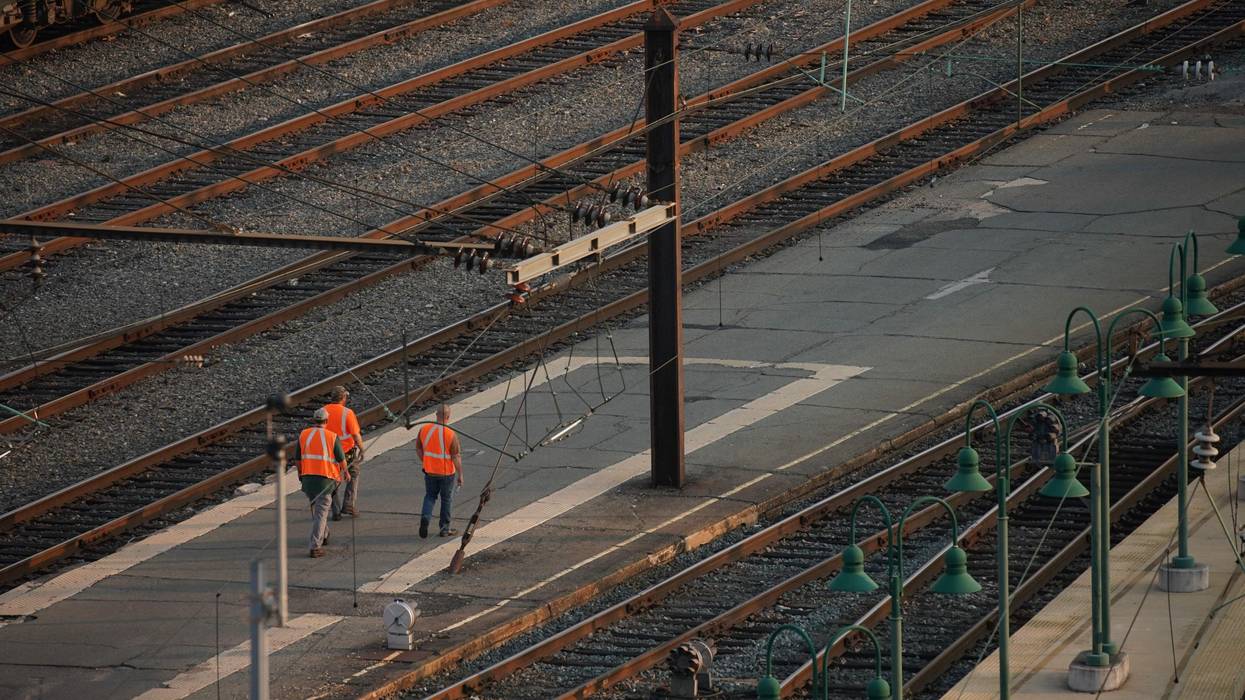
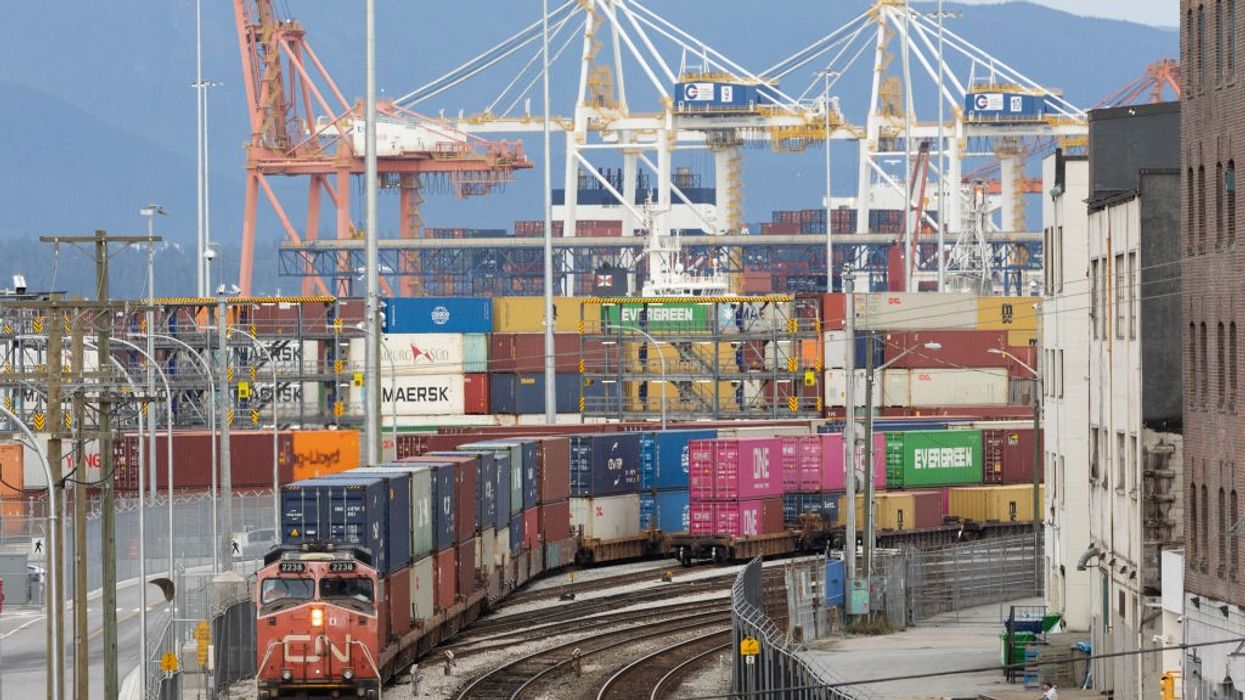
Canadian National (CN) and Canadian Pacific Kansas City (CPKC) locked out about 9,300 engineers, conductors, and yard workers starting Thursday morning, shutting down the vast majority of the country's freight operations—a major disruption to the national economy and supplies chains across North America. The two sides had failed to reach a labor agreement after months of negotiating.
Labor Minister Steven MacKinnon made the announcement Thursday afternoon, referring the arbitration to the Canada Industrial Relations Board and ordering previous collective bargaining agreements to be extended until the CIRB process is complete. He said he expected trains to be running again within days.
The government's move was widely seen as a victory for company executives and a loss for 9,300 workers, whom worker advocates say were effectively stripped of their right to collectively bargain.
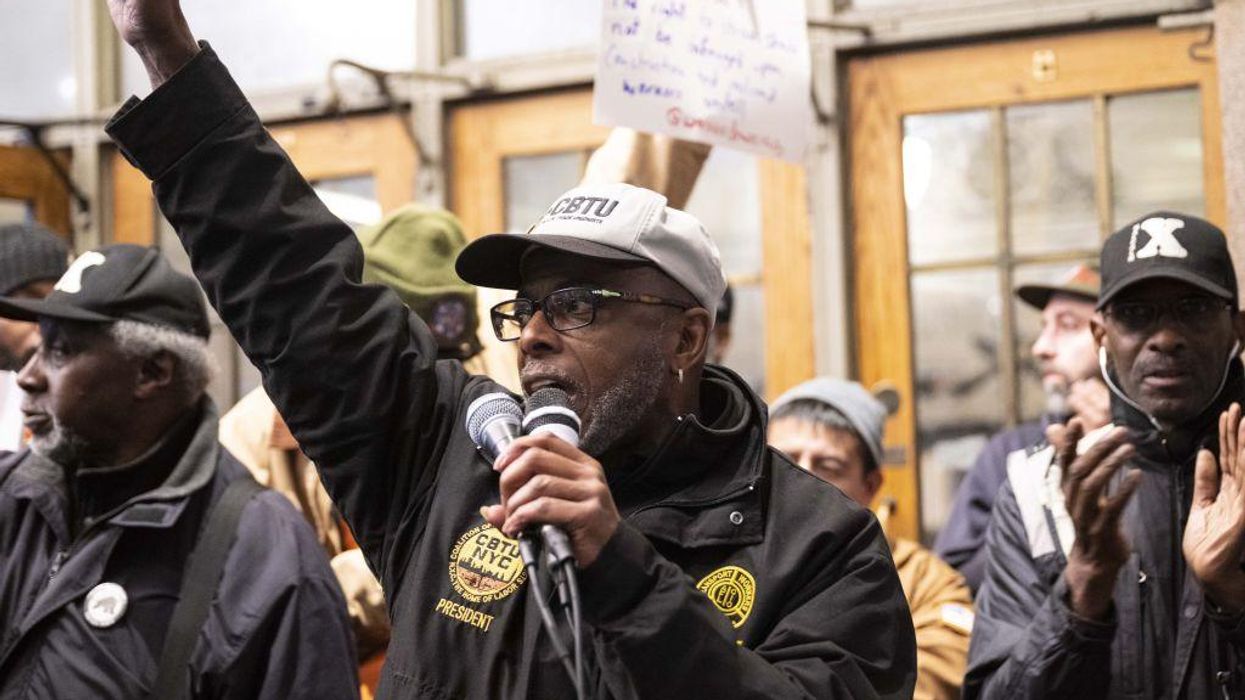
"By resorting to binding arbitration, the government has allowed CN and CPKC to sidestep a union determined to protect rail safety," Teamsters Canada Rail Conference (TCRC) president Paul Boucher said in a statement. "Despite claiming to value and honor the collective bargaining process, the federal government quickly used its authority to suspend it, mere hours after an employer-imposed work stoppage."
Teamsters Canada Rail Conference's announced Friday it would challenge the constitutionality of the government move.
Jagmeet Singh, leader of the left-leaning New Democratic Party, which Trudeau's centrist Liberal Party relies on for voting support in Parliament, was blisteringly critical of his strategic ally following the government's announcement.
"The Liberal [government's] decision to undermine 9,300 Canadian rail workers with binding arbitration sends a message to big corporations like CN and CPKC: Being a bad boss pays off," Singh wrote on social media. "Justin Trudeau's actions are cowardly, anti-worker, and proof that he will always cave to corporate greed."
The Liberal govt's decision to undermine 9,300 Canadian rail workers with a binding arbitration sends a message to big corporations like CN & CPKC:
Being a bad boss pays off
Justin Trudeau's actions are cowardly, anti-worker, & proof that he will always cave to corporate greed. pic.twitter.com/p7U1mE4hlv
— Jagmeet Singh (@theJagmeetSingh) August 22, 2024
Singh, a member of Parliament from the Vancouver metropolitan area, had warned Trudeau earlier in the week not to intervene, arguing that there was an ugly history of the Canadian government doing so in favor of industry interests. Trudeau and other government officials had said, before Thursday afternoon, that they preferred the two sides hash out their differences at the negotiating table.
However, the train stoppage led to mounting industry pressure, not just from the rail companies but also broader business interests who expressed concern about the impact on Canada's export-driven economy. Media outlets in Canada and the U.S. focused on the potential downsides of a protracted stoppage. Half of the Canada's exports are moved by rail, according to a railway industry lobby group, and more than $700 million USD worth of goods move on the country's tracks per day.
"The two major railways in Canada manufactured this crisis, took the country hostage, and manipulated the government to once again disregard the rights afforded to working-class Canadians," said Boucher, the union leader. "The TCRC is deeply disappointed by this shameful decision."
Rail operations remained in a complicated limbo on Friday as TCRC seemingly figured out how to react to the government's move. Initially, the union announced that while the CPKC work stoppage was ongoing, pending CIRB action, its CN members would resume work—and the company's trains began running across Canada at 7:00am—but later in the morning the union issued a 72-hour strike notice to CN.
The labor dispute centers on worker hours and conditions, and has parallels to a U.S. dispute in 2022, in which the U.S. government also stepped in to force a deal, angering many union leaders and working-class advocates.
"The railroads don't care about farmers, small businesses, supply chains, or their own employees," a union president said. "Their sole focus is boosting their bottom line, even if it means jeopardizing the entire economy."
Both of Canada's major freight rail companies—key cogs in North America's supply chains—locked out workers and shut down operations on Thursday due to a labor dispute over worker hours and conditions, as a union leader said the companies were holding the Canadian economy "hostage."
The unprecedented stoppage comes with high stakes for the 9,300 affected engineers, conductors, and yard workers—and the country's export-driven economy. The two companies, Canadian National (CN) and Canadian Pacific Kansas City (CPKC), own almost all of the tracks and haul more than $700 million USD worth of goods per day.
The Teamsters Canada Rail Conference, which represents the affected workers across both companies, said the two corporations had refused many of its "good faith" offers.
"Neither CN nor CPKC has relented on their push to weaken protections around rest periods and scheduling, increasing the risk of fatigue-related safety issues," the union said in a statement.
Paul Boucher, the union's president, said that "CN and CPKC have shown themselves willing to compromise rail safety and tear families apart to earn an extra buck. The railroads don't care about farmers, small businesses, supply chains, or their own employees. Their sole focus is boosting their bottom line, even if it means jeopardizing the entire economy."
🚂 The men and women who keep our CN and CPKC trains running want decent working conditions that ensure safety for us all🚨. It’s time to give them our support.💪#Canlab pic.twitter.com/bGXQC1yuo1
— Teamsters Canada (@TeamstersCanada) August 21, 2024
Boucher said in a video statement on social media that the companies were holding Canada's economy "hostage" in an attempt to get the federal government, led by Liberal Prime Minister Justin Trudeau, to force a binding arbitration agreement on the workers, an idea that business groups such as the Canadian Chamber of Commerce support.
So far, Trudeau's government hasn't done so and has instead pressured the two sides to come to a deal.
"Millions of Canadians, of workers, of farmers, of businesses right across the country are counting on both sides to do the work and get to a resolution," Trudeau told reporters Wednesday.
The Liberals, a centrist party, rely on the votes of the smaller New Democratic Party in Parliament. NDP was founded in part by organized labor and has warned Trudeau not to force the rail employees back to work.
"For too long we have seen Liberals and Conservatives interfere in these types of labor disputes to the advantage of the employer, to the detriment of the worker," Jagmeet Singh, NDP's leader, told reporters on Monday. "That is wrong, and we will oppose that."
In 2022, the U.S. federal government did take such action in a railway labor dispute. The U.S. Congress and President Joe Biden forced railworkers into an agreement that four key unions didn't agree to—angering many working-class Americans and progressive advocates, who argued that the right to strike had been nullified by the government intervention.
Canada has previously seen such federal interventions—or the threat of them, which can force workers' hand in negotiations—but in the past, disputes have occurred with just one of the major rail companies or the other, with their contracts expiring in alternating years.
This time, the timing has allowed for an industry-wide dispute, and a larger transportation disruption, including not just freight rail but also some passenger rail services that operate on lines owned by the two companies. There are no traffic controllers on the CPKC tracks, so passenger rail can't operate, The Canadian Broadcasting Corporation reported.
The companies have used the disruption as part of the rationale for government action. CPKC openly called for binding arbitration on Thursday, saying in a statement that an agreement is "not within reach" and that the union "continues to make unrealistic demands that would fundamentally impair the railway's ability to serve our customers with a reliable and cost-competitive transportation service."
The union argues that CPKC wants to "gut the collective agreement of all safety-critical fatigue provisions" and CN is trying to extend work days in western provinces, raising what the union calls a "a fatigue-related safety risk," The Guardian reported.
CN's net income for 2023 was $4 billion USD, while CPKC's was $2.9 billion USD.
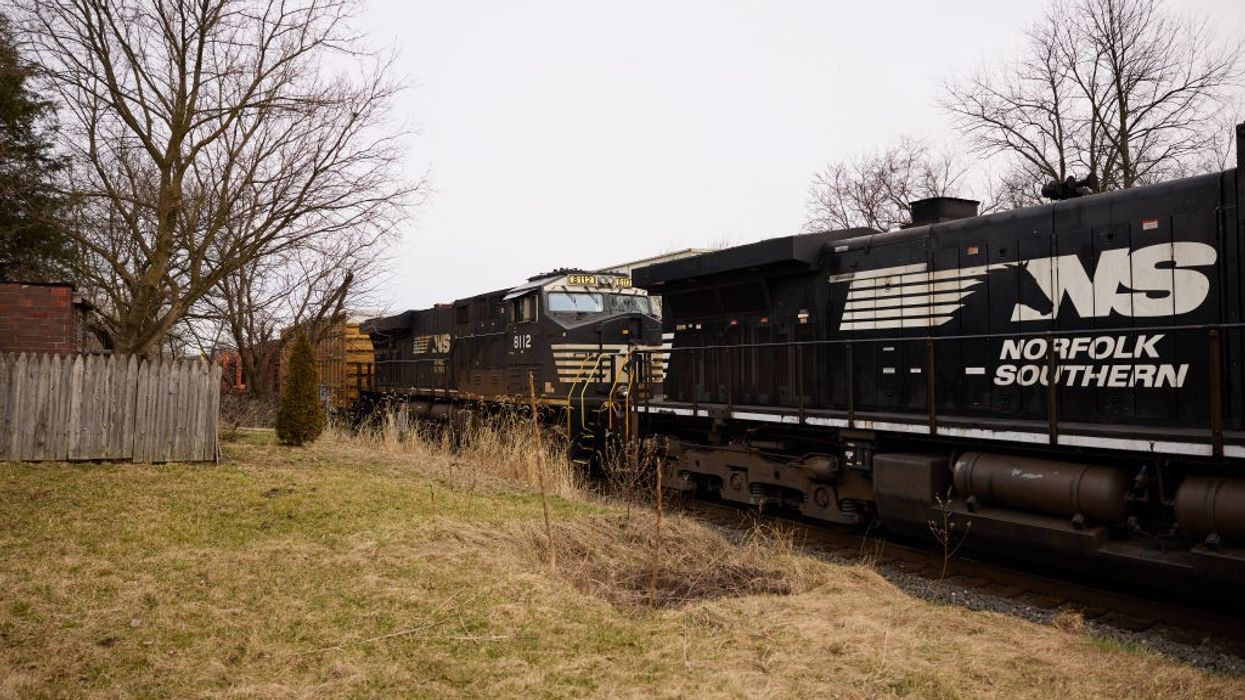
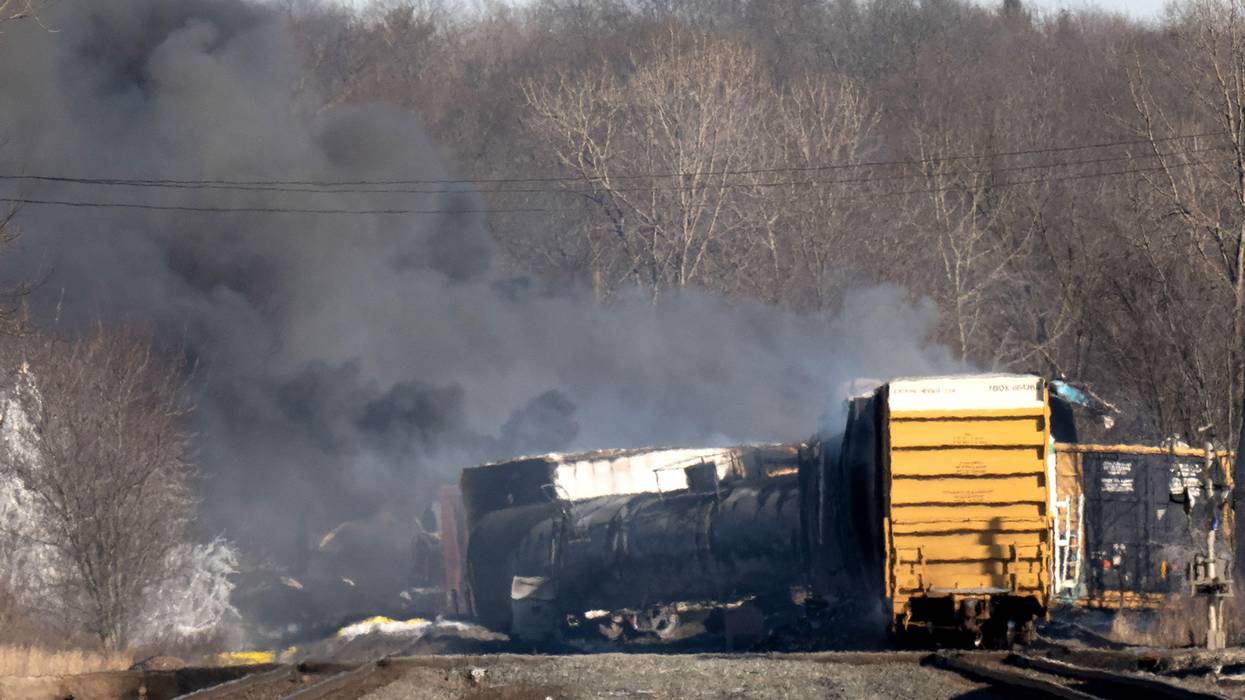
The toxic rail derailment in East Palestine, Ohio, was a symptom of a privatized rail system that prioritizes profit over public safety.
The National Transportation Safety Board announced in June that the infamous East Palestine, Ohio, freight train derailment was caused by a defective wheel bearing.
But that technical issue does not tell the whole story.
Federal investigators found that the railway company Norfolk Southern failed to communicate information to emergency responders in a timely manner, which contributed to the exposure of responders and the public to post-derailment hazards.
According to the June 2024 NTSB report abstract on the derailment and hazardous materials release, Norfolk Southern’s delayed transmission of consist information “also delayed the Ohio State Patrol’s recommendation to the incident commander that the shelter-in-place order be replaced by an evacuation.”
Norfolk Southern officials and contractors also provided misleading and incomplete information while advocating for an unnecessary vent and burn of tank cars carrying vinyl chloride. A vent-and-burn action is, according to the Federal Railroad Administration (FRA), a response of last resort.
A public rail system would directly benefit workers, trackside communities, small shippers, farmers, passengers, and the environment.
Norfolk Southern began planning the vent and burn shortly after the derailment, rejecting three other removal methods that could have been far less dangerous to responders and the people of East Palestine.
While there may be some temptation to view the catastrophic derailment in East Palestine as an unfortunate fluke, the truth is that disastrous events are predictable features of the American rail system.
Under the private ownership of the Class I railroads, we have seen time and again the callous prioritization of profit over people. For the sake of short-term profit, inspections are cut short, tracks and equipment are not maintained, and the rail workforce is gutted — features of an industrial system that calculates derailments as part of the cost of doing business.
The Class I railroads’ — the largest domestic rail carriers — pursuit of short-term profit has led to critical understaffing, longer trains, diminished maintenance of tracks and equipment, inadequate inspections, and other underinvestments that leave rail workers and trackside communities vulnerable to derailments and disasters.
The Class I railroad robber barons are perfectly willing to risk the lives of workers and people living in trackside communities so long as it means more money for them and their shareholders. This is not hyperbole.
Between 2013 and 2022, the rate of rail accidents rose 28 percent as a result of the implementation of Precision Scheduled Railroading (PSR). In short, the philosophy of PSR can be summed up as “speed over safety.” Since 2015, over 50,000 railroad workers — nearly 30 percent of the rail workforce — have been laid off. The workers who remain on the railroads experience chronic fatigue as a result of unpredictable schedules and critical understaffing.
Last spring, it was reported that Union Pacific, one of the six Class I rail carriers, undermined government safety assessments and retaliated against workers who reported rail car flaws. In 2023, the FRA found that 73% of Union Pacific locomotives have federal defects.
According to the NTSB, Norfolk Southern interfered with the East Palestine investigation and abused its status as a party to the probe. NTSB Chair Jennifer Homendy revealed that she was threatened by Norfolk Southern during a private exchange with a senior company executive two weeks prior to the NTSB East Palestine board meeting.
These are but a few examples of the criminality and nefariousness that characterize the privately owned rail system. What’s more, even if one puts aside moral questions regarding the behavior of the Class I railroads, one finds an industry being strangled to death by a get-rich-quick scheme that victimizes workers and trackside communities, cheats small shippers, and — because the rail robber barons are completely allergic to capital expenditure —dooms the US rail system to degradation and ossification.
Another concern is how the American rail system is regulated. While the FRA is ostensibly tasked with overseeing and regulating US railroads, this arrangement becomes murky when one considers the significant degree of industry influence.
The Association of American Railroads (AAR), the industry group representing the interests of North America’s major rail corporations, sets its own safety standards and works closely with the FRA, effectively as an independent regulatory body. AAR even manages the FRA’s Transportation Technology Center through its wholly-owned subsidiary, Transportation Technology Center, Inc.
In the NTSB investigation of the East Palestine derailment, AAR’s standards for hot bearing alerts and alarms came under scrutiny, as they served as the guide for Norfolk Southern’s own criteria that contributed to the disaster. It is worth noting that under the Trump presidency, railroad industry executive Ronald Batory was made FRA administrator, further blurring the line between government regulator and regulated industry.
With the foxes running the henhouse, simple demands for more and better regulation of the railroad industry are inadequate. The real solution, advocated by Railroad Workers United (RWU) and allied organizations across the country, is public ownership of the railroads.
Last spring, RWU launched the Public Rail Ownership (PRO) campaign, building a diverse coalition including rank-and-file unionists, environmentalists, progressives, community activists, and others calling for a rail system that operates in the public interest.
The campaign has hosted webinars, published scholarly works such as Maddock Thomas’s “Putting America Back on Track: The Case for a 21st Century Public Rail System,” and attended union conferences to make its case.
What a publicly owned and operated rail system in the United States will look like has yet to be determined, but there are models that can serve as guides.
The task at hand is massive, and the road ahead is fraught with challenges. However, there is little hope for any improvement of the US rail system so long as it remains in the hands of the irresponsible and unaccountable Class I robber barons.
The rail system in the US is, compared to other countries, an anomaly in that it is predominantly owned by private companies. This was not always the case, and there’s inspiration to be found in US history for the development of a 21st century public rail system.
During World War I, the US rail system was nationalized amid a consensus that the private rail system was unable to serve the needs of the country during wartime. Under the control of the US Railroad Administration (USRA), the railroads operated far more efficiently and effectively than they had under private ownership.
Working conditions and service improved drastically, winning the support of workers, shippers, and much of the public. The nationalized rail system was so popular among rail workers that in a 1918 American Federation of Labor-sponsored referendum, the vote to keep the nation’s railroads in public hands was overwhelmingly in favor: 306,720 to 1,466.
A public rail system would directly benefit workers, trackside communities, small shippers, farmers, passengers, and the environment. The Class I carriers have made it clear that they have no intent to expand rail, or take the crucial step towards full catenary electrification.
Under public ownership, the fetters of the short-term profit motive would be cast off the rail system, opening the door to large-scale infrastructure modernization and expansion projects, creating jobs in construction and spurring economic development in neglected areas of the country. A publicly owned and operated rail system would also create thousands of railroad jobs, as the stripped-to-the-bone PSR model advocated by the Class I carriers would be destined for the dustbin.
The task at hand is massive, and the road ahead is fraught with challenges. However, there is little hope for any improvement of the US rail system so long as it remains in the hands of the irresponsible and unaccountable Class I robber barons. RWU and its allies invite all organizations and individuals to get involved in the Public Rail Ownership campaign, and help make public rail a reality. For more information, please visit publicrailnow.org.
"You need to leave, you just need to leave," Ohio's governor warned nearby residents ahead of the release. "This is a matter of life and death."
Authorities ordered Ohio and Pennsylvania residents in the vicinity of a derailed train to evacuate immediately or risk death prior to a planned release of toxic chemicals on Monday afternoon.
A train derailed in East Palestine, Ohio late Friday night, sparking a fire that has been smoldering ever since. In order to prevent five tanker cars carrying vinyl chloride from exploding and sending debris flying through the rural town, officials said they would begin releasing the material into a trench and burning it off into the air at 3:30 pm EST—though as of press time, it hadn't started.
Scott Deutsch of rail operator Norfolk Southern "estimated the release would take from one to three hours," The Associated Press reported. "Doing this during the daytime will allow the fumes to disperse more quickly," the news outlet noted, citing Deutsch.
Roughly half of the 4,800 residents in East Palestine had already been urged to leave over the weekend before officials decided on Monday to conduct a controlled release. While authorities believed that most, if not all, inhabitants of the danger zone departed in response to the initial evacuation warning, they knocked on doors one last time on Monday.
During a Monday press conference preceding the planned release, Republican Ohio Gov. Mike DeWine ordered anyone remaining in the area near the derailment to evacuate immediately: "You need to leave, you just need to leave. This is a matter of life and death."
The train, which was shipping cargo from Madison, Illinois, to Conway, Pennsylvania, derailed near the Ohio-Pennsylvania state border. The evacuation zone includes a sparsely populated area of Pennsylvania about 50 miles northwest of Pittsburgh.
According to Josh Shapiro, Pennsylvania's Democratic governor, about two dozen state residents live in the evacuation zone but as of Sunday night, half remained in their homes. He said that local emergency services workers and state police were going door-to-door to help those residents get on their way.
During a last-minute press conference held just after 1:30 pm EST on Monday, Shapiro implored anyone remaining in the danger zone to leave immediately.
"Let me be very, very clear: If you are in this red zone that is on the map and you refuse to evacuate, you are risking death," Shapiro said. "This is very serious. If you are within the orange area on this map, you risk permanent lung damage within a matter of hours or days."
"Beyond the evacuation zone, based on current weather conditions, we are recommending people who live near East Palestine in Darlington Township along State Line Road, Valley Road, and Taggert Road to shelter in place and be prepared to evacuate if necessary," he added. "We know that weather can change."
Miraculously, no crew, residents, or first responders suffered injuries during the Friday night train accident.
As AP reported, "Federal investigators say the cause of the derailment was a mechanical issue with a rail car axle."
According to the outlet: "The three-member train crew received an alert about the mechanical defect 'shortly before the derailment,' Michael Graham, a board member of the National Transportation Safety Board, said Sunday. Investigators identified the exact 'point of derailment,' but the board was still working to determine which rail car experienced the axle issue, he said."
The accident comes as rail operators and members of Congress refuse to provide rail workers with paid sick leave, a move that would improve safety.
Rank-and-file railroad unionists seem to agree that the best hope for a better contract next time is greater cross-craft unity, and a single bargaining coalition of all the rail unions.
While the high-stakes labor dispute on U.S. freight railroads has receded from headlines since President Joe Biden and Congress imposed a new contract last month, rail workers are continuing their fight for dignity and better conditions — albeit without the threat of a national strike on the table.
“The American people should know that while this round of collective bargaining is over, the underlying issues facing the workforce and rail customers remain,” the AFL-CIO Transportation Trades Department said in a statement.
The major underlying issue remains precision scheduled railroading (PSR), the business model adopted in recent years by Class I rail carriers like Union Pacific, BNSF, Norfolk Southern and CSX. Designed to maximize shareholder profits by cutting costs to the bone, PSR has been blamed for a dramatic reduction in the freight rail workforce, increased supply-chain congestion and deteriorating safety — all while investors rake in record profits.
As a potential railroad strike loomed late last year, the absence of guaranteed paid sick leave in the rail industry came to symbolize the immense strain PSR puts on workers. Without sick leave, and with the railroads implementing draconian attendance policies to deal with understaffing, workers face discipline for missing work due to illness and have to burn through their vacation time if they or their family members get sick.
The tentative agreement between rail carriers and unions, brokered by Biden last September, did not include any guaranteed sick days — prompting a majority of the union rank and file to vote against ratifying the deal.
Late last year, when Biden called on Congress to override union democracy and impose the contract anyway, progressive Democrats attached a separate resolution mandating seven paid sick days, without the president’s public support. The measure passed in the House of Representatives, but failed in the Senate, where all but six Republicans voted against it.
“President Biden campaigned on a week of paid sick leave for all working people, and then he had the opportunity right here but didn’t take action. He favored the corporations,” said Matt Weaver, a rail worker and member of the Brotherhood of Maintenance of Way Employes Division (BMWED) in Ohio.
The fight continues
Immediately after the contract was imposed — effectively ending the threat of a strike — several railroad unions, including the Sheet Metal, Air, Rail and Transportation Workers-Transportation Division (SMART-TD), began urging Biden to issue an executive order guaranteeing sick leave in the rail industry.
On December 13, SMART-TD organized rallies in at least 11 states and in Washington, D.C. demanding action from Biden. At the same time, led by Sen. Bernie Sanders (I-Vt.), over 70 members of Congress signed onto a letter calling on the president to listen to the rail unions and act on paid sick leave.
So far, Biden has not publicly responded.
Deven Mantz, a BMWED member in North Dakota, was one of around 25 rail workers who traveled to Washington in November and personally persuaded lawmakers to introduce and vote for the failed sick leave measure.
“Now that we’ve got a new Congress in there, the pressure is off is a little bit, which is kind of frustrating” Mantz told In These Times. “But we’re still organizing. I’m still in contact with congressmembers that I spoke with before when I was in D.C., and they’re not giving up the fight yet quite yet.”
Mantz explained that rather than an executive order from Biden himself — which the rail carriers would likely challenge in court — guaranteed sick leave could come in the form of new safety rules from another part of the executive branch. The Department of Transportation, for example, could mandate paid sick days on the grounds that forcing employees to come to work ill and unrested creates unsafe conditions on the railroads.
Meanwhile, rank-and-file railroaders are also focused on longer-term struggles, with the next round of contract negotiations scheduled to begin in less than two years.
Angry at top union officials for working closely with the Biden administration to secure an unpopular agreement and avoid a strike, many railroad workers are also calling for more democracy in their unions.
Just days after the new contract was imposed last month, members of the Brotherhood of Locomotive Engineers and Trainmen (BLET) — the second-largest rail union — voted their union president, Dennis Pierce, out of office in a stunning upset.
The BLET’s new president, Eddie Hall, took office on January 1. A working engineer and local union officer in Arizona, Hall’s longshot candidacy was born out of rank-and-file frustration at how the union’s leadership was handling contract negotiations. His unexpected victory shows how deep those frustrations go.
The rank and file in the BMWED are also mobilizing, particularly through a caucus called Rank and File United, cofounded by Mantz in 2021.
“The focus of our caucus is to educate. We’re trying to give membership power and confidence local by local,” Mantz explained. He said one of the ultimate goals of Rank and File United is to organize a work-to-rule campaign at some point in the future.
“A work-to-rule campaign would push all of our membership to do exactly what they’re supposed to do [on the job], no cutting corners. The railroads almost entice you to cut corners on safety issues because it benefits them,” Mantz said. “Our idea is this would force the railroads to actually hire” instead of overworking the dwindling number of existing employees.
“Bigger fish to fry”
Rank-and-file railroad unionists seem to agree that the best hope for a better contract next time is greater cross-craft unity, and a single bargaining coalition of all the rail unions.
Building such unity is the main goal of Railroad Workers United (RWU), a solidarity caucus of rank-and-file workers from across the dozen different rail unions. Founded in 2008, RWU gained national attention in the recent contract fight as its members organized against the Biden-brokered deal and advocated for the unions to strike.
RWU organizer Ron Kaminkow said that while the group would like to see Biden mandate paid sick days, they are not going to expend their limited resources trying to persuade the president to do what he could have done during contract bargaining.
“It has the potential to make us some sort of lobby group, and that’s not really what we do,” Kaminkow said, explaining that RWU has traditionally been successful at pressuring officials from the different rail unions to work together on issues like preserving two-person train crews. “I think Railroad Workers United has bigger fish to fry and a more important direction to go in.”
In particular, he said RWU is going to “go notch 8” on its recently announced campaign calling for public ownership of the freight railroads. (Notch 8 is the highest amperage on diesel locomotive engines.)
“The railroad in this country is an anomaly in that it is the only transportation infrastructure that’s privately held, and it’s an anomaly worldwide in that most all railroad infrastructure everywhere else is held publicly,” Kaminkow said, noting how highways, airports, seaports and inland water ways in the United States are already publicly owned.
RWU contends that as long as the railroads are owned by private corporations, they will continue to put profit maximization ahead of safety and efficient transportation.
In the weeks since Biden and Congress prevented a rail strike in the name of avoiding supply chain disruptions, there have nevertheless been multiple disruptions brought on by the rail carriers’ PSR business model.
For example, in late December, Union Pacific failed to deliver multiple shipments of corn to Foster Farms facilities in California, putting thousands of dairy cows and millions of chickens at risk of starving. There have also been several freight derailments around the country, including one that caused an Amtrak passenger train to be stranded for 29 hours.
Meanwhile, the growing length of freight trains and increased time they block rail crossings — another symptom of PSR — has been blamed for a growing number of deaths as they delay emergency responders like paramedics and firefighters from quickly getting to where they need to be.
“The Class I railroads have pissed off everyone in the country,” said Kaminkow. “RWU will be seeking allies amongst trade unions, passenger train advocates, environmental groups, social justice and transportation justice groups, and so forth in the months and years ahead.”
Ahead of the next round of contract negotiations, workers are hoping that the coalition building they’ve done over the previous year will help build pressure to secure key wins. Yet they also worry about the precedent set by Biden and Congress last month.
“With the [recent] agreement imposed on us, it gives the railroads no reason to bargain in good faith,” BMWED’s Weaver said. “Why would they make a fair agreement with us when they know Congress will just shove anything up our asses?”
The outrage and alarm produced by the mere threat of these workers to withhold their labor reveal that our economy functions because workers... work.
So, the threatened railway workers strike is over. President Joe Biden used his authority over interstate commerce to impose a settlement. As we all watch CNN and FOX News breath a sign of relief, let’s see if there is a lesson to be learned in these events.
Let’s take a brief look at the background to the dispute. The American railway system was deregulated in the 1980s. And, as always seems to happen, consolidation and profit-taking followed close upon the deregulation. What was once over 30 operating railroad companies was reduced to just seven through buyouts and mergers. These seven firms have all worked to increase their profits by reducing staffing, increasing and intensifying the workload of the remaining workers, and drawing back investment in safety equipment and other costly projects while increasing prices and rates.
The fact that labor’s ability to strike can threaten the normal workings of the economy reveals the true value of workers today.
For example, the companies introduced something called “Precision Scheduled Railroading,” which cut staffing and safety on the rails thereby endangering workers and the surrounding communities. The so-called upside of all these changes was reduced costs and increased profits. And, as usual, the latter were used to make payments to shareholders and investors. Unnoticed by many, these changes also meant that anything that allowed workers unscheduled time off (such as paid sick leave) would seriously disrupt what has become a more or less “bare bones” operation that relies on a minimum of employees to move a lot of stuff crucial to our economy which is built on “just-in-time” production, inventory, and logistics.
These profit-above-all changes made the railroad system especially dependent on a minimized workforce. It could not withstand the paid sick leave system the unions wanted. The new railroad system as a whole relied on the denial of the basic health and safety needs of the workforce. As a result, recent employee surveys showed three of the top five worst employers in the country were rail companies.
The question is: why didn’t President Biden opt to do nothing and simply let the bargaining process continue? Biden said he had to act because the imminent strike of railway workers would have devastated our already troubled economy. He more or less apologized for having to impose a settlement that did not include the seven days of paid sick leave desired by the four unions representing the majority of railroad workers. Their original proposal was for 15 days. His decision seems to have satiated the talking heads in the news media who had spent a couple of weeks underscoring the potential negative effects of a strike on the economy while giving very little by way of historical and sociological analysis. And, of course, it disappointed the 12 unions and 115,000 employees that make up the railway workforce.
But all this hand-wringing overlooks a very important point: the fact that labor’s ability to strike can threaten the normal workings of the economy reveals the true value of workers today. The outrage and alarm produced by the mere threat of these workers to withhold their labor reveal that our economy functions because workers... work. It is the labor of the employees at all the companies and institutions of our society that creates the things that people value and desire. Labor is the lifeblood of the economy.
Trains could run without railroad corporation majority stockholders and their CEOs, but not without maintenance workers and engineers; automobiles could be made without corporate honchos but not without the men and women on the assembly line; oil wells could pump petroleum without the folks who own oil company stocks but not without the workers at the rigs and pipelines; and, food could be grown and harvested without the persons who own the land but not without the farm workers who plant, weed, and harvest.
It is labor that makes the economy go. Amazon is successful because of its drivers and warehouse workers, nor because of Mr. Jeff Bezos. Tesla is able to make electric cars thanks to engineers and line workers, not because of Elon Musk. Walmart is able to sell stuff because of its associates—and they are not part of the Walton Family. And it's very a safe bet that Starbucks CEO Howard Schultz doesn’t even know how to make a decent latte.
So the next time you hear or read some outpouring of praise and admiration for a rich corporate owner or finance mogul just remind yourself what is the real key to a successful economy: the workers, the employees. These are the ordinary people (you and I) who make the economy work.
The Biden Administration and Congressional Democrats purport to be pro-union, but in their desperation to prevent a rail strike they fail to understand something fundamental about collective bargaining: Sometimes workers have to inconvenience the public in order to achieve their legitimate goals.
BNSF, part of billionaire Warren Buffett's Berkshire Hathaway conglomerate, was ordered to pay more than $1.7 million in damages and compensation to an employee who faced retaliation after reporting track defects.
A strike is a form of disruption. It is designed to put direct economic pressure on an employer by curtailing operations. Yet it also uses indirect means. The hope is that customers, suppliers, creditors and other stakeholders will press management to settle its differences with the union, resulting in better terms for workers. The louder the public uproar, the more likely there will be concessions by employers.
By trying to prohibit a strike by rail workers dissatisfied with the agreement previously negotiated with the help of the Biden Administration, Congress is eliminating both the direct and indirect pressures management might feel to improve on those contract provisions. It is trying to impose a clean solution in a conflict that is inherently messy.
At the insistence of progressives, Speaker Nancy Pelosi agreed to an add-on bill that would compel the railroads to provide additional paid sick days--a key point of contention -- but that measure failed in the Senate.
Passage of a measure imposing the previous agreement and banning a strike would amount to one of the most egregious cases of strike-breaking by the federal government since Ronald Reagan busted the air traffic controllers union in 1981. It would also constitute an outrageous giveaway to a group of employers with a dismal track record on working conditions and safety.
As documented in Violation Tracker, the five U.S.-owned Class I railroads -- BNSF, CSX, Kansas City Southern, Norfolk Southern and Union Pacific--have been fined more than 9,000 times by the Federal Railroad Administration and the Occupational Safety and Health Administration over the past two decades. They have paid over $100 million in penalties. The biggest offender is Union Pacific, with over 3,400 citations and $42 million in fines over safety issues.
The hazards indicated by these repeated violations--along with the grueling schedules imposed on rail workers--make the demand for ample paid sick leave all the more urgent.
That urgency applies not only to railroad employees but to the public. The safety lapses cited by the Federal Railroad Administration can lead to accidents such as collisions with cars and trucks at grade crossings or derailments in which hazardous materials spill out and endanger nearby communities.
Railroads have a history of trying to suppress information about dangerous working conditions. For example, in 2019 and 2020 BNSF, which is part of Warren Buffett's Berkshire Hathaway conglomerate, was ordered to pay more than $1.7 million in damages and compensation to an employee who faced retaliation after reporting track defects.
CSX has been fined several times for whistleblower retaliation. For example, in 2021 OSHA found that the company violated the Federal Railroad Safety Act and demonstrated a pattern of retaliation after firing a worker in December 2019 for reporting safety concerns. The agency ordered the company to pay $71,976 in back wages, interest, and damages, and $150,000 in punitive damages.
In 2020 Norfolk Southern was ordered to pay $85,000 and reinstate an employee who was fired for reporting an on-the-job injury. Union Pacific has paid over $700,00 in five retaliation cases.
The rap sheets of the Class I railroads also include multiple environmental penalties. For example, in 2009 Union Pacific had to pay more than $31 million to settle alleged violations of the Clean Water Act in Nevada. In 2019 it paid $2.3 million to four California counties to resolve allegations relating to the mishandling of hazardous wastes.
In 2010 Norfolk Southern paid over $8 million to the Environmental Protection Agency in connection with a derailment and spill of hazardous chemicals in South Carolina. Three years earlier, it paid over $7 million to Pennsylvania to help pay for the restoration of waterways and wetlands affected by a lye spill.
In 2018 CSX paid $2.7 million to federal and state agencies to resolve liabilities related to water pollution caused by a 2015 derailment and oil spill in West Virginia. In 2004 BNSF paid North Dakota $29 million to resolve litigation relating to a massive underground leak of diesel oil.
The Biden Administration and Congressional Democrats may not have intended it, but their approach to the rail conflict ended up providing an extraordinary benefit to one of the least deserving industries.
Lawmakers in the U.S. House of Representatives voted Wednesday by a margin of 221-207 to pass a concurrent resolution adding seven days of paid sick leave to a White House-brokered contract that was rejected by over half of the nation's unionized rail workforce but that President Joe Biden urged Congress to force through to prevent a nationwide rail strike next month.
"Railroad workers have made a simple, dignified request for the basic protections of paid leave."
Only three Republicans joined 218 Democrats to approve the paid sick leave measure. Three Republicans and one Democrat abstained.
Just minutes earlier, 79 Republicans joined 211 Democrats to pass a strike-averting resolution that would impose Biden's heavily criticized tentative agreement, which in its original form does not guarantee any paid sick leave. Five Republicans did not vote.
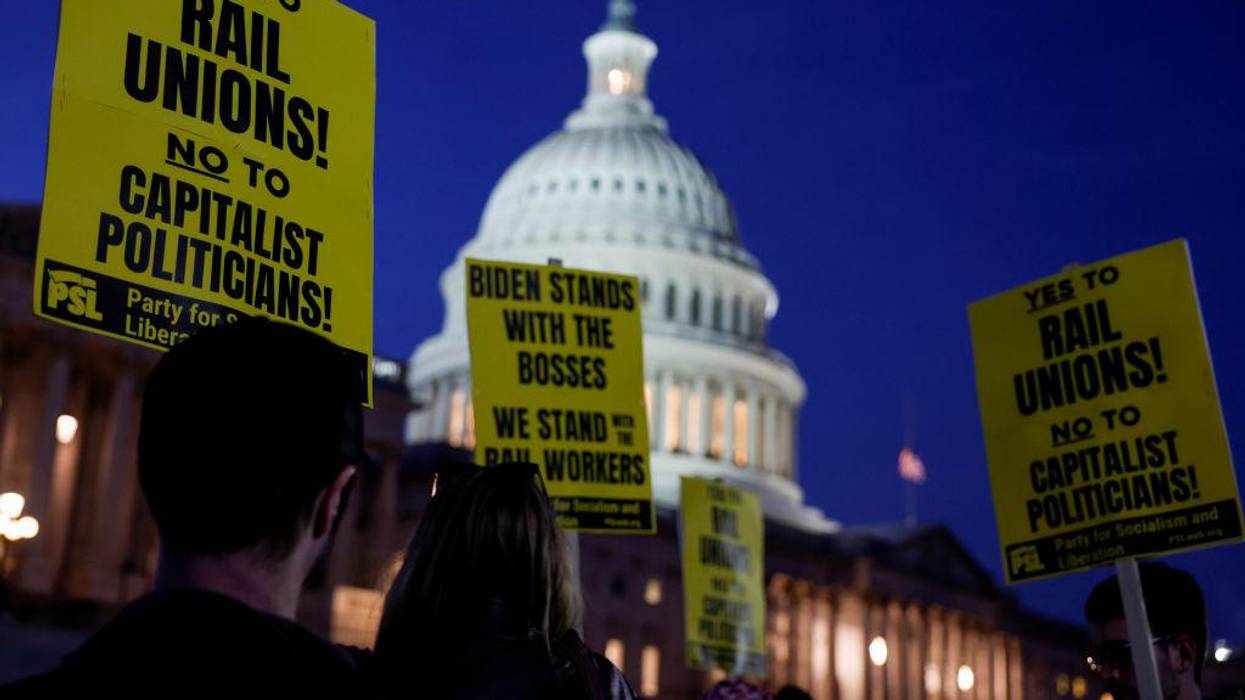
Biden--a self-described "pro-labor president"--has been condemned by rail workers and progressive lawmakers and advocacy groups for pressuring Congress to use its authority under the Railway Labor Act of 1926 to ram through his deal to preempt a looming strike.
Prior to the intervention of Rep. Jamaal Bowman (D-N.Y.), who submitted an amendment to add seven days of paid sick leave to the existing settlement on Tuesday night, progressives feared that House lawmakers would advance the White House-brokered pact without trying to improve it.
In a statement praising the House for taking action to prevent a rail shutdown that "would be devastating to our economy and families across the country," Biden failed to mention Bowman's amendment.
Rep. Ilhan Omar (D-Minn.), by contrast, said Wednesday in a statement that she "was proud to work alongside Rep. Bowman to push for an amendment to a rail deal that would guarantee seven days of paid leave to railroad workers." Omar thanked House Committee on Transportation and Infrastructure Chair Peter DeFazio (D-Ore.) and the chamber's leadership for bringing the amendment to the floor.
"Railroad corporations are raking in record profits--over $20 billion last year alone," said Omar. "Meanwhile, their workers do not even have the basic protections of a single day of paid or unpaid sick time. In the face of these record profits, railroad workers have made a simple, dignified request for the basic protections of paid leave."
"I will always stand with rail workers and workers around the world," she added, "and will do everything in my power to make sure their basic demands are not ignored."
Both the strike-averting resolution and the concurrent resolution adding seven days of paid sick leave to Biden's deal now head to the Senate.
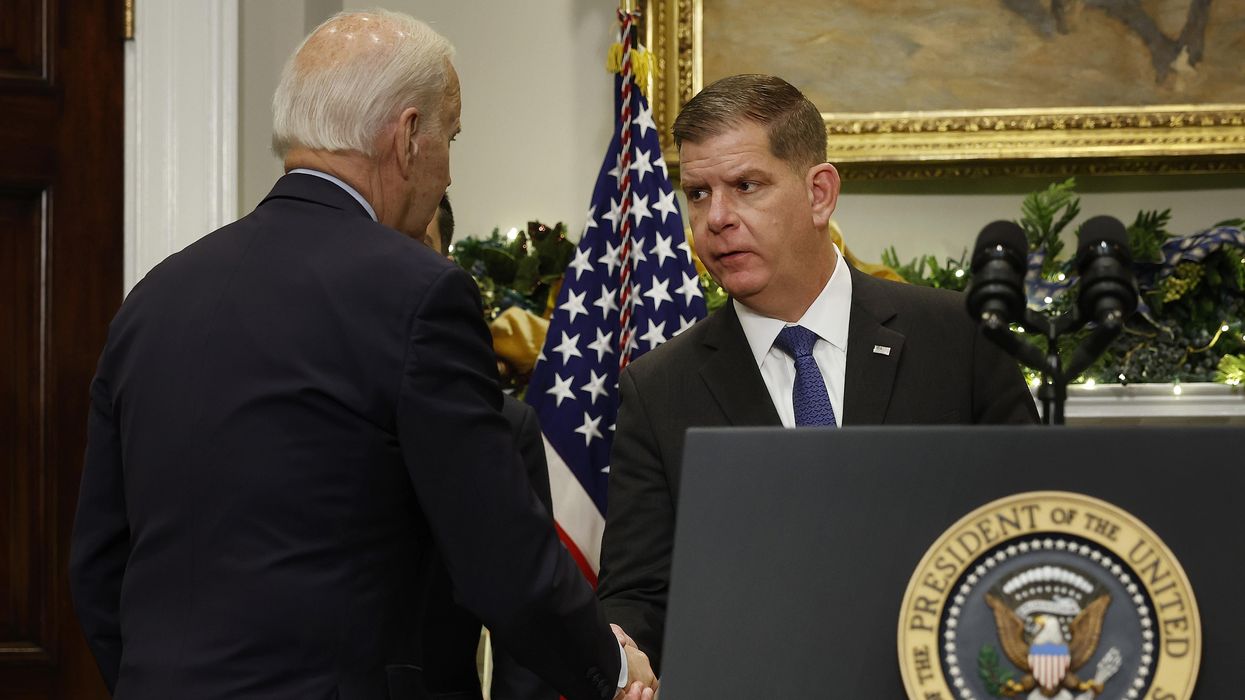
In a joint statement released in the wake of the House votes, 12 members of the upper chamber--including Sens. Bernie Sanders (I-Vt.), Kirsten Gillibrand (D-N.Y.), and Elizabeth Warren (D-Mass.)--thanked Biden and Labor Secretary Marty Walsh "for their hard work in negotiating a tentative agreement that is better than the disastrous proposal put forward by the rail industry."
However, they said, "Congress can and must make this agreement better."
The lawmakers continued:
For nearly three years our nation's rail workers have been fighting on the frontlines of the pandemic. They have kept our trains on the track even while facing unprecedented challenges.
Supply chain problems coupled with increased consumer spending and online shopping habits have put the freight rail industry under incredible strain. And as a result train crews have been working around the clock often with inflexible and unpredictable work schedules to transport everything from food and fuel to medical supplies and cleaning products.
But even as the need for worker protections and workplace flexibility have grown, railroad companies provide zero days of paid sick leave to their workers. What this means is that if a rail worker comes down with Covid, the flu, or some other illness and calls in sick, that worker will not only receive no pay, but will be penalized and, in some cases, fired. That is absolutely unacceptable.
"During the first three quarters of this year, the rail industry made a record-breaking $21.2 billion in profits," says the statement. "Guaranteeing seven paid sick days to rail workers would only cost the industry $321 million a year--less than 2% of their total profits. Please do not tell us that the rail industry cannot afford to guarantee paid sick days to their workers."
"Do not tell us that the rail industry cannot afford to guarantee paid sick days to their workers."
"We commend the House for addressing this outrageous situation and guaranteeing paid sick days to every rail worker in America," Sanders and his colleagues concluded. "We urge the Senate to quickly take up the House-passed language for a roll call vote and urge our colleagues to support these workers. We look forward to bipartisan support."
When asked Tuesday night by MSNBC's Chris Hayes if he thinks at least 10 Republican senators would back the paid sick leave provision, which is necessary due to the upper chamber's anti-democratic 60-vote filibuster rule, Sanders mentioned that Sen. John Cornyn (R-Texas) had indicated "significant" support for the amendment among his GOP colleagues.
"Look, you have a number of Republicans who claim--claim--to be supporters of the working class," said Sanders. "Well, if you are a supporter of the working class how are you going to vote against the proposal which provides guaranteed paid sick leave to workers who have none right now? So I am cautiously optimistic that we can get this done."
However, the fact that just three House Republicans voted for the measure does not bode well for its prospects in the Senate.
Notably, Cornyn reversed his openness to adding seven paid sick days to the contract on Wednesday, telling Jake Sherman of Punchbowl News: "I just think it's a bad idea for Congress to try to intervene and renegotiate these collective bargaining agreements between labor and management."
As Politico reported, "Rail workers will stay on the job until December 9, [but] certain hazardous materials are likely to start being sidelined over the weekend to avoid being stranded" in the event of a strike.
A nationwide rail strike has been averted for now. A new agreement grants railroad workers an additional paid day off and the ability to attend medical appointments without penalty. (The agreement now must be ratified by the workers.)
A strike could have crippled the economy at a particularly vulnerable moment.
A strike could have shut down nearly a third of the country's freight and about half of commuter rail systems (which run at least partially on tracks or rights of way owned by freight railroads).
In other words, a strike could have crippled the economy at a particularly vulnerable moment, when inflation is still soaring. And a strike would come at an especially awkward political moment, less than two months before the midterm elections.
What can we learn from this near economic disaster? Unlike most management-labor impasses, this one wasn't solely around wages. It was also around sick time and penalties for missing work.
Like so many workers deemed "essential" during the pandemic, the engineers and conductors who drive the nation's freight trains have been fed up. Their work schedules are unpredictable and inflexible. They've been penalized for taking days off when they're sick or tending to a family emergency.
Like most of us, they want a better quality of life--and they feel, with justification, that they deserve it.
The railroads have agreed to a 24 percent increase in wages. Good, but they should have agreed long before this.
Twenty years ago, the four leading American freight carriers--SX, KC Southern, Norfolk Southern and Union Pacific--earned average operating margins of about 15 percent. Now, their margins are closer to 40 percent. Twenty years ago, the four railroads spent some $8.7 billion on worker compensation and benefits to generate $25.6 billion. Twenty years later, they spent about 10 percent more on worker compensation and labor--but their revenue has nearly doubled.
Until last night, railroad executives had refused to budge on a workplace attendance policy that can only be described as draconian. Railroad conductors and engineers were continuously on call (outside of paid vacation and personal leave days based on seniority). When told to report to work, they were given just 90 minutes to two hours.
Like many employers across America--hospital executives, school systems, Amazon and Starbucks--railroad management didn't get it. They didn't understand the importance to working people of having some control over when and how they work.
And like so many other industries, the underlying railroad problem has boiled down to soaring demand and unmitigated corporate greed.
Since the pandemic, cargo volumes have soared to record highs. But over the last six years, freight railroads have pared back their workforce by about 30 percent to reduce costs and increase profits.
They've also been running fewer and longer trains, and waiting until trains are full before leaving terminals.
As a result, the railroads have demanded that their workers put in more hours, but given them almost no notice of when.
Hopefully, now, we'll avoid a railroad strike. Congratulations to the Biden administration for helping broker this agreement.
But let's make sure the lesson here is learned, not just by rail management but across the nation in every industry: Workers need and deserve higher wages and better working conditions--which includes more control over their jobs.
Two unions representing 125,000 active and retired rail employees stressed Thursday that the tentative agreement they reached with freight carriers to avert a strike still must win approval from rank-and-file members, a reminder that came as the White House hailed the deal it helped broker as a victory for workers and the economy.
"This contract will not become final until our members have an opportunity to review its terms and approve it through a ratification vote," said Jeremy Ferguson, president of SMART Transportation Division, and Dennis Pierce, head of the Brotherhood of Locomotive Engineers and Trainmen (BLET).
"It's a garbage deal. Everyone hates it so far. It does nothing for me. I'll vote no. This has been a complete waste of time."
BLET and SMART-TD represent roughly half of the railroad workers that would be covered by the new agreement.
The unions, which had been preparing to strike as soon as Friday as rail giants refused to budge on workers' basic sick leave demands, said the tentative deal includes "an immediate wage increase of 14% once compounded with an additional 4% on July 1, 2023, and 4.5% on July 1, 2024."
"In addition, wage increases of 3% effective July 1, 2020, 3.5% effective July 1, 2021, and 7% effective July 1, 2022, will be fully retroactive, for a compounded increase of 24% over the 5-year term of the agreement," Ferguson and Pierce said. "The agreement also includes annual lump-sum bonus payments totaling $5,000."
Additionally, they noted, the agreement includes provisions that "will create voluntary assigned days off for members working in thru freight service, and all members will receive one additional paid day off."
"Most importantly, for the first time ever, the agreement provides our members with the ability to take time away from work to attend to routine and preventive medical care, as well as exemptions from attendance policies for hospitalizations and surgical procedures," Ferguson and Pierce added, pointing to a central demand of rail workers who for years have been laboring under a scheduling system that punishes employees for taking time off to see the doctor.
The union leaders said they also succeeded in fighting off rail carriers' efforts to impose higher healthcare costs and other damaging provisions.
Overall, the union leaders said they secured a deal that "exceeded the recommendations of the Presidential Emergency Board," a body formed by President Joe Biden that suggested a compromise agreement that excluded any sick leave--angering workers and heightening the likelihood of a national strike.
A recent SMART-TD survey of its members showed that 78% opposed the emergency board's recommended agreement.
Now the key question is whether the tentative deal announced Thursday is enough of an improvement over the presidential board's proposal to win approval from the rank-and-file.
Early reactions suggest that some union members are furious with the newly released agreement and plan to oppose its ratification. The Washington Post's Lauren Kaori Gurley observed that responses from rail workers have been a mixture of "optimism and deep skepticism."
One unnamed rail worker bluntly told Jonah Furman of Labor Notes that "it's a garbage deal."
"Everyone hates it so far," the worker added. "It does nothing for me. I'll vote no. This has been a complete waste of time."
Furman also pointed to social media posts indicating worker opposition to the deal and continued support for a national rail strike:
In a speech outside the White House on Thursday, Biden touted the tentative agreement as a "great deal for both sides" that "will keep our critical rail system working."
Following the president's remarks, a reporter shouted out, "Mr. President, is it premature to celebrate before the unions vote?"
Biden didn't respond.
NBC News reported Thursday that "as part of the agreement reached last night, there will be a 'cooling off' period of several weeks to ensure that if a vote doesn't succeed for any reason, there still would not be an immediate rail shutdown."
During the coronavirus pandemic, major U.S. railroads have raked in record profits on the backs of their employees, who have been working without a contract for three years due to management's refusal to offer even minimal sick leave benefits.
On Wednesday, Republican senators attempted to pass legislation that would have forced rail workers to accept the woefully inadequate proposal put forth by the Presidential Emergency Board. Sen. Bernie Sanders (I-Vt.) blocked the bill.
"Last year, the CEO of CSX made over $20 million in total compensation, while the CEOs of Union Pacific and Norfolk Southern made over $14 million each in total compensation," Sanders said in a speech on the Senate floor. "In other words, within the rail industry corporate profits are soaring and the CEOs are making incredibly large compensation packages."
"I would also add that the parent company of BNSF, one of the largest freight rail companies in America, is Berkshire Hathaway owned by Warren Buffett," the senator continued. "Mr. Buffett is the fourth wealthiest man in America worth nearly $100 billion. During the pandemic, as rail workers risked their lives to keep the economy going, Mr. Buffett became $33 billion richer."