
SUBSCRIBE TO OUR FREE NEWSLETTER
Daily news & progressive opinion—funded by the people, not the corporations—delivered straight to your inbox.
5
#000000
#FFFFFF
To donate by check, phone, or other method, see our More Ways to Give page.


Daily news & progressive opinion—funded by the people, not the corporations—delivered straight to your inbox.
"After 20 years of continuous reporting, the Report Card stands as a chronicle of change and a caution for what the future will bring," report contributors said.
The Arctic just experienced its warmest air temperatures on record between October 2024 and September 2025 as the climate crisis dramatically alters the region, the National Oceanic and Atmospheric Administration found in its 20th Arctic Report Card.
The annual report, released Tuesday, also notes the Arctic's lowest maximum sea-ice extent and its wettest year on record. The past 10 years have been the warmest recorded in a region that is heating at two to four times the global average.
"After 20 years of continuous reporting, the Report Card stands as a chronicle of change and a caution for what the future will bring," report editors Matthew Langdon Druckenmiller, Rick Thoman, and Twila A. Moon wrote in the executive summary. "Transformations over the next 20 years will reshape Arctic environments and ecosystems, impact the well-being of Arctic residents, and influence the trajectory of the global climate system itself, which we all depend on."
Arctic warming is not confined to the spring and summer months, but marks a full-year transformation, with fall 2024 being the warmest Arctic fall on record and winter 2025 the second-warmest winter. While snow levels do remain high in the winter months, they consistently drop by June, with snow cover during that month now about half of 1960s levels. Precipitation in the winter months is also not limited to snow.
"We can point to the Arctic as a far away place but the changes there affect the rest of the world.”
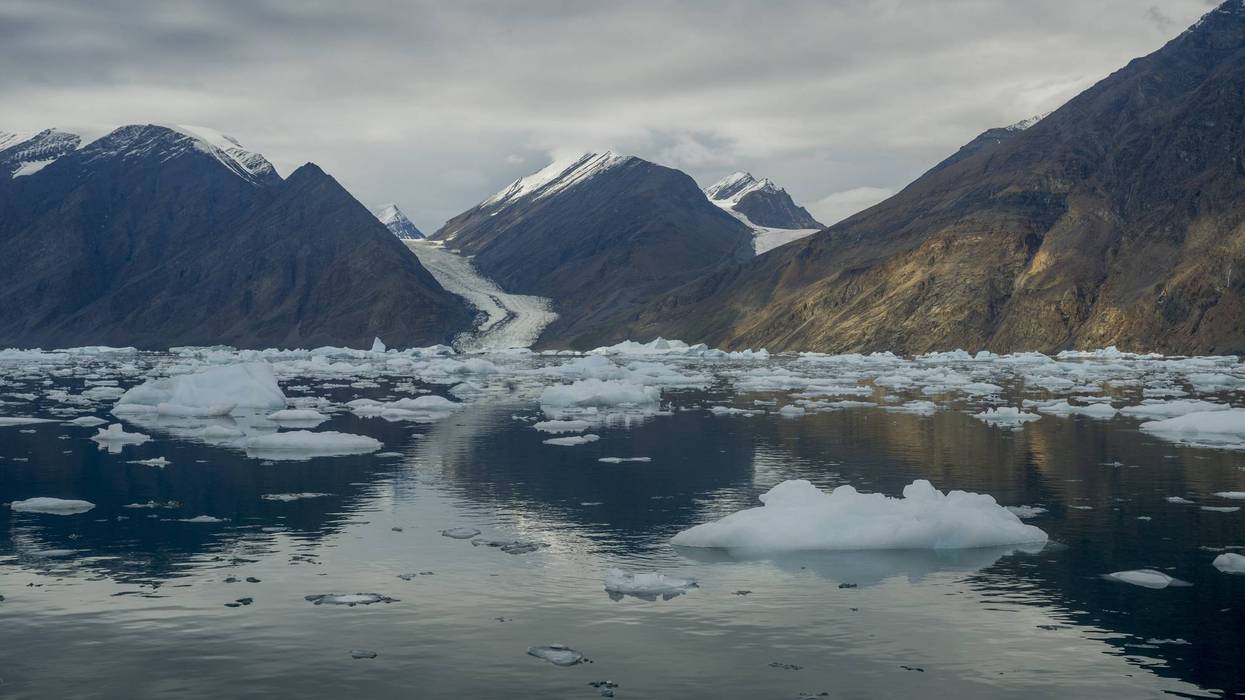
At sea, ice extent is also shrinking in the winter, with March 2025 seeing the lowest maximum sea-ice extent in nearly 50 years of satellite data. The oldest, thickest ice has shrunk by over 95% since the 1980s, and its domain has constricted to areas north of Greenland and the Canadian archipelago.
“There’s been a steady decline in sea ice and unfortunately we are seeing rain now even in winter,” Druckenmiller told the Guardian. “We are seeing changes in the heart of winter, when we expect the Arctic to be cold. The whole concept of winter is being redefined in the Arctic.”
Warming temperatures are also driving changes in ecosystems, with more southern species and conditions shifting northward both on land and at sea. On land, this happens via the "greening" of the tundra and the spread of boreal species into the Arctic. At sea, warmer, saltier water is shifting north, driving the "Atlantification" of the Arctic, which exacerbates ice melt and threatens to destabilize ocean circulation patterns.
Changes are also occurring on the Pacific side of the Arctic Ocean, with Arctic species declining by two-thirds in the northern Bering Sea and one-half in the Chukchi Sea.
“We are no longer just documenting warming—we are witnessing an entire marine ecosystem transform within a single generation,” Hannah-Marie Ladd, director of the Indigenous Sentinels Network on the Aleut community of Saint Paul Island, said at a conference unveiling the report.
Ocean warming, the melting of glaciers, and melting permafrost are increasing weather hazards and other dangers for Arctic communities. For example, warm ocean temperatures fueled ex-Typhoon Halong in October 2025, which forced over 1,500 people to evacuate from Alaska's southwestern coast and nearly destroyed two villages.
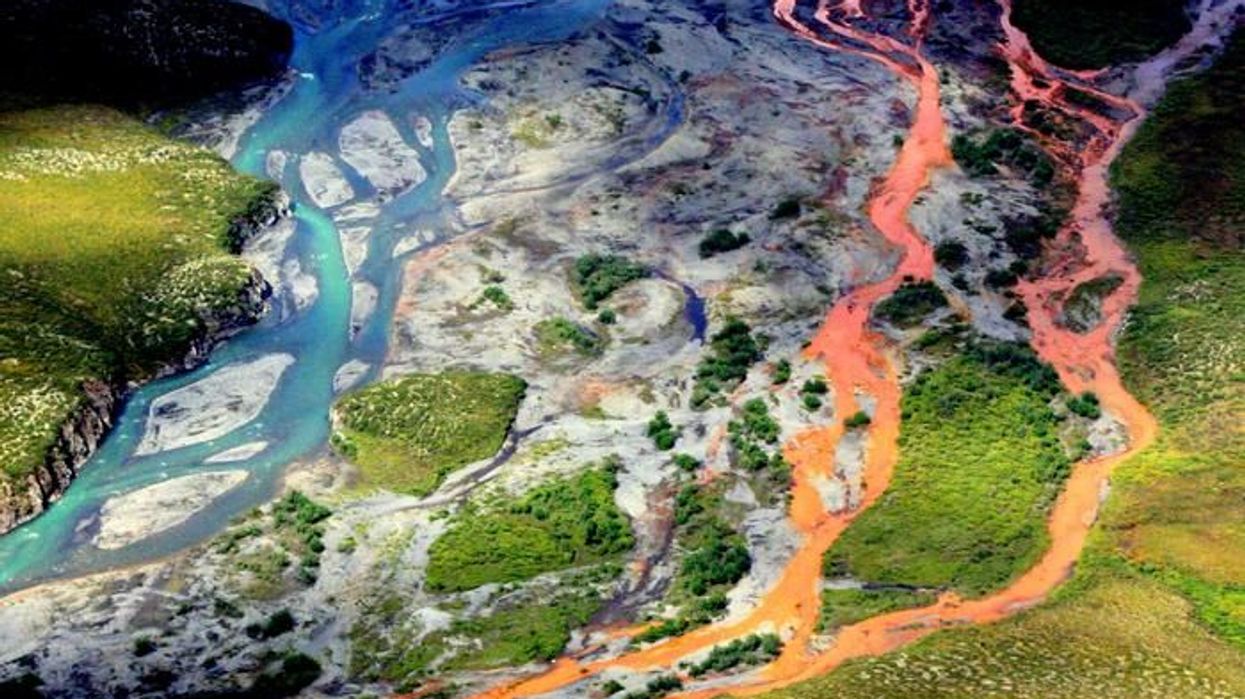
Glacier melt has increased the risk of sudden flooding and landslides, while the melting of permafrost is leading to the phenomenon of "rusting rivers," as oxidized iron from melting permafrost enters the water and degrades water quality.
These impacts aren't limited to the Arctic. The Greenland ice sheet, for example, lost 129 billion tons of sea ice, which contributes to global sea-level rise.
“We are seeing cascading impacts from a warming Arctic,” Climate Central scientist Zack Labe told the Guardian. “Coastal cities aren’t ready for the rising sea levels, we have completely changed the fisheries in the Arctic, which leads to rising food bills for seafood. We can point to the Arctic as a far away place but the changes there affect the rest of the world.”
The report comes as the Trump administration has moved to censure federal climate scientists and cut staffing and funding for government science.
Outside researchers noted that the administration did not seem to have significantly altered the content of the 2025 Arctic Report Card.
“I honestly did not see much of a tone shift in comparison to previous Arctic report cards in years past, which was great to see,” Climate Central media director Tom Di Liberto told NBC News. “The implications of their findings are the same as past Arctic report cards. The Arctic is the canary in the coal mine.”
"The Trump administration’s cuts to budgets, staffing, and resources for science are already affecting data and research related to the Arctic."
Druckenmiller also told reporters that the team “did not receive any political interference with our results.”
However, the 2024 Arctic Report Card urged a "global reductions of fossil fuel pollution," in its subhead, an exhortation missing from the 2025 version.
The 2025 report did refer to the impacts of federal funding cuts, discussing "vulnerabilities and risks facing nationally and internationally coordinated observing programs, especially amid risks of diminishing US investments in climate and environmental observations," as Druckenmiller, Thoman, and Moon wrote.
"The Trump administration’s cuts to budgets, staffing, and resources for science are already affecting data and research related to the Arctic," the Union of Concerned Scientists (UCS) posted on social media in response to the release.
However, even if the report did not highlight the causes of the climate emergency, it's ultimate message was unmistakable, UCS said: "It’s clear that fossil fueled climate change is having an alarming effect on the vital signs of this unique, crucial region of the world."
"Trump's reckless actions have left Americans vulnerable and unprepared," said a senior adviser at Climate Power.
As Hurricane Erin batters the East Coast, North Carolina has been left in the lurch by a Federal Emergency Management Agency (FEMA) badly battered by the Trump administration.
WRAL reported Tuesday that the Tar Heel State is still waiting on $13 million in federal disaster preparedness grants from FEMA.
This is on top of the hundreds of millions of dollars in recovery funds for last year's devastating Hurricane Helene, which the agency has promised but not yet delivered.
North Carolina Gov. Josh Stein told reporters Tuesday that $85 million would begin flowing from FEMA to the state to fund recovery from Helene.
That announcement came after Stein sent US Secretary of Homeland Security Kristi Noem a letter in July asking why she had not signed off on the disbursal of the desperately needed funds.
"Applications submitted as far back as February 2025 remain without a final decision," Stein wrote in the letter, which laid out $209 million worth of Helene recovery projects still awaiting her sign-off. "Further delay of these funds keeps communities and families in limbo, all while we are in another dangerous hurricane season."
Even though some funds are reportedly flowing, Stein says the government has yet to reimburse North Carolina for over $100 million.
"It creates real financial strain, especially on local governments, but also the state," Stein said in a press conference.
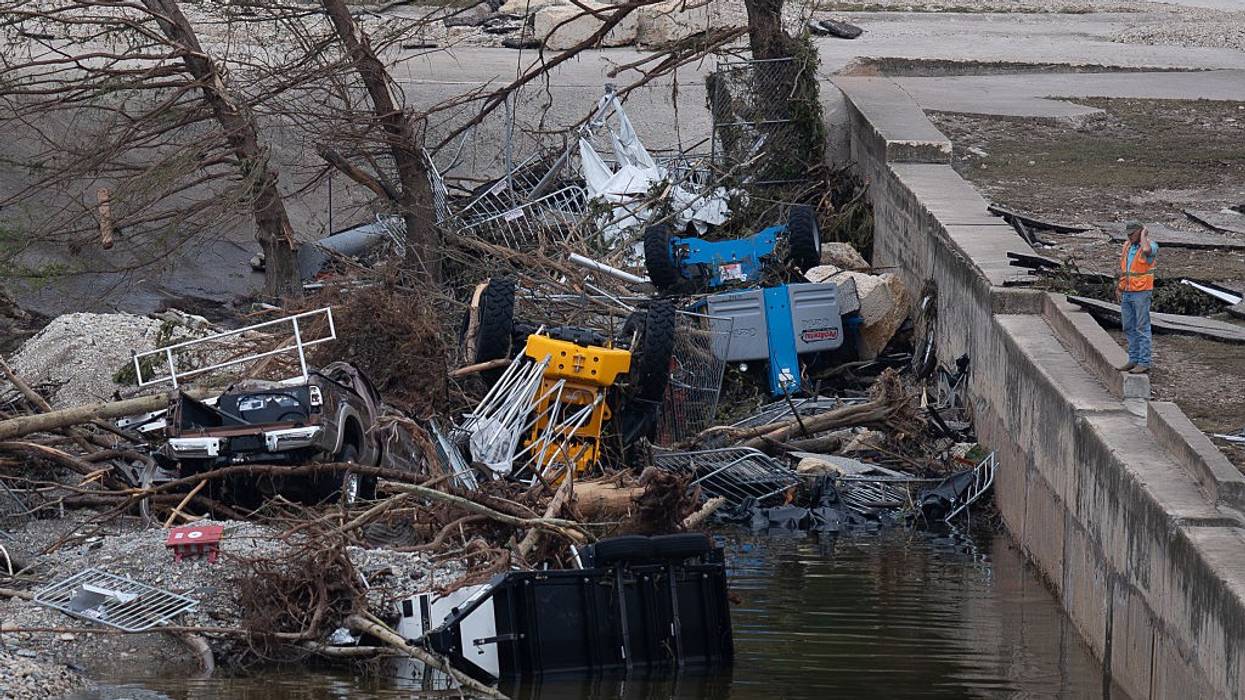
Noem's leadership of FEMA came under severe scrutiny earlier this summer after it was reported that her policies hampered the agency's ability to respond to the devastating flooding that killed at least 138 people in Texas.
In June, Noem introduced a new policy requiring all FEMA expenditures over $100,000 to be personally approved by her, which officials within the agency said led to the deployment of search and rescue teams being delayed for days.
Two-thirds of the phone calls from desperate Texans to FEMA also went unanswered after Noem allowed hundreds of contractors to be laid off just a day after the storm hit.
The Trump administration, meanwhile, has implemented massive staff cuts to the agencies responsible for hurricane preparedness.
It laid off hundreds of employees at the National Oceanic and Atmospheric Administration's (NOAA) storm laboratory, including hurricane hunters and researchers.
Nearly half of the National Weather Service (NWS)'s forecasting offices have been left critically understaffed, with around a quarter lacking a meteorologist-in-charge.
On the ground, there are about 20% fewer permanent FEMA staff responsible for responding to hurricanes and other disasters. Emergency training for those who remained on the job was also rolled back.
Sarah Galvez, Climate Power's senior adviser for climate urgency, says that communities in the path of Hurricane Erin "are being put at risk thanks to the Trump Administration gutting the forecasting that people rely on during extreme weather."
Since 1980, as the planet has warmed, the number of significant hurricanes (classified as Category 3 or greater) has doubled. In recent years, they have also begun to intensify more rapidly as they approach landfall, giving forecasters less time to catch them and residents less time to respond.
But as part of a multi-pronged assault on climate science, Trump has also made it harder to track these and other disasters. In May, NOAA announced that it would no longer track the number of disasters resulting in over $1 billion in damage.
"Fueled by the climate crisis," Galvez says, "major hurricanes are only becoming more frequent and severe, but Trump's reckless actions have left Americans vulnerable and unprepared."
On Tuesday, Reps. Greg Casar (D-Texas) and Joe Neguse (D-Colo.) introduced legislation aimed at rolling back Trump's cuts to these agencies.
Hurricane Erin is hitting the East Coast right now.Earlier this year, Trump slashed funding for FEMA and NOAA — the agencies that keep us safe before and after disasters. My new bill would reverse Trump's cuts and restore crucial resources for families across the country.
— Congressman Greg Casar (@repcasar.bsky.social) August 20, 2025 at 1:12 PM
"As we continue to face increasing numbers of natural disasters across our country—wildfires, floods, hurricanes—it's critically important that we equip our communities with the resources they need," Neguse said. "Whether it's the preparedness programs run by NOAA and NWS, or the response and recovery initiatives managed by FEMA, our federal agencies play a crucial role in addressing the increasing frequency of disasters."
While the agency and outside meteorologists say the NWS provided timely and accurate forecasts, the fatal flooding is generating fresh alarm about cuts and open positions.
As the official death toll from catastrophic flooding in Texas ticked above 100 on Monday, concerns over vacancies as well as job and potential funding cuts at the National Weather Service continued to mount—even as the NWS and independent meteorologists insisted that the agency had "issued timely warnings in advance of the deadly floods."
The flooding came just over two months after all living former directors of the NWS published a letter sounding the alarm about President Donald Trump's proposed budget for fiscal year 2026 and its cuts to the National Oceanic and Atmospheric Administration (NOAA), the parent agency of the NWS in the U.S. Department of Commerce.
The five men—Louis Uccellini, Jack Hayes, Brig. Gen. D.L. Johnson, Brig. Gen. John J. Kelly Jr., and E.W. "Joe" Friday—wrote on May 2 that "even if the National Weather Service remains level funded, given the interconnectedness of all of the parts of NOAA, there will be impacts to weather forecasting as well. We cannot let this happen."
"These proposed cuts come just days after approximately 300 National Weather Service... employees left the public service to which they had devoted their lives and careers," the ex-directors pointed out. "That's on top of the approximately 250 NWS employees who were fired as a result of their probationary status in new—often higher-level positions—or took the initial buyout offered by the Trump administration in early February."
"That leaves the nation's official weather forecasting entity at a significant deficit—down more than 10% of its staffing—just as we head into the busiest time for severe storm predictions like tornadoes and hurricanes," they continued. "Our worst nightmare is that weather forecast offices will be so understaffed that there will be needless loss of life. We know that's a nightmare shared by those on the forecasting frontlines—and by the people who depend on their efforts."
Discussing recent job reductions with The Associated Press on Monday, Uccellini, whose tenure leading NWS included Trump's first term, warned that "this situation is getting to the point where something could break."
"The people are being tired out, working through the night and then being there during the day because the next shift is short-staffed," he said. "Anything like that could create a situation in which important elements of forecasts and warnings are missed."
For the flooding in Texas, the NWS Austin-San Antonio office had five meteorologists working, rather than two, as part of its "surge staffing" protocol.
However, Tom Fahy, the legislative director for the NWS Employees Organization, a union that represents government workers, also told NBC News that the agency's Austin-San Antonio office does not have a permanent science officer, who conducts training for and implements new technology, or a warning coordination meteorologist, who has contact with media.
That office "is operating with 11 staff meteorologists and is down six employees from its typical full staffing level of 26," NBC reported. The nearby San Angelo office "is short four staff members from its usual staffing level of 23. The meteorologist-in-charge position—the office's top leadership position—is not permanently filled. The office is also without a senior hydrologist."
Despite some open positions at the two offices, the NWS began warning of potential flooding as early as Thursday morning, and as conditions worsened overnight, the agency issued its first warning for "life-threatening flash flooding" for parts of Kerr County at 1:14 am Central Time Friday, according to CNN.
"But questions remain about how many people they reached, whether critical vacancies at the forecast offices could have affected warning dissemination, and if so-called warning fatigue had been growing among residents in a region described as one of the most dangerous in the country for flash flooding," the network noted.
As Fahy put it to Politico: "The crux of this disaster is a failure of the last mile of communication... The forecasts went out, they communicated the forecasts, they disseminated the watches and warnings. And the dilemma we have is there was nobody listening at 4 o'clock in the morning for these watches and warnings."
Wisconsin-based meteorologist Chris Vagasky similarly told NBC that "the forecasting was good. The warnings were good. It's always about getting people to receive the message... It appears that is one of the biggest contributors—that last mile."
As The New York Times reported:
In an interview, Rob Kelly, the Kerr County judge and its most senior elected official, said the county did not have a warning system because such systems are expensive, and local residents are resistant to new spending.
"Taxpayers won't pay for it," Mr. Kelly said. Asked if people might reconsider in light of the catastrophe, he said, "I don't know."
As of Monday evening, 104 people are confirmed dead, most of them in Kerr County, which includes Camp Mystic, a Christian all-girls summer camp that lost at least 27 campers and counselors. The AP reported that "search-and-rescue teams carried on with the search for the dead, using heavy equipment to untangle trees and wading into swollen rivers. Volunteers covered in mud sorted through chunks of debris, piece by piece, in an increasingly bleak task."
In a statement to multiple news outlets, the NWS provided a detailed timeline of its alerts. The agency also said that it "is heartbroken by the tragic loss of life in Kerr County" and "remains committed to our mission to serve the American public through our forecasts and decision support services."
U.S. Senate Minority Leader Chuck Schumer (D-N.Y.) on Monday sent a letter to Roderick Anderson, acting inspector general at the Department of Commerce, urging an investigation into "the scope, breadth, and ramifications of whether staffing shortages at key local National Weather Service... stations contributed to the catastrophic loss of life and property during the deadly flooding."
"The roles left unfilled are not marginal, they're critical," he emphasized. "These are the experts responsible for modeling storm impacts, monitoring rising water levels, issuing flood warnings, and coordinating directly with local emergency managers about when to warn the public and issue evacuation orders. To put it plainly: They help save lives."
White House Press Secretary Karoline Leavitt lashed out at him and reporters for such scrutiny on Monday, saying that "unfortunately, in the wake of this once-in-a-generation natural disaster, we have seen many falsehoods pushed by Democrats such as Sen. Chuck Schumer and some members of the media. Blaming President Trump for these floods is a depraved lie, and it serves no purpose during this time of national mourning."
In addition to the president's so-called Department of Government Efficiency—previously led by billionaire Elon Musk, the richest person on Earth—pushing layoffs and retirements, Trump's administration is working to boost fossil fuels that drive the global climate emergency.
As Common Dreams reported earlier Monday, a study published by ClimaMeter found that the floods in Texas were caused by "very exceptional meteorological conditions" that cannot be explained merely by natural variability.
Former Common Dreams staff writer Kenny Stancil is a senior researcher at the Revolving Door Project, which has documented "Trump's attacks on disaster preparedness and response."
"The deadly Texas floods will not be the last manifestation of extreme weather turbocharged by fossil fuel pollution," Stancil wrote in a Monday blog post. "In an era of escalating climate threats, we need a stronger public sector with more resources to mitigate risks, help people weather storms, and adapt to the future."