
SUBSCRIBE TO OUR FREE NEWSLETTER
Daily news & progressive opinion—funded by the people, not the corporations—delivered straight to your inbox.
5
#000000
#FFFFFF
To donate by check, phone, or other method, see our More Ways to Give page.


Daily news & progressive opinion—funded by the people, not the corporations—delivered straight to your inbox.
“These people and these companies need to continue to be exposed for all of the harm that they're causing and the real power that they have over our government and those governed,” one organizer said.
On their way to attend the Met Gala on Monday night, guests might have spotted a different image of Amazon founder Jeff Bezos than the one he tried to project by chairing the annual fundraiser: a poster featuring his bulbous head, looming over them out of the darkness, attached to a muscular spider-shaped body. Above it, a mysterious message: “The Creep State is watching.”
What does it mean?
The Creep State is an anonymous guerilla art and protest project that debuted in Austin, Texas during South by Southwest earlier this year. It is designed to draw people’s attention to the threat posed by Big Tech billionaires and their increasing influence over both the US government and the daily lives of everyone who interacts with their products.
“These individuals are a danger to all of us,” a DC-based organizer said.

The idea for the Creep State came from the desire to raise awareness about certain Silicon Valley oligarchs and their anti-democratic actions and aspirations. Participants in the project who spoke to Common Dreams asked to remain anonymous in keeping with the guerilla-style tactics of their effort.
“There's what is really a very small group of men who control these algorithms, who control the software, the hardware, and.. they are trying to initially infiltrate our government and eventually replace our government,” a Seattle-based organizer explained. “They've all been pretty clear about, you know, some version of, you know, a company town run by a CEO king.”
The project’s designers wanted to convey that “these specific individuals have very nefarious and creepy goals, and they are personally creeps,"—hence, the “creep state” framing.
“Whatever you do, see, hear, touch, say, feel, believe, dream, the Creep State is watching."
Currently, the project consists of a physical and digital element.
Volunteers wheatpaste posters of seven Silicon Valley kingpins—Jeff Bezos, Elon Musk, Mark Zuckerberg, Sam Altman, Peter Thiel, Bill Gates, and Marc Andreessen, drawn in cartoon style as B-movie monsters—in major US cities. To date, the images have been displayed in Austin, Seattle, DC, Palo Alto, the area around the Met Gala in New York, and Los Angeles, with more to come.
The posters include a QR code that leads to a website, including a video highlighting how these moguls' companies and products are already monitoring people’s daily activities, from surveillance pricing to sleep tracking.
“Whatever you do, see, hear, touch, say, feel, believe, dream, the Creep State is watching," the video declares, before concluding: “We’re fighting back.”
“These people and these companies need to continue to be exposed for all of the harm that they're causing and the real power that they have over our government and those governed,” the DC-based organizer said.

While there have been many different campaigns and critiques calling out Big Tech and the rise of AI in recent years, the creators of the Creep State took an artistic approach partly to grab people’s attention, to make something that “quite literally visually shocked people out of the normal way that they think about and talk about these guys,” as the Seattle-based organizer put it.
They added that they wanted a viewer’s first response upon seeing the art to be, “Woah!”
So far, it seems to be working.
When the art went up in Seattle ahead of the No Kings protest on March 28, “people walking by stopped and took pictures and were like, ‘Whoa, what is this about? Oh my God, is that Jeff Bezos? Whoa, is that Bill Gates?’” the Seattle organizer said.
A member of the team who put the posters up in DC on April 18 similarly recalled: “We had a young woman come up to us and ask us about the Creep State and said she was glad we were exposing these guys. She said she was from [Prince George's] County in Maryland and was part of the movement to stop data centers there.”
"Fundamentally the question that we face is will we allow one or a few of these corporations to literally remake our society?"
The project’s designers see themselves as operating within a tradition of guerilla art against the powerful from Banksy, Favianna Rodriguez, and Shepard Fairey's OBEY posters to student protests against Slobodan Milošević in Serbia in the 1990s and the FeesMustFall campaign in South Africa in the 2010s. However, the project—which made a point of working with actual human creators, including a screenwriter, comic book artist, and graphic designer—takes on extra resonance in an age in which AI slop clogs up social media feeds and threatens to put creative workers out of a job.
“This is very much a people versus the machines kind of thing,” the Seattle-based organizer said. “Are we going to be a society where human creativity and human inspiration and human thinking are valued, or are we going to be a world where.. we're all plugged into a screen?”

As the project uses an artistic approach to hook people who might otherwise ignore its messaging, it also crafts that messaging in an attempt to appeal to people who might not always agree politically.
The name “Creep State” was chosen in part for its similarity to “deep state,” which is often used on the political right to describe hidden actors undemocratically controlling the federal government. Some of the headlines highlighted in the introductory video were also selected to appeal to right-leaning viewers. (“Prayer apps: is AI playing God?” one reads.)
“Our assessment here is that we may have, and we very much do have, some very deep disagreements in a variety of ways with the right wing. But there is a very real grassroots right-wing opposition to the Silicon Valley takeover of our economy and our democracy. And we want to make sure that this is a campaign that different types of folks can see themselves reflected in,” the Seattle-based organizer said.
"Once they're burrowed in, it's going to be very difficult to root them out.”
Indeed, the rise of AI and the hyperscale data centers it relies on seems to have, at least so far, bypassed the usual culture war divides. As communities across the country have mobilized against the data center buildout, “you've got DSA people linking arms with, you know, like ultra-MAGA folks,” the Seattle organizer added.
The numbers reflect this, with around 50% of both Republicans and Democrats now saying they are more concerned than excited about AI and 55% of the politicians opposing data centers, which are often located in red states, being Republicans.
The embrace of AI and its Silicon Valley pushers may be one wedge between President Donald Trump and some of his supporters, as 75% of 2024 Trump voters think that AI should be regulated while the president himself has thrown his weight behind a plan to prohibit states from regulating AI at all.
Indeed, even as the Creep State’s developers reach out to Trump voters, they are clear that the Trump administration itself has escalated the Big Tech takeover of the US government, upping the urgency of their project.
Even before Trump was elected a second time around, Silicon Valley enabled his rise. Bezos sunk The Washington Post’s endorsement of his rival Kamala Harris, while Musk donated more than a quarter billion to back Trump's campaign. His Vice President JD Vance is a protege of Thiel, who has backed Trump since 2016.
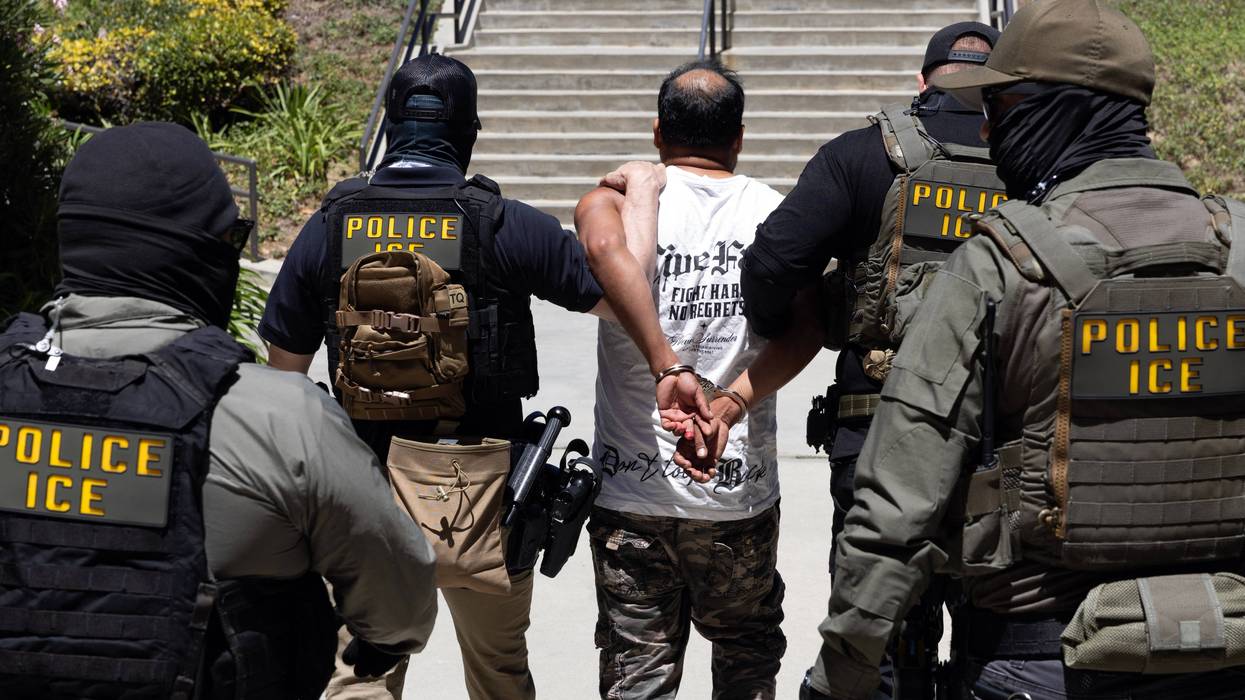
Trump has repaid these Big Tech executives handsomely with access, money, and his deregulatory push. The DC-based organizer said they were partly inspired to get involved with the Creep State project after witnessing the havoc wreaked by Musk’s Department of Government Efficiency, which cut funding for essential grants and may lead to the deaths of over 14 million through the shuttering of the US Agency for International Development. At the same time, tech billionaires have increased their profits by contracting with the government, enabling deportations via Immigration and Customs Enforcement and both surveillance and targeting via the Pentagon.
Yet the Seattle-based organizer said that some Trump supporters “are beginning to realize… that these guys don't care about Trump. Trump is a vehicle for them. And, you know, once they're burrowed in, it's going to be very difficult to root them out.”

Ultimately the goal of the Creep State project is to plug everyone who sees and responds to the art—whatever their politics—into the growing movement to push back against the Big Tech power grab.
“The more we can expose these actors, it can inspire people to… organize against them, demand… oversight and regulations over AI and the influence that these individuals have on their politics,” the DC-based organizer said.
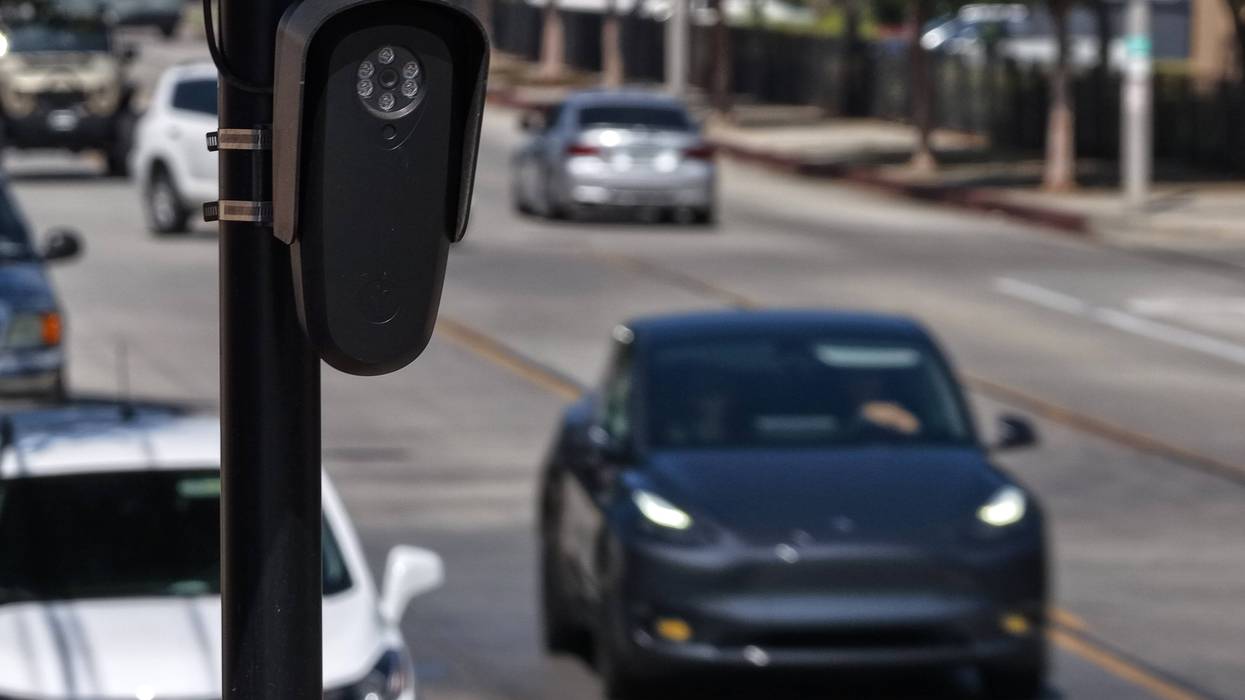
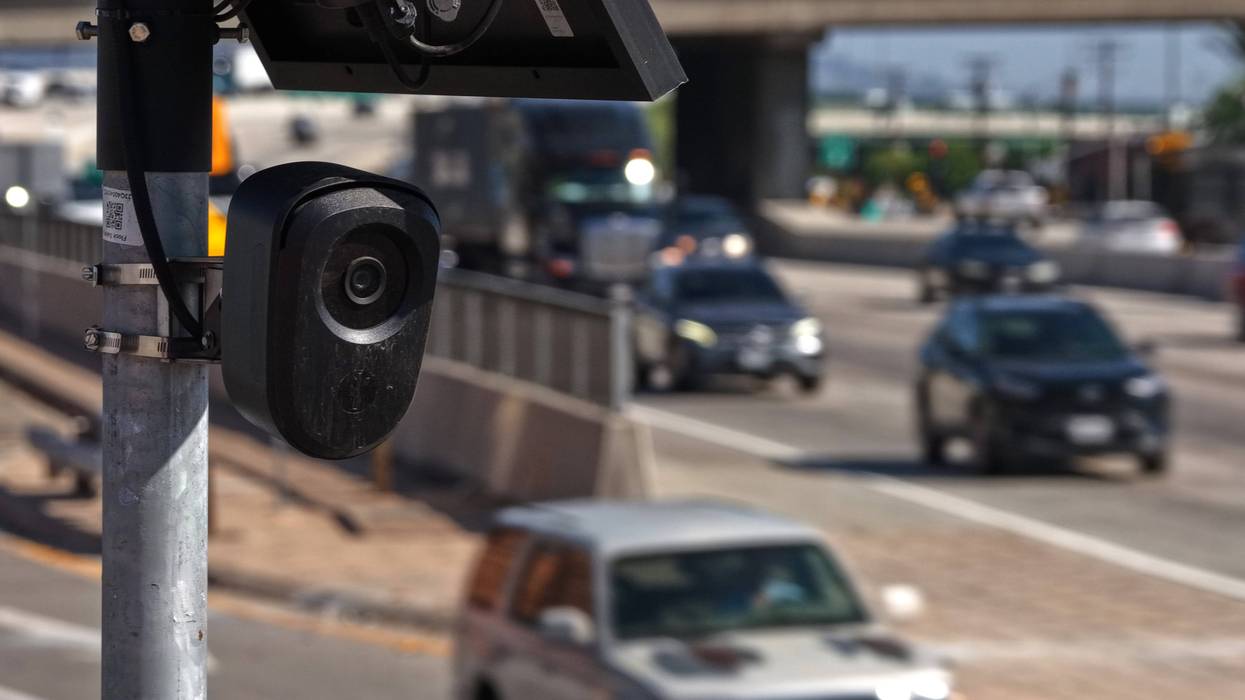
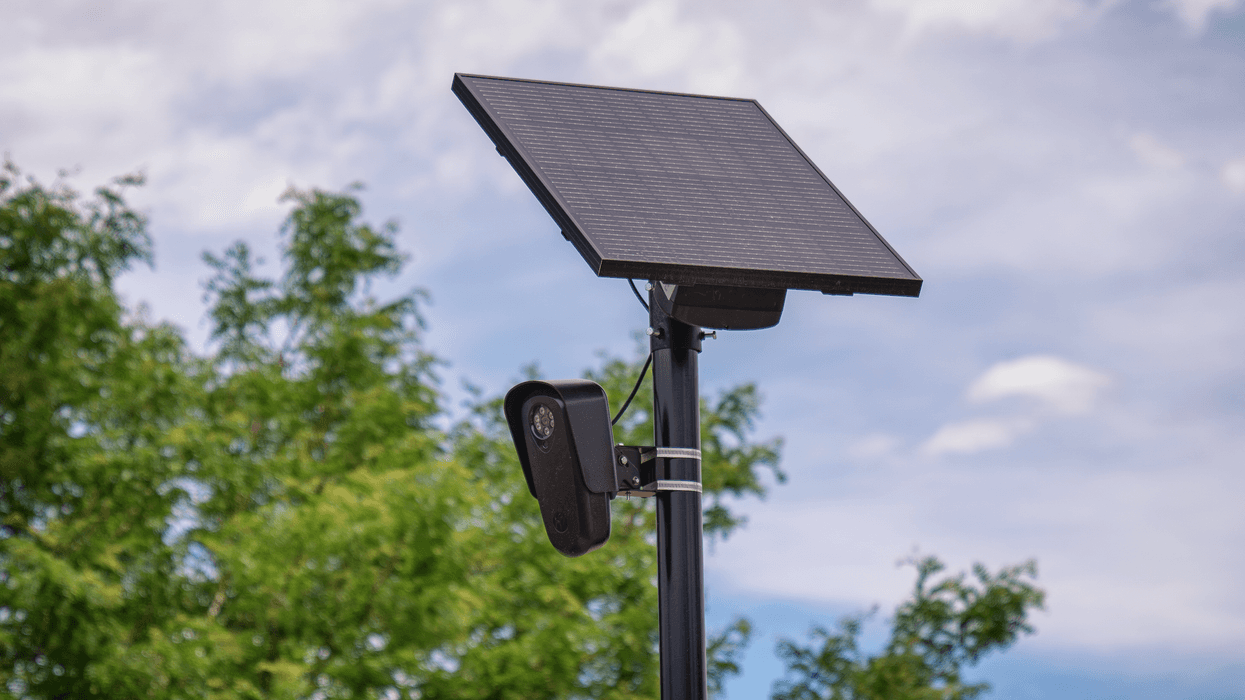
People who scan the QR code can be funneled into future wheatpasting sessions (which are all volunteer efforts) or local fights related to tech policy. One hope the organizers have is that communities across the country who are fighting data center construction or Flock camera expansion could order posters from the site that would have their QR codes adjusted to direct viewers to the local struggle.
“If we can plug people into some of those fights with organizations and for them to get more deeply involved, we'd love to do that,” the DC organizer said.
The Seattle organizer concluded, "Fundamentally the question that we face is will we allow one or a few of these corporations to literally remake our society?"
They continued: "We're all living through this polycrisis. The climate is collapsing, the economy is in tatters, we're at war abroad. There's something new and crazy every day, and it's hard to break through to people. So the hope is that this art specifically, in this way of highlighting both the like political creepiness and the personal creepiness of these guys, can maybe shock some people who otherwise are just trying to get through their day into, 'I need to do something.'"
"Our bipartisan movement in defense of civil liberties is holding strong," a Demand Progress campaigner said after Congress passed a short-term extension to continue talks on a longer renewal.
Just a day after Democrats in the GOP-controlled US House of Representatives helped Republicans send a major spying bill to the Senate, despite warnings that it was dead on arrival there, both chambers on Thursday passed a 45-day extension to continue negotiations.
The Senate approved the stopgap bill for Section 702 of the Foreign Intelligence Surveillance Act (FISA)—which allows the federal government to spy on electronic communications of noncitizens located outside the United States without a warrant—by a voice vote. The House signed off with a 261-11 vote, just hours before a previous short-term extension was set to expire.
President Donald Trump and his homeland security adviser, Stephen Miller, have been demanding a "clean" extension of the program, while critical lawmakers from both parties and over 100 civil society groups have called for privacy reforms to protect Americans whose data is swept up in federal surveillance efforts.
Hajar Hammado, senior policy adviser at Demand Progress, one of the organizations leading reform calls, said in a Thursday statement that "intelligence agencies, the White House, and their allies in Congress have tried every trick in the book from fearmongering to misinformation, but they still can't get their warrantless FISA reauthorization across the finish line."
"The reason we keep ending up at this point is congressional leaders' refusal to allow votes on overwhelmingly popular, bipartisan reforms," she continued. "This 'my way or the highway' approach needs to stop."
According to Politico, US Senate Majority Leader John Thune (R-SD) told reporters on Thursday that he and House Speaker Mike Johnson (R-La.) discussed the short-term extension during a closed-door meeting the previous day.
"I think there's already a pretty substantial dialog going on" between key Democrats and Republicans in both chambers, Thune added. "We're interested in looking at some ways in which it can be reformed... So we're entertaining those ideas at the moment."
Hammado declared that "when Congress returns, Speaker Johnson and Leader Thune must allow votes on amendments for real privacy protections or we'll keep repeating this farce over and over again. Our bipartisan movement in defense of civil liberties is holding strong, and we won't accept anything less."
Sen. Ron Wyden (D-Ore.), a longtime defender of privacy rights who had threatened to block the extension, highlighted on social media Thursday that he "secured a commitment that the FISA court opinion revealing abuses of Americans' rights will be DECLASSIFIED before Congress votes on reauthorization."
"The more Americans know about these abuses," he said, "the more they'll demand real reforms."
"It was these Democrats' responsibility to stand up against this administration, and they voted to stand down instead," said one campaigner.
Dozens of Democrats in the Republican-controlled US House of Representatives helped the GOP send a key spying bill to the Senate on Wednesday, earning sharp condemnation from the diverse movement that has called for privacy reforms.
The House voted 235-191 in favor of the bill released last week by Speaker Mike Johnson (R-La.), who has been trying for months to get an extension of Section 702 of the Foreign Intelligence Surveillance Act (FISA) to President Donald Trump's desk.
FISA's Section 702 allows the US government to surveil electronic communications of noncitizens located outside the United States to acquire foreign intelligence information, without a warrant. However, Americans' data is also swept up, and civil society, along with some lawmakers from both major parties, has demanded reforms to prevent further abuse by federal agencies.
In the lead-up to the vote, progressives such as Rep. Ilhan Omar (D-Minn.) warned that "this bill has no meaningful reforms to stop warrantless surveillance, directly undermining the Fourth Amendment" to the US Constitution, which is supposed to protect Americans against unreasonable searches and seizures.
Another "Squad" member, Rep. Rashida Tlaib (D-Mich.), took to the House floor to blast Section 702 as "a dangerous mass surveillance tool" that "has been used to spy on Black Lives Matter protesters, members of Congress, journalists, and more."
However, 42 Democrats—including House Permanent Select Committee on Intelligence Ranking Member Jim Himes (Conn.)—still joined most House Republicans in advancing the legislation.
In addition to Himes, the Democrats who voted for the bill are Pete Aguilar (Calif.), Ami Bera (Calif.), Sanford Bishop (Ga.), Nikki Budzinski (Ill.), Janelle Bynum (Ore.), Ed Case (Hawaii), Kathy Castor (Fla.), Gil Cisneros (Calif.), Herb Conaway (NJ), Henry Cuellar (Texas), Don Davis (NC), Lois Frankel (Fla.), Laura Gillen (NY), Jared Golden (Maine), Vicente Gonzalez (Texas), Josh Gottheimer (NJ), Josh Harder (Calif.), Chrissy Houlahan (Pa.), Steny Hoyer (Md.), Greg Landsman (Ohio), Susie Lee (Nev.), Kristen McDonald Rivet (Mich.), Jared Moskowitz (Fla.), Frank Mrvan (Ind.), Donald Norcross (NJ), Marie Gluesenkamp Perez (Wash.), Scott Peters (Calif.), Mike Quigley (Ill.), Josh Riley (NY), Brad Schneider (Ill.), Kim Schrier (Wash.), Terri Sewell (Ala.), Eric Sorensen (Ill.), Darren Soto (Fla.), Marilyn Strickland (Wash.), Tom Suozzi (NY), Derek Tran (Calif.), Gabe Vasquez (NM), Marc Veasey (Texas), Debbie Wasserman Schultz (Fla.), and George Whitesides (Calif.).
"It's incredibly disappointing the House approved this measure," said Jake Laperruque, deputy director of the Center for Democracy and Technology's Security and Surveillance Project, in a statement. "This bill is empty calories through and through. It contains no warrant for querying Americans' messages, and no meaningful reforms of any kind. The razor-thin procedural vote this afternoon makes clear that there's an appetite for reform, but House leadership took meaningful reforms off the menu."
"There is nothing in this bill that would have prevented the abuses of FISA 702 we've already seen—snooping on lawmakers, protesters, and campaign donors—and there is nothing that would stop even worse abuses in the future. A vote for this bill was a vote to give the FBI and other intelligence agencies a three-year blank check for surveillance abuse."
Hajar Hammado, senior policy adviser at Demand Progress—which helped convene over 100 artificial intelligence, civil rights, and other progressive groups pressuring Congress to include privacy protections in any renewal bill for the spying power—took aim at the House Democrats who supported the legislation.
"The 42 Democratic votes to advance Speaker Johnson and Donald Trump's surveillance agenda are dangerous and shameful," she declared.
"These Democrats defied their constituents and common sense to undercut meaningful privacy reforms in the House and instead voted to hand over sweeping spy powers to the Trump administration," she stressed. "This means continuing warrantless backdoor searches and allowing an increasing number of federal agencies to exploit the data broker loophole to supercharge AI and fuel mass domestic surveillance."
Hammado said that "their vote today has major consequences, as even 22 Republicans put principles over politics and voted against renewing FISA without warrant protections. It was these Democrats' responsibility to stand up against this administration and they voted to stand down instead."
While stressing that "no administration should have these powers," Free Press Action advocacy director Jenna Ruddock directed attention at "the champions for a clean extension of Section 702 in the Trump administration in particular," including the president's homeland security adviser, Stephen Miller.
"Stephen Miller has advocated against reforms to Section 702, claiming it is critical to his and Trump’s homeland security agenda, even as members of the administration refer to political opponents as 'enemies within,'" she noted. "Today, 42 Democrats joined 192 Republicans to co-sign Donald Trump and Stephen Miller's domestic surveillance agenda, jeopardizing the civil rights and liberties of every person in the United States."
Zeteo News reporter Prem Thakker pointed out that House "Democratic leadership did not whip their members, enabling them to vote with Republicans and give Trump the surveillance powers."
While calling out the House Democrats who backed the bill, campaigners also set their sights on the Senate, where Punchbowl News reporter Anthony Adragna predicted that "it's DOA," or dead on arrival. Republicans have a slim majority in the chamber and, due to its rules, need at least some Democratic support to pass most bills, including this one.
A key issue is the central bank digital currency ban included in the House bill. Senate Majority Leader John Thune (R-SD) told reporters on Wednesday that he may try to pass a 45-day extension instead. After a recent short-term extension, the spying authority is set to expire Thursday night.
"Now the fight moves to the Senate, where privacy champions in both parties are gearing up to try and stop this reckless giveaway to the surveillance state," Hammado said. She urged members of the upper chamber to join "bipartisan reformers" like Sens. Dick Durbin (D-Ill.), Mike Lee (R-Utah), Rand Paul (R-Ky.), and Ron Wyden (D-Ore.) "in voting against any FISA measure that lacks real reforms like a warrant requirement to close the backdoor search and data broker loopholes."
Laperruque similarly said that "we hope senators will stand strong and reject this dangerous proposal."
Ruddock highlighted that "there is bipartisan legislation already introduced in both the House and Senate that would make desperately needed reforms to government surveillance powers."
"The Senate should reject the fake reforms in the current House bill and demand a vote on real reforms to Section 702, including a warrant requirement, and closing the data broker loophole," she said. "Our constitutional rights depend on it."
This article has been updated to include the names of the Democrats who voted for the bill.