SUBSCRIBE TO OUR FREE NEWSLETTER
Daily news & progressive opinion—funded by the people, not the corporations—delivered straight to your inbox.
5
#000000
#FFFFFF
To donate by check, phone, or other method, see our More Ways to Give page.


Daily news & progressive opinion—funded by the people, not the corporations—delivered straight to your inbox.
"The only real energy independence from the Middle East is renewables," said one policy expert.
Average gas prices in the United States are quickly climbing toward $5 per gallon this week as US President Donald Trump's war with Iran shows little sign of resolution.
Where average prices were about $2.98 the day before the war's launch, they had shot up to $4.48 as of Tuesday, according to AAA's gas price tracker, as Iran's restriction of ships traveling through the Strait of Hormuz has squeezed global oil shipping and the shipping of other fuel sources like liquefied natural gas (LNG), causing global price hikes.
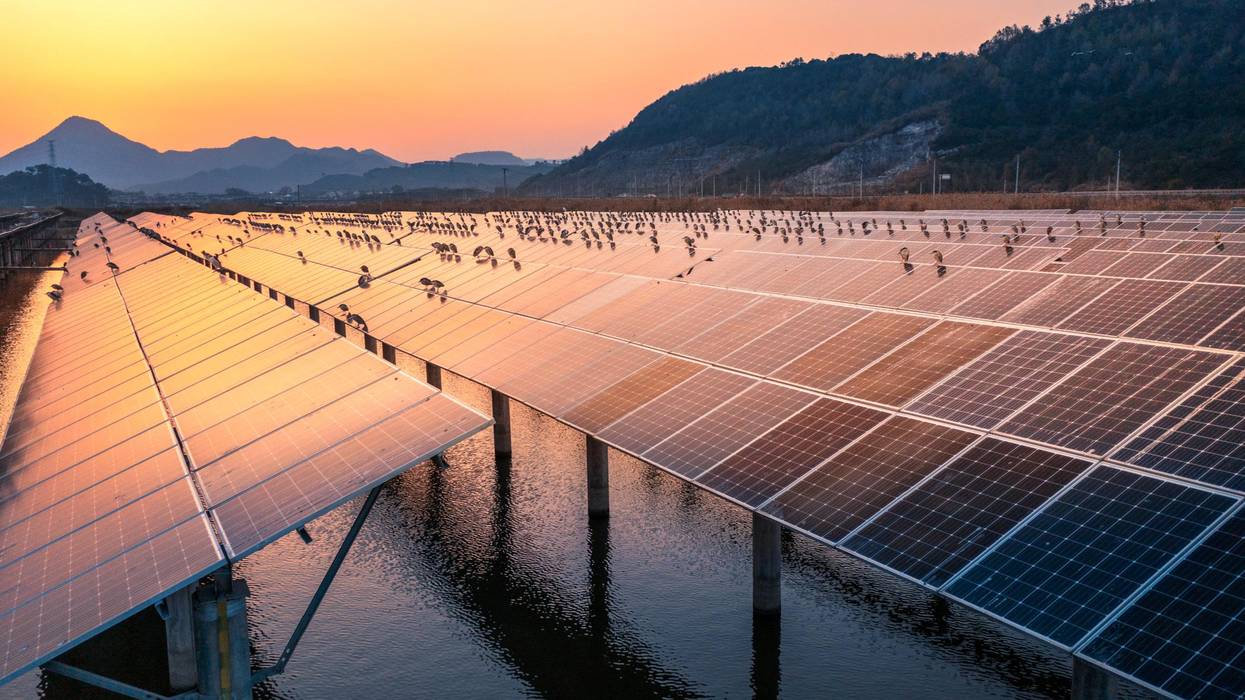
And while Trump has touted America’s supposed “energy independence” as an ace in the hole, achieved by ratcheting up fossil fuel production while canceling solar and wind power projects, data shows that the US has been hit harder by the price shocks than any other major economy in the world, with those that have embraced renewable energy being especially resilient.
Although the US leads the world in oil production by a large margin, data from JP Morgan Commodities research, analyzed Friday by MarketWatch, showed that between February 23 and April 27, the US experienced about a 42% increase in gas prices, the fifth-highest in the world.
"The spike in US gasoline prices over the past two months has outpaced everywhere except Southeast Asia, the region most dependent on oil from the Persian Gulf," explained Yahoo Finance geopolitics reporter Jake Conley.
Rebecca Babin, senior energy trader and managing director at CIBC Private Wealth, explained to MarketWatch last week that while increased fuel production gives the US a "buffer," oil is a global market and "it doesn’t operate in a vacuum." She said, "Global tightness and domestic bottlenecks still show up in gasoline prices."
Meanwhile, some of the countries that have best survived the price hikes include France and Spain, which derive large shares of their power from nuclear energy and renewables, respectively.
Craig Hanson and Jessica Isaacs, a pair of researchers at the World Resources Institute, explained last month that while a mix of factors is at play, countries less reliant on fossil fuels generally "find themselves in a better position to withstand the current crisis."
"Every country has homegrown access to at least two clean energy resources—the sun shines, and the wind blows just about everywhere at some point," they said. "The same cannot be said of oil and gas, where production is concentrated in a small number of countries and exposed to geopolitical disruption."
"Renewable resources like wind, solar, and geothermal have zero fuel costs, and the fuel cost of nuclear power is quite low. Again, the same cannot be said of fossil fuels, which have costs set by volatile global markets," they added. "These two advantages are why some of the world’s clean energy frontrunners are faring better than other countries amidst the Iranian energy crisis."
As Reuters reported in late April, the contrast between Europe's biggest gas guzzlers and green energy adopters is particularly stark.
While Albania has kept energy prices in check and even lowered them compared to last year by using its large system of hydroelectric dams, which supply much of its power, countries like Germany and Italy, which still rely heavily on gas, have seen electricity prices spike.
Hanson and Isaacs noted that while clean energy investments have helped soften the blow of global price shocks, the effects are not the same across the board. While price hikes for the electricity used to power factories, homes, and cars have been blunted by the availability of alternative energy sources, others, like heat—which are more reliant on natural gas—have still been affected.
Still, though, they said the crisis has shown that in addition to environmental sustainability, "clean energy systems’ greatest benefits today might actually be price stability and domestic energy resilience."
While Trump has continued his efforts to choke off any federal investment in renewable energy and double down on oil and gas production, other nations have taken the war’s price hikes as a sign to further accelerate their transition away from fossil fuels.
Germany and several other European Union members, for example, have announced expedited timelines to expand offshore wind and solar investments, explicitly citing the volatility in oil markets caused by the war.
Stephen Wertheim, a senior fellow in the American Statecraft Program at the Carnegie Endowment for International Peace, said the energy price shocks showed that "the only real energy independence from the Middle East is renewables."
We pay it in rising energy bills, our worsening climate, our lack of access to safe water, increased noise pollution, and risks to our health and safety.
Bill Gates recently made headlines by suggesting that climate change is no longer a priority, but the American public begs to differ.
In this last election, climate change was a defining issue in states like Virginia and Georgia, where voters grappled with rising energy costs. And no matter how much tech billionaires try to distract us, increasing power costs and our worsening climate are directly connected to corporations like Google, Meta, Microsoft, and Amazon racing to dominate the AI landscape.
According to the U.S. Energy Information Administration, the price of energy has risen at more than twice the rate of inflation since 2020, and Big Tech’s push for more power-hungry data centers is only making it worse.
The data centers proliferating across the country drive up energy costs by powering energy-ravenous generative AI, cloud storage, digital networks, and other energy intensive programs—much of it fueled by coal and natural gas that exacerbate climate change.
We can demand that tech giants like Microsoft, Meta, Google, and Amazon uphold their commitments to use 100% renewable energy and not rely on fossil fuels and nuclear energy to power data centers.
In some cases, data centers consume enough electricity to power the equivalent of a small city. The wholesale price of electricity in areas housing data centers is up a whopping 267% from five years ago—and everyday customers are eating those costs.
Americans are also shouldering increasing costs of an extreme climate.
The Joint Center for Housing Studies at Harvard noted that insurance prices rose 74% between 2008 and 2024—and between 2018 and 2023, nearly 2 million people had their policies canceled by insurers because of climate risks.
Meanwhile, home prices have gone up 40% in the past two decades—meaning the cost of home repair and recovery from climate disasters has also grown, all while wages remain stagnant.
Data centers aren’t just putting our wallets at risk. Power grids across the country are already strained from aging infrastructure and repeated battering during extreme weather events.
The additional pressure to feed energy-intensive data centers only heightens the risk of power blackouts in emergencies like wildfires, deep freezes, and hurricanes. And in some communities, people’s taps have literally run dry because data centers used all the local groundwater.
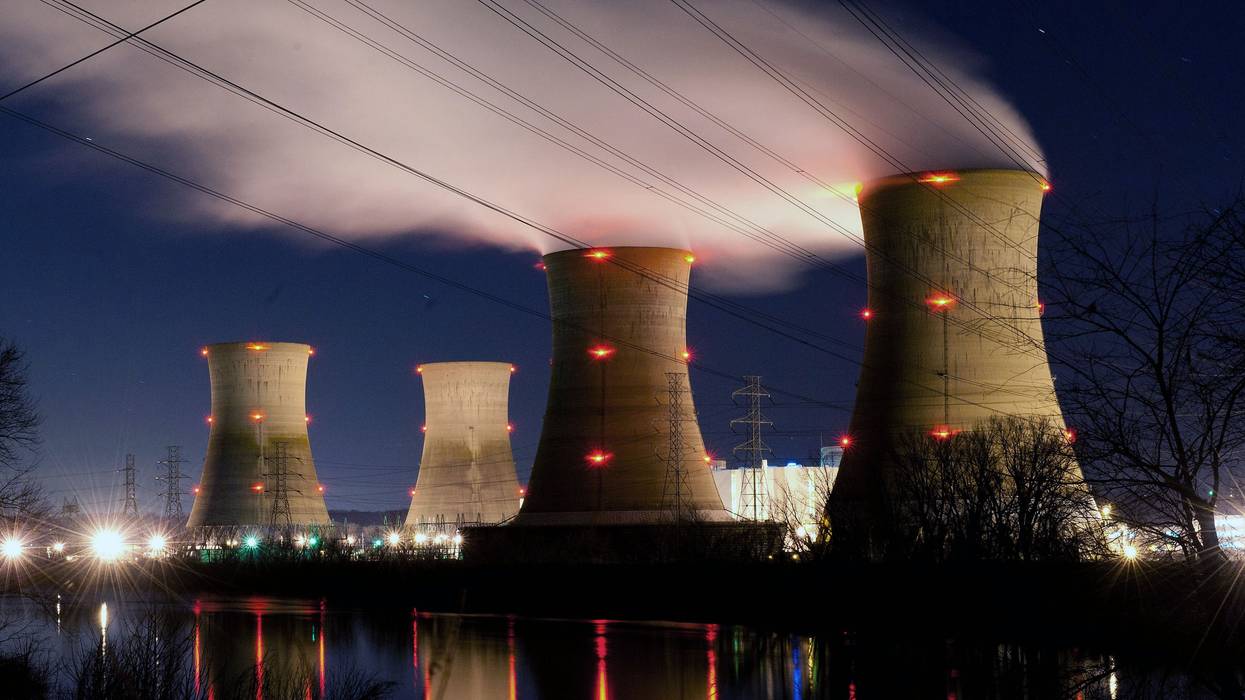
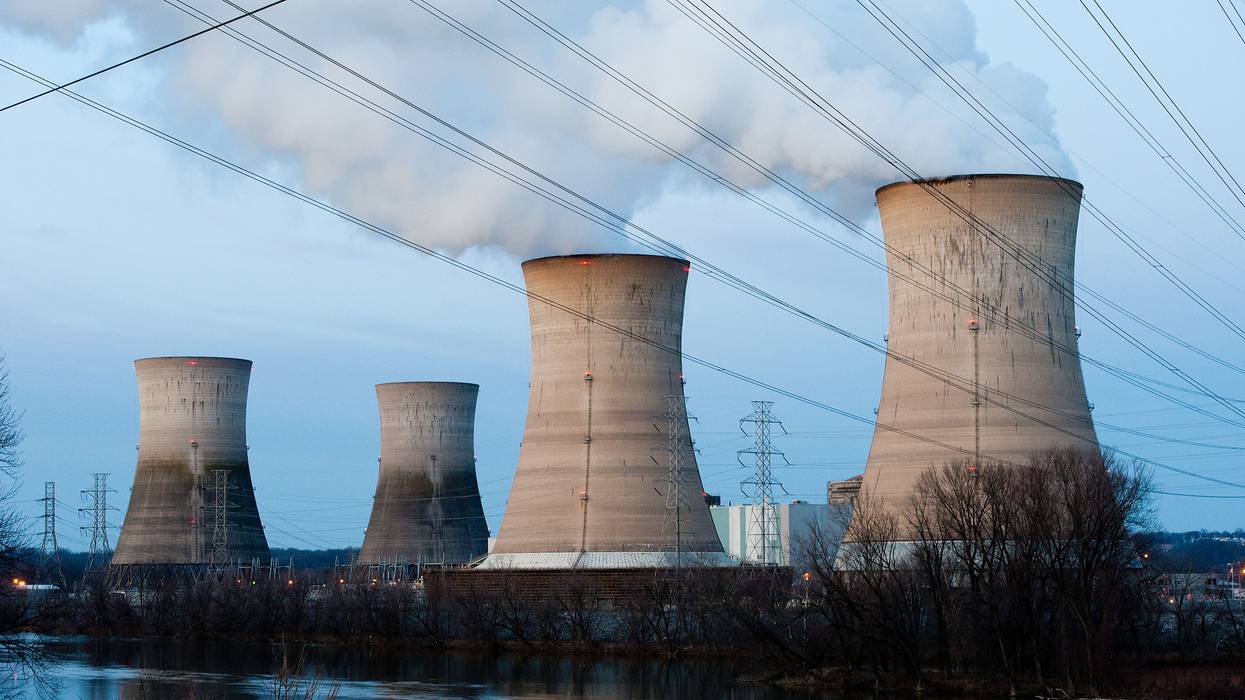
Worse still, Big Tech’s AI energy demand has triggered a resurgence in dirty energy with the construction of new gas-powered energy plants and delayed shutdowns of fossil fuel-powered plants. The tech industry is even pushing for a revitalization of nuclear energy, including the planned 2028 reopening of Three Mile Island—site of the worst nuclear power plant disaster in US history—to help power Microsoft’s data centers.
Everyday people bear the costs of Big Tech’s hunger for profits. We pay it in rising energy bills, our worsening climate, our lack of access to safe water, increased noise pollution, and risks to our health and safety.
It doesn’t have to be this way. Instead of raising our bills, draining our local resources, and destabilizing our climate, Big Tech could create more energy jobs, lessen our power bills, and sustain communities.
We can demand that tech giants like Microsoft, Meta, Google, and Amazon uphold their commitments to use 100% renewable energy and not rely on fossil fuels and nuclear energy to power data centers. We can insist that data centers only go where they’re wanted by ensuring communities are given full transparency and protection in how they’re affected by power usage, water access, and noise pollution.
The current administration is ignoring its obligations to the American public by refusing to rein in Big Tech. But tech billionaires still have a responsibility to the very public they depend on for their existence.
"Such attacks have serious implications for nuclear safety, security, and safeguards, as well as regional and international peace and security," said the director-general of the International Atomic Energy Agency.
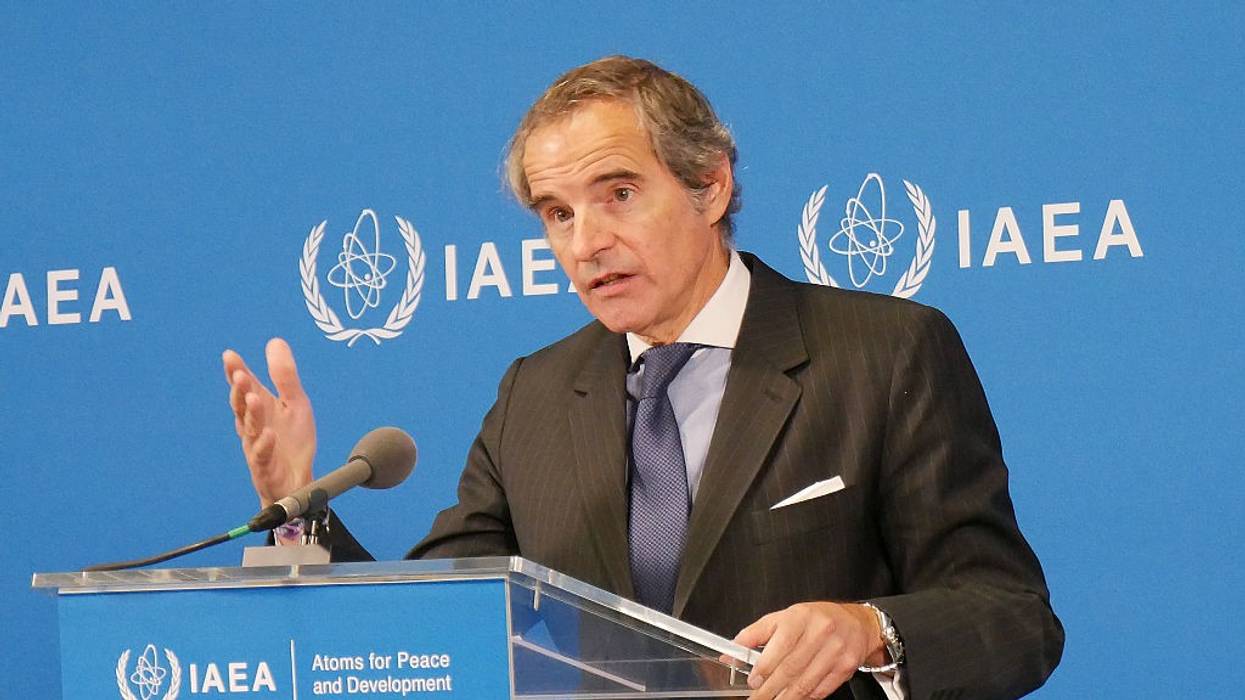
The head of the International Atomic Energy Agency issued a grave warning about the potentially catastrophic environmental and human impacts of military attacks on nuclear facilities after Israel launched a massive assault on Iran's nuclear energy infrastructure, reportedly damaging the country's largest uranium enrichment site.
"This development is deeply concerning," said IAEA Director-General Rafael Grossi. "I have repeatedly stated that nuclear facilities must never be attacked, regardless of the context or circumstances, as it could harm both people and the environment. Such attacks have serious implications for nuclear safety, security, and safeguards, as well as regional and international peace and security."
Grossi pointed to the IAEA's longstanding position that "armed attacks on nuclear facilities could result in radioactive releases with grave consequences within and beyond the boundaries of the State which has been attacked."
As of Friday afternoon local time, Iranian officials said radiation levels were not elevated at the Natanz enrichment site, according to Grossi. Iranian officials also said the country's Esfahan and Fordow nuclear sites were not affected by Israel's attacks.
"Despite the current military actions and heightened tensions," Grossi said Friday, "it is clear that the only sustainable path forward—for Iran, for Israel, the entire region, and the international community—is one grounded in dialogue and diplomacy to ensure peace, stability, and cooperation."
"Israel's bombing of Iran's nuclear facilities is a dangerous escalation from a nuclear-armed state that threatens to thwart negotiations on the Iranian nuclear program."
Israel's deadly attack on Iran came a day after the IAEA Board of Governors approved a U.S.-backed resolution accusing Iran of not complying with its commitments to international nuclear safeguards.
Iran responded furiously to the resolution's passage, saying it "has no choice but to respond to this politically motivated resolution" and announcing a "new enrichment facility in a secure location."
Contrary to the Israeli government's claim that Iran is racing toward a nuclear weapon, U.S. intelligence agencies have maintained that Iran is not building an atomic bomb—an assessment consistent with Iran's repeated public statements that its nuclear program is for civilian energy purposes only.
Following Israel's attack, Iran—which is not a member of the IAEA board—requested that the United Nations agency hold an emergency meeting to discuss the Israeli strikes. Reuters reported that board members Russia, China, and Venezuela supported the request for a meeting.
Melissa Parke, executive director of the Nobel Peace Prize-winning International Campaign to Abolish Nuclear Weapons, said in a statement Friday that "Israel's bombing of Iran's nuclear facilities is a dangerous escalation from a nuclear-armed state that threatens to thwart negotiations on the Iranian nuclear program."
"Israel and Iran must join the U.N. Treaty on the Prohibition of Nuclear Weapons without delay," said Parke. "This would require Israel to dismantle its nuclear weapons program and Iran to maintain its current nuclear safeguards framework under IAEA oversight. It is only through broad-based negotiated solutions that we can truly end the threat from nuclear weapons by agreeing to their total elimination."
SMRs may have a role to play in our energy future, but only if they are sufficiently safe and secure; for that to happen, it is essential to have a realistic understanding of their costs and risks.
Even casual followers of energy and climate issues have probably heard about the alleged wonders of small modular nuclear reactors, or SMRs. This is due in no small part to the “nuclear bros”: an active and seemingly tireless group of nuclear power advocates who dominate social media discussions on energy by promoting SMRs and other “advanced” nuclear technologies as the only real solution for the climate crisis. But as I showed in my 2013 and 2021 reports, the hype surrounding SMRs is way overblown, and my conclusions remain valid today.
Unfortunately, much of this SMR happy talk is rooted in misinformation, which always brings me back to the same question: If the nuclear bros have such a great SMR story to tell, why do they have to exaggerate so much?
SMRs are nuclear reactors that are “small” (defined as 300 megawatts of electrical power or less), can be largely assembled in a centralized facility, and would be installed in a modular fashion at power generation sites. Some proposed SMRs are so tiny (20 megawatts or less) that they are called “micro” reactors. SMRs are distinct from today’s conventional nuclear plants, which are typically around 1,000 megawatts and were largely custom-built. Some SMR designs, such as NuScale, are modified versions of operating water-cooled reactors, while others are radically different designs that use coolants other than water, such as liquid sodium, helium gas, or even molten salts.
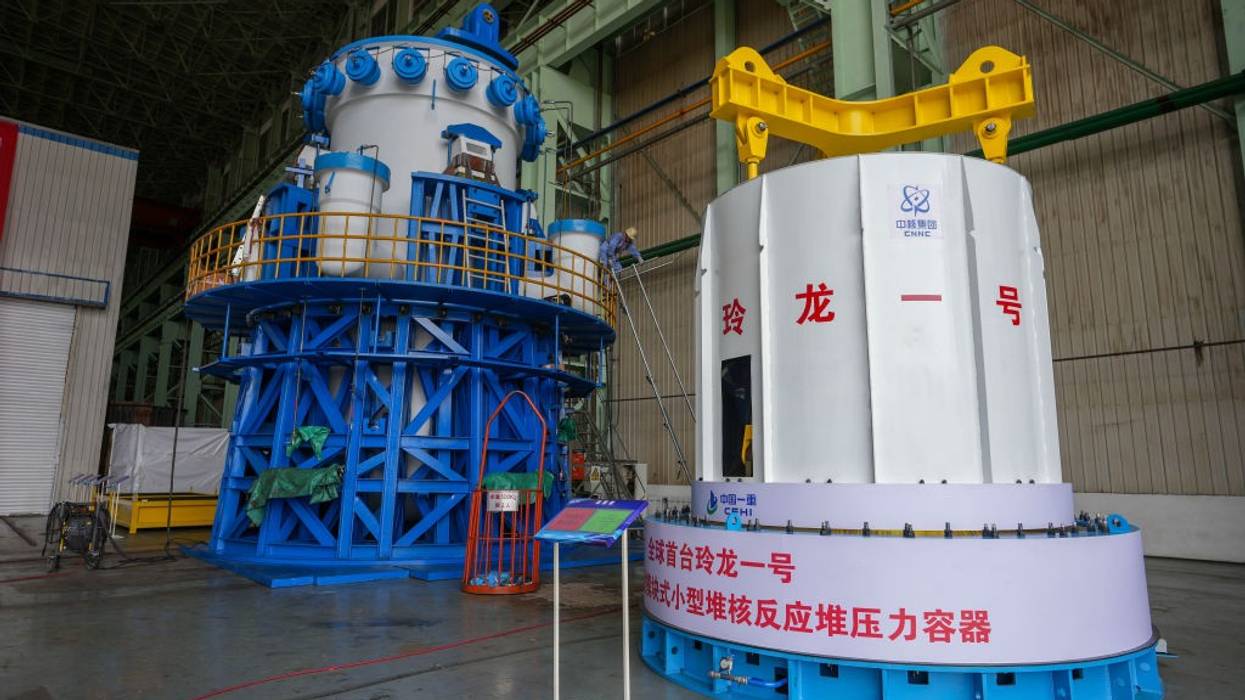
To date, however, theoretical interest in SMRs has not translated into many actual reactor orders. The only SMR currently under construction is in China. And in the United States, only one company—TerraPower, founded by Microsoft’s Bill Gates—has applied to the Nuclear Regulatory Commission (NRC) for a permit to build a power reactor (but at 345 megawatts, it technically isn’t even an SMR).
The nuclear industry has pinned its hopes on SMRs primarily because some recent large reactor projects, including Vogtle units 3 and 4 in the state of Georgia, have taken far longer to build and cost far more than originally projected. The failure of these projects to come in on time and under budget undermines arguments that modern nuclear power plants can overcome the problems that have plagued the nuclear industry in the past.
Regulators are loosening safety and security requirements for SMRs in ways which could cancel out any safety benefits from passive features.
Developers in the industry and the U.S. Department of Energy say that SMRs can be less costly and quicker to build than large reactors and that their modular nature makes it easier to balance power supply and demand. They also argue that reactors in a variety of sizes would be useful for a range of applications beyond grid-scale electrical power, including providing process heat to industrial plants and power to data centers, cryptocurrency mining operations, petrochemical production, and even electrical vehicle charging stations.
Here are five facts about SMRs that the nuclear industry and the “nuclear bros” who push its message don’t want you, the public, to know.
In theory, small reactors should have lower capital costs and construction times than large reactors of similar design so that utilities (or other users) can get financing more cheaply and deploy them more flexibly. But that doesn’t mean small reactors will be more economical than large ones. In fact, the opposite usually will be true. What matters more when comparing the economics of different power sources is the cost to produce a kilowatt-hour of electricity, and that depends on the capital cost per kilowatt of generating capacity, as well as the costs of operations, maintenance, fuel, and other factors.
According to the economies of scale principle, smaller reactors will in general produce more expensive electricity than larger ones. For example, the now-cancelled project by NuScale to build a 460-megawatt, 6-unit SMR in Idaho was estimated to cost over $20,000 per kilowatt, which is greater than the actual cost of the Vogtle large reactor project of over $15,000 per kilowatt. This cost penalty can be offset only by radical changes in the way reactors are designed, built, and operated.
For example, SMR developers claim they can slash capital cost per kilowatt by achieving efficiency through the mass production of identical units in factories. However, studies find that such cost reductions typically would not exceed about 30%. In addition, dozens of units would have to be produced before manufacturers could learn how to make their processes more efficient and achieve those capital cost reductions, meaning that the first reactors of a given design will be unavoidably expensive and will require large government or ratepayer subsidies to get built. Getting past this obstacle has proven to be one of the main impediments to SMR deployment.
The levelized cost of electricity for the now-cancelled NuScale project was estimated at around $119 per megawatt-hour (without federal subsidies), whereas land-based wind and utility-scale solar now cost below $40/MWh.
Another way that SMR developers try to reduce capital cost is by reducing or eliminating many of the safety features required for operating reactors that provide multiple layers of protection, such as a robust, reinforced concrete containment structure, motor-driven emergency pumps, and rigorous quality assurance standards for backup safety equipment such as power supplies. But these changes so far haven’t had much of an impact on the overall cost—just look at NuScale.
In addition to capital cost, operation and maintenance (O&M) costs will also have to be significantly reduced to improve the competitiveness of SMRs. However, some operating expenses, such as the security needed to protect against terrorist attacks, would not normally be sensitive to reactor size. The relative contribution of O&M and fuel costs to the price per megawatt-hour varies a lot among designs and project details, but could be 50% or more, depending on factors such as interest rates that influence the total capital cost.
Economies of scale considerations have already led some SMR vendors, such as NuScale and Holtec, to roughly double module sizes from their original designs. The Oklo, Inc. Aurora microreactor has increased from 1.5 MW to 15 MW and may even go to 50 MW. And the General Electric-Hitachi BWRX-300 and Westinghouse AP300 are both starting out at the upper limit of what is considered an SMR.
Overall, these changes might be sufficient to make some SMRs cost-competitive with large reactors, but they would still have a long way to go to compete with renewable technologies. The levelized cost of electricity for the now-cancelled NuScale project was estimated at around $119 per megawatt-hour (without federal subsidies), whereas land-based wind and utility-scale solar now cost below $40/MWh.
Microreactors, however, are likely to remain expensive under any realistic scenario, with projected levelized electricity costs two to three times that of larger SMRs.
Because of their size, you might think that small nuclear reactors pose lower risks to public health and the environment than large reactors. After all, the amount of radioactive material in the core and available to be released in an accident is smaller. And smaller reactors produce heat at lower rates than large reactors, which could make them easier to cool during an accident, perhaps even by passive means—that is, without the need for electrically powered coolant pumps or operator actions.
However, the so-called passive safety features that SMR proponents like to cite may not always work, especially during extreme events such as large earthquakes, major flooding, or wildfires that can degrade the environmental conditions under which they are designed to operate. And in some cases, passive features can actually make accidents worse: For example, the NRC’s review of the NuScale design revealed that passive emergency systems could deplete cooling water of boron, which is needed to keep the reactor safely shut down after an accident.
In any event, regulators are loosening safety and security requirements for SMRs in ways which could cancel out any safety benefits from passive features. For example, the NRC has approved rules and procedures in recent years that provide regulatory pathways for exempting new reactors, including SMRs, from many of the protective measures that it requires for operating plants, such as a physical containment structure, an offsite emergency evacuation plan, and an exclusion zone that separates the plant from densely populated areas. It is also considering further changes that could allow SMRs to reduce the numbers of armed security personnel to protect them from terrorist attacks and highly trained operators to run them. Reducing security at SMRs is particularly worrisome, because even the safest reactors could effectively become dangerous radiological weapons if they are sabotaged by skilled attackers. Even passive safety mechanisms could be deliberately disabled.
Considering the cumulative impact of all these changes, SMRs could be as—or even more— dangerous than large reactors. For example, if a containment structure at a large reactor reliably prevented 90% of the radioactive material from being released from the core of the reactor during a meltdown, then a reactor five times smaller without such a containment structure could conceivably release more radioactive material into the environment, even though the total amount of material in the core would be smaller. And if the SMR were located closer to populated areas with no offsite emergency planning, more people could be exposed to dangerously high levels of radiation.
But even if one could show that the overall safety risk of a small reactor was lower than that of a large reactor, that still wouldn’t automatically imply the overall risk per unit of electricity that it generates is lower, since smaller plants generate less electricity. If an accident caused a 250-megawatt SMR to release only 25% of the radioactive material that a 1,000-megawatt plant would release, the ratio of risk to benefit would be the same. And a site with four such reactors could have four times the annual risk of a single unit, or an even greater risk if an accident at one reactor were to damage the others, as happened during the 2011 Fukushima Daiichi accident in Japan.
The industry makes highly misleading claims that certain SMRs will reduce the intractable problem of long-lived radioactive waste management by generating less waste, or even by “recycling” their own wastes or those generated by other reactors.
First, it’s necessary to define what “less” waste really means. In terms of the quantity of highly radioactive isotopes that result when atomic nuclei are fissioned and release energy, small reactors will produce just as much as large reactors per unit of heat generated. (Non-light-water reactors that more efficiently convert heat to electricity than light-water reactors will produce somewhat smaller quantities of fission products per unit of electricity generated—perhaps 10 to 30%—but this is a relatively small effect in the scheme of things.) And for reactors with denser fuels, the volume and mass of the spent fuel generated may be smaller, but the concentration of fission products in the spent fuel, and the heat generated by the decay products—factors that really matter to safety—will be proportionately greater.
Therefore, entities that hope to acquire SMRs, like data centers that lack the necessary waste infrastructure, will have to safely manage the storage of significant quantities of spent nuclear fuel on site for the long term, just like any other nuclear power plant does. Claims by vendors such as Westinghouse that they will take away the reactors after the fuel is no longer usable are simply not credible, as there are no realistic prospects for licensing centralized sites where the used reactors could be taken for the foreseeable future. Any community with an SMR will have to plan to be a de facto long-term nuclear waste disposal site.
Despite the claims of developers, it is very unlikely that any reasonably foreseeable SMR design would be able to safely operate without reliable access to electricity from the grid to power coolant pumps and other vital safety systems. Just like today’s nuclear plants, SMRs will be vulnerable to extreme weather events or other disasters that could cause a loss of offsite power and force them to shut down. In such situations a user such as a data center operator would have to provide backup power, likely from diesel generators, for both the data center AND the reactor. And since there is virtually no experience with operating SMRs worldwide, it is highly doubtful that the novel designs being pitched now would be highly reliable right out of the box and require little monitoring and maintenance.
It very likely will take decades of operating experience for any new reactor design to achieve the level of reliability characteristic of the operating light-water reactor fleet. Premature deployment based on unrealistic performance expectations could prove extremely costly for any company that wants to experiment with SMRs.
Some advocates misleadingly claim that SMRs are more efficient than large ones because they use less fuel. In terms of the amount of heat generated, the amount of uranium fuel that must undergo nuclear fission is the same whether a reactor is large or small. And although reactors that use coolants other than water typically operate at higher temperatures, which can increase the efficiency of conversion of heat to electricity, this is not a big enough effect to outweigh other factors that decrease efficiency of fuel use.
Some SMRs designs require a type of uranium fuel called “high-assay low enriched uranium (HALEU),” which contains higher concentrations of the isotope uranium-235 than conventional light-water reactor fuel. Although this reduces the total mass of fuel the reactor needs, that doesn’t mean it uses less uranium nor results in less waste from “front-end” mining and milling activities: In fact, the opposite is more likely to be true.
If the nuclear bros have such a great SMR story to tell, why do they have to exaggerate so much?
One reason for this is that HALEU production requires a relatively large amount of natural uranium to be fed into the enrichment process that increases the uranium-235 concentration. For example, the TerraPower Natrium reactor which would use HALEU enriched to around 19% uranium-235, will require 2.5 to 3 times as much natural uranium to produce a kilowatt-hour of electricity than a light-water reactor. Smaller reactors, such as the 15-megawatt Oklo Aurora, are even more inefficient. Improving the efficiency of these reactors can occur only with significant advances in fuel performance, which could take decades of development to achieve.
Reactors that use uranium inefficiently have disproportionate impacts on the environment from polluting uranium mining and processing activities. They also are less effective in mitigating carbon emissions, because uranium mining and milling are relatively carbon-intensive activities compared to other parts of the uranium fuel cycle.
SMRs may have a role to play in our energy future, but only if they are sufficiently safe and secure. For that to happen, it is essential to have a realistic understanding of their costs and risks. By painting an overly rosy picture of these technologies with often misleading information, the nuclear bros are distracting attention from the need to confront the many challenges that must be resolved to make SMRs a reality—and ultimately doing a disservice to their cause.
"We should seriously consider whether it is in U.S. interests to help Saudi Arabia develop a domestic nuclear program," 19 Democratic senators and independent Bernie Sanders wrote.
Amid reports that Saudi Arabia is seeking United States support for its nuclear energy program—whose capacities critics fear could be utilized to develop nuclear weapons—a group of 20 U.S. senators on Wednesday urged President Joe Biden to "seriously consider" whether such a move is in the national interest as the administration brokers a possible normalization deal between the kingdom and Israel.
In addition to concerns over the fundamentalist monarchy's desire for a U.S. security guarantee as a condition for normalizing relations with apartheid Israel, as well as the future of a two-state solution in illegally occupied Palestine, the senators note in a letter to Biden that "the Saudi government is also reportedly seeking U.S. support to develop a civilian nuclear program, and to purchase more advanced U.S. weaponry."
"While we should seriously consider whether it is in U.S. interests to help Saudi Arabia develop a domestic nuclear program, we should always maintain the high bar of the 'gold standard' 123 Agreement and insist on adherence to the Additional Protocol," the senators wrote, referring to a provision of the Atomic Energy Act of 1954 requiring a country seeking a nuclear cooperation deal with the United States to commit to a set of nine nonproliferation criteria and expanded International Atomic Energy Agency (IAEA) inspections. The U.S. has entered into such agreements with more than two dozen countries, Taiwan, and the IAEA.
Citing "the devastating war in Yemen" waged by a U.S.-backed Saudi-led coalition for nearly eight years at the cost of more than 375,000 lives, the senators added that "the provision of more advanced weaponry to Saudi Arabia should be done with careful deliberation to ensure that such equipment only be used for truly defensive purposes and does not contribute to a regional arms race."
The lawmakers' letter was led by Democratic Sens. Chris Murphy (Conn.), Chris Van Hollen (Md.), Dick Durbin (Ill.), and Peter Welch (Vt.). Signatories include Sens. Bernie Sanders (I-Vt.), Elizabeth Warren (D-Mass.), John Fetterman (D-Pa.), Jeff Merkley (D-Ore.), Patty Murray (D-Wash.), and Ed Markey (D-Mass.).
As Center for Strategic & International Studies senior fellow Jane Nakano wrote last month:
The Saudi interest in acquiring nuclear power technology became publicly known around 2010, with a royal decree stipulating that "the development of atomic energy is essential to meet the kingdom's growing requirements for energy to generate electricity, produce desalinated water, and reduce reliance on depleting hydrocarbon resources." Also, having pledged to meet carbon neutrality by 2060, Saudi Arabia looks to nuclear as an important source of zero-emissions electricity.
In addition to the United States, China National Nuclear Corporation of China, Électricité de France of France, Rosatom of Russia, and Korea Electric Power Corporation of South Korea have been in discussions to land the contract to build two inaugural nuclear power units in Saudi Arabia.
"Saudi Arabia has been publicly interested in obtaining the capacity to enrich domestic uranium to establish the entire nuclear fuel cycle, including the production of yellowcake, low enriched uranium, and the manufacturing of nuclear fuel both for both domestic use and exporting," Nakano noted. "While economic diversification through the development of domestic uranium industry may be a genuine interest, Saudi leadership has also shown little opposition to turning nuclear power capacity into developing a nuclear weapon if it deemed necessary to acquire such capability."
"The ongoing Saudi resistance to the U.S. nonproliferation conditions has generated controversy, given Saudi Arabia acceded to the Nuclear Nonproliferation Treaty in 1988—i.e., the country is legally bound to not pursue nuclear weapons," she added.
However, Saudi Crown Prince Mohammed bin Salman (MBS) confirmed last month that if Iran develops a nuclear bomb, "we will have to get one."
Some experts are warning that Saudi Arabia could turn to China or even Russia to help fulfill its nuclear ambitions if it grows wary of U.S. conditions. Hassan Alshehri, a Saudi defense analyst and retired brigadier general, told Breaking Defense that "the West knows that Riyadh has a flexible compass that can guide it to other alternatives to acquire nuclear capabilities if Washington continues with its current negative stance."
Hasan Al Hasan, Middle East research fellow at the International Institute for Strategic Studies, told Breaking Defense that "if MBS and the Biden administration fail to reach an agreement on nuclear limits and security commitments... then Saudi Arabia will likely turn to other partners, notably China and Russia, for help with building the capabilities it needs to restore the balance of power with Iran."
In response, China said it would ban the import of all Japanese ocean products, with one ministry spokesperson calling Japan's decision "selfish."
At around 1:00 pm local time Thursday, the Tokyo Electric Power Company began to discharge wastewater from the Fukushima nuclear plant, in keeping with the schedule Japan announced Tuesday.
In response, South Korean protestors attempted to enter the Japanese Embassy in Seoul, and China said it would ban the import of all Japanese ocean products.
"The ocean is the common property of all humankind, not a place for Japan to arbitrarily dump nuclear-contaminated water," Chinese foreign ministry spokesperson Wang Wenbin said ahead of the first release of water Thursday, as The Guardian reported.
Wang also called the decision "extremely selfish."
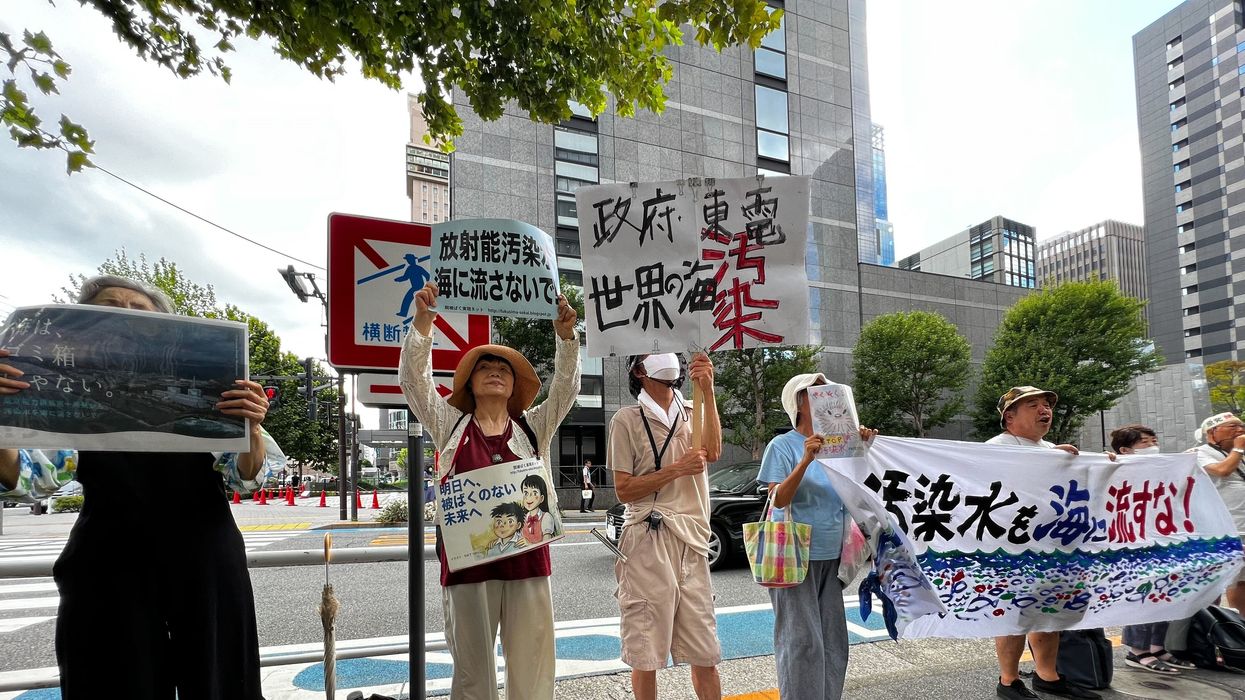
"The sea is not Japan's trash bin."
The Chinese customs agency said it would immediately and "completely suspend the import of aquatic products originating in Japan" to "prevent the risk of radioactive contamination of food safety." This means that, in addition to seafood, marine products like seaweed or sea salt would also be covered, CNN explained.
In South Korea, around 50 people gathered for a protest outside the Japanese Embassy in Seoul, Reuters reported. A group of them entered the building and reached the eighth floor, where they unfurled banners.
"The sea is not Japan's trash bin," one banner read. "Stop releasing contaminated water at once."
Police arrested 16 people for trespassing, physically carrying and dragging some out of the building and on to a bus, a Reuters photographer said.
While South Korea's opposition Democratic Party leader Lee Jae-myung calls the Fukushima release an "act of terror," the country's government under President Yoon Suk Yeol has backed Japan's decision, Deutsche Welle explained. However, the release is unpopular with the public, with more than 80% opposing the release and more than 60% vowing not to eat Japanese seafood afterward, The Associated Press reported. This has prompted the government to threaten Japan with a lawsuit if radiation levels surpass the safety limit, according to DW.
"I totally oppose the Japanese plan. The radioactive wastewater is truly a bad thing," Seoul resident Lee Jae-kyung told AP. "My feelings toward Japan have worsened because of the wastewater release."
The governments of Hong Kong and Macao have also placed a more limited ban on seafood from 10 Japanese prefectures including Fukushima. Hong Kong chief executive John Lee called Japan's decision to release the water "irresponsible," according to The Guardian. There, the release also drew protests, with demonstrators ripping up a sign with the Japanese flag and the words, "No trace of humanity. An enemy of the whole world," when they reached the consulate, as AP reported.
Domestically, too, the release has prompted opposition from fishers and environmental groups, as well as concern from citizens.
"I'm not going to buy fish from Fukushima again and I will ask the sushi restaurant where I usually go where they are buying their stocks from. And I definitely will not go to any of the beaches there with my children until I am absolutely sure that it is safe again," Kanako Hosomura, who lives less than 200 kilometers from the plant, told DW.
Around 400 protesters gathered outside the Tokyo Electric Power Company (TEPCO) headquarters Thursday morning, Greenpeace Japan tweeted.
The protests continued even after the release began.
Japan insists that its plan for the release is safe, and the International Atomic Energy Agency has concluded it is "consistent with relevant international safety standards." TEPCO is first treating the water in an advanced liquid processing system to remove everything except for the radioactive tritium, which is not possible to remove because it is an isotope of hydrogen, a key component of water, as NPR explained. The water containing the tritium is then further diluted with seawater to one-seventh of the World Health Organization's safety standard, according to DW. The government says some nuclear plants release tritium-contaminated wastewater at higher levels, NPR reported. And The Guardian observed that Chinese plants also release wastewater into the ocean.
TEPCO said it would release 7,800 tons of water over the next 17 days, and around 31,200 tons by April, according to DW. The entire process is expected to take around three decades.
Edwin Lyman, the director of nuclear power safety at the Union of Concerned Scientists in Washington, D.C., told NPR that Japan's plan was "the least bad of a bunch of bad options."
"The idea of deliberately discharging hazardous substances into the environment, into the ocean is repugnant," Lyman said. "But unfortunately, if you do look at it from the technical perspective, it's hard to argue that the impacts of this discharge would be worse than those that are occurring at nuclear power plants that are operating worldwide."
However, Woods Hole Oceanographic Institute senior scientist Ken Buesseler said it would be better to keep the waste stored on land where it could be watched.
While he didn't think the waste posed a threat to the wider Pacific, "nearshore in Japan could be affected in the long term because of accumulation of non-tritium forms of radioactivity," Buesseler told NPR.
While the name Sir Joseph Rotblat will probably never be as widely known as that of the other illustrious scientists who worked on the project that ushered in the nuclear age, his example serves as a reminder that we always have a choice.
Last month saw the release of the highly anticipated blockbuster movie Oppenheimer. Based on a biography of the head of the Manhattan Project, the U.S.’s secret World War II program to develop the atomic bomb, this movie has received positive reviews from critics. Cillian Murphy, the actor who plays the main character in the eponymously titled movie, in particular has been praised for his performance and the stellar job he does in capturing the pathos that haunted the title character after the bomb had been successfully detonated.
Although no doubt deserving of the acclaim he has garnered for his role, enshrouding his character in tragedy and investing the film with melodrama carries the risk of conveying the message that we in our collective humanity are victims who are somehow helpless in the face of this powerful technology.
From here, it becomes relatively easy for the cinemagoer to be overwhelmed with a sense of dread and left with the impression that our nuclear fate is out of our hands. It follows that we should resign ourselves to this fact, for to think otherwise is futile. The more pervasive this attitude becomes, the less likely are ordinary people to feel that they can affect nuclear policy. If so, far better to leave nuclear decision-making to the technocrats and powers that be who decide such things.
Glaringly omitted from the cast of the movie, Rotblat holds the distinction of being the only scientist working on this program to have had the courage to walk away from this project.
Despite the gloomy scenario depicted and the helplessness it could so easily engender, there is always room for individuals to act on their conscience in the belief that doing so could change nuclear destiny. This can be clearly seen in the actions of Oppenheimer’s contemporary and fellow scientist who worked on the Manhattan Project, Sir Joseph Rotblat. Glaringly omitted from the cast of the movie, Rotblat holds the distinction of being the only scientist working on this program to have had the courage to walk away from this project.
He elected to do so in 1944, the year before the war ended, when it became clear to him along with many in the U.S. military and political establishment that Germany, the Allies’ main enemy that intelligence services had gathered was also pursuing nuclear research, was nearing defeat and would not be able to design and deploy a nuclear weapon. Far from cutting a tragic figure in later life, Rotblat’s courageous decision led him down a path that would ultimately lead to his being awarded the highest of honors, including a Nobel Peace Prize in 1995, for the tireless work he did campaigning for the elimination of nuclear weapons.
While his name will probably never be as widely known as that of the other illustrious scientists who worked on the project that ushered in the nuclear age, and even less likely that a major biopic will be made about him, his example serves as a reminder that we always have a choice. It also serves as a challenge to each of us: Do we possess the wisdom to recognize we do and the courage to act as if we can make a difference? For the sake of humanity, let us hope we do. For if we do not, the only ticket that will be punched at this time when global tensions are rising and the Doomsday Clock is closer to midnight than it has ever been is a one way ticket to oblivion rather than a ticket to the cineplex.
Fortunately, there are small and simple ways each of us who are unwilling to accept being spectators paralyzed into inaction who are only able to gawk as the end credits roll on humanity could meet this challenge and honor Rotblat’s long-forgotten memory.
As an immediate step, those of us in nuclear weapons states could petition our governments to forswear the option of a nuclear first strike. Concurrently, those of us from countries that have a civilian but not a nuclear weapons program could take a more active role in domestic nuclear watchdog organisations that act to curb the martial instincts of our more bellicose leaders. While those of us from countries that are currently toying with the idea of establishing civilian nuclear programs could push back against the greenwashing of the nuclear industry that lobbyists are engaged in by getting involved in campaigns that aim to educate the public about nuclear power and seeing to it that public oversight mechanisms are firmly in place before our governments embark upon these ventures. All this while working together to reinvigorate the global movement to eliminate nuclear weapons.
The script is unwritten but, no matter where we are, each of us has a key, albeit minor, part to play in this epic that will serve as a fitting tribute to Sir Joseph Rotblat. Are you prepared to audition for a role in this cast?
"The recent catastrophic train derailment in East Palestine, Ohio, and the crash of two Boeing 737 Max jets demonstrate the real-world consequences of inadequate or capriciously enforced safety regulation and oversight. We can't add radiological releases from U.S. nuclear plants to this list."
In the wake of another nerve-wracking outage at a Russian-held Ukrainian nuclear energy facility this week, 90 groups and dozens of individuals wrote to U.S. President Joe Biden expressing "grave concerns regarding security at U.S. nuclear power plants."
"We commend and wholeheartedly support your administration's much-needed efforts to make nuclear plants in the Ukraine war zone more secure in the face of daunting political and military challenges," states the letter, spearheaded by Nuclear Energy Information Service (NEIS) and sent to the White House Wednesday. "This work protects not only Ukraine but the entire planet."
"Our concern is that the security of U.S. nuclear power plants does not seem to be receiving a commensurate amount of attention, neither from the U.S. Nuclear Regulatory Commission (NRC), nor the administration," the coalition explained. "Worse, your administration is also seeking to expand the nuclear industry in dangerous ways that compound nuclear plant security threats."
"Attacks on nuclear facilities and other external dangers they face are credible threats and could happen here."
While the letter argues that given the associated security threats, "federal funding should prioritize scaling up renewables, storage, efficiency, and transmission upgrades, so as to phase out nuclear power as quickly as possible," it also calls for immediate action.
"Nuclear plant security MUST begin at home," the groups declared, urging the U.S. government to "learn the lesson" from Zaporizhzhia Nuclear Power Plant (ZNPP) since Russian forces invaded Ukraine early last year—that "attacks on nuclear facilities and other external dangers they face are credible threats and could happen here."
"The recent catastrophic train derailment in East Palestine, Ohio, and the crash of two Boeing 737 Max jets demonstrate the real-world consequences of inadequate or capriciously enforced safety regulation and oversight," the organizations asserted. "We can't add radiological releases from U.S. nuclear plants to this list."
The coalition also sent the president a separate document detailing security concerns and recommendations for U.S. facilities, but the letter highlights the top takeaways:
The coalition is calling on the Biden administration to enforce "enhanced, mandatory security measures for existing nuclear facilities and spent nuclear fuel to make them less vulnerable to attack," at the cost of licensees, not U.S. taxpayers.
The groups' recommendations include changes to storage policies. The letter says that "instead of transporting it to proposed CISFs, most spent nuclear fuel should be stored at reactor sites using hardened onsite storage (HOSS)."
In a statement, Kevin Kamps—a radioactive waste specialist with Beyond Nuclear, which signed the letter to Biden—took aim at Holtec International, a U.S.-based company that owns a proposed New Mexico CISF, has handled spent fuel in Ukraine, and recently signed a contract to deploy small modular nuclear reactors in the war-torn country.
"Holtec's performance in handling spent fuel has been abysmal in Ukraine and similarly abysmal in the United States," said Kamps. "That's one illustration among others that the problem is not limited to Ukraine, and that U.S. nuclear plants are subject to security threats we need to start addressing."
NEIS director Dave Kraft asked, "What sense does it make to send tens of millions of dollars to Ukraine to enhance security and safety, when our own 92 operating reactors and 90,000 tons of high-level radioactive wastes are not secure?"
"What sense does it make to sprinkle the next-generation micro- and mini-nuke reactors around the nation and the world, boasting they can be mobile on flatbed trucks or housed in factories or Walmarts, when it is daily demonstrated that silent drones are capable of turning heavily armored tanks and military vehicles into shredded heaps of burning metal?" he added. "This is the real world nuclear power now exists in, and this administration is not prepared to provide the safety and security necessary for it to survive."
On Monday, for the seventh time since the Russians took control of ZNPP last year, Europe's largest nuclear facility was fully disconnected from Ukraine's electricity grid and had to rely on backup diesel generators. The outage lasted over five hours.
Reuters reported that a "Russia-installed local official said Ukraine had disconnected a power line and Ukrainian state nuclear energy company Energoatom said the problem was caused by Russian shelling."
Rafael Mariano Grossi, director general of the International Atomic Energy Agency, said Monday's incident "demonstrates the highly vulnerable nuclear safety and security situation" at the facility and reiterated that "this simply can't go on."
"We're playing with fire. We must act now to avoid the very real danger of a nuclear accident in Europe, with its associated consequences for the public and the environment," he added. "I'm continuing to engage in intense negotiations with all the involved parties to secure the protection of the Zaporizhzhia Nuclear Power Plant. I will not stop until this has been achieved."
It is yet another attempt by those who believe that only a mega-scaled, technology-intensive approach can be a viable alternative to our current fossil fuel-dependent energy infrastructure.
In a dramatic scientific and engineering breakthrough, researchers at the Bay Area's Lawrence Berkeley Laboratory recently achieved the long-sought goal of generating a nuclear fusion reaction that produced more energy than was directly injected into a tiny reactor vessel. By the very next day, pundits well across the political spectrum were touting that breakthrough as a harbinger of a new era in energy production, suggesting that a future of limitless, low-impact fusion energy was perhaps a few decades away. In reality, however, commercially viable nuclear fusion is only infinitesimally closer than it was back in the 1980s when a contained fusion reaction—i.e. not occurring in the sun or from a bomb—was first achieved.
A meaningfully just energy transition needs to both be fully renewable, and also reject the myths of perpetual growth that emerged from the fossil fuel era.
While most honest writers have at least acknowledged the obstacles to commercially-scaled fusion, they typically still underestimate them—as much so today as back in the 1980s. We are told that a fusion reaction would have to occur "many times a second" to produce usable amounts of energy. But the blast of energy from the LBL fusion reactor actually only lasted one tenth of a nanosecond—that's a ten-billionth of a second. Apparently other fusion reactions (with a net energy loss) have operated for a few nanoseconds, but reproducing this reaction over a billion times every second is far beyond what researchers are even contemplating.
We are told that the reactor produced about 1.5 times the amount of energy that was input, but this only counts the laser energy that actually struck the reactor vessel. That energy, which is necessary to generate temperatures over a hundred million degrees, was the product of an array of 192 high-powered lasers, which required well over 100 times as much energy to operate. Third, we are told that nuclear fusion will someday free up vast areas of land that are currently needed to operate solar and wind power installations. But the entire facility needed to house the 192 lasers and all the other necessary control equipment was large enough to contain three football fields, even though the actual fusion reaction takes place in a gold or diamond vessel smaller than a pea. All this just to generate the equivalent of about 10-20 minutes of energy that is used by a typical small home. Clearly, even the most inexpensive rooftop solar systems can already do far more. And Prof. Mark Jacobson's group at Stanford University has calculated that a total conversion to wind, water and solar power might use about as much land as is currently occupied by the world's fossil fuel infrastructure.
Long-time nuclear critic Karl Grossman wrote on Counterpunch recently of the many likely obstacles to scaling up fusion reactors, even in principle, including high radioactivity, rapid corrosion of equipment, excessive water demands for cooling, and the likely breakdown of components that would need to operate at unfathomably high temperatures and pressures. His main source on these issues is Dr. Daniel Jassby, who headed Princeton's pioneering fusion research lab for 25 years. The Princeton lab, along with researchers in Europe, has led the development of a more common device for achieving nuclear fusion reactions, a doughnut-shaped or spherical vessel known as a tokamak. Tokamaks, which contain much larger volumes of highly ionized gas (actually a plasma, a fundamentally different state of matter), have achieved substantially more voluminous fusion reactions for several seconds at a time, but have never come close to producing more energy than is injected into the reactor.
The laser-mediated fusion reaction achieved at LBL occurred at a lab called the National Ignition Facility, which touts its work on fusion for energy, but is primarily dedicated to nuclear weapons research. Prof. M. V. Ramana of the University of British Columbia, whose recent article was posted on the newly revived ZNetwork, explains, "NIF was set up as part of the Science Based Stockpile Stewardship Program, which was the ransom paid to the US nuclear weapons laboratories for forgoing the right to test after the United States signed the Comprehensive Test Ban Treaty" in 1996. It is "a way to continue investment into modernizing nuclear weapons, albeit without explosive tests, and dressing it up as a means to produce 'clean' energy." Ramana cites a 1998 article that explained how one aim of laser fusion experiments is to try to develop a hydrogen bomb that doesn't require a conventional fission bomb to ignite it, potentially eliminating the need for highly enriched uranium or plutonium in nuclear weapons.
While some writers predict a future of nuclear fusion reactors running on seawater, the actual fuel for both tokamaks and laser fusion experiments consists of two unique isotopes of hydrogen known as deuterium—which has an extra neutron in its nucleus—and tritium—with two extra neutrons. Deuterium is stable and somewhat common: approximately one out of every 5-6000 hydrogen atoms in seawater is actually deuterium, and it is a necessary ingredient (as a component of "heavy water") in conventional nuclear reactors. Tritium, however, is radioactive, with a half-life of twelve years, and is typically a costly byproduct ($30,000 per gram) of an unusual type of nuclear reactor known as CANDU, mainly found today in Canada and South Korea. With half the operating CANDU reactors scheduled for retirement this decade, available tritium supplies will likely peak before 2030 and a new experimental fusion facility under construction in France will nearly exhaust the available supply in the early 2050s. That is the conclusion of a highly revealing article that appeared in Science magazine last June, months before the latest fusion breakthrough. While the Princeton lab has made some progress toward potentially recycling tritium, fusion researchers remain highly dependent on rapidly diminishing supplies. Alternative fuels for fusion reactors are also under development, based on radioactive helium or boron, but these require temperatures up to a billion degrees to trigger a fusion reaction. The European lab plans to experiment with new ways of generating tritium, but these also significantly increase the radioactivity of the entire process and a tritium gain of only 5 to 15 percent is anticipated. The more downtime between experimental runs, the less tritium it will produce. The Science article quotes D. Jassby, formerly of the Princeton fusion lab, saying that the tritium supply issue essentially "makes deuterium-tritium fusion reactors impossible."
So why all this attention toward the imagined potential for fusion energy? It is yet another attempt by those who believe that only a mega-scaled, technology-intensive approach can be a viable alternative to our current fossil fuel-dependent energy infrastructure. Some of the same interests continue to promote the false claims that a "new generation" of nuclear fission reactors will solve the persistent problems with nuclear power, or that massive scale capture and burial of carbon dioxide from fossil fueled power plants will make it possible to perpetuate the fossil-based economy far into the future. It is beyond the scope of this article to systematically address those claims, but it is clear that today's promises for a new generation of "advanced" reactors is not much different from what we were hearing back in the 1980s, '90s or early 2000s.
Nuclear whistleblower Arnie Gundersen has systematically exposed the flaws in the 'new' reactor design currently favored by Bill Gates, explaining that the underlying sodium-cooled technology is the same as in the reactor that "almost lost Detroit" due to a partial meltdown back in 1966, and has repeatedly caused problems in Tennessee, France and Japan. France's nuclear energy infrastructure, which has long been touted as a model for the future, is increasingly plagued by equipment problems, massive cost overruns and some sources of cooling water no longer being cool enough, due to rising global temperatures. An attempt to export French nuclear technology to Finland took more than twenty years longer than anticipated, at many times the original estimated cost. As for carbon capture, we know that countless, highly subsidized carbon capture experiments have failed and that the vast majority of the CO2 currently captured from power plants is used for "enhanced oil recovery," i.e. increasing the efficiency of existing oil wells. The pipelines that would be needed to actually collect CO2 and bury it underground would be comparable to the entire current infrastructure for piping oil and gas, and the notion of permanent burial will likely prove to be a pipedream.
Meanwhile, we know that new solar and wind power facilities are already cheaper to build than new fossil fueled power plants and in some locations are even less costly than continuing to operate existing power plants. Last May, California was briefly able to run its entire electricity grid on renewable energy, a milestone that had already been achieved in Denmark and in South Australia. And we know that a variety of energy storage methods, combined with sophisticated load management and upgrades to transmission infrastructure are already helping solve the problem of intermittency of solar and wind energy in Europe, California and other locations. At the same time, awareness is growing about the increasing reliance of renewable technology, including advanced batteries, on minerals extracted from Indigenous lands and the global South. Thus a meaningfully just energy transition needs to both be fully renewable, and also reject the myths of perpetual growth that emerged from the fossil fuel era. If the end of the fossil fuel era portends the end of capitalist growth in all its forms, it is clear that all of life on earth will ultimately be the beneficiary.
This post has been updated with the correct year that the United States signed the Comprehensive Nuclear Test Ban Treaty.
While 2014 was a record year for global warming, it was also a banner year for technologies that could help mitigate climate change.
"Spectacular" growth in the global renewable energy sector helped stave off increased greenhouse gas emissions in 2014, according to the 10th annual Renewables 2015 Global Status Report, released Thursday by the Renewable Energy Policy Network for the 21st Century (REN21).
In fact, the report states, the rise of solar, wind, and other renewable technologies has helped effect a "landmark decoupling" of economic growth and carbon emissions--as the International Energy Agency indicated earlier this year. REN21 explains that the world economy grew in 2014 without a parallel rise in CO2 emissions for the first time in four decades.
Still, the planet keeps getting hotter, and scientists warn that if global emissions continue at their current levels, the world will miss its target of keeping warming below two degrees Celsius above pre-industrial levels. The National Oceanic and Atmospheric Administration (NOAA) announced just this week that last month was the hottest May in modern history.
"Renewable energy and improved energy efficiency are key to limiting global warming to two degrees Celsius and avoiding dangerous climate change," said REN21 chair Arthouros Zervos, who released the new report at the Vienna Energy Forum.
The status report from REN21 provides further evidence that the renewables revolution is well underway. It shows leaps in renewable energy capacity and investment—renewables now account for close to 60 percent of net additions to the world's power capacity, while global new investment in such technologies jumped 17 percent from 2013 to 2014.
What's more, as Peter Bosshard of International Rivers noted in an op-ed published Friday at Common Dreams, wind and solar power capacity is growing much faster than that of large hydropower projects (whose environmental footprint is larger).
In early 2015, 164 countries had renewable energy targets, and 145 had policies to support the sector. These include many developing countries with no such targets a decade ago.
However, the renewable sector's growth "could be even greater if the more than $550 billion in annual subsidies for fossil fuel and nuclear energy were removed," REN21 said in a statement. Such subsidies "perpetuate artificially low energy prices for those sources, encouraging waste and impeding competition from renewables."
Eliminating fossil fuel subsidies would "create a level playing field," said REN21 executive secretary Christine Lins, which would "strengthen the development and use of energy efficiency and renewable energy technologies."
This week's REN21 report follows a study from Stanford University researchers released earlier this month. The study provided a road map for all 50 United States to transition to clean, renewable energy sources.
According to Phys.org, "The 50 individual state plans call for aggressive changes to both infrastructure and the ways we currently consume energy, but indicate that the conversion is technically and economically possible through the wide-scale implementation of existing technologies."
"Our plans are to change the energy infrastructure of each and every state in the United States, and, in fact, ultimately, every country of the world, to infrastructures run entirely on wind, water and solar power for all purpose," Stanford's Mark Jacobson said on Democracy Now! in early June.
Watch the full interview with Jacobson below: