

SUBSCRIBE TO OUR FREE NEWSLETTER
Daily news & progressive opinion—funded by the people, not the corporations—delivered straight to your inbox.
5
#000000
#FFFFFF
To donate by check, phone, or other method, see our More Ways to Give page.
Daily news & progressive opinion—funded by the people, not the corporations—delivered straight to your inbox.
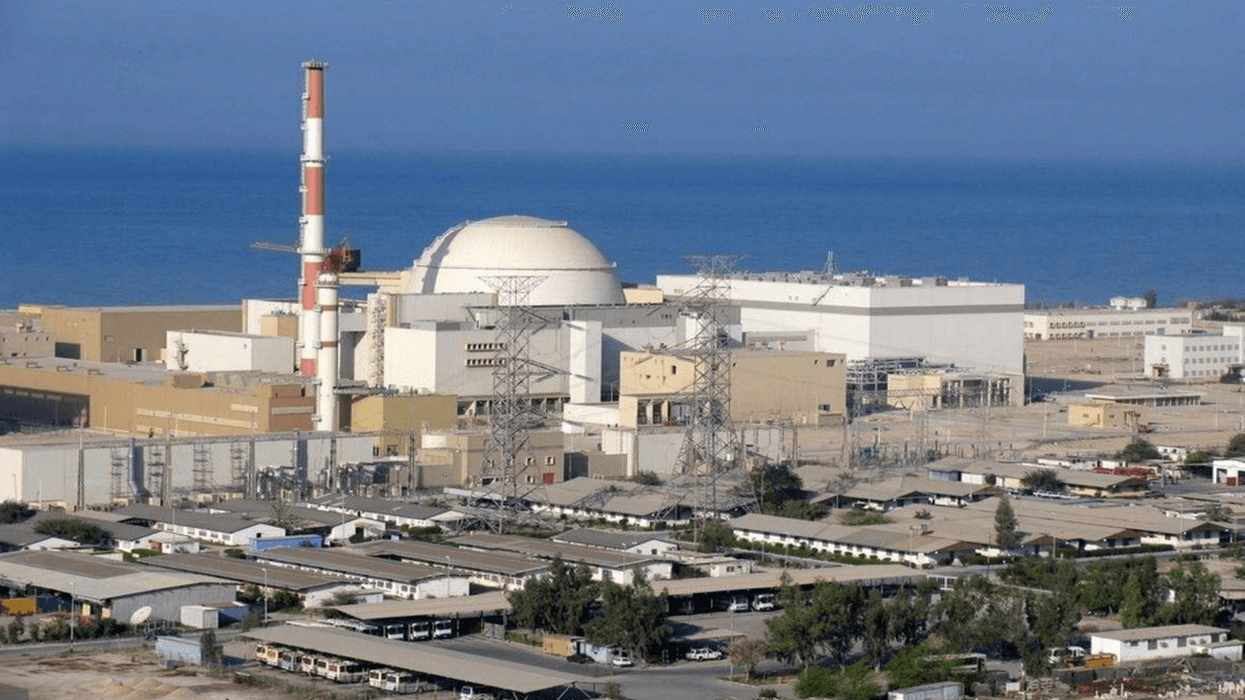
The International Atomic Energy Agency warned of "the paramount importance of adhering to the seven pillars for ensuring nuclear safety and security during a conflict."
The director general of the International Atomic Energy Agency on Saturday demanded "maximum military restraint" from the US and Israel as it confirmed reports that strikes had targeted a location close to Iran's Bushehr Nuclear Power Plant, killing at least one person.
In a statement released via social media, the IAEA relayed a message from Director General Rafael Mariano Grossi, who expressed "deep concern about the reported incident."
Grossi warned that nuclear power plants or nearby areas "must never be attacked, noting that auxiliary site buildings may contain vital safety equipment" and stressed "the paramount importance of adhering to the seven pillars for ensuring nuclear safety and security during a conflict."
The IAEA said the attack near the Bushehr plant, Iran's only operational nuclear power facility, was the fourth such attack since Israel and the US began its invasion of Iran on February 28. The plant lies in a city inhabited by about 250,000 people.
A security staff member was killed by a projectile fragment and a building on the Bushehr site was impacted by shockwaves and fragments. Grossi said that no increase in radiation levels was reported.
Iranian Foreign Minister Abbas Araghchi also condemned the Bushehr strike and issued a reminder of the "Western outrage about hostilities near Zaporizhzhia Nuclear Power Plant in Ukraine" when Russia attacked the site.
"Israel-US have bombed our Bushehr plant four times now. Radioactive fallout will end life in [Gulf Cooperation Council] capitals, not Tehran. Attacks on our petrochemicals also convey real objectives," said Araghchi.
Al Jazeera reported that at least two petrochemical facilities had been hit by the US and Israel in southern Iran’s Khuzestan province, an energy hub in the country. At least five people were injured in those attacks,
Iranian news agency Mehr reported that the state-run Bandar Imam petrochemical complex, which produces liquefied petroleum gas and chemicals as well as other products, sustained damage.
President Donald Trump said late last month that he would delay any attacks on Iran's energy infrastructure until April 6 and said the delay was "subject to the success of the ongoing meetings and discussions.”
He has threatened to destroy Iran's power plants and other civilian infrastructure if Iranian leaders don't end the blockade on the oil export waterway the Strait of Hormuz, which they began in retaliation for the US-Israeli strikes that started more than a month ago and which has fueled skyrocketing global energy prices.
The threat amounted to Trump warning that he could soon commit a war crime, said international law experts.
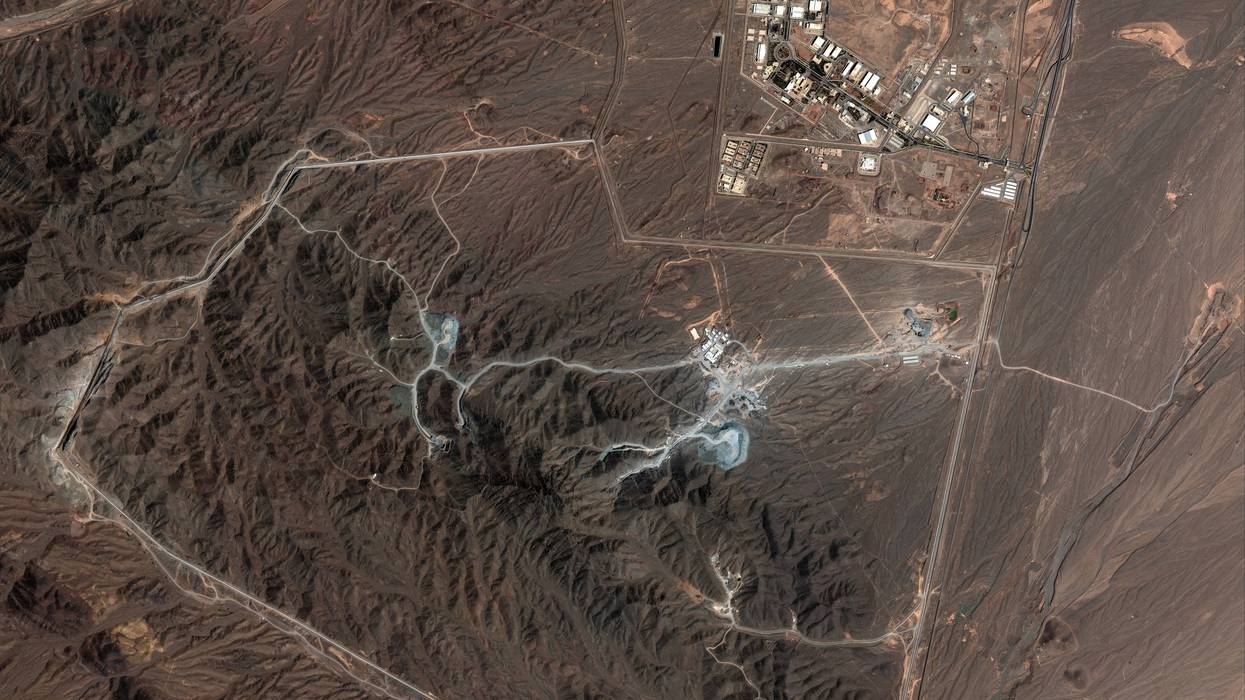
After Israel's military suggested that the United States bombed the enrichment complex, Iran launched a ballistic missile attack on an Israeli city that's home to a nuclear research center.
The head of the United Nations nuclear watchdog issued a fresh demand for restraint on Saturday after the Atomic Energy Organization of Iran announced that the Shahid Ahmadi-Roshan uranium enrichment complex in Natanz "was subjected to a renewed attack" as the United States and Israel continue to bomb the Middle Eastern country.
The Iranian agency said that "technical assessments indicate that no radioactive material leakage has occurred and there is no danger to residents of the surrounding areas," but the attack was a "violation of international laws and commitments," including the Nuclear Nonproliferation Treaty.
The International Atomic Energy Agency "has been informed by Iran that the Natanz nuclear site was attacked today," the UN watchdog confirmed on social media. "No increase in off-site radiation levels reported. IAEA is looking into the report."
"IAEA Director General Rafael Grossi reiterates call for military restraint to avoid any risk of a nuclear accident," the agency added.
The Times of Israel reported that "in response to a query... the Israel Defense Forces said that it did not conduct any strikes in the area and that it could not comment on American activities."
The Israeli newspaper also noted that "Israel’s Kan news reported that the US had indeed struck the facility, using 'bunker buster' bombs to target the site. It cited unspecified sources."
Later Saturday, The Times of Israel reported that at least 20 people were wounded in an Iranian ballistic missile attack on the Israeli city of Dimona, home to Shimon Peres Negev Nuclear Research Center.
The United States previously bombed Iran's Natanz facility last June. The Associated Press highlighted Saturday that satellite images also suggest the site was damaged during the first week of the current war, which President Donald Trump and Israeli Prime Minister Benjamin Netanyahu launched on February 28.
Condemning the Saturday strike on Iran's complex, Russian Foreign Ministry spokesperson said that "this is a brazen violation of international law, the charters of the UN and the International Atomic Energy Agency, as well as relevant resolutions of the UN Security Council and the agency's General Conference."
Russia has notably also generated fears of a nuclear accident with its ongoing invasion of Ukraine, launched in February 2022.
Trump has sent mixed messages about the US-Israeli war on Iran, both sending thousands more troops to the region this week while also saying on his Truth Social platform Friday that "we are getting very close to meeting our objectives as we consider winding down our great Military efforts in the Middle East with respect to the Terrorist Regime of Iran."
According to the AP: "Iran's capital saw heavy airstrikes overnight and into the morning, residents said, as thousands of worshippers converged on Tehran's grand mosque for prayers marking the end of the holy month of Ramadan. Israeli Defense Minister Israel Katz said attacks would 'increase significantly' next week."

"The US is intensifying the drumbeat of war against Iran, with zero explanation of the nonexistent legal authority to use force and zero evidence of an 'imminent threat,'" said Mohamed ElBaradei.
The former head of the International Atomic Energy Agency said Wednesday that a US war on Iran would have "horrific costs," a warning that came before American and Iranian officials gathered in Geneva for the latest round of closely watched negotiations.
"The US is intensifying the drumbeat of war against Iran, with zero explanation of the nonexistent legal authority to use force and zero evidence of an 'imminent threat' other than hypothetical scenarios based on possible future intentions," Mohamed ElBaradei, a Nobel Peace Prize laureate who served as IAEA director-general from 1997 to 2009, wrote in a social media post.
"All wars, including 'wars of choice,' have horrific costs," he added. "That is the reason for the restraints and limitations established by international norms. This is Iraq redux... It seems we never learn."
US President Donald Trump and members of his administration have repeatedly claimed, without evidence, that Iran desires and is on the brink of making a nuclear weapon, even after Trump claimed to have "obliterated" the country's nuclear program with airstrikes last year.
Iran has said its nuclear program is entirely for peaceful purposes; the nation's foreign minister, Abbas Araghchi, said earlier this week that Iran would "under no circumstances ever develop a nuclear weapon."
"A deal is within reach, but only if diplomacy is given priority," said Araghchi.
In recent weeks, the Trump administration has assembled a massive fleet of warplanes and aircraft in the Middle East as the US president has threatened to attack Iran, accusing the country of harboring "sinister nuclear ambitions."
But Rafael Grossi, the current head of the IAEA, said last week that the nuclear agency had not seen any evidence that Iran is currently working to develop nuclear weapons capacity.
"On the contrary, I see, today, a willingness on both sides to reach an agreement," said Grossi.
"It's such a terrible precedent that could drive states to determine that the Nuclear Nonproliferation Treaty no longer benefits their security," one expert warned during a virtual event on the conflict.
Experts said Monday during a webinar on the escalating Mideast crisis that U.S. and Israeli attacks on Iran's civilian nuclear facilities—which were ostensibly under International Atomic Energy Agency protection—further exposed the United States as untrustworthy and severely damaged efforts to stop the global proliferation of nuclear weapons.
ReThink Media hosted Monday's webinar, during which host Mac Hamilton discussed issues including Saturday's U.S. attack on Iran with panelists Sara Haghdoosti, the executive director of Win Without War; Yasmine Taeb, the legislative political director at MPower Change; Kelsey Davenport, Arms Control Association's director for nonproliferation policy; and Arti Walker-Peddakotla, chair of the board at About Face: Veterans Against the War.
"Military action is not an effective long-term strategy for preventing a nuclear-armed Iran."
President Donald Trump ordered the attacks on the Fordow Uranium Enrichment Plant, the Natanz Nuclear Facility, and the Isfahan Nuclear Technology Center despite decades of U.S. intelligence community consensus—including his own administration's recent assessment—that Iran is not trying to develop nuclear weapons. Trump also disregarded international law, his own two-week ultimatum for Iran, and the fact that the three facilities were supposed to be safeguarded by the International Atomic Energy Agency (IAEA).
"From a nonproliferation perspective, Trump's decision to strike Iran was a reckless, irresponsible escalation that is likely to push Iran closer to nuclear weapons in the long term," Davenport said during Monday's webinar. "The strikes did damage key Iranian nuclear facilities, like the underground Fordow enrichment site. But Tehran had ample time prior to the strikes to remove its stockpile of near-weapons-grade uranium to a covert location, and it's likely that they did so."
"This underscores that the strikes may have temporarily set back Iran's program, but military action is not an effective long-term strategy for preventing a nuclear-armed Iran," she continued. "Because technically, Iran has retained its nuclear weapons capability and critical aspects of the program."
"And politically, there's greater impetus now to weaponize," Davenport contended. "I mean, strikes are already strengthening factions in Iran calling for withdrawal from the Nuclear Nonproliferation Treaty (NPT) and strengthening arguments that nuclear weapons are necessary to deter further attacks."
Rejecting the president's claim to have "completely and totally obliterated" Iran's nuclear sites, Davenport said that "all Trump has destroyed is U.S. credibility, I think Iranians have less reason now to trust the United States to negotiate an agreement in good faith."
Davenport continued:
Iran has certainly learned the lessons of past history. I mean, [former Libyan Prime Minister] Moammar Gadhafigave up Libya's nuclear weapons program, and later was overthrown by Western-backed forces. Syria, its nuclear weapons program was bombed while it was still in its infancy. Decades later, [former Syrian President] Bashar al-Assad was overthrown.
The United States has demonstrated it is not interested in credible negotiations under the Trump administration, and that if a deal is struck there's no guarantee that the United States will abide by its commitments, even if Iran is abiding by its end of the bargain. That's what we saw in the [Joint Comprehensive Plan of Action] scenario. So it really raises questions about U.S. nonproliferation policy going forward, and the risk of erosion, you know, to the nuclear nonproliferation treaty.
In 2018, Trump unilaterally withdrew the United States from the Joint Comprehensive Plan of Action (JCPOA), also known as the Iran nuclear deal, despite his own administration's assessment that Tehran was in full compliance with the agreement. Critics argued Trump's move was meant to satisfy Israeli Prime Minister Benjamin Netanyahu, who has boasted about being able to control U.S. policy and whose country has an undeclared nuclear arsenal and is not a party to the NPT.
Davenport highlighted the "uptick in conversation" in Tehran about quitting the NPT, given that "the treaty cannot preserve and protect civil nuclear activities."
"I think it is worth underscoring that the United States struck sites that were under International Atomic Energy Agency safeguards. These were not covert enrichment facilities," she stressed. "These were not sites where Iran was dashing to the bomb. You know, there's no evidence of that. These were safeguarded facilities that the IAEA regularly has access to."
"This is a devastating blow to the nonproliferation regime," Davenport said. "And I think over time, this is going to contribute to erosion of the treaty. It's such a terrible precedent that could drive states to determine that the Nuclear Nonproliferation Treaty no longer benefits their security, that their civil programs can become targets without any evidence of weaponization, and drive further questioning of whether remaining in the Nuclear Nonproliferation Treaty is in their interest."
IAEA Director General Rafael Grossi—who last week said there was no proof Iran is trying to build a nuclear bomb—also warned during a Monday meeting of the body's board of governors in Vienna that "the weight of this conflict risks collapsing the global nuclear nonproliferation regime."
"But there is still a path for diplomacy," Grossi said. "We must take it, otherwise violence and destruction could reach unimaginable levels and the global nonproliferation regime that has underpinned international security for more than half a century could crumble and fall."
"Iran, Israel, and the Middle East need peace," he emphasized. "Armed attacks on nuclear facilities should never take place and could result in boradioactive releases with grave consequences within and beyond the boundaries of the state which has been attacked. I therefore again call on maximum restraint. Military escalation not only threatens lives, it also delays us from taking the diplomatic path."
"To achieve the long-term assurance that Iran does not acquire a nuclear weapon and for the continued effectiveness of the global nonproliferation regime, we must return to negotiations," Grossi added.
Iranian officials and other observers have accused Grossi and the IAEA of complicity in U.S. and Israeli attacks on Iran. Last week, Iran filed a complaint against the agency's chief for allegedly "undermining the agency's impartiality."
This, following last week's IAEA board of governors approval of a resolution stating that Iran is not complying with its obligations as a member of the body, a finding based largely on dubious intelligence that skeptics compared to the "weapons of mass destruction" lies in the lead-up to the 2003 U.S.-led invasion of Iraq.
In an opinion piece published Monday by Common Dreams, Medea Benjamin and Nicolas J.S. Davies of the peace group CodePink wrote that the U.S. and Israel "used Grossi" to "hijack the IAEA and start a war on Iran."
"Rafael Grossi should resign as IAEA director before he further undermines nuclear nonproliferation and drags the world any closer to nuclear war," Benjamin and Davies added.
On Monday, the Majlis, Iran's Parliament, began weighing legislation to suspend cooperation with the IAEA.
"The world clearly saw that the IAEA has failed to uphold its commitments and has become a political instrument," Majlis Speaker Mohammad Baqer Qalibaf said on the chamber floor Monday.
Qalibaf added that Iran would "will definitely respond in a way that will make gambler Trump regret" attacking Iran.
Later Monday, Iran fired a salvo of missiles at a military base housing U.S. troops in Qatar and, reportedly, at an American facility in Iraq. There have been no reported casualties or strike damage.
This was followed by Trump's announcement on social media of a cease-fire agreement between Israel and Iran.
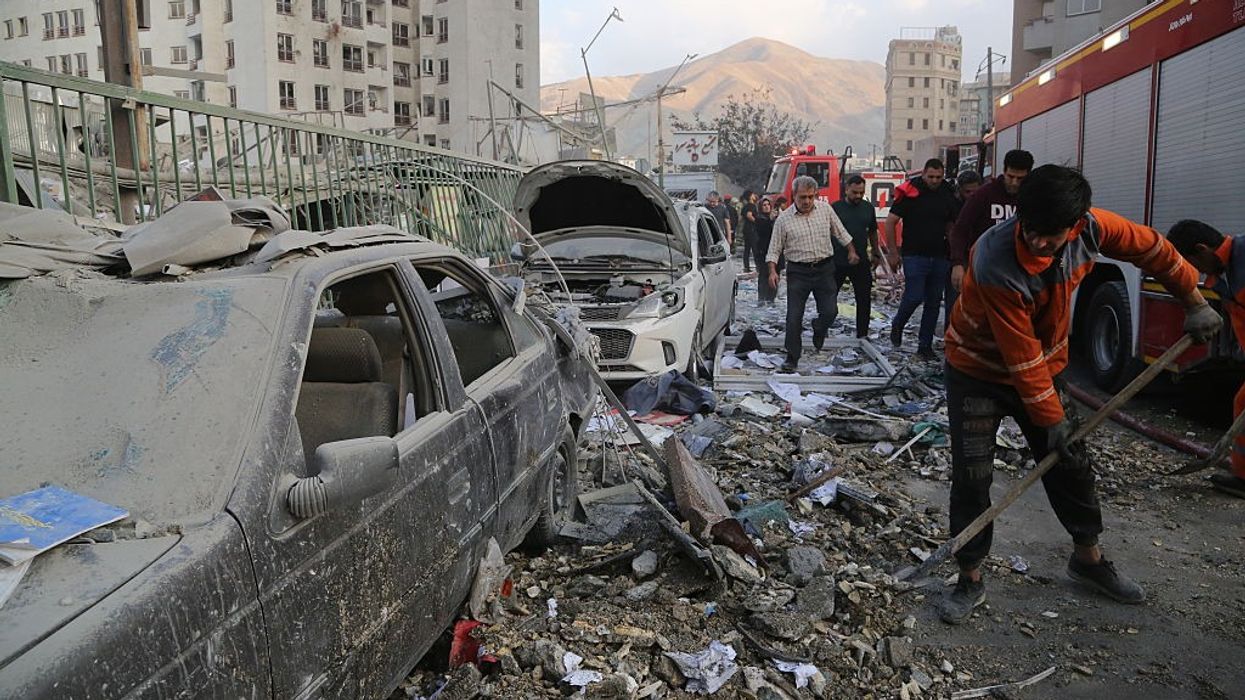
Donald Trump, like Joe Biden before him, was unable—or unwilling—to restrain Israel from genocide, lawlessness, and slaughter.
For a while, at least, Donald Trump talked a good game about diplomacy, including negotiations with Iran and Israel. But Israel is America’s id. We can’t restrain Israel because Israel is the skull beneath the American mask.
The “id” was Sigmund Freud’s term for the hidden reservoir of passions and desires that fuels the personality. The ego—“what we call reason and sanity,” as Freud phrased it—tries to restrain those passions by riding them “like a man on horseback.”
The horse has thrown its rider once again.
Read the newspaper today. Watch cable news tonight. See if they mention the plain fact that Israel’s attack is a violation of international law.
“Monsters from the id!” That's what Dr. Morbius shouts at the end of the 1956 science-fiction movie Forbidden Planet, as he tries to shut down the all-powerful alien engines he’s learned to control with his thoughts. His subconscious urges and desires have begun to destroy his deep-space paradise, and he’s powerless to stop them. The vast machinery is serving his true self, not the civilized veneer he presents to himself and others.
So it is with military might. Just as Israel is the American id, America is the id for a financialized planet driven by greed and exploitation. American war machinery is global lust made manifest: lust for power, lust for wealth, lust for more.
Donald Trump, like Joe Biden before him, was unable to restrain Israel from genocide, lawlessness, and slaughter. Both presidents aided and abetted snuff-movie violence on a massive scale, because that violence reflects the shadow self of the nation they represent.
If “the sleep of reason produces monsters,” we’ve been in a coma for a long time.
John F. Kennedy may have been an imperfect vessel for change, but he spoke often and well about the need for international law and world institutions. “We must create even as we destroy (nuclear arms),” he said, “creating worldwide law and law enforcement as we outlaw worldwide war and weapons.”
Read the newspaper today. Watch cable news tonight. See if they mention the plain fact that Israel’s attack is a violation of international law. The mass assassination of another country’s leaders and the under-reported deaths of civilians will be debated in tactical terms, while moral and legal questions receive little (if any) attention.
These attacks may temporarily serve Israeli and U.S. interests, but their benefits won’t last. Iran isn’t Gaza, impoverished and defenseless and populated primarily by women and children. Iran is home to 91 million people and possesses considerable resources. Trump was already forced to back down from a confrontation with the Iran-allied Ansar Allah (the Houthis) in the Red Sea, and they’re essentially desert fighters. This attack may weaken Iran, but what will happen if, and when, it regroups and retaliates?
The Israeli state isn’t acting rationally; neither is the American national security state. But how could it be otherwise?
Like the passions of Dr. Morbius, the drive to kill inevitably becomes self-destructive. “In 20 of the 24 countries surveyed,” Pew Research reports, “around half of adults or more have an unfavorable view of Israel.” That’s from a poll published June 3. Those figures may well be even lower now. Pew continues, “Around three-quarters or more hold this view in Australia, Greece, Indonesia, Japan, the Netherlands, Spain, Sweden, and Turkey.”
In the United States, the percentage of adults with a negative view of Israel has risen 11 points since March 2022; 53% of Americans polled now hold “a somewhat or very unfavorable opinion of Israel.”
This trend represents an existential threat to both the Jewish state and the American military empire. The political consensus in Washington, however, remains unchanged.
The Israeli state isn’t acting rationally; neither is the American national security state. But how could it be otherwise? They are the manifestation of our own cravings. Our warlike impulses are leading us down the path of conflict and confrontation, seemingly oblivious to peaceful alternatives. By refusing to cooperate with China and the rising nations, we are surrendering our future to them.
That is, if we even have a future.
The head of the International Atomic Energy Agency tried to remind the world that “armed attacks on nuclear facilities could result in radioactive releases with grave consequences within and beyond the boundaries of the State which has been attacked.”
The world didn’t seem very interested.
Evangelical Christians—some of them, at least—are undoubtedly thrilled. With this development From the Bible (Matthew 24:6-7):
And ye shall hear of wars and rumors of wars: see that ye be not troubled: for all these things must come to pass, but the end is not yet.
For nation shall rise against nation, and kingdom against kingdom: and there shall be famines, and pestilences, and earthquakes, in diverse places.
Meanwhile, Americans have forgotten the words of their fallen president. “Mankind must put an end to war,” said John Kennedy, “or war will put an end to mankind.”
Some Americans consider Matthew’s prophecy a harbinger of deliverance—for them, not for the rest of us. They’re counting on eventual, if selective, salvation through rapture.
The rest of us, believers and nonbelievers alike, will have to conclude with the verse that follows:
All these are the beginning of sorrows.
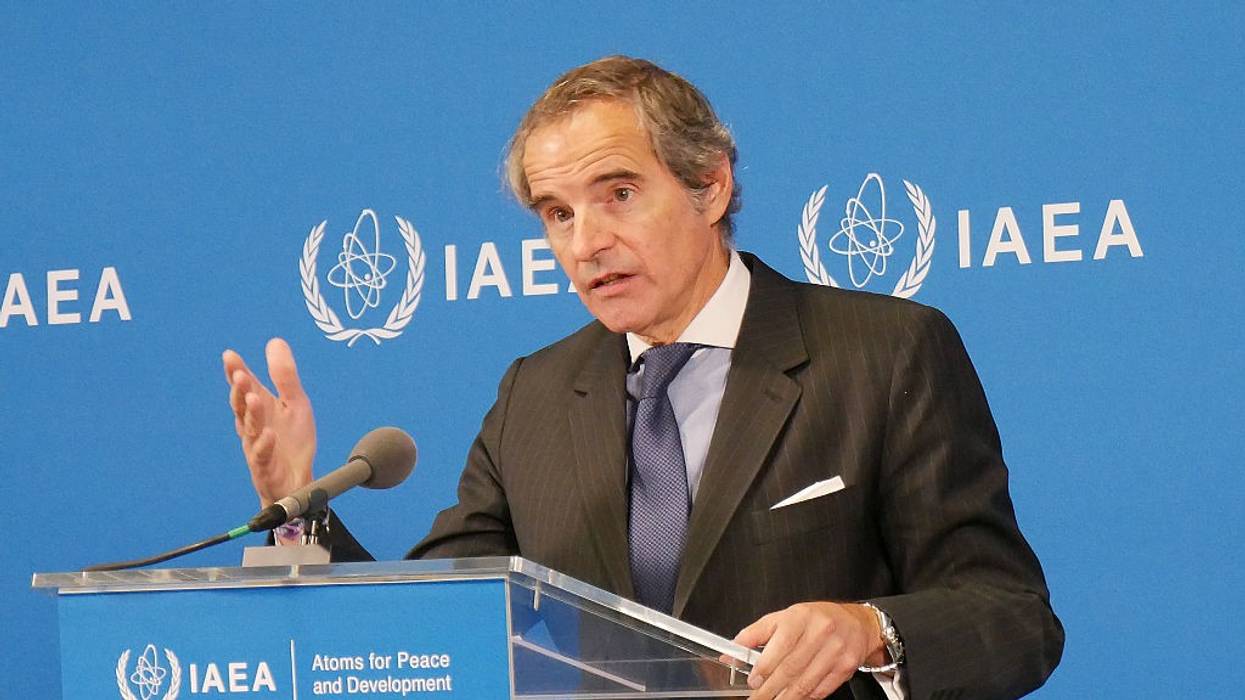
"Such attacks have serious implications for nuclear safety, security, and safeguards, as well as regional and international peace and security," said the director-general of the International Atomic Energy Agency.
The head of the International Atomic Energy Agency issued a grave warning about the potentially catastrophic environmental and human impacts of military attacks on nuclear facilities after Israel launched a massive assault on Iran's nuclear energy infrastructure, reportedly damaging the country's largest uranium enrichment site.
"This development is deeply concerning," said IAEA Director-General Rafael Grossi. "I have repeatedly stated that nuclear facilities must never be attacked, regardless of the context or circumstances, as it could harm both people and the environment. Such attacks have serious implications for nuclear safety, security, and safeguards, as well as regional and international peace and security."
Grossi pointed to the IAEA's longstanding position that "armed attacks on nuclear facilities could result in radioactive releases with grave consequences within and beyond the boundaries of the State which has been attacked."
As of Friday afternoon local time, Iranian officials said radiation levels were not elevated at the Natanz enrichment site, according to Grossi. Iranian officials also said the country's Esfahan and Fordow nuclear sites were not affected by Israel's attacks.
"Despite the current military actions and heightened tensions," Grossi said Friday, "it is clear that the only sustainable path forward—for Iran, for Israel, the entire region, and the international community—is one grounded in dialogue and diplomacy to ensure peace, stability, and cooperation."
"Israel's bombing of Iran's nuclear facilities is a dangerous escalation from a nuclear-armed state that threatens to thwart negotiations on the Iranian nuclear program."
Israel's deadly attack on Iran came a day after the IAEA Board of Governors approved a U.S.-backed resolution accusing Iran of not complying with its commitments to international nuclear safeguards.
Iran responded furiously to the resolution's passage, saying it "has no choice but to respond to this politically motivated resolution" and announcing a "new enrichment facility in a secure location."
Contrary to the Israeli government's claim that Iran is racing toward a nuclear weapon, U.S. intelligence agencies have maintained that Iran is not building an atomic bomb—an assessment consistent with Iran's repeated public statements that its nuclear program is for civilian energy purposes only.
Following Israel's attack, Iran—which is not a member of the IAEA board—requested that the United Nations agency hold an emergency meeting to discuss the Israeli strikes. Reuters reported that board members Russia, China, and Venezuela supported the request for a meeting.
Melissa Parke, executive director of the Nobel Peace Prize-winning International Campaign to Abolish Nuclear Weapons, said in a statement Friday that "Israel's bombing of Iran's nuclear facilities is a dangerous escalation from a nuclear-armed state that threatens to thwart negotiations on the Iranian nuclear program."
"Israel and Iran must join the U.N. Treaty on the Prohibition of Nuclear Weapons without delay," said Parke. "This would require Israel to dismantle its nuclear weapons program and Iran to maintain its current nuclear safeguards framework under IAEA oversight. It is only through broad-based negotiated solutions that we can truly end the threat from nuclear weapons by agreeing to their total elimination."
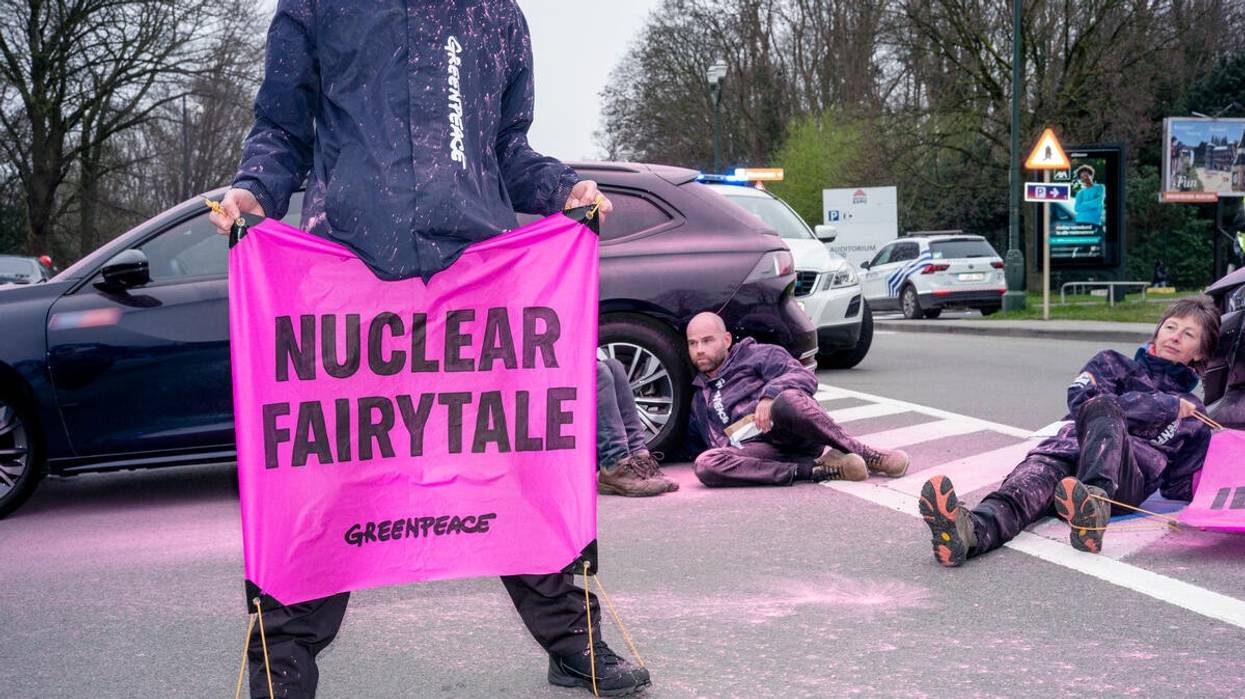
"All the evidence shows that nuclear power is too slow to build, too expensive, and it remains highly polluting and dangerous," one activist said.
An international coalition of environmental groups dropped banners and blockaded roads to protest the International Nuclear Energy Summit in Brussels on Thursday.
While the summit, hosted by the Belgian government and the International Atomic Energy Agency (IAEA), pushes nuclear energy as a replacement for fossil fuels, more than 600 climate action groups launched a declaration calling nuclear power plants a "distraction which slows down the energy transition."
"We are in a climate emergency, so time is precious, and the governments here today are wasting it with nuclear energy fairy tales," Greenpeace E.U. senior campaigner Lorelei Limousin said in a statement. "All the evidence shows that nuclear power is too slow to build, too expensive, and it remains highly polluting and dangerous."
"The nuclear lobby camouflages itself beneath a climate-friendly facade, hoping to divert massive sums of money away from real climate solutions, at the expense of people and the planet."
At the United Nations COP28 climate conference in the United Arab Emirates last year, more than 20 countries pledged to triple nuclear energy capacity by 2050. However, Greenpeace France calculated that achieving this would mean finishing 70 reactors each year between 2040 and 2050. This would be an unprecedented buildout in defiance of current trends: Between 2020 and 2023, 21 reactors were completed while 24 were shut down worldwide.
In the European Union specifically, many countries turned away from nuclear after 2011 in response to the Fukushima accident in Japan, according to Reuters. Germany shuttered its last three reactors for good in April 2023 following a successful anti-nuclear campaign there. In general, the nuclear share of the E.U. power mix dropped from 32.8% in 2000 to 22.8% in 2023, Greenpeace said.
Activists argue that nuclear still poses all the dangers the anti-nuclear movement has been warning about for decades and also cannot be ramped up quickly enough to prevent escalating climate extremes.
To reinforce this message, members of Greenpeace France blockaded the main roads to the Brussels summit using cars and bicycles. They also lit pink flares and threw pink powder as a motorcade of officials en route to the summit approached. The action succeeded in delaying the arrival of several delegations, Greenpeace E.U. said.
Other demonstrators dropped banners from the summit site at Brussels Expo reading, "Nuclear Fairy Tale," while a group representing the 600 declaration signatories protested in front of an inflatable bouncy castle holding up a sign reading, "Nuclear fairy tales = climate crisis."
The declaration was drafted by Climate Action Network Europe and signed by groups from at least 56 different countries and territories including Climate Action Network Canada, the David Suzuki Foundation, the Sierra Club, Food and Water Watch, CodePink, International Physicians for the Prevention of Nuclear War, and several 350.org, Fridays for Future, and Friends of the Earth affiliates.
"The nuclear lobby camouflages itself beneath a climate-friendly facade, hoping to divert massive sums of money away from real climate solutions, at the expense of people and the planet," the declaration reads.
The signatories pointed out that, while the world must dramatically reduce greenhouse gas emissions by 2030 in order to limit global temperature rise to 1.5°C above preindustrial levels, it would take longer than this for any new nuclear plant to come online.
At the same time, it costs significantly more money to increase nuclear capacity than renewable options like wind and solar, they stressed. A new reactor requires almost four times the funds of a new wind power installation.
"Governments need to invest in proven climate solutions, such as home insulation, public transport, and renewable energy, rather than expensive experiments, like small modular reactors, which have no guarantees of actually delivering," the declaration says.
It also points to safety risks across the nuclear lifecycle, from uranium mining to waste storage. And it adds that those dangers would only increase as temperatures rise.
"The climate crisis also increases the risks involved in nuclear power, as increased heatwaves, droughts, storms, and flooding all pose significant threats to the plants themselves and to the systems that aim to prevent nuclear accidents," the signatories argued.
Instead, the declaration proposes that governments focus on achieving 100% renewable energy while also improving efficiency.
"What we demand is a just transition toward a safe, renewable, and affordable energy system that secures jobs and protects life on our planet," the declaration concludes.
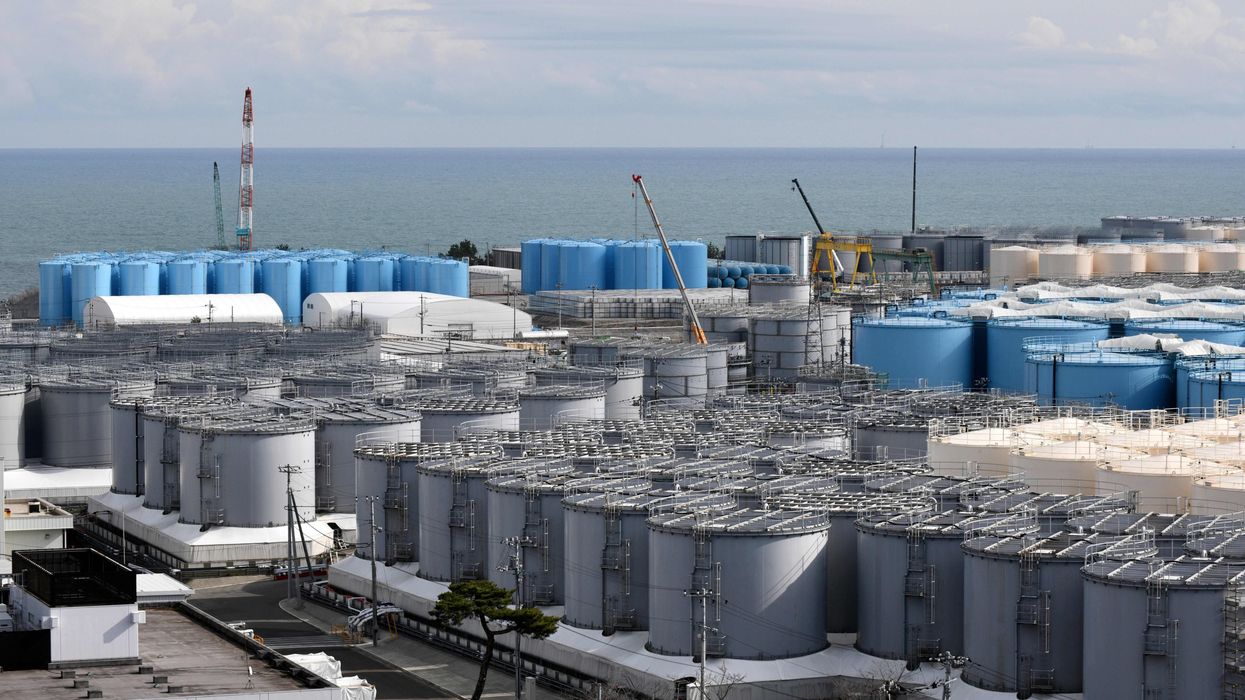
A Chinese official implored Japan to "face up to the concerns of its neighboring countries and the international community."
Thousands of liters of radioactive wastewater from the destroyed Fukushima Daiichi Nuclear Power Station in Japan leaked from the outdoor vent of a filtering device, the company that operates the facility said Wednesday.
Tokyo Electric Power Company (TEPCO) said about 5,500 liters of both contaminated and filtered water leaked when a valve was left open during cleaning. The company, which said it discovered the leak on Wednesday morning, warned that some of the water—which is believed to contain 220 times the level of radioactivity required for government reporting—may have seeped into the ground.
"TEPCO has confirmed that there was no significant fluctuation in radiation measurements recorded at the site," the International Atomic Energy Agency (IAEA) said in a statement. "The event does not pose any risk to the public and there is no environmental impact off-site."
The Fukushima plant, located about 150 miles northeast of Tokyo, was catastrophically damaged during the massive March 2011 earthquake and tsunami that caused meltdowns in three of the facility's reactors.
Last July, the IAEA approved a Japanese plan to gradually release more than 1 million metric tons of filtered Fukushima wastewater into the Pacific, despite years of warnings from environmentalists and widespread opposition by people in the region.
News of the leak prompted an angry response from the Chinese government.
"Japan's repeated accidents in the process of treating Fukushima nuclear-contaminated water have fully exposed the chaos and disorder of TEPCO's internal management," a spokesperson for the Chinese Embassy in Tokyo said on Thursday, according to the South China Morning Post.
"The Japanese government's supervision measures are lacking and ineffective, which once again proves that the nuclear-contaminated water treatment equipment lacks long-term reliability," the official added.
Asserting that "the discharge of the Fukushima nuclear-contaminated water into the sea is related to the health of all mankind, the global marine environment, and international public interests," the spokesperson reiterated calls for Japan to "face up to the concerns of its neighboring countries and the international community."
The new leak follows the October 2023 accident at a separate Fukushima wastewater treatment facility in which four workers were sprayed with radioactive liquid waste while cleaning pipes. Two of the workers were briefly hospitalized for skin contamination, although none showed symptoms of radiation poisoning.
There have been regular demonstrations against the Fukushima wastewater dump in South Korea and China—two countries that, like many others with nuclear power plants, have discharged far greater quantities of treated radioactive wastewater into oceans and other bodies of water than Japan says it will release.
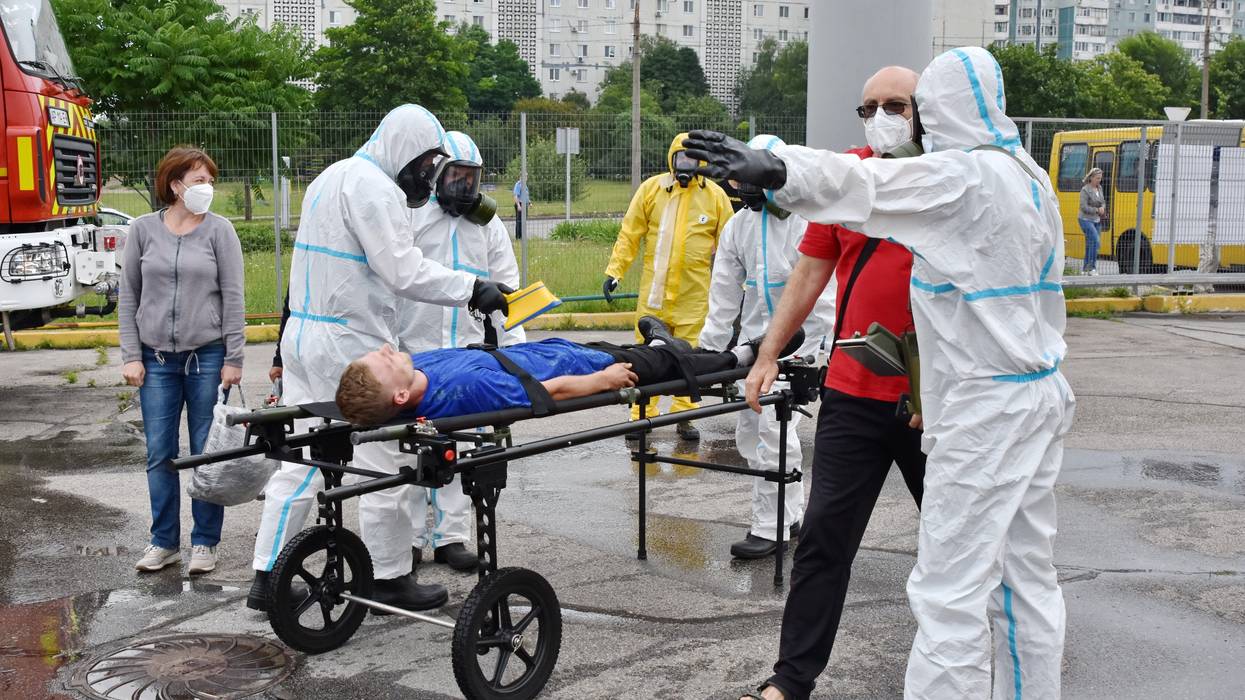
"Calling for a no-fire zone around Zaporizhzhia is not enough," said Beyond Nuclear. "We must call for no nuclear power at all."
With Ukrainian and Russian officials trading accusations about a possible looming attack on Europe's largest nuclear power plant this week, global experts and campaigners are sharing fresh concerns about the facility and the energy source more broadly.
Russian forces invaded Ukraine in February 2022 and took control of the Zaporizhzhia Nuclear Power Plant (ZNPP) the following month. Since then, fighting near the facility—with six reactors that are currently shut down—has generated fears around the world and controversial references to the 1986 Chernobyl disaster, the site of which is located in present-day Ukraine.
In recent days, an adviser to Russia's nuclear agency has claimed Ukraine will imminently cause a nuclear disaster at the ZNPP while Ukrainian President Volodymyr Zelenskyy has warned of a potential false flag operation, claiming that "the Russian military has placed objects resembling explosives on the roof of several power units."
While International Atomic Energy Agency (IAEA) experts at the facility have so far not observed any visible indications of mines or explosives, the new accusations led the United Nations watchdog on Wednesday to request additional access—specifically to the rooftops of two reactors along with parts of the turbine halls and cooling system.
"With military tension and activities increasing in the region where this major nuclear power plant is located, our experts must be able to verify the facts on the ground," said IAEA Director General Rafael Mariano Grossi. "Their independent and objective reporting would help clarify the current situation at the site, which is crucial at a time like this with unconfirmed allegations and counterallegations."
"In a time of national crises in multiple countries, increasing natural disasters, and a worsening climate emergency, nuclear power is demonstrating that it is a liability rather than an asset."
The U.S.-based group Beyond Nuclear noted in a lengthy statement Thursday that "Zaporizhzhia is in the news now almost every day. The propaganda may be deliberately alarmist, but the basis for the alarm is very real or it would not be the subject matter for headline-getting in the first place."
"The reason is simple. Nuclear power is the most dangerous way to boil water. It is unnecessary, expensive, and an obstacle to renewable energy development," the group argued. "It is time to see sense. Calling for a no-fire zone around Zaporizhzhia is not enough. We must call for no nuclear power at all."
Highlighting that Russia's invasion of Ukraine is far from the only threat to the world's nuclear facilities, the group added that "in a time of national crises in multiple countries, increasing natural disasters, and a worsening climate emergency, nuclear power is demonstrating that it is a liability rather than an asset."
Beyond Nuclear also weighed in on the intense debate among activists, Ukrainian and Russian officials, reporters, scientists, and others regarding the dangers of a nuclear disaster at the ZNPP, offering a list of unanswered questions:
"None of these threats would make headlines if Zaporizhzhia was instead home to a wind farm or utility-scale solar array," asserted Beyond Nuclear. "This perhaps explains the rush now to downplay the gravity of the situation, with claims in the press that a major attack on the plant would 'not be as bad as Chernobyl' and that radioactive releases would be minimal and barely travel beyond the fence line. This is an irresponsible dismissal of the real dangers."
As the group detailed:
After the massive explosion at Chernobyl, the graphite moderator used in the reactor fueled the fire, with the smoke further lofting radioactive fallout far and wide. This has led to an assumption that major fires and explosions at Zaporizhzhia would result in less serious consequences since the reactor designs are not the same as Chernobyl's.
However, if the uranium fuel in the Zaporizhzhia reactors or irradiated fuel storage pools overheats and ignites, it could then heat up the zirconium cladding around it, which would ignite and burn fiercely as a flare at temperatures too hot to extinguish with water. The resulting chemical reaction would also generate an explosive environment. The heat of the release and detonation(s) could breach concrete structures, then loft radioactive gas and fallout into the environment to travel on the weather.
Fallout could contaminate crucial agricultural land, potentially indefinitely, and would include Russia, should prevailing winds travel eastward at the time of the disaster.
Some have suggested that an attack on the plant would not seriously threaten surrounding communities. The American Nuclear Society, for example, said Wednesday that "our experts have carefully considered 'worst-case scenarios,' including bombardment and deliberate sabotage of the reactors and spent fuel storage canisters. They cannot foresee a situation that would result in radiation-related health consequences to the public."
"ZNPP's six reactors have been shut down for over 10 months and are no longer making enough heat to cause a prompt radiological release," the society said. "ZNPP is designed to withstand natural and manmade hazards. Thick, steel-reinforced concrete containment buildings protect the reactor cores and are designed to keep any radioactive materials isolated from the environment."
"In the unlikely event that containment structures were breached, any potential release of radiological material would be restricted to the immediate area surrounding the reactors. In this regard, any comparison between ZNPP and 'Chernobyl' or 'Fukushima' is both inaccurate and misleading," the group added, referencing the 2011 disaster in Japan.
Matthew Bunn, the James R. Schlesinger professor of the practice of energy, national security, and foreign policy at Harvard Kennedy School, made the case at the Bulletin of the Atomic Scientists on Thursday that the biggest danger regarding the ZNPP is intentional sabotage.
"How serious is the risk of a major radioactive disaster?" Bunn wrote. "That depends on whether we're talking about an intentional or inadvertent radioactive release. If the Russian forces that control the site want to cause a major radiation release—and are willing to use explosives to do it—they could contaminate a huge area. Although the reactors have been largely shut down and cooling for months, they still contain a huge amount of intensely radioactive material that explosives could disperse."
He continued:
A couple of mines on the roof of a reactor would not be enough. Causing a big release would require some serious demolition with explosives. But that's what was needed to destroy Ukraine's Kakhovka dam—which it appears was done with explosives from within, while Russian forces controlled the site—so a similar operation at Zaporizhzhia can't be ruled out.
No one can accurately evaluate how big an area might be affected; the extent of contamination would depend on how the disaster was caused, how hard the wind was blowing, whether rain brought the radioactive material back to the ground, and more. But one could easily imagine that Russia might hope that such a release would interfere with Ukraine's counteroffensive, forcing some units to focus on evacuating people and cleaning up radioactive fallout rather than battling Russian forces.
By contrast, looking only at inadvertent damage, there are reasons to be optimistic. The Zaporizhzhia reactors are built with thick concrete containment structures, have been cooling for months, and have extra safety features installed after the Fukushima accident in Japan. It is very unlikely that a few stray shells from fighting in the area would cause any serious radioactive release.
Bunn concluded that "over the longer term, there's a need to rethink nuclear safety and security in the context of the possibility that nuclear facilities can be exposed to war, mass civil unrest, or governmental collapse. And there's a need for new agreements to reduce the chance that major civilian nuclear facilities under international inspection will again be targets of military assault."
Meanwhile, Beyond Nuclear charged that "if Zaporizhzhia comes to harm, each side in the conflict will likely hold the other responsible. But ultimately, the responsibility we all share is to reject the continued use of a technology that has the potential to wreak such disastrous consequences on humanity."

The situation is 'becoming increasingly unpredictable and potentially dangerous'
The situation Zaporizhzhia Nuclear Power Plant has taken a turn for the worse as Russia has begun evacuating 18 settlements in the Zaporizhzhia region, including Enerhodar.
The BBC has cited as Ukrainian official as saying this has sparked a "mad panic" - and traffic jams have been observed as thousands of people pack up and head out of the city.
The exiled mayor of Melitopol, Ivan Fedorov, wrote on Telegram that shops in the evacuated areas had run out of goods and medicine. He also said hospitals were discharging patients into the street amid fears that electricity and water supplies could be suspended.
The International Atomic Energy Agency (IAEA ) experts still at the plant site are continuing to hear shelling on a regular basis, including Friday night. Ukrainian authorities on Sunday said that a 72-year-old woman was killed and three others were wounded when Russian forces fired more than 30 shells at Nikopol, a Ukrainian-held town neighboring the nuclear plant.
The situation is “becoming increasingly unpredictable and potentially dangerous,” the head of the U.N.’s nuclear watchdog said Saturday.
International Atomic Energy Agency Director-General Rafael Mariano Grossi said in a statement :
“The general situation in the area near the Zaporizhzhya Nuclear Power Plant is becoming increasingly unpredictable and potentially dangerous."
"I’m extremely concerned about the very real nuclear safety and security risks facing the plant."
"We must act now to prevent the threat of a severe nuclear accident and its associated consequences for the population and the environment. This major nuclear facility must be protected."
"I will continue to press for a commitment by all sides to achieve this vital objective, and the IAEA will continue to do everything it can to help ensure nuclear safety and security at the plant,” he said.
The expected Ukrainian spring counter-offensive is viewed as likely to take in the Zaporizhzhia region, around 80% of which is controlled by Russian forces.