

SUBSCRIBE TO OUR FREE NEWSLETTER
Daily news & progressive opinion—funded by the people, not the corporations—delivered straight to your inbox.
5
#000000
#FFFFFF
To donate by check, phone, or other method, see our More Ways to Give page.
Daily news & progressive opinion—funded by the people, not the corporations—delivered straight to your inbox.
With nine nuclear-armed nations and roughly 12,000 nuclear warheads on this planet, worries about nuclear war are unavoidable. However, the danger of a nuclear disaster at a seemingly “peaceful” nuclear facility is often ignored.
Nine countries now possess nuclear weapons and we have just seen the start of a new war in the Middle East over one more nation supposedly trying to acquire them. While we consider the dangers of such weapons and their capacity to cause massive destruction, we often overlook the risks associated with what still passes for “peaceful” nuclear power. With that in mind, let me revisit a moment when that reality should have become far clearer.
I had crawled into bed on March 10, 2011, opened my phone, and scrolled through my Instagram feed. The app was still fairly new then, and I was only following a dozen or so accounts, several from Japan. One amateur photographer there had posted photos minutes earlier of a fractured sidewalk and a toppled bookshelf. A massive earthquake had just rattled Tokyo.
A news article confirmed that a magnitude 7.9 quake had indeed struck 80 miles off the coast of Japan. Later, it was upgraded to 9.0, 1,000 times more powerful in terms of energy released. Holy shit, I thought. That’s huge! Worried, I emailed my old college friend Ichiro, who lived in Tokyo, to make sure his family was safe. A short while later, he replied that they were fine, but that a massive tsunami had indeed flooded the Tohoku region north of Tokyo. Many were dead.
“It’s horrible. It’s chaos,” he wrote me.
The nuclear industry has a reasonably polite name for a disaster like the one that was rocking Fukushima. They refer to it as a “beyond design-basis accident” because no single nuclear plant design can account for every possible problem it might encounter in its lifetime.
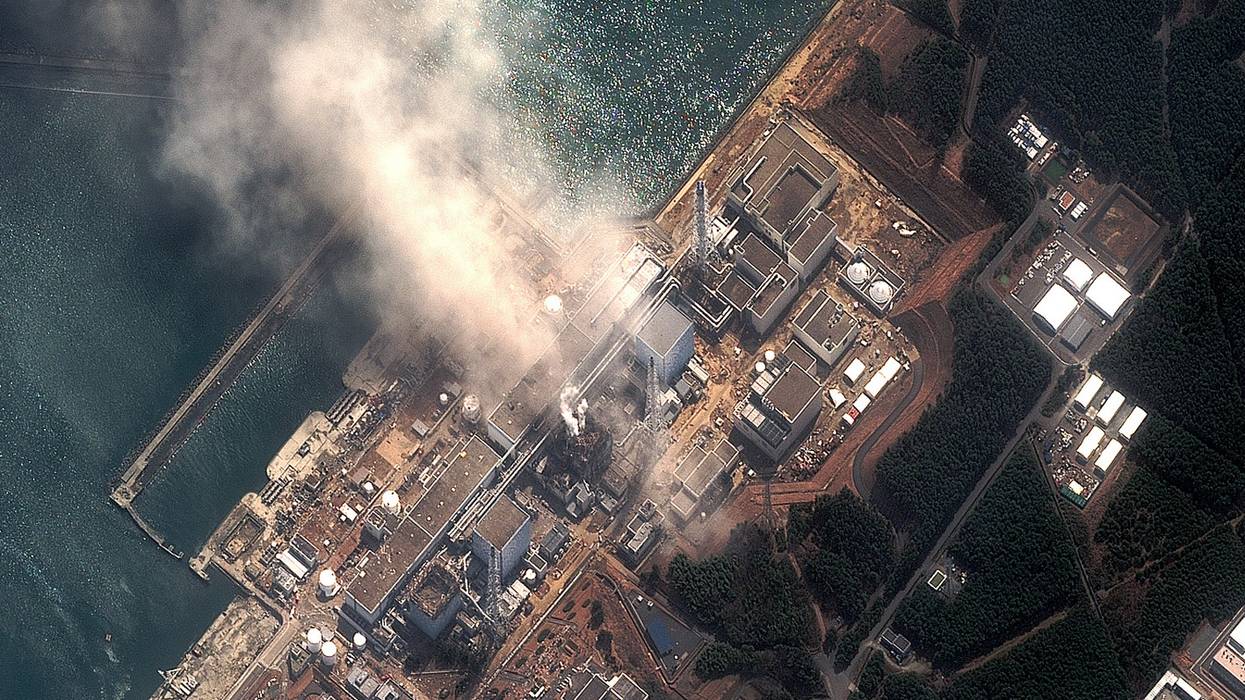
By the time Ichiro’s message arrived, distressing images of the tsunami were already circulating online and the death toll was rising fast, though the floodwaters were by then receding. As I watched heartbreaking videos of screaming onlookers, capsized boats, floating debris, and cars submerged like toys in a bathtub, another tragedy was unfolding that few, even inside the Japanese government, were aware of. A nuclear plant in Fukushima, operated by TEPCO (the Tokyo Electric Power Company), had been swamped by the tremendous flooding and lost all power.
The Fukushima Daiichi nuclear plant, built by General Electric (GE) in the mid-1960s, was designed to withstand natural disasters, but its creators never foresaw an earthquake like that. When the plant’s sensors detected the quake, its reactors automatically shut down. That emergency shutdown (or scram) halted its fission process, triggering backup power to keep cold seawater flowing through the reactors and spent-fuel containers to prevent overheating. Things at Fukushima were going according to plan until that massive tsunami battered the plant, washing away transmission towers and damaging electrical systems. There were backup generators in the basement, but those, too, had been inundated by waves of seawater, and an already bad situation was about to get far worse.
A power outage at a nuclear power plant is known as a “station blackout.” As you might imagine, it’s one of the worst scenarios any nuclear facility could possibly experience. If all electricity is lost, that means water is no longer being pumped into the reactor’s scalding-hot core to cool it down. And if that core isn’t constantly being cooled, one thing is certain: Disaster will ensue. The fission process itself may be complicated, but that’s basic physics. To make matters worse, there were three operating reactors at Fukushima Daiichi. Luckily, three others had already been shut down for maintenance. If power wasn’t restored in short order, that would mean that all three of Fukushima’s reactors were in very big trouble.
We would later learn that no one—not at TEPCO, GE, or among Japanese regulators—had ever considered the possibility that all the reactors might lose electricity at once. They had only drawn up plans for one reactor to go down, in which case the others could keep the plant running. But all of them offline, and every generator out of commission? There was no precedent or playbook for that.
The nuclear industry has a reasonably polite name for a disaster like the one that was rocking Fukushima. They refer to it as a “beyond design-basis accident” because no single nuclear plant design can account for every possible problem it might encounter in its lifetime. The fact that there’s a term for this should make you anxious.
Over the next several days, the emergency at Fukushima Daiichi only worsened. Every effort to restore power to its reactors hit a dead end. On-site radiation-detection equipment, which would have triggered warnings and guided evacuation efforts for those in danger, was no longer functioning. Plans to pump water into the reactors to cool them had faltered. Their cores kept overheating, and the boiling pools of spent fuel were at risk of drying out, potentially triggering a massive fire that would release extreme amounts of radiation.
Within three days, following a series of fires, hydrogen explosions, and panic among those aware of what was happening, Fukushima’s Units 1, 2, and 3 experienced full-scale core meltdowns. Over 150,000 people within an 18-mile radius had already been forced to evacuate, and radiation plumes would take two weeks to spread across the northern hemisphere, although the Japanese government wouldn’t admit publicly that any meltdown had occurred until June 2011, three months later.
The only good news for the 13 million people living 150 miles south in Tokyo was that, during and immediately after the meltdowns, prevailing winds carried much of Fukushima’s radioactive material away from the smoldering reactors and out to sea. It’s estimated that 80% of the fallout from Fukushima ended up in the ocean, meaning most of it headed east rather than toward population centers to the south and west. The other fortunate news was that the spent fuel containers had somehow survived it all. If their water levels in the pools had been drained, far more radiation would have been released.
But Tokyo wasn’t completely spared. After years of research, scientists discovered that cesium-rich microparticles had blanketed the greater Tokyo area, an unpopular discovery that drew backlash and threats of academic censorship. Areas around the Fukushima exclusion zones recorded the highest radiation levels. Japanese government officials continually downplayed the dangers of the accident and were reluctant to even classify the event as a Level 7 nuclear disaster, the highest rating on the International Nuclear Event Scale, which would have placed it on a par with the 1986 Chernobyl nuclear disaster. Japanese officials have also failed to conduct long-term epidemiological studies that would include baseline measurements of cancer rates, which has cast doubt on thyroid screenings that found troubling incidents of cancer far higher than researchers expected.
Prior to the earthquake, the ocean’s cesium-137 levels near Fukushima were 2 Becquerels (a unit of radioactivity) per cubic meter, well below the recommended drinking water threshold of 10,000 Becquerels. Just after March 11, 2011, cesium-137 levels there spiked to 50 million before decreasing as sea currents dispersed the radioactive particles away from the coast. The ocean, however, had been poisoned.
In the years that followed the Fukushima nuclear disaster, researchers documented a frightening, yet predictable trend. Radioactive isotopes in seawater were taken up by marine plants (phytoplankton), which then moved up the food chain into tiny marine animals (zooplankton) and, eventually, to fish. Cesium-137 consumed by fish can reside in their bodies for months, while Strontium-90 remains in their bones for years. If humans then eat such fish, they will also be exposed to those radioactive particles. The more contaminated fish they eat, the greater the radioactive buildup will be.
In 2023, over a decade after the incident, radiation levels remained sky-high in black rockfish caught off the Fukushima coast. Other bottom-dwelling species have been found to be laden with radioactivity, too, including eel and rock trout. Further concerns have been raised about the treated radioactive water that TEPCO continued to release into the ocean, prompting China to suspend seafood imports from Japan. Aside from those findings, there have been very few studies examining the effects of Fukushima’s radiation on ecosystems or on the people of Japan.
The world is unpredictable, and even the safest nuclear power plant can’t guarantee that it will hold up against whatever tragedy is coming next.
“Japan has clamped down on scientific efforts to study the nuclear catastrophe,” claims pediatrician Alex Rosen of International Physicians for the Prevention of Nuclear War. “There is hardly any literature, any publicized research, on the health effects on humans, and those that are published come from a small group of researchers at Fukushima Medical University.”
Recognizing such levels of radiation, even if confined to the waters near Fukushima, would cast the country’s nuclear industry as a significant threat—not only to Japan but globally. Any admission that Fukushima’s radiation is linked to increased cancer rates would raise broader concerns about nuclear power’s future viability. Radiation exposure is cumulative and, although Fukushima didn’t immediately cause mass casualties, it wasn’t a benign accident either. It took decades before it was accepted that Chernobyl had caused tens of thousands of excess cancer deaths. It may take even longer to completely understand Fukushima’s full effects. In the meantime, the still ongoing cleanup of the burned-out facilities may cost as much as 80 trillion yen ($500 billion).
It’s been 15 years since Fukushima’s reactors experienced those meltdowns, and we still don’t fully understand their long-term repercussions. Nuclear power advocates will argue that Fukushima wasn’t a serious incident and that nuclear technology is still safe. They’ll minimize radiation threats, remain optimistic that new reactor designs will never falter, dismiss the fact that there’s simply no permanent solution for radioactive waste, and overlook the inseparable connection between nuclear power and atomic weapons. After all, among other things, we’ll undoubtedly need nuclear energy to help power the artificial intelligence craze, right?
The operators and regulators at Fukushima were wholly unprepared for what unfolded on that fateful day in 2011. They never imagined that an earthquake of such magnitude could trigger a tsunami so immense that it would destroy the power grid, knock out water pumps, and disable backup generators. Likewise, no one can guarantee that nuclear plants or radioactive storage tanks are safe in war zones, or that the rivers and lakes needed to cool reactors globally won’t one day run dry or become too hot to do so—something that has already happened in Europe. Ultimately, we can’t anticipate every mishap, human error, or—especially in the age of climate chaos—every natural disaster that may come down the pike. The world is unpredictable, and even the safest nuclear power plant can’t guarantee that it will hold up against whatever tragedy is coming next.
Fifty miles south of where I live in Southern California, an old nuclear facility sits idle on the Pacific Coast in an earthquake-and-tsunami-hazard zone, not unlike the site where Fukushima was built. It’s not the only such plant in California, but it’s the one I often visit. When I’m there, I think about Fukushima and imagine what would happen if a similar, unexpected disaster reached California’s shores and how such an event would forever alter this land.
The morning light was peaking over the sandstone bluff, and the offshore breeze was soft and brisk. I’m barefoot in a wetsuit, trudging my surfboard down a dirt road at San Onofre, a state park in northern San Diego County, for a “dawn patrol” surf session. A series of high tides—likely made more extreme by rising sea levels—has eroded a large portion of the parking lot below, so the beach can only be reached on foot or by bike. I’m not complaining. It’s worth the short trek. The absence of vehicles down here also means fewer surfers in the water.
San O, as it’s lovingly referred to, has a rich surf history spanning 100 years. Duke Kahanamoku, the “father of modern surfing,” who popularized the ancient Hawaiian sport in Southern California and often visited San O in the 1940s, helped to solidify it as one of the region’s premier breaks and an early hub of SoCal surf culture. The waves are long and rolling thanks to an extensive cobblestone reef. It’s a magical place.
Things around here have changed quite a bit, however, since “The Duke” first paddled his heavy wooden board into the surf. Just down the beach, the San Onofre Nuclear Generating Station sits precariously perched 100 feet from the water. Its two large domes are an ominous sight. Constructed in the 1960s, the plant is no longer producing electricity, but the station’s 123 large concrete-and-steel storage vessels remain, housing 3.6 million pounds of highly radioactive waste. Since nobody wants the toxic stuff, it just sits there, looming, awaiting the next big earthquake like the one that shook Fukushima. San Onofre is designed to withstand a 7.0 shaker, but scientists believe the area is capable of producing one 10 times larger and 32 times stronger. With 8.4 million people living within a 50-mile radius, any geological upheaval at San O could make a hell of a mess. It’s a worrisome thought I’d rather not dwell on.
Although it is a state park, the ground that San Onofre sits upon is leased from the federal government because it lies within the 195-square-mile boundary of the Camp Pendleton Marine Corps base. More than a base, Camp Pendleton is a testing ground, where heavy artillery often booms in the distance. An occasional mock raid can occupy the beaches; helicopters sometimes swarm, and Amphibious Combat Vehicles crawl ashore. There’s even a faux Afghan village that was built at Camp Pendleton, costing taxpayers $170 million, where Marines can imagine terrorizing towns from Iran to Gaza. So strange that amid all this madness, San Onofre is where I search for solace.
In 2013, a radioactive gas leak from one of the nuclear plant’s steam generators, which are also within the military reserve, led to its closure. Southern California Edison (SCE), which operates the facility, reassured the public that there was nothing to be concerned about. Few, however, would consider SCE a trustworthy source. Over the years, the company has been caught in a series of lies about the safety of San Onofre, including falsifying firewatch records and grossly mishandling waste. Not dissimilar to TEPCO’s Fukushima deceit.
Like all nuclear power plants, San Onofre needed a lot of water to cool its three reactors, sucking in an astonishing 2.4 billion gallons of seawater a day. As you can imagine, that thirst had a serious impact on ocean ecology, killing fish and wrecking kelp beds. It’s taken over a decade, but some of what was destroyed is finally coming back to life after years of restoration. Despite the progress, discharge pipes still release radioactive effluent laced with cesium-137, cobalt-60, and tritium—a mile offshore 170 times a year. But SCE says there’s nothing to worry about. They also insist they don’t have much of a choice. All that leftover waste needs to be kept from overheating, and using seawater is the only option available.
It’s better not to think too much about a future Armageddon or what might be swimming beneath me while I’m out there bobbing between sets of waves. Surfing is supposed to help relieve my anxiety, not exacerbate it. It’s a little like backpacking in the wilds of Montana, which I also love to do, without constantly worrying about being chomped by a grizzly bear while in my sleeping bag. There are hazards to living in this crazy world—the worst of which, I’ve come to believe, are of the man-made variety.
As I slide my surfboard into the back of my van and peel off my wetsuit, I glance at San Onofre’s domes, which will start to be dismantled this year, and ponder the horrors still affecting Japan, fearing that someday a destructive tsunami may batter this beach, too. Sadly, it’s almost inevitable.
With nine nuclear-armed nations and roughly 12,000 nuclear warheads on this planet, worries about nuclear war are unavoidable. However, the danger of a nuclear disaster at a seemingly “peaceful” nuclear facility is often ignored. The future of atomic energy remains uncertain, but it is our duty to eliminate this hazardous energy source before another Fukushima triggers a war-like catastrophe all its own.
A Chinese official implored Japan to "face up to the concerns of its neighboring countries and the international community."
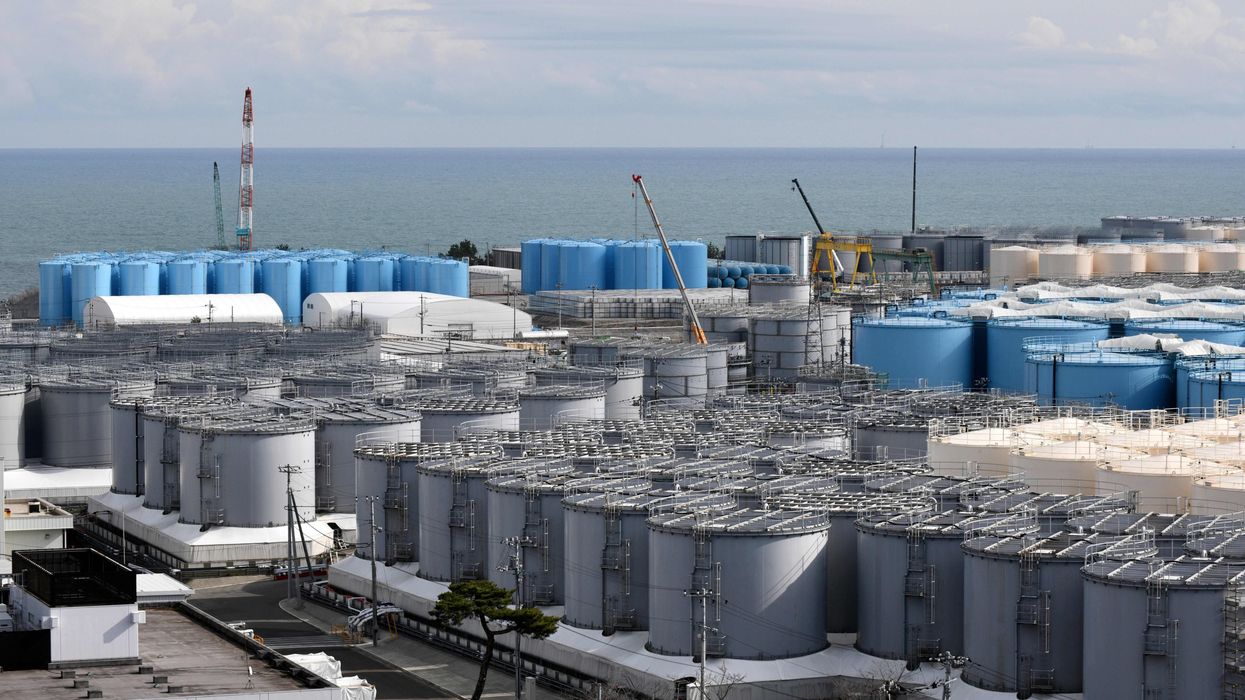
Thousands of liters of radioactive wastewater from the destroyed Fukushima Daiichi Nuclear Power Station in Japan leaked from the outdoor vent of a filtering device, the company that operates the facility said Wednesday.
Tokyo Electric Power Company (TEPCO) said about 5,500 liters of both contaminated and filtered water leaked when a valve was left open during cleaning. The company, which said it discovered the leak on Wednesday morning, warned that some of the water—which is believed to contain 220 times the level of radioactivity required for government reporting—may have seeped into the ground.
"TEPCO has confirmed that there was no significant fluctuation in radiation measurements recorded at the site," the International Atomic Energy Agency (IAEA) said in a statement. "The event does not pose any risk to the public and there is no environmental impact off-site."
The Fukushima plant, located about 150 miles northeast of Tokyo, was catastrophically damaged during the massive March 2011 earthquake and tsunami that caused meltdowns in three of the facility's reactors.
Last July, the IAEA approved a Japanese plan to gradually release more than 1 million metric tons of filtered Fukushima wastewater into the Pacific, despite years of warnings from environmentalists and widespread opposition by people in the region.
News of the leak prompted an angry response from the Chinese government.
"Japan's repeated accidents in the process of treating Fukushima nuclear-contaminated water have fully exposed the chaos and disorder of TEPCO's internal management," a spokesperson for the Chinese Embassy in Tokyo said on Thursday, according to the South China Morning Post.
"The Japanese government's supervision measures are lacking and ineffective, which once again proves that the nuclear-contaminated water treatment equipment lacks long-term reliability," the official added.
Asserting that "the discharge of the Fukushima nuclear-contaminated water into the sea is related to the health of all mankind, the global marine environment, and international public interests," the spokesperson reiterated calls for Japan to "face up to the concerns of its neighboring countries and the international community."
The new leak follows the October 2023 accident at a separate Fukushima wastewater treatment facility in which four workers were sprayed with radioactive liquid waste while cleaning pipes. Two of the workers were briefly hospitalized for skin contamination, although none showed symptoms of radiation poisoning.
There have been regular demonstrations against the Fukushima wastewater dump in South Korea and China—two countries that, like many others with nuclear power plants, have discharged far greater quantities of treated radioactive wastewater into oceans and other bodies of water than Japan says it will release.
'It is time for the international community to step in and call out this clear breach of the international law'
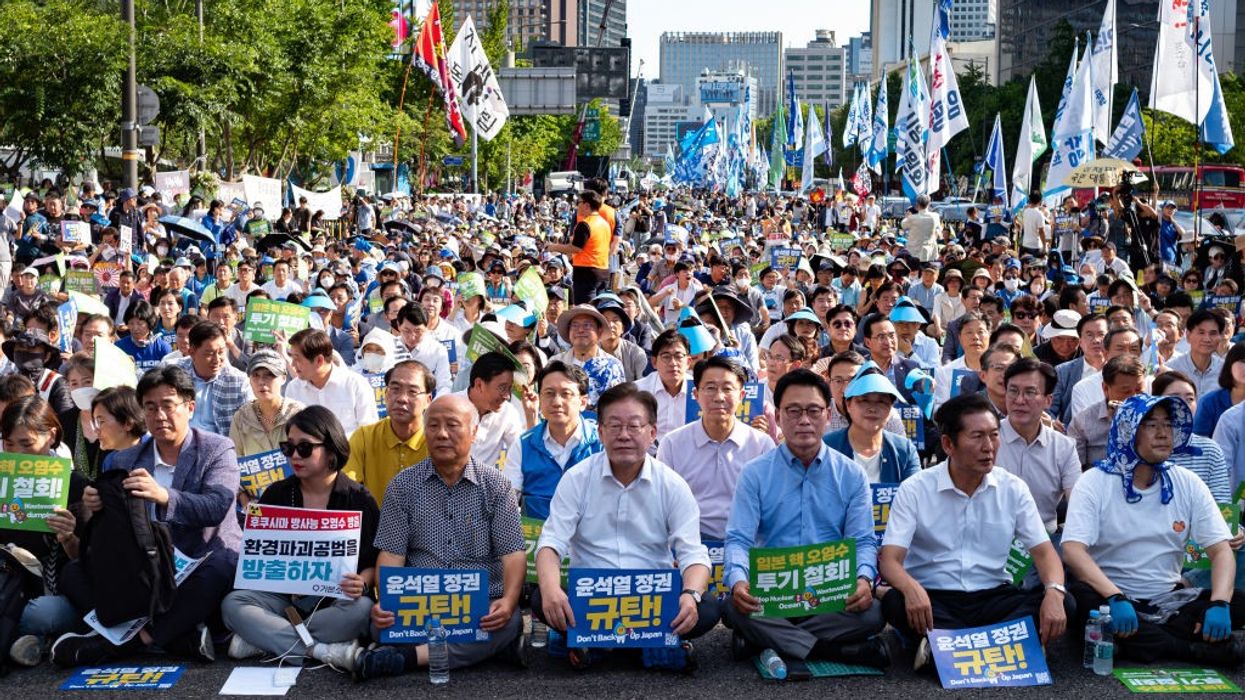
South Koreans have continued a weekend rally against Japan's dumping of Fukushima nuclear plant's contaminated radioactive wastewater into the ocean by holding a large demonstration on Saturday.
The protesters, including fishermen, activists and politicians, shouted slogans such as "Immediately stop the marine dumping of radioactive wastewater" and "Prohibit import of all Japanese aquatic products," as they urged the South Korean government to file a lawsuit with the International Tribunal for the Law of the Sea against the Japanese government.
On August 24th, Japan began dumping radioactive water from the crippled Fukushima Daiichi nuclear power plant into the Pacific Ocean.
The move resulted in a massive backlash across Asia and around the world.
While South Korea's opposition Democratic Party leader Lee Jae-myung calls the Fukushima release an "act of terror," the country's government under President Yoon Suk Yeol has backed Japan's decision, Deutsche Welle explained. However, the release is unpopular with the public, with more than 80% opposing the release and more than 60% vowing not to eat Japanese seafood afterward, The Associated Press reported.
According to The Korea Herald:
Democratic Party of Korea head Rep. Lee Jae-myung, on the fourth day of a hunger strike, said he would call on the international community to join his party’s protests against the Japanese government over the water’s release, in a press conference on Sunday.
“The dumping of the wastewater contaminated with radioactive materials by Japan is in direct violation of the London Convention on marine pollution,” he said. “It is time for the international community to step in and call out this clear breach of the international law, stop Japan’s misbehavior and stand united to preserve marine safety.”
The main opposition leader said he penned a letter to the heads of states and governments of the 86 signatories of the London Convention to collectively rally against the release of the Fukushima wastewater.
Xinhua news reports:
"Fukushima nuclear-contaminated wastewater has the nature of trash," Lee Seo-yoon, a mother of three children, said during the rally, adding that Japan regards the ocean as the largest and the cheapest trash bag.
Lee stressed that it would be absurd to hope that no one would be harmed after dumping the trash into the ocean, urging Tokyo to store the radioactive wastewater on its soil rather than dumping it in the sea.
"The ocean is the future of my family and the future of our descendants," said Kim Sam-ho, a fisherman who came from the country's southern coastal Wando County.
Kim raised his strong doubts about the safety of the radioactive wastewater, calling for the South Korean government to take necessary actions including supporting measures for fishermen.
"The major purpose of nuclear safety is to block radiation from reaching the environment and people," said Han Byung-sub, a nuclear expert who had worked at the Korea Atomic Energy Research Institute (KAERI) and the Korea Electric Power Corp. Engineering & Construction (KEPCO E&C).
Han noted that the proper measurement of radiation from Fukushima, involving groundwater flowing in and out of the destroyed reactor, was not carried out, urging the South Korean government to properly measure the radiation in waters off the country from now on.
Following the one-and-a-half-hour rally, the protesters marched about five km in downtown Seoul to the presidential office.
In response, China said it would ban the import of all Japanese ocean products, with one ministry spokesperson calling Japan's decision "selfish."
At around 1:00 pm local time Thursday, the Tokyo Electric Power Company began to discharge wastewater from the Fukushima nuclear plant, in keeping with the schedule Japan announced Tuesday.
In response, South Korean protestors attempted to enter the Japanese Embassy in Seoul, and China said it would ban the import of all Japanese ocean products.
"The ocean is the common property of all humankind, not a place for Japan to arbitrarily dump nuclear-contaminated water," Chinese foreign ministry spokesperson Wang Wenbin said ahead of the first release of water Thursday, as The Guardian reported.
Wang also called the decision "extremely selfish."
"The sea is not Japan's trash bin."
The Chinese customs agency said it would immediately and "completely suspend the import of aquatic products originating in Japan" to "prevent the risk of radioactive contamination of food safety." This means that, in addition to seafood, marine products like seaweed or sea salt would also be covered, CNN explained.
In South Korea, around 50 people gathered for a protest outside the Japanese Embassy in Seoul, Reuters reported. A group of them entered the building and reached the eighth floor, where they unfurled banners.
"The sea is not Japan's trash bin," one banner read. "Stop releasing contaminated water at once."
Police arrested 16 people for trespassing, physically carrying and dragging some out of the building and on to a bus, a Reuters photographer said.
While South Korea's opposition Democratic Party leader Lee Jae-myung calls the Fukushima release an "act of terror," the country's government under President Yoon Suk Yeol has backed Japan's decision, Deutsche Welle explained. However, the release is unpopular with the public, with more than 80% opposing the release and more than 60% vowing not to eat Japanese seafood afterward, The Associated Press reported. This has prompted the government to threaten Japan with a lawsuit if radiation levels surpass the safety limit, according to DW.
"I totally oppose the Japanese plan. The radioactive wastewater is truly a bad thing," Seoul resident Lee Jae-kyung told AP. "My feelings toward Japan have worsened because of the wastewater release."
The governments of Hong Kong and Macao have also placed a more limited ban on seafood from 10 Japanese prefectures including Fukushima. Hong Kong chief executive John Lee called Japan's decision to release the water "irresponsible," according to The Guardian. There, the release also drew protests, with demonstrators ripping up a sign with the Japanese flag and the words, "No trace of humanity. An enemy of the whole world," when they reached the consulate, as AP reported.
Domestically, too, the release has prompted opposition from fishers and environmental groups, as well as concern from citizens.
"I'm not going to buy fish from Fukushima again and I will ask the sushi restaurant where I usually go where they are buying their stocks from. And I definitely will not go to any of the beaches there with my children until I am absolutely sure that it is safe again," Kanako Hosomura, who lives less than 200 kilometers from the plant, told DW.
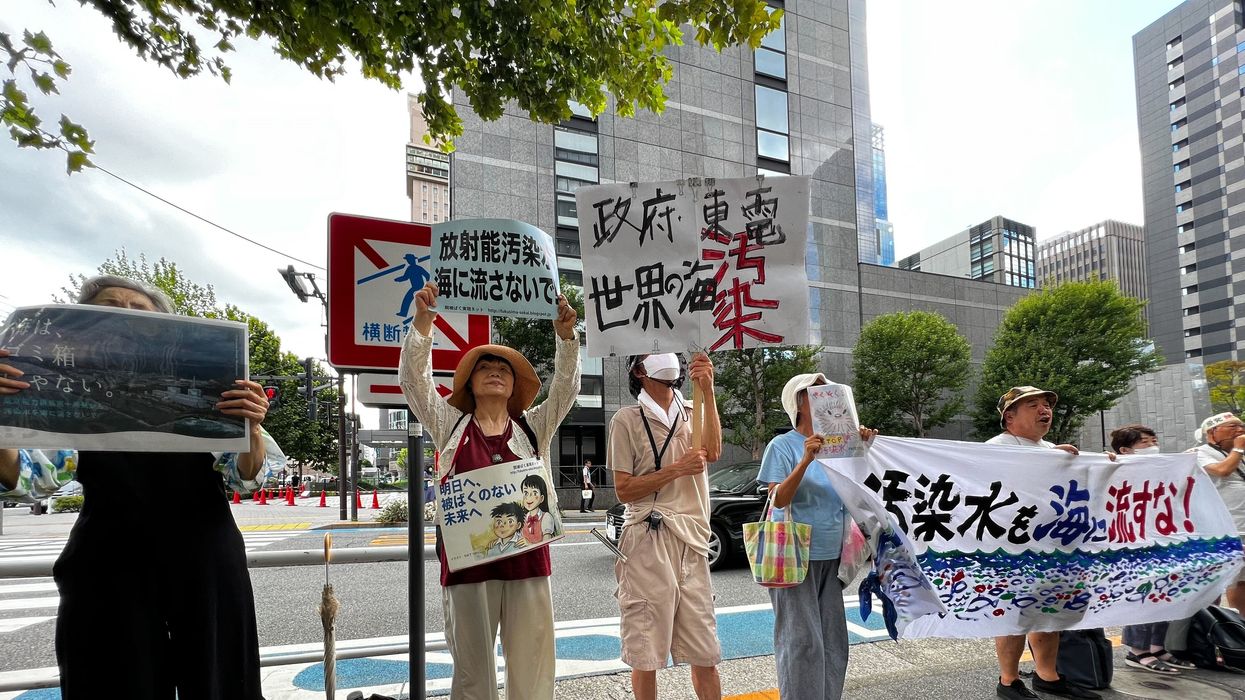
Around 400 protesters gathered outside the Tokyo Electric Power Company (TEPCO) headquarters Thursday morning, Greenpeace Japan tweeted.
The protests continued even after the release began.
Japan insists that its plan for the release is safe, and the International Atomic Energy Agency has concluded it is "consistent with relevant international safety standards." TEPCO is first treating the water in an advanced liquid processing system to remove everything except for the radioactive tritium, which is not possible to remove because it is an isotope of hydrogen, a key component of water, as NPR explained. The water containing the tritium is then further diluted with seawater to one-seventh of the World Health Organization's safety standard, according to DW. The government says some nuclear plants release tritium-contaminated wastewater at higher levels, NPR reported. And The Guardian observed that Chinese plants also release wastewater into the ocean.
TEPCO said it would release 7,800 tons of water over the next 17 days, and around 31,200 tons by April, according to DW. The entire process is expected to take around three decades.
Edwin Lyman, the director of nuclear power safety at the Union of Concerned Scientists in Washington, D.C., told NPR that Japan's plan was "the least bad of a bunch of bad options."
"The idea of deliberately discharging hazardous substances into the environment, into the ocean is repugnant," Lyman said. "But unfortunately, if you do look at it from the technical perspective, it's hard to argue that the impacts of this discharge would be worse than those that are occurring at nuclear power plants that are operating worldwide."
However, Woods Hole Oceanographic Institute senior scientist Ken Buesseler said it would be better to keep the waste stored on land where it could be watched.
While he didn't think the waste posed a threat to the wider Pacific, "nearshore in Japan could be affected in the long term because of accumulation of non-tritium forms of radioactivity," Buesseler told NPR.
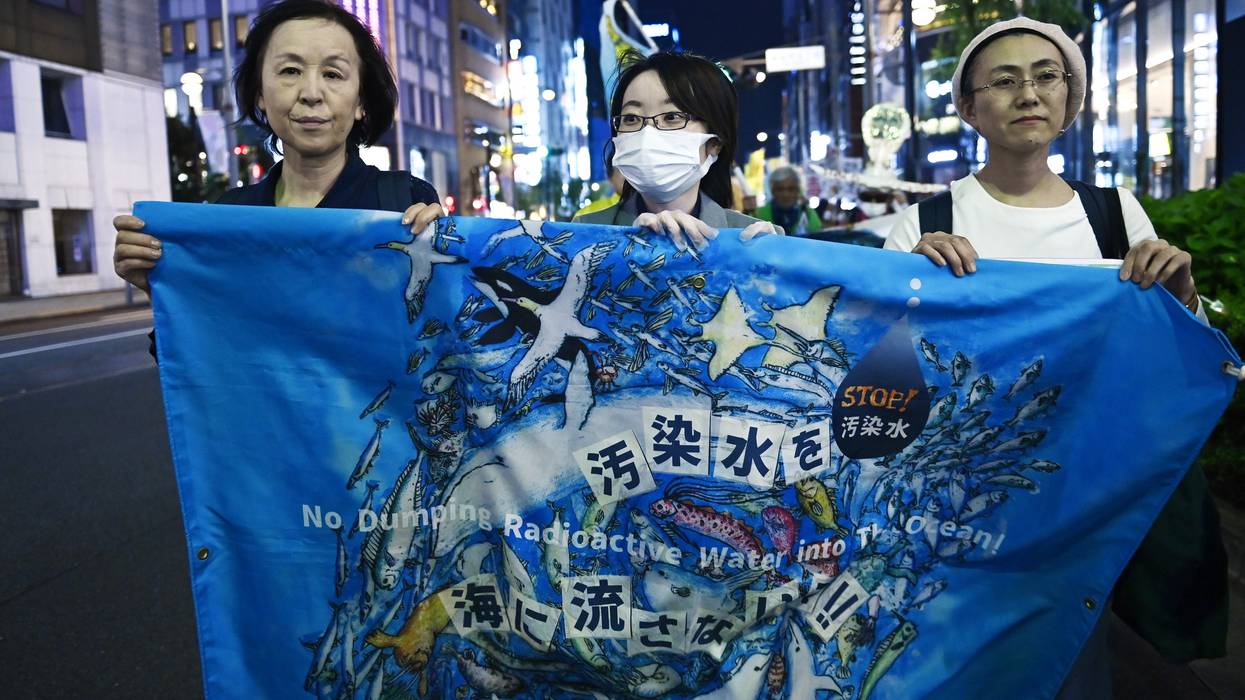
"Nothing about the water release is beneficial to us," said a Japanese fisherman who lost his brother in the 2011 tsunami. "There is no advantage for us. None. It's all detrimental."
Local fishers, Greenpeace, and others shared fresh concerns Tuesday as Japanese Prime Minister Fumio Kishida announced that the release of treated radioactive water from the Fukushima nuclear facility into the Pacific Ocean may start as soon as Thursday, more than a dozen years after an earthquake caused a tsunami that triggered reactor meltdowns.
Over the next three decades, Japan plans to discharge about 1.34 million gallons of water—or enough to fill over 500 Olympic swimming pools—into the ocean after using an advanced liquid processing system (ALPS) to remove most radionuclides.
The Tokyo Electric Power Company said Tuesday that "as the entity responsible for the safe and steady decommissioning of the Fukushima Daiichi Nuclear Power Station, TEPCO is strictly abiding by the government's decision and request, and shall quickly make preparations to commence discharge with the utmost vigilance in accordance with the implementation plan."
Greenpeace Japan project manager Hisayo Takada declared that "we are deeply disappointed and outraged by the Japanese government's announcement," and stressed that the discharge decision has been made "despite concerns raised by fishermen, citizens, Fukushima residents, and the international community, especially in the Pacific region and neighboring countries."
Haruo Ono, a 71-year-old fisherman from Shinchimachi who lost his brother in the 2011 tsunami, told Agence France-Presse: "Nothing about the water release is beneficial to us. There is no advantage for us. None. It's all detrimental."
"Fishermen are 100% against," Ono continued. "The sea is where we work. We make a living off of the sea, we're at the mercy of the sea. So if we don't protect the sea, who would?"
Takashi Nakajima, a 67-year-old who runs a supermarket in Sōma, Fukushima Prefecture that sells local seafood, said of the discharge plan, "It's like a scheme to release the water before public opposition can flare up."
Recalling when customers refused to sample local octopus in 2012, just after trial fishing began near the site of the nuclear disaster, Nakajima told Kyodo News, "Catch from the area won't sell, it will be a repeat of before."
As The Japan Times reported:
Tuesday's decision follows Kishida's meeting with the head of the National Federation of Fisheries Cooperative Associations, or Zengyoren, at the prime minister's Office on Monday in an attempt to gain the association's approval for the plan.
Zengyoren Chairman Masanobu Sakamoto confirmed the group's continued opposition to the plan, although he added that the proposal had obtained a certain degree of understanding within the fishing industry.
Japan's prime minister vowed Tuesday that "the government will take responsibility to deal with negative publicity and concerns among fishermen about whether their livelihoods can continue as before, even if the process takes decades until the discharge of the treated water is completed."
"We have taken every step to ensure a safety net is in place," said Kishida, whose government has allocated about 80 billion yen ($548 million) to aid local fishers and mitigate negative attention. "I want the relevant ministries to continue implementing measures while staying on the side of the fishermen."
The International Atomic Energy Agency (IAEA) gave the plan a green light last month, after concluding that TEPCO "has demonstrated its capabilities for accurate and precise measurements of the radionuclides" in the plant's water, and "the approach and activities to the discharge of ALPS treated water taken by Japan are consistent with relevant international safety standards."
The United Nations nuclear watchdog said Tuesday that Director General Rafael Mariano Grossi "has committed to the IAEA continuing its impartial, independent, and objective safety review during the discharge phase," so the agency "will maintain an onsite presence at Fukushima Daiichi" and "publish available data for use by the global community."
The release plan has long generated global criticism, including from the Chinese government. On Tuesday, a spokesperson for the country's Ministry of Foreign Affairs, Wang Wenbin, decried Japan's approach as "an extremely selfish and irresponsible act."
"China strongly insists that Japan should rectify this wrong decision and abandon its plan to discharge radioactive water into the sea," the diplomat added. "The Chinese side will take all necessary measures to protect marine ecology, safeguard food safety, and public health."
According to The Associated Press:
In Seoul, Park Ku-yeon, first vice minister of South Korea's Office for Government Policy Coordination, told a briefing that officials confirmed Japan would discharge the wastewater in line with its initial plan.
If it does not stick to the plan, Park said, South Korea will request Japan to immediately stop the discharge which could threaten safety of South Koreans. Opposition lawmakers and activists protested vehemently, demanding Japan immediately scrap the plan.
Hong Kong and Macau announced that they are banning products from Fukushima and nine other prefectures in response to Tokyo's announcement Tuesday.
"The myth is being perpetuated that discharges are necessary for decommissioning. But the Japanese government itself admits that there is sufficient water storage space in Fukushima Daiichi," Greenpeace East Asia senior nuclear specialist Shaun Burnie noted Tuesday. "Long-term storage would expose the current government decommissioning roadmap as flawed, but that is exactly what needs to happen. The Fukushima Daiichi nuclear station is still in crisis, posing unique and severe hazards, and there is no credible plan for its decommissioning."
"Instead of engaging in an honest debate about this reality, the Japanese government has opted for a false solution—decades of deliberate radioactive pollution of the marine environment—during a time when the world's oceans are already facing immense stress and pressures," added Burnie. "This is an outrage that violates the human rights of the people and communities of Fukushima, and other neighboring prefectures and the wider Asia-Pacific region."
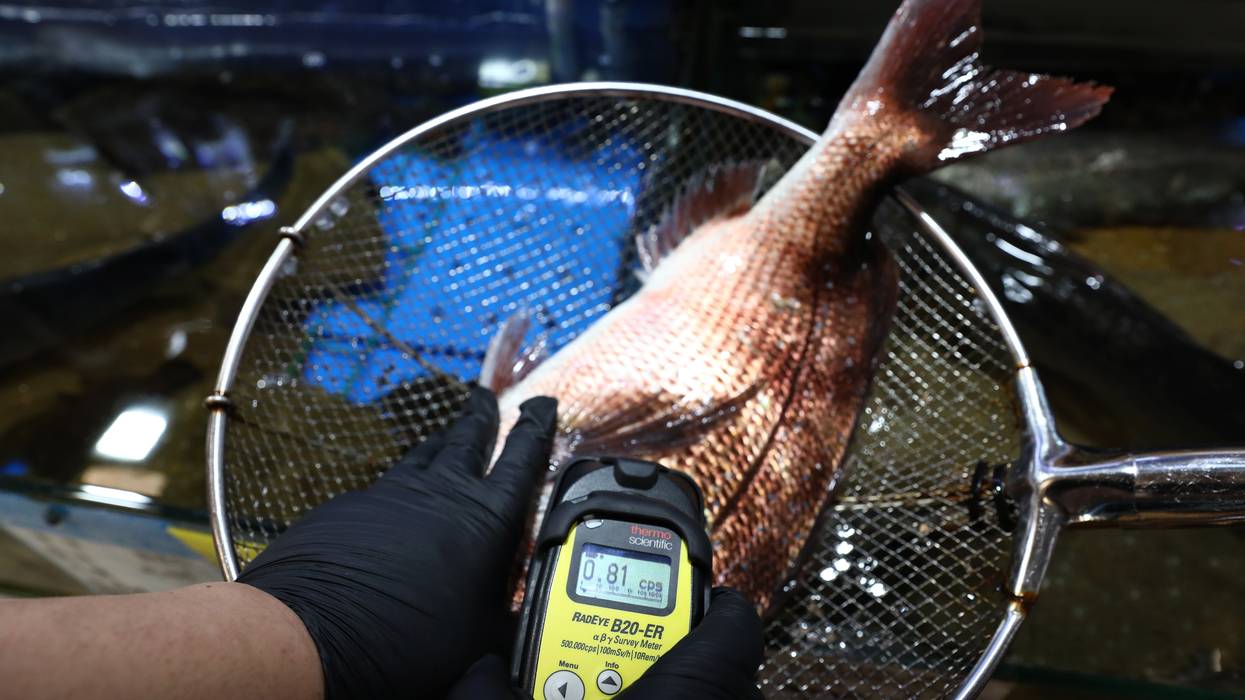
The fish was caught near a drainage outlet where water from melted nuclear reactors flows—some of the same water that is to be treated and released from the power plant starting next month.
With the Tokyo Electric Power Company planning to begin a release of 1.3 million tonnes of treated wastewater from the former Fukushima Daiichi nuclear power plant in Japan next month, reports of radioactive fish in the area have raised alarm in recent years—and new reporting on Sunday revealed that the problem is far from mitigated, prompting questions about how dangerous the company's plan will be for the public.
The plant operator, known as TEPCO, analyzed a black rockfish in May that was found to contain levels of radioactive cesium that were 180 times over Japan's regulatory limit, The Guardian reported.
The fish was caught near drainage outlets at the plant, where three nuclear reactors melted down in March 2011 during a tsunami.
Rainwater from the areas surrounding the reactors flows into the area where the fish was caught.
The high level of cesium—which, depending on the level of exposure, can cause nausea, vomiting, diarrhea, bleeding, coma, and death in people who eat contaminated food—was discovered as TEPCO prepares to begin the discharge of treated wastewater which has been used to cool fuel from the melted reactors. The wastewater has mixed with rainwater and groundwater since the tsunami.
TEPCO has acknowledged that fish near the drainage outlets have been unsafe for consumption, as the concentration of cesium in seabed sediment in the area has measured more than 100,000 becquerels per kilogram. The maximum legal level is 100 becquerels per kilogram.
"Since contaminated water flowed into the Fukushima Daiichi nuclear power station port immediately after the accident, TEPCO has periodically removed fish from inside the port since 2012," an official for the company told The Guardian.
A fish was detected to have high levels of radiation near Fukushima in January 2022, with authorities positing that the fish had escaped from the drainage outlet. Shipments of black rockfish caught off the coast of Fukushima prefecture were promptly suspended and have not been resumed.
More than 40 fish with cesium levels over the legal limit were found in the plant's port between May 2022 and May 2023, and 90% came from the inner breakwater where water flows from the area around the melted reactors.
The Nuclear Regulation Authority in Japan and the United Nations' International Atomic Energy Agency (IAEA) have both given their approval of TEPCO's plan to release the wastewater into the Pacific Ocean, which it says it needs to do to secure space for decommissioning the plant. The discharge process, using an Advanced Liquid Processing System (ALPS), would take decades to complete.
While the IAEA said earlier this month the plan will have a "negligible radiological impact to people and the environment," Paul Dorfman of Ireland's Radiological Protection Advisory Committee said Monday that reports like the one about the contaminated rockfish are likely "far from over."
"Believing [and] pretending some things are not harmful because it is convenient is literally killing the planet," said American University sociologist Celine-Marie Pascale, comparing the ecological and climate crisis to authorities' insistence that the water discharge is safe. "Corporate interests triumph at global expense once again."
Officials in Hong Kong have said they will ban food imports from 10 prefectures in Japan if the release moves forward in August, and some Chinese wholesalers have stopped accepting seafood imports from the country.
In addition to concerns about cesium, TEPCO has admitted that the ALPS it plans to use may not eliminate isotopes including ruthenium, cobalt, strontium, and plutonium. The system is also not able to remove tritium, the radioactive isotope of hydrogen.
Masanobu Sakamoto, president of JF Zengyoren, Japan Fisheries Cooperatives, said in June that the group "cannot support the government's stance that an ocean release is the only solution."
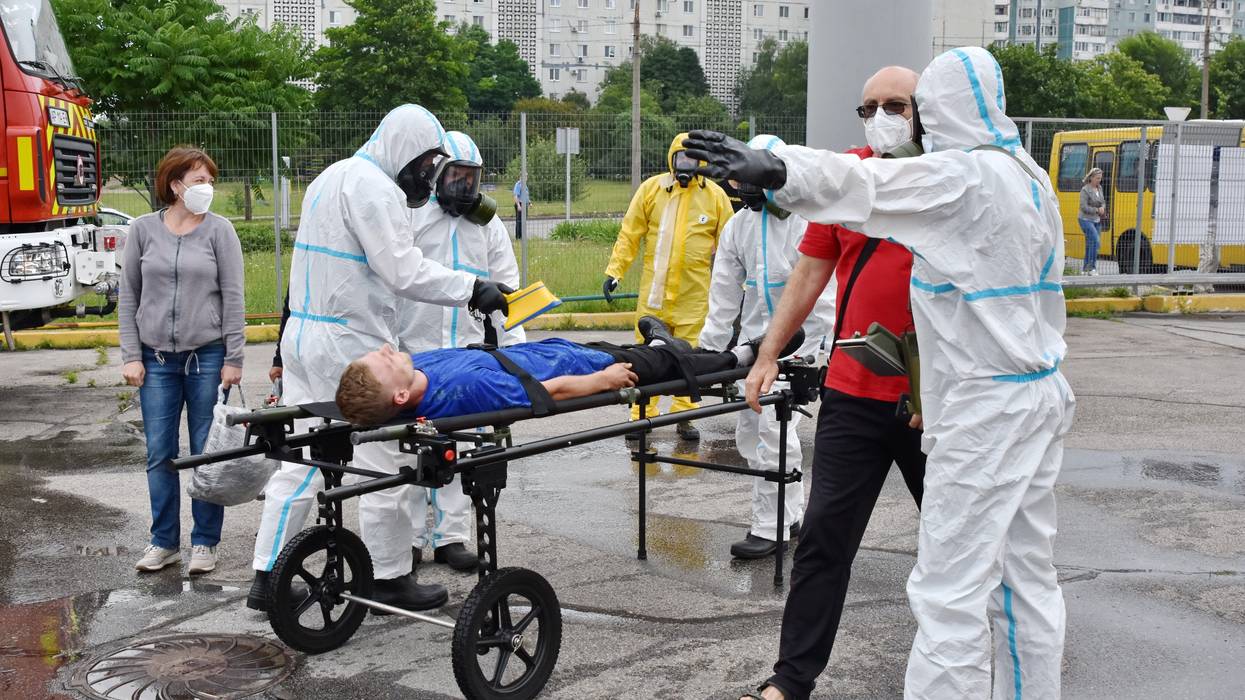
"Calling for a no-fire zone around Zaporizhzhia is not enough," said Beyond Nuclear. "We must call for no nuclear power at all."
With Ukrainian and Russian officials trading accusations about a possible looming attack on Europe's largest nuclear power plant this week, global experts and campaigners are sharing fresh concerns about the facility and the energy source more broadly.
Russian forces invaded Ukraine in February 2022 and took control of the Zaporizhzhia Nuclear Power Plant (ZNPP) the following month. Since then, fighting near the facility—with six reactors that are currently shut down—has generated fears around the world and controversial references to the 1986 Chernobyl disaster, the site of which is located in present-day Ukraine.
In recent days, an adviser to Russia's nuclear agency has claimed Ukraine will imminently cause a nuclear disaster at the ZNPP while Ukrainian President Volodymyr Zelenskyy has warned of a potential false flag operation, claiming that "the Russian military has placed objects resembling explosives on the roof of several power units."
While International Atomic Energy Agency (IAEA) experts at the facility have so far not observed any visible indications of mines or explosives, the new accusations led the United Nations watchdog on Wednesday to request additional access—specifically to the rooftops of two reactors along with parts of the turbine halls and cooling system.
"With military tension and activities increasing in the region where this major nuclear power plant is located, our experts must be able to verify the facts on the ground," said IAEA Director General Rafael Mariano Grossi. "Their independent and objective reporting would help clarify the current situation at the site, which is crucial at a time like this with unconfirmed allegations and counterallegations."
"In a time of national crises in multiple countries, increasing natural disasters, and a worsening climate emergency, nuclear power is demonstrating that it is a liability rather than an asset."
The U.S.-based group Beyond Nuclear noted in a lengthy statement Thursday that "Zaporizhzhia is in the news now almost every day. The propaganda may be deliberately alarmist, but the basis for the alarm is very real or it would not be the subject matter for headline-getting in the first place."
"The reason is simple. Nuclear power is the most dangerous way to boil water. It is unnecessary, expensive, and an obstacle to renewable energy development," the group argued. "It is time to see sense. Calling for a no-fire zone around Zaporizhzhia is not enough. We must call for no nuclear power at all."
Highlighting that Russia's invasion of Ukraine is far from the only threat to the world's nuclear facilities, the group added that "in a time of national crises in multiple countries, increasing natural disasters, and a worsening climate emergency, nuclear power is demonstrating that it is a liability rather than an asset."
Beyond Nuclear also weighed in on the intense debate among activists, Ukrainian and Russian officials, reporters, scientists, and others regarding the dangers of a nuclear disaster at the ZNPP, offering a list of unanswered questions:
"None of these threats would make headlines if Zaporizhzhia was instead home to a wind farm or utility-scale solar array," asserted Beyond Nuclear. "This perhaps explains the rush now to downplay the gravity of the situation, with claims in the press that a major attack on the plant would 'not be as bad as Chernobyl' and that radioactive releases would be minimal and barely travel beyond the fence line. This is an irresponsible dismissal of the real dangers."
As the group detailed:
After the massive explosion at Chernobyl, the graphite moderator used in the reactor fueled the fire, with the smoke further lofting radioactive fallout far and wide. This has led to an assumption that major fires and explosions at Zaporizhzhia would result in less serious consequences since the reactor designs are not the same as Chernobyl's.
However, if the uranium fuel in the Zaporizhzhia reactors or irradiated fuel storage pools overheats and ignites, it could then heat up the zirconium cladding around it, which would ignite and burn fiercely as a flare at temperatures too hot to extinguish with water. The resulting chemical reaction would also generate an explosive environment. The heat of the release and detonation(s) could breach concrete structures, then loft radioactive gas and fallout into the environment to travel on the weather.
Fallout could contaminate crucial agricultural land, potentially indefinitely, and would include Russia, should prevailing winds travel eastward at the time of the disaster.
Some have suggested that an attack on the plant would not seriously threaten surrounding communities. The American Nuclear Society, for example, said Wednesday that "our experts have carefully considered 'worst-case scenarios,' including bombardment and deliberate sabotage of the reactors and spent fuel storage canisters. They cannot foresee a situation that would result in radiation-related health consequences to the public."
"ZNPP's six reactors have been shut down for over 10 months and are no longer making enough heat to cause a prompt radiological release," the society said. "ZNPP is designed to withstand natural and manmade hazards. Thick, steel-reinforced concrete containment buildings protect the reactor cores and are designed to keep any radioactive materials isolated from the environment."
"In the unlikely event that containment structures were breached, any potential release of radiological material would be restricted to the immediate area surrounding the reactors. In this regard, any comparison between ZNPP and 'Chernobyl' or 'Fukushima' is both inaccurate and misleading," the group added, referencing the 2011 disaster in Japan.
Matthew Bunn, the James R. Schlesinger professor of the practice of energy, national security, and foreign policy at Harvard Kennedy School, made the case at the Bulletin of the Atomic Scientists on Thursday that the biggest danger regarding the ZNPP is intentional sabotage.
"How serious is the risk of a major radioactive disaster?" Bunn wrote. "That depends on whether we're talking about an intentional or inadvertent radioactive release. If the Russian forces that control the site want to cause a major radiation release—and are willing to use explosives to do it—they could contaminate a huge area. Although the reactors have been largely shut down and cooling for months, they still contain a huge amount of intensely radioactive material that explosives could disperse."
He continued:
A couple of mines on the roof of a reactor would not be enough. Causing a big release would require some serious demolition with explosives. But that's what was needed to destroy Ukraine's Kakhovka dam—which it appears was done with explosives from within, while Russian forces controlled the site—so a similar operation at Zaporizhzhia can't be ruled out.
No one can accurately evaluate how big an area might be affected; the extent of contamination would depend on how the disaster was caused, how hard the wind was blowing, whether rain brought the radioactive material back to the ground, and more. But one could easily imagine that Russia might hope that such a release would interfere with Ukraine's counteroffensive, forcing some units to focus on evacuating people and cleaning up radioactive fallout rather than battling Russian forces.
By contrast, looking only at inadvertent damage, there are reasons to be optimistic. The Zaporizhzhia reactors are built with thick concrete containment structures, have been cooling for months, and have extra safety features installed after the Fukushima accident in Japan. It is very unlikely that a few stray shells from fighting in the area would cause any serious radioactive release.
Bunn concluded that "over the longer term, there's a need to rethink nuclear safety and security in the context of the possibility that nuclear facilities can be exposed to war, mass civil unrest, or governmental collapse. And there's a need for new agreements to reduce the chance that major civilian nuclear facilities under international inspection will again be targets of military assault."
Meanwhile, Beyond Nuclear charged that "if Zaporizhzhia comes to harm, each side in the conflict will likely hold the other responsible. But ultimately, the responsibility we all share is to reject the continued use of a technology that has the potential to wreak such disastrous consequences on humanity."
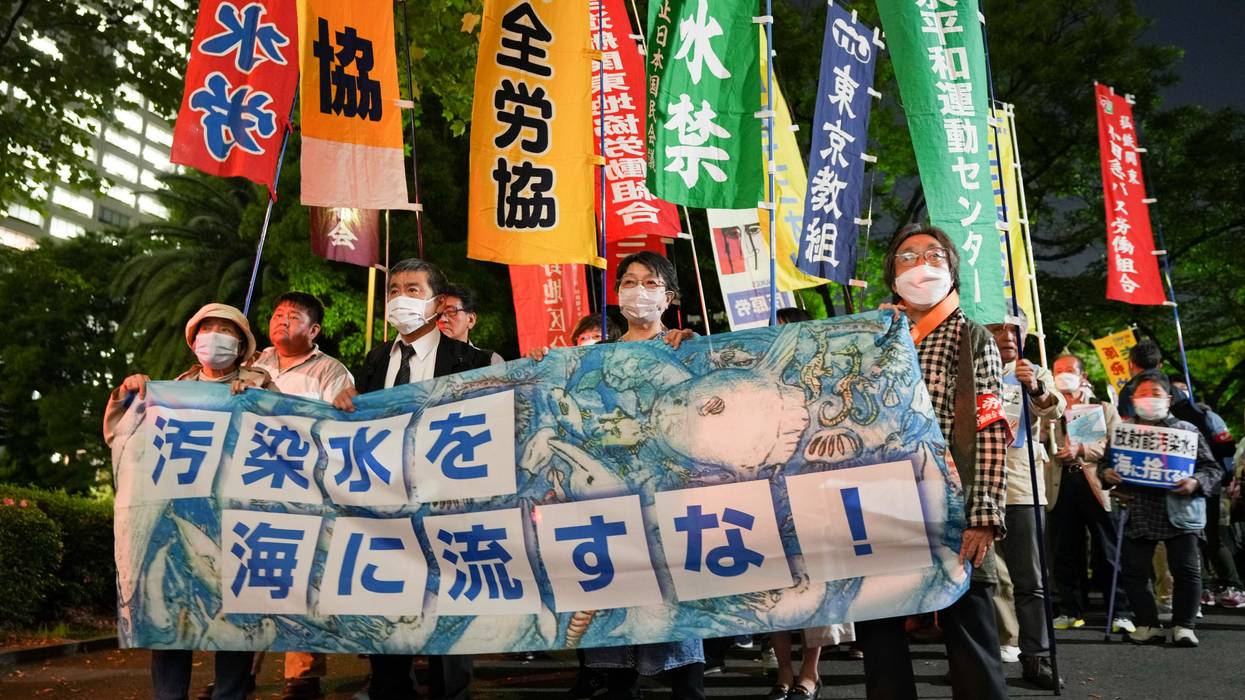
"What impact will the long-term accumulation and concentration of radionuclides bring to the marine environment, food safety, and people's health?" the Chinese Ministry of Foreign Affairs inquired.
Anxiety is growing this week in Asian and Pacific island nations after the United Nations' nuclear regulator approved Japan's plan to dump treated wastewater from the destroyed Fukushima nuclear power plant into the ocean—a course of action for which the Chinese government said Tokyo would "bear all the consequences."
"Simply for saving cost, Japan has insisted on discharging the nuclear-contaminated water into the sea in disregard of the concerns and opposition from the international community and taken the Pacific Ocean as the 'sewer,'" the Chinese Ministry of Foreign Affairs (CMFA) said on Tuesday. "We believe that the IAEA report should not be the 'shield' or 'green light' for Japan's discharge of nuclear-contaminated water into the ocean."
The ministry's statement came in reaction to the International Atomic Energy Agency's (IAEA) approval on Tuesday of Japan's plan to gradually release more than 1 million metric tons of filtered Fukushima wastewater into the Pacific despite years of warnings from environmentalists and the overwhelming opposition of people in the wider region.
Tokyo Electric Power Company's (TEPCO) Fukushima Daiichi Nuclear Power Station, located about 150 miles northeast of the capital, was catastrophically damaged during the massive March 2011 earthquake and tsunami that caused meltdowns in three of the facility's reactors.
"No matter what the report says, it will not change the fact that Japan will release millions of tons of Fukushima nuclear-contaminated water into the Pacific Ocean in the next three decades," CMFA said. "Will Japan's purification facility be effective in the long term? Can the international community be timely informed when the discharged water exceeds the discharge limit? What impact will the long-term accumulation and concentration of radionuclides bring to the marine environment, food safety, and people's health? These are the questions that the IAEA report failed to answer."
"We once again urge the Japanese side to stop its ocean discharge plan, and earnestly dispose of the nuclear-contaminated water in a science-based, safe, and transparent manner," the ministry added. "If Japan insists on going ahead with the plan, it will have to bear all the consequences arising from this. We urge the Japanese side to work with the IAEA to put in place as soon as possible a long-term international monitoring mechanism that would involve stakeholders including Japan's neighboring countries."
"We once again urge the Japanese side to stop its ocean discharge plan, and earnestly dispose of the nuclear-contaminated water in a science-based, safe, and transparent manner."
The government of one of those neighboring countries, South Korea, said Wednesday that it accepts the IAEA's approval of the wastewater release.
"It has been the government's long-standing stance to recognize the IAEA as a prestigious internationally agreed-upon agency, and we hold respect for its findings," Office for Government Policy Coordination First Deputy Chief Park Ku-yeon said during his daily press briefing.
However, a Gallup poll of more than 1,000 South Korean adults last week found that nearly 80% of respondents are worried about possible ocean and seafood contamination from the wastewater dump.
South Koreans have in recent days been stockpiling seafood and salt amid growing safety concerns over the impending wastewater release, for which no date has yet been set.
"I recently bought 5 kilograms of salt," Lee Young-min, a 38-year-old woman in Seongnam, told Reuters last week. "As a mother raising two children, I can't just sit back and do nothing. I want to feed them safely."
There have been regular protests against the planned Fukushima wastewater dump in South Korea and China—two countries that, like many others with nuclear power plants, have discharged far greater quantities of treated radioactive wastewater into oceans and other bodies of water than Japan plans to release.
"Nuclear sites all over the world... discharge diluted wastewater to seas, rivers, and lakes. This has been going on for decades without significant impacts," University of Portsmouth environment science professor Jim Smith told Science Media Centre last week.
"For example, the La Hague reprocessing facility releases about 10,000 terabecquerels of tritium per year into the English Channel," Smith continued. "Radiation doses from this are very low and there is no evidence of significant ecosystem impacts."
"The planned release from Fukushima of 22 terabecqurels per year to the Pacific Ocean is about 450 times lower than the La Hague releases and 50 times lower than releases from the U.K's Sellafield facility," he noted, adding that claims of significant risks to the planned Fukushima release "are not founded in scientific evidence."
"Dilution is no longer the solution to pollution, so whilst the Japanese may dispose of their wastewater in the interim, it would be a good opportunity to look at other disposal methodologies in the future."
However, Tony Hooker, director of the Center for Radiation Research, Education, and Innovation at the University of Adelaide in Australia, said that "whilst this disposal plan meets the scientific and regulatory requirements for the disposal of radiation into the sea, and no environmental or human health impacts are likely to be observed, there is a growing question regarding the use of the sea as a dumping ground when our oceans are already stressed and struggling."
"Dilution is no longer the solution to pollution, so whilst the Japanese may dispose of their wastewater in the interim, it would be a good opportunity to look at other disposal methodologies in the future," Hooker added. "The Pacific Island Forum Scientific Panel has proposed to use the wastewater to make concrete, therefore locking up the residual radioactive tritium."
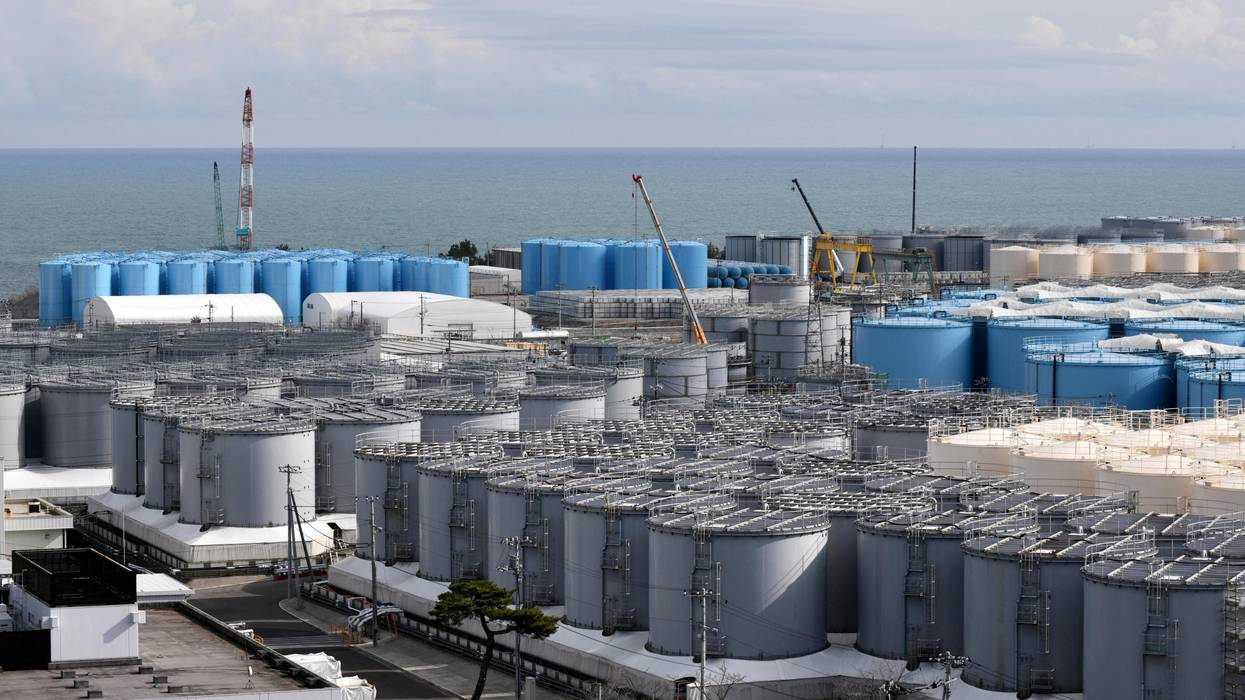
"Piping water into the sea is an outrage. The sea is not a garbage dump," said one local fisherman earlier this year.
Despite years of protest and warnings from environmentalists, the United Nation's nuclear watchdog on Tuesday approved a plan by Japan to release tens of millions of gallons of water from the destroyed Fukushima nuclear power plant into the ocean.
The massive storage of radioactive water has been ongoing since the 2011 tsunami disaster triggered a meltdown of the plant, but the International Atomic Energy Agency (IAEA) said the plan orchestrated by the Japanese government and TEPCO, the plant operator, meets safety standards.
Based on a "comprehensive" two-year assessment, "the IAEA has concluded that the approach and activities to the discharge of ALPS treated water taken by Japan are consistent with relevant international safety standards,” the agency's director general Rafael Mariano Grossi said in the foreword of a new report released alongside the decision.
“Furthermore," Grossi continued, "the IAEA notes the controlled, gradual discharges of the treated water to the sea, as currently planned and assessed by TEPCO, would have a negligible radiological impact on people and the environment."
According to the IAEA statement:
The water stored at the FDNPS has been treated through an Advanced Liquid Processing System (ALPS) to remove almost all radioactivity, aside from tritium. Before discharging, Japan will dilute the water to bring the tritium to below regulatory standards.
Despite assurances, nuclear experts have said that concerns about tritium cannot be overstated. In 2020, Greenpeace International released a report warning that the contaminated water risks "potential damage to human DNA" and questioned the government and TEPCO's push for the release.
As Bloomberg notes, "an assessment of the discharge facility by a domestic nuclear regulator is still required before a timeline is finalized to begin releasing the water—equivalent in volume to about 500 Olympic-size swimming pools. Government officials have indicated the discharges, which could take decades, would begin during the summer."
The IAEA's assessment flies in the face of scientific warnings, environmentalists, and local residents who have argued that dumping the water into the Pacific Ocean should be "'simply Inconceivable."
"Piping water into the sea is an outrage. The sea is not a garbage dump," 71-year-old Haruo Ono, who has been fishing off the coast of Fukushima his entire life, told CBS News earlier this year after the IAEA released a preliminary assessment of the plan. "The company says it's safe, but the consequences could catch up with us 50 years down the road."
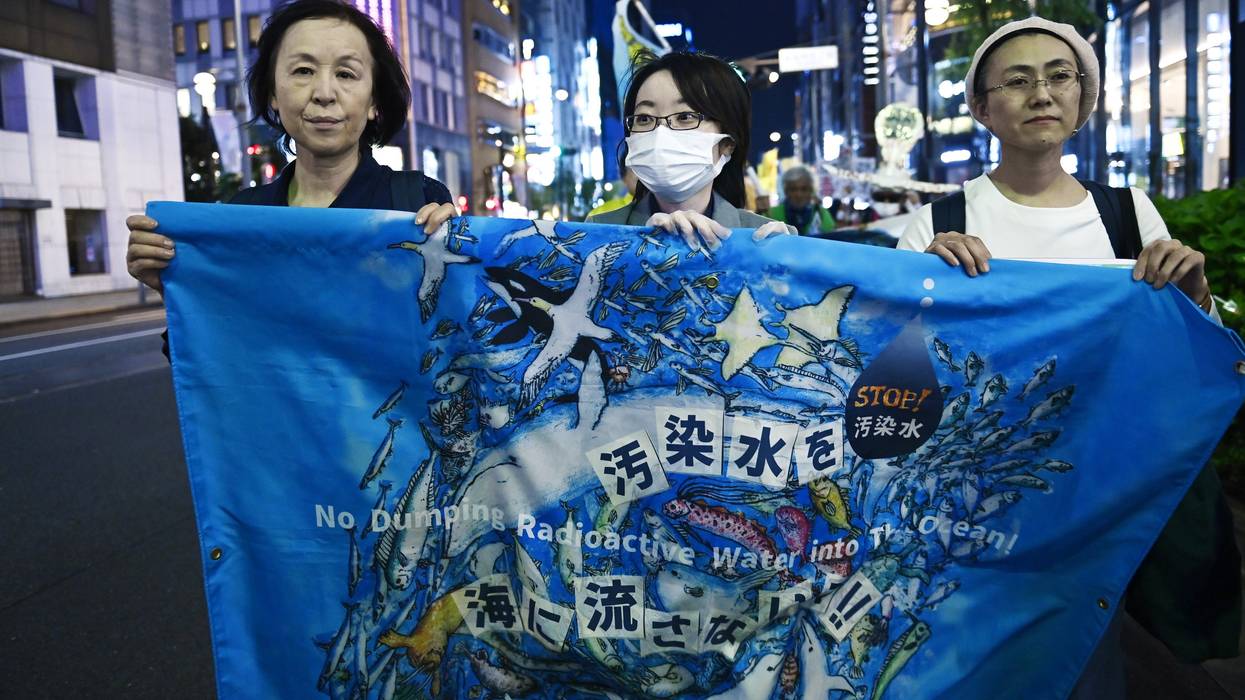
"Piping water into the sea is an outrage," said one Japanese fisher angered by the plan to release radioactive wastewater into the ocean. "The sea is not a garbage dump."
Critics of a Japanese plan to release filtered radioactive wastewater from the Fukushima nuclear disaster into the Pacific Ocean intensified their opposition to the proposal on Wednesday after the United Nations agency responsible for promoting nuclear energy said the company that operated the plant has adequately demonstrated its ability to measure the water's radioactivity.
The U.N.'s International Atomic Energy Agency (IAEA) this week released a report that found the Tokyo Electric Power Company (TEPCO)—the operator of the Fukushima Daiichi Nuclear Power Station that was catastrophically damaged during a 2011 meltdown in three reactors caused by an earthquake and tsunami—"has demonstrated its capabilities for accurate and precise measurements of the radionuclides present in the treated water stored on site."
While proponents of the Japanese government's 2021 proposal to gradually release more than 1 million metric tons of filtered Fukushima wastewater into the Pacific view the IAEA's latest findings as a milestone on the road toward realizing the plan, opponents renewed their calls to keep the radioactive water out of the ocean.
"It's applying a 19th-century 'dilution is the solution to pollution' approach to a problem that really should be dealt with in a much more modern way."
"Piping water into the sea is an outrage. The sea is not a garbage dump," 71-year-old Haruo Ono, who has been fishing off the coast of Fukushima his entire life, told CBS News. "The company says it's safe, but the consequences could catch up with us 50 years down the road."
Kinzaburo Shiga, a 77-year-old, third-generation fisher from Fukushima, told CNN the government's plan makes his "blood boil."
"I know that the government has decided to go ahead with the policy of releasing treated wastewater into the sea, but for us fishers, it really feels like they made this decision without our full consent," he said.
Fears of radioactive contamination from the planned wastewater release have prompted protests from the governments of China, South Korea, some Pacific island nations, and international environmental groups like Greenpeace, which argues the proposal violates international law.
"Continuing with ocean discharge plans at this time is simply inconceivable," Henry Puna, secretary general of the Pacific Islands Forum intergovernmental group, wrote earlier this year. "I fear that, if left unchecked, the region will once again be headed towards a major nuclear contamination disaster at the hands of others."
Lee Jae-myung, a South Korean opposition lawmaker from the centrist Democratic Party, said earlier this month that "Japan is putting forward claims that the contaminated water from the Fukushima nuclear power plant, if treated, is safe enough to drink."
"If it is safe enough to drink, they should use it as drinking water," he added.
Last week, a team of 21 South Korean nuclear experts visited the Fukushima site to inspect equipment and facilities that would be used during the proposed wastewater release.
"This visit has made significant progress in the process of scientific and technological review through direct on-site confirmation and more detailed data acquisition, but additional analysis and confirmation work is planned for more precise judgment," said Yoo Gook-hee, head of the inspection team, according to World Nuclear News. "Based on this, we plan to comprehensively evaluate Japan's plans for Fukushima-related water pollution and disclose the results."
The Korea Herald reported Wednesday that the team of experts would conduct an additional review.
The wastewater release plan has also sparked popular protests in South Korea, where 85% of people oppose the proposal, according to a survey released last week by the Korea Federation for Environmental Movements.
"The Pacific Ocean is not some dump where contaminated water from Fukushima can be deposited. Japan must comply with [United Nations] conventions and the U.N.'s vision of protecting the oceans," a coalition of South Korean activists said in a statement ahead of a May 22 demonstration in Seoul's Gwanghwamun Plaza, according to The Hankyoreh.
"Since the Pacific is the largest ocean in the world, pollution in the Pacific would soon spread to every ocean in the world," the activists added.
Common Dreams reported in 2012 that fish contaminated with radioactive cesium from Fukushima were found off the California coast months after the disaster.
Nuclear and public health experts have also weighed in against dumping radioactive wastewater into the ocean, even as others argued the plan poses "zero risk to human life."
Tilman Ruff, an Australian infectious diseases and public health physician who co-founded of the Nobel Peace Prize-winning International Campaign to Abolish Nuclear Weapons, said during a Friday Australian Broadcasting Corporation interview that dumping Fukushima water into the Pacific would be "a really unfortunate regressive step."
"It's applying a 19th-century 'dilution is the solution to pollution' approach to a problem that really should be dealt with in a much more modern way," he continued. "They haven't really considered adequate alternatives to store this water to use it in ways that don't have long-term transboundary and transgenerational impacts across the Pacific."
Ruff said the best course of action would be to "clean the water as best you can, then use it in concrete for structural applications like building foundations, bridges, under roads, where it's not gonna have a lot of contact with people, and where some of the important radioactive releases… will be trapped in the concrete, where it's much safer."
"There are also options of long-term storage, because radioactive materials decay over time," he added.
Marcos Orellana, the United Nations special rapporteur on the implications for human rights of the environmentally sound management and disposal of hazardous substances and wastes, told Al Jazeera earlier this month that he does not believe the IAEA is the neutral body it claims to be.
"The IAEA has a mandate to accelerate and enlarge peaceful atomic energy," he said. "Why would the IAEA, on the same day that Japan announced its decision to discharge the contaminated water... come out publicly in support of Japan?"
"How this impacts the food chain, how this impacts human health, this is not at all clear," Orellana added. "Alternatives are expensive, but even more expensive is the cost of contaminating the Pacific Ocean for hundreds of years with radioactive substances."