

SUBSCRIBE TO OUR FREE NEWSLETTER
Daily news & progressive opinion—funded by the people, not the corporations—delivered straight to your inbox.
5
#000000
#FFFFFF
To donate by check, phone, or other method, see our More Ways to Give page.
Daily news & progressive opinion—funded by the people, not the corporations—delivered straight to your inbox.
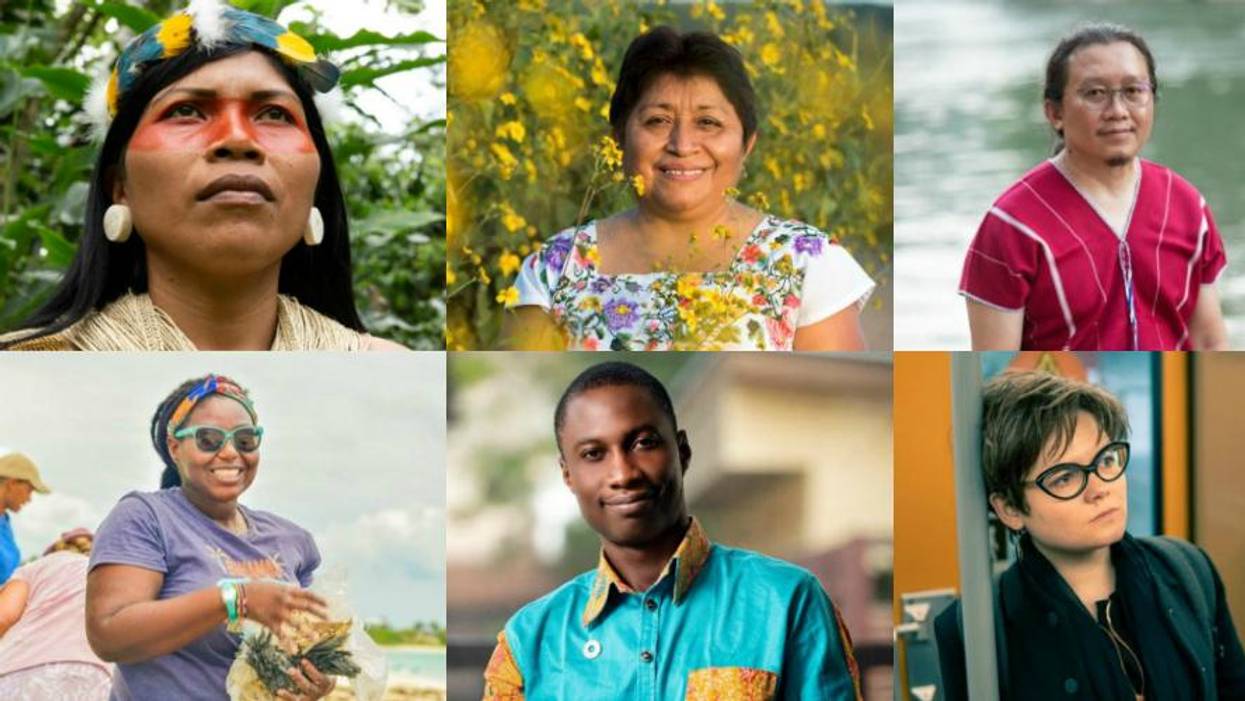
After a long year of environmental disasters across the globe and in the midst of a public health crisis that has killed well over a million people, six "environmental heroes" were announced on Monday as winners of the 2020 Goldman Environmental Prize, an annual honor that recognizes grassroots activists from each of the world's inhabited continental regions.
"These six environmental champions reflect the powerful impact that one person can have on many," John Goldman, president of the Goldman Environmental Foundation, said in a statement. "In today's world, we witness the effects of an imbalance with nature: a global pandemic, climate change, wildfires, environmental injustices affecting those most at risk, and constant threats to a sustainable existence."
"Even in the face of the unending onslaught and destruction upon our natural world, there are countless individuals and communities fighting every day to protect our planet," Goldman continued. "These are six of those environmental heroes, and they deserve the honor and recognition the prize offers them--for taking a stand, risking their lives and livelihoods, and inspiring us with real, lasting environmental progress."
This year's winners are Kristal Ambrose of the Bahamas, Nemonte Nenquimo of Ecuador, Lucie Pinson of France, Chibeze Ezekiel of Ghana, Leydy Pech of Mexico, and Paul Sein Twa of Myanmar. Although the foundation typically holds a ceremony for the recipients at the San Francisco Opera House in April, the prize is being awarded virtually on Monday, at 4:00 pm PST, due to the coronavirus pandemic.
Ahead of the livestreamed award ceremony, the foundation released videos and online biographies of the 2020 recipients, who join 200 activists from 90 nations who have been honored with the prize in the past.
Ambrose is being recognized for helping convince the government of the Bahamas to impose a nationwide ban on single-use plastic bags, plastic cutlery, straws, and Styrofoam containers and cups, which took effect this year. The foundation says that "operating outside of the traditional power structures in the Bahamas, Ambrose used science, strategic advocacy, and youth empowerment to get her country focused on plastics."
She explained the significance of her government's recent plastics ban in an interview with The Guardian. "In the Bahamas, it's a really big deal because we receive the world's waste as well as producing our own," Ambrose said. "This is paradise, until you look closely. Then you see the plastic pollution that washes in with the Sargasso Sea."
The founder of the Bahamas Plastic Movement, she is currently studying marine waste in Sweden and, according to the newspaper, "aims to use the results of her research to build stronger organizations and awareness in the Bahamas."
Also named one of the 100 most influential people of 2020 by TIME magazine, Nenquimo led an Indigenous campaign and lawsuit that blocked Ecuador's government from selling 500,000 acres of Waorani territory in the Amazon rainforest for oil extraction--which, as Mongabay noted, "set an important legal precedent for other Indigenous communities in the rainforest, and put in motion a movement to redefine national community consent laws."
Nenquimo told to Mongabay in September: "We are not waiting for the government to respect us. We are demanding that they respect our life, our home, our culture, and our territory. That's the most important thing now."
Following that legal victory in April 2019, the foundation says, "Nenquimo continues to fight for self-determination, rights, cultural, and territorial preservation for the Waorani and other Indigenous communities."
The foundation calls Pinson "a climate soldier," pointing out that her activism not only "successfully pressured France's three largest banks to eliminate financing for new coal projects and coal companies" but also "compelled French insurance companies to follow suit."
"As a result of her work with French institutions, 22 global banks and 17 insurers now cease to support coal development," the foundation says. "Pinson's activism has already resulted in the adoption of new coal policies by investors managing more than $7 billion in assets. She vows not to stop until financial institutions cease all new investment in coal."
After working as a campaigner for Friends of the Earth France from 2013 to 2017, Pinson founded Reclaim Finance this year. The vision of the group is "to create a financial system that supports the transition to sustainable societies that preserve ecosystems and satisfy people's basic needs."
Ezekiel led a four-year grassroots campaign that compelled the Ghanaian government to cancel what would have been the country's first coal-fired power plant. In 2017, the year after that 700-megawatt project was defeated, Ghana's president announced that all new energy projects would be renewable.
The activist is founder of the Strategic Youth Network for Development, which "harnesses the power of youth to make environmental and social change in Ghana," as well as the national coordinator of 350 Ghana Reducing Our Carbon (350 GROC), an affiliate of the global environmental group 350.org, whose executive director May Boeve and Africa team leader Landry Ninteretse celebrated the prize announcement in a statement.
Calling Ezekiel "a strong voice of the youth and grassroots groups," Ninteretse said that "the recognition of his and other allies' work shows that collective efforts through community organizing and campaigning can empower ordinary people to demand their rights and overcome social injustices and achieve inspiring wins for thousands of grassroots activists, frontline communities, and local groups of Africa and beyond working for real climate justice."
An Indigenous Mayan beekeeper born and raised in Hopelchen, Pech spearheaded a coalition that took on American agrochemical giant Monsanto and secured a 2015 Mexican Supreme Court ruling that suspended the planting of genetically modified soybeans in Campeche and Yucatan, two states in Southern Mexico.
"In September 2017, thanks to Pech's organizing, Mexico's Food and Agricultural Service revoked Monsanto's permit to grow genetically modified soybeans in seven states, including Campeche and Yucatan," the foundation notes. "This decision marks the first time that the Mexican government has taken official action to protect communities and the environment from GM crops."
The foundation adds that "an unassuming but powerful guardian of Mayan land and traditions, Pech experienced frequent discrimination and was widely underestimated: upon seeing her in person following her court victory, a lawyer for Monsanto remarked that he couldn't believe that this little woman beat them."
Sein Twa, a member of the Karen Indigenous group in Myanmar, helped lead his people to establish 1.35-million-acre peace park in the Salween River basin, a major biodiversity zone home to Karen communities as well as Asiatic black bears, clouded leopards, gibbons, sun bears, Sunda pangolins, tigers, and teak forests.
Officially created in late 2018, the Salween Peace Park includes 27 forests and three wildlife sanctuaries. The foundation notes that Sein Twa "has ably combined grassroots environmental activism and Indigenous self-determination to create the peace park in a conflict zone--a singular and unprecedented achievement."
As co-founder of the Karen Environmental and Social Action Network (KESAN), Sein Twa and his organization "are moving forward in assisting communities to develop land management plans, documenting biodiversity gains, and using the park as a bulwark against destructive megaprojects," according to the foundation.
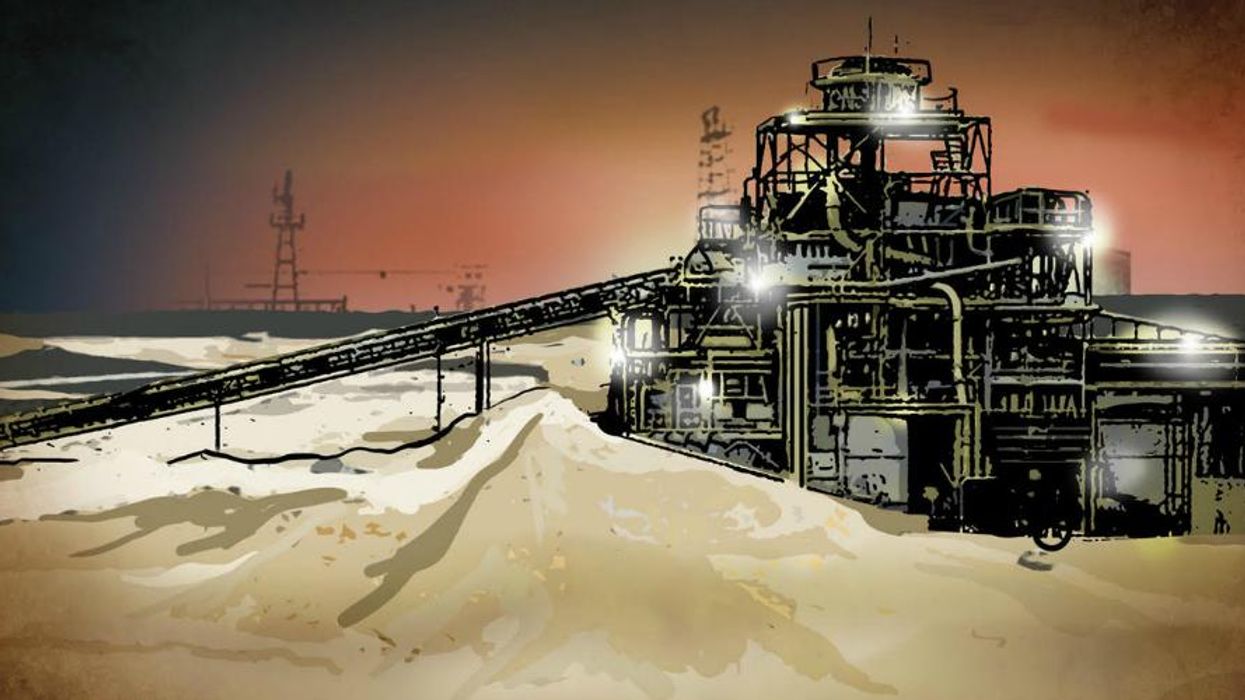
Every year, the vast majority of Ghana's natural wealth is stolen. The country is among the largest exporters of gold in the world, yet--according to a study by the Bank of Ghana--less than 1.7 percent of global returns from its gold make their way back to the Ghanaian government. This means that the remaining 98.3 percent is managed by outside entities--mainly multinational corporations, who keep the lion's share of the profits. In other words, of the $5.2 billion of gold produced from 1990 to 2002, the government received only $87.3 million in corporate income taxes and royalty payments.
Even in cases where the corruption of local governments does exist, the amount of money pilfered pales in comparison to the wealth extracted by transnational corporations.
The dominant discourse propagated by institutions like the International Monetary Fund (IMF) that control the levers of global finance blames the bad governance of local officials for the consequences of this plunder, citing corruption scandals as the main reason for a lack of resources. However, the discourse around bad governance--the idea that corrupt local officials are to blame for endemic poverty, low health indicators, education, and other measures of national well-being--focuses on what happens with the 1.7 percent of the returns that Ghana receives. Sarah Bracking points out that "the company would argue that the market value of output is not synonymous with their surplus, or profits, as working capital, wages, depreciation of machines and so forth must be paid from this. However, the figures do act as a good illustration of the low returns to the sovereign owners of sub-soil resources, as a proportion of their final market value, which, in Africa, can be estimated as typically in the region of between three and five percent, but which in this case is lower (about 1.7 percent)." Holding officials accountable for their use of public funds should be a given, but what about the remaining 98.3 percent of the returns generated by Ghana's gold exports?
Individuals are blamed, fingers angrily pointed at corrupt governments, while the nations they govern are robbed blind by transnational corporations. It is these corporations, working with institutions like the IMF and the World Bank, that define the terms of this conversation. These international lenders bury borrowing countries with steep interest rates and terms that grant lending institutions the power to determine and approve national policies.
National leaders of countries that fall into the debt trap are forced to forfeit the right to create their own policies for access to loans. These leaders are then blamed for the consequences of policies and terms crafted by lending institutions (a key form of neocolonialism). They are also blamed for the vestiges of hundreds of years of colonialism that came before.
In some cases, it is true that national leaders are involved in corruption scandals. In others, corruption scandals are fabricated, relying on a deeply embedded narrative and lack of faith in national leadership in the Global South, despite a lack of evidence (seen recently in Brazil with the imprisonment of leading presidential candidate Lula da Silva).
Even in cases where the corruption of local governments does exist, the amount of money pilfered pales in comparison to the wealth extracted by transnational corporations. In other words, robber barons are blaming petty thieves for the consequences of their large-scale robbery schemes. According to the United Nations Conference on Trade and Development (UNCTAD), multinational corporations' offshore tax hubs result in an estimated $100 billion in annual tax revenue losses for developing countries. Vijay Prashad of Tricontinental: Institute for Social Research calls this phenomenon "tax strikes," or the idea that "those who hold capital, who are the masters of property, have been--essentially--on strike against regimes of taxation. They use their vast wealth to either hide their money or change tax laws to offer them increasing protections." Rather than using this money for the social good--to invest in public services, infrastructure, health, or education--they use it to increase their own wealth, often by "inflat[ing] the stock market and various asset bubbles."
Comparatively, during a 2013 keynote address, World Bank President Jim Yong Kim cited that corruption in the form of bribery and theft by government officials costs developing countries between $20 billion and $40 billion each year. In other words, by a rough calculation, the amount that corrupt government officials cost developing countries is anywhere from 40 to 80 percent less than half of the amount that these nations lose in offshore tax havens.
The real power, then, remains in the hands of multinational corporations, which not only make off with vast sums of wealth belonging to the "darker nations," but also continue to exercise control over nations in the Global South, where they use access to finance as a lever to impose policies that benefit themselves at the expense of the people who live there.
When local leaders are deemed too much of a threat to multinational corporations' interests, they are quickly deposed through coups, as we saw in Haiti (2004) and Honduras (2009), or destabilization campaigns, as we see in Venezuela today.
When local leaders are deemed too much of a threat to multinational corporations' interests, they are quickly deposed through coups, as we saw in Haiti (2004) and Honduras (2009), or destabilization campaigns, as we see in Venezuela today. Kwame Nkrumah, a leader in Ghana's independence struggle and the country's first president, referred to this process as neocolonialism. "The essence of neo-colonialism is that the State which is subject to it is, in theory, independent and has all the outward trappings of international sovereignty. In reality its economic system and thus its political policy is directed from outside," Nkrumah wrote in his book Neo-Colonialism, the Last Stage of Imperialism. Through organizations like the IMF and World Bank, former colonialists would strive for "the general objective ... to achieve colonialism in fact while preaching independence."
Fifty-four years after Nkrumah wrote Neo-Colonialism, The Last Stage of Imperialism (1965) and 62 years after Ghana's independence from Great Britain (1957), Nkrumah's assessment remains as clear and relevant as ever. The preferred words of imperialism have shifted, but the underlying structure remains the same: a system where an illusion of freedom obscures the power relations and where monopoly capital, in the form of transnational corporations and lending institutions, exercises control over the country's economic and political reality.
The narrative of today's neocolonialists blames "bad governance" as the obstacle to a better future in which Ghanaians benefit from their vast mineral wealth, as Gyekye Tanoh of the Third World Network (Africa) points out in his recent interview with Tricontinental: Institute for Social Research. According to this trope, the corruption of local governments is to blame. However, this narrative leaves out of the picture the pillage of natural resources and exploitation of labor by colonizers (Great Britain, in the case of Ghana).
Not only were the systems to process crude forms of minerals such as oil and gold not developed by colonizers, but the country's reliance on foreign capital to buy and process these resources has kept the country in a position similar to its colonial status pre-1957, as Nkrumah predicted, where transnational corporations, rather than the state of Great Britain, keep the vast majority of revenues produced from Ghanaian gold and other resources. Tanoh explains: "[t]he entire system that was set in place since the 1980s to force countries to rely upon raw material exports and to become dependent on foreign buyers is what leaves countries like Ghana with such a minuscule amount of the wealth taken from Ghana's land. 'Good governance' is not going to solve this, unless 'good governance' refers as well to the deep structural dynamics."
Pointing a proverbial finger at those responsible for the distribution of 1.7 percent of wealth generated and framing them as the main culprits of corruption, poverty, and underdevelopment, is not just reckless and irresponsible; it is part of a systemic narrative that deflects attention away from the real thieves.
Pointing a proverbial finger at those responsible for the distribution of 1.7 percent of wealth generated and framing them as the main culprits of corruption, poverty, and underdevelopment, is not just reckless and irresponsible; it is part of a systemic narrative that deflects attention away from the real thieves: the multinational corporations that preside over the 98.3 percent of the remaining wealth. It is intellectually dishonest to ignore the broader historical context that is responsible for the low returns of Ghanaian gold to Ghanaian citizens. True bad governance is the appropriation of 98.3 percent of wealth produced by Ghanaian resources that lines the coffers of transnational corporations instead of being returned to benefit the Ghanaian people.
Of the 10 top multinational firms that operate on the African continent, only one (Vale, of Brazil) is located in the Global South. Of the remaining nine, three are United States corporations, three are Canadian, two are Australian, and one is British. All are private transnational corporations. In other words, the gold that is extracted from Ghanaian soil (like the natural wealth extracted from across the African continent and Global South) is immediately handed over to multinational corporations--almost entirely based in and controlled by the Global North (or, at best, by the national elite)--to be processed, refined, and distributed. Death, rape, and preventable illnesses that plague those who work in or live near the mines are rampant in the area where these companies operate (as illustrated by Tricontinental: Institute for Social Research's latest briefing).
Though Ghana won its independence in 1957, the vestiges of colonialism and underdevelopment did not magically leave with it. Under colonialist rule, resources were extracted from former colonies--like Ghana--to sustain the wealth of their colonizers. Wealth produced from gold (further enhanced by enslaved or bonded labor) quickly left the country, promoting development in England while leaving Ghana void of the infrastructure to develop or refine its own resources, and leaving its people without access to basic services.
To accept the narrative on bad governance is to forfeit what Fidel Castro called the Battle of Ideas. It is to let the powerful--transnational corporations, and the web of institutions that protects their interests, from the IMF to corporatized non-profits and mainstream media--define the terms of the conversation on development, sovereignty, and the lives of the people who inhabit the resource-rich land. It is to forfeit the control of Ghanaian resources to transnational corporations, the very thieves of the majority of the country's wealth, under the false pretext that they are incapable of managing it themselves. To quote Gyekye, "the language of 'good governance'... implies that it is only the aberrant behaviors of the public officials that should be seen as corruption. Yet of course the lack of resources available to accountable public institutions makes it impossible to create or sustain meaningful domestic anti-corruption mechanisms."
It is intellectually dishonest to blame local leaders as the main culprits for bad governance, conveniently leaving multinational corporations out of the picture. It is the vestiges of colonialism, and its continued neocolonialist forms, that deprive the Ghanaian people of the right to process, develop, and manage their natural wealth and to be the drivers of their own policies--in other words, their right to national sovereignty. It is transnational corporations, the stand-ins of yesterday's British empire--often aided by an enthusiastic national bourgeoisie--that have robbed the Ghanaian people of sovereignty over their resources, their wealth, and their future.
This article was produced by Globetrotter, a project of the Independent Media Institute.
Africa's climate struggles are set to take centre stage at this year's annual UNFCCC Conference of the Parties meeting from 7-18th November. Host country Morocco will see its city, Marrakesh, come to life as politicians, civil society and climate activists from all over the globe, convene to discuss climate change and its implications for developing countries. The meeting provides a critical space to engage in dialogues about tackling climate impacts while encouraging sustainable development growth alongside widespread community resilience.
Prone to relentless weather changes and warming up significantly over the last decades, Africa has been exposed to droughts and floods that severely affect agricultural productivity, escalating water and food insecurity. By 2030, water stress-related conflicts will increase and spread across the region. As hunger continues to be a reality in Southern and Eastern parts of Africa, millions are still facing the worst food crisis in years.
The Paris agreement negotiated by 196 heads of state last December is set to enter into force on November 4th, just 3 days before the start of the next UN meeting on climate change. A significant reduction in CO2 emissions worldwide is required in the next 10 to 20 years if we are to achieve the limits set out in the Paris Agreement. Development in Africa should rely on the use of renewable energy as opposed to fossil fuels. Africa can be the champion for the next industrial revolution.
COP22 should spark the energy among Africans to ignite the necessary political will, creativity and world wide economic support for adaptation measures alongside renewable energy technologies that can shape the sustainable future we all aspire for.

Africans want to see their governments put those pledges into action. Now more than ever, civil society must call on African leaders to freeze new fossil fuel projects aimed at long-term development and energy supply throughout the region.
"COP22 should spark the energy among Africans to ignite the necessary political will, creativity and world wide economic support for adaptation measures alongside renewable energy technologies that can shape the sustainable future we all aspire for."
Collectively, African states must commit to an immediate halt of all new carbon projects. Renewable energy is fast becoming a revolutionary economic force for a just transition away from fossil fuels, empowering frontline communities with apt resources to respond to the looming crisis.
We believe an African grassroots movement can hold leaders accountable to the principles of climate justice that require reparations for countries least responsible for climate change. The movement is rising from the bottom up as resilient climate warriors are coming together to champion solutions that will ensure a better future for all.
Climate change has in the last decades fast become the defining global issue of our time. Dangerously threatening the overall progress of nations and preventing them from achieving the Sustainable Development Goals (SDGs), particularly in Africa. Despite the fact that the African continent is the most affected by climate change and its impacts, Africans are courageously combating the threat.
350Africa Arab World team is focused on scaling up anti-coal campaigns in Ghana, South Africa and Kenya as well as building connections with groups in North Africa for anti-fracking campaigns. In South Africa we are extending the divestment campaign and increasing our regional presence through mobilising events on impacts and solutions.
Artivism is a mobilising tool that creatively engages and connects with people across race, religion and gender barriers. From graffiti workshops to theatre performances, 350Africa is using this empowering medium of self-expression to confront climate and social injustices.
Africa's notion of climate activism translates into peaceful actions that intensify drastic change and overall reform to existing systems. The voluntary process of signing the Paris agreements means African governments collectively are making significant strides in the global fight to prevent further calamities. But the people need to hold governments accountable for the Paris Agreement to enable the dawning of a new era where people and the planet are not held hostage by the dependency and destruction of fossil fuels.
"We, the small holder farmers, want to have good lives," says Victoria Adongo from the Peasant Farmers' Association of Ghana. "We have our seed systems that we like and are proud of. So we do not want multinational companies to come in and take over."
Not only can agroecology increase Africa's farming yields, unlike corporate-led farming, it can help farmers control their land, seeds and livelihoods, and build resilient local economies.
Adongo, speaking in Global Justice Now's new short film-- Whoever Controls Seeds, Controls the Food System--launched this week, is explaining what could be at stake if Ghana's parliament passes new seed laws backed by G8 governments. Traditionally, Ghana's farmers have saved, swapped and bred seeds to suit their local conditions over generations. Yet the proposed Plant Breeders Bill would give corporations control over new kinds of seeds. Farmers would be restricted from saving and swapping them, and many who buy them would end up in debt. Meanwhile, traditional seed varieties could be lost forever.
Ghana's Plant Breeders Bill (often referred to as 'the Monsanto law') is just one of the many new laws being pushed by the G8's New Alliance for Food Security and Nutrition across ten African countries. In return for aid and investment, African governments are reforming laws to help big businesses like Monsanto and Unilever access land, push corporate seeds and control markets in the name of tackling hunger and poverty. Yet the Peasant Farmers' Association of Ghana are one of nearly a hundred farmer and campaign groups around the world to renew their call this week to governments to end their support for the initiative. The call comes at the same time as the politicians and agribusiness representatives come together for a secretive meeting of the New Alliance in Cape Town ahead of the G8's Leadership Council at the beginning of June. The groups claim that the New Alliance and other programs "facilitate the grabbing of land and other natural resources, further marginalize small-scale producers, and undermine the right to adequate food and nutrition."
In stark contrast to the fanfare with which the New Alliance was launched in 2012, G8 countries including the US and the UK have gone notably quiet on their support for the initiative in the last year. With reports of the farming communities being hit hard by new laws and corporate investments associated with the initiative, it seems the G8 are more cautious to sing its praises. In January, a report co-published by Global Justice Now exposed how farmers in Nigeria's Taraba State are resisting a land grab by US company Dominion Farms. As part of Nigeria's New Alliance agreement backed by the US and UK governments, Dominion Farms are planning to establish a 30,000 hectare rice plantation that will displace farmers who have worked the land for generations. The community has yet to receive any proposals for compensation or resettlement.
Then in March, Action Aid released a report detailing the impacts of a New Alliance-backed investment by EcoEnergy on communities in Bagamoyo, Tanzania. EcoEnergy project has been held up as a flagship investor under the New Alliance and the G8-backed Southern Agricultural Corridor of Tanzania (SAGCOT), a scheme to help corporations including Monsanto, Unilever and Nestle access resources across 350,000 hectares of prime farming land. With land grabs under fire from farmers and NGOs, G8 states have been keen to champion outgrower schemes like EcoEnergy's that contract farmers to grow produce for corporate processing and export instead of buying up land directly. Yet Action Aid's report shows that farmers working on the scheme are being pushed into dangerous levels of debt and the company appears to have vastly over-estimated its financial benefit to the local population. Meanwhile, farmers who have been displaced by the scheme are getting little choice in where they are resettled.
All this follows three years in which the New Alliance has struggled to show its positive impact. The program's latest progress report didn't indicate any impact on poverty or food security, and highlighted that many corporations were failing to report on their benefits for local communities. In May, the UK's Independent Commission for Aid Impact claimed that programs including the New Alliance "can serve as little more than a means of promotion for the companies involved and a chance to increase their influence in policy debates." In other words, the PS600 million of aid money that the UK has poured into the New Alliance has been spent subsidising the publicity campaigns of the multinational corporations involved in the scheme.
Yet with the case against the New Alliance strengthening, the looming threat of Ghana's seed law shows that, without action, the program will continue to hit farmers hard. Global Justice Now is among many voices calling on our governments for a radical change in the way we support better food systems. Small-scale farmers are the main investors in African farms, and feed 70% of the continent. Our recent report--From the Roots Up: How Agroecology Can Feed Africa--shows how with the right support, these farmers can use their own solutions to sustainably feed their communities, free from corporate control. Not only can agroecology increase Africa's farming yields, unlike corporate-led farming, it can help farmers control their land, seeds and livelihoods, and build resilient local economies. The New Alliance is on shaky ground - it's time to call for change.
"Is it all right to say that?" He said this looking at me questioning.
"Yeah, yeah it's all right", I responded - even though I hadn't quite heard what he had said.
"Ah. I was asking because Ghanaians can get very defensive." Now he had my full attention.
"Yes", I agreed. "We get defensive because people like you come here and just spend all your time criticizing us. If Ghana was such a bad place would you have come here?"
He responded: "This is exactly what I'm talking about. You're getting defensive now". The conversation fizzled to a stop, and the American man walked away.
"Americans are being deceived. They are being told that they are the good guys, which is why they go into wars. But they do not fight wars in countries where there is no money to be made."While talking to Americans and other expatriates, I've found myself playing the role of the defensive Ghanaian - a role I hate being cast in - a few too many times for my liking. A few weeks ago an American woman I had recently met invited me to a girls night out. The venue was a private bar in one of Accra's recently constructed ultra-modern block of flats.
Before I entered the premises, the security guard had to call and make sure I was expected. I didn't blame him. I don't think anyone with the type of car I drive lives in a flat like that. The girls I ended up hanging out with that night were American and British. Somehow the conversation turned to a discussion about the attitudes of Ghanaian employees. As the only person in the group who was seen as "authentically Ghanaian", the others seemed to be looking to me as some sort of expert.
One American woman said, "there is no local talent. Companies are dying to hire local talent and they can't find anyone". I was shocked. I thought of all the "smart, local talent" in my networks and couldn't help but say, "Well you know people tend to hire people within their networks. Maybe you are just not plugged into the right networks". One or two other women nodded knowingly, and then another American woman said, "Well I think that we don't respect local talent. My company pays Ghanaians very little but the American expats get great salaries, with accommodation and other perks".
When I was in 6th form my dream was to attend an Ivy League university in the United States. That was also the dream of virtually every other student in my 6th form college. A few of us succeeded in making that dream come true.
Others made it to lesser-known colleges in the States, while a few others continued their education in other parts of the world. Needless to say, the word "privileged" was an accurate description of many of my schoolmates and I.
In my adult years, I've had several opportunities to visit the US - New York, Atlanta, Washington, Maryland, Florida and Massachusetts - and it didn't take me too long to realize that America wasn't the land with streets paved of gold that the 18-year-old me had thought it was. Some parts of America looked downright horrible. I didn't recall that being portrayed in any of the American movies I had seen at the time. And the one time I ventured to take public transport in Tampa, Florida, I had to wait over an hour for a bus, whereas in Ghana a trotro would have whizzed by every five minutes. Suddenly, America didn't seem "all that" to me, and definitely not the land of gold that I, and many Ghanaians, had grown up dreaming about.
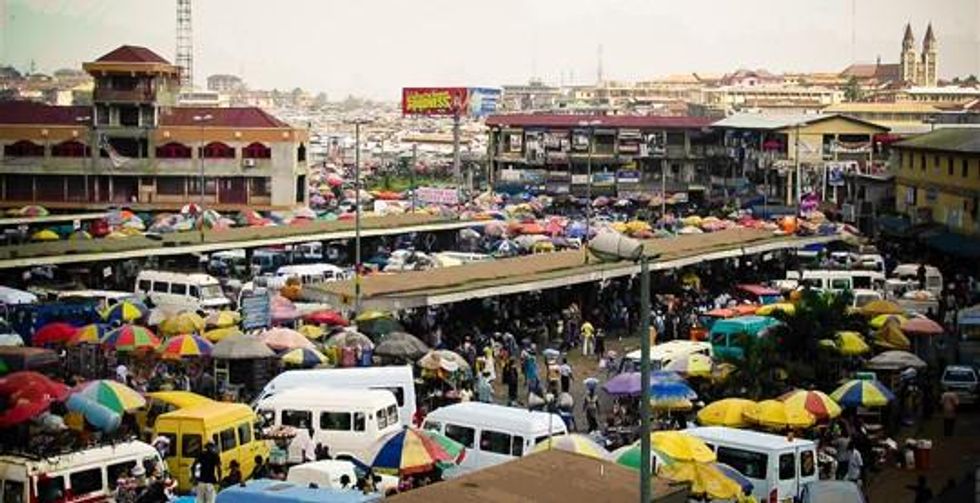
Fast-forward to 2013 and Accra is now full of Americans (and other non-Ghanaians) who live in the posh parts of the city - Cantonments, Labone, Airport Residential - cheek by jowl with communities that border these rich areas including Nima and Labadi. Rent in Accra's exclusive residential communities are quoted in USD with landlords demanding at least a year's rent upfront.
Some of the Americans here are expatriates - they get paid in dollars, have their rent covered by their employers and get to fly home for holidays. Some have Ghanaian or African-American heritage. They are here to "discover" their roots, and are searching for a sense of belonging.
This latter group tends to "hustle" more than the expatriates - they also deal with "lights off" (electrical load shedding outages), "water shortage" and take trotros. Yet they also share commonalities with the expats - they don't understand the Ghanaian.
They look to Ghanaians like myself to translate the "ordinary Ghanaian" for them, and that drives me up the wall. I can sense that, to them, I am the "acceptable Ghanaian", the one who is well traveled and for that reason recognized as a "local talent".
There is an upside to having traveled, such as developing the ability to recognize the many sides of a prism. For me, this can mean seeing Americans not as the saviors of the world as the American movie industry - a prominent source for cultural perceptions of Americans - inevitably portrays, but as people who collectively exert incredible power and privilege in other parts of the world.
Part of this power is demonstrated in America's role as the "world's policeman". In this context the popular Ghanaian musician Wanlov, one half of the FOKN Bois who made the tongue in cheek song, "Help America", says:
Americans are being deceived. They are being told that they are the good guys, which is why they go into wars. But they do not fight wars in countries where there is no money to be made.
One has only to drive past the US Embassy in Cantonments, Accra, to see the disconnect from America's disconnect from the less-affluent world: with people sitting at a nearby roundabout on conveniently placed tree stumps, under Ghana's scorching sun.
These are invariably people waiting for their visa appointments - with visas costing $160 USD and upwards, virtually equal to the minimum wage of GHC 350. The vast majority of these visa applicants will be refused under Section 214b, part of the United States Immigration and Nationality Act which states:
Every alien shall be presumed to be an immigrant until he establishes to the satisfaction of the consular officer, at the time of application for admission, that he is entitled to a non-immigrant status ...
Most Ghanaians are unable to prove their intention not to immigrate to the consular officers.
For many Ghanaians, especially those from lower socio-economic backgrounds who do not get the chance to travel far outside of their countries borders, consular officers and expatriates may be the only Americans who they directly interact with and determine what they think of the wider American populace: arrogant, rude and disrespectful. This is far from what foreigners tend to associate with their positive expectations of Ghanaians: "hospitable", "welcoming", and "friendly" - unless, of course, the Ghanaians stand up for themselves and their country, garnering the label "defensive".