

SUBSCRIBE TO OUR FREE NEWSLETTER
Daily news & progressive opinion—funded by the people, not the corporations—delivered straight to your inbox.
5
#000000
#FFFFFF
To donate by check, phone, or other method, see our More Ways to Give page.
Daily news & progressive opinion—funded by the people, not the corporations—delivered straight to your inbox.
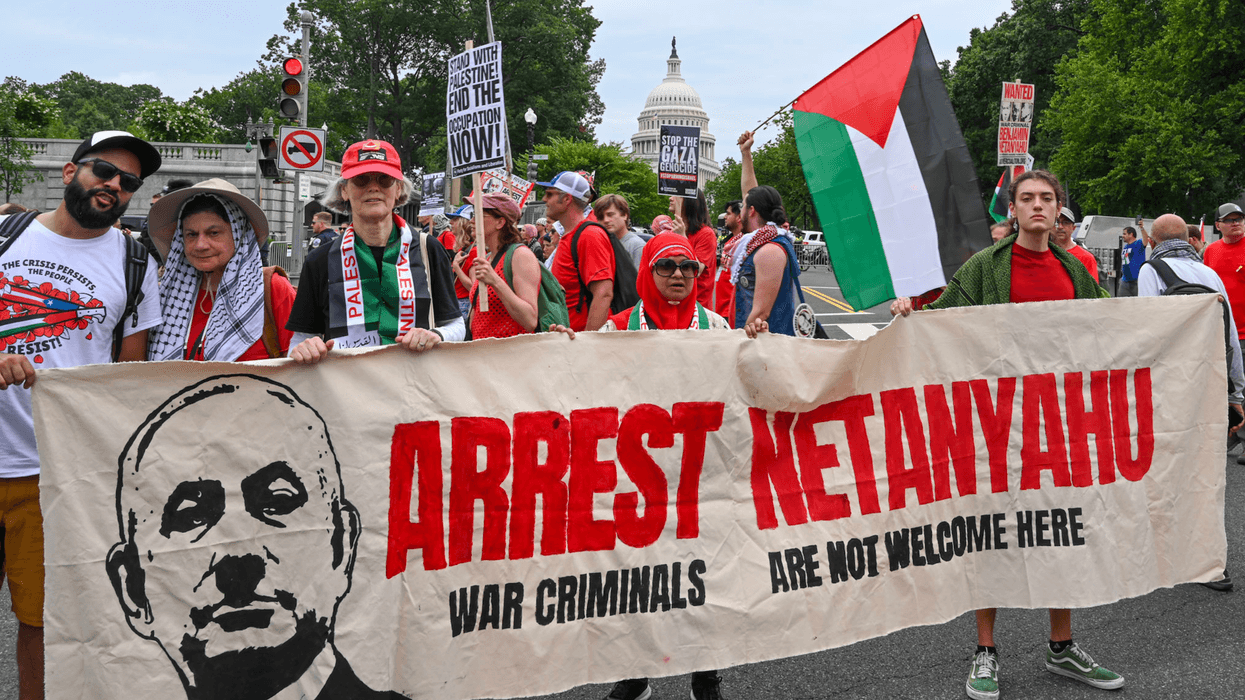
Recent election cycles represented the first time in modern American history where Palestine factored as a major, decisive variable in how citizens cast their ballots.
A major showdown on the House floor seemed imminent. An amendment, advanced by the Rules Committee, was poised to force a rare and telling record vote on stripping Israel of $3.3 billion in annual US military aid.
Brought forward by Republican Rep. Thomas Massie (Ky.) and drawing support from key progressive Democrats like Alexandria Ocasio-Cortez (NY) and Greg Casar (Texas), the measure was set to put every lawmaker's stance on unconditional foreign assistance under a public microscope.
However, the high-stakes vote never actually happened. On June 30, the entire legislative package collapsed under the weight of Washington's internal political warfare. In a dramatic procedural twist, a coalition of Democrats and disgruntled conservative Republicans voted down the mandatory "rule" required to even begin debating the underlying State Department spending bill.
But even if the vote on Massie's amendment had occurred, the result would have been entirely predictable. It would have been defeated, as support for Israel on both sides of the congressional aisle remains structurally entrenched—even as the American public shifts against Israeli policy in historic numbers.
The strategic focus must remain on reaching out to the public, who hold the true power to influence—and even coerce—politicians into making the right choices.
According to a watershed Gallup poll published on February 27, a plurality of Americans now sympathize more with the Palestinians than the Israelis, leading by a margin of 41% to 36%. This marked the first time since Gallup began tracking the metric over two decades ago that Israel did not hold the upper hand in public sympathy.
Yet the shift is part of a broader, undeniable trend. A nationwide survey published in late June 2026 by Quinnipiac University revealed that an unprecedented 48% of American voters now think the United States is “too supportive” of Israel—the highest percentage recorded since the pollster first began tracking the question in 2017.
This is precisely why Massie's amendment carries such profound weight. It is significant not because US politicians have suddenly developed a collective moral conscience, but because recent election cycles represented the first time in modern American history where Palestine factored as a major, decisive variable in how citizens cast their ballots.
For years, conventional political analysts dismissed pro-Palestinian mobilization, claiming Americans only vote based on immediate socioeconomic interests and rigid party loyalties. That assessment has since proven faulty.
The political cost of Washington's complicity became undeniable following the fallout of the 2024 presidential race, a reality later confirmed by those within the inner sanctums of power. In the post-election debates, senior administration insiders admitted that the handling of the Gaza genocide alienated core voter blocks.
The political cost of Washington's complicity became undeniable after the 2024 presidential race. According to Axios, top Democratic strategists conducting the party's post-election audit explicitly admitted to advocacy groups that internal party data proved the administration's Gaza policy was a "net-negative" on the ballot.
This finding—disclosed during internal briefings by Democratic National Committee autopsy author Paul Rivera—confirmed that the party's unconditional backing of Israel directly fractured its base, and ultimately contributed to its loss of the elections.
The upcoming November elections are expected to be fiercely contested, and Gaza will, once more, be on the ballot. Following a series of progressive, anti-war victories in local primaries, The Guardian reported that US foreign policy toward the conflict has effectively "turned into something of a litmus test for the left."
This historic transformation in the popular American perception of Palestine and Israel does not indicate that a political rupture is soon to follow, as US politicians are notorious for their moral flexibility and their ability to spin language in whatever way is necessary to remain in power.
Indeed, the evolution of the language used by Rep. Alexandria Ocasio-Cortez regarding the word "genocide" in Gaza tells the entire story of how the Democratic establishment is never compelled by genuine moral urgency, but rather by sheer political expediency.
In the early months of the genocide, Ocasio-Cortez hesitated to adopt the term, acutely aware of the deep sensitivities surrounding such language in US media and mainstream society.
"The fact that this word is even in our discourse... demonstrates the mass inhumanity that Gaza is facing," she stated, attempting to navigate an acceptable rhetorical middle ground in January 2024 during an appearance on NBC's "Meet the Press."
Yet, under the relentless weight of pressure from an increasingly mobilized progressive constituency, she systematically upgraded her language in March of the same year, declaring on the House floor: "If you want to know what an unfolding genocide looks like, open your eyes. It looks like the forced famine of 1.1 million innocents."
This linguistic shift continued to intensify until it reached the Munich Security Conference last February, where Ocasio-Cortez finally deployed the term without any qualification. Unconditional US aid, she flatly argued, "enabled a genocide in Gaza."
Ocasio-Cortez is just one of many Democratic progressives who carefully filtered their vocabulary to avoid the political fallout of using the term genocide too early, or too late. Her position was eventually corrected not because of a sudden moral awakening or the discovery of new information regarding the "unfolding genocide," but because the margins of error allowed by a newly conscious American public have completely closed.
Therefore, the strategic focus must remain on reaching out to the public, who hold the true power to influence—and even coerce—politicians into making the right choices.
Ultimately, the current movement serves as a crucial barometer, proving that sustained, grassroots, anti-war pressure is successfully destabilizing Israel's traditionally unquestioned shield in Washington.
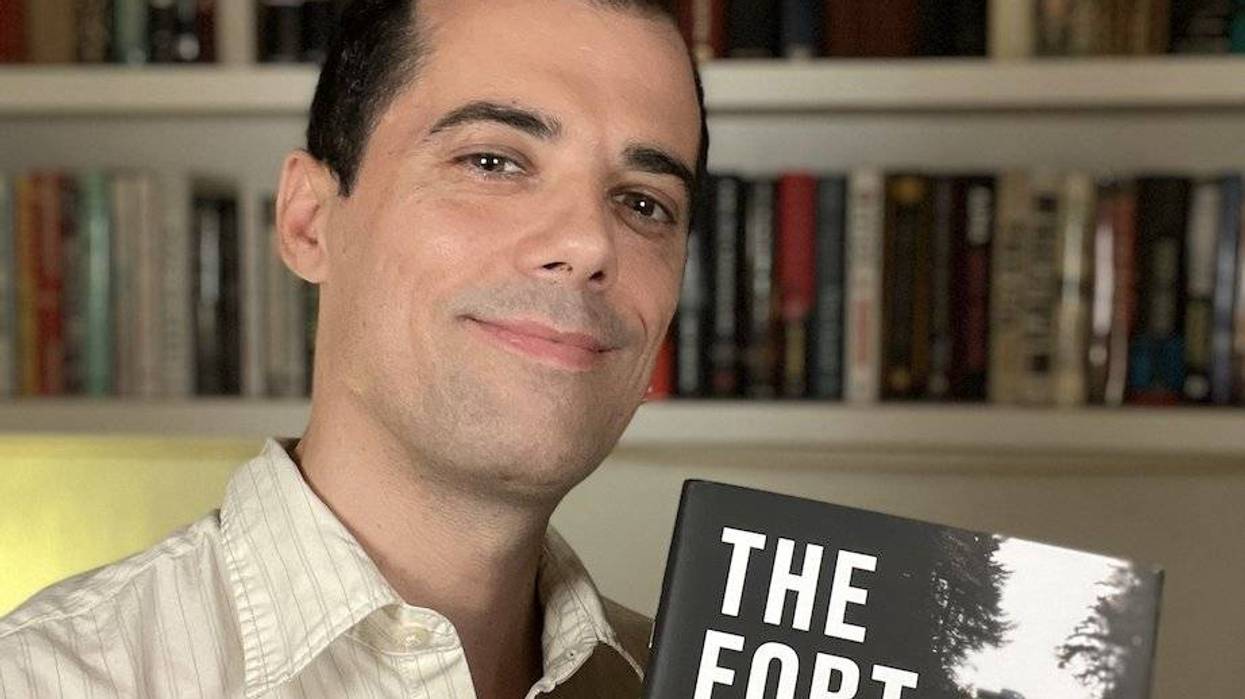
"I think the US is only the latest in a very long history of military empires," he told Common Dreams. "This is a perspective to which New York Times readers are rarely exposed."
Investigative journalist Seth Harp has accused the New York Times of burying his interview with a prominent opinion columnist. He told Common Dreams that the paper is trying to silence his forceful critiques of US foreign policy.
In a post on social media Thursday, Harp blasted Ross Douthat, a conservative opinion columnist for the paper, after learning that a conversation the two had recorded last month had been cut.
“Ross Douthat challenged me to a debate on foreign policy,” Harp wrote. “We recorded a 90-minute segment for his show, Interesting Times, on January 15, 2026. But I defeated him so decisively that he refuses to air the footage. What an absolute coward.”
According to Douthat, the conversation between the two was “pegged to the Delta Force raid in Venezuela,” referring to President Donald Trump’s operation last month, which overthrew the South American nation’s president, Nicolás Maduro.
Though Trump himself has plainly stated that his goal was to forcibly open the nation’s vast oil reserves to be taken over by US corporations, the administration has papered over this nakedly imperialist justification with dubious claims that Maduro was at the helm of a multinational narcotics trafficking ring. Maduro has pleaded not guilty to related charges in US court.
This was where, Douthat said, Harp’s perspective was relevant. His recent Times bestselling book, The Fort Bragg Cartel, examines the long history of the US Army Special Forces’ own history of international drug trafficking, which culminated in a series of unsolved murders at the titular Army installation in North Carolina.
The day after US forces bombed Caracas in the January operation, which is estimated to have killed as many as 83 people—including dozens of civilians—Harp posted a photo of one of the Delta Force commanders who played a key role in the attack. For this, he was subpoenaed by the Republican-led House Oversight Committee, which accused him of “leaking classified intel” and “doxing” the official, even though the information was already publicly available.
According to Harp, the conversation was cordial at first but became prickly when the two began to discuss the recent attack on Venezuela.
"Again and again he tried to box me in with some kind of gotcha," Harp said. "For example, he sprung on me that I'd called Nicolás Maduro the 'rightful' president of Venezuela, and tried to make the discussion about the last election in Venezuela and abuses by the government security forces there."
"I replied that Maduro was the rightful president of Venezuela simply because he became president through Venezuela's own internal political processes, and that the US has no right to dictate to other countries who their leaders should be," he said. "Douthat had no response to that and appeared visibly thrown off balance. It was as if he had never encountered a real anti-imperialist critique of US foreign policy and was only prepared to deal with some weak sauce humanitarian liberal critique, which I'm not about."
Harp said the discussion also encompassed many other foreign policy topics, including “Israel’s genocide in Gaza, the war in Ukraine, the post-9/11 wars, and American military interventions since 1945 more broadly.”
He added that the pair “also discussed the methods by which these interventions were accomplished, specifically the use of large conventional armies versus special forces and proxies,” and that they “talked a lot about China and Russia, too.”
“I served in the military and have spent my entire adult life thinking and writing about these issues,” said Harp, an Army veteran. “My basic argument was that the United States has been so violent and aggressive since World War II that it has not only destabilized the entire world but also destroyed our own country from the inside, materially and politically.”
“Ross’ basic point of view was that while the US has done terrible things and killed millions of people in recent years, the world is a better place as a result of American hegemony,” Harp continued. “But his grasp on historical facts was so weak that he was unable to make a strong argument.”
“He frequently became confused and contradicted or reversed himself,” Harp explained. “Frustrated at his own befuddlement, he blew up and said: ‘We get it. You think the United States is uniquely evil.’”
Within days of the interview, Harp expressed fears that the Times might decide not to release it. On January 20, five days after his sit-down with Douthat, he wrote to one of his editors.
“I was somewhat surprised that Ross wasn’t better prepared to defend his point of view,” he said, according to a message he made available on social media. “They may decide to spike it; we’ll see.”
About three weeks after the conversation and after weeks of silence from the Times, Harp received a text message from one of the show’s producers, who told him, “We aren’t going to be able to make it work.”
“We were kind of pummeled by the news cycle in the last six weeks and are going to pivot away from this story,” the producer explained in the text message exchange.
“I had canceled a vacation to do the show in studio,” Harp told Common Dreams. “Twice they changed the date on me, so I was kept waiting for two weeks. Then, after they spiked the episode, they didn’t even bother to inform me. I didn’t learn about it until three weeks later, when I reached out to the producer. At that point, I asked for Ross’ email address so that I could speak to him about it directly and in private. The producer refused to put me in touch.”
Harp responded to the message, calling it “unbelievable cowardice on Ross’ part and a giant waste of my time.” He said he was going to “make it known what actually happened: Ross challenged me to a debate on foreign policy, got crushed, and doesn’t have the intellectual or journalistic integrity to air the footage.”
He later posted the text exchange to social media. He told Common Dreams he chose to go public because he “felt deeply offended by [The Times'] complete disrespect for my time and lack of professional courtesy.”
hey @DouthatNYT, release the debate ya coward https://t.co/2eMysOn4nn
— Nathan J Robinson (@NathanJRobinson) February 6, 2026
ross douthat has no time for a foreign policy discussion with seth harp but loads of time for this misogynistic culture war slop… https://t.co/ZIZDqTy8Kc pic.twitter.com/SaCkE3OMkV
— Erin Overbey (@erinoverbey) February 7, 2026
Harp's publication of the messages on social media resulted in a wave of backlash from others in the media, who accused Douthat of cowardice and the Times of burying the interview to protect him from embarrassment.
On Thursday, Douthat issued a response on social media.
Though the debate was recorded less than two weeks after Trump’s raid, he said the interview “had missed the ideal spot in the news cycle” for a conversation about Venezuela. He also said the interview, which he wanted to keep narrowly focused on Harp’s reporting about drug-dealing in the Special Forces, “became unmoored from Mr. Harp’s specific reporting in a way that undermined the first half of our conversation.”
“Interesting Times is a show where I try to give a lot of space to the guest’s perspective while posing challenging questions, creating episodes where the audience gets the best version of an idea or worldview that they might not have understood before,” Douthat continued.
Harp called this justification “hogwash,” pointing out that three of the most recent episodes of his show address such timely issues as the end of Roe v. Wade, questions about public trust after the Covid-19 pandemic, and church attendance statistics among young men.
“Anyone can look at your recent episodes and see that a debate between us on the US military and foreign policy would have been far more timely and relevant to the news cycle than any of them,” Harp wrote.
Douthat, one of the many Times columnists who enthusiastically supported the Bush administration’s War in Iraq more than two decades ago, has often given his platform to unapologetic supporters of US foreign military interventions.
The first interview he published after Trump’s Venezuela operation was a conversation titled “A Defense of US Intervention in Venezuela,” in which he hosted the notorious war hawk Elliott Abrams, who served as special envoy to Venezuela during Trump’s first term.
The neoconservative policy adviser, who’d previously worked for Presidents George W. Bush and Ronald Reagan. During that time, he championed US support for anti-communist death squads and dictators across Latin America and was later convicted for his participation in the Iran-Contra affair.
Douthat largely agreed with Abrams on the moral justifications for regime change in Venezuela, though he questioned the operation’s effectiveness in bringing about democracy.
Harp said that during their conversation weeks later, he disputed Douthat’s “sarcastic outburst,” accusing him of portraying America as a unique evil.
“I don’t think the US is unique or evil,” he told Common Dreams. “I don’t think in those sorts of religious terms. Rather, I think the US is only the latest in a very long history of military empires, but that its marriage to extractive capitalism makes it exceptionally violent, unstable, and short-lived.”
“This is a perspective to which New York Times readers are rarely exposed,” he went on. “It was an interesting and entertaining discussion all around, and no doubt would have garnered far more views than anything else that Ross has published recently. Sadly, Ross’ ego was a little battered.”
“I had tried to go easy on him as an interlocutor, not pointing out, for example, that I personally fought in the Iraq War while he merely promoted it in the pages of the National Review, even though both of us were of military age in the early 2000s,” he said. “I had kept it all above the belt and never attacked him personally. But I had laid bare the shallowness and inconsistency of his views on foreign policy.”
“Another pundit or host would have had the intellectual and journalistic integrity to publish the interview anyway,” he said. “Not Ross.”
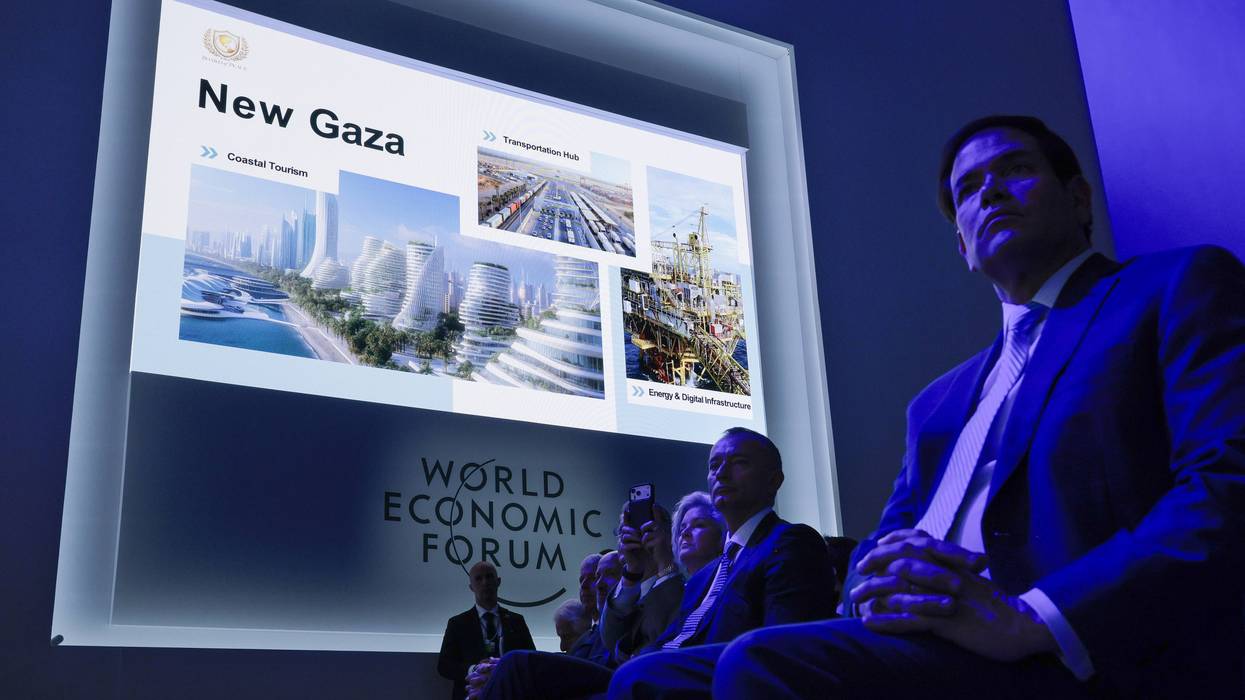
When existing international mechanisms fail to serve US political objectives, new structures are invented; old ones are bypassed; and power is reasserted under the guise of peace, reform, or stability.
The history of American power is, in many ways, the history of reinventing rules—or designing new ones—to fit US strategic interests.
This may sound harsh, but it is a necessary realization, particularly in light of US President Donald Trump’s latest political invention: the so-called Board of Peace.
Some have hastily concluded that Trump’s newest political gambit—recently unveiled at the World Economic Forum in Davos—is a uniquely Trumpian endeavor, detached from earlier US foreign policy doctrines. They are mistaken, misled largely by Trump’s self-centered political style and his constant, though unfounded, claims that he has ended wars, resolved global conflicts, and made the world a safer place.
At the Davos launch, Trump reinforced this carefully crafted illusion, boasting of America’s supposed historic leadership in bringing peace; praising alleged unprecedented diplomatic breakthroughs; and presenting the Board of Peace as a neutral, benevolent mechanism capable of stabilizing the world’s most volatile regions.
What is truly extraordinary is that even in its phase of decline, the United States continues to be permitted to experiment with the futures of entire peoples and regions.
Yet a less prejudiced reading of history allows us to see Trump’s political design—whether in Gaza or beyond—not as an aberration, but as part of a familiar pattern. US foreign policymakers repeatedly seek to reclaim ownership over global affairs; sideline international consensus; and impose political frameworks that they alone define, manage, and ultimately control.
The Board of Peace—a by-invitation-only political club controlled entirely by Trump himself—is increasingly taking shape as a new geopolitical reality in which the United States imposes itself as the self-appointed caretaker of global affairs, beginning with genocide-devastated Gaza, and explicitly positioning itself as an alternative to the United Nations. While Trump has not stated this outright, his open contempt for international law and his relentless drive to redesign the post-World War II world order are clear indicators of his true intentions.
The irony is staggering. A body ostensibly meant to guide Gaza through reconstruction after Israel’s devastating genocide does not include Palestinians—let alone Gazans themselves. Even more damning is the fact that the genocide it claims to address was politically backed, militarily financed, and diplomatically shielded by successive US administrations, first under Joe Biden and later under Trump.
It requires no particular insight to conclude that Trump’s Board of Peace is not concerned with peace, nor genuinely with Gaza. So what, then, is this initiative really about?
This initiative is not about reconstruction or justice, but about exploiting Gaza’s suffering to impose a new US-led world order, first in the Middle East and eventually beyond.
Gaza—a besieged territory of just 365 square kilometers—does not require a new political structure populated by dozens of world leaders, each reportedly paying a billion-dollar membership fee. Gaza needs reconstruction, its people must be granted their basic rights, and Israel’s crimes must be met with accountability. The mechanisms to achieve this already exist: the United Nations; international law; longstanding humanitarian institutions; and above all the Palestinians themselves, whose agency, resilience, and determination to survive Israel’s onslaught have become legendary.
The Board of Peace discards all of this in favor of a hollow, improvised structure tailored to satisfy Trump’s volatile ego and advance US-Israeli political and geopolitical interests. In effect, it drags Palestine back a century, to an era when Western powers unilaterally determined its fate—guided by racist assumptions about Palestinians and the Middle East, assumptions that laid the groundwork for the region’s enduring catastrophes.
Yet the central question remains: Is this truly a uniquely Trumpian initiative?
No, it is not. While it is ingeniously tailored to feed Trump’s inflated sense of grandeur, it remains a familiar American tactic, particularly during moments of profound crisis. This strategy is persuasively outlined in Naomi Klein’s The Shock Doctrine, which argues that political and economic elites exploit collective trauma—wars, natural disasters, and social breakdown—to impose radical policies that would otherwise face public resistance.
Trump’s Board of Peace fits squarely within this framework, using the devastation of Gaza not as a call for justice or accountability, but as an opportunity to reshape political realities in ways that entrench US dominance and sideline international norms.
This is hardly unprecedented. The pattern can be traced back to the US-envisioned United Nations, established in 1945 as a replacement for the League of Nations. Its principal architect, President Franklin D. Roosevelt, was determined that the new institution would secure the structural dominance of the United States, most notably through the Security Council and the veto system, ensuring Washington’s decisive influence over global affairs.
When the UN later failed to fully acquiesce to US interests—most notably when it refused to grant the George W. Bush administration legal authorization to invade Iraq—the organization was labeled “irrelevant”. Bush, then, led his own so-called “coalition of the willing,” a war of aggression that devastated Iraq and destabilized the entire region, consequences that persist to this day.
A similar maneuver unfolded in Palestine with the invention of the so-called Quartet on the Middle East in 2002, a US-dominated framework. From its inception, the Quartet systematically sidelined Palestinian agency, insulated Israel from accountability, and relegated international law to a secondary—and often expendable—consideration.
The method remains consistent: When existing international mechanisms fail to serve US political objectives, new structures are invented; old ones are bypassed; and power is reasserted under the guise of peace, reform, or stability.
Judging by this historical record, it is reasonable to conclude that the Board of Peace will eventually become yet another defunct body. Before reaching that predictable end, however, it risks further derailing the already fragile prospects for a just peace in Palestine and obstructing any meaningful effort to hold Israeli war criminals accountable.
What is truly extraordinary is that even in its phase of decline, the United States continues to be permitted to experiment with the futures of entire peoples and regions. Yet it is never too late for those committed to restoring the centrality of international law—not only in Palestine, but globally—to challenge such reckless and self-serving political engineering.
Palestine, the Middle East, and the world deserve better.
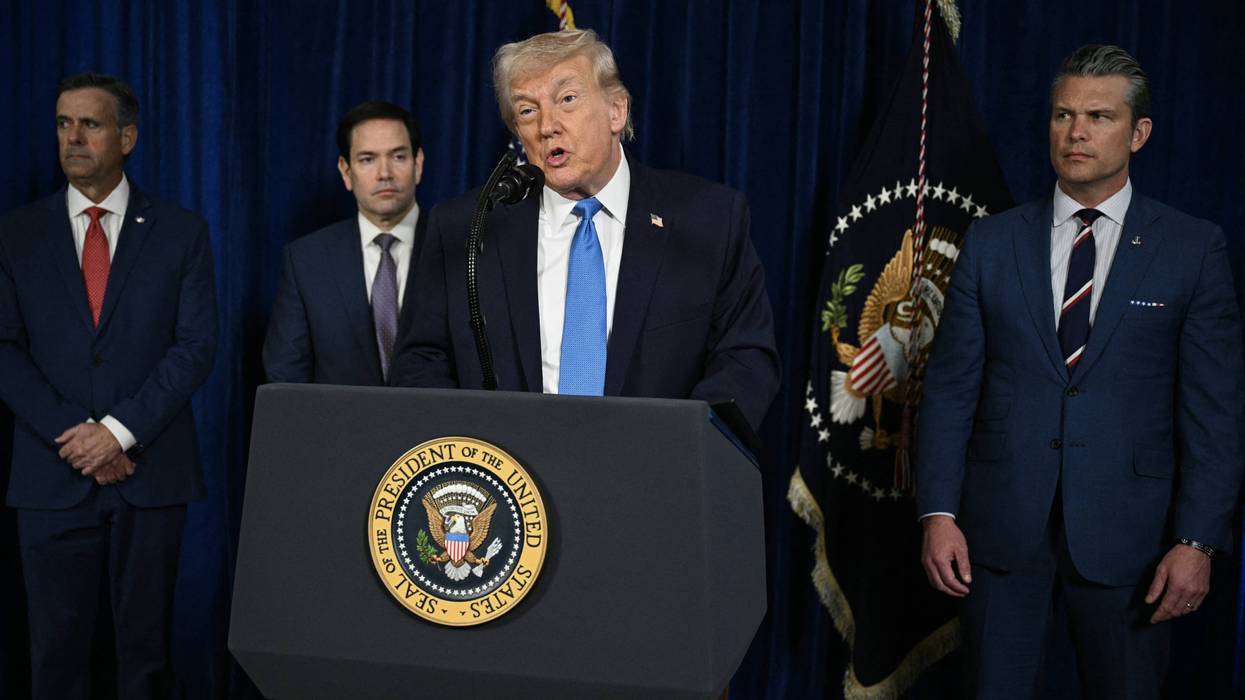
Trump has stated openly that his vaunted unpredictability is a tactic to keep his enemies off guard, but his erratic behavior gets in the way of planning, heightens distrust, and serves as an incentive for other nations to spend more on defense.
In Charlie Chaplin’s 1940 masterpiece The Great Dictator, there is a scene in which his character “Adenoid Hynkel,” ruler of the antisemitic and fascistic nation named “Tomania,” dreamily juggles a huge balloon painted as a globe—until it bursts. Should our balloon burst, and the possibility is becoming ever greater, the consequences will dwarf anything that Charlie might have imagined.
Since the start of Donald Trump’s second term in 2025, his cult of the personality picked up steam. The Kennedy Memorial Center for the Performing Arts has been renamed the Trump Kennedy Center. The president’s name also graces the new $300 million ballroom at the White House and various other Washington buildings. In this vein, he has also called for the construction of a new “Arc de Trump,” and—significantly—plastered his moniker on a new class of Navy battleships.
On the campaign trail, Trump had promised there would be no new wars and that the United States would no longer serve as the “world’s policeman.” But we should have seen what was coming. Glimpses of the future were already apparent when the president changed the “Gulf of Mexico” into the “Gulf of America,” demanded that Denmark surrender Greenland to the United States, and called upon Canada to become our 51st state. Nor was that all. Trump renamed the Department of Defense the Department of War and, despite the cost-cutting frenzy led by Elon Musk’s Department of Government Efficiency, he successfully pressured Congress into passing the first $1 trillion military budget in American history.
Trump’s crass public campaign for the Nobel Prize failed. An Israeli Peace Prize and another from soccer’s FIFA governing body, both hastily created for Trump, proved merely embarrassing substitutes. His attempts to coerce peace in the Russia-Ukraine War had been unsuccessful. The Gaza ceasefire was appearing increasingly fragile, and it was clear that the president had stoked international tensions with his strangely miscalculated tariff policy.
Trump’s actions normalize contempt for international law, rights of national self-determination, and sovereignty.
Trump claims that he has ended more than eight wars all over the globe. But the statement is thin on evidence, whereas it is abundantly clear that the United States was involved in 622 air and drone strike across seven countries in 2025: Afghanistan,, Iran, Iraq, Nigeria, Somalia, Syria, Venezuela, and Yemen. The president has never been a staunch advocate of international law or human rights. To the contrary: Trump stated quite openly that he recognized no constraint on his international decision-making authority other than his own “morality,” which should have surprised no one.
As 2026 begins, the president has taken over Venezuela, kidnapped its president, Nicolás Maduro, and his wife, Cilia Flores, charging them with “narco-terrorism.” To achieve these ends, the United States launched 22 strikes that killed 110 people, murdered sailors seeking to surrender, and shelled vessels without first determining whether they were actually carrying drugs. Nor did Congress approve Trump’s act of war; it was not even briefed. The enterprise was instead prepared by Trump and a few close advisers in consultation with oil company executives; indeed, this was a war waiting for an excuse to wage it.
Why did Trump do it? The president needed something dramatic in the face of slipping poll numbers, mumblings of discontent among a few supporters, the mess surrounding the Epstein files, the anger resulting from an economic “affordability” crisis, changes in healthcare that put millions at risk, and the growing repulsion against the storm-trooper tactics of Immigration and Customs Enforcement against immigrants. In 2024, moreover, Trump had demanded that oil companies and the energy sector donate $1 billion to his campaign. They gave him $75 million. Corporations always expect something for their money, and perhaps providing them with a profitable surprise would make them more generous the next time around.
Given Trump’s desire to recreate a past golden age, it made sense for him to justify his Venezuelan policy by invoking the Monroe Doctrine of 1823. This seminal document of American diplomatic history warned foreign powers against interfering in the Western Hemisphere, and contributed to the belief that Central and South America constituted the United States’ sphere of influence. However, Trump gave it a radical twist by declaring that the United States would “run” Venezuela until an “acceptable” sovereign is installed and for now, under his stewardship, the United States would “indefinitely” control sales of its oil and minerals on the open market.
This he calls the “Donroe” Doctrine. Justifications are of secondary importance. He insisted that the Maduro regime was an agent of “narco-terrorism,” which dominated fentanyl smuggling operations, but it turned out that Venezuela was responsible for only about 5% of the fentanyl entering the United States. Trump then changed the narrative by claiming that Maduro was the mastermind behind the cocaine plague, and when that accusation fell flat, he shifted it again by condemning him as a war criminal for possessing weapons of mass destruction.
Americans cheer interventions when they begin, but quickly grow weary when the price comes due. And invading Venezuela might prove to be a high price to pay. There are striking similarities with the plans laid bare in Venezuela and the American invasion of Iraq in 2003. In both cases, there was the lure of oil, a murderous dictator to overthrow, an exaggerated “existential” threat, an arrogant conviction the citizenry of another country would welcome American “liberators” with open arms, and disregard for the chaos that reckless regime change would generate.
Maduro’s regime was authoritarian, brutal, corrupt, and incompetent. But Trump’s actions normalize contempt for international law, rights of national self-determination, and sovereignty. Indeed, calling his overthrow an international police action against narco-terrorism doesn’t change that reality. Arbitrarily snatching world leaders creates widespread fear and destruction and contributes to creating a politics based on the “war of each against all’ that Thomas Hobbes feared above all else, if only because it heightens instability
As became clear in Afghanistan, Iraq, and Libya, to leave a nation without a sovereign is to condemn it to violent rivalry between paramilitary groups. Vice President Delcy Rodriguez was installed by the Venezuelan Supreme Court as “interim” president for up to 90 days, though that can be extended by legal means, and an election awaits in the future. She is in an untenable situation. Rodriguez must navigate between independence and submission. She must either stand on her own and risk regime change or serve as a shadow sovereign lacking legitimacy and power.
Trump is satisfied with what has transpired, and he feels emboldened. He is already saber-rattling while making similar charges of drug running against Colombia, Mexico, and Cuba. Trump has also grown more bellicose in insisting that Denmark prioritize American “national security” interests, and either sell or prepare to lose its autonomous territory of Greenland. Whether discord among members of NATO will strengthen its enemies is far less important than Trump’s ability to exercise power in an unimpeded manner
Besides, these policies can change in the blink of an eye should Trump find that alternative approaches better serve his purposes. He has stated openly that his vaunted unpredictability is a tactic to keep his enemies off guard. He neglected to mention, of course, that his erratic behavior gets in the way of planning, heightens distrust, and serves as an incentive for other nations to spend more on defense. He wishes only to be able to do what he wants, when he wants, and wherever he wants. This spirit is infusing his foreign policy and contributing to a spreading existential fear of military conflict.
Nationwide protests have rocked Iran in response to the Islamic Republic’s repression of all democratic tendencies, its incompetence in dealing with questions of infrastructure and water, the corruption of the mullahs, and the complete collapse of the currency. These are brave people risking their lives in the streets, but Trump feels it his duty to take center stage. He has warned that he will intervene should the government wind up killing protesters. It sounds heroic, but such warnings only put protesters at greater risk because the leadership can now claim that they are traitors and agents of “The Great Satan”—and that is precisely what the Supreme Leader has done.
Trump was not thinking about the negative consequences his words might have for those Iranians fighting for freedom. But that is the point: He never thinks about others, only about himself. More likely Trump is thinking about sabotaging further negotiations on a nuclear deal; undermining a regional rival; and making himself appear once again, as with the Maduro affair, as the champion of democracy and peace. Even if the rest of the world disagrees, indeed, that is how he can view himself—and that is what counts.
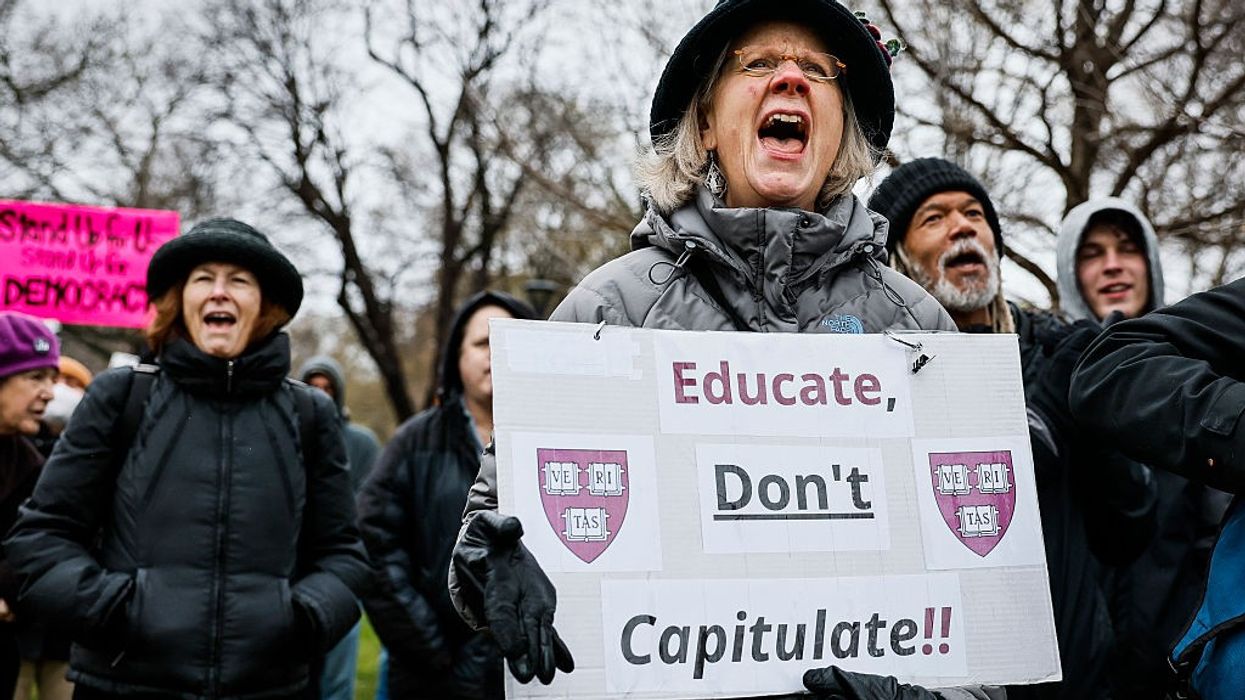
The right-wing effort to infringe on students' right to learn is an effort to hobble higher education as a force for creating a more just society.
We who believe in the value of academic freedom have been disheartened these past two years as quisling administrators at some of America’s once-great universities have caved to political pressure to quash protests, cancel courses, and limit professorial speech that is critical of inequalities in US society and US foreign policy.
These attacks on academic freedom are usually framed as threats to the freedom of faculty to conduct research, publish, speak, and teach, based on disciplinary expertise, without outside political interference. This portrayal of the threat, as true as it is, misses a key point: Also under attack are students’ rights to learn. The right-wing effort to infringe these rights is an effort to hobble higher education as a force for creating a more just society.
Long ago, as an undergrad in an introduction to physical anthropology course, I played a game we called stump the prof. It wasn’t a real game; it was just a few of us trying to liven things up by asking questions we thought would be hard or impossible to answer. The prof was young and upbeat, as I recall, and never seemed put out by our antics, though he no doubt saw what we were doing. I think he liked the energy. One time I asked if apes had orgasms. That got people’s attention.
In that class, taught 50 years ago at a public university, we as students felt free to ask whatever occurred to us (within the bounds of physical anthropology, of course). Our exercise of that freedom is part of what made the class memorable. We weren’t just amusing ourselves or bugging the prof. It might sound self-congratulatory, given that our motives weren’t entirely noble, but we were wringing a lot more knowledge out of the course than we might otherwise have gotten.
The worry is that students will develop the ability to question received truths, see through the ideologies that justify social and economic inequalities, and resist manipulative political rhetoric that bypasses rationality.
What was true back then is true today: How much students learn in college depends on the opportunities they’re given. When a course is scratched from the catalog, students miss out on the knowledge that would have been available to them in that course. Students lose out, too, when certain concepts are proscribed, or when faculty self-censor for fear that discussing those concepts and related topics might get them in trouble. That’s why interference with the ability of faculty to teach what they deem important infringes on the right to learn.
Suppose, for example, that students wanted to ask how conventional gender expectations constrain our humanity. That’s a serious question deserving a serious answer. It’s a question that might be asked in a sociology or gender studies course. But if no such course exists, or if an instructor feels compelled to say, “Sorry, a group of politicians has made it too risky to talk about such stuff,” students are kept from learning. That’s a betrayal of what higher education has promised them: freedom to ask questions, freedom to pursue their curiosity, freedom to grow through the acquisition of vetted knowledge.
Right-wing ideological warriors and politicians would like to leave students in the dark about many other troublesome things: institutional racism, white supremacy, the exploitation of labor, the global havoc wreaked by US imperialism, the domination of government by corporate capitalists and the very wealthy. In relation to these matters, there is much that needs to be faced up to and talked about if we hope to understand how our society works and how to make it work better. And, yes, some courage is required.
Suppose students asked how it is possible for racial disparities—in income, wealth, education, health status—to persist even when most people overtly disavow racism. That’s another question that deserves an answer. It’s also a question that can be answered based on decades of social science research. Students shouldn’t be denied the opportunity to ask these questions and get answers because the topic makes some people uncomfortable. We should not let discomfort be weaponized to protect ignorance.
Students might also want to know how it’s possible for some people to enjoy privilege and not know it. Or how racism has historically supercharged capitalism. Again, these are all legitimate matters for university-level inquiry. But they’re also threatening to politicians who, on the one hand, serve economic elites and, on the other hand, exploit popular prejudices to mobilize voters. That’s the real reason for right-wing attacks on the disciplines and courses where students can learn about our society’s inequalities, past and present.
Critics of intellectual spaces in which students can learn to think critically about US society often claim they want to protect students from liberal indoctrination. But it’s not really indoctrination they worry about. The worry is that students will develop the ability to question received truths, see through the ideologies that justify social and economic inequalities, and resist manipulative political rhetoric that bypasses rationality. Education that imparts these abilities is indeed “liberal,” in the classical sense of being liberating. Which is the opposite of indoctrination.
Universities are dangerous places—or they can be, when faculty are free to pursue the truth even if the results disturb political and economic elites; when faculty are free to teach what they have found through their research and scholarship; and when students are free to ask tough, even off-the-wall, questions. But of course the danger is not to those who want to inquire critically about social inequalities, or employ concepts that might upend common sense, or to teach and learn about these matters. The danger is not to those who seek in good faith to fulfill the promises of higher education. It is to those whose power and privilege depend on keeping these promises from being met.
Trump's emerging doctrine is anchored in the expansion of presidential authority, representing the full extension of the unitary executive theory or the imperial presidency into the sphere of foreign policy.
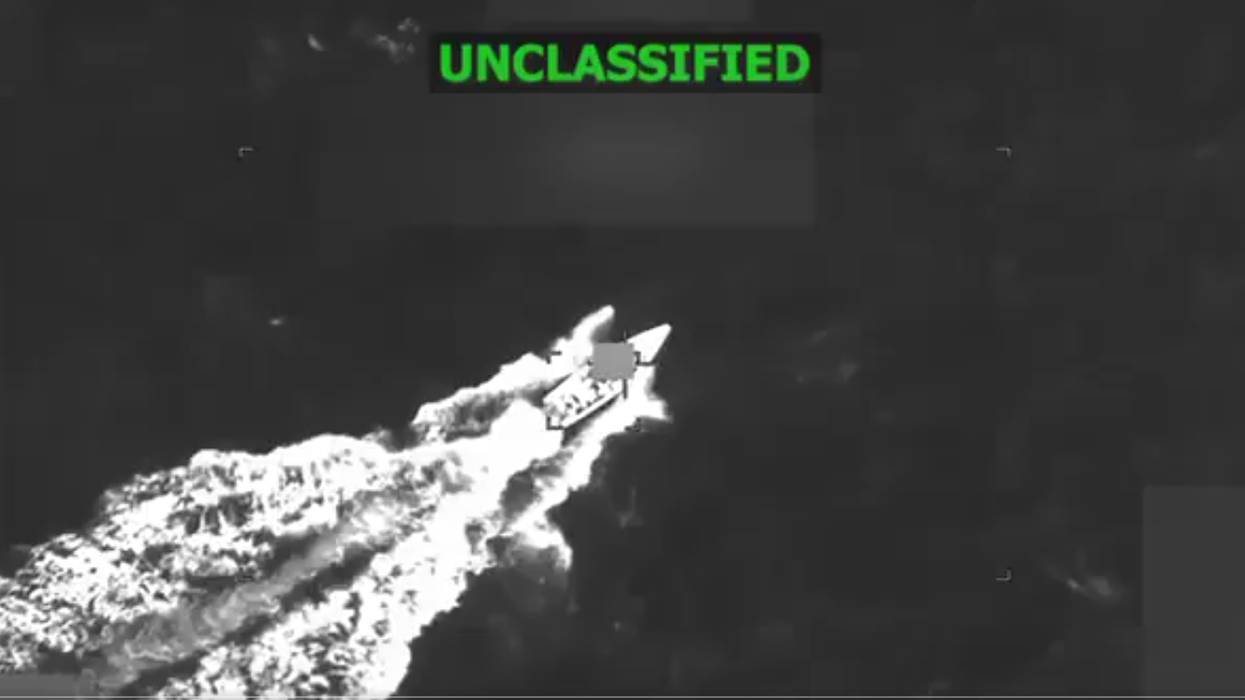
The latest round of deadly boat strikes, which killed 3 people—bringing the total death toll to at least 70 since September—are confirmation that the second Trump administration has decisively refocused US foreign policy toward Latin America and the Caribbean.
Long treated as a secondary concern, including during President Donald Trump’s first term, when attention centered on China, the Middle East, and Eastern Europe, the region has returned to the forefront of US global strategy. But what is emerging is not a revival of Cold War containment or the Monroe Doctrine. It is the consolidation of a new US doctrine, one that aims to fuse emergency powers, economic warfare, and militarization into a unified hemispheric order.
This emerging doctrine is anchored in the expansion of presidential authority. It represents the full extension of the unitary executive theory or the imperial presidency into the sphere of foreign policy, an effort to normalize executive unilateralism as the organizing principle of US governance at home and abroad. Trump’s approach reveals how emergency powers techniques, such as executive orders, emergency declarations, and budgetary discretion, are being implemented as instruments of foreign policy.
This realignment is only possible because of the profound transformations generated by the War on Drugs and the War on Terror, which over the last three decades expanded the legal and institutional capacity of the US executive branch to govern through permanent emergency. What began as exceptional counterinsurgency frameworks, asset seizures, sanctions, and military authorizations without congressional approval has evolved into the standard operating logic of the US government.
Under Trump, these tools have coalesced into a coherent hemispheric project.
Emergency powers serve as the connective tissue linking military strikes, financial bailouts, and sanctions into a coherent system of hemispheric governance.
The Trump administration’s foreign policy rests on a single assumption: that the president can act independently of Congress, international law, and long-standing diplomatic norms. This logic manifests through unilateral bailouts, economic and financial sanctions, and militarized interventions.
For instance, the Trump administration’s authorization of 17 direct boat strikes in the Caribbean illustrates how the administration treats military action as an extension of executive discretion. In a highly contested argument, the Trump administration has maintained that the president has the legal authority to carry out these attacks.
The attacks are against vessels allegedly linked to narcotics operations, though many lacked the capacity or cargo to justify the strikes. Some accounts note that the goal with these strikes is not interdiction, but provocation, using force to engineer confrontation and accelerate regime change in Venezuela.
The Caribbean, once imagined as America’s “backyard,” has become the theater where emergency powers are rehearsed as everyday statecraft.
The economic arm of this doctrine operates on the same logic. On October 17, the administration announced a $40 billion bailout for Argentine President Javier Milei, the self-styled “anarcho-capitalist” who wields a chainsaw as a symbol of his promise to “cut the state.” Half of the funds came from US public reserves and half from private investors, without congressional approval.
The measure was less about stabilizing Argentina’s economy than about underwriting a radical neoliberal experiment that mirrors Trump’s domestic agenda. Milei’s program, including privatizing pensions, slashing social services, and gutting labor protections, has been hailed in Washington as proof of “fiscal responsibility.”
But as Mother Jones revealed, hedge-fund billionaire Rob Citrone, who had recently invested heavily in Argentine debt, maintained close ties with Treasury Secretary Scott Bessent, raising questions about conflicts of interest and influence peddling.
In this context, the bailout secures a government ideologically aligned with Trumpism while reinforcing US financial dominance. More importantly, the US taxpayers’ bailout played a key role in Milei’s victory on October 26’s legislative elections, giving him a lifeline to address the economic stability exacerbated by Milei’s own policies. Thus, through the language of crisis management, the executive transforms financial rescue into a form of governance by decree.
The military dimension of this doctrine is even more telling. The Caribbean has become the primary stage for the remilitarization of US power and the enactment of presidential emergency authority abroad. In recent months, the Pentagon launched the largest regional deployment in decades.
In late October, the aircraft carrier USS Gerald R. Ford left the Croatian port of Split for the Caribbean, joined by seven other warships and dozens of fighter jets. More than 10,000 US troops are currently deployed in the area, half aboard naval vessels and half stationed in Puerto Rico. The deployment followed a series of military practices and intelligence operations aimed at destabilizing the government of Nicolas Maduro, all justified by executive authorizations and emergency powers.
Here, Puerto Rico plays a decisive role. The archipelago’s colonial status allows the administration to deploy forces, intelligence, and financial instruments beyond the constraints of congressional oversight. Its ports and bases have been reactivated as platforms for surveillance, drone operations, and logistics under the pretext of “regional security.” The remilitarization of the archipelago echoes the Cold War, when Puerto Rico served as the hinge for US interventions in the Dominican Republic, Grenada, and Central America. To its environmental, social, and politico-economic detriment, Puerto Rico has been placed at the center of the US intervention on Venezuela, Colombia, and other “enemies” of the Trump administration.
Parallel to the military buildup, the administration has expanded its economic warfare campaign across the hemisphere. Economic and financial sanctions on Venezuela have deepened, further debilitating its oil sector and currency circulation, while the Treasury has introduced new tariffs and sanctions on Brazil, Colombia, and Cuba. The coordination between the State Department and Treasury has transformed sanctions into weapons of punishment, instrumentalizing law to produce political compliance.
Furthermore, on November 5, the US Supreme Court heared arguments in a case on that could redefine the presidential emergency powers under the International Emergency Economic Powers Act (IEEPA). The case stems from President Trump’s use of IEEPA to impose sweeping global tariffs, actions he justified as responses to “unusual and extraordinary threats” to US national security and the economy. The court’s decision will determine whether the president can unilaterally wield emergency powers to reshape trade policy, bypassing Congress and potentially transforming emergency authority into a routine tool of governance.
These sanctions, tarrifs, and “boat strike” authorizations were issued through executive orders, bypassing both congressional approval and multilateral oversight. Emergency powers serve as the connective tissue linking military strikes, financial bailouts, and sanctions into a coherent system of hemispheric governance.
Within this architecture, Puerto Rico stands as the linchpin. Its colonial legal status allows Washington to merge colonial governance with global military reach. The archipelago is now both a financial enclave and a military platform, where the imperial presidency meets authoritarian neoliberalism.
Thus, what is emerging is a new doctrine of foreign policy based on emergency powers. This policy deploys tools once reserved for domestic crises to govern an entire hemisphere. Under Trump, Latin America and the Caribbean have become extensions of the US executive powers, managed through decrees, loans, and strikes, all justified as acts of necessity, all serving the same logic of control.
"Let's be clear—this is not about bringing peace," argued Democratic Rep. Pramila Jayapal. "Donald Trump is siding with Russia, Putin, and dictators across the world over our allies and the defense of democracy."
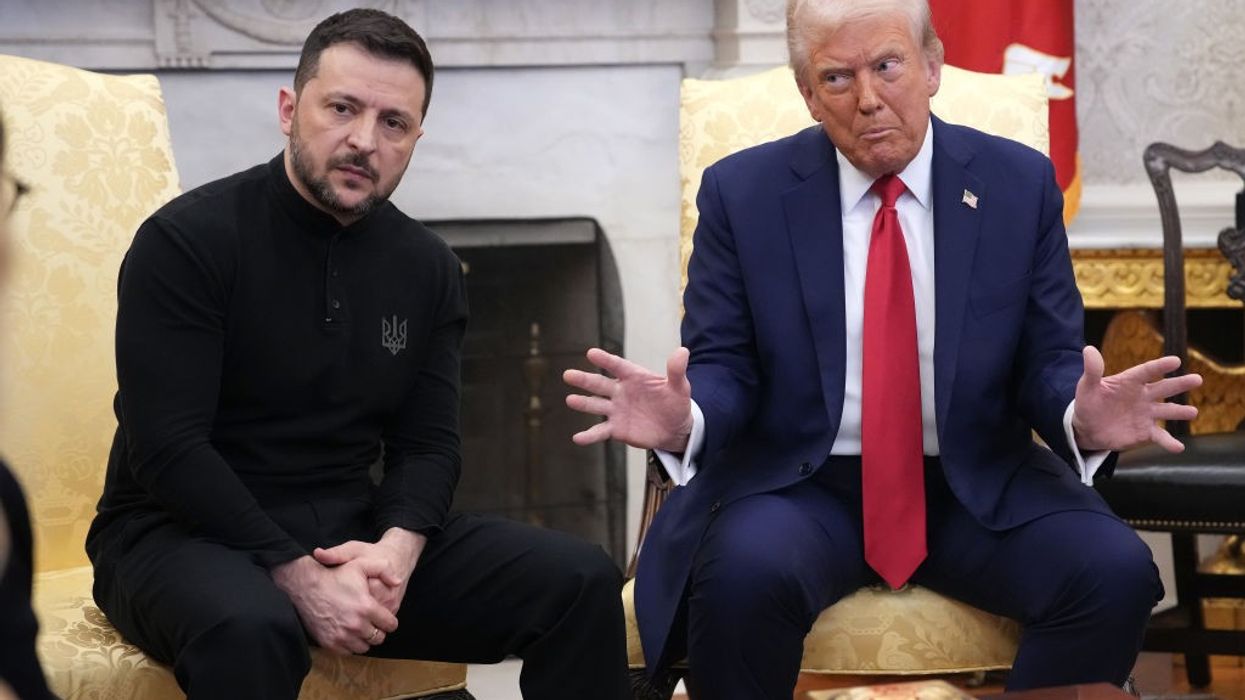
U.S. President Donald Trump late Monday ordered a suspension of all American military assistance to Ukraine after his conduct in a televised meeting with the war-torn country's president in the Oval Office last week sparked international dismay and outrage.
Trump's decision reportedly impacts over $1 billion worth of weaponry and ammunition that was set to be delivered to Ukraine, which has been under attack by invading Russian forces since February 2022. The U.S. has provided more than $65 billion in military aid to Ukraine during the full-scale Russian assault, according to State Department figures.
The Associated Press noted Monday that the U.S. president's move "comes some five years after Trump held up congressionally authorized assistance to Ukraine as he sought to pressure [Ukrainian President Volodymyr] Zelenskyy to launch an investigation into Joe Biden, then a Democratic presidential candidate."
"The moment led to Trump's first impeachment," the news outlet observed.
Democratic members of Congress argued that Trump's aid cutoff amounts to another instance of the U.S. president unlawfully withholding spending approved by lawmakers—and rejected the White House's claim that the move was motivated by a genuine desire for peace.
"Let's be clear—this is not about bringing peace," said Rep. Pramila Jayapal (D-Wash.), who faced backlash in late 2022 over her handling of a Congressional Progressive Caucus letter urging the Biden administration to "seriously explore all possible avenues, including direct engagement with Russia, to reduce harm and support Ukraine in achieving a peaceful settlement."
"Donald Trump is siding with Russia, Putin, and dictators across the world over our allies and the defense of democracy," Jayapal said Monday. "This is a shameful day in American history."
Rep. Gregory Meeks (D-N.Y.), the top Democrat on the House Foreign Affairs Committee, said in a statement that "if President Trump was truly concerned with securing a just and sustainable peace deal for Ukraine, he wouldn't have conceded every piece of leverage the United States, our allies, and Ukraine held before even beginning negotiations."
"He wouldn't be siding with an authoritarian responsible for war crimes," Meeks continued. "And he certainly wouldn't be forcing Ukraine into surrender, while claiming it's a deal. Instead, he would have continued U.S. support for Ukraine to put it in the best possible position to secure a peace deal for Russia's illegal and unjustified war against it."
"Ukraine is left with impossible choices: fight a losing war without U.S. support, or submit to economic vassalage under the very powers that prolonged its suffering."
Trump's decision to suspend U.S. aid to Ukraine, which the Kremlin welcomed, came after Zelenskyy said in the wake of the Oval Office meeting that "an agreement to end the war is still very, very far away."
"The peace that we foresee in the future must be just, honest, and most importantly, sustainable," added Zelenskyy, who has demanded security guarantees from the West as part of any diplomatic resolution with Russia.
Trump, who is pushing for U.S. control of Ukraine's mineral wealth, responded furiously to Zelenskyy's comment, calling it "the worst statement that could have been made."
Trump's Oval Office blow-up and subsequent aid suspension led some to lament missed opportunities for diplomacy under U.S. President Joe Biden.
"It would have been better for Ukraine—and the world—if Biden had pursued diplomacy much earlier," said Trita Parsi, executive vice president of the Quincy Institute for Responsible Statecraft. "But the Blob and the Democratic centrists shut down even any whisper of diplomacy."
Aída Chávez, communications director and policy adviser at Just Foreign Policy, argued in a recent column for The Intercept that "Trump's demand for 'payback' from Ukraine—treating the bloodiest conflict in Europe since World War II as if it's some unappreciated favor—presents U.S. foreign policy in its most naked form."
"As a result of the West's refusal to seriously consider diplomacy," Chávez added, "Ukraine is left with impossible choices: fight a losing war without U.S. support, or submit to economic vassalage under the very powers that prolonged its suffering."

If Donald Trump wins next week's election, the journalist said, violent racists "will be emboldened like never before."
Journalist Mehdi Hasan responded at length Wednesday to a bigoted attack he faced from a fellow CNN panelist earlier this week, warning that the kinds of people who would incite violence against a Palestinian rights advocate on live television could soon be in charge of U.S. foreign policy if Republican nominee Donald Trump wins the November 5 election.
Hasan, the founder of Zeteo, said he has never in 25 years of working in media "been so stunned" as he was when Ryan Girdusky—a right-wing commentator and Trump supporter—said that "I hope your beeper doesn't go off" after Hasan expressed support for Palestinian rights.
Girdusky's remark, which referenced a mid-September Israeli attack in Lebanon and Syria that killed dozens of people—including children—underscored "how bold these MAGA Republicans have become in their racism," Hasan said in his video response Wednesday.
While welcoming CNN's decision to ban Girdusky from the network, Hasan warned that such bigots "will be emboldened like never before" if Trump defeats Democratic nominee Kamala Harris in next week's election.
"They won't just be running their mouths on TV panels against public figures like me," said Hasan. "They'll be at your kids' school gate. They'll be at your grocery store. They'll be in your subway car proudly and shamelessly saying this stuff to you, too. They'll also be in charge of U.S. foreign policy, egging on Israel to do more beeper attacks, even more acts of terror, egging on Trump and [Republican vice presidential nominee JD] Vance to be more racist, more violent both at home and abroad."
Watch Hasan's full response:
"As shocked and stunned as I was, there was no way I was going to let him say that to me, unchallenged."
My response to the racism & incitement on Monday, to a CNN pro-Trump panelist telling me: “I hope your beeper doesn’t go off," because I said I supported Palestinian rights. pic.twitter.com/GJCAC1vAKd
— Mehdi Hasan (@mehdirhasan) October 30, 2024
Hasan called the November 5 contest between Trump and Harris "the most consequential election of our lifetimes" and said that "genocide is on the ballot," criticizing the Democratic vice president for refusing to distance herself from President Joe Biden's unwavering support for Israel's assault on Gaza.
"But also, fascism plus genocide is on the ballot," said Hasan, pointing to Trump's authoritarian ambitions and open support for Israeli Prime Minister Benjamin Netanyahu, whom Trump praised for "doing a good job" in Gaza, where Israeli forces have killed more than 43,000 people in just over a year—a majority of them women, children, and elderly.
"I'm in no mood to explain myself to the racists and bullies," Hasan said Wednesday. "But I will continue to speak out, I will continue to do the work, and so should you."
Author and activist Naomi Klein voiced agreement with Hasan's analysis of the dire state of U.S. politics and his warning that the situation could deteriorate further, writing on social media: "Some claim things cannot get worse. They absolutely can."
"Look to any country where the prisons are bursting with political prisoners. There is no shame in voting against even worse," Klein wrote. "Fascists triumph when we lose our capacity to think strategically."
The establishment keeps coming up with convenient answers, but always to the wrong question.
In her final moments, Getrude Stein is rumored to have asked, “What is the answer?” No reply came from those gathered around her. She followed up with the retort, “but what is the question?”
The maximalist impulse toward Ukraine is approaching its final act in a similarly unenviable state. It, too, is on its deathbed, and it faces what increasingly resembles a crisis of meaning, fueled not by insufficient resources or flagging political will but by an ill-defined theory of victory.
There could never be perfect unanimity in what was a U.S.-led coalition of around 50 nations, but it can be surmised that the initial goal was to enable Ukraine, through a combination of military aid, sanctions, and diplomatic pressure, to decisively degrade and potentially defeat the Russian military. It became clear around the latter half of 2023 — though it must be said that many observers sounded the alarm bells a good while earlier — that some of the presumptions behind this approach were untenable.
Yet, three years in, this approach remains the dominant paradigm for framing the war in the absence of any clearly articulated alternative strategy.
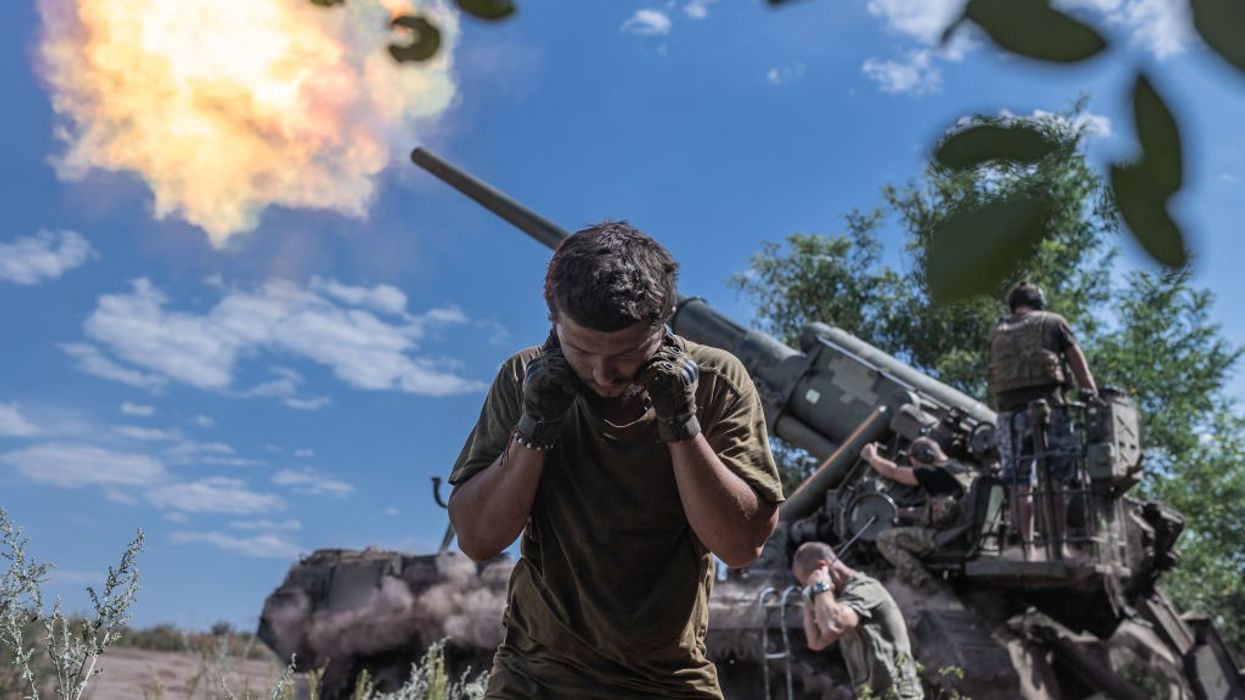
Despite previous experiences with Russian countermeasures against HIMARS and other Western-supplied systems, the belief persists that Ukraine can tilt the balance of forces in its favor if supplied with the right equipment. Last year, it was Leopard tanks and Patriot missile systems. Now, it’s F-16s. Then there is the larger and more important question of the goals for which these weapons should be used.
Recent assessments urging Ukraine to shift to a defense posture represent a welcome departure from the proposition, thoroughly invalidated by the experience of the failed 2023 counteroffensive, that Ukraine’s military wields the offensive power necessary to expel Russian forces from all of its internationally recognized territory. Such calls reflect the realities of a conflict that has reaffirmed Carl von Clausewitz’s time-tested contention that defense is the stronger form of war and, if heeded much earlier, may perhaps have registered as sound advice.
But this approach unfortunately does not go far enough in acknowledging the severity of factors — military, political, economic, and demographic — working against Ukraine on and off the battlefield. Manpower and firepower are the two currencies with which victory in Ukraine is to be bought — Ukraine’s military faces dire, growing deficits of both. The country is roiled by a demographic downward spiral that will require a generational, whole-of-society effort to redress even if the war was to end today.
Moreover, recent data shows the Ukrainian population’s ironclad unity behind its government’s war aims has all but dissipated, introducing new and unwelcome domestic pressures from which the Zelensky government considered itself immune. A plurality of Ukrainians now favor initiating peace talks with Russia, a measure that has been functionally banned by the Zelensky administration.
There is a sense in which these proposed defensive strategies are even more fraught than earlier maximalist plans — which peaked in popularity following successful Ukrainian advances in late 2022 — to win the war by dealing a crushing blow to the Russians through lightning offensive maneuvers. The “knockout punch” theory of Ukrainian victory, wrongheaded as it turned out to be, can at least be merited with recognizing and seeking to work within the constraints posed by time.
Subscribe now to our weekly round-up and don't miss a beat with your favorite RS contributors and reporters, as well as staff analysis, opinion, and news promoting a positive, non-partisan vision of U.S. foreign policy.
Invalid emailEnter your emailTalk of a defensive strategy tries to buy Kyiv time it likely doesn’t have, tapping resources it and its Western partners can ill afford, to achieve an end that has yet to be adequately defined. It is, in form and function, an exercise in whistling past the graveyard.
The war cannot be placed in autopilot, as it were, simply by postponing offensive operations and investing in defense. The problem is not only a stark asymmetry in latent power between Russia and Ukraine, but also and especially the asymmetry of vital interests and escalatory potential between Russia and Ukraine’s Western partners.
Yet the debate over whether or not the trends working against Ukraine can be slowed elides a more fundamental question: slowed to what end? If the intention is to buy more time, what is the time for? Is it to prepare for another large-scale counteroffensive to knock Russia out of the war; to slowly defeat Russia in a war of attrition; or to raise costs on Russia such that the Kremlin agrees to negotiations on reasonably propitious terms for Ukraine and the West?
The first two are hardly more realistic than the cavalier assumptions that underpinned the ill-fated 2023 counteroffensive. The latter is dubious at best in light of the trends discussed above.
Recent coverage of the war has captured with harrowing clarity the challenges confronting Ukraine. But this widespread acknowledgement still appears to be obscured behind a wall of political and military assumptions that have not been updated since the latter half of 2022. Too much of the thinking on Ukraine is caught up in refining, adapting, and justifying a dwindling set of tactical measures rather than articulating a realistic end state that preserves Ukrainian sovereignty and advances U.S. interests.
More military aid to Ukraine and additional sanctions on Russia are all too often treated as goals in of themselves rather than as instruments used to shape outcomes on the strategic level.
The American experience has always been underwritten by a kind of decentralized techno-optimism enabling a uniquely entrepreneurial, solution-oriented culture which has made the U.S. a global innovation leader. But this technocratic spirit, though a great boon in all manner of commercial and scientific enterprises, can become a major liability in more obscurantist matters of statecraft, geopolitics, and military strategy.
America’s trademark technical prowess, personified by the brashly confident Defense Secretary Robert S. McNamara, failed to pierce the fog of war in Vietnam because it proceeded from strategically unsound assumptions about the conflict’s broader dynamics and refused to correct course at key junctures.
The variables at play in Ukraine are undoubtedly quite different, but the potential folly — wading knee deep into a protracted conflict without a realistic theory of victory — is much the same, and the stakes are similarly high.
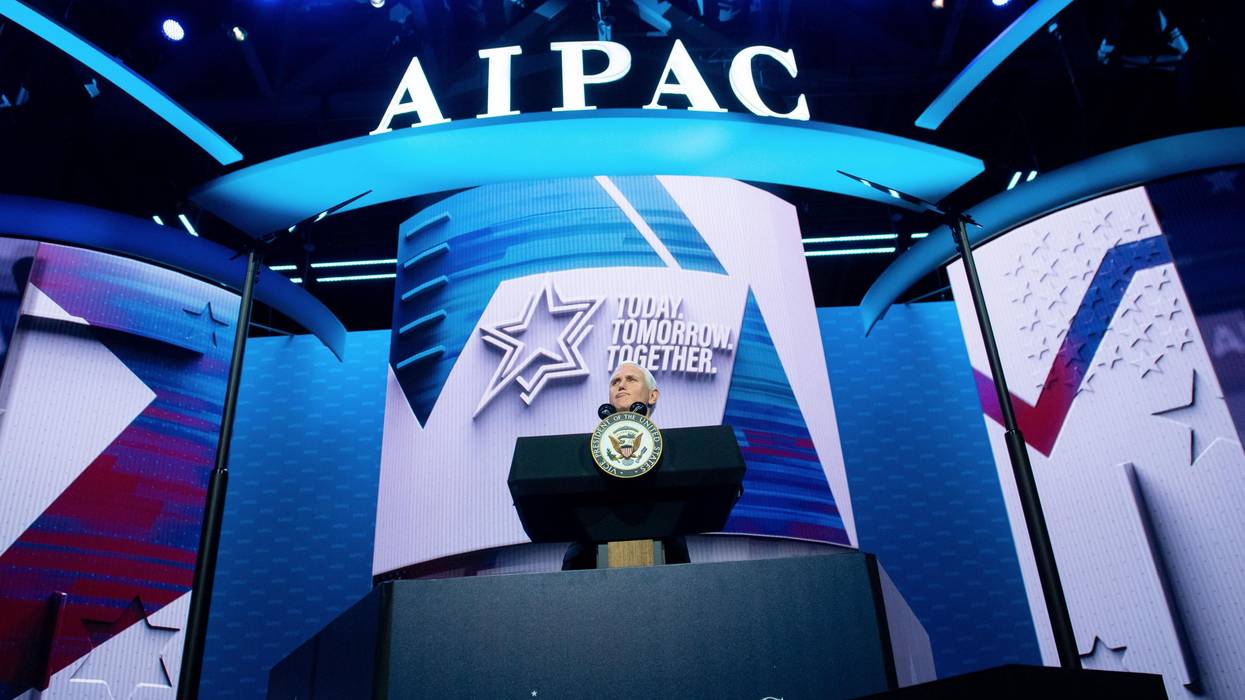
The lobby's influence does not extend beyond cheering and pushing existing U.S. policy further in the same direction to which it is beholden: its own imperial interests.
Over the last few weeks, the Israel lobby has been increasingly featured in the news in the context of the ongoing election seasons in the U.K., France, and the U.S.
News articles proliferate about the huge funds the U.K.'s Israel lobby contributed to candidates in the recent elections, the Israeli ministerial interference in the recent French elections, or the defeat of U.S. Rep. Jamaal Bowman (D-N.Y.) due to the support of his opponent by the American Israel Public Affairs Committee (AIPAC), the most influential pro-Israel lobby group in the U.S.
This is in addition to media coverage of the role the lobby has played since October 7 in silencing critics of Israel and its genocide in Gaza.
The claim that the Israel lobby controls U.S. policy in the Middle East amounts to absolving the U.S. from responsibility for all its imperialist policies in the Arab world and the Middle East at large since World War Two.
As I have argued previously, there is often an excitement that afflicts many pro-Palestine supporters in the U.S. and the Arab world when the Israel lobby's machinations are exposed in the western press.
It is based on their perception that once aware of the inordinate power of this lobby, the broader U.S. and Western public will correct the aberrations of U.S. foreign policy toward the Palestinians and the Middle East, which they believe are caused by the lobby's interference.
The common assumption among these Americans and pro-Western Arabs who support the Palestinians is that absent the Israel lobby, the U.S. government and other Western powers would become more friendly or, at the very least, far less hostile toward Arabs and Palestinians.
The seduction of this argument hinges on its exoneration of the U.S. government from all the responsibility and guilt that it deserves for its policies in the Arab world.
It seeks to shift the blame for U.S. policies from the U.S. onto Israel and its U.S. lobby and gives false hope to many Arabs and Palestinians who wish America would be on their side instead of on the side of their enemies.
For at least half a century, the lobby's formidable power in deciding elections in Western countries and its influence on universities, the press, and cultural and educational institutions have been the subject of many books and articles.
Perhaps the first such treatment, albeit one that expressed mild criticisms of pro-Israel forces in the U.S., was an article that George Ball, the under secretary of state in the Johnson and Kennedy administrations, published in Foreign Affairs in 1977.
Ball and his son later published a complete study of the matter in book form.
I have often argued that it is the very centrality of Israel to U.S. strategy in the Middle East that accounts, in part, for the strength of the Israel lobby and not the other way around.
Other books published in the next decade include Paul Findley's 1985 They Dare to Speak Out: People and Institutions Confront Israel's Lobby. Findley was a former U.S. Republican congressman whose re-election campaign was defeated by the Israel lobby in 1982 after he had served 11 terms in the House of Representatives.
A former AIPAC president described Findley as "a dangerous enemy of Israel," which led to his political demise.
Another book, The Lobby: Jewish Political Power and American Foreign Policy, by former Time Magazine writer Edward Tivnan, was published in 1987 and elaborated on the same theme.
However, it was not until the prominent mainstream political scientists John Mearsheimer and Stephen Walt published a paper in 2006 on the Israel lobby and U.S. foreign policy, which they later expanded and published as a book in 2008, that its role in shaping policy became a major topic of discussion in the U.S. mainstream, even if only to defame its authors and defend the lobby against their cogent arguments.
In addition to objective assessments of the role of the Israel lobby, there exists a motley collection of antisemitic and white-supremacist conspiracy theories about the alleged influence of "the Jews" in Western countries and their alleged control of the U.S. government.
Pro-lobby commentators, however, use this as a cudgel to beat down those with valid criticisms of the Israel lobby that have nothing to do with antisemitism - a treatment meted out to Mearsheimer and Walt, among others.
Sane and reasonable discussions on the Israel lobby range between those who argue that absent the formidable influence of the lobby, U.S. policy towards the Middle East would be less hostile to the Palestinians, and those who believe that the lobby's influence does not extend beyond cheering and pushing existing U.S. policy further in the same direction to which it is beholden.
My view has always been more akin to the latter.
The claim that the Israel lobby controls U.S. policy in the Middle East amounts to absolving the U.S. from responsibility for all its imperialist policies in the Arab world and the Middle East at large since World War Two.
Rather, it is Israel and its lobby that have pushed the U.S. to enact policies that are detrimental to its own national interests and only benefit Israel, the argument contends.That the U.S. blocks all international and U.N. support for Palestinian rights while it arms and finances Israel in its war against a civilian population and shields it from the wrath of the global community should also be blamed not on the U.S. and its Western allies but on Israel and its lobby, it further insists.
What this line of thinking elides is the reality that the U.S. government has never supported national liberation in the Third World.
The Israel lobby could not sell its message and would not have any influence if Israel were a communist or anti-imperialist country, or if Israel opposed U.S. policy elsewhere in the world.
The U.S. record is one of being the implacable enemy of all national liberation groups, including European ones, from Greece to Latin America to Africa and Asia.
Its backing of groups like the Afghan mujahideen in their war against the Afghan revolutionary government and the Soviet Union; Unita and Renamo, the main terrorist allies of apartheid South Africa in Angola and Mozambique, against their respective anti-colonial revolutionary national governments; and the Contras against the revolutionary Sandinista government in Nicaragua, were all cases in which the U.S. was supporting counter-revolutionary groups intent on destroying national liberation revolutionary governments.
Why the U.S. would then support Palestinian national liberation absent the Israel lobby is something this argument fails to address.
When I first made these arguments two decades ago, a pro-Palestinian white Christian American academic objected to them in a conversation, insisting that the U.S. supported Egyptian President Gamal Abdel Nasser against the 1956 tri-partite invasion of Egypt by France, Britain, and Israel.
But U.S. support in this orphan case, as I retorted to him, was premised on clipping the wings of France and Britain. These erstwhile empires thought they could still act imperially after the Second World War when it was the U.S. that rescued them from Nazi aggression.
The U.S. further opposed Israel's decision in that instance to coordinate its aggression on Egypt with these former empires rather than with its own government.
Israel soon realized that it could instead pursue the same aggression on its neighbours in coordination with the U.S. Expectedly, the U.S. did not object at all to any subsequent Israeli invasions (1967, 1978, 1981, 1982, 1985, etc) of neighboring Arab countries.
A related argument that the Israel lobby's influence on the U.S. government is what led to the U.S. invasion of Iraq is equally unpersuasive.
This is not to say that the lobby did not actively support the U.S.-led war effort (it certainly did). Still, it was ultimately pushing for a war that was already desired and planned by other American political and economic imperial interests with far superior influence.
The invasion of Iraq follows a consistent policy of the U.S. since the Second World War of overthrowing all regimes across the Third World that insist on controlling their national resources, whether it be land, oil, or other valuable minerals.
That the Israel lobby is more influential than any other foreign-policy lobby in the U.S. is not because it commands some fantastical power to steer the U.S. away from its "national interest." If anything, it only proves how important Israel is to U.S. grand strategy.
This extends from Iran in 1953 to Guatemala in 1954, to the rest of Latin America, and all the way to present-day Venezuela and Iran.
Africa has fared much worse in the last six decades, as have countries in Asia.
The overthrow of regimes including Guatemala's Jacobo Arbenz, Brazil's Joao Goulart, Iran's Mohammed Mossadegh, Congo's Patrice Lumumba, and Chile's Salvador Allende, and the attempts to overthrow Hugo Chavez and Nicolas Maduro, are prominent examples, as are the overthrow of nationalist regimes like Ahmad Sukarno's in Indonesia and Kwame Nkrumah's in Ghana.
The terror unleashed on populations who challenged the U.S-imposed regimes from El Salvador and Nicaragua to the Congo, and later Zaire, Chile, and Indonesia resulted in the killing of hundreds of thousands, if not millions, by repressive police and militaries trained for these important tasks by the U.S.
This is aside from direct U.S. invasions of Southeast Asian and Central American countries that killed untold millions for decades.
As the Israel lobby played no role in all these other invasions or interventions, why then would the U.S. not have invaded Iraq (or Afghanistan) or stopped threatening Iran on its own? These are policy questions that critics of the Israel lobby's perceived stranglehold on the U.S. government can never explain.
Such a line of argument would have been more convincing if the Israel lobby was forcing the U.S. government to pursue policies in the Middle East that are inconsistent with its global policies elsewhere.
This is far from what happens, however.
While U.S. policies in the Middle East may often be an exaggerated form of its repressive and anti-democratic policies elsewhere in the world, they are not incongruent with them.
One could easily make the case that the strength of the Israel lobby is what actually accounts for this exaggeration, but even this contention is not entirely persuasive.
I have often argued that it is the very centrality of Israel to U.S. strategy in the Middle East that accounts, in part, for the strength of the Israel lobby and not the other way around.
Israel has indeed been very effective in rendering services to its U.S. master for a good price, whether in channeling illegal arms to Central American dictatorships in the 1970s and 1980s or helping pariah regimes like Taiwan and apartheid South Africa in the same period.
Indeed, some cite the role of pro-Israel, and especially pro-Likud, members of the Bush administration (or even of the Clinton administration), let alone those of Obama, Trump, or Biden, along with pro-Israel American billionaires, as evidence of the lobby's awesome power.
However, it could be argued that it is these U.S. politicians and billionaires who, since the 1990s, have pushed Likud and other Israeli political parties to embrace a more aggressive agenda. Such incitement persists today amid Israel's genocidal war on the Palestinians of Gaza.
This is not to suggest that Israel lobby leaders do not regularly boast of their crucial influence on U.S. policy in Congress and the White House.
They most recently celebrated their success in defeating Bowman and have regularly bragged about their role since the late 1970s.
But the lobby is powerful in the U.S. because its major claims are about advancing U.S. interests, and its support for Israel is contextualized in its support for U.S. militarism and its overall strategy in the Middle East.
The Israel lobby plays the same role today that the China lobby played in the 1950s in support of Taiwan against the People's Republic of China, and the Cuba lobby still plays against Cuba's revolutionary government and in support of counter-revolutionary Cuban exiles.
That the Israel lobby is more influential than any other foreign-policy lobby in the U.S. is not because it commands some fantastical power to steer the U.S. away from its "national interest." If anything, it only proves how important Israel is to U.S. grand strategy.
The Israel lobby could not sell its message and would not have any influence if Israel were a communist or anti-imperialist country, or if Israel opposed U.S. policy elsewhere in the world. Indeed, this would be a laughable proposition.
Some would argue that even though Israel attempts to overlap its interests with those of the U.S., its lobby deliberately misleads U.S. policymakers and shifts their position from one of objective assessment of what is truly in America's best interests and that of Israel's.
The argument has it that U.S. support for Israel leads political and militant groups in the Middle East who oppose Israel to become hostile to the U.S. itself and to target it for attacks.
Such support also costs the U.S. the loss of friendly media coverage in the Arab world, impacts its investment potential in Arab countries, and weakens its Arab regional allies.
As the Israel lobby's most formidable force, AIPAC is indeed powerful insofar as it pushes for policies that accord with U.S. interests and are resonant with the reigning U.S. imperial ideology.
But none of this is necessarily true.The U.S. has been able to be Israel's biggest backer and financier and its staunchest defender and weapons supplier while maintaining strategic alliances with most, if not all, Arab dictatorships, including the Palestinian Authority, under both Yasser Arafat and Mahmoud Abbas.
Indeed, the more intransigent the U.S. is in supporting Israel's current genocide of the Palestinians, the more it is embraced by its Arab puppet rulers.
Moreover, U.S. companies and investments have the largest presence across the Arab world, most prominently, but not exclusively, in the oil sector.
A whole army of Arabic newspapers, private and state-run television stations, and myriad satellite television stations owned by Arab Gulf princes, not to mention massive websites and internet news outlets funded by western NGOs, are deployed to promote the U.S. point of view.
They celebrate American culture, broadcast its television programs, and attempt to sell U.S. positions as effectively as possible, encumbered only by the limitations that actual U.S. policies in the region would place on common sense.
Even the offending Al Jazeera network has bent over backwards to accommodate the U.S. point of view but, again, is often undercut by actual U.S. policies in the region.
Under tremendous pressure and threats of bombing from the U.S. during its invasion of Iraq, Al Jazeera stopped referring to the U.S. military in Iraq as "occupation forces," shifting to "coalition forces."
Between October 7 2023 and January 2024, the U.S. spent $1.6 billion on its military build-up in the Middle East to defend its imperial interests. Between 2001 and 2019, the U.S. spent $6.4 trillion on its wars in Afghanistan, Iraq, Syria, and Pakistan alone.
Israel has indeed been very effective in rendering services to its U.S. master for a good price, whether in channeling illegal arms to Central American dictatorships in the 1970s and 1980s or helping pariah regimes like Taiwan and apartheid South Africa in the same period.
It has additionally supported pro-U.S., including fascist, groups inside the Arab world to undermine nationalist Arab regimes, from Lebanon to Iraq to Sudan.
It is only in the absence of harmful U.S. policies, not the lobby that supports them, that the ongoing Israeli genocide against Palestinians can stop.
It has come to the aid of conservative pro-U.S. Arab regimes when threatened, as it did in Jordan in 1970. And it outright attacked Arab nationalist regimes in 1967 with Egypt and Syria and in 1981 with Iraq when it destroyed the country's nuclear reactor.
Whereas the U.S. had been able to overthrow Sukarno and Nkrumah in bloody coups in the mid-1960s, Nasser remained entrenched until Israel effectively neutralized him in the 1967 war.
It is thanks to this major service that the U.S. increased its support to Israel exponentially.
Moreover, Israel's neutralization of the PLO in 1982 was no small service to many Arab regimes and their U.S. patron, which could not fully control the organisation until then.
None of the American military bases on which many more billions are spent can claim such a stellar record.
Some might push back, arguing that if this were true, then why did the U.S. have to intervene directly in Kuwait and Iraq?
In those instances, direct U.S. intervention was needed as it could not rely on Israel to do the job due to the sensitivity of including it in such a coalition, which would embarrass Arab allies. While this may have shown Israel's uselessness as a strategic ally, the U.S. also could not rely on any of its military bases to launch the invasions on their own and had to ship in its army to finish the job.
U.S. bases in the Gulf did provide essential support, but so did Israel.
It is true that Operation al-Aqsa Flood has completely overturned Israel's strategic military importance to the U.S.
Israel's military defeat against the Palestinian resistance continues to necessitate American and British military help. Its calls for Western support began as early as October 8 to prop up its military might, with additional requests for backup in April.
The U.S., the U.K., and U.S. bases in Jordan did most of the work in defending Israel against Iranian missile retaliation following Israel's bombing of the Iranian consulate in Damascus.
Still, for the U.S., Israel's manifest weaknesses have not altered the role it plays in the region. This includes the destruction of all resistance to U.S. interests and anything that would undermine its strategy, including Israel's place within it.
As the Israel lobby's most formidable force, AIPAC is indeed powerful insofar as it pushes for policies that accord with U.S. interests and are resonant with the reigning U.S. imperial ideology.
The last nine months have made amply clear that the power of the Israel lobby, whether in Washington or on university campuses, is not based solely on its organizational skills or ideological uniformity.
In no small measure, antisemitic attitudes among congressional leaders, policymakers, and university administrators underpin their beliefs in the lobby's exaggerated claims—and those of its enemies'—about its actual power, resulting in their toeing the line.
The U.S. government and its Western allies are the ones who bear full responsibility for abetting, supplying, and defending Israel's right to commit genocide against the Palestinians.
In such a context, it does not matter if the lobby has real or imagined power. As long as government leaders and, more notably, university administrators believe it does based on their antisemitic bias or objective assessments, it will remain effective and powerful.
Some might then ask: Without such influence of a powerful Israel lobby, what would have been different about U.S. policy in the Middle East?
The answer, in short, is the details and intensity but not the direction, content, or impact of such U.S. policies.
So, is the Israel lobby extremely powerful in the U.S.?
As someone who has been facing the full brunt of its power for the past two decades, through its outsized influence on my own university and intense pressure campaigns to get me fired, I answer with a resounding yes.
Is the lobby primarily responsible for U.S. policies toward the Palestinians and the Arab world? Absolutely not.
The Arab world, and especially Palestinians, oppose the U.S. because of its history of pursuing policies that are inimical to the interests of most people in those countries.
Its sole objective has been to safeguard its own interests and the minority regimes in the region that serve those interests, including Israel.
It is only in the absence of harmful U.S. policies, not the lobby that supports them, that the ongoing Israeli genocide against Palestinians can stop.
The U.S. government and its Western allies are the ones who bear full responsibility for abetting, supplying, and defending Israel's right to commit genocide against the Palestinians.
The efforts of the Israel lobby to have the U.S. support Israel even more than it does is a complicitous act in the ongoing genocide, but it certainly is not the principal cause of this monstrous crime.