

SUBSCRIBE TO OUR FREE NEWSLETTER
Daily news & progressive opinion—funded by the people, not the corporations—delivered straight to your inbox.
5
#000000
#FFFFFF
To donate by check, phone, or other method, see our More Ways to Give page.
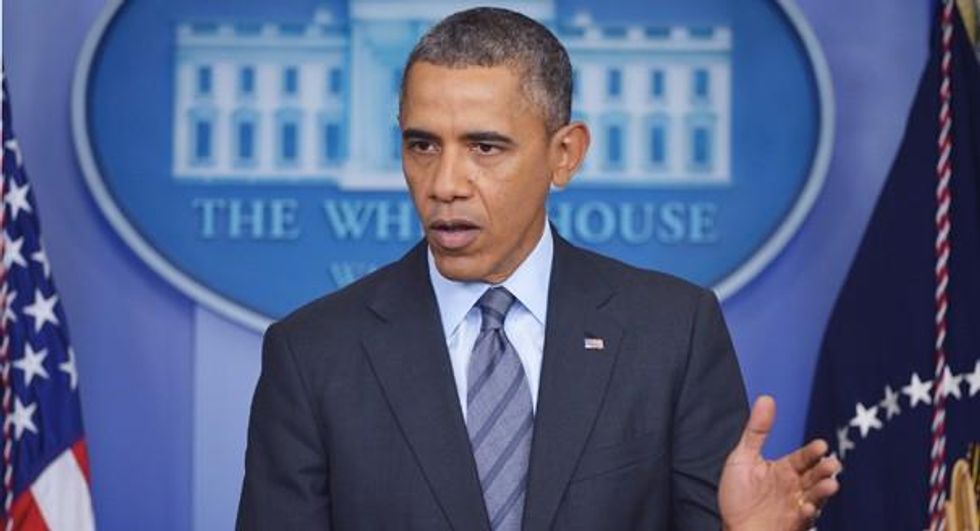
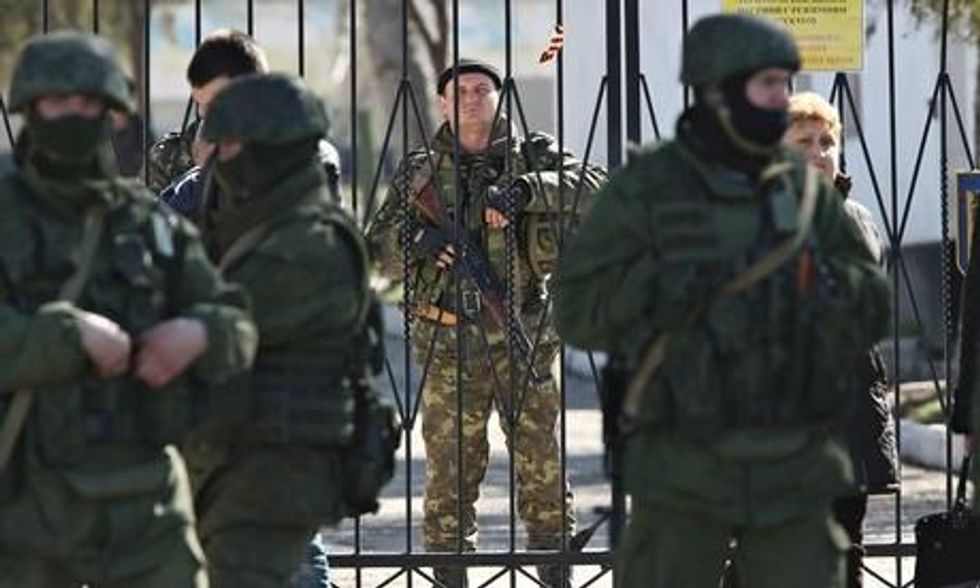
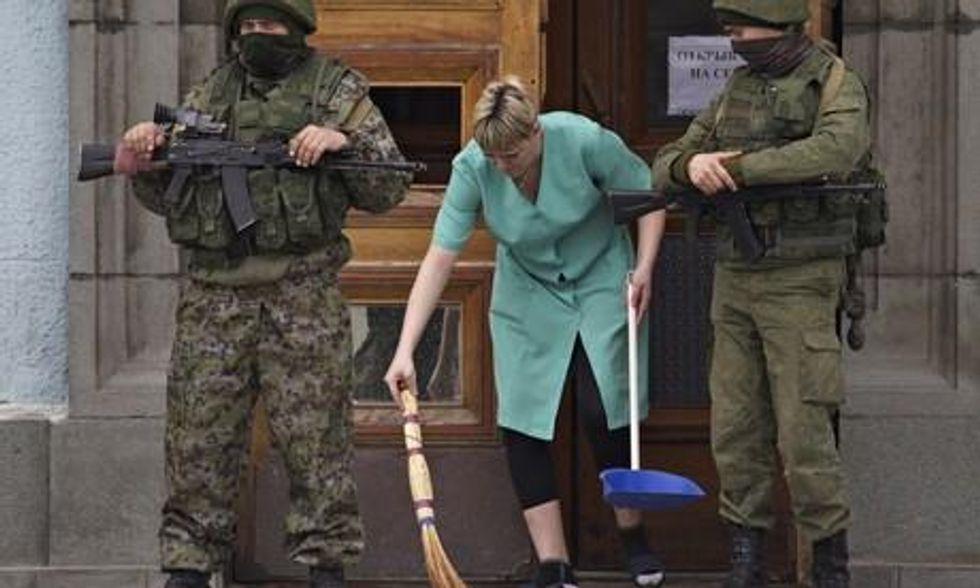
As you ponder your potential moves regarding President Vladimir V. Putin's annexation of Crimea (a large majority of its 2 million people are ethnic Russians), it is important to remember that whatever moral leverage you may have had in the court of world opinion has been sacrificed by the precedents set by previous American presidents who did not do what you say Mr. Putin should do - obey international law.
The need to abide by international law is your recent recurring refrain, often used in an accusatory context toward Mr. Putin's military entry in Crimea and its subsequent annexation, following a referendum in which Crimean voters overwhelmingly endorsed rejoining Russia. True, most Ukrainians and ethnic Tatars boycotted the referendum and there were obstacles to free speech. But even the fairest of referendums, under UN auspices, would have produced majority support for Russia's annexation.
Every day, presidential actions by you violate international law because they infringe upon national sovereignties with deadly drones, flyovers and secret forays by soldiers - to name the most obvious.
President Bush's criminal invasion and devastation of Iraq in 2003 violated international law and treaties initiated and signed by the United States (such as the Geneva Conventions and the UN Charter). What about your executive branch's war on Libya, now still in chaos, which was neither constitutionally declared, nor authorized by Congressional appropriations?
"Do as I say, not as I do," is hard to sell to Russians who are interpreting your words of protest as disingenuous. This is especially the case because Crimea, long under the rule of the Ottoman Empire, became part of Russia over 200 years ago. In 1954, Soviet leader, Nikita Khrushchev gave Crimea to Ukraine, which was then part of the Soviet Union, out of sympathy for what Ukraine endured under the Nazi invasion and its atrocities. It mattered little then because both "socialist republics," Ukraine and Crimea, were part of the Soviet Union. However, it is not entirely clear whether Khrushchev fully complied with the Soviet constitution when he transferred Crimea to Ukraine.
Compare, by the way, the United States' seizure of Guantanamo from Cuba initially after the Spanish-American War, which was then retained after Cuba became independent over a century ago.
The Russians have their own troubles, of course, but they do have a legitimate complaint and fear about the United States' actions following the collapse of the Soviet Union. Led by President William Jefferson Clinton, the United States pushed for the expansion of the military alliance NATO to include the newly independent Eastern European countries. This was partly a business deal to get these countries to buy United States fighter aircrafts from Lockheed Martin and partly a needless provocation of a transformed adversary trying to get back on its feet.
As a student of Russian history and language at Princeton, I learned about the deep sensitivity of the Russian people regarding the insecurity of their Western Front. Hitler's attack on the Soviet Union took many millions of Russian lives. The prolonged Nazi siege of the city of Leningrad alone is estimated to have cost over 700,000 civilian lives, which is about twice the total number of United States soldiers killed in World War II.
The memories of that mass slaughter and destruction, and of other massacres and valiant resistance are etched deeply in Russian minds. The NATO provocation was only one of the West's arrogant treatments of post-Soviet Russia, pointed out in the writings of Russian specialist, NYU professor Stephen Cohen (see his pieces in The Nation here: https://www.thenation.com/authors/stephen-f-cohen). That sense of disrespect, coupled with the toppling of the elected pro-Russian President of Ukraine in February, 2014 (which was not lawful despite his poor record) is why Mr. Putin's absorption of Crimea and his history-evoking speech before the Parliament, was met with massive support in Russia even by many of those who have good reasons to not like his authoritarian government.
Now, you are facing the question of how far to go with sanctions against the Russian government, its economy and its ruling class. Welcome to globalization.
Russia is tightly intertwined with the European Union, as a seller and buyer of goods, services and assets, and to a lesser but significant degree with the United States government and its giant corporations such as oil and technology companies. Sanctions can boomerang, which would be far worse than just being completely ineffective in reversing the Russian annexation of Crimea.
As for sanctions deterring any unlikely future Russian moves westward into Ukraine, consider the following role reversal. If Russia moved for sanctions against the United States before Afghanistan, Iraq, Libya, Yemen and other attacks, would that have deterred either you or George W. Bush from taking such actions? Of course not. Such an outcome, politically and domestically, would not be possible.
If you want continued Russian cooperation, as you do, on the critical Iranian and Syrian negotiations, ignore the belligerent baying pack of neocons who always want more United States wars, which they and their adult children avoid fighting themselves. Develop a coalition of economic support for Ukraine, with European nations, based on observable reforms of that troubled government. Sponsor a global conference on how to enforce international law as early as possible.
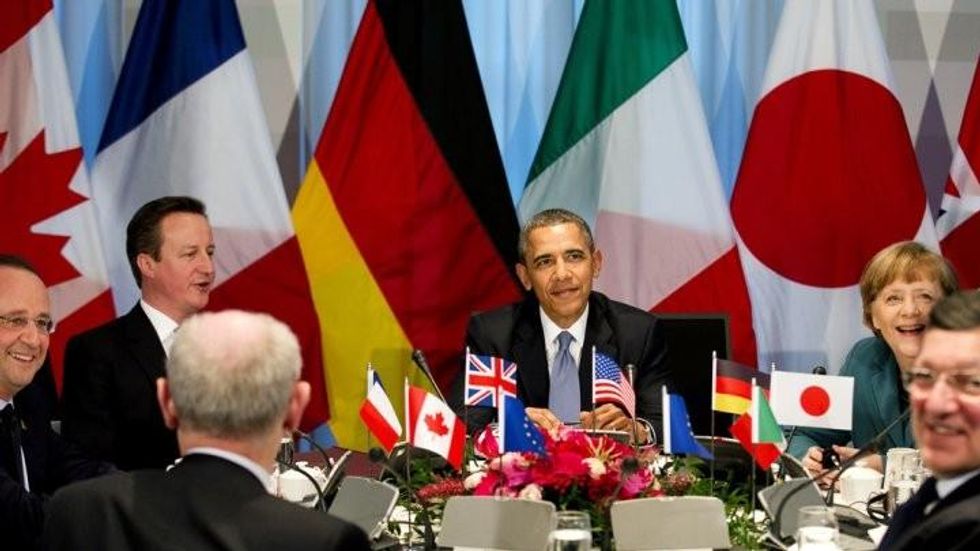
Drop the nonsense of evicting Russia from the G8 - a get-together forum of leaders. Get on with having the United States comply with international law, and our constitution on the way to ending the American Empire's interventions worldwide, as has been recommended by both liberal and conservative/libertarian lawmakers, along with much public opinion.
Concentrate on America, President Obama, whose long unmet necessities cry out from "sea to shining sea."
Sincerely,
Throughout history, those who spoke the truth in totalitarian states--people such as Edward Snowden, Julian Assange and Chelsea Manning--have been silenced and persecuted and those who parroted back the lies and served the system have been rewarded with lives of luxury and debauchery. Bulgakov reminds us of this. In the midst of his story's madness, in which moral goodness is banished and only the amoral is celebrated, Satan holds a ball where Margarita, as queen, plays hostess to "kings, dukes, cavaliers, suicides, poisoners, gallows birds and procuresses, jailers, cardsharps, executioners, informers, traitors, madmen, detectives and corrupters of youth" who leap from coffins that fall out of the fireplace. The men wear tailcoats, and the women, who are naked, differ from each other only "by their shoes and the color of the feathers on their heads." "Scarlet-breasted parrots with green tails perched on lianas and hopping from branch to branch uttered deafening screeches of "Ecstasy! Ecstasy!' " As Johann Strauss leads the orchestra, revelers mingle in a cool ballroom set in a tropical forest.
In this bizarre world you flourish, are embraced by its fantasy life, only if the state decides you are worthy to exist--"No papers, no person."
The arbitrary and capricious power of the state permits it to determine the identity and worth of its people, including the writers and artists it officially anoints. When Behemoth and his companion, Korovyov, an ex-choirmaster, attempt to enter the restaurant at the headquarters of the state-sanctioned literary trade union--filled with careerists, propagandists, profiteers and state bureaucrats, along with their wives and mistresses--they are accosted at the entrance.
A pale bored citizeness in white socks and a white beret with a tassel was sitting on a bentwood chair at the corner entrance to the veranda, where an opening had been created in the greenery of the trellis. In front of her on a plain kitchen table lay a thick, office-style register in which, for reasons unknown, she was writing down the names of those entering the restaurant. It was this citizeness who stopped Korovyov and Behemoth.
"Your ID cards?" she asked. ...
"I beg a thousand pardons, but what ID cards?" asked a surprised Korovyov.
"Are you writers?" asked the woman in turn.
"Of course we are," replied Korovyov with dignity.
"May I see your ID's?" repeated the woman.
"My charming creature ..." began Korovyov, tenderly.
"I am not a charming creature," interrupted the woman.
"Oh, what a pity," said Korovyov with disappointment, and continued, "Well, then, if you do not care to be a charming creature, which would have been quite nice, you don't have to be. But, here's my point, in order to ascertain that Dostoevsky is a writer, do you really need to ask him for an ID? Just look at any five pages of any of his novels, and you will surely know, even without an ID, that you're dealing with a writer. Besides, I don't suppose that he ever had any ID! What do you think?"
Korovyov turned to Behemoth.
"I'll bet he didn't," replied the latter. ...
"You're not Dostoevsky," said the citizeness. ...
"Well, but how do you know, how do you know?" replied [Korovyov].
"Dostoevsky is dead," said the citizeness, but not very confidently.
"I protest!" exclaimed Behemoth hotly. "Dostoevsky is immortal!"
"Your ID's, citizens," said the citizeness.
Although the book, whose working title was "Satan in Moscow," was completed in 1940 it did not appear in print in uncensored form until the 1970s.
"The power structure is symbolized by its anonymity and omnipresence, by its mysterious nature, by its total knowledge against which there is no defense, by its ability to penetrate every space, by putting in an appearance at any hour of the day or night," Karl Schlogel wrote in his book "Moscow, 1937" in speaking of Bulgakov's portrayal of the organs of state security. "Investigating officials have no names; they are simply 'they.' The word 'arrest' is replaced by the sentences "We need to sort something out' or 'We need your signature here.' "
Thomas Mann in "The Magic Mountain," which takes place in a tuberculosis sanatorium in the Swiss Alps on the eve of World War I, also chronicles the malaise and sickness of a society in terminal moral decline: There no longer are any goals worth pursuing; death is more dignified than life; illness is more conducive to reflection than health. Joseph Roth in "Hotel Savoy" reaches the same conclusion. In Roth's novel, Gabriel Dan, an Austrian soldier released from a Serbian prisoner-of-war camp after World War I, finds sanctuary in a hotel that "promises water, soap, English style toilet, a lift, maids in white caps." In the grand ballrooms the rich and powerful gorge themselves in hedonistic revelry. But on the upper floors Dan discovers desperate, impoverished debtors, bankrupt gamblers, failed revolutionaries, chorus girls, clowns, dancers, the terminally ill and dreamers. Once those in the upper garrets are fleeced of their money and possessions they are tossed into the street.
Roth's protagonist says:
The hotel no longer appealed to me: neither the stifling laundry, nor the gruesomely benevolent lift-boy nor the three floors of prisoners. This Hotel Savoy was like the world. Brilliant light shone out from it and splendor glittered from its seven storeys, but poverty made its home in its high places, and those who lived on high were in the depths, buried in airy graves, and the graves were in layers above the comfortable rooms of the well nourished guests sitting down below, untroubled by the flimsy coffins overhead.
The moral order, like our own, is upside-down.
Bulgakov, Mann and Roth understood that here is no real political ideology among decayed ruling elites. They knew that political debate and ideological constructs for these elites is absurdist theater, a species of entertainment for the masses. They warned that once societies enter terminal decay, in the end it is the blunt forces of censorship, relentless propaganda, coercion, fear and finally terror that keep a subdued population in check. Those who hold power in such systems are thieves who run a vast kleptocracy.
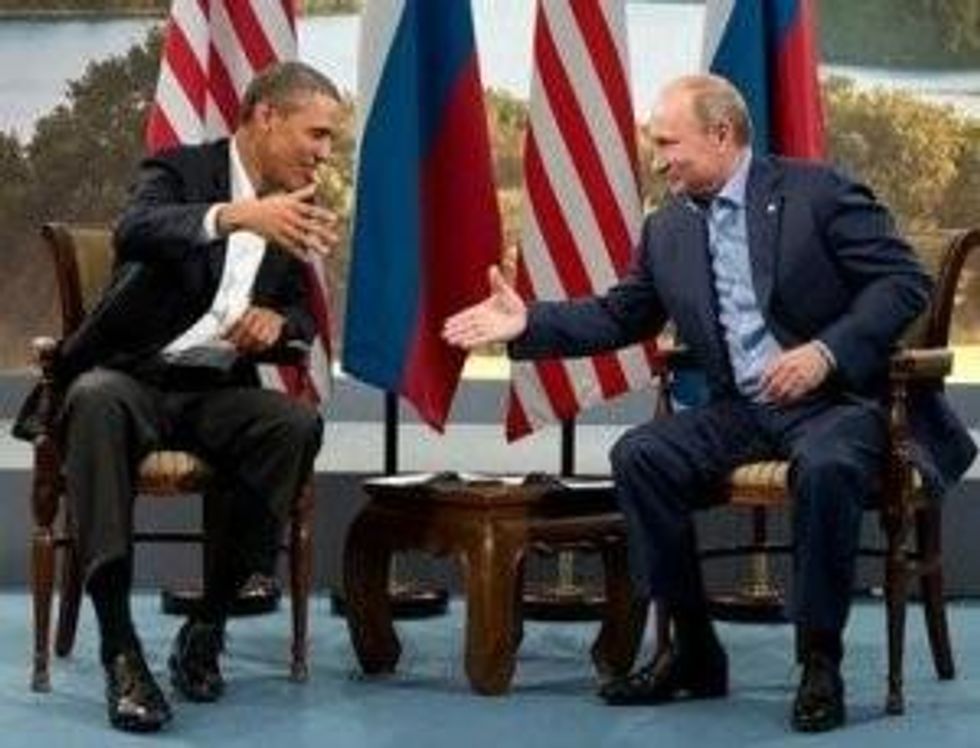
The rise of criminal elites is global. Vladimir Putin is a megalomaniac and a thug who is filling his personal coffers while he is the leader of Russia, and Barack Obama, who has more polish and sophistication, will fill his own pockets, as did the Clintons, with tens of millions of dollars as soon as he leaves office. The banks and corporations for which Obama works are as criminal and corrupt as the Central Bank of Russia, which calculates that perhaps two-thirds of the $56 billion that left Russia in 2012 might have been from money laundering, drug trafficking, tax fraud or kickbacks. The circular system of patronage and crime that exists worldwide varies from region to region only by degrees and style.
The Western political and financial elites, Putin knows, will not touch him. He and they are in the same decadent oligarchic class. They hold the same values. Europe depends on Russia for 40 percent of its natural gas, most of which passes through Ukraine. European bankers and corporations have no intention of jeopardizing that flow, or any current or potential trade deals. Corporate profit is the driving engine of foreign policy. Our elites do not care about human rights or civil liberties, not to mention the illegality of pre-emptive war, any more than Putin. Ask the people of Iraq, Afghanistan, Pakistan, Yemen or Somalia how much moral authority the United States has to denounce the violation of the territorial integrity of a sovereign state. Ask those in our black sites and offshore penal colonies how much moral authority we have to denounce arbitrary detention and torture. Ask the 1.3 million people who lost their extended unemployment benefits in December or those who saw food stamp cutbacks reduce their spending by $90 a month how much moral authority there is left in our corporate state.
Our elites have established the most efficient system of mass surveillance in history. They have abolished most of our civil liberties. They have trashed our economy for their own personal gain. They have looted state treasuries and thrown working men and women aside. Satan is again holding a great ball. You are not invited. I am not invited. Only the gangsters will be there. Putin will be an honored guest. So will Obama.
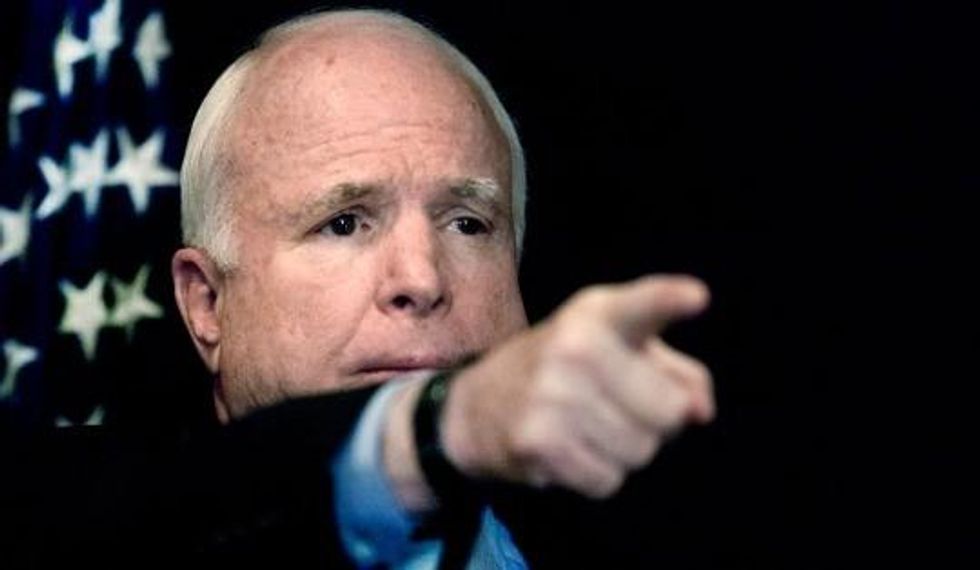
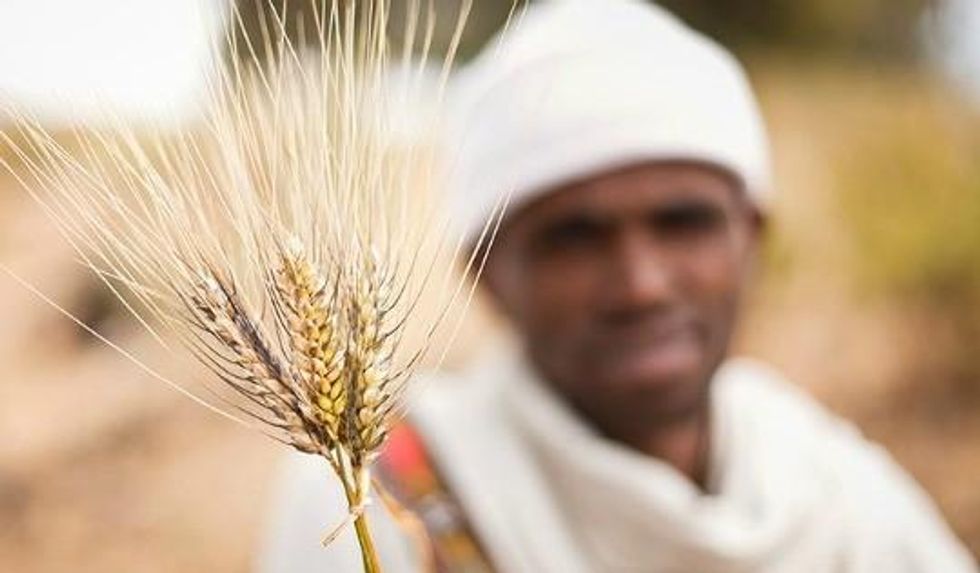
According to a Guardian report published Tuesday, the G8's New Alliance for Food Security and Nutrition initiative, supported by the Obama administration, has connected African leaders with major agribusiness corporations in an effort to map out a plan for agricultural development on the African continent in the coming years, which will loosen export and tax laws, award "huge chunks of land" for private investment and change seed laws to benefit international corporations and their GMO products.