

SUBSCRIBE TO OUR FREE NEWSLETTER
Daily news & progressive opinion—funded by the people, not the corporations—delivered straight to your inbox.
5
#000000
#FFFFFF
To donate by check, phone, or other method, see our More Ways to Give page.
Daily news & progressive opinion—funded by the people, not the corporations—delivered straight to your inbox.
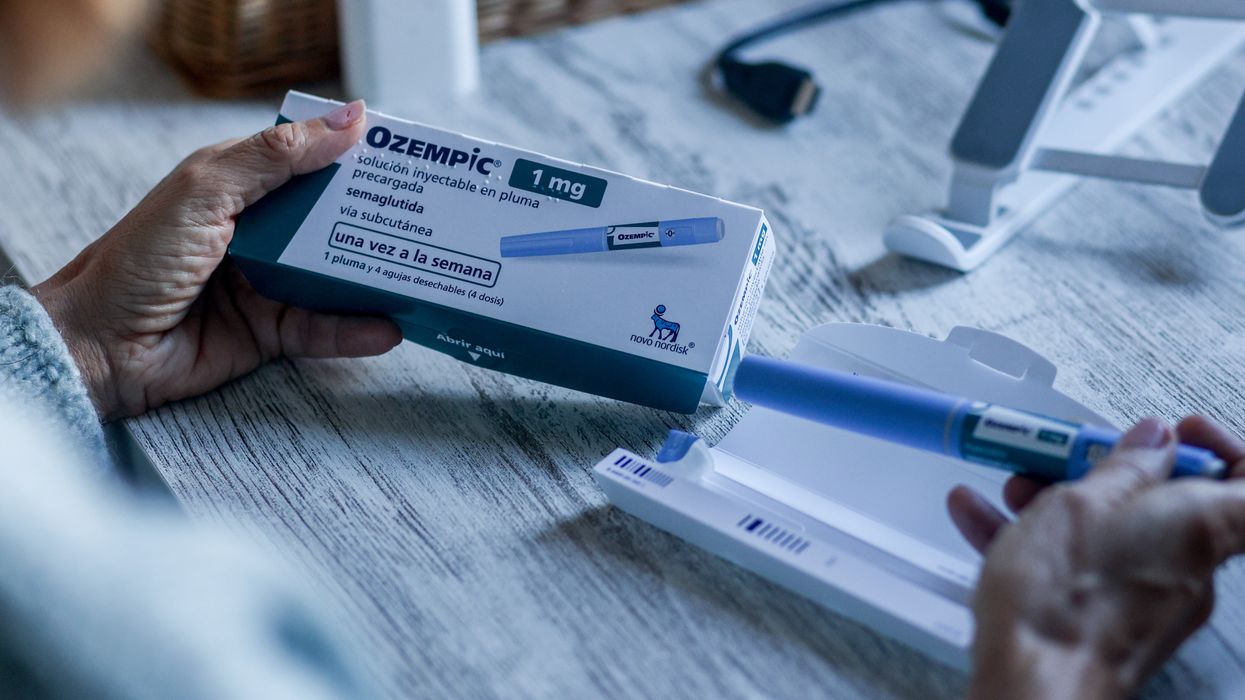
"Too often, because manufacturers are pricing out my patients, I have to resort to treatment options that are less effective and less safe," one doctor said.
As the U.S. Senate prepares for a hearing on Novo Nordisk overcharging Americans for Ozempic and Wegovy, Sen. Bernie Sanders on Monday released a letter from 253 health professionals asking Congress to take on the "exorbitant prices set by manufacturers" for non-insulin diabetes and weight loss medications.
The clinicians wrote that drugs including "semaglutide (marketed by Novo Nordisk as Ozempic for diabetes and Wegovy for weight loss) and... tirzapetide (marketed by Eli Lilly as Mounjaro for diabetes and Zepbound for weight loss) have been revolutionary in the management of chronic conditions of diabetes and obesity."
"However, even the most transformative medications cannot help our patients if they cannot afford them," states the letter, which is addressed to Sanders (I-Vt.), chair of the Senate Committee on Health, Education, Labor, and Pensions (HELP), and Sen. Bill Cassidy (R-La.), the panel's ranking member.
"If Novo Nordisk does not end its greed and substantially reduce the price of these drugs, we must do everything we can to end it for them."
"Studies have shown that semaglutide can be manufactured for as little as nearly $5 per month, substantially lower than the current U.S. list price of $968 for Ozempic or $1,349 per month for Wegovy," the letter notes. "In contrast, Novo Nordisk has set the price of Wegovy at $92 in the United Kingdom and $186 in Denmark, clearly demonstrating that these drugs are being priced unfairly for our U.S. patients."
The health providers stressed that "for patients, these are not one-off prices they shoulder, but potentially lifelong costs they will need to consider. For obesity, the drugs work while patients take them, but once off treatment, studies have found that patients regain the weight."
"Patients in the U.S. face multiple hurdles in accessing the drugs, which we as prescribers do our best to help them navigate," they explained, detailing issues faced by people who have private insurance, Medicare and Medicaid coverage, and no insurance. "Lack of coverage, supply shortages, and the unreasonable sticker prices of these medications are pushing patients to consider alternative options, which are often unsafe."
"We want our patients to be able to access medications that can improve their health and quality of life, but we do not want to rob the American taxpayers to line the pockets of the pharmaceutical manufacturers," the clinicians concluded. "Senators, we are asking you to do everything in your power to bring down the price of these novel diabetes and obesity drugs. Our patients deserve to have the best options available to them at a fair price."
Echoing the letter in a Monday statement, Dr. Kasia Lipska, a practicing endocrinologist and diabetes researcher at the Yale School of Medicine in Connecticut, said that "the exorbitant prices that manufacturers are asking my patients to pay for these novel diabetes and obesity medications are simply unacceptable."
"Too often, because manufacturers are pricing out my patients, I have to resort to treatment options that are less effective and less safe," Lipska continued. "These are life-changing treatments that should be available to my patients and everyone who needs them, not just those who can afford to pay."
Dr. Elizabeth Dewey, another letter signatory who practices family medicine in Greensboro, North Carolina, said that in her state, "we have been struggling all year with lack of coverage for weight loss medications."
"When our state plan and large employers dropped coverage for weight loss medications earlier this year, patients were left without treatment," Dewey explained. "Those who wanted to continue on the medications could pay cash. But for most patients, paying hundreds of dollars without insurance coverage is not affordable. Even with drug company coupons or discounts on certain doses, these treatments are still unattainable for most of my patients."
Sanders, who launched a probe into Denmark-based Novo Nordisk back in April, welcomed the letter, saying that "doctors across this country are sick and tired of seeing their patients ripped off by giant pharmaceutical companies."
"There is no rational reason, other than greed, for Novo Nordisk to charge Americans with Type 2 diabetes $969 a month for Ozempic, while this same exact drug can be purchased for just $155 in Canada and just $59 in Germany," he argued. "Novo Nordisk also charges Americans with obesity $1,349 a month for Wegovy, while this same exact product can be purchased for just $140 in Germany."
"Doctors agree," he added. "If Novo Nordisk does not end its greed and substantially reduce the price of these drugs, we must do everything we can to end it for them."
The Senate HELP Committee hearing on Capitol Hill is scheduled for 10:00 am on Tuesday, September 24.
"There is no rational reason, other than greed, for Novo Nordisk to charge Americans struggling with obesity $1,349 for Wegovy when this exact same product can be purchased for just $186 in Denmark," said the senator.
Releasing the U.S. Senate Health, Education, Labor, and Pensions Committee's findings on the prices of weight loss drugs in the United States, Sen. Bernie Sanders on Wednesday ramped up pressure on a Danish pharmaceutical company to lower the "outrageously high" prices of Ozempic and Wegovy, warning that the current pricing could bankrupt the country's healthcare system.
As chairman of the Senate HELP Committee, Sanders (I-Vt.) is leading an investigation into Novo Nordisk's weight loss drug pricing, and the report published Wednesday is the result of modeling his staff completed to show how the medications' exorbitant prices could impact prescription drug pricing across the United States.
The committee found that if half of all U.S. adults with obesity took Wegovy and other diabetes drugs that have recently been approved for weight loss, it could cost $411 billion per year. In 2022, Americans spent $406 billion on all retail prescription drugs.
Medicare and Medicaid would spend an estimated $166 billion per year on the medications if half of the programs' patients used them, rivaling the $175 billion the programs spent on prescription drugs in 2022.
"Today's report makes it crystal clear: The outrageously high price of Wegovy and other weight loss drugs have the potential to bankrupt Medicare and our entire health care system," said Sanders.
The projected costs are a far cry from what patients in Denmark and other European countries would pay for the same drugs.
Americans currently pay $969 per month for Ozempic and $1,349 per month for Wegovy. While the two drugs have the same active ingredient, the former is typically used to treat Type 2 diabetes and the latter is for weight loss and management.
Ozempic costs just $155 in Canada, $71 in France and $59 in Germany. Danish patients pay just $186 per month for Wegovy, while the medication costs $137 in Germany and $92 in the U.K.
Sanders' report says that Novo Nordisk's prices are "especially egregious" considering the fact that the company could make a profit off manufacturing them for less than $5 per month.
"The unjustifiably high prices of these weight loss drugs could also cause a massive spike in prescription drug spending that could lead to an historic increase in premiums for Medicare and everyone who has health insurance," said the senator. "There is no rational reason, other than greed, for Novo Nordisk to charge Americans struggling with obesity $1,349 for Wegovy when this same exact product can be purchased for just $186 in Denmark."
The report cites the North Carolina state health plan's decision last month to end coverage for Wegovy and similar medications.
The plan administrators "estimated that continuing coverage for Wegovy at its current price would require them to double insurance premiums. Faced with impossible choices, the health plan eliminated coverage," reads the report.
The reason nearly 20,000 teachers and other state employees in North Carolina lost access to the drugs, the report emphasizes, "was not because there were not enough drugs to meet demand, but because Novo Nordisk refused to lower prices to make those drugs widely available."
Thirty-five state Medicaid programs do not cover the medications at all, the HELP Committee noted, due to the price.
"As important as these drugs are, they will not do any good for the millions of patients who cannot afford them," reads the report. "Further, if the prices for these products are not substantially reduced, they have the potential to bankrupt Medicare, Medicaid, and our entire healthcare system."
The committee found that if Novo Nordisk made the U.S. price of Wegovy equal to what Danish patients pay, the healthcare system could pay for new weight loss drugs for 100% of adults with obesity annually for less than what it costs to cover just 25% of those patients at the current drug prices.
The healthcare system would save up to $317 billion per year, according to the committee's modeling.
The report was released days after Sanders appealed to the Danish government in the pages of one of the country's largest newspapers, Politiken, calling on officials to force Novo Nordisk to lower U.S. prices.
"As many Danes may know, I have long admired the welfare system that has been built up in Denmark," wrote Sanders. "When I was a candidate for the presidency, I often pointed out that the United States could learn a lot from Denmark in terms of access to healthcare and education, as well as respect for the environment and workers' rights. There is a reason why Denmark is considered one of the happiest places on Earth in international surveys. The Danish people should be proud of what you have managed to achieve."
"So now I want to appeal to the people of Denmark and the charitable foundation that owns this hugely profitable company," he continued. "Help the American people do something about the epidemic of obesity and diabetes we are facing."
Pelle Dragsted, a member of Danish Parliament for the Red-Green Alliance and a democratic socialist, applauded Sanders' op-ed.
"Healthcare is a human right," said Dragsted on Monday. "Having an illness should never be the ruin of anyone. Our message to Novo Nordisk is clear: Choose basic decency and social responsibility over profit—lower your prices in the U.S."

"We cannot continue to allow large corporations in the food and beverage industry to put their profits over the health and wellbeing of our children," said Sen. Bernie Sanders.
A trio of U.S. senators on Friday introduced what's being billed as first-of-its-kind legislation sponsors say will "take on the greed of the food and beverage industry and address the growing diabetes and obesity epidemics" with a federal ban on junk food ads targeting children.
The Childhood Diabetes Reduction Act—introduced by Sens. Bernie Sanders (I-Vt.), Cory Booker (D-N.J.), and Peter Welch (D-Vt.)—would also require warning labels "on sugar-sweetened foods and beverages; foods and beverages containing non-sugar sweeteners; ultra-processed foods; and foods high in nutrients of concern, such as added sugar, saturated fat, or sodium."
"Let's be clear: The twin crises of type 2 diabetes and obesity in America are being fueled by the food and beverage industry that, for decades, has been making massive profits by enticing children to consume unhealthy products purposely designed to be overeaten," Sanders—who chairs the Senate Health, Education, Labor, and Pensions (HELP) Committee—said in a statement. "We cannot continue to allow large corporations in the food and beverage industry to put their profits over the health and wellbeing of our children."
"Nearly 30 years ago, Congress had the courage to take on the tobacco industry, whose products killed more than 400,000 Americans every year," Sanders added. "Now is the time for Congress to act with the same sense of urgency to combat these diabetes and obesity epidemics. That means banning junk food ads targeted to kids and putting strong warning labels on food and beverages with unacceptably high levels of sugar, salt, and saturated fat."
Booker said that "the future of our nation depends on a continued investment in the health and wellbeing of our children," adding that "more and more of our children are developing diabetes and obesity primarily because a handful of corporate food giants push addictive, ultra-processed foods to drive up their profits."
"By banning junk food advertising to children, implementing front-of-package warning labels, and funding research on the dangers of ultra-processed foods, we can rein in the predatory behavior of big food companies and ensure a healthier future for generations to come," he added.
As the senators noted:
Today, more than 35 million Americans are struggling with type 2 diabetes—90% of whom are overweight or obese. These crises go hand-in-hand and children are severely impacted. Today, 1 out of 5 five kids are living with obesity. A serious illness unto itself, diabetes is also a contributing factor to heart disease, stroke, amputations, blindness, and kidney failure. Unless the U.S. dramatically changes course, these numbers will continue to grow exponentially.
The impact on the economy is enormous: Last year, the total cost of diabetes exceeded $400 billion, approximately 10% of overall U.S. healthcare expenditures.
Meanwhile, the U.S. food and beverage industry spends about $14 billion annually on marketing unhealthy products, with $2 billion of that spent on advertising these products to children.
"Our food environment has become dominated by ultra-processed foods that have more in common with a cigarette than a fruit or vegetable," said Ashley Gearhardt, director of the Food and Addiction Science & Treatment Lab at the University of Michigan. "Many ultra-processed foods are hyperpalatable and trigger the core signs of addiction, like intense cravings and a loss of control over intake."
"The American public is not adequately warned about the risks associated with these products and children are a key marketing demographic for ultra-processed foods with unhealthy nutrient profiles," Gearhardt added. "The Childhood Diabetes Reduction Act is a courageous step towards promoting the physical and mental health of American children."
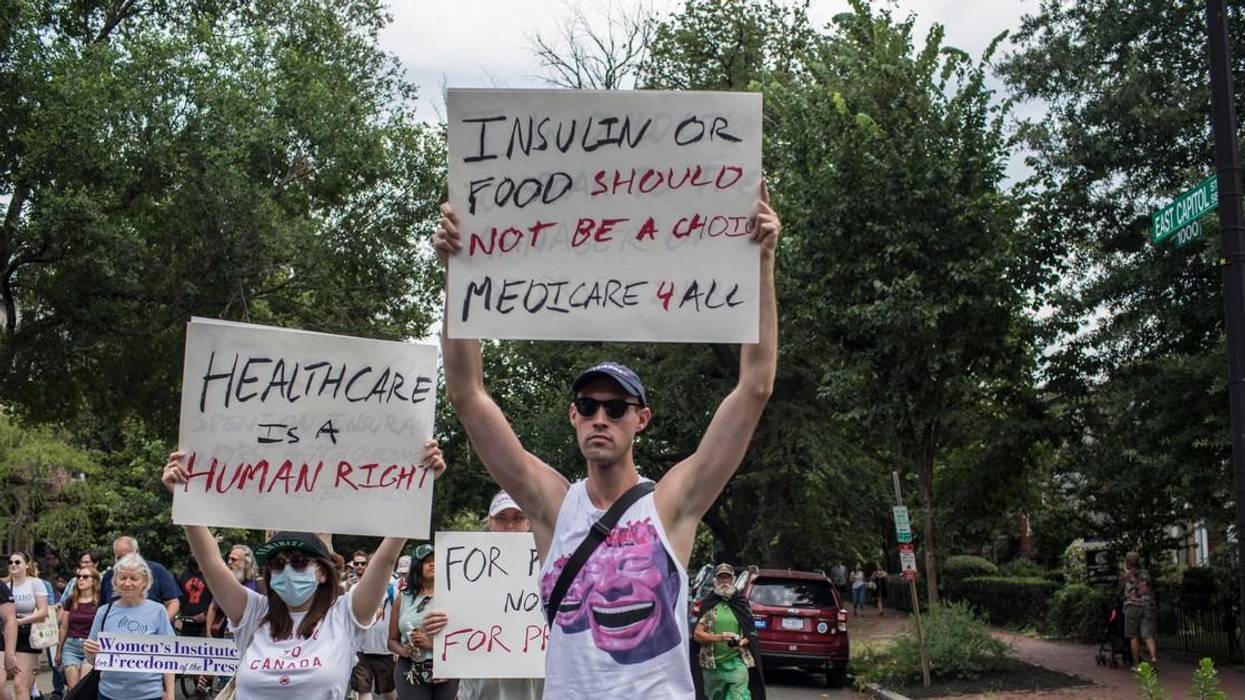
To create sustainable change in the insulin market and to truly lower costs to patients, we need to think outside of the dominant systems that rely on corporate actors.
In March, the Big Three manufacturers of insulin, who control over 90% of the insulin market in the U.S., announced highly publicized list price cuts to some insulins, after decades of
unchecked price increases on the 100-year-old drug that costs $6 a vial to produce. In response, some claimed that California’s foray into the insulin market (by way of a contract with the nonprofit CivicaRx to produce the state’s own insulin) was no longer needed. But recent findings confirm what advocates have known for a long time: The system of fully private, profit-driven production is not working for patients.
Lilly’s insulin Lispro was supposed to be available for $25 as of May 1. T1International recently shared that the average list price quoted to patient advocates attempting to acquire the $25 insulin since May 1 has been $107.31, while Sen. Elizabeth Warren’s (D-WMass.) office found chain stores charged uninsured customers an average of $123 per vial for the generic insulin, and nearly half (43%) of surveyed pharmacies did not stock it.
To create sustainable change in the insulin market and to truly lower costs to patients, we need to think outside of the dominant systems that rely on corporate actors to implement change—we need public pharma options.
Ultimately, insulin manufacturers and the pharmaceutical industry must be held accountable for putting profits over patients through legislation that permits price-lowering solutions to move quickly ahead.
“Public Pharma” refers to options in which state actors take or complement roles that private companies usually have in pharma: manufacturing, distributing, and pricing prescription drugs. Three variations of Public Pharma are: public manufacturing, in which the state manufactures the drug; public procurement, in which states purchase drugs in bulk quantities at a lower price and distribute them; and public PBMs, in which the state(s) negotiate lower prices for public or private entities to purchase.
States who invest in public manufacturing of insulin and other medicines are investing in the future of their citizens. The demand for insulin, which is as essential as water to a person with type 1 diabetes, will only increase in the coming years, with rates of diabetes in young U.S. populations predicted to rise dramatically. The current faulty system has resulted in an estimated 1.3 million Americans rationing their insulin in the last year. States that provide affordable and accessible insulin will save money through fewer emergency room visits for diabetic ketoacidosis (DKA), a consequence of rationing that costs an average of $30,000 per ER visit. They can also count on a reduction of long-term complications caused by the inability to correctly manage diabetes with insulin, such as amputations, kidney failure, vision damage, and more. In 2019, taxpayer-funded programs like Medicare and Medicaid spent over $120 billion (65% of total expenditures) on total health expenditures, including over $25 billion on insulin. If patients were able to buy their medicine at a price that is close to the manufacturing cost—or better yet, receive it for free—money would be saved and quality of life would be vastly improved.
Public manufacturing will also create new jobs and allow states to take ownership of the supply chain. There is opportunity to sell the publicly produced medicines to other states interested in contracting for lower cost options. And of course, states are not limited to only addressing insulin costs, but can focus on other high priced drugs in the future, as California is doing with Naloxone.
Public Pharma initiatives, most specifically targeting insulin, have already been started in Washington, Maine, Michigan, and California, with Michigan and California both budgeting significant funds for the efforts ($150 million and $100 million, respectively). Establishing a manufacturing facility and getting FDA approval is a longer process, so while public manufacturing should be the end goal among the various pathways, establishing interim solutions with public PBMs (as Washington, Oregon, Nevada, and Connecticut have done with ArrayRX) and public procurement options can lower prices quickly and save states money. Additionally, creating a public-private partnership by contracting with a nonprofit like Civica, as California has done for their state brand CalRx, could lower costs for some patients as soon as 2024, since they are further along in the drug development and approval process for insulin. Ultimately, insulin manufacturers and the pharmaceutical industry must be held accountable for putting profits over patients through legislation that permits these and other price-lowering solutions to move quickly ahead.
Public manufacturing has already been implemented successfully by several states. Massachusetts and Michigan have both developed, manufactured, and marketed biologics (including vaccines, monoclonal antibodies, and immunoglobulins) in the past, and Massachusetts continues to do so today through MassBiologics. The California Department of Public Health produces BabyBIG, a biologic drug used to treat infant botulism, which was developed and produced in response to a high incidence of infant botulism cases in the state.
It’s time to put people over profit, and join #insulin4all advocates across the country in urging our state legislators to prioritize public pharma.

"It is vital that affordable insulin access is provided to everyone, including those who do not have insurance," wrote healthcare advocates.
More than three dozen healthcare and consumer advocacy groups on Monday applauded recently passed legislation to expand access to lifesaving insulin—but with more than a million people in the U.S. still forced to ration the diabetes treatment due to skyrocketing costs, the groups said U.S. Senate Majority Leader Chuck Schumer must take further action to ensure no more Americans risk their health, or even die, due to insulin prices.
With the Senate expected to advance a packages that will address high drug prices, groups including Public Citizen, Metro New York Health Care for All, and Patients for Affordable Drugs told the Democratic leader, who represents New York, that any legislation must pass "the Alec Smith test."
Alec Smith died at the age of 26, less than a month after he aged out of his parents' insurance plan. He made just enough money to not qualify for any insurance subsidies or patient assistance programs and so was forced to pay for insulin for his Type 1 diabetes out of pocket—$1,300 per month. Unable to afford the medication on top of housing costs, bills, and other essentials, Smith rationed his insulin supply and died of ketoacidosis in 2017.
"Any insulin legislation that would not have prevented this tragedy fails the Alec Smith test," wrote the groups. "It is vital that affordable insulin access is provided to everyone, including those who do not have insurance, in addition to those who are privately insured."
"Insulin legislation advanced through the Senate should put an end to perverse arrangements between drug corporations and middlemen that stifle potential savings from lower-priced insulins and put patients' lives at risk."
The groups said the legislation must include three key elements, including:
"Insulin legislation advanced through the Senate should put an end to perverse arrangements between drug corporations and middlemen that stifle potential savings from lower-priced insulins and put patients' lives at risk," they added.
The organizations credited the Democratic Party with passing medication price reforms in the Inflation Reduction Act and the American Rescue Plan, guaranteeing access to insulin for Medicare recipients for no more than $35 per month and lifting a cap on Medicaid rebates.
A recent study published in the Annals of Internal Medicine, however, showed that 1.3 million people in the U.S. are still forced to ration insulin, including 29.2% of people without insurance and nearly 20% of those with private insurance.
"Hopefully soon, some of these patients will feel improvements in access and pricing due the policies that have been enacted," wrote the groups, "but many require further relief—the Senate's work is far from complete."

A lower-priced insulin doesn’t save lives if it’s unavailable. It is simply a strategic public relations move.
On March 1, Eli Lilly announced it would reduce the list prices of some of its insulins, including the generic Lispro, the same product as the name-brand Humalog. At a recent congressional hearing with the CEOs of insulin manufacturers and pharmacy benefit managers, David Ricks, Eli Lilly’s CEO, again celebrated that $25 insulin lispro was available to patients as of May 1. People with diabetes have worked tirelessly to reduce insulin costs for decades. So why aren’t we universally celebrating this announcement of lower prices?
Because it is now the end of May, and I—along with many others in my community—still haven’t been able to get the promised $25 insulin.
I have lived with type 1 diabetes for 22 years, more than ⅔ of my life. In that time, I’ve watched the price of insulin climb, while simultaneously listening to promises from big pharma and the organizations that accept their funding that ultimately led nowhere. However, when I first read that Eli Lilly was going to offer $25 vials of Lispro starting May 1, I was optimistic about what this could mean for the 7+ million people who rely on insulin daily.
I don't usually use insulin Lispro (but rather it’s brand name cousin per my insurance guidelines) so after Eli Lilly’s news, I confirmed with my insurance company that I wouldn’t need a new prescription to access Lispro. They said I wouldn’t—great, and off to the pharmacy I went to purchase my $25 insulin!
I went to my local pharmacy when my refill was up. But when I requested Lispro, the pharmacist shook his head: “We don’t have that in stock.” When I asked when it would be back in stock, he shrugged, “they send Lispro when they have it.” I decided to return at a later date as I happened to have a supply of insulin on hand at home, two weeks later, we had a similar exchange.
The experience was frustrating, however, it ended only in frustration because I was fortunate enough to have extra insulin at home, a prescription for the brand name equivalent, insurance to cover the brand name, and an income that allows me to do so. That is a combination of privilege and luck that many aren’t afforded. In another situation that frustration could have easily turned to a life-threatening and dangerous situation.
If Eli Lilly is going to promise $25 vials of insulin Lispro, it needs to be accessible. A lower-priced insulin doesn’t save lives if it’s unavailable, it is simply a strategic PR move.
And patients don’t have time to wait for Eli Lilly and other insulin manufacturers to follow through on their promises. Now is the time to cap the list price of all insulins.
Nestle, the world's largest food company, is known for scandal. It earned the nickname "babykiller" in the 1970s for causing infant illness and death in low-income communities by promoting bottle feeding of its infant formula and discouraging breastfeeding. In recent years, similar charges have been made against the company for contributing to soaring rates of obesity and diabetes in poor communities by targeting them for sales of ultra-processed junk foods. But there's another scandal of equally grim proportions that is contained within the company's accounting sheets.
On April 23, 2020, with the world in the grips of the Covid-19 pandemic and the FAO warning of a looming global food crisis, Nestle's shareholders and executives awarded themselves a record dividend payout of US$8 billion. In a time of a global health and food crisis, this handout is worth more than the entire annual budget for the UN's World Food Programme and would be enough to cover the average annual expenditures on health care for more than 100 million people in Africa.
Nestle's massive 2020 dividend payment was, in fact, just a fraction higher than the previous year's. Such large payouts for shareholders and executives is standard practice for the company-- as it is for all the big transnational food and agribusiness companies, even at times of global health catastrophes. Other notable shareholder dividends, announced in April this year, include a US$2.8 billion payout by the world's largest seed and agrochemical company Bayer AG, a US$600 million payout by the world's largest poultry producer Tyson and a US$500 million payout by the world's largest pork company, the WH Group. Cargill, the word's largest agribusiness company, is on track to top last year's record payout of US$640 million, which it makes to just a small number of Cargill family members. Increased e-commerce, particularly of food items, during the Covid-19 crisis increased the net worth of Jeff Bezos, the founder of e-commerce giant Amazon, by a shocking US$24 billion. It is even a rich time for the shareholders of smaller players in the industry, like the oil palm and rubber plantation company SOCFIN. The two French and Belgian families that essentially own the company, received EUR20 million (around US$22.5 million) in dividends and remunerations from SOCFIN's group operations while communities where it operates in Nigeria, Ghana and Cameroon cannot access clean or safe water.
All this greed at the top leaves devastation and little to trickle down to the bottom, where its consequences are deadly.
A powerful industry in the midst of a "perfect storm"
The labourers in the corporate food system, those who are quite literally dying on the frontlines to sustain the lifestyles of shareholders and executives, are not faring well. The supply chains of the big food companies, which have always been dangerous places for workers, have now become hotspots for Covid-19 infections and transmission. Across the world, there have been deadly outbreaks in meat plants, port facilities, warehouses, fish canneries, oil palm plantations, fruit farms, supermarkets and all other points along the chains that these companies command-- with the exception of their office towers, of course.
The big meat companies have perhaps been the worst offenders. With the Covid-19 pandemic in full bloom, they aggressively sped up their assembly lines to ramp up exports to China, where meat prices are unusually high. This decision was taken in full knowledge that these increases in processing made social distancing impossible and put their workers and the surrounding communities at risk of mass virus outbreaks. By the end of May, the results in the biggest meat exporting nations were horrific: hundreds of migrant meat plant workers sick with Covid-19 in Germany and Spain, thousands of cases of workers ill with Covid-19 in Brazil's meat packing industry, and over 20,000 workers infected with Covid-19 in US meat packing plants, with at least 70 deaths. Meanwhile, hundreds of thousands of animals are being culled, under atrocious conditions because these massive plants have had to shut production down, and the small abattoirs that could have taken in the livestock, have long since been forced out of business.
The carnage in Latin America, the new epicentre of the Covid-19 pandemic, has been particularly severe. With the global economy at a near standstill, agribusiness in the region has continued functioning with total impunity, deepening its impact and harm on communities and ecosystems. In almost all the countries in the region, agro-industrial activities have been exempted from quarantine, as they are considered "essential", even though their focus is on exports, not on providing food to local people.
For example, Ecuador's government issued a state of emergency decree paralysing the country, but ensuring that "all export chains, agricultural industry, livestock [industry] ... will continue to function." As a result, workers in the banana and palm plantations, seafood factories, flower farms, and many more, were forced to continue working as if the country was not under a health emergency, thereby exposing themselves to the risk of contracting Covid-19.
Similarly, the Bolsonaro government in Brazil declared that the production, transport and general logistics of export food chains were essential activities that must continue functioning without restrictions. In this context, exports of meat, soybeans and other commodities are surging - as are the numbers of people exposed to Covid-19 along the export chains. In the Brazilian state of Rio Grande do Sul, a meat export hub, more than a quarter of the confirmed novel coronavirus cases in May were among meat plant workers. Labour prosecutors are now fighting to close infested plants and force companies to implement even basic measures to protect and care for their workers during the pandemic.
Brazil's soybean exports, which are up 38 percent from last year, are another potential hotspot for Covid-19, especially at the ports where trucks and workers are constantly circulating. When the local government of the port town of Canarana in Mato Grosso tried to take action by issuing a decree to pause the export of soybeans and other grains in the absence of proper health and safety conditions, the agribusiness giants Louis Dreyfus and Cargill intervened and were able to reverse the decree within a few days. Canarana is now, in early June, seeing a surge in Covid-19 infections.
All this export frenzy has a tremendous impact on the ground. According to Deter, the real-time detection system of the Brazilian national space research institute, deforestation of the Amazon in Brazil has increased by more than 50 percent in these first three months of 2020 - at the height of the coronavirus pandemic, in comparison to the previous year's first quarter. Taking advantage of the pandemic smoke screen, with fewer inspection agents able to carry out inspection, agribusiness and mining operations are advancing on protected areas and indigenous territories, increasing the contagion of Covid-19 in indigenous populations. Many observers fear a genocide as a result of these reckless advances of agribusiness and mining operations during the pandemic.
Such brazen corporate profiteering is creating a legitimacy crisis for the corporate food system.Amidst the national quarantine in Argentina, soybean exports and forest clearings have not ceased either. In one of the most preserved forests in the entire Gran Chaco ecosystem, an area of 8,000 hectares is being prospected for clearing. Furthermore, based on monitoring with satellite imagery, Greenpeace denounced that almost 10,000 hectares were cleared in the North of the country since the lockdown began.
Such brazen corporate profiteering is creating a legitimacy crisis for the corporate food system. Although the lockdowns make it difficult to measure, the ground appears to be shifting: we see workers in the food industry speaking out, organising and getting more support and solidarity from others; we see increasing interest among consumers in healthy, local foods and the well-being of food producers and farmers; and there's been an undeniable boom in community-oriented efforts to get food to where it's needed through solidarity, mutual aid, volunteer work and cooperatives. There's even been some victories at the policy level, such as the German government's recent decision to ban sub-contracted labour in meat plants and another to prevent companies taking public aid from paying out dividends.
But this is a powerful industry, with ample amounts of cash and political connections at its disposal, and there is no doubt that it will do everything it can to use this moment of confusion and lockdowns to advance its interests. We have already seen this with the executive order that US President Trump issued at the behest of JBS, Tyson, Cargill and other meat corporations to keep their Covid-infested plants running. We have also seen it in Brazil where the Bolsonaro government approved a record 96 new pesticides in the first months of 2020, more than all the approvals for 2019. The same government deliberately used the cover of the pandemic to try and pass a law that would legalise land grabs and deforestation covering 80 million hectares in the Amazon and Cerrado regions. The pandemic has also been used as an opportunity to rapidly expand e-commerce in food retail and push ahead with Genetically Modified Organisms (GMOs) in Ethiopia and in Bolivia, where the de-facto government claimed that the Covid-19 health emergency made GM seeds a necessity for the country.
Agribusiness as big winner from new wave of structural adjustment
Worse is yet to come. Many governments are employing global consulting firms, like McKinsey, to shape their plans to open their economies back up. These secretive firms which are deeply connected to the world's largest corporations, including those from the food and agribusiness sector, will no doubt influence who emerges as winners and losers from the pandemic responses-- workers or bosses, farmers' markets or e-commerce giants, fisherfolk or the trawling industry.
We are also seeing the IMF and World Bank use their Covid-19 emergency funds to push countries into implementing agribusiness-friendly reforms. In the Ukraine, for example, a law privatising farmland was implemented despite the opposition of a majority of Ukrainians. In the coming months, such pressures will escalate. Dozens of countries are heading for defaults, and those debts will have to be negotiated not only with the IMF and bilateral lenders, but also with private creditors who have already indicated that they are not interested in even delaying debt and interest payments during this health crisis. A new wave of structural adjustment is on the way that will focus heavily on increasing foreign agribusiness investment and exports of agricultural commodities to pay off the vultures.
This time, however, governments are going to find it incredibly difficult to impose a new round of agro-imperialism on populations that have already had more than enough of it, and that are increasingly hungering for the alternatives that social movements have been advancing for decades.
Processed meats have been placed in the same health risk category as smoking and asbestos by the cancer research body of the World Health Organization (WHO) on Monday.
Products salted, cured, or otherwise processed to enhance flavor are "carcinogenic to humans," the Paris-based International Agency for Research on Cancer (IARC) found in its report, published in the Lancet Oncology. That puts processed meat in the Group 1 carcinogenic category alongside substances like tobacco, alcohol, and plutonium. And non-processed fresh meats like beef, pork, and lamb, among others, are "probably carcinogenic to humans," the agency said.
According to the IARC's report, Carcinogenicity of Consumption of Red and Processed Meat, each 50-gram portion of processed meat eaten daily—including bacon, sausages, and ham, as well as canned meat and meat-based sauces—increases the risk of colorectal cancer by 18 percent. The report was crafted by 22 international health experts for the IARC Monograph Program, which evaluates environmental causes of cancer in humans.
"For an individual, the risk of developing colorectal cancer because they consume processed meat remains small, but this risk increases with the amount of meat consumed," said Dr. Kurt Straif, head of the IARC Monograph Program. "In view of the large number of people who consume processed meat, the global impact on cancer incidence is of public health importance."
The IARC's findings (pdf) come just months after the top U.S. nutritional panel, the Dietary Guidelines Advisory Committee, reported that Americans must reduce their meat intake and switch to sustainable, plant-based diets to curb greenhouse gas emissions and stave off the rise of preventable chronic diseases like diabetes and certain types of cancer.
President Obama responded to that report in February by vowing to consider the environment in the 2015 Dietary Guidelines for Americans (DGA), due later this year. However, heavy lobbying by the meat industry in the intervening months led the Obama administration to rescind its promise, a move that climate and public health advocates called "disappointing" and "politically motivated."
The IARC stated on Monday that meat consumption is increasing in low—and middle-income countries (pdf). Citing the Global Burden of Disease Project, an independent research organization, the IARC reported that diets with a heavy intake of processed meat can cause about 34,000 deaths per year.
"These findings further support current public health recommendations," said IARC director Dr. Christopher Wild. He added that global governments and regulatory agencies should also use them to provide the best dietary guidelines.
People have walked for justice and economic opportunity throughout American history.
Workers wanting a better life for their families walked on picket lines and at protests, rallied by advocates like Cesar Chavez. People demanding civil rights marched in Selma, Alabama, and Washington, DC, led by Rev. Martin Luther King Jr.
Walking is a powerful tool to change the world and a fundamental human right. To be restrained from free movement denies our liberties, a betrayal of American ideals.
Yet many disadvantaged people now think twice before traveling on foot due to dangerous traffic, street crime, or a lack of stores and public places within walking distance, which heightens serious problems of poor health, limited transportation options, and overall disillusionment in their communities.
A wealth of recent medical research, highlighted in the Surgeon General's recent Call to Action on Walking, promotes walking as a way to prevent chronic disease, heart disease, diabetes, depression and some cancers. The US Centers for Disease Control and Prevention recommends that everyone walk or engage in other moderate exercise for half an hour a day, five days a week. (An hour a day for children.)
Poor conditions for walking among low-income households, people of color, and some immigrant communities limit their access to jobs and education. One-third of all African-Americans and one-quarter of all Latinos live without access to a car, according to a report by the Leadership Conference Education Fund, which means walking and public transit (which involves a walk) represent important pathways to opportunity.
Improving walking options can also help ease the financial burdens on poor families, which spend 42 percent of their income on transportation compared to 22 percent among middle-income Americans. That's because the average cost of owning and operating one car is $8700 a year.
"This is an issue of equity," says Gil Penalosa, founder of 8 80 Cities and an immigrant from Colombia. "A big thing we could do to help low-income families is to make living easier without a car. And it would help middle-class families to switch from two cars to one."
Making America more walkable for people of all incomes and races is a major focus of the National Walking Summit, held in Washington, DC, Oct. 28-30. Our mission is "to make sure walking is accessible for everyone, especially vulnerable populations in lower socioeconomic communities where infrastructure has not been invested in, and pedestrian and public safety are significant issues," says Tyler Norris, one of the event's organizers and vice-president of Kaiser Permanente, which is among 20 co-sponsors including AARP, the National Association of Realtors, the Every Body Walk Collaborative, The Robert Wood Johnson Foundation, the Kellogg Foundation, the Knight Foundation and America Walks. The summit is organized by America Walks.
Barriers to Walking
So what stops people of color and those living in low-income communities from walking more?
There are "disproportionately high pedestrian deaths in low-income communities," according to US Department of Transportation specialist Paul Heberling. He notes that pedestrians in the poorest one-third of urban census tracts are twice as likely to be killed as those in other neighborhoods. African Americans are 60 percent more likely to be killed by cars while walking, and Latinos 43 percent. This disparity helped US Secretary of Transportation Anthony Foxx launch his Safer People, Safer Streets initiative to help everyone walk and bike more.
In addition to traffic injuries, there's a stigma in low-income communities that people on foot are "losers, " explains Yolanda Savage-Narva, Director of Health Equity at the Association of State & Territorial Health Officials. Growing up in an African-American community, Savage-Narva recalls, "In Mississippi, it wasn't normal to walk. It was something that only really poor people did."
According to Penalosa, how people travel is an emotional issue in disadvantaged communities. Walking is seen as a symbol of failure. And you can see why when you look at the places where many people are forced to walk—deteriorating infrastructure and dangerous intersections. It's like we are telling these people every day that they are second-class citizens."
Anita Hairston, Associate Director and transportation specialist at Policy Link, a national institute focused on social equity offers another reason straight out of today's headlines to explain why many African-Americans, Latinos and immigrants are wary about taking a stroll. "The issue of racial profiling is front and center. Who's got the right to be on the streets? If a group of young black men are dressed casually, people think: Where is this gang going? What are they going to do? Not everyone has the same experience on the street."
Despite all these roadblocks, people in disadvantaged communities still walk more than other Americans. "The fact is that we have twice as many low-income children who are walking or biking to school than those in affluent neighborhoods, even lacking the infrastructure to protect the children who walk and bicycle," reports Keith Benjamin, a Campaign Manager for the Safe Routes to Schools National Partnership.
RX for a Hidden Health Care Crisis
A little publicized crisis for African Americans is the high rate of heart disease and diabetes, especially among women, says Vanessa Garrison, co-founder of the health empowerment program Girl Trek.
"The leading cause of death for black women is heart disease," Garrison notes. "We are dying younger and at higher rates from preventable diseases than any group of women in this country. Eighty percent of black women are overweight. Half of all black girls born in 2000 will get diabetes by 2034 if present trends continue."
Girl Trek aims to improve black women's health by organizing communities to walk, even where sidewalks are absent and crime rates are high. Over 35,000 African-American women have taken the pledge to re-establish walking as a healing tradition in their neighborhoods. Last spring, more than 500 Girl Trek members traveled to Alabama to walk to celebrate the Selma-to-Birmingham Civil Rights March.
On Foot in Urban America
Fifteen to 20 women in Anacostia, one of the poorest neighborhoods in Washington, D.C., take an invigorating 3.3 mile walk every Saturday morning as part the Just Walk club sponsored by the neighborhood's Community Wellness Collective. "People here have this idea that exercise is just for people with money, people with time," public health consultant Khadijah Tribble. "That's why we walk. To show that's not true."
Every Thursday evening, a walking club can be spotted on the sidewalks of West Humboldt Park, a largely African-American and Latino neighborhood on the West Side of Chicago. The club is part of a program sponsored by the West Humboldt Park Development Council (WHPDC) to increase walking and improve health.
"This area has one of the highest diabetes rates in the nation," explains Isaiah Ross, WHPDC's community development manager until recently. "People haven't walked much here because the traffic makes it hard to get to school or work, and people are afraid to go out because they don't know their neighbors."
The Healthy Community Initiative aims to reduce people's isolation by bringing neighbors together and tackling issues that discourage healthy lifestyles. Groups of 8-10 are being organized to tour their immediate neighborhood, conducting walk audits and public safety audits. "Are the crosswalks visible at intersections? Is the lighting good enough? What can be done to slow down traffic? According to Ross, what's a safe route for kids to go to school?" are among the questions they seek to answer.
Five new playgrounds have recently been built in the neighborhood, and the city of Chicago has begun sponsoring Play Streets events. At these events, a block is closed off to traffic, and people of all ages come to hang out and get to know one another.
Stepping Up in Suburbs and the Country
Not all low-income families and people of color live in cities, of course. Suburban residents now outnumber those living in cities among African-Americans, Latinos, and Asian-Americans.
More poor people live in the suburbs today than in cities, too, and they often experience even greater problems because of spotty public transit, a lack of sidewalks, wide streets with few pedestrian safety measures, and longer walking distances to destinations.
Almost 20 percent of the population of Richmond, a suburban city of 100,000 in the East Bay region of California, live below the poverty line. The city's struggling Iron Triangle neighborhood--which is approximately 2/3 African-American and 1/3 Latino--has long suffered from poverty and high crime rates, says Dan Burden, a walkability expert at Blue Zones, who has worked in 3000 US communities. Local people seeking to improve their community joined hands to restore Pogo Park, and are now working to make neighborhood routes to the park safe for pedestrians by improving the street design to encourage slow traffic and create a more appealing environment for walking. "This is creating a place filled with lots of things for people to do, where gangs will not go to sell drugs or bully everyone," Burden says.
Rural America is poorer on average than urban regions, and one in five residents is Latino, African-American, or Native American. Walking is more common than most people think, but even with long distances to destinations and very limited public transit options, 1.6 million rural households do not have access to cars.
Small-town residents walk almost as much as Americans living in metropolitan areas, according to a report from Rails to Trails Conservancy. In towns sized 2500-10,000, 7.2 percent of all trips are made on foot and 8.5 percent in towns 10,000 - 50,000, compared to the national average of 10.5 percent (and 6.7 percent in newer suburbs), according to the US Department of Transportation.
Rural Americans are enthusiastic about walking. According to a recent survey from the Safe Routes to Schools National Partnership, nine out of ten want to see their communities become more walk-friendly, and 81 percent want to increase or maintain current public spending on sidewalks and bikeways.
In Winton, a largely Latino town of 10,000 in California's Central Valley, parents were wary about kids walking or biking to school due to traffic congestion and lack of sidewalks. The school district responded by declaring a walk-to-school day, hosting events, and teaching classes about street safety. Then, they drafted their Safe Routes to Schools policies with help from the Safe Routes to Schools National Partnership and ChangeLab Solutions.
The bad news is very bad, indeed. But first, the good news: "Responding to climate change could be the biggest global health opportunity of this century."
That message is the silver lining in a comprehensive newly published report by The Lancet, the UK-based medical journal. The report explores the complex intersection between global human health and climate change.
"It took on entrenched interests such as the tobacco industry and led the fight against HIV/AIDS. Now is the time for us to lead the way in responding to another great threat to human and environmental health."
-- Prof. Peng Gong, Tsinghua University
The wide-ranging and peer-reviewed report--titled Health and climate change: policy responses to protect public health--declares that the negative impacts of human-caused global warming have put at risk some of the world's most impressive health gains over the last half-century. What's more, it says, continued use of fossil fuels is leading humanity to a future in which infectious disease patterns, air pollution, food insecurity and malnutrition, involuntary migration, displacement, and violent conflict will all be made worse.
"Climate change," said commission co-chairman Dr. Anthony Costello, a pediatrician and director of the Global Health Institute at the University College of London, "has the potential to reverse the health gains from economic development that have been made in recent decades - not just through the direct effects on health from a changing and more unstable climate, but through indirect means such as increased migration and reduced social stability. Our analysis clearly shows that by tackling climate change, we can also benefit our health. Tackling climate change represents one of the greatest opportunities to benefit human health for generations to come."
Put together by the newly formed Lancet Commission on Health and Climate Change--described as a major new collaboration between international climate scientists and geographers, social and environmental scientists, biodiversity experts, engineers, and energy policy experts, economists, political scientists and public policy experts, and health professionals--the report is the most up-to-date and comprehensive of its kind. Though many studies have been performed on the subject, the commission argues the "catastrophic risk to human health posed by climate change" has been grossly "underestimated" by others.
The four key findings of the report include:
1. The effects of climate change threaten to undermine the last half-century of gains in development and global health. The impacts are being felt today, and future projections represent an unacceptably high and potentially catastrophic risk to human health.
2. Tackling climate change could be the greatest global health opportunity of the 21st century.
3. Achieving a decarbonized global economy and securing the public health benefits it offers is no longer primarily a technological or economic question - it is now a political one.
4. Climate change is fundamentally an issue of human health, and health professionals have a vital role to play in accelerating progress on mitigation and adaptation policies.
"When health professionals shout 'emergency,' politicians everywhere should listen." --Mike Childs, Friends of the Earth"Climate Change is a medical emergency," said Dr. Hugh Montgomery, commission co-chair and director of the UCL Institute for Human Health and Performance. "It thus demands an emergency response."
Rising global temperatures fueling increasing extreme weather events, crop failures, water scarcity, and other crises, Montgomery says the report is an attempt to make it clear that drastic and immediate action should be taken. "Under such circumstances," he said, "no doctor would consider a series of annual case discussions and aspirations adequate, yet this is exactly how the global response to climate change is proceeding."
In a companion paper published alongside the larger report, commission members Helena Wang and Richard Horton explained why human health impacts are an essential part of the larger argument regarding climate change:
When climate change is framed as a health issue, rather than purely as an environmental, economic, or technological challenge, it becomes clear that we are facing a predicament that strikes at the heart of humanity. Health puts a human face on what can sometimes seem to be a distant threat. By making the case for climate change as a health issue, we hope that the civilizational crisis we face will achieve greater public resonance. Public concerns about the health effects of climate change, such as undernutrition and food insecurity, have the potential to accelerate political action in ways that attention to carbon dioxide emissions alone do not.
Responding to the report's findings and warnings, Mike Childs, the head of policy for Friends of the Earth-UK, said the message from one of the world's foremost institutions on public health has given powerful new evidence that "radical action is urgently required" to avoid further climate catastrophe.
"When health professionals shout 'emergency'," Childs said, "politicians everywhere should listen."
Going from diagnosis to prescribing a remedy, the doctors and scientists involved with the report--who equated the human health emergency of climate change with previous physician-led fights against tobacco use and HIV/AIDS--argue the crisis of anthropogenic climate change demands--as a matter of "medical necessity"--the rapid phase-out of fossil fuels (with special emphasis on coal) from the global energy mix. In addition, the authors say their data on global human health support a recommendation for an international carbon price.
"The health community has responded to many grave threats to health in the past," said another commission co-chair, Professor Peng Gong of Tsinghua University in Beijing, China. "It took on entrenched interests such as the tobacco industry and led the fight against HIV/AIDS. Now is the time for us to respond to another great threat to human and environmental health."
The Commission argues that human health would vastly improve in a less-polluted world free from fossil fuels. "Virtually everything you want to do to tackle climate change has health benefits," said Dr. Costello. "We're going to cut heart attacks, strokes, diabetes."
The following video, produced by the Commission and released alongside the report, also explains:
As Wang and Horton conclude in their remarks, "Climate change is the defining challenge of our generation. Health professionals must mobilize now to address this challenge and protect the health and well-being of future generations."