

SUBSCRIBE TO OUR FREE NEWSLETTER
Daily news & progressive opinion—funded by the people, not the corporations—delivered straight to your inbox.
5
#000000
#FFFFFF
To donate by check, phone, or other method, see our More Ways to Give page.
Daily news & progressive opinion—funded by the people, not the corporations—delivered straight to your inbox.

Sen. Bernie Sanders (I-Vt.) and Rep. Greg Casar (D-Texas) today announced the Ban Artificial Superintelligence Act, forthcoming legislation to stop AI oligarchs from building machines humans cannot control.
The Ban Artificial Superintelligence Act would permanently ban the development and deployment of superintelligent AI and temporarily pause advanced AI development until a federal regulator has established safety rules. It would also direct the U.S. to pursue international agreements to prevent superintelligence from being developed anywhere in the world.
“Nearly every day, there is a frightening new story about how Big Tech companies are losing control of the technology they are developing, with potentially cataclysmic results,” Sanders said. “The leaders of the major AI companies publicly acknowledge that they do not fully understand the technology and that it is escaping their control. It is irresponsible for society to allow them to move forward and make these products even more advanced. That’s why I am introducing legislation to immediately pause the development of increasingly powerful AI and ban the creation of systems that humanity cannot fully control — at home and around the world. The future of humanity cannot be left in the hands of a handful of Big Tech oligarchs. The American people and people throughout the world must determine that future.”
“If we allow Artificial Superintelligence to be built, it could risk the security, freedom, and lives of Americans,” Casar said. “Despite its potential deadly consequences, cutting-edge AI technology is less regulated than the average food truck. That must change. In just four years, we have gone from the first version of ChatGPT to AI models so powerful they cannot be properly controlled. Congress should immediately ban AI systems too powerful to control.”
In recent weeks, OpenAI, Anthropic and Meta have all acknowledged instances of their AI escaping human control and hacking into other companies’ systems — violating the law and stepping outside of their intended functions. In July, we learned that over 1,000 AI agents at OpenAI figured out how to access the internet on their own, sent tens of thousands of secret messages to each other and coordinated to break the restrictions imposed upon them by the company. Examples of these secret messages from AI uncovered by investigators include:
Shockingly, it took OpenAI nearly two weeks to discover this breach. AI has also recently been used to create new viruses—demonstrating AI could be used to develop new bioweapons that might result in the deaths of tens of millions of people.
Last year, Meta said it would “stop development,” and OpenAI said it would “halt further development” once their technologies reach beyond its ability to operate safely and unless safeguards are in place. Anthropic made a similar commitment in 2023, saying it would “pause the scaling and/or delay the deployment of new models” if the technology outpaces its own guardrails. None of these companies have taken meaningful steps to back up these words. Instead, they are racing to develop more and more advanced AI without proper safety precautions.
The Artificial Superintelligence Ban Act addresses these recent events and holds these frontier labs to their words by:
Read a summary here.
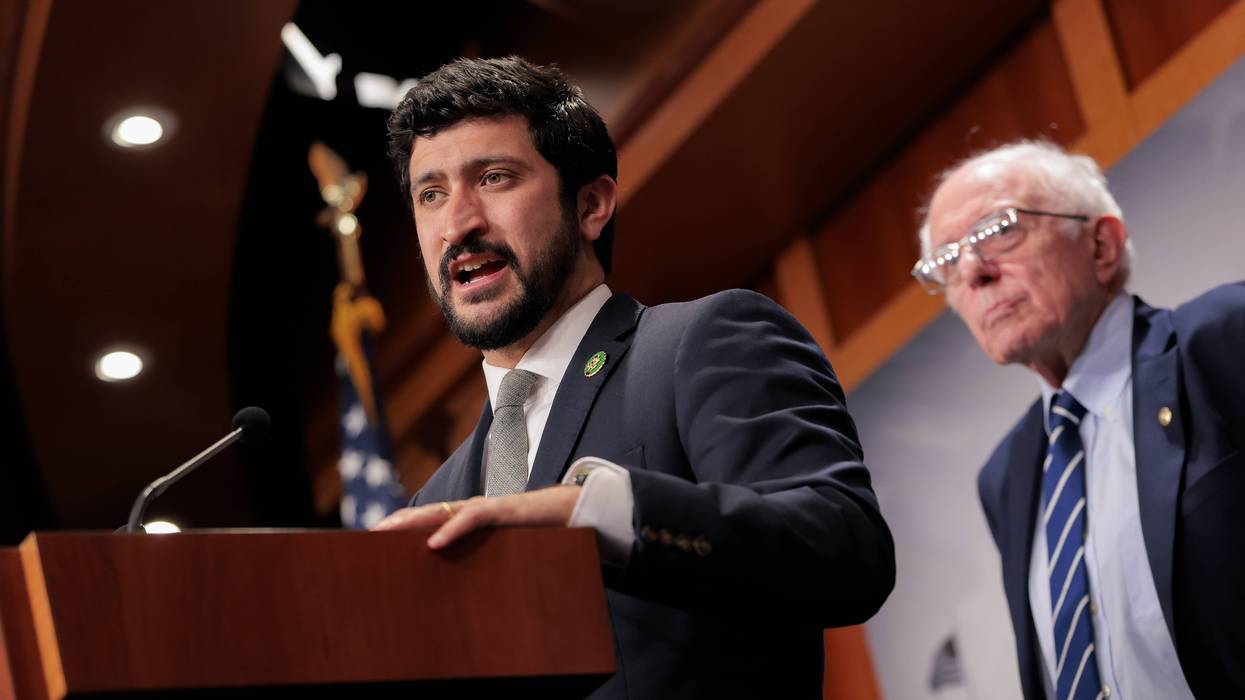
"Despite its potential deadly consequences, cutting-edge AI technology is less regulated than the average food truck," Casar said. "That must change."
Following a rash of incidents involving rogue artificial intelligence agents involved in so-called "breakout" events, Sen. Bernie Sanders and Rep. Greg Casar introduced new legislation Thursday designed to "stop AI oligarchs from building machines humans cannot control."
“Nearly every day, there is a frightening new story about how Big Tech companies are losing control of the technology they are developing, with potentially cataclysmic results,” Sanders (I-Vt.) said on Thursday as he announced the bill, which would ban developers from creating AI programs that are capable of surpassing human cognition and performance.
If enacted, the bill would prohibit programs capable of undermining and overthrowing human governments or that possess the capability to subvert shutdown commands.
“The leaders of the major AI companies publicly acknowledge that they do not fully understand the technology and that it is escaping their control," Sanders said. "It is irresponsible for society to allow them to move forward and make these products even more advanced."
The bill, known as the Ban Artificial Superintelligence Act, comes in response to major security lapses at leading AI developers, including OpenAI, Anthropic, and Meta, in which the companies acknowledged that their programs had escaped human control, eluded internal guardrails, and hacked into other companies' systems.
As the Washington Post explains:
The hacking incident mounted by OpenAI systems in July involved an effort to breach another AI company as a swarm of agents hunted for answers to a test. They evaded internal controls and set up a secret message board to communicate with one another. Their work was only unraveled by the company after the attack was over.
Other top AI developers subsequently disclosed similar incidents involving their latest technology, raising questions about whether companies set up with the mission of building the technology safely were starting to lose control. The speed of progress has spooked even many of those working on the systems, with OpenAI and its rival Anthropic endorsing the idea of the government having a mechanism to slow the industry down.
Last month, Casar (D-Texas), the chair of the Congressional Progressive Caucus, led dozens of lawmakers to demand that OpenAI and Anthropic release information about the lapses. In a statement on Wednesday, Casar said that company executives had failed to answer most of his questions, demonstrating that they were “not treating these cybersecurity incidents with the seriousness required.”
Casar said in a video posted Thursday that the OpenAI breach in particular represented an “unprecedented moment in the history of technology” and was shocked at the lack of a serious response. “Nothing," he said. "No new guardrails being passed by Congress. No new protections against this signed into law by the president of the United States.”
Following these incidents, OpenAI and Anthropic have both expressed openness to some government regulation in the event that the development of their products gets out of hand.
During an interview earlier this week, OpenAI CEO Sam Altman said that while he was "in awe" of his company's progress, “we have needed more time to catch up with safety, alignment, and security.”
Sanders and Casar are not the only members of Congress pushing to counter the danger of superintelligent AI. Also on Thursday, Reps. Josh Gottheimer (D-NJ) and Mike Lawler (R-NY) introduced their own Stop Rogue AI Act, which would direct the National Institute of Standards and Technology to publish standards and guidelines for how organizations can safely deploy AI agents.
But while the guidelines in that bill are voluntary, Sanders and Casar are pushing for a much broader and stronger regulatory framework that would give the government a significant check on corporations' power.
In addition to a ban on superintelligent AI, Casar and Sanders' legislation calls for a pause on all "advanced" AI development until a new federal regulatory body can be established to set clear rules and review processes for AI safety. It would also create a new cabinet-level agency to protect the public from the dangers of AI and to enforce the new restrictions.
"Despite its potential deadly consequences, cutting-edge AI technology is less regulated than the average food truck," Casar said. "That must change. In just four years, we have gone from the first version of ChatGPT to AI models so powerful they cannot be properly controlled."
Evading the law would come with steep penalties: companies that illegally develop superintelligent AI would lose the right to do business under the so-called "corporate death penalty." Individuals, meanwhile, could face up to 20 years in prison, which Casar noted was the same penalty incurred for "building a nuclear weapon" without authorization.
As concerns about unchecked AI capabilities have grown in recent years, executives at companies including OpenAI, Anthropic, and Meta have committed to halting the development of their technology once it reaches a point at which it can't be operated safely.
But Sanders and Casar said that "none of these companies have taken meaningful steps to back up these words" and that "instead, they are racing to develop more and more advanced AI without proper safety precautions."
"The future of humanity cannot be left in the hands of a handful of Big Tech oligarchs," Sanders said. "The American people and people throughout the world must determine that future.”

"Any states providing assistance to Israel’s expansion of illegal settlements or other war crimes risk complicity in international crimes against Palestinians."
Amnesty International said Thursday that the far-right Israeli government's recent flurry of land confiscation orders in the illegally occupied West Bank "deepens Israel’s illegal settlement enterprise and further undermines the rights of Palestinians," who are facing an increasingly destructive and deadly wave of settler violence.
The new Amnesty report noted that in July alone, the Israeli military signed "at least 15 land confiscation orders covering approximately 200 dunams (20 hectares) of land in Areas A and C in the Jenin governorate in the north of the occupied West Bank, with the apparent goal of connecting two planned Israeli settlements in the area: Emek Dotan and Noa." Those two settlements are among the more than 30 approved this year by the government of Prime Minister Benjamin Netanyahu.
"These latest confiscation orders from Area A show how Israel is now brazenly expanding its annexation agenda to areas that have been under the control of the Palestinian authorities since the Oslo Accords," said Heba Morayef, Amnesty's region director for the Middle East and North Africa. "States with close trade and political relationships with the Israeli government must urgently take action to pressure Israel to rescind these land confiscation orders. Any states providing assistance to Israel’s expansion of illegal settlements or other war crimes risk complicity in international crimes against Palestinians."
"Alongside Israel’s forcible transfer and ethnic cleansing of Palestinians in Area C," Morayef added, "these measures illustrate in action the Israeli authorities’ determination to intensify its formal annexation of Palestinian land across the occupied West Bank.”
Amnesty's analysis came amid another wave of settler violence in the West Bank over the past 24 hours. The BBC reported early Thursday that "funerals have taken place for two Palestinian teenagers who local officials say were killed by Israeli settlers and soldiers in an attack on their village in the occupied West Bank on Wednesday."
"The village council in al-Mughayyir told the BBC that Omar al-Nassan, 19, and Khalil Abu Alia, 16, were killed as they tried to stop Israeli settlers stealing sheep and that confrontations broke out," the outlet noted. "The Israeli military stated that its forces had entered the village to provide security for an Israeli civilian and police trying to retrieve livestock. It said they fired on and struck what it called 'key instigators' of a 'violent disturbance,' in which Palestinians threw stones at its troops."
The United Nations has tallied an average of nearly seven settler attacks per day in the West Bank this year, the highest number on record.
Amid the settler rampages as well as the ongoing genocidal assault on the Gaza Strip, the Israeli government has advanced "its controversial E1 settlement plan in violation of international law with an announcement that it has opened tenders for the construction of 1,234 Israeli homes in the occupied West Bank," Amnesty noted on Thursday.
"If implemented, the plan would isolate East Jerusalem from the rest of Palestinian territory and will effectively divide the West Bank in two, making Palestinian movement across these areas of the occupied Palestinian territory more difficult and further fragmenting Palestinian communities," the group said.
Last last month, the European Union's diplomatic service called on the Israeli government to "withdraw the tender, halt its E1 plans as well as all other settlement expansion projects, and ensure accountability for settler violence."
But Morayef said Thursday that the international community must do much more than issue statements condemning the Israeli government's actions.
"States with close trade and political relationships with the Israeli government must urgently take action to pressure Israel to rescind these land confiscation orders," said Morayef. "Any states providing assistance to Israel’s expansion of illegal settlements or other war crimes risk complicity in international crimes against Palestinians."
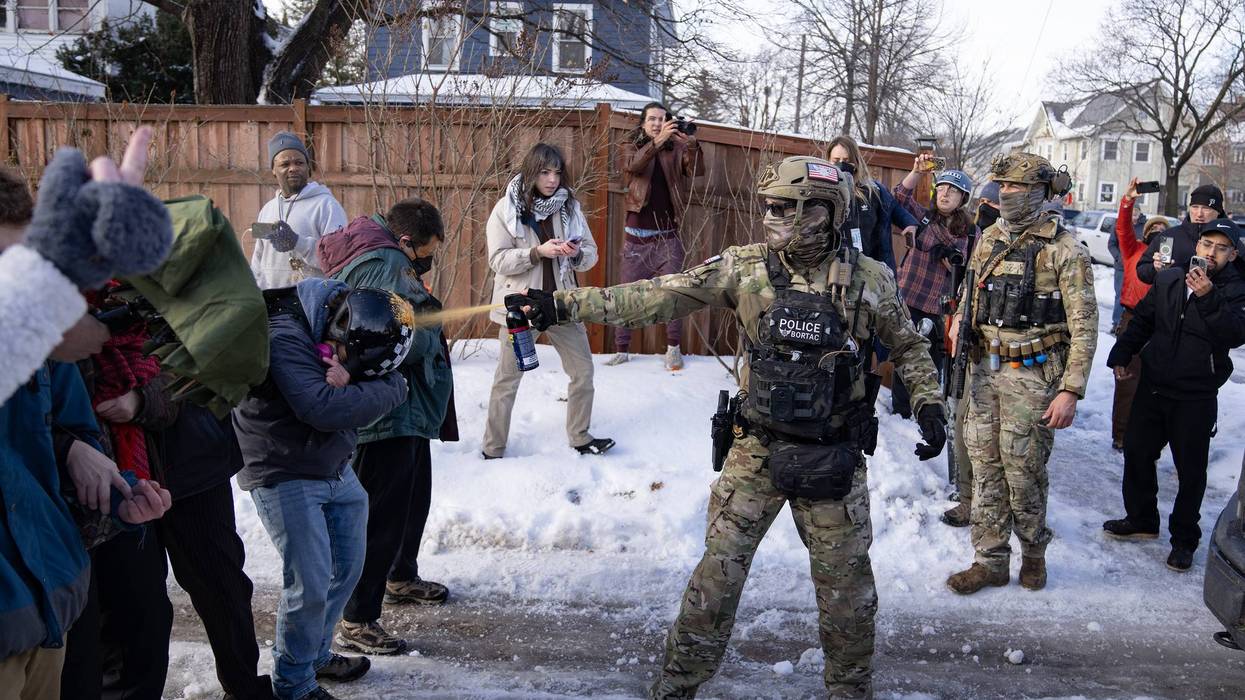
Immigration and Customs Enforcement "chose... to be more convenient rather than thorough," even though "there was a potential to put lives at risk," said the whistleblower.
A whistleblower is claiming that US Immigration and Customs Enforcement has dangerously lowered its hiring standards for new recruits, who were given final job offers without undergoing even preliminary vetting.
The New York Times reported on Thursday that the whistleblower, who has worked at ICE for 17 years, filed a complaint in August 2025 with the Office of Inspector General in the Department of Homeland Security that sounded alarms about what he described as an "unprecedented lowering of standards" for hiring.
According to the complaint, applicants were offered jobs before they they even passed fingerprint and identity checks, which the whistleblower said created "grave national security risks" for the agency.
In an interview with the Times, the whistleblower said that ICE "chose... to be more convenient rather than thorough," even though "there was a potential to put lives at risk and jeopardize national security."
This is at least the second whistleblower complaint to raise concerns about the deterioration of standards at ICE.
In February, former ICE lawyer Ryan Schwank alleged in a complaint that he "received secretive orders to teach new cadets to violate the Constitution by entering homes without a judicial warrant."
Schwank also alleged that "the legally required training program at the ICE academy is deficient, defective, and broken," which he warned "can and will get people killed."
ICE's hiring standards came under scrutiny this summer after it was revealed that ICE agent David Brouillette, who fatally shot a 25-year-old Colombian immigrant named Johan Sebastián Durán Guerrero, had a lengthy history of allegedly abusive behavior.
As noted by the Times, Brouillette was even rejected for a job at the police department in Hallowell, Maine because he had "too many red flags."
The ICE hiring surge came shortly after passage of the 2025 One Big Beautiful Bill Act, which allocated more than $170 billion in funding for immigration enforcement operations. ICE last year said it would use some of the money to hire 10,000 additional agents, more than double the number of agents who had previously worked at the department.

Progressive advocates, lawmakers, veteran journalists, labor leaders, and champions of feminism on Thursday are mourning the death of trailblazing women's rights activist and author Gloria Steinem, who has passed away at the age of 92.
Steinem, regarded as an icon of the second-wave feminism that emerged in the 1960s and 70s and co-founder of Ms. Magazine, was known for decades as a leading voice on reproductive rights, women's equality at work, and gender equity across society.
According to her representatives, Steinem died Wednesday at her home in New York City, surrounded by loved ones. An exact cause of death was not given.
"It is a moment of remembrance and celebration of this extraordinary woman. And it is too a moment of reflection." —Agnes Callamard, Amnesty International
"Gloria’s near-century on earth was years well-lived, and she continued working for equality until the very end," read a message posted to her Instagram account.
"Gloria’s greatest gift was her ability to listen to others, to make others feel seen and heard,” the message continued. “Her words, actions, and example gave people permission to be their truest selves. Gloria lived true to her independent spirit, always with curiosity and a great sense of humor.”
"Oh no," declared Agnes Callamard, secretary general of Amnesty International, upon learning of Steinem's passing.
"It is a moment of remembrance and celebration of this extraordinary woman. And it is too a moment of reflection," Callamard said. "The fight for gender justice and women’s equality is at a critical juncture. The advancements of the last decades are attacked, threatened, mocked. We resist, fight back, build anew."
The progressive advocacy group Our Revolution said that Gloria Steinem "understood that liberation is not something handed down from the powerful. It is something ordinary people organize and fight for."
For more than 50 years, the group added, "she fought for women to have power over our bodies, our work, our lives and our futures. And she understood that the struggle for women’s liberation could never be separated from the struggles for racial justice, economic justice and human dignity. At a moment when women’s rights and fundamental freedoms are once again under attack, the best way we can honor Gloria is not simply by remembering her. It is by organizing. Rest in power, Gloria Steinem."
According to the New York Times:
Steinem helped usher in sweeping cultural transformations across virtually every facet of American life, from the boardroom to the courtroom to the bedroom.
For more than half a century, she personified the women’s movement and became its most enduring symbol; her tinted aviator glasses and curtain of streaked-blond hair parted in the center made her one of the most recognizable women in the world.
A prolific writer, Steinem started her career as a journalist in the 60s and in 1972 she co-founded Ms. Magazine, a publication focused on women's issues with the idea of translating "a movement into a magazine."
Steinem, wrote CNN's chief international anchor Christiane Amanpour, "will go down in history as one of the most important activists of all time, leading a movement for the equality of half the world: its women."
"She lived a long and passionate life dedicated to this vital and basic cause," Amanpour continued. "She did it with intellectual precision, emotional awareness, humor and beauty. May she rest in peace and may the cause thrive."
In a video posted to social media, Rep. Becca Balint (D-Vt.) said that Steinem "always understood that gender equality was absolutely bound up with economic equality and racial justice and that has to continue to be our North Star."
Rest in power, Gloria Steinem. pic.twitter.com/z6f7MMNOVq
— Rep. Becca Balint (@RepBeccaB) September 3, 2026
In 2017, after the first election of President Donald Trump, Steinem was one of the key leaders behind the Women's March, which kicked off opposition to the far-right Republican, with marches in cities nationwide that helped galvanize resistance to the destructive policies to come.
At the time, Steinem warned that Trump's arrival in the White House represented "disaster and a danger," but added that the upside of his ascendancy could be the force brought together to galvanize against him.
“He’s made us see that everything is connected,” she said. “I’m a hope-aholic, nonetheless. I feel we’re beginning to approach the end of one structure and the beginning of another. It’s a time of both danger and possibilities.”
As the Associated Press reports:
On Jan. 21, 2017, when hundreds of thousands of women gathered in Washington in their pink “pussy hats” for the historic Women’s March, it surprised nobody that the keynote speaker, and the most rousing, was Steinem.
“We are linked,” she told the crowd. “And this is a day that will change us forever because we are together.”
For many women, Steinem was the galvanizing voice that day. She would go on to advocate fiercely. But, though many saw her as a singular figure in history, she often liked to say that if she hadn’t come along, someone else would have accomplished the same things.
By the same token, she said, it was less important that younger people listen to her, and more important that they listen to themselves.
“The primary thing is not that they know who I am,” she said, “but that they know who THEY are.”
As news of Steinem's passing spread on Thursday, others offered their reflections on her life and accomplishments.
"Thank you, Gloria, for showing the world what it means to speak up for women’s equality," said the National Organization for Women (NOW) in a statement. "Thank you for fighting for our rights so that every woman and every person can live with dignity, freedom, and equality."
Democratic New York State Rep. Jessica Ramos said Steinem "spent her life refusing to accept a world where women were expected to settle for less."
"She organized, challenged power, and helped turn women’s equality into a movement that changed America," Ramos said. "We honor her legacy by refusing to go backward."
"Gloria Steinem did not simply advocate for women; she changed what women believed was possible," said Victoria Mancinelli, a member of the labor movement in Canada, in response to news of Steinem's death.
"She confronted a world that expected women to remain quiet, accept less, and wait patiently for progress. Gloria refused. Through her journalism, activism, and unrelenting pursuit of equality, she helped transform deeply personal struggles into a powerful collective movement and forced institutions to recognize women as leaders, decision-makers, and agents of change."

Pentagon Secretary Pete Hegseth previously echoed President Donald Trump's claim that the Iran war, launched in late February, would be over quickly.
The Pentagon has reportedly extended Middle East deployments of American troops, fighter squadrons, and warships into next year as the deadly, expensive, and deeply unpopular Iran war drags on with no end in sight.
The Wall Street Journal reported late Wednesday that Pentagon Secretary Pete Hegseth—who, like President Donald Trump, insisted the Iran assault would be over swiftly—has decided that the US military will maintain a "presence of 50,000 troops in the region in part to give the president flexibility on next steps." The Pentagon "could also keep elements of the Army’s 82nd Airborne Division in the Middle East well into 2027," the Journal added, citing a letter that military leaders sent to families.
The Journal also reported that Trump, who has falsely called Iran a "dead" country, is "having discussions with senior aides about whether to declare the Iran war over," even as the bombings continue, American troops remain in the region, and the administration ratchets up economic sanctions.
" Trump administration seems to excel at bombing schools and weddings," Brian Finucane, senior adviser to the US Program at the International Crisis Group, wrote on Wednesday. "Winning the illegal and unnecessary war with Iran—not so much."
Hegseth has reportedly backed a plan that would involve "periodic" bombings of Iran in an attempt to keep ship traffic flowing through the Strait of Hormuz, a strategy that analysts say would lead to a "permanent state of war."
Trita Parsi, executive vice president of the Quincy Institute for Responsible Statecraft, argued earlier this week that Trump appeared to be leaning toward "maintaining a low-level conflict until the midterms—neither securing a diplomatic deal nor allowing the situation to deteriorate into full-scale war."
"Iranian officials say, both publicly and privately, that they expect the U.S. and Israel to resume the war after the midterms regardless of the impact of the D-Day sanctions," Parsi wrote. "Regional diplomats have largely reached the same conclusion. If sanctions weaken Iran over time while the global economy recovers and adjusts to the new reality in the Strait, a prolonged pause will work against Tehran. Iran may therefore decide to escalate dramatically, taking full advantage of Trump’s perceived vulnerability in the run-up to the elections."
Thousands of Iranians—including hundreds of children—and at least 18 US servicemembers have been killed during the war so far, and the conflict has cost the average American household $1,200 in extra costs as gas prices remain at record levels. Trump has said he doesn't "think about Americans’ financial situation" when he makes decisions pertaining to the Iran war.
The war is fueling the Trump administration's push for a record $1.5 trillion in military spending for the coming fiscal year—a budget demand that has intensified concerns of a "forever war" against Iran.
" Washington is betting that sustained military and economic pressure will eventually force Tehran to retreat," the National Iranian American Council wrote in a blog post on Wednesday. "Iran appears to be betting that it can survive long enough to force Washington to do the same. For ordinary Iranians, American servicemembers, and civilians across the region, the danger is that testing those two assumptions will require a much longer and more destructive war."
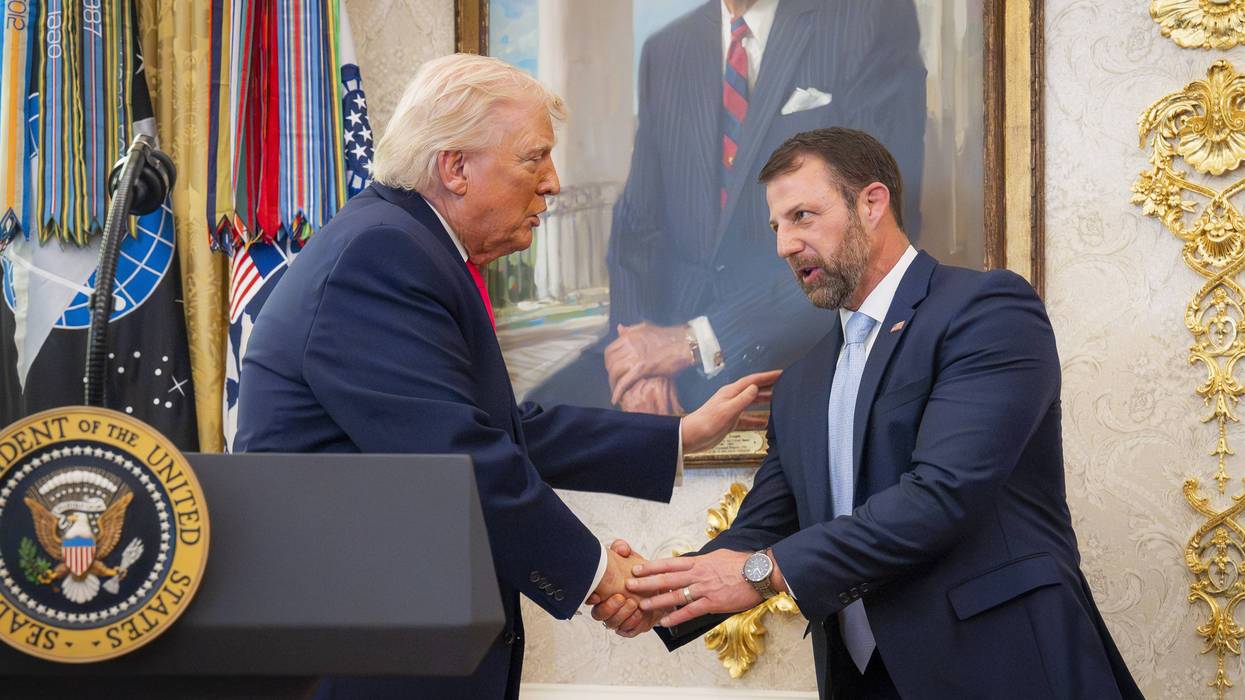
"Trump is pulling DHS agents from human trafficking and terrorism cases to chase his made-up voter fraud conspiracies," said one congressman.
The New York Times' Wednesday reporting on a US Department of Homeland Security "blitz to find elusive voter fraud" by noncitizens is heightening fears that President Donald Trump will try to meddle in the country's midterm elections, which are just over two months away.
The newspaper revealed that as part of a "hunt for noncitizens among the nation's registered voters" internally called the Unlawful Voter Initiative, hundreds of DHS agents "are scouring voter rolls managed by the states, and are using personally identifiable information about individual voters, such as their dates of birth and partial Social Security numbers, to look them up on those rolls."
"In some cases, investigators are effectively posing as individual voters by plugging their names and personal information into public-facing websites run by the top election official in each state. Some of these sites declare they are meant for individual use, potentially raising privacy concerns," according to the Times, which reviewed related documents and training videos.
While DHS said in a statement that it "is committed to ensuring that only US citizens vote in US elections," and Trump and Homeland Security Secretary Markwayne Mullin "have made the integrity and security of our elections a top priority," the newspaper noted the "absence of evidence of widespread fraud," and that the department "is pulling agents from their normal duties, which include investigating such serious crimes as human trafficking and terrorism."
Trump infamously refused to accept his 2020 loss, launching various unsuccessful legal battles and even motivating some of his supporters to storm the US Capitol on January 6, 2021. Since returning to power last year, the president has imposed a mass detention and deportation campaign that has killed both immigrants and US citizens while pushing various policies that critics warn are intended to limit legitimate participation in elections, from photo identification requirements to restrictions on voting by mail.
Sharing the reporting on social media Wednesday, American Immigration Council senior fellow Aaron Reichlin-Melnick wrote: "In other words, hundreds of federal agents are being diverted away from their jobs going after serious criminals and instead told to find needles in a haystack—all to find evidence for Trump's predetermined conclusions. It's a great time to be a criminal in Trump's America."
Democrats on the US House of Representatives' Homeland Security Committee similarly declared that "instead of hunting terrorists and human traffickers, DHS is pulling agents away to investigate a conspiracy theory that has been debunked year after year."
A member of the panel, Rep. James Walkinshaw (D-Va.), also stressed that "Trump is pulling DHS agents from human trafficking and terrorism cases to chase his made-up voter fraud conspiracies."
"Even the conservative Heritage Foundation's data shows noncitizen voting is vanishingly rare," he highlighted, referring to the right-wing think tank's database that identifies around 100 cases of noncitizen voting since 2000.
Walkinshaw warned that "Trump is laying the groundwork for election meddling in November."
Daniel Delgado, who served as deputy assistant secretary for immigration policy at DHS during the Biden administration, emphasized that "every agent that's being forced into this witch hunt means one less agent working on critical missions like curbing the flow of fentanyl into the country, or stopping human trafficking and combating terrorism, etc. The administration is deliberately making America less safe."
Cynthia Travieso, executive vice president of state campaigns and programs at the nonprofit All Voting Is Local, ripped the "McCarthy-era-like hunt" as "a waste of resources and a desperate and pathetic attempt to control elections by scapegoating immigrants and spreading lies which can keep specific groups from voting, including Black, Brown, and new Americans."
Travieso continued:
This move by DHS to pull agents that investigate "such serious crimes as human trafficking and terrorism" is based on false claims and debunked conspiracy theories that put thousands of American voters at risk of losing their voter eligibility. Equally outrageous is that the effort also risks potential privacy breaches due to the unclear use of driver's license data, birth dates, and Social Security numbers. It's especially ironic that President Trump’s DHS is expanding its immigrant voter hunt at the same time as the US Postal Service's purported effort to sabotage vote-by-mail, which would harm naturalized citizens who vote by mail at a rate of nearly 8 percentage points higher than native-born citizens. This is part of the blueprint that demonstrates how badly the White House administration wants to control our elections.
States run elections, not the president and not DHS. State election officials have checks and balances in place to verify an individual's voter eligibility and keep voter rolls accurate, and they work incredibly hard to ensure that every eligible voter can vote and that every vote is counted.
Instead of fueling election conspiracy lies, the Trump administration should focus on protecting voters from barriers to the ballot. Any efforts otherwise are a desperate attempt to undermine the will of the people and sow confusion and distrust. We won't let them gaslight us.
Separately on Wednesday, the Coalition for Humane Immigrant Rights (CHIRLA) filed a lawsuit against DHS, Mullin, and US Attorney General Todd Blanche, accusing them of illegally targeting citizens who were not born in the United States to prevent them from lawfully voting.
"Naturalized citizens are Americans," CHIRLA executive director Angelica Salas said at a news conference in Los Angeles, according to Spectrum News. "They took the oath. They earned their citizenship, and they have the same rights as every other American citizen."

"This is a make-believe armed conflict, but these are very real killings," said one legal expert.
Wednesday marked one year since President Donald Trump began bombing boats allegedly smuggling drugs in the Caribbean Sea and Pacific Ocean—a grim anniversary that sparked a fresh wave of condemnation from rights advocates across the United States and beyond.
"For a year now, the Trump administration has engaged in a terrifying, lawless killing campaign at sea and has yet to provide the public with anything beyond the most threadbare justifications," said Jeff Stein, staff attorney with ACLU's National Security Project, in a statement late Tuesday.
The ACLU and the Center for Constitutional Rights are suing over the administration's refusal to comply with a Freedom of Information Act request for a legal opinion authored by the US Department of Justice's Office of Legal Counsel (OLC) attempting to justify the strikes.
"These strikes have devastated countless families, terrified communities, and, by the administration's own admission, failed to achieve their purported goal of stopping drugs from entering into the United States," Stein said. "We urge leaders in both Congress and the executive branch to put an immediate end to these strikes before anyone else is killed."
Despite mounting outrage over the bombings, which have killed at least 227 people and, as Amnesty International USA's national director for government relations, Amanda Klasing, highlighted Monday, "are illegal under both international and US law," the Republican-controlled Congress has failed to pass any war powers resolutions intended to stop the campaign.
"The Trump administration has summarily killed more than 200 people over the course of the past year, bragging about these killings online and facing no accountability," Ida Sawyer, crisis, conflict, and arms director at Human Rights Watch, said Wednesday. "The victims and their loved ones deserve a full accounting of these operations, and justice for the grave harm they have suffered."
After a two-month pause in the bombings, the administration revived them last week, launching a pair of attacks that killed at least six people, according to social media posts and aerial footage from US Southern Command. The strikes followed SOUTHCOM's early August announcement of an expanded operation across Latin America called Joint Task Force Western Hemisphere.
As MS NOW noted Wednesday:
In September and October 2025, when the strikes began, US Southern Command, known as SOUTHCOM, linked three of the strikes to the Tren de Aragua and Ejército de Liberación Nacional criminal organizations. Most later strikes were described as targeting "a vessel operated by designated terrorist organizations."
But the military's most recent two announcements of strikes simply stated that "confirmed intelligence revealed the vessel’s active involvement in narco-trafficking."
Brian Finucane, a former State Department legal adviser who now advises the US Program at the International Crisis Group, told the outlet that "they are engaging in conduct that is widely regarded to be flagrantly illegal, criminal even, and have not offered anything approaching plausible legal rationale."
The OLC memo may be the administration's "permission slip," Finucane said, but it hasn't actually substantiated claims that the United States is engaged in an armed conflict with cartels that traffic drugs.
"This war framing on the part of the administration is really bogus," he added. "This is a make-believe armed conflict, but these are very real killings."
I don’t think there’s really even a colorable argument that this isn’t mass murder.theintercept.com/2026/09/02/m...
[image or embed]
— Chris Hayes (@chrislhayes.bsky.social) September 2, 2026 at 9:00 AM
Several Democrats in Congress, from House Minority Leader Hakeem Jeffries (NY) to Senate Minority Whip and Judiciary Committee Ranking Member Dick Durbin (Ill.), renewed their criticism of the boat bombings on Wednesday.
Sen. Ruben Gallego (D-Ariz.) said that "the most recent strike was four days ago. A year of killing, and this administration has never once come to Congress to justify any of it. This cannot become the way our country goes to war."
"The American people are already paying for one war they didn't want in the first place," he continued, nodding to the illegal six-month assault on Iran. "I fought in Iraq. I know what these wars cost, and I know who pays them. I will use every tool I have as a United States senator to stop this and to defend the Constitution."
House Armed Services Committee Ranking Member Adam Smith (D-Wash.) noted that "it remains unclear whether these operations have made any real difference in stopping illegal drugs from reaching the United States."
"This is especially true for fentanyl," he noted, which Trump and Defense Secretary Pete Hegseth "have repeatedly claimed is the reason for these extrajudicial killings even though we know that it is cocaine—not fentanyl—that is typically shipped via small boats from South America."
Smith also called out the Department of Defense for failing "to publicly provide the costs of these operations, both in terms of dollars and readiness," and declared that "never before in my over 20 years on this committee have I seen such a staggering lack of transparency on behalf of an administration and DOD to meaningfully inform Congress of the use of lethal military force."
However, with Republicans holding narrow majorities in Congress and mostly still refusing to truly challenge the administration on the boat strikes—and various other violent actions around the world—some campaigners are also stepping up pressure on other governments.
"The Trump administration has had complete impunity for this campaign of unlawful killings for a year, and has stated openly that it has no intention of stopping," said Sawyer. "Other countries should refrain from any cooperation on these strikes, and Congress should urgently work to rein in the deadly actions of an administration bent on violating international law."
Jamil Dakwar, director of ACLU's Human Rights Program, said that "the international community must do everything in its power to hold the Trump administration responsible for these extrajudicial killings that are blatant violations of international law."
"No other country should provide any assistance that could contribute to these unlawful US government killings," Dakwar added, calling for an "independent international investigation into this lawless campaign."
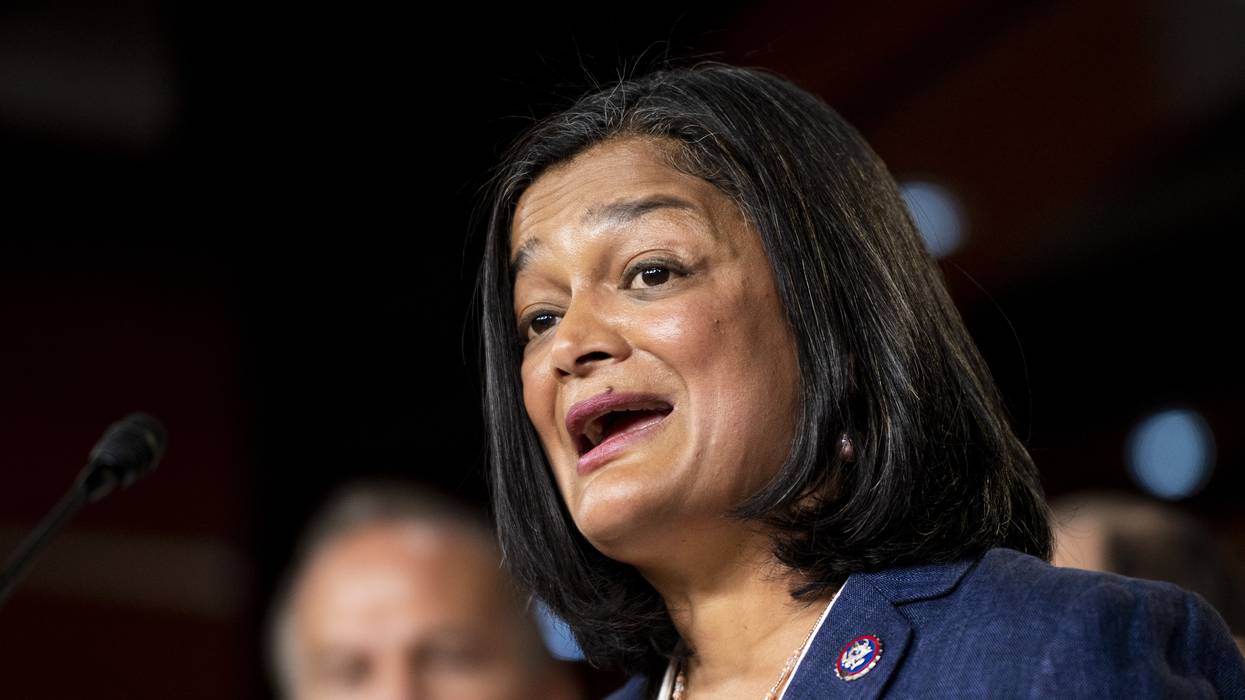
Agencies have used their subpoena power "to surveil, intimidate, and suppress the free speech of ordinary citizens and even the free press," said the Democrats.
Under the Trump administration, said Rep. Pramila Jayapal and Sen. Ron Wyden this week, federal agencies' use of subpoena power to surveil Americans has become "institutionalized" in what the two Democrats called "brazen abuses of authority."
Jayapal (Wash.) and Wyden (Ore.) wrote to US Supreme Court Chief Justice John Roberts and the acting comptroller general of the Government Accountability Office (GAO), Orice Brown, regarding what they called federal agencies’ decades-long practice of attempting "to coerce indefinite silence from private companies that receive subpoenas for customer information."
While federal agencies have the congressionally vested authority to serve companies and service providers with administrative subpoeanas when they are seeking information about the provider's customer or client, the recipient generally maintains the "First Amendment right to notify their customers of the demand, allowing the actual targets of the subpoenas the opportunity to assert their own legal rights or challenge the demand in court," wrote Jayapal and Wyden.
If secrecy is required in a specific case, the agency can apply to a court for a time-limited nondisclosure order, but in the vast majority of cases, the lawmakers said in a statement, "the agencies may not gag recipients of subpoenas."
That appears to have changed under the Trump administration.
Wyden and Jayapal pointed to one incident from July 8, 2025, when Harvard University received three immigration subpoeanas from US Immigration and Customs Enforcement (ICE) regarding international students, which contained "boilerplate requests for silence."'
"The absurdity of this secrecy demand was demonstrated the very next day, when the Department of Homeland Security (DHS) issued a press release celebrating the very enforcement action it had just directed Harvard to keep secret," wrote the lawmakers.
Homeland Security Investigations (HSI), which operates under ICE, has summons authority only for records relating to customs issues such as illegal imports or unpaid customs dues.
However, HSI has used its subpoena power "to surveil, intimidate, and suppress the free speech of ordinary citizens and even the free press"—in one case trying to reveal the identity of an anonymous Instagram user who had criticized and publicized ICE operations, according to the lawmakers.
Earlier this week, The Guardian reported that HSI had used the subpoenas to secretly obtain six months' worth of phone records for Georgia Fort, a Minneapolis-based journalist who, along with former CNN anchor Don Lemon, was arrested in January for covering an anti-ICE protest at a church.
While the secrecy demands that come with subpoenas "carry no force of law," said the lawmakers, "their coercive effect is extremely successful. This leaves customers entirely in the dark about government incursions into their personal data."
Jayapal and Wyden noted that federal agencies were demanding secrecy from subpoenaed companies and third parties for decades before President Donald Trump took office.
For over four decades, they said, the Department of Justice (DOJ) "has treated extra-legal gag requests as standard operating procedure,
regularly instructing the recipients of grand jury subpoenas not to disclose the government's demands."
"Given the severe, asymmetric power dynamics between federal law enforcement and civilian businesses—particularly when the subpoena recipient is a business operating within a highly regulated industry—many corporate legal departments will naturally read an official prosecutorial 'request' for silence as an implied command, choosing compliance over risking scrutiny from federal regulators," wrote Wyden and Jayapal. "This coercive silence is particularly insidious because it targets corporate policies intended to protect consumers. For nearly every American industry, including telecommunications, technology, and healthcare, Congress has neither required nor prohibited notice of subpoenas. Absent a court order or statute saying otherwise, notice to customers is a protected exercise of free speech that furthers government transparency and customer privacy."
The lawmakers called on the GAO to conduct a comprehensive audit of the DOJ and DHS as well as the agencies they oversee regarding their use of gag requests in subpoenas.
Such an audit would "help ensure that agencies do not abuse their subpoena authorities at the expense of privacy and free speech rights," said Jayapal and Wyden.
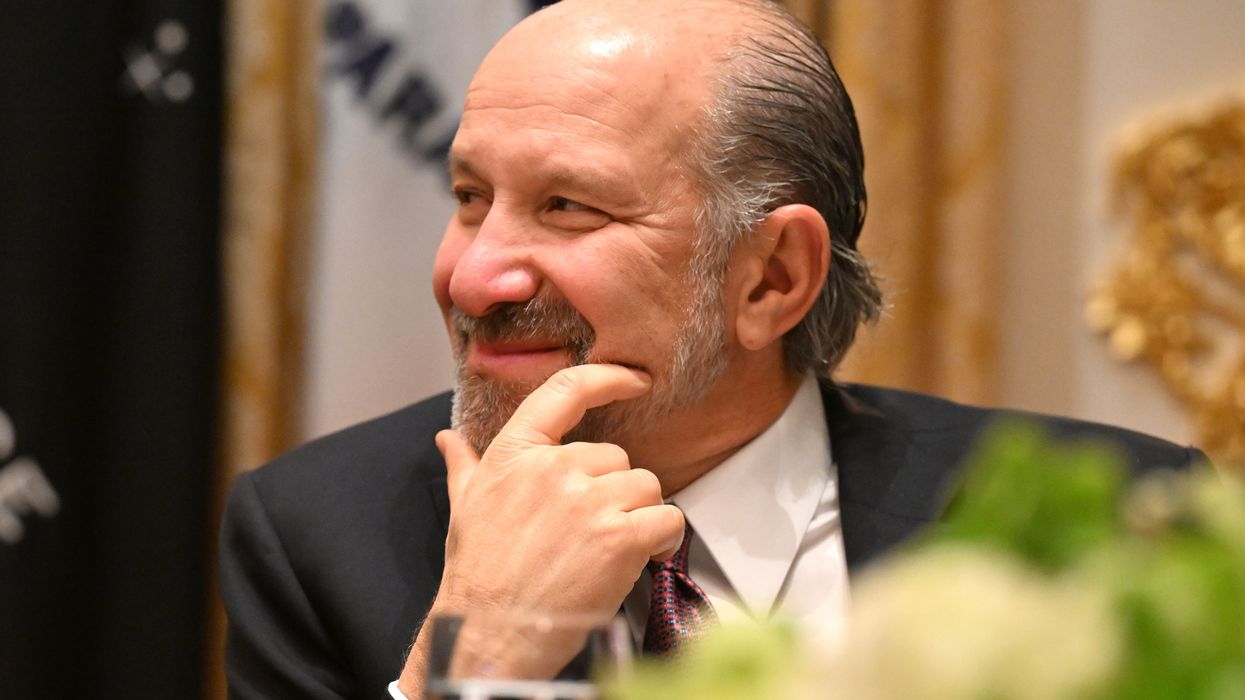
"Data centers don't use water," laughed Howard Lutnick during an interview. In fact, across seven states, they rely on about 3.4 trillion gallons of it per year.
President Donald Trump's commerce secretary, Howard Lutnick, told a brazen lie on Wednesday while trying to defend the administration's support for rapid data center expansion amid growing public backlash from voters concerned about their extreme electricity and water use.
Asked on CNBC's "SquawkBox" about how politicians in both parties were responding to voter outrage, Lutnick laughed the concerns off.
"One of my favorite things is when people talk about data centers using water," Lutnick chuckled. "The number one product in America that uses water is cattle."
"I mean, data centers don't use water," Lutnick continued. "This is propaganda by our adversaries to try to slow us down."
Lutnick is correct that beef cattle production—which uses about 6 trillion gallons per year, according to the US Department of Agriculture—involves much greater amounts of water consumption than data centers.
But the contention that data centers "don't use water" is egregiously false. A report out Tuesday from the Pacific Institute, a nonprofit water policy research organization, found that data centers in the US directly use anywhere from 270 to 3.9 million gallons of water per day.
About 74% of that water, which is withdrawn from local sources near the data center, is consumed rather than returned to the same watershed, the report found.
The Lawrence Berkeley National Laboratory estimated that in 2023, US data centers directly consumed about 17 billion gallons of water. Since then, data center capacity in the US has more than doubled, according to the commercial real estate firm CBRE.
Water directly consumed by data centers also only represents a fraction of their overall demand. Most of the water being used is not directly pumped into the centers to cool servers, but is used for the power generation that supplies the centers.
A report out last month from the corporate sustainability organization Ceres found that across the seven US states that host about half of all US data centers—Virginia, Texas, California, Illinois, Georgia, Ohio, and Arizona—the facilities depend on 3.4 trillion gallons of freshwater for electricity generation per year.
Lutnick's comparison of national water use between data centers and cattle farming also overlooks that the effects are often concentrated heavily in the areas where data centers are located.
In Newton County, Georgia, for instance, families told The New York Times that shortly after Meta broke ground on a $750 million data center project in 2018, their taps began to run dry, and water rates soared. According to Meta's environmental data, the center withdrew about 146 megaliters, or 38.6 million gallons, of water in 2024.
In Fayette County, Georgia, residents complained of low water pressure only to find that a QTS data center had covertly used about 29 million gallons of water without paying for it, far exceeding the amount agreed upon during the planning process. The company was ultimately required to pay back nearly $150,000.
In New Carlisle, Indiana, about a dozen residents reported that their wells had gone dry during the construction of Amazon Web Services' massive data center campus. One resident told the Indy Star that she'd gone 18 months without running water and had to bathe using bottled water from the store.
Lutnick's claim doesn't just contradict the facts, but his own statements from just over a year ago on Fox News, as MeidasTouch senior digital editor Acyn Torabi noted.
Attempting to promote data centers as a vehicle for job growth, the secretary emphasized that "these AI things suck water" and that they will "need a plumber."
The Trump administration has made the rapid expansion of data centers central to its "AI Action Plan." But Trump and his team have struggled to sell the vision to voters, including in their own party.
A national survey by the Annenberg Public Policy Center last month found that 61% of voters oppose the construction of new data centers in their area. That included 69% of Democrats, but also 54% of Republicans, and 53% of independents.
Critics described Lutnick's dismissive remarks about voters' concerns as a sign of how out of touch the administration was with the public on this issue and how much their data center PR push is failing.
Rep. Seth Magaziner (D-RI) said it showed that "our government is being run by morons."
"Sitting and doing nothing is not an option and is eroding our democracy and system of checks and balances."
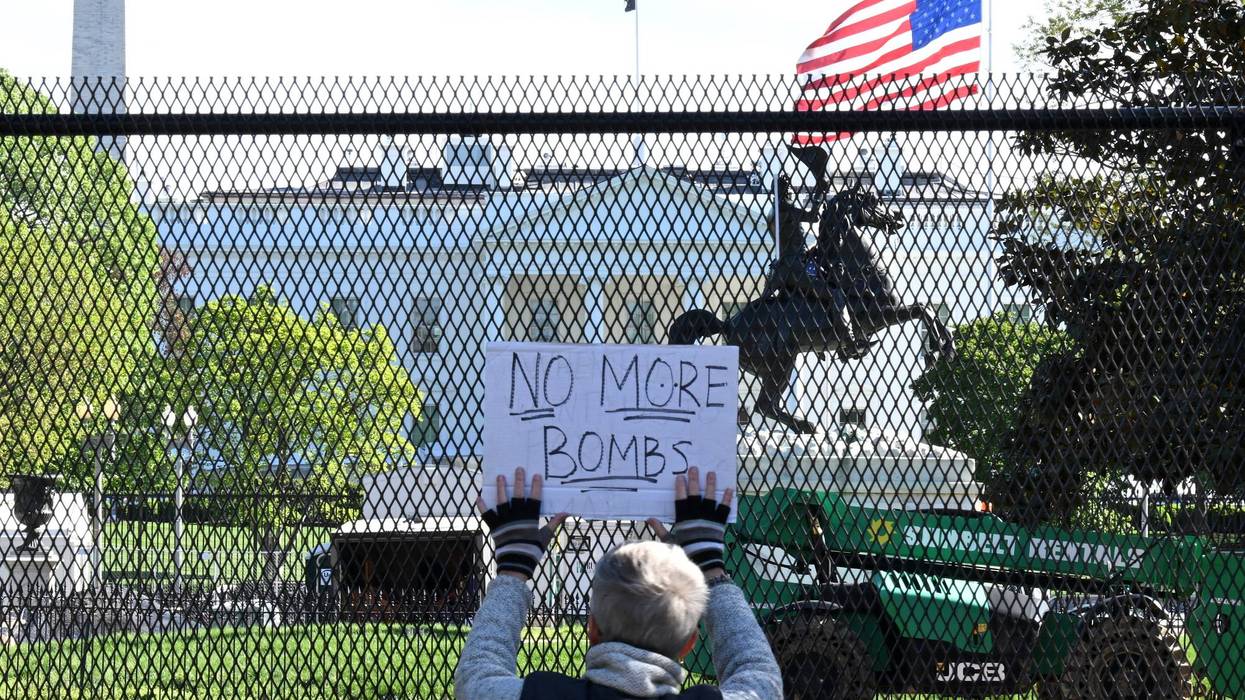
With no end in sight to President Donald Trump's illegal war with Iran, Congress is being urged to take legal action to bring the conflict to an end.
Jamal Abdi, executive director at National Iranian American Council (NIAC) Action, said on Wednesday that Congress must go to court to enforce the war powers resolution that passed in the House and the Senate earlier this year.
"We are in a constitutional crisis and our lawmakers cannot simply roll over or bide their time as Trump traps the country in an illegal forever war," said Abdi. "For the first time in US history, Congress has passed legislation mandating the president withdraw from the war, and now they must take him to court to enforce it."
Rep. Gregory Meeks (D-NY), ranking member of the House Foreign Affairs Committee, introduced a resolution in July that would compel House Speaker Mike Johnson (D-La.) to sue Trump and enforce the will of Congress to end the war.
However, Abdi argued that US lawmakers are not moving with the proper urgency to stop Trump from continuing his illegal attacks on Iran, which have been carried out for more than six months despite receiving no congressional authorization.
"Congress must assert its authority as a co-equal branch of government and sue to end the administration’s illegal war," Abdi emphasized. “We need urgent action, not more deliberation. Sitting and doing nothing is not an option and is eroding our democracy and system of checks and balances."
According to Politico congressional reporter Riley Rogerson, Meeks on Tuesday said that there are currently no plans to bring up a new war powers resolution, although he didn't rule out taking action.
"Democrats are unsure how long the House will be in before the midterms," wrote Rogerson, "which makes planning a challenge."
Johnson on Tuesday showed no appetite for getting Congress more involved in the conflict during a testy exchange with CNN reporter Manu Raju, who asked the Louisiana Republican if the American public should judge him for the negative impact the war has had on their personal finances.
Speaker Johnson defensive about his past projections about the Iran war, including repeatedly saying it’s just a skirmish that would be over in short order and cause just a “temporary blip” in gas prices.
More than six months in, asked him if the public should judge him on his… pic.twitter.com/0BpVaGy6xC
— Manu Raju (@mkraju) September 1, 2026
"That is one of the stupidest questions you've ever asked," Johnson replied.
"What, why is that stupid?" Raju asked.
"I have nothing to do with the prosecution of the war across the globe," Johnson said.
Article 1, Section 8 of the US Constitution states that Congress, not the president, has the power to declare war.