SUBSCRIBE TO OUR FREE NEWSLETTER
Daily news & progressive opinion—funded by the people, not the corporations—delivered straight to your inbox.
5
#000000
#FFFFFF
To donate by check, phone, or other method, see our More Ways to Give page.
Daily news & progressive opinion—funded by the people, not the corporations—delivered straight to your inbox.
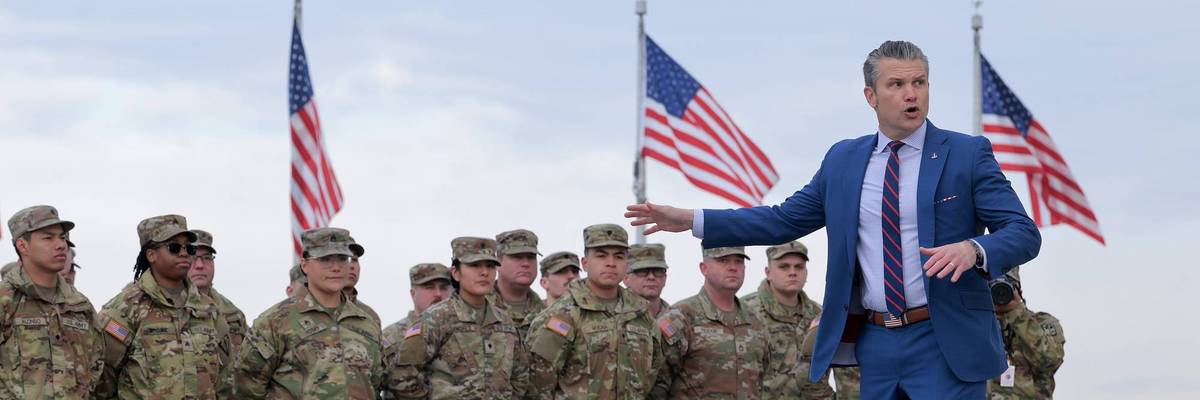
Pentagon Secretary Pete Hegseth addresses a group of troops at the base of the Washington Monument on February 6, 2026 in Washington, DC.
Pentagon Secretary Pete Hegseth previously echoed President Donald Trump's claim that the Iran war, launched in late February, would be over quickly.
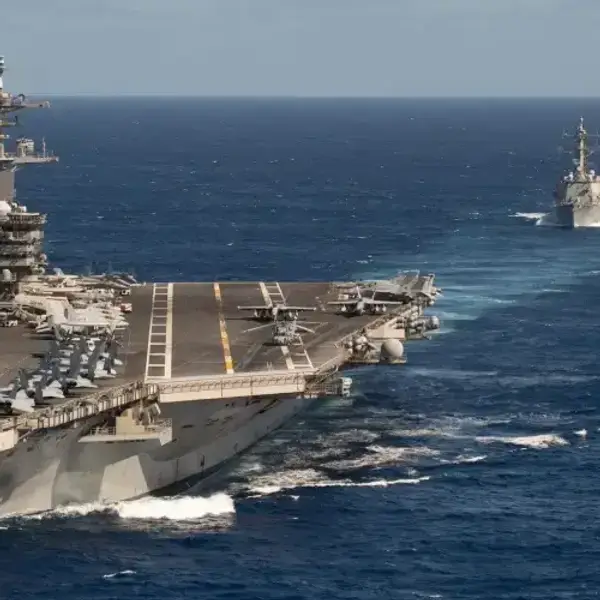
The Pentagon has reportedly extended Middle East deployments of American troops, fighter squadrons, and warships into next year as the deadly, expensive, and deeply unpopular Iran war drags on with no end in sight.
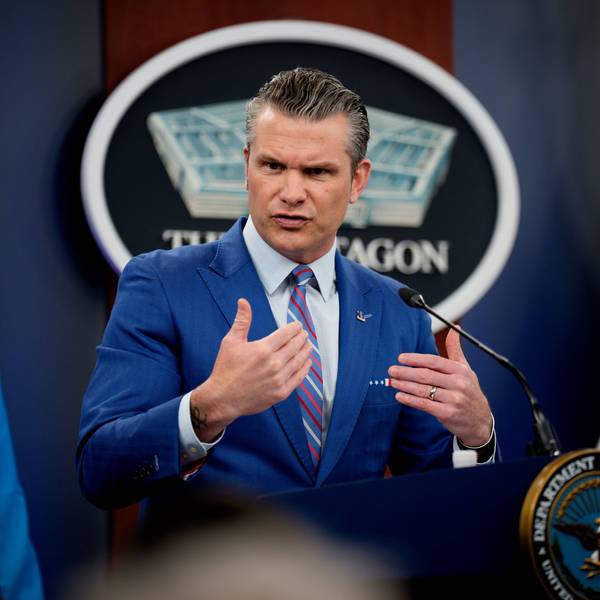
The Wall Street Journal reported late Wednesday that Pentagon Secretary Pete Hegseth—who, like President Donald Trump, insisted the Iran assault would be over swiftly—has decided that the US military will maintain a "presence of 50,000 troops in the region in part to give the president flexibility on next steps." The Pentagon "could also keep elements of the Army’s 82nd Airborne Division in the Middle East well into 2027," the Journal added, citing a letter that military leaders sent to families.
The Journal also reported that Trump, who has falsely called Iran a "dead" country, is "having discussions with senior aides about whether to declare the Iran war over," even as the bombings continue, American troops remain in the region, and the administration ratchets up economic sanctions.
" Trump administration seems to excel at bombing schools and weddings," Brian Finucane, senior adviser to the US Program at the International Crisis Group, wrote on Wednesday. "Winning the illegal and unnecessary war with Iran—not so much."
Hegseth has reportedly backed a plan that would involve "periodic" bombings of Iran in an attempt to keep ship traffic flowing through the Strait of Hormuz, a strategy that analysts say would lead to a "permanent state of war."
Trita Parsi, executive vice president of the Quincy Institute for Responsible Statecraft, argued earlier this week that Trump appeared to be leaning toward "maintaining a low-level conflict until the midterms—neither securing a diplomatic deal nor allowing the situation to deteriorate into full-scale war."
"Iranian officials say, both publicly and privately, that they expect the U.S. and Israel to resume the war after the midterms regardless of the impact of the D-Day sanctions," Parsi wrote. "Regional diplomats have largely reached the same conclusion. If sanctions weaken Iran over time while the global economy recovers and adjusts to the new reality in the Strait, a prolonged pause will work against Tehran. Iran may therefore decide to escalate dramatically, taking full advantage of Trump’s perceived vulnerability in the run-up to the elections."
Thousands of Iranians—including hundreds of children—and at least 18 US servicemembers have been killed during the war so far, and the conflict has cost the average American household $1,200 in extra costs as gas prices remain at record levels. Trump has said he doesn't "think about Americans’ financial situation" when he makes decisions pertaining to the Iran war.
The war is fueling the Trump administration's push for a record $1.5 trillion in military spending for the coming fiscal year—a budget demand that has intensified concerns of a "forever war" against Iran.
" Washington is betting that sustained military and economic pressure will eventually force Tehran to retreat," the National Iranian American Council wrote in a blog post on Wednesday. "Iran appears to be betting that it can survive long enough to force Washington to do the same. For ordinary Iranians, American servicemembers, and civilians across the region, the danger is that testing those two assumptions will require a much longer and more destructive war."
Dear Common Dreams reader, It’s been nearly 30 years since I co-founded Common Dreams with my late wife, Lina Newhouser. We had the radical notion that journalism should serve the public good, not corporate profits. It was clear to us from the outset what it would take to build such a project. No paid advertisements. No corporate sponsors. No millionaire publisher telling us what to think or do. Many people said we wouldn't last a year, but we proved those doubters wrong. Together with a tremendous team of journalists and dedicated staff, we built an independent media outlet free from the constraints of profits and corporate control. Our mission has always been simple: To inform. To inspire. To ignite change for the common good. Building Common Dreams was not easy. Our survival was never guaranteed. When you take on the most powerful forces—Wall Street greed, fossil fuel industry destruction, Big Tech lobbyists, and uber-rich oligarchs who have spent billions upon billions rigging the economy and democracy in their favor—the only bulwark you have is supporters who believe in your work. But here’s the urgent message from me today. It's never been this bad out there. And it's never been this hard to keep us going. At the very moment Common Dreams is most needed, the threats we face are intensifying. We need your support now more than ever. We don't accept corporate advertising and never will. We don't have a paywall because we don't think people should be blocked from critical news based on their ability to pay. Everything we do is funded by the donations of readers like you. When everyone does the little they can afford, we are strong. But if that support retreats or dries up, so do we. Will you donate now to make sure Common Dreams not only survives but thrives? —Craig Brown, Co-founder |
The Pentagon has reportedly extended Middle East deployments of American troops, fighter squadrons, and warships into next year as the deadly, expensive, and deeply unpopular Iran war drags on with no end in sight.
The Wall Street Journal reported late Wednesday that Pentagon Secretary Pete Hegseth—who, like President Donald Trump, insisted the Iran assault would be over swiftly—has decided that the US military will maintain a "presence of 50,000 troops in the region in part to give the president flexibility on next steps." The Pentagon "could also keep elements of the Army’s 82nd Airborne Division in the Middle East well into 2027," the Journal added, citing a letter that military leaders sent to families.
The Journal also reported that Trump, who has falsely called Iran a "dead" country, is "having discussions with senior aides about whether to declare the Iran war over," even as the bombings continue, American troops remain in the region, and the administration ratchets up economic sanctions.
" Trump administration seems to excel at bombing schools and weddings," Brian Finucane, senior adviser to the US Program at the International Crisis Group, wrote on Wednesday. "Winning the illegal and unnecessary war with Iran—not so much."
Hegseth has reportedly backed a plan that would involve "periodic" bombings of Iran in an attempt to keep ship traffic flowing through the Strait of Hormuz, a strategy that analysts say would lead to a "permanent state of war."
Trita Parsi, executive vice president of the Quincy Institute for Responsible Statecraft, argued earlier this week that Trump appeared to be leaning toward "maintaining a low-level conflict until the midterms—neither securing a diplomatic deal nor allowing the situation to deteriorate into full-scale war."
"Iranian officials say, both publicly and privately, that they expect the U.S. and Israel to resume the war after the midterms regardless of the impact of the D-Day sanctions," Parsi wrote. "Regional diplomats have largely reached the same conclusion. If sanctions weaken Iran over time while the global economy recovers and adjusts to the new reality in the Strait, a prolonged pause will work against Tehran. Iran may therefore decide to escalate dramatically, taking full advantage of Trump’s perceived vulnerability in the run-up to the elections."
Thousands of Iranians—including hundreds of children—and at least 18 US servicemembers have been killed during the war so far, and the conflict has cost the average American household $1,200 in extra costs as gas prices remain at record levels. Trump has said he doesn't "think about Americans’ financial situation" when he makes decisions pertaining to the Iran war.
The war is fueling the Trump administration's push for a record $1.5 trillion in military spending for the coming fiscal year—a budget demand that has intensified concerns of a "forever war" against Iran.
" Washington is betting that sustained military and economic pressure will eventually force Tehran to retreat," the National Iranian American Council wrote in a blog post on Wednesday. "Iran appears to be betting that it can survive long enough to force Washington to do the same. For ordinary Iranians, American servicemembers, and civilians across the region, the danger is that testing those two assumptions will require a much longer and more destructive war."
The Pentagon has reportedly extended Middle East deployments of American troops, fighter squadrons, and warships into next year as the deadly, expensive, and deeply unpopular Iran war drags on with no end in sight.
The Wall Street Journal reported late Wednesday that Pentagon Secretary Pete Hegseth—who, like President Donald Trump, insisted the Iran assault would be over swiftly—has decided that the US military will maintain a "presence of 50,000 troops in the region in part to give the president flexibility on next steps." The Pentagon "could also keep elements of the Army’s 82nd Airborne Division in the Middle East well into 2027," the Journal added, citing a letter that military leaders sent to families.
The Journal also reported that Trump, who has falsely called Iran a "dead" country, is "having discussions with senior aides about whether to declare the Iran war over," even as the bombings continue, American troops remain in the region, and the administration ratchets up economic sanctions.
" Trump administration seems to excel at bombing schools and weddings," Brian Finucane, senior adviser to the US Program at the International Crisis Group, wrote on Wednesday. "Winning the illegal and unnecessary war with Iran—not so much."
Hegseth has reportedly backed a plan that would involve "periodic" bombings of Iran in an attempt to keep ship traffic flowing through the Strait of Hormuz, a strategy that analysts say would lead to a "permanent state of war."
Trita Parsi, executive vice president of the Quincy Institute for Responsible Statecraft, argued earlier this week that Trump appeared to be leaning toward "maintaining a low-level conflict until the midterms—neither securing a diplomatic deal nor allowing the situation to deteriorate into full-scale war."
"Iranian officials say, both publicly and privately, that they expect the U.S. and Israel to resume the war after the midterms regardless of the impact of the D-Day sanctions," Parsi wrote. "Regional diplomats have largely reached the same conclusion. If sanctions weaken Iran over time while the global economy recovers and adjusts to the new reality in the Strait, a prolonged pause will work against Tehran. Iran may therefore decide to escalate dramatically, taking full advantage of Trump’s perceived vulnerability in the run-up to the elections."
Thousands of Iranians—including hundreds of children—and at least 18 US servicemembers have been killed during the war so far, and the conflict has cost the average American household $1,200 in extra costs as gas prices remain at record levels. Trump has said he doesn't "think about Americans’ financial situation" when he makes decisions pertaining to the Iran war.
The war is fueling the Trump administration's push for a record $1.5 trillion in military spending for the coming fiscal year—a budget demand that has intensified concerns of a "forever war" against Iran.
" Washington is betting that sustained military and economic pressure will eventually force Tehran to retreat," the National Iranian American Council wrote in a blog post on Wednesday. "Iran appears to be betting that it can survive long enough to force Washington to do the same. For ordinary Iranians, American servicemembers, and civilians across the region, the danger is that testing those two assumptions will require a much longer and more destructive war."