SUBSCRIBE TO OUR FREE NEWSLETTER
Daily news & progressive opinion—funded by the people, not the corporations—delivered straight to your inbox.
5
#000000
#FFFFFF
To donate by check, phone, or other method, see our More Ways to Give page.


Daily news & progressive opinion—funded by the people, not the corporations—delivered straight to your inbox.
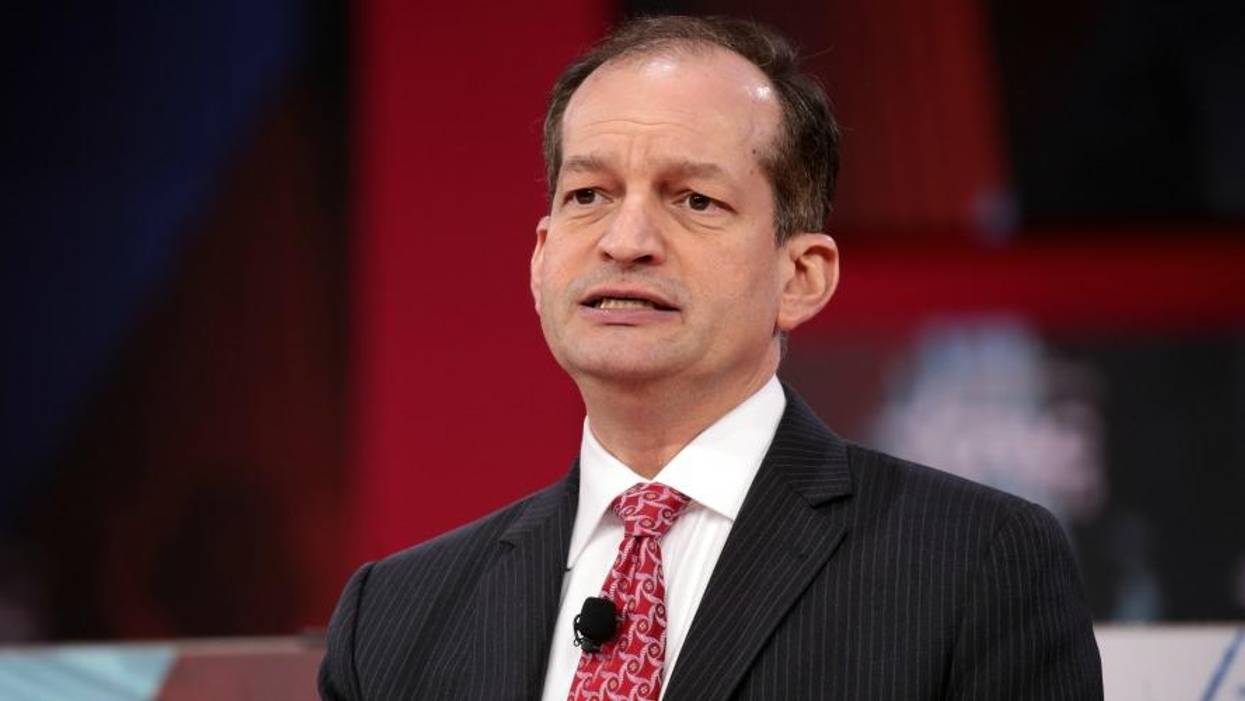
The arrest of financier and registered sex offender Jeffrey Epstein on federal child sex trafficking charges elicited fresh demands for the resignation of Trump Labor Secretary Alex Acosta, who helped Epstein secure a "sweetheart plea deal" for previous allegations while serving as Miami's top federal prosecutor over a decade ago.
Following news of Epstein's arrest late Saturday, reporters, politicians, and other observers called on Acosta to immediately step down--bolstering demands that have mounted in recent months amid a legal challenge to Epstein's deal filed by survivors.
CNN opinion contributor Raul A. Reyes wrote Sunday that "Acosta's actions are worthy of bipartisan outrage and should offend every American father and mother. Acosta betrayed the vulnerable to benefit the powerful. His deal for Epstein shows a disregard for child welfare, victims' rights and Justice Department procedures. Ironically, as secretary of labor, Acosta is responsible for monitoring human trafficking."
Over the years, Epstein has been tied to various high-profile individuals, including retired Harvard Law professor Alan Dershowitz and the U.K.'s Prince Andrew as well as former President Bill Clinton and current President Donald Trump.
According to the Daily Beast, which first reported on the financier's arrest late Saturday:
Epstein was arrested for allegedly sex trafficking dozens of minors in New York and Florida between 2002 and 2005, and will appear in court in New York on Monday, according to three law enforcement sources. Epstein, who owns a New York City mansion and an island in the Caribbean, was being held at the federal lockup in Manhattan ahead of his court date.
Saturday's arrest by the FBI-NYPD Crimes Against Children Task Force comes about 12 years after the 66-year-old financier essentially got a slap on the wrist for allegedly molesting dozens of underage girls in Florida.
For more than a decade, Epstein's alleged abuse of minors has been the subject of lawsuits brought by victims, investigations by local and federal authorities, and exposes in the press. But despite the attention cast on his alleged sex crimes, the hedge-funder has managed to avoid any meaningful jail time, let alone federal charges.
The new indictment--which, according to two sources, will be unsealed Monday in Manhattan federal court--will reportedly allege that Epstein sexually exploited dozens of underage girls in a now-familiar scheme: paying them cash for "massages" and then molesting or sexually abusing them in his Upper East Side mansion or his palatial residence in Palm Beach. Epstein will be charged with one count of sex trafficking of minors and one count of conspiracy to engage in sex trafficking of minors--which could put him away for a maximum of 45 years. The case is being handled by the Public Corruption Unit of the Southern District of New York, with assistance from the district's human-trafficking officials and the FBI.
Sources told the Miami Herald that Epstein was arrested at New Jersey's Teterboro Airport and "around 5:30 p.m. Saturday, about a dozen federal agents broke down the door to Epstein's Manhattan townhouse to execute search warrants." A source in New York told the Florida newspaper that Monday's bail hearing "will be critical because if they grant him bail, he has enough money that he will disappear and they will never get him."
In a series of stories from last November titled "Perversion of Justice," Herald reporter Julie K. Brown detailed how Acosta, then U.S. attorney for the Southern District of Florida, worked with Epstein's attorneys to craft an agreement that was kept secret from Epstein's victims.
Epstein "was accused of assembling a large, cult-like network of underage girls--with the help of young female recruiters--to coerce into having sex acts behind the walls of his opulent waterfront mansion as often as three times a day," Brown reported in November. "Facing a 53-page federal indictment, Epstein could have ended up in federal prison for the rest of his life."
Not only would Epstein serve just 13 months in the county jail, but the deal--called a non-prosecution agreement--essentially shut down an ongoing FBI probe into whether there were more victims and other powerful people who took part in Epstein's sex crimes, according to a Miami Herald examination of thousands of emails, court documents and FBI records.
The pact required Epstein to plead guilty to two prostitution charges in state court. Epstein and four of his accomplices named in the agreement received immunity from all federal criminal charges. But even more unusual, the deal included wording that granted immunity to "any potential co-conspirators" who were also involved in Epstein's crimes. These accomplices or participants were not identified in the agreement, leaving it open to interpretation whether it possibly referred to other influential people who were having sex with underage girls at Epstein's various homes or on his plane.
As Common Dreams reported in December--amid previous calls for Acosta to resign, which were sparked by the Herald's series--National Organization for Women (NOW) president Toni Van Pelt said that "Epstein plays by the same rule book as Donald Trump, Les Moonves, Harvey Weinstein, Eric Schneiderman, and other powerful men who have been revealed as serial abusers of women."
"Epstein's scant 13-month stay in a county jail--where he was even allowed to spend twelve hours a day, six days a week, at his office," Van Pelt said, "was made possible by a culture of powerful men, enabling each other, while dismissing, excusing, or demeaning the women and children they brutalize with physical and sexual violence."
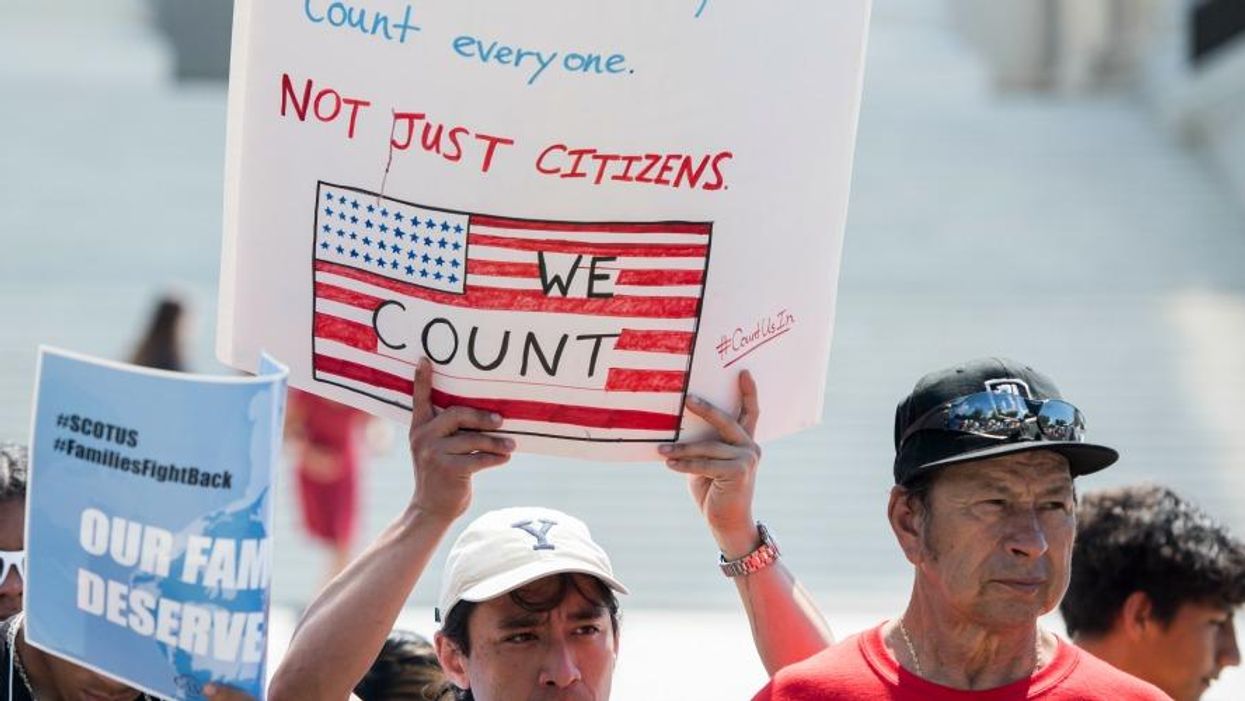
Despite the U.S. Supreme Court's rejection of the Trump administration's attempt to add a question about citizenship to the 2020 census, rights advocates said Friday that the damage to immigrant communities across the country is likely already done.
The administration had been planning to add the question, "Is this person a citizen of the United States?" to the ten-year survey, a move which critics feared would result in an undercount that could be significant enough result in federal funding cuts for marginalized communities and the loss of representation in Congress. President Donald Trump had argued the question was needed to improve enforcement of the Voting Rights Act--reasoning the court found "contrived."
"Whether the citizenship question is included or not included, there is already a lot of fear instilled in the immigrant community."
--Maricela Rodriguez, California governor's officeAfter the 5-4 ruling was handed down Thursday, immigrant rights groups and lawmakers quickly set to work encouraging all residents of the U.S. to participate in the census next year, opening their doors to government workers for the ten-year survey that aims to count everyone in the country.
"If you don't participate in the census, Trump wins," California's Democratic Gov. Gavin Newsom said on Thursday.
Newsom's warning came amid heightened fears of the Trump administration and any government employee who might come to an immigrant family's home.
Under Trump's orders, Immigration and Customs Enforcement (ICE) has already arrested hundreds of undocumented immigrants this year. Days before the high court handed down its ruling the president had threatened to begin ICE raids in several cities as part of a plan to arrest and deport "millions" of undocumented immigrants, before walking back his threat.
"Really, the damage in terms of creating fear around the census has been done," Maricela Rodriguez, Newson's civic engagement director, told the New York Times. "Whether the citizenship question is included or not included, there is already a lot of fear instilled in the immigrant community."
As Jose A. Del Real reported in the Times, many residents in Los Angeles's predominantly Latino MacArthur Park neighborhood do not plan to answer their doors to census takers, citing the fear of ICE raids.
"We came here to work, just to work, and it is better to keep the door closed," Pedro, a 50-year-old resident who is an undocumented immigrant, told the Times.
"The very people who are being told by activists to keep their doors closed if ICE agents pay a visit are also being told to open their doors for government census workers, so they can be counted," wrote Del Real.
The months-long court battle over the census question--in which evidence suggested that the administration had actually sought to add the question to give an electoral advantage to "Republicans and non-Hispanic whites"--has also contributed to intensified distrust of the government.
"The damage has been done already just with conversation that's been going on around along with the citizenship question," Julio Rivera, census manager for the Latino advocacy group the NALEO Educational Fund, told the ABC affiliate WTNH in Connecticut. "There's been fear that's been struck into communities."
The advocacy group Voto Latino called on immigrant community members to spread information about the census and encourage one another to answer the government survey, arguing that making their presence known will result in greater political power for marginalized people.
"The purpose of even suggesting a citizenship question was to instill fear into our gente," the group tweeted. "It's more important than ever that we discuss the census among us and use it to consolidate our power!"
The National Organization for Women (NOW) also pledged to engage with immigrant communities and spread information about answering the census.
"We need to rebuild trust in the census, reach out to immigrant communities and reassure them that they can participate in the census without fear," said NOW President Toni Van Pelt in a statement. "NOW will not let our guard down until this discriminatory, dangerous measure is finally, definitively, defeated. We will stand up for full representation, and demand that the U.S. Census count every person in America--not just the ones Republicans want to vote."
In just the latest move that reproductive rights advocates warn is part of the prolonged effort to overturn Roe v. Wade, GOP state senators in Alabama sent what would be the nation's most extreme abortion ban to Republican Gov. Kay Ivey's desk late Tuesday.
"This unconstitutional measure would send women in the state back to the dark days of policymakers having control over their bodies, health, and lives."
--Toni Van Pelt, NOW
This "worst-of-its-kind" bill, already approved by the Alabama House, would ban abortion at every stage of pregnancy and criminalize providing the procedure as a felony punishable by up to 99 years in prison.
If the measure becomes law, the only exception under which a woman can terminate a pregnancy is if she faces a serious health risk. Most GOP senators rejected an amendment that would have added exceptions for rape and incest.
Lori Jhons, Ivey's spokesperson, told The Associated Press "the governor intends to withhold comment until she has had a chance to thoroughly review the final version of the bill that passed," but the vote tally suggests state lawmakers could easily override a veto.
The passage of this "dangerous" and "atrocious" legislation Tuesday provoked immediate outcry and vows to fight the measure from reproductive rights supporters nationwide.
"This unconstitutional measure would send women in the state back to the dark days of policymakers having control over their bodies, health, and lives," warned Toni Van Pelt of the National Organization for Women (NOW). "We strongly oppose this bill and the other egregious pieces of legislation that extremist lawmakers are trying to pass in what they claim is an attempt to force the Supreme Court to overturn Roe."
"Anti-choice Republicans no longer even pretend to respect the law or the women that it protects," NARAL Pro-Choice America president Ilyse Hogue said in a statement. She also recalled the widespread opposition to Brett Kavanaugh, whom President Donald Trump appointed and the U.S. Senate approved to the Supreme Court last year.
"When women stood up in record numbers to fight Kavanaugh's nomination, propelled by his alarming record and Trump's promise to nominate jurists committed to criminalizing abortion and punishing women, we were told we were 'hysterical' because Roe was settled law," Hogue said. "Not six months later, we are battling measures where the stated goal is exactly that: outlawing abortion."
The Very Rev. Katherine Ragsdale, interim president and CEO of the National Abortion Federation, accused Republican lawmakers in Alabama of "playing games with people's lives and their constitutionally-protected rights," and called on Ivey to "put her constituents' health and rights first and veto this bill."
"We and our members will continue fighting," Ragsdale added, "to ensure people needing access to abortion care are able to obtain the compassionate healthcare they need."
Dr. Leana Wen, president and CEO of Planned Parenthood, also promised her organization will challenge the "extreme and dangerous policy" that puts women's lives at even greater risk.
"With a record number of extreme bans on abortion and Kavanaugh on the Supreme Court, our fundamental right to healthcare is under assault like never before," Wen said. "We will do whatever it takes to stop this dangerous bill so that patients can continue to access the care they need. We are in for the fight of our lives, for our patients' lives."
Randall Marshall, executive director of the ACLU of Alabama, said in statement that his group, "along with the National ACLU and Planned Parenthood, will file a lawsuit to stop this unconstitutional ban and protect every woman's right to make her own choice about her healthcare, her body, and her future."
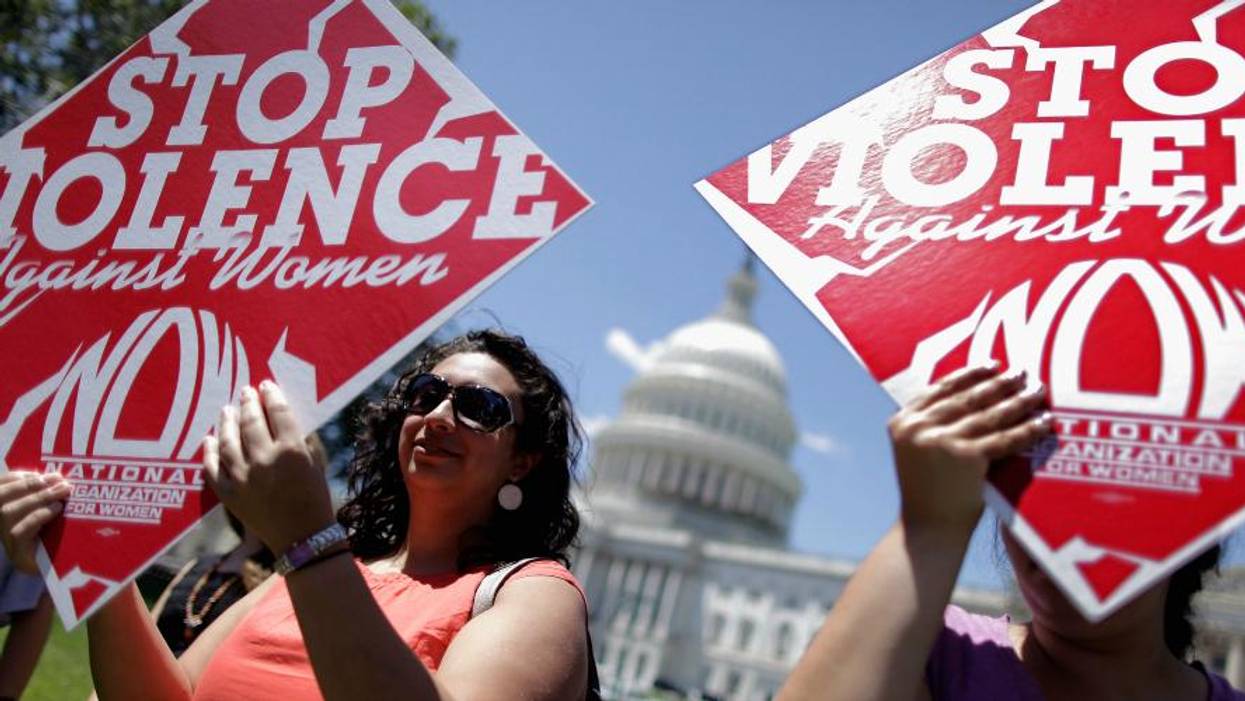
The vast majority of House Republicans caved to pressure from the gun lobby on Thursday and refused to back Democrats' successful effort to extend the Violence Against Women Act for five years because of a new provision that would make it harder for abusers to acquire guns.
The 1994 law provides protections and funds programs for survivors of domestic and sexual violence. It's been reauthorized three times but expired in February. The new version passed the House 263-158 with support from all but one Democrat and only 33 Republicans. Read the full roll call results here.
It now faces an uphill battle in the GOP-controlled Senate.
The National Rifle Association (NRA) is urging GOP lawmakers to oppose the updated version because of a gun-related provision to close the so-called "boyfriend loophole."
As ThinkProgress explained earlier this week:
Currently, people convicted of domestic abuse are only prohibited from possessing guns if they live with the victim, have a child with them, are a parent or guardian, or they are, or were once, married to them. This leaves out many cases of intimate partner violence, and the VAWA reauthorization would expand this to include dating partners, stalkers, and former partners.
Lindsay Nichols, federal policy director at the Giffords Law Center, which provides legal assistance to lawmakers, activists, and government attorneys for gun control efforts, told ThinkProgress that the provisions recognizing stalkers are an important addition to this law.
"While stalking is a strong indicator of future violence, people convicted of stalking misdemeanors are still eligible to purchase guns. This bill would close these loopholes, and increase enforcement of the laws that prevent domestic abusers from using guns to harm their victims," she said.
As the NRA and some Republican lawmakers condemned the provision as a politically motivated "poison pill," one of its key proponents, Rep. Debbie Dingell (D-Mich.), referenced her childhood when speaking about the importance of keeping guns out of the hands of abusers.
"This is something that I care very, very deeply about, because I lived in that household," she said outside the U.S. Capitol on Wednesday. "I know what it's like to live in a household with someone that has issues that can snap at a minute's notice, and suddenly the gun is pointed at your mother or pointed at you. And as a child, you're trying to grab a gun from someone and keep them from killing each other."
Speaking on the House floor ahead of the vote Thursday, Dingell declared: "Do not let the NRA bully you. This is not a poison pill!"
"The NRA wants Congress to put the second amendment rights of abusers over the lives of the women and families who might die at their hands," the National Organization for Women (NOW) said in a statement on Thursday.
House Majority Leader Steny Hoyer (D-Md.) said on the House floor Wednesday that he was "deeply disappointed" that some Republicans were "using the NRA as cover to vote against this reauthorization, which has been overwhelmingly in a bipartisan fashion reauthorized over and over again."
Rep. Karen Bass (D-Calif.), who co-sponsored the House measure with Rep. Brian Fitzpatrick (R-Pa.), said before it passed that "while we have made significant progress, we still have much to do."
"Movements like MeToo, across this country, demand Congress' attention," she said, "to better deal with the gaping holes left unfilled in current law around the issues of domestic violence, dating violence, sexual assault/harassment, and stalking."
Although the Senate may refuse to reauthorize the measure with the contested provisions, advocacy groups still took to Twitter to celebrate the House vote and highlight new additions:
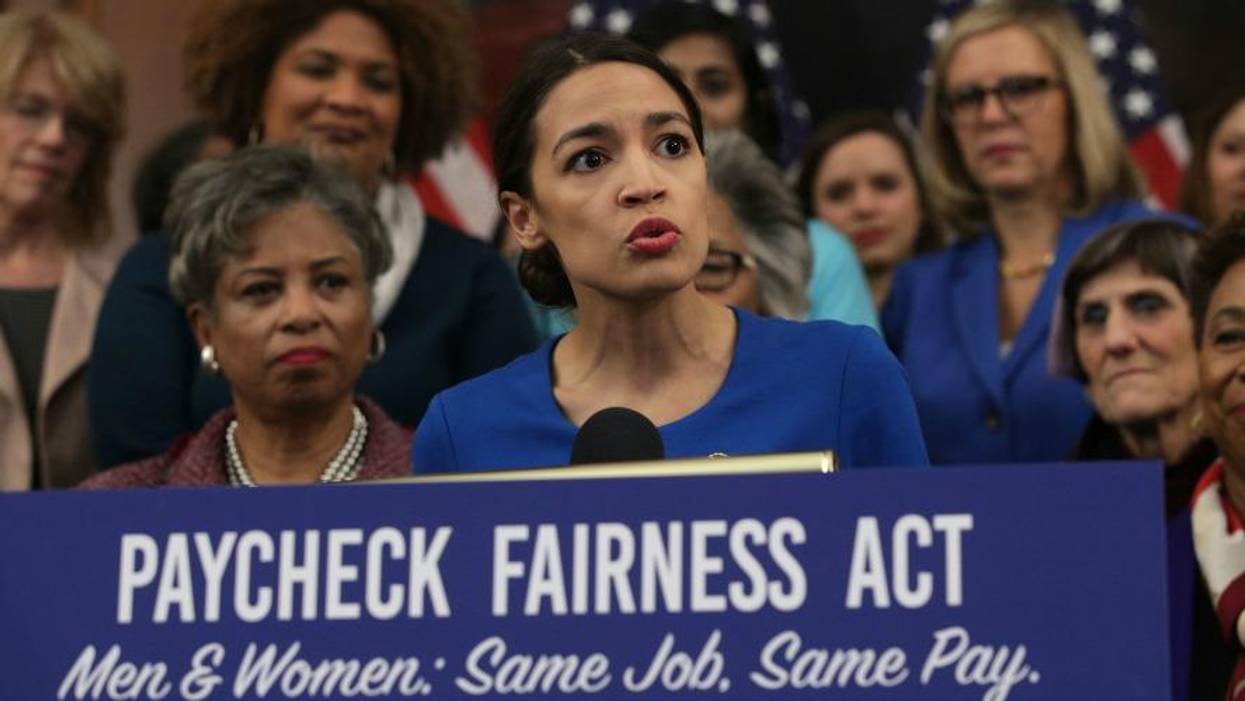
Joining several House colleagues in introducing the Paycheck Fairness Act to combat gender and racial wage disparities on Wednesday, Rep. Alexandria Ocasio-Cortez (D-N.Y.) offered a challenge to employers and right-wingers who deny the existence of unfair pay gaps: "prove it."
The congresswoman highlighted one measure within the legislation that will prohibit retaliation against employees who disclose their salaries or seek information about salaries and pay disparities--with the aim of ending the culture of "secrecy" that has allowed wage gaps to persist decades after the Equal Pay Act of 1963.
The Paycheck Fairness Act "makes it legal and it makes it totally permissible to share your salary information at your workplace, and that's incredibly important because for those who say that the wage gap does not exist, they should have no problem proving that," Ocasio-Cortez said.
The congresswoman joined House Speaker Nancy Pelosi (D-Calif.), Rep. Rosa DeLauro (D-Conn.) and other representatives in unveiling the legislation 10 years to the day after former President Barack Obama signed the Lily Ledbetter Fair Pay Act into law. The Lily Ledbetter Act overturned a Supreme Court decision which severely limited the time period when an employee can file a discrimination lawsuit. The law's namesake was present at Wednesday's press conference and also detailed in a CNN op-ed why more work is needed to combat pay disparities.
"Our laws just aren't good enough," Ledbetter wrote. "Loopholes and inadequacies in the Equal Pay Act mean that pay discrimination persists throughout our economy. Even at the beginning of their careers, young women will typically earn less than their male colleagues performing the same job with the same education and experience. And because many employers still rely on job applicants' salary history to set pay, they will be forced to carry these depressed wages throughout their career and into retirement. What starts as a small difference grows through the years."
"We cannot ask people their salary history and pay people depending on their salary history anymore. Because it is time that we pay people what they are worth and not how little they are desperate enough to accept." --Rep. Alexandria Ocasio-Cortez (D-N.Y.)The Paycheck Fairness Act would close loopholes in the Equal Pay Act which have allowed employers to claim their wage disparities between men and women are not based on gender, increase penalties for wage discrimination, order federal agencies to collect and publicize data on compensation, and bar employers from asking prospective workers about their salary history.
"We cannot ask people their salary history and pay people depending on their salary history anymore," Ocasio-Cortez said. "Because it is time that we pay people what they are worth and not how little they are desperate enough to accept."
More than five decades after the passage of the Equal Pay Act, atudies show American women still earn just 80 cents for every dollar their male counterparts earn. Black and Latinx women earn just 65 cents and 57 cents on the dollar, respectively. Even a pay gap of just 2.6 percent can cause a woman to lose out on as much as $500,000 over the course of her career, according to a new study by Johns Hopkins University.
"The progress of women in the workforce over the last fifty-six years is evident, but the financial penalty many women experience due to sex- and race-based pay discrimination must stop," Toni Van Pelt, president of the National Organization for Women (NOW), said in a statement urging Congress to pass the bill. "If closing the wage gap continues at its agonizingly-slow current rate, men and women will not reach wage equality until 2059. That is forty years too long."
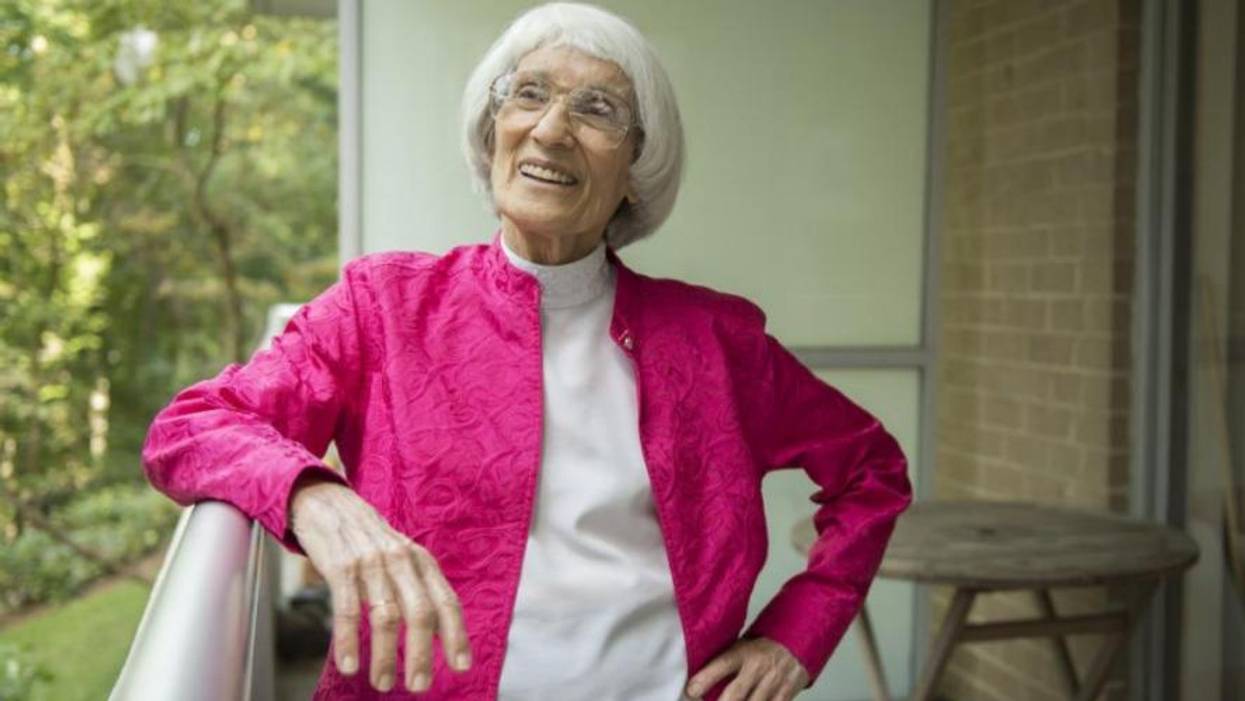
Dr. Bernice Sandler, whose experiences of sex discrimination on a college campus in the 1960s became the basis for sweeping reforms to ensure an equitable learning environment for women, died last weekend at the age of 90.
Sandler had "embarked on a lifelong mission to change the culture of sex discrimination on college campuses," said the National Organization for Women (NOW) president Toni Van Pelt in a statement. "She spent decades documenting, investigating, and working to change the arbitrary limits and sexist standards that held women back academically and professionally."
"Title IX turned out to be the legislative equivalent of a Swiss Army knife. It opened up opportunities in so many areas we didn't foresee, and [Bernice] laid the essential groundwork for it all." --Marty Langelan, sexual harassment expert
After becoming fed up with casually sexist remarks dismissing her accomplishments and her potential as a professor, Sandler embarked on a campaign that paved the way for Title IX, the educational civil rights law that has forced schools across the country to work to root out discrimination on the basis of sex or gender.
One colleague at the University of Maryland, where Sandler taught part-time, had told her she "came on too strong for a woman," while an interviewer dismissed her as "just a housewife who went back to school" after she'd obtained a doctorate in education in 1969.
Sandler responded by approaching the National Organization for Women (NOW) with research she'd compiled on sex discrimination, forming the foundation of a class action complaint she and the group filed in 1970 with the Labor Department.
Congressional hearings and Title IX legislation followed, with President Richard Nixon signing it into law in 1972. The law has protected women on college campuses from sexual harassment, required that men and women have equal access to all campus resources, and opened doors for female athletes.
"Title IX turned out to be the legislative equivalent of a Swiss Army knife," Marty Langelan, an expert in sexual harassment, told the New York Times. "It opened up opportunities in so many areas we didn't foresee, and [Bernice] laid the essential groundwork for it all."
Women's rights organizations celebrated Sandler's life and work on social media, expressing gratitude for the effect she had on the lives of women across the country.
One of the nation's leading women's rights organizations joined a number of political commentators on Friday in demanding to know: How does Secretary of Labor Alexander Acosta, who was accused last week in an in-depth investigative article by the Miami Herald of helping a serial sexual abuser secure a lenient plea deal, still have a job?
The sexual abuse charges brought against Jeffrey Epstein--a hedge fund manager who counts President Donald Trump and former President Bill Clinton among his friends--"could have resulted in Epstein spending the rest of his life in prison," said Toni Van Pelt, president of the National Organization for Women (NOW). "But instead, he played 'let's make a deal' to subvert justice and escape punishment. Labor Secretary Alexander Acosta, who as U.S. Attorney in Miami cut the deal with Epstein, must resign."
The Herald's year-long investigation revealed that in 2007, Acosta helped Epstein to secure a plea bargain that included just 13 months in a county jail and a non-prosecution agreement after being indicted for "assembling a large, cult-like network" of dozens of underage girls and coercing them into sexual activity.
"Epstein's ability to evade justice is of a piece with the elite impunity that Trump pretended to challenge, but actually embodies." --Michelle Goldberg
The non-prosecution agreement Acosta agreed to effectively ended an FBI probe into Epstein's actions, and contrary to federal law, the deal was kept from the girls he had abused--details of the case which Van Pelt argued demonstrate that Acosta played a key role in affording Epstein the same coddling treatment that has been afforded other powerful abusers.
"Jeffrey Epstein plays by the same rule book as Donald Trump, Les Moonves, Harvey Weinstein, Eric Schneiderman, and other powerful men who have been revealed as serial abusers of women," Van Pelt said. "Epstein's scant 13-month stay in a county jail--where he was even allowed to spend twelve hours a day, six days a week, at his office--was made possible by a culture of powerful men enabling each other, while dismissing, excusing, or demeaning the women and children they brutalize with physical and sexual violence."
In the New York Times, Michelle Goldberg published an editorial this week with the succinct headline, "Why Does Alex Acosta Still Have a Job?"
The fact that the labor secretary is responsible for combating human trafficking, Goldberg noted, is just one cause for outrage in the Acosta case.
Acosta's agreement with Epstein "should end his career," Goldberg wrote. "The story might have been overshadowed by last week's cascading revelations in the Trump-Russia scandal, or the news that acting attorney general Matthew Whitaker knew of numerous fraud complaints against a company he advised, to take just two examples of administration lawlessness. But while Acosta's record covering up for a depraved plutocrat makes him a good fit for the Trump administration, it should disqualify him from public service."
The editorial staff of the Herald agreed, writing that Acosta is "damaged goods" due to his deal with "the devil Epstein."
"He should realize it and move on," wrote Nancy Ancrum and Luisa Yane at the Herald. "He does not deserve to be in the halls of power--he abused his power so tragically."
Some applauded Penny Nance, head of the conservative group Concerned Women for America, for becoming the first right-wing figure to add her voice to the call for Acosta's immediate resignation--but many on social media took issue with her assertion that Trump "would not have nominated Acosta" if reports of the deal had come out earlier.
"If Acosta is still part of the administration next month" after Democrats take control of the House, Goldberg wrote, "there should be hearings into his handling of the Epstein case. Epstein's ability to evade justice is of a piece with the elite impunity that Trump pretended to challenge, but actually embodies. Congress can send a message: Time's up."
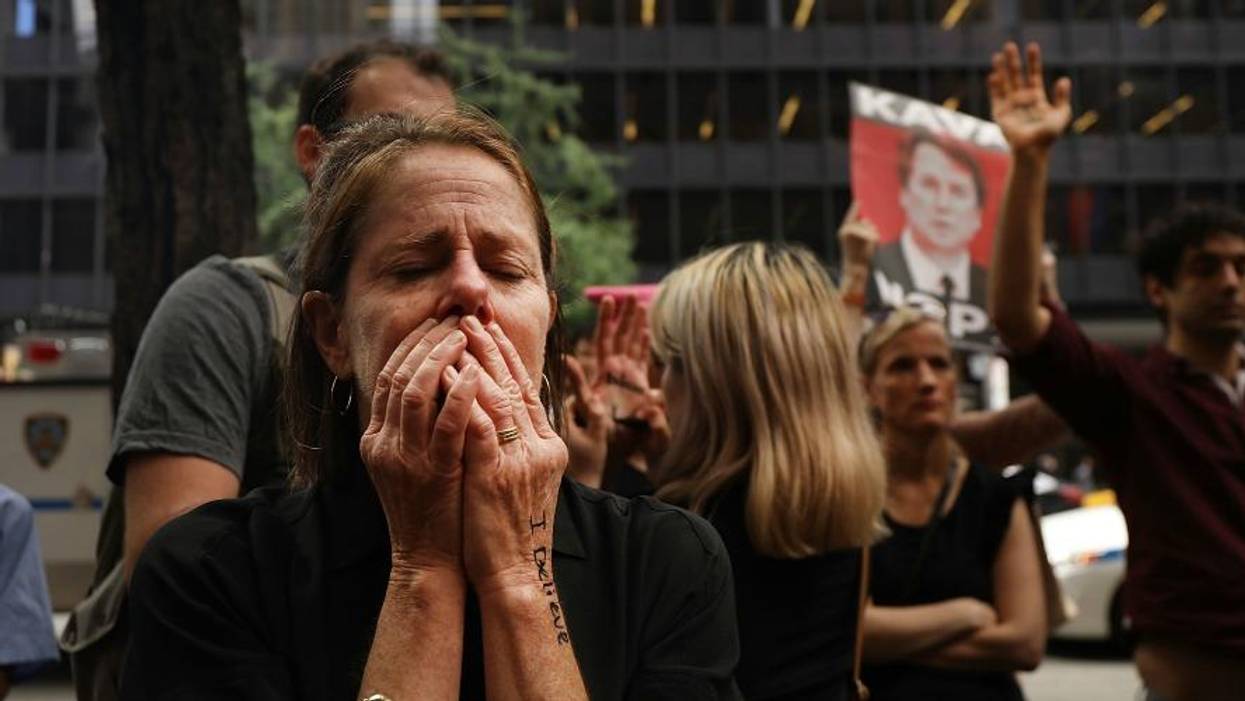
Women across the country expressed gratitude on Thursday as they watched Dr. Christine Blasey Ford testify publicly that U.S. Supreme Court nominee Brett Kavanaugh had sexually assaulted her years ago.
Dr. Ford's testimony came in front of 11 Republican senators, all men, on the Senate Judiciary Committee who have pledged to push through a vote on Kavanaugh regardless of her claims while hiding behind an outside female prosecutor they hired to question her.
With the hearing ongoing, the National Organization for Women (NOW) was among the groups and individuals demonstrating on Capitol Hill in support of Ford:
A number of Democratic senators also applauded Ford for coming forward with her allegation as it became clear in July that Kavanaugh was on President Donald Trump's Supreme Court shortlist--with Sen. Patrick Leahy (D-Vt.) suggesting that Ford's testimony could have a tangible effect on sexual assault survivors across the nation.
"There are millions of victims and survivors out there who have been inspired by your courage--I am," said Leahy. "Bravery is contagious."
Others on social media echoed Leahy's sentiments.
Her presence has already changed everything. I hope that this isn't lost on people. Her courage has already changed other people's lives.
-- #Prisonculture (@prisonculture) September 27, 2018
Leahy also questioned Ford about the image that was most ingrained in her memory of the assault.
"Indelible in the hippocampus is the laughter, the uproarious laughter, between the two, and their having fun at my expense," Ford, a research psychologist, replied. "I was underneath one of them while the two laughed."
Meanwhile, as veteran sex crimes prosecutor Rachel Mitchell served as a stand-in for the 11 male Republican senators on the committee and questioned Ford about the details of her allegations and why she came forward, many observers noted that Ford appeared unflustered as Mitchell attempted to poke holes in her story.
After telling Ford that she seemed to have given a clear picture of the alleged assault, Mitchell shifted her focus to the last two months, since Ford first told her representative in the House about her claim.
Mitchell appeared intent on making an issue of Ford's statement that she had declined to fly from her home in California to speak with the committee due to her fear of flying--asking how often Ford had flown for business of vacation. The line of questioning did not appear to lead to much doubt regarding Ford's testimony.
According to Vanity Fair correspondent Gabriel Sherman, President Donald Trump was infuriated by the coverage of his preferred news network and unpleasantly surprised by Ford's credibility.
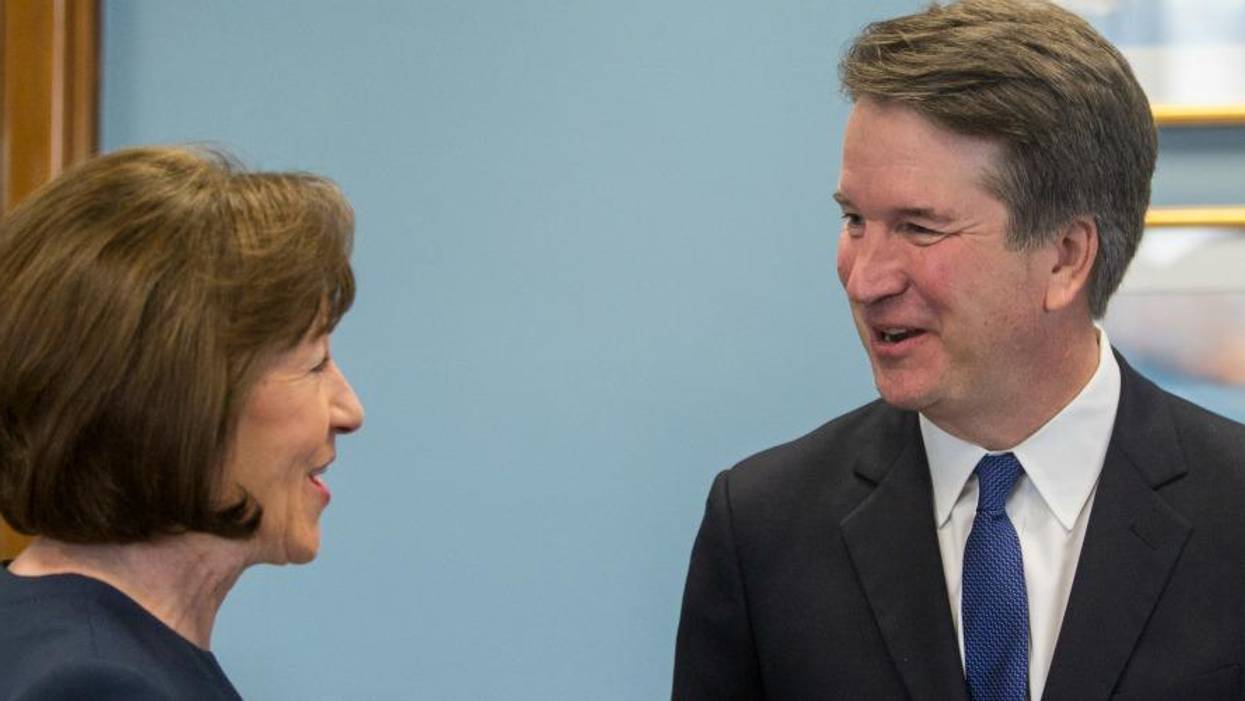
While women's rights groups have jumped to the defense of Christine Blasey Ford, the college professor who on Sunday came forward publicly to accuse Supreme Court nominee Brett Kavanaugh of sexual assault when they were high school students, many members of the Republican Party--including Sen. Susan Collins of Maine--have yet to say whether they believe the serious and credible charges are cause for delaying a vote by the Senate Judiciary Committee later this week.
"Christine Blasey Ford has demonstrated tremendous courage in coming forward. We will not sit by and let Republicans attempt to undermine and defame her."
--Shauna Thomas, UltravioletAsked by a CNN reporter for her reaction to the Ford's allegations, first made public in comments published by the Washington Post on Sunday afternoon, Collins said she was "obviously very surprised" by the accusations but that in a phone call with Kavanaugh on Friday said the nominee "emphatically" denied the assault. Asked if she believed Ford's account, Collins said, "I don't know enough to make a judgment at this point."
While other Republican Senators considered possible swing votes on Kavanaugh--including Sens. Jeff Flake of Arizona and Lisa Murkowski of Alaska--have now expressed at least some support for a delay in Kavanaugh's vote until more is learned about the accusation or Ford is given a chance to testify before the Judiciary Committee, Collins suggested she needed more time to think. On whether the vote should be delayed, Collins was only willing to tell CNN she would "be talking with my colleagues, but I really don't have anything to add at this point."
Other lawmakers and women's rights groups, however, did not apparently need more information "to make a judgement" on what should be done now that Ford has come forward.
"We believe women and we believe Christine Blasey Ford," said Shaunna Thomas, executive director and co-founder of UltraViolet.
"Ford has demonstrated tremendous courage in coming forward," Thomas continued. "We will not sit by and let Republicans attempt to undermine and defame her. We will hold anyone who attempts to discredit Ford accountable, and we will demand that all Senators take her story with the seriousness that it deserves."
Given the seriousness and credibility of Ford's accusations, she added, "Kavanaugh should withdraw his nomination immediately. Violence against women should have no place in our society and it certainly should have no place on the highest court in the nation."
Sen. Mazie Hirono (D-Calif) did not need more information to believe Ford's story or to make the judgement that a committee vote for Kavanaugh should be postponed:
Toni Van Pelt, president of the National Organization for Women (NOW), agreed.
Her group, said Van Pelt, "is firm in our demand that Brett Kavanaugh withdraw his name from consideration for a seat on the Supreme Court."
"NOW respectfully demands that Brett Kavanaugh withdraw and if he doesn't, that the Committee and the full Senate rejects the nomination of this flawed nominee," she said. "Our nation simply must deal with bullying, dating, domestic violence, sexual harassment, misconduct, assault, and rape. And until we make sure our homes, schools, workplace, and communities are a safe haven, we will continue to have deaths and lifetime trauma on our hands. Enough is enough."
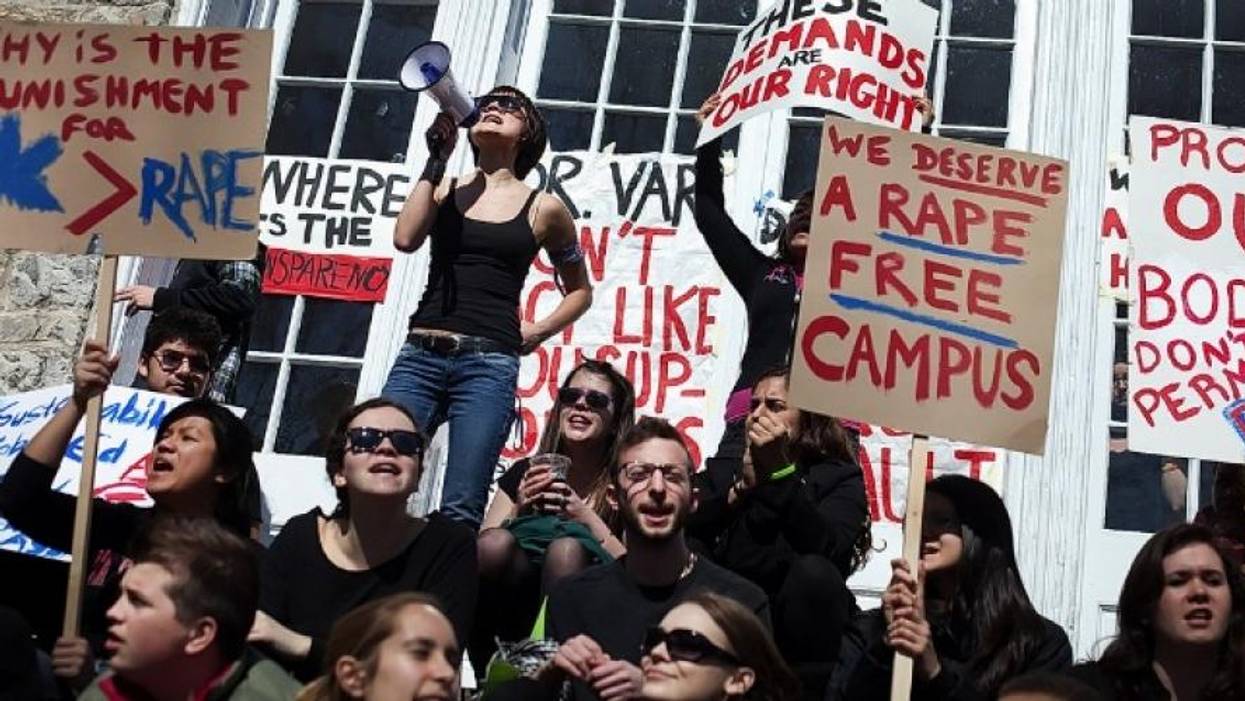
Women rights groups and victim advocates expressed outrage on Thursday following reports that Education Secretary Betsy DeVos has plans to weaken federal protections for sexual assault survivors on U.S. campuses--reducing liability for school administrators and increasing protections for accused sexual predators.
The proposed rules, first reported by The New York Times, narrow the definition of sexual harassment to mean "unwelcome conduct on the basis of sex that is so severe, pervasive and objectively offensive that it denies a person access to the school's education program or activity."
Toni Van Pelt, president of the National Organization for Women (NOW), responded by saying the new rules turn the "government's response to assault, harassment, and rape upside down," and gave the name "See No Evil Betsy DeVos" to the secretary.
"Under the Obama guidelines, schools could rely on the lowest standard of proof, or the 'preponderance of evidence' when deciding whether or not an alleged perpetrator should be punished for sexual misconduct," Van Pelt explained. "But in Betsy DeVos' upside-down land, schools could decide which level of evidence to rely on when investigating misconduct, narrow the definition of sexual harassment, and only be accountable for complaints which are formally filed."
Citing statistics that one in four women are sexually assaulted while attending college, including estimates that 90 percent go unreported, Karin Roland chief campaigns officer for UltraViolet, said that while women face a "national rape epidemic" on U.S. campuses, "Betsy DeVos and the Trump Administration care more about protecting perpetrators and sexual abusers over sexual assault survivors. This policy is extremely dangerous and beyond shameful."
The new rules, Roland added, "further protect abusers in a system that is already rigged in their favor. With sexual assaults routinely going unreported, uninvestigated and unpunished, these new rules will only make campuses less safe."