

SUBSCRIBE TO OUR FREE NEWSLETTER
Daily news & progressive opinion—funded by the people, not the corporations—delivered straight to your inbox.
5
#000000
#FFFFFF
To donate by check, phone, or other method, see our More Ways to Give page.
Daily news & progressive opinion—funded by the people, not the corporations—delivered straight to your inbox.

Gloria didn’t believe that history’s pendulum automatically swings back on its own. It swings because people organize, build movements, and refuse to give up.
“How can I be of service?”
That was the phone message Gloria Steinem kept leaving at the office of the African National Congress Parliamentary Women’s Caucus in Cape Town, South Africa in 1997.
I had arrived in the country a year earlier, working as a young staffer for some of the first women elected to lead South Africa’s new democracy. When they asked if I wanted to call that American woman back, I jumped at the chance.
Soon Gloria was on her way to Cape Town, and I was assigned to pick her up at the airport.
As this global icon—something she hated to be called—stepped into my rusted car, the first thing I remember is asking her to keep her head near the window as exhaust crept in through a hole in the floor. (She didn’t flinch.)
When she turned to me, she was both generous and matter-of-fact: “How can I help?”
The road ahead will not be easy. It will require new leadership and new lessons. But we do know how to begin.
With that, I became one of countless women who would become part of Gloria’s ever-expanding circle. For the next three decades, a group of us would be invited into the colorful living room of her New York brownstone to share updates on our work and to inevitably be asked once again: “How can I help?”
After Gloria’s death, we—and millions of others—are left reflecting on the lessons of her life. How can we make sense of a time when our politics seem to be the very opposite of her life’s work?
She wouldn’t have allowed me to ponder that question for long.
In the dark days following the Supreme Court’s Dobbs decision in 2022, I went to visit her. My group chats with women I’d spent my career working alongside were blowing up. My nieces called me, furious and worried. All of us were terrified and angry.
When I walked into that familiar yellow living room on the Upper East Side of Manhattan, the grief I expected to find was nowhere in sight. “It’s okay, the pendulum is swinging one way now, but it will swing back. We will get through this.”
Along with wit and humor, Gloria’s most defining characteristic was her optimism. She called herself a “hope-a-holic.”
Years of bitter backlash to the feminist movement didn’t make her cynical, it made her hopeful. She had seen the other side of backlash: the progress that suddenly emerges after years where nothing seems easy.
She also understood intuitively that despair was a political weapon, and she refused to supply it.
Adversaries of the feminist movement would change over time. Whether it was Phyllis Schlafly or Jerry Falwell, Rush Limbaugh or that guy at the end of the bar, they still seemed to have something in common. They were counting on us to feel hopeless and helpless. Their power depended on us questioning our own.
With Donald Trump as our bully-in-chief, that’s a lesson we should remember now. We’ve seen him before.
Gloria didn’t believe that history’s pendulum automatically swings back on its own. It swings because people organize, build movements, and refuse to give up.
Perhaps one of her most important lessons was also her most prescient. As we face the most misogynist administration in my lifetime, we also face the most racist, with relentless attacks on civil rights; diversity, equity, and inclusion (DEI); and the truth about US history. Gloria understood deeply that there could be no gender justice without racial justice. As she said in 2017, “If it’s White, it’s not feminism—by definition, it includes all women.”
She acted on that commitment by ensuring that Black women and women of color spoke with her side by side, including brilliant activists like Dorothy Pitman Hughes and Florynce “Flo” Kennedy. She was also canny and practical about her power as a white woman. She saw that she could reach other white women, get them into a room, and open a conversation about upending racism and sexism together.
Ever the organizer, Gloria was also deeply practical. Inviting another leader to speak by her side meant you could get twice the audience. Movements are built in crowded rooms.
Donald Trump’s entire project can be summed up in one word: division. He knows that sowing mistrust is key to consolidating power at the top. As long as we are fighting with each other, we won’t see how much we have in common.
It’s the exact opposite of the ethos that came to define Gloria’s worldview, which she often summed up as, “We are linked, not ranked.”
Her death comes just as a multiracial, multigenerational coalition is required to defeat authoritarianism. Gloria’s principled—and practical—approach to movement building is now a road map. The bigger the movement, the further and faster the pendulum will swing.
A decade ago, a reporter asked Gloria if she was ready to pass the torch to the next generation of activists.
“I’m not giving up my torch, thank you very much,” she replied. “I am using it to light other people’s torches.”
As we raise our own torches, we light up a world in immense crisis. The road ahead will not be easy. It will require new leadership and new lessons.
But we do know how to begin. Now it’s our turn to ask: “How can I help?”
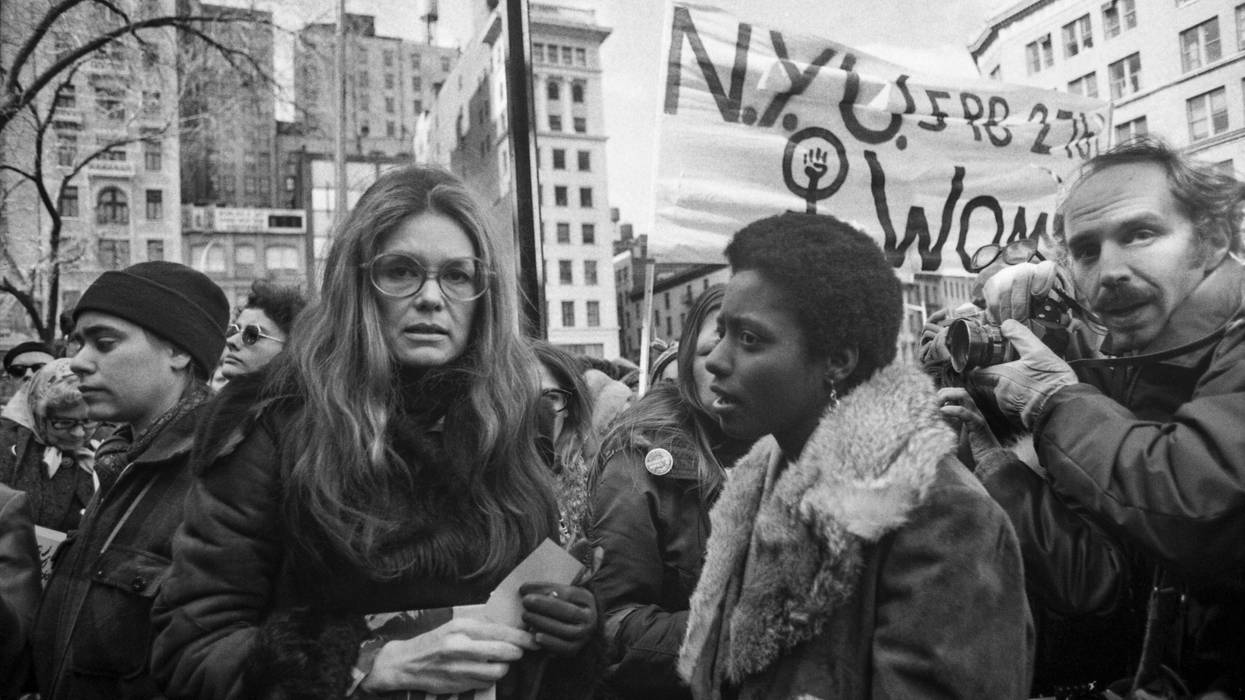
Those who don’t know the full history of the feminist icon have little understanding of how far we have come, how we got here, and what still needs to change to make America more livable, humane, democratic, and inclusive.
Gloria Steinem, who died September 2 at ninety-two, was the leading voice and public face of second-wave feminism that began in the 1960s. Thanks to the tireless work of Steinem and others, America is today a more inclusive society for women in both attitude and practice. It is a credit to her generation of activists that later generations now embrace feminism’s goals that were once considered radical, impractical, or even a violation of human nature. Steinem “awakened a vast and often skeptical public to problems like domestic violence, the lack of affordable child care, and unfair hiring practices,” President Barack Obama said in 2013 when he awarded her the Presidential Medal of Freedom. “She also changed how women thought about themselves.”
Today, 75 percent of Americans (including 64 percent of Republicans) think Congress should guarantee twelve weeks of annual paid family and medical leave to all employees. Almost three-quarters support government-funded universal childcare. Also, 57 percent want Congress to pass legislation to codify nationwide rights to abortion, contraception, and in vitro fertilization and 62 percent think it is the responsibility of the federal government to make sure all Americans have health care coverage – a long-time part of feminism’s agenda.
Americans also support equal pay for women and strong protections against and punishment for sexual harassment and rape. They believe that couples should share housework and childcare. They don’t think that gender should limit a person’s ability to enter professions once dominated by men, such as law, engineering, medicine, construction, journalism, and military service.
There are more Americans who embrace these goals than there are self-identified feminists. This might be a good thing. It means that many feminist ideas have become so mainstream that Americans take them for granted. But it could also mean that our society may not appreciate—or even know about—the struggles that previous generations of women endured to change attitudes and practices and win rights.
Born in 1934, Steinem had a peripatetic childhood. Her family dealt with challenging financial circumstances, which may explain why she viewed women’s issues through the lens of class as well as gender. Her father, Leo, was a Jewish itinerant antiques dealer routinely on the precipice of financial ruin. Her mother, Ruth, was a former journalist born to a Presbyterian family. After her parents divorced when she was eleven, she and her mother moved into a condemned farmhouse. Her mother suffered from depression, and Steinem became her caretaker, cook, and housekeeper.
Part of what gave her the resilience to persevere was the example of her paternal grandmother, Pauline Steinem, who was president of the Ohio Suffrage Association from 1908 to 1911, a leader of the National Woman Suffrage Association, and the first woman to be elected to the Toledo Board of Education. In a testimonial to her grandmother, Steinem noted that in her campaign for the school board, “she was elected on a coalition ticket with the socialists and the anarchists.” In the 1930s, Pauline helped rescue many members of her family who lived in Germany from the Nazis. Although Pauline died when Gloria was five, she left her what Gloria later called vivid “sense memories” of her strength, courage, and intelligence.
Gloria was raised without much religious involvement; ironically, it was her Christian mother who taught her to be proud of her Jewish heritage, educating her daughter about the horrors of the Holocaust. “Never in my life have I identified myself as a Christian,” Steinem once said, “but wherever there is antisemitism, I identify as a Jew.”
In 1956, Steinem graduated from Smith College, where she majored in government and graduated magna cum laude and Phi Beta Kappa. After a few years living on a fellowship in India, where she was inspired by the nonviolent movement led by Mahatma Ghandi that overthrew British colonialism, she moved to New York City to pursue a career as a journalist.
No sooner had she died when some social media warriors started attacking her as a one-time CIA agent. The reality is more complicated. Around 1958, she worked for the Independent Research Service (IRS), which was set up to recruit American college students to attend World Youth Festivals sponsored by the Soviet Union and countries in its orbit. It was the height of the Cold War and the goal was to have liberal non-Communist voices at those events. The IRS was covertly funded by the CIA through foundations, as were many liberal nonprofit organizations and publications at the time, including the National Student Association - a connection that Ramparts magazine exposed in 1967. Steinem never denied her work for the IRC and was not ashamed of it, although it is likely that she did not know where the money came from. She was not involved in the CIA’s nefarious activities of overthrowing democratic governments, which came to light long after she spent three years with the IRS in her twenties. These attacks on Steinem’s work for the IRS are a cheap shot, meant to discredit her feminist and progressive credentials.
Steinem came of age in the 1950s, when women were treated like second-class citizens in almost every aspect of society. When she returned to the U.S., she had to overcome many gender barriers to make her way in the world of journalism. (The National Press Club didn’t allow women members until 1971). She worked for a new magazine of political satire, Help!, and contributed short articles to women’s magazines such as Glamour and Ladies’ Home Journal. After writing several pieces for Esquire without being credited, she finally published her first bylined article in the men’s magazine in 1962. The article, published a year before Betty Friedan’s pathbreaking manifesto, The Feminine Mystique, was about the then-new contraceptive pill. She examined the fact that women often had to choose between a career and marriage. “The only trouble with sexually liberating women,” Steinem ended the article, “is that there aren’t enough sexually liberated men to go around.” The following year, Steinem made a big splash with “A Bunny’s Tale” in Show magazine. Steinem got a job working at a Playboy Club for the article, which exposed the decidedly unglamorous working conditions faced by the club’s waitresses, who were required to wear a corset, rabbit ears, cotton tails, and high heels.
Steinem made a living as a freelance writer, profiling celebrities and writing about popular culture for major publications. But she could not persuade editors to assign her serious political subjects. Eventually she began writing a column for New York, which she helped launch in 1968. There she covered a variety of topics: Ho Chi Minh’s years living in New York, wounded veterans returning from Vietnam, neighborhood battles over childcare centers, antiwar demonstrations, migrant workers, the New York City mayoral race, and the 1968 presidential campaign.
Two articles in the magazine established her as a feminist spokesperson. In 1969, she was outraged by what she heard at a “speak out” of women discussing how their illegal abortions made them feel like criminals. Later that year, Steinem, who had an abortion in England in 1957, wrote her first explicitly feminist essay, “After Black Power, Women’s Liberation,” which profiled the burgeoning women’s movement. The second was a 1970 essay in Time called “What It Would Be Like if Women Win.” There Steinem predicted that feminism would liberate men as well as women. If women could have equal power, she argued, if homosexuals had the right to marry and women could refuse to have sex, then men would no longer be “the only ones to support the family, get drafted, bear the strain of power and responsibility.”
Although Steinem wrote hundreds of articles and eleven books and gave thousands of speeches, her most significant accomplishments involve the creation of two influential institutions -- the National Women’s Political Caucus (NWPC) and Ms. magazine.
In 1971 Steinem joined a bipartisan group of women—including Friedan, Congresswoman Bella Abzug, former Congresswoman Shirley Chisholm, and Dorothy Height (president of the National Council of Negro Women)—to launch the NWPC. They believed that by increasing women’s participation in politics, it would be easier to pass legislation to eliminate sex discrimination and to bring about greater legal, economic, and social equality.
“This is no simple reform,” Steinem said at the group’s founding convention. “It really is a revolution. Sex and race because they are easy and visible differences have been the primary ways of organizing human beings into superior and inferior groups and into the cheap labor on which this system still depends. We are talking about a society in which there will be no roles other than those chosen or those earned. We are really talking about humanism.”
Ms. was the first modern feminist periodical with a national readership. From its start in 1972, it challenged conventional wisdom in articles like “How to Write Your Marriage Contract,” “Can Women Love Women?” “The Black Family and Feminism,” “Welfare Is a Women’s Issue,” and “Down with Sexist Upbringing.” In its first year, Ms. made history when it published the names of fifty-three prominent women, including Steinem and tennis star Billie Jean King, who acknowledged having had abortions when it was still illegal in most of the country, before the Supreme Court’s Roe v. Wade decision. Its 1976 cover story on battered women—which featured a photo of a woman with a bruised face—was the first major exposé of the problem of domestic violence.
The magazine pioneered investigative stories about overseas sweatshops, sex trafficking, the wage gap, the glass ceiling, women’s health (and the medical establishment’s sexism), sexual harassment, and date rape. It explained and advocated for the Equal Rights Amendment, rated presidential candidates on women’s issues, reported on feminist protests against pornography, exposed the influence of sexist advertising on women’s self-images, and acknowledged race and class differences within the feminist movement. Ms. injected these issues into the political debate at a time when they were considered too radical for the mainstream media to cover—or at least to cover fairly.
During her first several decades as a public figure, Steinem had to endure media portrayals that called her as the “pin-up girl of the intelligentsia” or a “willowy beauty, 34-24-34.” She also had to deal with some feminist leaders, particularly Friedan, who resented her visibility in the media. But more than any other figure, Steinem was the public face of modern feminism, a constant presence on college campuses at union halls and protest rallies, on TV talk shows and in media profiles.
Steinem often used outrageous ideas to shake up her readers and audiences. In 1971 she stunned parents and alums at the Smith College graduation by quoting her friend Flo Kennedy’s observation that “there are only a few jobs that actually require a penis or vagina.” She once told an audience of CEOs that a fair society would eliminate all inheritance. She compared marriage to prostitution and said that unpaid housework “is the definition of women’s work, which is shit work.” In speeches, she frequently drew on the theme of her 1978 essay “If Men Could Menstruate.”
She continued to use her voice for social justice into her eighties. At the 2017 Women’s March in Washington, D.C., she rebuked President Donald Trump for his divisive rhetoric. “The Constitution doesn’t begin with, ‘I, the president’,” she said. “It begins with, ‘We, the people.’ So don’t try to divide us!” Later she blasted Trump’s proposal to force Muslims to register in a government database. “If you force Muslims to register, we will all register as Muslims,” Steinem declared. In 2018, she raised money for Planned Parenthood and joined a successful effort to save the last abortion clinic in her hometown of Toledo.
Steinem’s work was not limited to the United States. She was an outspoken advocate for peace and human rights around the world. In 1984 she and two other activists were arrested at the South African Embassy in Washington, D.C. for protesting the country’s apartheid regime. In 2010, Steinem and Pramila Jayapal (then an immigrant rights activist and since 2017 a congressperson from Seattle) coauthored an article linking women’s and immigrant rights issues. In 2015 Steinem joined a delegation of thirty female peace activists from fifteen countries who made a rare crossing of the dangerous demilitarized zone between North and South Korea.
Despite her many successes, Steinem made some missteps. In 2016, for example, while campaigning for Hillary Clinton during the Democratic primaries, she made a rare political blunder. When asked why so many young women were supporting Bernie Sanders rather than Clinton, she said “When you’re young, you’re thinking, where are the boys?” The backlash to this quip was merciless and she quickly apologized.
Not all of the goals of Steinem’s generation have been achieved, and patriarchy has not disappeared, yet there’s been significant progress. More men take responsibility for housework and childcare, although it is still not shared equally. The U.S. gender pay gap has narrowed: According to the Pew Research Center, women’s pay has increased from roughly 65 percent in 1982 to 85 percent by 2024. Among married female-male couples, women’s financial contributions have grown steadily over the last half century. The share of women who earn as much or more than their husband has roughly tripled from 16 percent to 45 percent since the early 1970s.
Another area of progress is women’s participation in sports. Students in my college courses, including most women, are shocked to see charts showing that in 1971, the year before Congress passed Title IX, only 300,000 girls (less than 4 percent) participated in high school sports. Today, 3.6 million (43 percent) do. The number of women playing college sports has also mushroomed. These trends have laid the groundwork for the growing popularity of women’s professional sports, including soccer, tennis, and basketball. This summer witnessed the inaugural season of the Women’s Professional Baseball League, the first since the All-American Girls Professional Baseball League (the inspiration for the 1992 film A League of Their Own), which lasted from 1943 to 1954.
Feminism has also helped break the professional glass ceiling. Watching the documentary RBG, my students are stunned to learn that when Ruth Bader Ginsburg enrolled at Harvard Law School in 1956, she was one of only nine women in a class of 500. As recently as 1971, women constituted only 3 percent of American lawyers. Today, women represent about 56 percent of all law students. The proportion of women among college students has also increased from 42 percent in 1970 to 57 percent in 2025.
Women have made significant advancements in politics. In 1969, only half of all Americans said they would vote for a woman for president. By 1999, according to a Gallup poll, 92 percent of Americans supported the idea. At the start of the women’s liberation movement, no woman had ever been the presidential nominee of one of the two major political parties. That is no longer the case. The idea of a woman president is no longer a distant dream. In 1969. there were only ten women in the House of Representatives and one in the Senate. In the current Congress, 125 women (29 percent) serve in the House and twenty-six (26 percent) in the Senate, the highest total figure in history. Nor is this only a phenomenon at the federal level: 28 percent of the nation’s governors are women, up from only two in 1980. Roughly 34 percent of state representatives are women. and forty-one of the one hundred largest cities have women mayors.
College students today take for granted that they can take courses in women’s history, literature, and other subjects, but the first women's studies courses didn’t appear until 1969, when Cornell University offered a class in response to student demands. By 1975, that number exploded to over 1,000 courses at hundreds of colleges and universities. Now they are a staple on almost every campus, despite the Trump administration’s efforts to undermine them as part of its assault on diversity, equity, and inclusion programs. Women’s and gender studies departments employ over 2,000 full- and part-time faculty members.
To Steinem’s generation of feminists, these statistics are a sign of progress. Subsequent generations, however, are more likely to see in them a sign of how far we have to go before women achieve equity in many areas of American life. A YouGov poll conducted in July and August found that nearly half of Americans (46 percent)—including 54 percent of women and 36 percent of men—say the country has not gone far enough in promoting gender equality, compared with 17 percent who think it has gone too far. While there is still far to go, Steinem’s life and legacy provide valuable lessons about overcoming obstacles and challenging the status quo.
Steinem’s feminism was rooted in a critique of capitalism and big business, which pitted women against men for jobs, pay, promotion, rights, and respect. She frequently spoke at gatherings of 9 to 5, the working women’s group, and certainly agreed with Dolly Parton’s song, “9 to 5,” that “It’s a rich man’s game no matter what they call it. And you spend your life puttin’ money in his wallet.”
She was also an early advocate of what today’s activists call intersectionality—consistently injecting issues of race and class into the women’s movement. “The truth was (and still is) that in the United States, as in almost every country, categories of work are less likely to be paid by the expertise they require—or even by importance to the community or to the often mythical free market—than by the sex, race and class of most of their workers,” she wrote in a 1994 essay “Revaluing Economics.” She pushed other white middle-class feminists to embrace the concerns of working-class women and women of color. In a 2017 interview with The Grio, she praised Black Lives Matter activists for creating “a more inclusive movement.”
Steinem always viewed working- and middle-class men as potential allies in the struggle for equality. She built bridges between feminism’s radical and liberal wings and between the women’s and labor movements. She believed that unions were a vehicle for promoting gender parity and often join their picket lines. She was not only a cofounder of the Coalition of Labor Union Women, but also an honorary co-chair of the Democratic Socialists of America in the 1980s and 1990s, long before it mushroomed into today’s influential force in American politics.
Steinem believed that the struggle for equality was ongoing and that activists could never give up the fight. There has been backsliding on abortion rights since the U.S. Supreme Court overturned Roe v. Wade in 2022, ending the federal constitutional right to an abortion. Some evangelical ministers in the MAGA orbit want to repeal women’s suffrage. We’ve also seen the rise of a “manosphere” culture epitomized by Joe Rogan, Defense Secretary Pete Hegseth, and others in Trump world. It may be having an influence: A 2018 survey of boys in the eighth and tenth grades found that 84 percent believed that women and men should have the same job opportunities. By 2023, that figure had slipped to 72 percent.
But these gender reactionaries are fighting a rearguard battle. We all stand on the shoulders of earlier generations of reformers, radicals, and idealists, like Steinem, who challenged the status quo of their day and transformed radical ideas into common sense. Those who don’t know this history have little understanding of how far we have come, how we got here, and what still needs to change to make America more livable, humane, democratic, and inclusive. Steinem’s 1970 prediction “If Women’s Lib wins, perhaps we all do” is not yet a reality. But many Americans, including a majority of those under fifty, now embrace the once-radical tenets of modern feminism. And that, like Steinem’s life, is a victory worth celebrating.
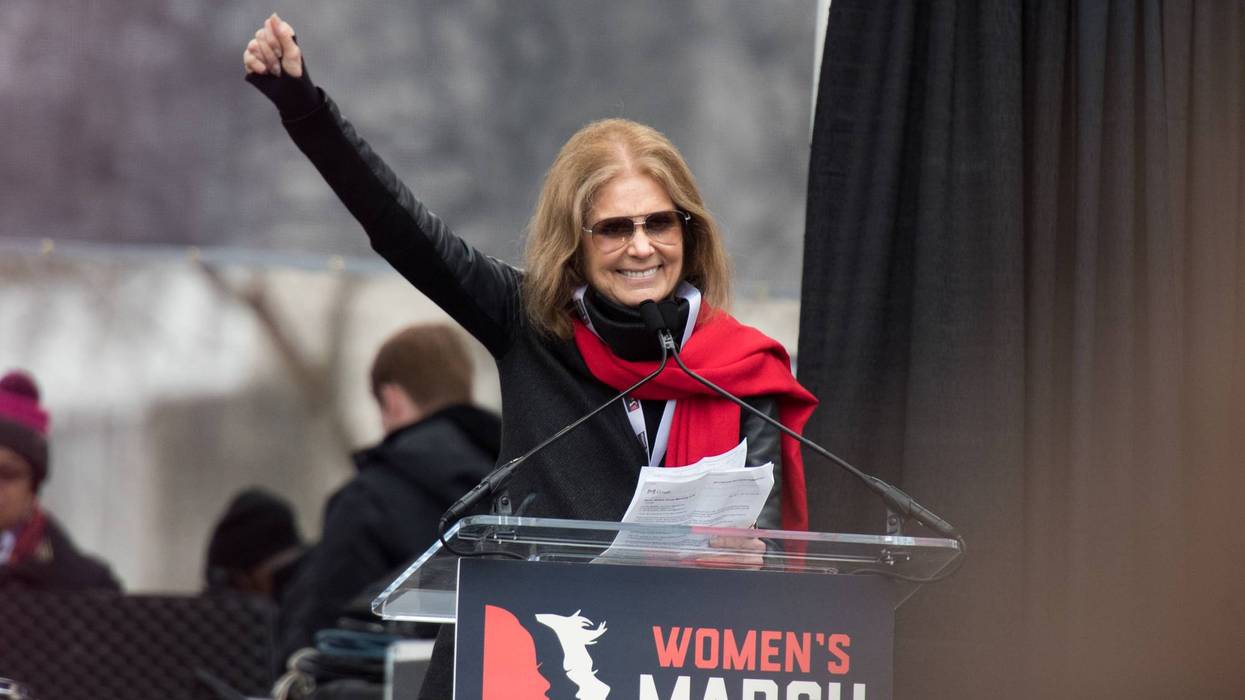
Progressive advocates, lawmakers, veteran journalists, labor leaders, and champions of feminism on Thursday are mourning the death of trailblazing women's rights activist and author Gloria Steinem, who has passed away at the age of 92.
Steinem, regarded as an icon of the second-wave feminism that emerged in the 1960s and 70s and co-founder of Ms. Magazine, was known for decades as a leading voice on reproductive rights, women's equality at work, and gender equity across society.
According to her representatives, Steinem died Wednesday at her home in New York City, surrounded by loved ones. An exact cause of death was not given.
"It is a moment of remembrance and celebration of this extraordinary woman. And it is too a moment of reflection." —Agnes Callamard, Amnesty International
"Gloria’s near-century on earth was years well-lived, and she continued working for equality until the very end," read a message posted to her Instagram account.
"Gloria’s greatest gift was her ability to listen to others, to make others feel seen and heard,” the message continued. “Her words, actions, and example gave people permission to be their truest selves. Gloria lived true to her independent spirit, always with curiosity and a great sense of humor.”
"Oh no," declared Agnes Callamard, secretary general of Amnesty International, upon learning of Steinem's passing.
"It is a moment of remembrance and celebration of this extraordinary woman. And it is too a moment of reflection," Callamard said. "The fight for gender justice and women’s equality is at a critical juncture. The advancements of the last decades are attacked, threatened, mocked. We resist, fight back, build anew."
The progressive advocacy group Our Revolution said that Gloria Steinem "understood that liberation is not something handed down from the powerful. It is something ordinary people organize and fight for."
For more than 50 years, the group added, "she fought for women to have power over our bodies, our work, our lives and our futures. And she understood that the struggle for women’s liberation could never be separated from the struggles for racial justice, economic justice and human dignity. At a moment when women’s rights and fundamental freedoms are once again under attack, the best way we can honor Gloria is not simply by remembering her. It is by organizing. Rest in power, Gloria Steinem."
According to the New York Times:
Steinem helped usher in sweeping cultural transformations across virtually every facet of American life, from the boardroom to the courtroom to the bedroom.
For more than half a century, she personified the women’s movement and became its most enduring symbol; her tinted aviator glasses and curtain of streaked-blond hair parted in the center made her one of the most recognizable women in the world.
A prolific writer, Steinem started her career as a journalist in the 60s and in 1972 she co-founded Ms. Magazine, a publication focused on women's issues with the idea of translating "a movement into a magazine."
Steinem, wrote CNN's chief international anchor Christiane Amanpour, "will go down in history as one of the most important activists of all time, leading a movement for the equality of half the world: its women."
"She lived a long and passionate life dedicated to this vital and basic cause," Amanpour continued. "She did it with intellectual precision, emotional awareness, humor and beauty. May she rest in peace and may the cause thrive."
In a video posted to social media, Rep. Becca Balint (D-Vt.) said that Steinem "always understood that gender equality was absolutely bound up with economic equality and racial justice and that has to continue to be our North Star."
Rest in power, Gloria Steinem. pic.twitter.com/z6f7MMNOVq
— Rep. Becca Balint (@RepBeccaB) September 3, 2026
In 2017, after the first election of President Donald Trump, Steinem was one of the key leaders behind the Women's March, which kicked off opposition to the far-right Republican, with marches in cities nationwide that helped galvanize resistance to the destructive policies to come.
At the time, Steinem warned that Trump's arrival in the White House represented "disaster and a danger," but added that the upside of his ascendancy could be the force brought together to galvanize against him.
“He’s made us see that everything is connected,” she said. “I’m a hope-aholic, nonetheless. I feel we’re beginning to approach the end of one structure and the beginning of another. It’s a time of both danger and possibilities.”
As the Associated Press reports:
On Jan. 21, 2017, when hundreds of thousands of women gathered in Washington in their pink “pussy hats” for the historic Women’s March, it surprised nobody that the keynote speaker, and the most rousing, was Steinem.
“We are linked,” she told the crowd. “And this is a day that will change us forever because we are together.”
For many women, Steinem was the galvanizing voice that day. She would go on to advocate fiercely. But, though many saw her as a singular figure in history, she often liked to say that if she hadn’t come along, someone else would have accomplished the same things.
By the same token, she said, it was less important that younger people listen to her, and more important that they listen to themselves.
“The primary thing is not that they know who I am,” she said, “but that they know who THEY are.”
As news of Steinem's passing spread on Thursday, others offered their reflections on her life and accomplishments.
"Thank you, Gloria, for showing the world what it means to speak up for women’s equality," said the National Organization for Women (NOW) in a statement. "Thank you for fighting for our rights so that every woman and every person can live with dignity, freedom, and equality."
Democratic New York State Rep. Jessica Ramos said Steinem "spent her life refusing to accept a world where women were expected to settle for less."
"She organized, challenged power, and helped turn women’s equality into a movement that changed America," Ramos said. "We honor her legacy by refusing to go backward."
"Gloria Steinem did not simply advocate for women; she changed what women believed was possible," said Victoria Mancinelli, a member of the labor movement in Canada, in response to news of Steinem's death.
"She confronted a world that expected women to remain quiet, accept less, and wait patiently for progress. Gloria refused. Through her journalism, activism, and unrelenting pursuit of equality, she helped transform deeply personal struggles into a powerful collective movement and forced institutions to recognize women as leaders, decision-makers, and agents of change."
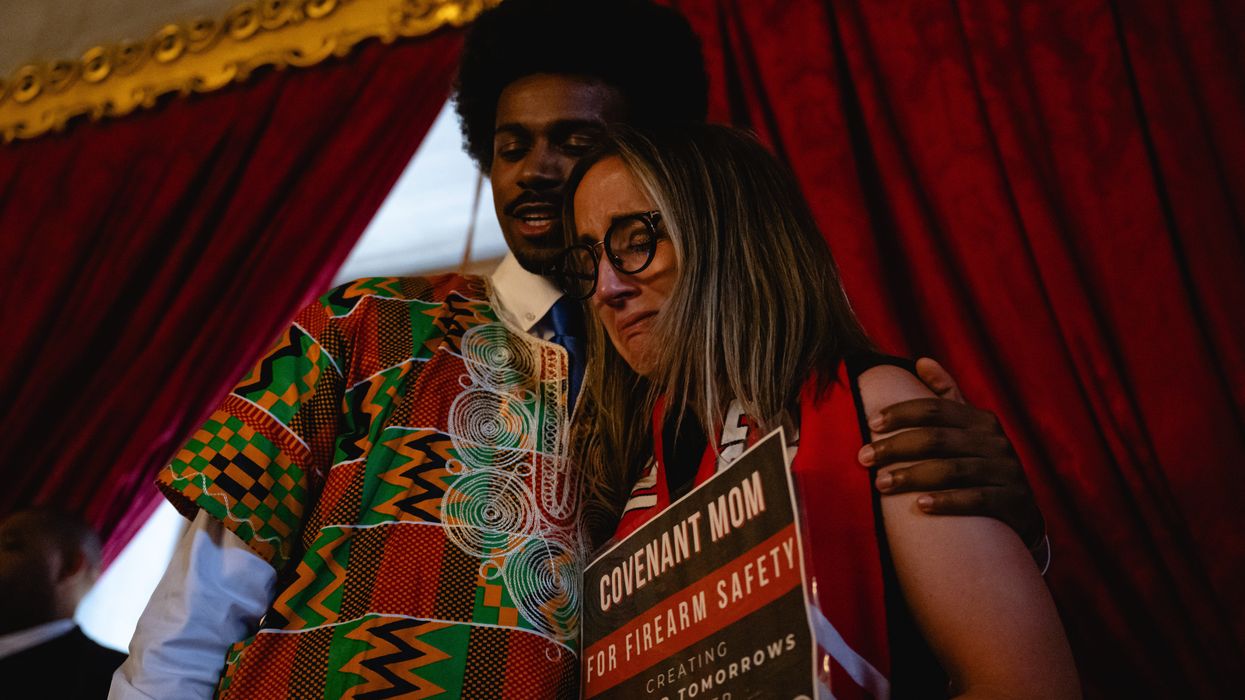
"The biggest consequence from this whole session is the embarrassment of the General Assembly through offensive measures used to keep people out of the building, silence members of the House, and eject grieving moms from committees," said one Democratic lawmaker.
The Tennessee General Assembly's special session on public safety ended Tuesday with weeping parents and chants of "vote them out" after the Republican-controlled Legislature refused to pass significant gun violence prevention measures.
GOP Gov. Bill Lee
called the special session earlier this month amid mounting demands for stricter state gun laws in the wake of a shooter killing three children and three adults at the Covenant School, a Christian elementary school in Nashville, in March.
"We had high hopes that after the shooting at Covenant School, politicians would understand the urgent need to prevent another senseless tragedy. They had the opportunity to do the right thing and once again, they failed to act," said Zack Maaieh, head of the Students Demand Action Tennessee chapter and a student at Vanderbilt University, in a statement.
"Despite their inaction, we showed the power of our voices—refusing to back down even as mothers were being forcibly removed from hearings—and lawmakers were forced to reject a bill to arm teachers and put more guns in our schools," Maaieh continued. "But we aren't going anywhere—we'll be back in January, showing out in droves to demand that lawmakers advance gun safety laws that protect our right to live and if they refuse to listen, we'll come for their seats next November."
The Washington Post noted that "even before the session began, GOP leaders quashed Lee's proposal for an extreme-risk protection order law that would have prevented mentally unstable individuals from possessing guns for a limited period."
According to the Tennessee Lookout:
Ultimately, the Senate concurred with a House version of a weapons storage bill that will offer sales tax breaks on gun safes and gun locks, in addition to spending $1.1 million for a public service campaign to give away gun locks.
As part of an agreement to adjourn, the Senate also opted to pass the House's version of a spending bill that will put $30 million toward safety upgrades at state universities, $12 million toward behavioral health staff, and $4 million into behavioral health safety grants, in addition to $50 million for community mental health agencies, with the latter money coming from a TennCare fund. Another $10 million will be spent on school safety officers, mainly for charter schools.
The Senate also went along with House versions of a human trafficking bill and a measure to codify the governor's executive order on background checks.
"While we are encouraged by proposals meant to promote the secure storage of firearms, this session fell woefully short, so we're tracking votes, we're taking names, and we will show up to the ballot box to vote out lawmakers who refuse to take action to save lives," said Moms Demand Action volunteer Leeann Hewlett.
Sarah Shoop Neumann, a Covenant mother who sobbed outside the House chamber Tuesday morning, responded similarly, telling The Tennessean, "We held a special session following the extraordinary tragedy of a mass shooting that took place at the Covenant School, and we took no meaningful action."
"The divisiveness we have all witnessed makes us long for a unified community. We need legislators on both sides of the aisle to be able to have respectful, thoughtful debate regarding potential solutions to end gun violence," she said, adding that legislators who don't want to work together "do not deserve a seat in the House or the Senate."
"We will work towards ensuring every one of those seats is replaced by someone who has a true desire to listen to their constituents over firearm association lobbyists," she vowed. "We will be back in January."
Describing the special session as "a farce," State Sen. Jeff Yarbro (D-21) said that "the biggest consequence from this whole session is the embarrassment of the General Assembly through offensive measures used to keep people out of the building, silence members of the House, and eject grieving moms from committees."
As Common Dreams previously reported, the Tennessee House's GOP supermajority on Monday barred state Rep. Jones (D-52) from speaking after House Speaker Cameron Sexton (R-25) determined that he violated the chamber's rules—which came shortly after the Democratic lawmaker announced plans to call for a vote of no confidence targeting the Republican speaker.
A member of the "Tennessee Three," Jones was expelled from the House in April alongside Rep. Justin Pearson (D-86) over a gun control protest at the chamber; Republican lawmakers narrowly voted against also expelling Rep. Gloria Johnson (D-13).
Both Jones and Pearson were ultimately reelected to their seats. Carrying signs demanding action on gun violence, the pair attempted to approach as the special session ended Tuesday—and the speaker appeared to shoulder-check Pearson.
The Lookout reported that Pearson said Sexton "leaned his shoulder into me and then one of his minions pushed me toward the clerk," while the speaker claimed his security guard nudged him into Pearson and the lawmaker then pushed him.
"It looks like Justin Pearson could file charges for that assault the speaker committed as well as Jason Zachary," Johnson said on social media, referring to a Republican from District 14. "The speaker literally tucked his shoulder to go in on Rep Pearson."
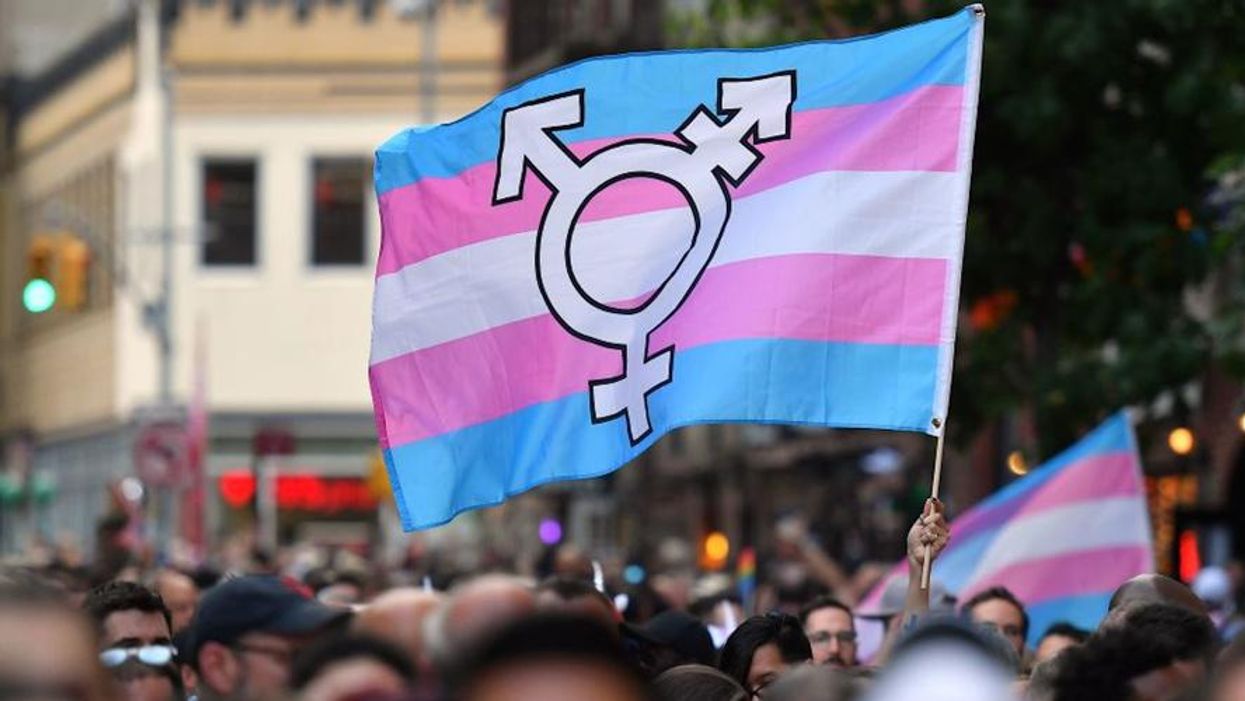
Democratic elected officials, LGBTQ leaders and allies, and human rights defenders of many stripes on Wednesday expressed their support for trans people on International Transgender Day of Visibility, acts of solidarity that stood in stark contrast with Republican-led legislation and other efforts to deny rights, privileges, and even the humanity of more than 1.5 million Americans.
"The crisis of violence against transgender women, especially transgender women of color, is a stain on our nation's conscience."
--President Joe Biden
In a complete reversal from the anti-trans policies of the Trump administration, President Joe Biden issued the first-ever presidential proclamation to "honor and celebrate the achievements and resiliency of transgender individuals and communities" on Transgender Day of Visibility.
"Their trailblazing work has given countless transgender individuals the bravery to live openly and authentically," the proclamation states. "This hard-fought progress is also shaping an increasingly accepting world in which peers at school, teammates and coaches on the playing field, colleagues at work, and allies in every corner of society are standing in support and solidarity with the transgender community."
"In spite of our progress in advancing civil rights for LGBTQ+ Americans, too many transgender people--adults and youth alike--still face systemic barriers to freedom and equality," it continues. "Transgender Americans of all ages face high rates of violence, harassment, and discrimination. Nearly one in three transgender Americans have experienced homelessness at some point in life. Transgender Americans continue to face discrimination in employment, housing, healthcare, and public accommodations."
"The crisis of violence against transgender women, especially transgender women of color, is a stain on our nation's conscience," asserts the proclamation. "The Biden-Harris administration is committed to fulfilling the promise of America for all Americans by stamping out discrimination and delivering freedom and equality for all."
Noting that he signed an executive order aimed at preventing discrimination based on gender identity or sexual orientation on his first day in office, Biden then urges passage of the Equality Act--approved by the House of Representatives last month--"to more fully protect the civil rights of transgender Americans."
Numerous Democratic lawmakers marked the day with messages of solidarity--and with action.
Sen. Ed Markey (D-Mass.) and Rep. Chris Pappas (D-N.Y.) introduced legislation that would ban use of the so-called "gay panic" and "trans panic" defenses in federal court. Markey said such dubious legal strategies "only encourage systemic bigotry, corrode the legitimacy of federal prosecutions, and blame victims for the violence committed against them."
Democratic Reps. Jennifer Wexton (Va.), Pramila Jayapal (Wash.), and Marie Newman (Ill.)--leaders of the Transgender Equality Task Force--led a resolution "supporting the ideals and goals" of Transgender Day of Visibility.
"As the proud parent of a transgender child, I am honoring this Transgender Day of Visibility by committing to taking on the urgent legislative work necessary to finally guarantee that every transgender person can live freely as themselves and free from discrimination," Jayapal said in a statement announcing the resolution. "This is a pivotal moment in our fight for equality, and I stand with my child and every LGBTQ+ person in America as we defeat hate, end discrimination, and secure full civil rights across this country."
Hundreds of feminist leaders signed an open letter authored by Black trans activist Raquel Willis and the LGBTQ advocacy group GLAAD in observance of Women's History Month and Transgender Day of Visibility.
"We acknowledge with clarity and strength that transgender women are women and that transgender girls are girls," states the letter, whose prominent signers include Gloria Steinem, Laverne Cox, Selena Gomez, and Halle Berry. "All of us deserve the same access, freedoms, and opportunities. We deserve equal access to education, employment, healthcare, housing, recreation, and public accommodations. And we must respect each person's right to bodily autonomy and self-determination."
The letter continues:
It is time for the long history of assaults--legislative, physical, social, and verbal--against trans women and girls to end. For far too long, lawmakers have worked to strip trans women of their civil liberties--in 2021, once again, we've seen a wave of bigoted governmental policies and legislation. Many of these laws target the rights of girls to play school sports or criminalize doctors for treating trans youth and their families...
These bigoted efforts are also aided by a contingent of self-identified feminists, who have been promoting damaging and violent ideas about trans people for years in the United States and internationally. Their vitriol is, in fact, not feminist at all. True feminists do not wish to limit any woman's identity or freedom to fully be herself. Allowing transphobic rhetoric to go unchecked also strengthens the legislative efforts of anti-trans politicians--who now cloak their bigotry in language about protecting or supporting women.
Further, all verbal attacks support the ongoing epidemic of murder and violence plaguing Black and Latinx trans women--2020 was the deadliest year on record for the transgender community, seeing more than 44 killings, and, so far, there have been at least nine deaths reported this year.
"We all must fight against the unnecessary and unethical barriers placed on trans women and girls by lawmakers and those who co-opt the feminist label in the name of division and hatred," the letter concludes.
Other prominent figures, from governors to mayors to former NBA superstar Dwayne Wade--whose daughter is trans--also expressed their support for transgender equality.
Wednesday's outpouring of trans solidarity occurred against a backdrop of a wave of GOP-led anti-transgender legislation across the nation. More than 50 bills in 28 states attempting to prohibit trans youth from participating on teams reflecting their gender identity have been passed or introduced this year.

Several influential progressive women on Monday launched a new grassroots movement aimed at building on the energy and political power of American women, who make up the majority of the U.S. population, voters, and grassroots donors--forming what the group calls a "Supermajority."
Created by former Planned Parenthood president Cecile Richards, Black Lives Matter co-founder Alicia Garza, and National Domestic Workers Alliance director Ai-jen Poo, the Supermajority is aimed at building on the political power women have demonstrated since President Donald Trump was elected in 2016.
"In many ways, women have been doing all this work--whether it's running their PTA, or organizing around reproductive healthcare--but we haven't been doing it together." --Cecile Richards, Supermajority co-founder"In the past two years, we've seen what happens when women mobilize," reads a statement on the group's website. "Women donated $100 million more to campaigns and causes in 2018 than they did in 2016. We've been the majority of voters in every national election since 1964. In 2018, women helped elect a Congress with a record-breaking 127 women members."
"Women are on the cusp of becoming the most powerful force in America," the statement adds. "But to fundamentally transform this country, we need to work together."
The group launched with a video featuring its slogan, taken from Richards' speech at the Women's March in 2017: "One of us can be dismissed. Two can be dismissed. But together, we aren't just the majority, we are a Supermajority--and we are unstoppable."
The Supermajority plans to gather the input of millions of women across the country in order to "create a women's agenda that puts our issues first--from economic equity and opportunity to dignity and safety on the job to keeping families and communities safe."
Headed by women who have dedicated their careers to organizing around causes affecting marginalized communities, the group also plans to provide on-the-ground training to women who are new to activism and include a "Supermajority Education Fund" which will research and educate women about civic participation, visibility, and political power.
"We've spent the last year going around the country to all kinds of communities--urban, suburban, rural--and talking to women, listening to their stories," Poo told CNN's "New Day" on Monday morning. "And it's been so inspiring. They're already much more engaged in unprecedented ways...and they want to do more. They don't want to stop here, they want to do more and they want to be connected."
The group argues that while women have become more politically engaged in recent years, there hasn't yet been a platform where they can join together to build on and learn from one another's efforts and activism.
"In many ways, women have been doing all this work--whether it's running their PTA, or organizing around reproductive healthcare--but we haven't been doing it together," Richards told the Washington Post. "What are we going to do to make this moment not something that is just a fleeting flash point of activism, but actually creating a permanent organizing ability for women?"
On social media, one supporter of the new movement likened its agenda to a "Women's New Deal," aimed at pushing for affordable childcare, universal healthcare, pay equity, and other reforms that would help American women--and the rest of the country.
"There's a majority of Americans who want to see better, affordable healthcare, there's a majority of Americans that are impacted by childcare issues and elder care issues," Garza told CNN. "These are issues that are often sidelined as women's issues or special interests but what the Supermajority is saying is actually these are issues that are impacting all Americans and they should be addressed as the national issues and the national emergencies that they are."
In its statement of values, the Supermajority writes that women's equity is essential to "fighting for the basic human needs of all people, including universal healthcare, public education, a living wage, a clean environment, and affordable housing."
On Twitter, other influential women applauded the group for creating a new space in the political landscape in which women can work together to fight for economic, political, and social justice.

Rep. Ro Khanna (D-Ca.) introduced a House resolution to end the Korean War on Tuesday after 69 years of conflict. The resolution comes as President Donald Trump is in Hanoi, Vietnam, in advance of a historic meeting with North Korean President Kim Jong Un to discuss North Korean denuclearization.
"Historic engagement between South and North Korea has created a once-in-a-generation opportunity to formally end this war," Khanna said in a statement. "President Trump must not squander this rare chance for peace."
Khanna's resolution (pdf) was cosponsored by 18 House progressives, including Rep. Pramila Jayapal (D-Wa.), Rep. Barbara Lee (D-Ca.), and Rep. Deb Haaland (D-N.M.).
Kim's openness to dialogue with the American president comes after a thawing of relations with South Korean President Moon Jae-in. Moon and Kim met at the DMZ, or demilitarized zone, on April 26, 2018, as a show of unity in friendship. Since that meeting, Kim and Moon have pushed to end hostilities, but the push is complicated by the U.S. presence in South Korea and decades of tension.
A number of U.S. commentators and experts have treated the coming summit with suspicion and fear, claiming that simply by meeting with Kim, Trump is giving the North Korean leader an aura of legitimacy that's undeserved and damaging American standing in the world.
Kim Jong Un has murdered at least 340 people, runs a network of prison gulags where prisoners "are starved, forced to work, tortured and raped," and spends much of his country's resources creating a personality cult.
Trump thinks he's a good kid. https://t.co/BshM8RlyAG https://t.co/J0PnnwuUkx
In the resolution, however, Khanna and his cosponsors pointed to statements from Moon that assert U.S. military personnel will remain in the peninsula irrespective of the war, thereby assumedly negating a threat to national security. The resolution also states that ending hostilities should not be confused with an acceptance of a nuclear North Korea. "An end to the state of war would not legally imply recognition of North Korea as a nuclear weapons state," reads the resolution.
The resolution was met with support in progressive circles.
In a statement, Kevin Martin, president of the anti-war group Peace Action and the coordinator of the Korea Peace Network, said that he was hopeful the diplomatic process would win out this time.
Khanna's legislation, Martin said, "offers a common sense vision for achieving peace and advancing nuclear disarmament on the Korean Peninsula that all members of Congress should be able to get behind."
The timely introduction of the bill, he added, "offers a blueprint for diplomacy that rightly acknowledges that real progress cannot be made in negotiations without reciprocal steps and confidence-building measures by all parties at the table."
The resolution also received public backing from former President Jimmy Carter.
"Ending the threat of war is the only way to ensure true security for both the Korean and American people," Carter said in a statement, "and will create the conditions to alleviate the suffering of the ordinary North Koreans who are most harmed by ongoing tensions."

In 2015, we were among 30 women from around the world who came together to cross the Korean demilitarized zone (DMZ), the infamous strip of land that has separated North and South Korea since a "temporary" cease-fire halted the Korean War 65 years ago.
We marched to show this anachronistic conflict need no longer separate families, prohibit communication, and provide excuses for land mines, nuclear weapons and an expensive, ongoing U.S. military commitment. Among us were women who had won Nobel Peace Prizes for helping to bring peace to Liberia and Northern Ireland.
Despite criticism that we were naively playing into the sinister plans of one side or the other, we held a peace symposium in Pyongyang with hundreds of North Korean women, and marched with thousands in the capital and in Kaesong. After crossing the DMZ, we walked with thousands of South Korean women along the barbed-wire fence in Paju.
We never could have predicted that only three years later, the leaders of South and North Korea would meet in the DMZ and declare that "there will be no more war on the Korean Peninsula." This put in motion the kind of steps toward peace that we had marched for -- soldiers from both sides shaking hands and removing guard posts, the beginning of land-mine removal from the DMZ. The new reality is a tribute to Korean leaders and their determination to end the standoff that has separated their people for three generations.
Sadly, the chances for peace depend on Washington, where the division of Korea along the 38th parallel was first drawn on a National Geographic map by two U.S. officers. Yet much of the U.S. leadership is singularly focused on forcing North Korea to unilaterally denuclearize as a precondition for peace talks.
It should show America's commitment to peace by introducing a resolution that formally ends U.S. participation in the Korean War and calls on the president to begin a process toward the signing of a peace agreement.
This approach is backward. To convince somebody to put down a gun, you first have to convince them they will not be harmed. We need to establish peace first to create the necessary conditions for denuclearization.
Although most likely driven by his desire to do what prior presidents could not -- truly end the Korean War -- President Trump might actually achieve a breakthrough on this front. Stephen E. Biegun, the U.S. special representative on North Korea, said this month, "President Trump is ready to end this war. It is over. It is done." His second summit with North Korean leader Kim Jong Un, at the end of this month, provides a perfect opening. A process for ending America's oldest war and moving toward peace should be on their agenda.
Still, it's risky to let hopes rest on the president's credibility given Trump's erratic nature and lack of respect for such past nuclear agreements as the Iran deal and the Intermediate-Range Nuclear Forces treaty.
That's where the new Congress comes in. It should show America's commitment to peace by introducing a resolution that formally ends U.S. participation in the Korean War and calls on the president to begin a process toward the signing of a peace agreement.
And now that Congress has the greatest number of women in history, it should seek to ensure that women are involved in every part of the process. All too often, we've witnessed women being left out of peace talks, even though studies show that when women play authoritative roles, agreements are far more likely to be signed and to last.
Recognizing this, Congress passed, and Trump signed into law, the Women, Peace, and Security Act of 2017, aimed at increasing women's participation in peace processes to prevent, end and rebuild after conflict. Now is the time to implement it.
The women elected to Congress brought with them commitment to such popular issues as Medicare-for-all, free college tuition and confronting climate change. Yet these goals will remain dreams as long as funding is constrained by the $700 billion a year the United States spends on the military. Thus, ending the Korean conflict is crucial not only to Koreans, but to Americans as well.
Most Americans don't know what a pivotal role the Korean War played in creating the military-industrial complex. As University of Chicago historian Bruce Cumings has written, it "was the occasion for transforming the United States into a very different country than it had ever been before: one with hundreds of permanent military bases abroad, a large standing army and a permanent national security state at home."
As two women who defied naysayers by crossing the DMZ, we may never know what difference we made. But we saw firsthand the impact of the war on Korean lives, and we know the impact of massive U.S. military spending on our own lives. It is time to end this longest war.
Suddenly Americans are debating big ideas that used to be off the table.
New ways to raise taxes on the rich and big corporations have been proposed by candidates Elizabeth Warren, Kamala Harris and Bernie Sanders.
A Medicare-style public health system to expand coverage and cut costs has the support of millions and many Presidential candidates - even as we defend Obamacare.
The Green New Deal has been swept onto the national debate by the dynamic grass-roots Sunrise Movement and by Rep. Alexandria Ocasio-Cortez and colleagues in Congress. With new urgency, sponsors call for massive public investment to retool our economy to stop global warming and create the next generation of good jobs.
Perhaps because of the huge public support for these big ideas, Donald Trump has tried to tar them with the old Cold War scare word: Socialism. This is likely to backfire - just as the Southern racists' attacks on civil rights workers as "Communist agitators" just helped spread the movement. SNCC organizers were greeted at Mississippi doorsteps with "We are so glad you Communists have come to help us vote."
Some cautious Democrats have greeted these big ideas with a warning about the dangers of going too far. "Stick to attacking Trump and his policies," they lecture, "that's what helped us win in the Congressional campaigns 2018."
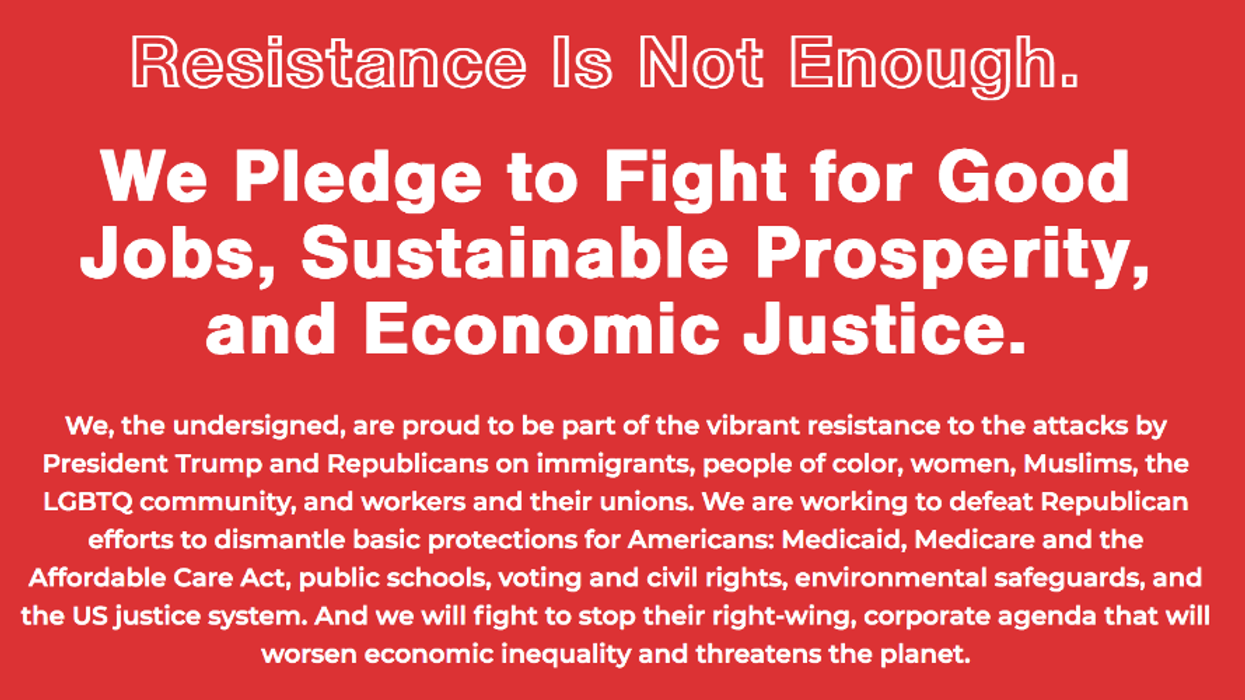
But over 90 well-known veterans of the successful 2018 campaign have signed a bold new Pledge to Fight for Good Jobs, Sustainable Prosperity and Economic Justice. And these initiators (including myself) have now been joined by 20,000 (and growing) grass-roots activists. Our message is "Yes, fight Trump - but Americans also want to hear big solutions to the large economic problem our country faces."
The Pledge document declares:
We will (continue to) resist Trump. But resistance is not enough. We therefore pledge that:
- We will fight for good jobs, sustainable prosperity and economic justice.
- We will work to build a movement that can make that agenda a reality.
Real change begins with a clear and coherent vision of a better America, and with citizens' movements dedicated to bringing that world into being. We offer this agenda for economic change in that spirit.
The group challenges the inside-the-beltway idea that Democrats need to choose between candidates that are "electable" and those who champion a bold agenda for change. Our signers make the case--and cite extensive polling--that the voters want candidates who know how the system has been rigged against working Americans. They argue that the most electable candidates are the ones with a plan to "un-rig" our government and to grow the economy and reverse inequality.
Note: I was one of the authors of the Pledge, and we found a great deal of enthusiasm from leaders we invited to join us, including the following leaders and thinkers:
Former Labor Secretary Robert Reich; economists Thea Lee, Robert Pollin and James K. Galbraith; African-American activists Rashad Robinson, Janet Dewart Bell, and Dedrick Asante-Muhammad; feminist leaders Gloria Steinem, Nita Chaudhary, and Toni Van Pelt; think tank directors Heather McGhee, Dorian Warren, Chuck Collins, and Angela Glover Blackwell; environmental leaders Bill McKibben, Annie Leonard, and Michael Brune; labor leaders Leo Gerard, Larry Cohen, Randi Weingarten, Chris Shelton, and Bonnie Castillo; business leaders like Leo Hindery Jr. and Charles Rodgers; activists and public intellectuals Manuel Pastor, Robert Borosage, Maria Echaveste, Jeff Faux, Heather Gautney, Eddie Glaude Jr., Zephyr Teachout, Richard Eskow, and Naomi Klein. Signers also include leaders of "resistance movement" groups, including MoveOn, People's Action, Democracy for America, Solidaire, Progressive Change Campaign Committee, Center for Popular Democracy Network, Public Citizen, Working Families Party, Ultra-Violet, Progressive Democrats of America, and Our Revolution. See all 90 initial signers.
The group will not endorse candidates. Individual signers will make those decisions on their own. But the group will ask candidates to tell Americans where they stand on the 11 planks of our economic agenda. And we will publish those positions on the website. Here is the Agenda that all signers of the Pledge have endorsed.
The first two planks of the group's agenda call for a strategy for economic growth and job creation that grows out of large-scale public investment to address real and pressing needs of our economy. They represent a dramatic contrast to the perpetual Republican "economic growth" plans which always involves tax cuts for the wealthy (and shredding important regulations). Progressives, often characterized as "redistributionist," clearly have a plan for sustainable economic growth.
1. Jobs for All by Rebuilding America
This plank takes seriously the warnings of the American Society of Civil Engineers, who have been ranking our infrastructure with marks of D or worse for decades. It also allows progressives to show they have a plan to achieve one of the major promises of candidate Trump, who has failed to deliver on infrastructure because he capitulated to the billionaire corporate wing of his party by giving away the revenue he needed in order to give them massive tax cuts.
2. Invest in a Green New Deal
The Green New Deal plank calls for retooling the US economy to dramatically reduce carbon pollution and make our systems, from housing to transportation much more energy efficient. It sets a goal of dramatically reducing carbon pollution in order to meet (and exceed) the goals set by the UN Climate Panel in order to stop the disastrous warming of the planet. And, as the labor-environmentalist Apollo Alliance told Americans a decade ago, this transition can be a boon to the economy, creating a new generation of good jobs and putting us on the path to sustainable (not wasteful growth that will lead us off a cliff. If we act quickly, we can also become a global leader in the new manufacturing industries we need to create the green transition.
3. Empower Workers to Reduce Inequality
Lots of people (and candidates) are now talking about growing inequality and trends finding that the 400 richest Americans control more wealth than the bottom 60 percent. One essential key to raising wages and reversing inequality is strong unions. So signers pledge to fight for the right of workers to form unions and bargain collectively for better wages and benefits. Guaranteed labor rights should be complemented by action to lift the floor under every worker by guaranteeing a living wage, paid sick and vacation days, and affordable health care. We must curb CEO compensation policies that give executives personal incentives to plunder their own companies. And we should use the tax system to reward companies that pay their workers a decent proportion to what they pay their executives.
4. Opportunity and Justice for All - With Focus on Communities Harmed by Racism
In theory full employment and labor rights should provide opportunity for all. But we insist that special attention must be invested in those communities harmed by the legacy of slavery, Jim Crow, segregation, discrimination, deindustrialization, and destruction of the public sector. Neglected urban and rural communities and working people victimized by the worst economic and social effects of neoliberalism must be given targeted attention and investment. We also call for a fair and humane immigration policy, fundamental reform of our criminal justice system, an end to mass incarceration and targeted investment in areas of need are all central to meeting the promise of economic justice.
5. Guarantee Women's Economic Equality
Addressing women's economic problems will improve our economy for all. We should guarantee that women earn the same pay, protections and opportunities as men in the workplace and in society - including strengthened laws for reporting and preventing sexual harassment. Women must also be guaranteed affordable health care and the right to make choices about their own health and reproduction. Families must have access to high-quality child care, and all women must be guaranteed paid leave from the workplace for childbirth, illness and vacation, and a secure retirement - with Social Security credit for work in the household.
6. Medicare for All - And Shared Economic Security
The group declares health care is a right, not a privilege. And that requires moving to a Medicare for All universal public health care system. Our fight to defend Obamacare from Trump and his allies is a crucial first step to a promise of a high-quality and cost-effective health care for everyone. In addition, America needs a more robust social insurance system. Every worker deserves a secure retirement-- and we will work to create new pension systems, while we secure Social Security by "lifting the cap" that now exempts wealthy people from paying their fair share of Social Security taxes. We will strengthen and expand America's shared security programs -- Social Security, Medicare, Medicaid, unemployment, food support and housing assistance. No one in America should go hungry or homeless. Greater shared security makes the economy more robust by making our society more fair - and giving all people the confidence that comes from solidarity.
7. High-Quality Public Education - Pre-K to University
Every young person must have the right to high-quality, free public education from preschool through college. Public education must be controlled by the public, not by charter school hucksters. This requires that every community, in partnership with the state and Federal Governments must have the financing necessary to strengthen public schools, providing the necessary basics - preschool, smaller classes, summer and after-school programs, and skilled, well-paid teachers with rights on the job.
College education or skills training should be available without tuition at all public universities as a right of civic membership -- as was the policy in many states in the 1950s and 1960s. Education should be a public good that benefits all of society, not a commodity that indentures students to debt. We call for a national student debt jubilee that will cancel the debt burden imposed upon several generations seeking an education. Free college and debt cancellation will not only allow students and former students to live their lives without that burden, but it will also stimulate economic growth and unleash new civic activism.
8. Make Corporations and the Wealthy Pay Their Fair Share
Our public investment/growth, green transition, and justice agenda requires tax revenues. Yet the corporations and the rich do not pay their fair share in taxes--even though they pocket the greatest benefits from public investments.
It is time for the rich and corporations to pay their fair share of taxes. It is time to shut down the tax havens and tax dodges that enable companies to avoid taxes altogether. We should lift the cap on Social Security taxes, so rich people pay the same percentage of their income as the rest of us. We should tax the income of investors at the same rates we tax income from work. We need clear, simple, progressive corporate and individual taxes, closing loopholes and exemptions. And a tax on financial transaction can produce significant revenues. A fair tax system will allow us to invest in an economy that will work for all.
9. Close Wall Street's Casino
Financial deregulation has devastated our economy, and it has protected banks that are too big to fail, too big to manage, and too big to jail. The financial casino fosters ever more dangerous speculation, while investment in the real economy lags. The resulting booms and busts devastate families and small businesses.
In a new age of corporate concentration, American must revive the concept of anti-trust action to reduce corporate power. We need to break up the big banks, levy a speculation tax, and provide low-income families with safe and affordable banking services. We should crack down on payday lenders and other schemes that exploit vulnerable working families, offering instead safe and inexpensive banking via the postal system.
10. Rescue Democracy from the Special Interests
Big money has corrupted our democracy. Some might say democracy is not part of an economics agenda. But the same financial elites and corporations that buy and sell politicians use that political power to rig the economy so the top .01 percent gets massively richer while incomes decline for the rest of us. We pledge to reverse the Citizens United decision which gave corporations the right to spend unlimited money in politics. We will stop the attack on voting rights which has escalated just as a new majority of people of color, young people and working women has begun to exercise new power. We will fight for public financing of elections that bans corporate and big money - and for electoral reforms, like public matching of small donations, so people's candidates can compete with the candidates of the plutocrats. Finally, we pledge to change national and local political party structures so that progressive candidates get a fair shake in the nominating process and in general elections. And we will build a new progressive majority that can take back our democracy and our economic system.
11. A Global Economic Strategy for Working Americans
Our global trade and tax policies have been created for and by multinational companies. We must renegotiate trade deals and rethink tax policies that benefit the already-wealthy, while they encourage the export of whole American industries, drive down pay and worker protections, and harm the environment. We need more but balanced trade, and global standards that protect the rights of workers, consumers and the environment. That requires a crackdown on tax havens, currency manipulation, and deals that allow corporations to trample basic labor rights here and abroad. Finally, we need new policies that allow us to help existing US industries, by having our government buy American, policies that are now outlawed by trade deals. And we need active investment policies that grow new cutting-edge industries, like green energy systems. Our current national security policies commit us to policing the world. The result costs lives and drains public resources. We need a real security policy that makes military intervention a last resort, and focuses on global threats like climate change, poverty and inequality. We should reduce military budgets and properly support humanitarian programs.
We will see what impact the Pledge/Agenda will have on the 2020 political debate. The multiple-candidate field will create a dynamic very different from 2016. But polling shows a wide spectrum of voters want politicians to talk about (and fight for) a bold economic agenda. Senator Bernie Sanders got historic support in 2016 because he talked about an agenda that challenged corporate power and put forward a plan for big economic change. And, because Hilary Clinton didn't want to be crosswise with that progressive agenda, she took positions she might not have - and walked away from the TPP trade deal, which was very unpopular with the Democratic base. And, thanks to pressure from Sanders supporters, the Democratic Platform was more progressive than ever. Unfortunately, Clinton didn't talk about it much.
Bernie Sanders just got into the 2020 race this week, rightly reminding interviewers that many of the ideas candidates are now discussing - and that our Agenda is promoting - first gained respectability and widespread support as a result of his pioneering 2016 Presidential campaign. This year many other candidates are embracing some of those ideas. Using and online comparison, we will publicly keep track of the economic agenda positions each of these candidates take. What the voters will have to determine how much each candidate really means his/her promises - and whether they are willing to fight for the jobs, wages, pensions - and their economic futures - of working Americans.
Who knows? Some of the best candidates may cancel each other out. Even if the eventual nominee ends up being the most conventional Democrat in the race, all progressives will work hard to get rid of Trump. And after that we will unite to organize to push the new President--and a larger Congressional majority--to fight for a plan for economic transformation. This Agenda will not go away, no matter who wins the elections. Because the growing number of Americans who are endorsing the Pledge to Fight for Good Jobs, Sustainable Growth and Economic Justice see themselves as enlisting for a long-term movement for change - not just for the next campaign.

Throughout the day before the summit in Helsinki, the lead story on the New York Times home page stayed the same: "Just by Meeting With Trump, Putin Comes Out Ahead." The Sunday headline was in harmony with the tone of U.S. news coverage overall. As for media commentary, the Washington Post was in the dominant groove as it editorialized that Russia's President Vladimir Putin is "an implacably hostile foreign adversary."
Contempt for diplomacy with Russia is now extreme. Mainline U.S. journalists and top Democrats often bait President Trump in zero-sum terms. No doubt Hillary Clinton thought she was sending out an applause line in her tweet Sunday night: "Question for President Trump as he meets Putin: Do you know which team you play for?"
A bellicose stance toward Russia has become so routine and widespread that we might not give it a second thought -- and that makes it all the more hazardous. After President George W. Bush declared "You're either with us or against us," many Americans gradually realized what was wrong with a Manichean view of the world. Such an outlook is even more dangerous today.
The Russiagate frenzy is largely about punching up contrasts between the United States (angelic and victimized) and Russia (sinister and victimizer).
Since early 2017, the U.S. mass media have laid it on thick with the rough political equivalent of a painting technique known as chiaroscuro - "the use of strong contrasts between light and dark, usually bold contrasts affecting a whole composition," in the words of Wikipedia. The Russiagate frenzy is largely about punching up contrasts between the United States (angelic and victimized) and Russia (sinister and victimizer).
Countless stories with selective facts are being told that way. But other selectively fact-based stories could also be told to portray the United States as a sinister victimizer and Russia as an angelic victim. Those governments and their conformist media outlets are relentless in telling it either way. As the great journalist I.F. Stone observed long ago, "All governments lie, and nothing they say should be believed." In other words: don't trust, verify.
Often the biggest lies involve what remains unsaid. For instance, U.S. media rarely mention such key matters as the promise-breaking huge expansion of NATO to Russia's borders since the fall of the Berlin Wall, or the brazen U.S. intervention in Russia's pivotal 1996 presidential election, or the U.S. government's 2002 withdrawal from the Anti-Ballistic Missile Treaty, or the more than 800 U.S. military bases overseas -- in contrast to Russia's nine.
For human survival on this planet, an overarching truth appears in an open letter published last week by The Nation magazine: "No political advantage, real or imagined, could possibly compensate for the consequences if even a fraction of U.S. and Russian arsenals were to be utilized in a thermonuclear exchange. The tacit pretense that the worsening of U.S.-Russian relations does not worsen the odds of survival for the next generations is profoundly false."
The initial 26 signers of the open letter - "Common Ground: For Secure Elections and True National Security" -- included Pentagon Papers whistleblower Daniel Ellsberg, writer and feminist organizer Gloria Steinem, former UN ambassador Gov. Bill Richardson, political analyst Noam Chomsky, former covert CIA operations officer Valerie Plame, activist leader Rev. Dr. William Barber II, filmmaker Michael Moore, former Nixon White House counsel John Dean, Russia scholar Stephen F. Cohen, former U.S. ambassador to the USSR Jack F. Matlock Jr., Pulitzer Prize-winning writers Alice Walker and Viet Thanh Nguyen, The Nation editor Katrina vanden Heuvel, former senator Adlai Stevenson III, and former longtime House Armed Services Committee member Patricia Schroeder. (I was also one of the initial signers.)
Since its release five days ago, the open letter has gained support from a petition already signed by 30,000 people. The petition campaign aims to amplify the call for protecting the digital infrastructure of the electoral process that is now "vulnerable to would-be hackers based anywhere" -- and for taking "concrete steps... to ease tensions between the nuclear superpowers."
We need a major shift in the U.S. approach toward Russia. Clearly the needed shift won't be initiated by the Republican or Democratic leaders in Congress; it must come from Americans who make their voices heard. The lives -- and even existence -- of future generations are at stake in the relationship between Washington and Moscow.
Many of the petition's grassroots signers have posted comments along with their names. Here are a few of my favorites:
Yet a wide array of media outlets, notably the "Russiagate"-obsessed network MSNBC, keeps egging on progressives to climb toward peaks of anti-Russian jingoism. The line of march is often in virtual lockstep with GOP hyper-hawks like Senators John McCain and Lindsey Graham. The incessant drumbeat is in sync with what Martin Luther King Jr. called "the madness of militarism."
Meanwhile, as Dr. King said, "We still have a choice today: nonviolent coexistence or violent coannihilation."