SUBSCRIBE TO OUR FREE NEWSLETTER
Daily news & progressive opinion—funded by the people, not the corporations—delivered straight to your inbox.
5
#000000
#FFFFFF
To donate by check, phone, or other method, see our More Ways to Give page.
Daily news & progressive opinion—funded by the people, not the corporations—delivered straight to your inbox.
Ashley Siefert Nunes, asiefert@ucsusa.org
Just a few short months after the Trump administration withdrew the United States from the Paris climate agreement, the Biden administration is expected to formally request to rejoin, with an executive order anticipated for Inauguration Day on January 20.
Below is a statement by Dr. Rachel Cleetus, policy director and lead economist for the Climate and Energy Program at the Union of Concerned Scientists. Dr. Cleetus has attended the U.N.'s international climate talks and partnered with the international community on climate and energy policies for more than 14 years.
"President Biden's swift action to rejoin the Paris Agreement will be the first step to bring the United States back into the fold of the global community after four years of being isolated and on the sidelines. With communities in the U.S. and around the world reeling from a terrible spate of climate disasters in 2020, it's a relief that the incoming administration has pledged to have science guide their decision-making in addressing the climate crisis.
"In addition to rejoining the Paris Agreement, the Biden administration must make an ambitious and credible international climate commitment, backed by domestic policy action, well ahead of the next U.N. climate talks in Glasgow this November.
"For far too long the nations least responsible for runaway climate change have borne the brunt of its impacts and received little help from major emitters. The United States is the second largest emitter of carbon emissions from fossil fuels annually and the largest source of cumulative emissions to date. Yet for decades, it has not done its fair share to rein in emissions.
"It's time for the Biden administration to usher in a new paradigm--one that is morally defensible and reflects the latest science. At a minimum, Congress and the Biden administration need to collectively ensure the U.S. contributes an additional $8 billion to the Green Climate Fund--the largest dedicated fund to aid developing countries in addressing climate change--over the next four years. The U.S. also must reduce its heat-trapping emissions economywide by at least 50 percent below 2005 levels by 2030.
"There will be a number of opportunities in 2021 for the Biden administration to help advance a progressive climate agenda when world leaders convene, including at annual meetings of the G7, G20 and the U.N. climate talks. It would also be wise for President Biden and his international climate envoy, John Kerry, to hold bilateral and multilateral discussions with other major emitting countries to solidify ways to collectively tackle the climate crisis head-on.
"The world is currently far off-track from where we need to be to meet the goals of the Paris Agreement. Our choices over the next decade will be deeply consequential for people and the planet. The Biden administration must work with Congress and other nations to ensure we live up to that responsibility."
More information on what a Biden presidency means for climate action can be found here. For more on what needs to happen in the lead up to the U.N. climate talks in Glasgow (COP26), click here.
To arrange an interview with Dr. Cleetus, please contact UCS Senior Communications Officer Ashley Siefert Nunes.
The Union of Concerned Scientists is the leading science-based nonprofit working for a healthy environment and a safer world. UCS combines independent scientific research and citizen action to develop innovative, practical solutions and to secure responsible changes in government policy, corporate practices, and consumer choices.
One advocacy group leader highlighted that "$200 billion is enough to materially change the lives of Americans," from establishing universal pre-K education to building over 100,000 housing units.
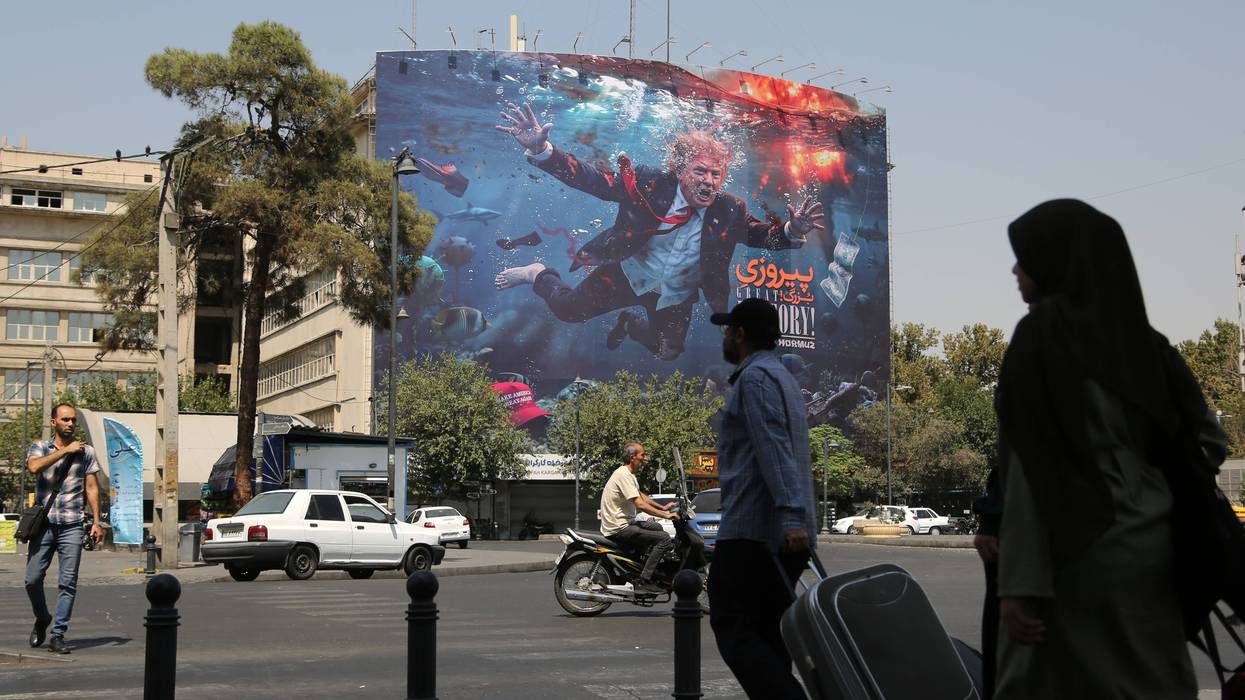
As US President Donald Trump on Thursday confirmed reporting that he's seeking $200 billion more from Congress to continue waging his unpopular war of choice on Iran, Rep. Ilhan Omar was among those forcefully pushing back.
"We're told there's no money for universal healthcare or to end hunger in this country. But somehow $200 billion more for war will likely move through Congress without question," said the progressive Minnesota Democrat, who fled civil war in Somalia as a child. "Not another penny for another endless war."
Since Trump and Israeli Prime Minister Benjamin Netanyahu started bombing Iran late last month—creating a spiraling crisis that has now killed and injured thousands of people across the Middle East, plus damaged civilian infrastructure in multiple countries—anti-war lawmakers and organizations have delivered similar messages.
"While they kick 17 million Americans off their healthcare, Republicans want to spend billions on Trump's reckless war of choice," Rep. Greg Casar (D-Texas), chair of the Congressional Progressive Caucus, said in early March. "Hell no."
Last week, shortly after Pentagon officials told Congress that just the first six days cost Americans more than $11.3 billion, over 250 groups collectively told lawmakers on Capitol Hill to "vote against any additional funding for Trump's unconstitutional war."
At the time, the reported figure was a quarter of what it is now: $50 billion. The coalition noted that the funding "would be enough to restore food assistance for 4 million Americans that was taken away in the tax and budget reconciliation bill, establish universal pre-K education, and pay for the annual construction of more than 100,000 units of housing, among other possible priorities."
After Trump confirmed that he wants four times more than expected, one coalition member, the Institute for Middle East Understanding (IMEU) Policy Project, took to social media to highlight other ways the money could be spent to improve the lives of working Americans, from school meals and paid leave to funding all levels of education.
Another coalition member, Public Citizen, released a Thursday statement in which co-president Robert Weissman ripped Trump's spending request as "grotesque beyond words."
According to Weissman:
It should properly be understood not just as a request to replenish supplies, but to expand, escalate, and perpetuate the illegal, unconstitutional, unpopular and devastating war on Iran. Congress should understand that approving any portion of this funding opens the gates for one, two, and potentially many more war funding requests in the future.
How dare the administration propose this gargantuan sum to expand an illegal war of choice at the same time it has rammed through deep cuts in healthcare and food assistance, refuses to spend foreign assistance at a cost of millions of lives, and has cut spending on protecting clean air, maintaining our national parks, investing in health research, protecting consumers from fraud, and so much more.
$200 billion is enough to materially change the lives of Americans and truly make our country stronger. It would be enough to restore food assistance to the 4 million Americans and Medicaid to the 15 million Americans who will lose those crucial supports under the Republican reconciliation bill; establish universal pre-K education; pay for the annual construction of more than 100,000 units of housing; double the budget of the Environmental Protection Agency; and expand Medicare to cover dental, vision, and hearing.
Weissman argued that "every member of Congress should announce, right now, that they will reject this monstrous war funding proposal, before it is formalized."
Despite rising casualties across the Middle East and polls showing that the US assault on Iran is unpopular, even with Trump voters, a few Democrats voted with nearly all Republicans in the Senate and House of Representatives earlier this month to reject war powers resolutions intended to end Trump's Operation Epic Fury. The upper chamber blocked a similar effort late Wednesday.
Berlin says it needs to focus on its defense in a separate ICJ case in which Nicaragua accuses Germany of supporting Israel's genocidal war on Gaza.
Germany said Wednesday that it will drop its planned intervention in the International Court of Justice genocide against Israel so that it can better focus on its own defense in a separate ICJ case filed by Nicaragua accusing Berlin of enabling Israel's genocidal assault on Gaza via arms sales.
Deputy German Foreign Minister Josef Hinterseher said during a press conference in Berlin that his country "will not intervene" on Israel's side in the South Africa v. Israel genocide case filed at the Hague-based tribunal in December 2023.
This is a marked departure from Germany's January 2024 announcement that it would intervene on behalf of Israel in the case, arguing that the genocide allegation made by South Africa had "no basis whatsoever."
Nearly two dozen nations, most recently the Netherlands, Namibia, and Iceland, have either formally intervened on the side of South Africa or announced their intent to do so. The Herero and Nama peoples of modern-day Namibia suffered a genocide during the region's colonization by Germany in the late 19th and early 20th centuries.
A handful of countries including the United States, Hungary, and Fiji have also intervened on behalf of Israel.
In 2024, Nicaragua filed a case against Germany at the ICJ, arguing that the European nation “has not only failed to fulfill its obligation to prevent the genocide committed and being committed against the Palestinian people... but has contributed to the commission of genocide in violation" of the Genocide Convention.
Germany has provided financial, military, diplomatic, and political support to Israel. It also temporarily halted financial contributions to the United Nations Relief and Works Agency for Palestine Refugees in the Near East (UNRWA) based on unsubstantiated Israeli claims that a dozen of its worjers were involved in the Hamas-led attack of October 7, 2023.
Unlike Germany, the US and Israel are not members of the ICJ. The US quit the tribunal after it ruled against the Reagan administration in Nicaragua v. United States, a 1984 ruling that determined the US illegally supported Contra terrorists and mined Nicaraguan harbors.
However, under the court's territorial jurisdiction powers, countries that are not members of the court can still be brought before it for crimes committed in member states.
Further complicating matters, Germany is one of numerous countries which have intervened in Gambia v. Myanmar, which the African nation filed at the ICJ in 2019 amid the Burmese junta's ongoing genocide against Rohingya Muslims.
The ICJ has issued several provisional orders in South Africa v. Israel, including directives to prevent genocidal acts and allow aid into the besieged Gaza Strip amid a burgeoning famine. Israel has been accused of ignoring these orders.
The US under the Biden and Trump administrations pressured ICJ members to refrain from intervening on behalf of South Africa. The Trump administration has also sanctioned members of the International Criminal Court (ICC)‚ which in 2024 issued arrest warrants for Israeli Prime Minister Benjamin Netanyahu and former Defense Minister Yoav Gallant for alleged crimes against humanity and war crimes in Gaza.
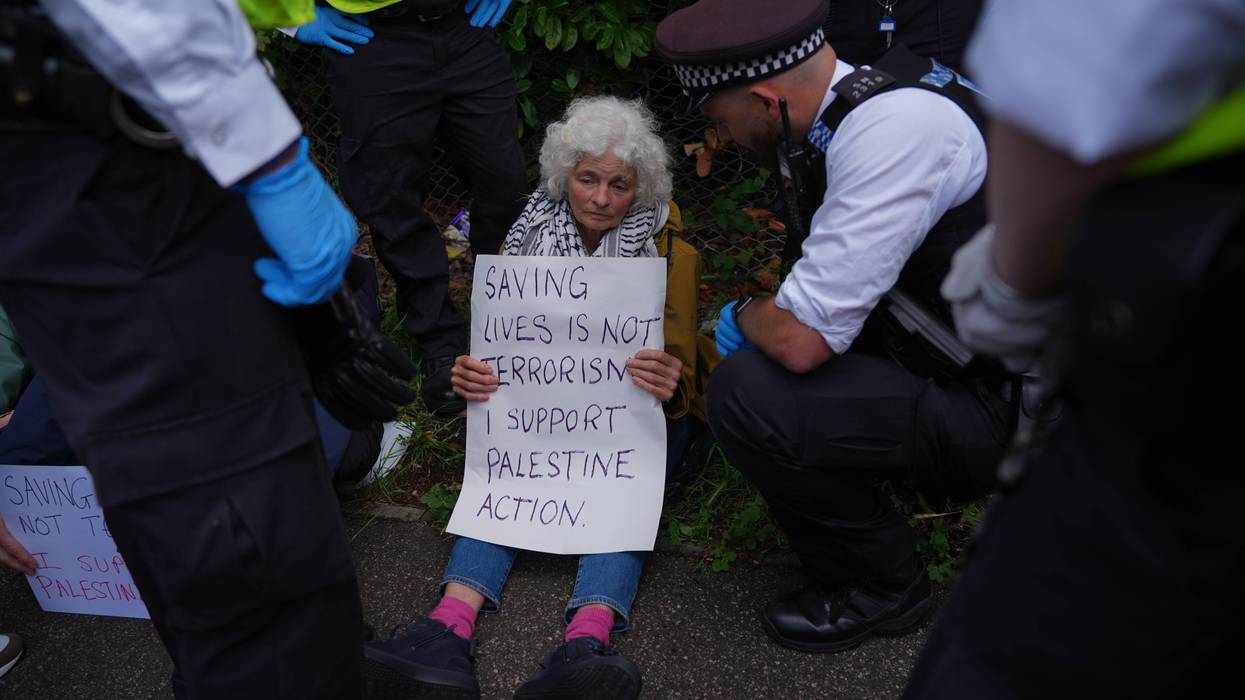
In Germany, as in several other Western nations, authorities have cracked down on pro-Palestine protests, free expression of support for Palestinian rights, and criticism of Israel. Critics say the persistent framing of German national identity around enduring guilt for the Nazis' wholesale slaughter of 6 million Jews during the Holocaust is driving overzealous policing of dissent and conflation of pro-Palestinian activism with antisemitism.
This perceived moral burden, say observers, risks stifling legitimate political debate, curtailing free speech, and criminalizing solidarity with Palestinians under the pretext of historical responsibility. This has driven German actions from secretly funding Israel's development of nuclear weapons over half a century ago to brutally assaulting and arresting pro-Palestine protesters—including women, elders, minors, and people with disabilities—after the October 2023 attack.
German police punch an anti-genocide woman in front of the cameras.
[image or embed]
— Antifa_Ultras (@antifa-ultras.bsky.social) October 7, 2025 at 2:20 PM
Amnesty International's latest annual human rights report on Germany notes "excessive use of force by police during peaceful protests by climate activists and supporters of Palestinians’ rights," as well as Berlin's "irresponsible arms transfers" to not only Israel but also Saudi Arabia.
"To pull the region back from the brink and prevent the further loss of civilian life and destruction of vital public infrastructure, renewed diplomatic efforts are critical."
United Nations High Commissioner for Human Rights Volker Türk renewed his call for achieving peace through diplomacy on Thursday, highlighting how the US-Israeli war on Iran is having a disproportionate impact on civilians across the Middle East.
"The human cost of this reckless war is alarming. Hostilities are being waged without regard to the immediate and long-term consequences for civilians across the entire region," Türk said in a statement as the US and Israel bombed Iran, retaliatory Iranian strikes hit fossil fuel facilities throughout the region, and Israeli forces attacked alleged Hezbollah targets in Lebanon.
"Attacks on energy infrastructure—including South Pars in Iran and Ras Laffan in Qatar—will only compound hardship," the UN official warned. "Disastrous humanitarian, economic, and environmental consequences will be triggered if such attacks continue, resulting in deep harm to civilians—potentially for years to come."
On Wednesday, Israel struck Iran's South Pars gas field and Qatar said that Iranian missiles caused "extensive damage" to the world's largest liquefied natural gas export facility. US President Donald Trump then threatened to "massively blow up the entirety" of the Iranian site if attacks on Qatari energy infrastructure continued.
According to the Iranian Red Crescent Society, US and Israeli attacks over the past few weeks have already damaged at least 67,414 civilian locations, including homes, schools, medical facilities, energy installations, courthouses, and UN Educational, Scientific, and Cultural Organization World Heritage sites.
"All parties to this conflict are bound by their obligations—irrespective of the conduct of any other party—and must take all feasible measures to avoid harm to civilians and damage to civilian objects," Türk stressed. "In times of war, the rule of law, due process, and other human rights obligations continue to apply. The ugly reality of war is not a carte blanche to violate human rights."
The high commissioner declared that "to pull the region back from the brink and prevent the further loss of civilian life and destruction of vital public infrastructure, renewed diplomatic efforts are critical."
He also acknowledged an upcoming Muslim holiday: "Many across the region and beyond will be observing Eid al-Fitr this weekend in circumstances of hardship, uncertainty, and fear. I extend my Eid wishes to all those who observe it, and my heartfelt solidarity to all those enduring the hardships of conflict and instability."
Citing the Iranian Health Ministry, Drop Site News reported Thursday that "at least 1,444 people have been killed and 18,551 injured" across Iran. Reuters noted that as of Wednesday, the US-based Human Rights Activists News Agency put the death toll in Iran even higher, at 3,134. The Lebanese Ministry of Public Health said Thursday that Israeli attacks this month have killed 1,001 people and wounded 2,584 across Lebanon.
Additionally, Iranian missiles have killed at least 15 Israeli civilians and four Palestinian women in the illegally occupied West Bank, according to Reuters. The Israeli military has confirmed the deaths of two soldiers in Lebanon, and the Pentagon has verified that 13 US service members are dead, and another 200 have been wounded.
Despite the rising body count, and polling that shows the war is unpopular with the US public, including Trump voters, the president is seeking another $200 billion dollars from Congress, which has not authorized the war on Iran.
Responding to that request, US Sen. Chris Van Hollen (D-Md.) said that "the best way to end this war, protect our troops, save civilian lives, and rein in a lawless administration is to cut off funding. I'm a hell no."