

SUBSCRIBE TO OUR FREE NEWSLETTER
Daily news & progressive opinion—funded by the people, not the corporations—delivered straight to your inbox.
5
#000000
#FFFFFF
To donate by check, phone, or other method, see our More Ways to Give page.
Daily news & progressive opinion—funded by the people, not the corporations—delivered straight to your inbox.
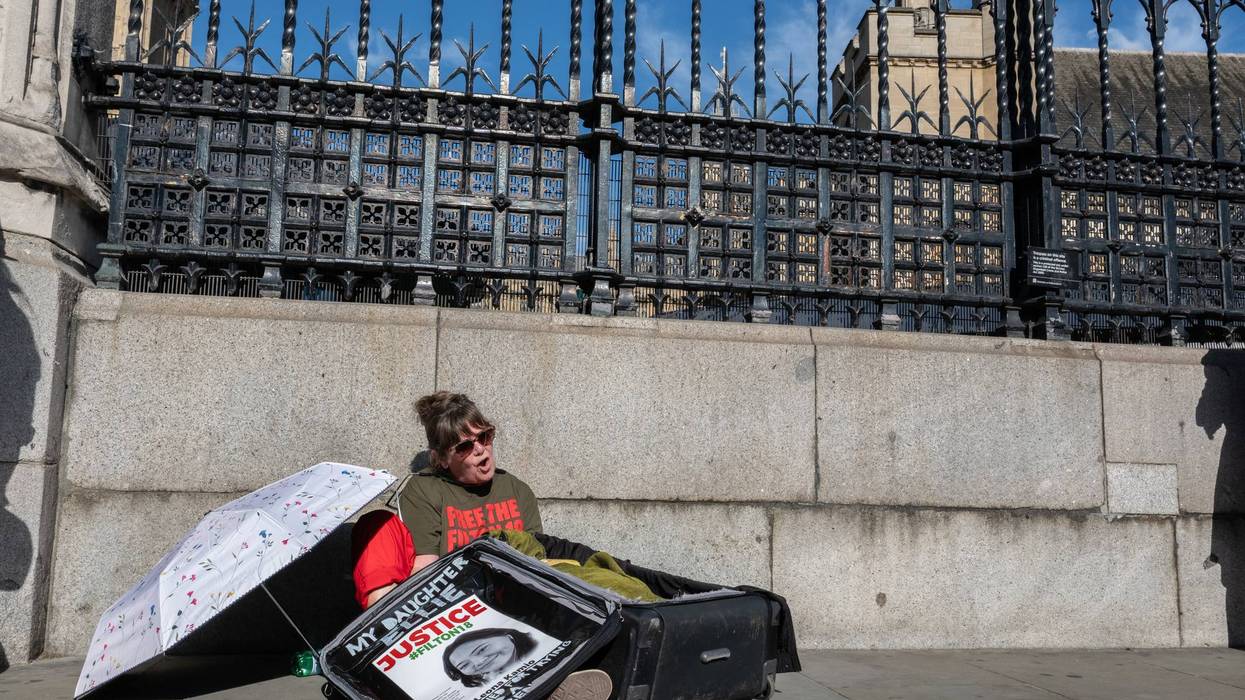
Emma Kamio's daughter, Ellie, was also "debanked" by Lloyds Bank before she was criminally convicted for her sabotage of Israeli military equipment.
One of the UK's largest financial institutions, Lloyds Bank, reportedly targeted a jailed Palestine Action protester and her family for financial punishment before she was ever convicted of a crime, according to a report out Wednesday from Novara Media.
The outlet reported that activist Leona "Ellie" Kamio had her account shuttered by Lloyds, a process known as "debanking," while she was being held on remand for her role in destroying Israeli military equipment at a factory owned by the technology firm Elbit Systems.
Ellie and four other activists were convicted of criminal damage earlier this year. But although a jury never convicted them of terrorism, they were sentenced as terrorists after a judge made an unprecedented ruling that their actions had a “terrorist connection," due to their political motivation. She and other members of the so-called "Filton Four" have appealed their sentences.
Ellie was held in prison on "remand" for more than 18 months before her first trial concluded in February 2026 although she was never charged with terrorism.
In February 2025, a year before her trial for criminal damage, Novara reports that Kamio was sent a letter by Lloyds informing her that it was closing her bank account because it was “unable to maintain a banking relationship." It did not give an explanation for the decision.
In June 2026, after Ellie had been convicted of criminal damage but before she was slapped with a terrorism sentence, her mother, Emma Kamio, learned that Lloyds had denied her request for a new mortgage on the commercial properties for her small business.
Lloyds made it clear that it was because of her daughter's case.
"We’ve now assessed the deal and consulted with our credit sanction team," a business development manager for the bank told Emma's mortgage broker. "Unfortunately, due to the adverse media, it’s not something they’re comfortable supporting at this time.”
When the broker offered an alternative plan to transfer the properties into her sister's ownership, Lloyds also rejected it.
Emma told Novara that she lost her properties as a result of Lloyds' decision. Her businesses, she said, "had to slip down the list of priorities as for the past two years, she's "spent every waking moment dealing with the trauma of my wrongful arrest or fighting for my daughter’s campaign and her release."
Emma was herself arrested in July 2025 after she locked herself to a suitcase outside Parliament to protest as members voted to enact the ban on Palestine Action. She was acquitted in April 2026.
"Thankfully, my drive for justice is more important to me than money," Emma said.
In the UK, banks are not allowed to cancel customers' accounts based on religion or belief. But they can be closed if the bank suspects a user is engaged in money laundering, terrorism financing, fraud, or other criminal activities that could pose a risk to the financial institution.
Emma contends that Lloyds "debanked my daughter Ellie with no reason at all, and while she was on remand and therefore innocent until proven guilty."
A spokesperson for Lloyds told Novara that the bank does not "close customer accounts or make lending decisions based on political or personal beliefs."
"Our decisions are based on relevant laws, regulations, account conditions, or lending requirements," the spokesperson said. "We’re unable to comment on individual cases.”
Anas Mustapha, the head of public advocacy at CAGE International, a UK-based organization focused on state abuses under terrorism laws, described the actions committed against Emma as “collective punishment."
"Emma Kamio has nothing to appeal against—just a bank’s discriminatory risk assessment, applied because her daughter took action to stop the supply chain of deadly weapons used in a genocide," Mustapha told Novara.
The highly controversial sentencing of Ellie and the rest of the "Filton Four" as terrorists was widely condemned by civil liberties and human rights activists, who described it as a dramatic escalation of the British government's effort to punish pro-Palestinian speech.
Last July, the Labour government of then-Prime Minister Keir Starmer used the Terrorism Act to ban Palestine Action, which has engaged in "direct action," including property destruction against entities activists believe are complicit in Israel's genocide in Gaza.
Not only is membership in the group now considered a terrorist offense, but nonviolent expressions of support for the group have also been criminalized.
Since the ban came into effect, 3,500 arrests of peaceful protesters have taken place across the country, according to Amnesty International, including more than 1,200 who've been charged with terrorism-related offenses.
Separately, official Home Office figures show that as of March, 92% of terrorism-related arrests in the UK over the previous year were linked to suspected support for Palestine Action.
Ellie and the other members of the Filton Four have defended their acts of sabotage against Israeli military equipment—including dozens of drones—as a justifiable response to Israel's destructive military campaign in Gaza.
That campaign, which many human rights organizations have described as a "genocide," has killed more than 73,000 Palestinians, including over 20,000 children, according to official tallies from the Gaza Ministry of Health, while independent analysts have argued the true death toll since October 2023 is much higher.
Elbit is one of the companies that provides much of Israel's drone fleet, which has been involved in attacks that have killed Palestinian civilians.
"Ellie was sentenced as a terrorist after she was convicted of criminal damage for destroying 40 Israeli weapons, including quadcopter drones," said Huda Ammori, one of the co-founders of Palestine Action, in a post on X. "For saving lives, she was deemed a terrorist, and her family is also being targeted."
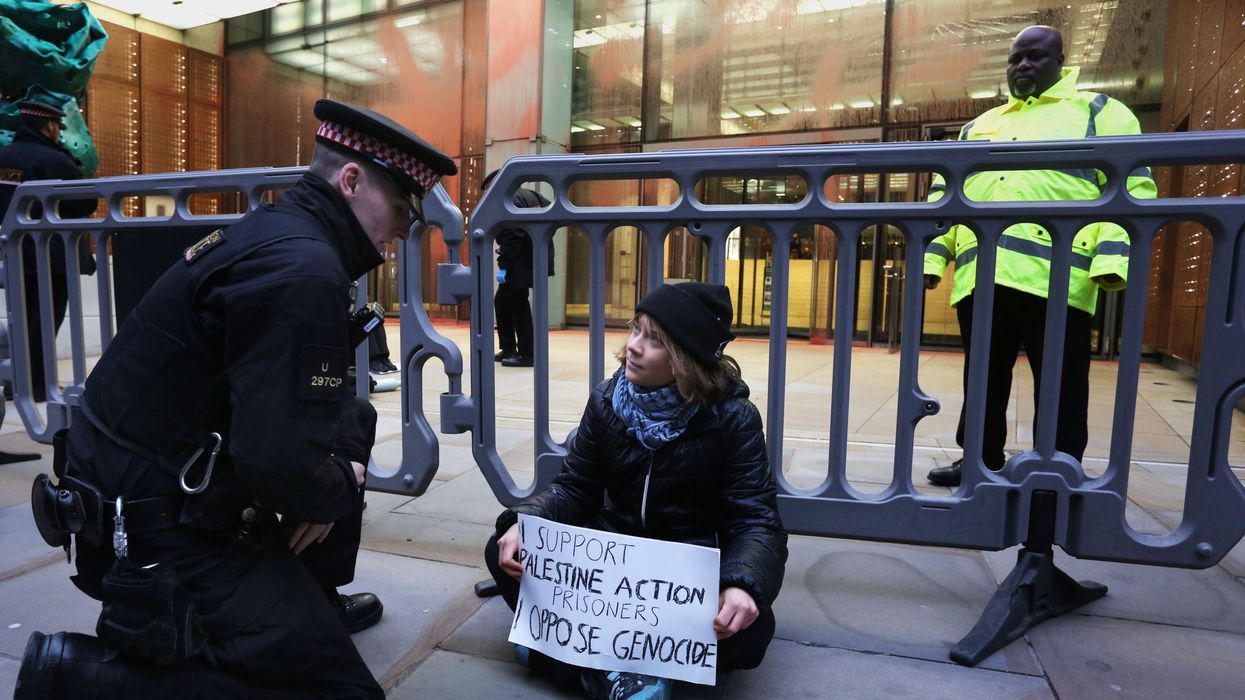
Palestine Action, the direct-action network founded in the UK in 2020 by Huda Ammori and Richard Barnard, is built on a simple theory of change: If governments won’t stop arming Israel, activists will go after the companies that do it for them.
For nearly three years, foreign ministries in Washington, London, and Brussels have debated arms embargoes on Israel in committee rooms, largely without result. Meanwhile, a much less formal network of ordinary people has been trying to accomplish the same goal from the ground up—one factory gate, one shareholder register, and one pension fund at a time.
Palestine Action, the direct-action network founded in the UK in 2020 by Huda Ammori and Richard Barnard, is built on a simple theory of change: If governments won’t stop arming Israel, activists will go after the companies that do it for them. Its central target has been Elbit Systems, Israel’s largest weapons manufacturer, which supplies the bulk of the drones, munitions, and surveillance equipment used in Gaza and the West Bank.
But the network’s real innovation is how it maps the entire supply chain—not just Elbit’s factories, but the banks that hold its shares, the recruiters that staff it, the cleanroom contractors that service its subsidiaries, and the local landlords who rent it space. Every link has become a pressure point.
Palestine Action isn’t a single organization so much as a constellation. Its hub-and-spoke structure includes a UK core, plus franchises, affiliates, and offshoots that have adopted its name, its tactics, or both. These affiliates include Unity of Fields, formerly Palestine Action US, and sympathetic cells in Canada, France, and Germany.
A war sustained by a transnational arms and finance network, in other words, is being contested by an equally transnational, but far more improvised, citizen network.
Tactics range widely. Some are the kinds of action that make headlines: blockading factory entrances, occupying rooftops, spray-painting military aircraft. Others are quieter and far more replicable by an average person—researching a company’s supply relationships, showing up to a shareholder meeting, filing a public-records request on a pension fund’s holdings, or simply refusing to bank with an institution that finances the war.
This second track has produced some of the most durable wins. In 2026, for instance, Urbana, Illinois became the first Illinois city to bar its pension investments from the top 100 global arms producers; Burbank, California divested from Caterpillar and Honeywell after a local coalition campaign; and the state of Maryland’s pension fund sold off 85% of its Israeli bond holdings—about $62 million—after more than a year of sustained pressure. None of those campaigns required anyone to climb a fence.
Palestine Action’s campaign against Elbit’s UK operations has been credited with forcing the closure of the company’s London headquarters, the cancellation of Ministry of Defence contracts, and the loss of its UK recruitment partner. Barclays bank—long a target of Palestine Solidarity Campaign’s parallel boycott—stopped holding shares in Elbit in 2024, something campaigners point to as evidence that sustained pressure, even short of full divestment, moves institutional money.
None of this has stopped the war. But it has made doing business with Israel’s arms industry measurably more expensive and more reputationally toxic, which is precisely the mechanism that sanctions and embargoes are supposed to achieve when foreign ministries won’t act.
In July 2025, the UK government proscribed Palestine Action as a terrorist organization under the Terrorism Act 2000, making membership or expressed support punishable by up to 14 years in prison. A High Court panel ruled in February 2026 that the ban was disproportionate and unlawful, noting that only a small fraction of the group’s actions met the legal definition of terrorism, and that ordinary criminal law was already available to prosecute any violence. The government appealed, and in June 2026 the Court of Appeal reversed that ruling and upheld the ban. More than 1,600 people have been arrested in the UK simply for expressing support for the group since the proscription took effect, and four activists convicted only of criminal damage at an Elbit factory were sentenced on the basis of a “terrorist connection.”
That is a genuinely severe legal environment, and it is specific to the UK. Direct action involving property damage or blockades carries real prosecutorial risk anywhere, including the United States, where Unity of Fields and similar groups are not proscribed but individual activists can and do face criminal charges for actions like the 2023 blockade of Elbit’s Cambridge, Massachusetts office.
The boycott, divestment, and shareholder-pressure (BDS) track—writing to a pension board, organizing a bank boycott, supporting BDS-endorsed campaigns—carries none of that risk and remains fully legal free speech and civic organizing in the United States and most of Europe. The two tracks get conflated constantly, including by the UK government itself, but they are not the same thing. This kind of conflation is exactly what makes proscription such a blunt instrument: it criminalizes a banner alongside a blockade.
Much of this network’s actual leverage comes from single, unglamorous decisions. Huda Ammori didn’t wait for a government to act; she and a handful of others started a campaign against one company in 2020 that has since reshaped how a much larger movement thinks about supply chains. The Boycat app, the closest thing the BDS movement has to an official target list, exists because someone decided that consumer choice needed better information, not more slogans. A single city council member willing to bring a divestment resolution to a vote in Urbana did something no protest outside a factory could: moved actual pension dollars.
None of that required anyone to risk a UK terrorism charge. It required deciding that a supply chain is not too complicated, or too far away, to trace and interrupt.
A war sustained by a transnational arms and finance network, in other words, is being contested by an equally transnational, but far more improvised, citizen network. The citizen network’s most effective tool so far hasn’t been confrontation, it’s been documentation. Knowing exactly which bank, which pension fund, which subcontractor is implicated—and saying so publicly and persistently—has moved more money than any single blockade. This tactic is the most likely one to still be legal, and successful, in the near future.
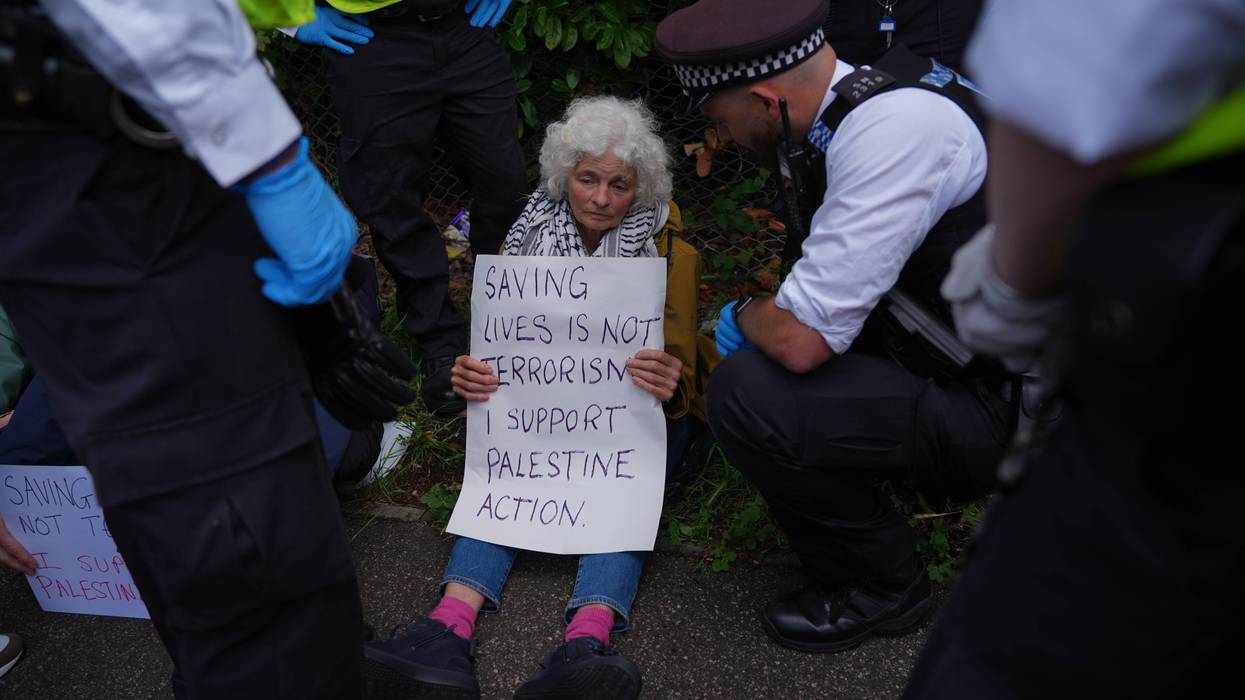
One free speech proponent called the designation "retaliation against the sanctioned for holding political views the Trump administration dislikes."
A top First Amendment advocacy group on Wednesday warned of the "broad speech implications" of the Trump administration's sanctions on the British anti-genocide group Palestine Action, which it designated an international terrorist organization for leading direct actions in opposition to the Israeli government.
Under the designation, Americans will be blocked from doing business with Palestine Action, and providing the group with funds, goods, or services will be prohibited.
British citizens who continue to donate to the group or take part in protests supporting it—which thousands of people have been arrested for doing since the UK government proscribed Palestine Action last year—could face sanctions and visa bans in the US, according to The Telegraph, which first reported the news Wednesday that the US designation was expected.
The group's co-founders, Richard Barnard and Huda Ammori, will face lifetime bans from entering the US due to the sanctions.
Chip Gibbons, policy director for Defending Rights and Dissent, said his group was "especially disturbed that Palestine Action, a nonviolent, direct action organization, has been sanctioned under a [President George W.] Bush-era executive order issued in response to the September 11th attacks, essentially putting civil disobedience for Palestinian rights on equal footing with al-Qaeda."
Treasury Secretary Scott Bessent announced the sanctions of Palestine Action, along with sanctions targeting the Italy-based group Autistici Inventati—which supplies digital services to left-wing groups—and Masar Badil, a Palestinian organization.
The Treasury Department's Office of Foreign Assets Control (OFAC) was imposing the sanctions under Executive Order 13224, which prohibits transactions between people in the US and groups that commit or support terrorism.
“Far-left extremists, their fronts, and their enablers should be on notice: We will bring the full weight of our economic tools to bear,” said Bessent. “Political terrorism has no place in our society, and we will continue to cut the financial lifelines of these groups until they are eliminated.”
The curtailing of Palestine Action's ability to participate in the global financial system and its new US label as a "Specially Designated Global Terrorist" group, said Gibbons, were not only "retaliation against the sanctioned for holding political views the Trump administration dislikes, but they severely curtail and criminalize US citizens' ability to engage in otherwise lawful associations with these groups.”
A US official told The Telegraph before the sanctions were officially announced that Palestine Action had "supported numerous acts of terrorism since July 2020, including acts that have physically injured UK law enforcement personnel, as well as acts intended to intimidate lawful commercial enterprise and coerce the British government."
The designation comes just over a year after UK lawmakers voted to proscribe Palestine Action after some of its members vandalized two aircraft at a Royal Air Force base.
In August 2024, activists with the group also raided a facility of Elbit Systems, an Israeli-owned weapons manufacturer, and attacked a police officer.
Organizers maintain that Palestine Action's overarching goal is to demonstrate against and disrupt "the Israeli war machine, which is committing a genocide in Gaza with the support of the US government," as Ammori told Al Jazeera Wednesday.
They organized the recent actions to protest Israel's bombardment of Gaza, which has killed more than 73,000 Palestinians since 2023 and is continuing to decimate the exclave despite a ceasefire reached last October.
Ammori added that President Donald Trump "has been at the center of the mass murder of Palestinians, enabling the Zionist regime at every turn.”
Many of the people arrested for supporting Palestine Action in the UK have been detained simply for holding signs that express opposition to genocide and solidarity with the group.
The new designation comes a month after US Secretary of State Marco Rubio hosted representatives from more than 60 countries at the Ministerial on the Resurgence of Political Terrorism, where he warned that "for far too long... our counterterrorism doctrine has had a blind spot when it comes to extremist violence from the political left," and called for a global crackdown.
Rubio and top White House adviser Stephen Miller warned in July that numerous arrests and prosecutions of people and groups deemed by the administration to be left-wing extremists would be coming, under the guidance put forward by National Security Presidential Memorandum 7, which called for a national strategy to crack down on left-wing organizing.
In the UK, five Palestine Action organizers won a legal victory after a judge ruled that they would not be sentenced as terrorists, and three UK Supreme Court judges granted Ammori the right to challenge the government's ban on the organization.
More than 250 academics and legal experts on Wednesday wrote to British Prime Minister Andy Burnham, calling on him to both end UK military support for Israel and to terminate the proscription of Palestine Action.
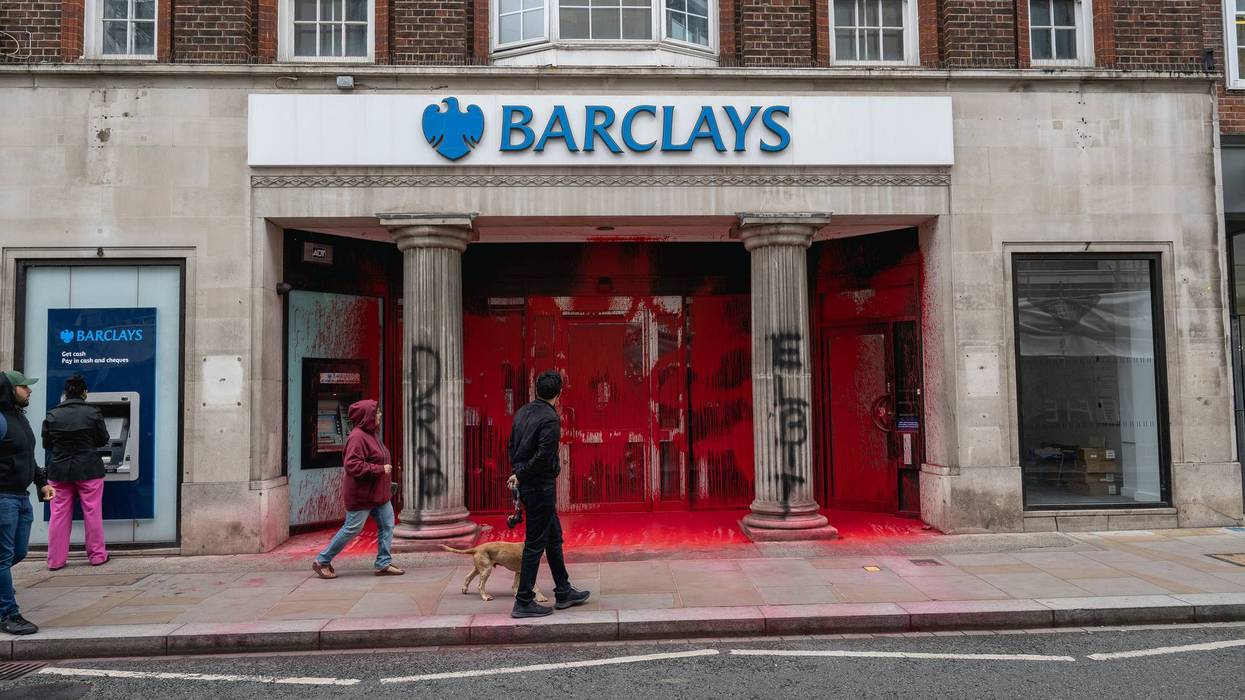
"It’s a victory for us, it’s a victory for Palestine, it’s a victory for protesting," said the mother of one Palestine Action activist.
Five Palestine Action activists who were convicted in June of vandalizing a Barclays bank in the UK will not be sentenced as terrorists.
As reported by Al Jazeera on Friday, Judge Robert Altham determined that the five defendants—Brendon O’Hagan, 28; Amanda Kelly, 31; Hmeera Atiqnisar, 31; Mohammed Malik, 28; and Alma Yaniv, 70—did not commit crimes that rose to the level of terrorism.
Instead, the judge said, they will be sentenced in September for criminal damage to the bank, which will carry significantly shorter prison sentences compared to a terrorism sentencing.
According to The Guardian, attorneys representing the defendants argued that their clients' Palestine Action membership should not influence a decision to sentence them on terrorism because the group wasn't proscribed as a terrorist organization until long after the vandalism took place.
The five activists were found guilty two months ago of causing damage exceeding £200,000 to the Barclays bank in Burnley, Lancashire in August 2024. Palestine Action activists across the UK targeted Barclays branches due to its investments in Elbit Systems, and Israeli defense technology firm.
The activists issued a joint statement after the ruling saying they were "extremely relieved" by the outcome, while emphasizing that a terrorism sentence should never have been under consideration.
"This should never have been an option,” they said. "We were on trial for charges of criminal damage, for damaging some windows and spraying red paint on a Barclays branch. At no point during the trial were we, or the jury, informed that, if convicted, we could face being sentenced as terrorists."
Supporters of the activists erupted in cheers outside the court after hearing the news. Dove Malik, mother of defendant Mohammed Malik, expressed relief in an interview with Al Jazeera.
"It’s a victory for us," said Malik, "it’s a victory for Palestine, it’s a victory for protesting."
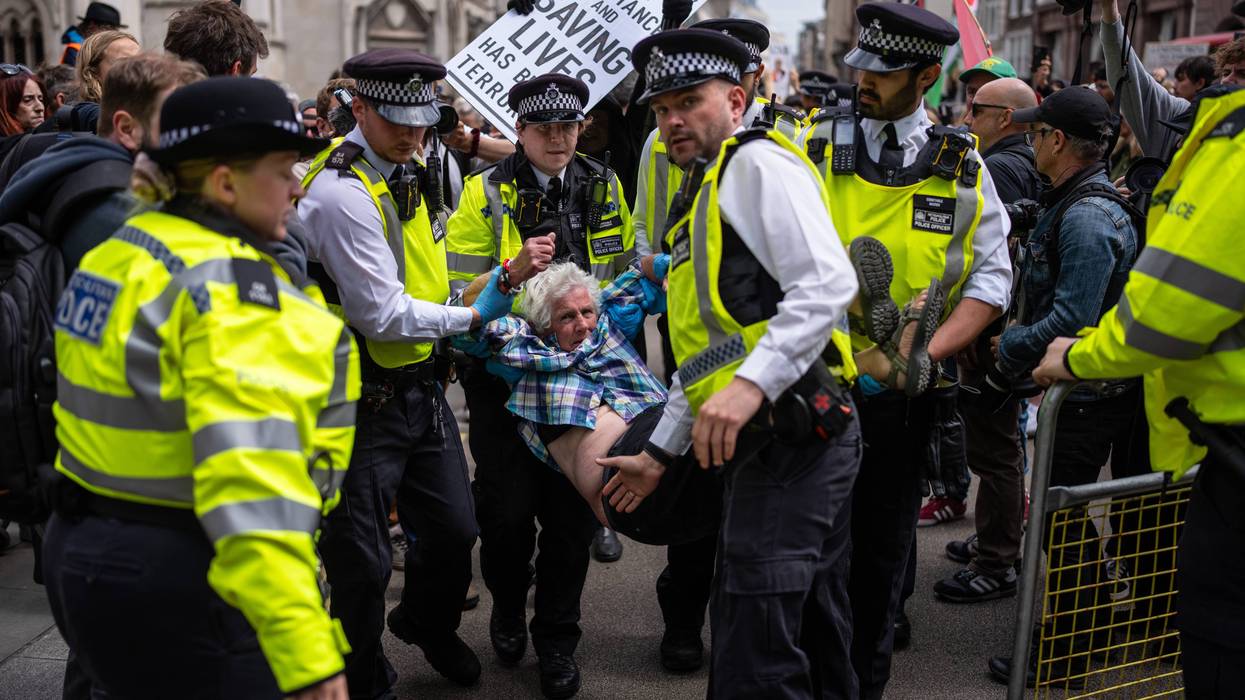
"Classifying protest through direct action as terrorism brings Parliament and our judicial system into disrepute," said one Labour MP.
A UK appeals court is being accused of flouting the law to allow the government to suppress free speech after it upheld a ban on the direct action group Palestine Action.
Just days after four young activists with the group were hit with unprecedented “terrorism” sentences over their 2024 vandalism of an Israeli-owned weapons facility that was being used to supply the genocidal assault on Gaza, the Court of Appeal in London on Monday upheld the Labour government’s proscription of Palestine Action under the Terrorism Act of 2000.
The ban was approved in Parliament in July 2025 and outlawed expressions of support for the group. According to Amnesty International, more than 3,300 people have been arrested across Britain since last July "simply for their engagement in acts of peaceful protest opposing the proscription"—including more than 2,000 who have been arrested simply for holding signs that read "I oppose genocide, I support Palestine Action.”
Outside the Royal Courts of Justice in London, where the decision was handed down, hundreds more Britons rallied in opposition.
“We acknowledge the Court of Appeal’s judgment that the home secretary’s decision to proscribe Palestine Action was lawful,” the Metropolitan Police said in a statement shortly after. “This means that expressing support for the organization remains a criminal offense, and officers will arrest those who break the law.”
“Officers are policing a protest outside the Royal Courts of Justice today where a number of people are displaying placards in support of Palestine Action," it continued. "Arrests are underway.”
Protesters were carried away, while onlookers shouted, “Shame” and “You’re complicit” at officers.
Arrests continue outside the Royal Courts of Justice after Court of Appeal find proscription of Palestine Action to be lawful.
We will continue to protest this Government’s embarrassing attempts to cover up its crimes with intimidation tactics.
Join us: https://t.co/XhFvPsZC3U pic.twitter.com/9okcFkVVtf
— Defend Our Juries (@DefendOurJuries) June 15, 2026
As The New York Times pointed out:
Palestine Action, which no longer exists in its original form, did not promote violence against individuals. But its members damaged sites linked to Elbit Systems, an Israeli weapons manufacturer, and last June broke into [Royal Air Force] Brize Norton, Britain’s largest air force base, in Oxfordshire, vandalizing two aircraft.
The activists who were given hefty sentences on Friday have argued that “innocent lives were saved” by their destruction of military equipment in the Elbit facility. Drones manufactured by the company have been documented in use during attacks on civilians, including the April 2024 strike on a World Central Kitchen convoy that killed seven aid workers.
But although members of the group have never been accused of any premeditated act of violence against other human beings, the British government’s terror designation puts it on the same level, legally speaking, as al-Qaeda, the Taliban, or the neo-Nazi Atomwaffen Division, and expressions of support can carry maximum sentences of 14 years in prison.
In February, the High Court sided with Palestine Action, ruling that the ban on support breached the rights to free expression and assembly under Articles 10 and 11 of the European Convention on Human Rights.
However, a five-judge appeals court panel overruled this decision on Monday, with Chief Justice Sue Carr writing that while the ban was “highly controversial,” and that the group “was supported by many otherwise law-abiding citizens,” it was a “fundamental mistake to overlook the fact that Palestine Action overtly promoted unlawful violence amounting to terrorism.”
Pointing to its sabotage of Elbit, she said the group's actions were “intended to close down lawful businesses” and said that "future threats and risks posed to third-party individuals and property by Palestine Action were perhaps the most important factors to weigh in the balance.”
Carr said that the ban would "not prevent public expressions of support for the Palestinian cause or opposition to Israel and to the Israel Defense Forces, or demonstrations targeted at Elbit."
But in the process, even she acknowledged that such a severe restriction on peaceful assembly in support of Palestine Action could indeed have a "chilling effect" on otherwise law-abiding citizens and cause them to be "deterred from assembling lawfully or making their strongly held anti-Israel and pro-Palestinian views public for fear of their actions being construed as support for Palestine Action."
Palestine Action co-founder Huda Ammori, who challenged the ban in court, said her group would "fight this all the way" and planned to appeal to the UK Supreme Court and potentially even the European Court of Human Rights.
"We will not stop fighting to overturn one of the most extreme attacks on free speech and the right to protest in modern British history," she said. "This unprecedented abuse of power has devastated the lives of thousands of people while silencing dissent over Israel’s slaughter of the Palestinian people during the genocide, when that dissent could not be more urgent.”
Today's ruling by the Court of Appeal is deeply disappointing.
This case remains about much more than one group.
What’s important for all of us to understand is that proscription is one of the strongest powers the government has.
Treating protest as terrorism leaves the… pic.twitter.com/WI3O05LYEn
— Amnesty UK (@AmnestyUK) June 15, 2026
The ruling was met with outrage from supporters of Palestinian rights and human rights groups.
Ammar Kazmi, the senior legal coordinator for the Derby-based Left Legal Fighting Fund, said that with this ruling, the judges allowed the political objective of criminalizing pro-Palestine speech to take precedence over the law.
"The judges allowed policy reasons to override strictly legal arguments, and they showed deference to ‘national security’ questions," he wrote on social media. "They also said that proscription is a ‘proportionate’ interference with free speech rights. In other words, they allowed the government to ride roughshod over the law."
Amnesty UK called the ruling "deeply disappointing," adding that the case "remains about much more than one group."
"What’s important for all of us to understand is that proscribing a group as a terrorist organization is one of the strongest powers the government has," the human rights group said. "The banning of Palestine Action as a terrorist organization is a grave misuse of counterterrorism powers with serious consequences for human rights."
Former Labour Party leader Jeremy Corbyn—whose successor, Prime Minister Keir Starmer—enacted the ban, said, "Today’s ruling to uphold the UK government's proscription of Palestine Action is a travesty of justice."
"One by one, the very foundations of our democracy are being destroyed—all to oil the wheels of British complicity in genocide," said Corbyn, who is leading an unofficial "tribunal" that presented evidence of UK participation in Israel's assault on Gaza to the International Criminal Court in March.
Noting the large number of pensioners who have been hauled off by police for holding protest signs opposing the ban—including dozens arrested on Friday for opposing the sentencing of those involved in the Elbit raid—Labour MP John McDonnell said, "Parliament should reverse the decision to proscribe Palestine Action urgently before we see large numbers of elderly people in particular being dragged before our courts."
He added that "classifying protest through direct action as terrorism brings Parliament and our judicial system into disrepute."
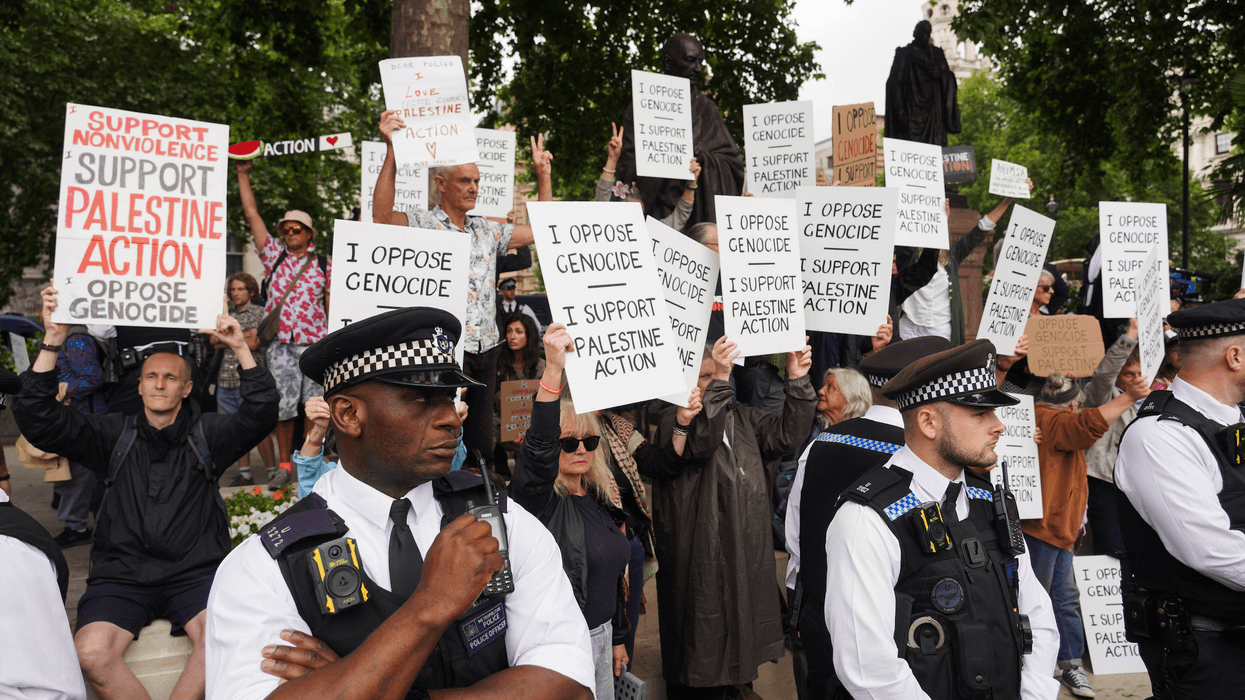
Not only is taking a stand against the overwhelming devastation that has been unleashed on Palestinians a duty, but also an obligation for people desiring peace and liberation for all.
Earlier this year a number of participants announced their withdrawal from Australia’s Adelaide Festival’s "Writer’s Week" following the disinviting of Australian-Palestinian author, Randa Abdel-Fattah. The event was subsequently cancelled.
This made me think of United Nations Special Rapporteur on the Occupied Palestinian Territories, Francesca Albanese’s words—“The occupation of Palestine must be understood as part of a broader project of domination. This is not merely about the physical borders of historical Palestine. It is a systematic assertion of permanent supremacy that knows no border…”—delivered in her Nelson Mandela Lecture.
Indeed, the impact of the ongoing genocide and occupation not only echo far beyond Palestine, because of our shared humanity, but also because of the impact it is having on freedoms across the globe. The censorship of Abdel-Fattah is yet another example of this, and it is not only happening in Australia. Even in South Africa, a country that charged Israel with genocide at the International Court of Justice (ICJ), artists are facing attempts to constrain their work.
The global wave of solidarity with Palestine has been used by some governments as a pretext to diminish freedoms by attacking the right to protest and political participation. While some did this by using laws that were already in place, others enacted ambiguous or unduly expansive legislation criminalizing Palestine solidarity and weaponizing the battle against antisemitism.
Protecting the freedom to advocate for Palestine is essential to protecting the right to protest, a fundamental tenet of democracy.
For instance in the US, Project Esther was released by the Heritage Foundation, a right-wing think tank also responsible for the odious Project 2025. The strategy’s recommendations have made their way into the policy of the Trump administration. This includes suing, firing, deporting, and defaming activists, organizations, and institutions by effectively claiming that involvement in advocacy for Palestine is material support of "a terrorist support network.” And also clamping down on college and university campuses where “more than 3,100 people have been arrested or detained.”
The United Kingdom, on the other hand, used counterterrorism legislation to ban Palestine Action. This despite an intelligence assessment report undermining the government’s claims by finding that most of the groups’ activities are “not terrorism” and the ban risked wrongfully criminalizing people. While the ban has been found to be unlawful, since put into effect in July 2025 terrorism arrests have increased by 660%, with the majority of these linked to it.
Across Europe Palestine solidarity was particularly targeted, like in Germany where the homes of pro-Palestinian activists have been raided and support for Israel has become a prerequisite for citizenship.
The effects of these actions will not be limited to Palestine advocacy and puts all movements at risk by diminishing freedoms that enable organizing across issues. So protecting the freedom to advocate for Palestine is essential to protecting the right to protest, a fundamental tenet of democracy.
Research by investigative journalist and author of The Palestine Laboratory, Andrew Loewenstein, identified over 120 countries that have bought weapons or some form of repressive technology from Israel, all principally tested on Palestinians.
Israel provided military and strategic support to apartheid South Africa’s invasion of Angola, resulting in mass casualties; it is among the countries that armed perpetrators of Rwanda’s genocide and Myanmar at a time it was found to be committing a “textbook example of ethnic cleansing” against its Rohingya Muslim population.
In modern times Israel’s offerings have included drones, spyware, and surveillance tools. Like the Israeli-made spyware being used by US Immigration and Customs Enforcement, an immigration agency that has been found to not only undertake abusive practices, but also violate its own policies.
For us in South Africa though, this is no surprise. The "homeland" of Bophuthatswana, where I was born and raised, was a product of the South African apartheid regime’s segregationist policies—which Israel took interest in—and stripped Black people of South African citizenship.
Like other homelands when it declared "independence" in 1977, it was shunned by the world. Despite its official stance, Israel was the only country to quietly recognize Bophuthatswana through informal connections and a quasi-diplomatic mission. A Jerusalem Post editorial in 1992 even referred to Bophuthatswana as "Africa’s Little Israel."
The backdrop of this relationship was the “clandestine alliance” between Israel and South Africa’s apartheid regime. Not only did the two countries collaborate on nuclear, but Israel would also become South Africa's largest weapons importer after the 1977 UN arms embargo and support the regime’s attempt to undermine sanctions.
It was a relationship of mutual admiration, an ideological alignment that in recent times is only matched by India’s admiration of Israel.
Apartheid had far-reaching consequences that extended beyond South Africa's borders. Along with unlawfully occupying Namibia, a colonial legacy embraced by the regime, it also launched hostilities in countries like Zambia and Zimbabwe. Similarly, Israel continues to conduct atrocities and aggression not only against the Palestinian people, but also in places like Lebanon, Yemen, and Syria. More recently, more than 300 people have been killed and scores injured following Israel's 10 minute assault in Lebanon—despite a two-week Middle East ceasefire, which Israel would afterwards claim did not include Lebanon. In the same way apartheid was deemed a threat to international peace and security, so too is the occupation and genocide in Palestine.
Not only is taking a stand against the overwhelming devastation that has been unleashed on Palestinians a duty, but also an obligation for people desiring peace and liberation for all. Because beyond the bombs, Israel has used international humanitarian law to try to justify the murder of civilians—a template being adopted by others like the Rapid Support Forces in Sudan.
Like the people of South Africa and oppressed people everywhere, the people of Palestine too will continue to make their rightful claim to freedom. And for the sake of humanity everywhere, people of conscience must continue to stand with them and keep the fire of freedom within reach.
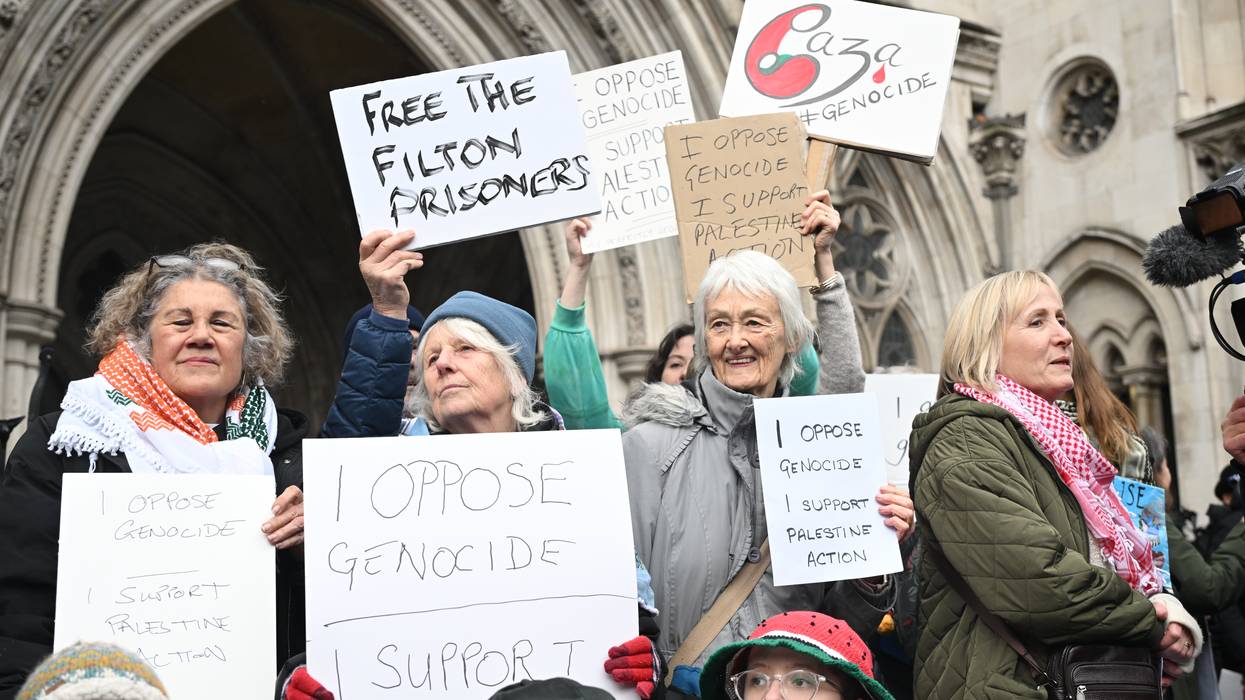
The co-founder of Palestine Action called the decision "a monumental victory both for our fundamental freedoms here in Britain and in the struggle for freedom for the Palestinian people."
The British High Court ruled Friday that the United Kingdom government's ban on the anti-genocide advocacy group Palestine Action was unlawful, a decision that campaigners cheered as a major victory while also demanding the dismissal of all charges against those arrested and imprisoned for backing the group.
The UK-based Stop the War Coalition noted that roughly 3,000 activists have been arrested on terrorism charges for "holding signs in support of Palestine Action," which has targeted the UK operations of Israeli weapons manufacturers and engaged in civil disobedience to protest Israel's genocidal assault on Gaza. More than 250 people have been charged under the Terrorism Act due to the Palestine Action ban, according to the Associated Press, and more than 20 people are still jailed while awaiting trial.
Lindsey German, convenor of the Stop the War Coalition, called the High Court's ruling "fantastic news" and "an utter humiliation for Yvette Cooper, Shabana Mahmood, and the rest in this most authoritarian government in living memory," referring to the UK's foreign secretary and home secretary.
German said UK authorities must now "drop all the charges against those wrongly arrested and imprisoned without trial for peacefully protesting a genocide."
Fantastic news! Utter humiliation for Yvette Cooper, Shabana Mahmood and the rest in this most authoritarian govt in memory
We call on Mark Rowley and Cooper to resign
Now drop all the charges against those wrongly arrested and imprisoned for peacefully protesting genocide! https://t.co/RRqhw2s5AW
— Stop the War Coalition (@STWuk) February 13, 2026
Huda Ammori, the co-founder of Palestine Action who brought the case against the government, said the ruling represents "a monumental victory both for our fundamental freedoms here in Britain and in the struggle for freedom for the Palestinian people, striking down a decision that will forever be remembered as one of the most extreme attacks on free speech in recent British history.”
The Labour government's designation of Palestine Action as a terrorist group and ban on the organization, which took effect last summer, will remain in place pending appeal of the High Court's Friday decision. Home Secretary Shabana Mahmood said she was "disappointed" by the ruling and intends to "fight this judgment," which characterized the ban as "disproportionate" and unjustified. Under the ban, membership in or support for Palestine Action was made punishable by up to 14 years in prison.
"Thousands of people of conscience saw that branding protest as terrorism was a move straight out of the dictator’s playbook," said a spokesperson for the advocacy group Defend Our Juries in response to the decision. "Together we took action at great personal risk—inspired by each other’s courage. We helped make this proscription unenforceable by saying, 'We do not comply.'"
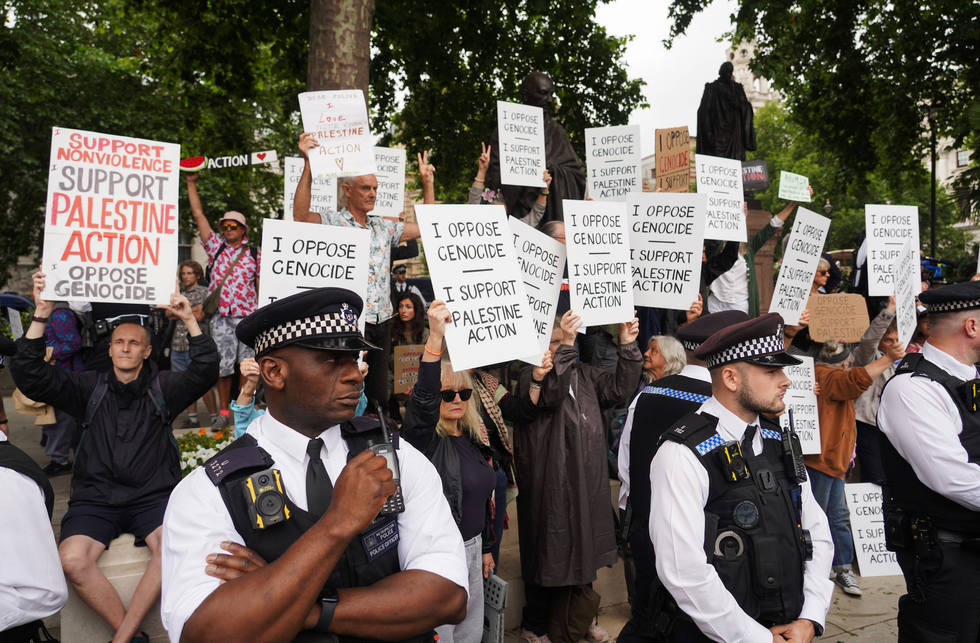 Members of the group Defend Our Juries publicly declare their opposition to Israel's genocidal assault on Gaza and their support for the proscribed group Palestine Action while Metropolitan Police officers look on during a protest on July 4, 2025. (Photo by Kristian Buus/In Pictures via Getty Images)
Tom Southerden, Amnesty International UK’s law and human rights director, praised the High Court's ruling as "a vital affirmation of the right to protest at a time when it has been under sustained and deliberate attack."
"The High Court’s decision sends a clear message: The government cannot simply reach for sweeping counter‑terrorism powers to silence critics or suppress dissent," said Southerden. "We welcome this judgment as an essential check on overreach and a powerful reminder that fundamental freedoms still carry weight in UK law."
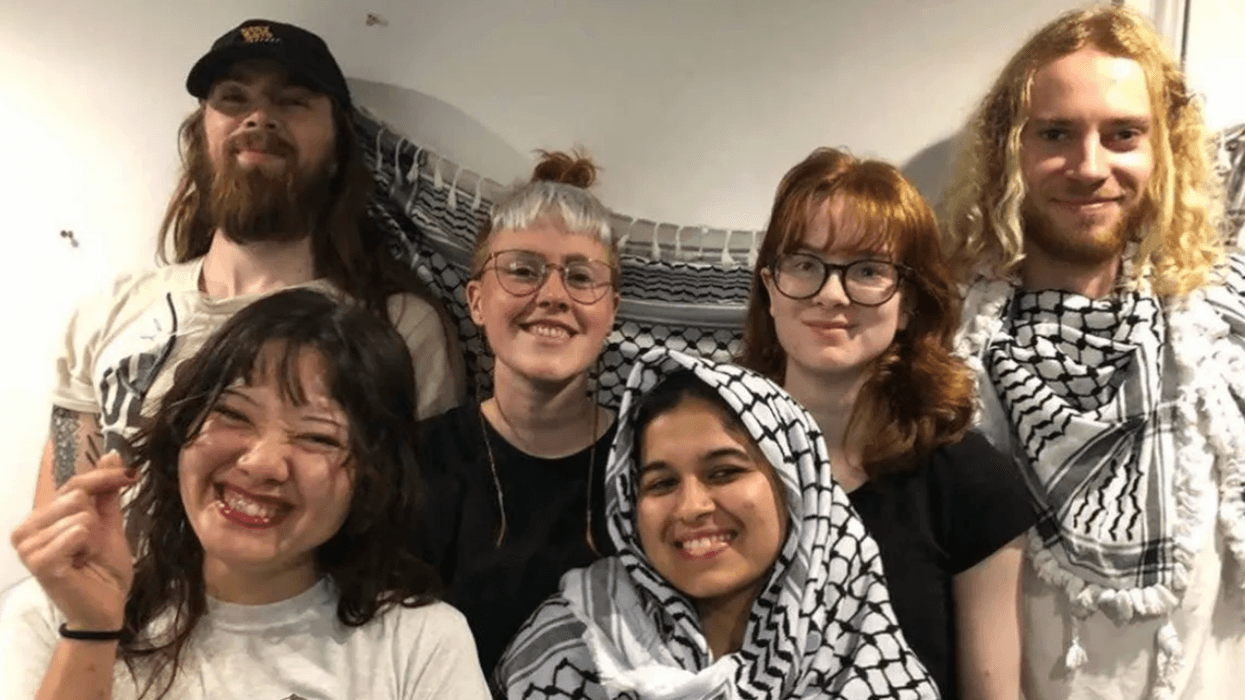
“These verdicts are a huge blow to government ministers who have tried to portray Palestine Action as a violent group to justify banning it under badly drafted terrorism legislation," said one campaigner.
In what one campaigner called a "huge blow" to the UK government's efforts to crush Palestine Action, a London jury on Wednesday cleared six members of the direct action group of aggravated burglary—even after they admitted to breaking into and vandalizing an Israel-linked weapons facility.
Zoe Rogers, Fatema Zainab Rajwani, Charlotte Head, Samuel Corner, Leona Kamio, and Jordan Devlin—six of the so-called "Filton 24"—were found not guilty of aggravated burglary and criminal damage by a jury at Woolwich Crown Court after eight days of deliberation. Devlin, Rajwani, and Rogers were found not guilty of violent disorder, although verdicts were not reached for the three others on the charge.
Prosecutors alleged that the six activists drove a van like a "battering ram" to smash their way into the Elbit Systems UK research, development, and manufacturing facility in Bristol early on August 6, 2024 in a "meticulously organized" attack targeting the subsidiary of the Israeli arms firm Elbit Systems.
❗️BREAKING -- Palestine Action protesters found not guilty of burglary at Elbit weapons factory in Bristol.The six activists were also not convicted of other charges, having spent 18 months in jail awaiting trial.realmedia.press/filton-verdi...
[image or embed]
— Declassified UK (@declassifieduk.org) February 4, 2026 at 5:02 AM
The defendants—who had been imprisoned on remand for 17 months—were also accused of using fire extinguishers to spray red paint throughout the facility and of using crowbars and hammers to break computers and other equipment.
The activists admitted to breaking into the facility, only disputing that the sledgehammers were offensive weapons and arguing that they were only meant to damage property.
After the verdicts were announced, the courtroom erupted in cheers and the six cleared activists hugged in the dock.
“These verdicts are a huge blow to government ministers who have tried to portray Palestine Action as a violent group to justify banning it under badly drafted terrorism legislation," said a spokesperson for the group Defend Our Juries, which has organized numerous protests in support of Palestine Action.
“Despite government efforts to prejudice this trial, citing the allegations of violence to justify treating Palestine Action as ‘terrorists’, as if they were already proved, the jury which heard the evidence has refused to find the defendants guilty of anything, not even criminal damage," the spokesperson added. "It shows how out of step this government is with public opinion, which is revulsed by the government and Elbit’s complicity in genocide.”
The jury failed to reach a verdict on an additional charge against Corner, who allegedly caused grievous bodily harm by hitting Police Sgt. Kate Evans in the back with a sledgehammer as she laid on the floor, fracturing her spine.
Journalist Adam Ramsay pointed out that Corner's altercation with Evans "was widely used to justify the proscription of Palestine Action."
"The fact that the jury, who heard the full story, didn’t convict him of a crime leaves the case for proscription in tatters," Ramsay added.
Corner—and possibly other defendants—could face new trials on certain charges if the Crown Prosecution Service determines that there is a realistic chance of conviction and if further action serves the public interest.
Eighteen other alleged Palestine Action members are currently awaiting trials scheduled for later this year.
Numerous observers said the verdicts obliterate the government's rationale for banning Palestine Action under the highly contentious Terrorism Act of 2000.
"I'm not sure people appreciate quite what a blow to [UK Prime Minister Keir] Starmer's government the acquittal of the Palestine Action protestors is," East Anglia Law School professor Paul Bernal said on Bluesky. "It both blows apart the whole proscription idea and demonstrates how out of touch they are."
"This was a jury," Bernal added. "Juries represent the public."
Journalist Jonathan Cook noted that "the UK government pinned its case for declaring Palestine Action a terrorist organization largely on the trial of the so-called Filton Six, claiming they had proved the group to be violent. A jury today found none of them guilty of any of the charges."
A declassified UK intelligence report published last September by the New York Times acknowledged that “the majority” of Palestine Action’s activities “would not be classified as terrorism” under the country's highly contentious Terrorism Act of 2000.
In addition to the Filton break-in, Palestine Action's direct action protests have also including spray-painting warplanes at a British military base and defacing US President Donald Trump’s Turnberry golf resort in Scotland—acts experts say do not constitute terrorism.
Britain's Terrorism Act has long been condemned by civil liberties defenders, who decry the law’s “vague and overbroad” definition of terrorism, chilling effect on free speech and expression, invasive stop-and-search powers, pre-charge detention and control orders, sweeping surveillance and data collection, and other provisions.
According to rights groups, more than 2,700 people have been arrested during demonstrations of support for Palestine Action since the group’s proscription. Many of those arrested did nothing more than hold up signs reading: “I Oppose Genocide. I Support Palestine Action.”
Arrestees include many elders, including 83-year-old Rev. Sue Parfitt, who argued that “we cannot be bystanders” in the face of Israel’s US and UK-backed genocide in Gaza, which has left more than 250,000 Palestinians dead, maimed, or missing; nearly 2 million people forcibly displaced; and hundreds of thousands starved by design.
The Filton trial tells us two things: 1. The justice system cannot defeat us. If we trust in the inherent goodness of people, of empathy, of those of us willing to fight against oppression and genocide, we can and will be free.2. Direct action gets the fucking goods.
— BASH BACK (@bashback.bsky.social) February 4, 2026 at 8:28 AM
Last September, a panel of United Nations experts concluded that Israel is committing genocide in Gaza. The International Court of Justice (ICJ) in The Hague is currently reviewing a genocide case filed against Israel by South Africa.
The International Criminal Court (ICC), also located in the Dutch city, issued warrants in November 2024 for the arrest of Israeli Prime Minister Benjamin Netanyahu and former Defense Minister Yoav Gallant for alleged crimes against humanity and war crimes committed during the 27-month assault and siege on Gaza.
Numerous Palestine Action members and supporters have gone on a monthslong life-threatening hunger strike to protest the defendants' imprisonment on remand and to demand a fair trial, lifting of the ban on Palestine Action, and closure of Elbit Systems’ UK facilities.
Late last month, Muhammad Umer Khalid, the last of the Palestine Action hunger strikers, began eating again after he was hospitalized with multiple organ failure.
Naila Ahmed, head of campaigns at CAGE International, said in a statement Wednesday that the Filton verdicts are "a powerful affirmation of jury independence and moral courage in the face of extraordinary political pressure."
"Though they cannot get back the 17 months of their life taken from them unlawfully, they should all be compensated and the remaining 18 defendants of the Filton 24 should also be released on bail," she added. "This case was used to justify the ban against Palestine Action, a decision that should now be overturned."
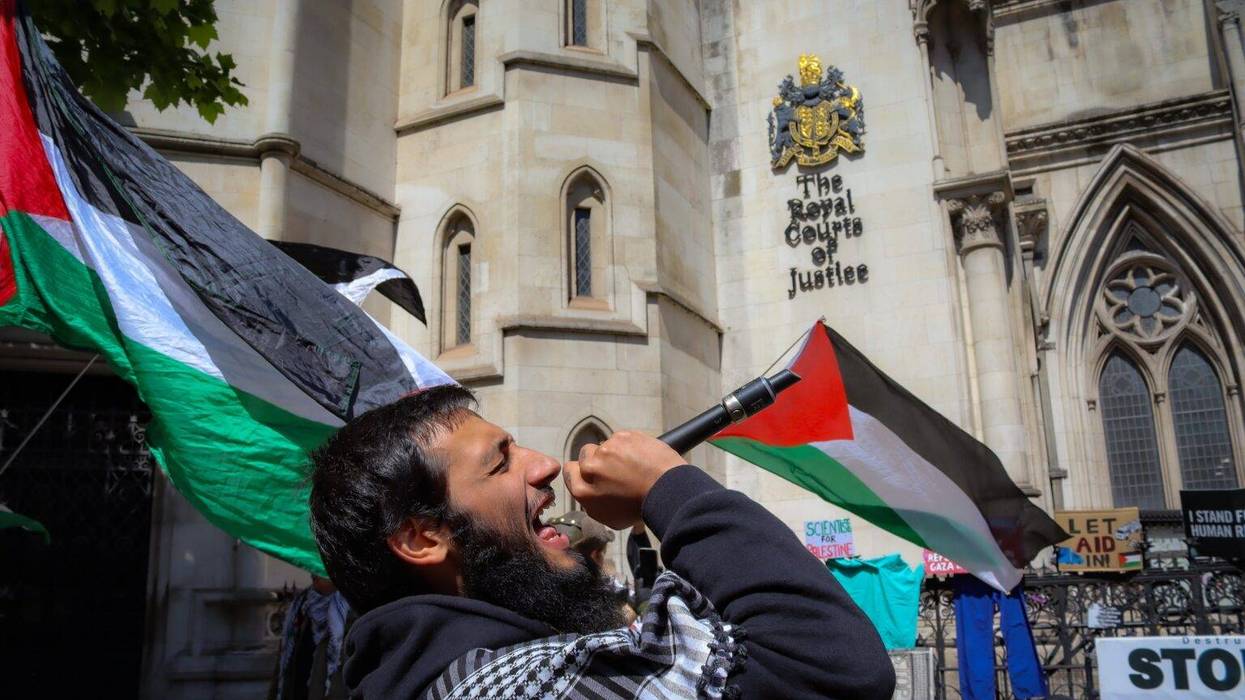
"If David Lammy wishes to see me dead, if Keir Starmer wishes to see me dead, they can come and do it themselves," said 22-year-old activist Umer Khalid.
After 17 days without food and three without water, the 22-year-old British pro-Palestine activist Umer Khalid ended his hunger strike after being hospitalized on Monday.
Khalid is the last of the eight young activists with the group Palestine Action to remain on hunger strike to protest their imprisonment without trial and the criminalization of pro-Palestine speech in the UK.
“At the hospital… I was given a choice between treatment and likely death within the next 24 hours due to kidney failure, acute liver failure, and potential cardiac arrest,” said Khalid, in a statement shared by the Prisoners for Palestine group, which is supporting the strikers. He said that he decided to end his hunger strike because, “I am too strong, too loud, too powerful… and there is so much we can do to effect change.”
The activists are being held in prison on remand, meaning they were denied bail and have not yet been given a trial for vandalizing military equipment used to support Israel's genocidal war in Gaza.
Earlier this month, several of the strikers, some of whom had refused food since November, ended their strike after the UK rejected a $2.7 billion contract for a subsidiary of Israel’s largest weapons maker, Elbit Systems.
Four of them were arrested after allegedly breaking into an Elbit facility and destroying equipment. Khalid is among four others accused of trespassing at a British Royal Air Force base and vandalizing airplanes.
Khalid, who suffers from Limb-Girdle Muscular Dystrophy and suffered multiple organ failure during the strike, ended his protest after Amy Frost, the governor of the Wormwood Scrubs prison where he is being held, agreed to meet with him to discuss the conditions of his confinement. After the meeting, he received mail and clothes that the prison had withheld from him, and restrictions on outside visitors that had been in place since July were lifted.
A spokesperson for Prisoners for Palestine said Khalid "absolutely must have compassionate bail in order to heal, all the hunger strikers should."
In addition to protesting the restrictive conditions of their confinement, the strikers were seeking to draw attention to the criminalization of Palestine Action. The UK government, currently led by Labour Party Prime Minister Keir Starmer, added the group to a list of banned "terrorist" organizations in July, meaning that even peaceful support for the group or identification as a member can result in imprisonment.
Since the ban went into effect, more than 2,700 people have been arrested across the UK over support for or involvement with Palestine Action, in many cases for actions like holding a sign or chanting a slogan in support of the group.
The British government has been repeatedly pressed to intervene on behalf of the strikers, who have alleged mistreatment and neglect while in confinement.
Khalid previously went on a 12-day hunger strike, which the Canary reported "made Khalid seriously unwell and unable to walk." According to the outlet, "the prison mismanaged his refeeding by giving him protein shakes and biscuits, dangerously unsuitable."
Other strikers have said recovery from weeks or months without food has been exceedingly difficult. Shahmina Alam, a healthcare worker and the sister of Kamran Ahmed, who refused food for 67 days, said the strike showed that "the prison healthcare system is not fit for purpose" and that "there are systemic failures to provide care which is dignified, timely, or even lifesaving."
"These prisoners are not treated as patients or even humans," she continued. "They are dehumanised, handcuffed in their sleep and in the shower, and are given no privacy, confidentiality, or respect."
Despite calls from medical experts and members of Parliament, David Lammy, the secretary of state for justice, has refused calls to meet with the strikers to discuss their demands, which have included immediate bail, an end to the censorship of their communications, and an end to the ban on Palestine Action.
Khalid said he made his decision to end the strike in part because members of the government "have shown without a doubt that they have no concern for our lives and they do not care if we die in these cells."
He said, "If David Lammy wishes to see me dead, if Keir Starmer wishes to see me dead, they can come and do it themselves."
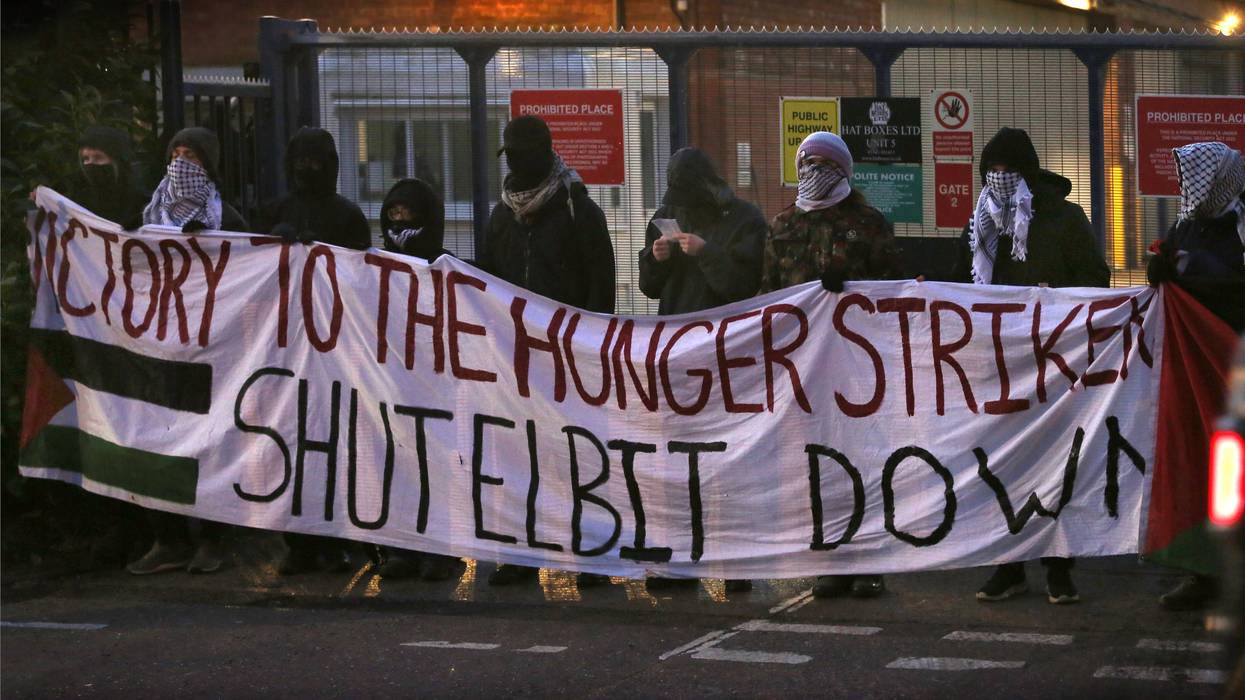
One campaigner said the hunger strike "will be remembered as a landmark moment of pure defiance; an embarrassment for the British state."
Three British activists jailed for alleged involvement with the banned anti-genocide group Palestine Action ended their monthslong hunger strike late Wednesday after the UK government rejected a $2.7 billion contract for a subsidiary of Israel's largest weapons maker, Elbit Systems.
Prisoners for Palestine (P4P), which represents the hunger strikers, said that Hamran Ahmed, Heba Muraisi, and Lewie Chiaramello would accept food again. Muraisi hadn't eaten in 73 days, while Ahmed refused food for 66 days and Chiaramello, who has Type 1 diabetes, fasted every other day for 44 days.
"It is definitely a time for celebration," Chiaramello said Thursday. "A time to rejoice and to embrace our joy as revolution and as liberation."
P4P spokesperson Francesca Nadin told the New Arab that the hunger strike "will be remembered as a landmark moment of pure defiance; an embarrassment for the British state."
"Banning a group and imprisoning our comrades has backfired on the British state, direct action is alive, and the people will drive Elbit out of Britain for good," P4P added. "This is just the beginning. Even though the people who have just finished their hunger strike will have some time to recover, they’re also really motivated and want to continue doing as many things as possible."
P4P said other hunger-striking members of the "Filton 24"—Teuta Hoxha, Jon Cink, Qesser Zuhrah, and Amu Gib—were also accepting food following the UK government's announcement that it would not award a military training contract to Elbit Systems' British subsidiary.
The end of the strike came as Ahmed, Muraisi, and Chiaramello suffered deteriorating health, with Muraisi telling a friend earlier this week that she was "dying."
Two dozen alleged Palestine Action activists are accused of breaking into Elbit Systems' research and development facility in Filton in 2024. Alleged members of the group also staged direct action protests targeting other UK weapons factories that export arms to Israel as it wages a genocidal war in Gaza.
P4P hailed the contract cancellation as "a resounding victory for the hunger strikers, who resisted with their incarcerated bodies to shed light on the role of Elbit Systems, Israel's largest weapons manufacturer, in the colonization and occupation of Palestine."
British lawmakers voted last year to ban Palestine Action as a terrorist group after some of its members allegedly vandalized aircraft at a Royal Air Force base in Oxfordshire. Members of the group also allegedly vandalized US President Donald Trump’s golf course in Turnberry, Scotland. Because of the vote, the nonviolent group is on the same legal footing in Britain as Al-Qaeda and Islamic State. Joining or supporting Palestine Action is punishable by up to 14 years behind bars.
Since Palestine Action was banned, more than 2,000 people have been arrested for supporting the group, often while simply holding signs.