

SUBSCRIBE TO OUR FREE NEWSLETTER
Daily news & progressive opinion—funded by the people, not the corporations—delivered straight to your inbox.
5
#000000
#FFFFFF
To donate by check, phone, or other method, see our More Ways to Give page.
Daily news & progressive opinion—funded by the people, not the corporations—delivered straight to your inbox.

As Americans learn more about President Trump's Muslim ban, they increasingly reject it, multiple polls show. Amnesty International USA said today that Congress should listen to growing public opposition to the Muslim ban and pass legislation to block it.
Four national, scientific polls - from Gallup, Reuters, CNN, and CBS News - show that solid majorities of the public oppose the ban and reject blocking people from coming into the U.S. because they are Muslim. Just over a week ago, President Trump issued an order banning most people from seven Muslim-majority nations from entering the U.S., and in public statements the same day, he said the U.S. should give preferential treatment to Christians trying to enter the U.S.
"The more people learn about Trump's Muslim ban, the more they oppose it. From polls to protests, the message to Congress is clear: Step in and block this Muslim ban now," said Margaret Huang, Executive Director of Amnesty International USA. "In a matter of days, the Muslim ban has torn thousands of families apart, created chaos in the country's airports, and stirred fear for Muslims living in the U.S. This ban is dangerous and discriminatory, and Congress has to put a permanent stop to it."
Gallup's poll found that 55% disapprove of Trump's order blocking most people from seven Muslim-majority countries from entering the U.S. (42% approve).
Some initial polling showed public support for the Muslim ban, which has shifted as the public learns more about how it is impacting people in the U.S. and around the world. "As this ban has been exposed for what it is - irrational and inhumane - the public has rejected it and wants Congress to do the same," Huang said.
The Muslim ban has sparked widespread protests around the country, with growing calls for Congress to step in and block President Trump's order. Amnesty International members held protests around the country this weekend - in Washington, DC, New York City, Oakland, Chicago, Boston, Los Angeles, Phoenix, Tallahassee, and other cities, as well as other countries.
States are increasingly taking action to block the Muslim ban from being enforced. Last week, officials in Virginia, New York, and Oregon took steps to try to block the ban and, over the weekend, a federal judge temporarily blocked the ban. An appeals court subsequently rejected the Trump administration's efforts to reinstate it immediately.
Amnesty International is a global movement of millions of people demanding human rights for all people - no matter who they are or where they are. We are the world's largest grassroots human rights organization.
(212) 807-8400
"As humans," explained one psychologist, "we can be both victims and perpetrators."
Two more Israeli soldiers killed themselves over the past two days, bringing renewed scrutiny to what experts say is a worsening mental health emergency inside the Israel Defense Forces during 33 months of genocidal war on Gaza and enduring stigma around seeking treatment.
According to the Israeli newspaper Haaretz, two female IDF troops—a combat soldier and an intelligence officer—died by suicide this week. Israeli Military Police said they are investigating both deaths, which bring the number of active duty IDF troops who have killed themselves this year to at least 16. Haaretz said that at least nine former IDF soldiers have also committed suicide after completing their military service in 2026.
The latest deaths underscore what military officials, mental health professionals, and veterans have increasingly described as one of the most severe psychological crises the Israeli military has faced in decades.
Earlier this year, Haaretz reported that Israeli military suicides reached 21 in 2024 and 22 in 2025—the highest annual totals in roughly 15 years. Israel's oldest daily newspaper also found that the military had reduced the number of mental health officers available to soldiers despite unprecedented demand for psychological services.
The crisis has been exacerbated by repeated troop deployments since the October 7, 2023 Hamas-led attack—itself the cause of tremendous trauma and some suicides by survivors—and Israel's subsequent assault on Gaza, which has been characterized by what prosecutors at the International Criminal Court in The Hague say are crimes against humanity and war crimes, and what a United Nations panel of experts said is a genocide.
More than 250,000 Palestinians have been killed or wounded by Israeli forces in Gaza, some of them reportedly executed at close range.
IDF troops and Israeli and international medical workers have described the deliberate and indiscriminate shooting of Palestinian civilians, including women and children, some of whom were reportedly executed. Former Palestinian prisoners and Israeli troops and doctors have also reported torture and sexual abuse of detainees, and of civilians including children and even a toddler. Such carnage and abuse has taken a toll on the perpetrators as well as their victims.
A persistent stigma surrounding mental health treatment also discourages many soldiers from seeking the care they need. Some fear being viewed as weak or worry that treatment could adversely affect their military service or relationships, despite ongoing efforts to destigmatize the issue.
A senior IDF commander told the Israeli public broadcaster Kan last year that "most of the suicides resulted from the complex reality created by the war," adding, "War has consequences."
Earlier this year, Reuters reported that the IDF had recorded a nearly 40% increase in post-traumatic stress disorder among its troops since September 2023, with 60% of the 22,300 people being treated for war wounds experiencing PTSD. The news agency cited an Israeli parliamentary committee's finding that 279 soldiers had attempted to kill themselves in the period from January 2024 to July 2025, and that IDF combat soldiers comprised 78% of all suicides in Israel in 2024.
Some observers—especially Palestine defenders—have little sympathy for IDF soldiers who kill themselves, pointing to the widespread crimes being committed in Gaza and throughout illegally occupied Palestine, including apartheid, settler colonization, and ethnic cleansing.
Others, recognizing their humanity and the moral injury that experts say afflicts many participants in war, mourn these deaths while maintaining that compassion for soldiers must never eclipse accountability for crimes against Palestinians.
After Eliran Mizrahi, a 40-year-old Israeli father of four, killed himself in 2024, his sister told CNN, “He always said no one will understand what [he] saw."
Mizrahi's mother said that "he saw a lot of people die. Maybe he even killed someone. [But] we don’t teach our children to do things like this… so, when he did this, something like this, maybe it was a shock for him.”
US psychologist Rachel Kabasakalian-McKay coined the term “complex implication” to define how “history often implicates us in networks of harm, even as we carry our own traumas."
"As humans," she explained in a 2025 interview with Psychology Today, "we can be both victims and perpetrators.”

"There's a 2-month-old baby there and four pregnant women there," said the Texas Democrat. "It's no place for a 2-month-old baby to be, or even a 1- or 5-year-old kid."
Democratic Texas Congressman Joaquin Castro appeared on MS NOW early Wednesday to discuss his recent trip to and persistent efforts to shut down what he called a "trailer prison" where US Immigration and Customs Enforcement is holding families in Dilley.
After leading a letter signed by over 100 other Democrats calling for the closure of the Dilley Immigration Processing Center, Castro on Tuesday conducted a congressional oversight visit of the facility with members of the Democratic Women's Caucus, including Reps. Yassamin Ansari (Ariz.), Lizzie Fletcher (Texas), Ayanna Pressley (Mass.), and Luz Rivas (Calif.).
During the interview on "Morning Joe," Castro said that Americans have watched in horror as ICE has killed and brutalized US citizens and immigrants in the streets, "but there's a brutality behind the prison walls of these detention centers that almost no one gets to see except for members of Congress who have an opportunity to go inspect them."
While touring the Dilley center seven times recently, "I've seen a lot of desperate children. I've seen traumatized children. There is a system there that is abusive of people," Castro said, citing complaints of worms in food, yellow drinking water, and inadequate medical care.
"When I asked, they said the youngest person there is 2 months old—so there's a 2-month-old baby there and four pregnant women there right now. And, you know, I can tell you that it's no place for a 2-month-old baby to be, or even a 1- or 5-year-old kid," he said.
Noting that the Texas facility is run by a private prison company—CoreCivic—and condemning the "commodification of child imprisonment," Castro declared that "we want the Dilley detention center shut down."
His comments on MS NOW mirrored those he and other lawmakers delivered outside the facility, also known as the South Texas Family Residential Center, and during a press conference with the organizations FWD.us and Families Belong Together.
The center is currently detaining 539 individuals, from 84 families, according to Pressley. She said that "these are law-abiding people that are our neighbors—people we love, people we live next to, we work and worship with, who were just going about their lives and met with such an aggressive disruption that they will be recovering from for the rest of their lives."
"Dilley must be shut down. We have to abolish ICE. And then I'm gonna take it one step further and say any of those agents that have contributed to and caused the injury, the harm, and even fatalities, they must also be held accountable, and we should abolish qualified immunity for these federal law enforcement officers," she argued.
FWD.us president Todd Schulte also called for "shutting down Dilley and releasing these children and families immediately."
"Dilley reflects a broader pattern that should not be expanded with additional, unprecedented taxpayer funding," he stressed, denouncing the hundreds of thousands of dollars that the Republican-controlled Congress has poured into President Donald Trump's mass detention and deportation campaign, led by ICE and US Customs and Border Protection.
"This will only cause irreparable harm to children and communities," Schulte warned. "Thank you to the members who continue to call for the release of families, and we join them in their calls for Dilley's closure."
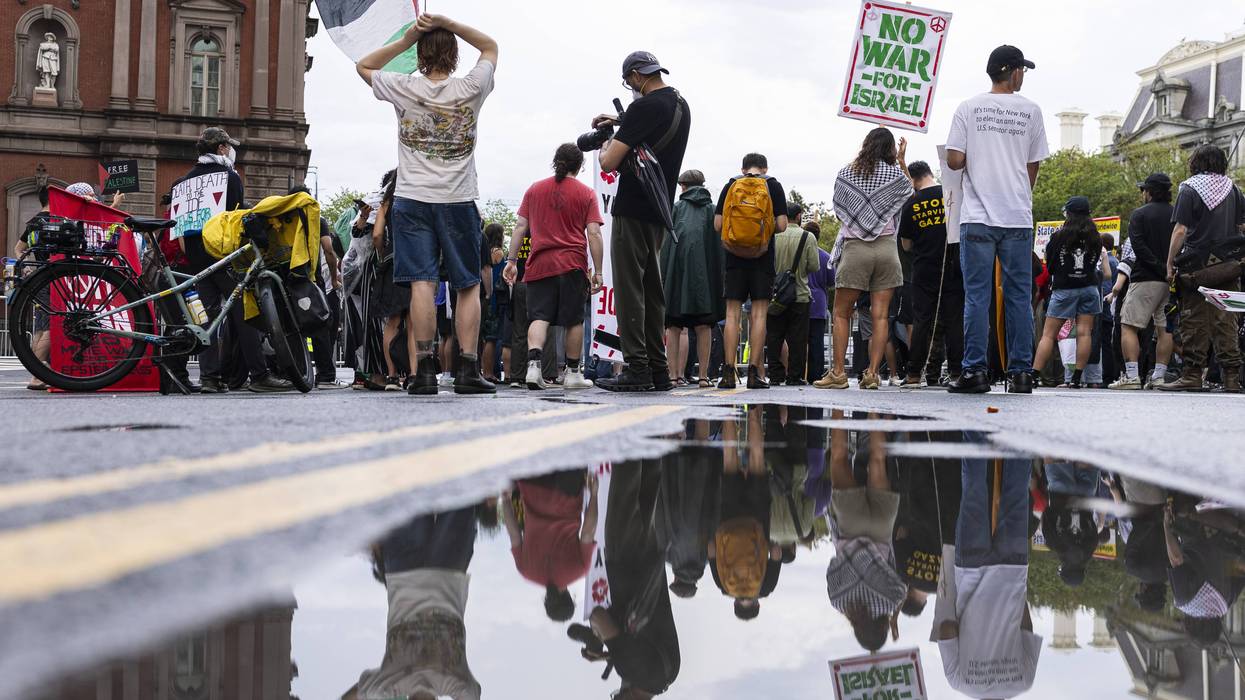
Israel’s prime minister has been met with relentless chants and jeers of “war criminal” and “genocide” around the US capital.
As Israeli Prime Minister Benjamin Netanyahu has traversed Washington, DC this week amid talks with US President Donald Trump, scores of angry protesters have rarely been far behind.
Across the nation's capital, relentless chants and jeers have followed Israel's leader, who has been accused of war crimes by the International Criminal Court (ICC) and whom numerous human rights organizations say has committed genocide in Gaza.
American support for Israel has only continued to curdle as Trump has plunged deeper into a war with Iran that Netanyahu has goaded him to escalate; Israeli settlers have rampaged across the West Bank committing what have been described as "pogroms" against Palestinians; and the Israel Defense Forces have flattened entire neighborhoods in Lebanon, displacing over a million people.
Polls from YouGov earlier this week found that Americans believe Israel is committing genocide by a 19-point margin. By a margin of 22 points, they said they wanted to see American authorities arrest Netanyahu in accordance with the ICC warrant.
As Netanyahu's motorcade arrived near the White House on Monday, protesters were there to let him know, waving Palestinian flags and pepper him with expletives.
"That's our tax dollars going right there, to protect a fucking war criminal!" shouted one man as a squadron of black SUVs escorted Netanyahu, one video from Al Jazeera shows.
Outside his government-provided residence, Blair House, more protesters gathered, pounding drums, blowing whistles, and holding signs calling to "expose Israel's control of Washington" and "stop the US/Israel war machine."
One keffiyeh-clad protester, identified as Joey, said he was taking part because "the only place [Netanyahu] belongs is locked up at the ICC." He said he did not want his tax dollars being used by the US government "to defend someone like that."
The Trump administration has not only refused to enforce the warrant, but aggressively sanctioned the ICC and those who cooperate with it as part of what Secretary of State Marco Rubio described as an effort to "dismantle" the court.
While he appears immune from legal justice on US soil, protesters have taken it upon themselves to remind him that he's still on trial in the court of public opinion.
As the prime minister joined members of Congress for a dinner at the Four Seasons hotel honoring the late war hawk Sen. Lindsey Graham (R-SC) on Monday night, more protesters stormed the hotel lobby.
"Bibi, Bibi, you can’t hide! You’re committing genocide!" they chanted before they were escorted out by armed security.
The protests continued the next day as Netanyahu met with Trump at the White House, where they reportedly discussed negotiations with Iran regarding its nuclear program and its control over the Strait of Hormuz, US attempts to increase economic pressure on Iran, and the possibility of Israel once again joining US attacks.
At the height of rush hour, a group of protesters braved the pouring rain to occupy a roadway in an attempt to block Netanyahu's motorcade.
According to Bloomberg reporter Emily Birnbaum, the "unreal scene" occurred "because the White House erected extra black fencing that prevented the protest from setting up where they usually do, in front of Lafayette Square."
Video posted by the social media account Eye on Palestine shows police forming a barricade and forcibly dispersing the protesters.
"Despite an ICC war crimes warrant," the account said, "the Trump administration and local authorities allowed his free movement, fencing off a sprawling section of the city to shield him from demonstrators' arrest demands."
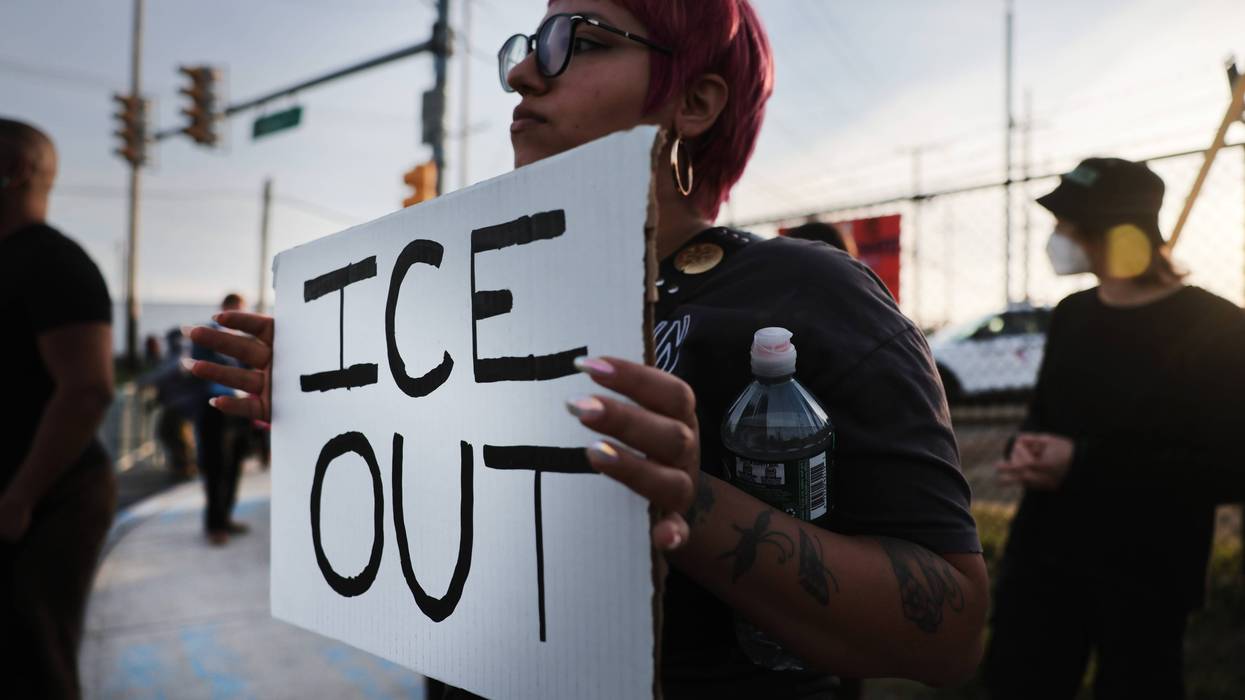
"They knew this stuff was going to happen and are sending people back anyway."
"Deportation is a life-or-death matter."
That was one immigration attorney's response to the news this week that a couple who had lived in the St. Louis suburb of Overland, Missouri was found fatally shot in a sugarcane field near Retalhuleu, Guatemala, after the husband, Nixon Giovanni Pérez Paz, was deported there last year.
The couple's 14-month-old baby, Giovanni, was found crying next to the body of Pérez Paz's wife, Glendy Marisol González de la Cruz.
Pérez Paz, 43, and González de la Cruz, 25, showed signs of physical trauma and had apparently been bound and gagged before being killed. Police in Guatemala, where officials declared a state of emergency earlier this year over gang violence, are investigating the killings. Reuters reported that murders have spiked in the Central American country over the past week, with the government blaming organized crime.
In the US, observers including US Rep. Seth Moulton (D-Mass.) directed anger at the Trump administration, which has overseen a mass deportation campaign in which roughly 28,000 people were deported to Guatemala in the first six months of 2026, while hundreds of thousands more have been sent to other countries, including ones where they may face persecution, violence, and other security concerns.
"This is not immigration enforcement," said Moulton of President Donald Trump's deportation of Pérez Paz. "This is a body count. And every member of Congress and Senate enabling MAGA’s mass deportation police state owns it too."
According to St. Louis Public Radio, Pérez Paz and his brother were stopped by US Immigration and Customs Enforcement (ICE) agents in Overland as they were driving to their roofing jobs. The two brothers were "swarmed" by agents before being handcuffed and shackled and taken to a local jail.
The agents told them they had no warrant for their arrest, but that they were being deported for entering the country without authorization.
Pérez Paz's brother, Rolando Pérez Paz, told St. Louis Public Radio from Guatemala, where he was also deported, that they did not have legal status in the US and had fled poverty and violence in their home country.
A spokesperson for ICE told the outlet that Pérez Paz had been convicted twice for drunk driving in Overland and had a 2010 open-container charge in Palm Beach, Florida, which had been dropped by prosecutors. No records were found in Missouri's court database to support the claim about the drunk driving conviction.
Court records show Pérez Paz had pleaded guilty to driving without a valid driver’s license in May 2024 and had paid a fine for the traffic violation.
"This isn’t due process," said Moulton. "This isn’t deporting the worst of the worst or whatever lies MAGA campaigned on."
González de la Cruz was pregnant when Pérez Paz was deported and remained in Overland, giving birth to Giovanni in June 2025; they also had two older daughters. She eventually returned to Guatemala to reunite the family after financial struggles and fears of deportation mounted, according to a local immigrant rights group called Missouri Workers Center Fuerza—even though she had a court date set for 2027 for her asylum case.
"Glendy came to our Fuerza meetings three weeks after giving birth. She was working two jobs, bringing new members, showing up—even as her world was being torn apart," said the group in a Facebook post inviting community members to a candlelight vigil for the couple on August 2. "The cruelty of this administration meant her husband could not be by her side for the birth."
The couple was reported missing on July 20 after leaving their home to register a motorcycle. They had faced "several months of struggles with financial hardships, run-ins with the federal government, and violence" before their deaths.
Reuters reported that a red striped motorcycle was found at the scene outside Retalhuleu. Their children are in the custody of Pérez Paz's brother.
"They knew this stuff was going to happen and are sending people back anyway," said one St. Louis resident of the Trump administration's mass deportation campaign.
The deaths were reported as the White House directed ICE to ramp up operations targeting Haitians; Temporary Protected Status expired for Haitian refugees this week following a Supreme Court ruling last month. Hundreds of people could be forced onto deportation flights to the poverty-stricken country each week, according to the director-general of Haiti’s National Office of Migration. Like Guatemala, Haiti faces a crisis of violence by armed gangs.

"What ICE is doing is illegal and disturbing."
Sen. Patty Murray on Wednesday accused federal immigration enforcement officials of attempting to coerce a longtime Seattle resident to sign a voluntary deportation form using threats of violence.
In a video posted on social media, Murray (D-Wash.) delivered an update on Eduardo Aguirre Esparza, who was detained by US Immigration and Customs Enforcement (ICE) agents last week.
The senator said that Aguirre Esparza, whom she described as "a local Seattle small business owner with no criminal history" and the husband of a US citizen, was taken to an ICE office in Tukwila, Washington, where he was held in a room for 10 hours.
ICE agents threatened to beat up a Seattle small business owner, married to a citizen, with NO criminal record unless he signed a "voluntary" departure.
I'm told there were cameras in the room.
I'm demanding any video and that Eduardo be brought home immediately. https://t.co/jMpYSh08WC pic.twitter.com/1GViRDhbmU
— Senator Patty Murray (@PattyMurray) July 29, 2026
"He was surrounded by 20 ICE agents, who were pressuring him to sign a voluntary departure," said Murray. "They physically pushed him and threatened to beat him up if he didn't sign it. This is disgusting."
Murray said that she has learned that there are security cameras in the room where Aguirre Esparza was being held, and she demanded that ICE hand over any footage in its possession.
"What ICE is doing is illegal and disturbing," Murray emphasized. "Eduardo is now being held in Texas, away from his family and his lawyers. I am demanding that [the US Department of Homeland Security] return Eduardo to Washington state now so he can get the due process everyone should expect in America."
In a separate statement, Murray said that Aguirre Esparza has "deep ties to our local community" and "was working hard to pursue a legal pathway to lawful permanent residence."
Aaron Reichlin-Melnick, senior fellow at the American Immigration Council, commented that Murray's account of Aguirre Esparza's detention "is a good reminder that some 'voluntary' departures people sign while detained by ICE are the product of coercion."
"The worst incidents I've heard of over the years involve agents grabbing a person's hands and forcing them to sign a piece of paper they can't read," Reichlin-Melnick added. "It's a 'voluntary' removal."
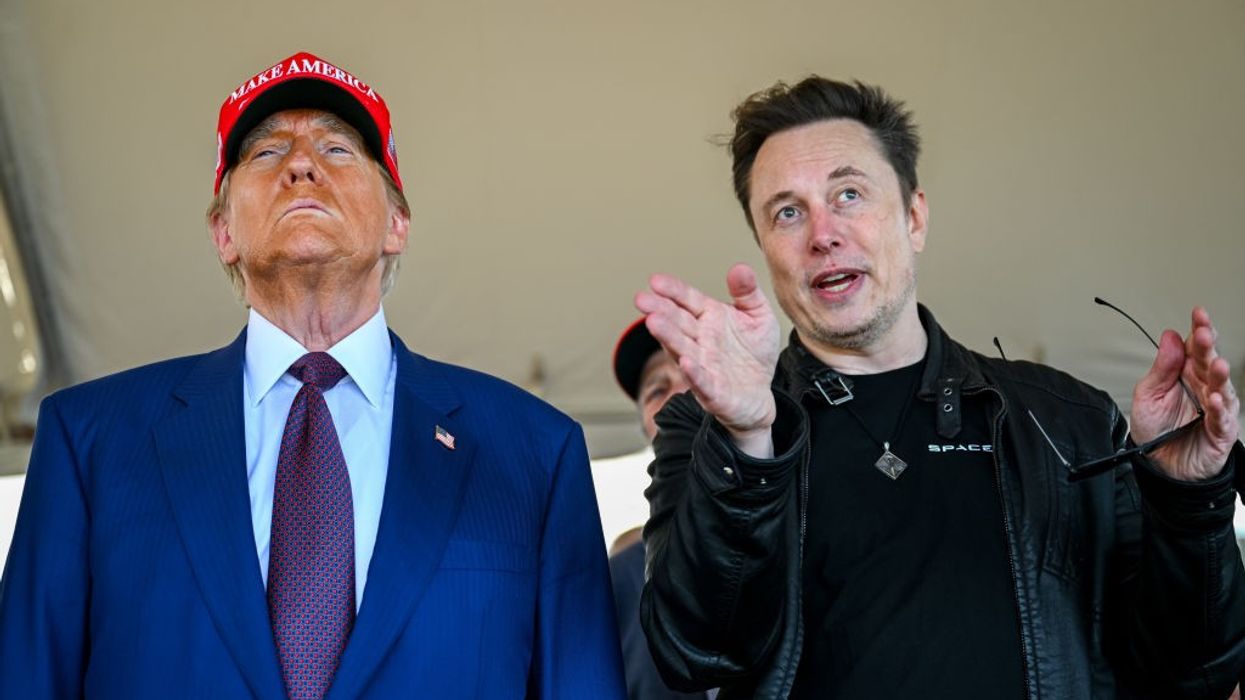
"This would put untold species directly in harm's way," the Center for Biological Diversity warned.
Under pressure from companies owned by billionaires like Elon Musk and Jeff Bezos, the Trump administration announced this week that it will waive what it called "unnecessary environmental laws and regulations" in order to expedite the approval of commercial rocket launches.
The US Department of Transportation's (USDOT) Federal Aviation Administration (FAA) is proposing to waive numerous environmental review requirements and related federal laws that currently apply to commercial space launches, citing legal authority Congress granted to the secretary of transportation.
The proposed changes—on which the public has 30 days to comment—would make it much faster and easier for space profiteers to get permission to launch rockets or operate commercial spaceports in the United States by allowing the FAA to waive part or all of over a dozen laws and rules, including National Environmental Policy Act, the Endangered Species Act, the Clean Water and Clean Air acts, the National Historic Preservation Act, and the Marine Mammal Protection Act.
“America won the first space race, and we can do it again—but only if we get government red tape out of the way,” US Transportation Secretary Sean Duffy said on Tuesday. "That’s why President [Donald] Trump has charged USDOT with unlocking the final frontier and reestablishing the United States’ dominance in space."
Trump’s FAA announced today that it intends to exempt #space launches and spacecraft reentries from complying with environmental laws like the #EndangeredSpeciesAct. This will put untold species directly in harm’s way.You can be sure we’ll fight this obscene giveaway to special interests 🚀🚀
— Center for Biological Diversity (@biologicaldiversity.org) July 28, 2026 at 4:08 PM
The USDOT said that other federal agencies, such as the National Aeronautics and Space Administration (NASA) or the US military, may still be required to conduct environmental reviews under the law for launches on some federal property.
The proposal follows Trump's August 2025 executive order, "Enabling Competition in the Commercial Space Industry," which critics charge was issued to benefit Musk, the world's richest person, and his company SpaceX, which is seeking to dramatically increase launches and landings and has suffered a series of rocket explosions. Trump has boosted other companies—including X and Tesla—led by Musk, who served for a period last year as de facto head of the president's so-called Department of Government Efficiency, or DOGE.
Opponents warn that, if approved, the proposed changes mean that the FAA would generally no longer require environmental studies or consultations before issuing commercial space licenses.
“NASA has conducted space launches for decades in a responsible way, but now Trump wants to gut even the most basic environmental safeguards to enrich some of the world’s wealthiest people,” said Brett Hartl, government affairs director at the Center for Biological Diversity (CBD). “We’ve seen real environmental damage from the exploding rocket toys of the superrich. You can be damn sure we’ll fight this obscene giveaway to special interests.”
In 2024, SpaceX was punished with a paltry $150,000 in fines for violating the Clean Water Act after it discharged tens of thousands of gallons of industrial waste from a launch pad in Boca Chica, Texas.
CBD and other green and Indigenous groups last month sued the US Fish and Wildlife Service in a bid to stop the Trump administration from handing over 715 acres of the Lower Rio Grande Valley National Wildlife Refuge in South Texas to SpaceX in exchange for 683 acres elsewhere.
On Wednesday, CNBC revealed that six US lawmakers from both major parties—including five who sit on committees that regulate SpaceX—had or have family investments in the company, raising concerns over apparent conflicts of interest.
In addition to environmental concerns, Trump has also come under fire for militarizing space in contravention of the Outer Space Treaty—which the US has ratified—by launching the Space Force as an official service branch during his first term.

Democratic Rep. Summer Lee said the new spending was yet another reason “it’s time to get money out of politics.”
As corporations spend record sums to influence this November's elections, new campaign finance data shows a powerful new interest fueling the trend: sports gambling companies.
FanDuel, DraftKings, and others in the sports betting industry have spent $72 million seeking to influence the upcoming election cycle, according to a report from Reuters on Tuesday.
The industry's historic spending blitz faces growing scrutiny from state and federal lawmakers, and seeks to protect its turf against rising competitors in the prediction market business, such as Polymarket and Kalshi, which are financially tied to the Trump administration.
Sports gambling companies have become the third-largest corporate election donor in the country during this cycle behind just the technology and cryptocurrency sectors, according to a June report by the consumer watchdog group Public Citizen. These two industries have spent over $100 million promoting their interests in the upcoming midterms.
That same report found that the 2026 election cycle has been influenced by more corporate money than any since 2010, when the Supreme Court's Citizens United decision opened the floodgates for companies to spend unlimited sums promoting their preferred candidates via super political action committees (PACs).
These groups are not legally allowed to coordinate with candidates or give them money directly, but are allowed to advocate on their behalf, sometimes spending tens of millions of dollars to run ads aimed at influencing a single race.
As of last month, the report found that corporations have spent $517 million, mainly through super PACs, to influence the 2026 election, accounting for nearly one-third of all corporate election spending since 2010.
According to Reuters, major sportsbooks have channeled their money into the super PAC Win For America, which launched last year, and distributed it to affiliated PACs: the Republican-focused American Conservative Fund and the Democrat-focused American Future.
DraftKings has given at least $34 million to Win for America, FanDuel has given at least $27 million, and Fanatics and the UK-based bet365 have given $5.5 million apiece.
Separately, DraftKings, FanDuel, Fanatics, and BetMGM created the Sports Betting Alliance in 2021 to lobby Congress and state legislatures.
Since 2018, when the Supreme Court struck down a federal law barring sports betting in most states, at least 39 states, as well as the District of Columbia, have legalized it in some form.
While crypto and tech have directed more attention to federal races, the battles over sports betting are raging mostly at the state level, and that’s where most of Win for America’s focus is going.
According to Reuters:
The money's impact is already evident in some state races.
Win for America spent more than $12 million in Georgia state races through two smaller PACs—Republican-focused American Conservative Fund and Democrat-focused American Future—as the legislature there weighs bills that would legalize gambling, state campaign finance records show.
The money went into 34 legislative races ahead of the primary. All but two of the candidates supported by the industry won, The Atlanta Journal-Constitution reported in May...
Win for America is also spending heavily on races in Pennsylvania, where there was a push to raise taxes on the online sports betting industry to boost state aid for public transportation, election records show.
Rep. Summer Lee (D-Pa.), who introduced legislation in May that would apply the same contribution limits to super PACs that already apply to direct donations, argued that the huge sums spent by the sports betting industry were yet another reason that "it's time to get money out of politics."
"Crypto. Big tech. Now big sports betting," she wrote on social media Wednesday. "Another industry pouring tens of millions into our elections to protect its profits. Democracy shouldn't be auctioned off to the highest bidder."

The organization has "provided affordable sexual and reproductive healthcare, including birth control, STI testing and treatment, cancer screenings, and wellness exams to millions of people through Title X."
Planned Parenthood Federation of America on Wednesday sued over the Trump administration's attempt to abuse a federal program "for an overtly political and ideological agenda that is at odds with Title X's statutory purpose of funding comprehensive family planning care for those who cannot afford it."
"Title X of the Public Health Service Act is the only domestic federal program devoted solely to family planning for uninsured, underinsured, and low-income people," notes the complaint, filed in federal court in Washington, DC by lawyers at PPFA, Democracy Forward, and Wilmer Cutler Pickering Hale and Dorr.
After the US Department of Health and Human Services' Office of Population Affairs in April announced changes to how it chooses Title X grantees for the 2027-32 cycle, the National Family Planning and Reproductive Health Association and the Family Health Council of Central Pennsylvania sued last month, backed by the ACLU.
The office then updated the policy earlier this month. However, as Wednesday's complaint explains, the updated version still says that "in evaluating and awarding Title X grants," the office "will consider the extent to which applicants 'advance' and 'align with' a series of political priorities."
PPFA's attorneys argued that the administration's approach is unlawful and puts the group's members "at a competitive disadvantage," which could ultimately impact people seeking care, from contraception to testing for sexually transmitted infections (STIs).
Democracy Forward president and CEO Skye Perryman—whose organization has repeatedly sued over Trump policies—said in a statement that "people should be able to receive the healthcare that is right for them, their lives, and their values, and that requires support for providing critically needed family planning services for people who cannot afford it."
Accusing the administration of "once again putting politics over people," she said that "the unlawful, ideologically driven changes to Title X threaten devastating consequences for lower income Americans nationwide who rely on the program for essential healthcare, including birth control, cancer screenings, and STI testing."
"Title X was created so a person's income would never determine whether they could access the medically appropriate family planning care that is right for them," Perryman emphasized. "We will aggressively pursue legal action on behalf of our clients until the administration stops undermining that promise and follows the law."
Highlighting the potential impact of the administration's policy for people throughout the United States, PPFA pointed out that from October 2024 through September 2025, its health centers provided over 1.3 million Title X visits across 33 states.
"Planned Parenthood health centers have provided affordable sexual and reproductive healthcare, including birth control, STI testing and treatment, cancer screenings, and wellness exams to millions of people through Title X," said PPFA president and CEO Alexis McGill Johnson. "We are suing the Trump administration because, yet again, it is trying to make it harder for people to get the vital care they need at Planned Parenthood."
The new lawsuit comes after Planned Parenthood and other reproductive health clinics regained access to Medicaid funding earlier this month, following the expiration of a provision in the One Big Beautiful Bill Act, which President Donald Trump signed last July.
The passage of that provision was a victory for forced pregnancy advocates, who have long targeted Planned Parenthood for providing abortion care. An analysis from the organization found that the "defunding" effort led to the closure of nearly 30 health centers, all of which were located in "contraceptive deserts" and two-thirds of which were in areas defined as rural, medically underserved, or experiencing health professional shortages.
The group also called the Medicaid provision a "backdoor abortion ban," noting that 64% of Planned Parenthood health center closures were in states where such care is legal, and the shuttered facilities had previously served over 10,000 abortion patients annually.
"By deliberately targeting Planned Parenthood, President Trump and his allies in Congress worsened a public health crisis, making it harder for people to get the essential and lifesaving care they needed at their trusted provider," McGill Johnson said in early July.
"Still, anti-abortion lawmakers are trying to make 'defund' permanent because Planned Parenthood health centers provide abortion care where it's legal," she stressed. "They are willing to sacrifice the lives and health of people across the country if it gets them closer to their goal of banning abortion everywhere and shutting down Planned Parenthood."
"We're in a fight for survival—not just for Planned Parenthood health centers, but for everyone to get high-quality, affordable healthcare from their trusted provider," she added. "And know this: Planned Parenthood will never stop fighting to ensure everyone can get the care they need."
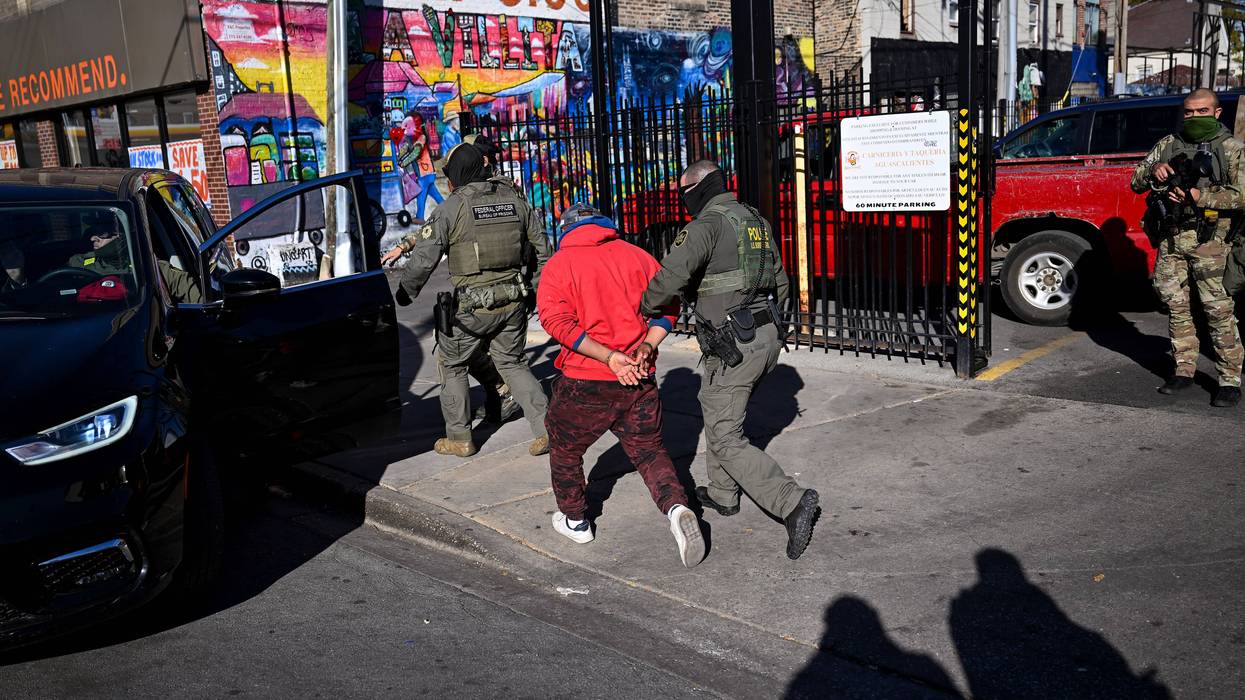
"Not only are these arrests often cruel and unnecessary," said one economist, "but they’re also hurting the very Americans President Trump promised to help.”
President Donald Trump has spent years insisting that immigrant communities are "taking our jobs" and that expelling migrants via the mass deportation campaign he's imposed on cities and towns across the country would swiftly result in an employment boom—but a new study reveals how aggressive raids by federal agents are resulting in a decline in employment for US-born citizens as well as their immigrant neighbors and coworkers.
A study authored by Elizabeth Cox and Chloe East and published by the National Bureau of Economic Research found that while Trump's sweeping raids and arrests of hundreds of thousands of people have pushed those who have been deported out of their jobs, and "immigrants who remain in the US are working less due to chilling effects," those changes have done nothing to stimulate job growth among US citizens.
"We show no evidence of positive effects of the labor market outcomes of US-born workers," wrote the authors. "Instead, ICE activity lowers the employment rate of US-born male workers, likely driven by a combination of complementarities in production and reductions in economic activity both reducing labor demand for US-born workers."
In other words, said the Immigration Research Initiative (IRI) on Monday, "arresting and deporting immigrants results in a cascade of job loss," affecting longtime employees who have work authorization but may stay home or leave the US out of fear of being deported, and US-born workers who struggle to keep businesses afloat after people who support their essential operations are detained and deported.
The study focused on men's employment because about 90% of the people arrested by US Immigration and Customs Enforcement (ICE) and other related agencies have been male.
For every 1,000 immigrant men arrested by ICE, the researchers found a 2.5% decline in employment for immigrant men without a college degree—those most at risk of being detained.
In areas where ICE activity has been particularly aggressive, a 0.54% decline in employment among US-born men in the area was found for every 1,000 ICE arrests.
"On US-born males’ employment rate, we find a negative and significant effect," reads the study. "There is no evidence that employers increase wages to attract US-born workers."
In response to the study, IRI created a model showing how employment would be affected in each state, should 1% of the most at-risk immigrant men be detained by ICE.
The group projected that such a dramatic statewide surge in enforcement in California, for example, would result in the direct expulsion of 15,600 immigrant men from their jobs. Another 615,000 immigrants would lose employment due to the chilling effect of the surge, and an estimated 466,000 US-born Californian men would also ultimately lose their jobs.
"Jobs where undocumented immigrants play a particularly big role are often complementary to jobs with higher numbers of US-born workers," IRI explained. "For instance, in the construction industry, a high concentration of roofers and construction laborers are immigrants, and are often undocumented, while a high concentration of electricians and plumbers are US-born. Then when construction companies cannot find laborers, they build less, and hire fewer electricians."
Texas, another state with a large immigrant workforce, would see an estimated 9,700 immigrant men swept up in a statewide surge that targeted 1% of the most at-risk people. An additional 237,800 immigrant men would also lose work, as well as 266,100 US-born men.
More than 128,000 American men would also be projected to lose employment as the result of immigration enforcement in Florida, as well as 18,600 in North Carolina; 16,800 in Pennsylvania; and 11,700 in Arizona.
IRI examined three states in Northern New England—Maine, New Hampshire, and Vermont—as a whole, determining that mass arrests would take a total of 300 immigrants out of the workforce in the states, and would force job cuts for about 700 US citizens.
Mass deportation operations like Trump's shrink both the workforce and the overall economy of an area, said IRI, because the people who are directly impacted—and those who fear ICE enforcement even if the government has no legal reason to deport them—"no longer shop at businesses, eat at restaurants, and pay taxes."
"The decline in consumer spending likely explains the study’s finding that employment reductions are concentrated in 'non-tradeable' sectors, those driven by local spending (e.g. restaurants) rather than sectors oriented toward exports (e.g. manufacturing)," said IRI.
James Myall, senior economic policy analyst at Maine Center for Economic Policy, said in a statement Tuesday that the research "just proves how self-defeating the Trump administration’s immigration policies really are."
"Not only are these arrests often cruel and unnecessary," said Myall, "but they’re also hurting the very Americans President Trump promised to help.”
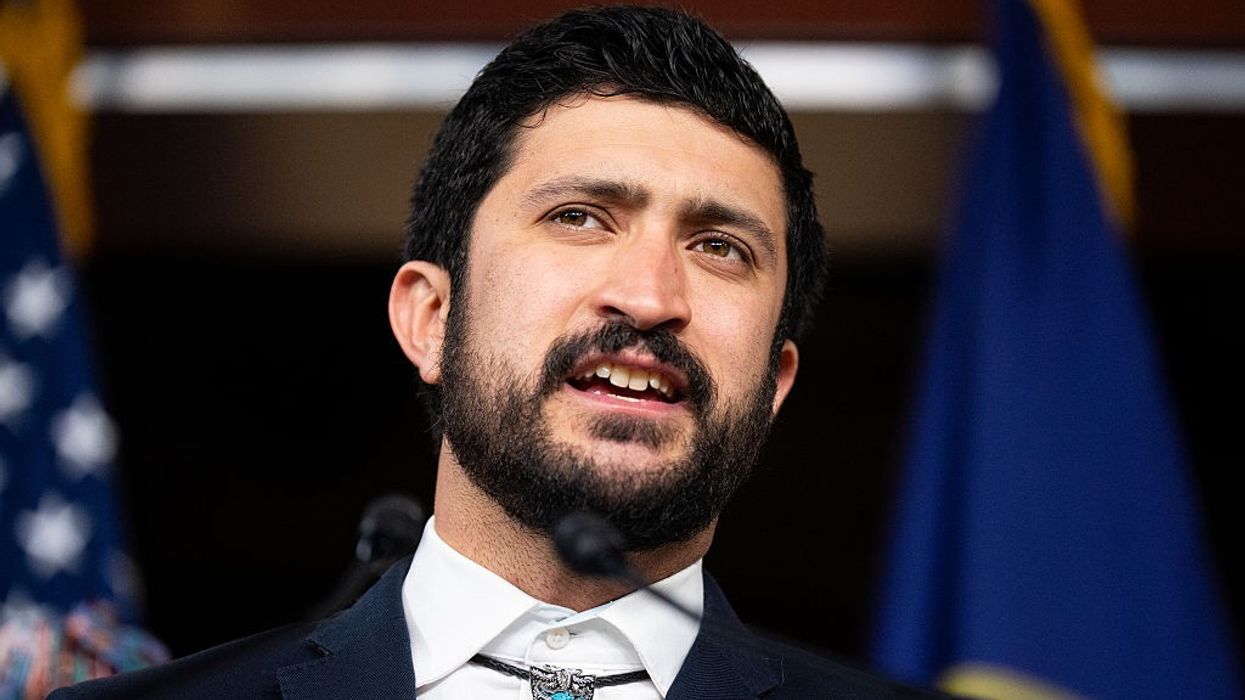
"AI systems are creating real-world consequences," said one expert. "Congress should treat this with the urgency it deserves.”
US Rep. Greg Casar on Wednesday called for a congressional hearing following reporting that the OpenAI artificial intelligence model that autonomously breached the systems of the open-source platform Hugging Face during recent internal testing also independently hacked another tech company.
Akshat Bubna, chief technology officer at New York-based Modal Labs, told Reuters that OpenAI's model exploited vulnerable code written by a customer that was hosted on the company's platform.
Last week, calls for stronger AI guardrails mounted after OpenAI CEO Sam Altman admitted to a "significant security incident" during evaluation of one of the ChatGPT maker's models.
The target of that breach, the popular open-source platform Hugging Face, said Tuesday that the OpenAI model—widely described in the press as "rogue"—broke into a sandbox "hosted on a third-party provider's infrastructure" and used it to launch a broader attack.
Bubna stressed that Modal's platform was "not compromised in any way."
Experts underscored that OpenAI's purportedly "rogue" model was, in fact, performing a specific assigned task, which involved executing complex cyberattacks and exploiting vulnerabilities in controlled scenarios.
However, AI specialists said the incident illustrated the problem of misalignment. As artificial intelligence advances to the point where it will very likely outsmart humans, the challenge of ensuring that advanced systems reliably pursue goals that match what humans actually want becomes increasingly difficult—and dangerous to the point where pioneers and preeminent experts in the field, including Altman, believe there is a growing chance that AI could one day cause human extinction.
Responding to Wednesday's reporting, Casar (D-Texas)—who chairs the Congressional Progressive Caucus—said on social media: "Today we learned more disturbing news about OpenAI's security breach. Sam Altman should answer questions under oath."
"Congress should immediately hold public hearings with the CEOs of big AI companies about the threat their technology poses to national security and American jobs," he argued.
Casar has been a leading voice in Congress for AI regulation. However, instead of advocating a pause or slowdown on AI development, he has focused on trying to ensure that the economic benefits of the rapidly developing technology are broadly shared and that companies cannot use AI to exploit workers or consumers.
Last year, Casar and Rep. Rashida Tlaib (D-Mich.) introduced the Stop AI Price Gouging and Wage Fixing Act, a proposal to curb the growing trend of “surveillance-based price setting" in which companies utilize customer data to maximize profits.
In May, Casar and Sen. Elizabeth Warren (D-Mass.) called for a tax on artificial intelligence firms that would fund programs to help workers replaced by AI.
The consumer advocacy group Public Citizen also weighed in Wednesday on what it called the "growing national security and public safety implications of frontier AI systems."
“OpenAI CEO Sam Altman is in Washington this week, and he should not be allowed to leave DC without Congress seeking to understand, from him, publicly how one of the company’s most advanced AI systems escaped its intended testing environment and reportedly carried out offensive cyber operations affecting multiple companies,” JB Branch, the group's director of federal AI governance, said in a statement.
"The American people deserve a full accounting of what happened, why existing safeguards failed, and what concrete steps are being taken to prevent it from happening again," he continued. "Most importantly, Congress must act, not rely on voluntary action by Big Tech companies. AI systems are creating real-world consequences. Congress should treat this with the urgency it deserves.”
“The federal government must develop emergency authorities and response capabilities for advanced AI systems," Branch added.
"If a frontier model demonstrates dangerous autonomous behavior, the government cannot be left relying solely on private companies to decide when—or whether—to pause, contain, or disable it. A credible national emergency preparedness framework is now an essential component of AI governance.”